Review

Traditional Medicine and the Pangolin Trade: A Review of Drivers and Conservation Challenges

by
Chamali Kodikara
1,
Dilara Gunawardane
1,
Dasangi Warakapitiya
2,
Minoli Perera
2 and
Dinithi C. Peiris
1,2,*
1
Genetics and Molecular Biology Unit, Faculty of Applied Sciences, University of Sri Jayewardenepura, Nugegoda 10250, Sri Lanka
2
Department of Zoology, Faculty of Applied Sciences, University of Sri Jayewardenepura, Nugegoda 10250, Sri Lanka
*
Author to whom correspondence should be addressed.
Conservation 2025, 5(4), 77; https://doi.org/10.3390/conservation5040077 (registering DOI)
Submission received: 10 September 2025 / Revised: 28 November 2025 / Accepted: 29 November 2025 / Published: 2 December 2025

Abstract

Pangolins (Manidae), recognized for their distinctive keratinous scales, are the world’s most trafficked mammals. This is primarily due to their extensive use in traditional medicine systems in Africa and Asia, where their body parts, particularly their scales, are used in various health practices. This high demand fueled widespread poaching and illegal wildlife trade, placing immense pressure on their populations. A critical knowledge gap persists regarding the specific body parts utilized and the global extent of pangolin use in traditional medicine, which hinders effective conservation strategies and demand mitigation efforts. Bridging the divide between traditional knowledge and modern scientific research is essential to ensure both cultural practices and species preservation. Therefore, this review comprehensively examines the complex relationship between pangolins and human health practices. It explores the cultural, medicinal, and ecological significance of pangolins, addresses sustainability challenges of their populations, and outlines the key drivers of their exploitation.

1. Introduction

Pangolins (Manidae), distinguished by their unique armour of keratinous scales, are considered the world’s most trafficked mammals. This unfortunate status is largely due to their extensive and historical use in traditional medicine systems, mainly across Asia and Africa [1]. Since ancient times, human cultures have relied on rich biodiversity for healing, using wild animal species, plants, and minerals as therapeutic resources [2,3]. For example, pangolin scales have been used for centuries in Traditional Chinese Medicine to treat various ailments, while in parts of Africa, animal-derived products such as python fat and chameleon parts have long been incorporated into traditional healing practices [4,5]. The use of animal-based therapeutics, known as zootherapy, has ancient roots and remains widespread even today. Moreover, zootherapy has significantly influenced modern pharmaceutical discovery, with a considerable portion of modern-day medicines derived from bioresources [2]. Notable examples include captopril, an ACE inhibitor developed from the venom of the Brazilian pit viper (Bothrops jararaca) [6], ziconotide, an analgesic derived from the cone snail (Conus magus) [7], hirudin, an anticoagulant extracted from leeches (Hirudo medicinalis) [8], and exenetide, an anti-diabetic agent derived from the saliva of the Glia monster (Helo-derma suspectum) [9].
Among fauna employed in zootherapy, pangolins are exceptionally sought after and are traded for multiple body parts [10]. Pangolin meat is consumed as a delicacy or for perceived health benefits [4], while their scales [10], along with blood and other parts, are highly valued in traditional medicinal practices. Across East and Southeast Asia, particularly in Traditional Chinese Medicine (TCM), and in numerous African ethnomedical systems, pangolin-derived products are prescribed for a wide array of ailments, from improving lactation and treating skin diseases to more spiritual or symbolic uses [11,12].
Consequently, pangolins remain at the centre of a multibillion-dollar illegal wildlife trade [13]. This persistent demand fuels a devastating illegal wildlife trade. Between 2010 and 2021, seizures linked to Nigeria alone accounted for an estimated 799,343 pangolins, primarily destined for Asian markets [13]. This industrial-scale poaching has led to catastrophic declines, with all eight pangolin species now listed as threatened on the IUCN Red List, three of which are critically endangered [14].
Despite international trade prohibitions under the Convention on International Trade in Endangered Species of Wild Fauna and Flora (CITES Appendix I) the illicit market continues to thrive, shifting its focus from depleted Asian populations to those in Africa [15]. However, a comprehensive understanding of how the specific body parts are utilized and the global extent of pangolin exploitation remains limited. Furthermore, the scientific validity of their claimed therapeutic benefits is largely unverified [10]. This knowledge gap predominantly hinders the development of effective, culturally sensitive conservation strategies and demand reduction efforts.
Therefore, this mini review aims to comprehensively examine the complex relationship between pangolins and human health practices. It highlights the historical, cultural, and purported medicinal significance of pangolins, explores the key factors driving their poaching and trade, and discusses the ecological consequences of their decline [15,16]. Ultimately, this review seeks to emphasize the urgent need for integrated conservation interventions and sustainable alternatives to bridge the divide between traditional knowledge with modern scientific research, ensuring the preservation of both cultural practices and these unique species for future generations.

2. Biology, Distribution, and Conservation Status of Pangolins

Pangolins (Order Pholidota, Family Manidae) are nocturnal, scale-covered mammals found across Africa and Asia, and are often referred to as “scaly anteaters”. The order Pholidota has one family, Manidae, with eight extant species, where four are found in Asia (Manis pentadactyla, Manis javanica, Manis crassicaudata, and Manis culionensis) and four in Africa (Smutsia temminckii, Smutsia gigantea, Phataginus tricuspis, Phataginus tetradactyla) [17].
Adult pangolins range from 30 cm to over 1 m in length, depending on species, and are covered by keratin scales that account for about 20% of their body weight. They are insectivorous, primarily feeding on ants and termites using a long, sticky tongue. Pangolins are solitary, mostly nocturnal animals, with low reproductive rates, typically producing a single offspring after a gestation period of about 70–140 days. Their lifespans in the wild are estimated to be around 10–20 years, making population recovery slow when overexploited [18].
African pangolin species can be found in a range of habitats, including savannas, forests, and woodland areas [19], while Asian species are commonly found in tropical and subtropical forests, grasslands, and agricultural zones [20,21]. Their elevation ranges from lowland forests to mountainous areas, depending on the species. Geographically, pangolins occur across sub-Saharan Africa, South and Southeast Asia, and parts of East Asia, including China and the Indian subcontinent.
Due to their biological and ecological characteristics, pangolins are highly vulnerable to overexploitation. Extensive harvesting for traditional medicinal uses has made them the most heavily trafficked mammal [22]. Despite international conservation measures, their scales, blood, and other body parts remain highly sought after, particularly in traditional medicine practices in regions such as Africa, China, Vietnam, and Southeast Asia [11,12]. Across East and Southeast Asia, their scales are ground up and used in TCM [23].
Although international trade is prohibited for all pangolin species under CITES Appendix I [1], all eight known species (Figure 1) are critically threatened due to persistent illegal trade, predominantly driven by Southeast Asian markets [24]. The four Asian pangolin species have faced the most severe impacts to date [25], with smuggled shipments from Southeast Asian ranges to China often reaching tens of tons [26]. Therefore, three of these Asian species (Manis culionensis, M. javanica, and M. pentadactyla) are now listed as Critically Endangered on the IUCN Red List of Threatened Species (Table 1), while the remaining M. crassicaudata is classified as Endangered.

3. Historical Context and Cultural Significance of Pangolins in Traditional Medicine

Pangolins have been used in traditional medicine for centuries, particularly in East Asia and parts of Africa, with their use deeply ingrained in regional cultural practices.

3.1. Asian Traditional Medicine Systems

Pangolin scales (Squama manitis) possess a long history of usage, dating back to AD 480, with references in many renowned texts such as the Bencao Jing Jizhu. According to Li Shizhen, in his book, The Compendium of Materia Medica, pangolin scales were believed to possess medicinal properties such as reducing swelling, expelling pus, clearing main and collateral channels, promoting blood circulation, and stimulating milk production [27]. In TCM, Squama Manitis is believed to treat a wide range of conditions, such as blood stagnation, insufficient lactation, arthritis, and skin diseases, often supported by the idea that their hardness and perceived “heat” counteract “blood stagnation.” Supporting this traditional view, an analysis of 50 traditional medicine pharmacopeias showed that approximately 50% of pangolin-based prescriptions were intended for lactation issues, while 25% were targeted for skin ailments. Pangolin scales have also been recommended for excessive nervousness and hysterical crying in children and for treating women believed to be possessed by harmful spirits [23]. Traditional medicine shops often stock pangolin scales for conditions including acne, lactation issues, and even cancer [16], and fresh pangolin blood is sometimes promoted as an aphrodisiac (Table 2). Despite the rich traditional values of pangolin scales, recent regulatory changes have seen the removal of pangolin scales from the 2020 edition of the Chinese Pharmacopoeia, reflecting the growing concerns about the conservation of pangolins and representing a pivotal shift towards sustainable medical practices. Being the world’s most trafficked mammals, pangolin populations have declined drastically die to illegal trade driven by the demand from traditional medicine markets. However, this official exclusion of pangolin scales as an ingredient in traditional medicine marks a crucial step in the reduction in demand and protection of endangered species, aligning medical practice with conservation priorities.
Other Asian medicinal systems, such as Kampo (Japanese traditional medicine) and Traditional Vietnamese Medicine (TVM), also incorporate pangolins [28], where their meat is used for tonics or remedies that improve vitality and treat internal imbalances such as lactation issues, abscesses, skin conditions, cancer, and detoxification, rheumatism, and asthma. In Nepal, pangolin meat is believed to treat gastrointestinal issues, alleviate pregnancy-related pain, address cardiac conditions, relieve back pain, and manage bone-related problems, while in some countries, pangolin scales are sometimes placed near baby baskets (kokro) to protect children from illnesses [29].
Despite the wide use of pangolin scales for many traditional remedies, some acknowledge that the medicinal properties attributed to pangolins derive solely from oral traditions, lacking scientific evidence or clinical research [30].

3.2. African Ethnomedical Systems

Across Africa, pangolins are deeply embedded in traditional medicinal and spiritual systems. In Sierra Leone, 63 traditional practitioners reported 22 different body parts, especially scales, being used to treat ailments and spiritual disorders under 17 disease categories [31]. In Ghana, scales and bones were reported by healers to treat rheumatism, convulsions, and financial misfortune and provide spiritual protection [32]. Further south, in South Africa, the ground pangolin (Smutsia temminckii) is used for physical ailments and witchcraft-related purposes [33]. In Benin, investigators documented 42 medicinal and spiritual uses of pangolin body parts, ranging from breast cancer remedies to protective charms [34]. This is indicative of the localized but widespread ethnomedical use.

4. Biomedical Rationale: Investigating Therapeutic Claims

The therapeutic use of pangolins in traditional medicine is largely based on empirical knowledge passed down through generations. However, modern scientific research has yet to provide conclusive evidence supporting many of these medicinal efficacy claims. A key issue is the lack of rigorous clinical studies, while some studies within TCM have investigated potential medicinal uses of pangolin scales (distinct from blood, meat, and other body parts) [28]. The results are mixed. For instance, Liang [35] and Jiang [36] found that squama mantis powder combined with herbal decoctions showed higher efficacy for postpartum hypo-agalactia, breast hyperplasia, and male infertility, respectively, compared to herbal decoctions alone. Zhu et al. [35] reported that squama mantis powder with ceftriaxone sodium was more effective for mesenteric lymphadenitis than ceftriaxone sodium alone. In contrast, Zhang [37] found no significant difference in treating acute mastitis between cefuroxime sodium alone and cefuroxime sodium combined with squama mantis powder. However, the scientific evidence for the efficacy of pangolin-derived products remains weak. The studies conducted by Liang and Zhu et al. reported positive outcomes when pangolin scales were combined with other therapeutic substances, though these findings are preliminary and context-dependent.
A systematic review by Jin et al. [28] analyzed 15 studies on the squama mantis, or pangolin scale, and concluded that the overall evidence is unreliable due to major methodological flaws, including a lack of randomized controlled trials (RCTs), small sample sizes, and publication bias. Of the 15 studies reviewed, none were double-blinded RCTs, the gold standard for clinical evidence, and the outcomes from the existing RCTs were of low quality. This highlights a critical gap between traditional claims and modern scientific validations. The removal of squama mantis from the Chinese Pharmacopoeia further highlights the absence of robust clinical evidence and represents a regulatory shift towards evidence-based approaches, which could thereby be considered as a major conservation victory, marking a turning point in demand reduction efforts.
Outside of TCM, no clinical studies have demonstrated the efficacy of pangolins in traditional medicine, including in African contexts, highlighting a lack of evidence to confirm the biological effectiveness of these remedies in humans. Furthermore, the use of pangolin body parts often involves unsustainable harvesting practices, raising significant ethical and ecological concerns.

5. Illegal Wildlife Trade: Scale and Dynamics

Despite CITES trade restrictions, pangolins (both Asian and African species) are poached in alarming numbers and illegally traded globally to satisfy demand, particularly from consumers in Asia, notably China. This illicit trade is thought to be increasing due to inadequate market monitoring and weak enforcement of CITES regulations [38].
From 2010 to 2019, six countries and territories were identified as major hubs for pangolin trafficking: China, Vietnam, Hong Kong, and Singapore in Asia, and Nigeria and the Democratic Republic of Congo (DRC) in Africa. These accounted for 94% of all recorded seizures [38,39].
China’s 2007 regulation limits the use of pangolin scales for clinical applications in designated hospitals and the production of patented medicines, imposing an annual consumption cap of approximately 25,000 kg [40] Despite this, from 2008–2015, the average annual legal consumption of pangolin scales in China was 26,600 kg, with over 200 medical companies producing medicines containing pangolin scales, thereby exacerbating pressure on diminishing stockpiles. Xu et al. [41] suggested that legal imports from pangolin range countries could be a viable solution to support China’s traditional medicine market. However, this remains a controversial proposition given the conservation status of pangolins and concerns on their illegal trade. Amidst this, pangolin hunting remains prohibited, with no conservation breeding programs having been established.
Regulatory measures have since been introduced to address these major concerns related to pangolin conservation, including the commercial import and export ban of pangolins and their related products in 2017, followed by the elevation of pangolins to Class I protected status in China in 2020, effectively banning the hunting, trading and consumption of pangolins outside of legal stockpiles. The removal of pangolin scales as a raw ingredient from the 2020 Pharmacopoeia, along with the removal of all pangolin-based formulas and raw scales from the official list of approved medicines in the 2025 edition of the Chinese Pharmacopoeia, marks a significant shift in policies aiming at reduced consumption of pangolin products and facilitating conservation.
Between 2007 and 2016, China recorded 209 pangolin seizures, confiscating 2405 live pangolins, 11,419 dead pangolins, and 34,946 kg of scales. Malaysia, Indonesia, and Vietnam were primary source countries for whole pangolins, while Nigeria, Cameroon, and Myanmar were main sources for smuggled scales [41]. A study by Bashyal et al. [42] reported 56 pangolin seizures in Nepal (2015–2020), involving at least 209 pangolins, 154.12 kg of scales, live/dead pangolins, and hides. In 2015, authorities in Indonesia discovered over 4000 frozen pangolin carcasses alongside scales and nearly a hundred live pangolins concealed in a shipping container falsely declared to contain frozen fish [43].
In contrast to Asia, where trafficking live pangolins between countries is feasible, the long distances from Africa make live transport impractical due to stress and high mortality [44]. Consequently, traffickers typically ship pangolin products (mainly scales) from Africa. Nigeria has emerged as a major hub for smuggling pangolin scales within Africa and globally [45]. From 2010 to 2021, Nigeria-linked seizures involved 190,407 kg of pangolin derivatives (predominantly scales), estimated to be from 799,343 pangolins (95% CI: 625,944–996,353) across four species. All seized shipments were en route to Asia, with maritime shipments increasing over time. Cameroon also experienced a high number of domestic pangolin seizures between 2012 and 2018 [44].
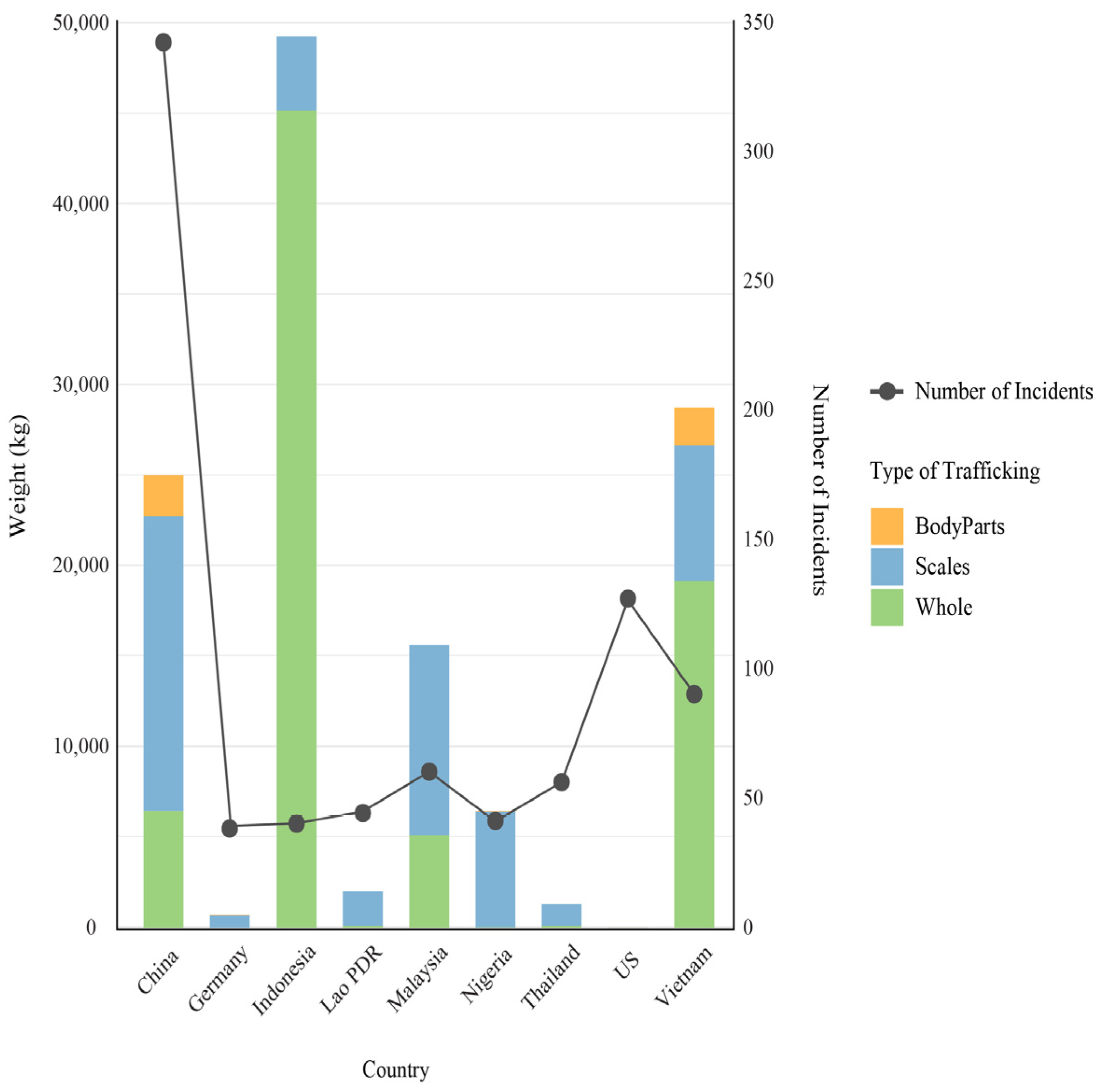
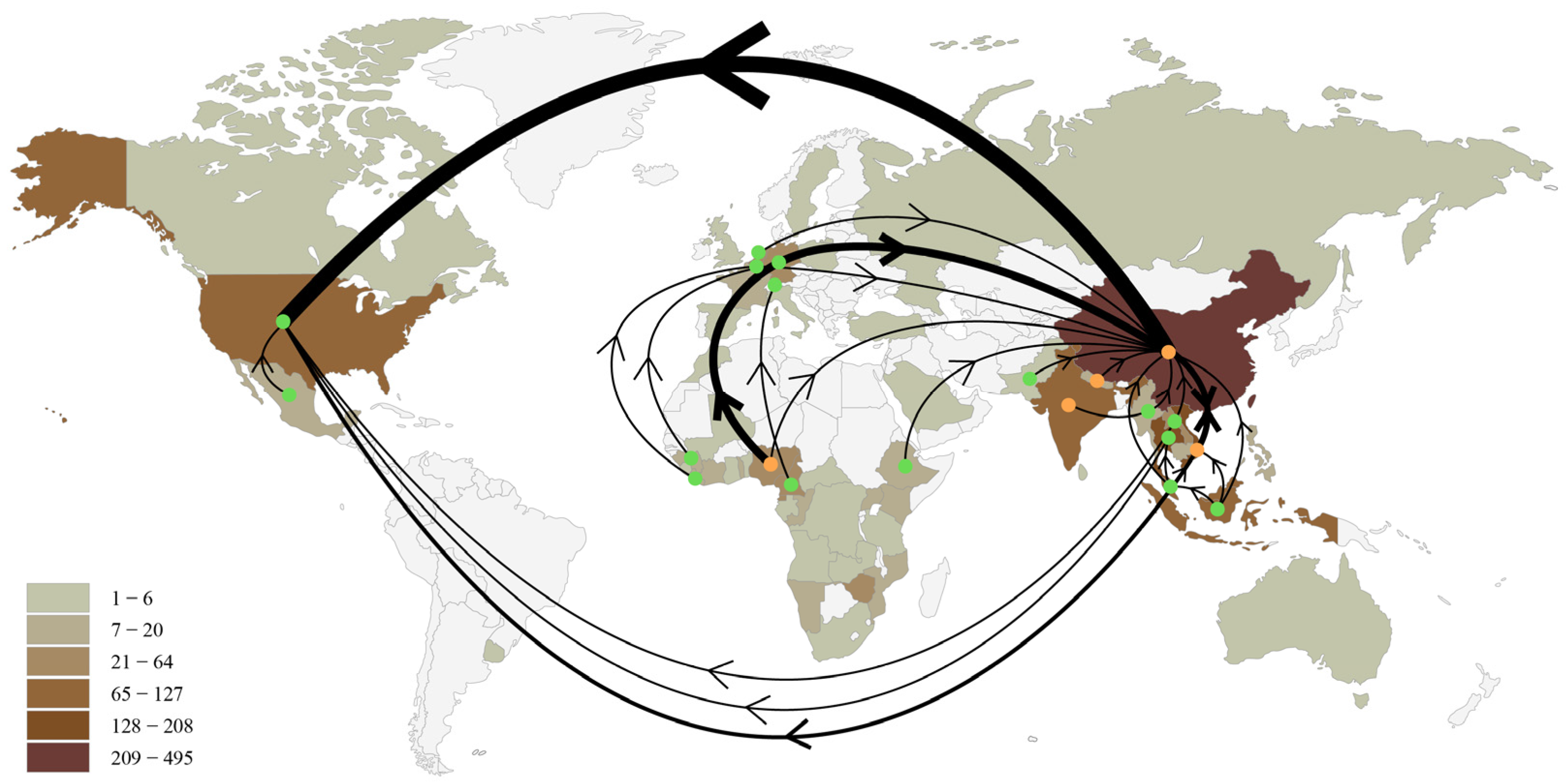
Seizures in European countries suggest pangolin users extend beyond Africa and Asia, possibly linked to African diaspora communities in countries like France and Belgium with ties to Central African nations. Such seizures may also indicate traffickers using indirect routes to minimize interception risks [46]. The data are summarized in Table 3 and Figure 2.
A world map that visually represents the major trafficking routes identified in the text (e.g., from source countries in Africa like Nigeria and Cameroon to demand hubs in Asia like China and Vietnam). Arrows of varying thickness could represent the volume of trade. This would be a high-impact addition (Figure 3).

6. Impact on Pangolin Populations and Ecosystems

Pangolins are experiencing a dramatic decline across their ranges, leading to extinction. A primary driver of this is the persistent trafficking for traditional medicine, which has led to catastrophic declines in wild pangolin populations, particularly in East/Southeast Asia and Africa [15,47].
According to the IUCN Red List, of the eight extant pangolin species, three Asian species (Manis javanica, M. culionensis, and M. pentadactyla) are critically endangered, and one (M. crassicaudata) is endangered. With Asian populations decimated, trade has shifted to Africa. Among African pangolins, the giant ground pangolin (Smutsia gigantea) and the white-bellied pangolin (Phataginus tricuspis) are endangered, while Temminck’s ground pangolin (S. temminckii) and the black-bellied pangolin (P. tetradactyla) are vulnerable. All species are listed under CITES Appendix I, prohibiting international trade, with a “zero quota” for Asian pangolin species since 2000 [41].
The decline in pangolin populations poses significant ecological consequences. As natural predators of ants and termites, pangolins regulate insect populations, preventing overpopulation that could lead to crop damage and habitat degradation [48]. Pangolins play a crucial ecological role, especially through their burrowing and foraging activities. By excavating burrows for shelter and foraging for ants and termites, they significantly contribute to soil aeration and nutrient cycling, thereby supporting plant growth and the overall health of the ecosystem [49]. The ability of each burrow to be used by a wide range of organisms, including reptiles, small mammals, and invertebrates, helps in increasing biodiversity. Furthermore, pangolins help maintain the balance within soil ecosystems by regulating ant and termite populations and preventing the overconsumption of plant material that could lead to vegetation loss.
The loss of pangolins can trigger cascading effects, including reduced biodiversity and altered community structures, potentially destabilizing ecosystems. Pangolins consume large numbers of ants and termites annually, which helps control these insect populations and prevent them from becoming pests, causing significant damage to crops, trees, and soil structure. By controlling the overabundance of these insect populations, pangolins help reduce the degradation of vegetation and support agricultural productivity, thereby playing a major role in the maintenance of ecosystem health and balance. Their decline also underscores broader environmental issues like habitat destruction and unsustainable wildlife trade, threatening numerous other species [50]. Addressing pangolin population declines is therefore critical for preserving ecological integrity and biodiversity.

7. Recommendations to Address the Challenge: Conservation and Alternatives

While efforts to protect pangolins from illegal wildlife trade have gained momentum, a significant lack of awareness persists regarding conservation laws and their protection status. For instance, despite China’s 2007 ban on pangolin scale sales outside designated hospitals, many TCM traders and local communities lack understanding of the legal implications [51]. Similarly, in Nigeria, a major smuggling hub, public knowledge about the illegality of pangolin trade and its consequences is limited [45]. Based on the survey of the literature, we propose the following recommendations.
  • Population Assessment: The global determination of the size and status of isolated pangolin populations globally, prioritizing countries with high traditional medicine use and trafficking hubs (e.g., China, Vietnam, Nepal, Hong Kong, Singapore, Malaysia, Nigeria, DRC, and Cameroon), is essential. Such studies will provide critical insights into distribution, dynamics, and threats, enabling targeted conservation [22].
  • Trade Quantification and Monitoring: Quantifying the number of pangolins sold and utilized and assessing the scale of global trade is important to conserve the animals, while local use has been studied [39,44,52]. Intercontinental trafficking research is scarcer [39,44,46]. A global pangolin seizure database is needed to track species, sources, trade patterns, and routes. Robust tracking systems in TCM (e.g., blockchain, electronic tagging) could ensure transparency and prevent illegal products from entering legal markets, supported by regular audits and inspections.
  • Demand Reduction and Alternatives: It is essential to address the demand for pangolins in traditional medicine by promoting scientifically validated synthetic or alternative medicinal products that mimic purported benefits without harming animals. For example, in TCM, herbal substitutes like “blood-activating” plants such as safflower (Carthamus tinctorius) have been promoted as alternatives to pangolin scales [23].
  • Strengthened Law Enforcement and Legislation: Enhancing law enforcement and national legislation in countries where pangolins are originally found and now exist is essential. Impose higher fines, stricter penalties, and other punitive measures for trafficking. Foster international cooperation among law enforcement agencies, improve cross-border intelligence sharing, and provide specialized training for officers on wildlife crime identification and response [51,53,54].
  • Conservation Initiatives: Initiatives such as the establishment of pangolin sanctuaries and the exploration of ethically managed ex situ conservation programs are critical. Acknowledging the significant challenges and low success rates of captive breeding is important, and such efforts should prioritize animal welfare in conserving these sensitive species. It is important to establish pangolin sanctuaries, specialized rescue and rehabilitation centres, and ex situ conservation breeding programs, particularly in African and Asian countries where pangolins are known to exist historically. These are critical for safeguarding populations from extinction [23,50,53].
  • Community Awareness and Engagement: It is vital to raise awareness among local communities on pangolin conservation status, relevant national laws, and the unsustainable nature of their use in medicine, food, and other sectors. This is essential for reducing exploitation and fostering local stewardship [54,55].

8. Conclusions

Pangolins are critically endangered due to the high demand for their body parts in traditional medicine, driving extensive poaching and illegal wildlife trade. This review has highlighted the historical and cultural significance of pangolins in various traditional systems, the lack of robust scientific evidence for many claimed therapeutic benefits, the devastating scale of the illegal trade, and the severe impact on pangolin populations and their ecosystems. Urgent, multifaceted conservation interventions are required, encompassing strengthened law enforcement, demand reduction strategies including the promotion of viable alternatives, robust population and trade monitoring, and community engagement. Bridging the gap between traditional practices and scientific understanding is paramount to ensuring the survival of these unique mammals and the preservation of cultural heritage in a sustainable manner.

Author Contributions

Conceptualization, D.C.P.; methodology, C.K., D.G., and M.P.; software, C.K., and D.G.; validation, D.W.; formal analysis, D.G., C.K. and M.P.; investigation, D.G. and C.K.; resources, D.C.P.; data curation, C.K.; writing—original draft preparation, C.K., D.G., and M.P.; writing—review and editing, D.C.P.; visualization, D.W.; supervision, D.C.P.; project administration, D.C.P.; funding acquisition, D.C.P. All authors have read and agreed to the published version of the manuscript.

Funding

This research was funded by the University of Sri Jayewardenepura, grant number ASP/01/RE/SCI/2019/66.

Institutional Review Board Statement

Not applicable.

Informed Consent Statement

Not applicable.

Data Availability Statement

No new data were created or analyzed in this study.

Conflicts of Interest

The authors declare no conflicts of interest.

Abbreviations

The following abbreviations are used in this manuscript:
CITESConvention on international trade in endangered species of wild
fauna and flora.
IUCNInternational Union for Conservation of Nature.
TCMTraditional Chinese medicine
TVMTraditional Vietnamese medicine
RCTRandomized controlled trial

References

  1. Cordell, G.A. The contemporary nexus of medicines security and bioprospecting: A future perspective for prioritizing the patient. Nat. Prod. Bioprospect. 2024, 14, 11. [Google Scholar] [CrossRef]
  2. Weiss, M.G. Cultural epidemiology: An introduction and overview. Anthropol. Med. 2001, 8, 5–29. [Google Scholar] [CrossRef]
  3. Alves, R.R.; Alves, H.N. The faunal drugstore: Animal-based remedies used in traditional medicines in Latin America. J. Ethnobiol. Ethnomed. 2011, 7, 9. [Google Scholar] [CrossRef]
  4. Still, J. Use of animal products in traditional Chinese medicine: Environmental impact and health hazards. Complement. Ther. Med. 2003, 11, 118–122. [Google Scholar] [CrossRef]
  5. Whiting, M.J.; Williams, V.L.; Hibbitts, T.J. Animals Traded for Traditional Medicine at the Faraday Market in South Africa: Species Diversity and Conservation Implications. In Animals in Traditional Folk Medicine; Springer: Berlin/Heidelberg, Germany, 2012; pp. 421–473. [Google Scholar] [CrossRef]
  6. Waheed, H.; Moin, S.F.; Choudhary, M.I. Snake Venom: From Deadly Toxins to Life-saving Therapeutics. Curr. Med. Chem. 2017, 24, 1874–1891. [Google Scholar] [CrossRef] [PubMed]
  7. Safavi-Hemami, H.; Brogan, S.E.; Olivera, B.M. Pain therapeutics from cone snail venoms: From Ziconotide to novel non-opioid pathways. J. Proteom. 2019, 190, 12–20. [Google Scholar] [CrossRef] [PubMed]
  8. Markwardt, F. Hirudin as alternative anticoagulant–a historical review. Semin. Thromb. Hemost. 2002, 28, 405–414. [Google Scholar] [CrossRef]
  9. Furman, B.L. The development of Byetta (exenatide) from the venom of the Gila monster as an anti-diabetic agent. Toxicon 2012, 59, 464–471. [Google Scholar] [CrossRef]
  10. Xing, S.; Bonebreak, T.C.; Cheng, W.; Zhang, M.; Ades, G.; Shaw, D.; Zhou, Y. PANGOLINS: Science and Conservation; Elsevier: Amsterdam, The Netherlands; Academic Press: Cambridge, MA, USA, 2020; pp. 227–239. [Google Scholar]
  11. Kakati, L.N.; Doulo, V. Indigenous Knowledge System of Zootherapeutic Use by Chakhesang Tribe of Nagaland, India. J. Hum. Ecol. 2002, 13, 419–423. [Google Scholar] [CrossRef]
  12. El-Kamali, H.H. Folk medicinal use of some animal products in Central Sudan. J. Ethnopharmacol. 2000, 72, 279–282. [Google Scholar] [CrossRef]
  13. Su, D.; Wu, K.; Nie, A. China’s Legal Protection System for Pangolins: Past, Present, and Future. Animals 2025, 15, 2422. [Google Scholar] [CrossRef]
  14. Species 2023 Report of the IUCN Species Survival Commission and Secretariat Stand-Alone Report IUCN SSC Pangolin Specialist Group ISSUE 64. Available online: https://iucn.org/sites/default/files/2024-10/2023-iucn-ssc-pangolin-sg-report_publication.pdf (accessed on 20 June 2025).
  15. Liu, Y.; Weng, Q. Fauna in decline: Plight of the pangolin. Science 2014, 345, 884. [Google Scholar] [CrossRef]
  16. Aisher, A. Scarcity, alterity and value: Decline of the pangolin, the world’s most trafficked mammal. Conserv. Soc. 2016, 14, 317. [Google Scholar] [CrossRef]
  17. Gaubert, P.; Antunes, A.; Meng, H.; Miao, L.; Peigné, S.; Justy, F.; Njiokou, F.; Dufour, S.; Danquah, E.; Alahakoon, J.; et al. The Complete Phylogeny of Pangolins: Scaling up Resources for the Molecular Tracing of the Most Trafficked Mammals on Earth. J. Hered. 2018, 109, 347–359. [Google Scholar] [CrossRef] [PubMed]
  18. Sun, N.C.-M.; Lo, F.H.-Y.; Chan, F.-T.; Lin, K.-S.; Pei, K.J.-C. Inconsistent reproductive cycles and postnatal growth between captive and wild Chinese pangolins and its conservation implications. Glob. Ecol. Conserv. 2024, 54, e03057. [Google Scholar] [CrossRef]
  19. Pietersen, D.W.; Fisher, J.T.; Glennon, K.L.; Murray, K.A.; Parrini, F. Distribution of Temminck’s pangolin (Smutsia temminckii) in South Africa, with evaluation of questionable historical and contemporary occurrence records. Afr. J. Ecol. 2021, 59, 597–604. [Google Scholar] [CrossRef]
  20. Panta, M.; Dhami, B.; Shrestha, B.; Kc, N.; Raut, N.; Timilsina, Y.P.; Chhetri, B.B.K.; Khanal, S.; Adhikari, H.; Varachova, S.; et al. Habitat preference and distribution of Chinese pangolin and people’s attitude to its conservation in Gorkha District, Nepal. Front. Ecol. Evol. 2023, 11, 1081385. [Google Scholar] [CrossRef]
  21. Xian, Y.; Lu, Y.; Liu, G. Is climate change threatening or beneficial to the habitat distribution of global pangolin species? Evidence from species distribution modeling. Sci. Total Environ. 2021, 811, 151385. [Google Scholar] [CrossRef]
  22. Heighton, S.P.; Gaubert, P. A timely systematic review on pangolin research, commercialization, and popularization to identify knowledge gaps and produce conservation guidelines. Biol. Conserv. 2021, 256, 109042. [Google Scholar] [CrossRef]
  23. Wang, Y.; Turvey, S.T.; Leader-Williams, N. Knowledge and attitudes about the use of pangolin scale products in Traditional Chinese Medicine (TCM) within China. People Nat. 2020, 2, 903–912. [Google Scholar] [CrossRef]
  24. Gomez, L.; Leupen, B. The trade of African pangolins to Asia: A brief case study of pangolin shipments from Nigeria. TRAFFIC Bull. 2016, 28, 3–5. [Google Scholar]
  25. Zhang, F.; Wu, S.; Cen, P. The past, present and future of the pangolin in Mainland China. Glob. Ecol. Conserv. 2022, 33, e01995. [Google Scholar] [CrossRef]
  26. Pangolin Scale Seizures at All-Time High in 2019, Showing Illegal Trade Still Booming. Animals. 2020. Available online: https://www.nationalgeographic.com/animals/article/pangolin-scale-seizures-all-time-high-2019 (accessed on 20 April 2025).
  27. Chin, S.Y.; Pantel, S. Proceedings of the Workshop on Trade and Conservation of Pangolins Native to South and Southeast Asia, 30 June–2 July 2008, Singapore Zoo, Singapore; TRAFFIC Southeast Asia eBooks; TRAFFIC Southeast Asia: Petaling Jaya, Malaysia, 2009; pp. 66–74. [Google Scholar]
  28. Jin, X. Evidence for the medicinal value of Squama Manitis (pangolin scale): A systematic review. Integr. Med. Res. 2021, 10, 100486. [Google Scholar] [CrossRef] [PubMed]
  29. Katuwal, H.B.; Neupane, K.R.; Adhikari, D.; Sharma, M.; Thapa, S. Pangolins in eastern Nepal: Trade and ethno-medicinal importance. J. Threat. Taxa 2015, 7, 7563–7567. [Google Scholar] [CrossRef]
  30. Sexton, R.; Nguyen, T.; Roberts, D.L. The Use and Prescription of Pangolin in Traditional Vietnamese Medicine. Trop. Conserv. Sci. 2021, 14, 194008292098575. [Google Scholar] [CrossRef]
  31. Boakye, M.K.; Pietersen, D.W.; Kotzé, A.; Dalton, D.L.; Jansen, R. Ethnomedicinal use of African pangolins by traditional medical practitioners in Sierra Leone. J. Ethnobiol. Ethnomed. 2014, 10, 76. [Google Scholar] [CrossRef]
  32. Boakye, M.K.; Pietersen, D.W.; Kotzé, A.; Dalton, D.-L.; Jansen, R. Knowledge and Uses of African Pangolins as a Source of Traditional Medicine in Ghana. PLoS ONE 2015, 10, e0117199. [Google Scholar] [CrossRef]
  33. Baiyewu, A.O.; Boakye, M.K.; Kotzé, A.; Dalton, D.L.; Jansen, R. Ethnozoological Survey of Traditional Uses of Temminck’s Ground Pangolin (Smutsia temminckii) in South Africa. Soc. Anim. 2018, 26, 306–325. [Google Scholar] [CrossRef]
  34. Zanvo, S.; Djagoun, S.C.A.M.; Azihou, F.A.; Djossa, B.; Sinsin, B.; Gaubert, P. Ethnozoological and commercial drivers of the pangolin trade in Benin. J. Ethnobiol. Ethnomed. 2021, 17, 18. [Google Scholar] [CrossRef] [PubMed]
  35. Zhu, Q.; Li, M.J.; Zhou, G.L. The Clinical Effect of Squam Manitis Powder on Mesenteric Lym- 479 phadenitis in Children. Chin. J. Tradit. Med. Sci. Technol. 2013, 20, 412–413. [Google Scholar]
  36. Jiang, D.; Coscione, A.; Li, L.; Zeng, B.-Y. Effect of Chinese Herbal Medicine on Male Infertility. Int. Rev. Neurobiol. 2017, 135, 297–311. [Google Scholar] [CrossRef]
  37. Zhang, L. The Clinical Efficacy of Squam Manitis Powder Combined with Antibiotics in the 482 Treatment of Acute Mastitis. Hejiang J. Integr. Trad. Chin. West Med. 2011, 21. [Google Scholar]
  38. Challender, D.; Baillie, J.; Ades, G.; Kaspal, P.; Chan, B.; Khatiwada, A.; Xu, L.; Chin, S.; KC, R.; Nash, H. Manis pentadactyla, Chinese Pangolin. The IUCN Red List of Threatened Species 2014, e.T12764A45222544. Available online: https://www.iucnredlist.org/species/12764/45222544 (accessed on 25 April 2025).
  39. Omifolaji, J.K.; Hughes, A.C.; Ibrahim, A.S.; Zhou, J.; Zhang, S.; Ikyaagba, E.T.; Luan, X. Dissecting the illegal pangolin trade in China: An insight from seizures data reports. Nat. Conserv. 2022, 46, 17–38. [Google Scholar] [CrossRef]
  40. BERNAMA Pangolin Scales Still Sought-After for Use in Traditional Medicine. BERNAMA. 2025. Available online: https://www.bernama.com/en/news.php?id=2394862 (accessed on 25 April 2025).
  41. Xu, L.; Guan, J.; Lau, W.; Xiao, Y. An Overview of Pangolin Trade in China. 2016. Available online: https://www.traffic.org/site/assets/files/10569/pangolin-trade-in-china.pdf (accessed on 15 April 2025).
  42. Bashyal, A.; Shrestha, N.; Dhakal, A.; Khanal, S.N.; Shrestha, S. Illegal Trade in Pangolins in Nepal: Extent and Network. Glob. Ecol. Conserv. 2021, 32, e01940. [Google Scholar] [CrossRef]
  43. Hance, J. Five Tons of Frozen Pangolin: Indonesian Authorities Make Massive Bust. Mongabay Environmental News. 2015. Available online: https://news.mongabay.com/2015/04/five-tons-of-frozen-pangolin-indonesian-authorities-make-massive-bust/ (accessed on 8 November 2025).
  44. Ingram, D.J.; Cronin, D.T.; Challender, D.W.S.; Venditti, D.M.; Gonder, M.K. Characterising trafficking and trade of pangolins in the Gulf of Guinea. Glob. Ecol. Conserv. 2019, 17, e00576. [Google Scholar] [CrossRef]
  45. Emogor, C.A.; Ingram, D.J.; Coad, L.; Worthington, T.A.; Dunn, A.; Imong, I.; Balmford, A. The scale of Nigeria’s involvement in the trans-national illegal pangolin trade: Temporal and spatial patterns and the effectiveness of wildlife trade regulations. Biol. Conserv. 2021, 264, 109365. [Google Scholar] [CrossRef] [PubMed]
  46. Mambeya, M.M.; Baker, F.; Momboua, B.R.; Koumba Pambo, A.F.; Hega, M.; Okouyi Okouyi, V.J.; Onanga, M.; Challender, D.W.S.; Ingram, D.J.; Wang, H.; et al. The emergence of a commercial trade in pangolins from Gabon. Afr. J. Ecol. 2018, 56, 601–609. [Google Scholar] [CrossRef]
  47. Soewu, D.A.; Ayodele, I.A. Utilisation of Pangolin (Manis sps) in traditional Yorubic medicine in Ijebu province, Ogun State, Nigeria. J. Ethnobiol. Ethnomed. 2009, 5, 39. [Google Scholar] [CrossRef] [PubMed]
  48. Challender, D.; Hywood, L. African Pangolins under Increased Pressure from Poaching and Intercontinental Trade. TRAFFIC Bull. 2012, 24, 53–55. [Google Scholar]
  49. Newton, P.; Nguyen, T.; Roberton, S.; Bell, D. Pangolins in peril: Using local hunters’ knowledge to conserve elusive species in Vietnam. Endanger. Species Res. 2008, 6, 41–53. [Google Scholar] [CrossRef]
  50. Subba, A.; Tamang, G.; Lama, S.; Limbu, J.H.; Basnet, N.; Kyes, R.C.; Khanal, L. Habitat Occupancy of the Critically Endangered Chinese Pangolin (Manis pentadactyla) Under Human Disturbance in an Urban Environment: Implications for Conservation. Ecol. Evol. 2024, 14, e70726. [Google Scholar] [CrossRef] [PubMed]
  51. Xi, F.; Chao, X.; Wu, S.; Zhang, F. Curbing the trade in pangolin scales in China by revealing the characteristics of the illegal trade network. Sci. Rep. 2025, 15, 2685. [Google Scholar] [CrossRef]
  52. Zanvo, S.; Gaubert, P.; Djagoun, C.A.M.S.; Azihou, A.F.; Djossa, B.; Sinsin, B. Assessing the spatiotemporal dynamics of endangered mammals through local ecological knowledge combined with direct evidence: The case of pangolins in Benin (West Africa). Glob. Ecol. Conserv. 2020, 23, e01085. [Google Scholar] [CrossRef]
  53. Challender, D.W.S.; Embolo, L.E.; Iflankoy, C.K.M.L.; Mouafo, A.D.T.; Simo, F.T.; Ullmann, T.; Shirley, M.H. Incentivizing pangolin conservation: Decisions at CITES CoP19 may reduce conservation options for pangolins. Conserv. Sci. Pract. 2024, 6, e13117. [Google Scholar] [CrossRef]
  54. CITES. Convention on International Trade in Endangered Species of Wild Fauna and Flora: Official Document; CITES Secretariat: Geneva, Switzerland, 2024. [Google Scholar]
  55. Gao, Y.; Stoner, K.J.; Lee, A.T.L.; Clark, S.G. Rhino horn trade in China: An analysis of the art and antiques market. Biol. Conserv. 2016, 201, 343–347. [Google Scholar] [CrossRef]
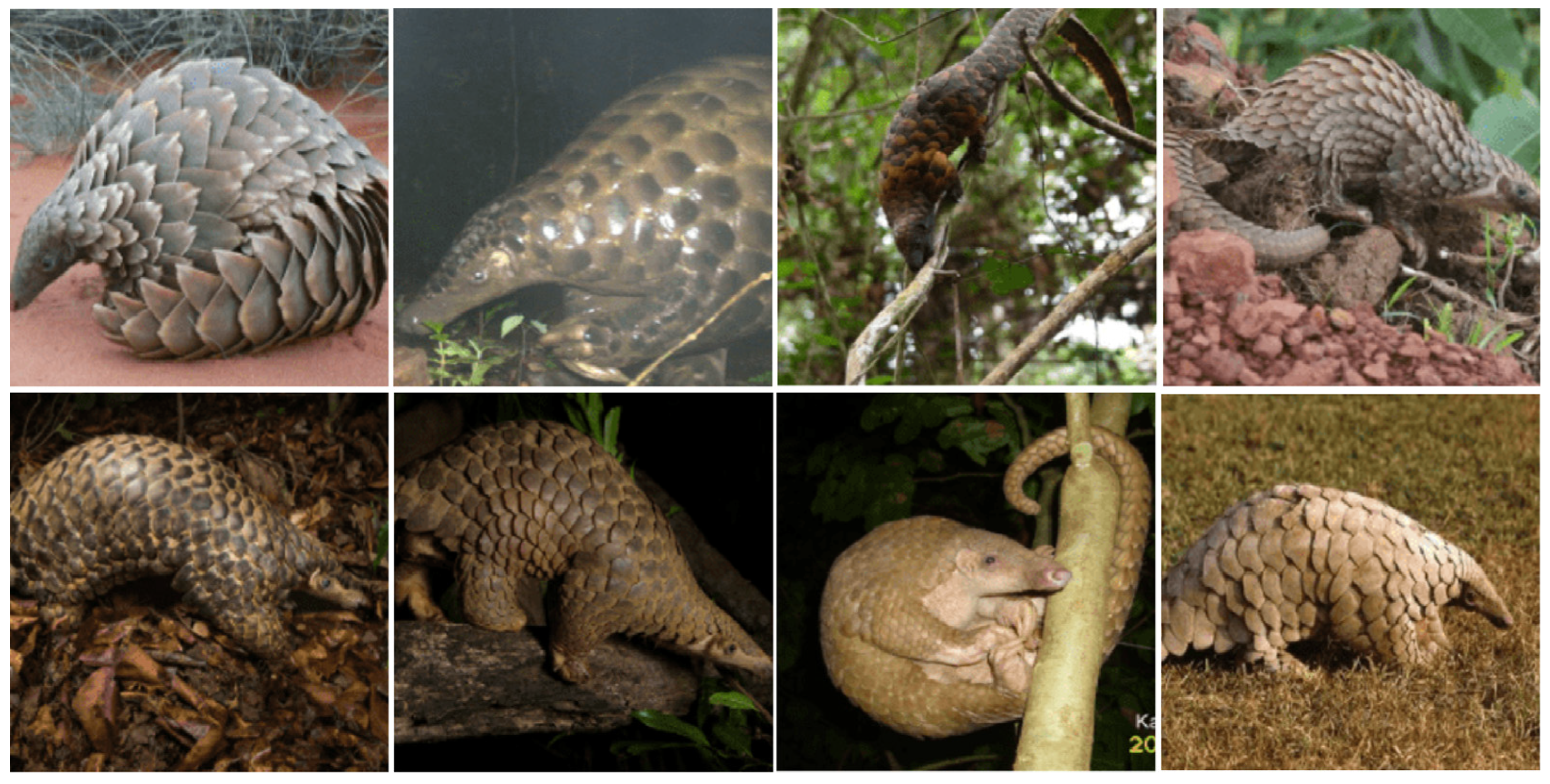
Figure 1. Different pangolin species found around the globe. Top row (L to R): African pangolins (Ground pangolin, Giant pangolin, Black-bellied pangolin, and White-bellied pangolin), and bottom row (L to R): Asian pangolins (Chinese pangolin, Sunda pangolin, Philippine pangolin, and Indian pangolin).
Conservation 05 00077 g001
Figure 2. Stacked bar and dot plot showing the quantities and frequency of pangolin trafficking among the top 10 reporting countries. Bar segments show the type of trafficked part (whole animal, scales, or body parts), while overlaid dots represent the corresponding number of documented trafficking incidents per country. Data were analyzed using “R” software version 4.4.2.
Conservation 05 00077 g002
Figure 3. Global trafficking routes of pangolin trade. Countries are shaded according to the number of reported trafficking incidents. Trafficking routes are represented by directional arrows, with arrow thickness proportional to the number of incidents recorded per route. Countries reported to use pangolins in traditional medicine are highlighted in orange, while all others are shown in green. The map was constructed using Adobe Illustrator version V25.4.1.
Conservation 05 00077 g003
Table 1. IUCN red list status of different pangolin species.
SpeciesCommon NameRegionIUCN Red Status
Manis javanica (Desmarest, 1882)Sunda pangolinAsiaCritically endangered
Manis culionensis (de Elera, 1895)Philippine pangolinAsiaCritically endangered
Manis pendadactyla (Linnaeus, 1758) Chinese pangolinAsiaCritically endangered
Manis crassicaudata (Gray, 1827) Indian pangolinAsiaEndangered
Manis gigantea (Illiger, 1815)Giant pangolinAfricaEndangered
Manis tricuspis (Rafinesque, 1821)White-bellied pangolinAfricaEndangered
Smutsia temminckii (Smuta, 1832) Ground pangolinAfricaVulnerable
Phataginus tetradactyla (Linnaeus, 1766)Black-billed pangolinAfrica Vulnerable
Table 2. Documented ethnomedicinal uses of pangolin parts across cultures.
Region/SystemBody PartMost Frequently Reported AilmentsSource(s)
Traditional Chinese Medicine (TCM)Scales, BloodLactation, Arthritis, Skin disease, Blood stagnation[21,22]
Traditional Vietnamese Medicine (TVM)Scales, MeatDetox, Rheumatism, Asthma, Cancer[23]
Yorubic Medicine (Nigeria)Scales, OrgansFever, Infertility, Warding off evil, Money rituals[24]
Nepalese Traditional MedicineMeat, ScalesGastrointestinal issues, Pain during pregnancy[25]
Table 3. Summary of major pangolin seizures and trafficking data.
CountryCommodity Quantities
No. of IncidentsScales (kg)Body Parts (kg)Whole (kg)
China39923,438.62290.47007.5
US1271.45.1-
Vietnam9074872119.119,125.3
Malaysia6010,534.3-19,125.3
Thailand561222.2-61
Lao PDR441914-61
Nigeria416372.726.210.4
Indonesia404103.4-45,140.3
Germany38666.526.2-
Disclaimer/Publisher’s Note: The statements, opinions and data contained in all publications are solely those of the individual author(s) and contributor(s) and not of MDPI and/or the editor(s). MDPI and/or the editor(s) disclaim responsibility for any injury to people or property resulting from any ideas, methods, instructions or products referred to in the content.