Article

Characteristics of Beaver Activity in Bulgaria and Testing of a UAV-Based Method for Its Detection


Institute of Biodiversity and Ecosystem Research, Bulgarian Academy of Sciences, 1040 Sofia, Bulgaria
*
Author to whom correspondence should be addressed.
Conservation 2025, 5(4), 74; https://doi.org/10.3390/conservation5040074 (registering DOI)
Submission received: 30 August 2025 / Revised: 15 November 2025 / Accepted: 19 November 2025 / Published: 1 December 2025

Abstract

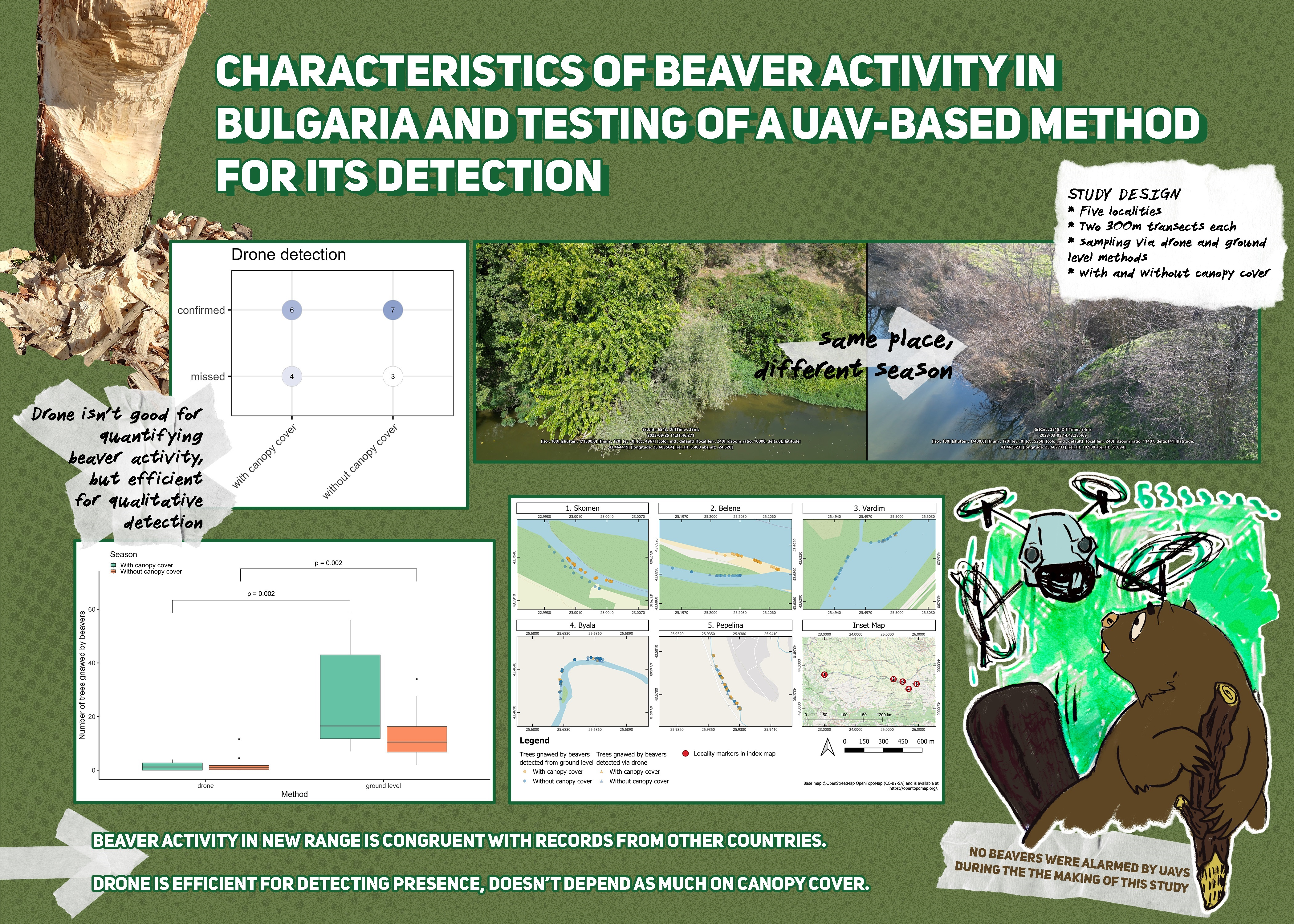
After a series of successful reintroductions, the Eurasian beaver (Castor fiber) is expanding its range throughout Europe. Timely monitoring of beaver activity contributes to early detection of environmental impacts and aids in mitigating human–wildlife conflicts and other threats. However, the signs of beaver presence are difficult to detect in some environments, e.g., densely vegetated river banks or in areas with considerable water level variability. In these cases, new technologies can offer opportunities for easier and faster monitoring. In the current study, we provide a characterisation of the wood-gnawing activity of a newly established beaver population in Northern Bulgaria, using a traditional transect method. In addition, we test the application of unmanned aerial vehicles (UAVs) to detect and map the signs of beaver activity. The overall gnawing-activity characteristics of newly established Castor fiber populations in Bulgaria follow the pattern documented in earlier studies: the affected trees were mainly willow and poplar, located at less than 10 m from the riverbank, with a diameter mostly under 30 cm. However, there were considerable differences in the tree size and distance from the water between the two studied habitats—the Danube River and its tributaries. No dams were recorded, probably due to the rivers’ sizes. We found no significant difference in the detection rates of the UAV with and without canopy cover. Overall, the UAV-based transects were reliable for the detection of the species’ presence, but not for quantification of its activity patterns, due to the low detection rates, in comparison with ground-level transects. We believe that the method is promising because it is cost- and time-saving but could be improved using cameras with better resolution and by involving machine learning algorithms. The drone detection method could help identify the areas with the densest populations of the species, where Natura 2000 protected zones could then be established.

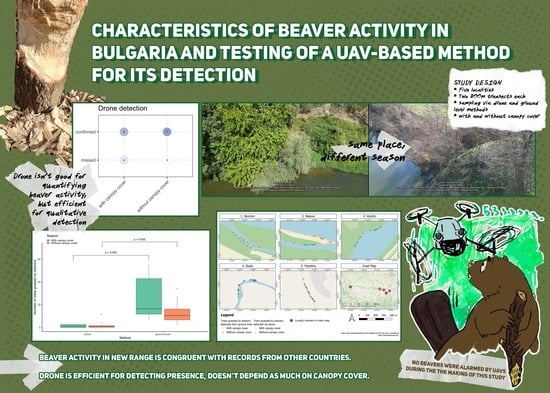
Graphical Abstract

1. Introduction

Once a typical inhabitant of the European rivers, the Eurasian beaver (Castor fiber) was brought to the edge of extinction at the beginning of the XX century, directly, due to killing for fur and because of the threat it poses to forestry, and indirectly, through habitat destruction [1]. The southern populations were more severely affected, with the species being locally extinct in the lower Danube plain as early as the XIX century [2]. For this reason, the beaver is not protected under Bulgarian legislation, and it is not even mentioned in the Red Data Book of Bulgaria [3]. Today, it is benefiting from an improved reputation and is expanding its range throughout the continent, as a result of a series of successful reintroductions [4,5]. On the Balkan Peninsula, reintroduction is planned in Greece [6]. In Romania, they were reintroduced between 1998 and 2003 along the Rivers Olt and Ialomița, from where they spread to other rivers [7], including the Danube Delta [8,9]. The first evidence of the return of beavers in Bulgaria was published at the beginning of 2021 [10,11]. They were recently genetically identified as C. fiber and are supposed to originate from the reintroduced Romanian populations [12].
The species is recognised as an ecosystem engineer due to its capacity to alter aquatic environments and adjacent riparian zones via dam construction, tree felling, channel excavation, and bank-burrowing activities [13]. Beaver dams, in particular, generate diverse wetland habitats that support numerous plant and animal species, thereby increasing biodiversity at the landscape scale [14]. These activities can lead to significant changes in local ecosystems, affecting everything from plant communities and topography to geomorphology and water conditions [15]. Even in the absence of dams, beaver lodges have been proven to contribute to higher species abundance, providing food, shelter, and warm microclimates on the lodge exterior [16].
The Eurasian beaver is protected under the EU Habitats Directive, and 1328 Natura 2000 sites have been designated for its conservation, but none exist in Bulgaria [17]. Given that beaver reintroduction programs and the consequent natural recolonization are becoming increasingly common, a thorough grasp of their dispersal and ecological impact is essential for effective management and conservation [18]. Accurate monitoring methods are indispensable for tracking beaver populations, assessing their effects on the environment, and resolving conflicts that may occur with human interests [13,19]. Therefore, the development of efficient and reliable techniques for detecting and monitoring beaver populations is crucial [20]. Traditional methods for beaver detection and monitoring include ground-level surveys, typically involving transects for finding and mapping of beaver signs, such as dams, lodges, bank dens, gnawed trees, and scent mounds [21,22]. While providing detailed information, these surveys are often labour-intensive, time-consuming, and limited in spatial extent, especially in remote or inaccessible areas. Such considerations, together with the large scale of the impacts that beavers have in some environments, evoked the idea of aerial monitoring using airplanes and helicopters almost a century ago [23,24,25]. Recently, unmanned aerial vehicles (UAVs), or drones, have emerged as a promising technology for wildlife monitoring, due to their ability to collect high-resolution imagery and video data in a cost-effective and non-invasive manner [26,27]. UAVs can be deployed rapidly and repeatedly, providing timely information on population size, distribution, and habitat use [28], which is crucial for conservation. UAV imagery was already applied to study the large-scale impacts of pioneering beavers on the surrounding ecosystem [29,30] and map bigger structures like dams [31].
However, in Bulgaria, the species has been recorded only in the Danube River and some of its tributaries [12,32,33]. These are rivers of considerable size. In the case of the Danube, it is several hundred meters wide in its main course and a few dozen meters in its channels. In the case of Yantra, it is 40–60 m wide at Byala, depending on the water level. In general, rarely are there beaver dams on main river canals that are more than 20 m wide and 0.7 m deep [34]. Besides being impossible to dam, these large watercourses provide the beavers with a safe environment that does not fully freeze in winter and where they can swim in the water to avoid predators, build burrows with underwater entrances, and easily reach, move, and store broad-leaved branches for food. In such cases of an absence of big beaver-made structures and dense riparian canopy cover, only small-scale changes, like gnawed trees and branches, are present. These are not visible from high altitudes, and aerial surveys have not been applied for their detection until now. Thus, we hypothesize that (1) the beaver signs in the study area will be reduced mainly to gnawed trees and that (2) a low-flying UAV video-recording of the vegetation could successfully replace the ground-level transects to detect and map them. We suppose that this innovative approach, including using video-recording instead of photos, will allow for capturing the vegetation from different angles and a search for gnawing signs. Thus, the aim of the current study is to (1) map and compare the beaver activity patterns (gnawed trees and branches) in two distinct newly recolonized habitats in Bulgaria (Danube River and its tributaries) and (2) to test the effectiveness of a UAV-based method in comparison to the classical ground-level transect methods for the detection of species presence and mapping small-scale signs of its presence. We assume that the season (canopy cover) would impact the detection rate [35,36], so we designed the study in a way to take this factor into account. We believe that the results of such a methodological study will be a valuable input for the development of a national monitoring scheme for the beaver in the near future, when its legal status is updated according to the national and international requirements.

2. Materials and Methods

2.1. Study Area

Five sites where our team and local collaborators have observed constant beaver presence since 2021 were further investigated as part of this study in 2023 and 2024. Three of them are located on the Danube River bank and the adjacent islands—Vardim, Belene, and Skomen. The water level at these locations is very dynamic, with an annual variation of 5 to 6.5 m [37]. The other two sites are on the Danube tributaries Yantra (near the town of Byala) and Cherni Lom (near the village of Pepelina). In close proximity to the location of Byala, there is a poplar plantation. These two localities are near human settlements and roads, while those along the Danube are more remote.

2.2. Data Collection

Two 300-metre transects were made along the shore in each location (total n = 10 transects). They were surveyed using ground-level methods and via drone. The surveys were completed during two seasons—with and without vegetation cover. The transects on ground level were made either on foot or by boat/kayak (along the Danube River when the water level was high and there was no access to the shore), and details about each gnawed tree or branch found on the transect were recorded—the tree size (factor variable, size classes: <5 cm, 5–10 cm, 10–20 cm, 20–30 cm, 30–40 cm, 40–50 cm, >50 cm), the tree species (willow, poplar, other), if the gnawed marks were fresh or not, and the distance to the river bank (factor variable, distance classes: over water, <2 m, 2–5 m, 5–10 m, >10 m). The exact location of the gnawed trees/branches was recorded via a GPS device, Garmin Oregon 700.
At the same time, the transects were video-recorded from the air by a UAV flying at the lowest possible altitude near the tree canopy (Figure 1). Two different UAV devices with similar characteristics were used—DJI Mavic Air 2 and DJI mini 3 pro (video resolution 4K60p and photo 48MP RAW). The video was later investigated on a desktop with a high-resolution monitor (Acer G247HYL 23.8″ 1920 × 1080 Full HD (1080p) @ 60 Hz IPS monitor) by an independent observer who was not engaged with UAV piloting. The exact locations of the gnawed trees noticed in the UAV videos were recorded thanks to the SubRip Text (.SRT) file that was generated in parallel to the video and visualised during playback (Figure 1). It contains relevant metadata, such as the coordinates of the drone at each moment of the recording. The average duration of recording a 300 m transect without the time taken to pilot the drone to the location and return it is approx. 4 min. We focused on the gnawed trees as signs of beaver presence, as these were the most numerous and conspicuous, allowing for some statistical analysis. Moreover, their visibility was less dependent on the water level in comparison to trails, canals, or burrow entrances. The altitude at which a gnaw on a tree was observed was noted immediately. The altitude noted is the difference between the absolute altitude of flight of the UAV at that moment and the altitude of the point the UAV took flight, along with all other variables measured with ground-level methods.

2.3. Data Analysis

The data were organised in two separate ways: one table contained the sum of gnawed-tree observations per transect and the observations adjusted to exactly 300 m. The other compiled-data table contained all the details recorded for each gnawed tree (distance to the river bank, size, species, freshness of gnawing). The thickness of the gnawed trees (diameter), as well as their species and distance from the water, were compared between habitats for ground-level and drone data separately. Tree thickness was noted in five discrete categories, and count data were compared using Pearson’s chi-square. The same was performed for the distance from water, but the data was subset for just fresh nibbles and compared using Pearson’s chi-square again. The level of contribution each category from each habitat has to the statistic is represented in percentage using the following formula:
((observed counts − expected counts)2/expected counts) × 100/chi square statistic
Tree species data were reported without formal statistical analysis.
The detection success of the UAV compared to ground-level observations was tested using a Wilcoxon’s paired samples test with continuity correction on the corrected per-transect observation count data. A paired test was used because both methods were applied to approximately the same area. Then, a contingency table (crosstab) was made using the count of transects where the UAV was able to successfully detect beaver presence, in order to compare its success between seasons. This table was then analysed using Fisher’s exact test due to the small sample size and the fixed number of transects that the methods were tested on.
One of the factors that was assumed to most significantly impact the detection success of the drone was the presence or absence of canopy cover. This was explored by completing all transects using both methods when vegetation was fully developed and when it was dormant. The sum of detected gnawed trees between canopy coverages was compared using Wilcoxon’s paired rank with continuity correction individually for each method.
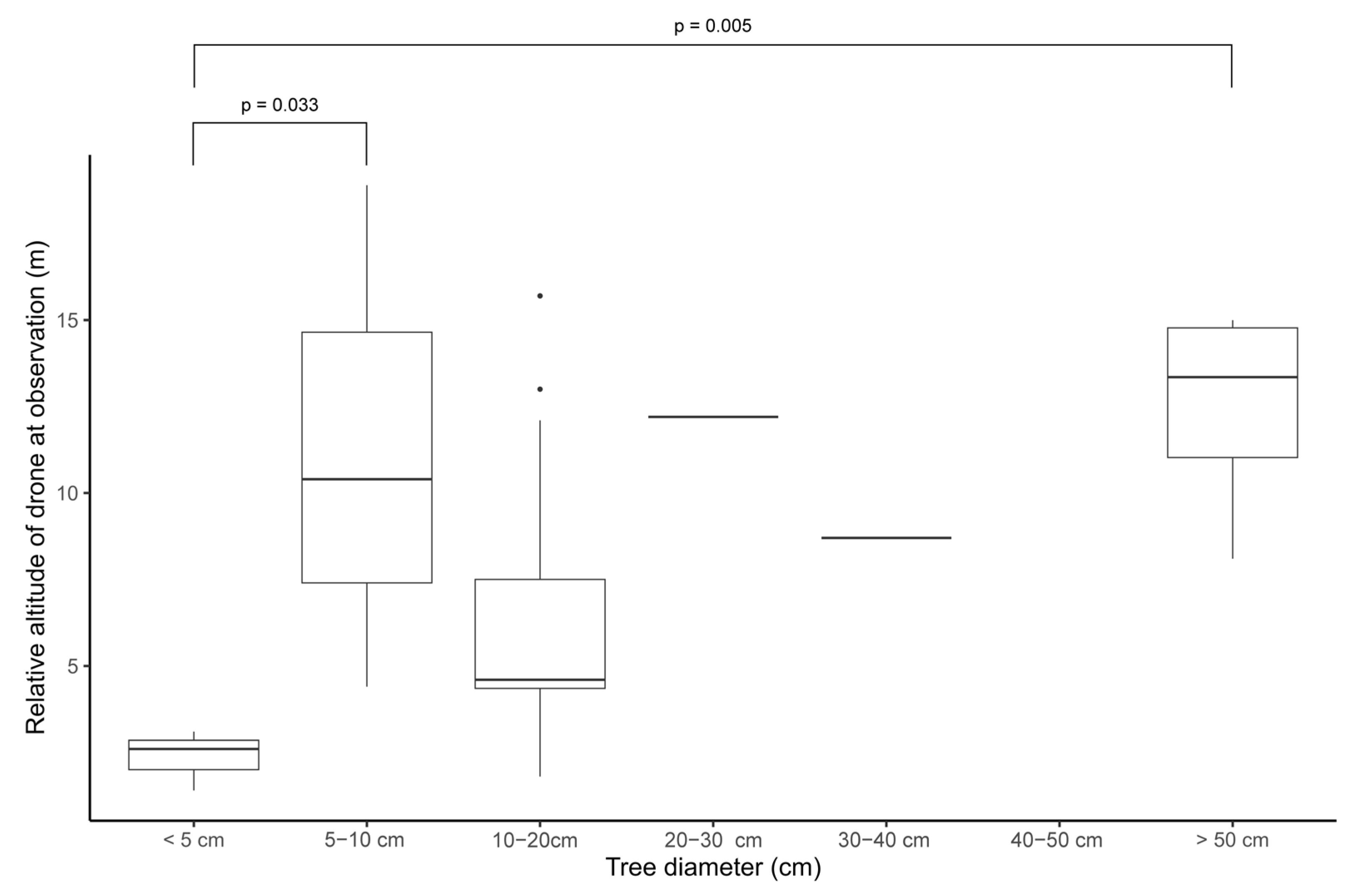
Another factor that likely affected the detection rate of the UAV was its flight altitude and the diameter of the tree. Using the relative altitude data and logarithmically transforming it to fit model assumptions, a one-way ANOVA was run with a post hoc Tukey Honest Significant Differences (HSD) analysis in order to compare the average altitude at which different tree sizes with gnaws were detected with the UAV. The data were analysed using R version 4.4.0 (2024-04-24 ucrt) and QGIS version 3.34.14-Prizren. Additional figure processing was conducted using Photoshop CC 2019 version 20.0.6, running under Windows 10 x64 (build 19044).

3. Results

3.1. Signs of Beaver Activity

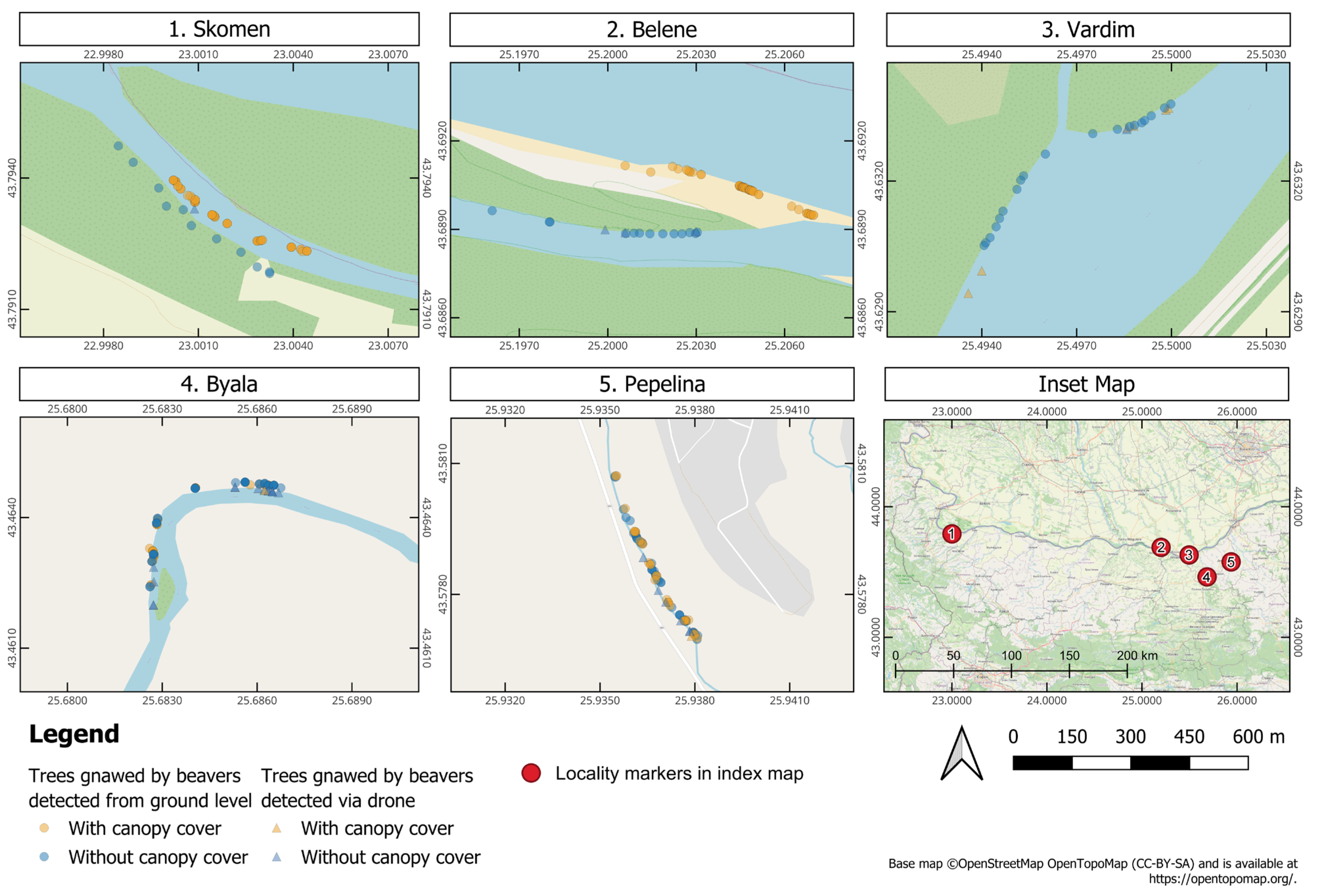
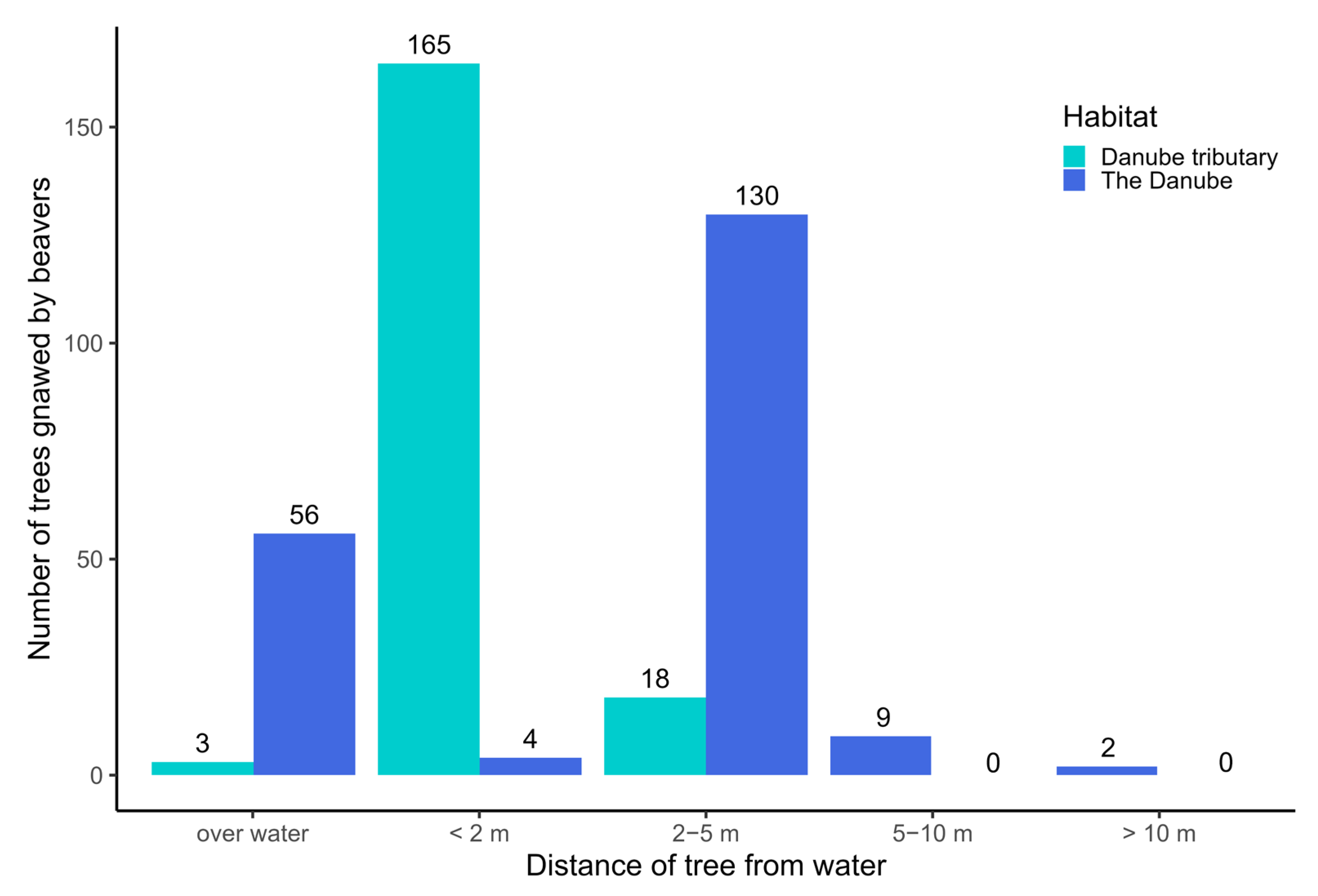
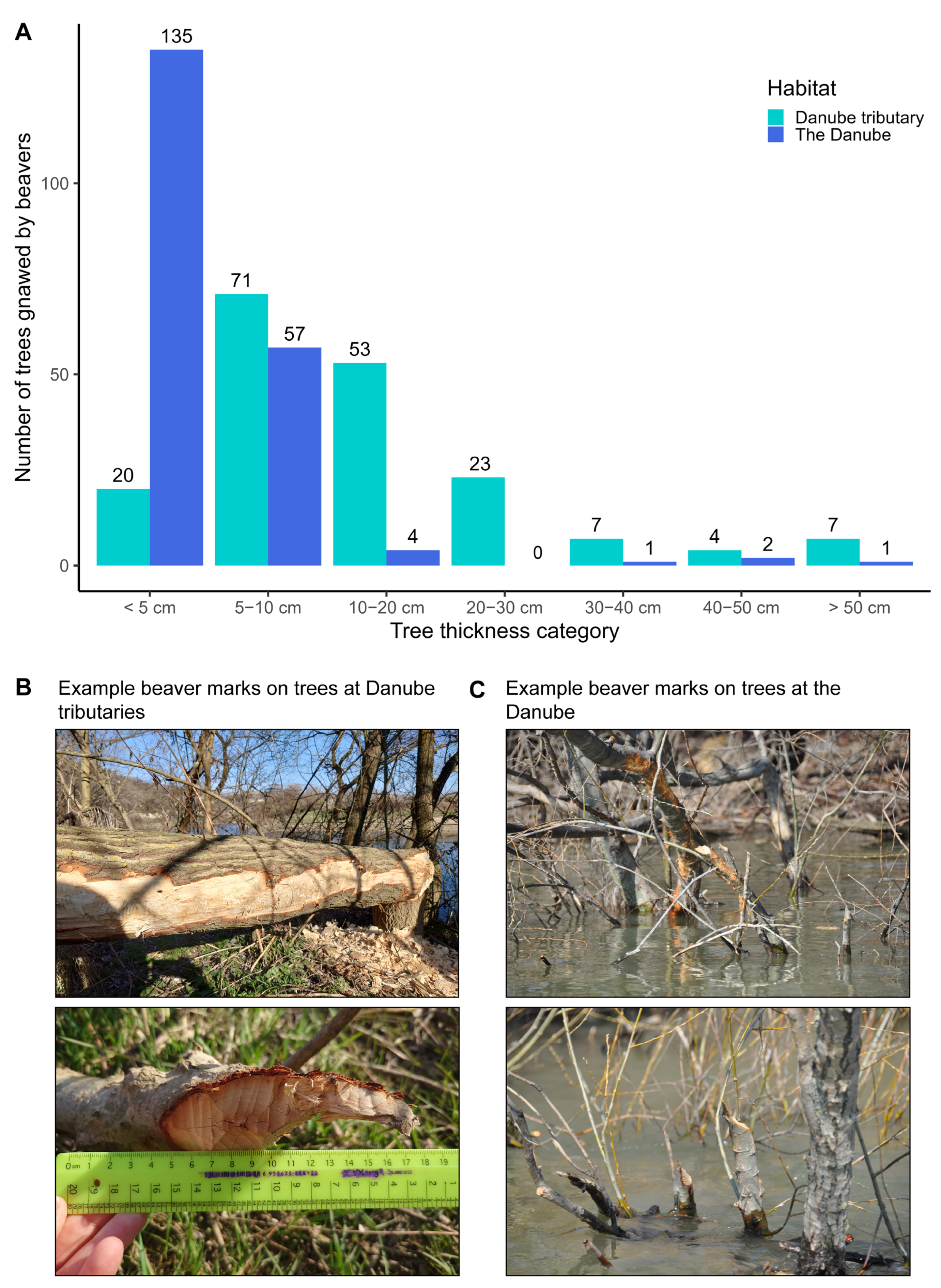
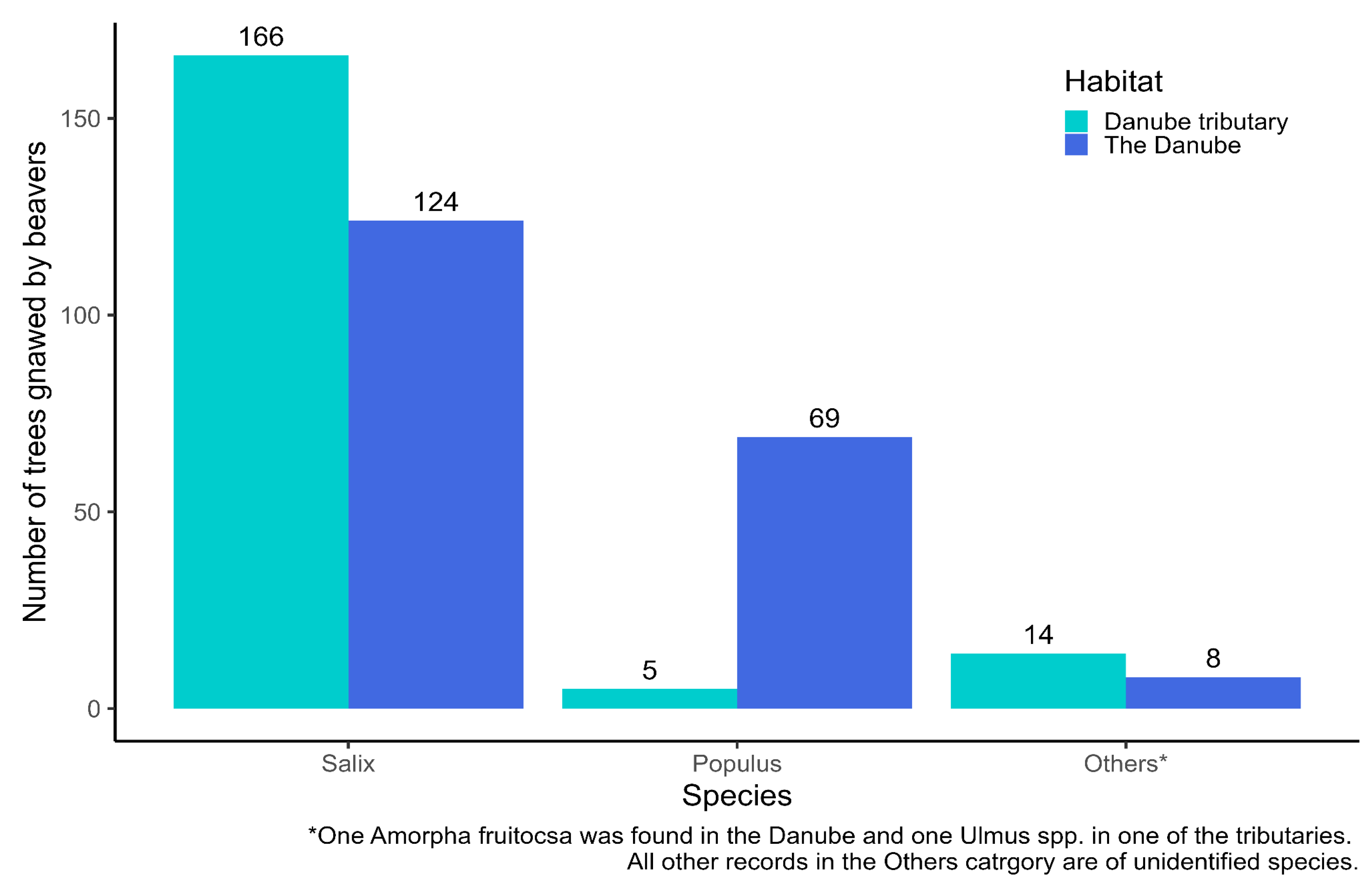
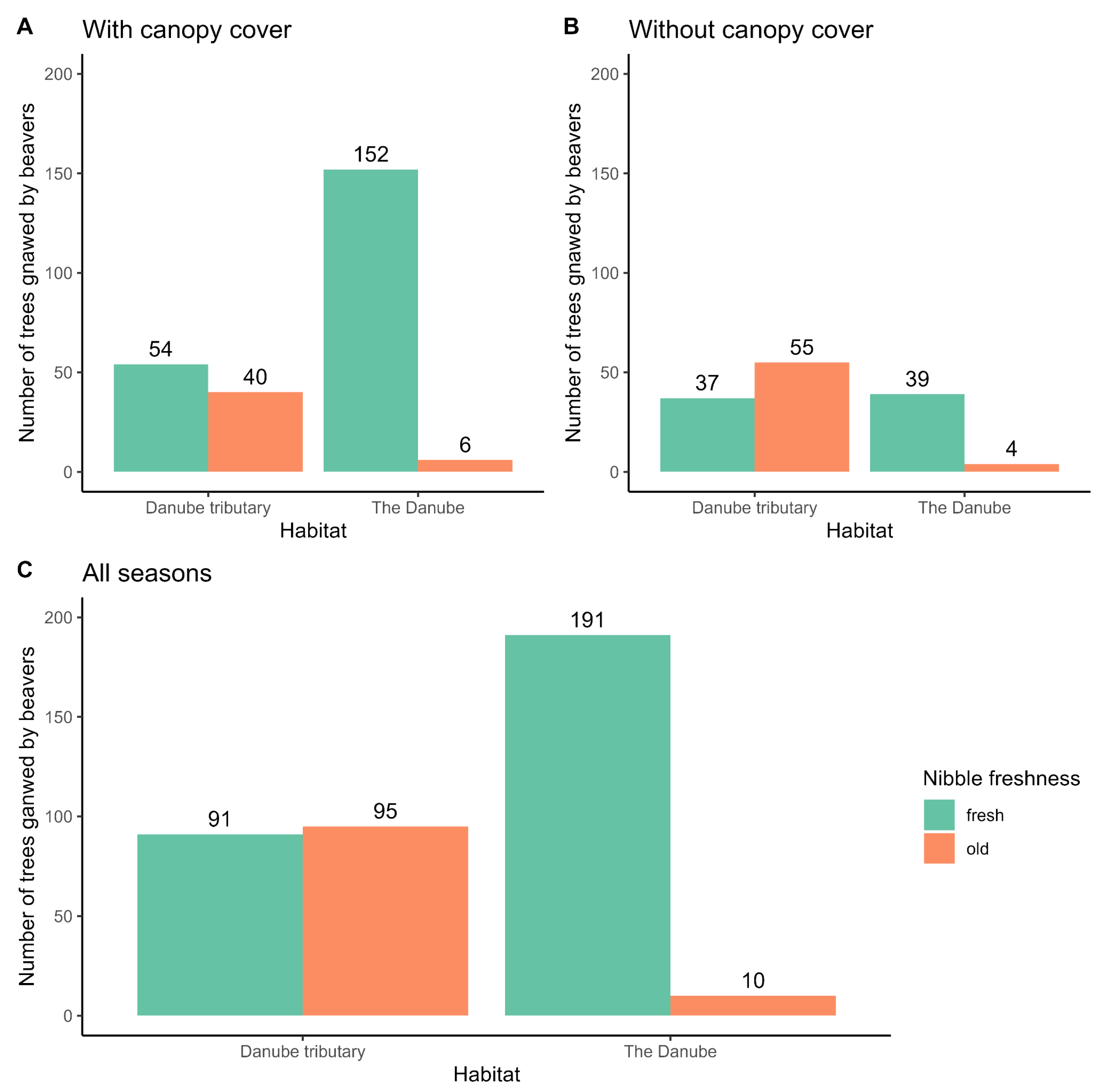
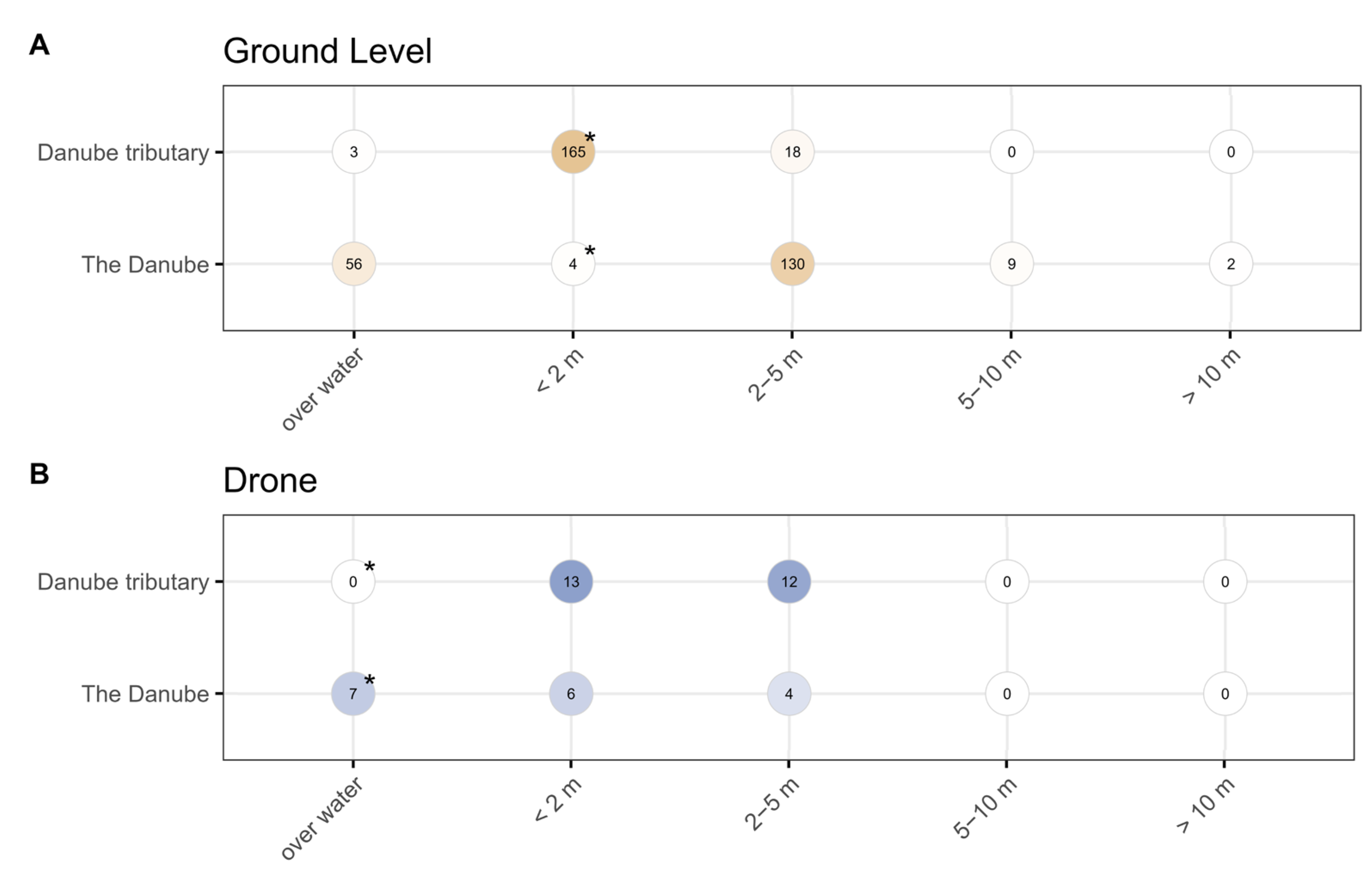
In total, 429 gnawed trees were recorded within 10 transects on five locations using both methods—ground-level survey and UAV-track—and during two seasons where the vegetation was with and without canopy cover (Figure 2). Of the total number of recorded gnawed trees, 387 were recorded via ground-level methods and 42 via UAV-based methods, where some trees, naturally, were noted using both methods. The distribution of the trees between “distance from the riverbank” classes was not multinomial (Pearson’s chi-square (ground level data): chi-squared = 296.61, df = 4, p < 0.001). The vast majority of the damaged trees were located close to the water course, with only two standing more than 10 metres away (Figure 3). The trees at the tributaries were mostly 2–5 m away from the rivers, while at the Danube, most of them were either over the water or in the 5–10 m zone. The distribution of the gnawed trees between the size classes was different between the two habitats (Pearson’s chi-square (ground-level data): chi-squared = 161.3; df = 6; p < 0.001), with gnawed trees and branches along the Danube River being considerably smaller than those on the tributaries (Figure 4A). Many of the trees along the Danube were submerged due to the high water level during data collection, and this greatly affected the size of the wood that beavers had access to (Figure 4B,C). The most preferred tree species in both habitats were willows (Salix spp.), followed by poplars (Populus spp.) on the Danube bank (Figure 5). Mainly, freshly made gnaws were observed on the Danube coast, whereas both fresh and old gnaws were mapped on the tributaries (Figure 6).
No attempts for dams were found. Feeding stations were not identified, and burrow entrances, channels, and trails were detected only at low water levels.

3.2. Method Application and Comparison

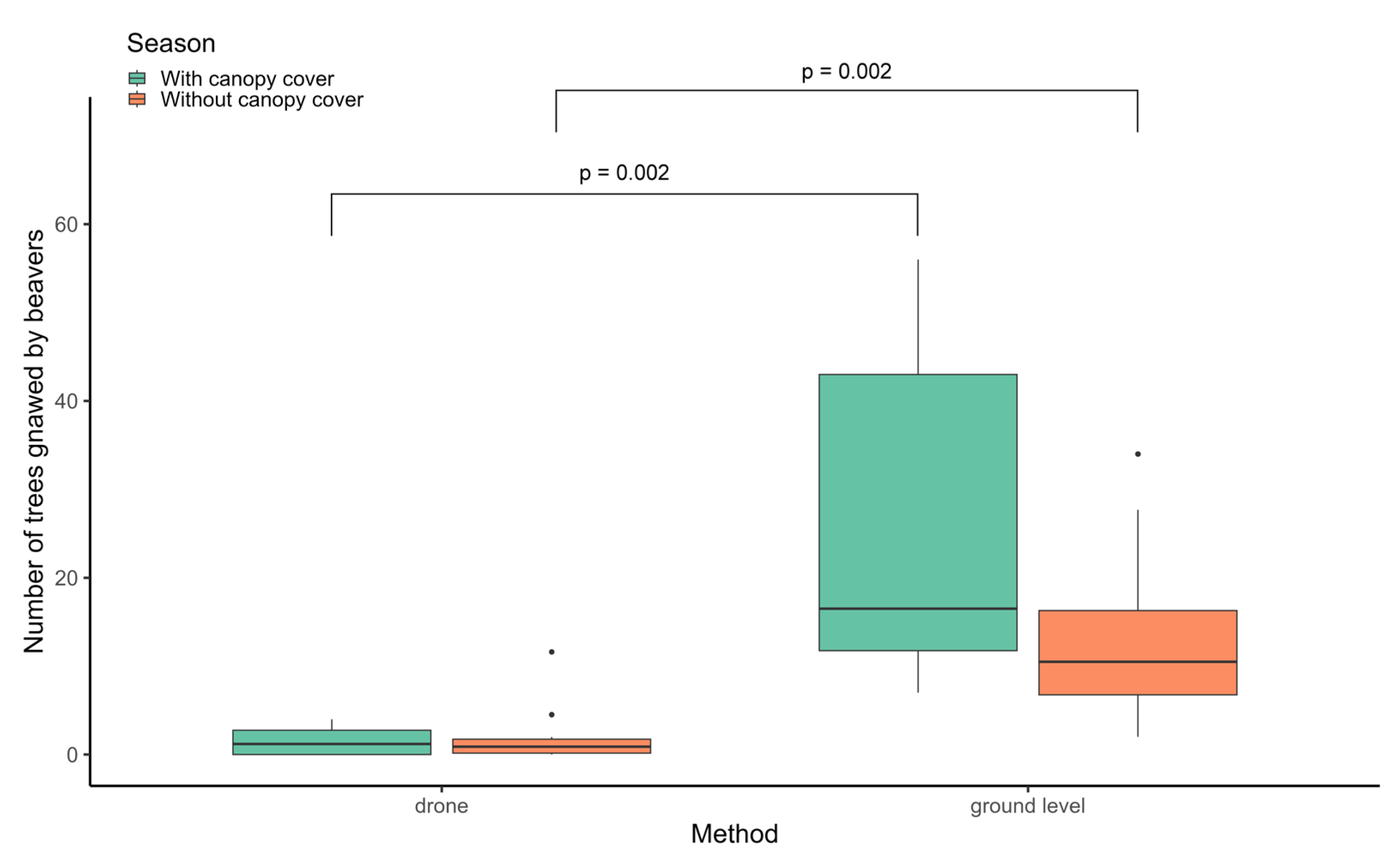
The difference in the number of detected gnawed trees between methods (ground level observation and via drone) per 300 m transect was not normally distributed (Shapiro–Wilk normality test: W = 0.801; p = 0.001 (ground level); W = 0.670, p < 0.001 (drone)). A non-parametric comparison revealed a significant difference in detection success between methods when disregarding seasonality (Wilcoxon paired-samples test with continuity correction: V = 210, p < 0.001) (Figure 7). A comparison between seasons within methods revealed no significant difference for either method (Wilcoxon paired-samples test with continuity correction (drone data): V = 25, p = 0.813; Wilcoxon’s signed-rank exact test (ground level data): V = 42, p = 0.160). However, when comparing the quantity of detections between methods in the same season, significant differences arise (Wilcoxon’s paired signed-rank exact test (with canopy cover): V = 55, p = 0.002; Wilcoxon’s paired signed-rank exact test (without canopy cover): V = 55, p = 0.002). This demonstrates that the quantity of detected beaver signs is independent of canopy cover and that ground-level methods are capable of detecting a far greater number of signs than what can be detected with a UAV.
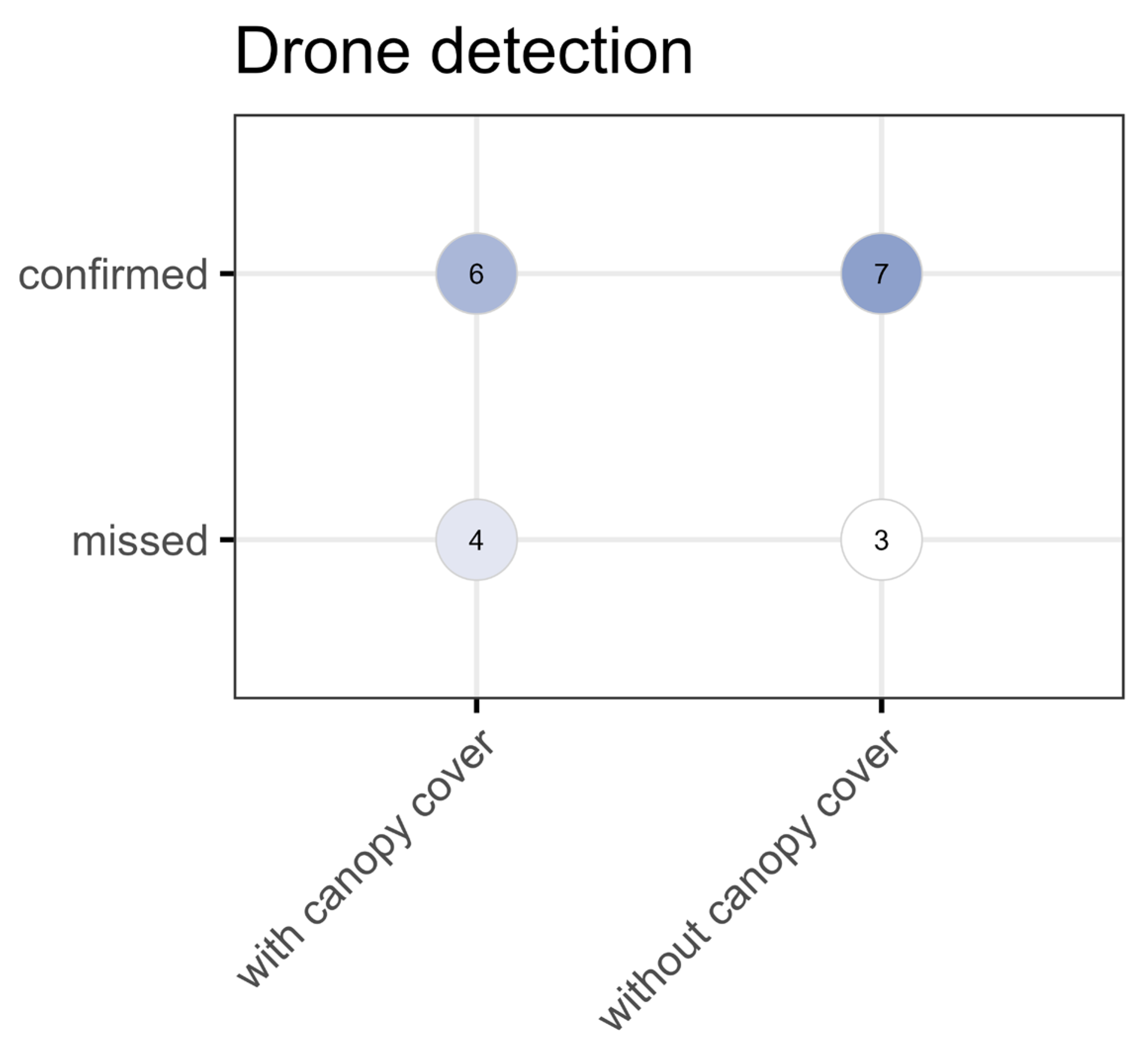
In order to further test the difference in the success of drone detection between seasons, a crosstab was made (Figure 8). The data showed no statistical difference in the detection of beaver presence between seasons, despite the small sample size (Fisher’s exact test: p = 1, odds ratio = 0.657). In every location, there is only one transect (out of two) where the drone completely missed beaver presence, except for Skomen with canopy cover, where both drone transects were not able to detect beaver presence.
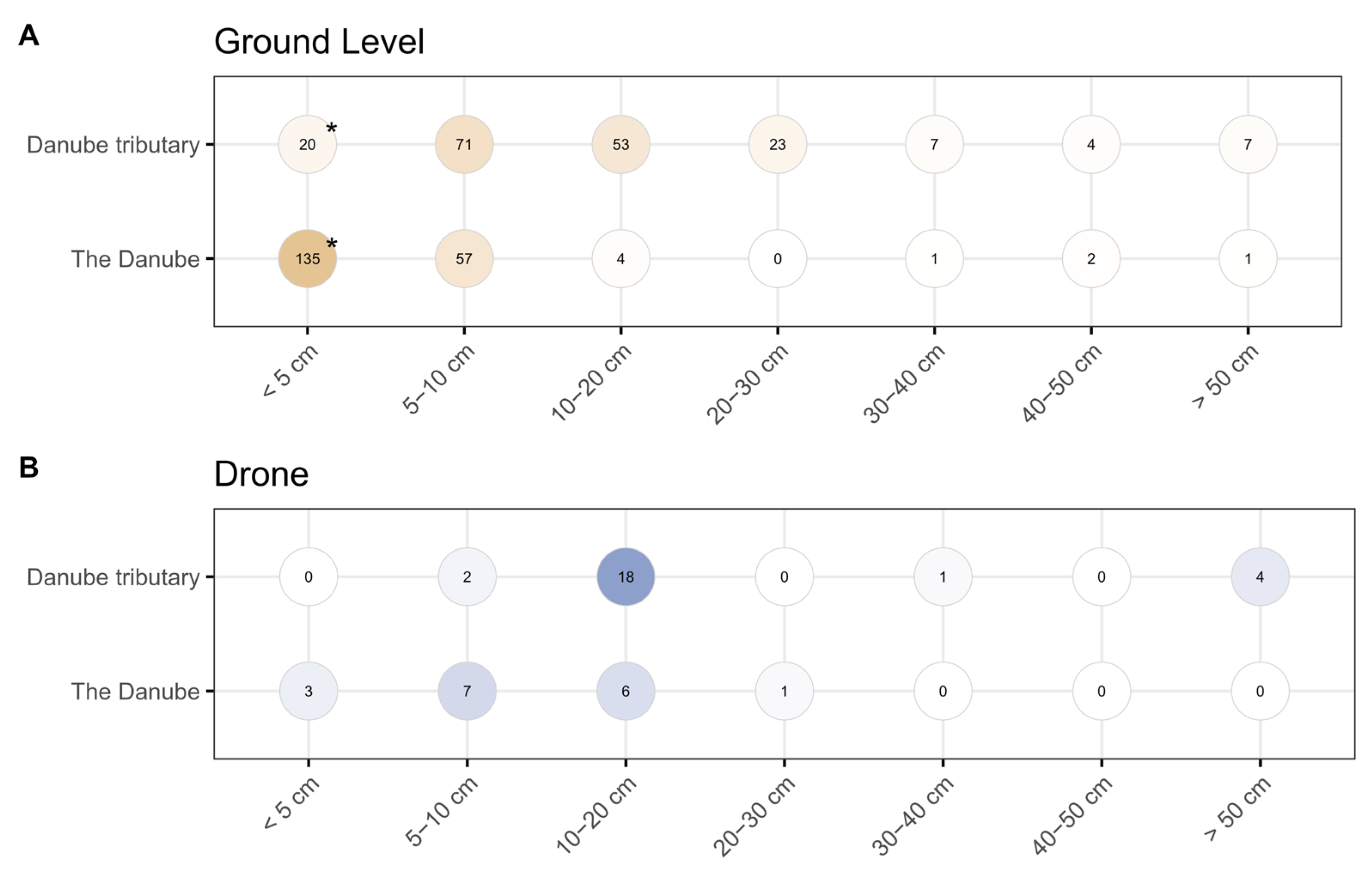
In terms of the ability of each method to detect trees based on their size and distance from water, the UAV was far less capable of detecting gnawed trees that were further than 5 m from the water (Figure 9) and is best suited to observe medium-sized trees of between 5 and 20 cm diameter (Figure 10). Further information is available in the Supplementary Materials regarding the residuals (tree thickness—Figure S1, water distance—Figure S3) and percentage contribution of each value to the chi-square statistic (tree thickness—Figure S2, water distance—Figure S4).
The altitude at which we were able to detect beaver gnaws in the drone-recorded video was dependent on the diameter of the tree the gnaw was on (Figure 11). Altitude data was non-parametric (Shapiro–Wilk normality test, W = 0.8929, p = 0.002). After a logarithmic transformation, the data fitted model assumptions (Shapiro–Wilk normality test W = 0.9583, p = 0.191; Levene’s test: F(5,30) = 0.601, p = 0.699). A one-way ANOVA revealed a significant difference in the relative altitude between at least two tree thickness categories (F(5,30) = 4.159, p = 0.006). A post hoc Tukey’s HSD test for multiple comparisons showed that two relationships were significantly different—the altitudes detecting <5 cm and >50 cm diameter trees (p = 0.005; CI = [0.4096, 2.9612]) and between 5 and 10 cm and <5 cm diameter trees (p = 0.033; CI = [0.08252, 2.8103]). To confirm the validity of the test, the residuals of the ANOVA were verified to be normally distributed (Shapiro–Wilk normality test, W = 0.9723, p = 0.491). The lowest altitude a gnaw was detected was at 1.4 m relative altitude (<5 cm diameter tree), while the highest altitude was 18.9 m for a 5–10 cm diameter tree (Table S2).

4. Discussion

4.1. Signs of Beaver Activity

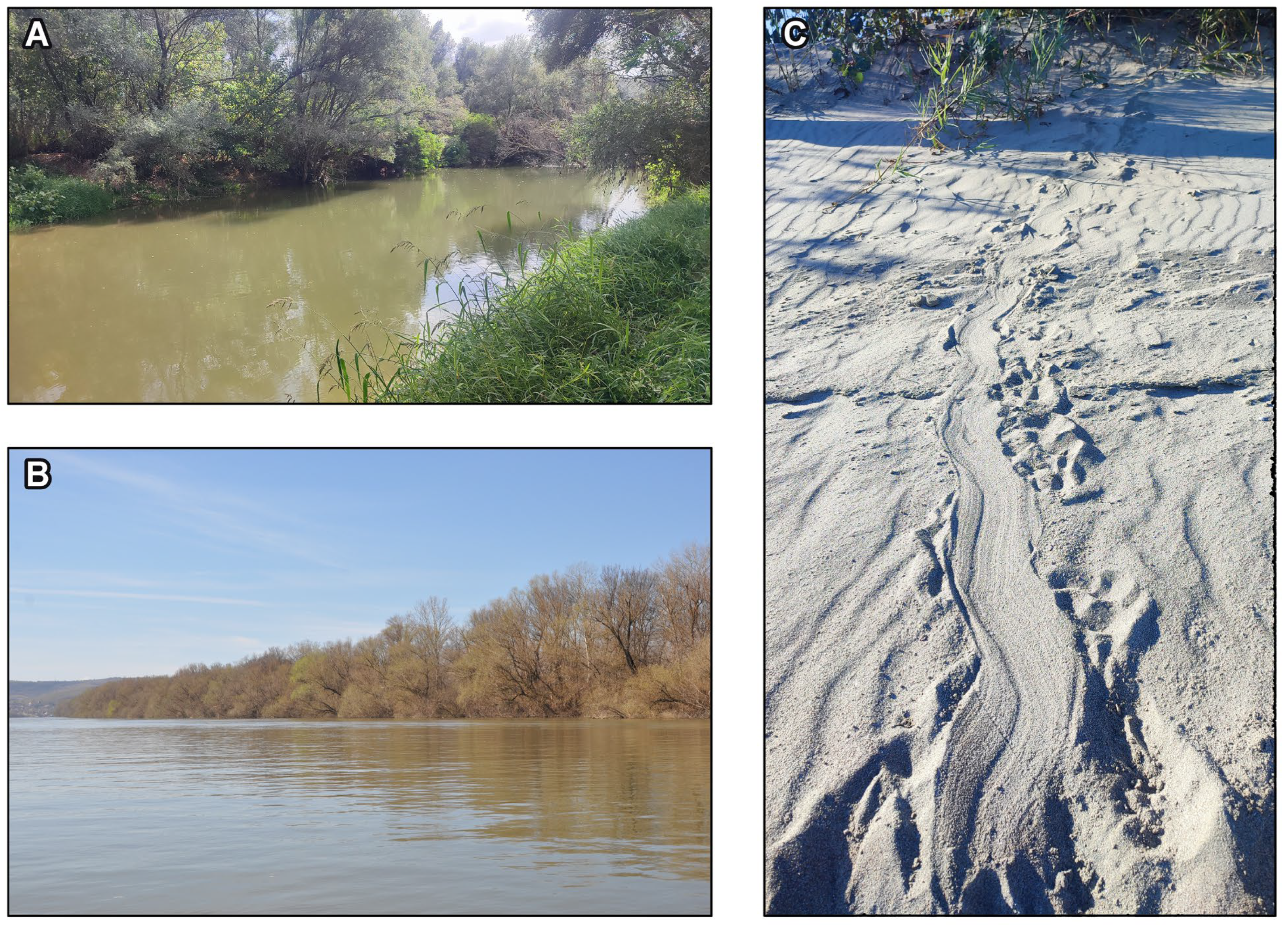
The preferred tree species—willow and poplar—are in accordance with previous studies of beaver activity in the Mediterranean region [38]. The coniferous trees that have also occasionally been reported to be stripped by beavers in the Northern part of the species’ range [39,40] are absent in the area of the Danube River and the lower courses of its tributaries. According to our field observations, the beavers’ diet choice reflects the local vegetation availability and confirms their reputation as an “opportunistic generalist” [41]. Their observed preference for stem size (mainly diameter under 10 cm; Figure 4A) and the distance from water (less than 5 m; Figure 3) of the damaged trees was also similar to earlier reports [42,43]. A proclivity for stems between 2 and 8 cm was also found in another recently established beaver population in Southern Europe—in Tuscany, Italy [44]. The difference in the size classes of the gnawed trees and branches between the Danube and its tributaries corresponds to the characteristics of the two habitats. On one hand, the tributaries’ riverbanks are relatively constant, and the water level only sees small variations of 1–2 m annually. Thus, the riparian vegetation community is more mature, with the occurrence of large trees near the water (Figure 12A). On the other hand, the large variation in water level at the Danube River leads to dynamic riverbanks and young pioneer willows and poplar settlements and coppices in the zone between the lowest and highest water level [45]. These coppices are a perfect food item for the beaver. Moreover, they are partially submerged in water during parts of the year. The species’ monitoring, either using ground-level or aerial approaches, is very difficult in such habitats, no matter the water level—the gnawing signs are invisible at first sight while also being small and hidden in the bushy coppices, and the fallen trees are absent, dragged away by beavers or the river itself (Figure 12B). Although, at low water levels, the paths and channels on the alluvial deposits and occasionally abandoned burrow entrances give away the beaver’s presence (Figure 12C).

4.2. Methods Application and Comparison

The results obtained during this study show that monitoring via UAV-based transects using middle-class commercially available devices is not an appropriate method for quantitative estimation of beaver activity or related beaver population size. However, these are still mostly reliable for qualitative detection of beaver presence via detecting gnawed trees or other beaver-made structures. UAV data collection is especially valuable when the riverbank is not accessible due to dense vegetation or high water levels, particularly on the Danube River. When applying standard ground-level methods, it is possible to use a boat or kayak, but it requires additional preparation and planning, involvement of more staff, and higher costs. Last but not least, a UAV recording takes only several minutes, which is considerably shorter than the time needed to apply classical transect methods, including tree measurements and GPS-georeferencing, which can take several hours. Thus, UAVs make fieldwork expeditions much more efficient. All these considerations are in accordance with Vera-Amaro et al. [46], who also conclude that employing UAVs for data collection presents numerous advantages when compared to traditional methods, such as energy consumption efficiency, the ability to access locations that are difficult or risky for humans or land vehicles, and cost-effectiveness compared to manned aerial vehicles. Surprisingly, the impact of the canopy cover on the method efficiency was not significant. The fact that the drone was piloted as low around the vegetation (1.4 to 18.9 m at the detection events, in comparison to the average height of 52 m in other studies, [36]) allowed us to record gnawed trees even in the presence of canopy cover. The use of video recording instead of photos also enabled us to explore the vegetation at different angles in search of gnawing signs. Taking into account that 50% of the damaged trees and branches detected via ground-level transects had a diameter of <5 cm (Figure 3), we consider using a camera with higher resolution the best way to improve the effectiveness of the method. It would be especially beneficial at the Danube River, where this size class is prevalent (Figure 3). Also, we were able to detect the smallest signs only when the drone was at a very low altitude (Figure 11). Such flights were not always possible due to technical limitations, and thus higher-class devices with better control functions and more distance sensors would be more effective.
Regarding the ethical considerations in applying UAV-based monitoring, beavers are mainly nocturnal, making them less vulnerable to disturbance in comparison to other animals [47]. Moreover, we assume that the drone is less disturbing than ground-level survey, as we witnessed a tail-slapping response twice during ground-level transect surveys and none during filming with the UAVs.

5. Conclusions and Directions for Future Improvement

The gnawing preferences of the newly established populations of C. fiber in Bulgaria are concurrent with the observations of studies elsewhere in their range, where willows and poplars constitute the majority of their diet. Gnawed trees are mostly under 30 cm in diameter and no more than 10 m from the riverbank. This small range of activity along the riverbank, in combination with the absence of dam structures, makes us hope that the risk of severe conflict with foresters is currently limited. Based on our field observations, we assume that a big challenge for the beavers associated with the Danube River is the large variation in the water level, between 5 and 6.5 m annually for 2023 and 2024 [37]. During low-water periods, the entrances of beavers’ lodges were visible 1–2 m above the water surface on the bank opposite Skomen Island, apparently abandoned. There are reports of beavers coping with such extreme fluctuations in water levels (i.e., between 6 and 7 m annually) by having several burrows and lodges [34], recreating lodges on higher ground for only a few days, or by using floating wood for resting [48,49]. The exact strategy that allowed the species to successfully establish along the whole Bulgarian bank of the Danube (Svilen Cheshmedzhiev, BSPB, pers. comms.), given the mentioned severe and often unpredictable fluctuations, should be a subject of further investigation.
These conditions give one more justification for the development of UAV-based methods for monitoring. Our results showed that the UAV-recorded transects were a relatively reliable method for detecting the species’ presence but underestimated the quantities of beaver gnaws in comparison to ground-based transect approaches. Filming transects with a UAV is a cost-effective and time-efficient method for beaver mapping and monitoring but could be improved by using higher-resolution cameras and deep learning approaches (such as convolutional neural networks) for data processing [31,50]. So far, no beaver-built dams have been found, but we expect such structures to appear when the species reaches smaller watercourses upstream. At that point, other methods, like multispectral UAV imagery, can be applied to detect the impact on the vegetation [51].
Having a rapid and efficient method of observation can be a valuable tool to track the progress of this species’ recolonization and identify the areas to be put under legal protection, leading to more effective conservation efforts.

Supplementary Materials

The following supporting information can be downloaded at https://www.mdpi.com/article/10.3390/conservation5040074/s1: Table S1. Descriptive statistics of the number of trees gnawed by beavers that were detected in a 300 m transect using either ground-level methods or drone footage. The transects were made at five localities in north Bulgaria. Each transect was surveyed during two different seasons—with and without canopy cover; Table S2. Descriptive statistics of the raw data of the dependence of relative altitude of observation (the difference between total altitude of the drone and the altitude of its takeoff point) and the diameter of the trees on which beaver gnaws were detected; Figure S1. Residuals of the Pearson’s chi-square test on the size categories of gnawed trees that have been recorded using ground-level and drone methods. Pearson’s chi-square for ground-level data was chi-squared = 161.3, df = 6, p < 0.001. Pearson’s chi-square for drone data was chi-squared = 16.866, df = 5, p = 0.005; Figure S2. Percentage contribution to chi-square statistic of the distance categories of gnawed trees that have been recorded using ground-level (A) and drone (B) methods. Pearson’s chi-square for ground-level data was chi-squared = 296.61, df = 4, p < 0.001. Pearson’s chi-square for drone data was chi-squared = 12.509, df = 2, p = 0.001; Figure S3. Residuals of the Pearson’s chi-square test on the distance categories of gnawed trees that have been recorded using ground-level and drone methods. Pearson’s chi-square for ground-level data was chi-squared = 296.61, df = 4, p < 0.001. Pearson’s chi-square for drone data was chi-squared = 12.509, df = 2, p = 0.001. Figure S4. Percentage contribution to chi-square statistic of the size categories of gnawed trees that have been recorded using ground-level (A) and drone (B) methods. Pearson’s chi-square for ground-level data was chi-squared = 161.3, df = 6, p < 0.001. Pearson’s chi-square for drone data was chi-squared = 16.866, df = 5, p = 0.005.

Author Contributions

Conceptualization, M.K., V.T. and Y.K.; data curation, P.K.N.; formal analysis, P.K.N.; funding acquisition, M.K.; investigation, M.K., P.K.N., V.T., B.Z. and Y.K.; methodology, M.K., P.K.N., V.T., B.Z. and Y.K.; project administration, M.K.; resources, M.K. and Y.K.; supervision, M.K. and Y.K.; validation, P.K.N.; visualization, P.K.N.; writing—original draft, M.K. and P.K.N.; writing—review and editing, M.K., P.K.N., B.Z. and Y.K. All authors have read and agreed to the published version of the manuscript.

Funding

This study was funded by the Bulgarian National Science Fund, grant contract KP-06-M61/1 of 13 December 2022, ‘Return or Invasion? Study of the distribution and ecological patterns of beaver (Castor fiber) in Bulgaria after more than 150 years of absence. The authors have no relevant financial or non-financial interests to disclose.

Institutional Review Board Statement

Not applicable.

Informed Consent Statement

Not applicable.

Data Availability Statement

The original contributions presented in the study are included in the article and Supplementary Materials; further inquiries can be directed to the corresponding author.

Acknowledgments

We are indebted to Milen Ignatov (State Forest Enterprise Byala, Territorial Unit of the North-Central State Enterprise—Gabrovo, Byala, Bulgaria) for his aid in identifying appropriate study sites and continually monitoring beaver activity in his area. We greatly acknowledge Radoslav Yordanov, the kayak club ‘Svishtov’ and Svilen Cheshmedzhiev (BSPB), for their assistance in the fieldwork. We thank Milcho Todorov (IBER-BAS) for providing data on the beavers’ occurrence on Skomen Island, and Borislava Margaritova for assisting with the Danube river levels data.

Conflicts of Interest

The authors declare no conflicts of interest.

References

  1. Dewas, M.; Herr, J.; Schley, L.; Angst, C.; Manet, B.; Landry, P.; Catusse, M. Recovery and Status of Native and Introduced Beavers Castor fiber and Castor Canadensis in France and Neighbouring Countries: Status of Beavers in Western Continental Europe. Mamm. Rev. 2012, 42, 144–165. [Google Scholar] [CrossRef]
  2. Boev, Z.; Spassov, N. Past Distribution of Castor fiber in Bulgaria: Fossil, Subfossil and Historical Records (Rodentia: Castoridae). Lynx 2019, 50, 37–49. [Google Scholar]
  3. Chipev, N.; Beron, P.; Biserkov, V. Red Data Book of the Republic of Bulgaria. Volume II: Animals; Golemansky, V., Peev, D., Chipev, N., Beron, P., Biserkov, V., Eds.; Bulgarian Academy of Sciences and Ministry of Environment and Water: Sofia, Bulgaria, 2015. [Google Scholar]
  4. Frosch, C.; Kraus, R.H.S.; Angst, C.; Allgöwer, R.; Michaux, J.; Teubner, J.; Nowak, C. The Genetic Legacy of Multiple Beaver Reintroductions in Central Europe. PLoS ONE 2014, 9, e97619. [Google Scholar] [CrossRef]
  5. Mai, S.; Weinhardt, M.; Allgöwer, R.; Merker, S. Recolonizing Lost Habitat—How European Beavers (Castor fiber) Return to South-Western Germany. Mamm. Res. 2018, 63, 255–265. [Google Scholar] [CrossRef]
  6. Galanaki, A.; Kominos, T.; Youlatos, D.; Campbell-Palmer, R.; Schwab, G.; Puttock, A.; Gow, D.; Politis, G.; Jones, N.; Dimitrakopoulos, P.; et al. Preparatory Actions for the Reintroduction of the Eurasian Beaver Castor fiber in Greece. In Proceedings of the 9th International Beaver Symposium (9IBS), Brașov, Romania, 18–22 September 2022. [Google Scholar]
  7. Ionescu, G.; Ionescu, O.; Jurj, R.; Paşca, C.; Popa, M.; Popescu, I.; Sârbu, G.; Scurtu, M.; Vişan, D. Castorul în România. Monografie; Editura Silvică: Bucharest, Romania, 2010; ISBN 978-606-8020-09-9. [Google Scholar]
  8. Kiss, J.; Vasile, A.; Bozagievici, R.; Dorosencu, A.; Marinov, M. Considerations Regarding the Occurrence of the Eurasian Beaver (Castor fiber Linnaeus 1758) in the Danube Delta (Romania). Sci. Ann. Danub. Delta Inst. 2012, 18, 49–56. [Google Scholar] [CrossRef]
  9. Bouroș, G.; Paladi, V.; Cassir, P. First Report of Eurasian Beaver (Castor fiber Linnaeus 1758) in Republic of Moldova. North West. J. Zool. 2021, 18, e211701. Available online: http://biozoojournals.ro/nwjz/index.html (accessed on 18 November 2025).
  10. Kodzhabashev, N.D.; Tsvyatkova, D.D.; Krastev, K.V.; Ignatov, M.M.; Teofilova, T.M. The Eurasian Beaver Castor fiber Linnaeus, 1758 (Rodentia: Castoridae) Is Returning to Bulgaria. Acta Zool. Bulg. 2021, 73, 587–595. [Google Scholar]
  11. Natchev, N.D.; Nedyalkov, N.P.; Kaschieva, M.Z.; Koynova, T.V. They Are Back: Notes on the Presence and the Life Activities of the Eurasian Beaver (Castor fiber L. 1758) from the Territory of Bulgaria. Ecol. Balk. 2021, 13, 179. [Google Scholar]
  12. Bobeva, A.; Nikova, P.; Borissov, S.; Koshev, Y.; Todorov, V.; Dimitrova, B.; Ignatov, M.; Rolečková, B.; Uhlíková, J.; Kachamakova, M. Recolonisation or Invasion? First Insights into the Origin of the Newly Established Beaver Populations in Bulgaria Using eDNA. J. Vert. Biol. 2025, 74, 24199. [Google Scholar] [CrossRef]
  13. Graham, H.; Puttock, A.; Wheaton, J.M.; Macfarlane, W.; Elliott, M.; Anderson, K.; Brazier, R.E. Predicting the Expansion and Impact of the Eurasian Beaver (Castor fiber) at Catchment Scales. In Proceedings of the EGU General Assembly Conference Abstracts, Vienna, Austria, 8–13 April 2018; Volume 20, p. 782. [Google Scholar]
  14. Wright, J.P.; Jones, C.G.; Flecker, A.S. An Ecosystem Engineer, the Beaver, Increases Species Richness at the Landscape Scale. Oecologia 2002, 132, 96–101. [Google Scholar] [CrossRef]
  15. Ciechanowski, M.; Kubic, W.; Rynkiewicz, A.; Zwolicki, A. Reintroduction of Beavers Castor fiber May Improve Habitat Quality for Vespertilionid Bats Foraging in Small River Valleys. Eur. J. Wildl. Res. 2011, 57, 737–747. [Google Scholar] [CrossRef]
  16. Rosell, F.; Lodberg-Holm, H.K.; Meijer, F.; Midbøe, M. A Home for the Many? Beaver Lodges as Hotspots for Bird and Mammal Diversity. Sci. Total Environ. 2025, 990, 179898. [Google Scholar] [CrossRef]
  17. BISE European Beaver—Castor fiber. Available online: https://biodiversity.europa.eu/species/1377 (accessed on 29 August 2025).
  18. Hart, J.; Rubinato, M.; Lavers, T. An Experimental Investigation of the Hydraulics and Pollutant Dispersion Characteristics of a Model Beaver Dam. Water 2020, 12, 2320. [Google Scholar] [CrossRef]
  19. Macfarlane, W.W.; Wheaton, J.M.; Bouwes, N.; Jensen, M.L.; Gilbert, J.T.; Hough-Snee, N.; Shivik, J.A. Modeling the Capacity of Riverscapes to Support Beaver Dams. Geomorphology 2017, 277, 72–99. [Google Scholar] [CrossRef]
  20. Arismendi, I.; Penaluna, B.E.; Jara, C.G. Introduced Beaver Improve Growth of Non-Native Trout in Tierra Del Fuego, South America. Ecol. Evol. 2020, 10, 9454–9465. [Google Scholar] [CrossRef] [PubMed]
  21. Leary, R.J. Landscape and Habitat Attributes Influencing Beaver Distribution; Utah State University: Logan, UT, USA, 2012. [Google Scholar]
  22. Havens, R.P.; Crawford, J.C.; Nelson, T.A. Survival, Home Range, and Colony Reproduction of Beavers in East-Central Illinois, an Agricultural Landscape. Amer. Midl. Nat. 2013, 169, 17–29. [Google Scholar] [CrossRef]
  23. Swank, W.G.; Glover, F.A. Beaver Censusing by Airplane. J. Wildl. Manag. 1948, 12, 214. [Google Scholar] [CrossRef]
  24. Payne, N.F. Accuracy of Aerial Censusing for Beaver Colonies in Newfoundland. J. Wildl. Manag. 1981, 45, 1014–1016. [Google Scholar] [CrossRef]
  25. Swenson, J.E.; Knapp, S.J.; Martin, P.R.; Hinz, T.C. Reliability of Aerial Cache Surveys to Monitor Beaver Population Trends on Prairie Rivers in Montana. J. Wildl. Manag. 1983, 47, 697–703. [Google Scholar] [CrossRef]
  26. Diez, Y.; Kentsch, S.; Fukuda, M.; Caceres, M.L.; Moritake, K.; Cabezas, M. Deep Learning in Forestry Using UAV-Acquired RGB Data: A Practical Review. Remote Sens. 2021, 13, 2837. [Google Scholar] [CrossRef]
  27. Gedeon, C.I.; Árvai, M.; Szatmári, G.; Brevik, E.C.; Takáts, T.; Kovács, Z.A.; Mészáros, J. Identification and Counting of European Souslik Burrows from UAV Images by Pixel-Based Image Analysis and Random Forest Classification: A Simple, Semi-Automated, yet Accurate Method for Estimating Population Size. Remote Sens. 2022, 14, 2025. [Google Scholar] [CrossRef]
  28. Hodgson, J.C.; Mott, R.; Baylis, S.M.; Pham, T.T.; Wotherspoon, S.; Kilpatrick, A.D.; Raja Segaran, R.; Reid, I.; Terauds, A.; Koh, L.P. Drones Count Wildlife More Accurately and Precisely than Humans. Methods Ecol. Evol. 2018, 9, 1160–1167. [Google Scholar] [CrossRef]
  29. Puttock, A.K.; Cunliffe, A.M.; Anderson, K.; Brazier, R.E. Aerial Photography Collected with a Multirotor Drone Reveals Impact of Eurasian Beaver Reintroduction on Ecosystem Structure. J. Unmanned Veh. Syst. 2015, 3, 123–130. [Google Scholar] [CrossRef]
  30. Jones, B.M.; Tape, K.D.; Clark, J.A.; Bondurant, A.C.; Ward Jones, M.K.; Gaglioti, B.V.; Elder, C.D.; Witharana, C.; Miller, C.E. Multi-Dimensional Remote Sensing Analysis Documents Beaver-Induced Permafrost Degradation, Seward Peninsula, Alaska. Remote Sens. 2021, 13, 4863. [Google Scholar] [CrossRef]
  31. Chawathe, S.P.; Saffaf, R.; Garbagna, L.; Saheer, L.B.; Oghaz, M.M.; Wheeler, H.C. Beaver Habitat Terrain Identification Using Aerial Imagery. In Proceedings of the Ninth International Congress on Information and Communication Technology, London, UK, 19–22 February 2024; Yang, X.-S., Sherratt, S., Dey, N., Joshi, A., Eds.; Springer Nature: Singapore, 2024; pp. 105–118. [Google Scholar]
  32. Bradley, I.; Deleva, S. Going Against the Flow: Notes on the Re-Colonisation of the Eurasian Beaver Castor fiber Linnaeus, 1758 in Northern Bulgaria. ZooNotes 2025, 266, 1–4. [Google Scholar] [CrossRef]
  33. Marinova, P.; Chernikov, C.; Petkov, N.; Nedyalkov, N.; Natchev, N. They Are Heading South -New Data from the Distribution of the Eurasian Beaver (Castor fiber) in Bulgaria. ZooNotes 2025, 265, 1–4. [Google Scholar] [CrossRef]
  34. Rosell, F.; Campbell-Palmer, R. Beavers: Ecology, Behaviour, Conservation, and Management; Oxford University Press: Oxford, UK, 2021; ISBN 978-0-19-187286-0. [Google Scholar]
  35. Rahman, D.A.; Setiawan, Y. Possibility of Applying Unmanned Aerial Vehicle and Thermal Imaging in Several Canopy Cover Class for Wildlife Monitoring—Preliminary Results. In Proceedings of the E3S Web of Conferences, Online, 23–25 November 2020; Volume 211. [Google Scholar]
  36. Hvala, A.; Rogers, R.M.; Alazab, M.; Campbell, H.A. Supplementing Aerial Drone Surveys with Biotelemetry Data Validates Wildlife Detection Probabilities. Front. Conserv. Sci. 2023, 4, 1203736. [Google Scholar] [CrossRef]
  37. Executive Agency for Exploration and Maintenance of the Danube River Water Level in the Bulgarian section of the Danube River. Available online: https://www.appd-bg.org/ (accessed on 29 August 2025).
  38. Trentanovi, G.; Viviano, A.; Mazza, G.; Busignani, L.; Magherini, E.; Giovannelli, A.; Traversi, M.L.; Mori, E. Riparian Forests Throwback at the Eurasian Beaver Era: A Woody Vegetation Assessment for Mediterranean Regions. Biodivers. Conserv. 2023, 32, 4259–4274. [Google Scholar] [CrossRef]
  39. Iason, G.R.; Sim, D.A.; Brewer, M.J.; Moore, B.D. The Scottish Beaver Trial: Woodland Monitoring 2009–2013, Final Report; Scottish Natural Heritage: Inverness, UK, 2014; p. 82. [Google Scholar]
  40. Reynolds, P. European Beaver and Woodland Habitats: A Review; Scottish Natural Heritage: Inverness, UK, 2000. [Google Scholar]
  41. Vorel, A.; Válková, L.; Hamšíková, L.; Maloň, J.; Korbelová, J. Beaver Foraging Behaviour: Seasonal Foraging Specialization by a Choosy Generalist Herbivore. Behav. Ecol. Sociobiol. 2015, 69, 1221–1235. [Google Scholar] [CrossRef]
  42. Misiukiewicz, W.; Gruszczynska, J.; Grzegrzółka, B.; Januszewicz, M. Impact of the European Beaver (Castor fiber L.) Population on the Woody Vegetation of Wigry National Park. Rocz. Nauk. Pol. Tow. Zootech. 2016, 12, 45–64. [Google Scholar] [CrossRef]
  43. Jackowiak, M.; Busher, P.; Krauze-Gryz, D. Eurasian Beaver (Castor fiber) Winter Foraging Preferences in Northern Poland—The Role of Woody Vegetation Composition and Anthropopression Level. Animals 2020, 10, 1376. [Google Scholar] [CrossRef] [PubMed]
  44. Preti, F.; Saracino, R.; Signorile, A.V.; Dani, A.; Pucci, C.; Rillo Migliorini Giovannini, M. Beavers as Water Bioengineers: Effects on the Bank Roughness in the Early Years of New Settlement in Tuscany. J. Ecohydraul. 2025, 1–15. [Google Scholar] [CrossRef]
  45. Schneider-Binder, E. Floodplain Forests along the Lower Danube. Transylv. Rev. Syst. Ecol. Res. 2009, 8, 113–136. [Google Scholar]
  46. Vera-Amaro, R.; Rivero-Ángeles, M.E.; Luviano-Juárez, A. Data Collection Schemes for Animal Monitoring Using WSNs-Assisted by UAVs: WSNs-Oriented or UAV-Oriented. Sensors 2020, 20, 262. [Google Scholar] [CrossRef] [PubMed]
  47. Brunton, E.; Bolin, J.; Leon, J.; Burnett, S. Fright or Flight? Behavioural Responses of Kangaroos to Drone-Based Monitoring. Drones 2019, 3, 41. [Google Scholar] [CrossRef]
  48. Nitsche, K.-A. Behaviour of Beavers (Castor fiber albicus Matschie, 1907) during the Flood Periods. In Proceedings of the 2nd European Beaver Symposium, Białowieża, Poland, 27–30 September 2000; Carpathian Heritage Society: Białowieża, Poland, 2000; pp. 85–90. [Google Scholar]
  49. Kurstjens, G.; Bekhuis, J. Adaptation of Beavers (Castor fiber) to Extreme Water Level Fluctuations and Ecological Implications. Lutra 2004, 46, 147–151. [Google Scholar]
  50. Fairfax, E.; Zhu, E.; Clinton, N.; Maiman, S.; Shaikh, A.; Macfarlane, W.W.; Wheaton, J.M.; Ackerstein, D.; Corwin, E. EEAGER: A Neural Network Model for Finding Beaver Complexes in Satellite and Aerial Imagery. J. Geophys. Res. Biogeosci. 2023, 128, e2022JG007196. [Google Scholar] [CrossRef]
  51. Askam, E.; Nagisetty, R.M.; Crowley, J.; Bobst, A.L.; Shaw, G.; Fortune, J. Satellite and sUAS Multispectral Remote Sensing Analysis of Vegetation Response to Beaver Mimicry Restoration on Blacktail Creek, Southwest Montana. Remote Sens. 2022, 14, 6199. [Google Scholar] [CrossRef]
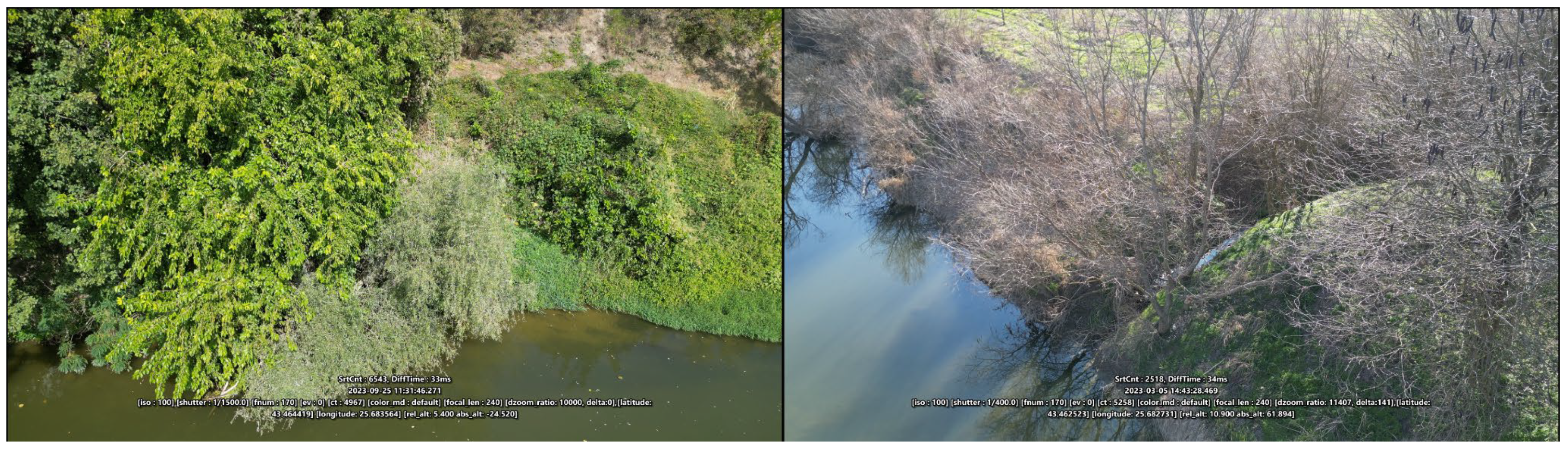
Figure 1. Aerial images of the same place in Byala with and without vegetation cover.
Conservation 05 00074 g001
Figure 2. Map of the study area (inset map) and maps of the geo-referenced gnawed trees at each location using both methods. NB: The data from Belene gathered during seasons with canopy cover via drone are not geo-referenced.
Conservation 05 00074 g002
Figure 3. The number of trees gnawed by beavers detected from ground level at different distances from the water, divided into five categories. The data are distributed between two habitat types—the Danube and its tributaries.
Conservation 05 00074 g003
Figure 4. Difference in the thickness of trees and branches that have been gnawed by beavers between the Danube River and its tributaries. (A) Boxplot of the recorded thickness of each gnawed tree or branch per category. There is one value from each habitat where tree thickness was not available. (B,C) Examples of tree marks left by beavers on representative trees.
Conservation 05 00074 g004
Figure 5. Species identity of the trees identified via ground-level methods that have been gnawed by beavers per habitat type.
Conservation 05 00074 g005
Figure 6. Number of trees gnawed by beavers observed from ground level when the trees had leaves (A), had no leaves (B), and the total for all seasons (C). The number of gnawed trees is demonstrated per habitat type—on the Danube or a Danube tributary. The freshness of the gnaws is represented in a separate column with a separate colour—green for fresh nibbles and orange for the old ones.
Conservation 05 00074 g006
Figure 7. Number of trees gnawed by beavers that were detected in a 300 m transect using either ground-level methods or drone footage. The transects were made at five localities in Northern Bulgaria. Each transect was surveyed during two different seasons—with and without canopy cover. Significant relationships compared using Wilcoxon’s paired signed rank exact test are illustrated with bars and the significance level.
Conservation 05 00074 g007
Figure 8. Balloon plot of the crosstab of the count of transects (length = 300 m each) where beaver presence was successfully confirmed or not when analysing video data of transects made via UAV. The transects were made at five localities in Northern Bulgaria. The transects were filmed during two different seasons—with and without canopy cover.
Conservation 05 00074 g008
Figure 9. Balloon plot of the size categories of gnawed trees that have been recorded using ground-level (A) and drone (B) methods. Pearson’s chi-square for ground-level data was chi-squared = 296.61, df = 4, p < 0.001. Pearson’s chi-square for drone data was chi-squared = 12.509, df = 2, p = 0.001. Data marked with an asterisk have at least 20% contribution to the chi-square statistic.
Conservation 05 00074 g009
Figure 10. Balloon plot of the distance categories of gnawed trees that have been recorded using ground-level (A) and drone (B) methods. Pearson’s chi-square for ground-level data was chi-squared = 161.3, df = 6, p < 0.001. Pearson’s chi-square for drone data was chi-squared = 16.866, df = 5, p = 0.005. Data marked with an asterisk have at least 20% contribution to the chi-square statistic.
Conservation 05 00074 g010
Figure 11. Boxplot of the dependence of the relative altitude of observation (the difference between the total altitude of the drone and the altitude of its takeoff point) and the diameter of the trees on which beaver gnaws were detected. Pairwise significance indicators are based on a post hoc Tukey Honest Significance Differences test of the ANOVA run on the logarithmic transformation of the altitude data. NB: Due to technical issues, no altitude data are available for the six observations from transects A and B from Belene with canopy cover.
Conservation 05 00074 g011
Figure 12. A collage of beaver habitat in Bulgaria to illustrate the availability and visibility of signs of beaver presence. (A) A mature riparian tree community in Yantra River near Byala captured on 26 September 2023. (B) A partially submerged riparian tree community during high water levels in the Danube River at Vardim Island on 7 March 2023. (C) A beaver trail left on a sandy riverbank at the Danube during low water levels seen at Belene island on 12 October 2023.
Conservation 05 00074 g012
Disclaimer/Publisher’s Note: The statements, opinions and data contained in all publications are solely those of the individual author(s) and contributor(s) and not of MDPI and/or the editor(s). MDPI and/or the editor(s) disclaim responsibility for any injury to people or property resulting from any ideas, methods, instructions or products referred to in the content.