Review

Integrative Strategies to Enhance Phosphorus Use Efficiency in Maize: Plant Breeding, Soil Dynamics and Plant–Microbe Interactions Under Phosphorus Stress


by
Bruna Rohem Simão
1,†,
Talles de Oliveira Santos
1,*,†,
Antônio Teixeira do Amaral Junior
1 and
Vitor Batista Pinto
2,*
1
Laboratory of Genetics and Plant Breeding, Universidade Estadual do Norte Fluminense Darcy Ribeiro, Campo dos Goytacazes 28013-602, RJ, Brazil
2
Laboratório de Biologia Celular e Tecidual, Universidade Estadual do Norte Fluminense Darcy Ribeiro, Campo dos Goytacazes 28013-602, RJ, Brazil
*
Authors to whom correspondence should be addressed.
These authors contributed equally to this work.
Stresses 2026, 6(1), 10; https://doi.org/10.3390/stresses6010010
Submission received: 21 January 2026 / Revised: 20 February 2026 / Accepted: 24 February 2026 / Published: 6 March 2026
(This article belongs to the Section Plant and Photoautotrophic Stresses)

Abstract

Phosphorus (P) is an essential macronutrient for plant growth and a major limiting factor for crop productivity, especially in tropical soils characterized by low P availability and high fixation capacity. The strong dependence of modern agriculture on non-renewable phosphate fertilizers, combined with their low use efficiency, raises economic and environmental concerns and reinforces the need to improve phosphorus use efficiency (PUE) in maize. PUE is a complex trait governed by integrated morphophysiological, biochemical, and molecular mechanisms related to phosphorus acquisition, internal remobilization, metabolic reprogramming, and root system plasticity. Recent advances using omics-based approaches have substantially expanded the understanding of these mechanisms, revealing coordinated regulation of carbon and energy metabolism, phosphatase activity, redox balance, and root meristem dynamics under P-limiting conditions. In parallel, increasing evidence demonstrates the important role of phosphate-solubilizing and plant growth-promoting bacteria in enhancing P availability through organic acid secretion, enzymatic mineralization of organic P forms, and modulation of root architecture. However, despite these advances, the genetic basis of plant responsiveness to beneficial bacteria and the interaction between host genotype and microbial activity remain poorly explored. This review integrates current knowledge on phosphorus dynamics in the soil–plant system, the genetic control of PUE in maize, and the contribution of beneficial bacteria, highlighting the importance of combining classical breeding, molecular approaches, and microbial strategies to accelerate the development of maize cultivars with improved phosphorus efficiency and reduced fertilizer dependency.

1. Introduction

The expansion of agriculture, combined with the need for more sustainable cropping systems that are better adapted to abiotic stress conditions, represents one of the greatest challenges faced by the scientific community working on the development of new cultivars [1]. Among abiotic stresses, low phosphorus (P) availability is particularly relevant, as the deficiency of this mineral is a major limiting factor for plant growth and development [2,3,4].
This challenge is especially critical for maize (Zea mays L.), one of the most important cereal crops globally and a cornerstone of food, feed, and bioenergy systems. Maize production is highly dependent on phosphorus fertilization, particularly in tropical and subtropical regions dominated by highly weathered soils with low P availability. Despite its high demand, maize exhibits relatively low phosphorus use efficiency, largely due to strong P fixation in soils and limited diffusive fluxes of phosphate toward the root surface. Consequently, maize-based production systems rely heavily on external P inputs, increasing production costs and raising concerns regarding the sustainability of fertilizer-dependent agriculture [5,6].
The global population is projected to continue increasing over the coming decades, reaching a peak of approximately 10.3 billion people within the next 50 to 60 years, rising from about 8.2 billion in 2024 [7]. This population increase will result in greater demand for food, further intensifying pressure on agricultural production to meet global food requirements. The scarcity of available phosphorus in soils may limit agricultural productivity, leading to reduced crop yields and threatening global food security [8,9,10].
Historically, farmers relied on natural phosphorus present in soils for crop cultivation. However, due to increasing food demand and soil degradation, nutrient availability has declined; consequently, the search for external sources of phosphate fertilizers has become necessary. In this context, phosphate rock, due to its abundance, has become a frequent choice. Nevertheless, although widely used and considered a relatively accessible source, these inputs are costly and derived from non-renewable resources [11]. Estimates indicate that easily accessible phosphate rock reserves will be depleted before the end of this century, making global P fertilization increasingly unattainable, especially for farmers with limited financial resources [12,13].
In addition, recent geopolitical tensions in Eastern Europe, including disruptions related to the Russia and Ukraine conflict, have contributed to periods of supply constraints and price volatility in global fertilizer markets [14,15]. This situation highlights the vulnerability of the global agricultural system, which is highly dependent on external fertilizer markets. This context is particularly relevant for Brazil, recognized as one of the world’s largest producers and exporters of grains, yet heavily dependent on imported fertilizers. The country is the fourth largest global importer of nitrogen (N), P, and potassium (K), importing approximately 95% of the K, 60% of the P, and 80% of the N used in agriculture [16].
On the other hand, the application of P-containing fertilizers is challenged by the low efficiency of nutrient uptake by plants, with less than 20% of the applied phosphate fertilizer being effectively absorbed [17]. This inefficiency is largely due to the low solubility and limited mobility of P in the soil solution. In tropical agricultural soils, total P content can be relatively high, ranging from 200 to 800 mg kg−1; however, only a small fraction of this phosphorus is readily available to plants because of the soil’s high adsorption capacity [18,19,20]. This occurs because soluble P tends to bind strongly to clay minerals and metal cations [21,22,23].
In alkaline soils, inorganic phosphorus (Pi; the form absorbed by plants) is mainly fixed by calcium compounds, whereas in acidic soils, especially tropical ones, fixation occurs predominantly by iron and aluminum oxides, rendering P unavailable for root uptake. The high abundance of these oxides in tropical soils intensifies phosphorus adsorption, further reducing its availability to plants. Conversely, phosphorus that is not adsorbed by the soil remains in solution and can be easily leached into lakes and rivers, causing serious environmental impacts [24].
Given this challenging scenario, one strategy to mitigate the impacts associated with excessive P use or P scarcity in soils is the development of cultivars that are more efficient in phosphorus acquisition and utilization [4,25,26,27]. Breeding programs in maize have conducted studies to identify germplasm sources with improved P-use efficiency [28,29,30,31]; however, little is still known about the underlying mechanisms governing P-use efficiency responses in this crop. In addition, an important alternative to enhance plant capacity to acquire soil phosphorus is the association with beneficial soil microorganisms, particularly phosphate-solubilizing bacteria (PSB) and arbuscular mycorrhizal fungi (AMF), which act synergistically to increase P solubilization, uptake, and translocation to the plant [32].
Plant-associated microorganisms play a crucial role in nutrient supply and plant productivity, with beneficial effects on resilience and adaptation under stress conditions [33]. These microorganisms can secrete organic acids, produce phosphatase enzymes, and use ion exchange mechanisms to convert insoluble phosphate into soluble forms. Moreover, associations with bacteria provide additional benefits to plants, including nitrogen fixation, pathogen resistance, enhanced water and nutrient uptake, phytohormone production, and heavy metal detoxification [34,35,36,37].
With the aim of improving the efficiency of inorganic phosphate solubilization and availability, the exploitation of microorganisms shows high potential, standing out as a promising biotechnological strategy with proven results in maize (Zea mays) [38,39,40], sorghum (Sorghum bicolor) [41,42], rice (Oryza sativa) [43,44], wheat (Triticum aestivum) [45], among others [32]. This approach has attracted considerable global interest over recent decades [20,32].
In this context, the objective of this review is to synthesize and integrate the available knowledge on the genetic mechanisms associated with phosphorus use efficiency in maize, the dynamics of phosphorus in soil–plant systems, and the role played by microorganisms, particularly phosphate-solubilizing bacteria, in promoting the availability and acquisition of this nutrient. By jointly addressing the genetic, physiological, biochemical, and microbiological aspects involved in plant responses to phosphorus limitation, this review seeks to contribute to the advancement of breeding strategies and biological management practices, providing support for the development of cultivars with improved P-use efficiency and for the establishment of more sustainable agricultural systems that are less dependent on phosphate fertilizers derived from non-renewable sources.

2. Phosphorus in the Soil–Plant Continuum

The adequate availability of phosphorus is essential for healthy plant growth and for achieving high levels of agricultural productivity. Phosphorus is one of the main macronutrients required for plant development, acting in vital processes such as energy transfer and the synthesis of essential compounds, including DNA, RNA, and phospholipids that make up cellular membranes [9,46,47,48].
Despite its importance, phosphorus deficiency in soils is a global problem of major relevance. Studies report that approximately 30% of arable soils worldwide are deficient in P [49,50]. In the Brazilian context, about 90% of soil analyses indicate low levels of plant-available P, which implies the need for applying large amounts of this nutrient to meet crop demand, representing a significant cost for farmers [51,52,53]. In addition, low phosphorus availability can limit agricultural productivity, affecting food security and the national economy.
The P cycle is a fundamental process in nutrient dynamics and has crucial implications for agriculture and water quality. Nutrient cycling in the environment begins with the weathering of phosphate-rich rocks, releasing phosphate ions into the soil. Phosphorus is then adsorbed onto soil particles, retained by adsorption, and released through the mineralization of organic matter
Plants absorb phosphorus from the soil in the form of orthophosphate ions (H2PO4 and HPO42−), which are transferred along the food chain and eventually return to the soil through organic residues. However, only a very small fraction of total soil phosphorus—approximately 0.01%—is present in the soil solution in forms readily available for plant uptake [54,55].
Naturally, phosphorus in soils occurs in different chemical forms and is broadly classified as organic and inorganic (Pi) [56,57]. Organic phosphorus comprises a wide range of compounds derived mainly from plant residues and animal manure, including inositol phosphates, phosphoric acid anhydrides, and phosphonates. These forms differ substantially in solubility and bioavailability and are not immediately accessible to plants, requiring microbial mineralization before uptake [46,53,56,58].
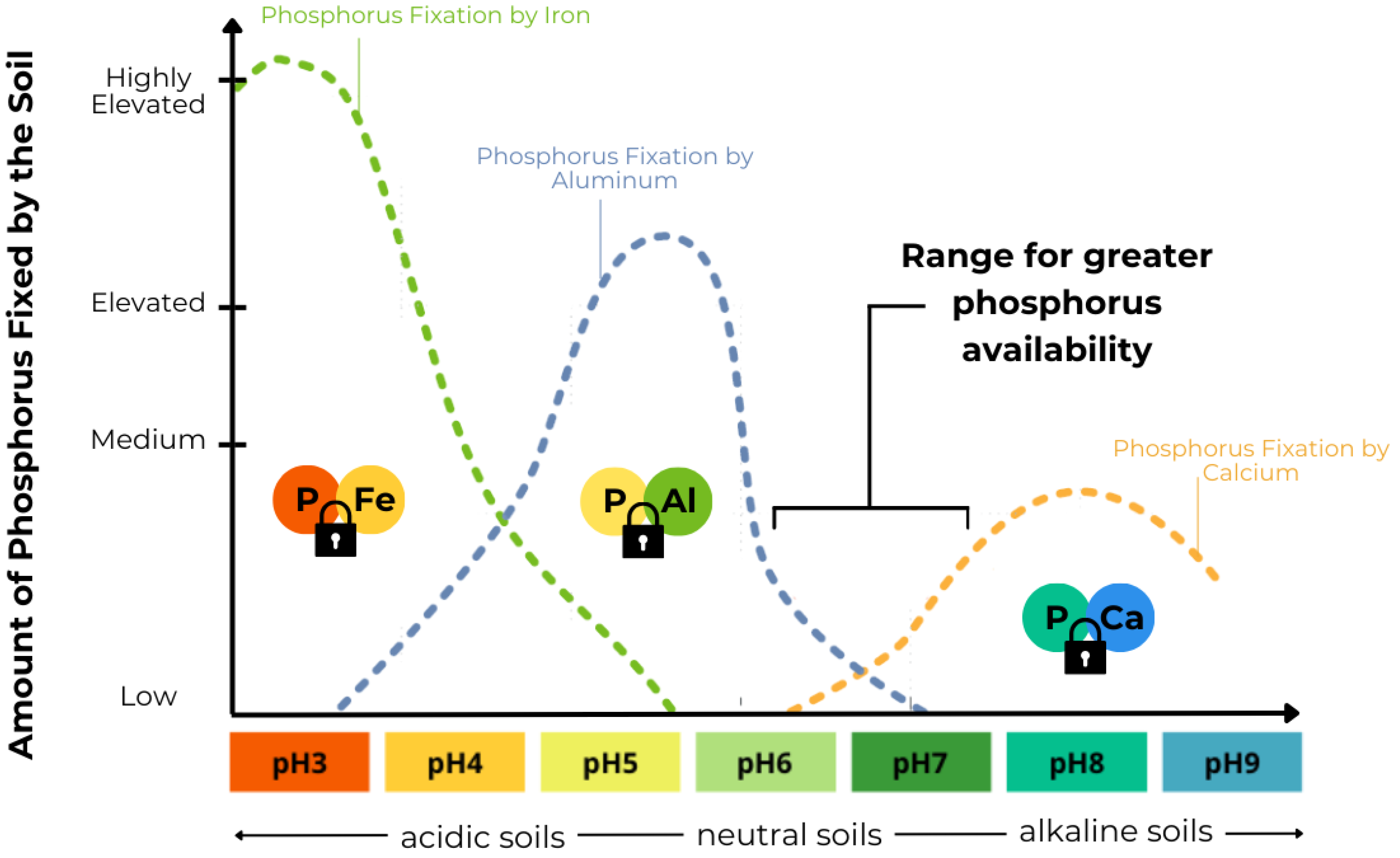
In contrast, inorganic phosphorus occurs both as phosphate ions in the soil solution and as poorly soluble P-bearing minerals, in which phosphorus is an integral part of the mineral structure. Examples include apatites, strengite, and variscite, which are characterized by high stability and low solubility. The dissolution of these minerals and their contribution to plant phosphorus nutrition are strongly influenced by soil pH (Figure 1), as well as by factors such as soil texture, moisture, temperature, and aeration [59,60].
Even with fertilizer application to the soil, phosphorus is one of the least accessible elements for plants. This low accessibility mainly results from its moderate solubility and limited mobility in the soil environment [20,62,63]. Phosphorus rapidly interacts with several soil cations, which reduces its availability to plants, making it only sparingly accessible for uptake, primarily due to the limited diffusive flux of P in the soil toward the root surface [64,65]. These interactions occur mainly with divalent cations such as calcium (Ca2+) and iron (Fe2+), as well as with trivalent aluminum (Al3+) and ferric iron (Fe3+), leading to the formation of poorly soluble phosphate minerals (Figure 1). The dissolution and stability of these P-bearing minerals depend on several factors, including soil pH, redox conditions, and interactions with specific soil particles and mineral surfaces [46,66,67,68].
Aluminum and iron oxides, which are concentrated in the clay fraction of acidic soils due to the intense weathering of primary minerals, play a fundamental role in the generation of abiotic stresses, resulting in the widespread occurrence of aluminum toxicity and low phosphorus availability in tropical soils. In addition, phosphorus diffusion in highly weathered soils is strongly influenced by soil moisture content, which varies seasonally, leading to a discontinuous supply of P to plants and, consequently, irregular nutrient uptake [69,70]. Tropical soils exhibit characteristics, such as high weathering intensity, low phosphorus availability, and strong interactions with organic matter and clay minerals, requiring specific approaches to optimize plant nutrition [71].
The soil–plant continuum is highly dynamic, making it difficult to define an optimal pH for different crops. In general, maximum phosphorus availability to plants occurs at pH values between 6 and 7 (Figure 1). As pH increases, phosphate adsorption to soil surfaces decreases. However, in highly alkaline soils, almost all inorganic P is present as PO4−3, a form that is not absorbed by plants. Moreover, in calcareous soils, P may precipitate as hydroxyapatite or carbonate apatite [72].
These inorganic forms of P play a fundamental role in phosphorus retention and gradual release, directly affecting its availability to plants. The dynamics of inorganic P forms are influenced by several factors, including soil acidity and biological activities in the rhizosphere, highlighting the importance of interactions among soil components, plants, and microorganisms to optimize the availability of this vital nutrient for crop growth [32,66]. In addition to the organic P fraction and readily available phosphate fertilizers, the activities of both roots and associated microorganisms play an essential role in improving phosphorus availability in the rhizosphere [32,73].
After uptake into root cells, Pi is subsequently used to synthesize P-containing compounds, such as ATP and phospholipids, or it can enter the vacuole, where it is stored [74,75]. Thus, when Pi is available in excess, it is absorbed and stored in vacuoles as orthophosphate in vegetative cells [76], whereas in seeds Pi is deposited in specialized protein storage vacuoles in the form of phytate [51].
Because Pi may not be available at optimal concentrations throughout the entire plant life cycle, whenever cytosolic Pi levels decline, Pi supplies are mobilized from the vacuolar Pi pool [76]. Therefore, optimized Pi influx and efflux from vacuoles are essential to maintain Pi homeostasis in other organelles and tissues, extending regularly throughout the whole plant [77].
The importance of controlling Pi levels also extends to other organelles, including plastids, mitochondria, and the Golgi apparatus [78]. Furthermore, Pi deficiency reduces ATP production and decreases CO2 assimilation, leading to limited availability of soluble sucrose and starch accumulation [79]. Nevertheless, Pi plays an important role in plant carbon metabolism, particularly in processes associated with photosynthesis [79].
In conclusion, the study of physiological responses, such as photosynthetic performance under Pi deficiency in popcorn maize genotypes (Zea mays L. var. everta), tends to contribute to a better understanding of plant adaptation to stress caused by the limitation of this essential nutrient.

3. Mechanisms of Phosphate Solubilization

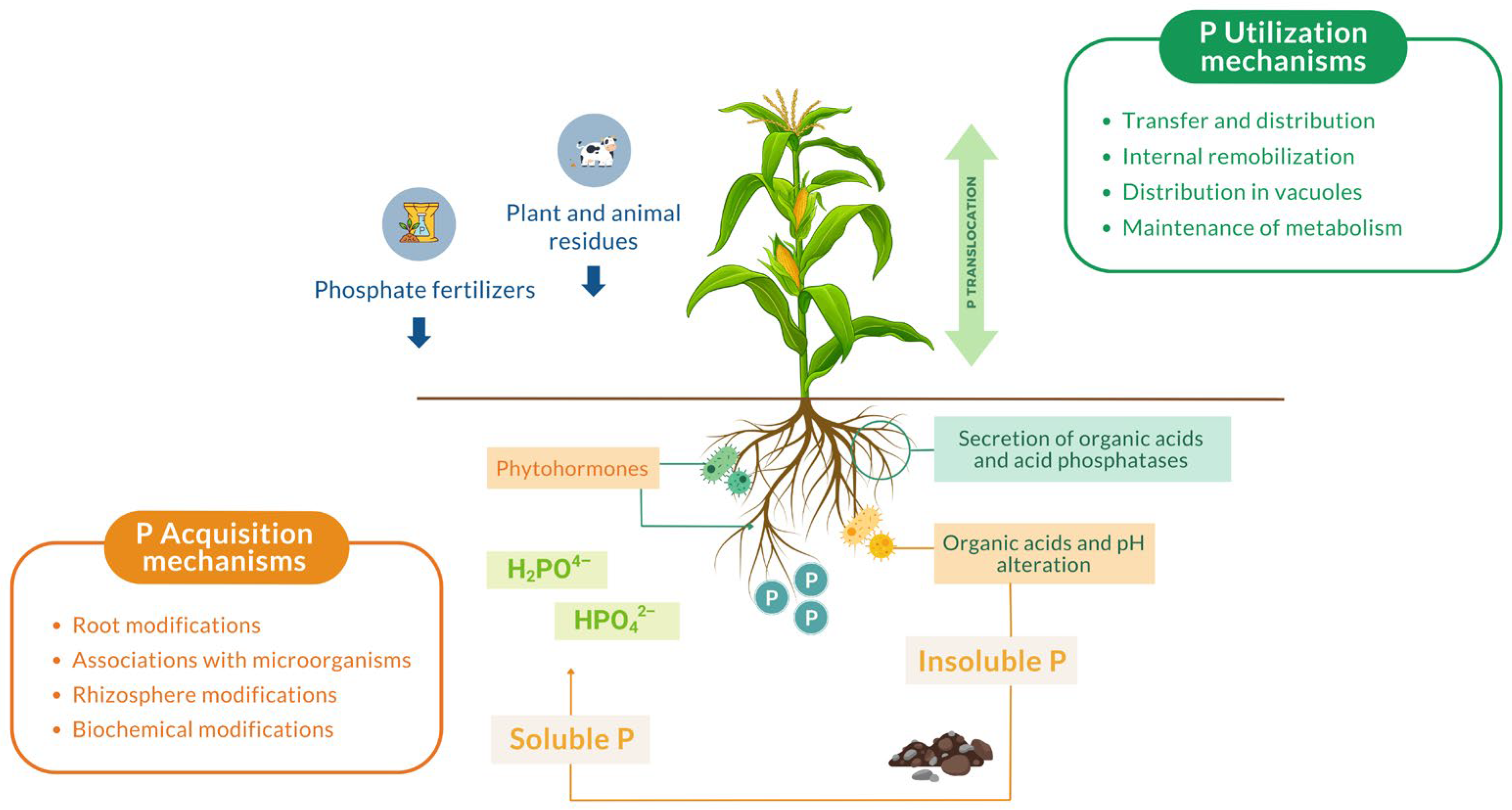
The limited availability of phosphorus in the form of orthophosphate ions represents a major challenge for plants [54,55]. This constraint has driven the evolution of adaptive strategies in plants cultivated in soils with low P availability [30], such as morphological changes in roots, including the development of denser and longer root hairs. These traits are associated with the secretion of organic acids and acid phosphatases, which promote the release of inorganic phosphate (Pi) from organic sources in the soil [2,80,81]. Another important mechanism involved in P acquisition is the selective recruitment of soil microorganisms (Figure 2), a fundamental process mediated by the plant. Under stress conditions, plants are thought to adjust the composition of root exudates in order to select beneficial microorganisms, thereby forming an active community that acts as a first line of defense against potential damage [82].
Phosphate-solubilizing microorganisms act by transforming and making complexed forms of soluble phosphorus accessible to plants. This occurs through processes such as solubilization, chelation, mineralization, and immobilization of phosphorus, which directly or indirectly contribute to plant development [37,83,84].
The interaction between microorganisms and soil in the rhizosphere involves the occurrence of important metabolic processes, such as the release of organic acids, production of siderophores, secretion of H+ ions, synthesis of phosphatase enzymes, nitrogen fixation, and phytohormone production [84]. Among these mechanisms, the release of organic acids is considered one of the most important [85,86].
Organic acids are products of microbial metabolism, predominantly derived from oxidative respiration or fermentation of organic substrates, such as glucose. Their composition may vary depending on the nature of the medium, as well as nutritional, physiological, and crop growth conditions [87]. Different bacterial species, such as Serratia sp., Bacillus sp., Enterobacter sp., and Azospirillum sp., have the capacity to synthesize a wide range of organic acids, including lactic, malic, acetic, oxalic, and gluconic acids [87,88,89]. Among these, gluconic acid is particularly well known for its ability to chelate cations bound to insoluble P, thereby favoring phosphate solubilization [90].
In addition, siderophore production by rhizosphere microorganisms also plays an important role in the dissolution of iron-bound phosphate [91,92,93]. In studies conducted by Batista et al. [90] at Embrapa Milho e Sorgo, siderophore production by phosphate-solubilizing bacterial isolates varied significantly and correlated with their capacity to solubilize Fe-bound P. However, the efficiency of these inorganic acids in making P available is still considerably lower when compared with that of organic acids [19].
Furthermore, phosphorus mineralization occurs through the action of microorganisms that produce enzymes known as phosphatases and phytases, which catalyze the hydrolysis of esters and anhydrides of H3PO4. As a result, phosphorus is rapidly released into the soil solution and becomes available for plant uptake [91,92,93,94].
Understanding the intricate mechanisms of phosphate solubilization is essential for unraveling the complex relationship between plants and microorganisms in the soil. Processes such as solubilization, chelation, and phosphorus release represent a critical link in plant nutrition and soil fertility maintenance. By elucidating these mechanisms, it is possible not only to expand knowledge on phosphorus dynamics within ecosystems but also to explore promising opportunities to improve the efficiency of use of this vital nutrient in agriculture, thereby contributing to more sustainable plant growth.

4. Plant Growth Promotion by Phosphate-Solubilizing Microorganisms

To optimize the agronomic effectiveness of inorganic phosphate solubilization and availability, the use of beneficial microorganisms involved in phosphorus cycling has emerged as a promising biotechnological strategy, attracting global interest over recent decades [32]. These microorganisms are commonly referred to as phosphate solubilizers and are considered plant growth-promoting microorganisms (PGPM) due to their ability to stimulate plant development [95].
Among PGPM, plant growth-promoting rhizobacteria (PGPR) stand out for their remarkable capacity to solubilize phosphate, resulting in substantial benefits for plant growth and productivity [96]. For example, Bacillus pumilus, B. subtilis, B. thuringiensis, B. megaterium, Enterobacter cloacae, Klebsiella pneumoniae, Burkholderia gladioli, Pantoea ananatis, Pseudomonas sp., and Serratia marcescens have demonstrated clear phosphate-solubilizing ability and capacity to supply phosphorus to plants, as reported in studies such as those by Rodríguez and Fraga [97], Bodhankar et al. [98], Chen et al. [99], and Luo et al. [100].
Phosphate-solubilizing microorganisms (PSMs) are capable of making phosphorus available even when it is complexed with calcium, iron, and aluminum in the soil [99,101]. In addition, these PSMs produce compounds that inhibit the growth of phytopathogenic fungi and bacteria, as well as induce systemic resistance in plants against pathogens [102].
The combined use of phosphate rock and phosphate-solubilizing microorganisms has been recognized as a sustainable strategy from both economic and environmental perspectives. This approach has provided significant gains in productivity, reduced investment costs, and increased income for farmers [32,103,104,105].
In a study conducted with cotton, soybean, and maize seeds inoculated with Bacillus subtilis, a significant increase in leaf phosphorus concentration was observed compared with the control group. Specifically for maize grown in soils deficient in this nutrient, phosphorus uptake was even more pronounced. These results indicate that the presence of Bacillus subtilis in the soil enhances phosphatase enzyme activity, contributing to greater phosphorus availability in the environment [106].
Kaur and Reddy [107] demonstrated that inoculation of common maize and wheat plants with the phosphate-solubilizing microorganisms Pantoea cypripedii and P. plecoglossicida, combined with Pi fertilization, resulted in marked improvements in phosphorus content in both shoots (37% with P. cypripedii and 186% with P. plecoglossicida) and roots (76% and 91%, respectively), as well as increased crop yields, with gains of 20% for maize and 16% for wheat.
Another advantage of using phosphate-solubilizing microorganisms is their ability to induce changes in root morphology, resulting in greater efficiency in the uptake of low-mobility nutrients such as phosphorus. These modifications in root structure can enhance contact between root surfaces and soil particles, a key factor for effective water and mineral nutrient absorption [108,109].
Studies evaluating the effects of PSM inoculation in common maize have shown that inoculated plants exhibit higher leaf nitrogen and phosphorus contents [46,110,111]. In addition, inoculated plants display higher relative chlorophyll content, greater dry matter accumulation, improved yield components, and increased overall crop productivity [112,113,114,115].
This diversity of activities highlights the great potential of phosphate-solubilizing microorganisms as effective alternatives for implementing sustainable, environmentally responsible, and profitable agriculture [102]. Thus, an integrated approach combining the use of phosphate rock and microorganisms paves the way for more efficient and environmentally friendly agricultural practices, contributing to a more resilient and ecologically balanced agricultural production.
Over recent decades, modern agriculture has been characterized by technological advances in crop breeding in response to the increasing application of fertilizers. Researchers have focused on optimizing yield under different agricultural management practices [116]. During this period, germplasm selection prioritized high grain yield, particularly under increased nutrient supply, without considering the potential of the plant microbiome to improve crop adaptation and productivity [117].
Promoting plant growth through interactions with these microorganisms represents a significant step toward a more sustainable and productive agriculture, in which plants not only adapt better to soils with low phosphorus availability but also make more efficient use of available nutrients. The combination of efforts in genetic breeding and the biotechnological exploitation of beneficial microorganisms, integrating actions from researchers across different fields, therefore promises to provide comprehensive solutions to the challenges faced in popcorn maize production, contributing to a more resilient and sustainable agricultural future.

5. Maize Breeding to Improve Phosphorus Use-Efficiency

Improving phosphorus use efficiency in maize has become one of the main objectives of breeding programs, particularly in view of the low availability of this nutrient in much of the world’s agricultural soils and the limited efficiency of P utilization by plants. In this context, the development of genotypes capable of maintaining satisfactory growth and productivity under low P availability represents a fundamental strategy to mitigate the economic and environmental impacts associated with intensive phosphate fertilizer use. However, studies exploring the genetic control of traits related to P-use efficiency in maize still represent a major knowledge gap.
At the molecular level, phosphorus deprivation activates a specific set of genes associated with phosphorus acquisition, mobilization, and recycling, including PSTOL1, ARP6, PTF1, PAPs, PHO1, IPS1, PHTs, RNSs, SQDs, and PLDZ2 [118,119,120]. These responses involve adaptive strategies such as organic acid exudation, secretion of acid phosphatases, induction of high-affinity phosphate transporters, and biomass allocation remodeling between roots and shoots, frequently associated with interactions with soil microorganisms [121,122,123].
Under phosphorus deficiency in maize, integrated hormonal responses play a central role in root architecture reprogramming. Under low phosphate (LP) conditions, local changes in auxin (IAA) levels and signaling promote increased axial root elongation and reduced density and length of lateral roots, a process mediated by modulation of genes involved in auxin transport and polarity, such as PID and PP2A [124,125,126,127].
In parallel, P deficiency stimulates gibberellin biosynthesis and signaling, evidenced by increased expression of AN1 and GA20ox1/2 and reduced expression of GA2ox1/2, contributing to adaptive responses favoring root growth under nutrient limitation. The auxin response factor ZmARF1 also acts in this context, increasing tolerance to low P through modulation of lateral root development and regulation of classical phosphate deficiency response genes, including ZmPHR1, ZmPHT1;2, and ZmPHO2 [124,126,127].
Additionally, heterogeneous Pi availability in soil induces localized lateral root proliferation in phosphorus-rich zones, a response dependent on auxin redistribution and suppressed when polar auxin transport is inhibited, such as under NPA treatment. More broadly, evidence across species, including cereals and maize, indicates that auxin, ethylene, cytokinins, gibberellins, and strigolactones act coordinately to adjust root architecture under P deficiency, regulating primary root growth, lateral root formation, and root hair development, thereby optimizing phosphorus acquisition under limiting conditions [124,125,128].
In common maize, traits related to phosphorus acquisition and utilization are predominantly controlled by non-additive genetic effects. For example, Parentoni et al. [129], evaluating 45 tropical maize inbred lines with different levels of P-use efficiency across multiple locations using generation mean analysis, reported a predominance of non-additive effects for P-use efficiency. Fritsche-Neto et al. [30], assessing hybrids under different phosphorus levels, observed a greater contribution of dominance and epistatic effects for traits such as plant dry mass and accumulated phosphorus, highlighting the importance of selecting hybrid combinations. Similarly, DoVale and Fritsche-Neto [130] demonstrated that enhanced P acquisition capacity associated with root system development resulted in more efficient nutrient use, reinforcing the predominance of non-additive effects. These findings were later corroborated by Mendes et al. [131] in a study evaluating 280 maize progenies under contrasting soil P availability, which showed a predominance of non-additive genetic effects for P-use efficiency. Colombo et al. [132] also identified the prevalence of non-additive effects on grain yield in maize grown under different phosphate fertilization levels. Only one study, conducted by Meirelles et al. [133], reported a predominance of additive genetic effects for P-use efficiency in maize.
In popcorn maize (Zea mays var. everta), a relevant crop within the species Z. mays, similar results have been reported. Gerhardt et al. [4], through diallel analyses conducted across different environments and soil phosphorus levels using eight popcorn maize inbred lines and their 28 diallel hybrids, demonstrated that P-use efficiency is predominantly governed by non-additive effects. Corroborating these findings, Santos et al. [134], evaluating 45 testcross hybrids under contrasting P availability conditions, concluded that P-use efficiency is mainly driven by non-additive effects. Thus, in popcorn maize, based on the limited number of studies available in the literature, it can be inferred that the exploitation of heterosis—particularly using parents with high popping expansion capacity—has proven to be the most effective strategy for obtaining genotypes that are efficient and responsive under low phosphorus availability. Several promising hybrid combinations have been identified, highlighting the potential of hybrid breeding as a central approach to improving P-use efficiency in popcorn.
Morphological and physiological traits have also been explored as auxiliary selection criteria under phosphorus-restricted conditions in popcorn maize. Bispo et al. [135] observed that popcorn maize genotypes grown under low P availability exhibited proportionally smaller reductions in shoot traits, with the formation of thinner and slightly smaller leaves. These morphophysiological adjustments were associated with predominantly non-additive genetic control, especially for traits related to photosynthetic pigments, reinforcing the importance of using hybrids as a strategy to mitigate phosphorus stress. However, the presence of significant reciprocal effects for traits related to gas exchange highlighted the relevance of selecting the female parent to maximize performance under low P conditions.
Recent advances in the application of omics approaches have expanded understanding of the molecular mechanisms involved in phosphorus use efficiency in maize. One of the earliest proteomic studies aimed at identifying molecular mechanisms underlying P-use efficiency in maize was conducted by Li et al. [136] using 2-DE and MALDI-TOF, identifying 106 differentially accumulated proteins (DAPs) in the root system of maize seedlings under contrasting phosphorus availability. Subsequent studies consistently demonstrated broad metabolic reprogramming, coordinated induction of Pi transporters and acid phosphatases, lipid remodeling, antioxidant responses, and hormonal signaling under P deficiency, reinforcing the integrative nature of phosphorus stress responses in maize [2,26].
More recently, in popcorn maize (Zea mays var. everta), Bispo et al. [31] identified marked differences in protein expression between lines contrasting in P-use efficiency, with the P-efficient line accumulating proteins related to photosynthesis, energy metabolism, and metabolite biosynthesis. The greater accumulation of flavonoids in efficient lines further supports the involvement of secondary metabolism in phosphorus stress adaptation, offering valuable insights for integrating physiological, molecular, and breeding studies.
Taken together, these studies demonstrate that phosphorus use efficiency in maize results from a combination of physiological, biochemical, molecular, and hormonal mechanisms involving broad metabolic remodeling, adjustments in carbon and energy metabolism, activation of phosphatase systems, redox control, root system plasticity, and hormone-mediated architectural reprogramming. Nevertheless, despite advances enabled by omics approaches over the past two decades, a significant knowledge gap remains regarding the mechanisms underlying P-use efficiency, particularly given the relatively limited number of studies that systematically integrate multiple levels of biological organization and contrasting genotypes under controlled and field conditions. Even so, available results provide fundamental support for improving classical breeding by revealing molecular targets, metabolic pathways, and consistent response patterns associated with phosphorus use efficiency.

6. Genotype as a Driver of Root Microbiome Recruitment and Functional Dynamics

Despite recognition of the functional role of the microbiome, the extent to which plant genotype determines its composition remains under debate. Accumulated evidence indicates that environmental factors, particularly soil type, climate, management practices, and nutrient availability, exert a dominant influence on the overall structure of root-associated microbial communities [137,138]. However, recent studies demonstrate that, even under strong environmental pressure, plant genotype exerts consistent and reproducible control over specific microbiome subsets, particularly those associated with relevant ecological functions [93,139,140,141].
An emblematic example of this relationship was demonstrated by Walters et al. [142] in a large-scale longitudinal study conducted with 27 maize inbred lines grown across different fields and multiple years. Analysis of 4866 samples revealed that, although plant age, cultivation site, and climatic events strongly influenced the overall structure of the rhizosphere microbiome, 143 operational taxonomic units (OTUs) exhibited significant variation explained by plant genotype, including dominant taxa consistently detected across all samples. These results demonstrate that, even in highly variable environments, plant genotype exerts consistent control over specific subsets of the root microbiome, which may be considered candidate traits for breeding programs.
In the same direction, the study by Meier et al. [143] represented a significant advance by evaluating the rhizobiome associated with 230 maize genotypes grown under agronomically relevant conditions with contrasting nitrogen availability. The authors showed that natural host genetic variation explains a substantial proportion of the abundance of root-associated microbial groups, particularly under low-nitrogen conditions. A total of 622 maize loci associated with the abundance of 104 microbial groups were identified, and in most cases, these groups were also correlated with plant vigor and performance indicators. These findings provide direct evidence that plant genotype can modulate functional components of the microbiome with measurable agronomic impact.
The relative importance of plant genotype becomes particularly evident in highly weathered and nutrient-poor soils, such as tropical Oxisols, where low phosphorus (P) availability, high acidity, and aluminum toxicity severely limit maize productivity. In a study conducted under these conditions, Gomes et al. [144] evaluated two maize genotypes with contrasting P-use efficiency, as well as their hybrid, grown in soils with different P levels. Although soil P availability was the main determinant of the overall structure of bacterial and fungal communities, followed by plant compartment (rhizosphere versus root interior), a significant fraction of microbial diversity was consistently attributed to host genotype. Low-P soils favored slow-growing bacteria and increased the abundance of arbuscular mycorrhizal fungi, especially within roots, highlighting a strong environmental filtering effect. Nevertheless, genotypic effects were detectable on specific microbial groups, reinforcing the idea that plant genotype modulates particular microbiome components even under strong nutrient limitation.
Complementary functional-level evidence was provided by [145], who isolated the strain Talaromyces purpurogenus SW-10 from the maize rhizosphere, showing high capacity for organic phosphate mineralization via phytase production. Inoculation with this strain promoted significant increases in shoot and root biomass, plant height, and tissue phosphorus concentration in a maize line sensitive to P deficiency, whereas no significant response was observed in a line tolerant to low P levels. These results demonstrate that benefits derived from associations with phosphate-solubilizing microorganisms strongly depend on host genotype and are more pronounced in genotypes less adapted to P limitation.
The genetic influence of plants on the microbiome is closely related to traits such as root architecture and exudation patterns, both under genetic control [146]. These factors shape the chemical and physical environment of the rhizosphere, acting as selective filters for soil microorganisms [93]. Studies in maize, sorghum, and elephant grass indicate that part of the variation in rhizobiome composition is heritable, although strongly modulated by the environment [142].
Domestication and plant breeding also play a relevant role in this process. Although artificial selection was hypothesized to reduce the ability of cultivated plants to establish beneficial microbial associations, recent evidence suggests that domestication effects on the microbiome are species-specific and soil-dependent [139]. Rather than broad changes in microbial diversity, domestication may affect functionally relevant aspects such as exudate profiles, chemical defenses, and microbiome filtering mechanisms, with direct implications for plant adaptation to low-input environments [144,146].
The complexity of these interactions has driven the use of genomic approaches, such as genome-wide association studies (GWAS), which use microbiome traits as ecological phenotypes. These strategies have enabled the identification of highly heritable microbial taxa and genetic loci associated with their abundance, as demonstrated in sorghum and Arabidopsis [147]. Furthermore, studies on microbiome heterosis in maize hybrids indicate that patterns of microbial inheritance can be integrated into modern breeding strategies [142].
Despite growing interest in microbial inoculants and synthetic communities, many of these products show inconsistent field performance due to low competitiveness against native soil communities. In this context, understanding how plant genotype recruits, selects, and stabilizes functional microbiome subsets emerges as a more promising strategy than simply introducing exogenous microorganisms.
Thus, although soil and environment are the primary determinants of the overall structure of the root microbiome, plant genotype exerts consistent and biologically meaningful control over specific microbial groups, particularly those involved in nutrient cycling, stress tolerance, and productivity [144,146]. Recognizing the microbiome as a functionally integrated component of the plant phenotype broadens the scope of plant breeding, positioning the rhizobiome as a realistic target for selection and integrated management strategies aimed at sustainable agriculture.

7. Conclusions and Future Perspectives

Over recent years, substantial progress has been made in elucidating the genetic, physiological, and molecular bases of phosphorus use efficiency in maize. Plants exposed to low P availability exhibit a wide array of adaptive responses involving acquisition, transport, internal remobilization, and metabolic reprogramming of phosphorus, many of which are tightly linked to root system architecture and rhizosphere processes. Although several traits associated with P efficiency have been identified and can be exploited for genotype selection, a more comprehensive understanding of root-related traits and their interaction with the soil microbiome remains essential to achieve consistent gains in productivity under P-limited environments.
Traits related to phosphorus acquisition and utilization efficiency are predominantly governed by complex genetic architectures, with a strong contribution of non-additive effects, reinforcing the relevance of hybrid development and heterosis exploitation in maize breeding programs. However, the integration of plant genetic effects with beneficial bacteria, particularly phosphate-solubilizing and plant growth-promoting bacteria, represents a critical yet underexplored dimension of PUE.
Evaluating genotype-dependent responses to bacterial inoculation is crucial to determine whether plant performance under low P results from additive genetic effects, microbe-mediated benefits, or synergistic plant–microorganism interactions. In addition, advances in microbial biotechnology have opened new opportunities for engineering phosphate-solubilizing bacteria with enhanced solubilization capacity and rhizosphere competence, representing a promising complementary strategy to improve phosphorus bioavailability in agricultural systems.
As research advances, future studies should increasingly incorporate emerging tools associated with the so-called “Breeding 4.0”. The integration of high-throughput phenotyping supported by artificial intelligence and machine learning is accelerating the identification of complex PUE-related traits under field-relevant conditions. In parallel, genome editing technologies such as CRISPR/Cas9 are enabling precise manipulation of genes involved in phosphorus acquisition, transport, signaling, and root architecture, expanding the possibilities for developing maize genotypes with enhanced nutrient use efficiency. Future research should therefore focus on dissecting the genetic control of plant responsiveness to bacterial inoculation by integrating advanced phenotyping platforms, multi-omics approaches, genome editing strategies, and controlled inoculation experiments. Such efforts will contribute to the identification of molecular markers and physiological traits associated with enhanced P acquisition in the presence of beneficial bacteria, ultimately supporting breeding strategies aimed at developing maize cultivars that are both genetically efficient and biologically optimized for sustainable phosphorus management.

Author Contributions

B.R.S., T.d.O.S., A.T.d.A.J. and V.B.P. conceived the topic and wrote the manuscript. All authors have read and agreed to the published version of the manuscript.

Funding

Fundação Carlos Chagas Filho de Amparo à Pesquisa do Rio de Janeiro—FAPERJ funded T.d.O.S. (Grant number E-26/200.036/2024), A.T.d.A.J. (Grant number E-26/203.933/2024) and V.B.P. (Grant number E-26/204.450/2024). V.B.P is also funded by Conselho Nacional de Desenvolvimento Científico e Tecnológico (CNPq grant number: 402608/2023-2).

Institutional Review Board Statement

Not applicable.

Informed Consent Statement

Not applicable.

Data Availability Statement

No new data were created or analyzed in this study.

Conflicts of Interest

The authors declare no conflicts of interest.

References

  1. Yassitepe, J.D.C.; Dante, R.A.; Gerhardt, I.R.; Fernandes, F.; de Souza, R.S.C.; da Silva, V.C.H.; Arruda, P. Centro de pesquisa em genômica aplicada a mudanças climáticas. Microbiology 2019, 10, 1–18. Available online: http://www.alice.cnptia.embrapa.br/alice/handle/doc/1136431 (accessed on 23 February 2026).
  2. Zhang, K.; Liu, H.; Tao, P.; Chen, H. Comparative proteomic analyses provide new insights into low phosphorus stress responses in maize leaves. PLoS ONE 2014, 9, e98215. [Google Scholar] [CrossRef]
  3. Malhotra, H.; Vandana; Sharma, S.; Pandey, R. Phosphorus nutrition: Plant growth in response to deficiency and excess. In Plant Nutrients and Abiotic Stress Tolerance; Springer: Singapore, 2018; pp. 171–190. [Google Scholar] [CrossRef]
  4. Gerhardt, I.F.; Amaral Junior, A.T.; Pena, G.F.; Guimarães, L.J.M.; Lima, V.J.; Vivas, M.; Kamphorst, S.H. Genetic effects on the efficiency and responsiveness to phosphorus use in popcorn as estimated by diallel analysis. PLoS ONE 2019, 14, e0216980. [Google Scholar] [CrossRef]
  5. Wang, L.; Rengel, Z.; Cheng, L.; Shen, J. Combined phosphate type and placement promotes maize growth and phosphorus uptake by altering root traits and rhizosphere processes. Field Crops Res. 2024, 306, 109225. [Google Scholar] [CrossRef]
  6. Hatangimana, M.; Banda, C.; Ngeno, J.; Rachuonyo, H.; Churchil, K.; Ogutu, D. Nutrient use efficiency in maize (Zea mays): Response to organic–inorganic phosphorus substitutions in western Kenya. Asian J. Soil Sci. Plant Nutr. 2025, 11, 19–31. [Google Scholar] [CrossRef]
  7. Population Division of the Department of Economic and Social Affairs. World Population Prospects 2024: Summary of Results; United Nations: New York, NY, USA, 2024; Available online: https://population.un.org/wpp/Publications/Files/WPP2024_Summary_of_Results.pdf (accessed on 23 February 2026).
  8. Liu, J.; Yang, L.; Luan, M.; Wang, Y.; Zhang, C.; Zhang, B.; Luan, S. A vacuolar phosphate transporter essential for phosphate homeostasis in Arabidopsis. Proc. Natl. Acad. Sci. USA 2015, 112, E6571–E6578. [Google Scholar] [CrossRef]
  9. Alewell, C.; Ringeval, B.; Ballabio, C.; Robinson, D.; Panagos, P.; Borrelli, P. Global phosphorus scarcity will be aggravated by soil erosion. Nat. Commun. 2020, 11, 4546. [Google Scholar] [CrossRef]
  10. Solangi, F.; Zhu, X.; Khan, S.; Rais, N.; Majeed, A.; Sabir, M.; Iqbal, R.; Ali, S.; Hafeez, A.; Ali, B.; et al. The global dilemma of soil legacy phosphorus and its improvement strategies under recent agroecosystem sustainability changes. ACS Omega 2023, 8, 23271–23282. [Google Scholar] [CrossRef]
  11. Schroder, J.J.; Cordell, D.; Smit, A.L.; Rosemarin, A. Sustainable Use of Phosphorus: EU Tender ENV.B1/ETU/2009/0025; Plant Research International: Wageningen, The Netherlands, 2010; Available online: https://edepot.wur.nl/163942 (accessed on 23 February 2026).
  12. Balemi, T.; Negisho, K. Management of soil phosphorus and plant adaptation mechanisms to phosphorus stress for sustainable crop production: A review. J. Soil Sci. Plant Nutr. 2012, 12, 547–562. [Google Scholar] [CrossRef]
  13. Chowdhury, R.; Moore, G.; Weatherley, A.; Arora, M. Key sustainability challenges for the global phosphorus resource, their implications for global food security, and options for mitigation. J. Clean. Prod. 2016, 140, 945–963. [Google Scholar] [CrossRef]
  14. Hassen, T.; Bilali, H. Impacts of the Russia–Ukraine war on global food security: Toward more sustainable and resilient food systems. Foods 2022, 11, 2301. [Google Scholar] [CrossRef]
  15. Kun, T.; Takács, I. Fertilizer price changes due to the Russo–Ukrainian war. Connect. Q. J. 2023, 22, 91–104. [Google Scholar] [CrossRef]
  16. Agrolink. Dependência de Fertilizantes Importados pelo Brasil—Importações de N, P e K. 2023. Available online: https://apdbrasil.de/wp-content/uploads/2025/10/Bioinsumos_na_agricultura.pdf (accessed on 23 February 2026).
  17. Cordell, D.; White, S. Peak phosphorus: Clarifying the key issues of a vigorous debate about long-term phosphorus security. Sustainability 2011, 3, 2027–2049. [Google Scholar] [CrossRef]
  18. Pavinato, P.S.; Rosolem, C.A. Nutrient availability in soil: Release and mineralization of organic compounds from organic residues. Rev. Bras. Ciência Solo 2008, 32, 911–920. [Google Scholar] [CrossRef]
  19. Alori, E.T.; Glick, B.R.; Babalola, O.O. Microbial phosphorus solubilization and its potential for use in sustainable agriculture. Front. Microbiol. 2017, 8, 971. [Google Scholar] [CrossRef] [PubMed]
  20. Oliveira-Paiva, C.A.; Bini, D.; Sousa, S.M.; Ribeiro, V.P.; Santos, F.C.; Paula Lana, U.G.; Souza, F.F.; Gomes, E.A.; Marriel, I.E. Inoculation with Bacillus megaterium CNPMS B119 and Bacillus subtilis CNPMS B2084 improve P-acquisition and maize yield in Brazil. Front. Microbiol. 2024, 15, 1426166. [Google Scholar] [CrossRef]
  21. Gérard, F. Clay minerals, iron/aluminum oxides, and their contribution to phosphate sorption in soils—A myth revisited. Geoderma 2016, 262, 213–226. [Google Scholar] [CrossRef]
  22. Miranda, L.; Ayoko, G.; Egodawatta, P.; Goonetilleke, A. Adsorption–desorption behavior of heavy metals in aquatic environments: Influence of sediment, water and metal ionic properties. J. Hazard. Mater. 2021, 421, 126743. [Google Scholar] [CrossRef]
  23. Liu, J.; Zhu, R.; Lv, L.; Fu, H.; Lin, X.; Parker, S.; Molinari, M. Adsorption of phosphate and cadmium on iron (oxyhydr)oxides: A comparative study on ferrihydrite, goethite, and hematite. Geoderma 2021, 383, 114799. [Google Scholar] [CrossRef]
  24. Haque, S. How effective are existing phosphorus management strategies in mitigating surface water quality problems in the U.S.? Sustainability 2021, 13, 6565. [Google Scholar] [CrossRef]
  25. Lynch, J.P. Roots of the second green revolution. Aust. J. Bot. 2007, 55, 493–512. [Google Scholar] [CrossRef]
  26. Jiang, H.; Zhang, J.; Han, Z.; Yang, J.; Ge, C.; Wu, Q. Revealing new insights into different phosphorus-starving responses between two maize inbred lines by transcriptomic and proteomic studies. Sci. Rep. 2017, 7, 44294. [Google Scholar] [CrossRef] [PubMed]
  27. Zulfiqar, S.; Gu, R.; Liu, Y.; Zhang, Y. From genes to traits: Maximizing phosphorus use efficiency in crops. Front. Plant Sci. 2025, 16, 1527547. [Google Scholar] [CrossRef] [PubMed]
  28. Gerhardt, I.F.S.; Amaral Júnior, A.T.; Guimarães, L.J.M.; Schwantes, I.A.; Santos, A.; Kamphorst, S.H.; Myers, G.O. Intraspecific variability of popcorn S7 lines for phosphorus efficiency in the soil. Genet. Mol. Res. 2017, 16, 16039836. Available online: https://www.geneticsmr.org/articles/intraspecific-variability-of-popcorn-s7-lines-for-phosphorus-efficiency-in-the-soil.pdf (accessed on 23 February 2026). [CrossRef]
  29. Zeffa, D.; Júnior, L.; Assis, R.; Delfini, J.; Marcos, A.; Koltun, A.; Baba, V.; Constantino, L.; Uhdre, R.; Nogueira, A.; et al. Multilocus genome-wide association study for phosphorus use efficiency in tropical maize germplasm. Front. Plant Sci. 2024, 15, 1366173. [Google Scholar] [CrossRef]
  30. Fritsche-Neto, R.; Miranda, G.V.; Delima, R.O.; Souza, L.V.D.; Silva, J.D. Inheritance of traits associated with phosphorus use efficiency in maize. Pesqui. Agropecuária Bras. 2010, 45, 465–471. [Google Scholar] [CrossRef]
  31. Bispo, R.; Barboza Bispo, R.; Amaral, A.T.; Pinto, V.B.; Santos, T.O.; Lima, V.J.; Rohem Simão, B.; Alvarez, S. Unraveling the mechanisms of efficient phosphorus utilization in popcorn (Zea mays L. var. everta): Insights from proteomic and metabolite analysis. J. Proteome Res. 2024, 23, 3108–3123. [Google Scholar] [CrossRef]
  32. Elhaissoufi, W.; Ghoulam, C.; Barakat, A.; Zeroual, Y.; Bargaz, A. Phosphate bacterial solubilization: A key rhizosphere driving force enabling higher P use efficiency and crop productivity. J. Adv. Res. 2022, 38, 13–28. [Google Scholar] [CrossRef]
  33. Busby, P.E.; Soman, C.; Wagner, M.R.; Friesen, M.L.; Kremer, J.; Bennett, A.; Dangl, J.L. Research priorities for harnessing plant microbiomes in sustainable agriculture. PLoS Biol. 2017, 15, e2001793. [Google Scholar] [CrossRef]
  34. Dias, A.C. Transformações do nitrogênio no solo. In Microbiologia do Solo; Cardoso, E.J., Andreote, F.D., Eds.; Embrapa: Brasília, Brazil, 2016; pp. 99–109. [Google Scholar]
  35. Rawat, P.; Das, S.; Shankhdhar, D.; Shankhdhar, S. Phosphate-solubilizing microorganisms: Mechanism and their role in phosphate solubilization and uptake. J. Soil Sci. Plant Nutr. 2021, 21, 49–68. [Google Scholar] [CrossRef]
  36. Andrade, L.; Santos, C.; Frezarin, E.; Sales, L.; Rigobelo, E. Plant growth-promoting rhizobacteria for sustainable agricultural production. Microorganisms 2023, 11, 1088. [Google Scholar] [CrossRef]
  37. Pang, F.; Li, Q.; Solanki, M.; Wang, Z.; Xing, Y.; Dong, D. Soil phosphorus transformation and plant uptake driven by phosphate-solubilizing microorganisms. Front. Microbiol. 2024, 15, 1383813. [Google Scholar] [CrossRef]
  38. Pereira, S.; Castro, P. Phosphate-solubilizing rhizobacteria enhance Zea mays growth in agricultural P-deficient soils. Ecol. Eng. 2014, 73, 526–535. [Google Scholar] [CrossRef]
  39. Caporossi, D.S.; Ruiz, L.V.S.; Senra, M.F.; Jardini, D.C. Desenvolvimento e produtividade da cultura do milho em função de doses de fósforo associado a microrganismos solubilizadores de fosfatos. Connect. Line Rev. Eletrônica Univag 2024, 31, 24–32. [Google Scholar] [CrossRef]
  40. Vital, M.; Fernandes, T.; Ventura, M.; Filho, A. Morphological and nutritional performance of maize inoculated with phosphate-solubilizing microorganisms. Cerrado Agric. Biol. Res. 2025, 2, 9–15. [Google Scholar] [CrossRef]
  41. Hashemi, F.; Zalaghi, R.; Enayatizamir, N. Using zeolite, molasses, and PGP microorganisms to improve apatite solubility and increase phosphorus uptake by Sorghum bicolor L. Sci. Rep. 2025, 15, 19352. [Google Scholar] [CrossRef] [PubMed]
  42. Muhammad, S.; Bello, Z.; Muhammad, S.; Aliero, A.; Adamou, R.; Ibrahim, A. Effect of phosphate solubilizing Bacillus on the growth of sorghum. Niger. J. Basic Appl. Sci. 2025, 32, 58–66. [Google Scholar] [CrossRef]
  43. Rawat, P.; Sharma, A.; Shankhdhar, D.; Shankhdhar, S. Improvement of phosphorus uptake, phosphorus use efficiency, and grain yield in upland rice in response to phosphate-solubilizing bacteria blended with phosphorus fertilizer. Pedosphere 2022, 32, 752–763. [Google Scholar] [CrossRef]
  44. Fitriatin, B.; Mulyani, O.; Herdiyantoro, D.; Alahmadi, T.; Pellegrini, M. Metabolic characterization of phosphate solubilizing microorganisms and their role in improving soil phosphate solubility and upland rice yield. Front. Sustain. Food Syst. 2022, 6, 1032708. [Google Scholar] [CrossRef]
  45. Enriquez-León, R.; De La Cruz-Mantilla, J.; Huerta-Chombo, G. Evaluation of phosphate-solubilizing bacteria on phosphorus availability in agricultural soils and wheat growth. Sustainability 2025, 17, 4545. [Google Scholar] [CrossRef]
  46. Khan, F.; Siddique, A.; Shabala, S.; Zhou, M.; Zhao, C. Phosphorus plays key roles in regulating plants’ physiological responses to abiotic stresses. Plants 2023, 12, 2861. [Google Scholar] [CrossRef] [PubMed]
  47. Lambers, H. Phosphorus acquisition and utilization in plants. Annu. Rev. Plant Biol. 2021, 73, 17–42. [Google Scholar] [CrossRef]
  48. Poirier, Y.; Jaskolowski, A.; Clúa, J. Phosphate acquisition and metabolism in plants. Curr. Biol. 2022, 32, R623–R629. [Google Scholar] [CrossRef]
  49. MacDonald, G.K.; Bennett, E.M.; Potter, P.A.; Ramankutty, N. Agronomic phosphorus imbalances across the world’s croplands. Proc. Natl. Acad. Sci. USA 2011, 108, 3086–3091. [Google Scholar] [CrossRef] [PubMed]
  50. Su, M.; Meng, L.; Zhao, L.; Tang, Y.; Qiu, J.; Tian, D.; Li, Z. Phosphorus deficiency in red-colored soils: Insights from mineral–microbe interactions. Geoderma 2021, 404, 115311. [Google Scholar] [CrossRef]
  51. Yang, S.Y.; Huang, T.K.; Kuo, H.F.; Chiou, T.J. Role of vacuoles in phosphorus storage and remobilization. J. Exp. Bot. 2017, 68, 2899–2912. [Google Scholar] [CrossRef]
  52. Lambers, H.; Plaxton, W.C. Phosphorus: Back to the roots. In Annual Plant Reviews Volume 48: Phosphorus Metabolism in Plants; Wiley: Hoboken, NJ, USA, 2018. [Google Scholar]
  53. Pavinato, P.; Cherubin, M.; Soltangheisi, A.; Rocha, G.; Chadwick, D.; Jones, D. Revealing soil legacy phosphorus to promote sustainable agriculture in Brazil. Sci. Rep. 2020, 10, 15615. [Google Scholar] [CrossRef]
  54. Penn, C.J.; Camberato, J.J. A critical review on soil chemical processes that control how soil pH affects phosphorus availability to plants. Agriculture 2019, 9, 120. [Google Scholar] [CrossRef]
  55. Mitter, E.K.; Tosi, M.; Obregón, D.; Dunfield, K.E.; Germida, J.J. Rethinking crop nutrition in times of modern microbiology: Innovative biofertilizer technologies. Front. Sustain. Food Syst. 2021, 5, 606815. [Google Scholar] [CrossRef]
  56. Weihrauch, C.; Opp, C. Ecologically relevant phosphorus pools in soils and their dynamics: The story so far. Geoderma 2018, 325, 183–194. [Google Scholar] [CrossRef]
  57. Stutter, M.; Shand, C.; George, T.; Blackwell, M.; Dixon, L.; Bol, R.; MacKay, R.; Richardson, A.; Condron, L.; Haygarth, P. Land use and soil factors affecting accumulation of phosphorus species in temperate soils. Geoderma 2015, 257–258, 29–39. [Google Scholar] [CrossRef]
  58. Gerke, J. Phytate in soil and phosphate acquisition from inositol phosphates by higher plants: A review. Plants 2015, 4, 253–266. [Google Scholar] [CrossRef]
  59. Filippelli, G.M. The global phosphorus cycle. Rev. Mineral. Geochem. 2002, 48, 391–425. [Google Scholar] [CrossRef]
  60. Price, G. Australian Soil Fertility Manual; Fertilizer Industry Federation of Australia Inc.: Canberra, Australia; CSIRO Publishing: Collingwood, Australia, 2006. [Google Scholar]
  61. Novak, E.; Carvalho, L.A.; Santiago, E.F.; Ferreira, F.S.; Maestre, M.R. Composição química do solo em diferentes condições ambientais. Cienc. Florest. 2021, 31, 1063–1085. [Google Scholar] [CrossRef]
  62. Ouyang, X.; Hong, X.; Zhao, X.; Zhang, W.; He, X.; Ma, W.; Tong, Y. Knock out of the PHOSPHATE 2 gene TaPHO2-A1 improves phosphorus uptake and grain yield under low phosphorus conditions in common wheat. Sci. Rep. 2016, 6, 29850. [Google Scholar] [CrossRef]
  63. Liu, X.L.; Wang, L.; Wang, X.W.; Yan, Y.; Yang, X.L.; Xie, M.Y.; Xu, G.H. Mutation of the chloroplast-localized phosphate transporter OsPHT2;1 reduces flavonoid accumulation and UV tolerance in rice. Plant J. 2020, 102, 178–186. [Google Scholar] [CrossRef] [PubMed]
  64. Novais, R.F.; Smith, T.J. Fósforo em Condições Tropicais; Universidade Federal de Viçosa: Viçosa, Brazil, 1999. [Google Scholar]
  65. Amadou, I.; Faucon, M.; Houben, D. Role of soil minerals in organic phosphorus availability and plant phosphorus uptake. Geoderma, 2022; preprint. [Google Scholar] [CrossRef]
  66. Liebisch, F.; Keller, F.; Huguenin-Elie, O.; Frossard, E.; Oberson, A.; Bünemann, E.K. Seasonal dynamics and turnover of microbial phosphorus in a permanent grassland. Biol. Fertil. Soils 2014, 50, 465–475. [Google Scholar] [CrossRef]
  67. Zhu, J.; Li, M.; Whelan, M. Phosphorus activators contribute to legacy phosphorus availability in agricultural soils: A review. Sci. Total Environ. 2018, 612, 522–537. [Google Scholar] [CrossRef] [PubMed]
  68. Maranguit, D.; Guillaume, T.; Kuzyakov, Y. Land-use change affects phosphorus fractions in highly weathered tropical soils. Catena 2017, 149, 385–393. [Google Scholar] [CrossRef]
  69. Nobile, C.; Bravin, M.; Becquer, T.; Paillat, J. Phosphorus sorption and availability in an andosol after a decade of organic or mineral fertilizer applications. Chemosphere 2020, 239, 124709. [Google Scholar] [CrossRef] [PubMed]
  70. Shen, J.; Yuan, L.; Zhang, J.; Li, H.; Bai, Z.; Chen, X.; Zhang, W.; Zhang, F. Phosphorus dynamics: From soil to plant. Plant Physiol. 2011, 156, 997–1005. [Google Scholar] [CrossRef]
  71. Blume, H.P.; Brümmer, G.W.; Fleige, H.; Horn, R.; Kandeler, E.; Kögel-Knabner, I. Scheffer/Schachtschabel Soil Science; Springer: Berlin/Heidelberg, Germany, 2016. [Google Scholar] [CrossRef]
  72. Yang, S.; Lin, W.; Hsiao, Y.; Chiou, T. Milestones in understanding transport, sensing, and signaling of the plant nutrient phosphorus. Plant Cell 2024, 36, 1504–1523. [Google Scholar] [CrossRef]
  73. Młodzińska, E.; Zboińska, M. Phosphate uptake and allocation—A closer look at Arabidopsis thaliana and Oryza sativa. Front. Plant Sci. 2016, 7, 1198. [Google Scholar] [CrossRef]
  74. Liu, T.; Huang, T.; Yang, S.; Hong, Y.; Huang, S.; Wang, F.; Chiang, S.-F.; Tsai, S.-Y.; Lu, W.-C.; Chiou, T.-J. Identification of plant vacuolar transporters mediating phosphate storage. Nat. Commun. 2016, 7, 11095. [Google Scholar] [CrossRef]
  75. Srivastava, S.; Upadhyay, M.K.; Srivastava, A.K.; Abdelrahman, M.; Suprasanna, P.; Tran, L.S.P. Cellular and subcellular phosphate transport machinery in plants. Int. J. Mol. Sci. 2018, 19, 1914. [Google Scholar] [CrossRef]
  76. Versaw, W.K.; Garcia, L.R. Intracellular transport and compartmentation of phosphate in plants. Curr. Opin. Plant Biol. 2017, 39, 88–96. [Google Scholar] [CrossRef]
  77. Guo, C.; Guo, L.; Li, X.; Gu, J.; Zhao, M.; Duan, W.; Xiao, K. TaPT2, a high-affinity phosphate transporter gene in wheat, is crucial in plant Pi uptake under phosphorus deprivation. Acta Physiol. Plant. 2014, 36, 1373–1384. [Google Scholar] [CrossRef]
  78. Lopez-Arredondo, D.L.; Leyva-González, M.A.; González-Morales, S.I.; López-Bucio, J.; Herrera-Estrella, L. Phosphate nutrition: Improving low-phosphate tolerance in crops. Annu. Rev. Plant Biol. 2014, 65, 95–123. [Google Scholar] [CrossRef]
  79. Lan, P.; Li, W.; Schmidt, W. Omics approaches towards understanding plant phosphorus acquisition and use. Annu. Plant Rev. Online 2018, 48, 65–97. [Google Scholar]
  80. Vives-Peris, V.; De Ollas, C.; Gómez-Cádenas, A.; Pérez-Clemente, R. Root exudates: From plant to rhizosphere and beyond. Plant Cell Rep. 2019, 39, 3–17. [Google Scholar] [CrossRef]
  81. Yahya, M.; Ul Islam, E.; Rasul, M.; Farooq, I.; Mahreen, N.; Tawab, A.; Yasmin, S. Differential root exudation and architecture for improved growth of wheat mediated by phosphate solubilizing bacteria. Front. Microbiol. 2021, 12, 744094. [Google Scholar] [CrossRef]
  82. Timofeeva, A.; Galyamova, M.; Sedykh, S. Prospects for the use of phosphate-solubilizing microorganisms as natural fertilizers in agriculture. Plants 2022, 11, 2119. [Google Scholar] [CrossRef]
  83. Lv, C.; Wang, C.; Cai, A.; Zhou, Z. Global magnitude of rhizosphere effects on soil microbial communities and carbon cycling in natural terrestrial ecosystems. Sci. Total Environ. 2022, 856, 158961. [Google Scholar] [CrossRef]
  84. Song, Y.; Li, X.; Yao, S.; Yang, X.; Jiang, X. Correlations between soil metabolomics and bacterial community structures in the pepper rhizosphere under plastic greenhouse cultivation. Sci. Total Environ. 2020, 728, 138439. [Google Scholar] [CrossRef]
  85. Tahir, M.; Mirza, M.S.; Zaheer, A.; Dimitrov, M.R.; Smidt, H.; Hameed, S. Isolation and identification of phosphate solubilizer strains and their effect on wheat growth. Aust. J. Crop Sci. 2013, 7, 1284–1292. [Google Scholar]
  86. Behera, B.C.; Singdevsachan, S.K.; Mishra, R.R.; Dutta, S.K.; Thatoi, H.N. Diversity, mechanism, and biotechnology of phosphate-solubilising microorganisms in mangrove. Biocatal. Agric. Biotechnol. 2014, 3, 97–110. [Google Scholar] [CrossRef]
  87. Liang, J.L.; Liu, J.; Jia, P.; Yang, T.T.; Zeng, Q.W.; Zhang, S.C.; Liao, B.; Shu, W.-S.; Li, J.-T. Novel phosphate-solubilizing bacteria enhance soil phosphorus cycling following ecological restoration. ISME J. 2020, 14, 1600–1613. [Google Scholar] [CrossRef] [PubMed]
  88. Alola, A.A. Novel phosphate-solubilizing bacteria isolated from sewage sludge and mechanisms. Sci. Total Environ. 2019, 658, 260–267. [Google Scholar] [CrossRef]
  89. Sharma, S.B.; Sayyed, R.Z.; Trivedi, M.H.; Gobi, T.A. Phosphate solubilizing microbes: Sustainable approach for managing phosphorus deficiency. SpringerPlus 2013, 2, 587. [Google Scholar] [CrossRef]
  90. Batista, F.D.C.; Fernandes, T.A.; Abreu, C.S.; Oliveira, M.C.; Ribeiro, V.P.; Gomes, E.A.; Oliveira, C. Potencial de microrganismos rizosféricos e endofíticos de milho em solubilizar fosfato de ferro. Embrapa 2018. [Google Scholar]
  91. Singh, P.; Chauhan, P.; Upadhyay, S.; Singh, R.; Dwivedi, P.; Wang, J.; Jain, D.; Jiang, M. Mechanistic insights and potential use of siderophore-producing microbes. Front. Microbiol. 2022, 13, 898979. [Google Scholar] [CrossRef]
  92. Ortega-Torres, A.; Rico-García, E.; Guzmán-Cruz, R.; Torres-Pacheco, I.; Tovar-Pérez, E.; Guevara-González, R. Addition of phosphatases and phytases to mature compost to increase available phosphorus. Agronomy 2021, 11, 2555. [Google Scholar] [CrossRef]
  93. Azeem, M.; Riaz, A.; Chaudhary, A.; Hayat, R.; Hussain, Q.; Tahir, M.; Imran, M. Microbial phytase activity and role in organic P mineralization. Arch. Agron. Soil Sci. 2015, 61, 751–766. [Google Scholar] [CrossRef]
  94. Liu, C.; Han, R.; Hu, C.; Deng, S.; Liu, X.; Chen, Y.; Turner, B.; Li, Q. Biogeochemical pathways of phytate-P utilization in soil. Environ. Sci. Technol. 2025, 59, 16069–16089. [Google Scholar] [CrossRef]
  95. Compant, S.; Samad, A.; Faist, H.; Sessitsch, A. A review on the plant microbiome: Ecology, functions, and emerging trends. J. Adv. Res. 2019, 19, 29–37. [Google Scholar] [CrossRef]
  96. Fahad, S.; Hussain, S.; Bano, A.; Saud, S.; Hassan, S.; Shan, D.; Khan, F.A. Potential role of phytohormones and plant growth-promoting rhizobacteria in abiotic stresses. Environ. Sci. Pollut. Res. 2015, 22, 4907–4921. [Google Scholar] [CrossRef]
  97. Rodríguez, H.; Fraga, R. Phosphate solubilizing bacteria and their role in plant growth promotion. Biotechnol. Adv. 1999, 17, 319–339. [Google Scholar] [CrossRef]
  98. Bodhankar, S.; Grover, M.; Hemanth, S.; Reddy, G.; Rasul, S.; Yadav, S.K.; Srinivasarao, C. Maize seed endophytic bacteria: Dominance of antagonistic Bacillus spp. Biotech 2017, 7, 232. [Google Scholar] [CrossRef]
  99. Chen, X.; Yang, C.; Palta, J.; Li, Y.; Fan, X. Enterobacter cloacae NG-33 strain capable of phosphate solubilization and maize growth promotion. Front. Microbiol. 2022, 13, 1047313. [Google Scholar] [CrossRef]
  100. Luo, D.; Shi, J.; Li, M.; Chen, J.; Wang, T.; Zhang, Q.; Yang, L.; Zhu, N.; Wang, Y. Consortium of phosphate-solubilizing bacteria promotes maize growth and alters rhizosphere soil microbial community composition. Agronomy 2024, 14, 1535. [Google Scholar] [CrossRef]
  101. Richardson, A.E.; Simpson, R.J. Soil microorganisms mediating phosphorus availability: Update on microbial phosphorus. Plant Physiol. 2011, 156, 989–996. [Google Scholar] [CrossRef]
  102. Vassilev, N.; Vassileva, M.; Fenice, M.; Federici, F. Immobilized cell technology applied in solubilization of insoluble inorganic (rock) phosphates and P plant acquisition. Bioresour. Technol. 2001, 79, 263–271. [Google Scholar] [CrossRef]
  103. Rodríguez González, M.Á.; Torres Béjar, M.; Blanco, L.; Bejar Luque, M.V.; Sampedro Quesada, M.I. Plant growth-promoting activity and quorum quenching-mediated biocontrol of bacterial phytopathogens by Pseudomonas segetis strain P6. Sci. Rep. 2020, 10, 4121. [Google Scholar] [CrossRef] [PubMed]
  104. Qarni, A.; Billah, M.; Hussain, K.; Shah, S.; Ahmed, W.; Alam, S.; Sheikh, A.; Jafri, L.; Munir, A.; Malik, K.; et al. Isolation and Characterization of Phosphate Solubilizing Microbes from Rock Phosphate Mines and Their Potential Effect for Sustainable Agriculture. Sustainability 2021, 13, 2151. [Google Scholar] [CrossRef]
  105. Gomes, E.A.; Silva, U.C.; Marriel, I.E.; Oliveira, C.A.; Lana, U.G.P. Rock phosphate solubilizing microorganisms isolated from maize rhizosphere soil. Rev. Bras. Milho Sorgo 2014, 13, 69–81. [Google Scholar] [CrossRef]
  106. Aslam, Z.; Yahya, M.; Hussain, H.; Tabbasum, S.; Jalaluddin, S.; Khaliq, S.; Yasmin, S. Development of bio-organic phosphate fertilizer enriched with rock phosphate for sustainable wheat production. Front. Microbiol. 2024, 15, 1361574. [Google Scholar] [CrossRef]
  107. Araujo, F.F. Inoculação de sementes com Bacillus subtilis, formulado com farinha de ostras, e desenvolvimento de milho, soja e algodão. Ciência Agrotecnologia 2008, 32, 450–455. [Google Scholar] [CrossRef]
  108. Kaur, G.; Reddy, M.S. Effects of phosphate-solubilizing bacteria, rock phosphate, and chemical fertilizers on maize-wheat cropping cycle and economics. Pedosphere 2015, 25, 428–437. [Google Scholar] [CrossRef]
  109. Wang, Q.; Ye, J.; Wu, Y.; Luo, S.; Chen, B.; Ma, L.; Pan, F.; Feng, Y.; Yang, X. Promotion of the root development and Zn uptake of Sedum alfredii was achieved by an endophytic bacterium Sasm05. Ecotoxicol. Environ. Saf. 2019, 172, 97–104. [Google Scholar] [CrossRef]
  110. Deng, C.; Zhang, N.; Liang, X.; Huang, T.; Li, B. Bacillus aryabhattai LAD impacts rhizosphere bacterial community structure and promotes maize plant growth. J. Sci. Food Agric. 2022, 102, 6650–6657. [Google Scholar] [CrossRef] [PubMed]
  111. Beltran-Medina, I.; Romero-Perdomo, F.; Molano-Chavez, L.; Gutiérrez, A.; Silva, A.; Estrada-Bonilla, G. Inoculation of phosphate-solubilizing bacteria improves soil phosphorus mobilization and maize productivity. Nutr. Cycl. Agroecosyst. 2023, 126, 21–34. [Google Scholar] [CrossRef]
  112. Zhang, S.; Guo, J.; Li, J.; Yang, Y.; Zhang, Q. Effects of tea plant endophytic phosphate-solubilizing bacteria on growth and selenium uptake of maize seedlings. Front. Microbiol. 2025, 16, 1564159. [Google Scholar] [CrossRef]
  113. Pande, A.; Pandey, P.; Mehra, S.; Singh, M.; Kaushik, S. Phenotypic and genotypic characterization of phosphate solubilizing bacteria and their efficiency on the growth of maize. J. Genet. Eng. Biotechnol. 2017, 15, 379–391. [Google Scholar] [CrossRef]
  114. Ke, X.; Feng, S.; Wang, J.; Lu, W.; Zhang, W.; Chen, M.; Lin, M. Effect of inoculation with nitrogen-fixing bacterium Pseudomonas stutzeri A1501 on maize plant growth and the microbiome indigenous to the rhizosphere. Syst. Appl. Microbiol. 2019, 42, 248–260. [Google Scholar] [CrossRef]
  115. Dissanayaka, D.; Ghahremani, M.; Siebers, M.; Wasaki, J.; Plaxton, W. Recent insights into metabolic adaptations of phosphorus deprived plants. J. Exp. Bot. 2020, 72, 199–223. [Google Scholar] [CrossRef]
  116. Da Silva Oliveira, C.; Jalal, A.; Vitória, L.; Giolo, V.; Oliveira, T.; Aguilar, J.; De Camargos, L.; Brambilla, M.; Fernandes, G.; Vargas, P.; et al. Inoculation with Azospirillum brasilense increases nutrition and yield of hydroponic lettuce. Plants 2023, 12, 3107. [Google Scholar] [CrossRef]
  117. Smith, J.S.C.; Duvick, D.N.; Smith, O.S.; Cooper, M.; Feng, L. Changes in pedigree backgrounds of pioneer maize hybrids widely grown from 1930 to 1999. Crop Sci. 2004, 44, 1935–1946. [Google Scholar] [CrossRef]
  118. Favela, A.; Bohn, O.M.; Kent, A.D. Maize germplasm chronosequence shows crop breeding history impacts recruitment of the rhizosphere microbiome. ISME J. 2021, 15, 2454–2464. [Google Scholar] [CrossRef] [PubMed]
  119. Alipanah, L.; Winge, P.; Rohloff, J.; Najafi, J.; Brembu, T.; Bones, A. Molecular adaptations to phosphorus deprivation in Phaeodactylum tricornutum. PLoS ONE 2018, 13, e0193335. [Google Scholar] [CrossRef] [PubMed]
  120. Prodhan, M.; Pariasca-Tanaka, J.; Ueda, Y.; Hayes, P.; Wissuwa, M. Comparative transcriptome analysis reveals rapid response to phosphorus deficiency in rice. Sci. Rep. 2022, 12, 9460. [Google Scholar] [CrossRef]
  121. Prathap, V.; Kumar, A.; Maheshwari, C.; Tyagi, A. Phosphorus homeostasis: Acquisition, sensing, and long-distance signaling in plants. Mol. Biol. Rep. 2022, 49, 8071–8086. [Google Scholar] [CrossRef]
  122. Cao, Y.; Shen, Z.; Zhang, N.; Deng, X.; Thomashow, L.; Lidbury, I.; Liu, H.; Li, R.; Shen, Q.; Kowalchuk, G. Phosphorus availability influences disease-suppressive soil microbiome. Microbiome 2024, 12, 185. [Google Scholar] [CrossRef]
  123. Oliverio, A.; Bissett, A.; McGuire, K.; Saltonstall, K.; Turner, B.; Fierer, N. Role of phosphorus limitation in shaping soil bacterial communities. mBio 2020, 11, 10-1128. [Google Scholar] [CrossRef]
  124. Finkel, O.; Salas-González, I.; Castrillo, G.; Spaepen, S.; Law, T.; Teixeira, P.; Jones, C.; Dangl, J. Effects of soil phosphorus content on plant microbiota driven by phosphate starvation response. PLoS Biol. 2019, 17, e3000534. [Google Scholar] [CrossRef]
  125. Zhang, X.; Wang, B.; Zhao, Y.; Zhang, J.; Li, Z. Auxin and GA signaling roles in maize response to phosphate deficiency. Plant Sci. 2019, 283, 177–188. [Google Scholar] [CrossRef] [PubMed]
  126. Li, Z.; Xu, C.; Li, K.; Yan, S.; Qu, X.; Zhang, J. Phosphate starvation of maize inhibits lateral root formation. BMC Plant Biol. 2012, 12, 89. [Google Scholar] [CrossRef] [PubMed]
  127. Wang, X.; Feng, J.; White, P.; Shen, J.; Cheng, L. Heterogeneous phosphate supply influences maize lateral root proliferation. Ann. Bot. 2019, 125, 119–130. [Google Scholar] [CrossRef] [PubMed]
  128. Wu, F.; Yahaya, B.; Gong, Y.; He, B.; Gou, J.; He, Y.; Li, J.; Kang, Y.; Xu, J.; Wang, Q.; et al. ZmARF1 positively regulates low phosphorus stress tolerance in maize. PLoS Genet. 2024, 20, e1011135. [Google Scholar] [CrossRef]
  129. Parentoni, S.N.; Mendes, F.F.; Guimarães, L.J.M. Breeding for phosphorus use efficiency. In Plant Breeding for Abiotic Stress Tolerance; Springer: Berlin/Heidelberg, Germany, 2012. [Google Scholar]
  130. DoVale, J.C.; Fritsche-Neto, R. Genetic control of traits associated with phosphorus use efficiency in maize. Rev. Ciência Agronômica 2013, 44, 527–537. [Google Scholar] [CrossRef]
  131. Mendes, I.C.; Sousa, D.M.G.; Dantas, O.D.; Lopes, A.A.C.; Junior, F.B.R.; Oliveira, M.I.; Chaer, G.M. Soil quality and grain yield in tropical oxisols. Geoderma 2021, 388, 114880. [Google Scholar] [CrossRef]
  132. Colombo, G.A.; Vaz-De-Melo, A.; De Souza, A.S.; Silva, J. Combining ability of maize hybrids for phosphorus efficiency. Rev. Agrogeoambiental 2018, 94. [Google Scholar] [CrossRef]
  133. Meirelles, W.F.; Parentoni, S.N.; Guimarães, L.J.M.; Guimarães, P.E.D.O.; Pacheco, C.A.P.; Oliveira, A.C.D.; Scapim, C.A. Diallel analysis of maize lines for phosphorus responsiveness. Pesqui. Agropecuária Bras. 2016, 42, 329–340. [Google Scholar]
  134. Santos, T.O.; Oliveira, F.T.; Amaral Júnior, A.T.; Almeida Filho, J.E.; Bispo, R.B.; Freitas, M.S.M.; Amaral, J.F.T.; Kamphorst, S.H.; Lima, V.J.; Viana, F.N.; et al. Additive and non-additive effects on agronomic traits in popcorn under phosphorus conditions. Plants 2022, 11, 2216. [Google Scholar] [CrossRef]
  135. Barboza Bispo, R.; Teixeira do Amaral Junior, A.; Santos, T.O.; de Lima, V.J.; Simão, B.R.; Freitas, M.S.M.; Bressan-Smith, R. Morpho-physiological heterosis approach to phosphorus use efficiency in popcorn. Cogent Food Agric. 2025, 11, 2452347. [Google Scholar] [CrossRef]
  136. Li, K.; Xu, C.; Li, Z.; Zhang, K.; Yang, A.; Zhang, J. Comparative proteome analyses of phosphorus responses in maize roots. Plant J. 2008, 55, 927–939. [Google Scholar] [CrossRef] [PubMed]
  137. Adeniji, A.; Huang, J.; Li, S.; Lu, X.; Guo, R. Soil texture, nutrient availability, and root exudates shape microbial dynamics and plant health. Plant Soil 2024, 511, 69–90. [Google Scholar] [CrossRef]
  138. Hartman, K.; Tringe, S. Interactions between plants and soil shaping the root microbiome under abiotic stress. Biochem. J. 2019, 476, 2705–2724. [Google Scholar] [CrossRef]
  139. Lailheugue, V.; Darriaut, R.; Tran, J.; Morel, M.; Marguerit, E.; Lauvergeat, V. Scion and rootstock influence rhizosphere and endophyte microbiomes of grapevines. Environ. Microbiome 2024, 19, 24. [Google Scholar] [CrossRef]
  140. Zhang, Y.; Du, Y.; Mu, Z.; Islam, W.; Zeng, F.; Gonzalez, N.; Zhang, Z. Seasonal changes impact root-associated microbial communities in desert ecosystem. Front. Plant Sci. 2025, 16, 1554879. [Google Scholar] [CrossRef]
  141. Wagner, M.; Lundberg, D.; Del Rio, T.; Tringe, S.; Dangl, J.; Mitchell-Olds, T. Host genotype and age shape leaf and root microbiomes. Nat. Commun. 2016, 7, 12151. [Google Scholar] [CrossRef] [PubMed]
  142. Walters, W.; Jin, Z.; Youngblut, N.; Wallace, J.; Sutter, J.; Zhang, W.; González-Peña, A.; Peiffer, J.; Koren, O.; Shi, Q.; et al. Field study identifies heritable microbes in maize rhizosphere. Proc. Natl. Acad. Sci. USA 2018, 115, 7368–7373. [Google Scholar] [CrossRef]
  143. Meier, M.; Xu, G.; López-Guerrero, M.; Li, G.; Smith, C.; Sigmon, B.; Herr, J.; Alfano, J.; Ge, Y.; Schnable, J.; et al. Association analyses of host genetics, microbes, and plant phenotypes in maize. eLife 2022, 11, e75790. [Google Scholar] [CrossRef]
  144. Gomes, E.; Lana, U.; Quensen, J.; Sousa, S.; Oliveira, C.; Guo, J.; Guimarães, L.; Tiedje, J. Root-associated microbiome of maize genotypes with contrasting phosphorus use efficiency. Phytobiomes J. 2018, 2, 129–137. [Google Scholar] [CrossRef]
  145. Sun, X.; Liu, F.; Jiang, W.; Zhang, P.; Zhao, Z.; Liu, X.; Sun, Q. Talaromyces purpurogenus isolated from rhizosphere soil of maize has efficient organic phosphate-mineralizing and plant growth-promoting abilities. Sustainability 2023, 15, 5961. [Google Scholar] [CrossRef]
  146. Rodríguez, M.; Pioppi, A.; Kovács, Á. The role of plant host genetics in shaping the composition and functionality of rhizosphere microbiomes. mSystems 2025, 10, e0004124. [Google Scholar] [CrossRef]
  147. Deng, S.; Caddell, D.F.; Xu, G. Genome-wide association study reveals plant loci controlling heritability of the rhizosphere microbiome. ISME J. 2021, 15, 11. [Google Scholar]
Figure 1. Effect of soil pH on phosphorus availability to plants. Adapted from [61]. The padlock icons connecting two elements indicate phosphorus unavailability due to its interaction with a given nutrient within a specific soil pH range.
Stresses 06 00010 g001
Figure 2. Mechanisms of phosphorus (P) acquisition and utilization in plants.
Stresses 06 00010 g002
Disclaimer/Publisher’s Note: The statements, opinions and data contained in all publications are solely those of the individual author(s) and contributor(s) and not of MDPI and/or the editor(s). MDPI and/or the editor(s) disclaim responsibility for any injury to people or property resulting from any ideas, methods, instructions or products referred to in the content.