Article

Herbicides Constrain Hyphal Growth, Conidial Germination, and Morphological Transformation in a Dimorphic Fungal Pathogen


School of Agriculture and Environment and the UWA Institute of Agriculture, The University of Western Australia, Crawley, WA 6009, Australia
*
Author to whom correspondence should be addressed.
Stresses 2025, 5(4), 67; https://doi.org/10.3390/stresses5040067

Submission received: 28 October 2025 / Revised: 13 November 2025 / Accepted: 25 November 2025 / Published: 26 November 2025
(This article belongs to the Section Plant and Photoautotrophic Stresses)

Abstract

White leaf spot disease [Neopseudocercosporella capsellae (Ellis & Everhart) S.I.R.Videira & P.W.Crous] poses a significant threat to rapeseed production globally. The herbicides atrazine and glyphosate are widely applied to herbicide-tolerant major crops, including rapeseed. Herbicides can affect disease levels directly and indirectly by stressing host plants, influencing pathogens, and altering abiotic and biotic stress levels in the environment. The specific effects of herbicides on the dimorphic pathogen N. capsellae regarding hyphal growth, conidial germination rate, and the morphological transformation from multi-celled hyphae or conidia into numerous single-celled blastospores remain unknown. Hence, studies were performed on two agar media [malt extract agar (MEA) and water agar (WA)] to determine how atrazine and glyphosate, each applied at 1 g a.i. L−1 or the commercial recommended concentrations of 10 and 7.8 g a.i. L−1, respectively, affect these characteristics in four highly pathogenic isolates of N. capsellae. Across a 32-day assessment period, the hyphal growth of all four isolates subcultured individually on MEA or WA was significantly restricted by both concentrations of atrazine and glyphosate. For both atrazine and glyphosate, restriction of hyphal growth was much greater at the higher commercial recommended concentration. Glyphosate restricted hyphal growth more than atrazine for each comparative concentration. Using a mixture of all four isolates, a similar trend of suppression by atrazine or glyphosate occurred in relation to conidial germination and the morphological transformation from multi-celled hyphae or conidia into numerous single-celled blastospores. These new insights into how herbicides constrain hyphal growth, conidial germination, and morphological transformation suggest their potential as a control measure in herbicide-tolerant crops to limit the epidemic spread and development of not only N. capsellae in rapeseed but other dimorphic fungal pathogens as well.

1. Introduction

Rapeseed (Brassica napus) is one of the most important economic crops in Australia, with total production in 2022 reaching 6.8 million metric tons, including 3 million metric tons from Western Australia [1]. The prevalence of weeds has a detrimental impact on rapeseed yield and quality. The deployment of triazine-tolerant (TT) and glyphosate-resistant (Roundup Ready®) rapeseed varieties has resulted in atrazine and glyphosate becoming two of the most widely used herbicides in the Australian rapeseed industry. Atrazine has occupied a dominant position in the herbicide market since it was first registered in Australia in the early 1960s [2], with almost 3000 tonnes sold annually for horticulture and agriculture [3]. Glyphosate is also utilised by rapeseed growers due to its affordability, high efficiency, flexible application, and low toxicity, which have enabled it to become the best-selling agricultural chemical product in Australia, with around AUD 400 million in sales annually [4,5].
In addition to weeds, a range of foliar diseases threaten rapeseed yield in Australia [6]. While blackleg (Leptosphaeria maculans) is generally considered the most damaging [6], Australia-wide surveys of other rapeseed diseases conducted during 2015–2018 highlighted the importance of white leaf spot (Neopseudocercosporella capsellae) [7], downy mildew (Hyaloperonospora brassicae) [8], and Alternaria leaf spot disease (particularly Alternaria brassicae and A. japonica) [9,10]. In these Australia-wide surveys, among the rapeseed plants investigated in 2015 and 2016, white leaf spot incidence was 36% and 71%, severe disease was observed in 6% and 31%, and leaf collapse due to disease occurred in 6% and 18%, respectively [7,11]. Subsequently, in-field seed yield losses of up to 24% were confirmed by Murtza et al. [12].
Herbicides can impact disease levels both directly and indirectly by influencing host plants, pathogens, and abiotic and biotic stress levels in the environment [13]. Murtza et al. [14] were the first to highlight how the timing of triazine or glyphosate application in relation to pathogen infection is critical to the susceptibility of rapeseed to white leaf spot, Alternaria leaf spot, and downy mildew. Subsequently, Ai et al. [15] reported substantial suppression of white leaf spot disease following atrazine application, noting that the extent varied with cultivar susceptibility and application timing and that there was a strong interaction of cultivar and application timing. Further, Ai et al. [16] highlighted potential significant benefits for farmers of withholding glyphosate application until N. capsellae infection is well-established to minimise predisposition to white leaf spot disease. White leaf spot disease is the most severe and damaging at the seedling stages, which is the recommended timing for applying atrazine and glyphosate to herbicide-tolerant rapeseed. The above studies emphasise potential opportunities for farmers to exploit better cultivar choices in conjunction with manipulating the timing of atrazine or glyphosate application for improved management of white leaf spot in herbicide-tolerant rapeseed crops. However, the actual direct herbicide–pathogen interaction remains unknown. Hence, our objective was to perform studies on two agar media (malt extract agar and water agar) to determine how atrazine and glyphosate, each applied at 1 g a.i. L−1 and at the commercial recommended concentrations of 10 and 7.8 g a.i. L−1, respectively, affect hyphae growth in four individual highly pathogenic isolates of N. capsellae and how they affect conidial germination rate and the morphological transformation from multi-celled hyphae or conidia into numerous single-celled blastospores of the dimorphic phase for a mixture of the same four highly pathogenic isolates. In short, studies were undertaken to determine the direct effects of atrazine and glyphosate, at 1 g a.i. L−1 or the commercial recommended concentration, on N. capsellae by eliminating interference from the external environment and plant responses.

2. Results

2.1. Hyphal Growth: Overall Significance of Treatments and Their Interactions

For hyphal growth, there were significant main effects (p < 0.05) of herbicide treatment [atrazine or glyphosate at 1 g a.i. (active ingredient) L−1 or at the commercial recommended concentration rate (CRR)] of N. capsellae isolates, of hyphal growth period (days post-subculture), and of growth medium (malt extract agar or water agar). There were also significant two-way interactions of herbicide treatment with N. capsellae isolates, with hyphal growth period, and with growth medium; of hyphal growth period with N. capsellae isolates and with growth medium; and of N. capsellae isolates with growth medium. There were also significant three-way interactions (p < 0.05) of herbicide treatment with hyphal growth period and with N. capsellae isolates, of the herbicide treatment with hyphal growth period and with the growth medium, of herbicide treatment with N. capsellae isolates and with growth medium, and with the hyphal growth period with N. capsellae isolates and with the growth medium. Moreover, there was also a significant four-way interaction (p < 0.05) of herbicide treatment with the hyphal growth period, with N. capsellae isolates, and with growth medium.

2.2. Conidial Germination: Overall Significance of Treatments and Their Interactions

Herbicide treatment completely inhibited the germination of the conidia. There were significant (p < 0.05) main effects for herbicide treatment (atrazine and glyphosate at 1 g a.i. L−1 and CRR) and growth medium (malt extract agar or water agar). There were significant two-way interactions (p < 0.05) of herbicide treatments with growth medium. There were also significant main effects in relation to growth medium and conidial growth period, along with a significant two-way interaction (p < 0.05) of growth medium with conidial growth period.

2.3. Morphological Transformation: Overall Significance of Treatments and Their Interactions

Herbicide restricted the morphological transformation from multi-celled hyphae or conidia into numerous single-celled blastospores. There were significant (p < 0.05) main effects for herbicide treatment (atrazine and glyphosate at 1 g a.i. L−1 and CRR), growth medium (malt extract agar or water agar), and transformation time. In relation to the formation of blastospores, there were significant two-way interactions (p < 0.05) of herbicide treatment (atrazine and glyphosate at 1 g a.i. L−1 or CRR) with growth medium and of growth medium with the time for transformation into blastospores. However, a significant (p < 0.05) interaction of herbicide treatment (atrazine and glyphosate at 1 g a.i. L−1 or CRR) with the time for transformation to blastospores was observed only in relation to blastospores formed from multi-celled hyphae. Further, in relation to blastospores formed from multi-celled hyphae, there also was a significant (p < 0.05) three-way interaction of herbicide treatment (atrazine and glyphosate at 1 g a.i. L−1 or CRR) with the time for transformation into blastospores and with growth medium.

2.4. Effect of Applying Atrazine or Glyphosate on Hyphal Growth on Malt Extract Agar (MEA)

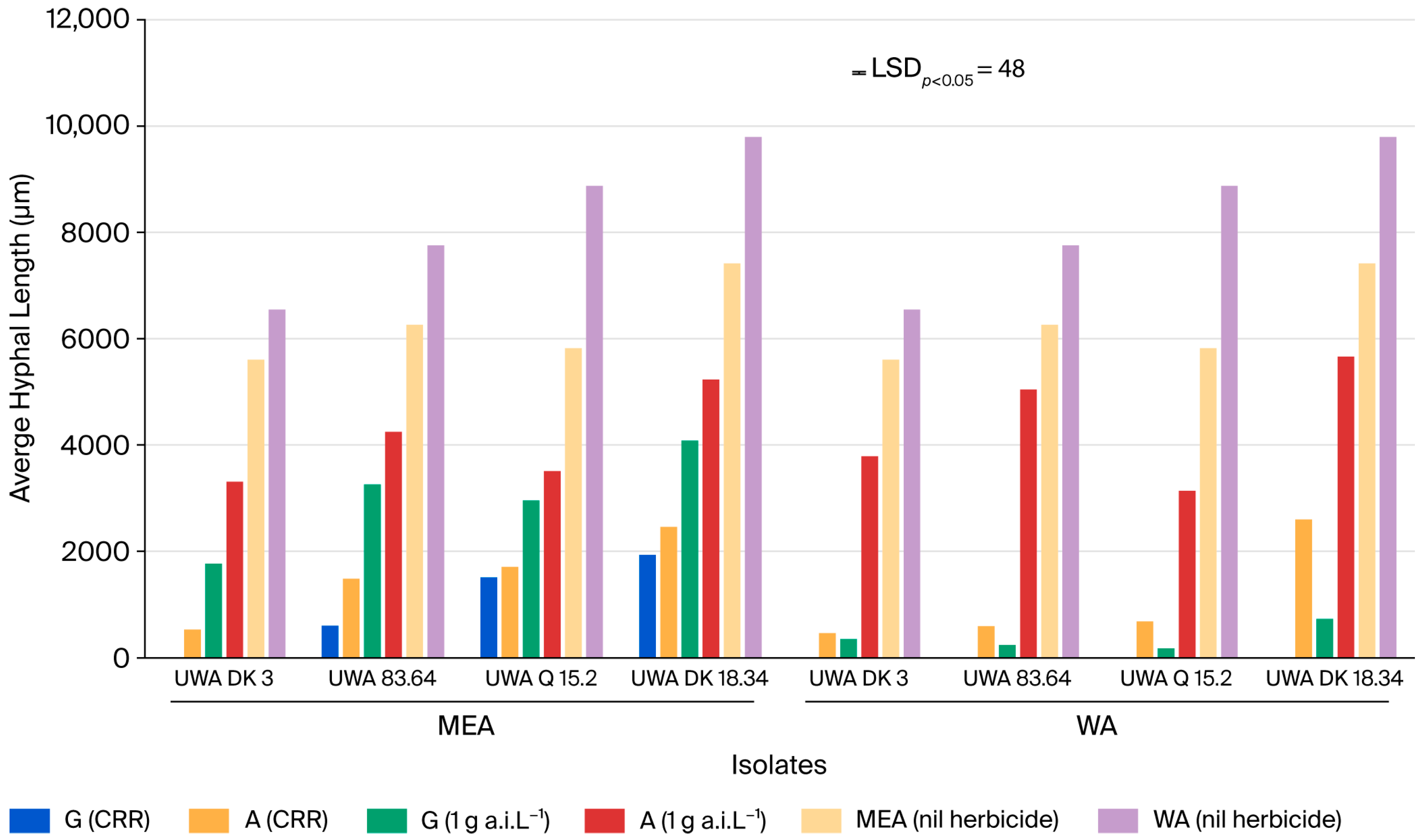
When the isolates UWA DK3, UWA 83.64, UWA Q 15.2, and UWA DK 18.34 were subcultured on MEA, all herbicide treatments significantly (p < 0.05) suppressed hyphal growth over the 32-day assessment period, compared with a lack of herbicide treatment. For each isolate, the average hyphal length was used to quantify the level of restriction induced by the herbicide treatment. The four selected isolates presented similar hyphal growth trends, with hyphal growth suppression increasing with increases in herbicide concentration from 1 g a.i. L−1 to the CRR. The herbicides ranked from greatest to least hyphal growth suppression as follows: glyphosate (CRR) > atrazine (CRR) > glyphosate (1 g a.i. L−1) > atrazine (1 g a.i. L−1) (Figure 1).
For individual isolates subcultured onto MEA, the results were as follows: for isolate UWA DK 3, 1 g a.i. L−1 atrazine, 1 g a.i. L−1 glyphosate, the CRR of atrazine, and the CRR of glyphosate significantly (p < 0.05) suppressed hyphal growth across the 32-day assessment period, with hyphal lengths of 3309 µm, 1764 µm, 534 µm, and 0 µm, respectively, compared with growth on MEA without herbicide (5603 µm). For isolate UWA 83.64, 1 g a.i. L−1 atrazine, 1 g a.i. L−1 glyphosate, the CRR of atrazine, and the CRR of glyphosate significantly (p < 0.05) suppressed hyphal growth across the 32-day assessment period, with mean hyphal lengths of 4246 µm, 3257 µm, 1484 µm, and 605 µm, respectively, compared with growth on MEA without herbicide (6259 µm). For isolate UWA Q 15.2, 1 g a.i. L−1 atrazine, 1 g a.i. L−1 glyphosate, the CRR of atrazine, and the CRR of glyphosate significantly (p < 0.05) suppressed hyphal growth across the 32-day assessment period, with mean hyphal lengths of 3508 µm, 2958 µm, 1703 µm, and 1508 µm, respectively, compared with growth on MEA without herbicide (5820 µm). For isolate UWA DK18.34, 1 g a.i. L−1 atrazine, 1 g a.i. L−1 glyphosate, the CRR of atrazine, and the CRR of glyphosate significantly (p < 0.05) suppressed hyphal growth across the 32-day assessment period, with mean hyphal lengths of 5229 µm, 4082 µm, 2455 µm, and 1929 µm, respectively, compared with growth on MEA without herbicide (7417 µm) (Figure 1).

2.5. Effect of Application of Atrazine or Glyphosate on Hyphal Growth on Water Agar (WA)

Hyphal growth of isolates UWA Q 15.2, UWA 83.64, UWA DK18.34, and UWA DK3 subcultured on WA was significantly (p < 0.05) suppressed by all herbicide treatments across the 32-day assessment period compared to growth on WA without herbicide treatments. For all isolates, hyphal growth suppression by atrazine or glyphosate increased with an increase in concentration from 1 g a.i. L−1 to the CRR. The herbicides ranked from greatest to least suppression as follows: glyphosate (CRR) > glyphosate (1 g a.i. L−1) > atrazine (CRR) > atrazine (1 g a.i. L−1).
For individual isolates subcultured on WA, the results were as follows: for isolate UWA DK3, application of 1 g a.i. L−1 atrazine, the CRR of atrazine, 1 g a.i. L−1 glyphosate, and the CRR of glyphosate all significantly (p < 0.05) suppressed hyphal growth across the 32-day assessment period, with mean hyphae lengths of 3788 µm, 463 µm, 354 µm, and 0 µm, respectively, compared to growth on WA without herbicide (6546 µm). For isolate UWA 83.64, the application of 1 g a.i. L−1 atrazine, the CRR of atrazine, 1 g a.i. L−1 glyphosate, and the CRR of glyphosate all significantly (p < 0.05) suppressed hyphal growth across the 32-day assessment period, with mean hyphal lengths of 5044 µm, 595 µm, 243 µm, and 0 µm, respectively, compared with growth on WA without herbicide (7756 µm). For isolate UWA Q 15.2, the application of 1 g a.i. L−1 atrazine, the CRR of atrazine, 1 g a.i. L−1 glyphosate, and the CRR of glyphosate all significantly (p < 0.05) suppressed hyphal growth across the 32-day assessment period, with mean hyphae lengths of 3136 µm, 684 µm, 180 µm, and 0 µm, respectively, compared with growth on WA in the absence of herbicide (8876 µm). For isolate UWA DK18.34, the application of 1 g a.i. L−1 atrazine, the CRR of atrazine, 1 g a.i. L−1 glyphosate, and the CRR of glyphosate all significantly (p < 0.05) suppressed hyphal growth across the 32-day assessment period, with mean hyphal lengths of 5662 µm, 2595 µm, 731 µm, and 0 µm, respectively, as compared with growth on WA without herbicide (9793 µm) (Figure 1).

2.6. Effect of Application of Atrazine and Glyphosate on Conidial Germination on Malt Extract Agar (MEA) and Water Agar (WA)

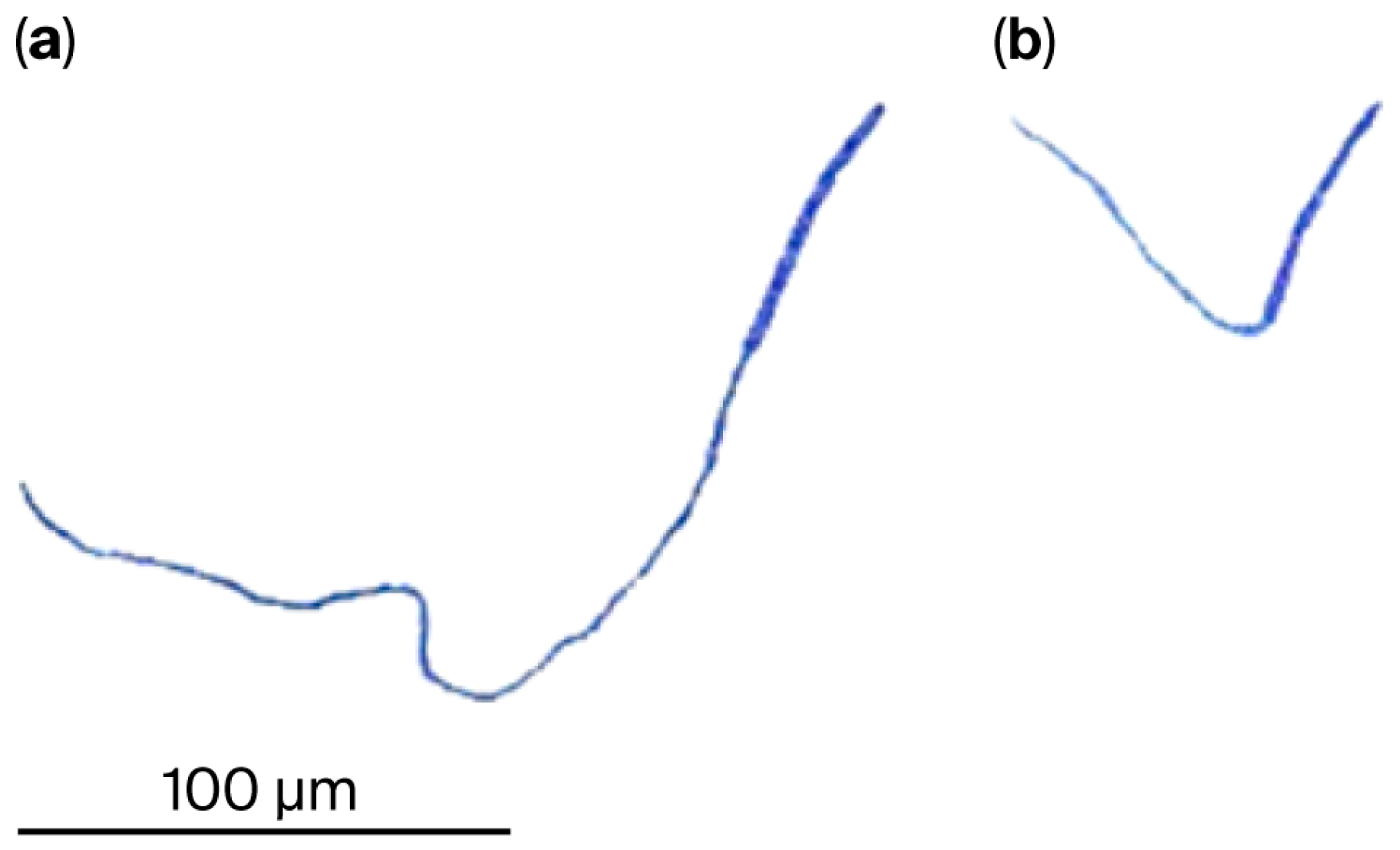
Applying atrazine and glyphosate at 1 g a.i. L−1 and the CRR significantly (p < 0.05) suppressed conidial germination, with 0% germination in all agars treated with herbicide compared to 44.3% in MEA and 27.5% in WA without herbicide (Figure 2).

2.7. Effect of Application of Atrazine and Glyphosate on Morphological Transformation of Multi-Celled Hyphae or Conidia to Blastospores on Malt Extract Agar (MEA) and Water Agar (WA)

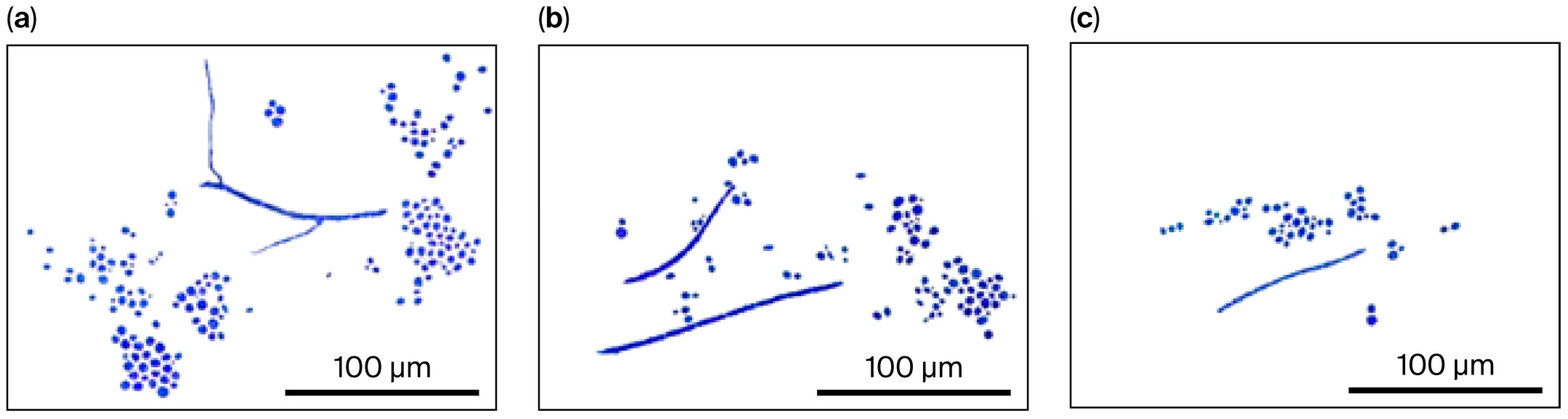
For the morphological transformation from multi-celled hyphae into numerous single-celled blastospores on MEA, the application of 1 g a.i. L−1 atrazine, 1 g a.i. L−1 glyphosate, the CRR of atrazine, and the CRR of glyphosate significantly (p < 0.05) suppressed the mean numbers of blastospores per measured area (441 µm × 332 µm) to 6.4, 1.8, 0, and 0, compared to 35.9 in the MEA control without herbicide. Similarly, when 1 g a.i. L−1 atrazine, 1 g a.i. L−1 glyphosate, the CRR of atrazine, and the CRR of glyphosate were applied in WA, the transformation from multi-celled hyphae to blastospores was significantly suppressed, with mean numbers of blastospores per measured area (441 µm × 332 µm) of 5.2, 0, 0, 0, respectively, compared to the WA control without herbicide (13.0) (Figure 3).
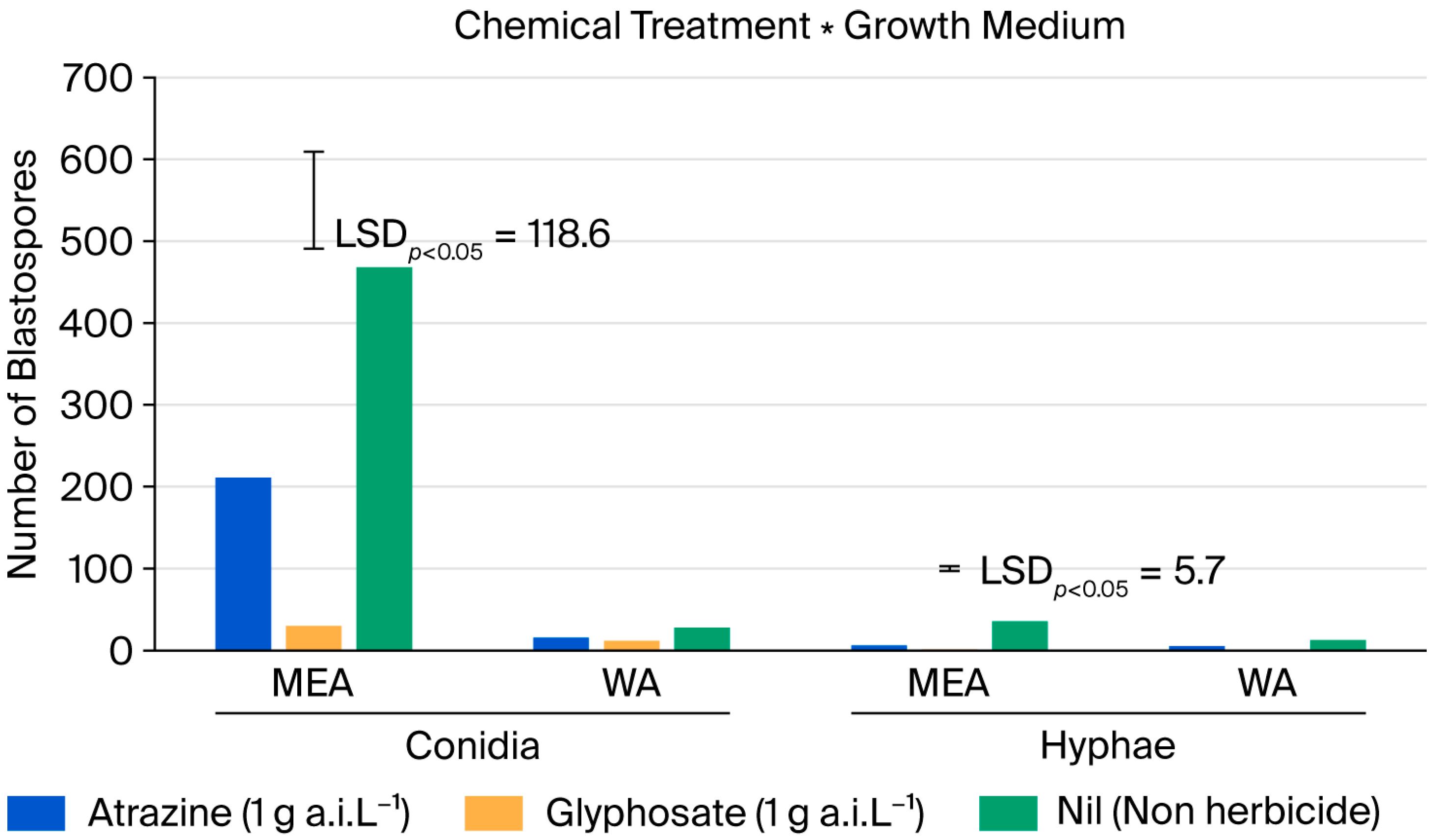
In relation to the morphological transformation from multi-celled conidia into numerous single-celled blastospores on MEA, the application of 1 g a.i. L−1 and the CRR of atrazine and glyphosate exerted a significant (p < 0.05) suppression effect, the degree of which increased as the concentration increased from 1 g a.i. L−1 to the CRR. The mean numbers of single-celled blastospores per measured area (441 µm × 332 µm) of MEA treated with 1 g a.i. L−1 atrazine, 1 g a.i. L−1 glyphosate, the CRR of atrazine, and CRR of glyphosate were 211, 30, 0, and 0 compared with 468 on MEA without herbicide. Similarly, applying 1 g a.i. L−1 atrazine, 1 g a.i. L−1 glyphosate, the CRR of atrazine, and the CRR of glyphosate significantly (p < 0.05) suppressed the transformation from multi-celled conidia to single-celled blastospores on WA, with mean numbers of blastospores per measured area (441 µm × 332 µm) of 16, 12, 0, and 0, compared with WA without herbicide (28) (Figure 3 and Figure 4).

3. Discussion

This study highlights how atrazine and glyphosate significantly suppress the development of N. capsellae by inhibiting hyphal growth, conidial germination, and the morphological transformation from multi-celled hyphae or conidia into numerous single-celled blastospores. That the extent of suppression of the growth of N. capsellae by atrazine and glyphosate was substantial and that it varied with herbicide concentration highlight the antifungal potential of atrazine and glyphosate to reduce white leaf spot disease incidence and severity in herbicide-tolerant rapeseed under field conditions. While the results of this study agree with some of Ai et al.’s findings [15], where they demonstrated the suppression of N. capsellae following atrazine application pre- or post-infection, they contrast with other findings by Ai et al. [16], who also observed stimulation of epidemic development of N. capsellae when glyphosate was applied before or after inoculation. These contrasting findings can likely be attributed to the fact that the studies by Ai et al. [15,16] were conducted directly on herbicide-tolerant rapeseed plants, in contrast to the current study, which examined direct herbicidal effects on N. capsellae grown on different nutrient agars treated with either of two herbicides. It is possible that the restrictive effects of atrazine and glyphosate on N. capsellae could also have been modified by the target plant responses in those earlier studies. In dimorphic fungi, the morphologic shift between the yeast phase and the hyphal form is likely essential for maintaining and/or increasing pathogenicity [17].
The fungicidal characteristics of atrazine have been widely reported in previous research. For example, in an agar plate study, Pakdaman and Mohammadi [13] showed that atrazine, simazine, and metribuzin at 500 µg mL−1 inhibited the mycelial growth of Sclerotinia sclerotiorum on 1.5% Bacto agar. Similarly, in a semi-solid culture medium, mycelium growth of ligninolytic macrofungal isolates was suppressed by atrazine, and the degree of restriction increased with an increase in atrazine concentration from 468 to 3750 mg L−1 [18]. Isakeit and Lockwoood [19] showed that atrazine exerts an inhibitory effect on conidial germination in C. sativus isolate R002 at concentrations between 0.2 and 3125 µg mL−1 in the absence of a carbon source, finding that the germination rate decreased with an increasing atrazine concentration up to 625 µg mL−1, when conidial germination was completely inhibited. Field studies by Altman and Campbell [20] showed that atrazine restricted the development of Pythium spp., and Sanyal and Shrestha [21] highlighted how atrazine suppresses the development of Macrophomina phaseolina in sorghum. The above antifungal effects of atrazine could possibly be attributed to its 1,3,5-triazine ring chemical structure, which facilitates fosters antiviral, antibacterial and antifungal biological activities [22].
The antifungal capability of glyphosate has also been widely demonstrated in previous studies. For instance, glyphosate inhibited the mycelial growth of Magnaporthe oryzae isolate PB1637, with inhibition strength increasing from 1.25 mL L−1 to 10 mL L−1 and mycelial growth completely suppressed above 10 mL L−1 [23]. Similarly, glyphosate application at 1 mg mL−1 significantly restricted spore germination of Fusarium oxysporum isolates FOB13 and F-19v in a root rot disease study on sugar beet [24]. Wyss and Müller-Schärer [25] demonstrated complete inhibition of the germination of aeciospores of Puccinia lagenophorae at both the recommended and 0.25× the recommended field rates of glyphosate. Even low rates of 0.0125× and 0.025× the recommended field rate of glyphosate still significantly reduced the germination of aeciospores of P. lagenophorae. Moreover, glyphosate application on glyphosate-resistant wheat (Triticum aestivum) restricted the infection and spread of P. lagenophorae [13]. Further, Sanyal and Shrestha [21] highlighted that glyphosate application reduced the incidence of red crown rot in soybean, inhibited Pyrenophora tritici-repentis ascocarp production in wheat straw, and restricted entomopathogenic fungi such as Beauveria bassiana, Metarhizium anisopliae, and Nomuraea rileyi. Glyphosate’s antifungal effects could possibly be attributed to its inhibitory effect on the formation of 5-enolpyruvylshikimate-3-phosphate synthase (EPSPS) in fungi, with consequent suppression of the synthesis of aromatic amino acids, including phenylalanine, tyrosine, and tryptophan [26,27]. Such suppression is likely due to >92% of fungal EPSPS proteins belonging to class I, which is highly sensitive to glyphosate [28]. It is highly relevant to this study that in agar media, glyphosate can have the opposite effect on fungal pathogens to its effect in plants. For example, Wardle and Parkinson [29] found that while the growth of Mucor hiemalis, Mortierella alpina, Trichoderma harzianum, Arthrinium sphaerospermum, Cladosporium cladosporioides, F. oxysporum, and Penicillium nigricans on water agar containing glyphosate was markedly inhibited by the glyphosate, it was only slightly suppressed and even stimulated by glyphosate at 200 µg g−1 in soil. The contrasting responses observed between agar and plant–soil systems in that study could be attributed to the impacts of glyphosate on the soil microorganism ecosystem, as glyphosate may also act indirectly by impacting other organisms that can interact with the target fungus, and these interactions cannot be detected in pure culture studies [29]. For example, glyphosate may act as a neutral or inhibitory agent of a fungus within soil systems but only exert severe effects on non-stress-tolerant competitors. In turn, this may indirectly enhance the number of stress-tolerant fungal species due to reduced competition or because more substrate is available for growth after the death of other organisms [30]. The synergistic activity of glyphosate weed control in predisposing plants to infectious organisms can also be considered a key factor; additionally, the metal-chelating properties of glyphosate enable it to compromise the immune system of plants by immobilising specific soil micronutrients involved in disease resistance [31,32,33,34]. Meanwhile, the metal chelation properties of glyphosate could also deprive plant cells of important co-factors required for enzymatic antioxidant system activity, leading to increased oxidative stress due to the accumulation of reactive oxygen species, including superoxide (O2) and hydrogen peroxide (H2O2), creating preferred conditions for pathogen infection [35]. Therefore, when the negative effects of glyphosate, including suppression of the plant’s immune system, inhibition of ecological competitors, and the provision of additional nutrients from eliminated competitors, outweigh its fungus-restricting properties during pathogen infection, significant fungal disease stimulation may occur. This could explain the contrast between our plate experiment and the findings of Murtza et al. [14] and Ai et al. [15,16]. Additionally, there are a range of other possible indirect and/or inhibitory factors that were not included in these studies, including possible indirect effects of herbicides on soil microbial communities, such as by changing relative competitive abilities; provision of additional nutrition for pathogens following weed death from herbicide application; and possible inhibitory effects of herbicides on the plant immune system such as in relation to chelating metal elements.

4. Materials and Methods

4.1. Neopseudocercosporella capsellae Isolates

For the hyphal and conidial experiments, this study used four previously collected single-spored isolates of N. capsellae derived from infected leaves of spring-type rapeseed (B. napus) collected in a survey across Australia in 2016 (M.P. You & M.J. Barbetti, unpublished data). These were isolates UWA Q15.2 from Western Australia, UWA 83.64 from South Australia, and UWA DK18.34 and UWA DK3, both from Victoria. These isolates were selected because they are all known to be highly pathogenic [7]. Initially, the isolates were used and compared individually in experiments involving hyphal growth. Based on the outcomes of these hyphal growth studies, for all subsequent experiments involving hyphae or conidia, the four isolates were combined into a single mixed inoculum, as per earlier studies by Murtza et al. [14], to avoid any potential pathotype-specific or isolate-specific responses. The isolates were stored as lyophilised ampoules at room temperature until the experiments were initiated, when the lyophilised cultures were revived on potato dextrose agar.

4.2. Herbicides and Their Application

For these studies, the isolates of N. capsellae were subcultured under 12/12 h light/dark cycles at 20 °C on two agar media, viz., highly nutrient-rich malt extract agar (MEA) and nutrient-poor water agar (WA), as it was expected that the level of agar nutrition would affect their growth. To both these media, either atrazine or glyphosate was added as follows: Atrazine 600 SC [a.i. (active ingredient) 600 g L−1 atrazine], supplied by 4Farmers Australia Pty Ltd. (Welshpool WA 6106, Australia), was applied to each agar at 1 g a.i. L−1 or at the 4Farmers Australia Pty Ltd. commercial recommended concentration/rate (CRR) of 10 g a.i. L−1 [14,16]. Glyphosate (a.i. 690 g glyphosate kg−1), supplied by Bayer Australia Pty Ltd. (Pymble NSW 2073, Australia) was applied to each agar at 1 g a.i. L−1 or at the commercial recommended concentration/rate (CRR) of 7.8 g a.i. L−1 [14]. The herbicides were diluted to the concentrations required using deionised water.

4.3. Treatments

For each experiment, there were ten treatments as follows: in T1, agar plugs of each selected N. capsellae isolate were aseptically transferred onto MEA containing atrazine at 1 g a.i. L−1 of agar medium; in T2, agar plugs of each selected N. capsellae isolate were aseptically transferred onto MEA containing glyphosate at 1 g a.i. L−1 of agar medium; in T3, agar plugs of each selected N. capsellae isolate were aseptically transferred onto MEA containing atrazine at CRR (10 g a.i. L−1); in T4, agar plugs of each selected N. capsellae isolate were aseptically transferred onto MEA containing glyphosate at the CRR (7.8 g a.i. L−1); in T5, agar plugs of each selected N. capsellae isolate were aseptically transferred onto WA containing atrazine at 1 g a.i. L−1 of agar medium; in T6, agar plugs of each selected N. capsellae isolate were aseptically subcultured onto WA containing glyphosate at 1 g a.i. L−1 of agar medium; in T7, agar plugs of each selected N. capsellae isolate were aseptically transferred onto WA containing atrazine at the CRR (10 g a.i. L−1); in T8, agar plugs of each selected N. capsellae isolate were aseptically subcultured onto WA containing glyphosate at the CRR (7.8 g a.i. L−1); in T9, agar plugs of each selected N. capsellae isolate were aseptically transferred onto MEA without herbicide; and in T10, agar plugs of each selected N. capsellae isolate were aseptically transferred onto WA without herbicide.

4.4. Experimental Conditions

All experiments were conducted at a constant temperature of 20 °C [36]. This temperature was chosen because it is the optimum temperature for hyphal growth, conidial germination, and the transformation of conidia and hyphae into single-celled blastospores of N. capsellae.

4.5. Neopseudocercosporella capsellae Mycelial Production

The isolates were cultured on MEA (20 g L−1 of malt extract, 20 g L−1 of glucose, 15 g L−1 of agar, and 1 g L−1 of peptone) for 4 weeks at 20 °C. Approximately 5 mm of mycelia from the leading edge of each isolate was then scraped off of the agar cultures, using a scalpel blade, and aseptically transferred into Erlenmeyer flasks (250 mL) containing 150 mL of malt extract broth (MEB; malt extract 20 g L−1, glucose 20 g L−1, and peptone 1 g L−1) [17]. These liquid cultures were then incubated on a rotary platform shaker (Innova 2100; New Brunswick Scientific) at 150 rpm at 25 °C. After 21 days, these four isolates were individually used and compared in relation to hyphal growth studies. For all other studies, cultures of the four isolates with abundant mycelial growth were mixed in equal volumes and blended for 5 min (Kambrook; Mega Blender) to produce a composite inoculum mixture of N. capsellae mycelial fragments. For all studies, the final concentration of mycelial fragments was adjusted to 4 × 10⁶ fragments mL−1 using a haemocytometer counting chamber (Superior™). In accordance with treatments T1 to T10 above, 10 µL of the mycelium inoculum was dropped onto the prepared agar slides. The agar slides were made based on the protocols provided by Skinner et al. [37] for easier microscopic observation compared to a traditional agar plate.

4.6. Neopseudocercosporella capsellae Conidial Production

Seeds of the highly susceptible B. juncea cultivar Vardan were sown in 20 replicate pots (3.5 × 3.5 × 7 cm) [36]. The plants were initially maintained in a room with a controlled environment (15 °C, 12 h photoperiod, and a light intensity of 580 µmol m−2 s−1) for 4 weeks. They were then spray-inoculated to run-off with the mixture of mycelial fragments of the four isolates (4 × 10⁶ fragments mL−1), produced as outlined above, using a hand-operated aerosol sprayer. Inoculations were repeated weekly for a further 3 weeks. Once inoculated, all plants were transferred to a Garden Poly Tunnel™ (1 × 1 × 2 m), and three Chun™ wireless portable humidifiers (1 L capacity, 45–90 mL h−1 mist output) were introduced late each afternoon to maximise overnight humidity. Meanwhile, the temperature was maintained inoculated under controlled environment conditions, temperatures were varied every 2 h to 5 °C, 6 °C, 8 °C, 12 °C, 15 °C, 18 °C, 20 °C, 18 °C, 15 °C, 10 °C, 8 °C, and 5 °C across each 24 h period to provide sufficient stimulation for conidial production. By 20–25 days after the final inoculation, disease symptoms were evident. Leaves with typical white leaf spot symptoms were collected, and lesions were cut out and placed into glass vials containing 15–20 mL of sterile distilled water, shaken vigorously to release conidia into the water, and centrifuged. The supernatant was then decanted to concentrate the conidia in the residue. The conidia were then washed twice in sterile distilled water, centrifuged, and resuspended in 1–2 mL of sterile distilled water. Finally, the conidial concentration was adjusted to 4 × 10⁶ mL−1 based on haemocytometer counts, and 10 µL of mycelium inoculum was pipetted onto the prepared agar slides and observed under a microscope to determine conidial germination and blastospore production.

4.7. Microscopic Determination of Hyphal Growth

For hyphal growth, measurements of each of the four N. capsellae isolates were processed separately for each of the treatments 1 to 10. For each isolate, five replicate Petri plates were prepared for each treatment, with each plate containing five subcultured agar plugs of the same size. The longest hyphae of each subcultured agar plug were selected as the tracking target at the beginning of the 32-day period of hyphal length measurement. Measurements were repeated every 4 days during the 32-day hyphal growth period. Hyphal length measurements were made using an Olympus stereo microscope SZX12 fitted with an Olympus SZX2-ILLK transmitted light illumination stand that provided brightfield and oblique illumination for high-contrast viewing. An Olympus DP21 digital microscopy camera was used to photographically capture observations. All images were taken using the same settings for laser power, gain, and offset.

4.8. Microscopic Determination of Conidial Germination

For conidial germination testing, two 10 µL aliquots of the above conidial suspension were inoculated onto the agar slides and subjected to treatments 1 to 10. The inoculated slides were incubated in a sealed glass moist chamber maintained at 20 °C for 24, 36, and 48 h. For each time point, 5 replicates of the agar slides were prepared per treatment. The inoculated conidia were stained with 1% cotton blue in lactophenol before they were examined using an Olympus BX51 microscope. For each agar slide, fifty random fields, each 441 (x) × 332 (y) µm, were imaged from left to right using an Olympus DP71 digital photographic system. The 50 captured digital images of each agar slide were used to count a total of ≥100 conidia. Germinated and non-germinated conidia were counted separately for each digital image. The germination ratio of each image was calculated separately as follows: Conidial germination ratio = Number of germinated conidia/Total conidia counted.

4.9. Microscopic Determination of Morphological Transformation from Multi-Celled Hyphae or Conidia into Numerous Single-Celled Blastospores

For the measurement of the morphological transformation from multi-celled hyphae or conidia into numerous single-celled blastospores, 5 replicates of the agar slides were prepared for each treatment 1 to 10. Two drops (10 µL each) of the composite mixture of the four N. capsellae isolates of mycelial or conidial suspension were inoculated onto each slide. The inoculated slides were incubated in a moist chamber maintained at 20 °C for 24, 36, or 48 h. For each time point, 5 replicates of the agar slides were prepared per treatment. The inoculated conidia were stained with 1% cotton blue in lactophenol before they were examined using an Olympus BX51 microscope [17]. For each agar slide, fifty random fields, each 441 (x) × 332 (y) µm, were imaged from left to right of each conidium- or mycelium-inoculated agar slide at 24, 36, and 48 h using an Olympus DP71 digital photographic system. Fifty repeated digital images were captured for each agar slide and used to count the total number of single-celled blastospores in each image individually.

4.10. Experimental Design and Statistical Analysis

For the experiment on hyphal growth, the 10 different treatments were applied individually to each of the four N. capsellae isolates, as described above, with 5 replicates per treatment for each isolate. The collected data sets were analysed using analysis of variance (ANOVA) in GenStat edition 22nd (VSN International Ltd, Hemel Hempstead, Hertfordshire, HP2 4TP, UK). Fisher’s least significant difference (LSD) at p < 0.05 was used to identify significant differences between isolates and treatments.
For the experiments on conidial germination and morphological transformation from multi-celled hyphae or conidia into numerous single-celled blastospores, the 10 different treatments were undertaken using a combined inoculum comprising the four N. capsellae isolates, as described above, with 5 replicates for each treatment. The collected data sets were analysed as described above for the hyphal growth experiment and Fisher’s least significant difference (LSD) at p < 0.05 was used to identify significant differences between treatments.

5. Conclusions

This study highlights the significant antifungal activity of atrazine and glyphosate, which can constrain hyphal growth, conidial germination, and morphological transformation in the white leaf spot pathogen N. capsellae, suggesting their potential use as a control measure to limit the epidemic spread and development of N. capsellae in herbicide-tolerant rapeseed. These new insights and understanding of how herbicides constrain hyphal growth, conidial germination, and morphological transformation suggest their potential application as a control measure to limit the epidemic spread and development of not only N. capsellae in herbicide-tolerant rapeseed but other dimorphic fungal pathogens as well.

Author Contributions

Conceptualisation, M.J.B., M.P.Y. and G.Y.; methodology and formal analyses, Y.A., M.P.Y., G.Y. and M.J.B.; investigation, Y.A., M.P.Y., G.Y. and M.J.B.; writing—review and editing, Y.A., M.J.B., M.P.Y. and G.Y.; supervision M.J.B., M.P.Y. and G.Y.; project administration, M.J.B.; funding acquisition M.J.B. All authors have read and agreed to the published version of the manuscript.

Funding

This study was supported by the UWA School of Agriculture and Environment at The University of Western Australia.

Institutional Review Board Statement

Not applicable.

Informed Consent Statement

Not applicable.

Data Availability Statement

The original contributions presented in this study are included in the article. Further inquiries can be directed to the corresponding author.

Conflicts of Interest

The authors declare no conflicts of interest.

Abbreviations

The following abbreviations are used in this manuscript:
MEAMalt Extract Agar
WAWater Agar
MEBMalt Extract Broth
CRRCommercial Recommended Concentration/Rate
RRRoundup Ready®
TTTriazine-Tolerant
ANOVAAnalysis of Variance
EPSPS5-Enolpyruvylshikimate-3-phosphate synthase

References

  1. Australian Bureau of Statistics. Statistics on the Production of Principal Agricultural Commodities Including Cereal and Broadacre Crops, Horticulture and Livestock, 2021–2022 Financial Year. Agricultural Commodities, Australia. 2023. Available online: https://www.abs.gov.au/statistics/industry/agriculture/agricultural-commodities-australia/latest-release (accessed on 17 January 2024).
  2. Siddiqua, K.A.; Wilson, S.P.; Alquezar, R. Importance of the study of atrazine toxicity to amphibians in the Australian environment. Australas. J. Ecotoxicol. 2010, 16, 103–118. Available online: https://leusch.info/ecotox/aje/archives/vol16p103.pdf (accessed on 29 January 2024).
  3. Oliver, D.P.; Kookana, R.S.; Miller, R.B.; Correll, R.L. Comparative environmental impact assessment of herbicides used on genetically modified and non-genetically modified herbicide-tolerant canola crops using two risk indicators. Sci. Total Environ. 2016, 557, 754–763. [Google Scholar] [CrossRef] [PubMed]
  4. Gianessi, L.P. Economic and herbicide use impacts of glyphosate-resistant crops. Pest Manag. Sci. Former. Pestic. Sci. 2005, 61, 241–245. [Google Scholar] [CrossRef] [PubMed]
  5. Walsh, A.; Kingwell, R. Economic implications of the loss of glyphosate and paraquat on Australian mixed enterprise farms. Agric. Systems. 2021, 193, 103207. [Google Scholar] [CrossRef]
  6. Van de Wouw, A.; Idnurm, A.; Davidson, J.; Sprague, S.; Khangura, R.; Ware, A.; Lindbeck, K.D.; Marcroft, S.J. Fungal diseases of canola in Australia: Identification of trends, threats and potential therapies. Australas. Plant Pathol. 2016, 45, 415–423. [Google Scholar] [CrossRef]
  7. Murtza, T.; You, M.P.; Barbetti, M.J. Geographic location and year determine virulence, and year determines genetic change, in populations of Neopseudocercosporella capsellae. Plant Pathol. 2019, 68, 1706–1718. [Google Scholar] [CrossRef]
  8. Mohammed, A.E.; You, M.P.; Banga, S.S.; Barbetti, M.J. Resistances to downy mildew (Hyaloperonospora brassicae) in diverse Brassicaceae offer new disease management opportunities for oilseed and vegetable crucifer industries. Eur. J. Plant Pathol. 2019, 153, 915–929. [Google Scholar] [CrossRef]
  9. Al-lami, H.F.D.; You, M.P.; Barbetti, M.J. Role of foliage component and host age on severity of Alternaria leaf spot (caused by Alternaria japonica and A. brassicae) in canola (Brassica napus) and mustard (B. juncea) and yield loss in canola. Crop Past. Sci. 2019, 70, 969–980. [Google Scholar] [CrossRef]
  10. Al-lami, H.F.; You, M.P.; Mohammed, A.E.; Barbetti, M.J. Virulence variability across the Alternaria spp. population determines incidence and severity of Alternaria leaf spot on rapeseed. Plant Pathol. 2020, 69, 506–517. [Google Scholar] [CrossRef]
  11. Murtza, T.; You, M.P.; Barbetti, M.J. Temperature and relative humidity shape white leaf spot (Neopseudocercosporella capsellae) epidemic development in rapeseed (Brassica napus). Plant Pathol. 2021, 70, 1936–1944. [Google Scholar] [CrossRef]
  12. Murtza, T.; You, M.P.; Barbetti, M.J. Canola growth stage at time of infection determines magnitude of white leaf spot (Neopseudocercosporella capsellae) impact. Plant Dis. 2021, 105, 1515–1521. [Google Scholar] [CrossRef]
  13. Pakdaman Sardrood, B.; Mohammadi Goltapeh, E. Weeds, herbicides and plant disease management. In Sustainable Agriculture Reviews; Lichtfouse, E., Ed.; Springer: Cham, Switzerland, 2018; Volume 31, pp. 41–178. [Google Scholar] [CrossRef]
  14. Murtza, T.; You, M.P.; Barbetti, M.J. Application timing of herbicides, glyphosate and atrazine, sway respective epidemics of foliar pathogens in herbicide--tolerant rapeseed. Plant Pathol. 2022, 71, 507–522. [Google Scholar] [CrossRef]
  15. Ai, Y.; You, M.P.; Yan, G.; Barbetti, M.J. Atrazine application shapes white leaf spot (Neopseudocercosporella capsellae) development on triazine-resistant canola. Plant Health Prog. 2024, 26, 161–169. [Google Scholar] [CrossRef]
  16. Ai, Y.; You, M.P.; Yan, G.; Barbetti, M.J. Glyphosate application affects white leaf spot (Neopseudocercosporella capsellae) development on glyphosate-tolerant canola. Plant Pathol. 2024, 74, 786–796. [Google Scholar] [CrossRef]
  17. Gunasinghe, N.; Barbetti, M.J.; You, M.P.; Dehigaspitiya, P.; Neate, S. Dimorphism in Neopseudocercosporella capsellae, an emerging pathogen causing white leaf spot disease of Brassicas. Front. Cell. Infect. Microbiol. 2021, 11, 678231. [Google Scholar] [CrossRef]
  18. Cupul, W.C.; Abarca, G.H.; Vázquez, R.R.; Salmones, D.; Hernández, R.G.; Gutiérrez, E.A. Response of ligninolytic macrofungi to the herbicide atrazine: Dose-response bioassays. Rev. Argent. Microbiol. 2014, 46, 348–357. [Google Scholar] [CrossRef]
  19. Isakeit, T.; Lockwood, J.L. Lethal effect of triazine and other triazine herbicides on ungerminated conidia of Cochliobolus sativus in soil. Soil Biol. Biochem. 1989, 21, 809–817. [Google Scholar] [CrossRef]
  20. Altman, J.; Campbell, C.L. Effect of herbicides on plant diseases. Ann. Rev. Phytopathol. 1977, 15, 361–385. [Google Scholar] [CrossRef]
  21. Sanyal, D.; Shrestha, A. Direct effect of herbicides on plant pathogens and disease development in various cropping systems. Weed Sci. 2008, 56, 155–160. [Google Scholar] [CrossRef]
  22. Patil, V.; Noonikara-Poyil, A.; Joshi, S.D.; Patil, S.A.; Patil, S.A.; Lewis, A.M.; Bugarin, A. Synthesis, molecular docking studies, and in vitro evaluation of 1, 3, 5-triazine derivatives as promising antimicrobial agents. J. Mol. Struct. 2020, 1220, 128687. [Google Scholar] [CrossRef]
  23. Mehta, S.; Kumar, A.; Achary, V.M.M.; Ganesan, P.; Rathi, N.; Singh, A.; Sahu, K.P.; Lal, S.K.; Das, T.K.; Reddy, M.K. Antifungal activity of glyphosate against fungal blast disease on glyphosate-tolerant OsmEPSPS transgenic rice. Plant Sci. 2021, 311, 111009. [Google Scholar] [CrossRef] [PubMed]
  24. Larson, R.L.; Hill, A.L.; Fenwick, A.; Kniss, A.R.; Hanson, L.E.; Miller, S.D. Influence of glyphosate on Rhizoctonia and Fusarium root rot in sugar beet. Pest Manag. Sci. Former. Pestic. Sci. 2006, 62, 1182–1192. [Google Scholar] [CrossRef]
  25. Wyss, G.S.; Müller-Schärer, H. Effects of selected herbicides on the germination and infection process of Puccinia lagenophorae, a biocontrol pathogen of Senecio vulgaris. Biol. Control. 2001, 20, 160–166. [Google Scholar] [CrossRef]
  26. Feng, P.C.C.; Baley, G.J.; Clinton, W.P.; Bunkers, G.J.; Alibhai, M.F.; Paulitz, T.C.; Kidwell, K.K. Glyphosate inhibits rust diseases in glyphosate-resistant wheat and soybean. Proc. Natl. Acad. Sci. USA 2005, 102, 17290–17295. [Google Scholar] [CrossRef] [PubMed]
  27. Richards, T.A.; Dacks, J.B.; Campbell, S.A.; Blanchard, J.L.; Foster, P.G.; McLeod, R.; Roberts, C.W. Evolutionary origins of the eukaryotic shikimate pathway: Gene fusions, horizontal gene transfer, and endosymbiotic replacements. Eukaryot. Cell 2006, 5, 1517–1531. [Google Scholar] [CrossRef]
  28. Light, S.H.; Krishna, S.N.; Minasov, G.; Anderson, W.F. An unusual cation-binding site and distinct domain–domain interactions distinguish class II enolpyruvylshikimate-3-phosphate synthases. Biochemistry 2016, 55, 1239–1245. [Google Scholar] [CrossRef]
  29. Wardle, D.A.; Parkinson, D. Influence of the herbicide glyphosate on soil microbial community structure. Plant Soil. 1990, 122, 29–37. [Google Scholar] [CrossRef]
  30. Jenkinson, D.S.; Powlson, D.S. The effects of biocidal treatments on metabolism in soil—V: A method for measuring soil biomass. Soil Biol. Biochem. 1976, 8, 209–213. [Google Scholar] [CrossRef]
  31. Zobiole, L.H.S.; Kremer, R.J.; Oliveira, R.S., Jr.; Constantin, J. Glyphosate affects micro-organisms in rhizospheres of glyphosate-resistant soybeans. J. Appl. Microbiol. 2011, 110, 118–127. [Google Scholar] [CrossRef]
  32. Feng, P.C.; Chiu, T.; Sammons, R.D. Glyphosate efficacy is contributed by its tissue concentration and sensitivity in velvetleaf (Abutilon theophrasti). Pestic. Biochem. Physiol. 2003, 77, 83–91. [Google Scholar] [CrossRef]
  33. Kremer, R.; Means, N.; Kim, S. Glyphosate affects soybean root exudation and rhizosphere micro-organisms. Int. J. Environ. Anal. Chem. 2005, 85, 1165–1174. [Google Scholar] [CrossRef]
  34. Bromilow, R.H.; Chamberlain, K.; Tench, A.J.; Williams, R.H. Phloem translocation of strong acids—Glyphosate, substituted phosphonic and sulfonic acids—In Ricinus communis L. Pestic. Sci. 1993, 37, 39–47. [Google Scholar] [CrossRef]
  35. Gomes, M.P.; Smedbol, E.; Chalifour, A.; Hénault-Ethier, L.; Labrecque, M.; Lepage, L.; Juneau, P. Alteration of plant physiology by glyphosate and its by-product aminomethylphosphonic acid: An overview. J. Exp. Bot. 2014, 65, 4691–4703. [Google Scholar] [CrossRef]
  36. Gunasinghe, N.; You, M.P.; Clode, P.L.; Barbetti, M.J. Mechanisms of resistance in Brassica carinata, B. napus and B. juncea to Pseudocercosporella capsellae. Plant Pathol. 2016, 65, 888–900. [Google Scholar] [CrossRef]
  37. Skinner, S.O.; Sepúlveda, L.A.; Xu, H.; Golding, I. Measuring mRNA copy number in individual Escherichia coli cells using single-molecule fluorescent in situ hybridization. Nat. Protoc. 2013, 8, 1100–1113, Correction in Nat. Protoc. 2015, 10, 1457. [Google Scholar] [CrossRef] [PubMed]
Figure 1. The average length of hyphae (µm) across a 32-day period for Neopseudocercosporella capsellae isolates UWA DK3, UWA 83.64, UWA Q 15.2, and UWA DK 18.34 following atrazine and glyphosate treatments at 1 g a.i. L−1 and the commercial recommended concentration/rate (CRR) of atrazine (10 g a.i. L−1) or glyphosate (7.8 g a.i. L−1) on malt extract agar medium (MEA) and water agar medium (WA). The average was calculated from eight measurements taken at 4-day intervals.
Stresses 05 00067 g001
Figure 2. Germination of conidia of Neopseudocercosporella capsellae on malt extract agar (MEA) and on water agar (WA). (a): Germination of conidia on MEA without herbicide; (b): germination of conidia on WA without herbicide. Note: There was no germination of conidia observed on MEA or WA when 1 g a.i. L−1 or the commercial recommended concentration of atrazine (10 g a.i. L−1) or glyphosate (7.8 g a.i. L−1) had been added into either agar media.
Stresses 05 00067 g002
Figure 3. Morphological transformation from multi-celled hyphal fragments or macroconidia of Neopseudocercosporella capsellae into single-celled blastospores across a 48 h period on malt extract agar (MEA) and water agar (WA) following the application of 1 g a.i. L−1 or the commercial recommended concentration rate (CRR) of atrazine (10 g a.i. L−1) or glyphosate (7.8 g a.i. L−1) and either of the agar media (a) without herbicide; (b) 1 g a.i. L−1 atrazine; (c) 1 g a.i. L−1 glyphosate. Note: Treatment of agar with atrazine and glyphosate at the CRR completely inhibited this morphological transformation. The average number of blastospores was calculated on three measurements taken at 12 h intervals.
Stresses 05 00067 g003
Figure 4. Morphological transformation from multi-celled conidia into single-celled Neopseudocercosporella capsellae blastospores on malt extract agar (MEA) and water agar (WA) following the addition of 1 g a.i. L−1 atrazine or glyphosate at 36 h post-inoculation on MEA without herbicide (green); on MEA to which 1 g a.i. L−1 atrazine has been added (blue); on MEA to which 1 g a.i. L−1 glyphosate has been added (yellow).
Stresses 05 00067 g004
Disclaimer/Publisher’s Note: The statements, opinions and data contained in all publications are solely those of the individual author(s) and contributor(s) and not of MDPI and/or the editor(s). MDPI and/or the editor(s) disclaim responsibility for any injury to people or property resulting from any ideas, methods, instructions or products referred to in the content.