Article

Effect of Silicon Formulation on Protecting and Boosting Faba Bean Growth Under Herbicide Damage

1
Federal Scientific Vegetable Center, 143072 Moscow, Russia
2
Baikov Institute of Metallurgy and Material Science, Russian Academy of Sciences, Leninsky Pr. 49, 119334 Moscow, Russia
3
Federal Research Centre “Fundamentals of Biotechnology”, Russian Academy of Sciences, Leninsky Pr. 33/2, 119071 Moscow, Russia
4
Department of Geoecology and Nature Management, Northern Trans-Urals Agrarian University, Republic Street 7, 625003 Tumen, Russia
5
Department of Food Technologies, ‘Ion Ionescu de la Brad’ Iasi University of Life Sciences, 700490 Iasi, Romania
6
Department of Agricultural Sciences, University of Naples Federico II, Portici, 80055 Naples, Italy
*
Author to whom correspondence should be addressed.
Stresses 2025, 5(4), 68; https://doi.org/10.3390/stresses5040068 (registering DOI)
Submission received: 1 November 2025 / Revised: 25 November 2025 / Accepted: 28 November 2025 / Published: 30 November 2025
(This article belongs to the Section Plant and Photoautotrophic Stresses)

Abstract

Herbicide treatment for agricultural crops may cause dramatic damage to production amount and quality. The aim of the present investigation was to compare different silicon formulations to assess their efficiency in maintaining faba bean plant growth with the herbicide spray Dicameron. Soil pollution due to Dicameron caused an intensive oxidant stress, decreasing bean pods, seed number and weight, antioxidant activity (AOA) and polyphenol content (TP), leaf chlorophyll, and carotene, sharply increasing proline level, and creating pod and leaf anomalies. All the Si formulations, i.e., ionic Si forms in the presence of microelements (Siliplant) or terpenes (BioSi), Si nanoparticles, and organic silicon adjuvant siloxane polyalkylene oxide (Atomic), significantly restored bean antioxidant status and leaf photosynthetic pigment accumulation, enhancing plant defense, as indicated by the proline level decrease. Only the ionic form of Si in the Siliplant formulation, containing essential microelements, facilitated the recovery of pod form and seed weight, while nano-Si was the most effective treatment for bean AOA restoration, and Atomic was the best in rebalancing chlorophyll and the worst in decreasing proline content. A strong beneficial effect of ionic Si in the presence of terpenes (BioSi) was recorded only on the yield of the control plants which did not undergo herbicide spraying. The results indicate a moderate beneficial effect of siloxane adjuvant on plant performance and antioxidant defense level and the highest positive impact on broad bean protection in response to the ionic Si (Siliplant formulation) supply also containing Cu, Zn, Mo, Mn, Fe, and B.

Graphical Abstract

1. Introduction

Herbicide utilization is a widespread practice for weed control which improves crop yield and economic efficiency. In this respect, the choice of the chemical form of herbicide associated with a plant species and variety, as well as the use of the optimal treatment dosage and time, is crucial to achieve the desired effect [1]. Failure to comply with the mentioned conditions may result in plant growth inhibition, yield reduction, increased sensitivity to unfavorable biotic and abiotic factors, a decrease in plant antioxidant status, and suppression of the activity of atmospheric nitrogen fixing rhizobacteria [2,3].
Undesirable entry of herbicide into plants may be caused both by its release from weed residues in adjacent areas [4] and non-targeted or direct-jet application, with the so-called “spray drift” leading to serious damage, especially in highly herbicide-susceptible species [5,6]. Even low herbicide doses may be either beneficial or phytotoxic to crops [7,8], as demonstrated in studies regarding the effects of herbicide on cultivated plants [9,10,11,12]. Furthermore, it is well known that the application of broad-spectrum herbicides is limited due to crop sensitivity, while continuous utilization of selective herbicides may cause the development of weed herbicide resistance.
To improve plant tolerance to herbicides, appropriate attention is paid to the development of new varieties resistant to herbicides based on genetic germplasm variability, mutation, and transgenic techniques [13,14,15]. Most GM crops are herbicide-resistant, including soybean, maize, canola, and cotton [16].
Another approach to protecting crops against the harmful effects of herbicides is based on the utilization of plant growth regulators, such as phytohormones or silicon derivatives [17,18]. The latter are known to stimulate plant growth and decrease environmental stresses [19,20,21], particularly those caused by herbicides [7,22].
Silicon is beneficial for plant photosynthesis, cell wall strength and rigidity, and water retention, and it activates defense mechanisms, mitigates oxidative stress induced by reactive oxygen species, and regulates gene expression related to stress conditions [23], enhancing plant growth, yield, and product quality [24,25]. Antioxidant protection stimulation, reduction of herbicide absorption due to cell wall strengthening, and elicitation of herbicide decomposition represent the main beneficial properties of Si [18].
At present, various Si-added formulations are widely used in agriculture, though the comparative assessment of their efficiency has been rather limited, revealing only significantly lower effectiveness of diatomaceous earth powder compared to the ionic Si form, nano-Si, and Si encapsulated in chitosan. The latter considerations suggest that genetic peculiarities, method of Si supply, and environmental conditions may significantly contribute to optimizing Si utilization [26]. Most investigations regarding the beneficial effect of Si on plant growth and development were carried out using ionic forms of this element and to a lesser extent nano-Si, predominantly in the form of nano-SiO2 [18,21,27,28]. Furthermore, in an investigation on chervil, the nanoparticle application of elemental Si showed high growth promoting properties at extremely low nano-Si concentrations (10–14 mg L−1) [29].
Synthetic siloxane derivatives, known as powerful agricultural adjuvants, have never been utilized in plant protection against herbicide damage but only in combination with other agrochemicals for improving leaf adhesion, thus preventing applied substance leaching [30]. Appropriate studies showed that the mentioned siloxane derivatives can increase plant tolerance to unfavorable environmental factors [30].
We hypothesize that the improvement of plant resistance to herbicide treatment elicited by silicon may greatly depend on several factors, such as the chemical form of Si, the presence of essential elements with herbicide protection effect, and the addition of natural antioxidants. In this respect, Vicia faba L. is one of the most interesting objects of investigation due to both high sensitivity to herbicide injury and Si accumulation capacity, especially in leaves and stems, up to 70% of the total content of this microelement [31]. Broad bean is an Si accumulator alongside monocotyledonous species (rice, wheat, barley, and some Cyperaceae spp.) [32]. To date, the attempts to improve broad bean resistance to herbicide damage have been made via the selection approach [15] and utilization of allelopathic Sorghum bicolor (L.) Moench residues [33], while Si formulations were confirmed to be efficient only in mitigating drought and salinity stresses [34,35].
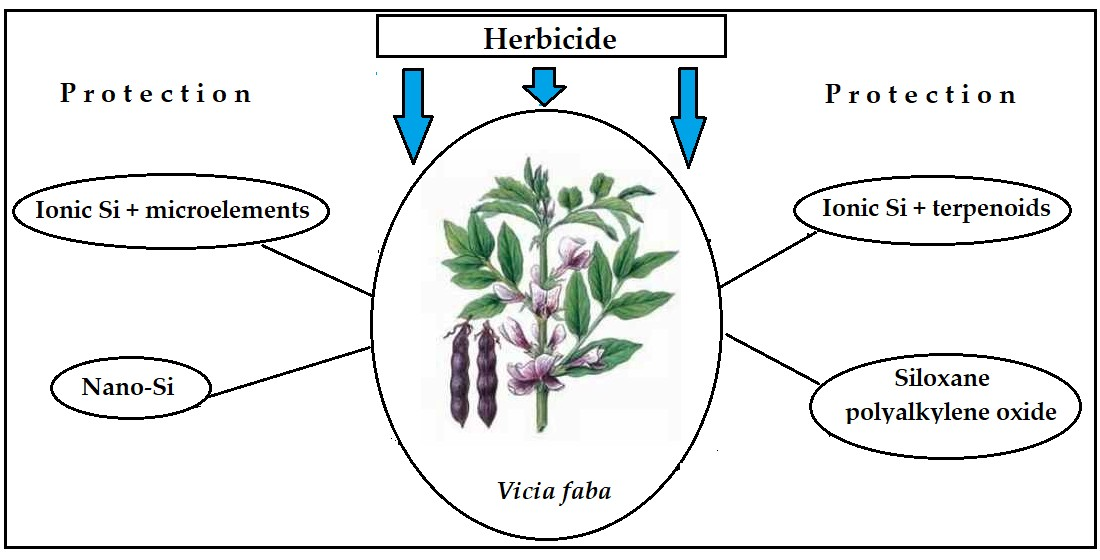
Taking into account that Si utilization may be impactful for crop production, the aim of the present investigation was the comparison between four silicon-based formulations, plus an untreated control, in terms of plant protection efficiency against the damage of the herbicide Dicameron (a post-emergence herbicide for the control of annual and perennial dicotyledonous weeds). In this respect, the effects of the following formulations on broad bean growth, yield, quality and antioxidants were assessed: potassium silicate in combination with Cu, Zn, Mn, Fe, Mo, B (Siliplant formulation); ortho-silicic acid formulation containing terpenoids (BioSi formulation); nano-Si; and siloxane adjuvant, siloxane polyalkylene oxide (Atomic formulation).

2. Results and Discussion

2.1. Plant Morphology

Considering that bean leaves are the main plant part accumulating Si [31], significant effects of Si–herbicide interaction on leaf morphological and biochemical changes are expected. The present results indicate that Si supplementation to the control plants did not significantly affect leaf size, whereas the herbicide treatment caused the formation of twisted leaves (Figure 1). From the comparison between the control and herbicide-treated plants, in terms of leaf shape, dramatic changes of leaf size in plants supplied with the herbicide under nano-Si and Atomic application were observed, close to those recorded for a single herbicide spraying, indicating low efficiency of these formulations for plant protection (Figure 1). Contrarily, leaf curling caused by the herbicide was limited to plants treated with the ionic form of Si formulations (Siliplant, BioSi) and especially that containing terpenes (BioSi). The increase in tissue rigidity due to Si deposition [36] may partly explain the beneficial effect of the mentioned formulations on leaf shape. The small effect of nano-Si supply on leaf morphology may relate to the low Si concentration reaching only 10 mg L−1, though the levels of Si accumulation associated with the different Si formulations need special investigation.
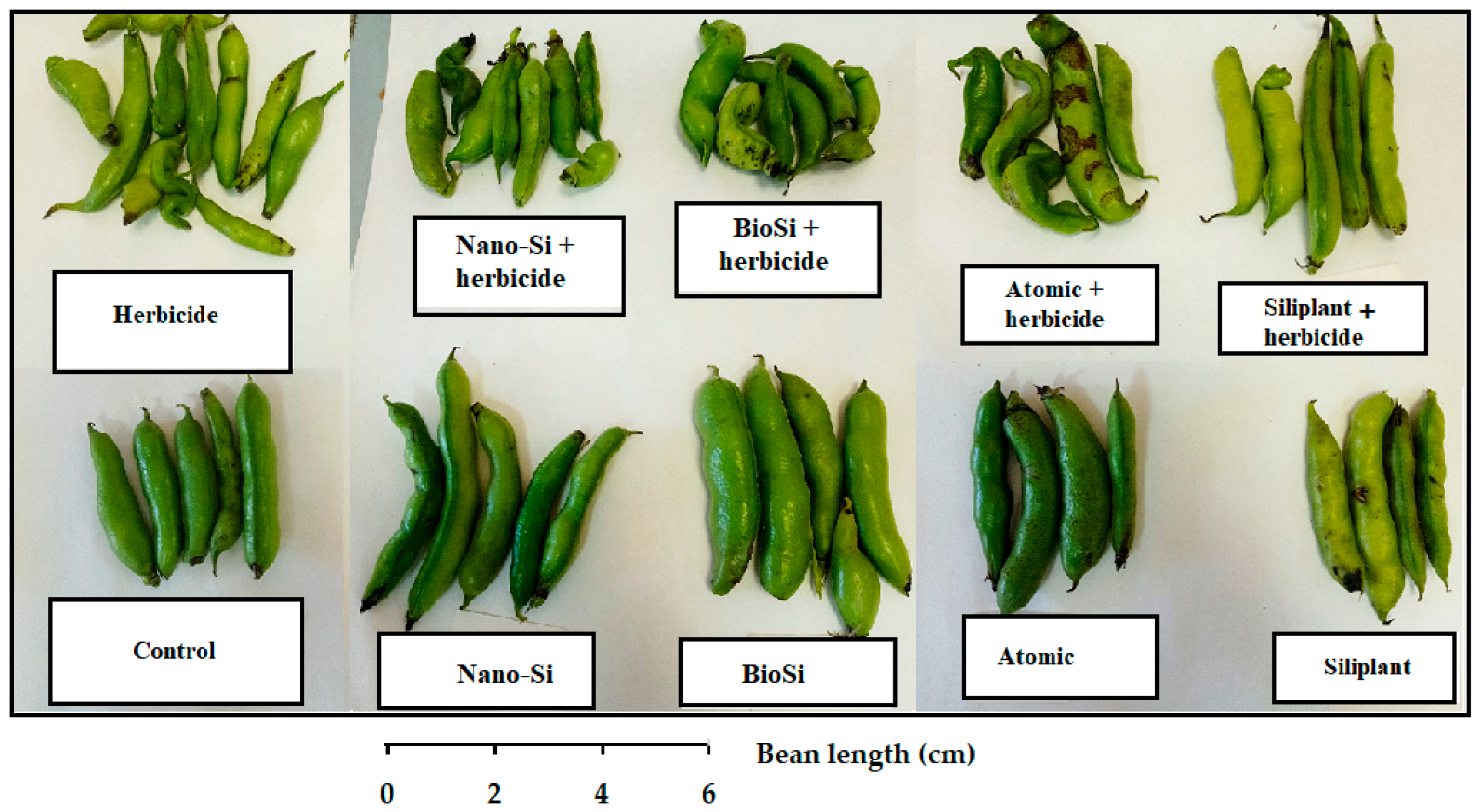
The application of Si formulations to the control significantly stimulated plant growth, especially under Si ionic form supply (Siliplant, BioSi) (Figure 2; Table 1) with the most valuable beneficial effect on pod weight and width recorded with the BioSi treatment (Figure 2).
Taking into account the presence of terpenes in the latter preparation, the data indirectly confirm their growth stimulation effect. In this respect, further investigations are necessary to evaluate the existence of the beneficial effect of terpene on broad bean pod and seed growth, which is especially important due to the lack of related information regarding V. faba and other plant species.
Pod deformation under herbicide spraying was recorded both in control and Si-treated plants, except those subjected to Siliplant supply (Figure 2). The data presented in Table 1 indicate a remarkable stability of seed weight and number as well as pod weight due to Siliplant utilization regardless of herbicide application.
The mentioned phenomenon may reflect both a significant effect of ionic Si on bean performance and the possible individual and joint beneficial effects of microelements present in this formulation, i.e., Cu, Zn, Mn, Fe, Mo, B, and Co. Previous investigations indicated a growth promoting effect of Zn on faba bean development [37]. Similar beneficial effect on broad bean was described for boron, which is essential for this species’ growth and may help protect against herbicide damage by improving the overall plant health and stress tolerance [38]. Foliar Mn and Fe supply is known to improve faba bean productivity [39], and molybdenum is crucial for the symbiotic rhizobia bacteria of faba bean to fix atmospheric nitrogen into a usable form for the plant. Accordingly, nitrogen supply is increased, thus improving overall vigor and resilience to the herbicide attack [40]. Cobalt treatment reportedly enhances root nodule formation and nitrogenase activity [41]. Nevertheless, further investigations are necessary to confirm the existence of synergism between Si and Cu, Zn, Mn, Mo, B, and Co in protecting faba bean against herbicide.
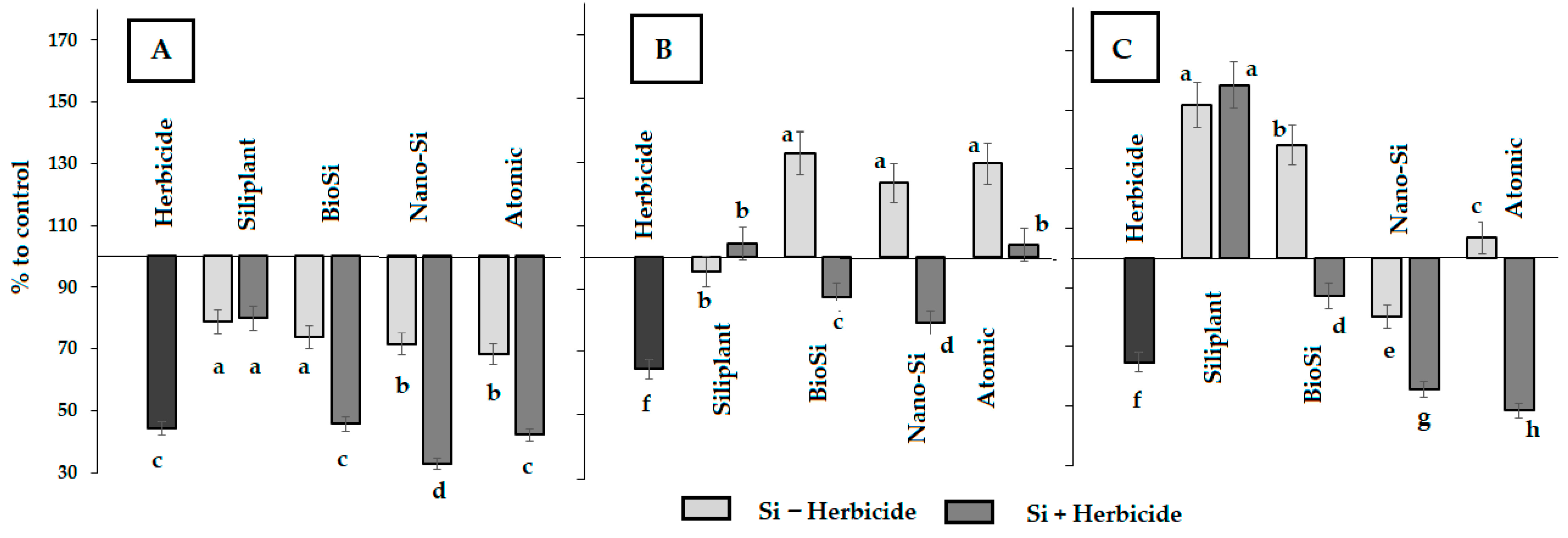
A reduction in seed number was recorded for all plants treated with Si formulations, with a significantly lower effect in control plants compared to those treated with Dicameron (Figure 3A–C). Among the Si formulations tested, only Siliplant elicited the lowest changes in seed number both with and without herbicide spraying (Figure 3A).
Pod weight was the highest in the control plants treated with BioSi, nano-Si, and Atomic. On the contrary, only Siliplant did not change the pod weight both in control and herbicide-treated plants, while other formulations decreased this parameter under herbicide supply (Figure 3B) which may be attributed to plant nutritional improvement in the former case.
Even greater differences were recorded between the effect of Si formulations and their interaction with herbicide on seed weight (Figure 3C). In this respect, Siliplant, containing a group of essential elements for faba bean, enhanced seed weight by almost 150%, both with and without herbicide spraying. The same ability to increase seed weight was recorded only upon BioSi supply to control plants, confirming the importance of terpenes for broad bean development. Contrarily, the herbicide treatment caused a significant decrease in seed weight under supply of all Si formulations, except Siliplant, with the highest drop under Atomic formulation and the lowest with BioSi. Furthermore, only Atomic and nano-Si did not increase seed weight in control plants.
To date, the biological effect of organosilicon adjuvants has been investigated only in the case of joint siloxane–herbicide supply [42]. The present results provide the first information on the peculiarities of plant–siloxane interaction and siloxane’s plant protection efficiency, considering the possibility of siloxane utilization as an external source of Si. As far as nano-Si and silicate utilization are concerned, the latter is considered a more mobile form of Si, compared to Si nanoparticles, whose absorption on hemicellulose enhances cell wall rigidity [43]. Both chemical forms of Si are known to be growth stimulators [43,44].

2.2. Photosynthetic Pigments and Antioxidant Status

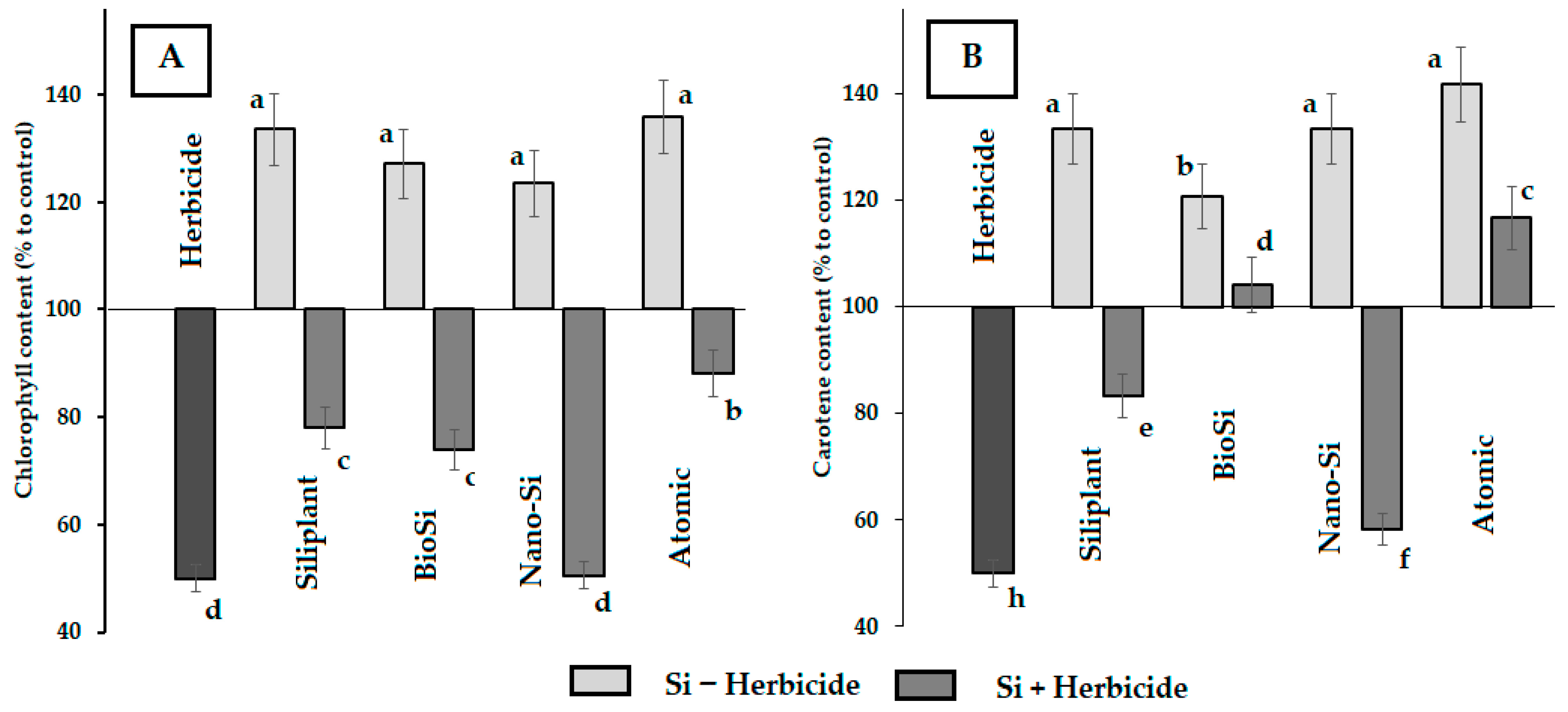
The Si formulations did not show different efficiency in increasing photosynthetic pigment accumulation in plant leaves, whereas their effect greatly differed under Dicameron treatment (Table 2, Figure 4A,B). Indeed, the increase in carotene accumulation in control plant leaves was slightly lower under BioSi formulation supply compared to Siliplant, nano-Si, and Atomic. These results are in accordance with the literature reports regarding the beneficial effect of diatomite application [45], nano-SiO2 supply [46] on faba bean plants, and sodium silicate on soybean [47], enhancing leaf chlorophyll and carotene content.
Contrary, the different forms of Si showed significantly different protection effects against the herbicide, with the highest chlorophyll level restoration recorded under Atomic and the lowest with nano-Si (Atomic > BioSi = Siliplant > nano-Si) treatments. Interestingly, the protection effect of ionic Si, in terms of chlorophyll accumulation, did not significantly differ between microelement and terpene containing formulations of ionic Si (Siliplant and BioSi), which entails the leading role of Si chemical form in the intensity of herbicide–plant interaction. Indeed, the single herbicide spraying decreased the total chlorophyll and carotene content in plant leaves by more than 50%, whereas the siloxane application caused a reduction up to 12%.
The safety of siloxane adjuvants for crop production is still questionable, taking into account their toxicity to bees [48] as well as the unpredictable effect on environmental sustainability and human health [49]. At present, the mentioned compounds are considered bio-inert and, according to literature reports, trisiloxane did not show negative effects on maize and wheat growth and the photosynthesis process, demonstrating the degradation half-life of 2.26 to 4.00 days in maize and 2.32–4.39 days in wheat [50]. The present results confirm the similar chlorophyll increase consequent to the treatments with all Si formulations, including siloxane polyalkylene oxide (Atomic).
As far as water-soluble antioxidants are concerned, the leaf ascorbic acid content was the least affected by the Si supply, with 16.7% mean concentration decrease due to Dicameron treatment, regardless of the Si formulation type (Table 2).
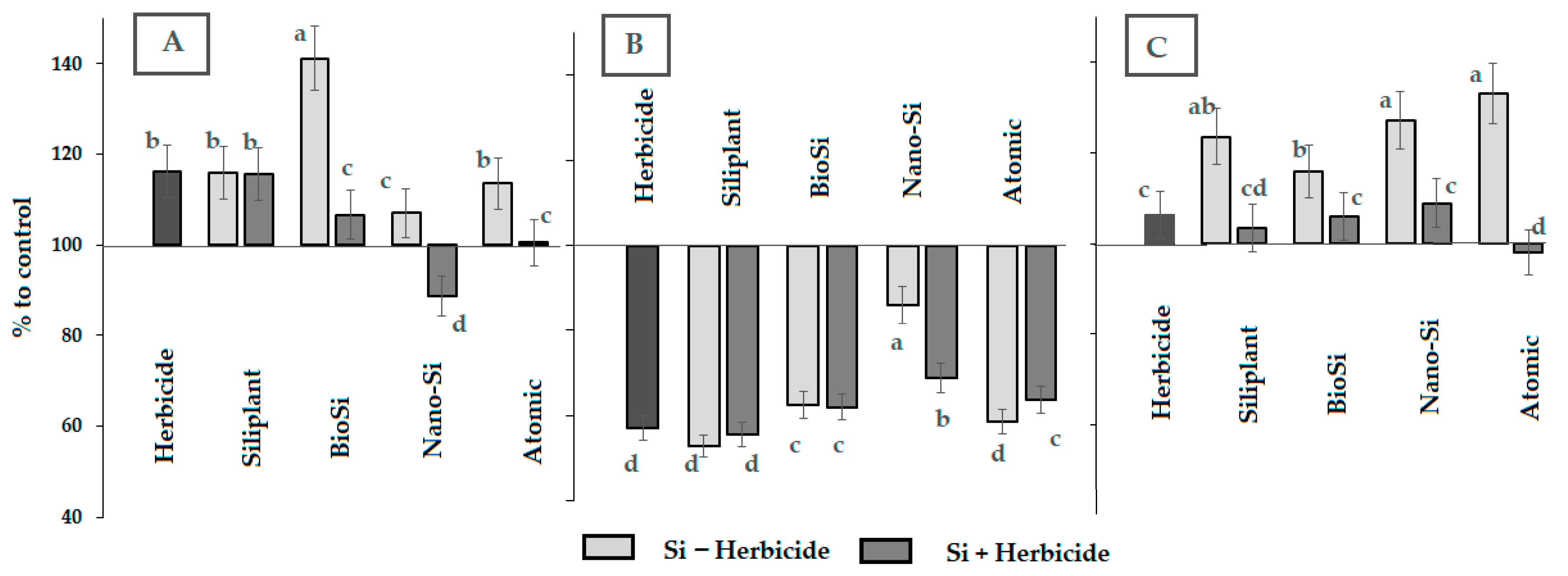
Over certain thresholds, stress stimulates the biosynthesis of natural antioxidants protecting plants from oxidative damage but may cause significant depression of the mentioned parameters in severe cases [51]. In this respect, the present results indicate that leaves, seeds, and pod valves were differently affected both by the herbicide spraying and Si treatments (Table 3, Figure 5). Indeed, while the herbicide decreased seed antioxidant activity (AOA) and polyphenol (TP) content by almost double, it affected the latter parameters only slightly in leaves and pod valves (Table 3, Figure 5).
Mean changes in the AOA levels in leaves and pod valves of the control plants under Si supply were in the range of 6.6–15.6% and were comparable with the effect of herbicide treatment (16.2%). In this respect, BioSi led to the highest increase in leaf AOA and polyphenol content, significantly improving leaf antioxidant status. The most significant restoration of leaf AOA in herbicide-treated plants was recorded in the case of nano-Si and siloxane application, suggesting the participation of the latter in plant defense.
Due to physiological peculiarities the total antioxidant activity (AOA) of faba bean seeds was twice lower than the AOA of leaves, did not significantly differ between the treatments, and was the highest only in nano-Si-supplied plants. The mentioned phenomenon may reflect the importance of Si nanoparticles in bean antioxidant restoration under herbicide treatment.
As far as pod valves are concerned, the results clearly indicate a beneficial effect of Si formulations on the total antioxidant activity in control plants and no significant effect of Si under herbicide supply. Siloxane showed a similar positive effect to that of the other Si formulations on pod antioxidant status of control broad beans (Table 2, Figure 5C) and a significant increase in antioxidant defense under the Dicameron treatment, which entails the participation of siloxane in plant antioxidant status restoration. The latter phenomenon has never been described previously.
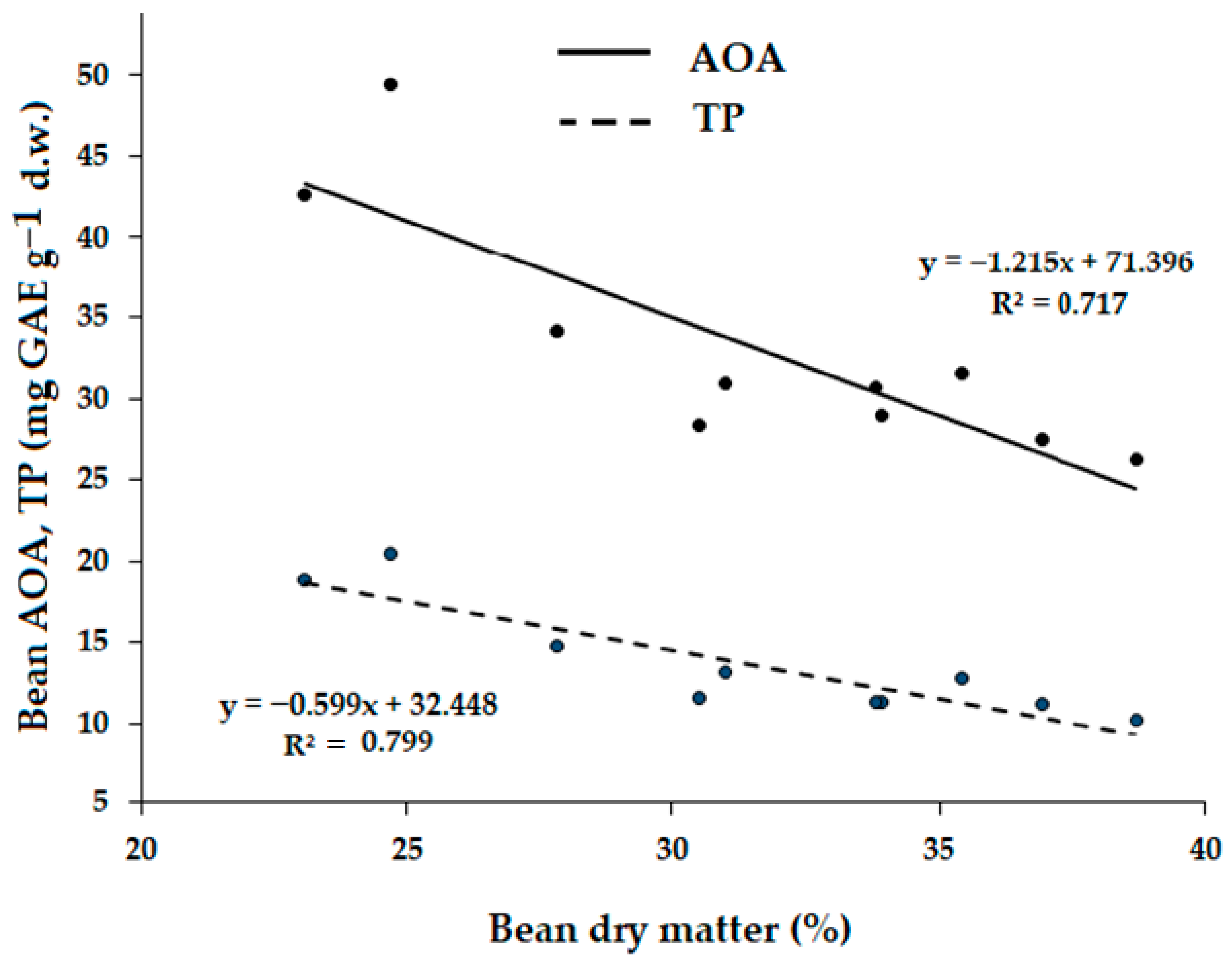
The seed dry matter content was influenced by the development stage, generally reaching the maximum stable level (up to 80%) at ripeness due to the significant carbohydrate increase. Indeed, the higher dry weight in seeds of plants treated with Siliplant may relate, firstly, to the increased growth rate of broad beans. Generally, the observed negative correlations between the dry matter percent and polyphenol content/total antioxidant activity (Figure 6) reflect two processes connected with i) the variations in the maturity stage due to different efficiency of Si formulations applied and ii) the polyphenol decrease in faba bean seeds during development [52].
However, the mentioned hypothesis was in accordance only with the positive correlation between the dry matter content and seed weight of control plants treated with Si (r = 0.838; p < 0.02; n = 5) but not plants subjected to the herbicide treatment.
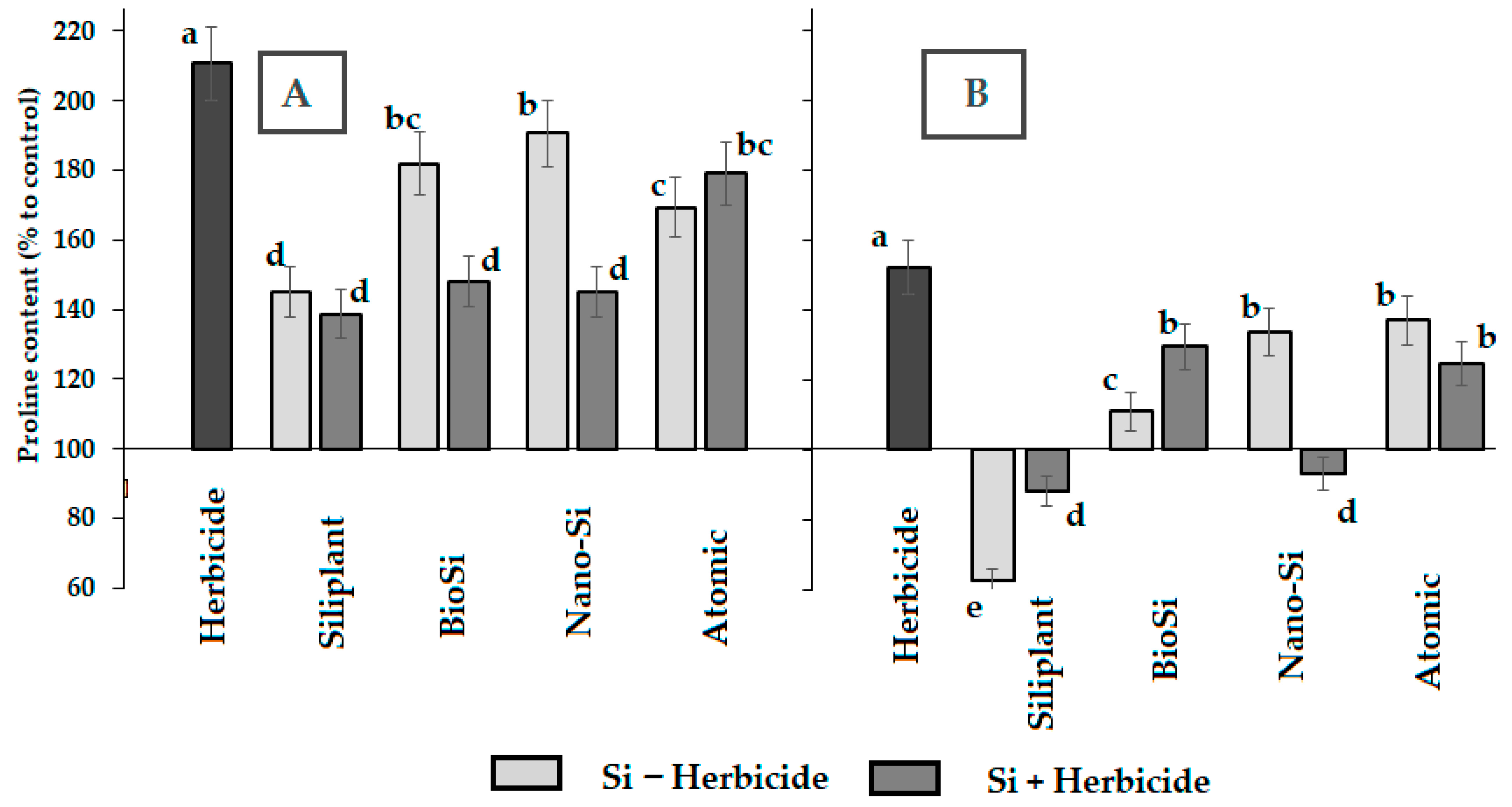
Proline is a natural antioxidant whose production is directly connected with the intensity of stress [53], thus confirming the existence of the intensive stress in broad bean treated with the herbicide (Table 4, Figure 7A,B). The latter phenomenon reflects the protective role of proline, capable of stabilizing cellular structures, preventing oxidative damage, and maintaining water balance [54]. The known decrease in Si-induced proline under stress conditions, previously recorded in various plant species [55], was also observed in faba bean, confirming the ability of plants to activate antioxidant defense using other natural sources of antioxidants in stressful contexts.
Lower antioxidant and polyphenol levels in seeds, compared to pod valves, are in accordance with the significant differences in the proline content between the mentioned plant parts (Figure 7B), confirming the higher stress intensity in the latter case. Pods provide the mechanical and antioxidant protection of seeds against unfavorable environmental factors, such as pathogen and herbivory attack, along with the implementation of seeds with nutrients [56]. According to the obtained results, Si/essential element supply with Siliplant formulation resulted in the highest proline decreases in pods and seeds (Figure 7A,B), indicating the significance of the nutritional factor in plant health maintenance. Despite the general decrease in proline level due to Si supply under the herbicide treatment, only Siliplant led to the stability of the low proline values in pods, regardless of the herbicide application, with the least beneficial effect of siloxane (Atomic).
The peculiarities of the proline accumulation in pod valves and bean seeds in the untreated control and stress conditions entail the existence of a special mechanism of the proline distribution between plant parts for the maintenance of plant health and resistance to environmental stresses. Furthermore, the presented data confirm the organo-Si adjuvant participation in plant antioxidant status and the existence of the appropriate protection against herbicide damage.
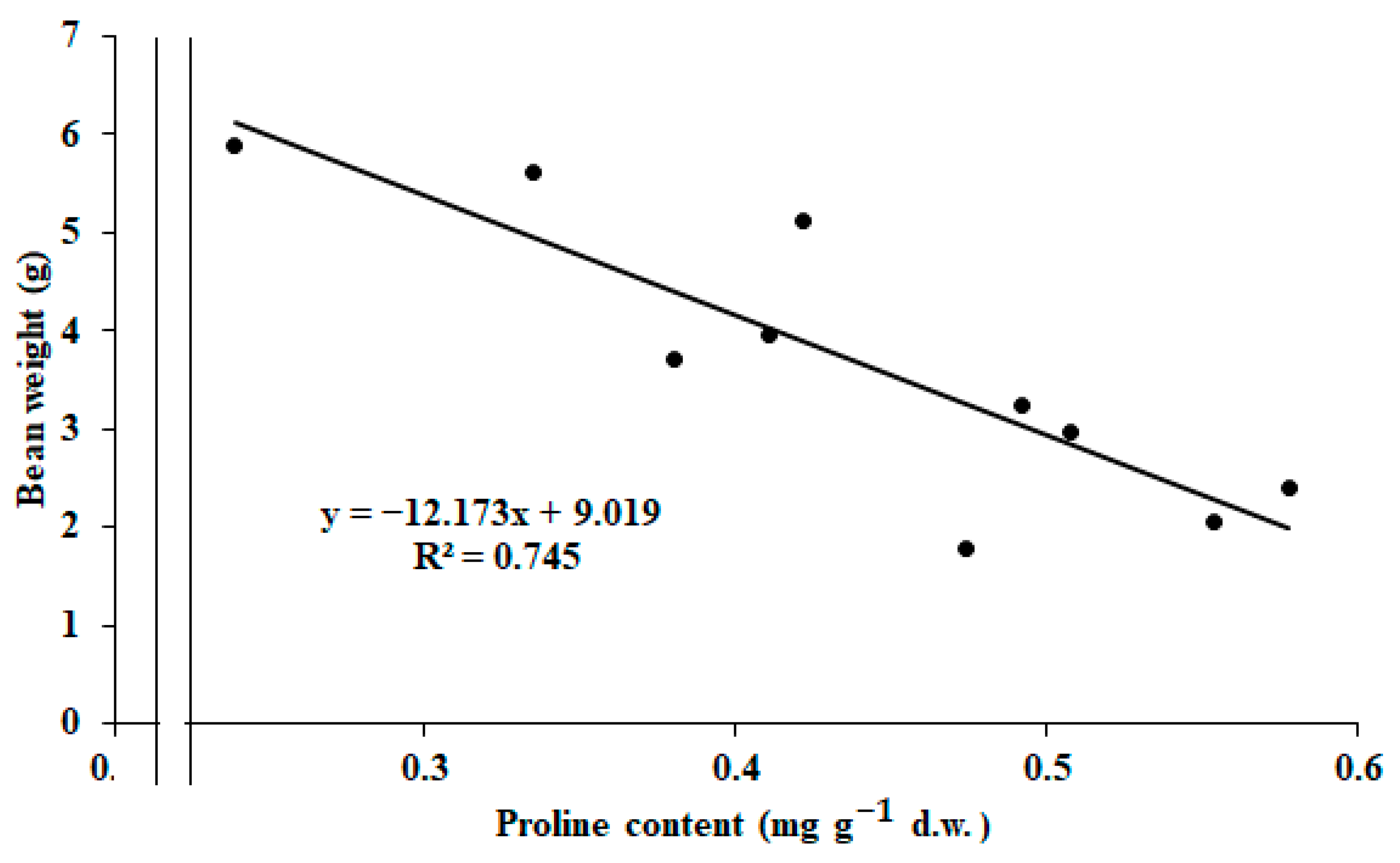
Taking into account that, in stress conditions, biosynthesis processes are predominantly devoted to plant protection and particularly to proline production, a negative correlation between the proline level and plant growth parameters were reported by other authors [57]. In the present investigation, the correlation coefficient between seed proline content and weight was −0.863 (p < 0.001) (Figure 8) and between proline content and pod number it was −0.710 (p < 0.001).
A weak correlation between the proline content in seeds of the control plants subjected to Si supply and the dry matter content (r= −0.603; p < 0.05; n = 5) confirms the existence of a relationship between seed weight, proline, and antioxidant parameters.

2.3. Correlations Between the Measured Parameters

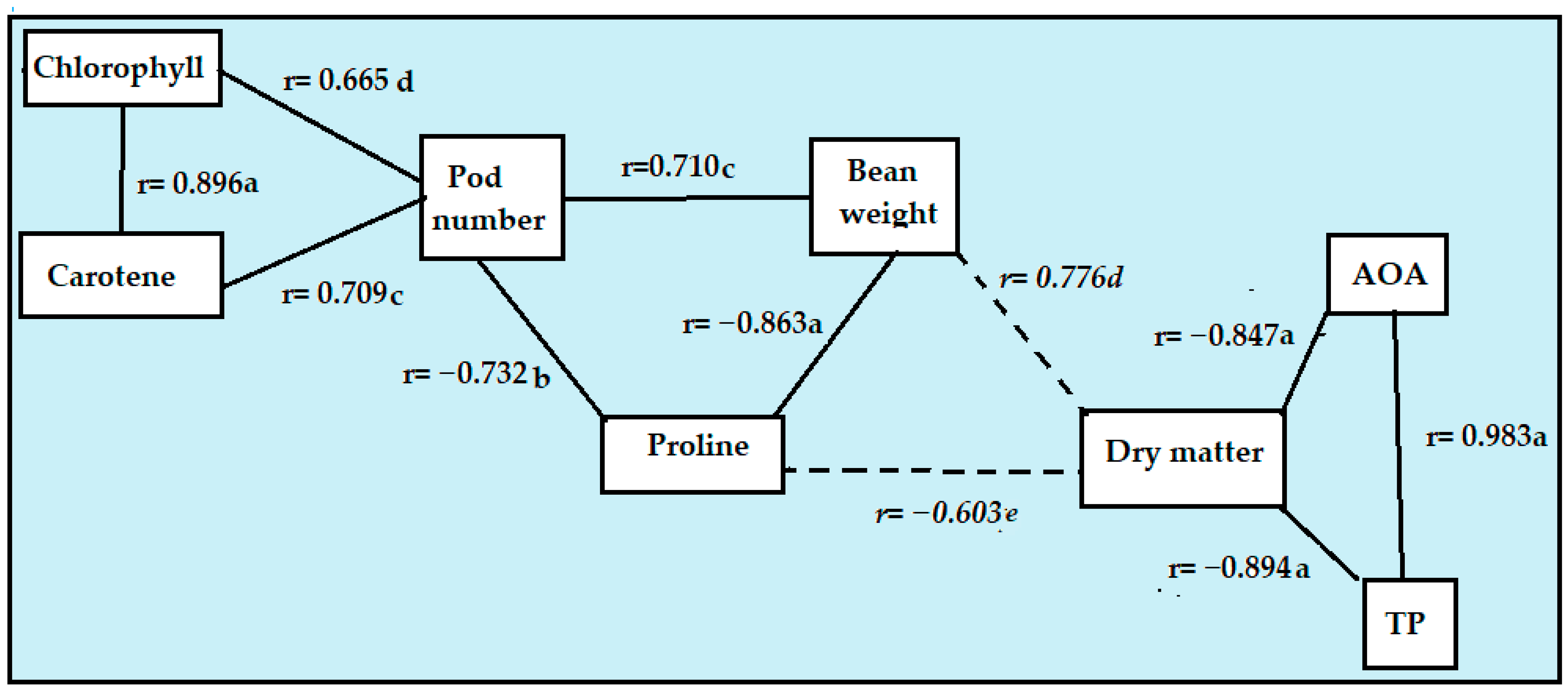
The revealed correlations between the measured parameters in control plants and plants under herbicide/Si treatments suggested the existence of three clusters reflecting close relationships between: (i) proline and growth intensity; (ii) photosynthetic pigment levels and pod number, and (iii) antioxidant status of plants with the seed dry matter content and weight (Figure 9).
The first “proline–seed yield” cluster was predominantly affected by Siliplant and Atomic. The highest beneficial effect on the second cluster devoted to the photosynthetic pigment accumulation was shown by the ionic forms of Si (Siliplant, BioSi) and Atomic, while the third cluster reflecting plant antioxidant status was mostly affected by Siliplant, BioSi, and nano-Si supply.

3. Material and Methods

3.1. Growing Conditions and Experimental Protocol

Research was conducted from 2024–2025 on faba bean (Vicia faba L.) at the experimental fields of the Federal Scientific Vegetable Center (55°39.510 N, 37°12.230 E) in a loam sod podsolic soil with the following characteristics: pH 6.2, 2.12% organic matter, 1.32 mg-eq 100 g−1 hydrolytic acidity, 18.5 mg kg−1 mineral nitrogen, 21.3 mg kg−1 ammonium nitrogen, the sum of absorbed bases as much as 93.6%, 402 mg kg−1 mobile phosphorus, 198 mg kg−1 exchangeable potassium, 1 mg kg−1 S, 10.95 mg kg−1 Ca, 2.05 mg kg−1 Zn, 0.86 mg kg−1 B.
The herbicide Dicameron was sprayed in mid-May at the dose of 0.2 L ha−1; this herbicide (active substances: 67 g L−1 picloram dimethyl ethanol amine salts and 267 g L−1 clopyralid) contains aminopyridines, pyridine carboxamides, pyridines, and picolinic acid derivatives. It is produced by the corporation AgroChimInvest (Russia) and is a systemic post-emergence herbicide for the control of annual and perennial broadleaf weeds, including hard-to-eradicate species, in rapeseed crops. Dicameron’s active substances substitute and block natural hormone activity which depresses growth and causes plant death.
Faba bean seeds of cv. Belorussian (selection of Federal Scientific Vegetable Center) were sown on 28 April. The experimental protocol was based on the comparison between four Si treatments plus a non-treated control, using a randomized complete block design with three replicates. The experimental unit had a 2 m2 surface area including 20 plants. The following Si treatments were applied: (1) foliar supply of Siliplant, (2) foliar supply of BioSi, (3) foliar supply of Si nanoparticles (10 mg L−1), and (4) foliar supply of Atomic formulation, plus an untreated control. Double spraying was carried out at the beginning of the flowering phase (15 June) and two weeks later (25 June) at a dose of 200 mL·m−2 and all treatments applied to plants were carried out in the evening in dry weather conditions.
Harvesting was practiced from 25–26 August. During the crop cycles, the mean monthly temperatures and precipitation were, in 2024 and 2025, respectively: 12.6 and 13.5 °C and 9.4 and 54.5 mm in May; 19.5 and 15.9 °C and 130.8 and 99.8 mm in June; 22.7 and 21.3 °C and 83.9 and 111.4 mm in July; 19.2 and 16.3 °C and 48.8 and 129.8 mm in August.
The descriptions of Si formulations and doses applied are presented in Table 5.
After harvesting, broad bean leaves, pods, and seeds from each plot were dried at 70 °C to constant weight, milled to a fine powder, and used for biochemical analysis.

3.2. Production of Colloidal Solution of Silicon Nanoparticles

Silicon nanoparticles were obtained using pulsed laser ablation technology in a liquid (LAL). The irradiation was carried out by using a pulsed nanosecond Nd:YAG laser with a wavelength of 1064 nm. The laser pulse length was 12 ns and pulse frequency was 1 Hz. Rated energy in the pulse was 2.5 J. As a target, special-purity-grade single-crystalline silicon was sprayed. The target was immersed in a static glass cell with 250 mL of deionized water. The laser beam was focused on the target inside the cell by a lens. The target was irradiated for 30 min without stirring. The silicon concentration in the obtained colloidal solutions reached 10 mg L−1 and was measured by inductively coupled plasma atomic emission spectrometry (ICP-AES) with an ULTIMA 2 (Horiba Jobin Yvon, Palaiseau, France) spectrometer. The mean particle size reached 72 nm.

3.3. Photosynthetic Pigments

About 50 mg of fresh faba bean leaves was homogenized in a porcelain mortar with 10 mL of 96% ethanol. The homogenized sample mixture was filtered through a filter paper and the resulting solution was used for the analyses of chlorophyll a, chlorophyll b, and carotene through a spectrophotometer (Unico 2804 UV, Suite E Dayton, Newark, NJ, USA). The calculation of chlorophyll and carotene concentrations was made using the appropriate equations [58]:
Chl-a = 13.36A664 − 5.19A649;
Chl-b = 27.43A649 − 8.12A664;
C c = (1000A470 − 2.13 Ch-a − 87.63 Ch-b)/209;
where A: absorbance at 664, 649, and 470 nm, respectively, Chl-a: chlorophyll a, Chl-b: chlorophyll b, and C-c: carotene

3.4. Ascorbic Acid

The ascorbic acid content in leaves was determined by visual titration of fresh leaf extracts in 3% trichloracetic acid with Tillman’s reagent [59]. Three grams of leaves were mixed with 5 mL of 3% trichloracetic acid and quantitatively transferred to a measuring cylinder. The volume was brought to 60 mL using 3% trichloracetic acid, and the mixture was filtered through a filter paper 15 min later. The concentration of the ascorbic acid was determined from the amount of Tillman’s reagent that went into titration of the sample.

3.5. Preparation of Ethanolic Extracts

Half a gram of dry homogenized leaf, seed, and pod powder was extracted with 20 mL of 70% ethanol at 80 °C for 1 h. The mixture was cooled down and quantitatively transferred to a volumetric flask, and the volume was adjusted to 25 mL. The mixture was filtered through a filter paper and used further for the determination of polyphenols and total antioxidant activity.

3.6. Total Polyphenols (TP)

Total polyphenols were determined in 70% ethanol extracts of dried samples using the Folin–Ciocâlteu colorimetric method as previously described [60]. Half a gram of dry homogenates was extracted with 20 mL of 70% ethanol/water at 80 °C for 1 h. The mixture was cooled down and quantitatively transferred to a volumetric flask, and the volume was adjusted to 25 mL. The latter mixture was filtered through a filter paper, and 1 mL of the resulting solution was transferred to a 25 mL volumetric flask, to which 2.5 mL of saturated Na2CO3 solution and 0.25 mL of diluted (1:1) Folin–Ciocâlteu reagent were added. After adjusting the volume to 25 mL with distilled water the solutions were kept at room temperature for 1 h, and the concentration of polyphenols was calculated according to the absorption of the reaction mixture at 730 nm. As an external standard, 0.02% gallic acid was used. The results were expressed as mg of gallic acid equivalent per g of dry weight (mg GAE g−1 d.w).

3.7. Antioxidant Activity (AOA)

The antioxidant activity of faba bean leaves, seeds, and pods was assessed on 70% ethanolic extracts of dry samples using a redox titration method [60]. The values were expressed in mg gallic acid equivalents per g of dry weight (mg GAE g−1 d.w.).

3.8. Proline

Proline concentration was determined according to Ábrahám et al. [61] with a small modification. About 0.05 g of dry faba bean leaf and pod homogenates was ground with 10 mL 3% sulfosalicylic acid. The mixture was filtered, and 1 mL of the filtrate was mixed with 2 mL of ninhydrin reagent and 2 mL of acetic acid. The resulting solution was heated at 95 °C for an hour. The proline concentration was measured by the absorption value at 505 nm, and the calibration curve was built using proline (Merck, Darmstadt, Germany) solutions with five different concentrations.

3.9. Statistical Analysis

The presented results are the mean values of three replicates of each sample (M ± SD). The data were processed by analysis of variance (ANOVA) and mean separations were performed through Duncan’s multiple range test, with reference to the 0.05 probability level, using SPSS software version 30.

4. Conclusions

The comparisons carried out between the effects of four Si formulations on maintaining and boosting faba bean growth against the damage of herbicide spraying revealed the greatest beneficial effect of ionic Si in the presence of microelements. The mentioned treatment enhanced plant antioxidant status, photosynthetic pigment accumulation, and seed yield compared to Si nanoparticles, siloxane adjuvant Atomic, and BioSi. Nano-Si proved to be highly efficient in the antioxidant defense, while Atomic increased plant photosynthesis. The BioSi formulation showed a moderate protection against herbicide treatment and high growth stimulation of control plants, thus creating new opportunities of broad bean production using ionic Si and terpenes. The application of Si formulations for growing faba beans subjected to herbicide treatment may serve as the basis for achieving high seed yield and quality. The revealed moderate beneficial effect of siloxane formulation on the antioxidant status and stress resistance of broad bean provides new insights into the physiological activity of these compounds.

Author Contributions

Conceptualization: N.G., O.U., V.U. and G.C.; Investigation: N.G., O.U., M.F., K.D. and M.A.; Data curation: V.U. and A.A.; Formal analysis: V.U., D.K. and O.C.M.; Software A.A. and O.C.M.; Validation: D.K. and A.S.; Writing—original draft: N.G. and A.S.; Writing—review and editing: N.G., O.C.M. and G.C. All authors have read and agreed to the published version of the manuscript.

Funding

This research received no external funding.

Institutional Review Board Statement

This manuscript does not contain any studies with human participants or animals performed by any author.

Informed Consent Statement

Not applicable.

Data Availability Statement

The data that support the findings of this study are available on request.

Conflicts of Interest

The authors declare that they have no conflicts of interest.

References

  1. Aldhahi, H.H.K.; Almtarfi, H.I.; Al-Sarraji, A.J. Evaluation of the effect of some herbicides on Vicia faba L. growth traits. J. Res. Ecol. 2018, 6, 1808–1813. [Google Scholar]
  2. El-Mergawi, R.; El-Dabaa, M.; Elkhawaga, F. Effect of splitting the sub-lethal dose of glyphosate on plant growth shikimate pathway-related metabolites and antioxidant status in faba beans. Sci. Rep. 2025, 15, 10792. [Google Scholar] [CrossRef] [PubMed]
  3. Burul, F.; Batic, K.; Lakic, J.; Milanovic, A. Herbicides effects on symbiotic nitrogen-fixing bacteria. J. Central Eur. Agric. 2022, 23, 89–102. [Google Scholar] [CrossRef]
  4. Neumann, G.; Kohls, S.; Landesberg, E.; Souza, K.S.-O.; Yamda, T.; Römheld, V. Relevance of glyphosate transfer to non-target plants via the rhizosphere. J. Plant Dis. Prot. 2006, 20, 963–969. [Google Scholar]
  5. Kanissery, R.; Gairhe, B.; Kadyampakeni, D.; Batuman, O.; Alferez, F. Glyphosate: Its Environmental Persistence and Impact on Crop Health and Nutrition. Plants 2019, 8, 499. [Google Scholar] [CrossRef]
  6. Cunha, J.P.A.R.; Teixeira, M.M.; Coury, J.R.; Ferreira, L.R. Evaluation of strategies to reduce pesticide spray drift. Planta Daninha 2003, 21, 325–332. [Google Scholar] [CrossRef]
  7. Simón, L.A.Y.; Viciedo, D.O.; Carbonari, C.A.; Duke, S.O.; de Carvalho, L.B. Silicon Treatment on Sorghum Plants Prior to Glyphosate Spraying: Effects on Growth, Nutrition, and Metabolism. Agriengineering 2024, 6, 3538–3552. [Google Scholar] [CrossRef]
  8. Bott, S.; Tesfamariam, T.; Candan, H.; Cakmak, I.; Römheld, V.; Neumann, G. Glyphosate induced impairment of plant growth and micronutrient status in glyphosate-resistant soybean (Glycine max L.). Plant Soil 2008, 312, 185–194. [Google Scholar] [CrossRef]
  9. Reis, L.A.C.; Carvalho, F.P.; Franca, A.C.; Francino, D.M.T.; Pinto, N.A.V.D.; Freitas, A.F. Leaf morphoanatomy and biochemical variation on coffee cultivars under drift simulation of glyphosate. Planta Daninha 2018, 36, e018143560. [Google Scholar] [CrossRef]
  10. Andrade, T.C.G.T.; Bacha, A.L.; Camargo, B.M.; Carvalho, L.B. Influence of phosphorus fertilization on the response of pinus genotypes to glyphosate sub doses. New For. 2022, 53, 143–160. [Google Scholar] [CrossRef]
  11. Nunes, R.T.; Albrecht, A.J.P.; Albrecht, L.P.; Lorenzety, J.B.; Danilussi, M.T.Y.; Silva, R.M.; Silva, A.F.M.; Barroso, A.A.M. Soybean injury caused by the application of sub doses of 2,4-D or dicamba, in simulated drift. J. Environ. Sci. Health Part B 2023, 58, 327–333. [Google Scholar] [CrossRef]
  12. Zampiroli, R.; Cunha, J.; Alvarenga, C.B. Simulated drift of dicamba and glyphosate on coffee crop. Plants 2023, 12, 3525. [Google Scholar] [CrossRef]
  13. Prakash, N.R.; Chaudhary, J.R.; Tripathi, A.; Joshi, N.; Padhan, B.; Yadav, S.; Kumar, S.; Kumar, R. Breeding for herbicide tolerance in crops: A review. Res. J. Biotech. 2020, 15, 154–162. [Google Scholar]
  14. Tang, S.; Shi, J.; Li, X.; Yang, M.; Li, C.; Zhang, D.; Yang, S.; Mei, C.; Luo, Z.; Zhang, L.; et al. Development and Breeding of Herbicide-Resistant Sorghum for Effective Cereal—Legume Intercropping. Adv. Sci. 2025, 12, 2503083. [Google Scholar] [CrossRef] [PubMed]
  15. Abou-Khater, L.; Maalouf, F.; Jighly, A.; Alsamman, A.M.; Rubiales, D.; Rispail, N.; Hu, J.; Ma, Y.; Balech, R.; Hamwieh, A.; et al. Genomic regions associated with herbicide tolerance in a worldwide faba bean (Vicia faba L.) collection. Sci. Rep. 2022, 12, 158. [Google Scholar] [CrossRef]
  16. Owen, M.; Zelaya, I.A. Herbicide-resistant crop and weed resistance to herbicides. Pest Manag. Sci. 2005, 61, 301–311. [Google Scholar] [CrossRef] [PubMed]
  17. Jan, S.; Singh, R.; Bhardwaj, R.; Ahmad, P.; Kapoor, D. Plant growth regulators: A sustainable approach to combat pesticide toxicity. 3 Biotech. 2020, 10, 466. [Google Scholar] [CrossRef]
  18. Kumar, A.; Choudhary, A.; Kaur, H.; Singh, K.; Guha, S.; Choudhary, D.R.; Sonkar, A.; Mehta, S.; Husen, A. Exploring the role of silicon in enhancing sustainable plant growth, defense system, environmental stress mitigation and management. Discov. Appl. Sci. 2025, 7, 406. [Google Scholar] [CrossRef]
  19. Mostofa, M.G.; Rahman, M.M.; Ansary, M.M.U.; Keya, S.S.; Abdelrahman, M.; Miah, M.G.; Phan Tran, L.S. Silicon in mitigation of abiotic stress-induced oxidative damage in plants. Crit. Rev. Biotechnol. 2021, 41, 918–934. [Google Scholar] [CrossRef]
  20. Golubkina, N.; Zayachkovsky, V.; Sheshnitsan, S.; Skrypnik, L.; Antoshkina, M.; Smirnova, A.; Fedotov, M.; Caruso, G. Prospects of the Application of Garlic Extracts and Selenium and Silicon Compounds for Plant Protection against Herbivorous Pests: A Review. Agriculture 2022, 12, 64. [Google Scholar] [CrossRef]
  21. Laane, H.M. The Effects of Foliar Sprays with Different Silicon compounds. Plants 2018, 7, 45. [Google Scholar] [CrossRef]
  22. Costa, M.G.; de Amorim Cordeiro, R.; das Mercês, J.K.R. Silicon can attenuate glyphosate-induced stress in young Handroanthus albus by improving photosynthetic efficiency and decreasing cellular electrolyte leakage. Sci. Rep. 2025, 15, 23077. [Google Scholar] [CrossRef]
  23. Esmaili, S.; Tavallali, V.; Amiri, B.; Bazrafshan, F.; Sharafzadeh, S. Foliar application of nano-silicon complexes on growth, oxidative damage and bioactive compounds of feverfew under drought stress. Silicon 2022, 14, 10245–10256. [Google Scholar] [CrossRef]
  24. Zargar, S.M.; Mahajan, R.; Bhat, J.A.; Nazir, M.; Deshmukh, R. Role of silicon in plant stress tolerance: Opportunities to achieve a sustainable cropping system. 3 Biotech. 2019, 9, 73. [Google Scholar] [CrossRef] [PubMed]
  25. Khan, A.L. Silicon: A valuable soil element for improving plant growth and CO2 sequestration. J. Adv. Res. 2025, 71, 43–54. [Google Scholar] [CrossRef] [PubMed]
  26. Artyszak, A. Effect of Silicon Fertilization on Crop Yield Quantity and Quality—A Literature Review in Europe. Plants 2018, 7, 54. [Google Scholar] [CrossRef]
  27. Meng, X.; Luo, S.; Dawuda, M.M.; Gao, X.; Wang, S.; Xie, J.; Tang, Z.; Liu, Z.; Wu, Y.; Jin, L.; et al. Exogenous silicon enhances the systemic defense of cucumber leaves and roots against CA-induced autotoxicity stress by regulating the ascorbate-glutathione cycle and photosystem II. Ecotoxicol. Environ. Saf. 2021, 227, 112879. [Google Scholar] [CrossRef]
  28. Ismail, L.M.; Soliman, M.I.; Abd El-Aziz, M.H.; Abdel-Aziz, H.M. Impact of silica ions and nano silica on growth and productivity of pea plants under salinity stress. Plants 2022, 11, 494. [Google Scholar] [CrossRef]
  29. Golubkina, N.; Moldovan, A.; Fedotov, M.; Kekina, H.; Kharchenko, V.; Folmanis, G.; Alpatov, A.; Caruso, G. Iodine and Selenium Biofortification of Chervil Plants Treated with Silicon Nanoparticles. Plants 2021, 10, 2528. [Google Scholar] [CrossRef]
  30. Skrylov, A. Application of a wetting agent ‘Atomic’ in the protection of pear plantation. Sci. Herit. J. 2021, 68, 9–12. [Google Scholar]
  31. Carneiro, J.M.T.; Oliveira, L.A.; Rossete, A.L.R.M.; Abreu, J.C.H.; Bendassolli, J.A. Accumulation and translocation of silicon in rice and bean plants using the 30SI stable isotope. Plant Nutr. 2010, 33, 1374–1383. [Google Scholar] [CrossRef]
  32. Ma, J.F.; Yamaji, N. Silicon uptake and accumulation in higher plants. Trends Plant Sci. 2006, 11, 392–397. [Google Scholar] [CrossRef]
  33. Alsaasawi, I.S.; Khaliq, A.; Lahmod, N.R.; Matloob, A. Weed management in broad bean (Vicia faba L.) through allelopathic Sorghum bicolor (L.) Moench residues and reduced rate of a pre-plant herbicide. Allelopathy J. 2013, 32, 203–212. [Google Scholar]
  34. Kardoni, F.; Mosavi, S.J.S.; Parande, S.; Torbaghan, M.E. Effect of salinity stress and silicon application on yield and component yield of faba bean (Vicia faba). Int. J. Agric. Crop Sci. 2013, 6, 814–818. [Google Scholar]
  35. Malik, M.A.; Wani, A.H.; Mir, S.H.; Rehman, I.U.; Tahir, I.; Ahmad, P.; Rashid, I. Elucidating the role of silicon in drought stress tolerance in plants. Plant Physiol. Biochem. 2021, 165, 187–195. [Google Scholar] [CrossRef] [PubMed]
  36. Singh, P.; Kumar, V.; Sharma, A. Interaction of silicon with cell wall components in plants: A review. J. Appl. Nat. Sci. 2023, 15, 480–497. [Google Scholar] [CrossRef]
  37. Al-Shumary, A.M.J. The role of foliar zinc application on growth and yield of faba bean varieties. Int. J. Agricult. Stat. Sci. 2020, 16, 1157–1161. Available online: https://connectjournals.com/03899.2020.16.1157 (accessed on 25 November 2025).
  38. Al-Yasari, M.N.H.; Al-Mosawi, A.N.A.; Al-Karhi, M.A.J. Response of three faba bean cultivars to boron. Biochem. Cell. Arch. 2022, 22, 3899–3904. [Google Scholar] [CrossRef]
  39. Al-Hujayri, J.K.O. Effectiveness of iron and manganese foliar treatments in enhancing growth and yield traits in broad bean plants (Vicia faba L.). Int. J. Plant Pathol. Microbiol. 2025, 5, 77–84. [Google Scholar] [CrossRef]
  40. Qin, X.; Yu, M.; Du, H.; Hu, C.; Wu, S.; Tan, Q.; Hu, X.; Shabala, S.; Sun, X. Effects of molybdenum supply on microbial diversity and mineral nutrient availability in the rhizosphere soil of broad bean (Vicia faba L.). Plant Physiol. Biochem. 2023, 205, 108203. [Google Scholar] [CrossRef]
  41. Hellal, F.A.; Abdelhamid, M.T.; Abo-Basha, D.M.; Zewainy, R.M. Alleviation Of The Adverse Effects Of Soil Salinity Stress By Foliar Application Of Silicon On Faba bean (Vica faba L.). J. Appl. Sci. Res. 2012, 8, 4428–4433. [Google Scholar]
  42. Roggenbuck, F.C.; Pener, D. Mode of action of organosilicone adjuvants. Acta Hortic. 2000, 527, 57–64. [Google Scholar] [CrossRef]
  43. Nazaralian, S.; Majd, A.; Irian, S.; Najafi, F.; Ghahremaninejad, F.; Landberg, T.; Greger, M. Comparison of silicon nanoparticles and silicate treatments in fenugreek. Plant Physiol. Biochem. 2017, 115, 25–33. [Google Scholar] [CrossRef]
  44. Goswami, P.; Mathur, J.; Srivastava, N. Silica nanoparticles as novel sustainable approach for plant growth and crop protection. Heliyon 2022, 8, e09908. [Google Scholar] [CrossRef] [PubMed]
  45. Desoky, E.-S.M.; Mansour, E.; El-Sobky, E.-S.E.A.; Abdul-Hamid, M.I.; Taha, T.F.; Elakkad, H.A.; Arnaout, S.M.A.I.; Eid, R.S.M.; El-Tarabily, K.A.; Yasin, M.A.T. Physio-Biochemical and Agronomic Responses of Faba Beans to Exogenously Applied Nano-Silicon Under Drought Stress Conditions. Front. Plant Sci. 2021, 12, 637783. [Google Scholar] [CrossRef] [PubMed]
  46. Hussain, S.; Mumtaz, M.; Manzoor, S.; Shuxian, L.; Ahmed, I.; Skalicky, M.; Brestic, M.; Rastogi, A.; Ilhassan, Z.; Shafiq, I.; et al. Foliar application of silicon improves growth of soybean by enhancing carbon metabolism under shading conditions. Plant Physiol. Biochem. 2021, 159, 43–52. [Google Scholar] [CrossRef]
  47. Gad, N.; Elrahman, E.A.A.; Fekry Ali, M.E.; Abou-Shlell, M.K.; Teiba, I.I.; Almutairi, M.H.; Youse, A.F. Role and importance of cobalt in faba bean through rationalization of its nitrogen fertilization. BMC Plant Biol. 2025, 25, 872. [Google Scholar] [CrossRef]
  48. Mullin, C.A.; Fine, J.D.; Reynolds, R.D.; Frazier, M.T. Toxicological Risks of Agrochemical Spray Adjuvants: Organosilicone Surfactants May Not Be Safe. Front. Public Health 2016, 4, 92. [Google Scholar] [CrossRef]
  49. Arteaga, S.; Yabor, L.; Díez, M.J.; Prohens, J.; Boscaiu, M.; Vicente, O. The Use of Proline in Screening for Tolerance to Drought and Salinity in Common Bean (Phaseolus vulgaris L.) Genotypes. Agronomy 2020, 10, 817. [Google Scholar] [CrossRef]
  50. Wang, X.; Yan, X.; Li, X.; Chen, T.U. Environmental Residues of Organosiloxane-Based Adjuvants and Its Environmental Risks for Use as Agrochemical Adjuvants. Sci. Agric. Sin. 2024, 57, 142–158. [Google Scholar] [CrossRef]
  51. Feng, Y.; Xiang, Y.; Wu, L.; Fu, S.; Liu, H.; Zhang, Y. Degradation kinetics and ecological effects of organosilicon spray adjuvants in water, maize, and wheat. J. Food Compos. Anal. 2025, 147, 108032. [Google Scholar] [CrossRef]
  52. Bouraoui, M.; Abbes, Z.; L’taief, B.; Alshaharni, M.O.; Abdi, N.; Hachana, A.; Sifi, B. Exploring the biochemical dynamics in faba bean (Vicia faba L. minor) in response to Orobanche foetida Poir. parasitism under inoculation with different rhizobia strains. PLoS ONE 2024, 19, e0304673. [Google Scholar] [CrossRef]
  53. Limón-Pacheco, J.; Gonsebatt, M.E. The role of antioxidants and antioxidant-related enzymes in protective responses to environmentally induced oxidative stress. Mutat. Res. Genet. Toxicol. Environ. Mutagen. 2009, 674, 137–147. [Google Scholar] [CrossRef] [PubMed]
  54. Meena, M.; Divyanshu, K.; Kumar, S.; Swapnil, P.; Zehra, A.; Shukla, V.; Yadav, M.; Upadhyay, R.S. Regulation of L-proline biosynthesis, signal transduction, transport, accumulation and its vital role in plants during variable environmental conditions. Heliyon 2019, 5, e02952. [Google Scholar] [CrossRef] [PubMed]
  55. Ould Said, C.; Boulahia, K.; Eid, M.A.M.; Rady, M.M.; Djebbar, R.; Abrous-Belbachir, O. Exogenously Used Proline Offers Potent Antioxidative and Osmoprotective Strategies to Re-balance Growth and Physio-biochemical Attributes in Herbicide-Stressed Trigonella foenum-graecum. J. Soil Sci. Plant Nutr. 2021, 21, 3254–3268. [Google Scholar] [CrossRef]
  56. Fatima, S.; Rani, S.; Shafi, S.; Zaffar, A.; Riyaz, I.; Wani, M.A.; Zargar, S.M.; Prasad, P.V.V.; Sofi, P.A. Pod physical traits significantly implicate shattering response of pods in beans (Phaseolus vulgaris L.). Biol. Plant. 2024, 68, 107–116. [Google Scholar] [CrossRef]
  57. Apolinar, A.B.; González-de la Vara, L.E.; Ramírez-Pimentel, J.G.; Aguirre-Mancilla, C.L.; Iturriaga, G.; Covarrubias-Prieto, J.; Raya-Pérez, J.C. Silicon induces changes in the antioxidant system of millet cultivated in drought and salinity. Chil. J. Agric. Res. 2021, 81, 655–663. [Google Scholar] [CrossRef]
  58. Lichtenthaler, H.K. Chlorophylls and carotenoids: Pigments of photosynthetic bio-membranes. Methods Enzymol. 1987, 148, 350–382. [Google Scholar]
  59. Association Official Analytical Chemists. The Official Methods of Analysis of AOAC International; 22 ‘Vitamin C’; AOAC: Rockville, MD, USA, 2012. [Google Scholar]
  60. Golubkina, N.A.; Kekina, H.G.; Molchanova, A.V.; Antoshkina, M.S.; Nadezhkin, S.M.; Soldatenko, A.V. Antioxidants of Plants and Methods of Their Determination; Infra-M: Moscow, Russia, 2020; pp. 145–147. [Google Scholar] [CrossRef]
  61. Ábrahám, E.; Hourton-Cabassa, C.; Erdei, L.; Szabados, L. Methods for determination of proline in plants. In Plant Stress Tolerance. Methods in Molecular Biology (Methods and Protocols); Sunkar, R., Ed.; Humana Press: Totowa, NJ, USA, 2010; Volume 639, Chapter 20; pp. 317–331. [Google Scholar] [CrossRef]
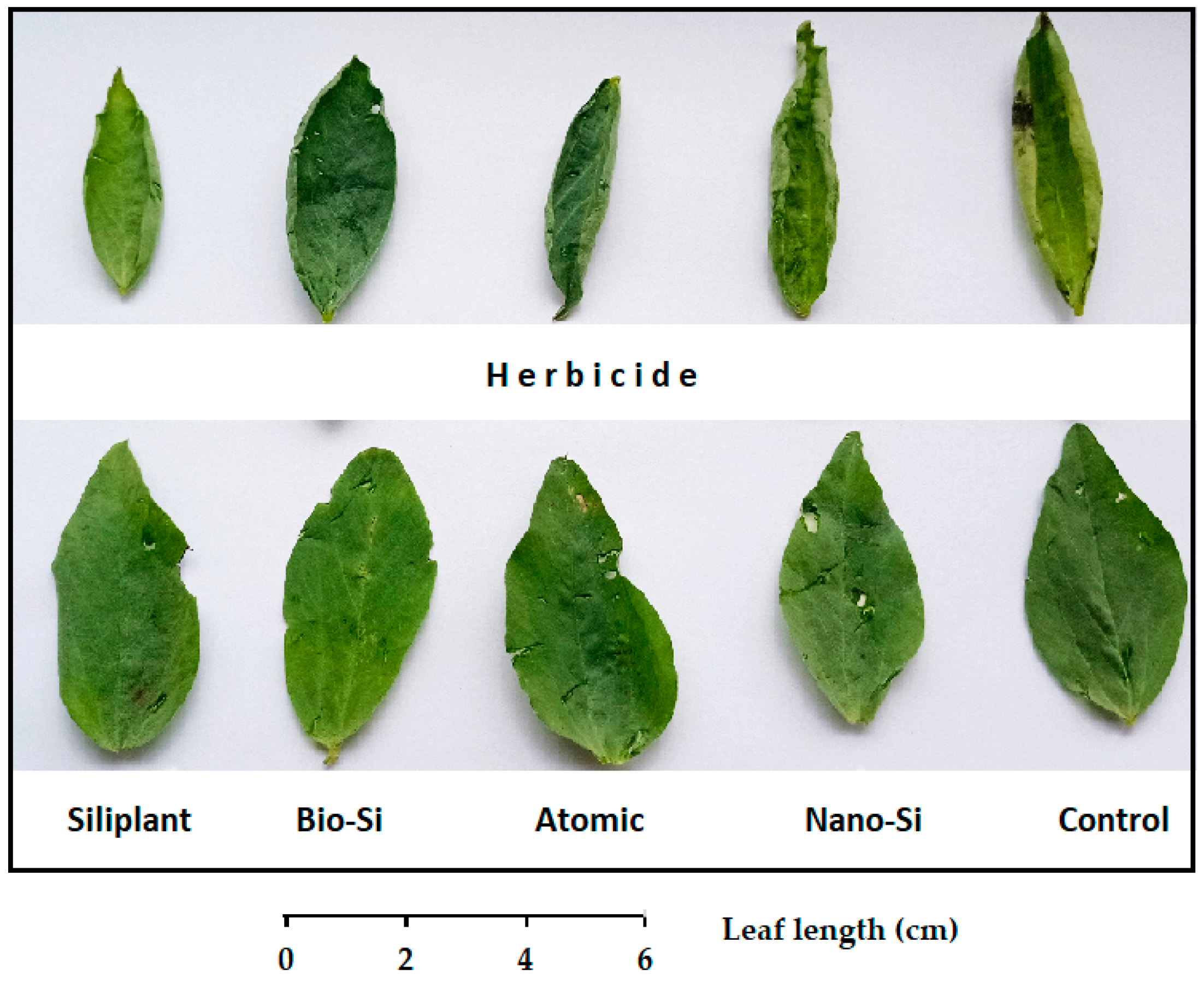
Figure 1. Broad bean leaf appearance.
Stresses 05 00068 g001
Figure 2. Broad bean pod appearance.
Stresses 05 00068 g002
Figure 3. Effect of Si-containing biostimulants without and under herbicide spraying on seed number (A), pod weight (B), and seed weight (C) of faba bean plants. For each parameter, values with the same letters do not differ statistically according to Duncan test at p < 0.05.
Stresses 05 00068 g003
Figure 4. Effect of Si formulations on chlorophyll (A) and carotene (B) accumulation in bean leaves of control plants and under herbicide spraying. For each parameter, values with the same letters do not differ statistically according to Duncan test at p < 0.05.
Stresses 05 00068 g004
Figure 5. Changes in AOA in leaves (A), seeds (B), and pods (C) under herbicide and silicon formulations. For each plant part, values with the same letters do not differ statistically according to Duncan test at p < 0.05.
Stresses 05 00068 g005
Figure 6. Correlation between broad bean seed antioxidant activity (AOA), total polyphenols (TP), and dry matter content: r = −0.847 and −0.894, respectively (p < 0.001).
Stresses 05 00068 g006
Figure 7. Effect of herbicide and silicon formulations on the proline accumulation in pod valves (A) and seeds (B). For each parameter, values with the same letters do not differ statistically according to Duncan test at p < 0.05.
Stresses 05 00068 g007
Figure 8. Correlation between seed weight and proline content (r = −0.863; p < 0.001).
Stresses 05 00068 g008
Figure 9. Correlations between biochemical parameters of faba beans (n = 10). AOA: total antioxidant activity; TP: total polyphenol content. Significance: (a) p < 0.001; (b) p < 0.005; (c) p < 0.01; (d) p < 0.02; (e) p < 0.05. Dotted lines and Italics indicate the relationship between the parameters of the control plants not subjected to Dicameron treatment (n = 5).
Stresses 05 00068 g009
Table 1. Biometrical parameters of faba bean pods and seeds treated with silicon growth stimulators under herbicide spraying.
TreatmentPod Length
(mm)
Seed Number per PodPod Weight (g)Seed Weight (g)Pod Width
(mm)
Pod/Seed Weight Ratio
Control69.0 ± 6.1 b4.75 ± 0.45 a5.53 ± 0.52 b3.70 ± 0.36 b16.8 ± 1.3 bc1.49 ± 1.20 b
herbicide61.3 ± 6.0 b2.10 ± 0.20 c3.56 ± 0.33 d2.40 ± 0.22 cd16.6 ± 1.3 c1.49 ± 1.20 b
Siliplant85.8 ± 8.0 a3.75 ± 0.34 b5.27 ± 0.50 b5.62 ± 0.56 a15.0 ± 1.2 c1.00 ± 0.10 c
Siliplant + H100.2 ± 10.0 a3.80 ± 0.36 b5.76 ± 0.54 b5.88 ± 0.56 a15.6 ± 1.2 c0.98 ± 0.09 c
BioSi93.8 ± 9.0 a3.50 ± 0.32 b7.34 ± 0.73 a5.11 ± 0.50 a23.5 ± 2.0 a1.43 ± 0.12 b
BioSi + H82.5 ± 8.0 a2.17 ± 0.20 c4.83 ± 0.44 bc3.23 ± 0.32 c19.6 ± 1.8 b1.49 ± 0.12 b
Nano-Si89.6 ± 8.2 a3.40 ± 0.31 b6.82 ± 0.55 a2.97 ± 0.27 c18.4 ± 1.7 b2.30 ± 0.20 a
Nano-Si + H69.3 ± 6.3 b2.56 ± 0.22 d4.37 ± 0.41 c2.06 ± 0.20 de17.0 ± 1.6 bc2.12 ± 0.20 a
Atomic88.0 ± 8.2 a3.25 ± 0.30 b7.17 ± 0.70 a 3.95 ± 0.37 b18.5 ± 1.7 b1.45 ± 0.12 b
Atomic + H83.2 ± 8.0 a2.00 ± 0.20 c5.74 ± 0.55 b1.80 ± 0.17 e18.6 ± 2.7 b1.89 ± 0.17 a
H: herbicide. Within each column, values with the same letters do not differ statistically according to Duncan test at p < 0.05.
Table 2. Photosynthetic pigments and ascorbic acid in faba bean leaves.
TreatmentChl aChl bTotal ChlCaroteneChl a/
Chl b
Chl/
Carotene
Ascorbic Acid
Control1.35 ± 0.10 b0.83 ± 0.08 a2.18 ± 0.20 b0.24 ± 0.02 cd1.639.08125.4 ± 10.7 a
herbicide0.60 ± 0.06 d0.45 ± 0.04 c1.05 ± 0.10 e0.12 ± 0.01 e1.338.7592.1 ± 8.9 b
Siliplant1.83 ± 0.14 a1.08 ± 0.10 a2.91 ± 0.24 a0.32 ± 0.03 a1.699.09130.0 ± 10.5 a
Siliplant + H1.03± 0.10 c0.67 ± 0.06 b1.70 ± 0.14 cd0.20 ± 0.02 d1.548.50102.0 ± 9.4 b
BioSi1.72 ± 0.14 a1.05 ± 0.10 a2.77 ± 0.23 a0.29 ± 0.03 ab1.647.08107.8 ± 9.8 ab
BioSi + H0.96 ± 0.09 c0.65 ± 0.06 b1.61 ± 0.14 d0.25 ± 0.02 bc1.485.5595.3 ± 9.0 b
Nano-Si1.69 ± 0.13 a1.00 ± 0.09 a2.69 ± 0.23 a0.32 ± 0.03 a1.698.41128.5 ± 10.5 a
Nano-Si + H0.61 ± 0.06 d0.49 ± 0.04 c1.10 ± 0.10 e0.14 ± 0.01 e1.237.82105.7 ± 9.7 b
Atomic1.87 ± 0.15 a1.09 ± 0.10 a2.96 ± 0.26 a0.34 ± 0.03 a1.728.70110.7 ± 10.0 ab
Atomic + H1.05 ± 0.09 c0.87 ± 0.08 a1.92 ± 0.16 bc0.28 ± 0.03 ab1.728.46106.7 ± 9.9 b
H: herbicide. Within each column, values with the same letters do not differ statistically according to Duncan test at p < 0.05.
Table 3. Dry matter and antioxidant status of faba bean leaves, seeds, and pods.
TreatmentDry MatterAOATP
LeavesSeedsPod
Valves
LeavesSeedsPod ValvesLeavesSeedsPod Valves
Control20.0 ± 2.0 a24.7 ± 2.1 c16.0 ± 1.3 a81.5 ± 8.0 b49.5 ± 4.7 a88.6 ± 8.2 a26.6 ± 2.4 bc20.4 ± 1.9 a28.6 ± 2.7 a
herbicide17.9 ± 1.5 a30.5 ± 2.9 b17.0 ± 1.5 a94.7 ± 9.2 b28.3 ± 2.6 bc94.2 ± 9.1 a28.4 ± 2.6 ab11.6 ± 1.1 c30.6 ± 2.7 a
Siliplant21.8 ± 2.0 a38.7 ± 3.5 a17.9 ± 1.5 a94.5 ± 9.1 b26.2 ± 2.4 c109.5 ± 10.0 a23.1 ± 2.0 c10.2 ± 1.0 c29.3 ± 2.7 a
Siliplant +
herbicide
17.8 ± 1.5 a36.9 ± 3.3 a17.2 ± 1.4 a94.2 ± 9.1 b27.5 ± 2.5 c91.6 ± 9.0 ab27.9 ± 2.5 ab11.2 ± 1.0 c26.7 ± 2.5 ab
BioSi20.3 ± 1.9 a31.0 ± 2.9 b16.6 ± 1.4 a115.0 ± 10.0 a30.9 ± 2.9 b102.6 ± 10.0 a33.0 ± 3.1 a13.1 ± 1.1 b28.8 ± 2.7 ab
BioSi +
herbicide
19.8 ± 1.7 a33.8 ± 3.0 ab17.1 ± 1.4 a86.9 ± 8.4 b30.7 ± 2.9 b93.8 ± 9.1 a25.5 ± 2.4 bc11.3 ± 1.0 c30.2 ± 2.8 a
Nano-Si21.0 ± 2.0 a23.1 ± 2.0 c14.6 ± 1.2 b87.2 ± 8.5 b42.6 ± 4.0 a112.6 ± 10.0 a28.5 ± 2.6 a18.8 ± 1.6 a26.9 ± 2.5 ab
Nano-Si +
herbicide
18.0 ± 1.5 a27.8 ± 2.5 cb17.1 ± 1.4 a72.3 ± 7.0 c34.1 ± 3.1 b96.5 ± 9.2 a23.7 ± 2.1 b14.7 ± 1.2 b27.5 ±2.5 ab
Atomic21.1 ± 2.0 a33.9 ± 3.1 ab15.8 ± 1.3 b92.6 ± 9.0 b 31.6 ± 3.0 bc118.0 ± 10.1 a25.0 ± 2.2 b 11.3 ± 1.0 bc33.7 ± 3.1 a
Atomic +
herbicide
18.5 ± 1.5 a35.4 ± 3.2 a16.4 ± 1.4 ab81.5 ± 7.8 bc29.0 ± 2.5 bc79.1 ± 7.5 b22.8 ± 2.0 b12.8 ± 1.2 b24.4 ± 2.2 b
AOA: total antioxidant activity; TP: total polyphenols. Within each column, values with the same letters do not differ statistically according to Duncan test at p < 0.05.
Table 4. Proline accumulation in faba bean pod valves and seeds under Si treatment (mg g−1 d.w.).
TreatmentPod ValvesSeeds
ControlHerbicideControlHerbicide
Control0.30 ± 0.03 d0.63 ± 0.06 a0.38 ± 0.03 c0.58 ± 0.05 a
Siliplant0.44 ± 0.04 c0.41 ± 0.04 c0.24 ± 0.02 d0.34 ± 0.03 c
BioSi0.55 ± 0.05 b0.44 ± 0.04 c0.42 ± 0.04 b0.49 ± 0.04 ab
Nano-Si0.57 ± 0.05 ab0.44 ± 0.04 c0. 51 ± 0.05 a0.55 ± 0.05 ab
Atomic0.51 ± 0.05 b0.54 ± 0.05 b0.41 ± 0.04 bc0.47 ± 0.04 b
For each plant part, values with the same letters do not differ statistically according to Duncan test at p < 0.05.
Table 5. Characteristics of silicon-containing growth stimulators used in the present investigation.
PreparationChemical CompositionDoseProducer
SiliplantActive Si ≥ 7%, potassium 1%; chelate forms of Fe—300; Mg—100; Cu—70; Zn—80; Mn—150; Mo—60; Co—15; B—90 (mg L−1)3 mL L−1NEST M (Moscow, Russia)
BioSiWater emulsion of triterpenic acids (100 g L−1); Siberian fir extract; choline stabilized ortho-silicic acid1 mL 5 L−1
(0.02 L Ha−1)
Agroimpex (St.Petersburg, Russia)
Nano-SiNanoparticles of 72 nm size10 mg L−1Baikov Institute of Metallurgy and Metal Science (Moscow, Russia)
AtomicSyloxan polyalkylenoxide modified by polyether4 mL L−1Aqualar Corporation
(Riga, Latvia)
Disclaimer/Publisher’s Note: The statements, opinions and data contained in all publications are solely those of the individual author(s) and contributor(s) and not of MDPI and/or the editor(s). MDPI and/or the editor(s) disclaim responsibility for any injury to people or property resulting from any ideas, methods, instructions or products referred to in the content.