Article

Adoption and Impact of Big Data Analytics in the Food Industry in South-Western Nigeria

by
Ignatius Osakue
1,
Sanar Muhyaddin
1,*,
Colin Kuka
2,
Sandra Nelly Leyva-Hernández
3,*,
Victoria Onyeagwibe
4 and
Juan Cristóbal Hernández-Arzaba
5
1
Wrexham Business School, Wrexham University, Wrexham LL11 2AW, UK
2
Cyber Innovation Academy, Wrexham University, Wrexham LL11 2AW, UK
3
Tecnológico Nacional de México, Instituto Tecnológico del Valle de Etla, Oaxaca 68030, Mexico
4
School of Health, Education, Policing and Sciences, University of Staffordshire, Stoke-on-Trent ST4 2DE, UK
5
Postgrado en Ciencias en Innovación Agroalimentaria, Campus Córdoba, Colegio de Postgraduados, Veracruz 94953, Mexico
*
Authors to whom correspondence should be addressed.
Businesses 2026, 6(2), 32; https://doi.org/10.3390/businesses6020032 (registering DOI)
Submission received: 18 April 2026 / Revised: 5 May 2026 / Accepted: 4 June 2026 / Published: 9 June 2026
(This article belongs to the Special Issue New Technologies in Business Informatics)

Abstract

Within the South-Western food industry of Nigeria, the overall impact, associated challenges, and implementation of Big Data Analytics (BDA) have remained underexplored. Thus, this study aimed to investigate the extent of BDA adoption, identify key barriers and enablers, assess the operational impacts of BDA adoption, and propose a structured framework to guide effective integration. The study adopted a deductive, mono-quantitative method. Data were collected from 151 participants through a stratified sampling technique using an online survey questionnaire and analysed using descriptive and inferential statistical methods, including Chi-Square, Likelihood Ratio, and Fisher-Freeman-Halton Exact tests, using SPSS version 26 and Excel as analytical tools. While awareness and appreciation of BDA’s strategic benefits are growing, significant challenges such as high implementation costs, a shortage of skilled personnel, regulatory uncertainties, and technological limitations persist. Nevertheless, organisations that have embraced BDA report notable improvements in operational efficiency, strategic decision-making, customer satisfaction, and competitive advantage. This study proposes a practical BDA adoption framework designed to address the identified barriers and enhance successful implementation and offers several recommendations. The research helps bridge the knowledge gap on BDA adoption in emerging economies and offers actionable insights for business leaders, policymakers, and practitioners seeking to drive innovation and sustainability in Nigeria’s food industry.

1. Introduction

The term “big data” refers to an extensive volume of information (Chamikara et al., 2020; De Mauro et al., 2016). The emergence of big data in 2011 can be traced back to more than five decades of continuous advancements in data management technologies (Surbakti et al., 2020). Before the advent of digital systems, records were stored in paper-based registers and filing systems, which often limited access, retrieval, and analysis (Tole, 2013). As computing power developed, so did the ability to store and process larger volumes of data. The rise in search engines, e-commerce, smartphones, social media platforms, and the Internet of Things marked the true beginning of the big data era, providing unprecedented connectivity and interaction that continuously generated vast quantities of information (Watson & Wixom, 2007).
The rate at which data is being generated today highlights the magnitude of this revolution. In 2025, the volume of digital data reached 181 zettabytes, and around 221 zettabytes of data are expected to be generated in 2026 (Duarte, 2026). A significant portion of this data is unstructured, existing outside the confines of traditional relational databases, making its management and analysis even more complex. This data-driven transformation has fundamentally reshaped businesses, influencing operations, customer engagement, and business models (Tambe, 2014). The proliferation of internet-enabled devices has meant that every digital action (Search queries, online purchases, social media interactions, and even passive browsing) contributes to the exponential growth of information (Shorfuzzaman et al., 2019; Tsou, 2015). Companies have gained the ability to harness insights from diverse sources such as RFID tags, online activities, consumer preferences, and mobile data (T. Davenport, 2014).
Traditionally, organisational data management relied on databases and spreadsheets, with unstructured data often ignored. Big data, however, encapsulates a much broader range of data types. It includes structured data, such as SQL-based databases; unstructured data, including audio files, videos, and social media interactions; and semi-structured data such as XML, weather reports, and transaction logs (Elgendy & Elragal, 2014). To cope with this diversity and rapid growth, scale-out architectures and cloud computing solutions have been developed. These allow organisations to dynamically scale processing power and perform real-time analysis of massive datasets. The evolution of database technologies further demonstrates this trajectory. During the 1990s, the emergence of data warehousing provided the foundation for business intelligence (BI) systems (Ul-Ain et al., 2019). These systems combined extract-transform-load (ETL) processes with multidimensional data models (Vasiliev et al., 2021) and analytical tools such as Online Analytical Processing (OLAP) and data mining techniques (Reddy et al., 2010), laying the groundwork for modern analytics practices. While technological tools have advanced, organisations face another critical challenge: the shortage of skilled professionals capable of managing and analysing big data effectively (McAfee & Brynjolfsson, 2012). The demand for data scientists and analysts has far outpaced supply, leading to heightened competition and higher salaries within the field. To bridge this gap, organisations are investing in analytics solutions designed for non-experts (Datamation, 2017), training existing employees, and increasing recruitment and retention budgets. Surveys indicate that, by 2017, 41% of companies had integrated big data into their operations, and another 46% planned to do so in the near future (Zoomdata, 2017). Despite these efforts, organisations continue to face challenges, including managing the growing complexity of data systems (Zhao et al., 2019).
Developed nations have played a central role in advancing digital innovation, but adoption gaps persist. Many organisations still lack a clear understanding of the critical elements required for successful big data implementation. Integration is often hindered by risks, costs, and workforce limitations, making it difficult to exploit the full potential of analytics (El-Haddadeh et al., 2021). Effective adoption requires not only robust technological solutions but also comprehensive strategic planning and investments in human capital (Tondro et al., 2025). This balance between technical capacity and organisational readiness remains an ongoing concern. While considerable research has explored big data analytics across various industries (Pham & Vu, 2024; Reyes-Veras et al., 2021), there remains a notable gap in understanding its role in the food industry (Tao et al., 2021). Unlike sectors such as healthcare and finance, the food industry presents unique challenges and opportunities that remain underexplored. A comprehensive analysis of big data adoption in this sector is indispensable, encompassing factors such as adoption models, cost implications, technology drivers, organisational culture, and analytics expertise. Understanding these dynamics will enable stakeholders to identify the most effective strategies to improve performance, make informed decisions, and adapt to evolving work practices. Bridging this gap is therefore critical for ensuring that the food industry can fully leverage the transformative power of big data analytics. Thus, the primary objective of this research is to investigate the extent of adoption and the impact of big data analytics in the food industry in Nigeria, particularly in the south-western region. The research also aims to investigate the factors affecting the adoption of big data analytics in Nigeria, propose a big data adoption model applicable to the food industry, and provide recommendations on how to effectively incorporate big data analytics into businesses operating in the food industry.

2. Literature Review

2.1. Background and Definitions

The term “Big Data” became popular in 2011 (Gandomi & Haider, 2015). It has been a subject of many definitions and research. It has been defined from technical and business perspectives, each offering valuable insights to enhance its architecture. As a new generation of frameworks and technologies, big data is intended to efficiently and economically extract value from enormous volumes of data (Mikalef et al., 2018; Mikalef et al., 2019). From a technical standpoint, it comprises extensive datasets and information streams aggregated from various sources (Manyika et al., 2011). From a business perspective, big data is seen as a tool for optimising operations, uncovering insights, guiding strategic decisions, and generating business value (McAfee & Brynjolfsson, 2012). This perspective is particularly relevant in decision-making processes, as organisations now leverage social media data from multiple platforms, extending beyond single-site engagement.
The rapid advancement of digital technologies, including social networks, mobile innovations, e-commerce platforms, and search engines, has fuelled the exponential growth of big data (Kuka et al., 2026; Surbakti et al., 2020). Major corporations, including IBM, have invested significantly in developing robust big data analytics platforms to generate valuable business insights, such as minimising storage and maintenance costs (Raguseo, 2018). Big data can be categorised into machine-generated and human-generated data. Machine-generated data is produced without human intervention and includes audio, video, sensor data (e.g., RFID tags for tracking locations), Intelligent Lighting Control (ILC) sensors for monitoring supply chains, smart meters, medical devices, and GPS data. In contrast, human-generated data results from interactions between individuals and computers, encompassing text, social media content, clickstream data, and web activity (T. Davenport, 2014).

2.2. The Five Vs of Big Data

According to Russom (2011), big data allows firms to produce value from such information that is characterised by five key parameters: volume, variety, veracity, value and velocity.

2.2.1. Volume

According to Ghasemaghaei et al. (2015), volume refers to the immense amount of data that companies collect to uncover hidden patterns and extract valuable insights. It is sometimes defined as the data units stored on different media (Ahmed et al., 2022). For example, images, videos, and audio, which are multimedia content, are large amounts of data compared to text. However, since the internet stored much less data in the 20th century, it processes more data per second now than it did over the previous two decades (Hofacker et al., 2016).

2.2.2. Velocity

Velocity pertains to data generation and analysis in real time (Kuo et al., 2018; Shukla et al., 2020). The continuous flow of high-speed data helps organisations extract insights in a timely manner and make data-driven decisions (Lycett, 2013). Integrating and analysing streaming data in real time helps businesses respond promptly to emerging trends (Saboo et al., 2016). Real-time data access enables firms to make informed decisions with current evidence at hand, rather than relying on backwards-looking trends (Erevelles et al., 2016). Incoming data can quickly make previously captured information as a whole irrelevant, and it is imperative for organisations to act quickly (T. H. Davenport et al., 2012).

2.2.3. Variety

Data variety makes it difficult to manage because it exists in multiple technical formats that standard processing systems do not support. However, firms improve products and services by collecting a mix of data types, such as text, images, and numerical values, to uncover hidden customer insights (Dong et al., 2018). The data types include structured or semi-structured data, typically with ordered content, as well as unstructured raw information (Mohapatra & Mohanty, 2020). Users provide personal and behavioural insights to social media platforms through blogs, emails, text messages, and more (Corte-Real et al., 2019). Information can be both structured and unstructured and can serve as valuable indicators for assessing the role of information in facilitating organisational learning and innovation (Jiang & Benbasat, 2007). According to Erevelles et al. (2016), access to large amounts of customer data helps businesses uncover hidden insights and understand consumer behaviour in depth.

2.2.4. Veracity

Veracity is the accuracy and trustworthiness of data (Ghasemaghaei, 2020). Incorrect data processing poses a significant risk of producing inaccurate intelligence; therefore, data credibility is essential. Unfortunately, there is a lot of misinformation about major sources of big data. For example, spam accounts for over 20% of social media data (Jiang & Benbasat, 2007). Various tools are available to filter and eliminate spam, fraudulent content, and unreliable information, helping maintain data integrity.

2.2.5. Value

The fifth dimension -value-highlights the importance of transforming data into actionable insights to generate meaningful outcomes for businesses and society. The focus is on how organisations can derive financial, operational, and strategic advantages from effectively utilising big data (Yeh et al., 2025).

2.3. Big Data Analytics Techniques and Tools

BDA techniques are diverse and fall into categories such as machine learning, cloud computing, semantic analysis, visualisation, statistical modelling, and optimisation (Mohamed et al., 2020). Tools such as Hadoop and NLP are widely used to reduce costs and improve decision-making (T. Davenport, 2014). Real-world applications demonstrate tangible benefits; for example, Walmart’s semantic search engine, Polaris, improved online purchases by 10–15% (T. Davenport, 2014). Yet, as Rosario and Dias (2023) argue, integrating these tools is not without challenges. Firms must adapt workflows, strategies, and organisational cultures to extract full value from these technologies. The adoption of new systems requires more than investment in hardware and software; it requires long-term transformation.
Mohamed et al. (2020) divided big data analytics techniques into six categories: data source generation, data format, data processing and storage, data analytics, and data visualisation. These categories include machine learning/data mining techniques, cloud computing, semantic network analysis/web mining, visualisation techniques, mathematical and statistical techniques, and optimisation techniques.
Big data tools such as Hadoop and Natural Language Processing (NLP) are essential for analysing large volumes of data to reduce costs, improve decision-making, and deliver better products and services (T. Davenport, 2014). Companies that leverage these technologies can gain a significant competitive advantage. For instance, Wal-Mart’s in-house semantic search engine, Polaris, utilises text analysis and machine learning to generate more relevant search results. The implementation of this semantic search has increased online purchase completion rates by 10% to 15%, demonstrating the tangible benefits of big data-driven solutions (T. Davenport, 2014).

2.4. Seminal Research and Theoretical Foundation

2.4.1. Early Adoption Studies

Sun et al. explored the drivers of big data adoption using proven theories such as DOI, institutional theory, and the TOE framework, integrating factors such as organisational readiness, resource availability, and data privacy (Sun et al., 2016). Their findings underscored that adoption depends not just on technology but also on organisational preparedness. However, the study was limited by its reliance on expert opinion and lack of empirical breadth. Similarly, Maroufkhani et al. (2022) surveyed 171 Iranian manufacturing companies (SMEs) and found that leadership support and external resources play critical roles in successful adoption. The study’s cultural and economic specificity, however, limits its generalisability. On the other hand, Bag et al. (2021) extended this line of inquiry by examining BDA-AI adoption in South Africa’s automotive sector, by analysing primary data collected from 219 automotive allied manufacturing companies operating in South Africa and found that coercive institutional pressures strongly influenced firms’ adoption. This demonstrates how adoption is often shaped by broader regulatory and market contexts rather than internal readiness alone.

2.4.2. Data Quality and Organisational Behaviour

Kwon et al. (2014) investigated how data quality management influences BDA adoption, using a large Korean sample. Their findings showed that positive experiences with external data increased adoption intentions, whereas experiences with internal data sometimes hindered uptake. This paradox suggests a need for better change management in firms adopting BDA. Raguseo (2018) focused on French companies, highlighting both the benefits (improved data management) and risks (privacy and security concerns) of adoption. Meanwhile, Müller et al. (2018) offered empirical evidence linking BDA investment to firm performance, though they acknowledged that industry-specific contexts significantly mediate these effects.

2.4.3. Theoretical Foundations of Adoption

A wide range of intention-based theories have been developed to explain technology adoption, including TRA, TAM, DOI, Institutional Theory, and the TOE framework (Ajzen & Fishbein, 1980; Davis et al., 1992; E. M. Rogers, 2003; Dacin et al., 2002). The Theory of Reasoned Action (TRA) emphasises that adoption is shaped by stakeholders’ attitudes and subjective norms, highlighting both individual and social influences (Mishra et al., 2014). The Technology Acceptance Model (TAM), derived from TRA, identifies perceived usefulness and ease of use as the primary drivers of adoption (Lin et al., 2011). While widely validated, it under-represents social and intrinsic motivations (Taherdoost & Masrom, 2019). The Diffusion of Innovation Theory (DOI) outlines a five-stage decision process: knowledge, persuasion, decision, implementation, and confirmation, emphasising perceptions of value and feasibility (E. M. Rogers, 2003; Ogrezeanu, 2015). Institutional Theory stresses external pressures from customers, competitors, and regulators, alongside supply chain readiness, as critical drivers (Kauppi & Luzzini, 2022). Finally, the TOE framework integrates technological, organisational, and environmental factors, reflecting the interplay between resources, structures, and external dynamics in shaping adoption (E. M. Rogers, 2003; Ogrezeanu, 2015; Kauppi & Luzzini, 2022).

2.5. Contemporary Research

Research on big data adoption in SMEs and large enterprises highlights multiple determinants, challenges, and contextual factors. In Vietnam, Truong (2022) identified perceived benefits, ease of use, compatibility, data quality, security, and vendor support as key drivers, while noting the roles of managerial and financial commitment and the neglect of non-adopters (Tawil et al., 2024). Similarly, Maroufkhani et al. (2022) extended the TOE framework among manufacturing SMEs, finding that top management support moderates technological and organisational readiness, challenging assumptions of independent TOE components. Tawil et al. (2024) emphasised funding and digital expertise constraints in UK SMEs transitioning to data-driven decision-making. At the enterprise level, Jaruwanakul (2024) demonstrated that AI-CRM adoption enhances integration and collaboration, though the effects on BDA remain limited. Pančić et al. (2023) showed that both BDA and blockchain positively mediate the BI–performance relationship, with BDA exerting stronger effects. Studies in healthcare, automotive, and Bangladeshi marketing firms reinforce the importance of managerial attitudes, perceived usefulness, and contextual resources (Pradeep et al., 2022; Hu & Basiglio, 2024; Faruk et al., 2022). Broader reviews further underscore operational efficiency, customer value, and sectoral challenges such as scalability, data quality, and security as recurring themes in BDA adoption (Jiwat & Zhang, 2022; Tosi et al., 2024).

3. Materials and Methods

3.1. Sample

The study had a quantitative approach with a cross-sectional temporal dimension. To investigate the impact of big data analytics in the food industry in Nigeria, a stratified random sampling technique was used. The target population consisted of registered food businesses across 12 communities in Ikeja Local Government Area, Lagos State, Nigeria. Both communities belong to the South-Western region of Nigeria. In each community, the sample was selected randomly until a representative overall sample was obtained. Ethical approval for the research was obtained on 24 December 2024 from the ethical committee of Wrexham University with ethical code (1805). The survey was conducted online because the food industry in South-Western Nigeria operates across multiple regions, and the aim was to efficiently reach a geographically dispersed group of participants. The sample size was determined based on a margin of error of 0.05. This was selected because the obtained data were categorical, as proposed by Gray (2017). The estimated number of businesses in the sampling frame was 272, with a 5% confidence level, according to Saunders et al. (2019). A survey of 151 participants was conducted using a probability sampling technique. Stratified sampling was utilised in this study to ensure that the target population of 12 communities had an equal probability of having their food businesses selected. By forming homogeneous strata based on the characteristic being studied, this research increased the precision of its estimates. Informed consent was obtained by providing participants with clear and comprehensive information about the study’s purpose, procedures, and risks, and participation was voluntary.
Also, the time horizon is the period of data collection and analysis, which shapes the research design (Saunders et al., 2019). This study adopts a cross-sectional approach, capturing a snapshot of conditions rather than changes over time, unlike longitudinal studies (Yin, 2018, p. 88; Saunders et al., 2019, p. 130). It enables key data collection from stakeholders on big data adoption and its immediate impact in Nigeria’s food industry (Wang & Cheng, 2020; Saunders et al., 2019, p. 130).

3.2. Questionnaire

The questionnaire was validated by being administered to only 8 food companies, and appropriate changes were made based on the initial testing. To formulate the 17-item scale used in the research and to test the hypothesis, a comprehensive review of the existing literature was conducted, and Microsoft Forms was used to collect and protect the data from unauthorised access. Table 1 lists the items used to measure each variable in the study.
The following hypothesis statements were formulated for testing based on the reviewed literature:
H1. 
There is a statistically significant relationship between BDA adoption and improved operational efficiency.
H2. 
There is a statistically significant relationship between BDA adoption and an increase in customer satisfaction.
H3. 
There is a statistically significant relationship between BDA adoption and profitability.
H4. 
There is a statistically significant relationship between BDA adoption and competitive advantage.
A structured survey containing closed-ended multiple-choice questions was deployed to collect data for the research, and the data were collected using a cross-sectional design due to the relatively short time frame for conducting the research.

3.3. Statistical Analysis

To compare, summarise, and gain a clear understanding of the data to further explore the adoption and impact of big data analytics in the food industry, descriptive and inferential statistical analyses were performed on the collected data using Microsoft Excel and IBM SPSS. The descriptive analysis was carried out using Microsoft Excel due to its tremendous data manipulation and analysis tools. Microsoft Excel also offers data visualisation tools, e.g., charts and graphs, which help present and interpret research findings (Microsoft, 2024). Inferential statistics, specifically chi-square, was conducted in IBM SPSS due to its ability to automatically code labels and values for input variables, its ease with large datasets, and the detailed information provided in the output (IBM, 2024). Specifically, Pearson’s Chi-Square and Likelihood Ratio tests were used to assess associations between BDA adoption and several organisational performance outcomes. Nevertheless, since a significant percentage of cells (e.g., 70% for operational efficiency) had expected counts below 5, the Fisher-Freeman-Haughton Exact Test was adopted as a more robust and reliable alternative for validating these correlations. Lastly, Linear-by-Linear Association was employed to detect structured trends, and a Cronbach’s Alpha coefficient of 0.896 was calculated to confirm the internal consistency and reliability of the 17-item scale used in the research.

4. Results

4.1. Demographic Characteristics of Study Participants

The respondents were grouped into five age categories, including 18–24, 25–34, 35–44, and 45–54. The majority fell within the 18–24 age bracket, making up 48% of the total. Respondents aged 25–34 followed closely at 45%, while 6% were aged 35–44. The smallest proportion (1%) was found to be in the 45–54 age group.
As shown in Table 2 below, participants aged 25–34 had the highest adoption rate of 81%, followed by 35–44 (63%) and 18–24 (62%). The 45–54 age group had the lowest adoption rate, with 100% of respondents reporting negative to BDA adoption in their organisation.
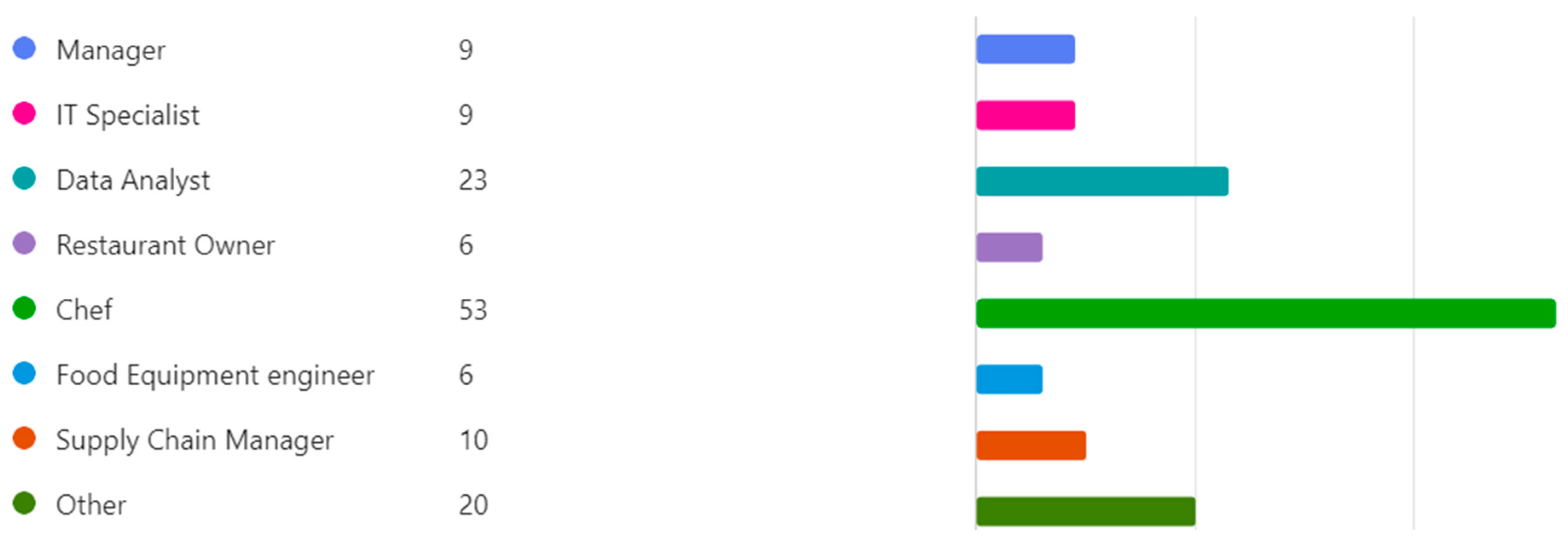
As shown in Figure 1 below, the majority of participants (39%) were professional chefs, followed by data analysts (17%). Additionally, 7.4% of respondents were supply chain managers, while 6.6% were managers and IT specialists, respectively. Furthermore, 4.4% of the participants identified as food equipment engineers and restaurant owners, respectively. A substantial proportion of respondents (14.7%) reported occupations in other categories.
As shown in Table 3 below, among the participants in the research, respondents with 4–6 years of experience had the highest adoption rate at 76%, followed closely by those with 1–3 years (72%) and less than 1 year (75%). However, respondents with more than 6 years of experience had the lowest adoption rate, with only 48% reporting BDA adoption. Additionally, a significant proportion of respondents with more than 6 years of experience were either unsure (24%) or reported not adopting BDA (29%), the highest among all experience groups.

4.2. Reliability of Survey Response

The determination of Cronbach’s alpha coefficient allows for the evaluation of the precision of the variable measurements. Table 4 presents the output of Cronbach’s Alpha reliability test. The expected value is greater than 0.7 but less than 0.95 to ensure internal consistency of the variables and to prevent redundancy among the items. The reliability test yielded a Cronbach’s Alpha of 0.896 for the 17-item scale, indicating strong internal consistency. This indicates that the items are highly correlated and effectively measure the same underlying concept, ensuring the scale’s reliability and validity for research purposes. Furthermore, the Cronbach’s Alpha for the standardised items was nearly identical at 0.908, further affirming the scale’s consistency regardless of item standardisation. These findings confirm the scale’s robustness and its appropriateness for further analysis in the study (Taber, 2018).

4.3. Extent of Adoption of BDA in the Nigerian Food Industry

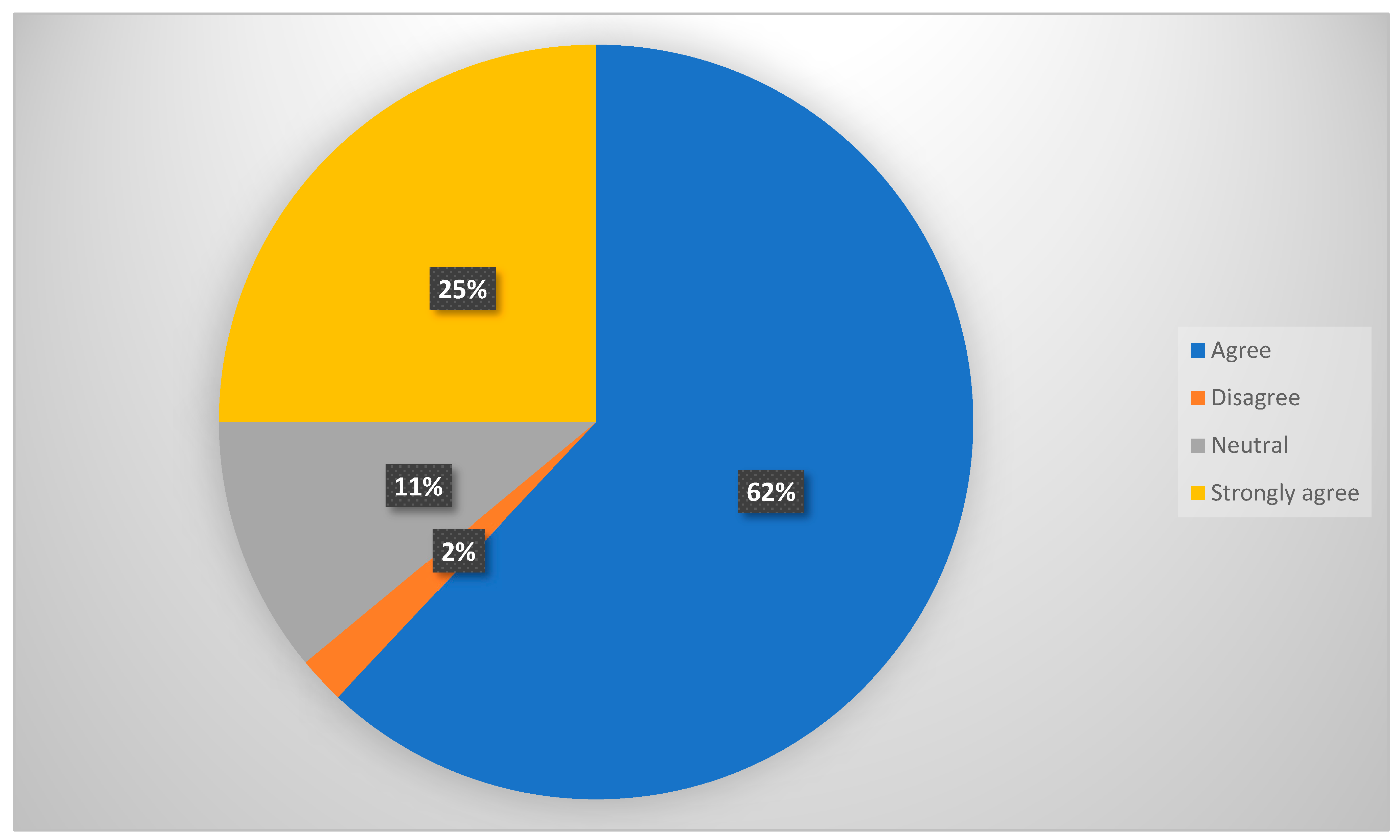
A majority of the respondents (58%) agreed that BDA has been fully integrated into the decision-making process. Specifically, 25% strongly agreed, 15% maintained a neutral stance, and 2% disagreed. Also, among the respondents, 55% agreed that their company allocates sufficient resources to the BDA initiative, 24% strongly agreed, 19% were took a neutral stance, while 2% disagreed. Furthermore, the respondents’ perception of the level of adoption of BDA in the last 3 years is illustrated in Figure 2, which shows that the majority of the respondents (62%) agreed that BDA adoption in the food industry has increased in the last 3 years, 25% strongly agreed, 11% remained neutral, while 2% disagreed.

4.4. Factors Affecting the Adoption of Big Data Analytics in Nigeria

A significant number of respondents (44%) agreed that the cost of implementing BDA is a major barrier to its adoption, 18% strongly agree, 22% remained neutral, 13% disagreed, and 3% strongly disagreed. On the other hand, most of the respondents (49%) agreed that the lack of skilled personnel significantly contributes to the limiting factors affecting BDA adoption, 16% strongly agreed, 21% remained neutral, while 11% disagreed, and 3% strongly disagreed. In addition, the scales underwent expert validation to verify the clarity, coherence, and congruence of the items. Most respondents (49%) agreed that data privacy and security concerns are also factors preventing full BDA adoption; 12% strongly disagreed, 26% were neutral, 12% disagreed, and 1% strongly disagreed.
Most respondents (53%) also agreed that the regulatory environment in Nigeria is supportive of BDA adoption; 10% strongly agreed, 26% remained neutral, and 11% disagreed. The majority of respondents (47%) agreed that there is sufficient access to technological infrastructure to support BDA adoption; 14% strongly agreed, 21% were neutral, and 18% disagreed.

4.5. The Impact and Potential Benefit of BDA in the Food Industry

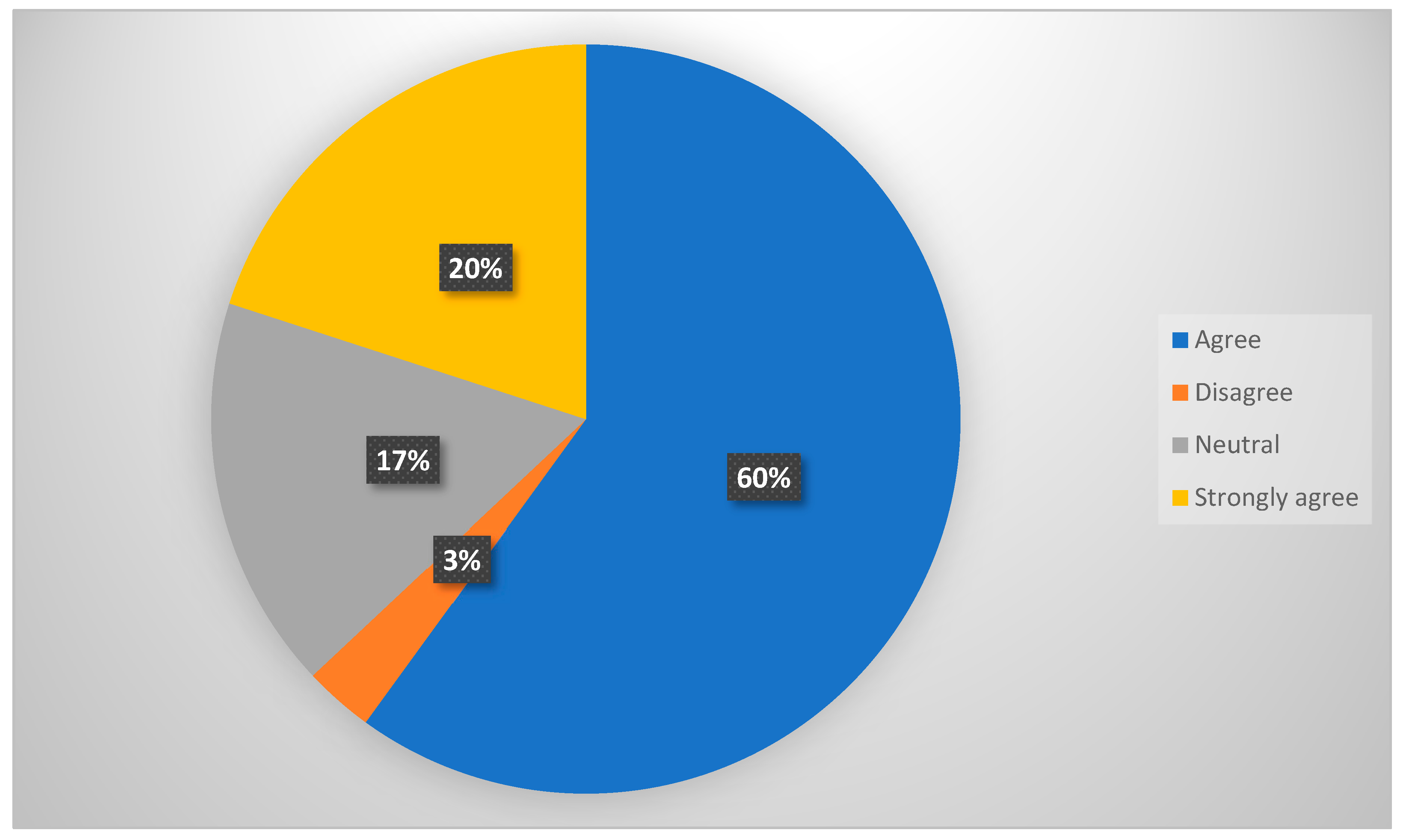
Most respondents agreed that BDA adoption has provided a competitive advantage (56%), improved efficiency (66%), contributed to better decision-making (67%), increased customer satisfaction (59%), and reduced costs and improved profitability (60%). Also, 26% of the respondents strongly agreed, 16% remained neutral and 2% disagreed that BDA adoption has provided competitive advantage, 21% strongly agreed, 10% remained neutral, 2% and 1% strongly disagreed that the use of BDA has improved operational efficiency, 24% strongly agreed, 8% took a neutral stance and 1% strongly disagreed that BDA has significantly contributed to better decision-making. Regarding customer satisfaction, 25% strongly agreed, 15% remained neutral, and 1% disagreed that BDA adoption has increased customer satisfaction. Figure 3 shows that 20% of respondents strongly agreed that BDA has enabled cost reduction and improved efficiency, 17% were neutral, and 3% disagreed.

4.6. Big Data Adoption Model Applicable to the Food Industry in Nigeria

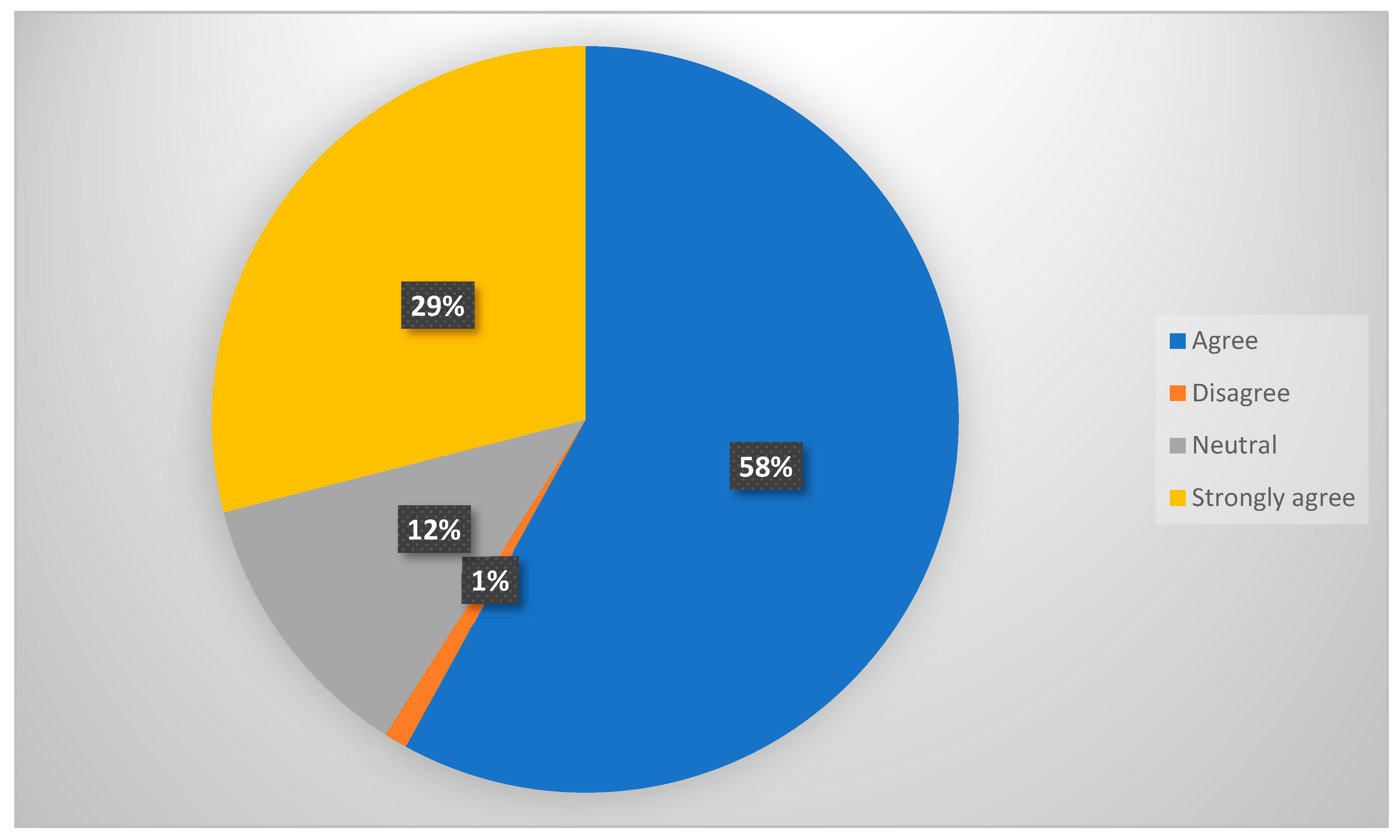
Figure 4 illustrates participants’ views on the need for a structured framework to guide BDA adoption. The majority of respondents (58%) agreed that a structured model or framework is needed to guide the adoption of BDA; 29% strongly agreed, 12% were neutral, and 1% disagreed.
Similarly, most respondents (61%) agreed that a structured model or framework is needed to guide companies in adopting BDA; 31% strongly agreed, and 8% were neutral. The majority of participants (56%) also agreed that an Industry-wide collaboration is essential for the successful adoption of BDA; 32% strongly agreed, 9% were neutral, and 2% and 1% disagreed. Interestingly, most participants (59%) further agreed that their company is ready to adopt a big data analytics model tailored to the Nigerian food industry; 32% strongly agreed, 12% were neutral, and 1% disagreed.

4.7. Hypothesis Testing

H1. 
There is a statistically significant relationship between BDA adoption and improved operational efficiency.
The respondents perceive that BDA adoption is associated with improved operational efficiency (Table 5). The Chi-Square analysis revealed a significant association between BDA adoption and improved operational efficiency (χ2 = 159.599, df = 12, p < 0.001). The Likelihood Ratio Test (χ2 = 81.396, p < 0.001). Since 70.0% have expected counts less than 5, Fisher’s exact test is a more reliable alternative. The Fisher-Freeman-Halton Exact Test (p < 0.001) confirms the significant association between BDA adoption and operational efficiency. Additionally, the Linear-by-Linear Association (χ2 = 56.041, p < 0.001) suggests a structured trend where higher BDA adoption corresponds with greater operational efficiency. The overwhelmingly significant results lead to the rejection of the null hypothesis, concluding that perceptions of BDA adoption are significantly associated with improvement of operational efficiency. The underlying mechanism for this improvement involves the use of predictive analytics, simulations, and optimisation techniques that allow firms to increase productivity and quality (Dutta & Bose, 2015; Saghselou & Gharahkhani, 2021). Specifically, BDA creates value by eliminating administrative bottlenecks and maximising organisational resources through better supply chain management and knowledge acquisition (Hallikainen et al., 2020; Cripps et al., 2020; Wang & Cheng, 2020). Furthermore, the use of platforms to manage large data streams helps organisations minimise the physical and digital costs associated with storage and maintenance.
H2. 
There is a statistically significant relationship between BDA adoption and an increase in customer satisfaction.
The Chi-Square analysis in Table 6 revealed a significant association between BDA adoption and increased customer satisfaction (χ2 = 102.653, df = 9, p < 0.001). The Likelihood Ratio Test (χ2 = 53.834, p < 0.001) further confirms this relationship. Since 62.5% of cells have expected counts less than 5, Fisher’s exact test is used as a more reliable alternative, and the Fisher-Freeman-Halton Exact Test (p < 0.001) reinforces the significant association between BDA adoption and customer satisfaction. Additionally, the Linear-by-Linear Association (χ2 = 33.483, p < 0.001) suggests a structured trend: higher BDA adoption is associated with greater customer satisfaction. The overwhelmingly significant results lead to the rejection of the null hypothesis, concluding that the perception of BDA adoption is significantly associated with customer satisfaction. BDA enables companies to profile customers more accurately and to gain deep insights from purchase patterns and social media feedback (Hallikainen et al., 2020; Cripps et al., 2020). By leveraging “Variety” (one of the 5 Vs), firms can analyse unstructured data from blogs, emails, and social networks to uncover hidden consumer behaviour, leading to more effective marketing plans and stronger customer relationships (Dong et al., 2018).
H3. 
There is a statistically significant relationship between BDA adoption and profitability.
The Chi-Square analysis revealed a significant association between BDA adoption and profitability (χ2 = 70.638, df = 9, p < 0.001). The Likelihood Ratio Test (χ2 = 56.283, p < 0.001) further confirms this relationship. Since 62.5% of cells have expected counts less than 5, Fisher’s exact test is used as a more reliable alternative, and the Fisher-Freeman-Halton Exact Test (p < 0.001) reinforces the significant association between BDA adoption and profitability. Additionally, the Linear-by-Linear Association (χ2 = 39.041, p < 0.001) suggests a structured trend where higher BDA adoption corresponds with increased profitability. The overwhelmingly significant results lead to the rejection of the null hypothesis, concluding that the perception of BDA adoption is significantly related to the profitability (see Table 7). BDA tools like Hadoop and Natural Language Processing (NLP) are essential for reducing operational costs and making better-informed decisions (T. Davenport, 2014). A key mechanism here is “Velocity,” which enables real-time data access, allowing firms to act on current evidence rather than relying on backwards-looking trends, thereby significantly reducing the financial risks associated with market uncertainty (Saboo et al., 2016; Kuo et al., 2018; Shukla et al., 2020).
H4. 
There is a statistically significant relationship between BDA adoption and competitive advantage.
The Pearson Chi-Square test (χ2 = 47.317, df = 9, p < 0.001) indicates a statistically significant association, suggesting a dependency relationship between BDA adoption and competitive advantage. This result is further confirmed by the Likelihood Ratio Test (χ2 = 44.322, p < 0.001), reinforcing the presence of a meaningful relationship between the two factors. Due to the fact that 62.5% of cells have expected counts less than 5, Fisher’s Exact Test provides a more reliable measure, and the Fisher-Freeman-Halton Exact Test (p < 0.001) confirms the significant association between BDA adoption and competitive advantage. Additionally, the Linear-by-Linear Association (χ2 = 27.269, p < 0.001) indicates a structured trend, suggesting that higher levels of BDA adoption correlate with greater competitive advantage, thereby rejecting the null hypothesis (see Table 8). Value is created when BDA is integrated into strategic decision-making processes, allowing firms to maintain leadership positions and build organisational resilience through a superior understanding of market dynamics by identifying new market patterns before their rivals (Cripps et al., 2020).

5. Discussion

The research finds that the adoption rate of Big Data Analytics (BDA) varies significantly across different age groups. The findings suggest that younger generation professionals are more likely to integrate BDA tools into their workflows. The increasing use of BDA is probably due to younger adults who learned digital technologies during their education and early careers. Organisations that need data-driven decision-making skills increase young employees’ motivation to pursue mastery of BDA knowledge because it improves their job-market competitiveness.
The significant associations found (p < 0.001) between BDA and profitability or competitive advantage reflect a strong professional consensus on the value-added potential of these tools. However, these results should be interpreted as perceived impacts. There may be discrepancies between reported practices and actual organisational behaviours. Therefore, the reported gains in efficiency and cost reduction serve as a precursor to future audits involving objective KPIs.
This study reveals major obstacles preventing older professionals from using BDA in their work processes, as none in this group have adopted the method. Technological resistance, combined with training deficits and a steadfast commitment to conventional analytical systems, may explain this finding. Some older professionals view BDA as a system designed specifically for young employees, which discourages them from investing time in new-system education. Nevertheless, a significant number of business professionals confirmed that their companies have properly financed data analytics implementation initiatives. Industry respondents detected substantial expansion in the analytics area, which they linked to organisation-wide developments, recognising its benefits for improving operational efficiency and supply chains, as well as for gaining consumer insights. Industry professionals agree on this upward trend because disagreement among them is very low. The results confirm global business patterns, showing that data analytics is becoming increasingly prominent for strategic decision-making and maintaining leadership positions.
Research on big data analytics adoption in different industries supports the findings of this present investigation. Kesharwani (2019) demonstrated that younger professionals adopt new technologies due to greater digital exposure and greater comfort with technology for decision-making. The study by Deja et al. (2021) found that strong data literacy skills among recently graduated professionals help them perform more effectively in data-driven communication and strategic decision-making in organisational settings, thereby creating valuable assets that align with the ambiguous findings in this investigation. According to Raguseo (2018), most companies use big data technologies to handle and analyse large datasets and processing operations. Willets and Atkins (2023) established a three-phase BDA adoption framework that begins with data analytics preparation, followed by business intelligence, and culminates in big data analytics. The researchers predicted that an SME at the final stage should use at least one big data analytics technique, such as sentiment analysis and association rule mining, to effectively process large datasets. Yu et al. (2022) showed that many organisations currently use big data analytics in their strategic decision-making processes. The researchers determined that organisational size is a determining factor, as larger businesses demonstrate stronger preferences for both investing in and utilising big data capabilities than smaller organisations. W. A. Rogers et al. (2017) demonstrate through their research that older adults experience initial difficulties with technology learning, yet perceived usefulness and user experience develop into key factors that encourage their eventual adoption of new systems. The study conducted by Sivarajah et al. (2017) revealed widespread resistance to adopting new technologies, specifically big data analytics, within the construction industry. The examination by these researchers identified traditional business methods, along with expensive implementation procedures and an absence of specialised technological skills, as key reasons for the slower growth of big data analytics in the construction industry.
The research further finds that widespread adoption of BDA throughout Nigeria faces multiple substantial barriers. One of the primary barriers identified is the high cost of implementation. The limited availability of professionals with the necessary skills to implement BDA is another key obstacle for organisations seeking to introduce this system. Data privacy concerns, together with security issues, also appeared as major obstacles to BDA adoption among organisations. The majority of respondents in the study perceived the Nigerian regulatory environment as supportive of BDA adoption. Rather than remaining neutral, some business leaders expressed disagreement about the regulatory situation, which appears to be a continuing concern for select enterprises. The research evaluated the availability of technological infrastructure as one of its elements. Multiple survey respondents approved of the infrastructure readiness to support BDA adoption, yet other participants expressed uncertainty about its availability across sectors and regions.
The research findings align with those presented by Oranefo et al. (2024). They established that complexity, along with inadequate ICT infrastructure and strict regulations, worked as barriers toward acceptance. Oyewo et al. (2022) established that financial constraints and the shortage of skilled personnel are critical barriers to BDA adoption. Egwuonwu et al. (2024) highlighted the need for external aid and organisational readiness structures, while noting regulatory restrictions as one barrier. Micheal et al. (2018) developed a BDA implementation framework for public-sector decision systems in Nigeria, which, according to this research investigation, features data protection and system security practices as key elements. Saghselou and Gharahkhani (2021) found that security and privacy concerns impede the adoption of big data analytics to improve food industry firm performance. According to Tosi et al. (2024), these recurring industry-wide themes included cost factors, staffing requirements, and infrastructure development needs. The research papers align with this study by addressing infrastructure needs, skilled personnel costs, data security, and regulatory challenges. The study by Alnafoosi and Adelakun (2024) discovered that organisations with agile practices and medium-sized teams successfully handled expertise and cost-related barriers in Big Data implementations. Employee readiness proves crucial for reducing the impact of both cost and expertise barriers, according to Khan and Siddiqui (2023).
The analysis also found that businesses in the industry achieved various positive outcomes after adopting BDA, including improved competitive advantage, operational effectiveness, better decision-making, higher customer satisfaction, and enhanced profitability. Research participants indicated that BDA helps them achieve better market competition through its implementation. Most surveyed professionals agreed, but some answered neutrally, and only a very small percentage disagreed. Most organisations understand that making decisions based on data will help them establish an advantage over their competitors. BDA achieved a measurable increase in the company’s operational efficiency. Most survey participants noted that implementing data analytics solutions improved business operations, eliminating administrative problems and maximising organisational resources. These findings are further supported by the Chi-Square analysis, which shows statistically significant correlation between BDA use and operational efficiency, customer satisfaction and profitability. The Chi-Square test, Likelihood Ratio test, and Fisher-Freeman–Halton Exact test consistently supported the results by indicating greater improvement in these metrics for organisations that incorporated BDA. The findings generally indicate that BDA significantly contributes to the growth and success of the food industry in Nigeria.
Ibidun et al. (2023) stressed that any long-term success in healthcare service delivery in Lagos State will require strategic investment across all dimensions of BDA. Likewise, Saghselou and Gharahkhani (2021) found that BDA adoption significantly improves operational efficiency and decision-making. Dutta and Bose (2015) stated that the use of predictive analytics, simulations, and optimisation techniques in BDA can result in increased productivity, reduced costs, and improved quality. Wang and Cheng (2020) also demonstrated that BDA can improve business functions, including dynamic pricing strategies, sales forecasting, supply chain management, and knowledge acquisition, and ultimately enable better organisational performance when integrated into business decision-making processes. Studies by Troisi et al. (2019) argue that companies using BDA to study markets and customers can improve their marketing plans for sustainable development. BDA helps organisations identify new market patterns and develop tailored products through data analysis, according to Dwivedi et al. (2021). Hallikainen et al. (2020) found that BDA improves businesses by streamlining customer relations, boosting market expansion, and providing better customer profiles. Cripps et al. (2020) explain how businesses use BDA to gain customer insights from purchasing patterns and gauge marketing feedback, especially in social media analytics, which serves them economically.
Some research, however, has shown negative effects of BDA applications. Ding et al. (2023) argue that although big data brings benefits, it creates distinctive quality-control problems. According to their findings, BDA helps businesses better understand consumer desires, but when producers rely too heavily on data for decision-making, they may ignore quality standards, creating safety hazards in the food market. According to Tao et al. (2021), there are serious risks to protecting data that can happen when crowd-sourcing services handle sensitive food industry information. The study showed that BDA improves process performance, but companies need to recognise the risks of security breaches when using it.
Most industry professionals recognise that a standardised model is needed for businesses embarking on BDA implementation, as a structured framework is vital for a smooth, effective integration of BDA into business operations. Industry-wide collaboration is also a major factor identified in the findings as contributing to the success of BDA adoption. The respondents felt that the industry needs to work together among stakeholders to solve common challenges, share best practices, and develop a stronger, data-informed environment. The survey examined how ready Nigerian food industry companies are for adopting an industry-specific BDA model. Most organisations recognise the value of establishing a framework tailored to the food industry’s specific circumstances. The majority of participants strongly backed this organisational readiness, while some holders showed mixed opinions or dissent. Respondents’ information indicates a positive disposition toward BDA adoption, but some organisations may require additional guidance and resources to carry out this transition.
The study’s findings are similar to those reported by Xu and Pero (2023) regarding the resource orchestration perspective on organisations’ digital analytics adoption. The study demonstrates through its findings that BDA adoption in supply chain planning requires structured resource orchestration. The successful implementation requires both structured frameworks and proper governance mechanisms. The findings of this study, however, contrast with those of Castellanos et al. (2019) regarding the deployment of a big data analytics solution. This study discusses the deployment gap, which leads to few successful BDA deployments, as organisations face immature adoption methods and architectural competition. Furthermore, Miake-Lye et al. (2020) found that readiness assessments often focus on contextual factors rather than structured frameworks. The differences in findings between this study and the existing literature may stem from variations in research design, sample size, and data collection methods, resulting in contrasting outcomes. Also, studies conducted in different industries or regions may yield varying results due to unique challenges, opportunities, and levels of technological maturity.
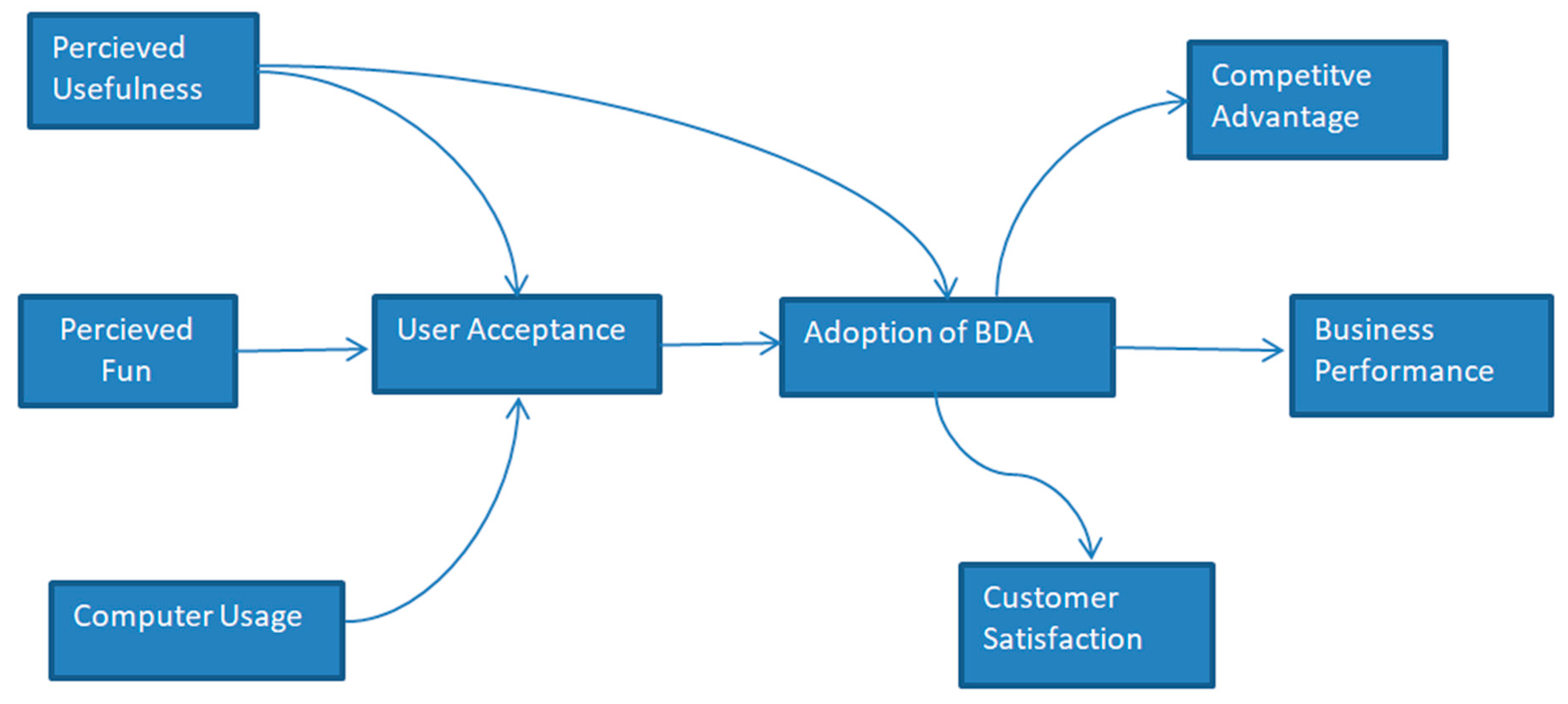
Based on the findings, this study proposes a structured BDA adoption model specific to the Nigerian food industry (see Figure 5 below).

6. Conclusions

This study investigated the adoption and impact of big data analytics (BDA) in the food industry of South-Western Nigeria. Its objectives were to explore the extent of BDA adoption, identify the factors influencing its implementation, assess its operational impact, propose an adoption framework, and generate recommendations for effective integration. By employing a structured survey design and statistical techniques such as the Chi-Square test, Likelihood Ratio Test, Fisher-Freeman-Halton Exact Test, and Linear-by-Linear Association test, the research provided comprehensive insights into the dynamics of BDA adoption in a developing economy context. The findings demonstrate that food businesses in the region increasingly recognise the strategic value of BDA, not only as a decision-making tool but also as a means to enhance supply chain systems, improve customer insights, and strengthen market competitiveness.
The study established that while awareness and adoption of BDA are growing, firms remain at varying stages of maturity in their ability to deploy advanced analytics. A major contribution of the study is its identification of barriers to adoption. High implementation costs, a scarcity of skilled professionals, data privacy concerns, and regulatory ambiguities emerged as critical obstacles. These findings align with broader literature, which emphasises cost, talent shortages, and compliance challenges as persistent global barriers to adoption. Within the Nigerian food sector, these constraints have slowed full-scale integration of BDA, limiting its transformative potential across the business lifecycle. Despite these challenges, the research revealed that organisations that successfully implement BDA enjoy substantial benefits. Participants reported enhanced decision-making capabilities, operational efficiency, customer satisfaction, and improved market positioning. This evidence underscores BDA’s capacity to deliver a sustainable competitive edge and demonstrates its relevance to long-term industry growth. By validating the operational and strategic outcomes of BDA, the study affirms its role as a critical enabler of data-driven decision-making and organisational resilience.
This research has highlighted several factors contributing to BDA in the Nigerian food industry that are not yet fully understood in the literature. Understanding the effect of these factors, therefore, represents an underutilised opportunity for companies in Nigeria to improve product success and performance; yet the current research provides little insight in this respect (Tao et al., 2021; Ding et al., 2023). This study’s theoretical contribution is significant because it is among the few focused on the food industry in the Nigerian and African contexts. This study provided a theoretical framework for academics, companies, and the government to understand the factors contributing to successful BDA adoption within the Nigerian food industry in the contemporary market, and the actions they need to plan for.
Business Managers should prioritise continuous data literacy training for their current staff and design gradual implementation strategies to mitigate the observed technological resistance, particularly among more experienced professionals. Given the critical shortage of skilled personnel, investing in analytics solutions designed for “non-experts” and forming agile teams can facilitate the transition toward a data-driven culture. For policymakers, it is essential to establish clear data governance and security standards to reduce regulatory uncertainties and privacy concerns that currently hinder full adoption. Additionally, they should develop financial support programs and subsidies specifically targeted at SMEs, enabling them to overcome the high infrastructure and software costs that limit their competitiveness against larger corporations. For technology Providers, there is an opportunity to capture the local market by developing low-cost, modular, and scalable BDA tools that leverage cloud architectures to minimise maintenance expenses. These solutions should integrate predictive analytics and Natural Language Processing (NLP) capabilities that offer immediate operational benefits, such as inventory optimisation and consumer sentiment analysis. Industrial Associations should lead sectoral collaboration to create standardised adoption frameworks that reduce technological fragmentation and facilitate the sharing of best practices. By acting as mediators, these associations can foster an environment in which collective learning and standardised processes help firms navigate BDA integration challenges with greater resilience.
Furthermore, a central contribution of the research is the proposed adoption model. This framework emphasises the need for structured strategies, industry collaboration, skills development, and resource allocation to accelerate integration. The model highlights the importance of sector-wide partnerships and industry standards to reduce fragmentation, facilitate the sharing of best practices, and overcome implementation challenges. By presenting a practical, context-specific adoption framework, the study provides both academic and managerial value, offering a roadmap for organisations seeking to embed BDA more effectively into their practices.
Notwithstanding its contributions, the study is subject to several limitations. First, the reliance on a quantitative survey with predominantly closed-ended questions restricted the scope for exploring the complex experiences of BDA within organisations and among employees. While the statistical methods employed were valuable for identifying adoption patterns, they could not fully capture the contextual and cultural dimensions that influence implementation. A mixed-method design incorporating interviews, focus groups, or case studies would have provided richer, more detailed insights.
Secondly, the use of self-reported data introduces potential biases, including social desirability, recall inaccuracies, and subjective interpretations. These factors may create discrepancies between reported practices and actual organisational behaviours. Future studies should triangulate self-reported survey data with documentary evidence or direct observation to improve reliability.
Finally, the study’s geographical scope limits its generalizability. By focusing exclusively on South-Western Nigeria, the findings may not be directly transferable to other regions where economic, cultural, or regulatory conditions differ. Future research should expand the scope to other parts of Nigeria and beyond, to test the robustness of the adoption framework across diverse contexts and to capture how infrastructural and institutional variations influence adoption trajectories.

7. Limitations and Future Research

Building on the insights of this study, several avenues for future research emerge. First, there is scope to use qualitative methods more widely to explore the lived experiences of organisations and practitioners engaging with BDA. While the present study offered valuable statistical associations, interviews and case studies would provide deeper insights into the cultural and organisational dynamics that shape adoption. Such approaches would reveal how firms navigate internal resistance, align analytics with strategy, and design best practices tailored to their specific contexts.
Secondly, there is a need for longitudinal studies examining the long-term impact of BDA adoption on business performance. Future research should bridge the gap between perceived and measured operational impact by incorporating objective indicators. Studies should prioritise longitudinal designs to track specific metrics such as revenue growth, inventory turnover, waste reduction, and delivery accuracy. This triangulation would validate the subjective perceptions recorded in this study with hard operational data, providing a more robust evidence base for BDA’s ROI in the Nigerian food industry.
Furthermore, comparative studies across regions and economies would deepen understanding of how contextual differences influence adoption trajectories. Within Nigeria, disparities in infrastructure, skills availability, and cultural attitudes may lead to varied adoption outcomes between regions. Similarly, cross-country comparisons between developing and developed economies could illuminate best practices from advanced markets and assess their adaptability to Nigerian and similar contexts. Such research would be valuable for designing inclusive, context-sensitive adoption frameworks.
Fourth, future research should examine variations within the food industry itself. The present study treated the industry as a single unit, but different segments, like manufacturing, distribution, and retail, may face distinct challenges and opportunities. A segment-specific analysis would provide more granular insights into the readiness, resource capabilities, and adoption patterns across the value chain. This would enable more tailored strategies for fostering BDA adoption within sub-sectors.
Fifth, a significant statistical limitation in this study is the distribution of expected frequencies in the Chi-square tests, with 62.5–70.0% of the data having expected counts less than 5. Although this technical issue was mitigated by using the Fisher-Freeman-Halton Exact Test to validate the associations, the high proportion suggests that the 17-item scale’s categorical structure may have been too fragmented relative to the sample size of 151 participants. This fragmentation can compromise the stability of inferential estimates. Therefore, future research should consider grouping or collapsing categories (e.g., consolidating “Agree” and “Strongly Agree”) to reduce data dispersion. This adjustment would enable more robust estimates and increase statistical power when analysing the factors driving Big Data Analytics (BDA) adoption in the sector.
Finally, interdisciplinary research linking BDA adoption to broader societal and regulatory issues is warranted. Questions of ethics, data privacy, and regulatory capacity are increasingly central to the discourse on analytics adoption. Future studies could explore how regulatory frameworks evolve in response to technological change and how firms balance commercial objectives with societal responsibilities in data use.


Author Contributions

Conceptualisation, I.O. and S.M.; methodology, I.O., software, I.O.; validation, I.O.; formal analysis, I.O.; investigation, I.O.; resources, I.O.; data curation, I.O.; writing—original draft preparation, I.O.; writing—review and editing, I.O., S.M., C.K., S.N.L.-H., V.O. and J.C.H.-A.; visualisation, I.O.; supervision, S.M.; project administration, C.K., S.N.L.-H., V.O. and J.C.H.-A. All authors have read and agreed to the published version of the manuscript.

Funding

This research received no external funding.

Institutional Review Board Statement

Ethical approval for the research was obtained on 24 December 2024 from the ethical committee of Wrexham University with the reference number (1805).

Informed Consent Statement

Informed consent was obtained from all subjects involved in the study.

Data Availability Statement

The data for this project are unavailable due to privacy and ethical restrictions.

Conflicts of Interest

The authors declare no conflicts of interest.

References

  1. Ahmed, R., Shaheen, S., & Philbin, S. P. (2022). The role of big data analytics and decision-making in achieving project success. Journal of Engineering and Technology Management, 65(2), 101697. [Google Scholar] [CrossRef]
  2. Ajzen, I., & Fishbein, M. (1980). Understanding attitudes and predicting social behaviour. Prentice-Hall. [Google Scholar]
  3. Alnafoosi, A. B., & Adelakun, O. (2024). Big data adoption factors and development methodologies: A multiple case study analysis. In M. Mora, F. Wang, J. Marx Gomez, & H. Duran-Limon (Eds.), Development methodologies for big data analytics systems. Transactions on Computational Science and Computational Intelligence. Springer. [Google Scholar] [CrossRef]
  4. Bag, S., Pretorius, J. H. C., Gupta, S., & Dwivedi, Y. K. (2021). Role of institutional pressures and resources in the adoption of big data analytics powered artificial intelligence, sustainable manufacturing practices and circular economy capabilities. Technological Forecasting and Social Change, 163, 120420. [Google Scholar] [CrossRef]
  5. Castellanos, C., Pérez, B., Varela, C. A., Villamil, M. P., & Correal, D. (2019). A survey on big data analytics solutions deployment. In T. Bures, L. Duchien, & P. Inverardi (Eds.), Software architecture, Proceedings of the 13th European conference, ECSA 2019, Paris, France, 9–13 September 2019 (Vol. 11681). Lecture Notes in Computer Science. Springer. [Google Scholar] [CrossRef]
  6. Chamikara, M. A. P., Bertok, P., Liu, D., Camtepe, S., & Khalil, I. (2020). Efficient privacy preservation of big data for accurate data mining. Information Sciences, 527, 420–443. [Google Scholar] [CrossRef]
  7. Corte-Real, N., Ruivo, P., Oliveira, T., & Popovič, A. (2019). Unlocking the drivers of big data analytics value in firms. Journal of Business Research, 97, 160–173. [Google Scholar] [CrossRef]
  8. Cripps, H., Singh, A., Mejtoft, T., & Salo, J. (2020). The use of Twitter for innovation in business markets. Marketing Intelligence and Planning, 38(5), 587–601. [Google Scholar] [CrossRef]
  9. Dacin, M. T., Goodstein, J., & Scott, W. R. (2002). Institutional theory and institutional change: Introduction to the special research forum. Academy of Management Journal, 45(1), 45–56. [Google Scholar] [CrossRef]
  10. Datamation. (2017). Big data challenges. Available online: https://www.datamation.com/big-data/big-data-challenges.html (accessed on 29 April 2025).
  11. Davenport, T. (2014). Big data at work: Dispelling the myths, uncovering the opportunities. Harvard Business Review Press. [Google Scholar]
  12. Davenport, T. H., Barth, P., & Bean, R. (2012). How ‘big data’ is different. MIT Sloan Management Review, 54(1), 23–27. [Google Scholar]
  13. Davis, F. D., Bagozzi, R. P., & Warshaw, P. R. (1992). Extrinsic and intrinsic motivation to use computers in the workplace. Journal of Applied Social Psychology, 22, 1111–1132. [Google Scholar] [CrossRef]
  14. Deja, M., Januszko-Szakiel, A., Korycińska, P., & Deja, P. (2021). The impact of basic data literacy skills on work-related empowerment: The alumni perspective. College Research and Libraries, 82(5), 708–729. Available online: https://crl.acrl.org/index.php/crl/article/view/25016/32893?form=MG0AV3 (accessed on 29 April 2025).
  15. De Mauro, A., Greco, M., & Grimaldi, M. (2016). A formal definition of big data based on its essential features. Library Review, 65, 122–135. [Google Scholar] [CrossRef]
  16. Ding, H., Tian, J., Yu, W., Wilson, D. I., Young, B. R., Cui, X., Xin, X., Wang, Z., & Li, W. (2023). The application of artificial intelligence and big data in the food industry. Foods, 12(24), 4511. [Google Scholar] [CrossRef]
  17. Dong, W., Liao, S., & Zhang, Z. (2018). Leveraging financial social media data for corporate fraud detection. Journal of Management Information Systems, 35(2), 461–487. [Google Scholar] [CrossRef]
  18. Duarte, F. (2026). Amount of data created daily (2026). Exploding topics. Last updated 23 February. Available online: https://explodingtopics.com/blog/data-generated-per-day (accessed on 3 May 2026).
  19. Dutta, D., & Bose, I. (2015). Managing a big data project: The case of ramco cements limited. International Journal of Production Economics, 165, 293–306. [Google Scholar] [CrossRef]
  20. Dwivedi, Y. K., Hughes, L., Ismagilova, E., Aarts, G., Coombs, C., Crick, T., Duan, Y., Dwivedi, R., Edwards, J., Eirug, A., & Galanos, V. (2021). Artificial Intelligence (AI): Multidisciplinary perspectives on emerging challenges, opportunities, and agenda for research, practice and policy. International Journal of Information Management, 57, 101994. [Google Scholar] [CrossRef]
  21. Egwuonwu, A., Mendy, J., Smart-Oruh, E., & Egwuonwu, A. (2024). Drivers of big data analytics’ adoption and implications of management decision-making on big data adoption and firms’ financial and nonfinancial performance: Evidence from Nigeria’s manufacturing and service industries. IEEE Transactions on Engineering Management, 71, 11907–11922. [Google Scholar] [CrossRef]
  22. Elgendy, N., & Elragal, A. (2014, July 16–20). Big data analytics: A literature review paper. Industrial Conference on Data Mining, St. Petersburg, Russia. [Google Scholar] [CrossRef]
  23. El-Haddadeh, R., Osmani, M., Hindi, N., & Fadlalla, A. (2021). Value creation for realising the sustainable development goals: Fostering organisational adoption of big data analytics. Journal of Business Research, 131, 402–410. [Google Scholar] [CrossRef]
  24. Erevelles, S., Fukawa, N., & Swayne, L. (2016). Big Data consumer analytics and the transformation of marketing. Journal of Business Research, 69(2), 897–904. [Google Scholar] [CrossRef]
  25. Faruk, M., Sarker, M. A. H., Mamun, A., & Hasan, S. (2022). Adoption of big data analytics in marketing: An analysis in Bangladesh. Journal of Data Information and Management, 4, 277–290. [Google Scholar] [CrossRef]
  26. Gandomi, A., & Haider, M. (2015). Beyond the hype: Big data concepts, methods, and analytics. International Journal of Information Management, 35(2), 137–144. [Google Scholar] [CrossRef]
  27. Ghasemaghaei, M. (2020). The role of positive and negative valence factors on the impact of bigness of data on big data analytics usage. International Journal of Information Management, 50, 395–404. [Google Scholar] [CrossRef]
  28. Ghasemaghaei, M., Hassanein, K., & Turel, O. (2015). Impacts of big data analytics on organizations: A resource fit perspective. In AMCIS 2015 proceedings (No. 19). Association for Information Systems (AIS). Available online: https://aisel.aisnet.org/amcis2015/BizAnalytics/GeneralPresentations/19 (accessed on 29 April 2025).
  29. Gray, D. E. (2017). Doing research in the business world. Sage. [Google Scholar]
  30. Hallikainen, H., Savimäki, E., & Laukkanen, T. (2020). Fostering B2B sales with customer big data analytics. Industrial Marketing Management, 86, 90–98. [Google Scholar] [CrossRef]
  31. Hofacker, C. F., Malthouse, E. C., & Sultan, F. (2016). Big data and consumer behavior: Imminent opportunities. Journal of Consumer Marketing, 33(2), 89–97. [Google Scholar] [CrossRef]
  32. Hu, L., & Basiglio, A. (2024). A multiple-case study on the adoption of customer relationship management and big data analytics in the automotive industry. The TQM Journal, 36(9), 1–21. [Google Scholar] [CrossRef]
  33. Ibidun, A., Egbuta, O. U., & Akinlabi, B. H. (2023). Big data analytics and competitive advantage: Evidences from healthcare services organisations in Lagos State, Nigeria. Journal of Information and Technology, 7(1), 22–46. [Google Scholar] [CrossRef]
  34. IBM. (2024). IBM SPSS statistics. Available online: https://www.ibm.com/products/spss-statistics (accessed on 25 January 2025).
  35. Jaruwanakul, T. (2024). The influence of AI-CRM adoption and big data analytical capability on firm performance of large enterprises in Thailand. Global Business Finance Review, 29(2), 112–126. [Google Scholar] [CrossRef]
  36. Jiang, Z., & Benbasat, I. (2007). The effects of presentation formats and task complexity on online consumers’ product understanding. MIS Quarterly, 31(3), 475–500. [Google Scholar] [CrossRef]
  37. Jiwat, R., & Zhang, M. (2022). Adopting big data analytics (BDA) in business-to-business (B2B) organizations—Development of a model of needs. Journal of Engineering and Technology Management, 63, 101676. [Google Scholar] [CrossRef]
  38. Kauppi, K., & Luzzini, D. (2022). Measuring institutional pressures in a supply chain context: Scale development and testing. Supply Chain Management: An International Journal, 27(7), 79–107. [Google Scholar] [CrossRef]
  39. Kesharwani, A. (2019). Do (How) digital natives adopt a new technology differently than digital immigrants?—A longitudinal study. Information and Management, 57(2), 103170. [Google Scholar] [CrossRef]
  40. Khan, S. H., & Siddiqui, D. A. (2023). Understanding the determinants of big data analytics adoption and their impact on the overall business performance, with the moderating effect of technology readiness in the organizations. SSRN. [Google Scholar] [CrossRef]
  41. Kuka, C., Muhyaddin, S., Teh, P. L., & Davies, L. (2026). Global roadmaps for post-quantum era in finance: Policies, timelines, and a pragmatic playbook for migration. FinTech, 5(1), 16. [Google Scholar] [CrossRef]
  42. Kuo, J. C.-F., Lin, C.-H., & Lee, M.-H. (2018). Analyze the energy consumption characteristics and affecting factors of Taiwan’s convenience stores, using the big data mining approach. Energy and Buildings, 168, 120–136. [Google Scholar] [CrossRef]
  43. Kwon, O., Lee, N., & Shin, B. (2014). Data quality management, data usage experience and acquisition intention of big data analytics. International Journal of Information Management, 34, 387–394. [Google Scholar] [CrossRef]
  44. Lin, F., Fofanah, S. S., & Liang, D. (2011). Assessing citizen adoption of e-Government initiatives in Gambia: A validation of the technology acceptance model in information systems success. Government Information Quarterly, 28(2), 271–279. [Google Scholar] [CrossRef]
  45. Lycett, M. (2013). Datafication: Making sense of (big) data in a complex world. European Journal of Information Systems, 22(4), 381–386. [Google Scholar] [CrossRef]
  46. Manyika, J., Chui, M., Brown, B., Bughin, J., Dobbs, R., Roxburgh, C., & Byers, A. H. (2011). Big data: The next frontier for innovation, competition, and productivity. Available online: https://www.mckinsey.com/~/media/mckinsey/business%20functions/mckinsey%20digital/our%20insights/big%20data%20the%20next%20frontier%20for%20innovation/mgi_big_data_exec_summary.pdf (accessed on 29 April 2025).
  47. Maroufkhani, P., Iranmanesh, M., & Ghobakhloo, M. (2022). Determinants of big data analytics adoption in small and medium-sized enterprises (SMEs). Industrial Management and Data Systems, 123(1), 278–301. [Google Scholar] [CrossRef]
  48. McAfee, A., & Brynjolfsson, E. (2012). Big data: The management revolution. Harvard Business Review, 90(10), 60–68. [Google Scholar] [PubMed]
  49. Miake-Lye, I. M., Delevan, D. M., Ganz, D. A., Mittman, B. S., & Finley, E. P. (2020). Unpacking organizational readiness for change: An updated systematic review and content analysis of assessments. BMC Health Services Research, 20, 106. [Google Scholar] [CrossRef]
  50. Micheal, B., Ajose-Ismail, & Osanyin, O. (2018, November 8). Adoption of open government and framework for big data analytics in Nigeria. 1st International Conference of Federal Polytechnic (pp. 1877–1886), Ilaro, Nigeria. [Google Scholar]
  51. Microsoft. (2024). Use the analysis ToolPak to perform complex data analysis. Available online: https://support.microsoft.com/en-gb/office/use-the-analysis-toolpak-to-perform-complex-data-analysis-6c67ccf0-f4a9-487c-8dec-bdb5a2cefab6 (accessed on 29 April 2025).
  52. Mikalef, P., Boura, M., Lekakos, G., & Krogstie, J. (2019). Big data analytics and firm performance: Findings from a mixed-method approach. Journal of Business Research, 98, 261–276. [Google Scholar] [CrossRef]
  53. Mikalef, P., Pappas, I. O., Krogstie, J., & Giannakos, M. (2018). Big data analytics capabilities: A systematic literature review and research agenda. Information Systems and E-Business Management, 16(2), 547–578. [Google Scholar] [CrossRef]
  54. Mishra, D., Akman, I., & Mishra, A. (2014). Theory of reasoned action application for green information technology acceptance. Computers in Human Behavior, 36, 29–40. [Google Scholar] [CrossRef]
  55. Mohamed, A., Khanian Najafabadi, M., Yap, B. W., Kamaru Zaman, E., & Maskat, R. (2020). The state of the art and taxonomy of big data analytics: View from new big data framework. Artificial Intelligence Review, 53(3), 989–1037. [Google Scholar] [CrossRef]
  56. Mohapatra, S. K., & Mohanty, M. N. (2020). Big data analysis and classification of biomedical signal using random forest algorithm. In New paradigm in decision science and management (pp. 217–224). Springer. [Google Scholar]
  57. Müller, O., Fay, M., & vomBrocke, J. (2018). The effect of big data and analytics on firm performance: An econometric analysis considering industry characteristics. Journal of Management Information Systems, 35(2), 488–509. [Google Scholar] [CrossRef]
  58. Ogrezeanu, I. (2015). Models of technology adoption: An integrative approach. Network Intelligence Studies, 3(1), 55–67. [Google Scholar]
  59. Oranefo, P. C., Eke, C., & Egbunike, C. F. (2024). Factors affecting cloud ERP and big data analytics adoption in Nigeria: Perception of accountants in Nigeria. Journal of Comprehensive Business Administration Research, 1(3), 124–134. [Google Scholar] [CrossRef]
  60. Oyewo, B., Obanor, A., & Iwuanyanwu, C. (2022). Determinants of the adoption of big data analytics in business consulting service: A survey of multinational and indigenous consulting firms. Transnational Corporations Journal, 15(2), 1–20. [Google Scholar] [CrossRef]
  61. Pančić, M., Čučić, D., & Serdarušić, H. (2023). Business intelligence (BI) in firm performance: Role of big data analytics and blockchain technology. Economies, 11(3), 99. [Google Scholar] [CrossRef]
  62. Pham, H. Q., & Vu, P. K. (2024). Managing big data and blockchain for enterprise internationalization process: Mediating role of dynamic accounting system capability. Management and Marketing, 19(1), 113–157. [Google Scholar] [CrossRef]
  63. Pradeep, K., Shilpa, R. G., & Mazumdar, C. S. (2022). Analysis of big data business intelligence tools using technology acceptance model in a healthcare. Asian Journal of Management, 13(2), 110–114. [Google Scholar] [CrossRef]
  64. Raguseo, E. (2018). Big data technologies: An empirical investigation on their adoption, benefits and risks for companies. International Journal of Information Management, 38(1), 187–195. [Google Scholar] [CrossRef]
  65. Reddy, G. S., Satyanarayana, G., Srinivasu, R., Rallabandi, R., Rao, M., & Rikkula, S. (2010). Data warehousing, data mining, OLAP and OLTP technologies are essential elements to support decision-making process in industries. International Journal on Computer Science and Engineering, 2(9), 2865–2873. [Google Scholar]
  66. Reyes-Veras, P. F., Renukappa, S., & Suresh, S. (2021). Challenges faced by the adoption of big data in the Dominican Republic construction industry: An empirical study. Journal of Information Technology in Construction (ITcon), 26, 812–831. [Google Scholar] [CrossRef]
  67. Rogers, E. M. (2003). Diffusion of Innovations (5th ed.). Simon and Schuster. [Google Scholar]
  68. Rogers, W. A., Mitzner, T. L., Boot, W. R., Charness, N. H., Czaja, S. J., & Sharit, J. (2017). Understanding individual and age-related differences in technology adoption. Innovation in Aging, 1(Suppl. 1), 1026. [Google Scholar] [CrossRef]
  69. Rosario, A., & Dias, C. (2023). How has data-driven marketing evolved: Challenges and opportunities with emerging technologies. International Journal of Information Management Data Insights, 3(2), 100203. [Google Scholar] [CrossRef]
  70. Russom, P. (2011). Big data analytics. Available online: https://tdwi.org/research/2011/09/best-practices-report-q4-big-data-analytics.aspx (accessed on 25 April 2025).
  71. Saboo, A. R., Kumar, V., & Park, I. (2016). Using big data to model time-varying effects for marketing resource (Re) allocation. MIS Quarterly, 40(4), 911–940. [Google Scholar] [CrossRef]
  72. Saghselou, F. M., & Gharahkhani, M. (2021). The impact of big data on firm performance in the food industry. Journal of Soft Computing and Decision Support Systems, 8(5), 1–6. [Google Scholar]
  73. Saunders, M., Lewis, P., & Thornhill, A. (2019). Research methods for business students (8th ed.). Pearson. [Google Scholar]
  74. Shorfuzzaman, M., Hossain, M. S., Nazir, A., Muhammad, G., & Alamri, A. (2019). Harnessing the power of big data analytics in the cloud to support learning analytics in mobile learning environment. Computers in Human Behavior, 92, 578–588. [Google Scholar] [CrossRef]
  75. Shukla, A. K., Yadav, M., Kumar, S., & Muhuri, P. K. (2020). Veracity handling and instance reduction in big data using interval type-2 fuzzy sets. Engineering Applications of Artificial Intelligence, 88, 103315. [Google Scholar] [CrossRef]
  76. Sivarajah, U., Kamal, M. M., Irani, Z., & Weerakkody, V. (2017). Critical analysis of big data challenges and analytical methods. Journal of Business Research, 70(2), 263–286. [Google Scholar] [CrossRef]
  77. Sun, S., Cegielski, C., Jia, A., & Hall, D. (2016). Understanding the factors affecting the organizational adoption of big data. Journal of Computer Information Systems, 58(3), 193–203. [Google Scholar] [CrossRef]
  78. Surbakti, F. P. S., Wang, W., Indulska, M., & Sadiq, S. (2020). Factors influencing effective use of big data: A research framework. Information and Management, 57, 103146. [Google Scholar] [CrossRef]
  79. Taber, K. S. (2018). The use of Cronbach’s alpha when developing and reporting research instruments in science education. Research in Science Education, 48(6), 1273–1296. [Google Scholar] [CrossRef]
  80. Taherdoost, H., & Masrom, M. (2019). An examination of smart card technology acceptance using adoption model. In Proceedings of the ITI 31st international conference on information technology interfaces, Cavtat, Croatia, 22–25 June 2009. IEEE. [Google Scholar]
  81. Tambe, P. (2014). Big data investment, skills, and firm value. Management Science, 60(6), 1452–1469. [Google Scholar] [CrossRef]
  82. Tao, Q., Ding, H., Wang, H., & Cui, X. (2021). Application research: Big data in food industry. Foods, 10(9), 2203. [Google Scholar] [CrossRef]
  83. Tawil, A.-R. H., Mohamed, M., Schmoor, X., Vlachos, K., & Haidar, D. (2024). Trends and challenges towards effective data-driven decision making in UK small and medium-sized enterprises: Case studies and lessons learnt from the analysis of 85 SMEs. Big Data and Cognitive Computing, 8(7), 79. [Google Scholar] [CrossRef]
  84. Tole, A. A. (2013). Big data challenges. Database Systems Journal, 4(3), 31–40. [Google Scholar]
  85. Tondro, M., Jahanbakht, M., & Ozay, D. (2025). Enhancing IoT technology acquisition in emerging economies: Insights and recommendations using analytical case study review of IoT startups. Businesses, 5(2), 20. [Google Scholar] [CrossRef]
  86. Tosi, D., Kokaj, R., & Roccetti, M. (2024). 15 years of Big Data: A systematic literature review. Journal of Big Data, 11, 73. [Google Scholar] [CrossRef]
  87. Troisi, O., Maione, G., Grimaldi, M., & Loia, F. (2019). Growth hacking: Insights on data-driven decision-making from three firms. Industrial Marketing Management, 90, 538–557. [Google Scholar] [CrossRef]
  88. Truong, N. X. (2022). Factors affecting big data adoption: An empirical study in small and medium enterprises in Vietnam. International Journal of Asian Business and Information Management, 13(1), 1–21. [Google Scholar] [CrossRef]
  89. Tsou, M.-H. (2015). Research challenges and opportunities in mapping social media and big data. Cartography and Geographic Information Science, 42(1), 70–74. [Google Scholar] [CrossRef]
  90. Ul-Ain, N., Vaia, G., DeLone, W. H., & Waheed, M. (2019). Two decades of research on business intelligence system adoption, utilization and success—A systematic literature review. Decision Support Systems, 125(1), 113113. [Google Scholar] [CrossRef]
  91. Vasiliev, D., Ghiran, A.-M., & Buchmann, R. (2021). Evaluation of data integration plans based on graph data. Procedia Computer Science, 192(2), 1041–1050. [Google Scholar] [CrossRef]
  92. Wang, X., & Cheng, Z. (2020). Cross-sectional studies: Strengths, weaknesses, and recommendations. Chest, 158(1), S65–S71. [Google Scholar] [CrossRef]
  93. Watson, H. J., & Wixom, B. H. (2007). The current state of business intelligence. Computer, 40(9), 96–99. [Google Scholar] [CrossRef]
  94. Willets, M., & Atkins, A. S. (2023). Qualitative study on barriers of adopting big data analytics for UK SMEs. International Journal of Big Data Management, 3(1), 28–50. [Google Scholar] [CrossRef]
  95. Xu, J., & Pero, M. (2023). A resource orchestration perspective of organizational big data analytics adoption: Evidence from supply chain planning. International Journal of Physical Distribution and Logistics Management, 53(11), 71–97. [Google Scholar] [CrossRef]
  96. Yeh, Y.-T., Eden, R., Fielt, E., & Syed, R. (2025). The role of use for the business value of big data analytics. The Journal of Strategic Information Systems, 34(2), 101888. [Google Scholar] [CrossRef]
  97. Yin, R. K. (2018). Case study research: Design and methods (6th ed.). Sage Publications. [Google Scholar]
  98. Yu, J., Taskin, N., Nguyen, C. P., Li, J., & Pauleen, D. J. (2022). Investigating the determinants of big data analytics adoption in decision making: An empirical study in New Zealand, China, and Vietnam. Pacific Asia Journal of the Association for Information Systems, 14(4), 3. [Google Scholar] [CrossRef]
  99. Zhao, Y., Yu, Y., Li, Y., Han, G., & Du, X. (2019). Machine learning based privacy-preserving fair data trading in big data market. Information Sciences, 478, 449–460. [Google Scholar] [CrossRef]
  100. Zoomdata. (2017). Big data adoption. Available online: https://www.zoomdata.com/master-class/state-market/bigdata-‘adoption-part-2/ (accessed on 25 April 2025).
Figure 1. Distribution of respondents according to occupation.
Businesses 06 00032 g001
Figure 2. The adoption of big data analytics has increased significantly in the food industry over the past 3 years.
Businesses 06 00032 g002
Figure 3. Big data analytics has enabled my company to reduce costs and improve profitability.
Businesses 06 00032 g003
Figure 4. Participants’ Perception of the Need for a Structured Model/Framework to Guide the Adoption of BDA in the Food Industry.
Businesses 06 00032 g004
Figure 5. Proposed Adoption Model for the Food Industry in Nigeria.
Businesses 06 00032 g005
Table 1. Measurement of the variables.
VariableItem
Extent of adoption of big data analyticsVAR01Big data analytics has been fully integrated into my company’s decision-making processes.
VAR02Our company allocates sufficient resources (budget, personnel, technology) to support big data analytics initiatives.
VAR03The adoption of big data analytics has increased significantly in the food industry over the past 3 years.
VAR04The cost of implementing big data analytics is a major barrier to adoption in my company.
VAR05A lack of skilled personnel is a significant factor limiting the adoption of big data analytics at my company.
VAR06Data privacy and security concerns prevent my company from fully adopting big data analytics.
VAR07The regulatory environment in Nigeria is supportive of the adoption of big data analytics in the food industry.
VAR08There is sufficient access to technological infrastructure (e.g., cloud computing, high-speed internet) to support big data analytics in my company.
Impact and Benefits of Big Data AnalyticsVAR09The use of big data analytics has improved operational efficiency in my company.
VAR10Big data analytics has significantly improved decision-making at my company.
VAR11The adoption of big data analytics has increased customer satisfaction in my company.
VAR12Big data analytics has enabled my company to reduce costs and improve profitability.
VAR13The use of big data analytics has given my company a competitive advantage in the food industry.
Big Data Adoption ModelVAR14A structured model or framework is needed to guide the adoption of big data analytics in the food industry.
VAR15My company would benefit from a standardised adoption model for big data analytics.
VAR16Industry-wide collaboration is essential for the successful adoption of big data analytics in Nigeria’s food industry.
VAR17My company is ready to adopt a big data analytics model tailored to the Nigerian food industry.
Table 2. BDA Adoption Rate According to Age Group.
Age GroupBDA Adoption
NoUnsureYes
18–2425%14%62%
25–3413%6%81%
35–4413%25%63%
45–54100%--
Table 3. BDA Adoption Rate According to Work Experience.
BDA AdoptionYears of Experience
1–3 Years4–6 YearsLess than 1 YearMore than 6 Years
No15%18%20%29%
Unsure13%6%5%24%
Yes72%76%75%48%
Table 4. Reliability Test of Survey Questionnaire Response.
Reliability Statistics
Cronbach’s AlphaCronbach’s Alpha Based on Standardised ItemsN of Items
0.8960.90817
Table 5. Relationship between BDA Adoption and improved operational efficiency.
Chi-Square Tests
ValuedfAsymptotic Significance (2-Sided)Exact Sig. (2-Sided)Exact Sig. (1-Sided)Point Probability
Pearson Chi-Square159.599 a12<0.001<0.001
Likelihood Ratio81.39612<0.001<0.001
Fisher-Freeman-Halton Exact Test77.941 <0.001
Linear-by-Linear Association56.041 b1<0.001<0.001<0.0010.000
N of Valid Cases110
a. 14 cells (70.0%) have expected count less than 5. The minimum expected count is 0.02. b. The standardised statistic is 7.486.
Table 6. Relationship between BDA adoption and Increase in Customer Satisfaction.
Chi-Square Tests
ValuedfAsymptotic Significance (2-Sided)Exact Sig. (2-Sided)Exact Sig. (1-Sided)Point Probability
Pearson Chi-Square102.653 a9<0.001<0.001
Likelihood Ratio53.8349<0.001<0.001
Fisher-Freeman-Halton Exact Test52.640 <0.001
Linear-by-Linear Association33.483 b1<0.001<0.001<0.0010.000
N of Valid Cases110
a. 10 cells (62.5%) have expected count less than 5. The minimum expected count is 0.02. b. The standardised statistic is 5.786.
Table 7. Relationship between BDA adoption and Profitability.
Chi-Square Tests
ValuedfAsymptotic Significance (2-Sided)Exact Sig. (2-Sided)Exact Sig. (1-Sided)Point Probability
Pearson Chi-Square70.638 a9<0.001<0.001
Likelihood Ratio56.2839<0.001<0.001
Fisher-Freeman-Halton Exact Test52.519 <0.001
Linear-by-Linear Association39.041 b1<0.001<0.001<0.0010.000
N of Valid Cases110
a. 10 cells (62.5%) have expected count less than 5. The minimum expected count is 0.05. b. The standardised statistic is 6.248.
Table 8. Relationship between BDA adoption and Competitive Advantage.
Chi-Square Tests
ValuedfAsymptotic Significance (2-Sided)Exact Sig. (2-Sided)Exact Sig. (1-Sided)Point Probability
Pearson Chi-Square47.317 a9<0.001<0.001
Likelihood Ratio44.3229<0.001<0.001
Fisher-Freeman-Halton Exact Test41.417 <0.001
Linear-by-Linear Association27.269 b1<0.001<0.001<0.0010.000
N of Valid Cases110
a. 10 cells (62.5%) have expected count less than 5. The minimum expected count is 0.04. b. The standardized statistic is 5.222.
Disclaimer/Publisher’s Note: The statements, opinions and data contained in all publications are solely those of the individual author(s) and contributor(s) and not of MDPI and/or the editor(s). MDPI and/or the editor(s) disclaim responsibility for any injury to people or property resulting from any ideas, methods, instructions or products referred to in the content.