1. Introduction
The term “big data” refers to an extensive volume of information (
Chamikara et al., 2020;
De Mauro et al., 2016). The emergence of big data in 2011 can be traced back to more than five decades of continuous advancements in data management technologies (
Surbakti et al., 2020). Before the advent of digital systems, records were stored in paper-based registers and filing systems, which often limited access, retrieval, and analysis (
Tole, 2013). As computing power developed, so did the ability to store and process larger volumes of data. The rise in search engines, e-commerce, smartphones, social media platforms, and the Internet of Things marked the true beginning of the big data era, providing unprecedented connectivity and interaction that continuously generated vast quantities of information (
Watson & Wixom, 2007).
The rate at which data is being generated today highlights the magnitude of this revolution. In 2025, the volume of digital data reached 181 zettabytes, and around 221 zettabytes of data are expected to be generated in 2026 (
Duarte, 2026). A significant portion of this data is unstructured, existing outside the confines of traditional relational databases, making its management and analysis even more complex. This data-driven transformation has fundamentally reshaped businesses, influencing operations, customer engagement, and business models (
Tambe, 2014). The proliferation of internet-enabled devices has meant that every digital action (Search queries, online purchases, social media interactions, and even passive browsing) contributes to the exponential growth of information (
Shorfuzzaman et al., 2019;
Tsou, 2015). Companies have gained the ability to harness insights from diverse sources such as RFID tags, online activities, consumer preferences, and mobile data (
T. Davenport, 2014).
Traditionally, organisational data management relied on databases and spreadsheets, with unstructured data often ignored. Big data, however, encapsulates a much broader range of data types. It includes structured data, such as SQL-based databases; unstructured data, including audio files, videos, and social media interactions; and semi-structured data such as XML, weather reports, and transaction logs (
Elgendy & Elragal, 2014). To cope with this diversity and rapid growth, scale-out architectures and cloud computing solutions have been developed. These allow organisations to dynamically scale processing power and perform real-time analysis of massive datasets. The evolution of database technologies further demonstrates this trajectory. During the 1990s, the emergence of data warehousing provided the foundation for business intelligence (BI) systems (
Ul-Ain et al., 2019). These systems combined extract-transform-load (ETL) processes with multidimensional data models (
Vasiliev et al., 2021) and analytical tools such as Online Analytical Processing (OLAP) and data mining techniques (
Reddy et al., 2010), laying the groundwork for modern analytics practices. While technological tools have advanced, organisations face another critical challenge: the shortage of skilled professionals capable of managing and analysing big data effectively (
McAfee & Brynjolfsson, 2012). The demand for data scientists and analysts has far outpaced supply, leading to heightened competition and higher salaries within the field. To bridge this gap, organisations are investing in analytics solutions designed for non-experts (
Datamation, 2017), training existing employees, and increasing recruitment and retention budgets. Surveys indicate that, by 2017, 41% of companies had integrated big data into their operations, and another 46% planned to do so in the near future (
Zoomdata, 2017). Despite these efforts, organisations continue to face challenges, including managing the growing complexity of data systems (
Zhao et al., 2019).
Developed nations have played a central role in advancing digital innovation, but adoption gaps persist. Many organisations still lack a clear understanding of the critical elements required for successful big data implementation. Integration is often hindered by risks, costs, and workforce limitations, making it difficult to exploit the full potential of analytics (
El-Haddadeh et al., 2021). Effective adoption requires not only robust technological solutions but also comprehensive strategic planning and investments in human capital (
Tondro et al., 2025). This balance between technical capacity and organisational readiness remains an ongoing concern. While considerable research has explored big data analytics across various industries (
Pham & Vu, 2024;
Reyes-Veras et al., 2021), there remains a notable gap in understanding its role in the food industry (
Tao et al., 2021). Unlike sectors such as healthcare and finance, the food industry presents unique challenges and opportunities that remain underexplored. A comprehensive analysis of big data adoption in this sector is indispensable, encompassing factors such as adoption models, cost implications, technology drivers, organisational culture, and analytics expertise. Understanding these dynamics will enable stakeholders to identify the most effective strategies to improve performance, make informed decisions, and adapt to evolving work practices. Bridging this gap is therefore critical for ensuring that the food industry can fully leverage the transformative power of big data analytics. Thus, the primary objective of this research is to investigate the extent of adoption and the impact of big data analytics in the food industry in Nigeria, particularly in the south-western region. The research also aims to investigate the factors affecting the adoption of big data analytics in Nigeria, propose a big data adoption model applicable to the food industry, and provide recommendations on how to effectively incorporate big data analytics into businesses operating in the food industry.
5. Discussion
The research finds that the adoption rate of Big Data Analytics (BDA) varies significantly across different age groups. The findings suggest that younger generation professionals are more likely to integrate BDA tools into their workflows. The increasing use of BDA is probably due to younger adults who learned digital technologies during their education and early careers. Organisations that need data-driven decision-making skills increase young employees’ motivation to pursue mastery of BDA knowledge because it improves their job-market competitiveness.
The significant associations found (p < 0.001) between BDA and profitability or competitive advantage reflect a strong professional consensus on the value-added potential of these tools. However, these results should be interpreted as perceived impacts. There may be discrepancies between reported practices and actual organisational behaviours. Therefore, the reported gains in efficiency and cost reduction serve as a precursor to future audits involving objective KPIs.
This study reveals major obstacles preventing older professionals from using BDA in their work processes, as none in this group have adopted the method. Technological resistance, combined with training deficits and a steadfast commitment to conventional analytical systems, may explain this finding. Some older professionals view BDA as a system designed specifically for young employees, which discourages them from investing time in new-system education. Nevertheless, a significant number of business professionals confirmed that their companies have properly financed data analytics implementation initiatives. Industry respondents detected substantial expansion in the analytics area, which they linked to organisation-wide developments, recognising its benefits for improving operational efficiency and supply chains, as well as for gaining consumer insights. Industry professionals agree on this upward trend because disagreement among them is very low. The results confirm global business patterns, showing that data analytics is becoming increasingly prominent for strategic decision-making and maintaining leadership positions.
Research on big data analytics adoption in different industries supports the findings of this present investigation.
Kesharwani (
2019) demonstrated that younger professionals adopt new technologies due to greater digital exposure and greater comfort with technology for decision-making. The study by
Deja et al. (
2021) found that strong data literacy skills among recently graduated professionals help them perform more effectively in data-driven communication and strategic decision-making in organisational settings, thereby creating valuable assets that align with the ambiguous findings in this investigation. According to
Raguseo (
2018), most companies use big data technologies to handle and analyse large datasets and processing operations.
Willets and Atkins (
2023) established a three-phase BDA adoption framework that begins with data analytics preparation, followed by business intelligence, and culminates in big data analytics. The researchers predicted that an SME at the final stage should use at least one big data analytics technique, such as sentiment analysis and association rule mining, to effectively process large datasets.
Yu et al. (
2022) showed that many organisations currently use big data analytics in their strategic decision-making processes. The researchers determined that organisational size is a determining factor, as larger businesses demonstrate stronger preferences for both investing in and utilising big data capabilities than smaller organisations.
W. A. Rogers et al. (
2017) demonstrate through their research that older adults experience initial difficulties with technology learning, yet perceived usefulness and user experience develop into key factors that encourage their eventual adoption of new systems. The study conducted by
Sivarajah et al. (
2017) revealed widespread resistance to adopting new technologies, specifically big data analytics, within the construction industry. The examination by these researchers identified traditional business methods, along with expensive implementation procedures and an absence of specialised technological skills, as key reasons for the slower growth of big data analytics in the construction industry.
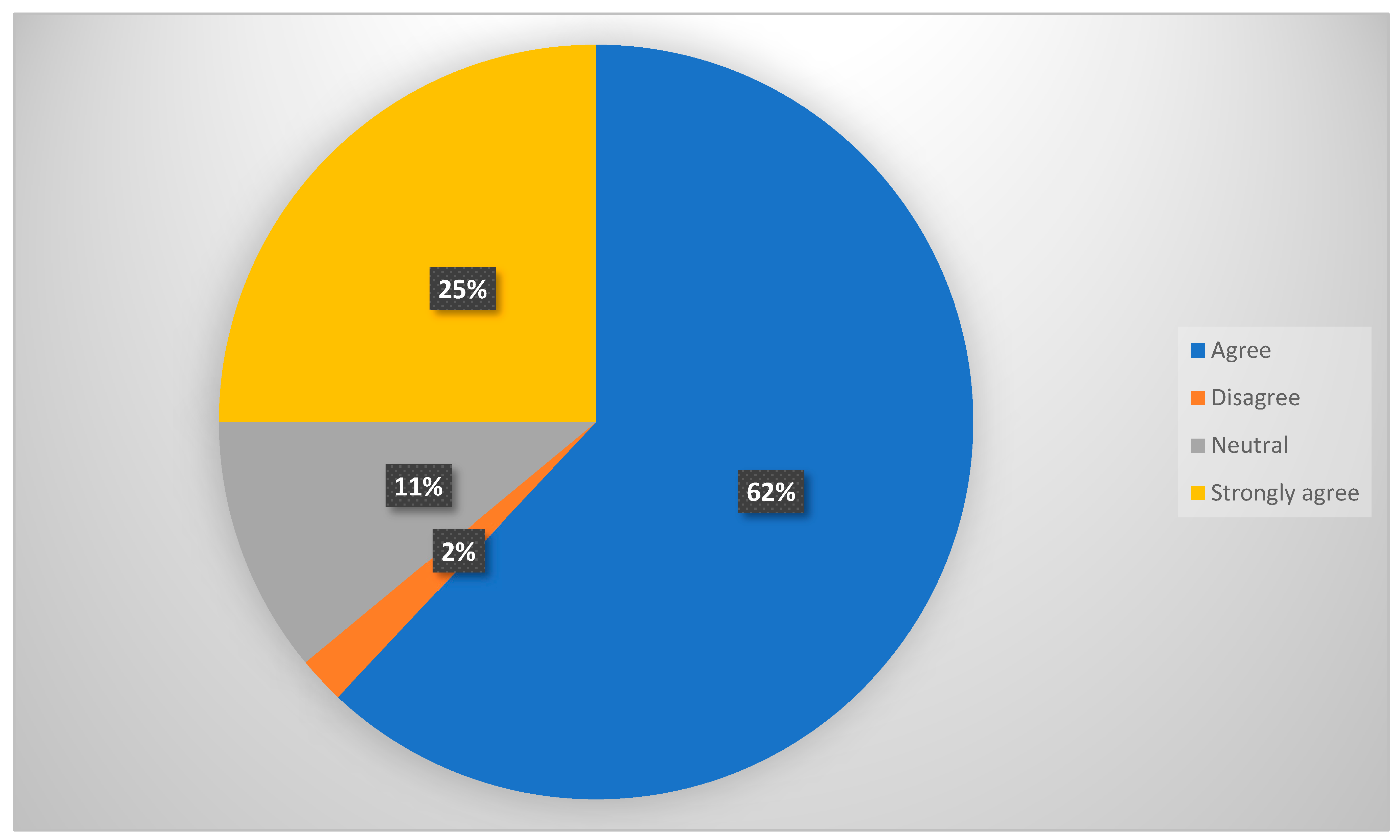
The research further finds that widespread adoption of BDA throughout Nigeria faces multiple substantial barriers. One of the primary barriers identified is the high cost of implementation. The limited availability of professionals with the necessary skills to implement BDA is another key obstacle for organisations seeking to introduce this system. Data privacy concerns, together with security issues, also appeared as major obstacles to BDA adoption among organisations. The majority of respondents in the study perceived the Nigerian regulatory environment as supportive of BDA adoption. Rather than remaining neutral, some business leaders expressed disagreement about the regulatory situation, which appears to be a continuing concern for select enterprises. The research evaluated the availability of technological infrastructure as one of its elements. Multiple survey respondents approved of the infrastructure readiness to support BDA adoption, yet other participants expressed uncertainty about its availability across sectors and regions.
The research findings align with those presented by
Oranefo et al. (
2024). They established that complexity, along with inadequate ICT infrastructure and strict regulations, worked as barriers toward acceptance.
Oyewo et al. (
2022) established that financial constraints and the shortage of skilled personnel are critical barriers to BDA adoption.
Egwuonwu et al. (
2024) highlighted the need for external aid and organisational readiness structures, while noting regulatory restrictions as one barrier.
Micheal et al. (
2018) developed a BDA implementation framework for public-sector decision systems in Nigeria, which, according to this research investigation, features data protection and system security practices as key elements.
Saghselou and Gharahkhani (
2021) found that security and privacy concerns impede the adoption of big data analytics to improve food industry firm performance. According to
Tosi et al. (
2024), these recurring industry-wide themes included cost factors, staffing requirements, and infrastructure development needs. The research papers align with this study by addressing infrastructure needs, skilled personnel costs, data security, and regulatory challenges. The study by
Alnafoosi and Adelakun (
2024) discovered that organisations with agile practices and medium-sized teams successfully handled expertise and cost-related barriers in Big Data implementations. Employee readiness proves crucial for reducing the impact of both cost and expertise barriers, according to
Khan and Siddiqui (
2023).
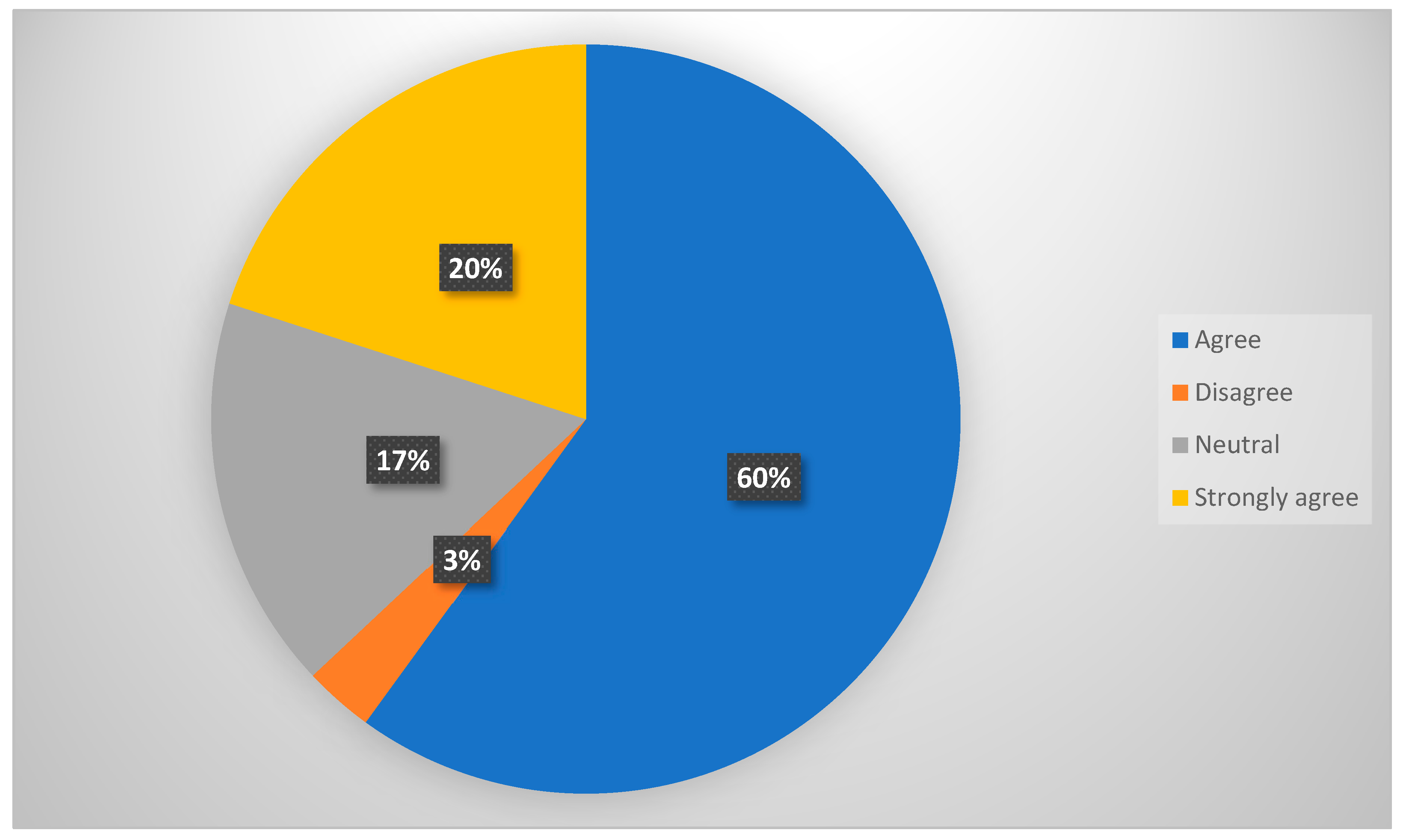
The analysis also found that businesses in the industry achieved various positive outcomes after adopting BDA, including improved competitive advantage, operational effectiveness, better decision-making, higher customer satisfaction, and enhanced profitability. Research participants indicated that BDA helps them achieve better market competition through its implementation. Most surveyed professionals agreed, but some answered neutrally, and only a very small percentage disagreed. Most organisations understand that making decisions based on data will help them establish an advantage over their competitors. BDA achieved a measurable increase in the company’s operational efficiency. Most survey participants noted that implementing data analytics solutions improved business operations, eliminating administrative problems and maximising organisational resources. These findings are further supported by the Chi-Square analysis, which shows statistically significant correlation between BDA use and operational efficiency, customer satisfaction and profitability. The Chi-Square test, Likelihood Ratio test, and Fisher-Freeman–Halton Exact test consistently supported the results by indicating greater improvement in these metrics for organisations that incorporated BDA. The findings generally indicate that BDA significantly contributes to the growth and success of the food industry in Nigeria.
Ibidun et al. (
2023) stressed that any long-term success in healthcare service delivery in Lagos State will require strategic investment across all dimensions of BDA. Likewise,
Saghselou and Gharahkhani (
2021) found that BDA adoption significantly improves operational efficiency and decision-making.
Dutta and Bose (
2015) stated that the use of predictive analytics, simulations, and optimisation techniques in BDA can result in increased productivity, reduced costs, and improved quality.
Wang and Cheng (
2020) also demonstrated that BDA can improve business functions, including dynamic pricing strategies, sales forecasting, supply chain management, and knowledge acquisition, and ultimately enable better organisational performance when integrated into business decision-making processes. Studies by
Troisi et al. (
2019) argue that companies using BDA to study markets and customers can improve their marketing plans for sustainable development. BDA helps organisations identify new market patterns and develop tailored products through data analysis, according to
Dwivedi et al. (
2021).
Hallikainen et al. (
2020) found that BDA improves businesses by streamlining customer relations, boosting market expansion, and providing better customer profiles.
Cripps et al. (
2020) explain how businesses use BDA to gain customer insights from purchasing patterns and gauge marketing feedback, especially in social media analytics, which serves them economically.
Some research, however, has shown negative effects of BDA applications.
Ding et al. (
2023) argue that although big data brings benefits, it creates distinctive quality-control problems. According to their findings, BDA helps businesses better understand consumer desires, but when producers rely too heavily on data for decision-making, they may ignore quality standards, creating safety hazards in the food market. According to
Tao et al. (
2021), there are serious risks to protecting data that can happen when crowd-sourcing services handle sensitive food industry information. The study showed that BDA improves process performance, but companies need to recognise the risks of security breaches when using it.
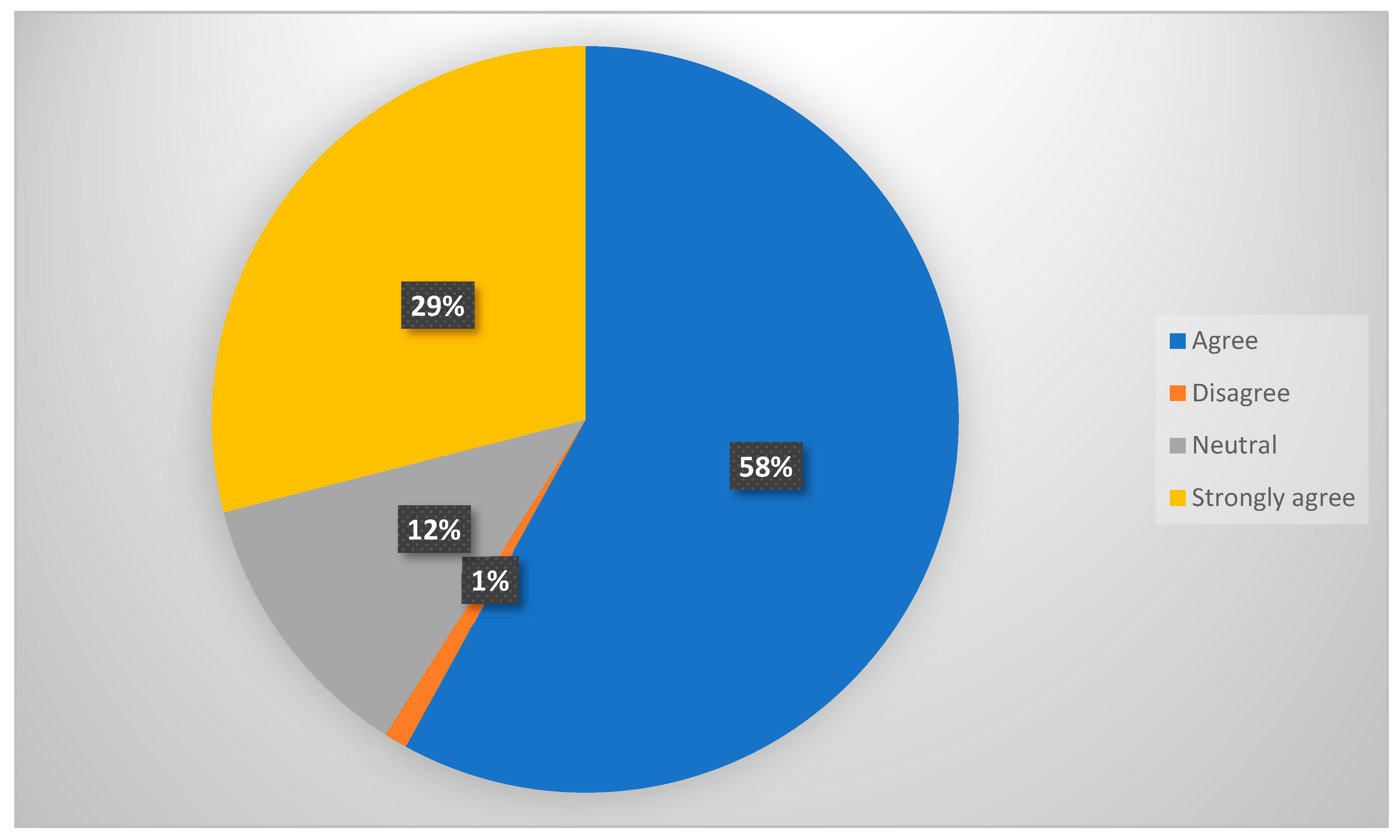
Most industry professionals recognise that a standardised model is needed for businesses embarking on BDA implementation, as a structured framework is vital for a smooth, effective integration of BDA into business operations. Industry-wide collaboration is also a major factor identified in the findings as contributing to the success of BDA adoption. The respondents felt that the industry needs to work together among stakeholders to solve common challenges, share best practices, and develop a stronger, data-informed environment. The survey examined how ready Nigerian food industry companies are for adopting an industry-specific BDA model. Most organisations recognise the value of establishing a framework tailored to the food industry’s specific circumstances. The majority of participants strongly backed this organisational readiness, while some holders showed mixed opinions or dissent. Respondents’ information indicates a positive disposition toward BDA adoption, but some organisations may require additional guidance and resources to carry out this transition.
The study’s findings are similar to those reported by
Xu and Pero (
2023) regarding the resource orchestration perspective on organisations’ digital analytics adoption. The study demonstrates through its findings that BDA adoption in supply chain planning requires structured resource orchestration. The successful implementation requires both structured frameworks and proper governance mechanisms. The findings of this study, however, contrast with those of
Castellanos et al. (
2019) regarding the deployment of a big data analytics solution. This study discusses the deployment gap, which leads to few successful BDA deployments, as organisations face immature adoption methods and architectural competition. Furthermore,
Miake-Lye et al. (
2020) found that readiness assessments often focus on contextual factors rather than structured frameworks. The differences in findings between this study and the existing literature may stem from variations in research design, sample size, and data collection methods, resulting in contrasting outcomes. Also, studies conducted in different industries or regions may yield varying results due to unique challenges, opportunities, and levels of technological maturity.
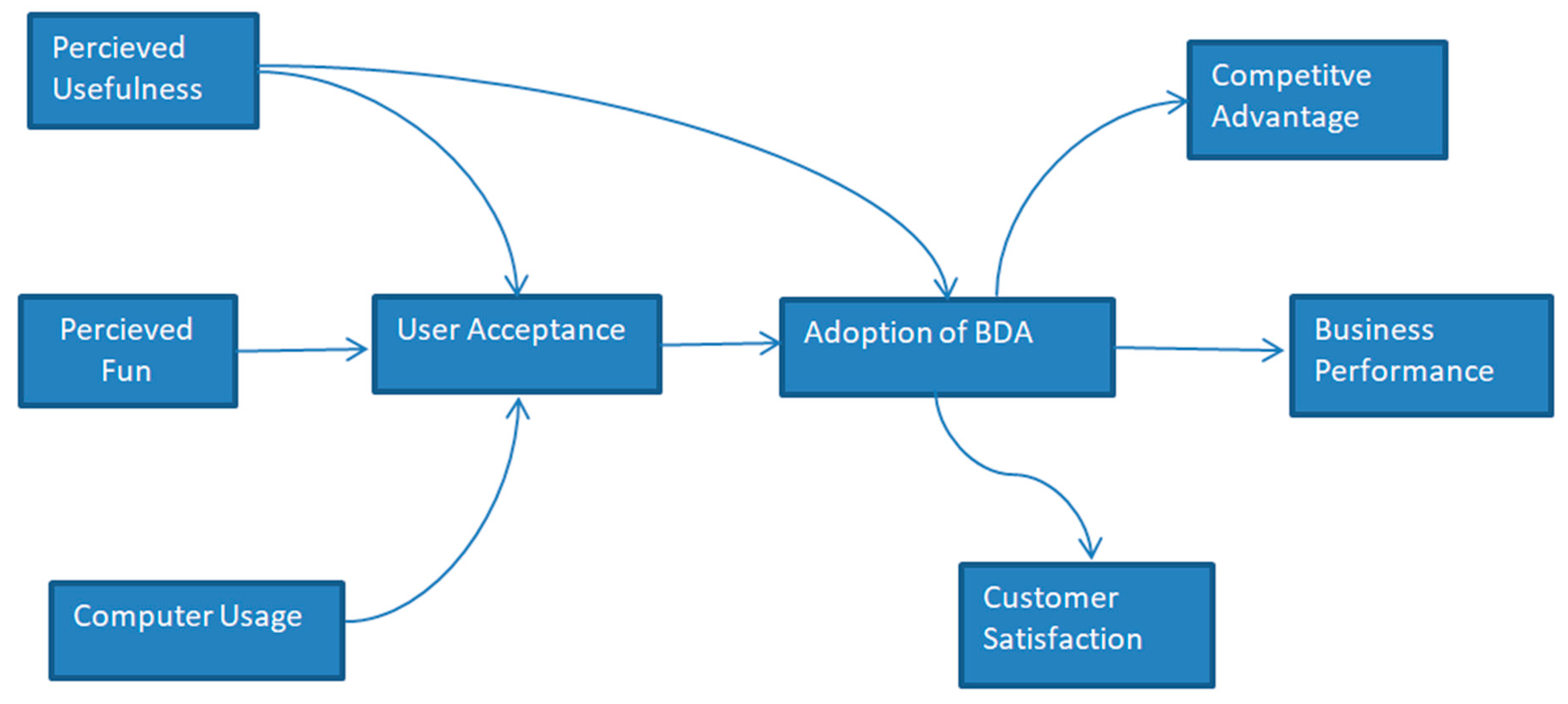
Based on the findings, this study proposes a structured BDA adoption model specific to the Nigerian food industry (see
Figure 5 below).
6. Conclusions
This study investigated the adoption and impact of big data analytics (BDA) in the food industry of South-Western Nigeria. Its objectives were to explore the extent of BDA adoption, identify the factors influencing its implementation, assess its operational impact, propose an adoption framework, and generate recommendations for effective integration. By employing a structured survey design and statistical techniques such as the Chi-Square test, Likelihood Ratio Test, Fisher-Freeman-Halton Exact Test, and Linear-by-Linear Association test, the research provided comprehensive insights into the dynamics of BDA adoption in a developing economy context. The findings demonstrate that food businesses in the region increasingly recognise the strategic value of BDA, not only as a decision-making tool but also as a means to enhance supply chain systems, improve customer insights, and strengthen market competitiveness.
The study established that while awareness and adoption of BDA are growing, firms remain at varying stages of maturity in their ability to deploy advanced analytics. A major contribution of the study is its identification of barriers to adoption. High implementation costs, a scarcity of skilled professionals, data privacy concerns, and regulatory ambiguities emerged as critical obstacles. These findings align with broader literature, which emphasises cost, talent shortages, and compliance challenges as persistent global barriers to adoption. Within the Nigerian food sector, these constraints have slowed full-scale integration of BDA, limiting its transformative potential across the business lifecycle. Despite these challenges, the research revealed that organisations that successfully implement BDA enjoy substantial benefits. Participants reported enhanced decision-making capabilities, operational efficiency, customer satisfaction, and improved market positioning. This evidence underscores BDA’s capacity to deliver a sustainable competitive edge and demonstrates its relevance to long-term industry growth. By validating the operational and strategic outcomes of BDA, the study affirms its role as a critical enabler of data-driven decision-making and organisational resilience.
This research has highlighted several factors contributing to BDA in the Nigerian food industry that are not yet fully understood in the literature. Understanding the effect of these factors, therefore, represents an underutilised opportunity for companies in Nigeria to improve product success and performance; yet the current research provides little insight in this respect (
Tao et al., 2021;
Ding et al., 2023). This study’s theoretical contribution is significant because it is among the few focused on the food industry in the Nigerian and African contexts. This study provided a theoretical framework for academics, companies, and the government to understand the factors contributing to successful BDA adoption within the Nigerian food industry in the contemporary market, and the actions they need to plan for.
Business Managers should prioritise continuous data literacy training for their current staff and design gradual implementation strategies to mitigate the observed technological resistance, particularly among more experienced professionals. Given the critical shortage of skilled personnel, investing in analytics solutions designed for “non-experts” and forming agile teams can facilitate the transition toward a data-driven culture. For policymakers, it is essential to establish clear data governance and security standards to reduce regulatory uncertainties and privacy concerns that currently hinder full adoption. Additionally, they should develop financial support programs and subsidies specifically targeted at SMEs, enabling them to overcome the high infrastructure and software costs that limit their competitiveness against larger corporations. For technology Providers, there is an opportunity to capture the local market by developing low-cost, modular, and scalable BDA tools that leverage cloud architectures to minimise maintenance expenses. These solutions should integrate predictive analytics and Natural Language Processing (NLP) capabilities that offer immediate operational benefits, such as inventory optimisation and consumer sentiment analysis. Industrial Associations should lead sectoral collaboration to create standardised adoption frameworks that reduce technological fragmentation and facilitate the sharing of best practices. By acting as mediators, these associations can foster an environment in which collective learning and standardised processes help firms navigate BDA integration challenges with greater resilience.
Furthermore, a central contribution of the research is the proposed adoption model. This framework emphasises the need for structured strategies, industry collaboration, skills development, and resource allocation to accelerate integration. The model highlights the importance of sector-wide partnerships and industry standards to reduce fragmentation, facilitate the sharing of best practices, and overcome implementation challenges. By presenting a practical, context-specific adoption framework, the study provides both academic and managerial value, offering a roadmap for organisations seeking to embed BDA more effectively into their practices.
Notwithstanding its contributions, the study is subject to several limitations. First, the reliance on a quantitative survey with predominantly closed-ended questions restricted the scope for exploring the complex experiences of BDA within organisations and among employees. While the statistical methods employed were valuable for identifying adoption patterns, they could not fully capture the contextual and cultural dimensions that influence implementation. A mixed-method design incorporating interviews, focus groups, or case studies would have provided richer, more detailed insights.
Secondly, the use of self-reported data introduces potential biases, including social desirability, recall inaccuracies, and subjective interpretations. These factors may create discrepancies between reported practices and actual organisational behaviours. Future studies should triangulate self-reported survey data with documentary evidence or direct observation to improve reliability.
Finally, the study’s geographical scope limits its generalizability. By focusing exclusively on South-Western Nigeria, the findings may not be directly transferable to other regions where economic, cultural, or regulatory conditions differ. Future research should expand the scope to other parts of Nigeria and beyond, to test the robustness of the adoption framework across diverse contexts and to capture how infrastructural and institutional variations influence adoption trajectories.
7. Limitations and Future Research
Building on the insights of this study, several avenues for future research emerge. First, there is scope to use qualitative methods more widely to explore the lived experiences of organisations and practitioners engaging with BDA. While the present study offered valuable statistical associations, interviews and case studies would provide deeper insights into the cultural and organisational dynamics that shape adoption. Such approaches would reveal how firms navigate internal resistance, align analytics with strategy, and design best practices tailored to their specific contexts.
Secondly, there is a need for longitudinal studies examining the long-term impact of BDA adoption on business performance. Future research should bridge the gap between perceived and measured operational impact by incorporating objective indicators. Studies should prioritise longitudinal designs to track specific metrics such as revenue growth, inventory turnover, waste reduction, and delivery accuracy. This triangulation would validate the subjective perceptions recorded in this study with hard operational data, providing a more robust evidence base for BDA’s ROI in the Nigerian food industry.
Furthermore, comparative studies across regions and economies would deepen understanding of how contextual differences influence adoption trajectories. Within Nigeria, disparities in infrastructure, skills availability, and cultural attitudes may lead to varied adoption outcomes between regions. Similarly, cross-country comparisons between developing and developed economies could illuminate best practices from advanced markets and assess their adaptability to Nigerian and similar contexts. Such research would be valuable for designing inclusive, context-sensitive adoption frameworks.
Fourth, future research should examine variations within the food industry itself. The present study treated the industry as a single unit, but different segments, like manufacturing, distribution, and retail, may face distinct challenges and opportunities. A segment-specific analysis would provide more granular insights into the readiness, resource capabilities, and adoption patterns across the value chain. This would enable more tailored strategies for fostering BDA adoption within sub-sectors.
Fifth, a significant statistical limitation in this study is the distribution of expected frequencies in the Chi-square tests, with 62.5–70.0% of the data having expected counts less than 5. Although this technical issue was mitigated by using the Fisher-Freeman-Halton Exact Test to validate the associations, the high proportion suggests that the 17-item scale’s categorical structure may have been too fragmented relative to the sample size of 151 participants. This fragmentation can compromise the stability of inferential estimates. Therefore, future research should consider grouping or collapsing categories (e.g., consolidating “Agree” and “Strongly Agree”) to reduce data dispersion. This adjustment would enable more robust estimates and increase statistical power when analysing the factors driving Big Data Analytics (BDA) adoption in the sector.
Finally, interdisciplinary research linking BDA adoption to broader societal and regulatory issues is warranted. Questions of ethics, data privacy, and regulatory capacity are increasingly central to the discourse on analytics adoption. Future studies could explore how regulatory frameworks evolve in response to technological change and how firms balance commercial objectives with societal responsibilities in data use.




 ,
,