Article

Sponsorship Dynamics in Low-Media-Coverage Sports: An Examination of Norwegian Individual Athletes and Their Sponsors

1
Institute for Sport & Sustainable Development, University of Applied Sciences Kufstein Tirol, Andreas-Hofer Str 7, 6630 Kufstein, Austria
2
Department of Sports, Culture, and Event Management, University of Applied Sciences Kufstein Tirol, Andreas-Hofer Str 7, 6630 Kufstein, Austria
*
Author to whom correspondence should be addressed.
Businesses 2026, 6(1), 7; https://doi.org/10.3390/businesses6010007
Submission received: 23 December 2025 / Revised: 29 January 2026 / Accepted: 3 February 2026 / Published: 6 February 2026

Abstract

This study investigates why companies sponsor individual athletes in sports with low media coverage and how such athletes secure sponsorship agreements. While sport sponsorship research has predominantly focused on mainstream sports and event-based contexts, limited attention has been given to individual athletes in niche sports. Using a qualitative research design, semi-structured expert interviews were conducted with Norwegian sponsors and elite athletes in long-distance running, trail running, and orienteering. The data were analyzed through qualitative content analysis, informed by the Sponsorship Motive Matrix and the Model of Athlete Brand Image. The findings indicate that sponsorship decisions are primarily driven by market-related motives, complemented by bond and society motives, with cost-effectiveness, authenticity, and value alignment playing important roles. Sponsors prioritize athlete performance, personality, and social media presence, while athletes emphasize financial support and performance optimization. Sponsorship activation is generally limited, and agreements are predominantly in-kind or hybrid. The study concludes that sponsorships in low-media-coverage sports are relational and selective, relying heavily on athlete-driven outreach and social media visibility. These findings extend existing sponsorship frameworks to an underexplored context and offer practical insights for sponsors and athletes in niche sports.

1. Introduction

Competitive running has grown in popularity in Norway in recent years, but media coverage of the sport remains low. Norwegian endurance athletes today rank among the world’s elite, with the country producing Olympic and world champions in track long-distance running, world champions in trail and mountain running, and continuing to dominate in international orienteering competitions (World Athletics, n.d.; World Orienteering Championships, 2025). But even their World Championship successes receive little national media attention. Despite this, companies continue to sponsor these athletes, raising an important question: What motivates sponsors to support athletes in sports with low media coverage?
Sponsorship is a crucial marketing tool for companies seeking to connect with target audiences, with sports receiving the highest share of sponsorship investments (Collett & Fenton, 2011; Kwon & Cornwell, 2021). The global sports sponsorship market is projected to grow from USD 97.35 billion in 2023 to USD 190 billion by 2030 (Gough, 2024). While sponsorship benefits both corporations and athletes, niche sports—such as long-distance running and orienteering—rely heavily on sponsorship for financial sustainability (Greenhalgh & Greenwell, 2013). Research suggests that athletes in these lesser-known disciplines must supplement their income due to limited prize money from successful competitions (Stern, 2023; Forsgren, 2023).
Existing studies on sponsorship largely focus on fan loyalty, consumer behavior, and brand engagement (Biscaia et al., 2013; Mason, 2005; Buser et al., 2020). While prior research categorizes sponsorship motivations into market, social, bond, and clan goals (Slåtten et al., 2017; Ratković, 2023), limited studies have examined sponsorships of individual athletes, particularly in sports with low media exposure. Furthermore, research on niche sports sponsorships primarily addresses their cost-effectiveness and targeted fan engagement, but with a North American focus (Greenhalgh & Greenwell, 2013).
A key gap in the literature is how athletes with limited media coverage secure sponsorship deals and how sponsors perceive the value of these partnerships. Research suggests that social media may play a critical role in sponsorship acquisition for underexposed athletes (Mandić & Iva Gregurec, 2022; Grau, 2022). Micro- and nano-influencers—often athletes in niche sports—exhibit higher engagement rates, making them attractive for brands seeking authentic audience connections (Fritz, 2023). As interest in this niche area of sponsorship grows, so does the importance and relevance of the gap in this area.
This study aims to explore the motivational factors driving sponsorship decisions for athletes in low-media-coverage sports. Using the Norwegian context as a base, this paper investigates both the sponsor and athlete perspectives to deepen the understanding of sponsorship dynamics in this unique context. The central research question is: What factors motivate companies to sponsor athletes in low-media-coverage sports, and how do these athletes secure sponsorship deals?
To answer this, the study employs qualitative research, including expert interviews with sponsors and athletes, analyzed using qualitative content analysis (Hsieh & Shannon, 2005; Clark et al., 2021). Findings will contribute to sponsorship literature by shedding light on the strategic considerations behind supporting athletes in underrepresented sports. Sponsorship plays a vital role in sports funding and marketing in niche sports, yet its dynamics remain underexplored in academic research. Understanding the key factors driving successful sponsorship agreements enables both sides of the sponsorship agreement to optimize investments.

2. Literature Review

In examining the current literature on sports sponsorship, we also look deeper into related areas of sports marketing, media influence, sponsorship motivations, and sponsorship in niche sports.

2.1. Sports Sponsorship

Sports sponsorship is the dominant form of sponsorship, accounting for 87% of global sponsorship investments in 2020, valued at approximately $57 billion (Gough, 2021). One of the many areas of sports sponsorship includes athlete sponsorship which involves direct support for individual athletes and often requires athletes to engage in brand promotion. While high-profile athletes secure significant deals, niche sports athletes face challenges due to limited media exposure (Deloitte, 2020).
Recent trends indicate a shift towards influencer marketing, where micro- and nano-influencers—often niche athletes—are valued for their high engagement rates and cost-effectiveness (Grau, 2022; Fritz, 2023). In Norway, sports sponsorship is a key communication channel, valued at 6.5 billion NOK in 2022, with 70% directed towards sports (Meby, 2023). However, mainstream sports such as football, handball, and skiing receive most investments, while niche sports struggle to attract sponsors (Norges Idrettsforbund, 2023).
Media coverage significantly influences sponsorship value. Football dominates Norwegian sports media, followed by handball and cross-country skiing (Fossøy et al., 2020). Niche sports like trail running and orienteering receive minimal coverage, limiting their sponsorship potential (Norges Orienteringsforbund, 2022). According to Horky (2010), in a cross-EU sample including Norway, media coverage is predominantly focused on football with other supports such as tennis and cycling barely reaching 5% of coverage in newspaper articles. Further research also confirms the predominance of football even ahead of skiing in Norway (Hovden & von der Lippe, 2017). Popular niche sports such as trail running and orienteering barely register in traditional media coverage.
Traditional views have been that media exposure itself is a key factor in determining sponsorship success (Wishart et al., 2012). However, emerging trends suggest that social media presence may compensate for traditional media limitations, particularly for niche athletes (Grau, 2022). Influencer marketing is increasingly important in sports. Elite athletes are now expected to engage on social media to enhance their brand and secure sponsorships (Geurin, 2017) and social media offers niche athletes an alternative to traditional media, helping them attract sponsorships despite limited coverage (Mandić & Iva Gregurec, 2022). For athletes, sponsorship is essential for financial sustainability, especially in niche sports with limited prize money and media exposure (Wagner et al., 2018). However, sponsors prioritize athletes who can generate brand engagement, demonstrating the importance of personal branding and networking (Dietl & Schweizer, 2015). Such personal branding can be challenging for niche sport athletes or, for instance, female athletes as they often struggle due to lower media visibility (Mogaji et al., 2022).
Niche sports have smaller audiences and fewer commercial opportunities, making sponsorship vital for financial survival (Lough & Irwin, 2001). In some cases, sponsors may find niche sports attractive due to lower costs, dedicated fan bases, and reduced sponsorship clutter (Greenhalgh & Greenwell, 2013). However, niche sports athletes need to actively market themselves to secure sponsorships, often relying heavily on social media to compensate for traditional media limitations (Mandić & Iva Gregurec, 2022).
Despite extensive research on sports sponsorship, little attention has been given to individual athlete sponsorships in niche sports. The lack of work on the topic is disproportionate to the rate of growth in sponsorship in niche sports, warranting examination to further understand of how it can best be applied. Most studies focus on large-scale events or mainstream sports, leaving gaps in understanding the motivations behind sponsorships in low-coverage sports. Additionally, while influencer marketing is growing, its impact on sponsorship acquisition for niche athletes remains relatively underexplored (Grau, 2022; Fritz, 2023).

2.2. Theoretical Frameworks

To provide a structured foundation for analyzing the research findings, this study employs a conceptual framework that integrates established sponsorship and branding theories. Jabareen (2009) describes a conceptual framework as a network of interconnected concepts that collectively form a coherent understanding of a phenomenon. These concepts reinforce one another, shaping a specific philosophical stance within the research. In this study, the framework incorporates the Sponsorship Motive Matrix (SMM) by Slåtten et al. (2017) to categorize sponsors’ motivations and the Model of Athlete Brand Image (MABI) by Arai et al. (2013) to identify the attributes that sponsors seek in athletes. These theories, along with additional insights from the literature review, provide the foundation for the study’s analysis.
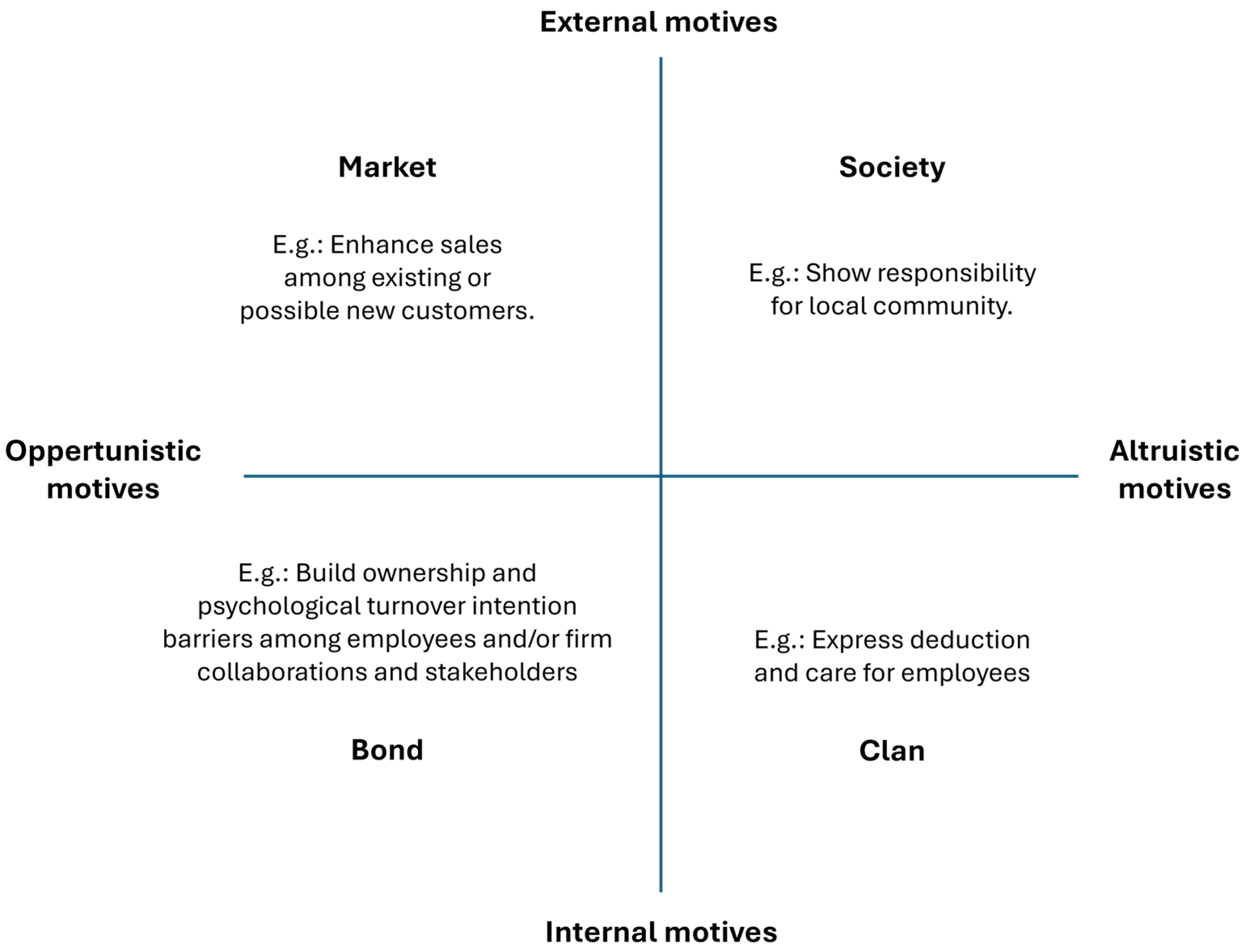
The Sponsorship Motive Matrix (SMM) (Slåtten et al., 2017), depicted in Figure 1, categorizes firms’ motivations for sponsoring sports events. It examines sponsorship motives based on two key dimensions: internal versus external motivations and opportunistic versus altruistic motivations. This two-dimensional classification offers a structured approach for analyzing why companies engage in sports sponsorships. This study deploys the SMM framework to assess whether particular motivational categories are more prominent in sponsorship agreements for athletes in low-media-coverage sports.
Sponsorship motivations can be classified as either internal or external, depending on the objectives they serve. Internal motivations primarily focus on fostering a sense of pride, motivation, and commitment among employees, stakeholders, and business partners. Companies may use sponsorship to strengthen internal corporate culture, enhance employee engagement, or reinforce organizational values. External motivations, by contrast, are primarily market-driven, aiming to improve brand image, increase visibility, and cultivate customer loyalty (Slåtten et al., 2017). External sponsorship strategies often target potential and existing customers, emphasizing brand perception and recognition.
Another key distinction in the SMM framework is between opportunistic and altruistic motivations. Opportunistic motives are commercially driven, with clear expectations of financial or strategic returns. These motives align sponsorship with measurable business objectives such as increasing market share, boosting sales, or achieving competitive differentiation. Altruistic motives, on the other hand, prioritize ethical responsibility, social goodwill, and community engagement. Companies with altruistic motivations may invest in sports sponsorship to support athletic development, contribute to community well-being, or enhance corporate social responsibility efforts (Slåtten et al., 2017).
Based on the two-dimensional matrix, the SMM framework further categorizes sponsorship motivations into four primary groups, which we list below:
  • Market Motive: Sponsorship is driven by commercial objectives, such as increasing brand awareness and expanding the customer base. Slåtten et al. (2017) found that market motives are the predominant drivers of sports sponsorships, with companies aiming to maximize brand exposure and sales growth.
  • Society Motive: Sponsorship is pursued for broader social benefits rather than direct business gains. Companies with society motives seek to promote sports participation, encourage healthy lifestyles, or support athletic talent development. This aligns sponsorship with corporate social responsibility initiatives.
  • Bond Motive: This category represents internal and opportunistic motives, where sponsorship is leveraged to strengthen relationships with specific stakeholders. For example, a company may sponsor an athlete to create exclusive networking opportunities with business partners or clients, using the sponsorship as a tool for corporate hospitality.
  • Clan Motive: Sponsorship is motivated by internal and altruistic considerations, emphasizing employee engagement and organizational identity. While less common, clan motives reflect a company’s commitment to fostering a sense of unity and pride among its workforce through sports sponsorship.
Despite its relatively recent introduction, the SMM framework has been validated in subsequent studies. Ratković (2023) confirmed that sponsorship motives in sports could be effectively categorized into market, society, bond, and clan motives. This reinforces the framework’s applicability, not only to sports events but also to individual athlete sponsorships, making it a relevant analytical tool for this study.

2.3. Model of Athlete Brand Image

The Model of Athlete Brand Image (MABI), introduced by Arai et al. (2013) identifies three key dimensions that contribute to an athlete’s brand equity: athletic performance, attractive appearance, and marketable lifestyle. MABI serves as a tool for understanding how sponsors evaluate athletes in low-media-coverage sports and determining the attributes that enhance an athlete’s sponsorship potential.
Athletic performance is the primary factor influencing an athlete’s brand value. This dimension encompasses an athlete’s competition results, skills, and expertise. Arai et al. (2013) further break this down into sub-dimensions, including competition style, sportsmanship, and athletic rivalry. Research by Braunstein and Zhang (2005) indicates that athletic expertise plays a crucial role in shaping an athlete’s market appeal, making it a key determinant in sponsorship decisions.
An athlete’s physical appeal and symbolic recognition contribute significantly to their marketability. The sub-dimensions of attractive appearance include physical attractiveness, unique symbols (such as a signature look or recognizable traits), and body fitness. These attributes shape consumer perceptions and influence an athlete’s branding potential (Arai et al., 2013). While physical attractiveness may play a role, it is distinct from body fitness, which reflects an athlete’s discipline and dedication to their sport.
Beyond performance and appearance, an athlete’s lifestyle and public persona can enhance their branding potential. The sub-dimensions of marketable lifestyle include personal life stories, role model status, and relationship effort. Athletes who demonstrate authenticity, resilience, and positive personal narratives tend to attract greater sponsorship interest. Additionally, relationship efforts, such as engaging with fans on social media, have become an increasingly important factor in athlete branding, allowing sponsors to leverage direct audience interactions (Arai et al., 2013).

2.4. Integrating the Frameworks

By integrating the SMM and MABI frameworks, this study examines sponsorship motivations and athlete attributes in a cohesive manner. The SMM framework provides insights into why companies choose to sponsor athletes in low-media-coverage sports, while the MABI framework helps identify the qualities that make athletes attractive to these sponsors. This combined approach enables a comprehensive analysis of sponsorship dynamics, addressing both sponsor objectives and athlete branding strategies.
The integration of these frameworks allows the study to explore whether certain motivational categories align more closely with specific athlete attributes. For instance, companies driven by market motives may prioritize athletes with strong brand equity, while organizations with society motives may be more inclined to support athletes based on their role model status and community contributions. By applying these theories to real-world sponsorship cases, this research aims to enhance the understanding of sponsorship decisions in niche sports and provide practical insights for both sponsors and athletes.

3. Methods

3.1. Research Design

A qualitative research approach was selected to explore the dynamics of sponsorship in niche sports. The goal set in applying qualitative research was to prioritize depth and context by centering and analyzing the experiences of those involved in the area of study (Clark et al., 2021). Given the study’s focus on understanding sponsorship motivations, a flexible, in-depth qualitative design was deemed most appropriate. This research integrates both deductive and inductive reasoning. Deductive reasoning allows the study to build upon established sponsorship theories, while inductive reasoning helps identify patterns in sponsorship behaviors among underexposed athletes and sponsors interviewed in the process.

3.2. Sampling and Data Collection

Interviews are one of the most widely used data collection methods in qualitative research (Skinner et al., 2014). Given the specialized nature of this study, expert interviews were conducted with both sponsors and athletes engaged in sponsorship agreements within low-media-coverage sports. A semi-structured interview format was chosen to allow flexibility while maintaining consistency in key topics. Two distinct interview guides were developed—one for sponsors and one for athletes. The interview guides consisted of open-ended questions structured around a consistent sequence of topics to ensure comparability across interviews. All interviews began with introductory questions about the participant’s background and organizational role, followed by questions on general motivations for sponsorship. Subsequent sections addressed the importance of media exposure and social media visibility, the rationale for sponsoring athletes in low-media-coverage sports, and expectations regarding sponsorship activation and return value. Participants were then asked about their criteria for selecting athletes, the types and structure of sponsorship agreements they offer, and finally their perspectives on the specific athlete examined in the study. Each interview concluded with an open invitation for additional reflections.
Interviews were conducted via Microsoft Teams, lasting between 25 and 40 min. With the consent of all participants, the interviews were recorded and later transcribed for analysis. To ensure clarity and participant comfort, interviews were conducted in the participants native language, with the transcripts translated into English for subsequent analysis. While online interviews offer advantages such as flexibility and cost-effectiveness, they also present challenges, including potential connectivity issues (Clark et al., 2021). However, no technical difficulties occurred during the data collection process.
The study employed purposive sampling, a non-probability technique where participants are selected based on predefined criteria relevant to the research question (Clark et al., 2021). A combination of convenience sampling and purposive sampling was applied due to the limited pool of available experts in the niche sports sponsorship landscape.
In selecting interview partners from the sponsor side, the following selection criteria were applied. First, the sponsor had to represent a company that sponsors individual athletes in low-media-coverage sports. Second, the sponsor needed to have direct experience in sponsorship management of the sponsorship arrangements.
In selecting interview partners from the athletes’ side, the athlete needed to meet the classification criteria as an elite or developing elite athlete under the definition established by the Norwegian Olympic Committee (Olympiatoppen, 2020). Second, selected athletes had to compete in the disciplines of long-distance running, trail running, and/or orienteering; all disciplines classified as low-media-coverage sports in Norway. Finally, the athlete had to have at least one current or previous sponsorship deal.
Based on these criteria, six participants were selected for interview. This sample is appropriate because the study focuses specifically on sponsorship practices in Norway, where the number of relevant company representatives and sponsored athletes in these sports is limited. The goal was to gather detailed insights rather than to cover a large number of participants. The final sample therefore included three sponsorship experts working in the Norwegian market and three Norwegian athletes. The interviewed sponsors, who were all male, represented three sport-related companies that typically maintain multiple sponsorship agreements, including with not only low-media-coverage athletes but may also include teams, events, or athletes in more visible sports. The athletes interviewed were three Norwegian elite competitors active in low-media-coverage sports and primarily dependent on sponsorships to support their training and competition. These include two men (trail running and orienteering) and one woman (long-distance running). The interviewees are summarized in Table 1.
A pilot interview was conducted to refine the interview guides and ensure clarity and enhance reliability (Saunders et al., 2023). All interview participants were provided with a verbal and written explanation of the study’s purpose and provided both verbally and written consented to the recording of the interviews. Participants were also assured anonymity and confidentiality in reporting findings.

3.3. Data Analysis

A conventional qualitative content analysis of the data, as described, as described by Hsieh and Shannon (Hsieh & Shannon, 2005), revealed several key themes that provide insight into the motivations and dynamics of sponsorship in low-media-coverage sports. Transcripts were coded and organized both deductively, based on the frameworks provided, and inductively. Codes generated captured motives, media coverage and usage, athlete attributes, marketing activities as well as sponsorship deal characteristics. These codes were then explored for linkages and commonalities, leading to three broader categories, namely motivational factors, athlete attributes, and sponsorship deal characteristics. Codes and categories were repeatedly reviewed to maintain consistency (Gibbs, 2018) and data were triangulated by comparing responses from sponsors and athletes. Validity was ensured by identifying categories that appeared across multiple participants, rather than relying on isolated responses. Together, these categories offer a comprehensive understanding of how sponsorships function in sports with minimal media attention, shedding light on the interplay between sponsor objectives, athlete appeal, and strategic activation efforts.

4. Findings

This section presents the key findings from the analysis of the expert interviews, addressing the core research questions. Four central finding categories were developed. Motivational factors were identified as one of the primary categories, encompassing market, societal, and economic motivations. These factors influence why sponsors choose to invest in athletes and how sponsorship decisions align with broader corporate strategies.
Attributes of sponsored athletes were another crucial category. Sponsors tend to prioritize certain characteristics in athletes, including their performance levels, physical appeal, and marketable lifestyle. These attributes contribute to an athlete’s ability to attract sponsorships and maintain long-term partnerships with brands. Sponsorship activation was also a recurring category, referring to the various marketing strategies that sponsors employ to maximize the benefits of their partnerships. This includes leveraging athletes in promotional campaigns, integrating them into brand narratives, and utilizing social media engagement to reach target audiences. Finally, sponsorship deal characteristics were examined, focusing on how sponsorship agreements are structured and secured. This theme explored the nature of sponsorship packages, the expectations set by both parties, and the negotiations involved in finalizing these deals. Below, each category is reported in more detail and is supported by participant quotes as well as extant literature.

4.1. Sponsorship Motivation

The first category examines the motivational factors that influence sponsorship agreements. While sponsors are primarily influenced by external motivations, athletes are mainly driven by internal motives. Though these differences are expected, this analysis also focuses on identifying the most influential factors for each party.
All sponsors emphasized visibility as a key factor in their sponsorship decisions. This aligns with research by Collett and Fenton (2011) and Greenhalgh and Greenwell (2013), which identify cost-effectiveness and a targeted fan base as benefits of sponsoring niche sports. Sponsoring lower-profile athletes is an affordable strategy that allows sponsors to maintain a diverse portfolio, extending their reach across multiple sports and corresponding to market-related motives:
“Yes, it’s about reaching the Norwegian market in a somewhat neutral manner. We have a good deal of strategic process work, and we do that a bit with the backdrop of showcasing ourselves as a brand.”
(ES 1, 2024)
“Our goal is to be visible and become visible to the general public. (…) to make ourselves known both to athletes, recreational sports enthusiasts, the average person, and whoever else there might be.”
(ES 2, 2024)
To maximize reach, sponsors adopt a broad sponsorship strategy to achieve visibility which involves entering into sponsorship agreements that can include events, team sports, individual athletes, and social media influencers (ES 2, 2024). Financial considerations also influence sponsorship decisions, with less prominent athletes being more affordable. For instance, one expert confirmed that athletes with less media visibility were available at a lower cost, which was a desirable attribute.
Beyond market motives, the sponsors also exhibit a complementary level of society or bond motives. For instance, sponsors noted that a key motivation was their desire to contribute to an athlete’s success and “give back” to the sport. Sponsoring individual athletes may seem like a grassroots-level initiative, but when viewed collectively, it enhances brand goodwill within various sports communities. Supporting an athlete allows sponsors to engage directly with that niche audience and form a relationship with that sport’s community. One sponsor emphasized knowledge exchange as a critical factor in their decision to form sponsorships, aligning with research that highlights the value of athlete expertise for product development: “When we can’t gain this experience in all sports ourselves, we must leverage others” (ES 3, 2024).
Overall, sponsors prioritize market motives, while some also cite bond and society motives as important secondary factors. Cost-effectiveness was highlighted by all sponsors, suggesting it should be considered an independent motivational factor.
Athletes, meanwhile, primarily seek sponsorships for financial support and performance optimization, consistent with findings from Dietl and Schweizer (2015). Personal sponsorships help athletes cover expenses and improve training conditions (Wagner et al., 2018). One athlete specifically noted that securing a sponsor allows them to optimize their training regimen, reinforcing the link between economic support and performance enhancement: “It is incredibly expensive to engage in this stuff, so you definitely need some financial support” (EA 1, 2024).

4.2. Athlete Attributes

The next identified category explores the attributes that sponsors seek in athletes from low-media-coverage sports and the attributes and qualities athletes themselves believe make them attractive to sponsors.
Athletic performance is the first attribute of the model of brand image considered. All athletes believe strong results attract sponsors. Sponsors confirm that performance is a prerequisite, but they also value marketability and social engagement. Sponsors assess several attributes related to an athlete’s sports performance and personal characteristics before entering into a sponsorship agreement. Personal qualities are among the first considerations. ES 2 stated that they examine potential athlete’s social media profiles when considering sponsorships (ES 2, 2024). ES 3 indicated that the real-life persona of a potential sponsorship athlete is a top priority in consideration (ES 3, 2024). Characteristics such as likeability, shared values, and authenticity are perceived as crucial by both sponsors and athletes alike:
“We certainly do not want to associate ourselves with people who… may not be those we wish to align with.”
(ES 2, 2024)
“He does extreme things in the environment that are completely wild. (…) We want the athletes to present our product in a very good, neutral way.”
(ES 1, 2024)
“I believe that first and foremost, they are looking for someone who is genuine… athletes who are maybe entertaining to listen to in the media.”
(EA 2, 2024)
These performance and personality characteristics significantly interact with the athletes’ own media profiles. Sponsors still strongly value both traditional and social media exposure in determining the presence and size of a sponsorship. This aligns with Wishart et al. (2012), which emphasizes media visibility as a key factor in sponsorship value. To some extent, this lack of media visibility can be compensated if there is a certain alignment between the athletes and sponsor target groups:
“Even if Name might not reach the masses in terms of media coverage, he likely has a group… who keep up with him and find what he’s doing very impressive and interesting.”
(ES 2, 2024)
For the most part, though, even with winning performances and personalities, sponsors may still be hard to obtain for athletes, especially beyond sport-specific gear or support:
“Most are only sponsored by, say, a shoe brand or an equipment supplier, and maybe a nutrition sponsor.”
(EA 1, 2024)
“I think very few, like there are some sponsors that are specifically targeted at orienteering… But for those who are more outward-facing, I don’t think orienteering is very attractive.”
(EA 3, 2024)
Given this, there is now pressure on those very athletes to develop a personal brand and social media profile to compensate for low traditional media coverage. Indeed, as one sponsor puts it, athletes should take things in “a completely new direction, for example with social media, creating something creative.” (ES 2, 2024). Athletes likewise recognize that sponsors expect a strong social media presence and increasingly feel pressured to balance authenticity with promotional content. Being an athlete is no longer seen as enough; it is now important to be a social media influencer to be of higher value to potential sponsors:
“And particularly within mountain running, I think there’s actually quite a high expectation… to create really good content.”
(EA 1, 2024)
“I believe it’s much easier for someone with many followers on Instagram to get a deal compared to someone who doesn’t have as many.”
(EA 2, 2024)
“It’s not just about who runs the fastest anymore, but maybe about who has the biggest audience.”
(EA 3, 2024)

4.3. Sponsorship Activation

The category of sponsorship activation examines how sponsors activate their partnerships with underexposed professional athletes to secure a return on investment and how athletes perceive and respond to sponsor expectations.
Sponsorship activation involves leveraging sponsorship agreements to maximize brand exposure (O’Reilly & Horning, 2013). The sponsors largely report minimal activation with lower-profile athletes, relying instead on organic product visibility, and athletes confirm that their sponsorship deals are not highly activated, apart from social media posts. One athlete is contractually required to appear at sponsor booths during events, while another suggested corporate training sessions or lectures as potential activation opportunities.
From the side of the sponsors, Sponsor 2 explains that sponsorship activation is minimal for lower-profile athletes. Larger sponsorships involve photo shoots for marketing materials and event participation, whereas smaller sponsorships primarily rely on athletes promoting the brand on social media:
“Hmm, and we could probably also be better at pushing those we collaborate with by saying, ‘hey, we’re doing this and that at this event, come and support us for a day.’ In that way, activate it more, and in the bigger deals, we have outlined points on what the athletes are obligated to do, while in smaller deals, we haven’t done that to the same extent”
(ES 2, 2024)
Similarly, Sponsor 1 states that they do not always activate sponsorships beyond the exposure gained from athletes using their products. They involve ambassadors in sponsored events and product presentations, but this is more common in sports other than running. Sponsor 3 actively uses athletes in marketing and often includes a provision in agreements requiring them to create and supply images for promotional purposes: “Yes, and very often we ask the various athletes to create things that we want them to make.” (ES 3, 2024). Overall, activation of low media coverage athletes remains minimal and piecemeal.
The interviewed athletes likewise reported only minimal sponsorship activation activities from their side. Athlete 1 is contractually required to spend time at the sponsor’s stand during races where the sponsor is present, stating that “there’s also a minimum of one hour at their stand during races.” (EA 1, 2024). Athlete 2 notes that her sponsor does not actively engage in sponsorship activation but believes corporate training sessions or lectures could be simple ways to contribute: “Perhaps I could contribute in that case if they require that, yes, I am participating in a training session with some employees and such things.” (EA 1, 2024).

4.4. Characteristics of Sponsorship Deals

The final category examined was the characteristics of sponsorship deals, including examinations of the initiators of sponsorship deals, athletes’ selection criteria for sponsors, and the extent of sponsorship packages. This illustrates broader patterns in how sponsorships are formed and maintained in low-media-coverage sports, highlighting that sponsorship agreements are frequently athlete-driven and dependent on athlete social media presence and informal encounters.
Indeed, athletes generally initiate contact with sponsors. While companies occasionally reach out to high-profile athletes, they rarely do so for lower-profile athletes. Nonetheless, one athlete secured sponsorship after a competition where the sponsor was present, indicating that performance at events, and some serendipity, can attract sponsorship opportunities. This reflects a pattern whereby niche sport athletes must act as the primary agents in securing partnerships, with responses from sponsors often contingent on athlete performance or digital media presence. Athletes 2 and 3 have proactively pursued sponsorships in the majority of instances (EA 2, 2024). Athlete 1, however, has mostly been approached by sponsors after competitions where their outcome has been successful (EA 1, 2024).
Proactively reaching out to sponsors is not easy. Some athletes hesitate to seek sponsorship, citing self-doubt and a reluctance to “sell themselves”. This sentiment was reportedly more pronounced among female athletes, aligning with Mogaji et al. (2022), who found that female athletes often do not perceive themselves as marketable brands. Such hesitations reflect an underlying structural barrier within sponsorship processes, whereby athletes perceived lack of marketability limits their willingness to initiate contact. Athletes 2 and 3 express hesitations about contacting sponsors, citing discomfort with self-promotion:
“I think I’ve always been a bit afraid to try to secure sponsors.”
(EA 2, 2024)
“One might feel that I don’t have much to offer, and it can be almost a bit embarrassing to make contact.”
(EA 3, 2024)
When athletes do seek out sponsorships, they prioritize quality products and equipment when selecting sponsors. This mirrors sponsor expectations, as brands seek athletes who genuinely believe in their products. One athlete emphasized that sponsorships must align with their personal values, mirroring sponsor expectations for credible, value-driven ambassadors. Sponsors, in turn, receive numerous sponsorship requests and emphasize the importance of serious, well-prepared applications. They expect athletes to demonstrate a clear understanding of mutual benefits and to propose creative collaborations.
Given the nature and goals of athletes when approaching sponsors, agreements generally fall into the two categories in-kind sponsorships and hybrid sponsorships. For in-kind sponsorships, athletes receive free or discounted products instead of financial compensation. With hybrid sponsorship, a mix of in-kind support and financial incentives (e.g., performance-based bonuses) are provided by sponsors to athletes. When selecting sponsors, athletes prioritize quality equipment manufactured by sponsors for use in training and competition (EA 1, 2024). They also stressed the importance of endorsing products which they genuinely support.
All three athletes in this study currently have in-kind sponsorships. One has previously received financial sponsorship in the form of race bonuses, but monetary sponsorships remain rare. The sponsors confirm this, stating that financial sponsorships did not yield sufficient return on investment. This limited financial support reflects the restricted commercial potential of low-media-coverage sports, where sponsors struggle to justify monetary investment due to comparatively low visibility.
To secure larger deals, sponsors emphasize the need for athletes to increase visibility, engage on social media, and provide additional value, whereas athletes believe higher performance is the key. This discrepancy highlights a mismatch in expectations, suggesting that athletes could benefit from a more strategic approach to increasing their marketability. It also again highlights the increasing importance, and pressure, put on athletes’ social media activity. For instance, Sponsor 3 highlights the value an athlete can offer in return:
“If (…) hadn’t provided us with those pictures, we might have had to pay a photographer for the same. So, we think it’s much better to have a good collaboration with an athlete who is also skilled with photo material.”
(ES 3, 2024)
In fact, managing conditions and expectations within sponsorship agreements can be complex. Some sponsorship agreements include social media posting requirements, while others imply expectations. Common conditions include avoiding competitor brands and wearing sponsor gear frequently. Additionally, professionalism and maturity of athletes is a key consideration (ES 3, 2024). Despite this, Athlete 3 does not see these obligations as burdensome: “At least for now, I think that I get more out of it than they do.” (EA 3, 2024).
Nonetheless, athletes do understand that there is a need to remain active and perform at a high level to maintain these sponsorships, reflecting a perhaps unwritten expectation within these deals. Athlete 2 stated that performance results remained a key factor (EA 2, 2024), while Athlete 1 one noted the importance of continuing to “perform at a high level internationally”. This mix of formal and informal expectations illustrates the implicit nature of performance-related obligations within sponsorship agreements, even when financial compensation is minimal.

5. Discussion and Conclusions

This study explored the motivations behind corporate sponsorship of athletes in low-media-coverage sports and examined how these athletes secure sponsorships. The findings addressed motivational factors, sponsorship characteristics, sponsorship activation, athlete attributes, and the impact of limited media coverage on sponsorship deals, analyzed through frameworks such as the Sponsorship Motive Matrix (SMM) and the Model of Athlete Brand Image (MABI).
Sponsors are primarily motivated by market, society, and bond motives (Slåtten et al., 2017). Market motives focus on increasing brand awareness within niche communities at a lower cost. Society motives reflect a desire to contribute to an athlete’s success, while bond motives emphasize knowledge exchange and product development. The latter two, society and bond motives, are especially present in this study, suggesting that in low-media-coverage sports, sponsorships are likely driven more by relational and value considerations as opposed to more commercial, market-driven imperatives. Athletes secure sponsorships by actively reaching out to sponsors, building networks, performing well in competitions, and maintaining visibility.
Both sponsors and athletes identify personality, athletic performance, and social media presence as key attributes. Sponsors prioritize a likable personality, good values, and strong role models, while athletes believe consistent performance and visibility are most critical. Sponsors also value creative and engaged social media presence, whereas athletes recognize its growing importance but often prioritize competition results. These findings align with existing research showing that marketable athletes combine strong on-field performance with likable, authentic personalities and an active social media presence, which are all viewed as essential for securing sponsorships (Taniyev et al., 2022). Importantly, the results underscore the degree to which social media has become the primary channel athletes to develop their image and brand. Athlete hesitancy toward self-promotion further suggests psychological and gender-related barriers to brand development that existing athlete branding models might not fully address.
Sponsors’ views vary depending on their target audience, though in low-media-coverage sports, there is a clear emphasis on social media engagement. Likewise, athletes acknowledge that greater media coverage and strong social media following can improve sponsorship opportunities. These results are consistent with research on niche sports showing that limited traditional media coverage constrains visibility and sponsorship opportunities, forcing properties to rely on social media to build awareness, fan engagement, and sponsor interest (Kang et al., 2019). This again highlights how social media has become the preeminent vehicle for athletes to build their brand, and shows a shift in sponsorship dynamics, whereby athletes themselves are responsible for both athletic performance and content creation.
Sponsorship activation is minimal for low-profile athletes, with sponsors prioritizing higher-profile sponsorships, federations, and events. Athletes understand the importance of return on investment (ROI) and express willingness to engage in activities such as corporate training sessions and brand promotions if requested. These findings are consistent with broader trends in sport sponsorship, where companies prioritize activation resources on partnerships that offer strong visibility and clearly measurable outcomes, treating sponsorships as strategic platforms for brand-building and financial return rather than simple logo placements (Radicchi, 2014; Bai et al., 2021).
Overall, this study contributes to sponsorship research by extending the SMM framework to individual athlete sponsorships. Findings provide practical insights for both sponsors and athletes, highlighting gaps in sponsorship expectations. From the athletes’ positions, these findings suggest a need to develop more structured approach when approaching potential sponsors. By integrating insights from this study into sponsorship proposals, such as emphasizing brand alignment, audience relevance, and social media engagement, athletes can more clearly demonstrate how a partnership can support sponsors specific marketing objectives. Understanding sponsor goals and articulating how a sponsorship can contribute to those goals allows athletes to position themselves more strategically and improve their ability to secure and sustain sponsorship relationships.
One practical way sponsors can operationalize these findings is through developing a type of structured sponsorship program that adopts a micro-influencer-based sponsorship strategy tailored to niche sports. Rather than allocating sponsorship resources to a small number of high-profile athletes with broad but diffuse reach, sponsors can engage multiple underexposed athletes who function as micro-influencers within clearly defined geographic, demographic, or interest-based communities. As demonstrated by this study, athletes in low-media-coverage sports often possess high levels of authenticity, strong value alignment, and dedicated follower bases, even if their absolute audience size is limited. By sponsoring a portfolio of such athletes, companies can collectively achieve comparable market reach while benefiting from higher perceived credibility, stronger engagement rates, and closer relational ties to niche sport communities. Structured programs of this kind may include standardized agreements, clear social media activation guidelines, shared content campaigns, and performance or engagement-based incentives, allowing sponsors to scale their presence across multiple micro-audiences while maintaining cost efficiency and strategic coherence. Research on micro-influencer marketing trends supports this suggested practice (Chen et al., 2024).
Of course, this study has several limitations that should be acknowledged. The lack of specific literature on niche sports sponsorship required reliance on broader sports marketing research. While discussions with industry professionals helped bridge this gap, more targeted studies would have strengthened the analysis. The qualitative approach and small sample size limit the generalizability of the findings. A broader selection of sponsors and athletes could have provided a wider range of perspectives. However, the study serves as an important initial exploration of sponsorship dynamics in low media-coverage sports. Another limitation is the absence of female sponsor representatives in the interviews. The predominance of men in sponsorship roles at the participating companies influenced the perspectives captured. Including female insights in future research could offer a more comprehensive view of sponsorship decision-making. Additionally, self-reported data introduces the risk of bias, as participants may withhold sensitive details about sponsorship agreements. To mitigate this, all respondents were assured of anonymity and confidentiality to encourage openness. Finally, the potential for researcher bias in data interpretation was addressed by using a structured coding framework and ensuring careful translation of interview quotes. Despite these limitations, the study provides valuable insights into sponsorship motivations and strategies, offering a foundation for future research with larger samples and quantitative validation.
Future research could explore sponsorship dynamics in other niche sports beyond long-distance running, trail running, and orienteering and examine non-sport companies’ motivations for sponsoring athletes. There is also room to continue investigating how gendered differences affect sponsorship relationships within niche sports, especially as it concerns elements such as self-promotion, branding, and identity. As our data partially hints, there may be gendered differences around approaches or comfort with personal branding, but this requires significant additional exploration. Likewise, comparative studies across different types of sports or involving different types of sponsors could unravel whether similar sponsorship dynamics are present in other settings.
Future studies could also conduct quantitative examinations to generate comparable findings across larger samples, for instance by capturing the economic value of sponsorship deals, social media requirements, or performance expectations. Finally, future studies could investigate the impact of social media engagement on sponsorship outcome and analyze how athletes balance sponsorship commitments with their careers.
In conclusion, this study provides insight into the sponsorship landscape of low-media-coverage sports, showing how motivations, athlete attributes, and activation practices differ from those in higher profile or more commercialized contexts. By applying the SMM and MABI frameworks, the research extends existing theory into an underexplored setting and highlights the central role of bond and society motives along with perceived authenticity, and social media visibility in shaping sponsorship relationships. While limited by a small qualitative sample, the study offers a foundation for further research on sponsorship dynamics in niche sports and highlights the value of understanding how athletes in niche sports navigate sponsorship dynamics.

Author Contributions

Conceptualization, M.R. and A.K.; methodology, M.R. and A.K.; validation, M.R. and A.K.; formal analysis, A.K. and L.M.; investigation, A.K.; data curation, A.K.; writing—original draft preparation, M.R., A.K. and L.M. writing—review and editing, M.R. and L.M.; visualization, A.K., M.R. and L.M.; supervision, M.R.; project administration, A.K. All authors have read and agreed to the published version of the manuscript.

Funding

This research received no external funding.

Institutional Review Board Statement

Our study constitutes minimal-risk qualitative research with adult, non-vulnerable participants, consistent with the principles applied by the relevant regional ethics commission. The research involved voluntary, informed interviews on professional topics, without intervention or collection of sensitive data. In line with Austrian legal provisions, in particular the Universitätsgesetz 2002 (UG 2002) and the Austrian Data Protection Act (DSG) in conjunction with the GDPR, ethics approval is primarily required for medical, clinical, or high-risk research, which was not the case here.

Informed Consent Statement

Informed consent was obtained from all subjects involved in the study.

Data Availability Statement

The data presented in this study are available on request from the corresponding author due to privacy concerns.

Conflicts of Interest

The authors declare no conflicts of interest.

References

  1. Arai, A., Ko, Y. J., & Kaplanidou, K. (2013). Athlete brand image: Scale development and model test. European Sport Management Quarterly, 13(4), 383–403. [Google Scholar] [CrossRef]
  2. Bai, Y., Yim, B., Breedlove, J., & Zhang, J. J. (2021). Moving away from category exclusivity deals to sponsorship activation platforms: The case of the ryder cup. Sustainability, 13(3), 1151. [Google Scholar] [CrossRef]
  3. Biscaia, R., Correia, A., Ross, S., Rosado, A. F., & Maroco, J. (2013). Sport sponsorship: The relationship between team loyalty, sponsorship awareness, attitude toward the sponsor, and purchase intentions. Journal of Sport Management, 27(3), 288–302. [Google Scholar] [CrossRef]
  4. Braunstein, J. R., & Zhang, J. J. (2005). Dimensions of athletic star power associated with Generation Y sports consumption. International Journal of Sports Marketing and Sponsorship, 6(4), 37–62. [Google Scholar] [CrossRef]
  5. Buser, M., Woratschek, H., & Schönberner, J. (2020). ‘Going the extra mile’ in resource integration: Evolving a concept of sport sponsorship as an engagement platform. European Sport Management Quarterly, 22(4), 548–568. [Google Scholar] [CrossRef]
  6. Chen, J., Zhang, Y., Cai, H., Liu, L., Liao, M., & Fang, J. (2024). A comprehensive overview of micro-influencer marketing: Decoding the current landscape, impacts, and trends. Behavioral Sciences, 14(3), 234. [Google Scholar] [CrossRef] [PubMed]
  7. Clark, T., Foster, L., Sloan, L., & Bryman, A. (2021). Bryman’s social research methods (6th ed.). Oxford University Press. [Google Scholar]
  8. Collett, P., & Fenton, W. (2011). The sponsorship handbook—Essential tools, tips, and techniques for sponsorship seekers (1st ed.). John Wiley & Sons. [Google Scholar]
  9. Deloitte. (2020). Sponsoring sports in today’s digital age. Deloitte Luxembourg. Available online: https://www.scribd.com/document/695089675/lu-sponsoring-sports-today-digital-age (accessed on 22 December 2025).
  10. Dietl, H. M., & Schweizer, N. (2015). Developing a framework to identify and systematise sources of inefficiencies in sports sponsorship from a sponsee perspective. International Journal of Sport Management and Marketing, 15, 36–56. [Google Scholar] [CrossRef]
  11. Forsgren, I. (2023, July 10). Orientering: Gustav Bergman är heltidsproffs i orientering—Tjänar 10 000 kronor i månaden. SVT Sport. Available online: https://www.svt.se/sport/orientering/svart-att-leva-pa-orienteringen-i-sverige-gustav-bergman-ar-en-av-fa-heltidsproffs (accessed on 22 December 2025).
  12. Fossøy, J., Moe, V. F., & Fretland, F. (2020). Idrett og media i Noreg—Frå analoge til digitale medieplattformer. In Digital samhandling (pp. 103–122). Universitetsforlaget. [Google Scholar] [CrossRef]
  13. Fritz, L. (2023, May–June). How brands and influencers can make the most of the relationship. Harvard Business Review. Available online: https://hbr.org/2023/05/how-brands-and-influencers-can-make-the-most-of-the-relationship (accessed on 22 December 2025).
  14. Geurin, A. N. (2017). Elite female athletes’ perceptions of new media use relating to their careers: A qualitative analysis. Journal of Sport Management, 31(4), 345–359. [Google Scholar] [CrossRef]
  15. Gibbs, G. R. (2018). Analyzing qualitative data (2nd ed.). SAGE Publications Ltd. [Google Scholar]
  16. Gough, C. (2021). Sports sponsorship: Statistics and facts. Statista. Available online: https://www.statista.com/topics/1382/sports-sponsorship/ (accessed on 22 December 2025).
  17. Gough, C. (2024, August 19). Revenue sports sponsorship 2030. Statista. Available online: https://www.statista.com/statistics/269784/revenue-from-sportssponsorship-sponsorship-worldwide-by-region/ (accessed on 22 December 2025).
  18. Grau, S. (2022). Celebrity endorsement and influencer marketing. In Celebrity 2.0: The role of social media influencer marketing in building brands. Business Expert Press. [Google Scholar]
  19. Greenhalgh, G. P., & Greenwell, T. C. (2013). Professional niche sports sponsorship: An investigation of sponsorship selection criteria. International Journal of Sports marketing and Sponsorship, 14(2), 2–19. [Google Scholar] [CrossRef]
  20. Horky, T. (2010). Contents and patterns of construction of sports coverage in the press: Results from a cross-national comparative study. European Journal for Sport and Society, 7(3–4), 265–282. [Google Scholar] [CrossRef]
  21. Hovden, J., & von der Lippe, G. (2017). The gendering of media sport in the Nordic countries. Sport in Society, 22(4), 625–638. [Google Scholar] [CrossRef]
  22. Hsieh, H.-F., & Shannon, S. E. (2005). Three approaches to qualitative content analysis. Qualitative Health Research, 15(9), 1277–1288. [Google Scholar] [CrossRef] [PubMed]
  23. Jabareen, Y. (2009). Building a conceptual framework: Philosophy, definitions, and procedure. International Journal of Qualitative Methods, 8(4), 49–62. [Google Scholar] [CrossRef]
  24. Kang, S. J., Rice, J. A., Hambrick, M. E., & Choi, C. (2019). CrossFit across three platforms: Using social media to navigate niche sport challenges. Physical Culture and Sport. Studies and Research, 81(1), 36–46. [Google Scholar] [CrossRef]
  25. Kwon, Y., & Cornwell, T. B. (2021). Sport sponsorship announcement and stock returns: A meta-analytic review. International Journal of Sports Marketing and Sponsorship, 22(3), 608–630. [Google Scholar] [CrossRef]
  26. Lough, N. L., & Irwin, R. (2001). A comparative analysis of sponsorship objectives for women’s sport and traditional sport sponsorship. Sport Marketing Quarterly, 10(4), 16–27. [Google Scholar] [CrossRef]
  27. Mandić, M., & Iva Gregurec, I. K. (2022, June 1–4). Do top athletes, as social media influencers, really influence the customers’ decision making? FEB Zagreb International Odyssey Conference on Economics and Business (Vol. 4), Dubrovnik, Croatia & Online. [Google Scholar]
  28. Mason, K. (2005). How corporate sport sponsorship impacts consumer behavior. The Journal of American Academy of Business, 7(1), 32–35. [Google Scholar]
  29. Meby, E. (2023). Bærekraft = sponsorkroner: Sponsormarkedet er i endring. Nordnorsk Rapport. Available online: https://www.nordnorskrapport.no/2023/01/baerekraft-sponsorkroner/ (accessed on 22 December 2025).
  30. Mogaji, E., Badejo, F. A., Charles, S., & Millisits, J. (2022). To build my career or build my brand? Exploring the prospects, challenges and opportunities for sportswomen as human brand. European Sport Management Quarterly, 14(3), 379–397. [Google Scholar] [CrossRef]
  31. Norges Idrettsforbund. (2023). Nøkkeltall rapport 2022. Available online: https://www.idrettsforbundet.no/contentassets/f9f9e8b2e3224726998c816f41cfc167/nokkeltallsrapport-2022---norges-idrettsforbund_final.pdf (accessed on 22 December 2025).
  32. Norges Orienteringsforbund. (2022). 6 løpere er tildelt stipend fra Olympiatoppen for 2022. Available online: https://worldofo.com/news/shownews.php?id=175237 (accessed on 22 December 2025).
  33. Olympiatoppen. (2020). Olympiatoppens strategiplan 2020–2023. Lede og trene best i verden. Available online: https://www.suusaliit.ee/bw_client_files/suusaliit/public/img/File/olympiatoppen-strategi-2020---2023.pdf (accessed on 22 December 2025).
  34. O’Reilly, N., & Horning, D. L. (2013). Leveraging sponsorship: The activation ratio. Sport Management Review, 16(4), 424–437. [Google Scholar] [CrossRef]
  35. Radicchi, E. (2014). Sports sponsorship evolution in the economic recession: Analytical evidence from empirical cases. Physical Culture and Sport. Studies and Research, 61(1), 51–64. [Google Scholar] [CrossRef]
  36. Ratković, M. C. (2023). Corporate goals of sponsorship in sports. Sports Media and Business, 9(1), 27–40. [Google Scholar] [CrossRef]
  37. Saunders, M. N., Lewis, P., & Thornhill, A. (2023). Research methods for business students (9th ed.). Pearson Education Limited. [Google Scholar]
  38. Skinner, J., Edwards, A., & Corbett, B. (2014). Research methods for sport management. Routledge. [Google Scholar] [CrossRef]
  39. Slåtten, T., Svensson, G., Connolley, S., Bexrud, C., & Lægreid, T. (2017). The Sponsorship Motive Matrix (SMM): A framework for categorising firms’ motives for sponsoring sports events. European Journal of Tourism Research, 15, 143–166. [Google Scholar] [CrossRef]
  40. Stern, J. (2023, June 20). What do professional trail and ultrarunners earn? Ultrarunning.com. Available online: https://ultrarunning.com/featured/what-do-professional-trail-and-ultrarunners-earn/ (accessed on 22 December 2025).
  41. Taniyev, O., Mayer, K., & Gordon, B. (2022). Monetizing athlete brand image: An investigation of athlete managers’ perspectives. Journal of Applied Sport Management, 14(2), 23–33. [Google Scholar] [CrossRef]
  42. Wagner, U., Hansen, K. R., Kristensen, M. L., & Josty, M. (2018). Improving service-center employees’ performance by means of a sport sponsorship. International Journal of Sports Marketing and Sponsorship, 20(1), 43–60. [Google Scholar] [CrossRef]
  43. Wishart, T., Lee, S. P., & Cornwell, T. B. (2012). Exploring the relationship between sponsorship characteristics and sponsorship asking price. Journal of Sport Management, 26(4), 335–349. [Google Scholar] [CrossRef]
  44. World Athletics. (n.d.). Jakob Ingebrigtsen: Athlete profile. Available online: https://worldathletics.org/athletes/norway/jakob-ingebrigtsen-14653717 (accessed on 22 December 2025).
  45. World Orienteering Championships. (2025, August 22). Norway wins gold in dramatic men’s relay at World Orienteering Championships. Available online: https://www.woc2025.fi/norway-wins-gold-in-dramatic-mens-relay-at-world-orienteering-championships/ (accessed on 22 December 2025).
Figure 1. Portrayal of the Sponsorship Motive Matrix (SMM) from “The Sponsorship Motive Matrix (SMM): A Framework for Categorizing Firms’ Motives for Sponsoring Sports Events” (Slåtten et al., 2017).
Businesses 06 00007 g001
Table 1. Overview of Interviewees.
RoleExpert IDCompany/SportInterview Date
SponsorES 1Sports product company26 February 2024
SponsorES 2Sportswear company27 February 2024
SponsorES 3Sports nutrition company5 March 2024
AthleteEA 1Trail running26 February 2024
AthleteEA 2Long-distance running28 February 2024
AthleteEA 3Orienteering28 February 2024
Disclaimer/Publisher’s Note: The statements, opinions and data contained in all publications are solely those of the individual author(s) and contributor(s) and not of MDPI and/or the editor(s). MDPI and/or the editor(s) disclaim responsibility for any injury to people or property resulting from any ideas, methods, instructions or products referred to in the content.