1. Introduction
Expansive soils pose a persistent and costly challenge to civil infrastructure, affecting pavements, foundations, embankments, and barrier systems worldwide. Their susceptibility to shrink–swell behavior under cyclic wetting and drying leads to differential deformation, cracking, and long-term serviceability issues, resulting in billions of dollars in annual damage [
1,
2].
Despite extensive study, predictive capability remains limited because the governing processes originate at the microscale, where physicochemical interactions between clay particles and pore fluid dictate fabric evolution. Most engineering models, however, rely on macroscopic indices and empirical correlations that do not explicitly capture these mechanisms.
At the particle and aggregate scales, expansive soil behavior is governed by interparticle forces, adsorbed water films, and evolving pore structures that respond dynamically to suction. These processes drive irreversible structural rearrangements during drying–wetting cycles, producing hysteresis in hydraulic and mechanical behavior [
3,
4].
While Environmental Scanning Electron Microscopy (ESEM) enables direct observation of soil fabric across a range of relative humidities, prior studies have largely relied on qualitative interpretation of micrographs, focusing on features such as aggregation, orientation, and cracking [
5,
6,
7,
8]. Although these studies provide important insight into suction-driven microstructural evolution, a robust quantitative framework linking observed fabric evolution to image-based structural descriptors remains limited.
Fractal geometry provides a framework for quantifying irregular, scale-dependent structures that cannot be described using conventional Euclidean measures [
9,
10,
11]. The fractal dimension characterizes how structural complexity changes with observation scale, while lacunarity describes the spatial distribution and clustering of pore space [
12,
13,
14,
15]. Because soils exhibit stochastic self-similarity, these metrics are well suited to capturing the hierarchical nature of soil fabric.
Fractal dimension is commonly evaluated using box-counting approaches applied to image data, where scaling relationships between measurement resolution and structural detail are used to quantify complexity [
16,
17]. Previous studies have shown that fractal dimension correlates with hydraulic behavior and soil-water retention characteristics [
18,
19,
20,
21]. However, these approaches have largely relied on bulk measurements or particle-size distributions and do not directly capture microscale structural evolution during drying–wetting cycles.
Lacunarity complements fractal dimension by quantifying variability in pore distribution and structural heterogeneity. Soils with similar fractal dimensions may exhibit markedly different pore arrangements, which are captured by lacunarity through its sensitivity to gap size and clustering [
13,
22]. While lacunarity has been used to characterize pore networks and desiccation cracking [
23,
24], its application to expansive soils under controlled suction paths remains limited.
Despite these advances, the combined use of fractal dimension and lacunarity to quantify microstructural evolution in expansive soils—particularly using ESEM imaging across multiple magnification scales—has not been systematically explored. Existing studies are often limited to single soil types, fixed conditions, or qualitative observations, restricting their ability to capture the influence of mineralogy, physicochemical properties, and hysteretic moisture behavior.
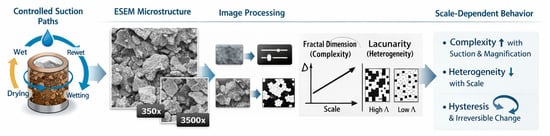
This study addresses these limitations by integrating controlled-suction ESEM imaging with fractal dimension and lacunarity analyses to quantify microstructural evolution in expansive soils subjected to drying–wetting cycles. Both natural and laboratory-prepared soils spanning a range of mineralogical compositions and physicochemical properties are evaluated across multiple magnification scales to capture hierarchical structural behavior from inter-aggregate to interparticle levels. The objectives of this study are to: (1) quantify the evolution of fractal dimension and lacunarity along primary drying and secondary wetting paths; (2) evaluate the influence of scale, mineralogy, physicochemical properties, and compaction conditions on structural complexity and heterogeneity; and (3) establish a reproducible image-analysis framework linking microscale structural descriptors to suction-driven behavior in expansive soils. By combining ESEM imaging with multi-scale fractal analysis under controlled suction conditions, this work advances beyond qualitative interpretation of soil fabric and provides quantitative metrics for evaluating hysteretic microstructural evolution. The following sections describe the materials, experimental procedures, and analytical framework used to quantify microstructural evolution using ESEM imaging and fractal-based metrics.
2. Materials and Methods
2.1. Materials
Three naturally occurring expansive soils were selected to represent a range of mineralogical compositions, physicochemical properties, and activity levels. These soils were analyzed for microstructural evolution under varying suction conditions and compared with laboratory-prepared, single-mineral clays. The physicochemical properties of the natural soils fall within the range defined by the artificial clays (
Table 1). The selected soils were intended to represent a range of expansive-soil behaviors and physicochemical characteristics rather than provide an exhaustive survey of all expansive clay mineral systems. Accordingly, the present study focuses on comparative evaluation of structural evolution across representative materials with differing activity levels, mineralogical compositions, cation exchange capacities, and specific surface areas.
The artificial clays, obtained from the Source Clay Mineral Repository, included KGa-1b (kaolinite) and SWy-2 (Na-montmorillonite). The natural soils included Carnisaw (low swelling potential), Minco (low clay fraction, high silt content), and Heiden (high swelling potential). Heiden specimens were prepared under three compaction conditions: compacted at optimum moisture content (Heiden opt), compacted wet of optimum with a 15 min equilibration period (Heiden w1), and compacted wet of optimum without equilibration (Heiden w2). These variations were used to assess the influence of initial moisture state and equilibration on microstructural development. The following section describes the experimental procedures and analytical methods used to quantify microstructural evolution using ESEM imaging and fractal analysis.
2.2. Methodology
2.2.1. Environmental Scanning Electron Microscopy (ESEM)
To characterize microscale soil structure under controlled suction conditions, specimens were imaged using Environmental Scanning Electron Microscopy (ESEM) along the primary drying and secondary wetting paths of the soil water retention curve (SWRC). ESEM enables imaging across a wide range of relative humidity and pressure conditions, allowing observation of soil fabric without requiring complete desiccation [
28].
Specimens were compacted at maximum dry density and optimum moisture content and trimmed to dimensions of approximately 1 cm × 1 cm × 5 mm, with the thin axis oriented perpendicular to the compaction direction. A V-shaped groove was carefully introduced to expose the internal structure of the specimen for imaging, following established procedures [
7,
8]. This preparation method has been shown to preserve representative internal soil fabric while minimizing disturbance.
ESEM imaging was conducted using a ThermoFisher Scientific Quattro S FE-ESEM (Hillsboro, OR, USA) with a voltage range of 0.2–30 kV. Specimens were initially equilibrated at 100% relative humidity and 2 °C for 15 min to achieve saturation. Suction was controlled within the ESEM chamber by regulating chamber relative humidity and vapor pressure under equilibrium conditions using the environmental mode and Peltier cooling stage, following procedures described by Lin and Cerato [
7]. Under these conditions, matric suction is related to chamber relative humidity through vapor equilibrium principles described by the Kelvin equation [
28,
29].
Following saturation, specimens were subjected to controlled drying at suction values of 0, 7, 35, 89, and 148 MPa by progressively decreasing chamber relative humidity, with a 15 min equilibration period at each step. Images were subsequently collected along the secondary wetting path by increasing relative humidity to the same suction states in reverse order. This approach enabled direct observation of microstructural evolution under controlled suction conditions without requiring desiccation or conductive coating of the specimens.
Micrographs were collected at magnifications of 350×, 800×, and 3500×, corresponding to inter-aggregate, intra-aggregate, and interparticle structural scales, respectively.
2.2.2. Image Selection and Representativeness
For each soil type, suction level, and magnification, a minimum of three replicate images were obtained. Images were evaluated for focus, contrast consistency, and absence of imaging artifacts such as charging or condensation.
Representative images were selected based on consistent pore structure and surface features across replicates rather than subjective visual preference. Variability between replicate images was assessed qualitatively to ensure that observed trends in fractal dimension and lacunarity reflected consistent structural behavior rather than localized anomalies. Differences among replicates were small relative to variations across suction states and magnification levels, indicating that the reported trends are robust and representative of the overall soil fabric under each condition.
2.2.3. Image Processing and Binary Conversion
ESEM micrographs were processed using FIJI/ImageJ v. 1.54f [
30] with the FracLac plugin [
31]. ImageJ is an image analysis software developed by the National Institute of Health (NIH). FIGI is an open-source release of ImageJ that allows for processing and analysis of large datasets. Processing included sharpening, noise reduction, grayscale thresholding, and binary conversion.
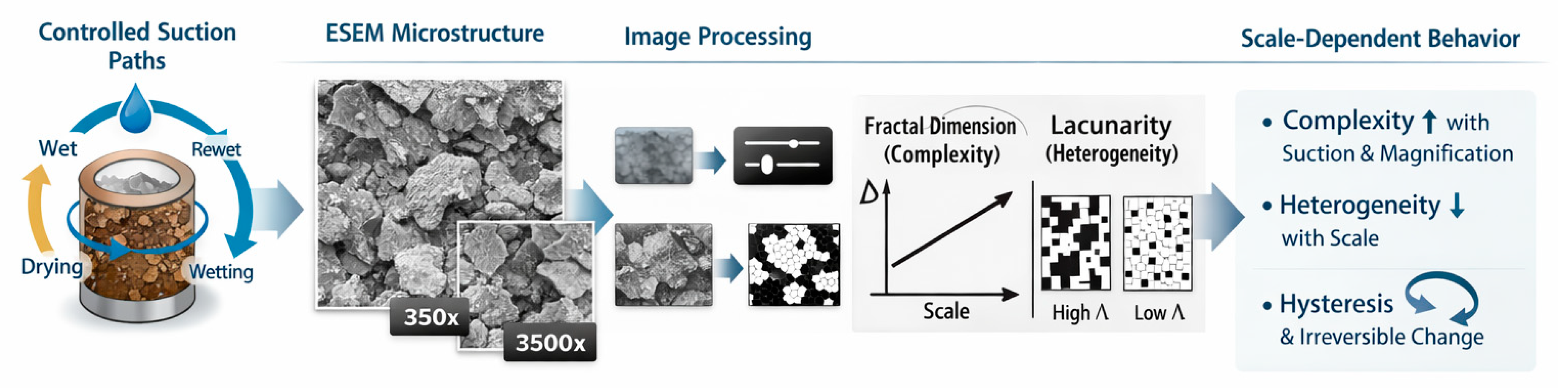
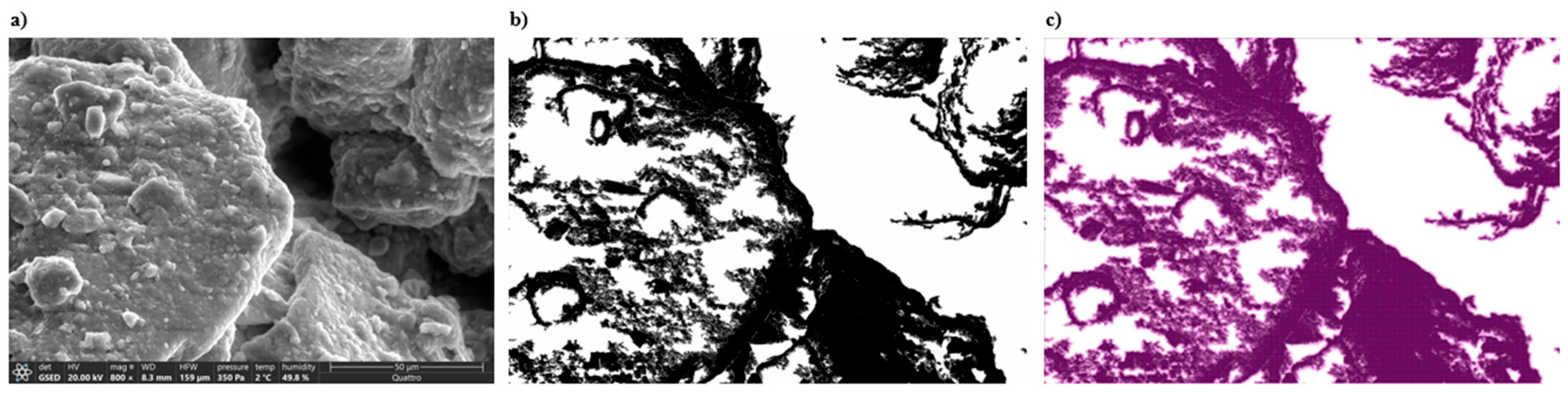
Images were converted to binary format, where black pixels represent the solid phase and white pixels represent pore space (
Figure 1). Because image contrast varied with suction and chamber conditions, a single global threshold was not appropriate. Instead, grayscale thresholds were adjusted for each image to achieve consistent phase separation between pore and solid regions.
Threshold selection was guided by maintaining continuity of structural features while minimizing artificial fragmentation or merging. Sensitivity analyses were conducted by varying threshold values within ±5% of the selected threshold. These variations resulted in changes in fractal dimension of less than 2% and did not alter trends in lacunarity, indicating that the analysis is robust to threshold selection.
Despite the demonstrated robustness of the observed trends, image-processing decisions such as threshold selection and noise filtering remain potential sources of uncertainty in quantitative image-based analyses and should be considered when comparing results across different imaging systems or processing workflows.
Although binarization simplifies grayscale information, it preserves the spatial distribution of pore and solid phases that govern fractal and lacunarity calculations. The resulting binary images retain the essential geometric characteristics of the soil fabric required for quantifying structural complexity and heterogeneity. The resulting binary images served as the basis for quantifying structural complexity and heterogeneity using fractal dimension and lacunarity, as described in the following section.
2.2.4. Fractal-Based Structural Metrics
Fractal dimension and lacunarity were used as complementary metrics to quantify soil microstructure, capturing structural complexity and spatial heterogeneity, respectively. Both metrics were computed from the same binary images to ensure consistency in the representation of pore and solid phases.
Fractal dimension and lacunarity analyses were implemented using the FracLac plugin [
31] within the FIJI/ImageJ image analysis platform [
30]. Binary images generated from the ESEM micrographs served as the input for all analyses. Fractal dimension was computed using the standard box-counting algorithm implemented in FracLac, in which progressively smaller grid sizes were overlaid on the binary image and the number of occupied boxes was recorded at each scale. Lacunarity was computed from the same binary images using the gliding-box algorithm within FracLac, which evaluates the statistical distribution of pixel density across moving windows of varying size.
To reduce sensitivity to grid placement, default FracLac box-counting settings were used, with analyses repeated over multiple grid offsets and orientations. The resulting fractal dimensions and lacunarity values represent averages across the evaluated scales and grid configurations. All image processing and analyses were conducted consistently across soils, suction states, and magnification levels.
Fractal Dimension
Fractal dimension characterizes how structural complexity varies with observation scale. In fractal systems, the relationship between measurement scale and structural detail follows a power-law relationship:
where
L represents the measured structural quantity (e.g., summation of boxes covering a surface),
G is the measurement scale (e.g., length of the side of a box), and
D is the fractal dimension (after [
12]). This relationship describes how measured structural detail increases as observation scale decreases.
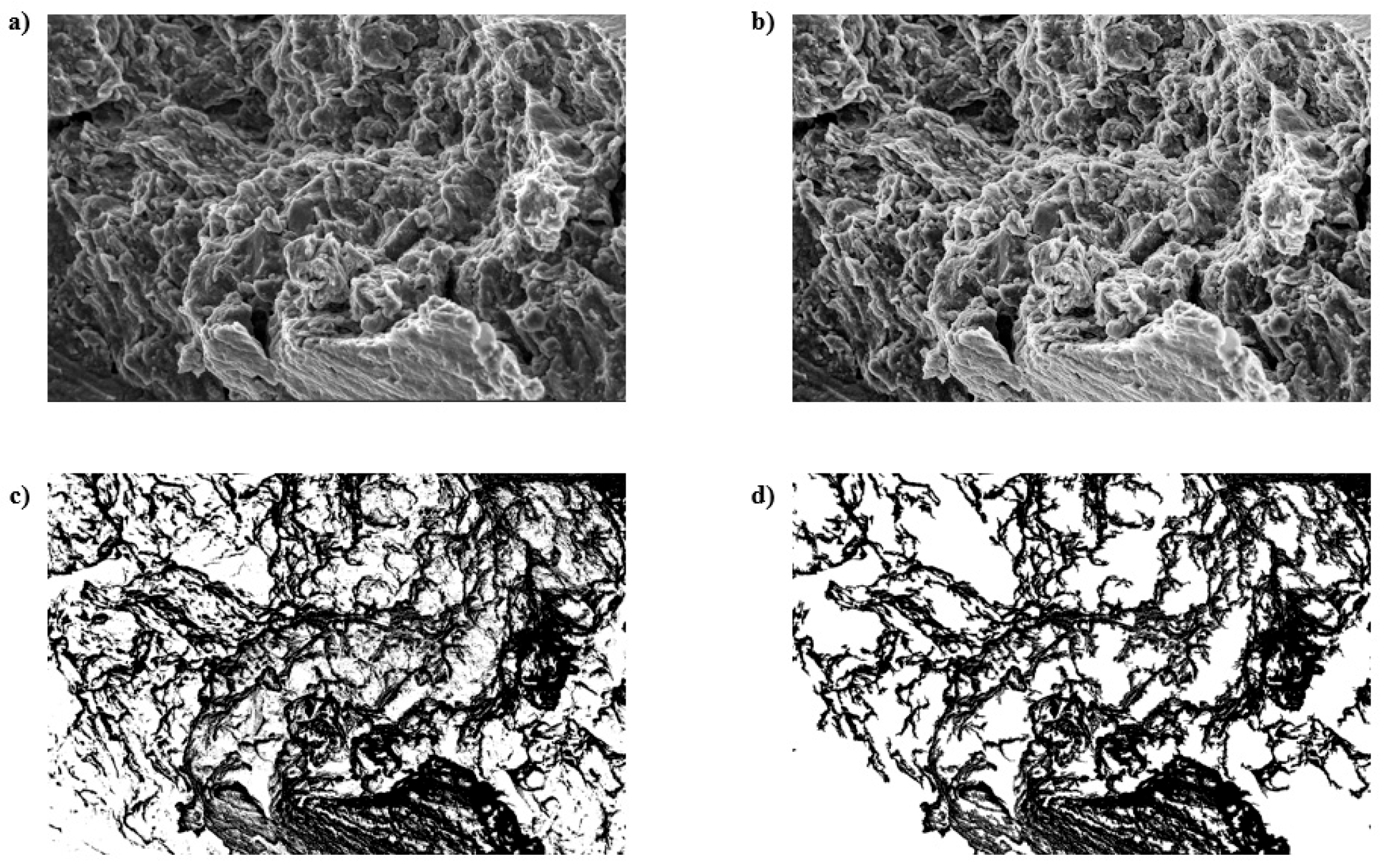
To quantify fractal dimension from image data, the box-counting method was employed. In this approach, a grid of size ε is overlaid on the binary image, and the number of boxes containing at least one pixel of the solid phase is counted across multiple scales:
where
N(
ε) is the number of boxes containing at least one pixel of the solid phase,
ε is the grid size, and
DBC is the box-counting fractal dimension (after [
16]).
Fractal dimension is calculated as the slope of the log–log relationship between the number of occupied boxes and the inverse of box size (
Figure 2). This approach enables consistent quantification of structural complexity across different soils, suction conditions, and magnification levels.
Lacunarity
While fractal dimension quantifies overall structural complexity, it does not uniquely characterize the spatial arrangement of pore space. Lacunarity therefore provides a complementary measure of pore clustering and heterogeneity. Lacunarity complements fractal dimension by characterizing the distribution, clustering, and heterogeneity of voids within the soil fabric.
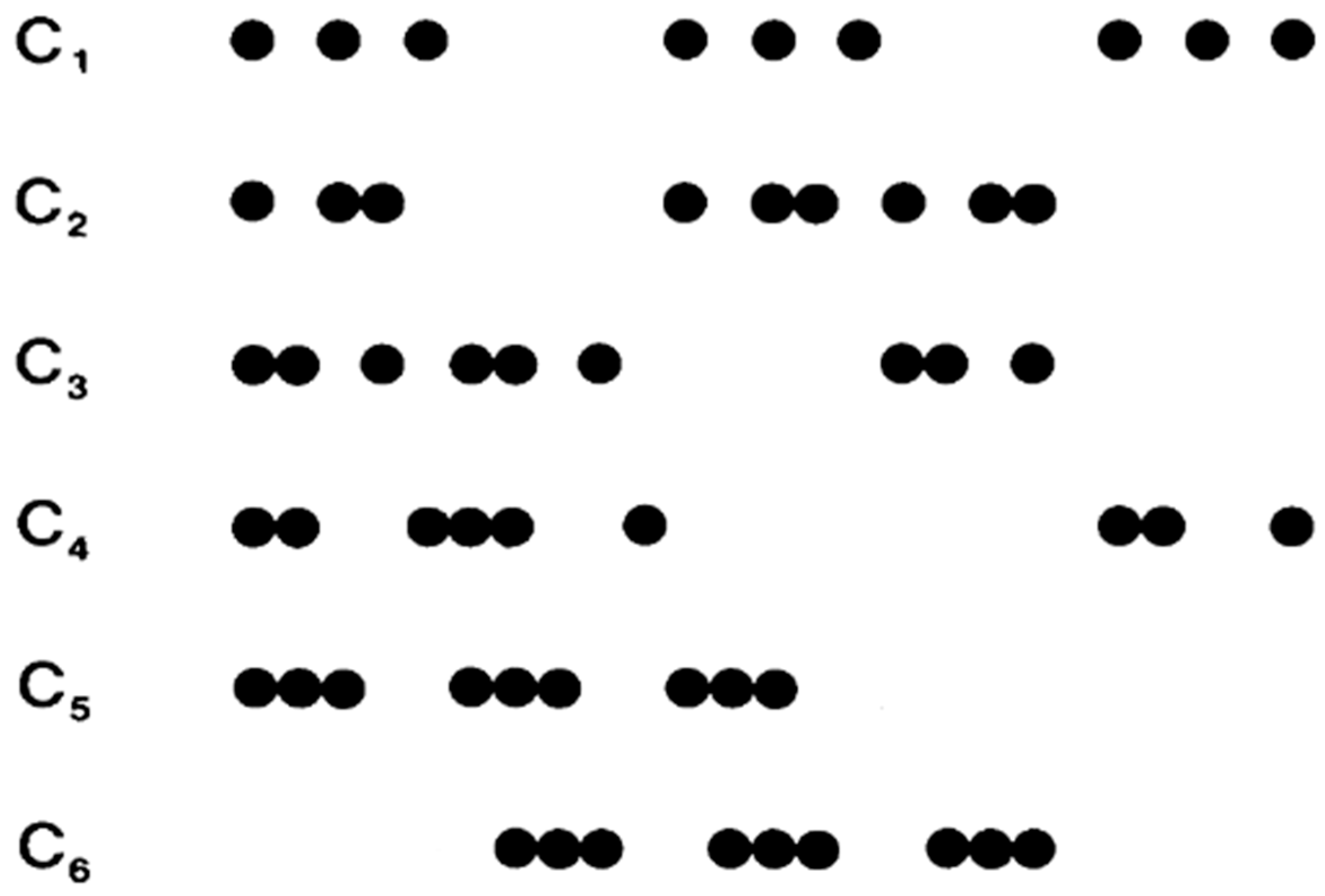
Figure 3 illustrates that structures with similar fractal dimensions can exhibit markedly different spatial arrangements, which are captured by lacunarity. In soil systems, this distinction is important because pore connectivity and clustering strongly influence hydraulic and mechanical behavior.
Lacunarity was calculated based on the statistical distribution of pixel density within moving windows across the binary image:
where
is the lacunarity, the numerator is the second moment of the probability distribution
Q(
k,
r) and the denominator is the square of the first moment of the probability distribution [
32].
Q(
k,
r) is a probability distribution function given by
where
r is the measure of the side of a box,
nk(r) is the number of boxes counted when the box mass is equivalent to
k,
Q(
k,
r) is the probability distribution, and
N(
r) is the total number of boxes [
32]. The greater the degree of gap clustering, i.e., heterogeneity of pores, the greater the lacunarity [
24].
Lacunarity calculations were performed using the gliding-box algorithm implemented in the FracLac plugin within FIJI/ImageJ. Because lacunarity is inherently scale-dependent, calculations were conducted across the same range of box sizes used in the box-counting fractal analysis. For each image, lacunarity values were computed at progressively decreasing box sizes (r), and the reported lacunarity values represent the average response across the evaluated scales. This approach provides a scale-integrated measure of pore-space heterogeneity while minimizing sensitivity to any individual box size selection.
To reduce sensitivity to grid placement, multiple grid offsets and orientations were evaluated within the software. The resulting lacunarity values therefore reflect statistically averaged spatial heterogeneity for each soil, suction state, and magnification level.
Higher lacunarity values indicate greater variability in pore distribution and increased clustering of void space, while lower values correspond to more uniform and evenly distributed structures. Because lacunarity is sensitive to both scale and spatial arrangement, calculations were performed using the same grid sizes employed in the box-counting analysis to ensure consistency between metrics.
Implementation of Box-Counting Analysis
The box-counting procedure applied to the binary images is illustrated in
Figure 4.
In this procedure, grids of progressively decreasing box size are overlaid on the image, and the number of boxes intersecting the solid phase is recorded at each scale. This multi-scale analysis provides the data used to determine fractal dimension and ensures that structural features are evaluated consistently across magnification levels.
2.2.5. Void Ratio from Binary Images
Void ratio was estimated from binary images as a derived metric to complement fractal dimension and lacunarity by providing a measure of relative pore volume.
where
represents the number of pore pixels and
represents the number of solid pixels. This image-based void ratio provides a relative measure of pore space and serves as a bridge between geometric descriptors of soil structure and volumetric measures commonly used in geotechnical analysis.
3. Results and Discussion
3.1. Effect of Magnification on Fractal Dimension and Lacunarity
While fractal dimension and lacunarity are often described as scale-invariant properties, natural soils exhibit only statistical self-similarity over a finite range of observation scales. As a result, the measured fractal response depends on the scale at which structural features are resolved. This behavior reflects the transition between structural regimes, where different physical features dominate the observed fabric.
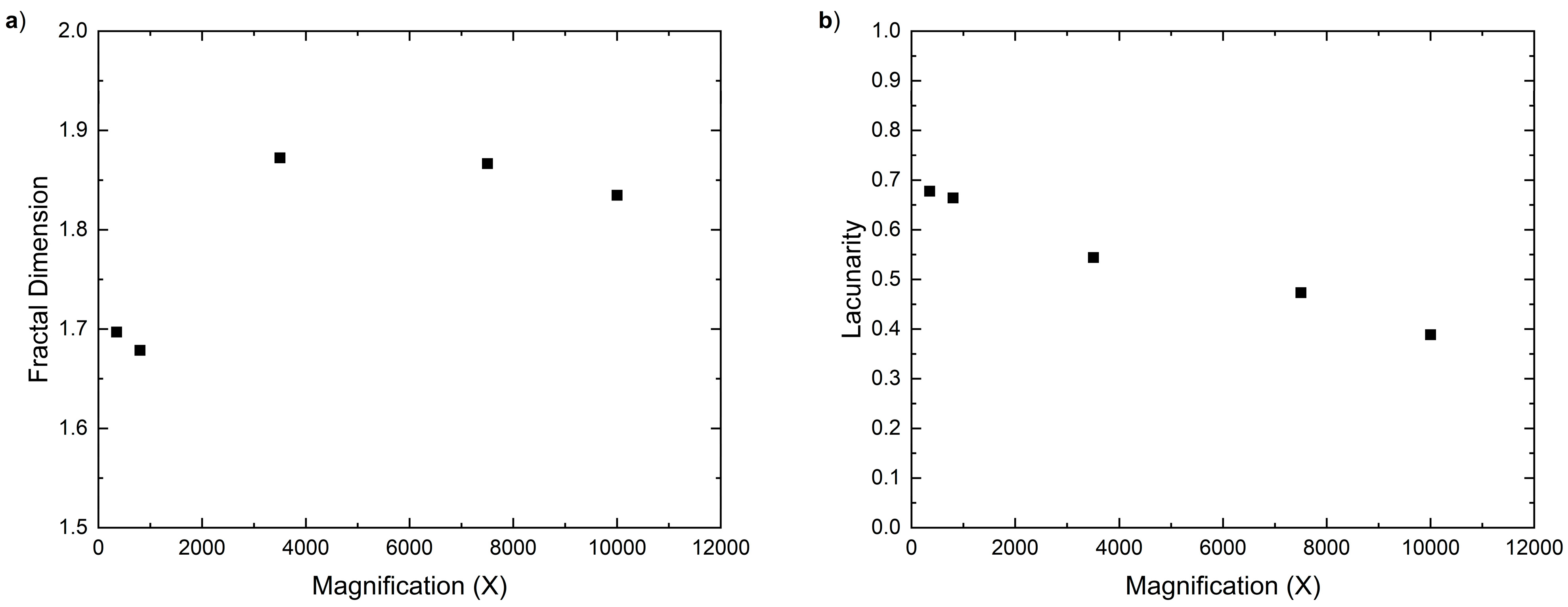
To evaluate this effect, Na-montmorillonite was imaged across magnifications ranging from 350× to 10,000× (
Figure 5a). Two distinct scaling regimes are evident, separated by a transition near 3000×. At lower magnifications (350× and 800×), the images capture inter-aggregate pore structure, where large voids dominate the spatial distribution of pixels. In this regime, the measured fractal dimension reflects bulk fabric organization and pore connectivity. At higher magnifications (3500× and above), the images resolve intra-aggregate and interparticle features, where surface roughness and particle morphology become the dominant contributors to complexity.
This transition results in an increase in fractal dimension with magnification (
Figure 5a), which can be interpreted as a shift from pore-dominated to surface-dominated complexity. At low magnification, large pores reduce the proportion of occupied pixels, leading to lower measured complexity. As magnification increases, finer surface features become visible, increasing the number of occupied boxes in the box-counting analysis and thus increasing fractal dimension. This behavior is consistent with the concept of a representative elementary area (REA), beyond which additional magnification does not significantly change the measured structural complexity.
In contrast, lacunarity decreases with increasing magnification (
Figure 5b), reflecting a reduction in spatial heterogeneity at smaller scales. At low magnification, the presence of large inter-aggregate pores produces highly uneven pixel distributions, resulting in high lacunarity. As magnification increases, the field of view becomes dominated by more uniformly distributed particles, reducing variability in pixel density and thus lowering lacunarity. This inverse relationship between fractal dimension and lacunarity with scale highlights that these metrics capture different aspects of soil structure: complexity versus heterogeneity.
Although lacunarity varies with box size, the scale-averaged values reported here provide a representative measure of overall pore-space heterogeneity and enable consistent comparison among soils, suction states, and magnification levels. Having established the scale-dependent behavior of fractal dimension and lacunarity, the following section examines how these metrics evolve with suction along drying–wetting paths.
3.2. Effect of Suction on Fractal Dimension and Lacunarity
3.2.1. Suction-Induced Changes in Structural Complexity (Fractal Dimension)
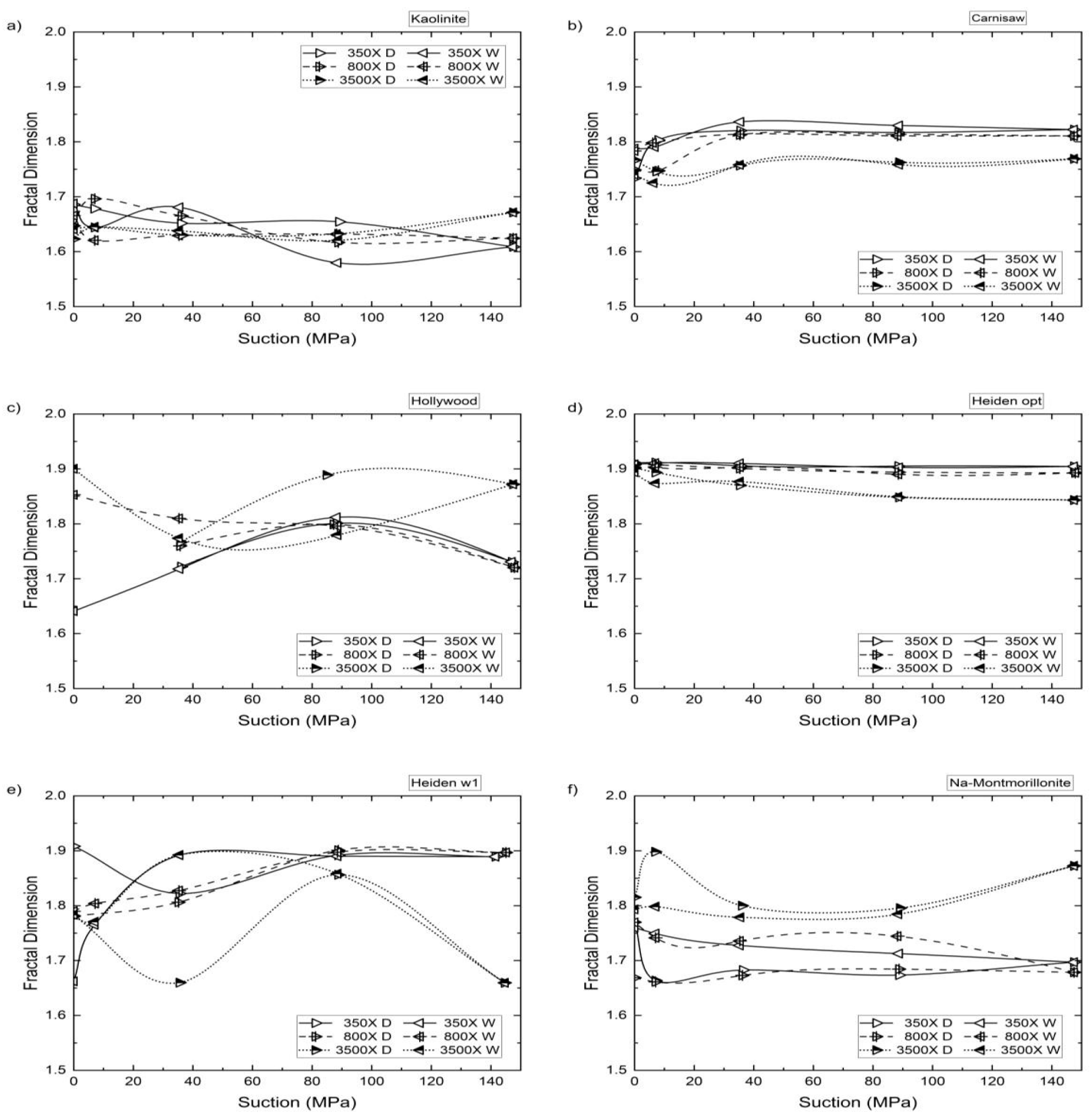
The evolution of fractal dimension along the primary drying and secondary wetting paths is shown in
Figure 6 and
Table 2. Changes in fractal dimension reflect the progressive exposure or obscuration of surface features as pore fluid redistributes under varying suction.
During drying, increasing suction reduces pore water content, particularly free water occupying larger pores. As water recedes, previously obscured particle surfaces and interparticle contacts become visible in ESEM images, increasing measured surface complexity. This manifests as an increase in fractal dimension for soils such as Heiden w1 and Na-montmorillonite. The magnitude of this increase depends on the extent to which bound water films mask surface features at low suction.
The observed hysteresis in fractal dimension between drying and wetting paths (
Figure 6) reflects irreversible microstructural changes. In this study, hysteretic behavior is interpreted qualitatively based on the relative separation between drying and wetting structural-response trends, rather than through a formal hysteresis index. During drying, particle aggregation, collapse of diffuse double layers, and rearrangement of clay platelets can produce new contact configurations and surface irregularities. Upon rewetting, while pore spaces refill with water, these structural rearrangements are not fully reversed. As a result, fractal dimension during wetting remains elevated relative to the initial drying path, particularly at intermediate suctions. This behavior is most pronounced in soils with higher clay content and physicochemical activity, where interparticle forces strongly influence fabric evolution.
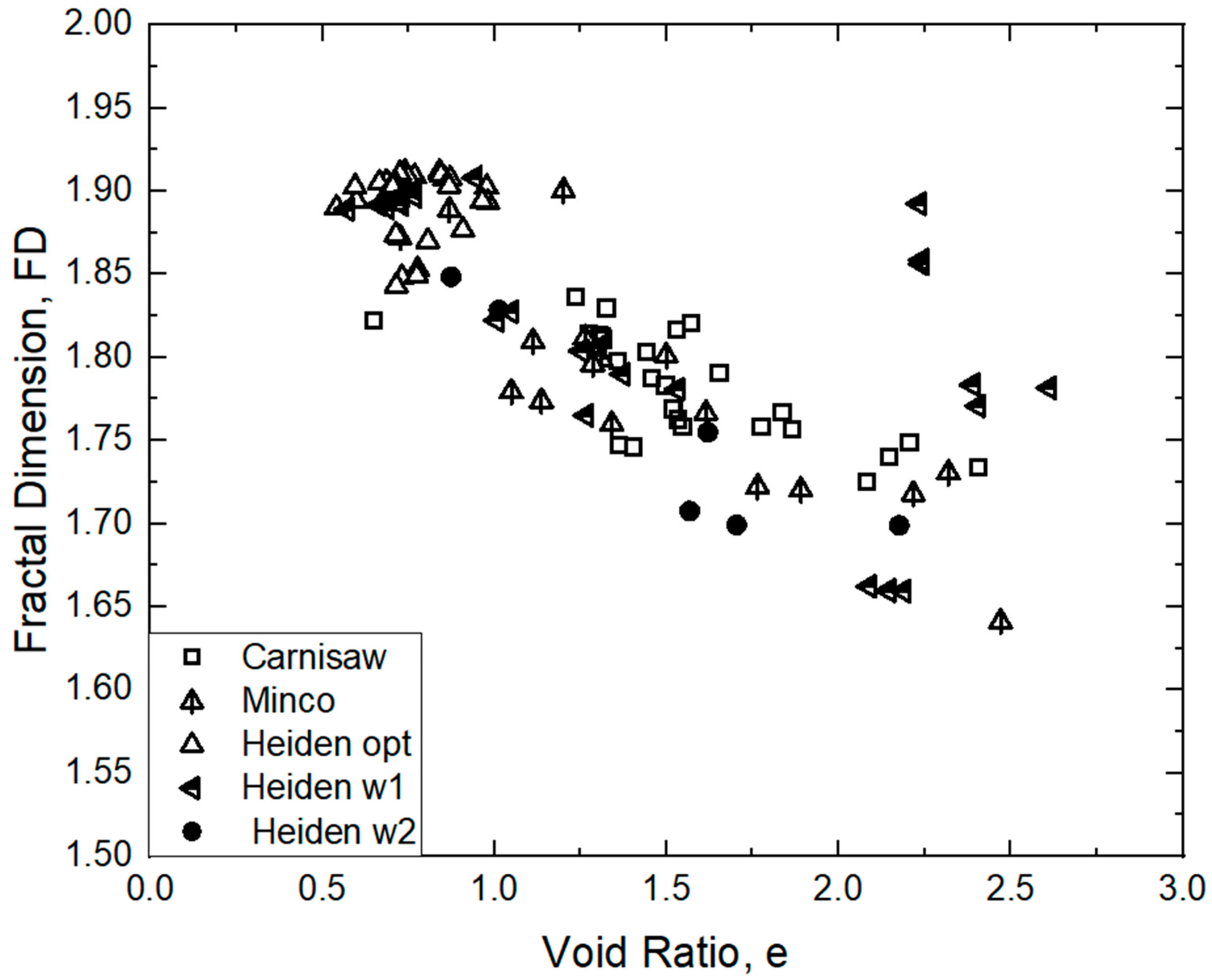
Compared with highly expansive systems such as Na-montmorillonite and Heiden w1, the Minco specimens exhibited comparatively limited separation between drying and wetting fractal-dimension responses across the evaluated suction range. However, interpretation of hysteretic behavior in Minco is complicated by incomplete low-suction image availability due to obscuration from free water within the ESEM chamber. Consequently, the observed trends should be interpreted qualitatively rather than as a rigorous quantitative ranking of hysteresis magnitude among soils. This behavior may be related to the higher silt content and lower clay fraction of Minco, which would be expected to reduce the influence of physicochemical interactions. These observations suggest that structural changes in Minco may be more strongly influenced by reversible redistribution of pore water than by irreversible particle rearrangement. The relationship between fractal dimension and void ratio (
Figure 7) further supports this interpretation. As suction increases, void ratio decreases due to contraction and water loss, while fractal dimension increases due to enhanced visibility of surface features. This inverse relationship indicates that fractal dimension captures the transition from fluid-dominated to structure-dominated imaging conditions and can serve as a proxy for changes in effective pore space and surface exposure.
3.2.2. Suction Induced Changes in Pore-Space Heterogeneity (Lacunarity)
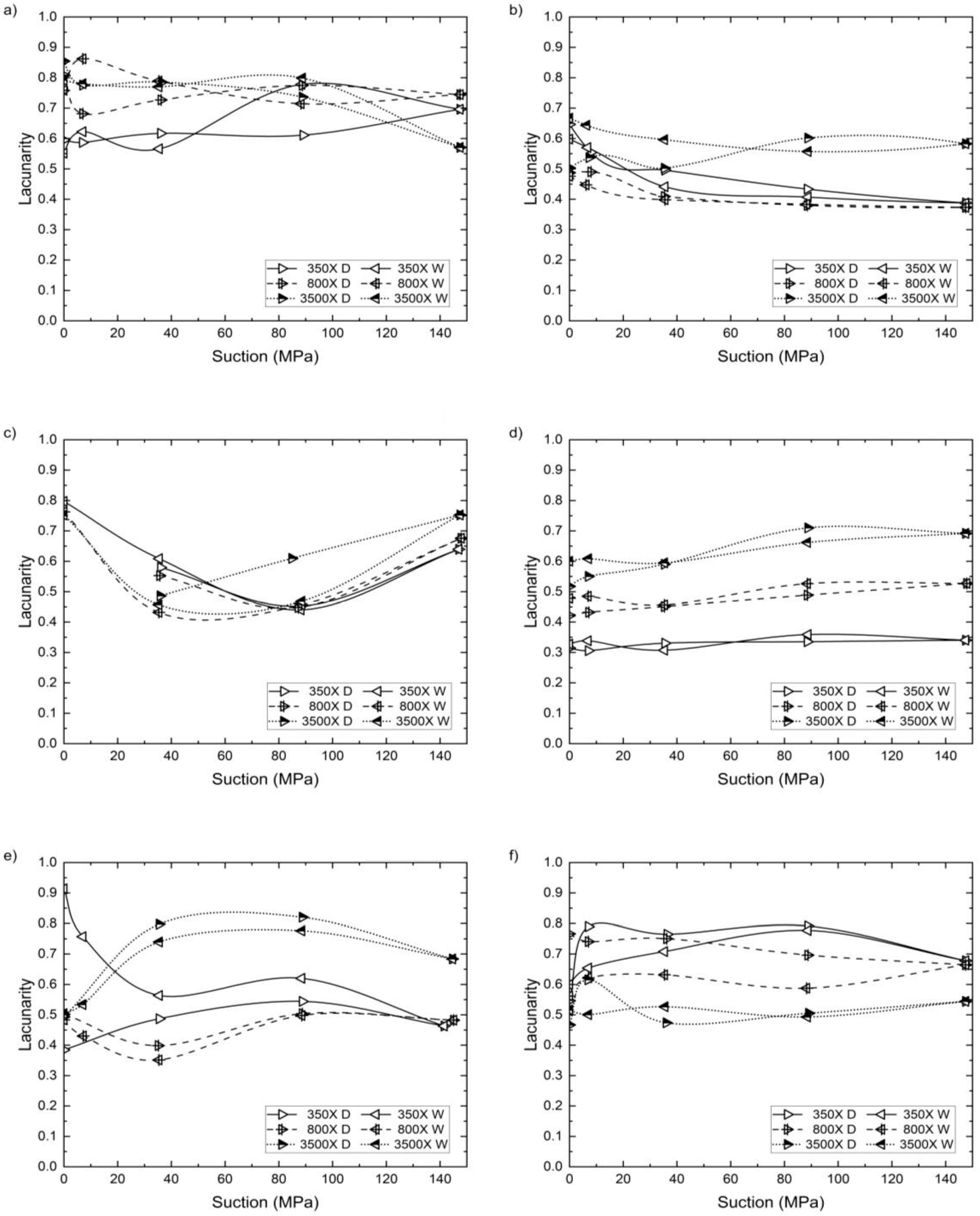
In addition to changes in surface complexity, suction also influences the spatial organization of pore structure, which is captured by lacunarity. The variation of lacunarity with suction is presented in
Figure 8 and
Table 3. Unlike fractal dimension, which reflects surface complexity, lacunarity captures the spatial organization and clustering of pore space, making it particularly sensitive to changes in pore connectivity and distribution.
During drying, lacunarity generally decreases for many soils, indicating a transition toward more homogeneous pore structures as free water is removed and large pores become less dominant in the image. This behavior reflects the collapse or contraction of inter-aggregate pore space and the redistribution of voids into smaller, more uniformly distributed features.
However, in soils such as Heiden w1, lacunarity increases during drying, particularly at lower magnifications. This indicates the formation of clustered pore structures, likely associated with particle aggregation and the development of larger, discontinuous voids. These changes are consistent with the formation of shrinkage-induced features, such as microcracks or aggregated domains, which increase spatial heterogeneity.
Hysteresis in lacunarity (
Figure 8) provides additional insight into irreversible structural changes. During rewetting, lacunarity often remains lower than during drying at equivalent suction levels, suggesting that pore structures become more uniformly distributed after a drying–wetting cycle. This may reflect partial collapse of large pore clusters formed during drying or redistribution of water within the pore network, leading to a more homogeneous appearance in the ESEM images.
The contrasting trends observed across soil types highlight the role of mineralogy and physicochemical properties in controlling pore structure evolution. Soils with higher clay content and activity exhibit greater variability and hysteresis in lacunarity, consistent with stronger interparticle interactions and greater susceptibility to aggregation and structural rearrangement.
While suction governs the evolution of microstructure within a given soil, differences between soils reflect the influence of mineralogy, gradation, and physicochemical properties.
3.3. Impact of Soil Type and Equilibration Time on Fractal Geometries
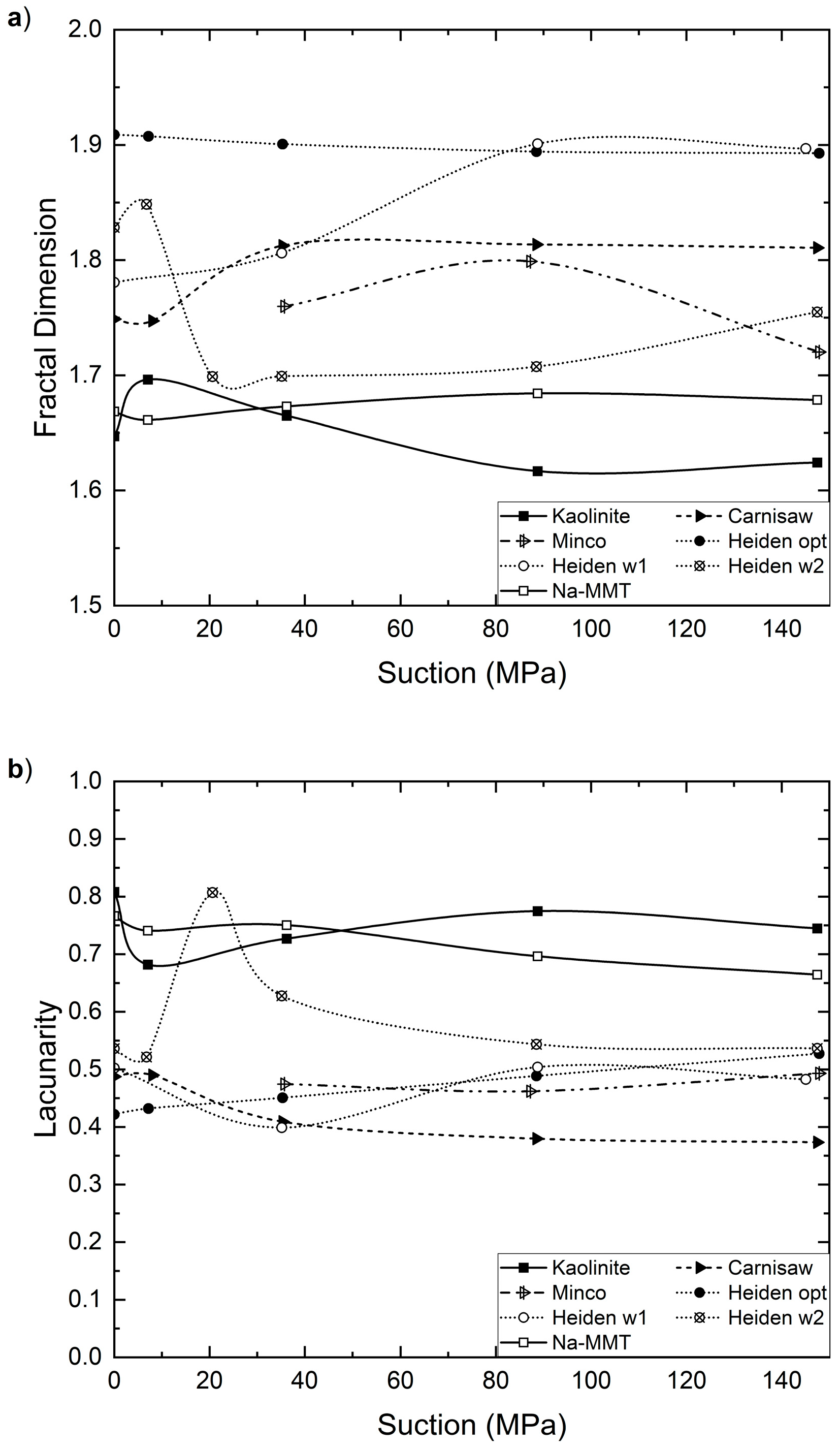
The comparison of soils at 800× magnification along the primary drying path (
Figure 9) illustrates that microstructural response is not governed by mineralogy alone but by the interaction between mineralogy, gradation, and physicochemical properties.
Natural soils exhibit higher fractal dimensions than single-mineral clays, reflecting their more complex and heterogeneous particle arrangements. This increased complexity arises from the presence of multiple particle sizes and mineral types, which produce a broader range of pore scales and surface features. In contrast, single-mineral clays, despite their smaller particle sizes, form more uniform structures with fewer distinct morphological features at the observed scale.
Equilibration time plays a critical role in controlling the observed microstructure. The differences between Heiden opt, Heiden w1, and Heiden w2 demonstrate that insufficient equilibration can lead to transient fluid distributions that obscure or exaggerate structural features. In Heiden w2, the absence of equilibration results in the persistence of bound water films at intermediate suctions, which increases apparent heterogeneity and leads to higher lacunarity values. As suction increases and these films dissipate, the underlying structure becomes more visible, reducing lacunarity.
These observations indicate that measured fractal metrics reflect not only intrinsic soil structure but also the interaction between fluid distribution and imaging conditions. Proper equilibration is therefore essential to ensure that measured values correspond to stable structural states rather than transient moisture effects. These observations suggest that intrinsic physicochemical properties may play a governing role in shaping microstructural evolution.
3.4. Impact of Physicochemical Parameters on Fractal Dimension and Lacunarity
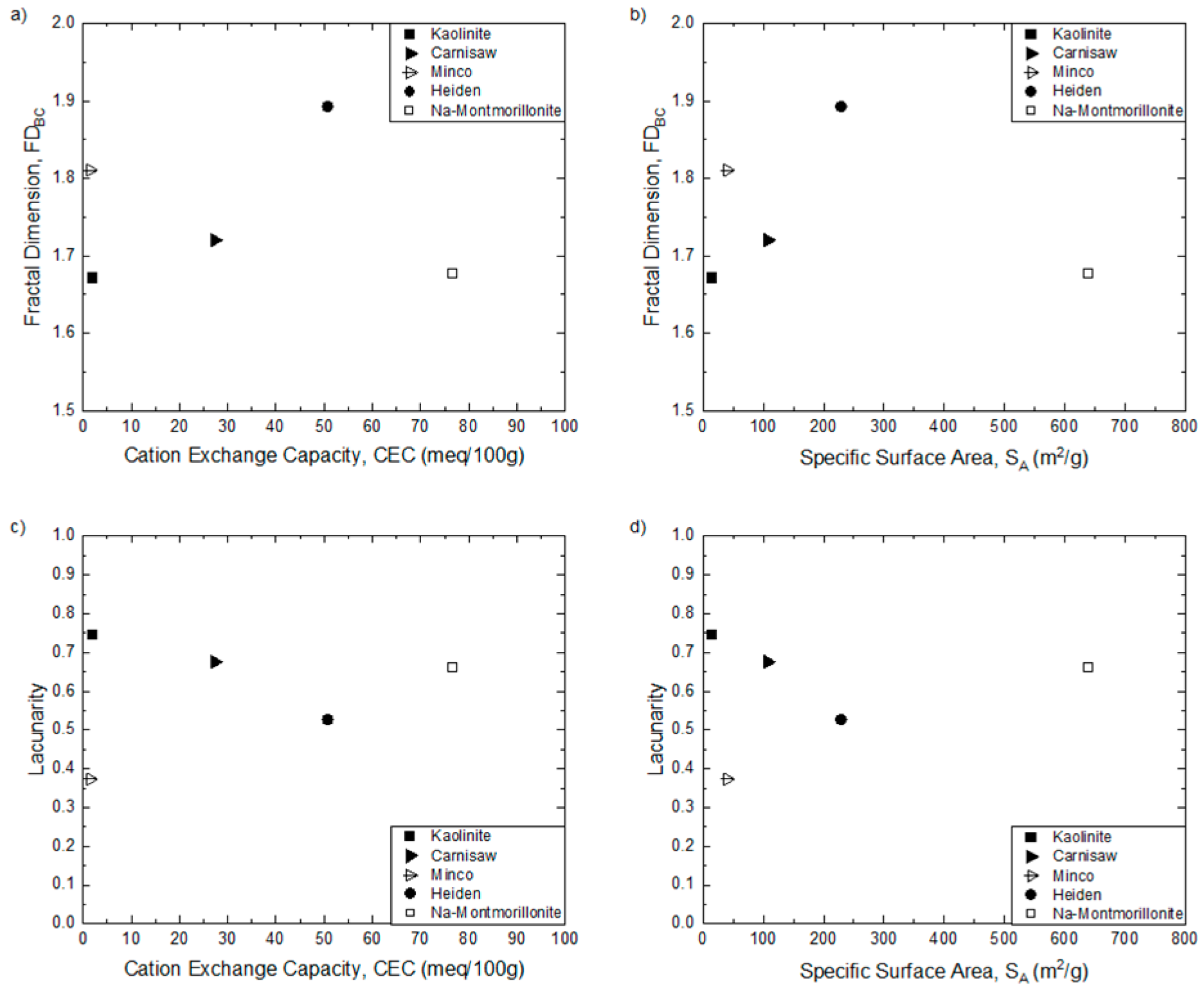
The relationships between fractal metrics and physicochemical parameters at 148 MPa and 800× magnification are shown in
Figure 10. For the natural soils evaluated in this study, higher fractal dimensions were generally associated with soils possessing greater cation exchange capacity (CEC) and specific surface area (SA), although substantial variability and overlap among soils were observed. These trends suggest that physicochemical properties may influence microscale structural complexity, but the limited number of soils examined prevents establishment of a unique or predictive relationship (
Figure 10a,b).
This trend can be attributed to stronger physicochemical interactions in high-CEC and high-SA soils, which promote particle dispersion at low suction and aggregation during drying. These processes generate a wider range of surface features and contact configurations, increasing measured complexity. However, this relationship is not universal, as demonstrated by Na-montmorillonite, which exhibits similar fractal dimensions to kaolinite despite significantly higher CEC and SA. This suggests that fractal dimension is influenced not only by physicochemical properties but also by particle arrangement and scale-dependent imaging effects.
Relationships between lacunarity and physicochemical properties were less clearly defined within the limited dataset evaluated in this study (
Figure 10c,d). Although variations in lacunarity were observed among soils with differing cation exchange capacity (CEC) and specific surface area (SA), the data exhibited substantial scatter and no unique monotonic trend was apparent. These results suggest that pore-space heterogeneity is influenced by multiple interacting factors, including mineralogy, fabric arrangement, and compaction history, rather than physicochemical indices alone. Natural soils generally exhibited lower lacunarity than the single-mineral clays evaluated in this study, suggesting more uniform pore distributions that may be influenced by broader particle-size distributions and mixed mineralogy.
These results indicate that physicochemical parameters alone are insufficient to fully characterize soil microstructure. Instead, fractal dimension and lacunarity capture emergent properties of the soil fabric that arise from the combined effects of mineralogy, particle arrangement, and fluid interactions. Additional analyses across a broader range of soils would be required to determine whether statistically robust relationships exist between lacunarity and physicochemical properties.
These results collectively provide a mechanistic basis for interpreting microstructural evolution in expansive soils under coupled hydraulic and physicochemical processes.
Several limitations of the present study should be acknowledged. The analyses are based on two-dimensional ESEM projections of inherently three-dimensional pore networks and therefore cannot fully resolve pore connectivity or volumetric fabric evolution. Although the fractal and lacunarity metrics provide quantitative descriptors of structural complexity and heterogeneity, the measured responses remain dependent on imaging resolution, magnification scale, and image-processing procedures. In addition, the limited number of soils and suction states evaluated restricts the ability to establish statistically robust relationships between fractal descriptors and physicochemical properties. The fractal-based metrics presented here should therefore be interpreted as comparative structural descriptors rather than direct predictive measures of engineering behavior, without additional validation against independent hydraulic, volumetric, and mechanical measurements.
4. Conclusions
This study investigated the evolution of expansive soil microstructure under drying–wetting cycles using ESEM imaging combined with fractal analysis. By quantifying both fractal dimension (surface complexity) and lacunarity (spatial heterogeneity), the results provide insight into the mechanisms governing fabric evolution across scales and suction conditions.
The principal findings are as follows:
Fractal dimension is scale-dependent and reflects a transition between structural regimes. At lower magnifications, measured complexity is controlled by inter-aggregate pore structure, whereas at higher magnifications it is governed by intra-aggregate and interparticle features. This shift results in increased fractal dimension with magnification and indicates that complexity is not an intrinsic constant but depends on the dominant structural features resolved at a given scale.
Lacunarity exhibits an inverse relationship with magnification, decreasing as the observation scale shifts from heterogeneous pore networks to more uniformly distributed particle structures. This behavior demonstrates that lacunarity is primarily sensitive to pore distribution and clustering, while fractal dimension reflects surface complexity, confirming that the two metrics capture distinct but complementary aspects of soil fabric.
Changes in fractal dimension with suction are governed by the redistribution of pore fluid and the exposure of particle surfaces. During drying, removal of pore water increases visible surface roughness, leading to higher fractal dimension. Hysteresis in fractal dimension arises from irreversible microstructural changes, including particle aggregation and rearrangement, which persist upon rewetting. In contrast, soils with lower clay content generally exhibited less separation between drying and wetting response paths, although interpretation is complicated by incomplete image availability at some suction states. Lacunarity provides additional insight into pore structure evolution and highlights changes in spatial heterogeneity that are not captured by fractal dimension alone. Decreasing lacunarity during drying reflects a transition toward more uniform pore distributions as large voids contract or redistribute, whereas increases in lacunarity indicate the formation of clustered pore structures associated with aggregation or shrinkage-induced features. Hysteresis in lacunarity suggests that drying–wetting cycles can reorganize pore networks into more uniform or redistributed configurations.
The influence of physicochemical properties on fractal metrics is indirect and mediated through their effect on particle interactions and fabric development. While higher cation exchange capacity and specific surface area generally correspond to increased structural complexity in natural soils, these relationships are not unique, indicating that microstructure emerges from the combined effects of mineralogy, gradation, and fluid–particle interactions rather than any single parameter.
Overall, the results demonstrate that fractal dimension and lacunarity provide complementary, image-based measures of soil microstructure that capture both complexity and heterogeneity across scales and suction conditions. By linking these metrics to physically interpretable processes—such as fluid redistribution, particle rearrangement, and pore structure evolution—this study establishes a framework for incorporating microscale structural information into models of unsaturated soil behavior. This approach has the potential to improve predictions of volume change, hydraulic behavior, and stability in expansive soils subjected to environmental loading. By providing quantitative measures of structural complexity and pore-space heterogeneity, fractal dimension and lacunarity offer a framework for connecting microscale fabric evolution to engineering-scale performance, including shrink–swell response, unsaturated flow behavior, and long-term infrastructure serviceability.
Future work should further evaluate the robustness of fractal-based structural metrics through systematic assessment of image-processing sensitivity and extension to three-dimensional imaging approaches capable of more fully resolving pore-network geometry and connectivity. Additional studies integrating fractal descriptors with independent hydraulic, volumetric, and mechanical measurements are also needed to better assess the engineering relevance of these microscale metrics and their potential incorporation into constitutive and unsaturated-flow modeling frameworks for expansive soils subjected to cyclic drying–wetting conditions.