


Abstract
“Interbedded water in thin coal seams” is characterized by its high degree of concealment and complex hydraulic connections. However, due to the confined space of underground mine tunnels and severe electromagnetic interference from metal structures, traditional geophysical methods struggle to accurately delineate the boundaries of water accumulation, making this a major and challenging water hazard in coal mines. Taking the Qinhua Coal Mine in Xinjiang, China, as the engineering context, this paper investigates the detection of water accumulation in interbedded coal seams within goaf areas using the cross-hole resistivity method. It proposes a cross-hole resistivity tomography scanning approach characterized by “progressive depth penetration and layer-by-layer traversal,” and employs an inversion method based on inequality constraints to obtain relatively detailed and reliable imaging results. Through resistivity imaging analysis, low-resistivity water accumulation anomalies were successfully delineated, and water accumulation dead zones were identified. Based on the detection results, effective drainage was carried out beneath the water-filled zones. Subsequent follow-up surveys confirmed the disappearance of the low-resistivity anomalies, thereby validating the reliability and engineering practicality of the cross-hole resistivity tomography method for precisely detecting water body boundaries under complex geological conditions in coal seams.
1. Introduction
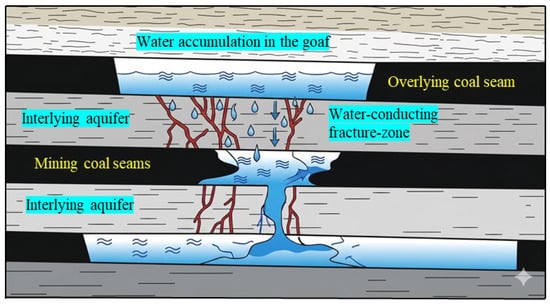
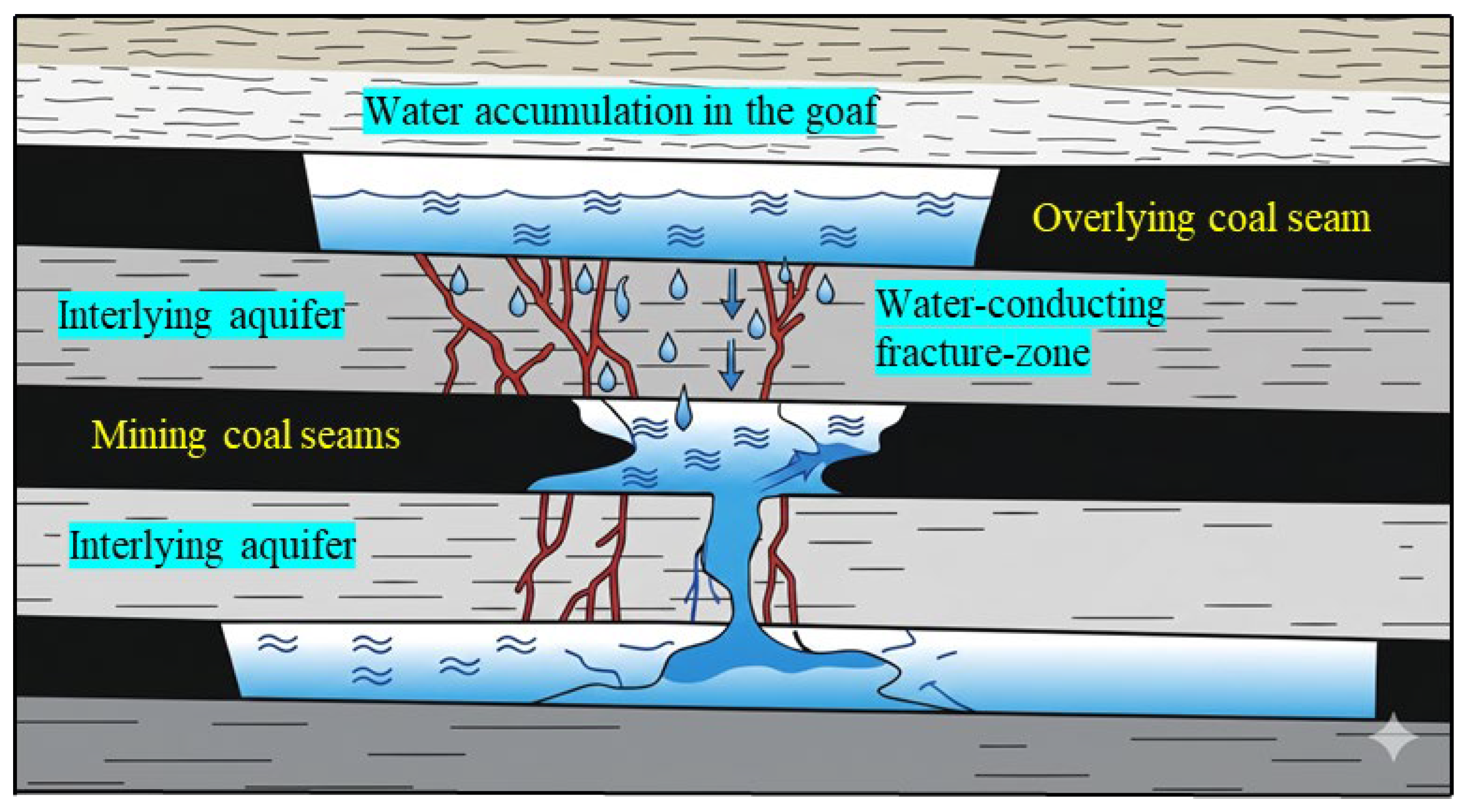
A goaf is an underground cavity or void formed after the extraction of coal or coal gangue. Water accumulation in thin interbedded coal mine goafs represents a special type of goaf water accumulation. Compared to water accumulation in single-seam goafs, its formation involves more complex conditions. It typically results from the mining of overlying or underlying coal seams, which disrupts the aquifers and impermeable layers between the coal seams. Consequently, previously isolated groundwater or goaf water becomes interconnected vertically and intermingles through mining-induced fractures, forming a complex and concealed mixed water body (as shown in Figure 1). Due to these complex geological conditions, such water bodies are more prone to triggering catastrophic “water inrush” incidents. This is because the relatively small inter-seam distances make it difficult for the aquicludes to resist the destructive forces generated by mining operations. Additionally, since these water bodies are connected to multiple water sources (such as water from older upper-level goafs and surface water), they often exhibit characteristics of sudden onset, massive water volume, sustained high pressure, and slow decline. Furthermore, such conditions may trigger chain reactions and secondary disasters, severely compromising mine safety and production.
Figure 1.
Schematic diagram of water accumulation in the goaf of an interbedded coal seam.
Currently, among all water-related accidents in coal mines, those caused by water accumulation in goaf areas still account for a significant proportion. These accidents have brought immense suffering to both enterprises and the public, resulting in massive casualties and economic losses. As a pillar energy source in China, the extensive mining of coal resources has made China one of the countries with the most severe coal mine disasters. For example, a water inrush accident at the Daxing Coal Mine in Meizhou, Guangdong, in 2005 that killed six people was caused by a sudden water inrush from an old goaf [1]; On 28 March 2010, a water inrush occurred at the Wangjialing Coal Mine in Shanxi Province, killing 38 people. The accident was caused by a failure to investigate the water accumulation in a small abandoned mine goaf near the 20101# return airway excavation face, resulting in the flooding of tunnels below the +583.16 m elevation and casualties [2]. Similarly, other countries have experienced similar accidents. For example, in 2021, a secondary water-related disaster occurred in the abandoned mine area of the Listvyazhnaya Coal Mine in Russia. The cause was the long-term impact of water seepage from the overlying abandoned mine area. The accumulated water not only increased the drainage burden but also altered the pressure in the coal seam through roof fissures, indirectly triggering abnormal gas outbursts that resulted in several deaths [3]. At an active coal mine near the Vistula River in Poland, rising water levels in the goafs of multiple nearby abandoned mines led to massive water inrushes at the currently operating mine [4]. Similarly, in the Donbas region of Ukraine, several coal mines ceased drainage operations. Due to the high connectivity of the goafs, the uncontrolled rise in water levels has placed some still-operating mines at extremely high risk of lateral water inrushes [5]. It is evident that accurately surveying the location, spatial distribution, and water accumulation conditions of coal mine goafs—in order to implement safe and effective preventive measures—holds significant practical importance for ensuring safe production at coal mines and safeguarding the lives and property of workers.
The use of geophysical techniques to investigate the spatial characteristics and water-bearing potential of goaf areas is a proven and effective method that has yielded significant results to date. Based on the spatial location of the geophysical surveys, these methods can be broadly categorized into surface and borehole surveys. Surface survey methods primarily include direct current (DC) methods, electromagnetic (EM) methods, and seismic methods. Direct current methods include two conventional techniques: resistivity tomography and high-density electrical methods [6]. For example, Hutchinson and Barta used the high-density electrical method to survey abandoned mine areas in the Akron region and identified safety issues regarding local buildings [7]. Sun et al. employed resistivity imaging technology to survey the Tan karst region in Guangxi, and their results provided insights into the geometric morphology and location of potential karst features [8]. Although DC methods offer high resolution and have demonstrated some effectiveness in subsidence area surveys, operational difficulties arising from complex surface topography and other conditions limit their application and affect survey results [9,10,11]. Electromagnetic methods for detecting abandoned mine areas primarily include the Time-Domain Electromagnetic (TEM) method and Ground-Penetrating Radar (GPR). For example, Xue et al. used the TEM method to investigate multiple abandoned mine areas, achieving good results that provide important insights [12,13]; Li et al. proposed a novel array TEM method and successfully identified water-filled goafs beneath conductive overburden [14]; Pueyo et al., Cheng et al., and Conejo-Mart et al. conducted practical surveys of goafs and underground cavities using GPR and evaluated their effectiveness [15,16,17]. However, surface TEM methods struggle to simultaneously detect multi-layer goafs, while GPR suffers from a limited detection range. Seismic methods primarily rely on reflection techniques to identify goafs. For example, Wei et al. effectively determined the location of goafs in Shanxi Province using seismic time-profile characteristics [18]; Ismail et al. used seismic reflection methods to determine whether structural damage to buildings in southern Illinois was caused by subsidence from old underground coal mines [19]. Although these methods offer significant detection depth, they have low resolution and are easily affected by low-velocity layers at the surface.
Compared to surface detection, underground detection is not only subject to the inherent limitations of each method but is also constrained by the space available in mine tunnels and the operational environment, making it often difficult to achieve optimal results. Consequently, there are relatively few geophysical methods suitable for this purpose, the main ones being electromagnetic methods, direct current methods, and slot-wave seismic methods. For example, Li et al. applied mine transient electromagnetic method to the detection of subsidence columns and water-conducting faults, achieving good results [20]; Cui et al. used ground-penetrating radar to detect goafs in the roof and floor of mine tunnels and subsidence columns [21]; Li et al. used the dipole–dipole layer penetration method to detect water-bearing geological structures in a mine working face [22]; Ge et al. conducted slot-wave seismic experiments in an underground anthracite coal mine [23]; Yancey et al. employed slot-wave seismic methods to detect and locate goafs [24,25]. In addition to geophysical methods, advanced drilling is commonly used in engineering to investigate geological conditions; however, this method is limited by its “single-hole perspective” and yields results with significant point-based dispersion, thereby posing substantial engineering risks. It is evident that current efforts in detecting goafs have achieved some success; however, research on water accumulation in interbedded goafs with complex structures remains relatively scarce, and existing methods struggle to provide detailed spatial characterization of interbedded water-filled zones. Given the sensitivity of the cross-hole resistivity CT method to water bodies, utilizing dewatering and water-injection boreholes to detect and image inter-borehole water bodies represents an effective approach for achieving detailed detection of interbedded water-filled zones.
The site of this study is located at the face of the 201–504 main haulage drift in the 10-5 coal seam, approximately 600 m underground at the Qinhua Coal Mine in Xinjiang, China. Due to the thinness of the mineable coal seam and the impact of excavation disturbances, the current mining face is affected by water accumulation in the goaf of the overlying 10-1 coal seam, posing a high risk of water inrushes. Due to the lack of spatial location data regarding the water-filled goaf above, current drainage efforts have been ineffective. Therefore, we conducted two surveys using existing water exploration boreholes to provide guidance for the management of water accumulation in the mine’s goaf. In this context, we proposed a new observation device and data inversion method based on cross-hole resistivity CT and applied it to this case study. We successfully detected the location and boundary information of the water accumulation in the goaf, guiding the coal mine in drilling additional drainage boreholes. This case study validates the effectiveness of this method in engineering applications and serves as a reference for detecting water accumulation in other goafs.
2. Site Description
2.1. Geological Overview of the Coal Mine
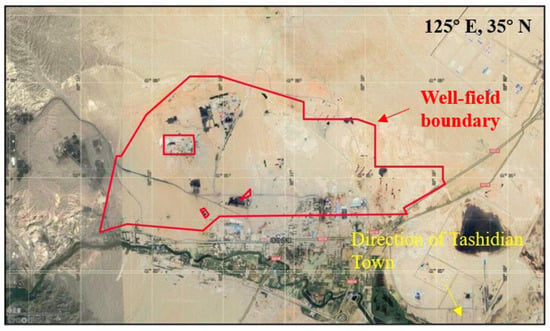
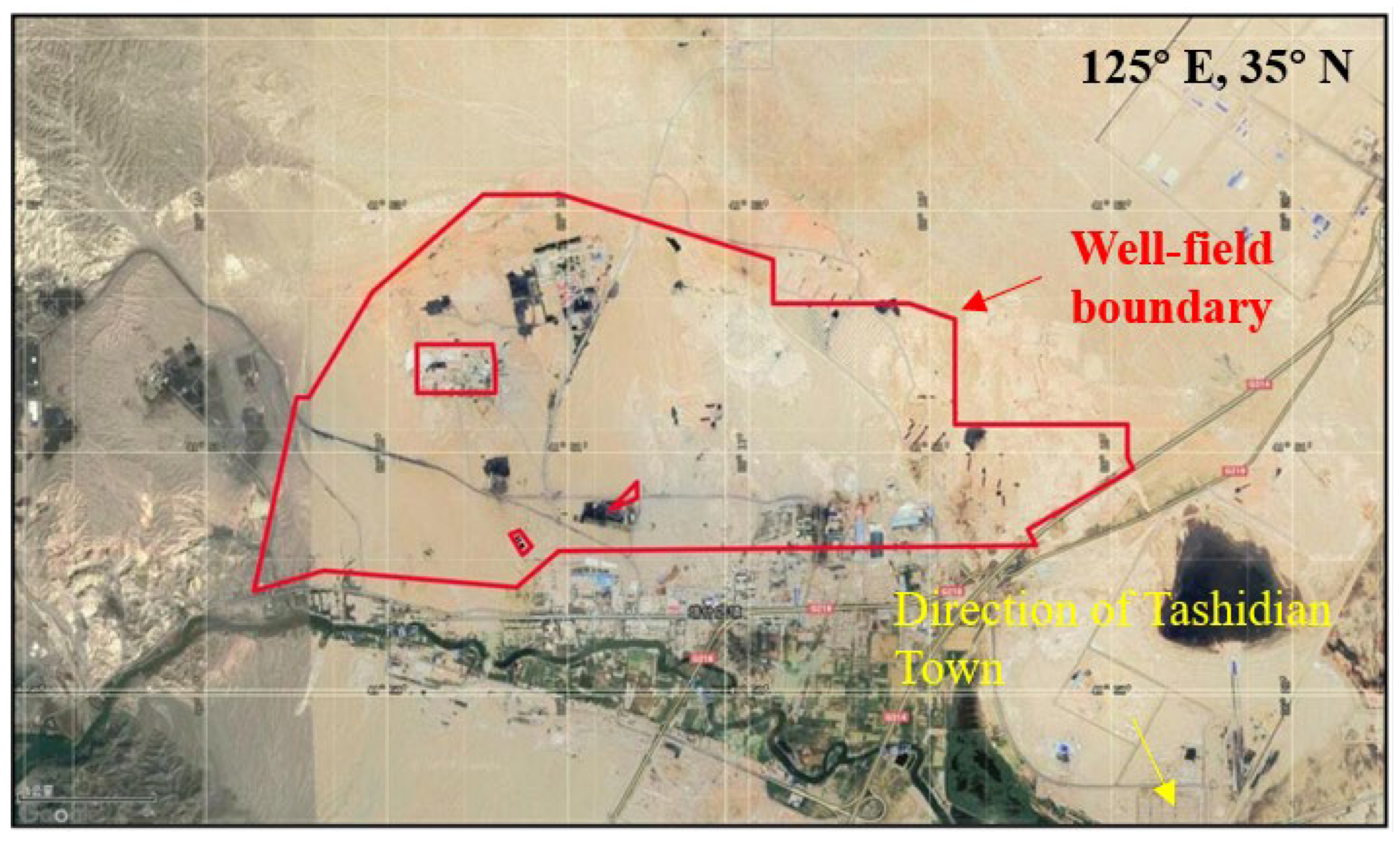
The field is located in the northern part of Tashidian Town, Xinjiang, China. It measures approximately 5.4 km from east to west and 2.3 km from north to south, covering an area of 12.3661 km2. Figure 2 shows a topographic map of the coal mine.
Figure 2.
Satellite image of the mining concession.
In terms of coal seam thickness, the most notable characteristic of this coalfield is that the recoverable coal seam thickness is generally thin. According to exploration data, the average effective thickness of coal seams across the entire coalfield is only 1.26 m, the average total thickness of recoverable coal seams is 7.33 m, and the coal content coefficient is 7.32%. The average thickness of each exploitable coal seam ranges between 1.1 and 1.5 m, classifying this as a typical group of thin coal seams. For detailed information on the thickness parameters of each coal seam, see Table 1. Ganjue, also known as an interbedded layer, refers to rock layers intercalated between coal seams. Minable area ratio refers to the proportion of the area containing ore or reserves that can actually be mined or extracted in a mine or oil and gas field relative to the total reserves or total area.
Table 1.
Summary of characteristics of mineable coal seams.
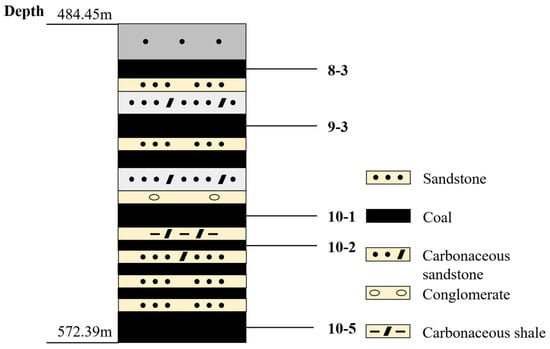
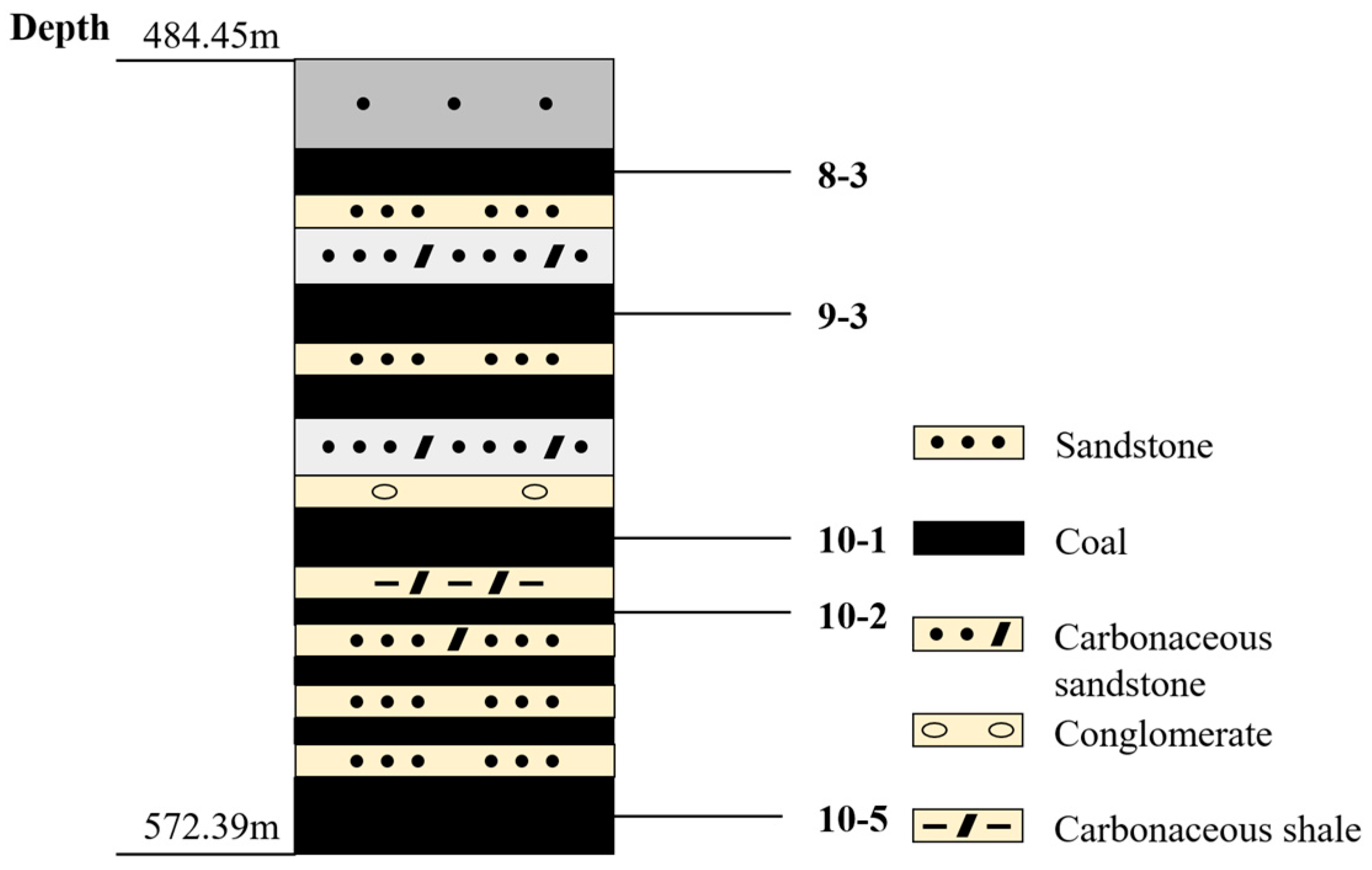
Based on the analysis of the comprehensive columnar diagram of the coal-bearing strata shown in Figure 3, the inter-seam spacing between the various exploitable coal seams exhibits a relatively regular distribution. The exploitable thickness of Coal Seam No. 8-3 ranges from 0.61 to 2.75 m, with an average of only 1.27 m, classifying it as a relatively stable coal seam. This coal seam is exploitable across most of the central and western parts of the mining area. It contains 0 to 3 interbeds of gangue, with the overlying and underlying strata primarily consisting of siltstone. The structure is simple but the thickness is relatively thin. Coal Seam No. 9-3 exhibits a distinct pattern of thickness variation and is classified as a stable coal seam. Its thickness generally ranges from 0.63 to 2.56 m, with an average of 1.39 m. It contains 0 to 2 interbeds of gangue, and its structure is even simpler. Coal Seam No. 10-1 has an average thickness of 1.44 m, but its exploitable area is limited to the northwestern part of the mining field; it is a relatively stable coal seam with limited exploitable potential. Coal Seam No. 10-2 has an average thickness of only 1.12 m, making it the thinnest exploitable coal seam in this mining field; it contains 0 to 1 layers of interbedded shale and has the simplest structure. Coal Seam No. 10-5 has a moderate thickness ranging from 0.94 to 3.79 m, with an average of 1.66 m; however, its total thickness is only 1.11 m. After deducting the interbedded rock layers, the actual recoverable thickness remains relatively thin. It is a relatively stable coal seam that is recoverable throughout the entire area.
Figure 3.
Composite columnar diagram of coal-bearing strata.
Based on the geological data of the coal mine, the thicknesses of the various coal seams and the patterns of their distribution are as follows: The thickness of Coal Seam 8-3 is greater in the central and western parts of the mining area, with a tendency to thin toward the east and south; Coal Seam 9-3 has a stable distribution throughout the area, with gradual variations in thickness; Coal Seam 10-1 has a significant thickness only in the northwestern part, while the contour lines are sparse in other areas, indicating poor mineability; Coal Seam 10-2 exhibits a broad, band-like distribution in the central and northern parts, with significant variations in thickness; Coal Seam 10-5 is mineable throughout the entire area, with relatively stable thickness variations. The information reflected in these contour maps further confirms the characteristic of this coalfield, where coal seams tend to be relatively thin and unevenly distributed.
2.2. Overview of the Mine’s Hydrogeology
In terms of hydrogeological conditions, as shown in the satellite image in Figure 2, the mining area is located in a low-mountain and hilly region. The terrain slopes from northwest to southeast, with elevations ranging from +1055 to +1178 m and a vertical difference of 123 m. No surface water systems have developed, and only a small amount of vegetation is present in the ravines. The region falls within a low-humidity zone, with annual precipitation of only 50–60 mm and evaporation as high as 1200–1450 mm. The humidity coefficient is merely 0.015, far below 0.12, indicating that atmospheric precipitation has a very limited impact on mine flooding.
Aquifers: The Quaternary cover in the mining area is approximately 2.65 to 10.12 m thick, with a maximum depth of less than 15 m. It is a permeable, non-water-bearing layer. The aquifers consist of the coarse-grained and fissured sections of the Neogene and Paleogene Taoshuyuan Formation and the Jurassic coal-bearing strata. The aquifers currently affected by coal seam mining are described in Table 2 below.
Table 2.
Summary of aquifer (aquitard) subdivisions.
According to Table 2, there are two main aquifers that have an impact on mining: the pore fissure aquifer (H2) of the Taoshuyuan Formation in the Oligocene Miocene, and the pressure bearing fissure aquifer (H3) of the coal seam interbedded with dark gray mudstone sandstone in the Middle Lower Jurassic. Among them, the Taoshuyuan Formation aquifer mainly receives lateral recharge, and its water abundance is controlled by lithology and the degree of fissure development. The Middle Lower Jurassic aquifer is in direct contact with coal seams and is the main potential water source for mine water filling. In addition, the thickness of the Quaternary cover layer (H1) is 2.65–10.12 m, which is a permeable but non-aquifer layer and has little impact on mining.
At the same time, there are two good aquitards developed within the mining area. The first layer is the mudstone and sandstone aquitard (G1) of the Neogene Upper Neogene Putaogou Formation, which is widely distributed throughout the area with a thickness of 15.15–192.09 m and an average thickness of 105.79 m. It blocks the direct infiltration of atmospheric precipitation into the underlying Taoshuyuan Formation aquifer and has good aquitard performance. The second layer is the ancient weathering crust mudstone aquitard (G2), which is developed at the bottom boundary of the Paleogene. It is formed by the weathering of the middle and lower Jurassic rock layers, resulting in dense block-shaped variegated mudstone with plasticity, water absorption and expansion properties. The average thickness is 10–30 m, and it is also a good aquitard. The existence of these two layers of aquitards greatly limits the hydraulic threat of aquifers to thin coal seam mining, making the risk of mine water inflow relatively controllable. However, due to the thin thickness of the exploitable coal seam and the limited mining space, the sudden influx of fracture water from local aquifers could still significantly impact mining operations; therefore, sufficient attention must continue to be paid to hydrogeological prevention and control measures.
Overall, the thickness of the mineable coal seams in this mine field is generally thin, which is its most prominent and core geological feature; The structure of each coal seam is simple, and the layers are relatively stable, but the thin thickness poses higher requirements for mining technology. The hydrogeological conditions are relatively favorable, with well-developed aquitards, providing favorable conditions for the safe mining of thin coal seams. However, targeted water prevention and control measures still need to be taken in combination with the characteristics of thin coal seams during the mining process to ensure safe production.
2.3. Selection of Geophysical Methods
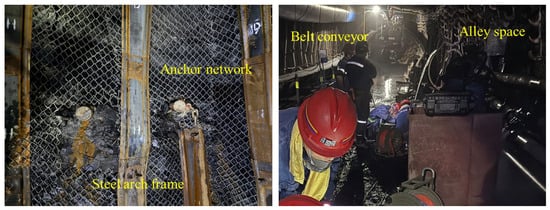
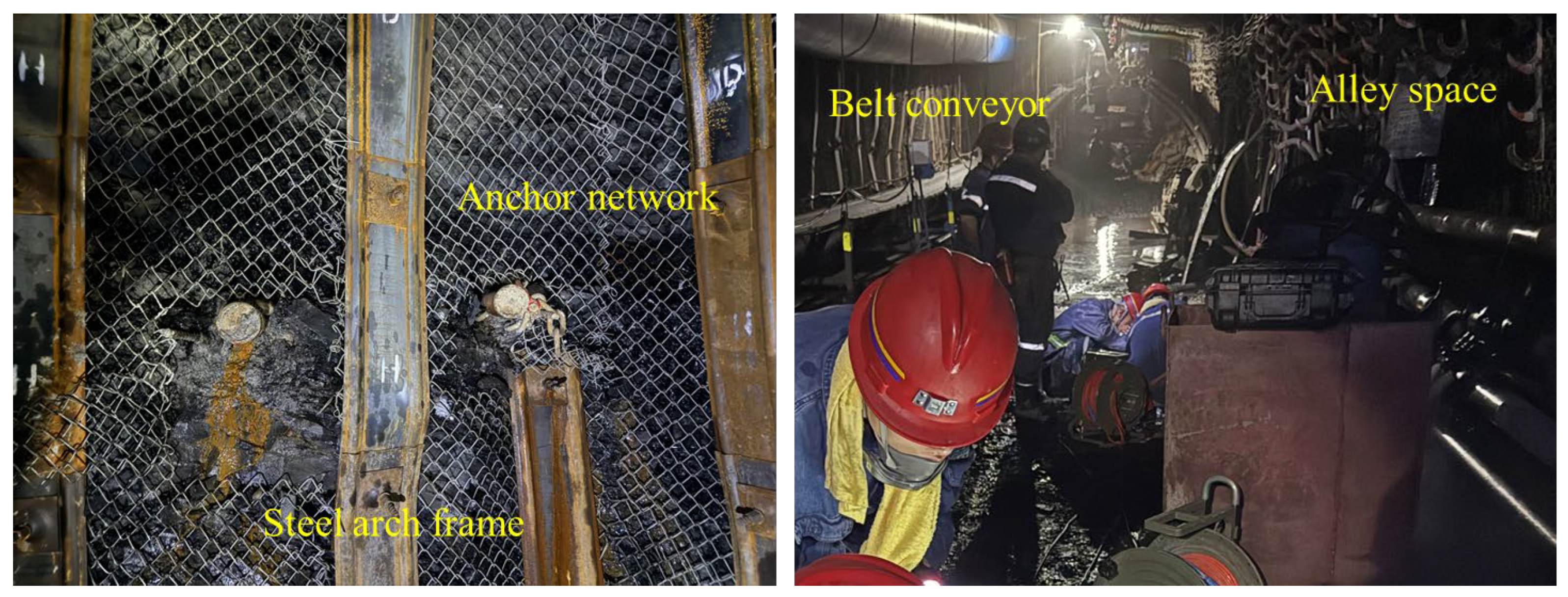
The case study site is located in the 210–504# main haulage drift of Coal Seam 10-5 at the coal mine. Preliminary surveys revealed a water-filled goaf area above the current mining face, presumably originating from the goaf of the 10-1 coal seam. However, due to the thinness of the mine’s exploitable coal seams and the impact of excavation disturbances, water from the upper goaf has penetrated through the inter-seam rock mass, resulting in seepage at the current mining face and posing a high safety risk. Figure 4 illustrates the working conditions in coal mine tunnels. Due to the presence of numerous metal obstructions—such as rock bolts and conveyor belts—at the current mining face, combined with the confined space of the roadway, conventional geophysical methods are limited and difficult to apply. Therefore, we propose to use the Cross-hole Resistivity Tomography method to detect and image the water between boreholes using the existing drainage boreholes at the current mining face.
Figure 4.
Photos of the on-site conditions in coal mine tunnels.
3. Methods
3.1. Cross-Hole Chromatographic Scanning Observation Method
Given the complex geological conditions in water-filled goafs with thin interbedded strata in coal mines, we propose a tomographic scanning method based on a “shallow-to-deep, layer-by-layer” approach to accurately capture effective information about the target.
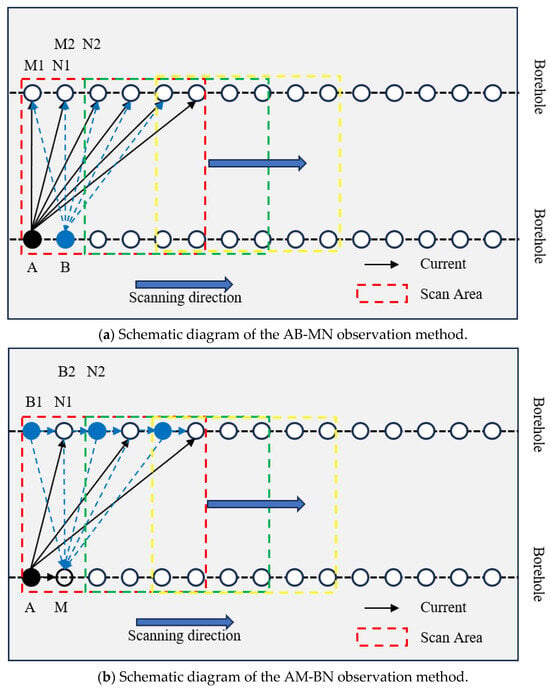
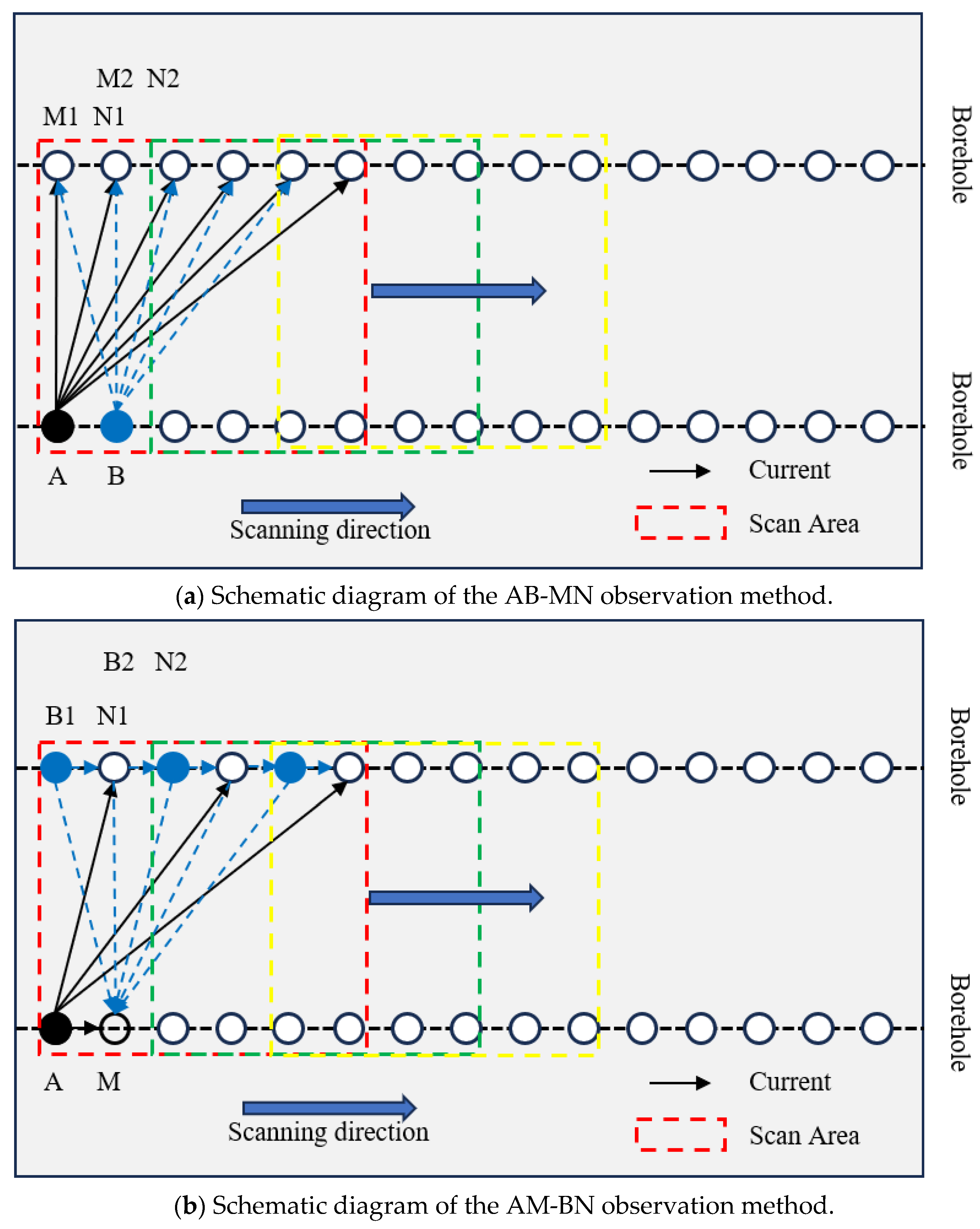
Figure 5 provides a schematic diagram of the tomographic scanning observation method, assuming that all boreholes are of equal length, each contains 30 electrodes, and the positions of the electrodes within each borehole are identical. First, as shown in Figure 5a, when the power electrodes A and B in one borehole generate an electric field, the measurement electrodes MN in the other borehole collect data. Once the current data acquisition is complete, the measurement electrodes MN move in the scanning direction (i.e., away from the mining face), with the maximum travel distance not exceeding six times the spacing between the power supply electrode pairs (typically, the distance between power supply electrodes A and B is 1 m). The area covered by the first scan is outlined by the red box. Current mainstream detection instruments support multi-channel data acquisition; therefore, the scanning process described above requires only a single power supply cycle from the power supply electrodes AB. After the measurement electrodes MN complete the scan, the power supply electrodes AB move simultaneously in the scanning direction. Following another power supply cycle, the measurement electrodes MN in the other borehole, corresponding to the starting position of the power supply electrodes AB, collect data. Similarly, the maximum travel distance does not exceed six times the spacing between the power supply electrode pairs, and the second scanning area is outlined by the green box. The above steps are repeated until the power electrode pair has traversed all electrodes in the borehole. This paper defines this observation method as the AB-MN method; using a hypothetical 30-electrode array as an example, a total of 580 observation data points can be collected.
Figure 5.
Schematic diagram of the cross-hole resistivity tomography scanning method.
The second observation method is shown in Figure 5b, where electrodes A and M are located in the same borehole, and electrodes B and N are located in the borehole on the opposite side. After the AB electrodes generate an electric field, the MN electrodes collect the electric field data, and then the BN electrodes move in the scanning direction. Similarly, the maximum distance of this movement does not exceed six times the electrode spacing. At this point, because the position of the power-supplying electrode B has changed, power must be reapplied to collect data. After the BN electrodes have traversed all electrodes in the area, the AM electrodes move in the scanning direction, and the above steps are repeated until the AM electrodes have traversed all electrodes in the borehole. This observation method is defined in this paper as the AM-BN method. Using the same hypothetical example of 30 electrodes, a total of 580 observation data points can be collected.
3.2. Inverse Methods for Inequality Constraints
As discussed in the previous section, the inter-borehole resistivity CT method employs an “inter-borehole cross-view” observation approach, which allows for the acquisition of a large amount of data related to the geophysical structure of the inter-borehole medium. Consequently, this method offers high resolution and detection accuracy. However, due to the presence of the multivalence problem in inversion, the precision and accuracy of the final imaging results are affected by this issue. To improve the accuracy, resolution, and precision of borehole-to-borehole resistivity CT detection, this paper proposes an inversion imaging method based on inequality constraints. By introducing inequality constraints that characterize the range of resistivity variations as prior information into the borehole-to-borehole resistivity CT inversion equation, the solution accuracy is enhanced.
The cross-hole resistivity CT inversion in this paper is based on a two-dimensional forward simulation using the potential method under full-space conditions. A four-node rectangular two-dimensional mesh is established in the inversion domain using an approach of “equidistant nodes in the core inversion region and increasing spacing in the boundary regions,” and the two-dimensional electric field of a point source is solved using the Cholesky decomposition method. Inequality constraints characterizing the range of resistivity variations are introduced into the resistivity CT inversion equations, following a principle similar to that of two-dimensional resistivity-constrained inversion imaging methods [26]. This paper presents only the inversion objective function and inversion equations incorporating these inequality constraints
Equation (1) represents the inverse objective function incorporating smoothing and inequality constraints, where denotes the actual observed data, denotes the theoretical observed data obtained from the forward calculation, denotes the model parameter vector, denotes the smoothing matrix, denotes the Lagrange constant that determines the weight of the smoothing constraint, denotes the resistivity of the th grid cell, and and denote the lower and upper bounds of the resistivity of the th grid cell, respectively.
Equation (2) is an inverse imaging equation with inequality constraints, where is the matrix of partial derivatives, is the vector of model parameter increments, is the observed data, and , , and are all diagonal matrices; the diagonal elements of matrix are , and those of matrix are .
The range of resistivity variations In the medium Is determined through the analysis of core samples obtained from boreholes in coal mine geological data, thereby establishing the upper and lower limits of the inequality constraint.
3.3. Instrument Overview
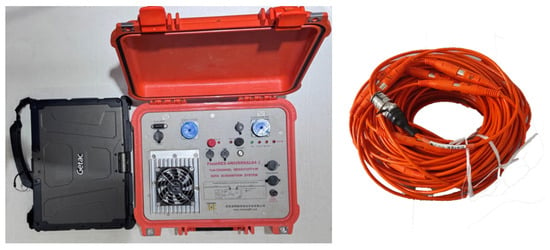
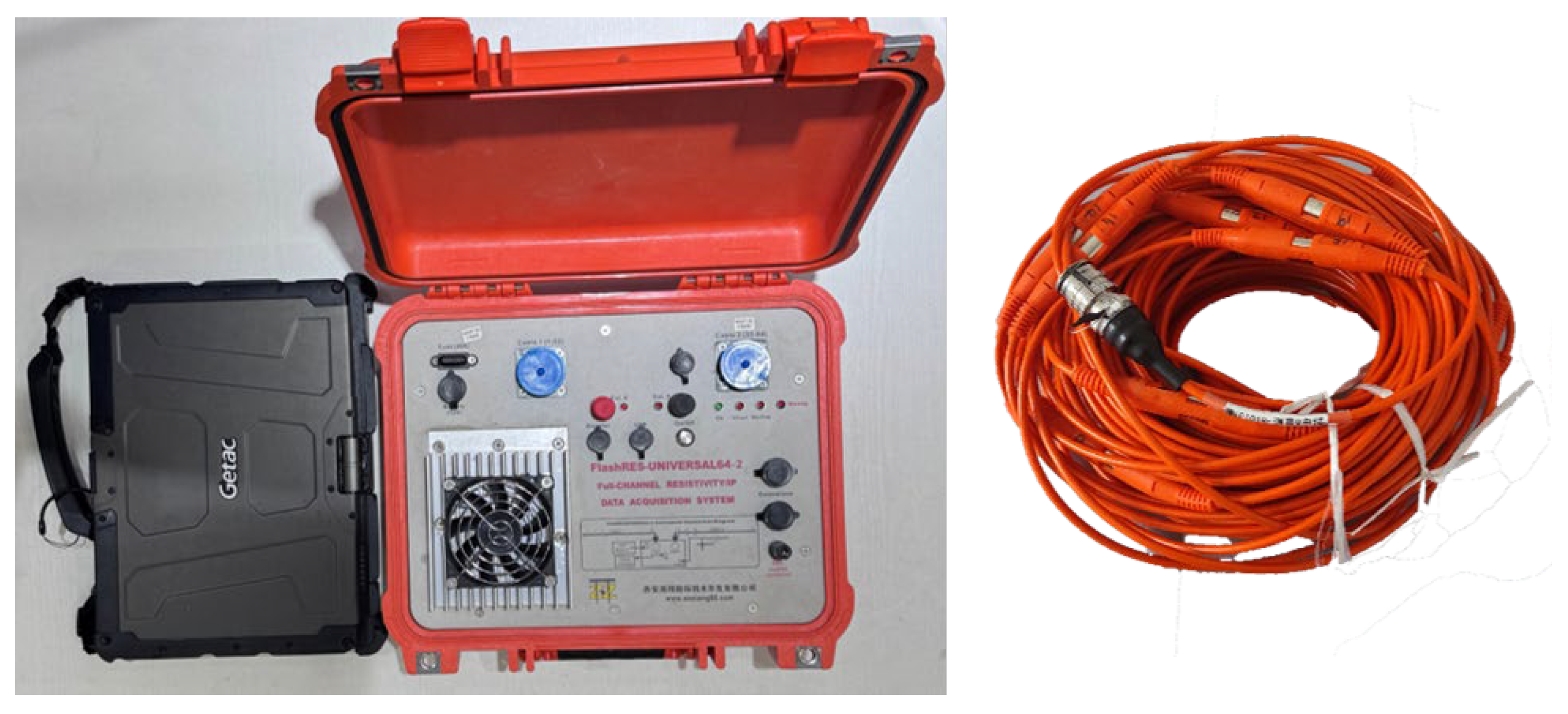
The instrument used in this case study is the FlashRES-UNIVERSAL64-2 electrical exploration system, which supports surface, borehole-to-borehole, and borehole-to-surface resistivity surveys. See Table 3 for equipment parameters. The data acquisition software used is the ZZ FlashRES Universal Resistivity Data Acquisition System, which allows users to select custom data acquisition devices for electrical measurements. Therefore, in this practical case, we employed the two data acquisition methods described in Section 3.1. The electrodes used in this case are equipped with extended custom cables, enabling electrode placement throughout the entire borehole length. The complete system is shown in Figure 6.
Table 3.
Equipment specifications.
Figure 6.
Equipment diagram.
4. Results
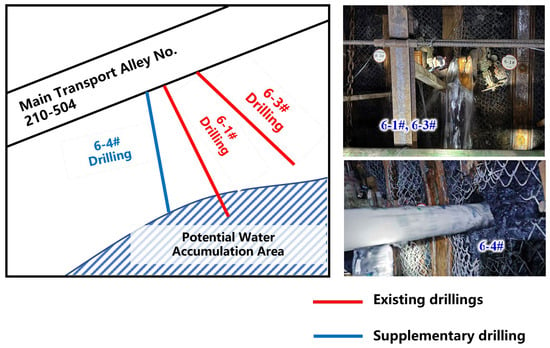
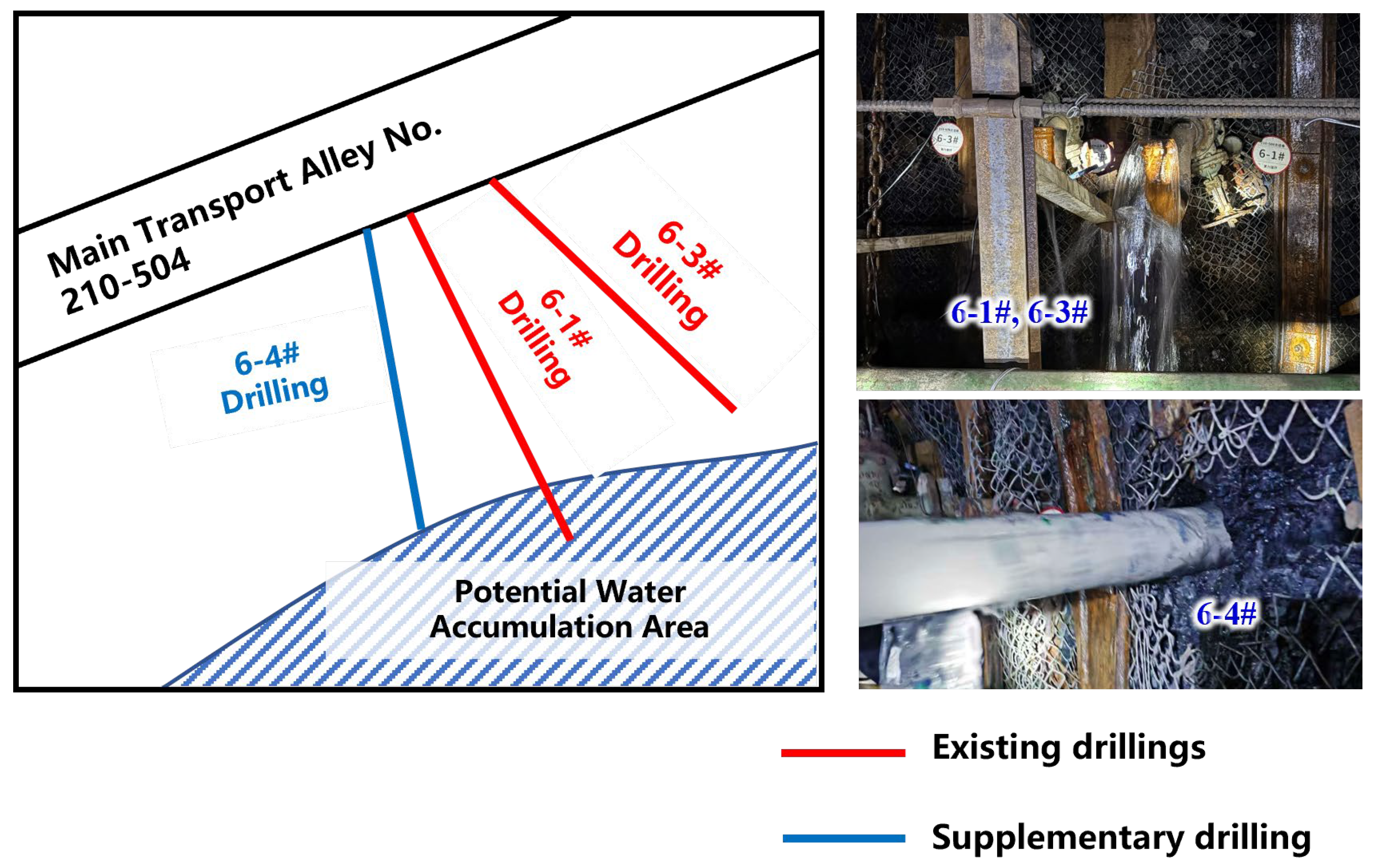
The survey was conducted in the 210–504 main haulage drift of the 10-5 coal seam at the coal mine. Two surveys were conducted regarding water accumulation in the goaf of the 10-5 coal seam. In October 2025, water in the goaf was surveyed and imaged using the existing drainage boreholes 6-1# and 6-3#. Subsequently, three months after the drainage work began, we conducted a supplementary survey using boreholes 6-1# and 6-4# to verify and evaluate the drainage work. The relative positions of boreholes 6-1#, 6-3#, and 6-4# are shown in Figure 7 below. See Table 4 for detailed drilling parameters.
Figure 7.
Diagram of the borehole’s spatial location.
Table 4.
Drilling parameters table.
During the survey, we secured the cable to a PVC rod and then lowered the cable into the borehole using the rod to position the electrodes. Additionally, to ensure the stability of the borehole, we installed a PVC casing to reinforce the borehole walls. To ensure effective transmission of electrical signals to the subsurface, we drilled holes in the PVC casing. Based on the depth of each borehole, we placed an electrode at 1 m intervals within each borehole. In this scenario, for boreholes with water flow, the borehole water itself served as the conductive medium, eliminating the need for artificial water injection; whereas for boreholes with no water flow or minimal water flow, we employed artificial water injection to ensure the borehole was fully saturated prior to detection.
It should be noted In advance that, as shown in Table 4, we assume in this case study that the intersections of the three boreholes lie in the same plane. Although the boreholes may have deviated during drilling, this effect is not considered in this study due to their short lengths. At the same time, we simplified the positioning of the electrodes during the modeling process by calculating their theoretical positions based on the azimuths of the boreholes and then approximating them according to the grid size required for the inversion.
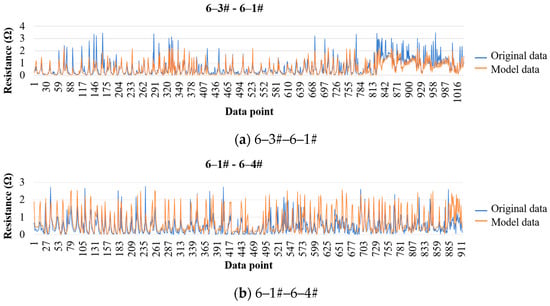
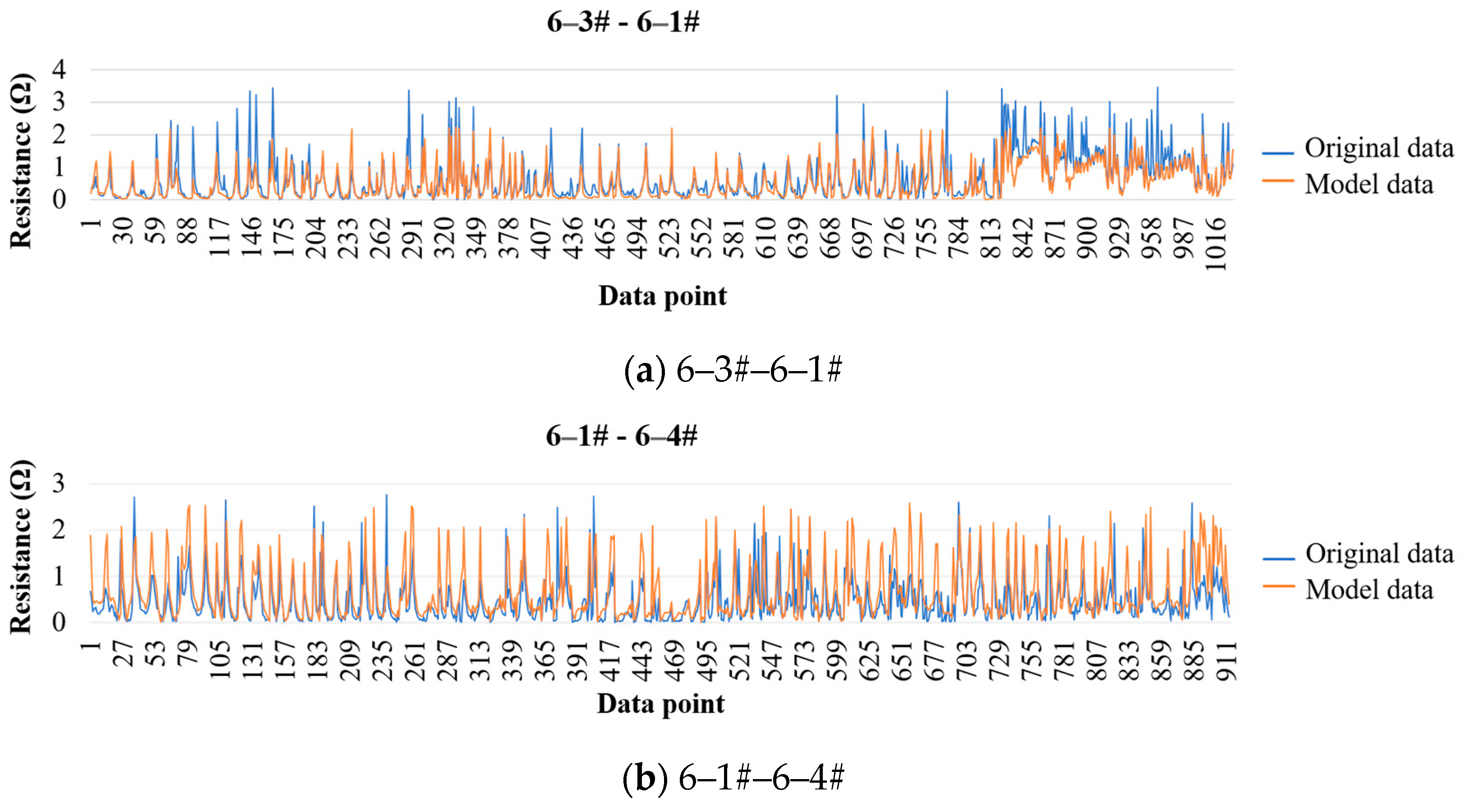
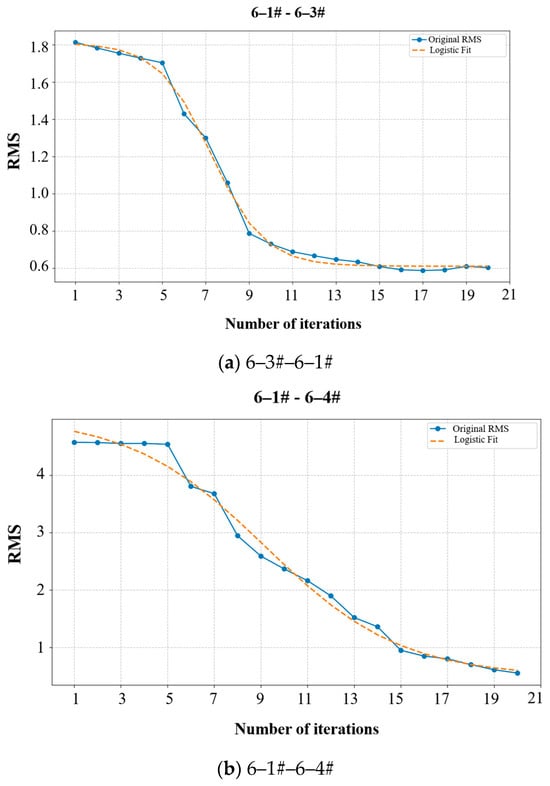
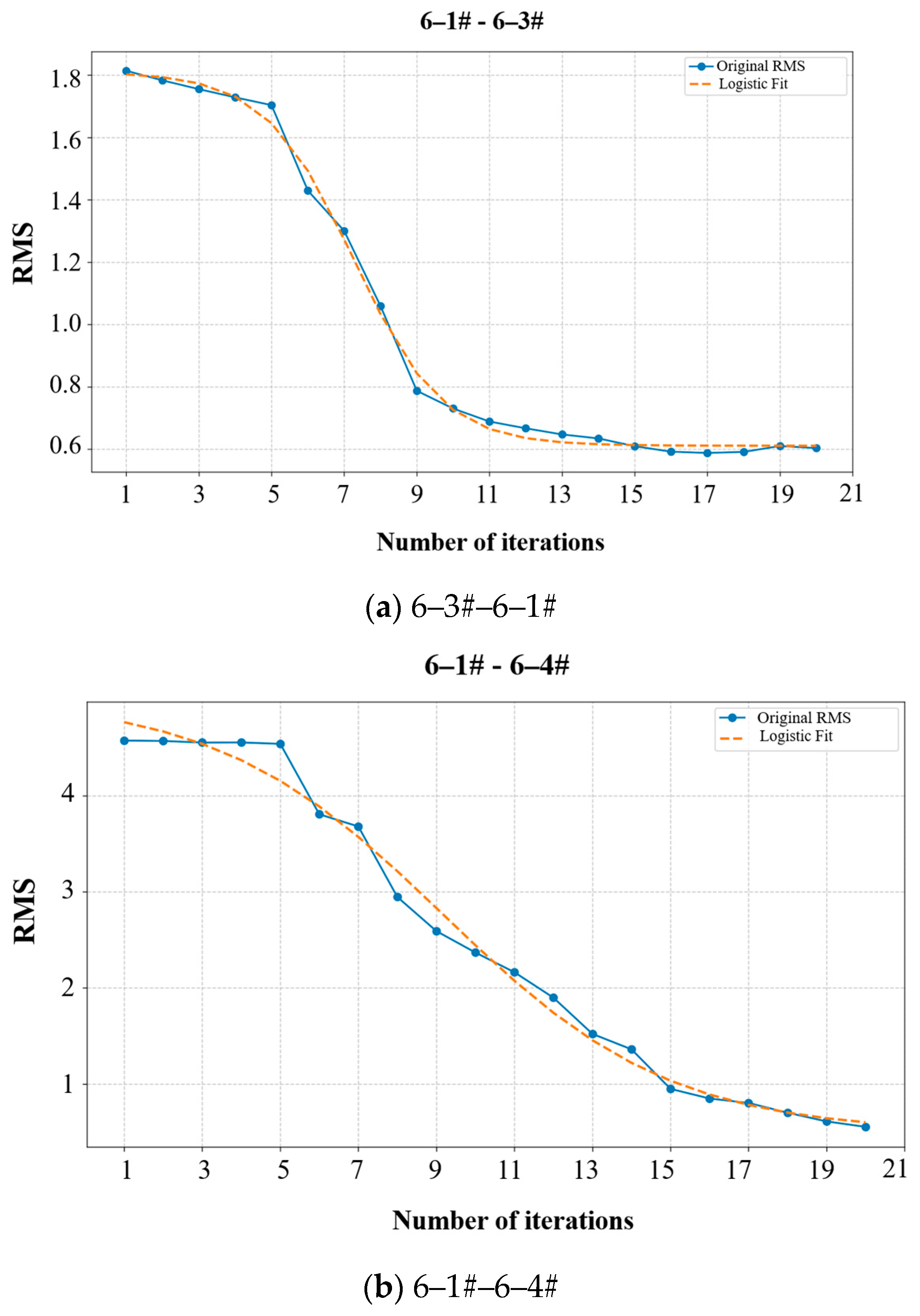
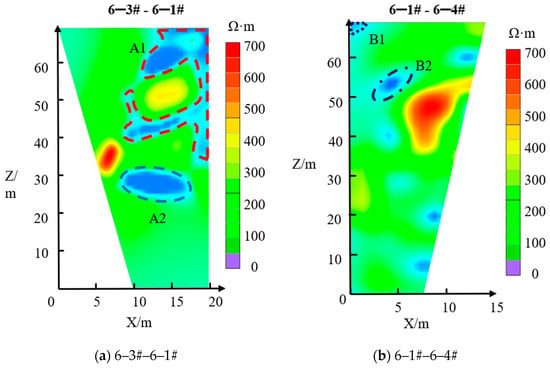
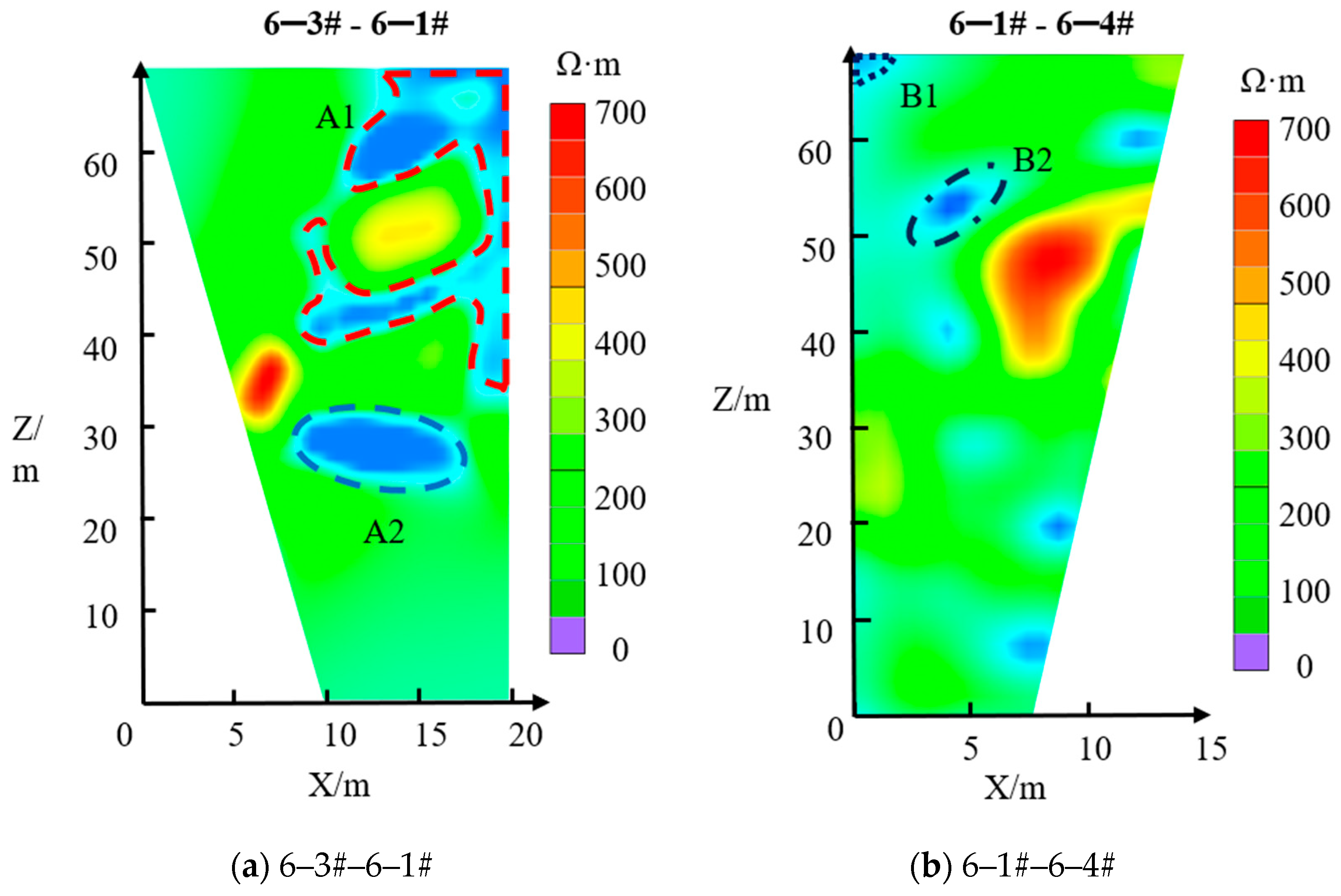
First, prior to data processing, we obtained the resistivity range of geological formations in the survey area (10 Ω·m to 800 Ω·m) from coal mine geological records and applied this information to the inversion process. Figure 8 shows a comparison of the data from the two surveys with the forward modeling results, demonstrating good data fit. The vertical axis represents normalized resistivity, and the horizontal axis represents data points. Figure 9 illustrates the convergence of the inversion errors from the two inversion calculations. As shown in the figure, the inversion errors gradually decrease and eventually converge, indicating that both inversions were successful. The resistivity imaging results are shown in Figure 10, and we will focus on analyzing these results.
Figure 8.
Comparison of forward simulation data.
Figure 9.
RMS convergence curve.
Figure 10.
Results of resistivity tomography.
Figure 10a shows the resistivity imaging results from the first survey. The figure reveals two distinct low-resistivity zones that exhibit a layered spatial relationship from shallow to deep; these are labeled as zones A1 and A2, located primarily in the central and upper-right portions of the figure. The resistivity values range from 0 to 150 Ω·m. Among these, zone A1 (the area enclosed by the red dashed line) is the largest; it is situated at the top of the borehole and corresponds well with the location of the main water accumulation zone in the goaf. Region A2 (enclosed by the blue dashed line) is situated in the lower-middle section. Based on coal seam stratigraphic data, it is inferred that these two regions may represent thin inter-stratum water-filled zones. However, the possibility that it is another geological anomaly cannot be ruled out. The resistivity imaging map shows that borehole 6-1# is situated within the low-resistivity region A1. This finding is consistent with the on-site observation that borehole 6-1# exhibited varying degrees of water inflow; Meanwhile, borehole 6-3# on the left corresponds to a high-resistivity zone on the resistivity imaging map. This aligns with the on-site observation that no water flowed from borehole 6-4#, confirming the results and validating the accuracy of the method.
However, it is worth noting that the large low-resistivity area (A1) in the upper right of the resistivity imaging map corresponds only to the section between Bores 6-1 and 6-3. Due to limitations of the observation system, the right side of Bore 6-1 could not be detected; however, based on the outline and trend of the low-resistivity area, it is reasonable to infer that a portion of the low-resistivity zone still exists to the right. Furthermore, considering the length of the borehole and the location of the low-resistivity zone between the boreholes, it can be inferred that the end of Borehole 6-1 has entered the water-filled goaf area. Since the lowest water level in the goaf is located below the top of the borehole, Borehole 6-1 can only drain the water above its end; it cannot effectively remove the water located below it. This explains why the current on-site drainage efforts have been ineffective. Based on the analysis of these survey results, the coal mine construction team drilled Borehole 6-4# (marked in blue in Figure 7) at a low-water-level location to the right of Borehole 6-1 to drain the water accumulated at the bottom of the goaf.
To verify the dewatering effectiveness of borehole 6-4# and assess the water-bearing conditions in the currently flooded goaf, we conducted a follow-up survey three months later (January 2026). However, due to constraints imposed by coal mining operations, and because the original 6-3# borehole was unsuitable for detection due to a collapse, we used only the 6-1# and 6-4# boreholes to conduct detection and imaging of the water body between the boreholes. Figure 10b shows the resistivity imaging results from this survey. The resistivity value ranges from 0 to 50 Ω·m. It can be observed that there are no large-scale low-resistivity zones between the boreholes, with only a few small low-resistivity zones (B1, B2) present. Comparing the results with those in Figure 10a, it is evident that the large low-resistivity zone originally located at the top of borehole 6-1# has almost disappeared, with only the small low-resistivity zone B1 remaining. This finding is consistent with the fact that borehole 6-1# is currently producing almost no water. Additionally, water inflow in borehole 6-4# has decreased from a large volume to a small volume. It can be inferred that the water accumulation in the upper goaf of the 10-5# coal seam has been successfully drained through boreholes 6-1# and 6-4#, and that the drainage operation was effective. Following this remediation of water accumulation in the upper goaf of the 10-5# coal seam, the coal mine has now resumed normal mining operations.
5. Discussion
Currently, cross-bore resistivity tomography is rarely used in coal mines, and its application in mine tunnel environments requires strict conditions to be met. This method relies on existing boreholes within the mine, and it is essential to ensure that the boreholes are filled with water to guarantee proper coupling. However, these conditions are difficult to meet naturally and typically require manual intervention, which to some extent conflicts with normal mining operations. Furthermore, while three-dimensional detection of water bodies is necessary, this requires 3–4 advanced boreholes at different locations, increasing the workload on-site. Additionally, signal attenuation is inevitable during long-distance detection, leading to a reduced signal-to-noise ratio in the data; therefore, more effective observation methods and improved detection instruments could be utilized. Regarding the resistivity range of the geological formations in this case study, due to the urgency of water management at the site, this study did not have sufficient time to conduct relevant experimental work or discussions; however, this is crucial for the application of the method. Consequently, there is still significant room for improvement in the application of this method in coal mining environments, which represents the focus of our future efforts.
6. Conclusions
- (1)
- Based on the Qinhua Coal Mine in Xinjiang, this paper investigates a cross-hole resistivity CT detection method suitable for water accumulation in thin interbedded goafs in coal mines.
- (2)
- A tomographic scanning observation method based on the principle of “shallow-to-deep, layer-by-layer” was proposed; this method can acquire more useful data, laying the groundwork for high-resolution imaging.
- (3)
- An inverse method with inequality constraints is proposed to improve the accuracy and imaging quality of cross-hole resistivity CT inversion by applying prior information constraints. Specifically, resistivity constraints derived from the resistivity range of geological formations at the study site are incorporated into the inversion equations, thereby enhancing the imaging results.
- (4)
- Tests were conducted at the project site. Initial imaging results indicated the presence of a large area of water accumulation at the top of Borehole 6-1, with the top of the borehole located above the lower boundary of the water body. Based on these findings, the coal mine contractor drilled Borehole 6-4 to the right of Borehole 6-1 for drainage purposes. After three months of drainage, no significant water discharge was observed from any of the three boreholes. Finally, we conducted supplementary surveys in boreholes 6-1 and 6-4. The results showed no significant large-scale low-resistance zones. The drainage effectiveness of borehole 6-4 validated the accuracy of the initial survey regarding the detection of the water body at the top. At the same time, the results of the second survey also confirmed the excellent drainage performance of the boreholes. However, the inability to conduct a comparative imaging analysis of the same area before and after drainage has undermined the reliability of the verification of the drainage effectiveness.
Author Contributions
Conceptualization, H.Z., X.X.; Y.Y.; data curation, C.G., T.M. and F.Z.; formal analysis, H.Z. and X.X.; funding acquisition, Y.Y. and Z.L.; investigation, B.T. and H.L.; methodology, H.Z., B.T. and H.L.; project administration, B.T. and H.L.; resources, X.X., C.G. and T.M.; software, Z.L. and F.Z.; supervision, Y.Y., Z.L. and F.Z.; validation, H.Z. and X.X.; visualization, F.Z. and Y.Y.; writing—original draft, H.Z. and X.X.; writing—review and editing, Z.L. All authors have read and agreed to the published version of the manuscript.
Funding
This research was funded by the Taishan Scholars Program.
Institutional Review Board Statement
Not applicable.
Informed Consent Statement
Not applicable.
Data Availability Statement
The data presented in this study are available on request from the corresponding author due to privacy.
Conflicts of Interest
Authors Haifeng Zhu, Bo Tian and Honggang Li were employed by the company Shandong Energy Group Co., Ltd. The remaining authors declare that the research was conducted in the absence of any commercial or financial relationships that could be construed as a potential conflict of interest.
References
- Zhao, S.; Wu, Q.; Yin, S. Mechanism analysis of water inrush in Daxing coal mine. J. China Coal Soc. 2006, 31, 618–622. [Google Scholar]
- Wang, J.; Wang, X. Risk analysis of roof and floor water inrush of No.2 coal seam in Wangjialing Coal Mine. Coal Sci. Technol. 2011, 39, 120–124. [Google Scholar]
- Vorotnikov, V. Siberian coal mine disaster Kills 52; Exposes safety shortfalls in Russian mining industry. Eng. Min. J. 2021, 222, 22. [Google Scholar]
- Bukowski, P. Evaluation of water hazard in hard coal mines in changing conditions of functioning of mining industry in Upper Silesian Coal Basin–USCB (Poland). Arch. Min. Sci. 2015, 60, 455–475. [Google Scholar] [CrossRef] [Scilit]
- Shvets, I.; Zbykovskyy, Y.; Kalynychenko, V. Modeling of mine water pollution due to corrosion of flooded metal equipment: Ukrainian case. Ecol. Eng. Environ. Technol. 2025, 26, 234–246. [Google Scholar] [CrossRef] [Scilit]
- Loke, M.H.; Chambers, J.E.; Rucker, D.F.; Kuras, O.; Wilkinson, P.B. Recent developments in the direct-current geoelectrical imaging method. J. Appl. Geophys. 2013, 95, 135–156. [Google Scholar] [CrossRef] [Scilit]
- Hutchinson, P.J.; Barta, L.S. Deep-Mine Void Detection Through Electrical Imaging. Interstate Technical Group on Abandoned Underground Mines. 2004. Available online: https://www.thggeophysics.com/wp-content/uploads/2021/11/Mine-Void-Detection-through-Electrical-Imaging.pdf (accessed on 9 May 2026).
- Sun, H.; Cheng, M.; Su, C.; Li, H.; Zhao, G.; Su, M.; Li, S.; Zhang, B.; Zhang, L.; Li, K. Characterization of shallow karst using electrical resistivity imaging in a limestone mining area. Environ. Earth Sci. 2017, 76, 767. [Google Scholar] [CrossRef] [Scilit]
- Zhu, T.; Feng, R.; Hao, J.Q.; Zhou, J.G.; Wang, H.L.; Wang, S.Q. The application of electrical resistivity tomography to detecting a buried fault: A case study. J. Environ. Eng. Geophys. 2009, 14, 145–151. [Google Scholar] [CrossRef] [Scilit]
- Park, M.K.; Park, S.; Yi, M.J.; Kim, C.; Son, J.S.; Kim, J.H.; Abraham, A.A. Application of electrical resistivity tomography (ERT) technique to detect underground cavities in a karst area of South Korea. Environ. Earth Sci. 2014, 71, 2797–2806. [Google Scholar] [CrossRef] [Scilit]
- Majzoub, A.F.; Stafford, K.W.; Brown, W.A.; Ehrhart, J.T. Characterization and delineation of gypsum karst geohazards using 2D electrical resistivity tomography in Culberson County, Texas, USA. J. Environ. Eng. Geophys. 2017, 22, 411–420. [Google Scholar] [CrossRef] [Scilit]
- Xue, G.Q.; Yan, Y.J.; Cheng, J.L. Researches on detection of 3-D underground cave based on TEM technique. Environ. Earth Sci. 2011, 64, 425–430. [Google Scholar] [CrossRef] [Scilit]
- Xue, G.Q.; Cheng, J.L.; Zhou, N.N.; Chen, W.Y.; Li, H. Detection and monitoring of water-filled voids using transient electromagnetic method: A case study in Shanxi, China. Environ. Earth Sci. 2013, 70, 2263–2270. [Google Scholar] [CrossRef] [Scilit]
- Li, H.; Xue, G.Q.; Zhou, N.N.; Chen, W.Y. Appraisal of an array TEM method in detecting a mined-out area beneath a conductive layer. Pure Appl. Geophys. 2015, 172, 2917–2929. [Google Scholar] [CrossRef] [Scilit]
- Anchuela, Ó.P.; Casas-Sainz, A.M.; Soriano, M.A.; Pocoví-Juan, A. Mapping subsurface karst features with GPR: Results and limitations. Environ. Geol. 2009, 58, 391–399. [Google Scholar] [CrossRef] [Scilit]
- Cheng, J.L.; Pan, D.M.; Li, W.; Liu, S.C.; Wang, Y.H.; Jiang, G.Q. Study on the detecting of hazard abandoned workings by ground penetrating radar on strong electromagnetic interference area. J. China Coal Soc. 2010, 35, 227–231. [Google Scholar]
- Conejo-Martín, M.A.; Herrero-Tejedor, T.R.; Lapazaran, J.; Perez-Martin, E.; Otero, J.; Prieto, J.F.; Velasco, J. Characterization of cavities using the GPR, LIDAR and GNSS techniques. Pure Appl. Geophys. 2015, 172, 3123–3137. [Google Scholar] [CrossRef] [Scilit]
- Wei, H.X.; Cha, W.F.; Feng, C.L. Analysis of characteristics of seismic section in goaf area. Prog. Geophys. 2014, 29, 1808–1814. [Google Scholar] [CrossRef]
- Ismail, A.; Abdelnaby, A.; Larson, T. High-resolution P-and S-wave seismic reflection followed by engineering modeling for geotechnical site characterization in southern Illinois. J. Environ. Eng. Geophys. 2017, 22, 375–384. [Google Scholar] [CrossRef] [Scilit]
- Li, F.; Liao, G.Z.; Liu, X.M. Application of mine transient electromagnetic method in coal mine collapse area detection. Saf. Coal Mines 2013, 4, 155–158. [Google Scholar]
- Cui, F.; Wu, Z.Y.; Chen, J.; Wang, L. Fine detection of mine collapse column by anti-explosive ground penetrating radar. Comput. Model. New Technol. 2014, 18, 1306–1311. [Google Scholar]
- Yu, L.; Wei, S.B.; Zhang, J.F.; Yu, Q.J.; Li, S.Q. A DC electrical penetration method for prospecting the coal face alone the same coal layer. J. China Coal Soc. 2010, 35, 1336–1340. [Google Scholar]
- Ge, M.; Wang, H.; Hardy, H.R., Jr.; Ramani, R. Void detection at an anthracite mine using an in-seam seismic method. Int. J. Coal Geol. 2008, 73, 201–212. [Google Scholar] [CrossRef] [Scilit]
- Yancey, D.; Imhof, M.; Gresham, T. Geophysical mine void detection using in-seam seismics. In SEG Technical Program Expanded Abstracts; Society of Exploration Geophysicists: Houston, TX, USA, 2005; Volume 24, pp. 1022–1025. [Google Scholar] [CrossRef] [Scilit]
- Yancey, D.J.; Imhof, M.G.; Feddock, J.E.; Gresham, T. Analysis and application of coal-seam seismic waves for detecting abandoned mines. Geophysics 2007, 72, M7–M15. [Google Scholar] [CrossRef] [Scilit]
- Liu, B.; Li, S.C.; Li, S.C.; Nie, L.C.; Zhong, S.H.; Li, L.P.; Song, J.; Liu, Z.Y. 3D electrical resistivity inversion with least-squares method based on inequality constraint and its computation efficiency optimization. Chin. J. Geophys. 2012, 55, 260–268. [Google Scholar] [CrossRef]

Disclaimer/Publisher’s Note: The statements, opinions and data contained in all publications are solely those of the individual author(s) and contributor(s) and not of MDPI and/or the editor(s). MDPI and/or the editor(s) disclaim responsibility for any injury to people or property resulting from any ideas, methods, instructions or products referred to in the content. |
© 2026 by the authors. Licensee MDPI, Basel, Switzerland. This article is an open access article distributed under the terms and conditions of the Creative Commons Attribution (CC BY) license.