Article

Role of Soil Erosion in Instability of Slopes Along Coastal Karnataka

Manipal Institute of Technology, Manipal Academy of Higher Education, Manipal 576104, Karnataka, India
*
Author to whom correspondence should be addressed.
Geotechnics 2026, 6(1), 21; https://doi.org/10.3390/geotechnics6010021
Submission received: 13 January 2026 / Revised: 4 February 2026 / Accepted: 9 February 2026 / Published: 11 February 2026
(This article belongs to the Topic Advanced Risk Assessment in Geotechnical Engineering)

Abstract

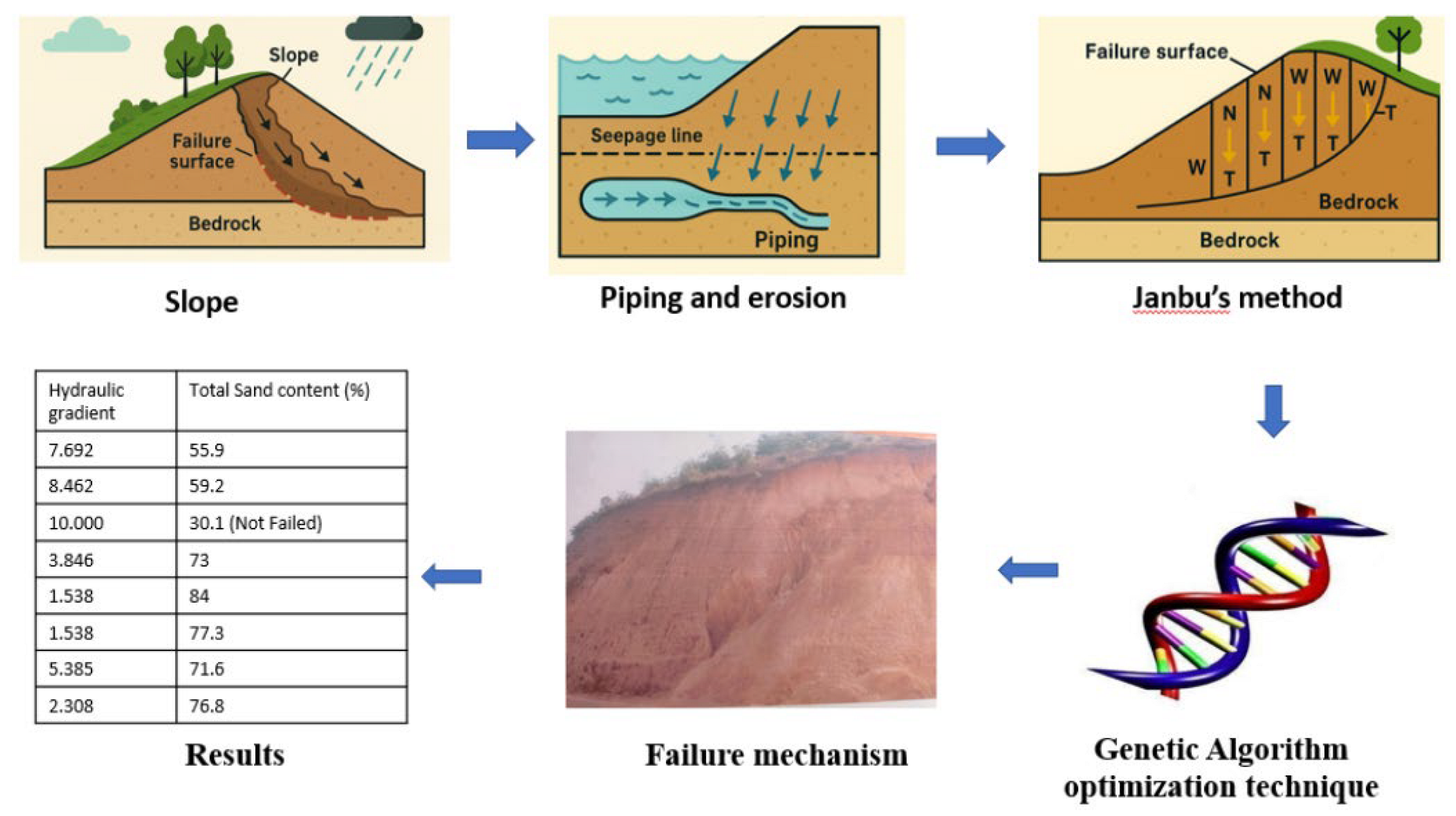
The laterite formations consist of top layers that are highly porous, followed by a lithomargic soil layer over the weathered residual soil and parent rock. The excavated slopes are stable during summer, but the slopes with exposed lithomargic soils have failed during rainy season even when safety factor was more than one. The present study considers the effect of erosion in the lithomargic layer of soil while analyzing the stability of slopes. Janbu’s GPS (Generalized Procedure of Slices) method in conjunction with a genetic algorithm is used to analyse the slope stability and to locate the noncircular critical slip surface. A failed slope from the Yekkur site was considered for the study considering three possible failure mechanisms (Mechanism I, II and III) of slopes due to progressive erosion of fines in the lithomargic soil layer. It is observed that the lithomargic soil’s vulnerability to erosion depends on a critical combination of sand content and hydraulic gradient causing piping. Mechanism III is more critical as compared to other mechanisms and a similar observation was made from failed slopes in the field. The failure in lateritic soil slopes is mainly due to piping of lithomargic soil, which reduces the length of the critical slip surface, and failure due to erosion is progressive.

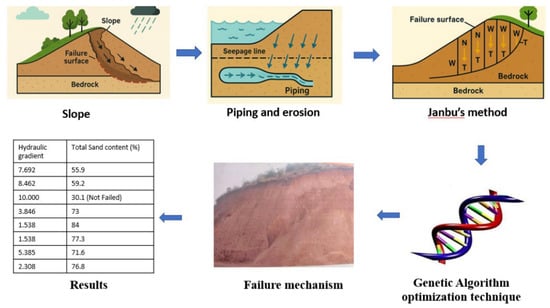
Graphical Abstract

1. Introduction

The coastal region of Karnataka consists of lateritic formations, having a top hardened vesicular layer that is highly porous, followed by a lithomargic soil layer over the weathered residual soil and parent rock. Laterites are formed by the decomposition of the rock, removal in solution of silica and bases, and accumulation of aluminium and iron sesquioxides, titanium, magnesium, clays and other amorphous products. Generally, a coarse-grained concretionary material with ninety percent or more of these laterite constituents is termed ‘Laterites’, while relatively fine-grained material with lower concentrations of oxides is referred to as Lateritic soil.
The geotechnical characteristics and field performance of most laterite soils are influenced considerably by genesis, degree of weathering, morphological characteristics and chemical and mineral composition as well as by the environmental conditions [1]. Laterites of the Dakshina Kannada and Udupi districts belong to the residual type of soils, which are the residue resulting from in situ weathering of parent rock ‘Granitic Gneiss’ under intense conditions of tropical climate, high temperature and rainfall. These laterites possess certain chemical characteristics which cause hardening after desiccation when exposed to air. The type of laterite found all along the coast is low level laterite.
The laterites of this region are essentially vesicular soils which are the products of tropical or sub-tropical weathering, rich in secondary oxides of iron and aluminium, or both, and large amounts of quartz and kaolinite [2]. Quite often it has been observed during field investigations that the hard layers of laterites are underlain by loose material of a different nature with a change in colour and considerable reduction in strength. This loose material is ‘Lithomargic soil’ (locally known as shedi soil) usually found in long bands in low level laterites. In laterite soil, since the top layer is porous, water leaches through the topsoil and collects above the parent rock. In the presence of leached water, the soil gets weathered and forms a whitish soil called ‘Lithomargic soil’. This soil is available at a depth of a few meters from the ground surface. The soil band ranges in thickness from a few meters to about 20 m. This soil is usually white, yellowish or cream, and at some places the soil is mixed with laterite soil (transitional lateritic soil). The leaching action in this area is due to heavy rainfall during the rainy season and subsequent lowering of the ground water table in summer.
The topology of the area is undulated, and a lot of cuttings and fillings are encountered during the implementation of civil engineering projects. In general, when the depth of cutting is more than 3–4 m, lithomargic soils are exposed. These slopes are stable during summer, but the slopes with exposed lithomargic soil have failed during the rainy season. Also, erosion of soil from the exposed lithomargic soils has been observed during the rainy season.
A Study has been made regarding the laterite soil, behaviour of excavated slopes and effect of remedial measures taken along coastal Karnataka. The stability of cuts in vesicular laterites pose certain problems in the high stress level found in the proximity of the toe of the cut, and simple flattening of the slope will not increase the stability of the slope [3]. Various techniques, such as retaining walls with troughs, soil nailing, cut and cover tunnels, etc., are available to stabilize the exposed surface of the lithomargic soil [4].
Furthermore, laterite soils are also defined as vesicular soils, which are the products of tropical or sub-tropical weathering, rich in secondary oxides of iron, aluminium or both, and large amounts of quartz and kaolinite [5]. The high permeability of laterites, the underlain loose material, poses problems in construction. Also, when these top layers are exposed, they get weathered and harden, but the lower layers will have low strength. Hence, there is a tendency of a decrease in strength of lateritic soils as one goes deeper from the top surface [5].
The study on the fluctuation in water tables on the soil at a certain depth from the ground level shows the weathering of soil, leading to the formation of lithomargic soil below the ground level. The presence of a significant amount of sand and the low value of cohesion in lithomargic soil assists the erosion process and thus requires protection for exposed surface [6]. Some studies showed that remedial measures such as stone pitching, drainage, gabions, geonet/geomat, retaining walls, geobags, etc. had been used in many sites along Konkan railway. The failures continued to occur in some places, even after taking remedial measures [7,8]. The properties of laterite soils gave a range of values for cohesion (6–50 kN/m2), specific gravity (2.4–2.65), angle of friction (16–18°), dry unit weight (16–18 kN/m3), plasticity index (5–9) and N value from SPT test (10–30) [9,10]. Various techniques have been used to study the impact of rainfall and soil erosion on slope shape and stability [11,12,13]. Particle migration is driven by hydrodynamic forces, with increased water pressure and reduced strength at the toe, particularly during heavy rainfall [14,15,16]. Studies have been conducted to investigate the critical hydraulic gradient associated with soil erosion on slopes [17,18]. In lateritic soils under rainfall, studies have shown that water infiltration causes vertical downward movement initially, followed by slope-toe accumulation, triggering slope instability [19,20,21]. The present study envisages the study on erosion effect on slope stability using Janbu’s GPS method and genetic algorithm (GA) as an optimization technique for the failed slopes along coastal Karnataka.

2. Methods and Methodology

2.1. Soil Properties of Laterite and Lithomargic Soils Along Coastal Karnataka

The laterite and lithomargic soil samples from different slopes along coastal Karnataka were collected and their properties were determined. The range of values of soil properties is given in Table 1.
Though the shear strength parameters of lithomargic soils are less than that of laterite soil, it does not seem to be a weak soil from its shear strength parameter values (cohesion = 29 to 39 kN/m2 and angle of shearing resistance = 15 to 21°). As per IS classification system, Lithomargic soils are classified as ‘SM’, i.e., silty sand, indicating significant amount of sand content in these soils.

2.2. Study of Failure of Slopes

Along coastal Karnataka, it has been observed that most of the excavated slopes in laterite soils which were stable during excavation have failed during heavy rains in the monsoons. Also, it is seen that some slopes have failed 2–3 years after excavation, and in all the slopes which have failed, the lithomargic soil layer has been exposed. The slopes which comprise entirely laterite soils are stable and continue to be stable even after 20–25 years. Hence it is this exposure of lithomargic clay to the atmosphere which is making the slopes unstable.
If the failed slopes with exposed lithomargic soil are analysed with available rigorous methods of stability analysis, the slopes are found to be stable. But these slopes have failed over a period of 1–4 years from the time of excavation. Hence the effect of erosion in the lithomargic soil layer on the stability of slopes needs to be studied.

2.3. Failure Mechanisms

Based on the field investigations and properties of laterite and lithomargic soils, it is evident that the failure of the slope in this region is progressive due to erosion of fines in lithomargic soil. Erosion takes place during the rainy season either due to seepage of rainwater or due to a rise in the ground water table. As the rainwater enters the top laterite soil, it easily percolates to the lower lithomargic soil layer. In the lithomargic soil layer, the water will move laterally towards the face of the slope if the soil contains significant amounts of sand. In such a case, erosion of fine soil takes place if the slope face is left unprotected. Similar situations can arise, if the ground water table rises above the lithomargic soil layer, which is likely to occur during rainy season.
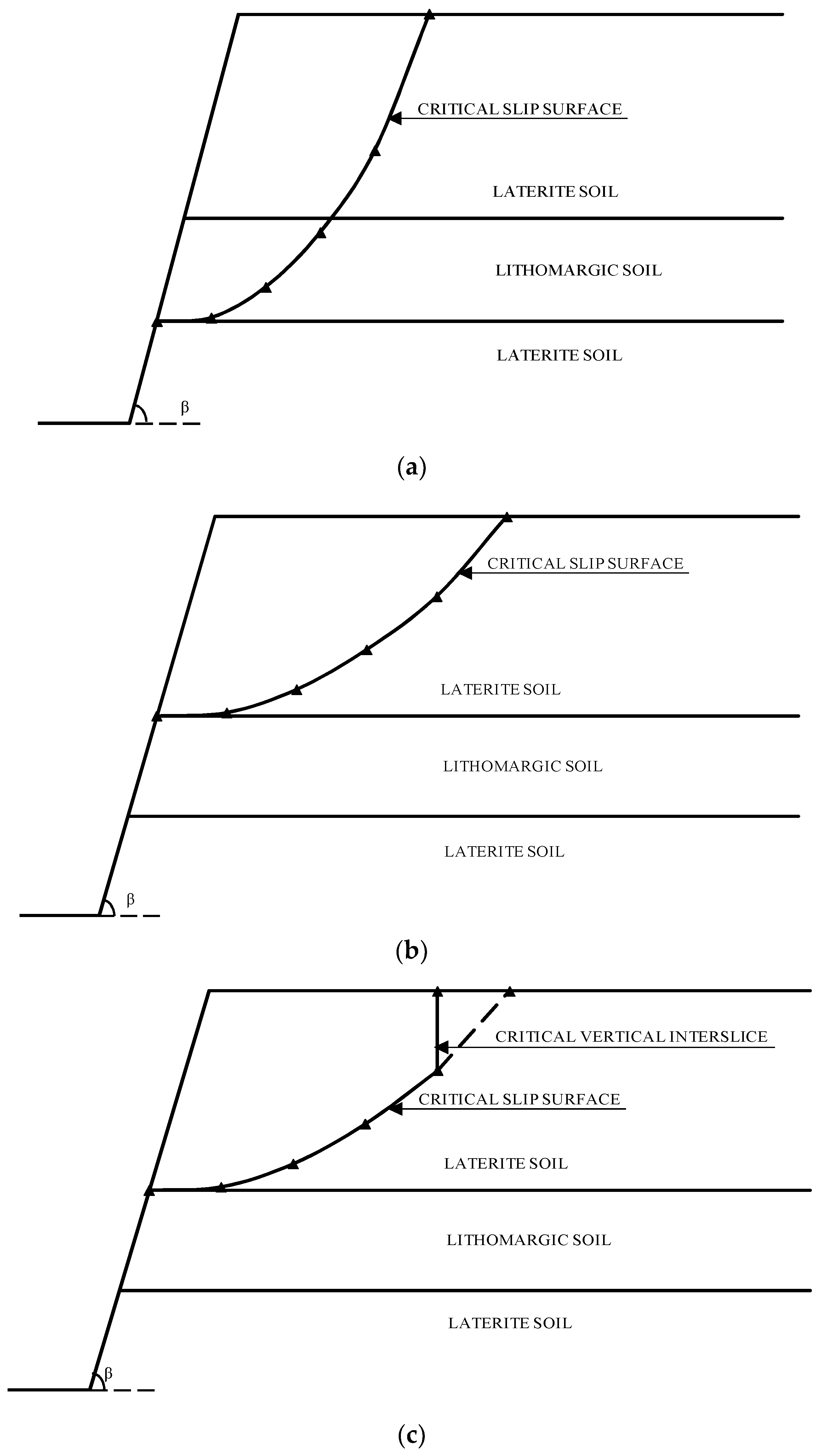
Three possible failure mechanisms are presented in Figure 1a–c such as Mechanism I, where the critical slip surface passes through the bottom layer of the lithomargic soil, Mechanism II, where the critical slip surface passes through top layer of lithomargic soil and Mechanism III, where the critical slip surface passes through top layer of the lithomargic soil but with a vertical slip surface at the upper part of the slope.
As stated earlier, the erosion of fines from lithomargic soil due to seepage of water is progressive and may take many seasons. Once the fines have eroded partly, the coarse particles also start moving out, leading to piping of the lithomargic soil. The extent of removal of the lithomargic soil due to piping reduces the factor of safety of the slope to unity; the abovementioned three mechanisms have been studied for a field slope.

2.4. Stability Analysis and Optimization

In the present study, a stability analysis of the slopes is conducted using Janbu’s method [22] and GA [23] as a search technique for non-circular critical slip surface. The minimum FOS corresponding to a critical slip surface is expressed as a constrained minimization problem.
For a slope characterized by defined soil properties, the factor of safety is governed by the configuration of feasible slip surfaces. In the optimization framework, the safety factor is treated as the objective function, and the design variables correspond to the parameters defining the slip surface profile. For the initial trial slip surface, points were carefully chosen at uniform intervals which were then used within the optimization framework to minimize factors of safety. The objective function was penalized when the geometric constraint (concavity of slip surface) was violated. Parameters of genetic algorithm such as generation number, population size, crossover probability and mutation probability directly affect how the slip surfaces are generated during the optimization process. This whole procedure of evaluating, selecting the fittest and producing a new set of slip surfaces using the GA operators is inherently an iterative process. The extent of these iterations is determined by the predefined generation number. In the present study the penalty function proposed by Rajeev and Krishnamoorthy (1992) [24] was used, along with GA parameters in the following ranges: population size (12–14), generation number (200–300), crossover probability (0.8) and mutation probability (0.01). The safety factor for each slip surface generated was evaluated from Janbu’s method of slope stability analysis.

3. Results

3.1. Mechanism I

Figure 2 shows a slope from Yekkur site whose geometry and soil properties are indicated in the figure. The properties of laterite soils above and below the lithomargic soil are assumed to be the same. To analyse the slope for the worst possible conditions, the slopes are analysed for the high level of water table available at the site during the rainy season to simulate the worst conditions in the field. The stability analysis of this slope with Janbu’s method using GA as a search technique gives a minimum factor of safety of 1.622 indicating a stable slope. The laboratory tests on lithomargic soil show that the soil has 57% of sand that may permit the fines to get eroded when the water seeps through it during the rainy season.
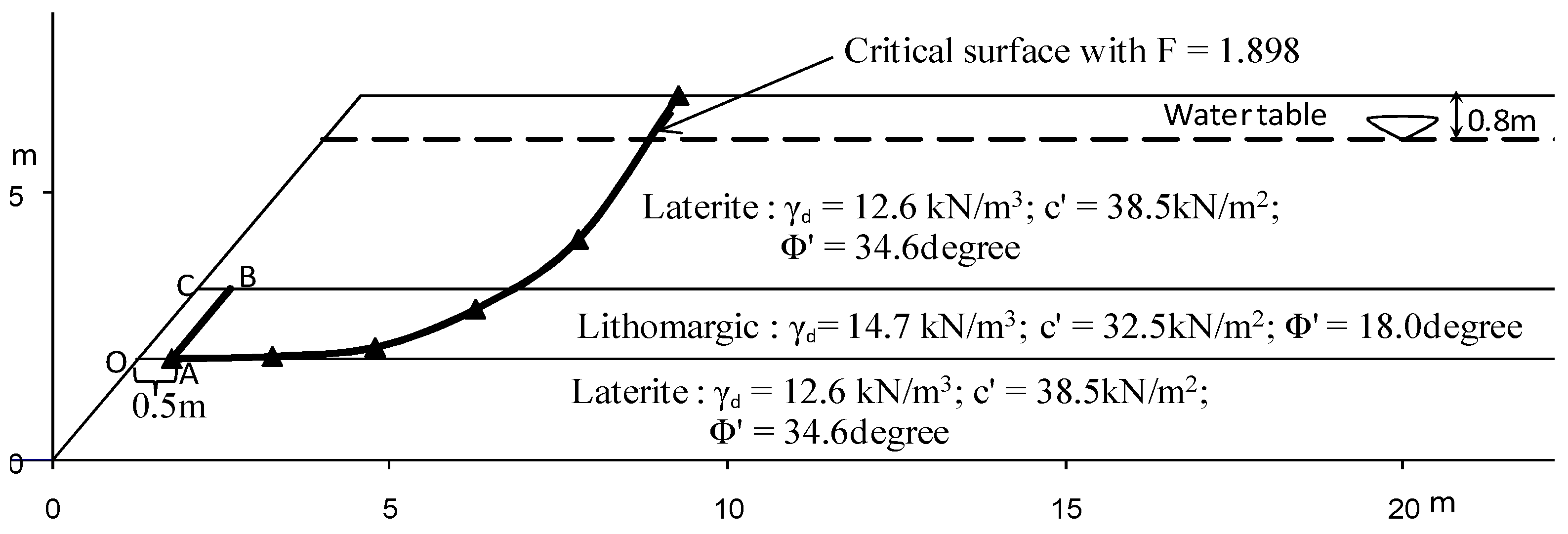
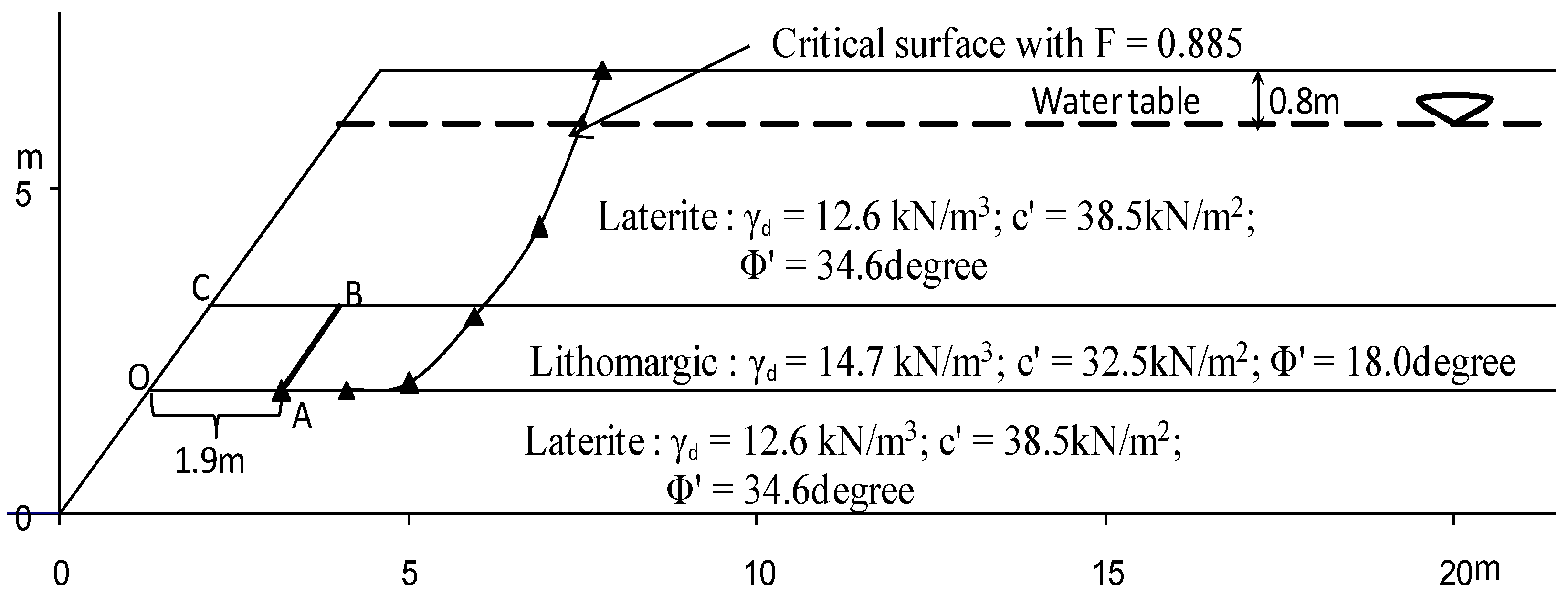
The slope is analysed for various stages of removal of lithomargic soil until the factor of safety reaches unity. When there is no removal of soil particles, the critical slip surface is assumed to be passing through point O, shown in Figure 2. The factor of safety obtained for critical slip surface passing through point O is 1.973. When the soil is removed by 0.5 m from point O (soil mass OABC) due to piping, the factor of safety decreases (F = 1.898). This decrease in safety factor is due to a decrease in the length of the slip surface that shortens the resisting area. While searching the critical slip surface, it is assumed that it passes through point A. With a further removal of soil for a length of 1.0 m, the factor of safety reduces to 1.842. In this mechanism, the slope fails when the removal of soil is 1.9 m from point O as shown in Figure 3; i.e., the factor of safety of the slope reaches below 1.0, indicating an unstable slope.

3.2. Mechanism II

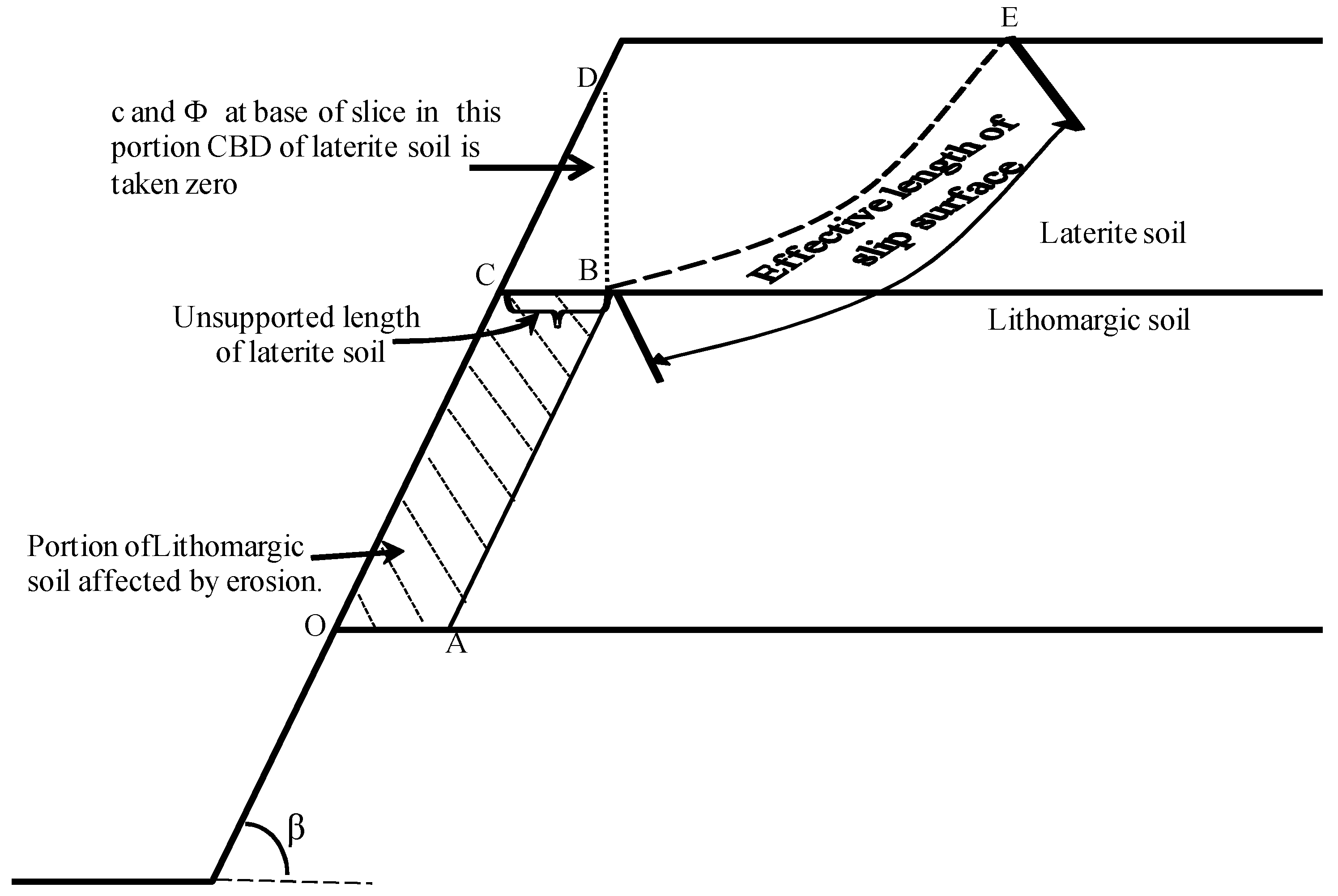
In this proposed failure mechanism, it is assumed that the slip surface passes through the top layer of lithomargic soil as shown in Figure 4, where OABC indicates the soil mass that is removed owing to piping. Due to the removal of soil for a length of CB, the length of the slip surface reduces, which is termed the effective length of the slip surface. While analysing the slope for stability, the weight of soil mass above CB (i.e., CBD) is considered, but the shearing resistance along CB is taken as zero.
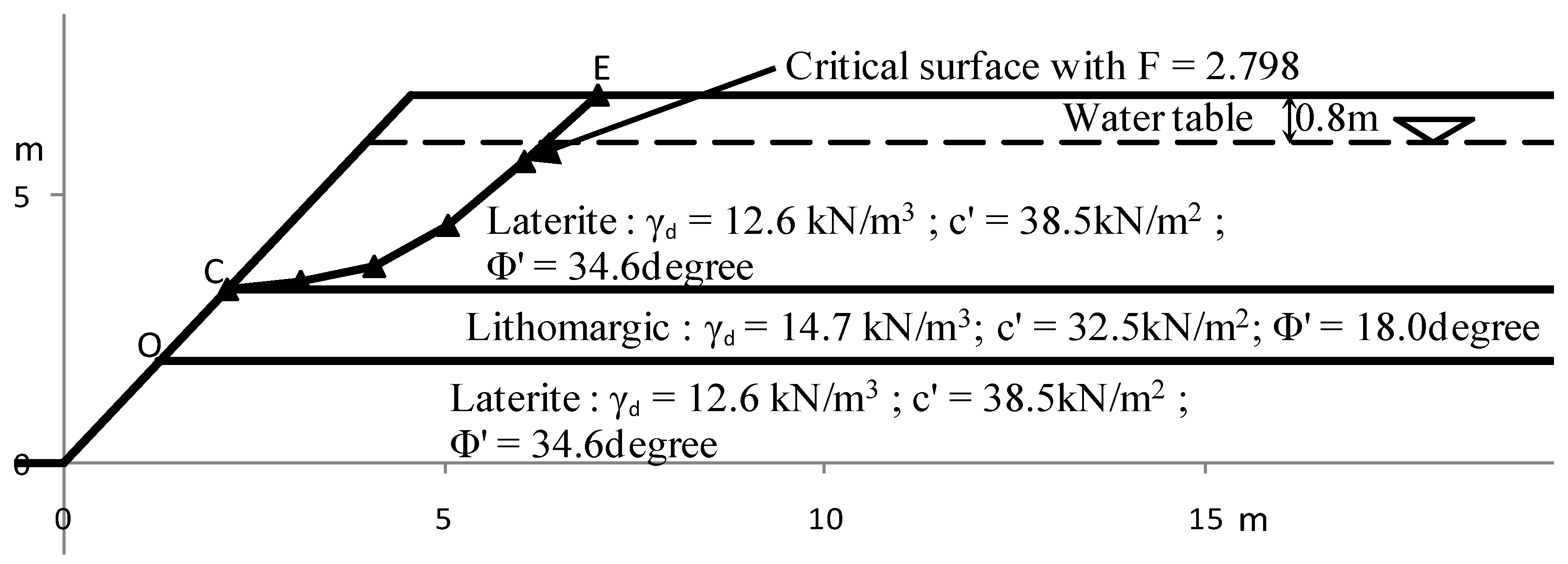
The field problem analysed for mechanism I, is reanalysed by using the mechanism II, as shown in Figure 5. The slope is initially analysed without removal of lithomargic soil and a minimum factor of safety of 2.798 is obtained. This value is substantially higher than the one obtained for mechanism I (F = 1.973) for similar conditions. This is because in mechanism I the slip surface partly passes through the lithomargic soil layer whereas in mechanism II, the slip surface entirely passes through laterite soil which is stronger than lithomargic soil.
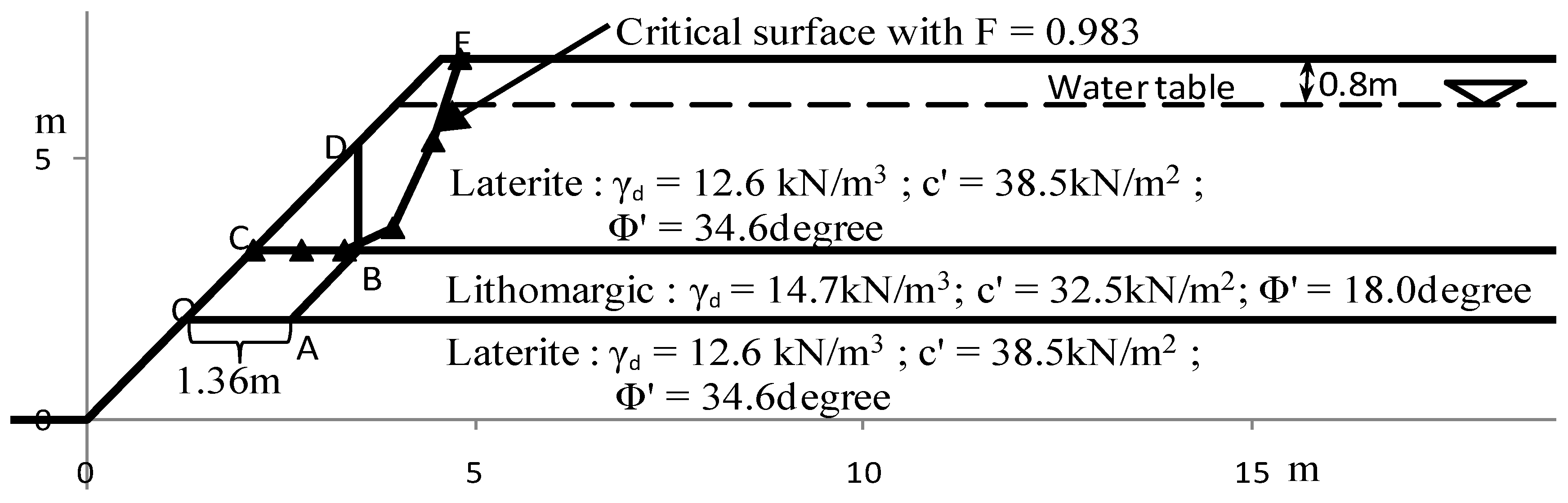
This slope is analysed for various stages of removal of lithomargic soil, and it is observed that as the length of removal of lithomargic soil increases, the factor of safety decreases. When the length of removal of lithomargic soil is 1.36 as shown in Figure 6, the factor of safety is close to unity, indicating incipient slope failure. Furthermore, it can be noted that the failure mechanism II is more critical than mechanism I as it requires a lesser length of removal of lithomargic soil for instability of the slope.

3.3. Mechanism III

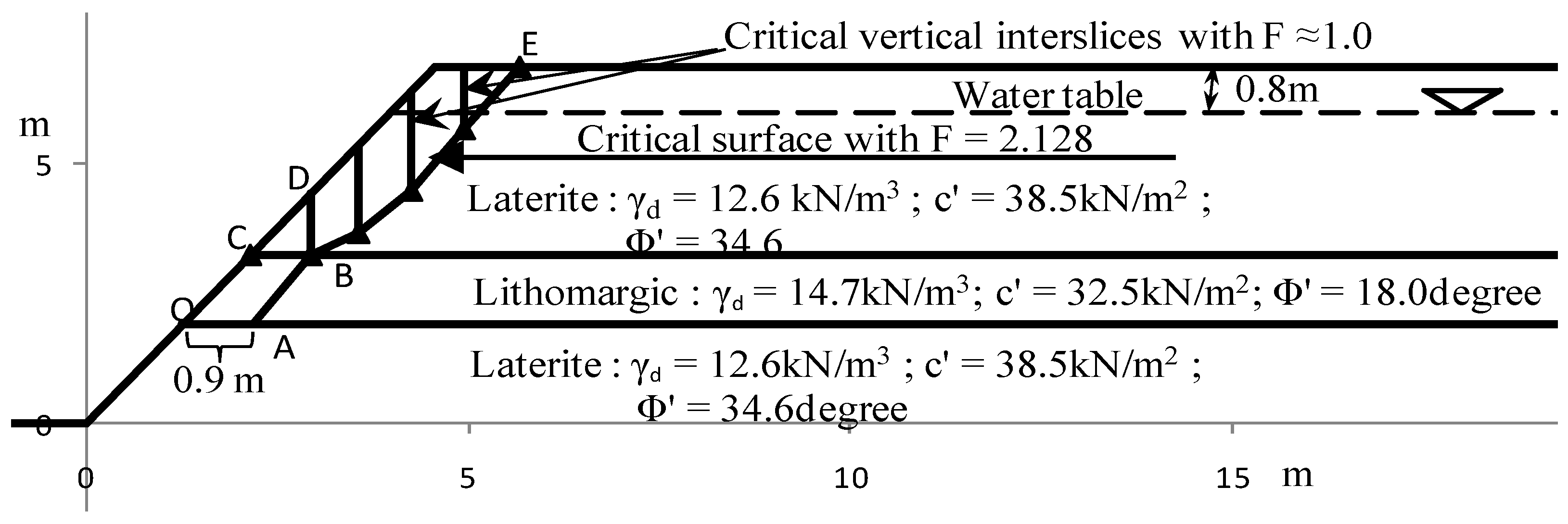
This is a special case of mechanism II wherein the factor of safety along the vertical interslice boundaries is checked. For the example problem considered in Figure 7 is observed that at 0.9 m length of removal of lithomargic soil, the factor of safety along the interslice boundary reaches unity, indicating failure of slope.
The results obtained from the three failure mechanisms discussed above, are presented and compared in Table 2. For the field problem analysed, the length of removal of lithomargic soil (unsupported length of laterite soil) for mechanisms I, II and III are 1.9 m, 1.36 m and 0.9 m, respectively. This clearly demonstrates that failure mechanism III is more critical as compared to the other mechanisms. In fact, one can make similar observations from the failed slopes in the field where the failure surface is vertical in the upper part of the slope.

3.4. Piping in Lithomargic Soil

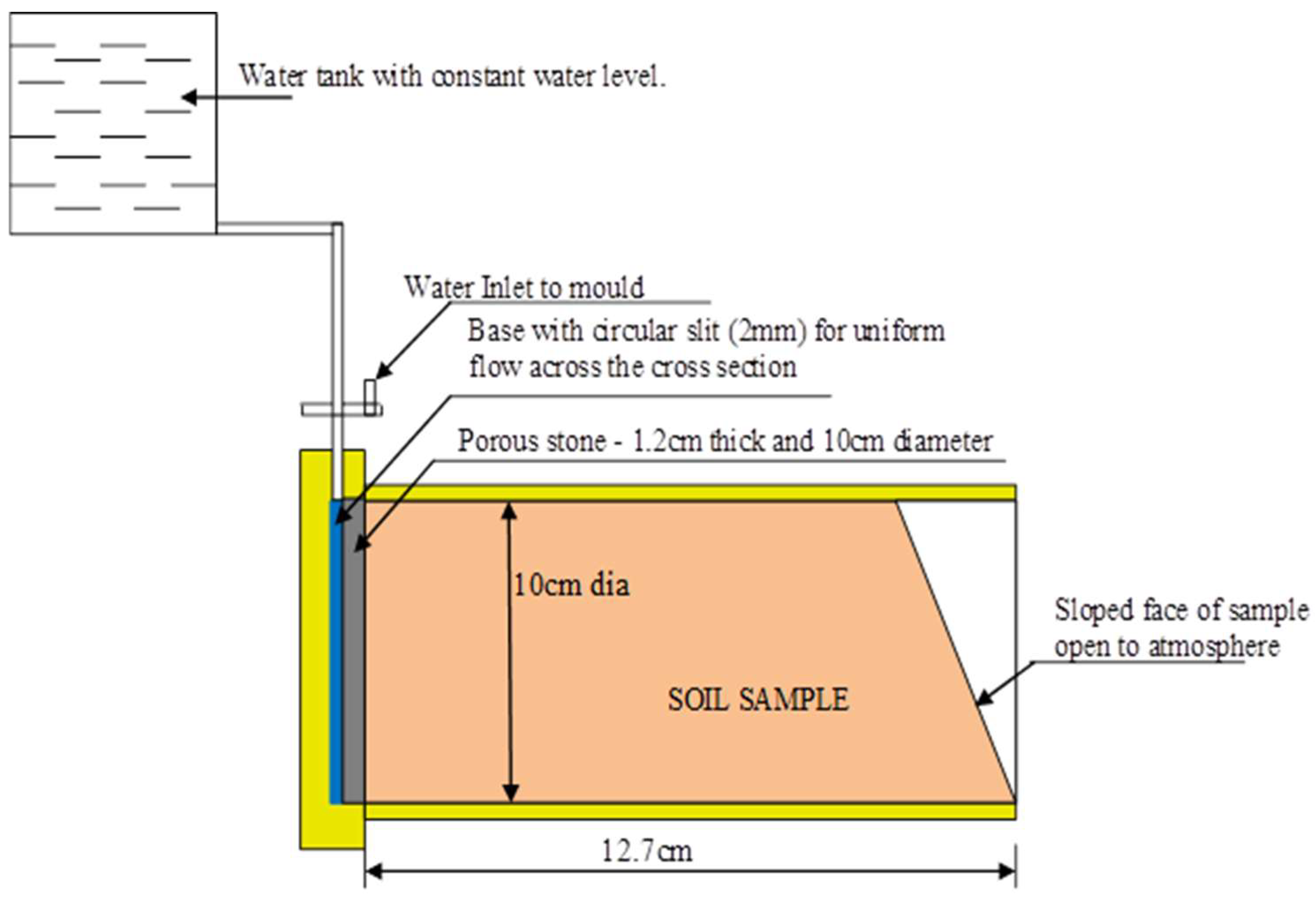
The vulnerability to erosion of lithomargic soil will depend on the total sand content and the seepage force that dislodges the unprotected soil at the face of the slope. To predict the susceptibility to erosion of a given lithomargic soil, a relationship between the total sand content and hydraulic head at failure of the slope has been established by conducting laboratory tests on number of samples. In the study of erosion of lithomargic soil, horizontal core cutter samples were taken and transferred to the laboratory permeameter mould, which is placed horizontally with one end connected to a constant head device and the other end open with a slope of 1.5V:1H, simulating field conditions, as shown in Figure 8.
For a given head, as the water flows through the soil, it carries fine particles which are collected in a beaker. Water is allowed to flow through the sample for this head until no further movement of soil particles takes place. The head is increased, and the above procedure is continued until the soil mass slides. In this experiment, it is assumed that the water seeps through the topsoil (laterite soil) and enters lithomargic soil without carrying soil particles. This assumption can be justified as the topsoil is compact and highly porous and no erosion of the topsoil is observed in the field. The lithomargic soil layer is horizontal and the water moves in this layer in the horizontal direction towards the slope face. Sliding of slope face in the laboratory test means incipient of erosion of slope face in the field. The actual failure of the slope in the field may occur after several monsoons due to continuous erosion of lithomargic soil. The hydraulic head is the difference in elevation between the ground water table and the bottom of the lithomargic soil layer where the water exits from slope face. Table 3 gives the details of the erosion study done on a sample from Alevoor slope near Udupi, and Table 4 gives the details of the lithomargic soil from this site.
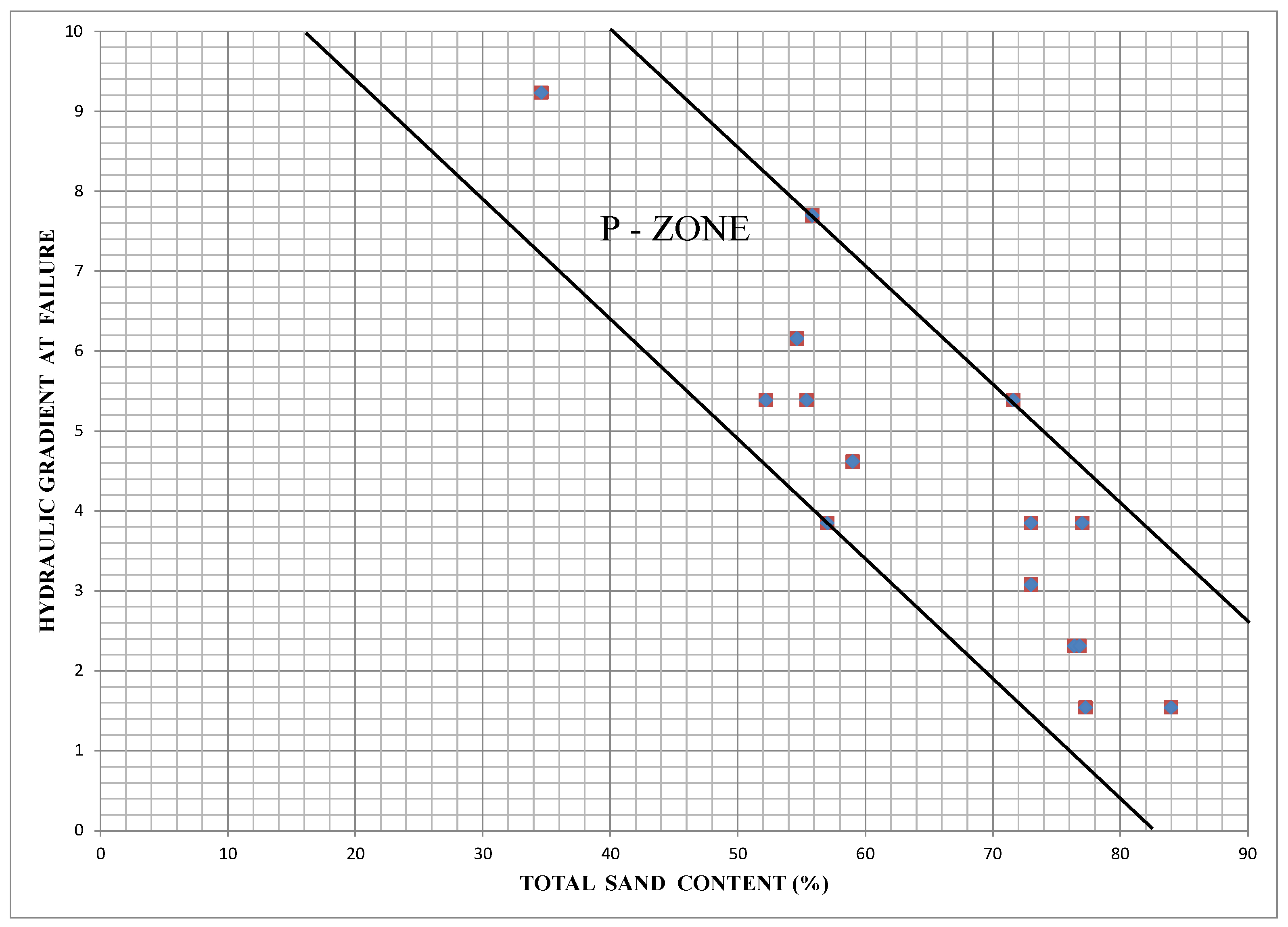
Many such samples from various sites were studied and a graph of total sand content vs hydraulic head at failure is obtained as shown in Figure 9 below. The band or zone in Figure 9 is called the ‘Piping Zone’ or ‘P-Zone’. This can be used to determine whether a given slope with exposed lithomargic soil is stable with respect to erosion. The total sand content in lithomargic soil of a given slope is found along with the maximum available hydraulic head at the site during the rainy season. If the coordinates of the point referring to total sand content and hydraulic head available at the bottom of the lithomargic soil layer fall in the P-Zone, then the slope is unstable and requires external protection for the lithomargic soil layer, as shown in Figure 9. Otherwise, i.e., if the point lies outside the P-Zone, the slope is stable.

3.5. Study of Stability of Slope from Yekkur Site

A field problem is taken from Yekkur, where the slope has failed during the rainy season. The soil properties of laterite and lithomargic soils at Yekkur are given in Table 5.
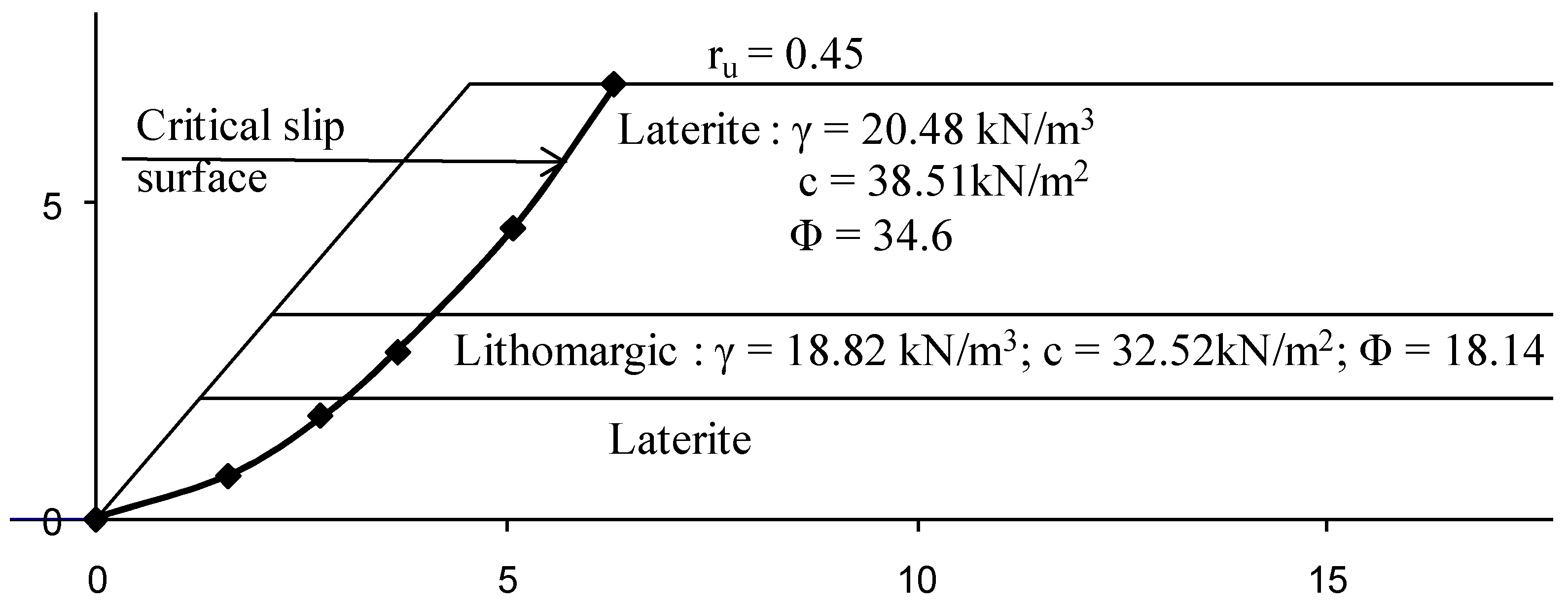
The slope and its soil properties along with the critical slip surface obtained are as shown in Figure 10. The slope has a slope of 1.5V:1H and has lithomargic soil in between top and bottom laterite soils. The properties of the top and bottom laterites are the same.
For the stability analysis, Janbu’s (1973) Generalized Procedure of Slices (GPS) [22] is used in conjunction with the genetic algorithm (GA [23]) as a search procedure to locate a noncircular critical slip surface. The pore pressure coefficient (ru) was taken as 0.45 to simulate the worst site conditions, and the analysis gave a critical surface with a factor of safety 1.663 as shown in Figure 10. Since this slope has failed during monsoon, the stability with respect to erosion from the lithomargic soil layer is checked. The total sand content for the lithomargic soil in this slope is 57.2% and the hydraulic head available during heavy rains in monsoon was approximately 0.8 m and the hydraulic gradient is 6.29. For these values, from Figure 9, we get a point which lies in the P-Zone and hence erosion has occurred in the lithomargic soil layer, which, over a period, has reduced the stability leading to the failure of this slope.

4. Conclusions

Based on the above study, it may be concluded that the slope failure in this region is observed to be progressive, due to erosion of the lithomargic soil layer. The erosion of the lithomargic soil layer occurs either due to seepage or due to a rise in the ground water table during the rainy season. From the site studies taken up, when erosion occurs in the lithomargic soil layer, it is noted that the stability of laterite slopes in this coastal region reduces.
Hence, the aspect of soil erosion needs to be considered when analysing the slope stability in this region.
From the tests conducted to study the erosion of the lithomargic soil layer, it is seen that the total sand content affects the erosion process. A plot of total sand content vs hydraulic gradient gives a band, called a P-Zone as shown in Figure 10, that can be used to determine the possibility of soil erosion in each slope.
Using the available stability methods, one can determine the stability of the slope. If the slope is stable (factor of safety is more than required) then using the total sand content in the lithomargic soil layer and the possible hydraulic gradient at the site can verify the possibility of erosion of lithomargic soil. If there is no erosion then the slope is stable, or else suitable measures must be taken against erosion.

Author Contributions

All authors contributed to the study, conception and design. Data collection, analysis and original draft of the manuscript were prepared by A.U.R. Material preparation, methodology and final draft were prepared by R.P.B. Manuscript corrections, validation and review were conducted by N.S. and L.U.A. All authors have read and agreed to the published version of the manuscript.

Funding

This research received no external funding.

Institutional Review Board Statement

Not applicable.

Informed Consent Statement

Not applicable.

Data Availability Statement

The data presented in this study are available on request from the corresponding author. The data are not publicly available due to privacy.

Acknowledgments

The authors are thankful to MIT, Manipal, India, for the provision of computational facilities and laboratories to execute this research work.

Conflicts of Interest

The authors declare no conflicts of interest.

References

  1. Gidigasu, M.D. Laterite Soil Engineering, Pedogenesis and Engineering Principles; Elsevier Scientific Publishing Company: New York, NY, USA, 1976; pp. 35–67. [Google Scholar]
  2. Bhagyashree, B.; Udayashankar, H.N.; Sarvade, P.; Kavyashree, K. Correlation of Mineralogical and Geotechnical Properties of Laterite Soils of Coastal Karnataka, India. Civ. Eng. Archit. 2023, 11, 3334–3346. [Google Scholar] [CrossRef]
  3. Satyanarayana, K.V.S.; Thomas, P.K. Studies on Laterites and Associated Soils I. Field characteristics of laterites of Malabar and South Kanara. J. Indian Soc. Soil Sci. 1961, 9, 107–118. Available online: https://indianjournals.com/article/jisss-9-2-007 (accessed on 1 February 2026).
  4. Chitra, R.; Manish, G. Geotechncial Investigations and Slope Stability Analysis of a Landslide. Int. J. Eng. Res. Technol. 2016, 5, 390–398. [Google Scholar] [CrossRef]
  5. Sreekantiah, H.R. Laterites and Lateritic soils of west coast of India. In Proceedings of the Southeast Asian Geotechnical Conference, Bangkok, Thailand, 7–11 December 1987; pp. 39–43. [Google Scholar]
  6. Sabhahit, N. Formation and Engineering properties of Lithomargic clay. In Proceedings of the International Symposium on Lowland Technology, Saga, Japan, 18–20 September 2002; pp. 59–62. [Google Scholar]
  7. Sinha, C.S.; Raja, Y.N.; Nadeesh, N.S. Understanding the Framework of Environmental and Geological Causes of the 2024 Ankola Landslide, Karnataka state, Focusing on Rainfall and Road Infrastructure Construction Projects in Hilly Terrain and Landslide-Prone Regions of India. Int. J. Res. Eng. Appl. Manag. 2024, 10, 65–74. Available online: http://ijream.org/papers/IJREAMV10I09118102.pdf (accessed on 1 February 2026).
  8. Chen, B.; Zhang, X. Effects of slope vegetation patterns on erosion sediment yield and hydraulic parameters in slope-gully system. Ecol. Indic. 2022, 145, 109723. [Google Scholar] [CrossRef]
  9. Shivashankar, R.; Shankar, A.U.R.; Jayamohan, J. Some Studies on Engineering Properties, Problems, Stabilization and Ground Improvement of Lithomargic Clays. Geotech. Eng. J. SEAGS AGSSEA 2015, 46, 68–80. [Google Scholar] [CrossRef]
  10. Shivashankar, R.; Thomas, B.C.; Krishnanunni, K.T.; Reddy, D.V. Slope Stability Studies of Excavated Slopes in Lateritic Formations. In Geotechnical Applications; Lecture Notes in Civil Engineering; Springer: Berlin/Heidelberg, Germany, 2019; Volume 13, pp. 127–134. [Google Scholar] [CrossRef]
  11. Wang, H.; Pang, G.; Yang, Q.; Long, Y.; Wang, L.; Wang, C.; Hu, S.; Wang, Z.; Yang, A. Effects of slope shape on soil erosion and deposition patterns based on SfM-UAV photogrammetry. Geoderma 2024, 451, 117076. [Google Scholar] [CrossRef]
  12. Sensoy, H.; Kara, Ö. Slope shape effect on runoff and soil erosion under natural rainfall conditions. iForest 2014, 7, 110–114. [Google Scholar] [CrossRef]
  13. Epple, L.; Grothum, O.; Bienert, A.; Eltner, A. Decoding rainfall effects on soil surface changes: Empirical separation of sediment yield in time-lapse SfM photogrammetry measurements. Soil Tillage Res. 2025, 248, 106384. [Google Scholar] [CrossRef]
  14. Cao, D.; A, F.; Li, Y.; Yang, T.; Liao, Q. Characterization of the Migration of Soil Particles in Lateritic Soils under the Effect of Rainfall. Appl. Sci. 2023, 13, 12292. [Google Scholar] [CrossRef]
  15. Wang, B.; Chen, L.W.; Niu, Z. Critical hydraulic gradient and fine particle migration of sand under upward seepage flow. Sci. Rep. 2022, 12, 14440. [Google Scholar] [CrossRef] [PubMed]
  16. Deng, Z.; Chen, X.; Jin, W.; Wang, G. Effect of Gradation Characteristics and Particle Morphology on Internal Erosion of Sandy Gravels: A Large-Scale Experimental Study. Water 2023, 15, 2660. [Google Scholar] [CrossRef]
  17. Xie, Q.; Liu, J.; Han, B.; Li, H.; Li, Y.; Li, X. Critical Hydraulic Gradient of Internal Erosion at the Soil–Structure Interface. Processes 2018, 6, 92. [Google Scholar] [CrossRef]
  18. Schliewe, M.S.; de Menezes, A.V.; Marques, T.A.; Mascarenha, M.M.D.A.; Vasco, J.R.G.; da Luz, M.P.; Sales, M.M. Experimental study of erosion by waves on the lakeshore of lateritic soils. J. Hydrol. 2021, 603, 127004. [Google Scholar] [CrossRef]
  19. Hou, F.; Ni, Z.; Wang, S.; Sun, H.; Zhao, F.; Zhong, W.; Zhang, Y. Study on Soil and Water Loss on Slope Surface and Slope Stability Under Rainfall Conditions. Water 2024, 16, 3643. [Google Scholar] [CrossRef]
  20. Liu, X.; Wang, Y.; Leung, A.K. Numerical investigation of rainfall intensity and duration control of rainfall-induced landslide at a specific slope using slope case histories and actual rainfall records. Bull. Eng. Geol. Environ. 2023, 82, 333. [Google Scholar] [CrossRef]
  21. Valentino, R.; Pizzati, M.; Mizero, J. Combined Effect of the Microstructure and Mechanical Behavior of Lateritic Soils in the Instability of a Road Cut Slope in Rwanda. GeoHazards 2024, 5, 559–581. [Google Scholar] [CrossRef]
  22. Janbu, N. Slope Stability Computation. In Embankment Dam Engineering, Casagrande Volume; Hirchfield, R.C., Poulos, S.J., Eds.; John Wiley and Sons: New York, NY, USA, 1973; pp. 47–86. [Google Scholar]
  23. Deb, K. Optimization for Engineering Design; Prentice-Hall of India Pvt. Ltd.: New Delhi, India, 1996; pp. 290–356. [Google Scholar]
  24. Rajeev, S.; Krishnamoorthy, C.S. Discrete optimization of structures using genetic algorithms. J. Struct. Eng. 1992, 118, 1233–1250. [Google Scholar] [CrossRef]
Figure 1. Various failure mechanisms (a) Failure Mechanism I. (b) Failure Mechanism II, (c) Failure Mechanism III.
Geotechnics 06 00021 g001
Figure 2. Yekkur slope with 0.5 m removal of the lithomargic soil layer using Mechanism I.
Geotechnics 06 00021 g002
Figure 3. Yekkur slope with 1.9 m removal of the lithomargic soil layer using Mechanism I.
Geotechnics 06 00021 g003
Figure 4. Critical slip surface passing through the top layer of lithomargic soil using Mechanism II.
Geotechnics 06 00021 g004
Figure 5. Yekkur slope without removal of the lithomargic soil layer using Mechanism II.
Geotechnics 06 00021 g005
Figure 6. Yekkur slope with 1.36 m removal of lithomargic soil using mechanism II.
Geotechnics 06 00021 g006
Figure 7. Yekkur slope with 0.9 m removal of lithomargic soil using Mechanism III.
Geotechnics 06 00021 g007
Figure 8. Schematic diagram showing the longitudinal section of permeability mould.
Geotechnics 06 00021 g008
Figure 9. Variation of hydraulic gradient at failure with total sand content.
Geotechnics 06 00021 g009
Figure 10. Slope at Yekkur with critical slip surface and soil properties.
Geotechnics 06 00021 g010
Table 1. Range of Values of Soil Properties for Lithomargic and Laterite Soils.
Soil ParametersLithomargic SoilLaterite Soil
Specific gravity2.52–2.782.65–2.90
Cohesion (kN/m2)29–3930–48
Angle of internal friction15–21°32–40°
Plasticity index (IP)4–131–6
Percentage of sand (total)26–8030–50
Percentage of silt and clay16–449–55
Table 2. Results from the three failure mechanisms.
Failure MechanismsUnsupported Length of the Laterite Soil
Mechanism I1.9 m
Mechanism II1.36 m
Mechanism III0.9 m
Table 3. Soil erosion study of Alevoor lithomargic soil.
Sl.
No
Hydraulic GradientDurationParticle Size ErodedPermeability
cm/s
Remarks
Size (mm)%
11.53824 h 30 min--6.07 × 10⁻⁴-
22.30826 h 00 min--6.62 × 10⁻⁴-
33.07726 h 20 min--9.80 × 10⁻⁴-
43.84623 h 20 min--1.17 × 10⁻³
54.61525 h 25 min--1.33 × 10⁻³
65.38526 h 00 min0.0750.031.67 × 10−3-
76.15427 h 30 min0.0750.111.73 × 10−3
86.92328 h 15 min0.1252.211.97 × 10−3-
0.0751.32
97.69228 h 25 min1.00046.2-Sample
Failed
0.2508.85
0.12510.38
0.0758.5
Table 4. Grain size distribution and hydraulic head at failure for Alevoor lithomargic soil.
% Gravel3.8
% Coarse sand3.1
% Medium sand36.2
% Fine sand16.6
% Silt and Clay40.4
Total sand content55.9
Hydraulic Head at Failure (m)7.692
Table 5. Soil properties Yekkur site.
Sl. NoPropertiesLateriteLithomargic
1Specific Gravity (G)2.672.49
2Dry Density (kN/m3)12.5614.7
3Cohesion (kN/m2) c′cu38.5132.52
4Angle of Friction, Φ′cu34.6218.14
5Liquid limit (%)47.447.92
6Plastic Limit (%)35.2935.6
7Shrinkage Limit (%)32.0627.97
8Plasticity Index Ip12.112.31
9Coefficient of Curvature, Cc0.612.6
10Uniformity Coefficient, Cu15.3822.0
11% Gravel44.831.2
12% Coarse Sand17.88.8
13% Medium Sand22.827.6
14% Fine Sand8.420.8
15% Silt size1.84.8
16% Clay size4.45.8
Disclaimer/Publisher’s Note: The statements, opinions and data contained in all publications are solely those of the individual author(s) and contributor(s) and not of MDPI and/or the editor(s). MDPI and/or the editor(s) disclaim responsibility for any injury to people or property resulting from any ideas, methods, instructions or products referred to in the content.