Article

Unsustainable Peri-Urban Liveability? Subjective Determinants of Quality of Life and the Role of Daily Mobility in Postsocialist Spaces


by
Remus Crețan
1,
David Chasciar
1,
Alexandru Dragan
1,* and
Marius Lupșa Matichescu
2
1
Department of Geography, West University of Timisoara, 300223 Timișoara, Romania
2
Department of Sociology, West University of Timisoara, 300223 Timișoara, Romania
*
Author to whom correspondence should be addressed.
Geographies 2026, 6(1), 11; https://doi.org/10.3390/geographies6010011
Submission received: 15 December 2025 / Revised: 8 January 2026 / Accepted: 15 January 2026 / Published: 22 January 2026

Abstract

Postsocialist peri-urban spaces are characterized by a chaotic development as a result of the transition from communism to capitalism. Recent research has highlighted that liveability in peri-urban spaces encounters challenges of adaptation to the peri-urban areas. The aim of the present study is to identify and analyze patterns and contrasts that occur between age groups and gender in relation to the level of liveability as well as to better understand the daily mobility practices and commuting dependencies and how mobility shapes key contrasts and emerging tensions within Timișoara’s postsocialist peri-urban spaces. As liveability relates to local development, commuting, and accessibility to service facilities in the residential environment, the identification of patterns and differences is imperative when considering the perception of local residents on potential (un)sustainable liveability in peri-urban areas. This study utilizes a quantitative analysis, informed by a survey of considerable size (N = 954) conducted in peri-urban settlements of Timisoara, Romania, with a view to elucidating the distinctions and commonalities in the perceptions held by the local populace. The findings indicate that the elderly population exhibits a greater reluctance to adapt to the emerging peri-urban environment. In contrast, the younger and more educated demographic demonstrates a higher degree of adaptability to the contemporary challenges posed by peri-urban expansion and hazardous development. Daily mobility, including commuting, is directly influenced by the effects of dispersed and chaotic development (e.g., more than 79% of respondents rely on private cars for commuting), as well as the lack of facilities and services (e.g., 2.21 level of satisfaction regarding cultural events). This highlights Timisoara’s dependence on external services, as well as the significant role of personal vehicles in providing access to the city center and its neighborhoods. Therefore, we can observe the peri-urban area undergoing a transitional phase as it navigates the initial stages of sustainable urban development and pursues an enhanced quality of life. Finally, we propose several policy recommendations for local authorities, offering solutions for enhancing liveability in peri-urban areas.

1. Introduction

The contemporary development of postsocialist cities is characterized by significant patterns of transformation resulting from urban sprawl [1]. This aspect exerts a significant influence on the behavior of chaotic planning for peri-urban spaces [2]. While there is a plethora of studies concerning the transformation of postsocialist cities, comparatively few have focused on the adaptation and liveability of people in peri-urban spaces [3,4,5,6].
As demonstrated in the literature, research on peri-urban development has been predominantly focused on Western societies [3,4,5,6,7]. In contrast, there has been limited exploration of liveability issues in post-socialist peri-urban contexts [8]. Timișoara is a particularly relevant case study because it combines the specificities of post-socialist governance with rapid residential expansion beyond administrative boundaries, generated in the context of fragmented regulation and emerging metropolitan coordination, as well as a high structural dependence on daily mobility to the urban center. This combination enables an integrated analysis of how institutional transition, real estate market pressures, and transport infrastructure simultaneously shape spatial structure, peri-urban functionality, and access inequalities in a city undergoing rapid territorial reconfiguration.
The aim of the present study is to identify and analyze patterns and contrasts that occur between age groups and gender in relation to the level of liveability, as well as to better understand the daily mobility practices and commuting dependencies and how mobility shapes key contrasts and emerging tensions within Timișoara’s postsocialist peri-urban spaces. Therefore, the primary research question guiding our study is: How do perceived liveability patterns vary across the peri-urban area of Timișoara, and how are these patterns differentiated by socio-demographic characteristics? The second research question is: How do daily mobility practices and commuting dependencies shape, and reveal, key contrasts and emerging tensions within Timișoara’s postsocialist peri-urban spaces?
The existing body of research on peri-urban areas is emerging as a trend [3,4,5,6,7,9,10,11,12,13,14,15]. This research presents different patterns of living in peri-urban areas around the globe. As demonstrated in previous studies conducted in Central and Eastern Europe [1,2], urban areas in these regions have undergone unplanned development. However, most of these studies highlighted more the chaotic development and broader issues connected to liveability. These studies have not sufficiently explored peri-urban areas, nor have they adequately addressed the differences in perception regarding liveability and daily mobility in newly constructed peri-urban environments across various age groups and genders. As revealed in the seminal study on Romanian peri-urban areas [8], the populace inhabiting these areas is found to be largely unable to adapt to the chaotic development that characterizes these regions. However, there is a paucity of research on how this development of peri-urban spaces is perceived at the level of age groups and gender in postsocialist Romania, and our study brings these issues to the fore as a novel aspect in existing literature on peri-urban areas.
This paper contains the following sections. First, we present the liveability concept and its impact on age groups and gender. Then, we present the study area and the data and methods used in this study. The results are grounded in presenting major patterns for age groups and gender. The paper ends by presenting some discussions around how our study adds value to existing studies, as well as some theoretical and practical implications of our paper.

2. Liveability and Daily Mobility in Peri-Urban Spaces: Broader Aspects and the Specific Cases of Central and Eastern Europe

The theoretical background of our study links the literature on liveability in peri-urban areas, recent debates on post-socialist peri-urbanization, and the concept of mobility/commuting in peri-urban spaces.
Liveability in peri-urban areas is a relevant dimension in existing urban studies [6,16]. The urban–rural interface is a complex and dynamic area of transition. It is the space between the urban and rural systems that has become the focus of scholarly interest, particularly since the year 2000 [17,18]. The inherent dynamics, typified by disturbances and alterations to the interface, serve to invalidate the classical urban–rural dichotomy. Contemporary spatial planning must recognize the peri-urban as a discrete entity, a system that is distinct from both urban and rural contexts. This entity must possess the capacity to respond to the multifunctionality of this space of continuous transformation and adaptation [19,20,21]. The assessment of the built and social environment is carried out through the concepts of liveability and quality of life. Liveability is an integral component of urban planning, a prerequisite for the development of new peri-urban spaces. Given the variability of human needs, the assessment of their fulfillment can be applied to any area, from villages to entire regions [6,16].
In this context, the sustainability of peri-urban areas is contingent to a significant degree on the character of their territorial expansion. The investigation of chaotic urban sprawl and unsustainable development of the marginal area is a recurrent theme in the specialized literature. Despite the prevalence of urban sprawl being synonymous with chaotic development, it is often disregarded in territorial planning [22,23,24].
In order to counteract the unsustainable consequences of expansion, spatial planning proposes establishing principles of balanced development. It is evident that design solutions are generally oriented towards the protection of land use change at the periphery and the facilitation of dispersed expansion [25,26]. It is therefore evident that a distinction can be drawn between managed growth and uncontrolled development or uncontrolled sprawl [27,28,29,30].
Post-socialist peri-urbanization is a process specific to the countries of Central and Eastern Europe (CEE) that have undergone a profound transformation of their political and economic systems following the dissolution of socialist regimes, accompanied by significant social and territorial transformations [31]. The phenomenon of internal migration has exerted a profound influence on the territorial, demographic, and economic structure of communities. After 1990, the migration phenomenon has been characterized by an urban–rural shift, driven by counter-urbanization and peri-urbanization processes [1,32,33,34].
Following the year 1990, the repeal of legislation guaranteeing single properties and the reduction in urban housing regulations in the CEE countries resulted in a somewhat chaotic expansion of cities. Such regions are characterized by intensified conflicts surrounding land use, precipitated by the pressures of urban expansion. Concurrently, research has demonstrated that uncontrolled urban sprawl can result in adverse consequences, including an escalation in household waste and the emergence of management challenges [35,36,37].
The motivations for relocation in the CEE are diverse, including the pursuit of an enhanced quality of life, psychological well-being, access to other public spaces and nature, and reduced living costs [38,39,40,41]. However, even in the event of migration to rural areas, new residents do not adopt local architectural styles. Instead, they express a preference for low or high-rise developments, which are specific to an urban lifestyle. This migration to rural areas contributes to their urbanization, suggesting a potential future transformation into suburban areas [42,43,44].
Daily mobility, including commuting in peri-urban areas, is a phenomenon of particular pertinence in the context of post-socialist peri-urban spaces. This is due to the fact that individuals residing in these areas are subject to the necessity of commuting to their places of employment. As we live in a time of ‘mobility turn’, Sheller and Urry [45] consider that we enter a new era of mobility paradigm, with social acceleration as a new trend of modernity [46]. Mobility issues have to take into consideration social justice and post-carbon futures [47] due to high rates of urban pollution. On the other hand, Vannini [48] considers that slowness and deceleration are needed in everyday life.
In contemporary urban planning, the selection of transportation modes between urban and peri-urban regions is predominantly informed by the principles of Random Utility Theory [49]. RUT suggests that users invariably opt for the alternative that maximizes their utility (i.e., a car over public transport), taking into account trip attributes and personal characteristics [50,51]. It is evident that other economic concepts proffer a plethora of solutions for the enhancement of mobility in urban planning. A number of studies have been conducted on the economic implications of commuting and emissions, with a particular focus on the potential benefits of teleworking as a solution to these issues. Nevertheless, its credibility is called into question by the possibility of rebound effects [52].
As demonstrated in the relevant literature, there is a direct correlation between mobility and commuting trends on the one hand, and the chaotic development and dispersed spatial structure of peri-urban areas on the other. This relationship has been exhaustively documented by Sahana [53] and Westerink [54]. This phenomenon was especially evident during the socialist regime in Eastern Europe, as evidenced by the examples of Romania and Poland. The growth of industrial production in these cities exceeded the rate of population concentration, resulting in an increased need for daily commuting. The spatial mobility of the Polish population has been analyzed through an integrated approach, focusing on commuting [55,56,57].
Recent research findings indicate that the time saved by not commuting is frequently reinvested in other activities, which are often of a longer duration and are non-work related, and which are often carried out by private vehicles [58]. Consequently, teleworking may merely redistribute vehicle use, thereby increasing total non-motorized travel distances, without necessarily reducing the overall environmental impact [59,60,61,62]. Teleworking opportunities have been demonstrated to have the potential to reinforce counter-urbanization trends, thereby introducing a degree of complexity to the realm of peri-urban planning [63,64,65].
The characteristics of peri-urban areas marked by the high rate of spatial and demographic expansion, the lack of concrete territorial planning, and the high degree of land use for residential spaces are closely linked and directly influence the mobility and connectivity of these spaces [66,67]. The limited public transport options and the longer distances to essential services directly influence the increased use of a personal car as a means of transport and also lead to unequal access for local residents to various facilities [12]. For the development of connectivity and mobility in peri-urban spaces, there is no single mobility model; rather, configurations are designed according to the pole represented by the city, the socio-economic structure, and the existing connectivity provided by the infrastructure [11,68].
Another extremely important aspect of the development of peri-urban mobility is the integration of land-use planning and transport systems. A dispersed and horizontally developed territorial structure will reduce the efficiency of public transport and encourage residents to use private cars for daily commuting [15,69]. Mobility behaviors are also influenced by socio-demographic factors, perceptions of travel time, and the flexibility and convenience of car travel [13,70]. Plans or policies applied uniformly in peri-urban areas are not sufficient, but rather a differentiated approach is needed that responds to social and territorial diversity [71]. Other approaches or studies on new forms of sustainable mobility and various transport services are needed in the current context of the transition to sustainability [14,72].
Furthermore, previous research has examined the correlations between determinants of liveability, quality of life, and various demographic structures (by age, gender, social class, household type, and so on) in order to understand how the peri-urban space is perceived and experienced by different social groups [73,74,75]. Correlations can indicate how overall satisfaction with the peri-urban commune is influenced by perceived negative aspects, such as long distances to services (e.g., health or education), poorly lit roads, or noise or air pollution. In this study, we build upon existant research by presenting a unique case study in postsocialist Romania. Theoretically, the present paper adds value to previous studies on postsocialist peri-urban spaces in Central and Eastern Europe [2,17,32] by offering insights into the patterns and differences and similarities in the perception of peri-urban development based on demographic structures. Previous analyses of quality of life and liveability in postsocialist peri-urban areas have frequently been grounded in quantitative and qualitative methodologies from the social geography discipline and associated sciences [8,76]. The present study therefore employs a more extensive survey of the peri-urban spaces of Timisoara, with a view to acquiring novel theoretical and practical insights into the community perception of peri-urban areas.

3. Study Area and Methodology

3.1. Study Area

Timișoara is the main urban pole of the West development region, being a first-rank city and the seat of Timiș county. The area chosen as the study area refers to the peri-urban sector of Timișoara. Geographically, Timișoara is located in the western part of the country, in a low-lying area, being one of the largest and most important cities in Romania. The reason for choosing this study area is due to both the role of the university center, the economic pole, and the strategic geographical position of Timișoara [77,78], as well as the rapid growth and development of its peri-urban area resulting from these factors [17,79].
Administratively, the study area is located in the west of the country, in Timiș county, in the historical space of the Banat region, a region known for its multi-ethnic diversity [80,81]. In order to select the study area, we used Law no. 246/2022 [82] regarding metropolitan areas, from which the administrative-territorial units with crown rank 1 of the municipality of Timișoara were extracted. The studied area contains 9 localities in the metropolitan area of Timișoara, defined as the peri-urban of this municipality. The surface of the study area is 550 km2, and together with the municipality, the surface reaches 680 km2.
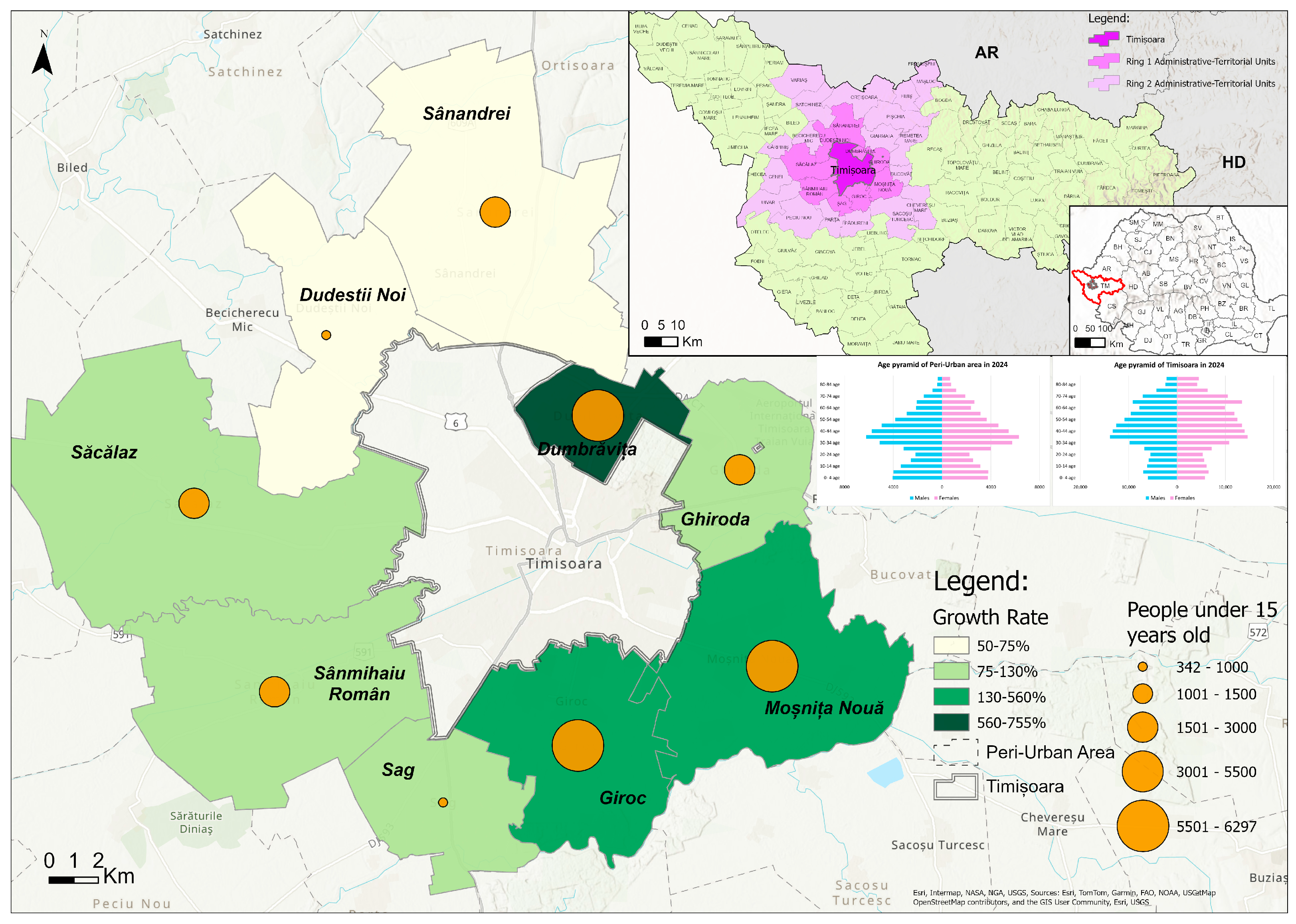
The peri-urban area of Timișoara has undergone a significant peri-urbanization process, primarily driven by population migration from the municipality to neighboring localities. From 2005 to 2024, the peri-urban population exhibited a marked increase, rising from 37,578 to approximately 120,000 inhabitants. Concurrently, the municipality of Timișoara experienced a decline of approximately 10%. This demographic trend is indicative of contemporary decisions to relocate to quieter residential spaces, while maintaining a functional dependency on the urban pole [8,83]. The communes of Dumbrăvița and Giroc experienced the most significant increases in population, with respective figures of +750% and +550% [84] (Figure 1). This growth and migration trend resulted in a marked disparity between these communes in terms of population size, with the population of some communes increasing from 4000 to over 25,000 inhabitants.
The analysis of the structure by age group and gender reveals a demographic rejuvenation process among the peri-urban population, in contrast to the demographic aging process observed in Timișoara. In 2005, both areas had a relatively elderly population; however, in 2024, the peri-urban communes had high percentages of the population aged 30–45, due to the migration of young families from the urban area. This phenomenon is indicative of the transition of the peri-urban area to a predominantly residential space, fulfilling the function of a dormitory village for the city of Timișoara.

3.2. Methodology and Data

Our methodological approach is based primarily on a questionnaire addressed to residents of the peri-urban crown 1 of Timișoara municipality, between April and May 2025. Liveability was operationalized as a multidimensional construct reflecting respondents’ subjective evaluations of everyday living conditions in the peri-urban area. This operationalization is grounded in the quality of life assessment model proposed by Răducan et al. [85], as presented in the study in which the quality of life index was empirically validated. Moreover, the proposed framework is analytically robust and integrative, enabling the systematic examination of quality of life across multiple dimensions (physical, social, economic, and welfare environments) and at different levels of analysis (housing, neighborhood, and city).
The questionnaire included a series of items covering key dimensions of quality of life, such as daily mobility, living conditions, or overall satisfaction with the peri-urban area in which they live. Each item was measured using a Likert scale, allowing assessment of the intensity and variation in perceptions among respondents. For analytical purposes, individual items were analyzed both separately and, where conceptually appropriate, aggregated into thematic dimensions to explore broader patterns of quality of life. The questionnaire was tested in advance on 15 people, which allowed us to adjust any unclear questions or answer options, but also to reduce the number of questions in order to shorten the time needed to complete it.
The questionnaire was then administered in the peri-urban communities bordering the city of Timișoara, both on site and online, through the QuestionPro platform. Physical administration took place on streets, in parks, and in central locations in villages, both during the week and on weekends, at different times of the day. Respondents were selected using a systematic random sampling procedure, applying a step of three (every third eligible passerby was invited to participate). This approach allowed for the inclusion of a diverse segment of the peri-urban population. The online administration was carried out on the largest social groups of each peri-urban community on Facebook. In Romania, it is quite common for communities to have such a group, and a large part of the population is registered there. This helped us to reach a large part of the population with the questionnaire. In this case, the online questionnaire was self-administered, using a voluntary response sampling methodology with self-selection. Participation was restricted to adults residing in the peri-urban area. Although this method is subject to potential biases related to self-selection and unequal digital access, it enabled efficient large-scale data collection across a dispersed peri-urban territory and proved suitable for analyzing perceptions of liveability and daily mobility, providing analytically relevant insights for the post-socialist peri-urban environment.
All respondents were told who the researchers were, what their purpose was, what the questions were, and were assured that they would remain anonymous, as we did not collect personal data such as names, email addresses, home addresses, or phone numbers. All participants gave their written consent to participate in the study. The entire methodological project was approved by the Scientific Council of our university (no. 33281/23 May 2024).
A total of 1073 people responded, of which 954 responses were considered complete and valid. The gender and age structure of our sample corresponds almost entirely to the official statistical data for the population of these localities: the proportion of respondents by gender is as follows: 18–24 years (5.90% M; 5.93% F), 25–34 years (22.88% M; 26.05% F), 35–44 years (33.01% M; 31.36% F), 45–54 years (24.51% M; 22% F), and 55–64 years (13.73% M; 14.66% F). The sampling errors in relation to the peri-urban population are insignificant, with the largest deviations being +0.23% among the male population aged 45–54 and +0.10% among the female population aged 25–34. The most populated localities provided the most respondents: Giroc (22.5%), Dumbrăvița (20.3%), Moșnița Nouă (15.7%), and Ghiroda (13.5%); while the less populated communes provided lower response rates: Sânmihaiu Român (8.6%) and Sânandrei (6.9%). Responses from the localities of Șag and Dudeștii Noi (the least populated peri-urban localities, with insignificant demographic growth in the process of peri-urbanization) were eliminated due to their numerical underrepresentation in the sample. Even though two of the nine peri-urban localities were excluded from our analysis due to the low number of responses, this did not affect the accuracy of the sample and, later, the analysis of the peri-urban area. The localities removed from the analysis are two peri-urban communes located at a much greater distance from Timișoara and did not experience the same high demographic or territorial growth as the other seven communes analyzed. At the same time, these two communes do not have such intense commuting flows as the communes analyzed.
Next, the database was analyzed in Microsoft Excel(v16) and IBM SPSS v.30, and primary and cross-tabulation statistics were performed. We then focused our attention on elements related to daily mobility and commuting, both throughout the peri-urban area and in relation to the city of Timișoara. Data analysis was performed using descriptive and exploratory statistical methods. Cross-tabulations and frequency distributions were used to examine variations in liveability and mobility indicators according to the main socio-demographic characteristics of the respondents (age and gender) and place of residence. All respondents were geocoded at the locality level, allowing comparative statistics between peri-urban municipalities and the identification of territorial differences and contrasts. This analytical approach is appropriate for the study’s exploratory objectives and for highlighting spatial and socio-demographic patterns in the peri-urban area analyzed.
A second methodological approach was cartographic. First, we looked at objective data from the Romanian National Institute of Statistics (especially the population growth rate of each municipality and the number of young people in them), which we imported into ArcGis Pro 3.4, allowing us to highlight spatial differences cartographically. Using the same techniques, we also inserted the average questionnaire responses into the attribute tables of the municipalities, thus creating a socio-geographical map.
The limitations of our research are primarily related to the fact that two peri-urban municipalities were excluded from the study due to an insufficient number of respondents. However, we preferred to do so rather than keep an unrepresentative number in our sample, which could have led us down the wrong track. Another limitation is that the questionnaire was only administered in 2025. If we had similar data from the past, this would have allowed us to perform longitudinal analyses. We could also have cross-referenced socio-geographical data with objective measurements such as transport networks and stations or school networks, but this would have shifted the focus of the article to other topics.

4. Results

4.1. Daily Mobility and Commuting in Peri-Urban Areas

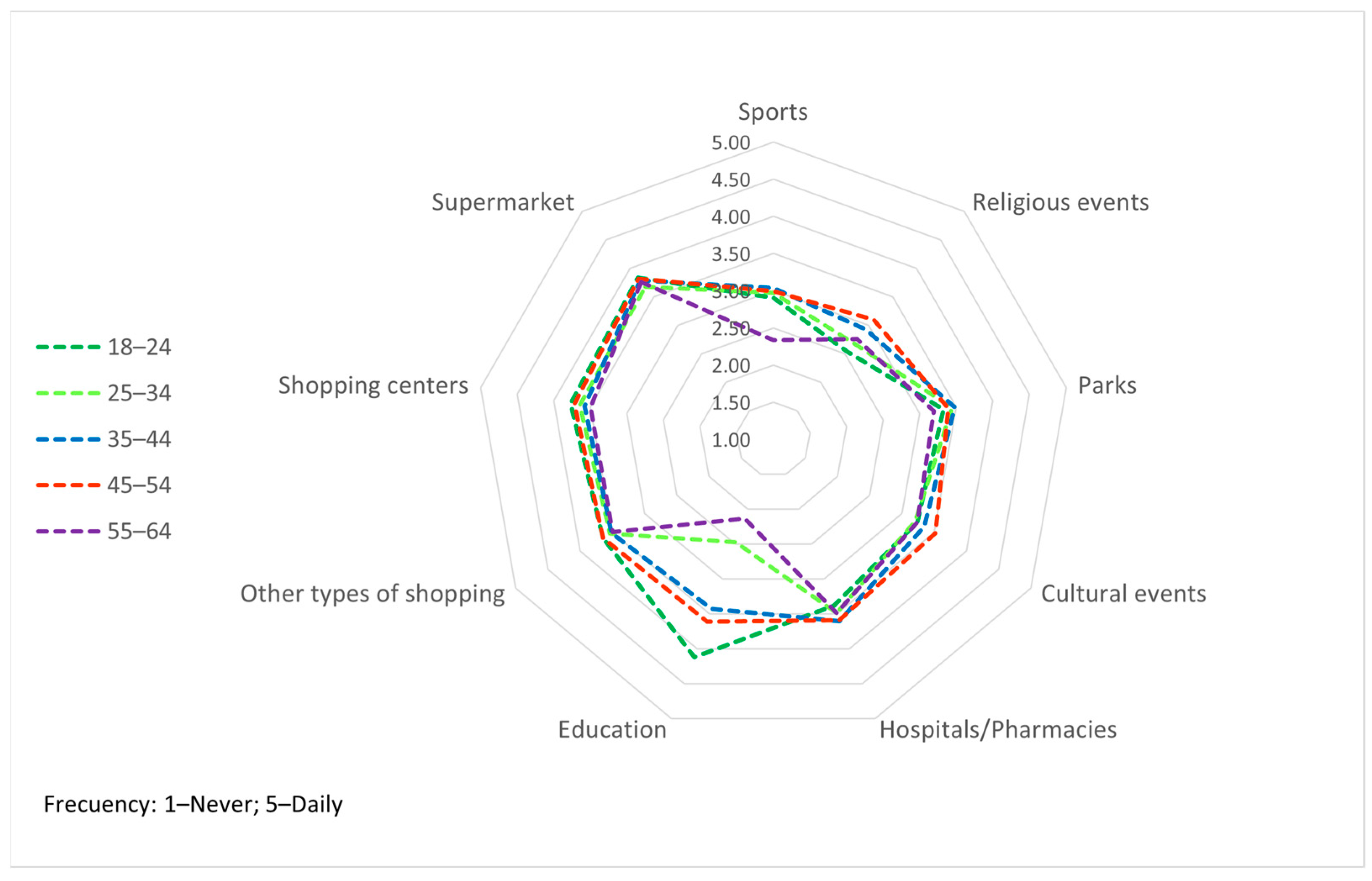
The travel of residents in the peri-urban area of Timișoara is largely concentrated on cars, with over 79% of respondents using this means of transport both individually and in the form of taxis or shared travel with other people. Only 16% of respondents use public transport (which is poorly developed in terms of network and frequency) and 5% use other means of transport. Analysis by age group shows that for respondents aged 25 to 54, work is the main purpose of travel, while sports and religious activities are of less interest (across all age groups). For the young population in the 18–24 age group, the main purpose is the city’s educational services (a high proportion was also found in the 35–44 and 45–54 age groups, represented by parents who take their children to schools and kindergartens). For the population aged 55–64, trips are made to supermarkets, shopping malls, building supply stores, or various other shops, as well as hospitals, clinics, and pharmacies (Figure 2).
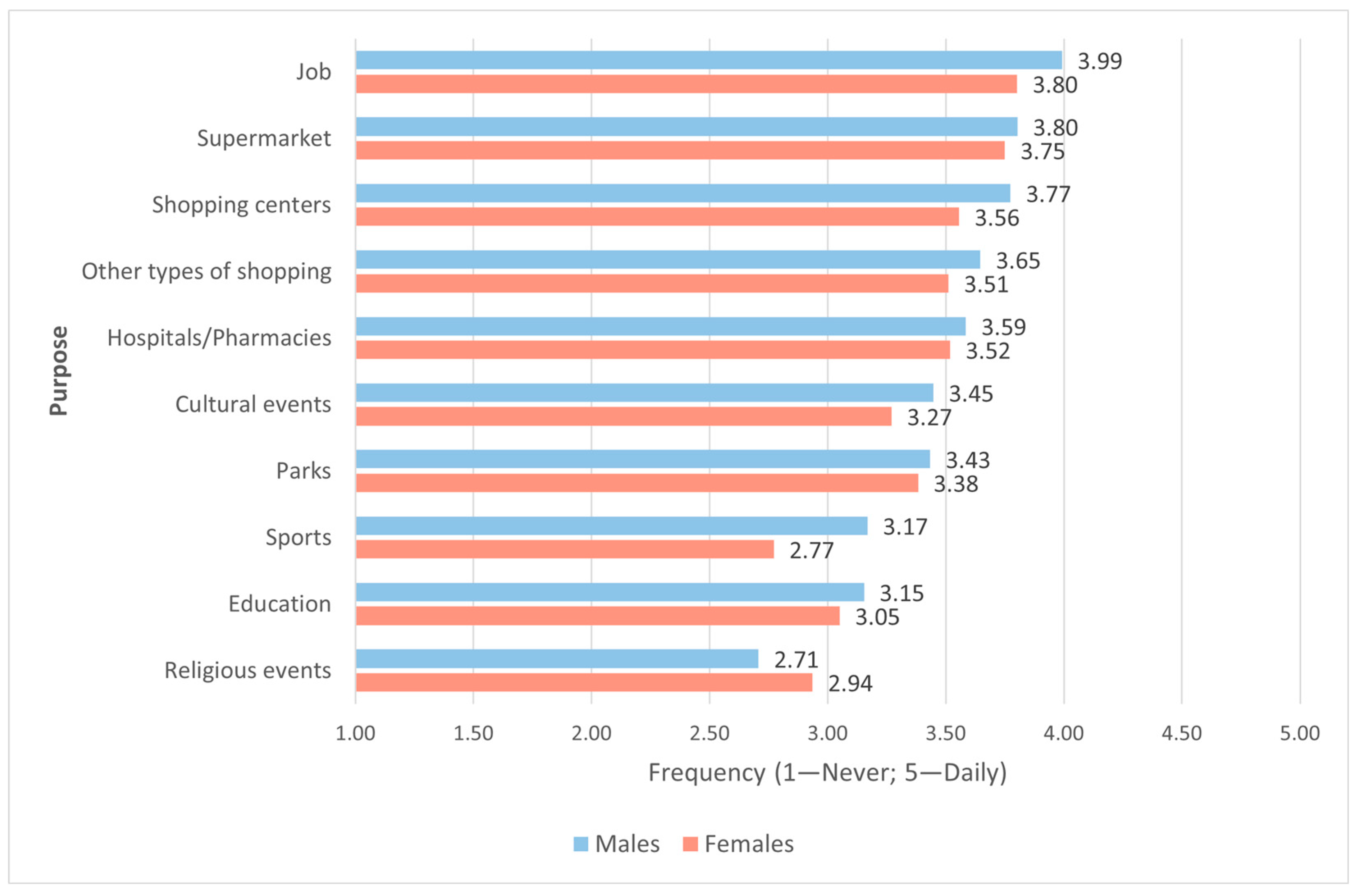
An analysis of the frequency and purpose of trips by gender shows that the male population travels more often than the female population (see Figure 3). The largest differences are found in the categories related to sports activities (difference of 0.40 mean), shopping centers (difference of 0.22), and work (difference of 0.19). However, there is one category where the female population has a higher average travel frequency, namely religious events and travel to churches (0.23 diff.). On the other hand, although men are more mobile, they are also more dissatisfied with mobility when asked about the quality of transport infrastructure, bicycle lanes, or even traffic safety.
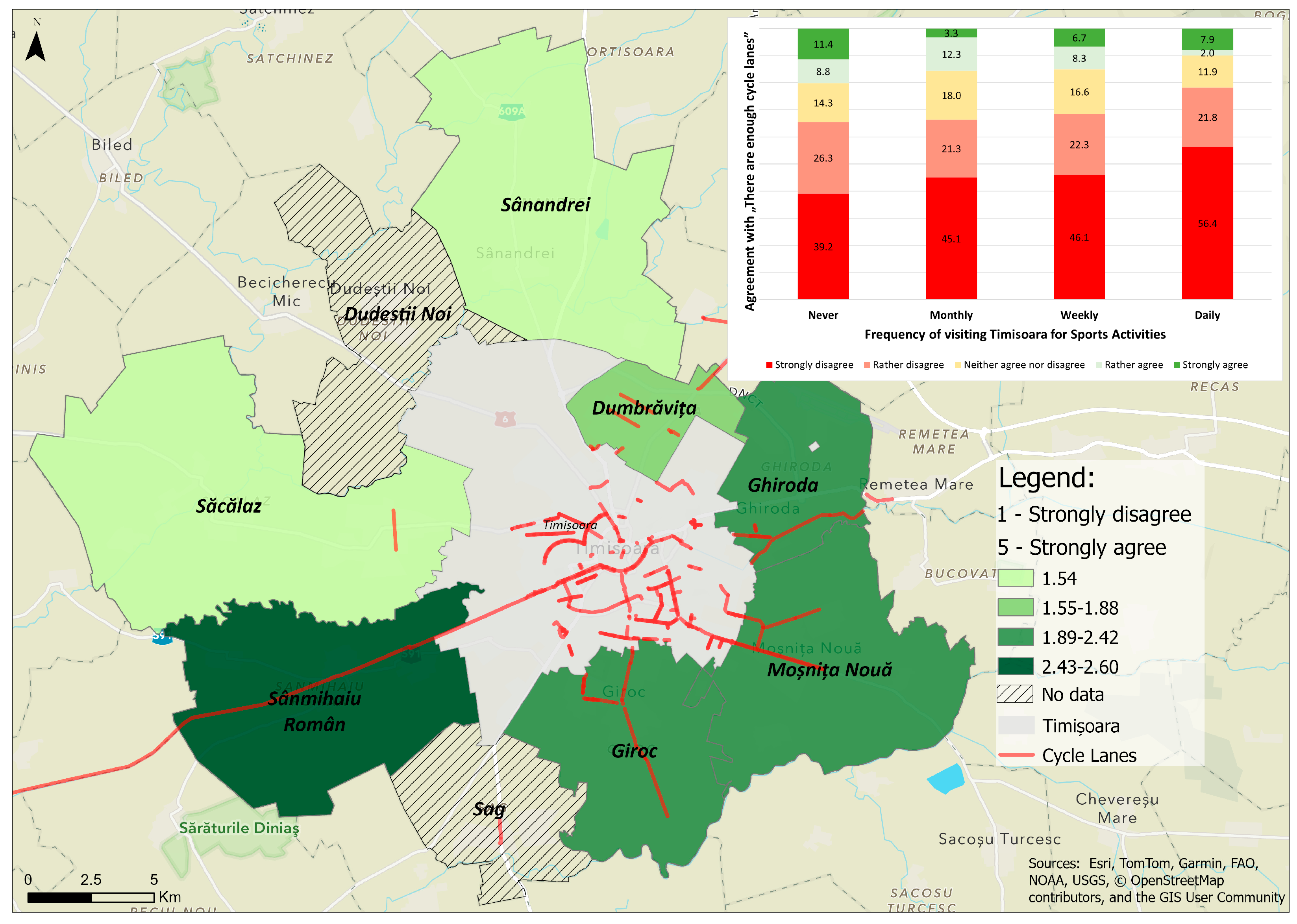
Even though bicycle use does not score highly, it caught our attention because, in percentage terms, it is not far behind public transport. Therefore, in the absence of viable alternatives to cars, this means of transport is an alternative with significant growth potential. In practice, by combining the perception of the existence of bicycle lanes and the frequency of respondents’ visits to Timișoara for sports activities, we can see the importance of this alternative transport infrastructure. The more often respondents travel to Timișoara for sports activities, the less satisfied they are with the bicycle lane infrastructure (Figure 4). Essentially, their dissatisfaction is influenced by their lifestyle and the type of activities they engage in. The existing bike lanes are often used as recreational infrastructure, representing bike routes along the banks of the Bega River. This analysis shows the influence these parameters have on the tendency of locals to use road transport (private cars) to the detriment of alternative transport, but also the importance and necessity of transport alternatives.
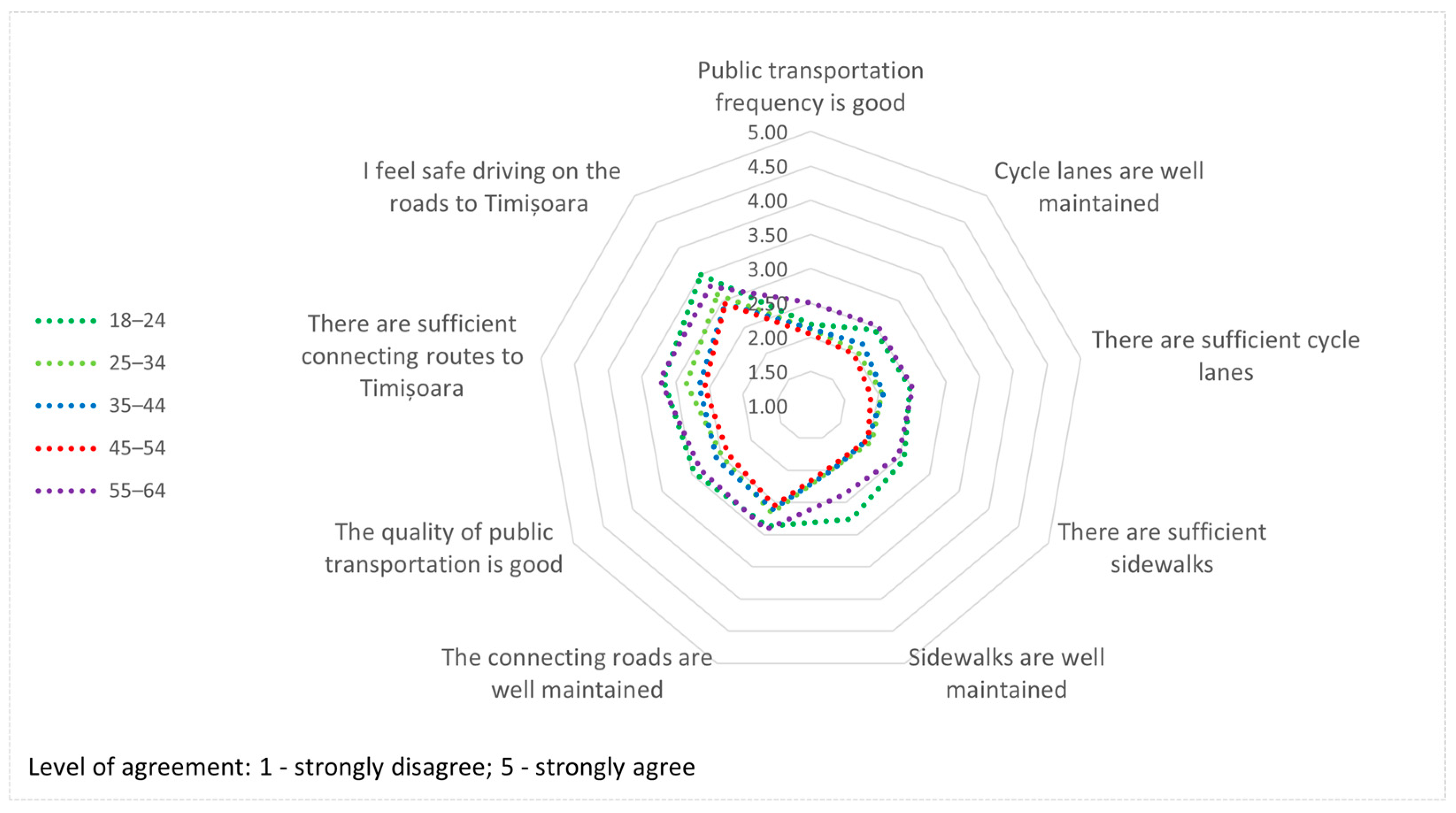
The quality of mobility and commuting between peri-urban areas and Timișoara is perceived negatively by the vast majority of the population. Thus, on a scale of 1 to 5, where 1 is a very low level of satisfaction, the average of all indicators related to mobility does not exceed a score of 2.35. However, there are differences in perception depending on age. Thus, the most active categories of the population (25–54 years old) are also the most critical in terms of the quality of roads, public transport, sidewalks, and bike lanes (Figure 5). The correlation between the perception of the quality of travel to Timișoara and the actual travel of respondents using different means of transport indicates that the use of a personal car for commuting leads to a more positive view of the quality of travel, compared to the perception of people who use public or alternative transport. This shows, first of all, the low level of alternative transport infrastructure along the connecting routes, but it also confirms the hypothesis that cars are chosen as a means of transport for the immediate satisfaction of personal needs and for the comfort they offer, to the detriment of other, less polluting means of transport. In addition, residents who have moved to peri-urban areas in recent years, in municipalities that have experienced the fastest and largest population growth, are those who gave negative responses regarding travel to Timișoara. The main causes are due to shortcomings in terms of the facilities and services available in these peri-urban municipalities (educational, medical, etc.), which leads to high flows of commuters to Timișoara to meet these needs. At the same time, the road infrastructure, like the service infrastructure, was not initially designed and planned to support these high population increases in the rural settlements neighboring Timișoara.
The aspect regarding the capacity of connecting routes to support these intense commuter flows can also be observed in the correlation between respondents’ perceptions of the multitude of transport routes and the frequency of trips to Timișoara for work. The more often the respondent travels to the city, the more their perception of the quality and quantity of connecting routes is affected. This indicates the importance of managing traffic congestion caused by daily commuting, by combining beneficial planning and services for peri-urban communities with the necessary facilities, as well as by improving and managing connecting routes. This analysis also helps us understand the seriousness of the process and its repetitive daily nature.

4.2. Liveability and Sustainability of Peri-Urban Areas

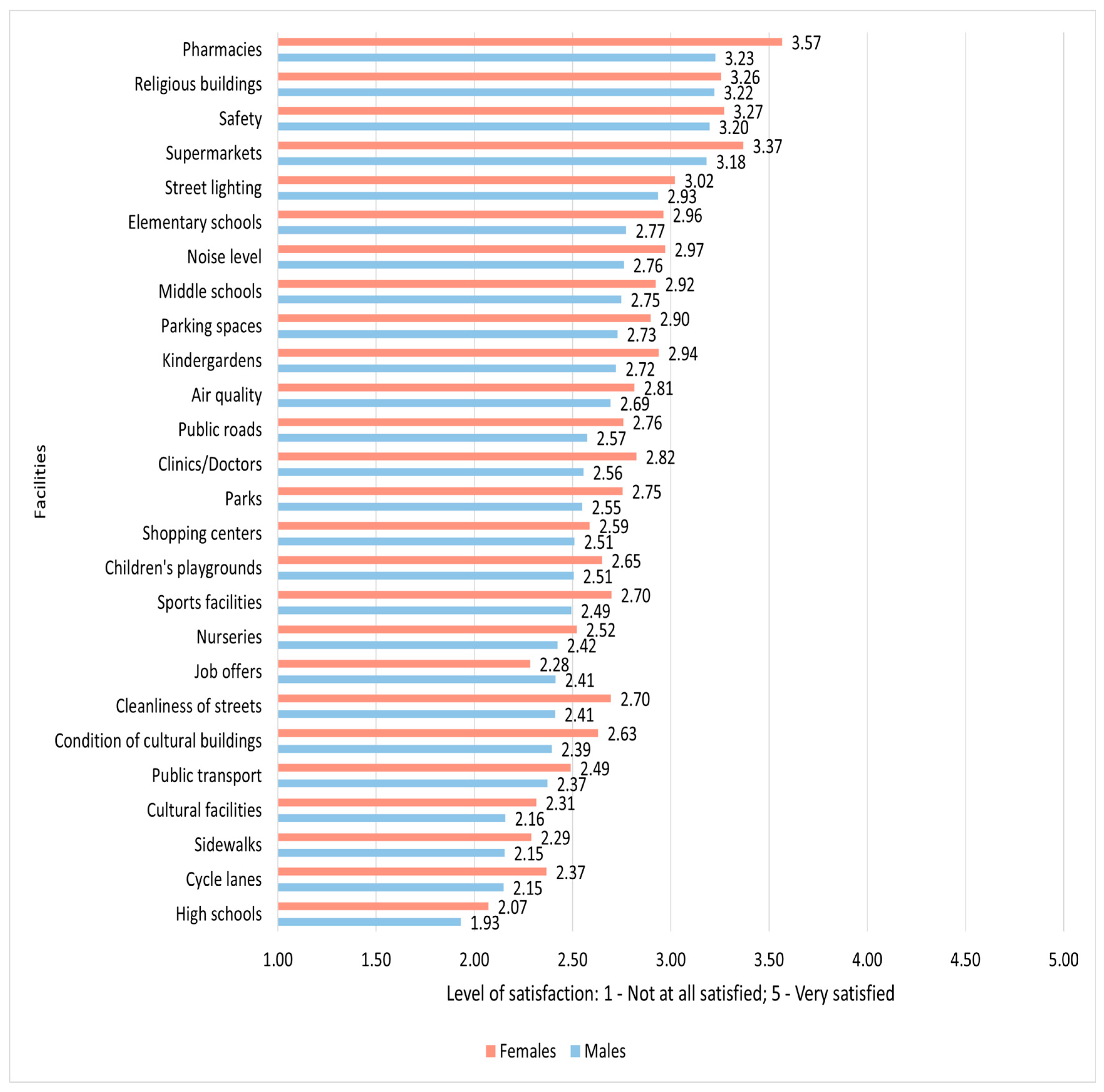
In our analysis, we considered 26 indicators related to housing, quality of life, and sustainability, including job opportunities, educational, health, commercial, and cultural infrastructure, aspects related to air quality and noise, transportation, and safety in peri-urban areas. Residents were asked how satisfied they were with these facilities using a scale of 1 to 5. Overall, the average response is below 2.7, with significant variations. Pharmacies, supermarkets, and churches received the highest scores (above 3.2), while the lowest scores were related to educational facilities, transportation infrastructure, and proximity to work. Women have a higher level of satisfaction than men, especially in the categories of medical, care, and shopping facilities (Figure 6).
In terms of age, respondents in the 18–24 age group gave much higher satisfaction ratings than other age groups in all categories analyzed. Once again, the most negative responses, with a lower degree of satisfaction, came from the 35–44 and 45–54 age groups. The correlation between respondents’ satisfaction with various determinants of quality of life and the number of years they have spent in peri-urban areas indicates current trends related to the phenomenon of urban–peri-urban migration. In most categories, respondents who had moved in the last 5–10 years gave more negative responses compared to locals who had moved 15–30 years ago or those who were born in peri-urban areas. For example, respondents who have moved in recent years have a more negative perception of various facilities and services (medical, educational, sports, and recreational), but have a more positive perception of air quality and noise pollution. This highlights the trend of urban–peri-urban migration and how it influences respondents’ thinking. In practice, people who have migrated in recent years from urban to peri-urban areas will compare their new space with their old one. Thus, they will not benefit from the same services and facilities, but they will enjoy a more airy, green, and less crowded space. The above-mentioned aspect is supported by comparative analyses of perception, such as the correlation between satisfaction with local shopping services and the frequency of trips to Timișoara to meet these needs. The correlation again indicates the influence of migration on residents’ perceptions. The more disappointed and dissatisfied peri-urban residents are with local services, the more they will travel to Timișoara to seek out a space that meets their needs.
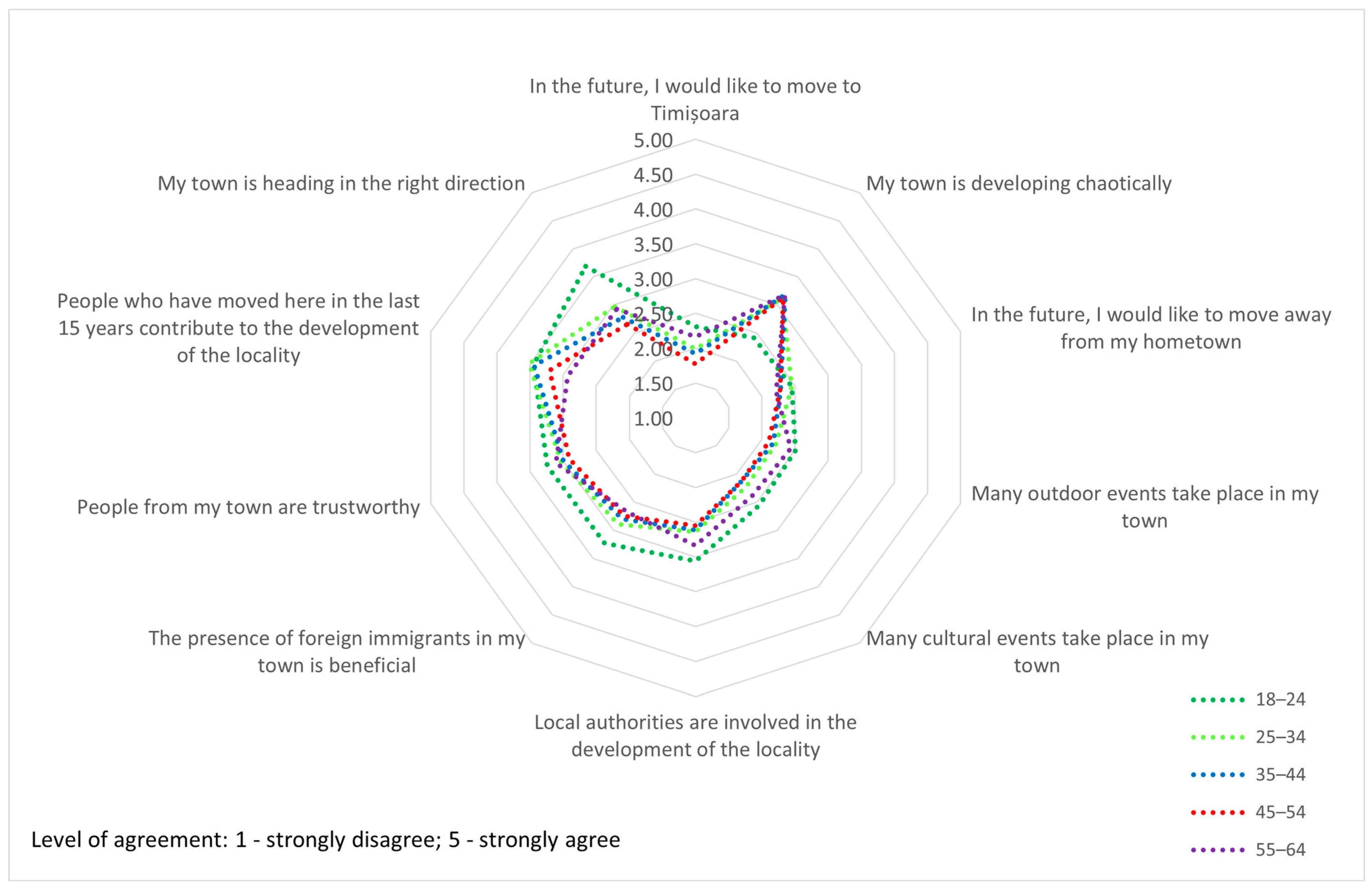
In order to reduce the number of trips and meet the needs of locals, it is advisable to integrate and implement such services in peri-urban communities. The richest and most populated communities in the peri-urban area (Giroc, Dumbrăvița, and Moșnița-Nouă) have built pseudo-shopping centers, but not at the level of the malls in Timișoara. However, it is necessary to implement such solutions (and not just shopping) in order to change the perception of the peri-urban population about the space in which they live and to reduce the number of visits to their old living space. In order to assess the direction in which peri-urban localities are heading, we asked 10 statement-type questions and evaluated the respondents’ level of agreement. In general, young people are most likely to believe that their commune is heading in the right direction, but with a moderate score of 3.69 out of 5. On the other hand, the population over 45 years of age believes that their locality is developing chaotically, but that those who have moved here in the last 15 years have contributed significantly to its development. However, the proportion of those who would like to move to Timișoara has the lowest score of all variables (Figure 7).
An analysis of these parameters from a gender perspective reveals the same trend, namely that female respondents gave much more positive answers than male respondents. Respondents who have moved to the suburbs more recently have a much more positive perception of the direction in which this area is heading than those who moved earlier. Those who arrived in the last 5 years are also the ones who gave the fewest responses regarding their desire to move from the area they just moved to. However, newcomers are dissatisfied with the fact that there are not as many cultural or outdoor events compared to the city. However, as we move chronologically through the analysis of these groups of people, we observe a negative perception of the commune. The analysis reveals interesting conclusions, such as the greater desire of people who have moved in the last 5–10 years, compared to other groups, to return to Timișoara; but also interesting trends such as the appreciation of the involvement of newcomers and their integration by the native inhabitants of the peri-urban area.
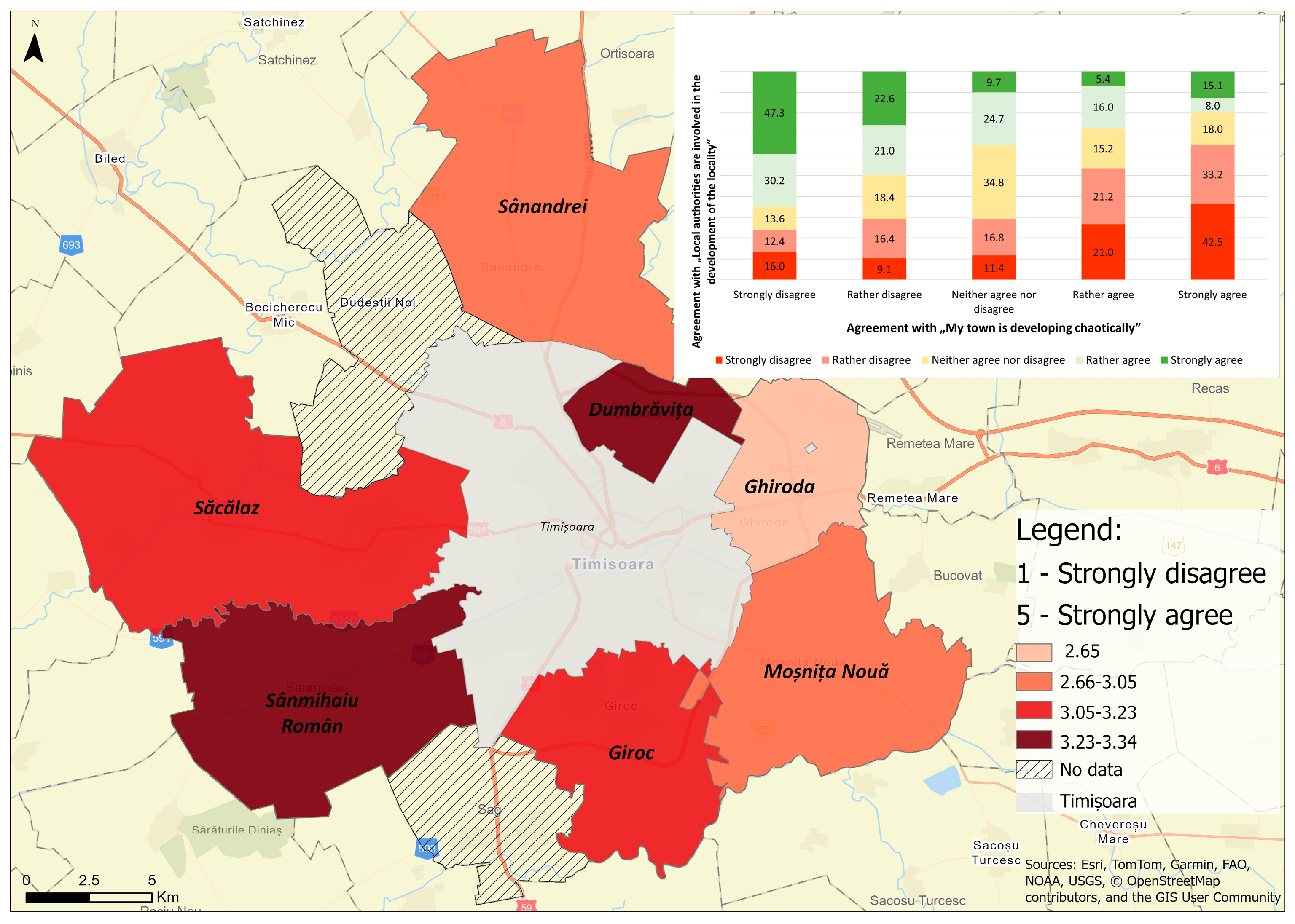
One negative aspect facing peri-urban localities is their chaotic development, in the absence of intelligent strategies and planning, due to sudden increases in population and housing. In peri-urban communes, there are differences between areas deeply affected by the rapid demographic and territorial growth brought about by peri-urbanization (Dumbrăvița) and areas that have not allowed such growth (Ghiroda) and have stagnated in terms of population, even though they are located close to the city. In addition to the differences between localities, it can be observed that the more negative the perception of the chaotic development of the peri-urban commune, the greater the dissatisfaction with the insufficient involvement of local authorities in the development of the locality. Thus, the main causes, but also the solutions to the chaos caused by peri-urbanization, are sustainable and intelligent planning solutions for these peripheral, young, and emerging areas (Figure 8).
The last part of our analysis is dedicated to the time residents spend in the locality of Los as opposed to the city of Timișoara, and the perception of differences between these two categories of spaces. This parameter, analyzed by age group, illustrates the tendency and involvement of young people in the process of commuting and dependence on the municipality of Timișoara. There is a high discrepancy between age groups: only 41.1% of respondents in the 18–24 age group selected the peri-urban locality as their everyday space, while the other age groups exceed 70%. On the other hand, almost 60% of young people spend most of their time in Timișoara, while all other age groups record values below 30%. Thus, even though the peri-urban area represents the young space in demographic statistics, young people decide to spend their time, or are even forced to do so, in Timișoara. At the same time, when peri-urban residents spend more time in Timișoara than in their peri-urban residence, they are more likely to want to move out of the peri-urban area. In practice, comparisons arise between the quantity and quality of services, facilities, and opportunities in Timișoara, which are already well established, and their peri-urban area, which is still in the early stages of economic development (in the case of some localities).
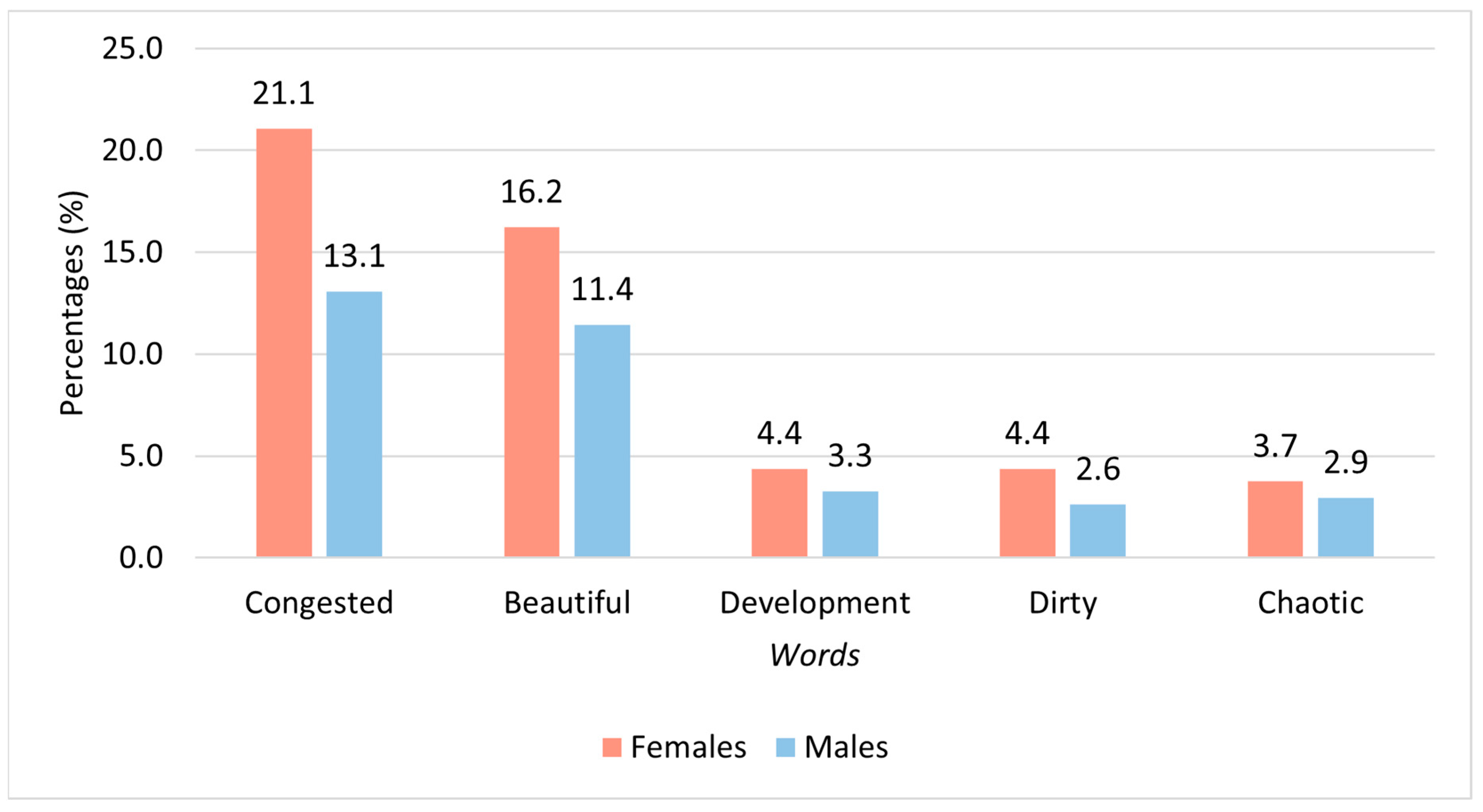
In other words, the overall perception of the peri-urban area differs. Thus, women see the peri-urban environment as a much quieter space than men (10% difference), less chaotic, and a more developed space that they can call “home” (Figure 9). In terms of the age of respondents, young people gave more positive descriptions of peri-urban areas, with low percentages for the words “chaotic” or “underdeveloped” and high percentages for the words “quiet,” “home,” and “developed.” As the age of respondents increases, the peri-urban space becomes a less peaceful, more chaotic, and less developed place.
Correlating the top five words that describe the peri-urban area, according to respondents, and the perception of the direction in which the locality is heading, indicates that people who did not agree with the expression related to the positive direction in which the peri-urban area is heading chose to support their decision by giving negative characteristics. Negative perceptions of the direction of peri-urban development describe this space as chaotic and underdeveloped, and not at all peaceful; however, people who agree that their locality is developing appropriately gave a positive characterization of this space, calling it a peaceful and developed place, with very little chaos. The descriptions of peri-urban areas provided by respondents and correlated with the types of housing indicate the manner and trend in which peri-urban areas have grown and developed. There is a certain balance in the perceptions of respondents living in new and old detached houses. The difference between these two types of housing can be seen in the descriptions of “chaotic” and less “home-like” and “quiet” spaces used by respondents living in individual houses older than 15 years.
The more respondents’ homes are designed to accommodate a larger population in a smaller area, the more problems arise related to chaotic development. This is already beginning to be observed in the case of duplex homes, but it is best mentioned by respondents living in newly built apartment blocks. The best example of a peri-urban commune that has accepted and promoted residential and vertical development is the town of Giroc. Territorial planning strategies initially prohibited residential development outside the old town center (compared to municipalities such as Dumbrăvița or Moșnița Nouă, which developed as horizontally as possible), which led to high housing density and residential congestion in the old town center. Most respondents are affected and mention landscape problems arising from this phenomenon. This chaotic development has led to the concentration of new apartment blocks next to individual dwellings of the traditional house type.
Finally, among the main reasons for urban–peri-urban migration is the need for a cleaner, quieter, and less crowded and polluted space than the city where the respondents lived. Peri-urban residents who have moved in recent years have thus found a quieter and less crowded space than Timișoara, but as time goes by, the perception of this “quiet” space becomes more negative. People who moved 15–30 years ago did so for the same reason, and even though they found a much friendlier and greener space at the time, they no longer find it so, due to the rapid and chaotic development that has taken place in recent years. The more the positive perception of the area declines, the more the negative perception of the chaotic and underdeveloped nature of the peri-urban area increases.
Overall, in our study, residents’ adaptability is inferred from indicators reflecting satisfaction with local services and infrastructure, daily mobility options, and attitudes towards ongoing peri-urban development. Rather than being measured by an independent or composite adaptability index, the concept is used in an interpretive analytical sense. Consequently, conclusions about adaptability are derived from respondents’ perceived experiences and assessments of everyday conditions, which capture how residents adapt, negotiate, and respond to existing constraints and transformations in the peri-urban environment. On another note, daily mobility is treated in this study as an essential experiential dimension of peri-urban quality of life, rather than as a causal explanatory variable. The results related to mobility are interpreted primarily descriptively and exploratorily, highlighting patterns of functional dependence on the city center and daily mobility tasks, without implying direct causal relationships between commuting behavior and overall quality of life.
Key contrasts include clear differences among population groups in how they experience and evaluate suburban space. Gender experiences are distinct: women perceive the environment as quieter and better equipped, expressing higher satisfaction with local commerce and medical services, while men are more mobile but also more critical of the quality of road infrastructure and traffic safety. Similarly, the working-age population (35–54 years old) combines the highest mobility intensity with the highest levels of dissatisfaction, driven by commuting pressures, service shortages, and traffic congestion. Another relevant contrast appears between newcomers and long-term residents: the former criticize the lack of local services, constantly comparing their current experience to their previous urban one, but appreciate the air quality, while the latter feel the loss of rural identity and tranquility as a result of chaotic development.
In terms of dominant patterns, the massive use of private cars (over 79%) indicates not only a preference for comfort, but above all, a forced adaptation to fragmented territorial planning and inefficient public transport. Peri-urban settlements function primarily as residential areas, while jobs, education, and social and cultural life remain concentrated in the city. This configuration creates a structural dependence on the urban center for access to essential services, which materializes in daily practices of intense commuting, with daily mobility becoming a determining factor in perceptions of quality of life.
As unexpected results, the perception of “chaotic development” is not uniformly distributed, being felt most acutely by residents of new apartment blocks built in the vicinity of traditional detached houses, which highlights major shortcomings in zoning policies and built landscape management. Contrary to expectations of potential tensions between native residents and urban migrants, the study shows that long-time residents recognize and appreciate the contribution of those who have settled in the last 15 years to the development of the locality. In addition, although they have lower mobility, women consistently report higher levels of perceived liveability, particularly in terms of residential comfort, local services, and the overall feeling of “home.”

5. Discussion and Conclusions

The results of our quantitative analysis of the quality of life in the peri-urban environment, as well as the analysis of migration flows, confirm the theoretical concepts of the specialized literature on the trends and motives of urban–peri-urban migration. Consequently, urban–peri-urban migration flows within this post-socialist context are driven by motivations centered on the search for a more salubrious and tranquil environment, and in some cases, a higher quality of life [38,39,41].
The innovative result indicated by this analysis manifests at the point of contact between the conflict and the tensions created by the need for newcomers to have a quiet, clean space and their actual experience of living, which is characterized by chaotic development, dependence on Timișoara due to a lack of facilities, and congested traffic caused by rapid demographic and territorial growth [1,32].
At the same time, the result sample highlights the strong magnet character that the peri-urban area constitutes in attracting the young, highly educated, and active population in the tertiary field. In this case, an innovative approach is needed on the concept of the peri-urban area, which no longer represents the rural space on the outskirts of cities, but rather an area that encompasses urban–rural elements and represents an emerging entity that must be treated accordingly in modern planning [19,20].
Comparing the liveability and mobility of Timișoara’s peri-urban areas with examples from Asia and other developing regions of the world highlights the fact that, around large cities, peri-urban areas face major difficulties in achieving sustainability and social equity objectives, manifested by a marked functional dependence on the city in terms of employment, access to services, and daily mobility, which generates high commuting rates and an extensive use of private cars [66], with negative effects on comfort and the environment [86]. In Timișoara, as well as in India and China, peri-urban development is marked by unplanned urban sprawl, which blurs the boundaries between rural and urban systems, as well as significant infrastructure deficits, particularly in terms of public transport and basic facilities, leading to severe traffic congestion [14,66]. In addition, governance and institutional frameworks are often weak or fragmented, and local authorities face difficulties in managing rapid territorial transformations [14]. However, the differences between the two contexts become evident in terms of socio-economic dynamics and gender mobility: in the peri-urban area of Timișoara, men tend to commute more frequently than women, while in India, gender is the main determinant of mobility, with women spending on average four hours more per day in the domestic sphere than men [69]. The peri-urban expansion of Timișoara is mainly driven by the residential migration of the middle class in search of a better quality of life, in contrast to peri-urbanization in Asia, fueled by intense industrialization, foreign direct investment, and global infrastructure such as airports [13], which is reflected both in the social composition—dominated in Timișoara by young professionals with a high level of education, and in India and China by poor industrial workers and marginalized farmers [14]—and in the economic role of these spaces, which function around Timișoara predominantly as dormitory villages, while in Asia they constitute modern complex production areas [13]. From an environmental perspective, the inhabitants of Timișoara’s peri-urban areas seek green spaces, despite increasing noise problems, while Asian peri-urban areas face high levels of industrial pollution [14]. In this context, the sustainable development of peri-urban areas requires the coordination of mobility, land use, and metropolitan governance policies [87], as well as moving beyond traditional planning models by adopting modern solutions tailored to specific local needs [14,72], with peri-urban mobility thus becoming an essential indicator of quality of life and social cohesion, reflecting the capacity of local authorities to sustainably manage the transition between urban and rural areas.
The daily mobility trends between the peri-urban area and Timisoara, as analyzed in this research, serve to confirm the theory of post-socialist commuting of peri-urban areas. This theory postulates that such commuting is directly influenced by the effects of dispersed and chaotic development, as well as the deficit of facilities and services, when compared to Timisoara [49]. The analysis demonstrates the interdependence of the city of Timisoara on external services, as well as the significant role of personal vehicles in facilitating access to the urban center. This observation highlights the transitional phase the peri-urban area is undergoing, as it navigates the initial stages of a sustainable urban development and the pursuit of enhanced quality of life [88,89]. The study’s significant conceptual contribution lies in its analysis of patterns in chronological order, encompassing urban–peri-urban migration, high expectations among newcomers, the absence of facilities in the peri-urban area, mobility and intense dependence on Timișoara, and a negative perception of the inhabited space. Consequently, the study posits the imperative for intelligent territorial planning interventions.
It remains to be noted that, from a normative point of view, in our results, the notion of “unsustainable” peri-urban development in this study is analytically grounded in residents’ reported experiences. High car dependency, limited access to local services, low satisfaction with transport infrastructure, and perceived mismatches between rapid demographic growth and planning capacity collectively shape the perception of peri-urban development as problematic and unsustainable. Furthermore, the term “chaotic development” reflects respondents’ perceptions of uncoordinated residential growth, insufficient infrastructure provision, and limited institutional capacity to manage rapid peri-urban expansion. In general, the present study demonstrates that commuting is not solely contingent on infrastructural factors; rather, it is influenced by a multitude of deficiencies that collectively impact the daily lives of residents.
Moreover, age-based and mobility-related differences emerge in peri-urban liveability perceptions. Women are less mobile but more positive about liveability in peri-urban areas in comparison to men, who are more dependent on cars and are more skeptical regarding the future of their liveability in the peri-urban space. On the other hand, the elderly population exhibits a greater reluctance to adapt to the emerging peri-urban environment. However, the younger and more educated demographic demonstrates a higher degree of adaptability to the contemporary challenges posed by peri-urban expansion and hazardous development. Daily mobility, including commuting, is directly influenced by the effects of dispersed and chaotic development, as well as the lack of facilities and services.
As highlighted above, if, theoretically, our case is similar to other situations presented in existing literature [2,32], we notice as a novelty, the dynamics in commuting towards and from the city to peri-urban areas. In practical terms/policy recommendations, we propose to local authorities some further solutions. In this respect, we address several policy recommendations as follows. Firstly, the chaotic development of peri-urban communities is caused by the lack of a general urban plan that applies to the entire metropolitan area. Currently, in Romania, there is no such level, only general urban plans at the local level and urban plans at the county level, with this intermediate pillar missing. In addition to the metropolitan urban plan, operational institutional structures are also needed to manage mobility and public services, both in the municipality and throughout the entire peri-urban area. Secondly, structural facilities such as public transport, education, and health must be central concerns of the authorities in order to improve the quality of life, but above all, to bring services closer to citizens and reduce daily commuting. These policies must be adapted to socio-demographic differences, because liveability also varies, especially in the case of the working population that depends on commuting. Last but not least, there is a need for a substantial increase in public transport services, which must be coordinated with transport in the city of Timișoara, in order to reduce dependence on cars and alleviate daily traffic. In order to reduce dependence on commuting, in the medium and long term, polycentric development of peri-urban areas is needed, particularly in terms of services, which must be brought closer to citizens.
It should be noted that our study is not without its limitations. Firstly, we would like to clarify that the qualitative dimension was not included in this study, as it had already been developed in our previous study. Secondly, we did not make a comparison between peri-urban spaces in different Romanian cities. As our primary interest lay in examining the demographic characteristics of the surveyed population, we did not intend to conduct a comprehensive spatial analysis of housing and other facilities.
Future studies could make comparisons with other peri-urban spaces in Romania and with other peri-urban spaces in the CEE region. Further studies could build on the findings of our research by examining, in greater detail, the evolution of urban development plans in all peri-urban settlements in Timisoara. Further studies could utilize larger surveys of local residents to identify new demographic similarities and differences, as perceived by inhabitants of peri-urban spaces in Timisoara.

Author Contributions

Writing—original draft, D.C., R.C. and A.D.; Software, D.C.; Project administration, A.D. and D.C.; methodology, A.D., R.C., D.C. and M.L.M.; Investigation, D.C.; Formal analysis, D.C.; Data curation, D.C. and A.D.; Visualization, A.D., R.C. and M.L.M.; Conceptualization, R.C.; Writing—review and editing, D.C., R.C., A.D. and M.L.M.; Supervision, A.D. All authors contributed equally to this work. All authors have read and agreed to the published version of the manuscript.

Funding

This research received no external funding.

Informed Consent Statement

Informed consent was obtained from all participants prior to their participation in the study. All participants were told who the researchers were, what the purpose of the research was, and what the questions were. All respondents gave their written consent to participate in the study. All participants remained anonymous and could not be identified in the manuscript. The informed consent and recording process was approved by the Scientific Council of University Research and Creation of the West University of Timisoara (no. 33281/23 May 2024).

Data Availability Statement

Data will be made available on request.

Acknowledgments

During the preparation of this manuscript, the authors used Grammarly for the purpose of English proofreading. The authors have reviewed and edited the output and take full responsibility for the content of this publication.

Conflicts of Interest

The authors declare no conflicts of interest.

References

  1. Sýkora, L.; Stanilov, K. The Challenge of Postsocialist Suburbanization. In Confronting Suburbanization: Urban Decentralization in Postsocialist Central and Eastern Europe; Wiley-Blackwell: Chichester, UK, 2014; pp. 1–32. [Google Scholar] [CrossRef]
  2. Hirt, S.A. Stuck in the suburbs? Gendered perspectives on living at the edge of the post-communist city. Cities 2008, 25, 340–354. [Google Scholar] [CrossRef]
  3. Ruth, M.; Franklin, R.S. Liveability for all? Conceptual limits and practical implications. Appl. Geogr. 2014, 49, 18–23. [Google Scholar] [CrossRef]
  4. Capitanio, M. The Relativity of Liveability Rankings Examining the Japanese Case against the Global Discourse. World J. Soc. Sci. 2017, 5, 12. [Google Scholar] [CrossRef]
  5. Oviedo, D.; Sabogal, O.; Villamizar Duarte, N.; Chong, A.Z.W. Perceived liveability, transport, and mental health: A story of overlying inequalities. J. Transp. Health 2022, 27, 101513. [Google Scholar] [CrossRef]
  6. Khorasani, M.; Zarghamfard, M. Analyzing the Impacts of Spatial Factors on Liveability of Peri-Urban Villages. Soc. Indic. Res. 2018, 136, 693–717. [Google Scholar] [CrossRef]
  7. Kim, R.; Park, Y.; Kang, S.; Lee, J.; Cho, S.-Y.; Lee, S.-W. Decision Support for Peri-Urban Sustainability: An AHP–EWM Based Liveability Vulnerability Assessment. Land 2025, 14, 2168. [Google Scholar] [CrossRef]
  8. Chasciar, D.; Dragan, A.; Crețan, R.; Matichescu, M. Residents’ perceptions of spatial change and quality of life in the peri-urban area of a post-socialist city. Humanit. Soc. Sci. Commun. 2026. Manuscript under review. [Google Scholar]
  9. Margono, R.B.; Yulia; Zuraida, S.; Pratiwi, W.D. The impact of housing transformation to liveability in North Bandung Peri-urban area. ARTEKS J. Tek. Arsit. 2021, 6, 259–268. [Google Scholar] [CrossRef]
  10. Riepl, T.; Grabow, S. Assessing liveability through human need theory: Insights from Vienna. Cities 2025, 167, 106336. [Google Scholar] [CrossRef]
  11. Hornis, W.; Van Eck, J.R. A typology of peri-urban areas in the Netherlands. Tijdschr. Voor Econ. Soc. Geogr. 2008, 99, 619–628. [Google Scholar] [CrossRef]
  12. Pucci, P. Mobility behaviours in peri-urban areas. The Milan Urban Region case study. Transp. Res. Procedia 2017, 25, 4229–4244. [Google Scholar] [CrossRef]
  13. Webster, D.; Cai, J.; Muller, L. The New Face of Peri-Urbanization in East Asia: Modern Production Zones, Middle-Class Lifesytles, and Rising Expectations. J. Urban Aff. 2014, 36, 315–333. [Google Scholar] [CrossRef]
  14. Marshall, F.; Dolley, J. Transformative innovation in peri-urban Asia. Res. Policy 2019, 48, 983–992. [Google Scholar] [CrossRef]
  15. Kanai, J.M.; Schindler, S. Peri-urban promises of connectivity: Linking project-led polycentrism to the infrastructure scramble. Environ. Plan. A Econ. Space 2019, 51, 302–322. [Google Scholar] [CrossRef]
  16. Danielaini, T.T.; Maheshwari, B.; Hagare, D. A framework for evaluating ecohydrological-based liveability in a rapidly urbanising region of Indonesia. Int. J. Urban Sustain. Dev. 2018, 10, 222–240. [Google Scholar] [CrossRef]
  17. Chasciar, D. Dimensiunea Spațială a Calității vieții în peri-urbanul Timișoarei. Studiu de caz: Dumbrăvița și Giroc (The Spatial Dimension of Quality of Life in the Peri-Urban Area of Timișoara. Case study: Dumbrăvița and Giroc). Bachelor’s Thesis, West University of Timisoara, Timișoara, Romania, 2025. [Google Scholar]
  18. López-Goyburu, P.; García-Montero, L.G. The urban-rural interface as an area with characteristics of its own in urban planning: A review. Sustain. Cities Soc. 2018, 43, 157–165. [Google Scholar] [CrossRef]
  19. Gatarić, D.; Đerčan, B. Peri-urbanization as a significant trend of rural development. In Zbornik Radova–VI Kongres Geografa Srbije Sa Medunarodnim Ucešcem-Zbornik Radova; University of Belgrade-Faculty of Geography: Belgrade, Serbia, 2024; pp. 188–195. [Google Scholar] [CrossRef]
  20. Hutchings, P.; Willcock, S.; Lynch, K.; Bundhoo, D.; Brewer, T.; Cooper, S.; Keech, D.; Mekala, S.; Mishra, P.P.; Parker, A.; et al. Understanding rural–urban transitions in the Global South through peri-urban turbulence. Nat. Sustain. 2022, 5, 924–930. [Google Scholar] [CrossRef]
  21. Williams, A.S.; Jobes, P.C. Economic and quality-of-life considerations in urban-rural migration. J. Rural. Stud. 1990, 6, 187–194. [Google Scholar] [CrossRef]
  22. Arfanuzzaman, M.d.; Dahiya, B. Sustainable urbanization in Southeast Asia and beyond: Challenges of population growth, land use change, and environmental health. Growth Change 2019, 50, 725–744. [Google Scholar] [CrossRef]
  23. Newton, P.W. Liveable and Sustainable? Socio-Technical Challenges for Twenty-First-Century Cities. J. Urban Technol. 2012, 19, 81–102. [Google Scholar] [CrossRef]
  24. Shi, Z.; Liu, M.; Tian, G.; Kovács, K.F. Web of science-based literature review of peri-urban areas: A comparison between Europe and China. Eur. J. Remote Sens. 2024, 57, 2414475. [Google Scholar] [CrossRef]
  25. De Toro, P.; Formato, E.; Fierro, N. Sustainability Assessments of Peri-Urban Areas: An Evaluation Model for the Territorialization of the Sustainable Development Goals. Land 2023, 12, 1415. [Google Scholar] [CrossRef]
  26. Jones, C.; Newsome, D. Perth (Australia) as one of the world’s most liveable cities: A perspective on society, sustainability and environment. Int. J. Tour. Cities 2015, 1, 18–35. [Google Scholar] [CrossRef]
  27. Arha, A.; Audichya, R.; Pant, D.C. Challenges in the Urban and Peri-urban Transition Zones and Strategies for Sustainable Cities: Experiences from Selected Cities. In The Security of Water, Food, Energy and Liveability of Cities; Maheshwari, B., Purohit, R., Malano, H., Singh, V., Amerasinghe, P., Eds.; Water Science and Technology Library: Dordrecht, The Netherlands, 2014; pp. 71–85. [Google Scholar] [CrossRef]
  28. Likitswat, F. Future Cities: New Generation’s Visions of Sustainability Concepts and Models. Future Cities Environ. 2019, 5, 1–8. [Google Scholar] [CrossRef]
  29. Tuan, N.T.; Hegedűs, G. Urbanization and Post-Acquisition Livelihood in a Peri-Urban Context in Vietnam: A Geographical Comparison between Hanoi, Danang, and Vinh City. Land 2022, 11, 1787. [Google Scholar] [CrossRef]
  30. Hiller, B.T.; Melotte, B.J.; Hiller, S.M. Uncontrolled Sprawl or Managed Growth? An Australian Case Study. Leadersh. Manag. Eng. 2013, 13, 144–170. [Google Scholar] [CrossRef]
  31. Garcia-Ayllon, S. Urban transformations as indicators of economic change in post-communist Eastern Europe: Territorial diagnosis through five case studies. Habitat Int. 2018, 71, 29–37. [Google Scholar] [CrossRef]
  32. Hirt, S. Suburbanizing Sofia: Characteristics of Post-Socialist Peri-Urban Change. Urban Geogr. 2007, 28, 755–780. [Google Scholar] [CrossRef]
  33. Slaev, A.D.; Nedović-Budić, Z.; Krunić, N.; Petrić, J.; Daskalova, D. Suburbanization and sprawl in post-socialist Belgrade and Sofia. Eur. Plan. Stud. 2018, 26, 1389–1412. [Google Scholar] [CrossRef]
  34. Dragan, A.; Ispas, R.T.; Crețan, R. Recent Urban-to-Rural Migration and Its Impact on the Heritage of Depopulated Rural Areas in Southern Transylvania. Heritage 2024, 7, 4282. [Google Scholar] [CrossRef]
  35. Hatab, A.A.; Ravula, P.; Nedumaran, S.; Lagerkvist, C.-J. Perceptions of the impacts of urban sprawl among urban and peri-urban dwellers of Hyderabad, India: A Latent class clustering analysis. Environ. Dev. Sustain. 2022, 24, 12787–12812. [Google Scholar] [CrossRef]
  36. Schneider, C.; Achilles, B.; Merbitz, H. Urbanity and Urbanization: An Interdisciplinary Review Combining Cultural and Physical Approaches. Land 2014, 3, 105–130. [Google Scholar] [CrossRef]
  37. Voiculescu, S. Kunz and post-communist geographies of urban poverty in Romania. Cities 2025, 156, 105582. [Google Scholar] [CrossRef]
  38. Barcus, H. Urban-Rural Migration in the USA: An Analysis of Residential Satisfaction. Reg. Stud. 2004, 38, 643–657. [Google Scholar] [CrossRef]
  39. Biegańska, J.; Środa-Murawska, S.; Kruzmetra, Z.; Swiaczny, F. Peri-Urban Development as a Significant Rural Development Trend. Quaest. Geogr. 2018, 37, 125–140. [Google Scholar] [CrossRef]
  40. Stockdale, A.; Catney, G. A Life Course Perspective on Urban–Rural Migration: The Importance of the Local Context. Popul. Space Place 2014, 20, 83–98. [Google Scholar] [CrossRef]
  41. Zhang, Y.; You, C.; Pundir, P.; Meijering, L. Migrants’ community participation and social integration in urban areas: A scoping review. Cities 2023, 141, 104447. [Google Scholar] [CrossRef]
  42. Costello, L. Going Bush: The Implications of Urban-Rural Migration. Geogr. Res. 2007, 45, 85–94. [Google Scholar] [CrossRef]
  43. Hasrama, O.; Çaro, E. Residential Migration from the Core to the Periphery of Tirana: Emerging Trends and Patterns. Popul. Econ. 2025, 9, 97–107. [Google Scholar] [CrossRef]
  44. Macdonald, T.; Winklerprins, A.M.G.A. Searching for a better life: Peri-urban migration in western Para State, Brazil. Geogr. Rev. 2014, 104, 294–309. [Google Scholar] [CrossRef]
  45. Sheller, M.; Urry, J. The new mobilities paradigm. Environ. Plan. A 2006, 38, 207–226. [Google Scholar] [CrossRef]
  46. Rosa, H. Social Acceleration: A New Theory of Modernity; Columbia University Press: New York, NY, USA, 2013. [Google Scholar]
  47. Sheller, M. Pluralizing mobilities theory for post-carbon futures and social justice. Transfers 2023, 13, 162–177. [Google Scholar] [CrossRef]
  48. Vannini, P. Slowness and Deceleration. In The Routledge Handbook of Mobilities; Adey, P., Bissell, D., Hannam, K., Merriman, P., Sheller, M., Eds.; Routledge: London, UK, 2014. [Google Scholar]
  49. Obregon Biosca, S.A.; Abraham Juarez Berumen, P.; Hernandez Rubio, R.A. Transport mean choice between urban and peri-urban zones in a metropolitan area. In Proceedings of the 2018 XIV International Engineering Congress (CONIIN), Queretaro, Mexico, 14–19 May 2018; pp. 1–7. [Google Scholar] [CrossRef]
  50. Olaniran, T.O.; Aule, T.T. Systematic approach to sustainable urban development: Reviewing challenges of informal settlements and peri-urban growth in sub-Sahara Africa. Urban Plan. Transp. Res. 2025, 13, 2495660. [Google Scholar] [CrossRef]
  51. Pratomo, R.A.; Samsura, D.A.A.; van der Krabben, E. Living on the Edge: Comparing the Quality of Life Transformation of Local Communities Induced by New Town Development in Different Peri-Urban Areas. Sustainability 2022, 14, 13435. [Google Scholar] [CrossRef]
  52. Hostettler Macias, L.; Ravalet, E.; Rérat, P. Potential rebound effects of teleworking on residential and daily mobility. Geogr. Compass 2022, 16, e12657. [Google Scholar] [CrossRef]
  53. Sahana, M.; Ravetz, J.; Patel, P.P.; Dadashpoor, H.; Follmann, A. Where Is the Peri-Urban? A Systematic Review of Peri-Urban Research and Approaches for Its Identification and Demarcation Worldwide. Remote Sens. 2023, 15, 1316. [Google Scholar] [CrossRef]
  54. Westerink, J.; Haase, D.; Bauer, A.; Ravetz, J.; Jarrige, F.; Aalbers, C.B.E.M. Dealing with Sustainability Trade-Offs of the Compact City in Peri-Urban Planning Across European City Regions. Eur. Plan. Stud. 2013, 21, 473–497. [Google Scholar] [CrossRef]
  55. Eva, M.; Cehan, A.; Lazăr, A. Patterns of Urban Shrinkage: A Systematic Analysis of Romanian Cities (1992–2020). Sustainability 2021, 13, 7514. [Google Scholar] [CrossRef]
  56. Sylla, M.; Lasota, T.; Szewrański, S. Valuing Environmental Amenities in Peri-Urban Areas: Evidence from Poland. Sustainability 2019, 11, 570. [Google Scholar] [CrossRef]
  57. Turnock, D. Postwar Studies on the Human Geography of Eastern Europe. Prog. Hum. Geogr. 1984, 8, 315–346. [Google Scholar] [CrossRef]
  58. Ismail, S.M.; Idrus, S.; Hadi, A.S.; Rahman, A.A.; Zainal, N.; Azam, N.D.S.M.; Shaharudin, N. Going for Green Cities: The Role of Urban and Peri-Urban Forestry in Creating the Ambiance of the Liveable City in Malaysia. In Handbook of Sustainability Science and Research; Leal Filho, W., Ed.; World Sustainability Series; Springer International Publishing: Cham, Switzerland, 2018; pp. 401–417. [Google Scholar] [CrossRef]
  59. Khosravi, A.; Sharifi, I.; Bamorovat, M.; Parizi, M.H.; Aflatoonian, M.R.; Sharifi, F.; Afshari, S.A.K.; Afshar, A.A.; Akhtardanesh, B.; Mollaakbari, E.; et al. The Impact of Anthropic and Natural Events on Leishmaniasis Burden, Control Measures, and Public Health Importance. Transbound. Emerg. Dis. 2025, 2025, 7588132. [Google Scholar] [CrossRef]
  60. Sanches, P.; Lemes de Oliveira, F.; Celani, G. Green and Compact: A Spatial Planning Model for Knowledge-Based Urban Development in Peri-Urban Areas. Sustainability 2021, 13, 13365. [Google Scholar] [CrossRef]
  61. Stefanidis, S.; Proutsos, N.; Alexandridis, V.; Mallinis, G. Ecosystem Services Supply from Peri-Urban Watersheds in Greece: Soil Conservation and Water Retention. Land 2024, 13, 765. [Google Scholar] [CrossRef]
  62. Zulaica, L.; Oriolani, F. Quality of Life and Habitability Conditions in Peri-Urban Areas of Southern Mar del Plata, Argentina: A Multimethod Study. Appl. Res. Qual. Life 2019, 14, 659–683. [Google Scholar] [CrossRef]
  63. Kamusoko, C.; Kamusoko, O.W.; Chikati, E.; Gamba, J. Mapping Urban and Peri-Urban Land Cover in Zimbabwe: Challenges and Opportunities. Geomatics 2021, 1, 114–147. [Google Scholar] [CrossRef]
  64. La Rosa, D.; Geneletti, D.; Spyra, M.; Albert, C.; Fürst, C. Sustainable Planning for Peri-urban Landscapes. In Ecosystem Services from Forest Landscapes; Springer International Publishing: Cham, Switzerland, 2018; pp. 89–126. [Google Scholar] [CrossRef]
  65. Ramamurthy, A.; Kingson Singh, N.; Chundeli, F.A. Evaluating the Quality of Life for Sustainable Peri-Urban Development Planning: A Case of Imphal City, Manipur Northeastern State, India. Int. J. Sustain. Dev. 2024, 18, 35–60. [Google Scholar]
  66. Narain, V. Taken for a ride? Mainstreaming peri-urban transport with urban expansion policies. Land Use Policy 2017, 64, 145–152. [Google Scholar] [CrossRef]
  67. Shibayama, T.; Emberger, G. Ensuring sustainable mobility in urban periphery, rural areas and remote regions. Eur. Transp. Res. Rev. 2023, 15, 11. [Google Scholar] [CrossRef] [PubMed]
  68. Gonçalves, J.; Gomes, M.; Ezequiel, S. Defining mobility patterns in peri-urban areas: A contribution for spatial and transport planning policy. Case Stud. Transp. Policy 2017, 5, 643–655. [Google Scholar] [CrossRef]
  69. Sanchez, M.; Ambros, A.; Salmon, M.; Bhogadi, S.; Wilson, R.; Kinra, S.; Marshall, J.; Tonne, C. Predictors of Daily Mobility of Adults in Peri-Urban South India. Int. J. Environ. Res. Public Health 2017, 14, 783. [Google Scholar] [CrossRef]
  70. Thao, V.T.; Imhof, S.; von Arx, W. Demand responsive transport: New insights from peri-urban experiences. Travel Behav. Soc. 2023, 31, 141–150. [Google Scholar] [CrossRef]
  71. Bartle, C.; Chatterjee, K. Employer perceptions of the business benefits of sustainable transport: A case study of peri-urban employment areas in South West England. Transp. Res. Part A Policy Pract. 2019, 126, 297–313. [Google Scholar] [CrossRef]
  72. Rahman, A.; Suryawan, I.W.K.; Suhardono, S.; Nguyen, V.V.; Lee, C.-H. Determinants of electric vehicle adoption in urban and peri-urban areas. Energy Sustain. Dev. 2025, 85, 101664. [Google Scholar] [CrossRef]
  73. Ma, W.; Jiang, G.; Zhou, T.; Zhang, R. Mixed Land Uses and Community Decline: Opportunities and Challenges for Mitigating Residential Vacancy in Peri-Urban Villages of China. Front. Environ. Sci. 2022, 10, 887988. [Google Scholar] [CrossRef]
  74. Salvia, R.; Halbac-Cotoara-zamfir, R.; Cividino, S.; Salvati, L.; Quaranta, G. From rural spaces to peri-urban districts: Metropolitan growth, sparse settlements and demographic dynamics in a mediterranean region. Land 2020, 9, 200. [Google Scholar] [CrossRef]
  75. Weckroth, M.; Ala-Mantila, S.; Ballas, D.; Ziogas, T.; Ikonen, J. Urbanity, Neighbourhood Characteristics and Perceived Quality of Life (QoL): Analysis of Individual and Contextual Determinants for Perceived QoL in 3300 Postal Code Areas in Finland. Soc. Indic. Res. 2022, 164, 139–164. [Google Scholar] [CrossRef]
  76. Crețan, R.; Chasciar, D.; Dragan, A. Forests and Their Related Ecosystem Services: Visitors’ Perceptions in the Urban and Peri-Urban Spaces of Timișoara, Romania. Forests 2024, 15, 2177. [Google Scholar] [CrossRef]
  77. Creţan, R.; Tuțã, A.; Dragan, A. Towards a more inclusive perception of a territorially stigmatized area? Evidence from an East-Central European city. Cities 2025, 158, 105658. [Google Scholar] [CrossRef]
  78. Dragan, A.; Cretan, R.; Triponescu, A. Mental maps, generational insights and symbols of urban spaces in a Romanian context. GeoJournal 2025, 90, 64. [Google Scholar] [CrossRef]
  79. Dragan, A.; Creţan, R.; Bulzan, R.D. The spatial development of peripheralization: The case of smart city projects in Romania. Area 2024, 56, e12902. [Google Scholar] [CrossRef]
  80. Rotaru, M.A.; Creţan, R.; Ianăş, A.N. Ethnicities in Post-Communist Romania: Spatial Dynamics, Fractionalisation, and Polarisation at the NUTS-3 Level. Land 2023, 12, 1133. [Google Scholar] [CrossRef]
  81. Berceanu, L.C.; Popa, N.; Cretan, R. Towards a regional crossover model? The roles played by spatial vicinity and cultural proximity among ethnic minorities in an East-Central European borderland. J. Urban Reg. Anal. 2023, 15, 159–190. [Google Scholar] [CrossRef]
  82. Law No. 246 of July 20, 2022, on Metropolitan Areas, as Well as for the Amendment and Supplementation of Certain Normative Acts. Available online: https://legislatie.just.ro/public/DetaliiDocument/257798 (accessed on 12 November 2025).
  83. Dragan, A.; Chasciar, D.; Crețan, R.; Matichescu, M. Liveability in the peri-urban areas of a Romanian postsocialist city. Cogent Soc. Sci. 2026; Manuscript under review. [Google Scholar]
  84. INS Statistical Data. The Romanian Institute of Statistics/Tempo Online. 2025. Available online: http://statistici.insse.ro/shop/ (accessed on 22 November 2025).
  85. Răducan, R.; Lozsa, J.; Vîrga, D.; Matichescu, M. New Integrative Model of the Quality of Urban Life: A Systematic Review. Soc. Indic. Res. 2025, 179, 895–921. [Google Scholar] [CrossRef]
  86. Iamtrakul, P.; Chayphong, S.; Gao, W. Geospatial analytics for promoting a healthy peri-urban city: A Health-Cartographic Perspective. J. Urban Manag. 2025, in press. [Google Scholar] [CrossRef]
  87. Wijaya, H.B.; Kurniawati, H.; Hutama, S.T.E.W. Industrialization Impact on Worker Mobility and Land Use in Peri Urban Area (Case study of Semarang District, Indonesia). IOP Conf. Ser. Earth Environ. Sci. 2018, 123, 012037. [Google Scholar] [CrossRef]
  88. Rahimi, H.; Behzadfar, M.; Abdollahzadeh Taraf, A. Recognizing the theory of sustainable urban design in peri-urban areas. Int. J. Nonlinear Anal. Appl. 2024, 15, 181–193. [Google Scholar]
  89. Parvathy, M.R.; Manonmani, I.K. Assessing urban liveability: A case study of Madurai city using the Indian Liveability Index. GeoJournal 2025, 90, 46. [Google Scholar] [CrossRef]
Figure 1. Demographic trends in the peri-urban area of Timișoara (data source: INSSE, 2025; geo-spatial, 2025).
Geographies 06 00011 g001
Figure 2. Frequency and purpose of commuting to Timișoara, by age.
Geographies 06 00011 g002
Figure 3. Purpose and frequency of visits to Timișoara, by gender.
Geographies 06 00011 g003
Figure 4. Satisfaction with the presence of bike lanes and frequency of trips to Timișoara for sporting activities.
Geographies 06 00011 g004
Figure 5. Satisfaction with the travel to Timișoara, by age group.
Geographies 06 00011 g005
Figure 6. Satisfaction with the quality of life of the peri-urban commune, by gender.
Geographies 06 00011 g006
Figure 7. Perception of the direction in which the locality is heading, according to the age of the respondents.
Geographies 06 00011 g007
Figure 8. Average responses to the statement “My town is developing chaotically”.
Geographies 06 00011 g008
Figure 9. The top five words describing peri-urban areas, according to respondents, by gender (open question).
Geographies 06 00011 g009
Disclaimer/Publisher’s Note: The statements, opinions and data contained in all publications are solely those of the individual author(s) and contributor(s) and not of MDPI and/or the editor(s). MDPI and/or the editor(s) disclaim responsibility for any injury to people or property resulting from any ideas, methods, instructions or products referred to in the content.