
Article

Effects of Weight-Bearing-Induced Changes in Tibial Inclination Angle on Varus Thrust During Gait in Female Patients with Knee Osteoarthritis

1
Department of Rehabilitation, Kawashima Clinic, Oita 871-0012, Japan
2
Graduate School of Health Sciences, Yamagata Prefectural University of Health Sciences, Yamagata 990-2212, Japan
3
Faculty of Welfare and Health Sciences, Oita University, Oita 870-1192, Japan
4
Department of Functional Joint Anatomy, Institute of Science Tokyo, Tokyo 113-8519, Japan
5
Department of Orthopedic Surgery, Kawashima Orthopedic Hospital, Oita 871-0012, Japan
*
Author to whom correspondence should be addressed.
Biomechanics 2025, 5(4), 98; https://doi.org/10.3390/biomechanics5040098 (registering DOI)
Submission received: 8 October 2025 / Revised: 17 November 2025 / Accepted: 24 November 2025 / Published: 1 December 2025

Abstract

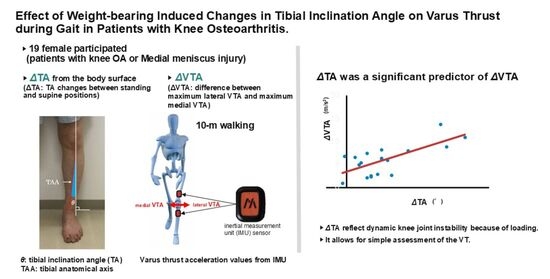
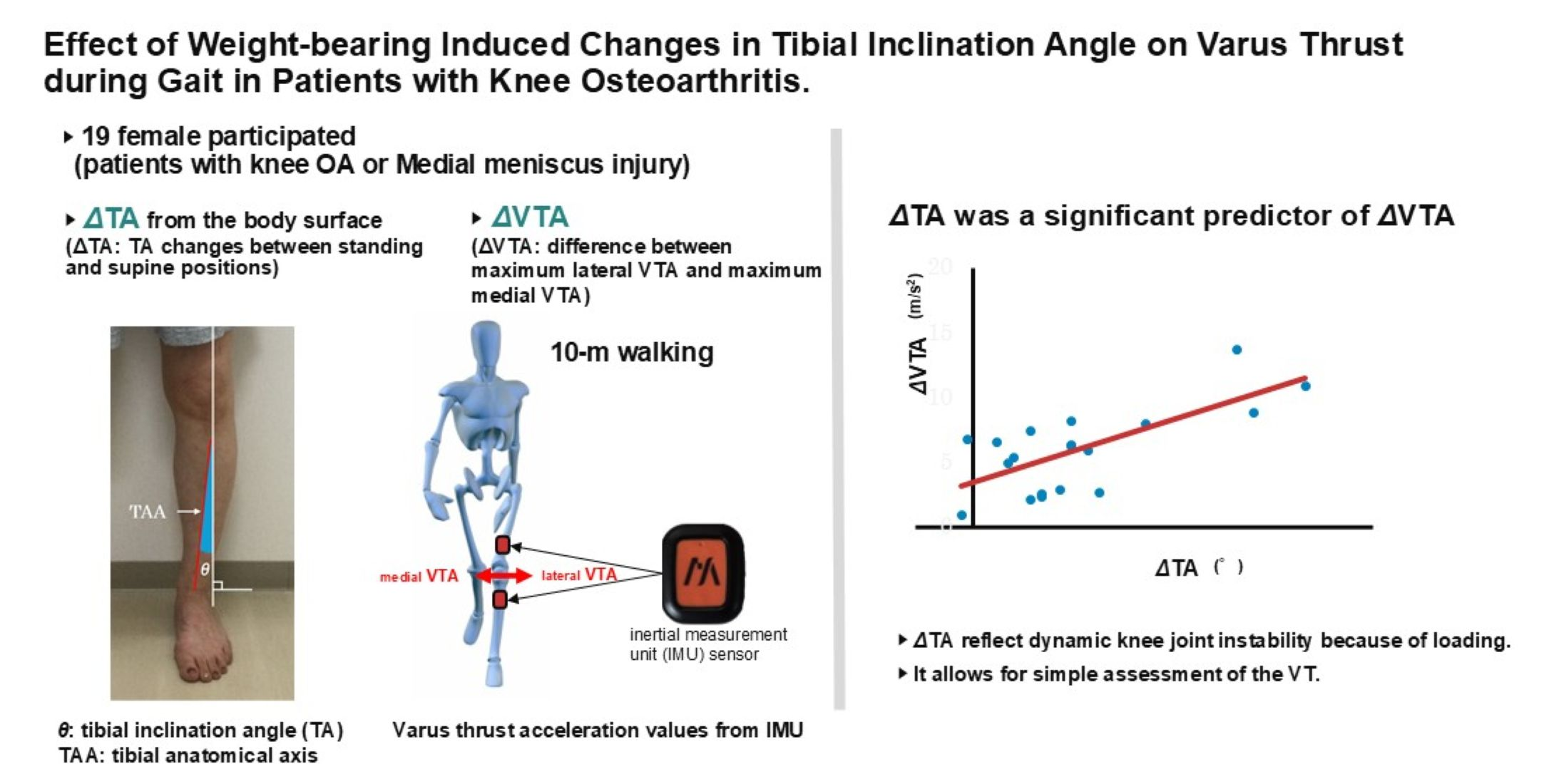
Background: The relationship between varus thrust (VT) during gait and static limb alignment on radiography in knee osteoarthritis (OA) remains unclear. Therefore, the present study investigated the association between the tibial inclination angle (TA), which was noninvasively measured from the body surface, and radiographic parameters. In Addition, this study analyzed how TA changes under different loading conditions (ΔTA) relate to VT acceleration (VTA) during early stance using an inertial measurement unit (IMU) sensor. Methods: Nineteen female patients (mean age: 63.5 ± 8.6 years) with knee OA or medial meniscus injury were included. The TA was defined as the angle between the tibial mechanical axis and a vertical line from the floor, which was measured in standardized standing and supine positions. The ΔTA was calculated as the difference between these positions. To assess lower limb alignment, the femorotibial angle (FTA) and joint line convergence angle (JLCA) were measured. The VTA was measured using IMU sensors on the thigh and tibia, and the differences between lateral and medial VTA were defined as femoral and tibial ΔVTA, respectively. Spearman’s correlation coefficient and linear regression were used for analysis. Results: The standing TA was significantly correlated with the FTA (ρ = 0.47, p = 0.04) and JLCA (ρ = 0.80, p < 0.01). The ΔTA was significantly associated with femoral ΔVTA (β = 0.70, p < 0.01) and tibial ΔVTA (β = 0.67, p < 0.01). Conclusions: Surface-measured TA reflects radiographic alignment. The ΔTA also captures dynamic instability not explained by static measures, suggesting its potential utility as an assessment indicator, although further validation is warranted.

Graphical Abstract

1. Introduction

Varus thrust (VT) is characterized by a sudden deviation of the knee during gait. It is commonly observed in patients with knee osteoarthritis (OA). According to previous studies using inertial measurement unit (IMU) sensors, VT occurs during the early stance phase of the gait cycle [1,2] and is accompanied by increased lateral acceleration and varus angular velocity [3,4,5,6]. Moreover, studies have associated VT with elevated external knee adduction moments (KAMs) during gait [1,2,7,8], thereby increasing mechanical loading on the knee’s medial compartment and contributing to pain, symptom worsening, and OA progression [9,10,11,12,13,14,15,16,17,18].
In studies exploring the relationship between VT and OA severity (assessed by standing radiographs), VT prevalence tended to increase with advancing OA [3,11,19]. However, VT has also been observed in individuals with mild OA [4,13]. This finding indicates that its presence is not limited to advanced disease stages. Although previous studies have investigated the associations between VT and static alignment parameters (e.g., varus angle and joint line convergence angle [JLCA]) [4,6,11,13,19,20], the results remain inconsistent. Therefore, the association between VT, OA severity, and static alignment parameters remains unclear.
Based on these inconsistencies, VT may be influenced by knee joint instability that is not fully captured by static radiographic assessments. In medial knee OA, cartilage degeneration has been reported to narrow the medial joint space, thereby increasing varus alignment under load [21]. Such load-induced alignment changes serve as joint instability indicators linked to VT. However, imaging under different postures or loading conditions presents different challenges, including higher costs and radiation exposure. As an alternative, Vanwanseel et al. measured the tibial inclination angle (TA) from the body surface in standing position [22]. They found that the body surface TA was strongly correlated with the mechanical axis (Mikulicz line) obtained from full-length standing radiographs of the lower limb. These findings suggest that the TA is a useful parameter for evaluating lower limb alignment in a simple and noninvasive manner.
Therefore, the present study aimed to investigate the association between the TA measured in the standing position and common radiographic alignment parameters. In addition, this study examined whether the TA changes between standing and supine positions (ΔTA), which reflects different loading conditions, is correlated with the VT magnitude quantified by IMU sensors. It was hypothesized that the TA was significantly correlated with radiographic alignment indices and that the ΔTA increased with OA progression and was associated with VT severity.

2. Methods

2.1. Participants

This study included 19 female patients who visited the orthopedic outpatient clinic at our institution between August 2024 and June 2025 and were diagnosed with knee OA or medial meniscus injury (Table 1). A single board-certified orthopedic surgeon with 27 years of clinical experience comprehensively diagnosed knee OA based on age, clinical symptoms, blood test results, synovial fluid findings, and plain radiographic findings. The plain radiographs were obtained in the standing weight-bearing position with the knee extended in the anteroposterior view. Knee OA severity was assessed according to the Kellgren–Lawrence classification. Medial meniscus injury was diagnosed by adding magnetic resonance imaging examination as indicated by clinical symptoms. Consequently, among the 19 participants included in the analysis, 10 were found to have concomitant medial meniscus injury.
The inclusion criteria were as follows: patients aged 40 years or older and those who could walk independently. For patients with bilateral knee lesions, the more symptomatic side was selected for measurement. Meanwhile, the exclusion criteria included patients aged under 40 years, those who had paralysis because of cerebrovascular or neurological diseases, those who were diagnosed with lateral-type knee OA, those with a history of OA or rheumatoid arthritis in the hip or ankle joints, those with a history of ligament injury in the knee joint, those who were unable to walk independently, and those who did not consent to participate in the study (Figure 1).
This study was approved by the institutional review board of our institution (approval number: 20240711-01). Written informed consent was obtained from all participants after providing a thorough explanation of the study objectives and procedures.

2.2. Tasks

The participants performed three tasks in the following order: quiet standing, supine lying, and 10 m straight-line walking. Lower limb alignment was measured during the standing and supine tasks, whereas VT was evaluated during the walking task.

2.3. Measurement Procedures

The TA was measured using a digital goniometer (Shenzhen Yibai Network Technology Ltd., Shenzhen, China), whereas the VT during gait was measured using three IMU sensors (Movella Inc., Henderson, NV, USA).

2.3.1. TA

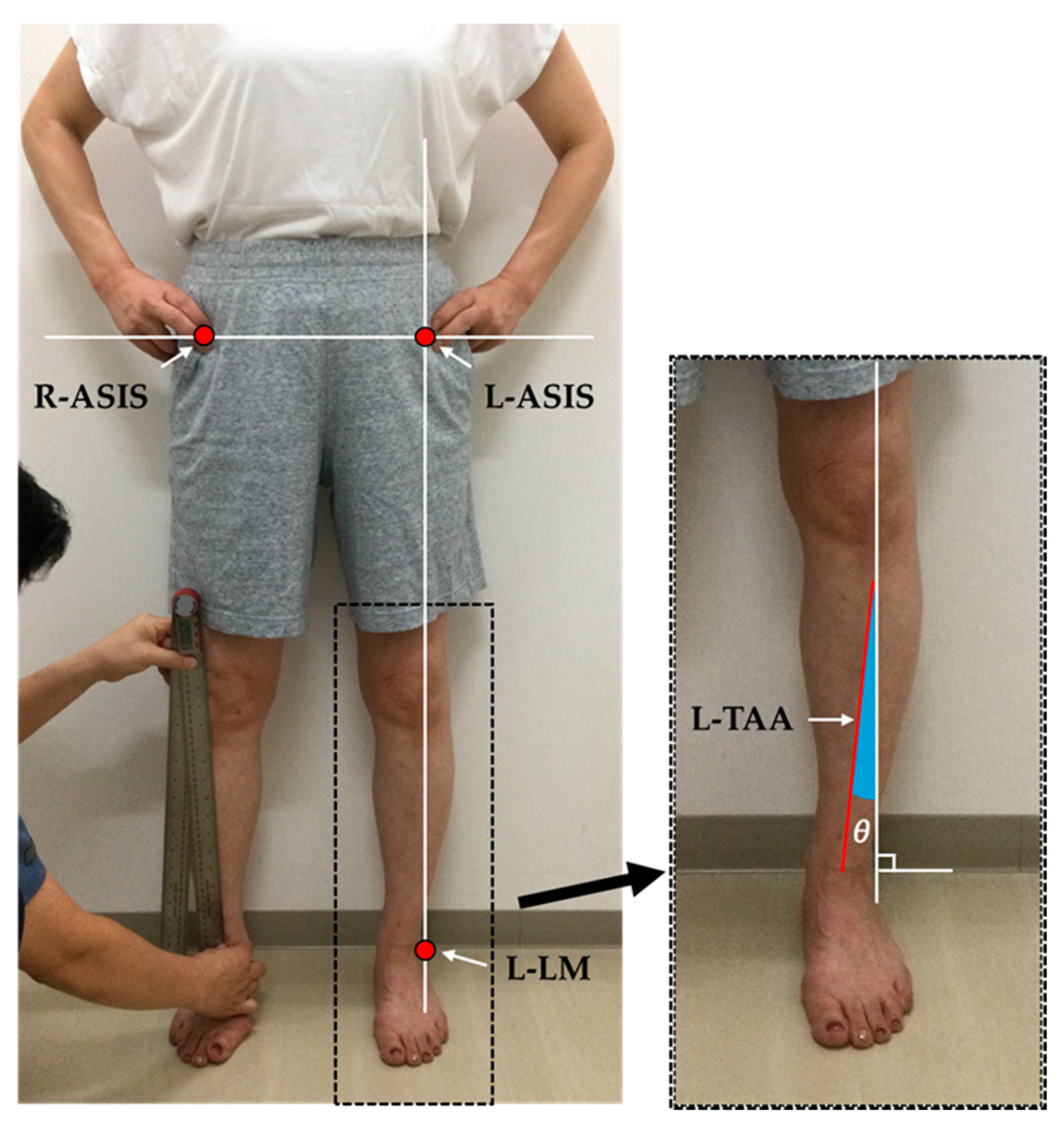
The TA measurement was performed under two conditions (i.e., standing and supine), in accordance with the method described by Vanwanseele et al. [22,23]. These measurements were defined as the standing TA and supine TA, respectively. In the standing position, the participant’s posture was adjusted to ensure that the height of the bilateral anterior superior iliac spines (ASIS) was as equal as possible and that the patellae faced forward. Using a digital goniometer, the posture was further adjusted so that the longitudinal axis of the second metatarsal was perpendicular to the line connecting the bilateral ASIS. Furthermore, the digital goniometer was used to confirm whether the bilateral lateral malleoli and ASIS were aligned along a vertical line from the floor. In this posture, the angle between the tibial longitudinal axis and the vertical line from the floor was measured. The tibial inclination axis was defined as the line connecting the tibial tuberosity and the ankle joint center. This angle was considered as the standing TA (Figure 2). In the supine position, the participant lay on the examination table with the lower limbs naturally extended. Before measurement, adhesive white tapes were placed on the table in perpendicular directions to serve as reference lines. The positions of the feet and bilateral ASIS were aligned with these reference lines to reproduce an alignment similar to that in the standing position. During measurement, a sandbag was placed on the lateral aspect of the knee joint to prevent lower limb rotation. All TA measurements were performed by the same examiner. To assess the intra-rater reliability, the standing TA and supine TA were measured in 7 healthy participants (14 knees), and the intraclass correlation coefficient (ICC (1, 1)), standard error of measurement (SEM), and minimal detectable change (MDC) were calculated. Consequently, good reproducibility was observed for both conditions: standing TA: ICC (1, 1) = 0.91; SEM = 0.15°; and MDC = 0.04° and supine TA: ICC (1, 1) = 0.97; SEM = 0.09°; and MDC = 0.02°.

2.3.2. Radiographic Images

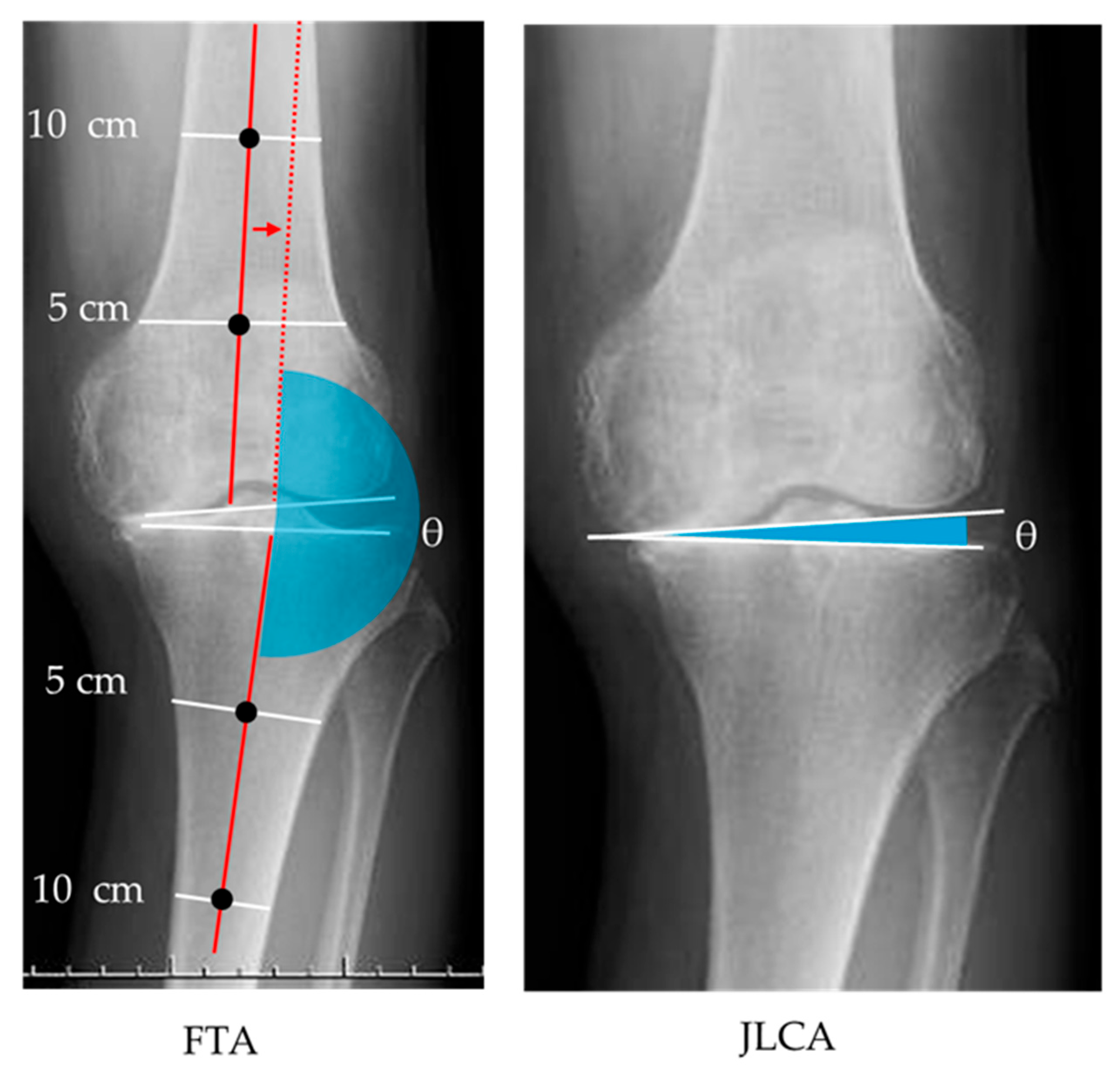
The femorotibial angle (FTA) and JLCA were measured as varus knee alignment indices in a standing radiographic image. The FTA was measured in accordance with the method of Zampogna et al., using the midpoints of the femoral and tibial shafts located 5 and 10 cm distal to the respective joint surfaces as landmarks [24]. Meanwhile, the JLCA was defined as the angle formed between the tangents to the femoral and tibial joint surfaces (Figure 3).

2.3.3. VT Measurement During Gait Using IMU Sensors

VT measurements were performed along a 16 m walkway comprising a 10 m steady-state walking section and 3 m acceleration and deceleration sections before and after the steady-state zone. The walking surface was a flat indoor floor, and participants walked barefoot to eliminate the influence of footwear. The target walking speed was set at 1.1 m/s based on previous studies [12]. After two practice trials, one main measurement trial was performed. If the average walking speed over the 10 m steady-state section deviated from the range of 1.0–1.25 m/s, the trial was repeated. A 3 min rest period was provided between trials to minimize the effects of fatigue.
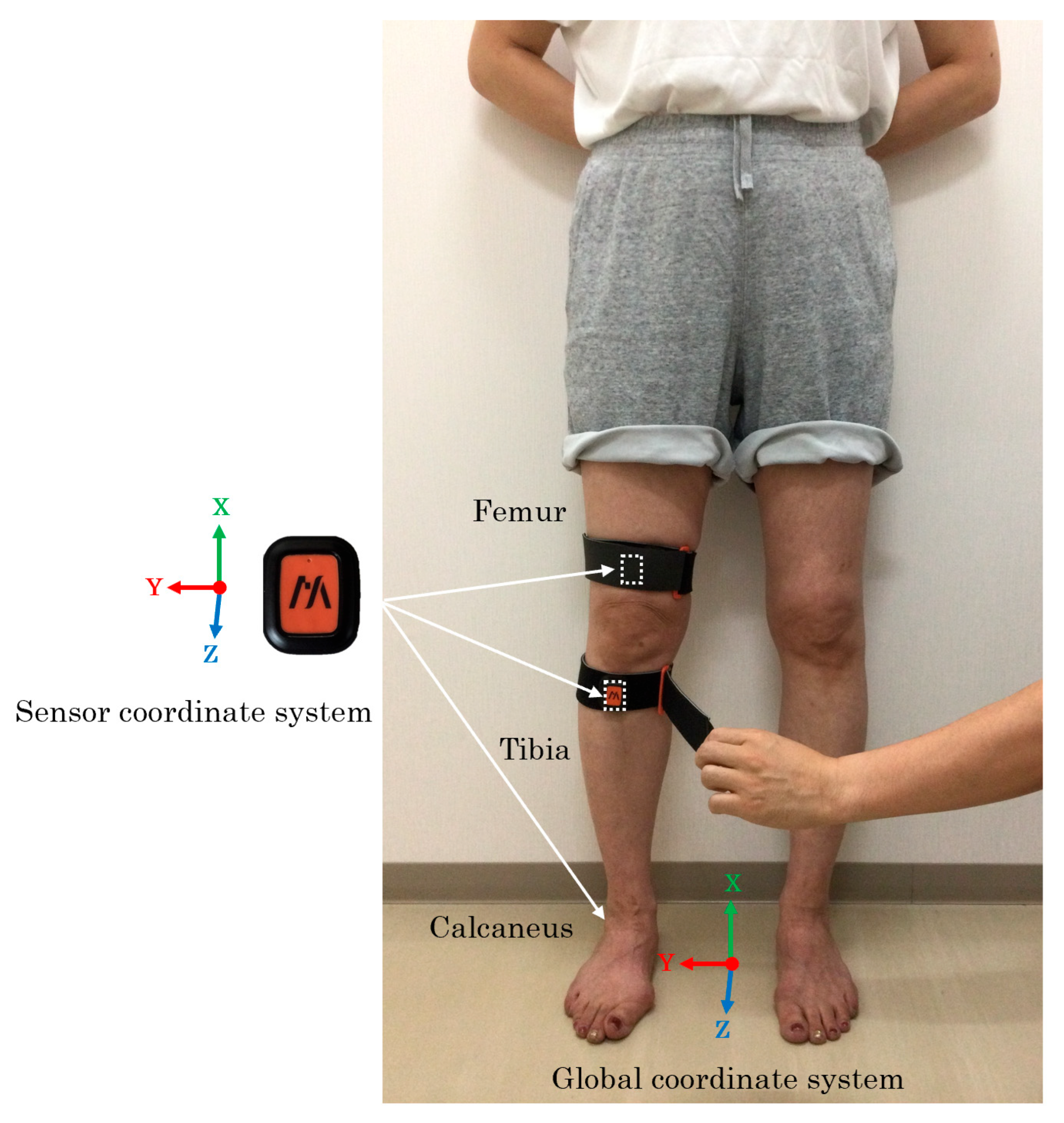
IMU sensors were attached at three sites: thigh (anterior central surface of the thigh, 5 cm proximal to the knee joint), tibia (tibial tuberosity), and calcaneus (central posterior surface of the calcaneus) [18,25,26,27]. Within each IMU sensor, the X-axis was aligned so that acceleration during quiet standing approximated 1 G because of gravity. Meanwhile, the Y-axis was aligned to the line connecting the acromion processes on both sides. Finally, the Z-axis was aligned perpendicular to this line. The IMU sensors were secured using Velcro straps and medical tape (Figure 4). The sampling frequency of the IMU sensors was set at 60 Hz.

2.4. Data Analysis

The variables analyzed included the standing TA and supine TA, measured using a digital goniometer, as well as ΔTA, calculated as the difference between the two. In addition, the FTA and JLCA were measured from radiographic images. The mediolateral (Y-axis) acceleration of the thigh and tibia, and the anteroposterior (Z-axis) acceleration of the calcaneus during gait were measured using IMU sensors.

VTA of the Thigh and Tibia

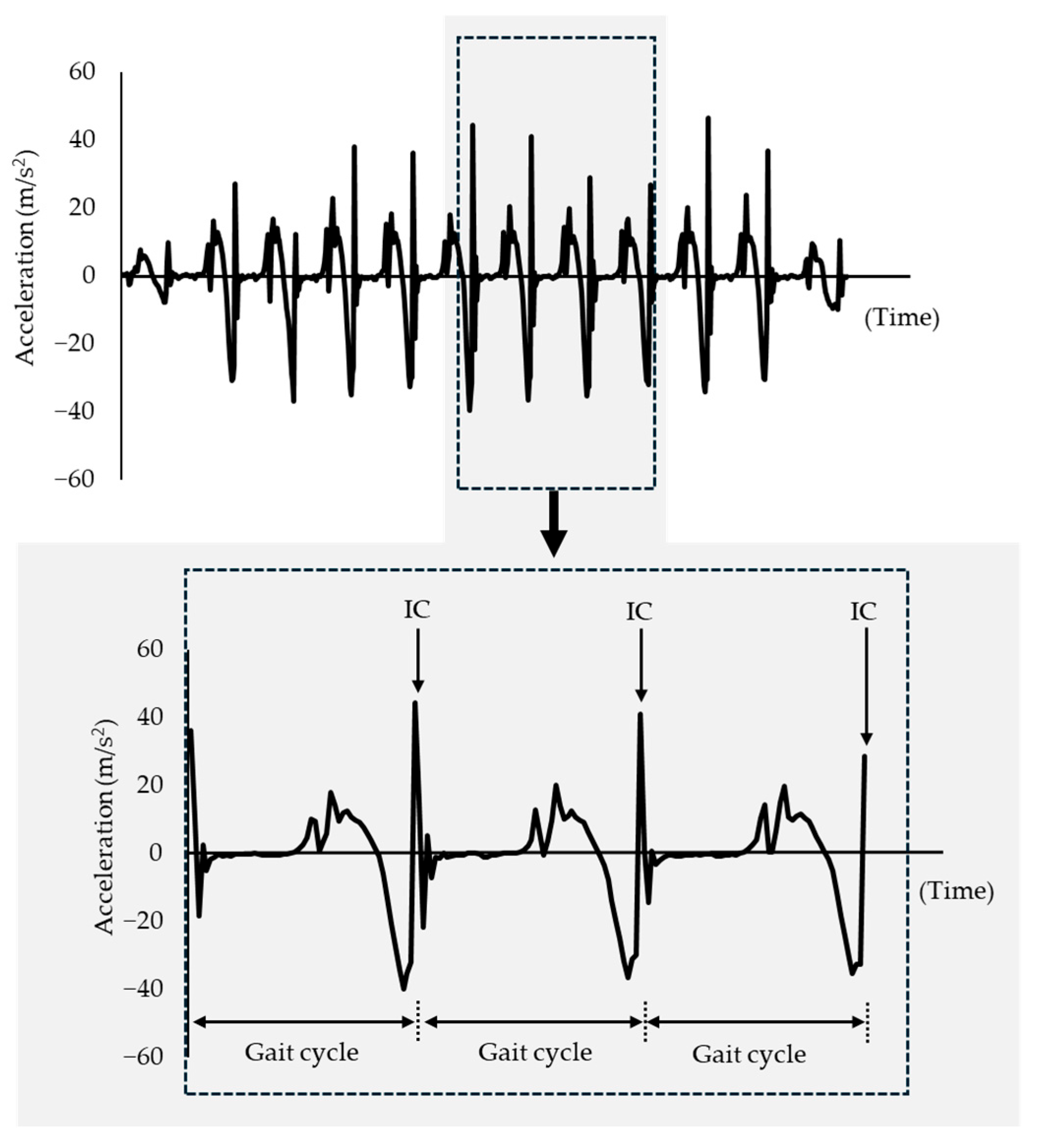
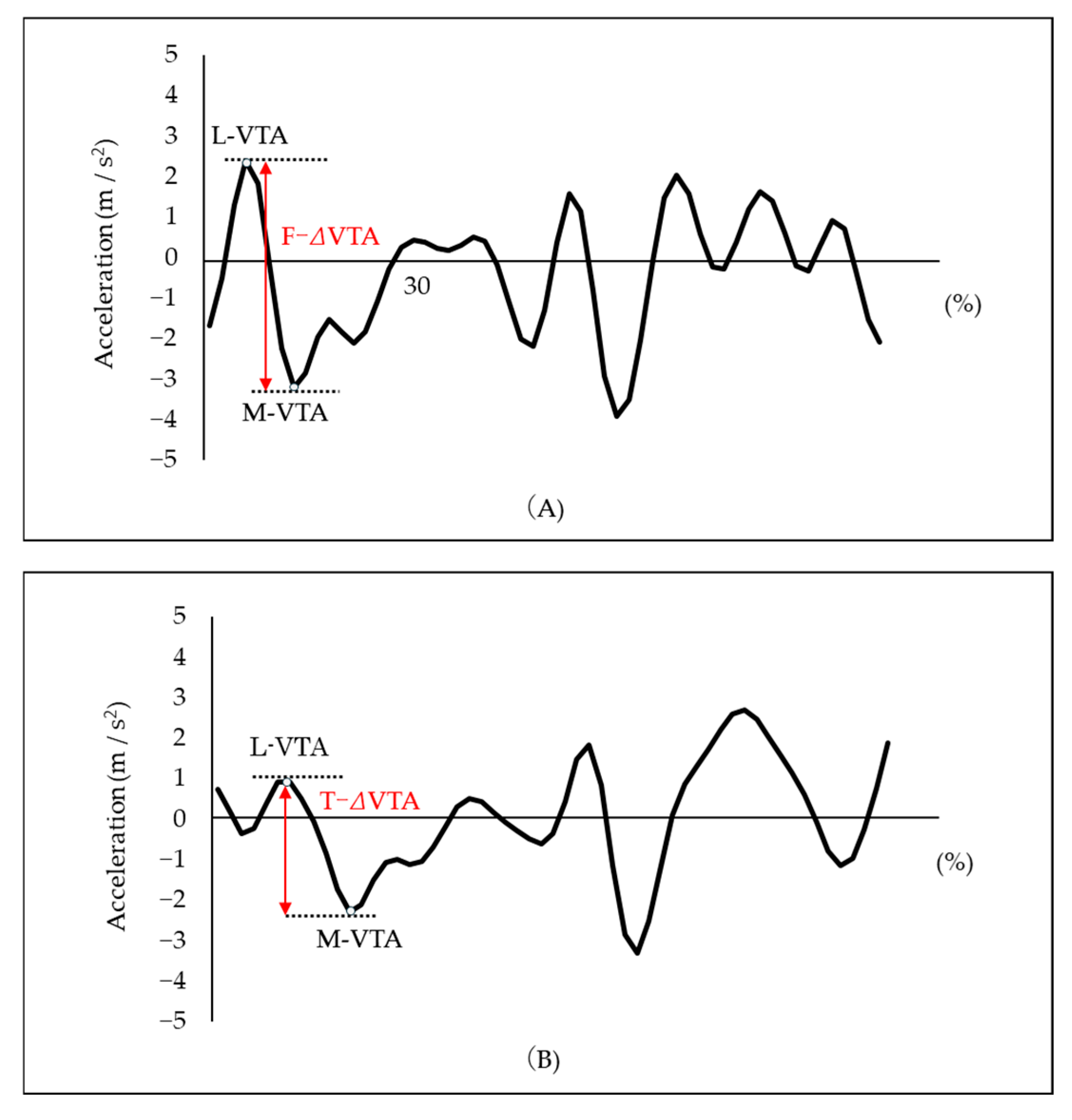
One gait cycle was identified based on the initial contact determined from the anteroposterior acceleration waveform along the Z-axis of the calcaneal IMU sensor [26]. Data from three consecutive gait cycles were extracted from the fourth step onward (Figure 5). Each gait cycle was time-normalized to 100%. The difference between the maximum lateral and medial VTA values within the first 30% of the gait cycle was calculated as the ΔVTA, in accordance with the method of Iwama et al. [27]. The average ΔVTA, defined as the difference between the maximum lateral VTA (L-VTA) and the maximum medial VTA (M-VTA) within the initial 30% of the gait cycle from initial contact, was calculated across the three gait cycles separately for the thigh and tibia, which were defined as the femoral ΔVTA (F-ΔVTA) and tibial ΔVTA (T-ΔVTA), respectively (Figure 6).
The acceleration data that were acquired were corrected based on the squared walking speed [28]. Subsequently, they were processed using a 10 Hz Butterworth low-pass filter [3,20].

2.5. Statistical Analyses

Statistical analyses were performed using R version 4.1.2 (CRAN). The Shapiro–Wilk test was used to assess data normality. Meanwhile, Spearman’s rank correlation coefficient (ρ) was used to evaluate the relationships between the standing TA and radiographic parameters (e.g., FTA and JLCA). The correlation strength was interpreted as follows: strong (ρ > 0.7), moderate (ρ = 0.4–0.7), weak (ρ = 0.2–0.4), and negligible (ρ < 0.2) [29]. Furthermore, simple linear regression analyses were performed to investigate the influence of ΔTA on ΔVTA, with F-ΔVTA and T-ΔVTA as dependent variables and ΔTA as the independent variable. The significance level was set at 5%.
Sample size estimation was performed using G*Power (version 3.1.9.7, Heinrich Heine University, Düsseldorf, Germany). The parameters were set as follows: significance level (α), 0.05; power (1 − β), 0.8; and effect size (r), 0.68. The effect size was based on the average correlation coefficient of 0.65 obtained from a preliminary study that evaluated the association between standing TA and radiographic parameters as secondary outcome measures. It also took into account the coefficient of determination (R2 = 0.50, corresponding to r = 0.71) derived from a simple linear regression analysis, with the ΔTA as the independent variable and the ΔVTA as the dependent variable, which was defined as the primary outcome measure. Consequently, the minimum required sample size for this study was estimated to be 12 participants. Considering an expected attrition of approximately 30% due to measurement difficulties or withdrawal from the study, the final target sample size was set at 19 participants.

3. Results

3.1. TA, Radiographic Parameters, and VTA During Gait

The means and standard deviations of the TA, radiographic parameters, and VTA during gait are presented in Table 2.

3.2. Association Between the Standing TA and Radiographic Parameters

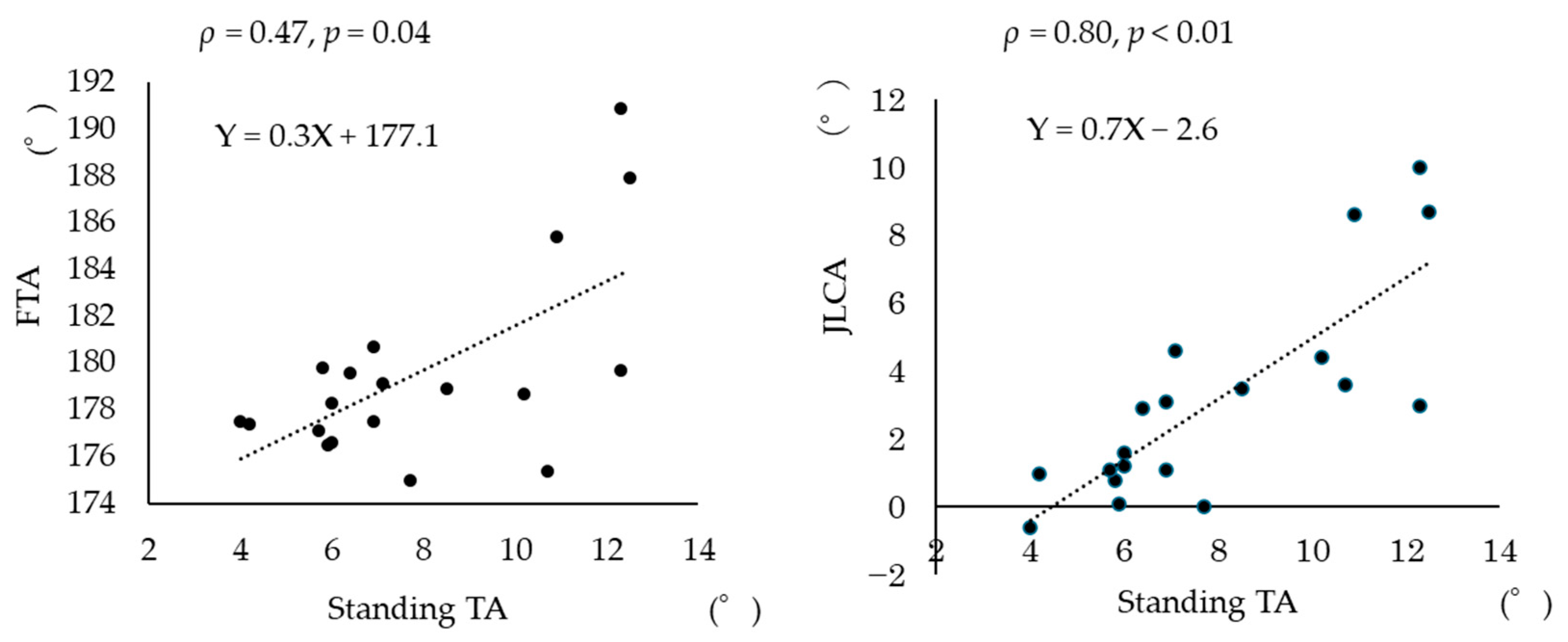
The relationships between the standing TA and FTA and JLCA are shown in Figure 7. Spearman’s rank correlation coefficients (ρ) indicated significant positive correlations with both parameters, with ρ = 0.47 (p = 0.04) for FTA and ρ = 0.80 (p < 0.01) for JLCA (Table 3).

3.3. Effect of the ΔTA on the F-ΔVTA and the T-ΔVTA

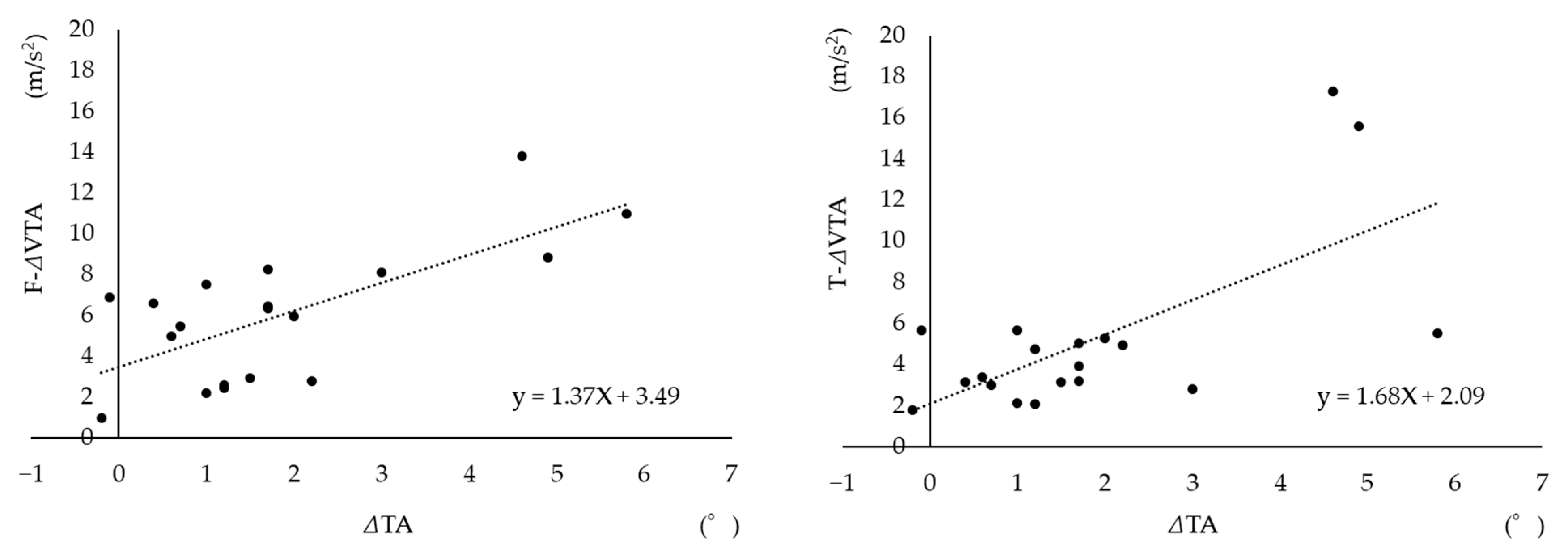
The results of simple linear regression analysis assessing the influence of the ΔTA on the ΔVTA are shown in Table 4 and Figure 8. The ΔTA demonstrated a significant positive association with the F-ΔVTA (β = 0.70, p < 0.01) and T-ΔVTA (β = 0.67, p < 0.01), indicating that the ΔTA is a significant predictor of both variables.

4. Discussion

Currently, there is no consensus with regard to the relationship between VT in knee OA and static alignment assessed by radiographic imaging [3,4,6,11,13,19,20]. Therefore, the present study investigated the association between the standing TA and radiographic parameters (e.g., FTA and JLCA). Furthermore, the effect of the ΔTA on the ΔVTA measured by IMU sensors were analyzed. The results showed significant positive correlations between the standing TA and the FTA and JLCA. In addition, the ΔTA was found to be a significant positive predictor of the ΔVTA.

4.1. Association Between the Standing TA and Radiographic Images

The standing TA showed a moderate positive correlation with the FTA (ρ = 0.47, p = 0.04). Previous studies reported a very strong correlation between the standing TA and the Mikulicz line, with correlation coefficients ranging from 0.83 to 0.93 [7,22]. This discrepancy may be explained by differences in how these parameters are defined. The FTA is measured based on the femur and tibia’s mechanical axes. Meanwhile, the Mikulicz line is defined as a line connecting the center of the femoral head, intercondylar eminence, and center of the talus and does not include the femoral shaft axis. In relation to this, Qin et al. reported that the lateral bowing of the femur becomes more pronounced as knee OA progresses [30]. In the present study, the findings suggested that morphological changes in the femur and tibia in patients with advanced knee OA may weaken the correlation between the surface-based TA and the FTA. Conversely, measurement errors in radiographic images due to variations in posture have been reported. For instance, Nguyen et al. used a simulated bone with a 5° knee varus angle to investigate errors in lower limb joint angles by altering limb rotation, knee flexion angle, and X-ray beam height, and reported that differences in these conditions could lead to errors of up to 2° [31]. Therefore, in the current study, differences in lower limb alignment between TA measurement and radiographic imaging may have contributed to measurement errors, potentially affecting the correlation coefficient.
A strong positive correlation was observed between the standing TA and the JLCA (ρ = 0.80, p < 0.01). The JLCA represents the inclination of the distal femoral and proximal tibial articular surfaces and is considered to be within 2° in healthy knees [32,33]. In knee OA, the narrowing of medial joint space leads to the lateral widening of the JLCA as the FTA increases, thereby increasing the mechanical load on the medial compartment of the knee [21,33,34,35]. The strong association between the FTA and the JLCA is likely because of the consistent geometric relationship between the articular surfaces and the femur and tibia’s mechanical axes. These findings suggest that the standing TA serves as a simple and noninvasive indicator that reflects the JLCA and may be useful for assessing alignment in clinical practice.

4.2. Influence of the ΔTA on the ΔVTA

The findings suggest that the ΔTA, which reflects the difference in loading conditions, may affect the F-ΔVTA and T-ΔVTA during gait. Iwama et al. reported a moderate correlation between the ΔVTA measured using IMU sensors and the KAM calculated using three-dimensional motion analysis [27]. These findings indicate that an increase in the ΔVTA may reflect greater biomechanical loading on the knee joint. In support of this finding, Moyer et al. found that each 1° increase in knee varus alignment was associated with an increase in KAM (ranging from 1.7 Nm to 3.2 Nm) [36]. In addition, Foroughi et al. reported a significant positive correlation between the standing TA and the KAM [7]. These reports suggest that an increase in knee varus angle leads to greater mechanical load on the knee joint, thus supporting the findings of the present study that changes in ΔTA are associated with increases in ΔVTA. Furthermore, Hirschmann et al. reported a significant reduction in the medial joint space under load using computed tomography imaging in the supine and standing positions in patients with knee OA [21]. Using a three-dimensional bone model, Mochizuki et al. demonstrated that in severe OA cases, the medial tibial articular surface becomes more parallel to the floor under load, with an average ΔTA of 2.5° [37]. In the present study, the average ΔTA was 1.8°, which is slightly lower than previously reported values. This may be because of the study population as almost half of the participants were classified as having mild OA, thereby influencing the observed results.
The results of simple linear regression analysis showed that the ΔTA was a significant positive predictor of the F-ΔVTA and the T-ΔVTA, with standardized regression coefficients of β = 0.70 and 0.67, respectively. The coefficients of determination (R2) were 0.48 and 0.46, indicating that the ΔTA explained approximately 50% of the variance in the ΔVTA. However, the remaining 50% of the variance is likely attributable to other factors, warranting further investigations. Previous studies have reported either no significant associations between static alignment and VTA or KAM [18] or coefficients of determination ranging only from 17% to 37% [23,36,38]. Compared with these findings, the ΔTA obtained in the present study demonstrated greater predictive power. These results suggest that the ΔTA may serve as a clinically useful indicator reflecting dynamic knee joint instability that cannot be easily captured through static alignment assessments.

4.3. Limitations and Future Directions

This study has several limitations. First, the sampling frequency of the IMU sensors used in this study was 60 Hz, which is lower than that used in previous studies (100 Hz or higher) [3,4,5,18]. This may have led to the underestimation of the maximum VTA values and errors in the timing of their occurrence. However, Iwama et al. reported no significant differences in VTA measurements between 50 Hz and 200 Hz sampling frequencies [27], suggesting a certain degree of validity in the present study. Nonetheless, the potential effects of sampling frequency differences on measurement accuracy cannot be ruled out and is considered one of the limitations of this study. Second, although the study included 19 participants, which exceeded the minimum required sample size of 12 and thereby ensured a sufficient statistical power, the coefficients of determination from the simple regression analysis were 0.48 and 0.46. This indicates that the ΔTA can only explain about half of the variance in the ΔVTA, reflecting a limitation in explanatory power. Third, the study population comprised females. Since ligamentous laxity related to knee varus and valgus is reportedly higher in females than in males [39], there may be sex-related differences in the ΔTA. Fourth, the participants in this study included individuals with knee OA and medial meniscus injury. Knee OA is a degenerative disease associated with aging and often coexists with meniscal injury [40]. Although participants exhibiting symptoms characteristic of meniscus injury, such as locking and catching, were not included, the presence of abnormal gait patterns associated with meniscus injury cannot be completely excluded. Finally, concerning TA measurement, intrarater reliability was confirmed; however, interrater reproducibility was not evaluated in this study. Consequently, the generalizability of the measurement method used in this study is limited. Based on these points, future studies should expand the sample size to include both sexes and stratify by knee OA severity to further investigate the influence of the ΔTA on the ΔVTA. This will facilitate the identification of cases where physical therapy may be effective before the progression of deformity.

5. Conclusions

The standing TA measured from the body surface was significantly positively correlated with the FTA and JLCA measured on radiographic images. In Addition, the ΔTA, which represents the difference in loading conditions between standing and supine positions, was suggested to be a significant positive predictor of the ΔVTA in the thigh and tibia measured by IMU sensors during gait. These findings suggest that the ΔTA may have potential as an indicator of dynamic knee instability under loading conditions. However, further research is required before it can be adopted for clinical assessment.

Author Contributions

R.K., S.K., T.I., K.H., T.M., M.K., Y.M. and H.K. contributed to the conception and design of the study. The manuscript was written by R.K. and H.K. supervised and advised on data analysis and contributed to the interpretation of the results. All authors have read and agreed to the published version of the manuscript.

Funding

This research received no external funding.

Institutional Review Board Statement

This study was conducted with the approval of Kawashima Orthopedic Hospital (approval number: 20240711-01). All participants were provided with detailed explanations regarding the study, including an overview of the research protocol. Prior to participation, written informed consent was obtained from all participants. Participants were informed that participation was voluntary, they could withdraw at any time without penalty, and that the study adhered to the ethical principles outlined in the Declaration of Helsinki.

Informed Consent Statement

Written informed consent was obtained from all participants before the measurements. Participants were given a written explanation prior to data collection, and consent was confirmed by their signature on the consent form.

Data Availability Statement

The original data presented in this study are openly available at the institutional repository of Yamagata Prefectural University of Health Sciences: URL: https://yachts.repo.nii.ac.jp/records/2000110 (accessed on 14 October 2025).

Acknowledgments

We would like to express our sincere gratitude to all co-authors who contributed to the planning and execution of this study, as well as to all participants. In particular, we deeply thank Hiroshi Katoh for his valuable advice on revising the study design and data analysis, as well as for his extensive guidance during manuscript preparation.

Conflicts of Interest

The authors declare no conflicts of interest.

References

  1. Chang, A.; Hayes, K.; Dunlop, D.; Hurwitz, D.; Song, J.; Cahue, S.; Genge, R.; Sharma, L. Thrust during Ambulation and the Progression of Knee Osteoarthritis. Arthritis Rheum. 2004, 50, 3897–3903. [Google Scholar] [CrossRef]
  2. Chang, A.H.; Chmiel, J.S.; Moisio, K.C.; Almagor, O.; Zhang, Y.; Cahue, S.; Sharma, L. Varus Thrust and Knee Frontal Plane Dynamic Motion in Persons with Knee Osteoarthritis. Osteoarthr. Cartil. 2013, 21, 1668–1673. [Google Scholar] [CrossRef] [PubMed]
  3. Ishii, Y.; Ishikawa, M.; Kurumadani, H.; Hayashi, S.; Nakamae, A.; Nakasa, T.; Sumida, Y.; Tsuyuguchi, Y.; Kanemitsu, M.; Deie, M.; et al. Increase in Medial Meniscal Extrusion in the Weight-Bearing Position Observed on Ultrasonography Correlates with Lateral Thrust in Early-Stage Knee Osteoarthritis. J. Orthop. Sci. 2020, 25, 640–646. [Google Scholar] [CrossRef]
  4. Tsukamoto, H.; Saito, K.; Matsunaga, T.; Iwami, T.; Saito, H.; Kijima, H.; Akagawa, M.; Komatsu, A.; Miyakoshi, N.; Shimada, Y. Diagnostic Accuracy of the Mobile Assessment of Varus Thrust Using Nine-Axis Inertial Measurement Units. Prog. Rehabil. Med. 2021, 6, 20210009. [Google Scholar] [CrossRef]
  5. Tsurumiya, K.; Hayasaka, W.; Komatsu, A.; Tsukamoto, H.; Suda, T.; Iwami, T.; Shimada, Y. Quantitative Evaluation Related to Disease Progression in Knee Osteoarthritis Patients During Gait. Adv. Biomed. Eng. 2021, 10, 51–57. [Google Scholar] [CrossRef]
  6. Misu, S.; Tanaka, S.; Ishihara, K.; Asai, T.; Nishigami, T. Applied Assessment Method for Varus Thrust during Walking in Patients with Knee Osteoarthritis Using Acceleration Data Measured by an Inertial Measurement Unit. Sensors 2022, 22, 6460. [Google Scholar] [CrossRef] [PubMed]
  7. Foroughi, N.; Smith, R.M.; Lange, A.K.; Baker, M.K.; Singh, M.A.F.; Vanwanseele, B. Dynamic Alignment and Its Association with Knee Adduction Moment in Medial Knee Osteoarthritis. Knee 2010, 17, 210–216. [Google Scholar] [CrossRef]
  8. Costello, K.E.; Eigenbrot, S.; Geronimo, A.; Guermazi, A.; Felson, D.T.; Richards, J.; Kumar, D. Quantifying Varus Thrust in Knee Osteoarthritis Using Wearable Inertial Sensors: A Proof of Concept. Clin. Biomech. 2020, 80, 105232. [Google Scholar] [CrossRef] [PubMed]
  9. Miyazaki, T.; Wada, M.; Kawahara, H.; Sato, M.; Baba, H.; Shimada, S. Dynamic Load at Baseline Can Predict Radiographic Disease Progression in Medial Compartment Knee Osteoarthritis. Ann. Rheum. Dis. 2002, 61, 617–622. [Google Scholar] [CrossRef]
  10. Bennell, K.L.; Bowles, K.-A.; Wang, Y.; Cicuttini, F.; Davies-Tuck, M.; Hinman, R.S. Higher Dynamic Medial Knee Load Predicts Greater Cartilage Loss over 12 Months in Medial Knee Osteoarthritis. Ann. Rheum. Dis. 2011, 70, 1770–1774. [Google Scholar] [CrossRef]
  11. Lo, G.H.; Harvey, W.F.; McAlindon, T.E. Associations of Varus Thrust and Alignment with Pain in Knee Osteoarthritis. Arthritis Rheum. 2012, 64, 2252–2259. [Google Scholar] [CrossRef]
  12. Iijima, H.; Fukutani, N.; Aoyama, T.; Fukumoto, T.; Uritani, D.; Kaneda, E.; Ota, K.; Kuroki, H.; Matsuda, S. Clinical Phenotype Classifications Based on Static Varus Alignment and Varus Thrust in Japanese Patients with Medial Knee Osteoarthritis. Arthritis Rheumatol. 2015, 67, 2354–2362. [Google Scholar] [CrossRef] [PubMed]
  13. Fukutani, N.; Iijima, H.; Fukumoto, T.; Uritani, D.; Kaneda, E.; Ota, K.; Aoyama, T.; Tsuboyama, T.; Matsuda, S. Association of Varus Thrust With Pain and Stiffness and Activities of Daily Living in Patients With Medial Knee Osteoarthritis. Phys. Ther. 2016, 96, 167–175. [Google Scholar] [CrossRef]
  14. Wink, A.E.; Gross, K.D.; Brown, C.A.; Guermazi, A.; Roemer, F.; Niu, J.; Torner, J.; Lewis, C.E.; Nevitt, M.C.; Tolstykh, I.; et al. Varus Thrust during Walking and the Risk of Incident and Worsening Medial Tibiofemoral MRI Lesions: The Multicenter Osteoarthritis Study. Osteoarthr. Cartil. 2017, 25, 839–845. [Google Scholar] [CrossRef]
  15. Richards, R.E.; Andersen, M.S.; Harlaar, J.; Van Den Noort, J.C. Relationship between Knee Joint Contact Forces and External Knee Joint Moments in Patients with Medial Knee Osteoarthritis: Effects of Gait Modifications. Osteoarthr. Cartil. 2018, 26, 1203–1214. [Google Scholar] [CrossRef]
  16. Wink, A.E.; Gross, K.D.; Brown, C.A.; Lewis, C.E.; Torner, J.; Nevitt, M.C.; Tolstykh, I.; Sharma, L.; Felson, D.T. Association of Varus Knee Thrust During Walking With Worsening Western Ontario and McMaster Universities Osteoarthritis Index Knee Pain: A Prospective Cohort Study. Arthritis Care Res. 2019, 71, 1353–1359. [Google Scholar] [CrossRef]
  17. Hutchison, L.; Grayson, J.; Hiller, C.; D’Souza, N.; Kobayashi, S.; Simic, M. Relationship Between Knee Biomechanics and Pain in People With Knee Osteoarthritis: A Systematic Review and meta-analysis. Arthritis Care Res. 2023, 75, 1351–1361. [Google Scholar] [CrossRef]
  18. Misu, S.; Tanaka, S.; Miura, J.; Ishihara, K.; Asai, T.; Nishigami, T. Association of the Degree of Varus Thrust during Gait Assessed by an Inertial Measurement Unit with Patient-Reported Outcome Measures in Knee Osteoarthritis. Sensors 2023, 23, 4578. [Google Scholar] [CrossRef] [PubMed]
  19. Kuroyanagi, Y.; Nagura, T.; Kiriyama, Y.; Matsumoto, H.; Otani, T.; Toyama, Y.; Suda, Y. A Quantitative Assessment of Varus Thrust in Patients with Medial Knee Osteoarthritis. Knee 2012, 19, 130–134. [Google Scholar] [CrossRef] [PubMed]
  20. Wada, M.; Miyazaki, T.; Yamamoto, Y.; Sakamoto, T.; Adachi, T. Correlation of Knee Instability with Alignment and Repetitive Physical Activity in Patients with Knee Osteoarthritis: A Cross-Sectional Study. Preprint 2021. [Google Scholar] [CrossRef]
  21. Hirschmann, A.; Buck, F.M.; Fucentese, S.F.; Pfirrmann, C.W.A. Upright CT of the Knee: The Effect of Weight-Bearing on Joint Alignment. Eur. Radiol. 2015, 25, 3398–3404. [Google Scholar] [CrossRef]
  22. Vanwanseele, B.; Parker, D.; Coolican, M. Frontal Knee Alignment: Three-Dimensional Marker Positions and Clinical Assessment. Clin. Orthop. 2009, 467, 504–509. [Google Scholar] [CrossRef]
  23. Hunt, M.A.; Bennell, K.L. Predicting Dynamic Knee Joint Load with Clinical Measures in People with Medial Knee Osteoarthritis. Knee 2011, 18, 231–234. [Google Scholar] [CrossRef] [PubMed]
  24. Zampogna, B.; Vasta, S.; Amendola, A. Assessing Lower Limb Alignment: Comparsion of Standard Knee Xray vs Long Leg View. Iowa Orthop. J. 2015, 35, 49–54. [Google Scholar] [PubMed]
  25. Niswander, W.; Wang, W.; Kontson, K. Optimization of IMU Sensor Placement for the Measurement of Lower Limb Joint Kinematics. Sensors 2020, 20, 5993. [Google Scholar] [CrossRef]
  26. Niswander, W.; Kontson, K. Evaluating the Impact of IMU Sensor Location and Walking Task on Accuracy of Gait Event Detection Algorithms. Sensors 2021, 21, 3989. [Google Scholar] [CrossRef]
  27. Iwama, Y.; Harato, K.; Kobayashi, S.; Niki, Y.; Ogihara, N.; Matsumoto, M.; Nakamura, M.; Nagura, T. Estimation of the External Knee Adduction Moment during Gait Using an Inertial Measurement Unit in Patients with Knee Osteoarthritis. Sensors 2021, 21, 1418. [Google Scholar] [CrossRef] [PubMed]
  28. Menz, H.B.; Lord, S.R. Acceleration Patterns of the Head and Pelvis When Walking Are Associated with Risk of Falling in Community-Dwelling Older People. J. Gerontol. Biol. Sci. Med. Sci. 2003, 58, M446–M452. [Google Scholar] [CrossRef]
  29. Asuero, A.G.; Sayago, A.; González, A.G. The Correlation Coefficient: An Overview. Crit. Rev. Anal. Chem. 2006, 36, 41–59. [Google Scholar] [CrossRef]
  30. Qin, S.; Li, M.; Jia, Y.; Gao, W.; Xu, J.; Zhang, B.; Guo, H.; Feng, A.; Sun, R. How Do the Morphological Abnormalities of Femoral Head and Neck, Femoral Shaft and Femoral Condyle Affect the Occurrence and Development of Medial Knee Osteoarthritis. Orthop. Surg. 2023, 15, 3174–3181. [Google Scholar] [CrossRef]
  31. Nguyen, H.C.; Gielis, W.P.; Van Egmond, N.; Weinans, H.; Slump, C.H.; Sakkers, R.J.B.; Custers, R.J.H. The Need for a Standardized Whole Leg Radiograph Guideline: The Effects of Knee Flexion, Leg Rotation, and X-Ray Beam Height. J. Cartil. Jt. Preserv. 2021, 1, 100022. [Google Scholar] [CrossRef]
  32. Jamali, A.A.; Meehan, J.P.; Moroski, N.M.; Anderson, M.J.; Lamba, R.; Parise, C. Do Small Changes in Rotation Affect Measurements of Lower Extremity Limb Alignment? J. Orthop. Surg. 2017, 12, 77. [Google Scholar] [CrossRef]
  33. Micicoi, G.; Khakha, R.; Kley, K.; Wilson, A.; Cerciello, S.; Ollivier, M. Managing Intra-articular Deformity in High Tibial Osteotomy: A Narrative Review. J. Exp. Orthop. 2020, 7, 65. [Google Scholar] [CrossRef]
  34. Ishii, Y.; Noguchi, H.; Matsuda, Y.; Kiga, H.; Takeda, M.; Toyabe, S. Preoperative Laxity in Osteoarthritis Patients Undergoing Total Knee Arthroplasty. Int. Orthop. 2009, 33, 105–109. [Google Scholar] [CrossRef] [PubMed]
  35. Kozaki, T.; Fukui, D.; Yamamoto, E.; Nishiyama, D.; Yamanaka, M.; Murata, A.; Yamada, H. Medial Meniscus Extrusion and Varus Tilt of Joint Line Convergence Angle Increase Stress in the Medial Compartment of the Knee Joint in the Knee Extension Position-finite Element Analysis. J. Exp. Orthop. 2022, 9, 49. [Google Scholar] [CrossRef] [PubMed]
  36. Moyer, R.F.; Birmingham, T.B.; Chesworth, B.M.; Kean, C.O.; Giffin, J.R. Alignment, Body Mass and Their Interaction on Dynamic Knee Joint Load in Patients with Knee Osteoarthritis. Osteoarthr. Cartil. 2010, 18, 888–893. [Google Scholar] [CrossRef]
  37. Mochizuki, T.; Koga, Y.; Tanifuji, O.; Sato, T.; Watanabe, S.; Koga, H.; Kobayashi, K.; Omori, G.; Endo, N. Effect on Inclined Medial Proximal Tibial Articulation for Varus Alignment in Advanced Knee Osteoarthritis. J. Exp. Orthop. 2019, 6, 14. [Google Scholar] [CrossRef]
  38. Hunt, M.A.; Birmingham, T.B.; Bryant, D.; Jones, I.; Giffin, J.R.; Jenkyn, T.R.; Vandervoort, A.A. Lateral Trunk Lean Explains Variation in Dynamic Knee Joint Load in Patients with Medial Compartment Knee Osteoarthritis. Osteoarthr. Cartil. 2008, 16, 591–599. [Google Scholar] [CrossRef] [PubMed]
  39. Sharma, L. The Role of Proprioceptive Deficits, Ligamentous Laxity, and Malalignment in Development and Progression of Knee Osteoarthritis. J. Rheumatol. Suppl. 2004, 70, 87–92. [Google Scholar]
  40. MacFarlane, L.A.; Yang, H.; Collins, J.E.; Guermazi, A.; Jones, M.H.; Teeple, E.; Xu, L.; Losina, E.; Katz, J.N. Associations among Meniscal Damage, Meniscal Symptoms and Knee Pain Severity. Osteoarthr. Cartil. 2017, 25, 850–857. [Google Scholar] [CrossRef]
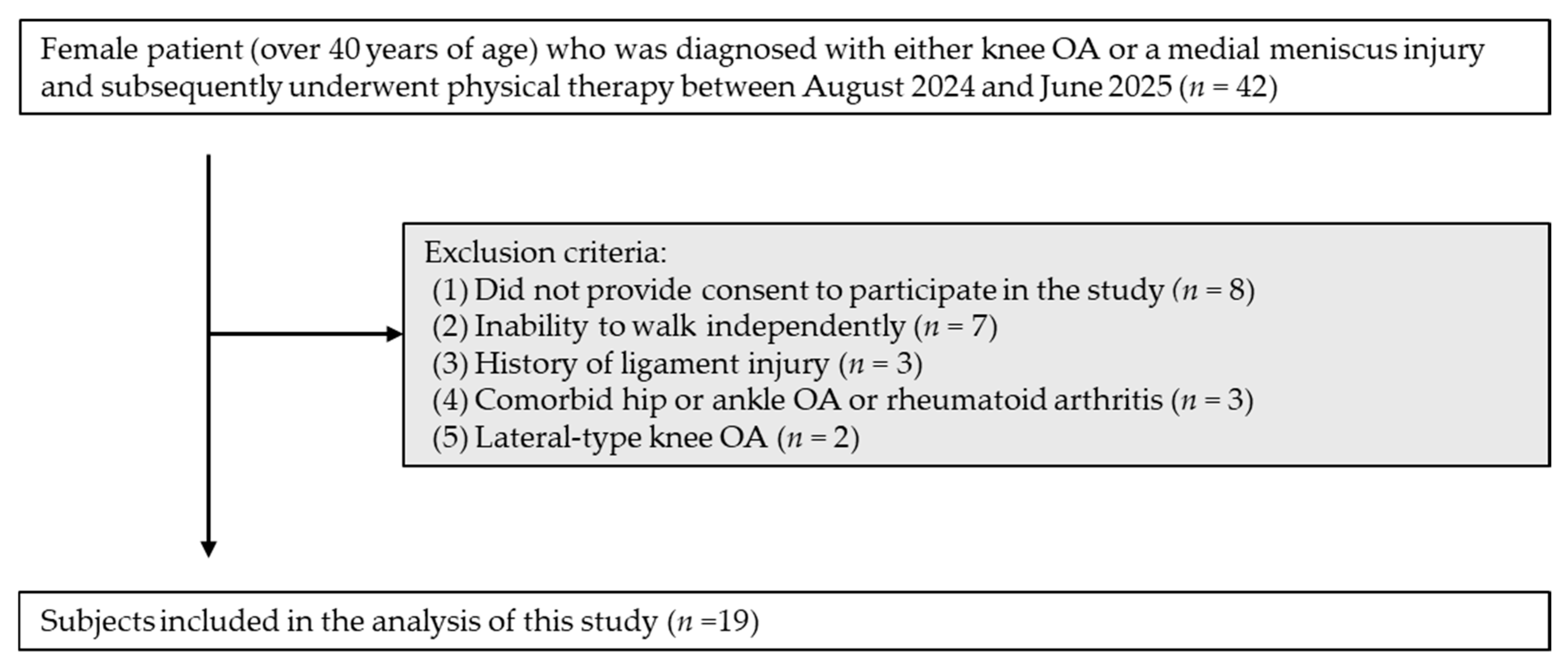
Figure 1. Flowchart presenting the inclusion and exclusion criteria.
Biomechanics 05 00098 g001
Figure 2. TA Measurement. The measurements were performed in the standing and supine positions. The figure illustrates the measurement of the standing TA. R-ASIS: right anterior superior iliac spine; L-ASIS: left anterior superior iliac spine; L-LM: left lateral malleolus; L-TAA: left tibial axis.
Biomechanics 05 00098 g002
Figure 3. Measurement of alignment parameters on radiographic images. FTA: the femoral and tibial axes were constructed using the midpoints of the bone located 5 and 10 cm distal to their respective joint surfaces as landmarks. The lateral angle that was formed between these two axes was measured. JLCA: the angle that was formed by the tangents to the femoral and tibial joint surface was measured. A positive value was defined as lateral divergence of the tangents. For knees of patients with severe knee OA wherein the medial joint space was completely absent and the tangent was difficult to identify, the tangent orientation was estimated by referencing the bony contour of the lateral femoral condyle. The mean of three measurements per patient was used as the representative value.
Biomechanics 05 00098 g003
Figure 4. IMU sensors and their attachment sites. The IMU sensors measured 20 mm in width, 32 mm in height, and 10 mm in thickness and weighed 2.6 g. Each sensor was equipped with a six-axis measurement system, which comprised a three-axis accelerometer (±16 G) and a three-axis gyroscope (±2000 deg/s). The global coordinate system was defined with the X-axis oriented vertically, the Y-axis oriented mediolaterally, and the Z-axis oriented anteroposteriorly. Each IMU sensor coordinate system was aligned as closely as possible with the global coordinate system during attachment.
Biomechanics 05 00098 g004
Figure 5. Identification of gait cycles. A gait cycle was identified using the peak anteroposterior acceleration obtained from the calcaneal IMU sensor. IC: initial contact.
Biomechanics 05 00098 g005
Figure 6. ΔVTA measurement. ΔVTA: the difference between the maximum lateral VTA (L-VTA) and the maximum medial VTA (M-VTA) within the initial 30% of the gait cycle from initial contact. F-ΔVTA: ΔVTA measured by the femoral IMU sensor (A); T-ΔVTA: ΔVTA measured by the tibial IMU sensor (B).
Biomechanics 05 00098 g006
Figure 7. Correlation between the standing TA and radiographic parameters. FTA: femorotibial angle; Standing TA: tibial longitudinal angle; JLCA: joint line convergence angle.
Biomechanics 05 00098 g007
Figure 8. Simple linear regression analysis of the ΔVTA predicted by the ΔTA. ΔVTA: the difference between the maximum lateral VTA (L-VTA) and the maximum medial VTA (M-VTA) within the initial 30% of the gait cycle from initial contact. F-ΔVTA: ΔVTA measured by the femoral IMU sensor; T-ΔVTA: ΔVTA measured by the tibial IMU sensor; ΔTA: the difference between the standing TA and the supine TA.
Biomechanics 05 00098 g008
Table 1. Participants’ baseline characteristics (n = 19).
Age (years)63.5±8.6
Height (cm)154.8±6.0
Weight (kg)58.5±9.7
BMI (kg/m2)24.3±3.7
Measured limb (right/left) 7/12
Kellgren–Lawrence grade (1/2/3/4) right knee0/1/4/2
Kellgren–Lawrence grade (1/2/3/4) left knee2/5/4/1
Mean ± standard deviation.
Table 2. Measured values for each parameter.
Measures
Standing TA (°)7.9±2.7
Supine TA (°)6.1±1.5
ΔTA (°)1.8±1.6
FTA (°)179.6±4.1
JLCA (°)3.1±3.0
F-ΔVTA (m/s2)6.0±3.2
T-ΔVTA (m/s2)5.2±4.1
ΔTA: the difference between the standing TA and the supine TA; FTA: femorotibial angle; JLCA: joint line convergence angle; ΔVTA: the difference between the maximum lateral VTA (L-VTA) and the maximum medial VTA (M-VTA) within the initial 30% of the gait cycle from initial contact. F-ΔVTA: ΔVTA measured by the femoral IMU sensor; T-ΔVTA: ΔVTA measured by the tibial IMU sensor.
Table 3. Correlation coefficients and 95% confidence intervals between the standing TA and FTA and JLCA.
FTAJLCA
ρ95% CI for ρp-Valueρ95% CI for ρp-Value
Standing TA0.470.07, 0.760.040.800.29, 0.92<0.01
CI: confidence interval.
Table 4. Simple linear regression analysis of the ΔVTA with the ΔTA as the independent variable.
Dependent VariablesIndependent VariablesUnstandardized Coefficient95% CI for ΒStandardized Coefficient95% CI for βp-ValueRMSER2
Β(Lower Limit, Upper Limit)β(Lower Limit, Upper Limit)
F-ΔVTA (m/s2)
Intercept3.491.72, 5.26 0.87, 2.72
ΔTA (°)1.370.65, 2.100.700.33, 1.07<0.01 *2.280.48
T-ΔVTA (m/s2)
Intercept2.09−0.26, 4.43 −0.10, 1.76
ΔTA (°)1.680.72, 2.640.670.29, 1.05<0.01 *3.020.46
ΔVTA: the difference between the maximum lateral VTA (L-VTA) and the maximum medial VTA (M-VTA) within the initial 30% of the gait cycle from initial contact. F-ΔVTA: ΔVTA measured by the femoral IMU sensor; T-ΔVTA: ΔVTA measured by the tibial IMU sensor; CI: confidence interval; F-ΔVTA: femoral Δ VTA; T-ΔVTA: tibial Δ VTA; ΔTA: difference between the standing TA and the supine TA; Β: regression coefficient; β: standardized regression coefficient; RMSE: root mean square error; R2: coefficient of determination.
Disclaimer/Publisher’s Note: The statements, opinions and data contained in all publications are solely those of the individual author(s) and contributor(s) and not of MDPI and/or the editor(s). MDPI and/or the editor(s) disclaim responsibility for any injury to people or property resulting from any ideas, methods, instructions or products referred to in the content.