Article

Comparison of Marker-Based and Markerless Motion Capture Systems for Measuring Throwing Kinematics


Institute for Sport and Sport Science, TU Dortmund University, Otto-Hahn-Straße 3, 44227 Dortmund, Germany
*
Author to whom correspondence should be addressed.
Biomechanics 2025, 5(4), 100; https://doi.org/10.3390/biomechanics5040100
Submission received: 22 September 2025 / Revised: 10 November 2025 / Accepted: 24 November 2025 / Published: 2 December 2025
(This article belongs to the Section Sports Biomechanics)

Abstract

Background: Marker-based motion capture systems are commonly used for three-dimensional movement analysis in sports. Novel, markerless motion capture systems enable the collection of comparable data under more time-efficient conditions with higher flexibility and fewer restrictions for the athletes during movement execution. Studies show comparable results between markerless and marker-based systems for kinematics of the lower extremities, especially for walking gait. For more complex movements, such as throwing, limited data on the agreement of markerless and marker-based systems is available. The aim of this study is to compare the outcome of a video-based markerless motion capture system with a marker-based approach during an artificial basketball-throwing task. Methods: Thirteen subjects performed five simulated basketball throws under laboratory conditions, and were recorded simultaneously with the marker-based measurement system, as well as two versions of a markerless measurement system (differing in their release date). Knee, hip, shoulder, elbow and wrist joint angles were acquired and root mean square distance (RMSD) was calculated for all subjects, parameters and attempts. Results: The RMSD of all joint angles of the marker-based and markerless systems ranged from 7.17° ± 3.88° to 26.66° ± 14.77° depended on the joint. The newest version of the markerless system showed lower RMSD values compared to the older version, with an RMSD of 16.68 ± 5.03° for elbow flexion, capturing 93.84% of the data’s RMSD of 22.22 ± 5.52, accounting for 87.69% of the data. While both versions showed similar results for right knee flexion, lower differences were observed in the new version for right hip flexion, with an RMSD of 8.17 ± 3.75 compared to the older version’s 13.24 ± 5.78. Additionally, the new version demonstrated lower RMSD values for right hand flexion. Conclusions: Overall, the new version of the markerless system showed lower RMSD values across various joint angles during throwing movement analysis compared to the older version. However, the differences between markerless and marker-based systems are especially large for the upper extremities. In conclusion, it is not clearly explainable if the detected inter-system differences are due to inaccuracies of one system or the other, or a combination of both, as both methodologies possess special limitations (soft tissue vibration or joint center position accuracy). Further investigations are needed to clarify the accordance between markerless and marker-based motion capture systems during complex movements.

1. Introduction

Movement analysis in sports is an important part of improving athletes’ training and monitoring [1]. The aim is to analyze and optimize movement sequences in order to improve performance or avoid injuries [2,3,4]. It can be carried out in various ways, whereby two approaches have become particularly established: marker-based and markerless motion analysis [5]. Marker-based motion capture is a technique used to capture motion information based on the tracking of markers and is known as the gold standard in motion tracking. Markers are attached to anatomical landmarks with their position and orientation being tracked during movement execution [6]. Infrared light is reflected by the markers [7]. The coordinates of these markers are recorded using a motion capture system at a high sampling rate [8] and used to create a three-dimensional model of the subject’s movements. However, marker-based motion capture is not without limitations [3]. Setting up the system, especially attaching the markers on specific body landmarks can be time consuming. This aspect could potentially impede real-time data collection, particularly in scenarios where rapid or time-sensitive analysis is essential. A significant challenge arises from the potential noise introduced by soft tissue artifacts, where the movement of the skin around marker placements can lead to inaccuracies of the captured marker position relative to the body [3]. This issue becomes particularly relevant when capturing high dynamic movements and impacts that lead to substantial skin displacement [9]. Human error in marker placement represents another possible error source of marker-based systems [4]. Defining the joints and segments in the model correctly is essential for accurately capturing and analyzing movement. Errors in joint definitions due to incorrect attachment can result in inaccurate calculations of joint angles and movement trajectories. The markers’ positions are identified across multiple camera perspectives, employing triangulation to determine their three-dimensional (3D) locations within the capture volume. This method entails mathematically combining the markers’ positions from various camera angles to compute their exact 3D coordinates [10]. For joints that only require two landmarks the calculation might be unambiguous, but for joints with large degrees of freedom, such as the shoulder joint, modeling problems can occur during the calculation [11].
Markerless movement analysis, on the other hand, uses standard video to record movement without markers, often applying deep learning-based software to identify body segment positions and orientations (pose) [12]. Unlike marker-based motion capture, which relies heavily on hardware to extract segment poses (location and orientation), markerless motion capture uses learning-based software to process the image data obtained by standard video hardware. The software uses a pattern of near-infrared light to perceive depth, generating its own body markers. It can be trained to recognize specific body parts, such as hands, feet, and head, and can track their movements [13]. The system harnesses deep convolutional neural networks, trained on a vast dataset of over 500,000 manually annotated digital images capturing humans in diverse real-world scenarios. These networks accurately predict the positions of 51 key features on humans within new images provided to the system. The rigorous training process has refined the system’s capabilities, ensuring robust performance in various applications. Those systems offer an alternative method for the measurement of kinematic data with several practical benefits [14]. The technology is now starting to be applied for sports analysis, as well as clinical and rehabilitation applications, and is constantly developing. In addition, the compatibility of marker-based motion capture with markerless systems introduces the potential for a hybrid approach [15]. In the context of ball sports, attempts have been made to combine the two, e.g., to analyze the ball (flight curves, etc.) and the wrist movement when catching and throwing [15]. This fusion of technologies widens the scope of motion analysis, providing a more holistic view of movement dynamics.
Several studies show that the markerless approach to gait analyses is highly accurate in the lower extremities [12,14,16,17,18,19,20]. Larger differences in hip angles were found between the two systems [14]. Song et al. (2023) [17] calculated an RMSD of 6.7–15.9° in the hip during fast movements such as running. Regarding markerless approaches for analyzing throwing motions, little research is available yet, besides the upper extremities are of great importance with the shoulder being one of the most important and complex joints when analyzing throwing movements [21]. The effectiveness of overhead throwing tasks relies on factors such as humeral range of motion, precision, and velocity of humeral motion, alongside the positioning of the humeral and arm in three-dimensional space. This activity demands optimal ball kinematics to generate maximum compression, and ensuring joint stability [21]. The shoulder joint complex in the overhead athlete is organized to effectively transfer the proximally generated forces distally into the arm. In basketball shots (kinematic) variables can affect the results, such as the ball release angle, height (vertical linear dis-placement at release instant), and velocity (vertical, horizontal, and resultant vector components). But also the joint angles of ankle, knee, hip, trunk, shoulder, elbow, and wrist are important [22,23]. To achieve comprehensive throwing analysis, sports researchers and coaches have traditionally relied on technology-driven solutions. Despite its previously outlined limitations, marker-based motion capture has generally been used as the reference method when assessing accuracy of markerless motion capture [12]. Lahkar et al. (2022) [24] analyzed boxing movements by comparing a markerless and marker-based system. They indicated high differences in 3D joint center positions at the elbow (more than 3 cm) compared to the shoulder and wrist (<2.5 cm). In the case of joint angles, relatively weak agreement was observed along internal/external rotation, but segment velocities exhibited better performance compared to joint angles [24].
In addition to the above-mentioned influencing factors, accuracy of markerless systems could also depend on the software versions, because newer versions are likely trained on larger datasets, which may result in better pose estimations. However, to the best of our knowledge, there is no available evidence investigating the effect of software version on markerless motion capture results.
Therefore, we hypothesized that the markerless motion capture system would yield joint angle estimates comparable to those obtained with the marker-based approach. In addition, we hypothesized that the newer version of the markerless software would produce lower root mean square distance (RMSD) values across joints compared to the earlier version.

2. Materials and Methods

2.1. Participants

A total of 13 healthy, adult subjects without physical limitations (6 female: 29.6 ± 4.6 years, 174 ± 2.6 cm, 63.7 ± 8.2 kg; 7 male: 30.7 ± 7.9 years, 187 ± 7.9 cm, 82.6 ± 11.1 kg) participated in this study. No previous experience was required.

2.2. Experimental Setup and Procedure

Each participant performed five artificial basketball-throwing motions, which were simultaneously recorded by a marker-based and a markerless motion capture system.
After warm-up, reflective markers were attached to forty-seven anatomical landmarks based on a Cleveland marker set (Figure 1) from a model used by Camargo et al. (2020) [25]. Participants wore skintight shorts and the female subjects a tight sports top. They stood at the designated shooting position and executed each of the five basketball throws. The throwing movements were performed without a ball (i.e., simulated throws). This approach was chosen to ensure full marker visibility and consistent motion tracking, as the laboratory’s ceiling height and spatial constraints did not allow for complete ball trajectories. Conducting simulated throws also reduced variability related to ball handling and release, thereby standardizing the movement across participants. The movement was demonstrated to each participant before data collection. The cameras were positioned to capture the complete movement sequence of the throws, ensuring visibility of critical joint points from foot to wrist.

2.3. Motion Capture

2.3.1. Marker-Based System

A set of twelve infrared cameras (120 Hz; Oqus) was positioned around the capture volume to capture video footage of the markers from multiple angles simultaneously. The cameras were placed to provide full coverage of the capture area and ensure that all markers are visible from at least two camera viewpoints. Before starting data acquisition, the system was calibrated to establish the spatial relationship between the cameras and create a coordinate system for the capture volume. The recorded marker trajectories were labeled and filtered with a 4th-order low-pass Butterworth filter with a cut-off frequency of 6 Hz and processed further using the Qualisys Track Manager QTM software package (version 2019.1, build 4400, Qualisys, Sweden). Visual 3D, Version 2.2.0.233 software was used to further process the data by defining virtual segments between pairs of adjacent markers that represent bones or segments of the body (Supplementary Materials Table S1). The joints are then calculated based on the intersections or endpoints of these virtual segments (see Section 2.4).

2.3.2. Markerless System

For the markerless system, ten video cameras (Miqus) were connected to a second computer via an ethernet switch captured video footage at 120 Hz. They were also operated through the Qualisys Track Manager software (version 2019.1, build 4400, Qualisys, Sweden) and further processed using Theia3D software (Theia V.2020 (Version number 2020.6.0.1106); Theia V.2023 (Version number 23.1.0)). Theia3D, developed by Theia Markerless Inc. in Kingston, ON, Canada, employs advanced deep learning algorithms for markerless motion capture. This innovative approach uses synchronized video data to achieve 3D human pose estimation [16]. The software applies computer vision algorithms to identify body parts and track their movements in real-time [26]. Theia3D seamlessly fills the gaps and smoothes 3D poses for all individuals tracked during movement trials. This process utilizes the generalized cross-validation spline method, offering the equivalent functionality of a double Butterworth filter while incorporating additional benefits. The default GCVSPL cutoff frequency is 20 Hz. Presently, Theia3D facilitates a singular model specification, which is adjusted and implemented on an individual basis. Theia3D determines the degrees of freedom (DOF) per joint based on the model, depending on the underlying skeleton model that is generated during reconstruction from the markerless 2D poses. These DOFs are predefined in Theia’s biomechanical model and are not estimated individually from the data. The joint restrictions of the model are defined as follows: Shoulder: 3 DOF or 6 DOF; knee: 2 DOF or 3 DOF; ankle: 3 DOF or 6 DOF.
As Theia is constantly releasing new versions, we used two software versions for data comparison: (1) Theia V.2020 (Version number 2020.6.0.1106); (2) Theia V.2023 (Version number 23.1.0).

2.4. Data Processing and Motion Capture Comparison

The Qualisys Track Manager as well as Theia3D do not include built-in features for report generation and biomechanical analysis. For generating reports, we therefore used Visual3D: v2023.10.2. It can seamlessly recognize the exported data and the necessary models can be constructed. Two skeletal models with identically defined body segments were created in Visual3D that independently tracked human movement using either the labeled marker trajectories (marker-based system) or the 4 × 4 body segment position matrices (markerless system). These models were applied to all throwing trials of all participants.
For each throw, the recorded data from both systems were processed to extract the trajectories of the knee, hip, shoulder, elbow and wrist joints. For the analysis, the joint angles in the sagittal plane were considered and the throwing motion was defined as the movement form initial ball elevation (maximum elbow flexion) to ball release (maximum elbow extension plus 10 frames) [22]. The time courses of all variables were normalized to the absolute maximum amplitude and to 100% time for the motion sequence described above, resulting in 101 data points with values between −1 and 1. Thus, comparability was ensured between different movement executions as well as the different variables.

2.5. Statistical Analysis

For the comparison of the marker-based system and both markerless software versions, the dissimilarity between joint angle trajectories were calculated using the root mean square distance (RMSD) and analyzed for each joint [17,24]. The magnitude difference between systems is considered minimal if the root mean square distance (RMSD) is ≤5° for joint angles [18]. To account for any potential outliers that could skew the results, a criterion of two standard deviations from the mean was employed. Outliers beyond this range were identified and subsequently excluded from the analysis. After outlier removal, the mean and standard deviation of the RMSD values were recalculated to provide a more accurate representation of the central tendency and variability of the data [14]. In addition the Intraclass Correlation Coefficient (ICC) for all pairwise comparisons were calculated on the maximum flexion angle of the aforementioned joints [27]. Recommendations on which measures should be reported to enable such comparisons can be found in the consensus-based standards for selecting instruments for measuring health (COSMIN) [28].The statistical analysis was performed using R 4.3.1.

3. Results

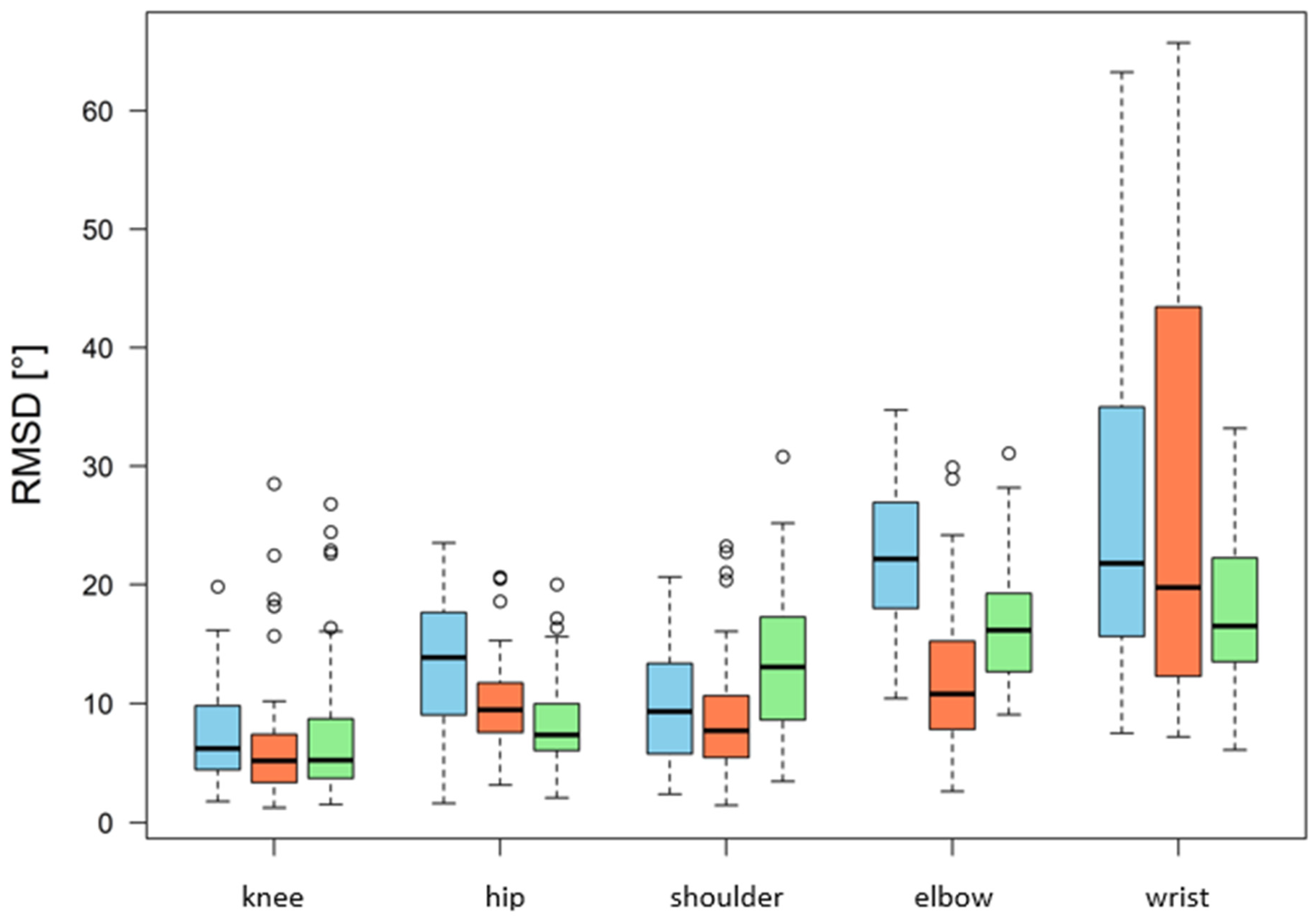
The RMSD of all joint angles for the comparison of the marker-based and markerless systems are shown in Figure 2 and ranged from 7.17° ± 3.88° to 26.66° ± 14.77° depending on the joint.
In the analysis of elbow flexion during the simulated basketball shots, the comparison of the marker-based system and Theia V.2020 exhibited an RMSD of 22.22 ± 5.52 with 57 of 65 throws (87.69%) of the data taken into account, while the new version (Theia V.2023) showed an RMSD of 16.68 ± 5.03 from 61 of 65 throws, capturing 93.84% of the data (see Table 1).
For the right knee flexion, both the old and new versions of Theia3D demonstrated similar results, with RMSD values of 7.17 ± 3.88 and 7.20 ± 5.79, respectively, from 60 of 65 throws in both cases, representing 92.31% usability. However, there were five additional outliers in the old version.
In the analysis of right hip flexion, the old version of Theia3D exhibited an RMSD of 13.24 ± 5.78 from 62 of 65 throws (95.38% usability), whereas the new version showed an improved RMSD of 8.17 ± 3.75 from 63 of 65 throws (96.92% usability).
Similarly, for right shoulder flexion, both versions showed comparable results, with RMSD values of 10.13 ± 5.04 and 13.51 ± 6.19 for the old and new versions, respectively. However, a correction was applied to the new version’s values, requiring further validation.
Regarding right hand flexion, the old version of Theia3D exhibited an RMSD of 26.66 ± 14.77 from 62 of 65 throws (95.38% usability), whereas the new version showed an improved RMSD of 18.05 ± 6.93 from 60 of 65 throws (92.31% usability). Additionally, the new version achieved a complete data set analysis, yielding an RMSD of 19.58 ± 8.56 from all 65 throws (100% usability). However, trends observed were not entirely plausible for both marker-based and markerless approaches.
The analysis of the Intraclass Correlation Coefficient (ICC) indicates that the knee consistently exhibits high correlation values above 0.9. In contrast, the wrist shows only a low correlation with values below 0.3. For all joints except the wrist, higher correlation values are obtained between the new Theia version and Qualisys compared to the old Theia version and Qualisys. The four joints examined show agreement between the new Theia version and Qualisys, with values above 0.7 (see Table 2).

4. Discussion

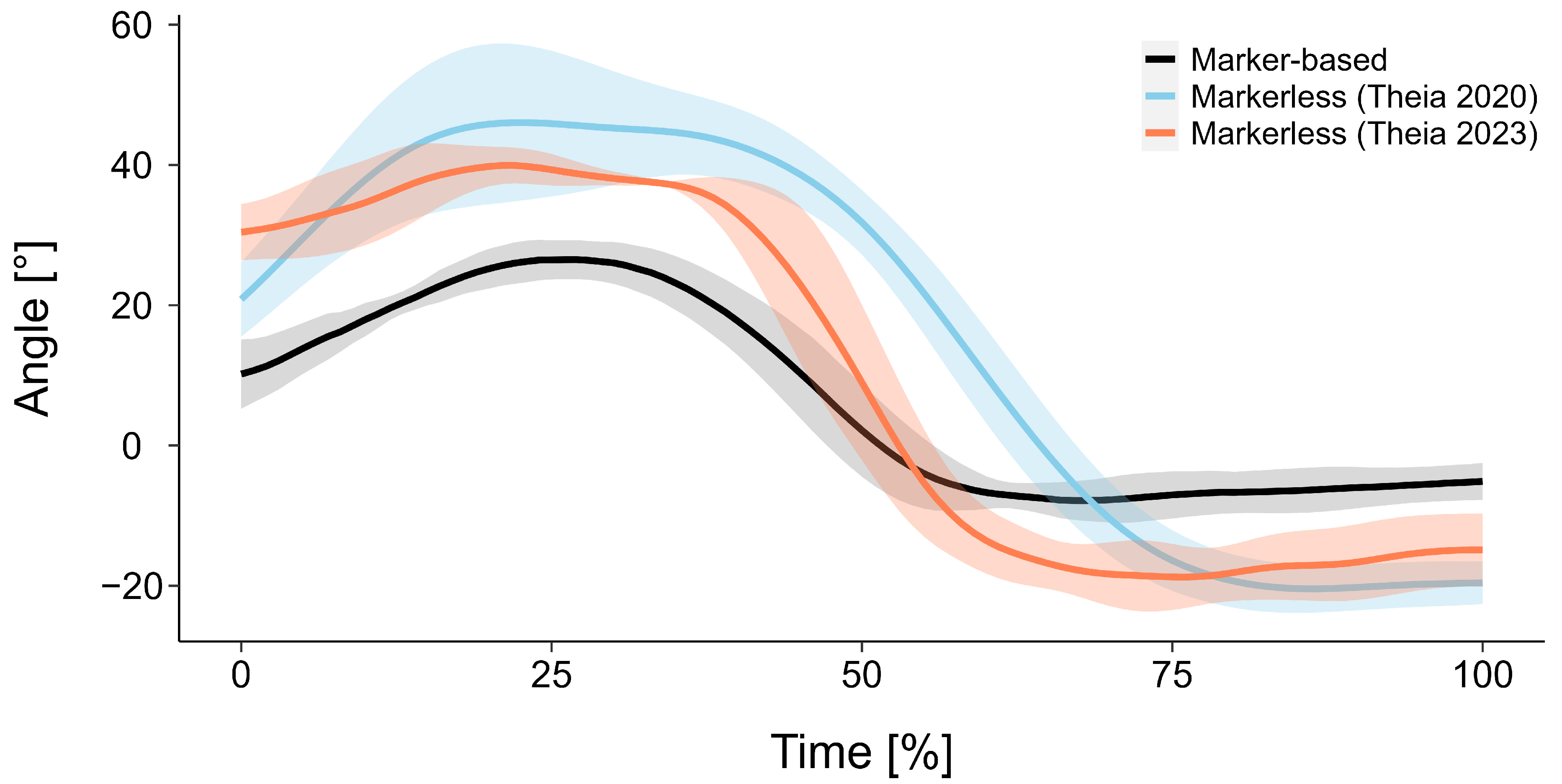
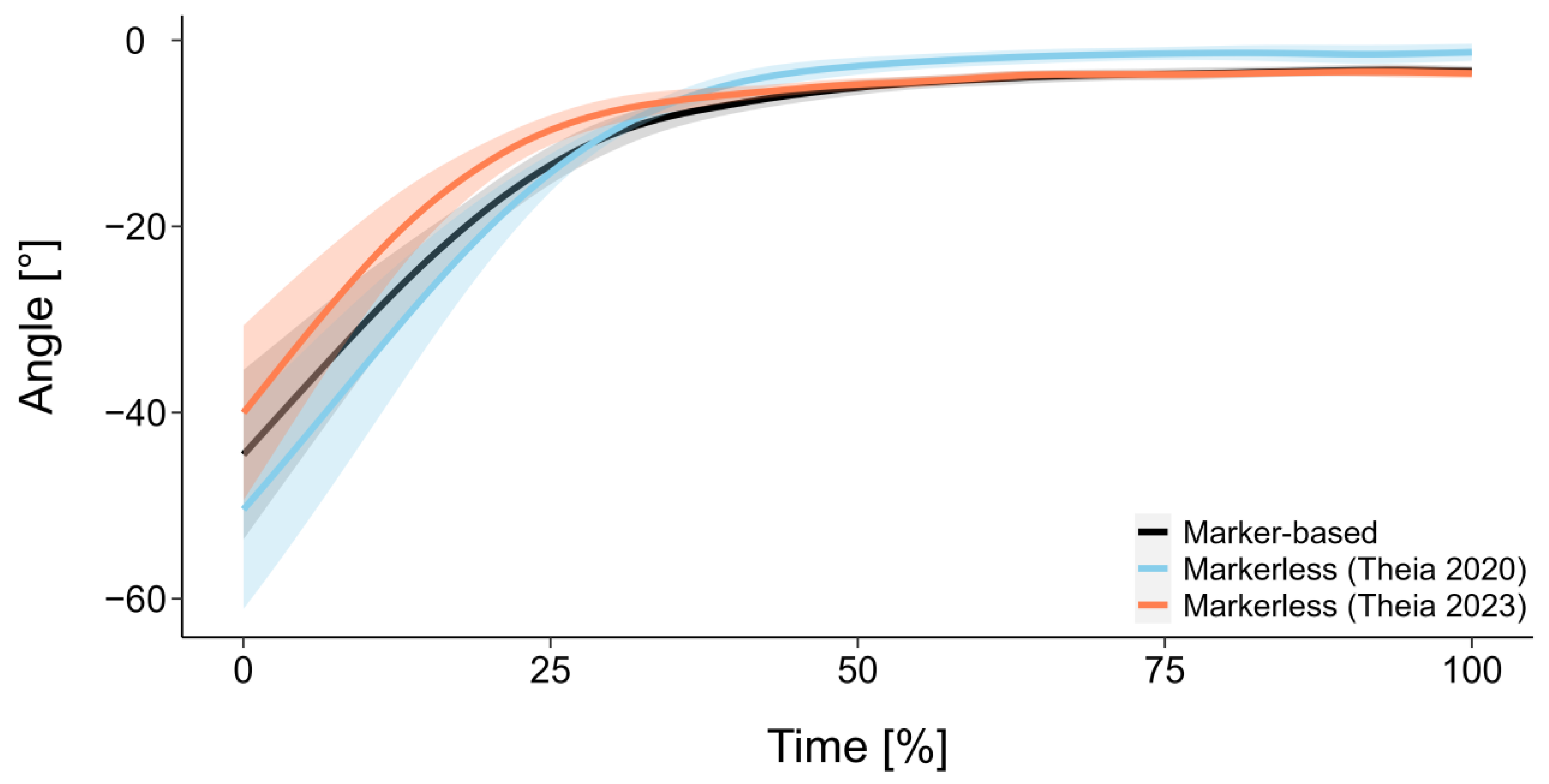
This is the first study analyzing different software versions of a markerless motion capture system in comparison to marker-based motion capture for analyzing a throwing task. We show that a newer version of the markerless system shows lower differences to the marker-based approached in comparison to the older version. Especially for the hip (old: RMSD 13.24 ± 5.78 from 62 of 65 litters, 95.38%; new: RMSD 8.17 ± 3.75 out of 63 of 65 litters, 96.92%), the elbow (2020: RMSD 22.22 ± 5.52 out of 57 of 65 litters, 87.69%; 2023: RMSD 16.68 ± 5.03 from 61 of 65 throws, 93.84%) and the wrist (2020: RMSD 26.66 ± 14.77 from 62 of 65 throws, 95.38%, 2023: RMSD 18.05 ± 6.93 from 60 of 65 throws, 92.31%), the RMSD decreased (Figure 2). These findings can also be supported by the calculations of the ICC (see Table 2). What is also noticeable is that fewer casts had to be rejected (see Figure 3). For the wrist, the inclusion of all throws would still have provided the following RMSD: 19.58 ± 8.56 (65 of 65 throws), which is 100% of the trials. It is difficult to find a characteristic course for the hip, but it is noticeable that the curves of the two Theia versions display a greater difference and the lines of the new variant is not lying between the line of Qualisys and the line of the older version, as it was previously the case with the knee and elbow. For the shoulder, it is noticeable that the distance between the curve with the new system is slightly greater, but the curve is more parallel to the Qualisys curve. If you look at the five tests of a test person, the curves for the knee, for example, were able to come very close together, while the wrist showed even greater differences (Figure 3 and Figure 4).
Comparing the data captured by the markerless system with the data of the marker-based system within the same participant intra-individual differences are revealed. This comparison highlighted how each system captured the movement intricacies unique to each participant. The ability to discern these differences is invaluable for understanding the strengths and weaknesses of each system, especially in the context of analyzing complex athletic movements like throwing.
A conspicuous observation emerges from the comparison of results: Markerless motion capture consistently produces smaller joint angles than the marker-based counterpart across all participants. This discrepancy could be attributed to the inherent differences in the systems’ tracking methodologies. Notably, marker-based systems might not accurately capture joint positions at full extension, such as approximately 0°, potentially resulting in larger angle measurements. However, the markerless approach, which accounts for continuous tracking, could produce smaller values due to its sensitivity to subtler variations in joint angles.
When examining the relevance of these findings to basketball shots, particularly those where upper extremities, such as the elbow, are central to the movement, it becomes evident that the deviations between the measurement systems are too substantial to effectively detect meaningful differences. The variations observed between the systems’ data are likely to overshadow any nuanced differences in joint angles during the complex motion of a basketball shot. Thus, while markerless systems demonstrate promise in capturing intricate joint angles, further refinement is essential to render them effective tools for analyzing such dynamic and intricate movements. In this study, some trials had to be discarded because Theia3D did not recognize the joints correctly and the results therefore differed greatly (especially for the older version). Taking a closer look at these attempts, for example, the wrist, rotations of up to 360 degrees appear in the V3D videos, which are not realistic and therefore do not match the real videos. It is also debatable how well the system can assign upper extremities to difficult movements. As described in the results, this happened several times.
Segmenting the analysis by plane facilitated a nuanced exploration of system performance across different movement planes. In the transverse plane, the limitations of the markerless system became apparent. However, in the sagittal plane, where the markerless system demonstrated good performance, the advantages of its adaptability and versatility were evident. Das et al. also investigated kinematic data of the lower limbs during a lunge simultaneously with a marker-based and a markerless system. It can be observed that the variability of the curves for the markerless system is greater than the variability of the marker-based system. The different planes played a crucial role. At low spine angle, the deviation between the two systems in the sagittal and frontal planes is negligible, but in the transverse plane the deviation could be 10° to 13° on average [3]. They conclude that the two measurement systems do not match when measuring the kinematics of the lower limbs during a lunge. The challenges encountered in the frontal plane underscore the complexity of capturing lateral movements accurately using the markerless approach [3].
The findings of our study reveal distinct patterns in the performance of markerless and marker-based motion capture systems in capturing throwing movements. Notably, the comparison of data from the two systems highlights several important considerations that shape the interpretation of the results. The data also show that the variability of the results between different joint angles increases with the average RMSD. This would also tend to argue against a structural error.
The discussion about the suitability of markerless motion capture systems extends beyond throwing motions. The present study affirms that markerless systems exhibit potential as an alternative for gait analysis and movements like counter movement jumps (CMJ)—tasks where the systems’ accuracy aligns with the nature of movement patterns [12,14,16,17,19,20]. Results of a recent study indicate that most of the differences between markerless and marker-based data are likely due to inconsistencies in local frame orientations, suggesting that markerless kinematic signals represent fundamentally similar underlying motion waveforms [30]. However, caution is warranted when considering their applicability to rotational movements and other complex tasks [24]. In scenarios involving substantial rotations or lateral movements, the current level of accuracy of markerless systems might not suffice to provide precise measurements [3].
The potential for markerless motion capture systems is evident, but it is clear that further technological advancement is necessary to harness their advantages fully. The discrepancies observed in this study underline the need for enhanced accuracy, precision, and robustness in markerless systems, especially when dealing with intricate athletic movements like throwing. Of course, the correctness of the marker-based system can also be questioned in some points (e.g., elbow extension, etc.). A dedicated focus on refining these systems could make them invaluable tools in sports biomechanics research, providing insights that were previously inaccessible.
While markerless motion capture systems show promise as alternatives in specific scenarios, such as gait analysis and CMJ, their current limitations in capturing complex movements, particularly those involving upper extremities, highlight the need for continuous development. The discrepancies in measurement observed between the markerless and marker-based systems point towards a promising direction for future research and innovation in motion capture technology. Additionally, research about the accuracy of parameter estimation based on different measurement systems shows that individual movement strategies largely affect results. Therefore, results may vary based on different individuals, which are not reflected in the results of a group-based analysis. It might be suitable to investigate accordance of the systems by differentiating individuals to improve future data analysis [31,32].
This study has certain limitations that should be acknowledged. The throwing movements were performed without a ball (i.e., simulated throws) because the laboratory ceiling height and spatial constraints did not permit full shooting trajectories. Conducting simulated throws allowed us to standardize movement execution and ensure consistent marker visibility across all participants, minimizing data loss due to occlusion. The ball could have obscured some of the markers on the hand, and we wanted to avoid this risk in order to ensure an accurate comparison of the systems. This is not expected to have any effect on measurement accuracy. However, the absence of a ball may have influenced the natural coordination and timing of the throwing motion. Future studies should aim to include both simulated and real-throw conditions to better capture the influence of task constraints on shooting kinematics. Another point is that the exact anatomical landmarks and segment coordinate definitions used by Theia 3D to construct its body segments are not publicly available. Consequently, the model employed in our marker-based analysis is not perfectly identical to the markerless model. This implies that, in addition to comparing two measurement technologies, we may also be comparing two different anatomical modeling approaches, which could contribute to systematic differences in the resulting kinematic estimates [33]. Kanko et al. [34] reported mean differences in joint center positions between marker-based and markerless systems of up to 3.0 cm and 3.6 cm, respectively. Given the moderate sample size, the findings should be taken with some caution and further studies are needed to confirm our findings.
Our findings provide practitioners with guidance on evaluating the suitability of markerless systems for their specific outcome measures and application settings. Direct comparison of absolute kinematic values between markerless and marker-based systems should be avoided, with emphasis instead placed on relative changes in joint kinematics.

5. Conclusions

For the lower extremities, deviations between the systems are within an acceptable range, but higher than for gait movements. For the upper extremities, the values measured by both markerless and marker-based systems show larger differences.
Possible causes for the discrepancies may lie in different body models and calculation methods used. Future studies should therefore focus on investigating the effects of different calculation methods and body models on the comparability of marker-based and markerless motion analyses. The precision depends on the version and it is therefore necessary to explicitly document the version used in publications.
In summary, while deep learning-based markerless motion capture has the potential to perform movement analysis with reduced data collection and processing time, comparability to a marker-based motion capture system is still limited when analyzing a throwing task performed in this study. Both marker-based and markerless motion analysis are important methods for capturing and analyzing motion sequences in sports and should be used depending on the type of sport. The choice of the most suitable method depends on various factors, such as the objective and the available resources.

Supplementary Materials

The following supporting information can be downloaded at: https://www.mdpi.com/article/10.3390/biomechanics5040100/s1, Table S1: Segment and angle definitions used for the marker-based kinematics.

Author Contributions

Conceptualization, C.T. and T.J.; methodology, C.T.; formal analysis, C.T.; investigation, C.T. and K.N.; data curation, C.T.; writing—original draft preparation, C.T.; writing—review and editing, C.T., M.S. and T.J.; visualization, C.T.; supervision, T.J. and M.S.; project administration, C.T.; All authors have read and agreed to the published version of the manuscript.

Funding

This research received no external funding.

Data Availability Statement

All data related with this study can be made available by the corresponding author upon reasonable request.

Conflicts of Interest

The authors declare no conflict of interest.

References

  1. Meng, Y.; Bíró, I.; Sárosi, J. Markerless measurement techniques for motion analysis in sports science. Analecta Tech. Szeged. 2023, 17, 24–31. [Google Scholar] [CrossRef]
  2. Yoma, M.; Llurda-Almuzara, L.; Herrington, L.; Jones, R. Reliability and validity of lower extremity and trunk kinematics measured with markerless motion capture during sports-related and functional tasks: A systematic review. J. Sports Sci. 2025, 43, 1703–1730. [Google Scholar] [CrossRef]
  3. Das, K.; de Paula Oliveira, T.; Newell, J. Comparison of markerless and marker-based motion capture systems using 95% functional limits of agreement in a linear mixed-effects modelling framework. Sci. Rep. 2023, 13, 22880. [Google Scholar] [CrossRef]
  4. Armitano-Lago, C.; Willoughby, D.; Kiefer, A.W. A SWOT Analysis of Portable and Low-Cost Markerless Motion Capture Systems to Assess Lower-Limb Musculoskeletal Kinematics in Sport. Front. Sports Act. Living 2022, 3, 809898. [Google Scholar] [CrossRef]
  5. Guseinov, D.I. Comparative Analysis of Biomechanical Variables in Marker-based and Markerless Motion Capture Systems. Doklady BGUIR 2023, 21, 35–42. [Google Scholar] [CrossRef]
  6. Young, V. Accuracy and Precision in Marker-Based Motion Capture. Ph.D. Thesis, Baylor University, Waco, TX, USA, 2019. [Google Scholar]
  7. Burger, B.; Toiviainen, P. MoCap Toolbox—A Matlab Toolbox for Computational Analysis of Movement Data; Logos Verlag Berlin: Stockholm, Sweden, 2013. [Google Scholar]
  8. Nakano, N.; Sakura, T.; Ueda, K.; Omura, L.; Kimura, A.; Iino, Y.; Fukashiro, S.; Yoshioka, S. Evaluation of 3D Markerless Motion Capture Accuracy Using OpenPose With Multiple Video Cameras. Front. Sports Act. Living 2020, 2, 50. [Google Scholar] [CrossRef]
  9. Crespeau, S.; da Silva, E.S.; Ravel, A.; Rossi, J.; Morin, J.B. Concurrent assessment of sprint running lower-limb and trunk kinematics using marker-based and markerless motion capture. J. Sports Sci. 2025; 1–14, Online ahead of print. [Google Scholar] [CrossRef]
  10. Ziegler, J.; Gattringer, H.; Mueller, A. Optimal Camera Placement for Maximized Motion Capture Volume and Marker Visibility; Springer Nature: Cham, Switzerland, 2023; pp. 45–52. [Google Scholar]
  11. Lee, U.; Lee, S.; Kim, S.-A.; Lee, J.-D.; Lee, S. Validity and reliability of the single camera marker less motion capture system using RGB-D sensor to measure shoulder range-of-motion: A protocol for systematic review and meta-analysis. Medicine 2023, 102, e33893. [Google Scholar] [CrossRef] [PubMed]
  12. Wade, L.; Needham, L.; McGuigan, P.; Bilzon, J. Applications and limitations of current markerless motion capture methods for clinical gait biomechanics. PeerJ 2022, 10, e12995. [Google Scholar] [CrossRef] [PubMed]
  13. Tien, R.; Tekriwal, A.; Calame, D.; Platt, J.; Baker, S.; Seeberger, L.; Kern, D.; Person, A.; Ojemann, S.; Thompson, J.; et al. Deep learning based markerless motion tracking as a clinical tool for movement disorders: Utility, feasibility and early experience. Front. Signal Process. 2022, 2, 884384. [Google Scholar] [CrossRef]
  14. Kanko, R.M.; Laende, E.K.; Davis, E.M.; Selbie, W.S.; Deluzio, K.J. Concurrent assessment of gait kinematics using marker-based and markerless motion capture. J. Biomech. 2021, 127, 110665. [Google Scholar] [CrossRef]
  15. Kim, H.; Miyakoshi, M.; Iversen, J.R. Approaches for Hybrid Coregistration of Marker-Based and Markerless Coordinates Describing Complex Body/Object Interactions. Sensors 2023, 23, 6542. [Google Scholar] [CrossRef] [PubMed]
  16. Kanko, R.M.; Laende, E.K.; Strutzenberger, G.; Brown, M.; Selbie, W.S.; DePaul, V.; Scott, S.H.; Deluzio, K.J. Assessment of spatiotemporal gait parameters using a deep learning algorithm-based markerless motion capture system. J. Biomech. 2021, 122, 110414. [Google Scholar] [CrossRef] [PubMed]
  17. Song, K.; Hullfish, T.J.; Silva, R.S.; Silbernagel, K.G.; Baxter, J.R. Markerless motion capture estimates of lower extremity kinematics and kinetics are comparable to marker-based across 8 movements. bioRxiv 2023. [Google Scholar] [CrossRef]
  18. Akbarshahi, M.; Schache, A.; Fernandez, J.; Baker, R.; Banks, S.; Pandy, M. Non-invasive assessment of soft-tissue artifact and its effect on knee joint kinematics during functional activity. J. Biomech. 2010, 43, 1292–1301. [Google Scholar] [CrossRef]
  19. Tang, H.; Pan, J.; Munkasy, B.; Duffy, K.; Li, L. Comparison of Lower Extremity Joint Moment and Power Estimated by Markerless and Marker-Based Systems during Treadmill Running. Bioengineering 2022, 9, 574. [Google Scholar] [CrossRef]
  20. Moro, M.; Marchesi, G.; Hesse, F.; Odone, F.; Casadio, M. Markerless vs. Marker-Based Gait Analysis: A Proof of Concept Study. Sensors 2022, 22, 2011. [Google Scholar] [CrossRef]
  21. Kibler, W.; Sciascia, A.; Grantham, W. The shoulder joint complex in the throwing motion. J. Shoulder Elb. Surg. 2023, 33, 443–449. [Google Scholar] [CrossRef]
  22. Okazaki, V.H.A.; Rodacki, A.L.F. Basketball jump shot performed by adults and children. Hum. Mov. 2018, 2018, 71–79. [Google Scholar] [CrossRef]
  23. Okubo, H.; Hubbard, M. Kinematics of Arm Joint Motions in Basketball Shooting. Procedia Eng. 2015, 112, 443–448. [Google Scholar] [CrossRef]
  24. Lahkar, B.K.; Muller, A.; Dumas, R.; Reveret, L.; Robert, T. Accuracy of a markerless motion capture system in estimating upper extremity kinematics during boxing. Front. Sports Act. Living 2022, 4, 939980. [Google Scholar] [CrossRef]
  25. Camargo, J.; Ramanathan, A.; Csomay-Shanklin, N.; Young, A. Automated gap-filling for marker-based biomechanical motion capture data. Comput. Methods Biomech. Biomed. Eng. 2020, 23, 1180–1189. [Google Scholar] [CrossRef]
  26. Mathis, A.; Schneider, S.; Lauer, J.; Mathis, M.W. A Primer on Motion Capture with Deep Learning: Principles, Pitfalls, and Perspectives. Neuron 2020, 108, 44–65. [Google Scholar] [CrossRef]
  27. Turner, J.A.; Kiefer, A.W.; Bullock, G.S.; Kucera, K.L.; Cameron, K.L.; Boling, M.C.; Marshall, S.W.; Padua, D.A. Reliability and predictive validity of trunk and lower extremity kinematics during a jump-landing task using OpenCap markerless motion capture system. J. Biomech. 2026, 194, 113026. [Google Scholar] [CrossRef]
  28. Mokkink, L.B.; Prinsen, C.A.; Bouter, L.M.; Vet, H.C.; Terwee, C.B. The COnsensus-based Standards for the selection of health Measurement INstruments (COSMIN) and how to select an outcome measurement instrument. Braz. J. Phys. Ther. 2016, 20, 105–113. [Google Scholar] [CrossRef] [PubMed]
  29. Thomas, C.; Nolte, K.; Schmidt, M.; Jaitner, T. Lower Baskets and Smaller Balls Influence Mini-Basketball Players’ Throwing Motions. Biomechanics 2023, 3, 71–78. [Google Scholar] [CrossRef]
  30. Antognini, C.; Ortigas-Vásquez, A.; Knowlton, C.; Utz, M.; Sauer, A.; Wimmer, M.A. Comparison of markerless and marker-based motion analysis accounting for differences in local reference frame orientation. J. Biomech. 2025, 185, 112683. [Google Scholar] [CrossRef]
  31. Schmidt, M.; Alt, T.; Nolte, K.; Jaitner, T. Comment on “Hurdle Clearance Detection and Spatiotemporal Analysis in 400 Meters Hurdles Races Using Shoe-Mounted Magnetic and Inertial Sensor”. Sensors 2020, 20, 2995. [Google Scholar] [CrossRef] [PubMed]
  32. Schmidt, M.; Rheinländer, C.; Nolte, K.; Wille, S.; Wehn, N.; Jaitner, T. IMU- based Determination of Stance Duration During Sprinting. Procedia Eng. 2016, 147, 747–752. [Google Scholar] [CrossRef]
  33. Helwig, J.; Vanrenterghem, J.; Anedda, B.; Koska, D.; Hipper, M.; Denis, Y.; Braun, L.; Segers, V.; Gollhofer, A.; Willwacher, S. Comparison of lower body joint kinematics during change of direction tasks estimated using a markerless and a markerbased method. Sci. Rep. 2025, 15, 34119. [Google Scholar] [CrossRef]
  34. Kanko, R.; Outerleys, J.; Laende, E.; Selbie, W.; Deluzio, K. Comparison of concurrent and asynchronous running kinematics and kinetics from marker-based motion capture and markerless motion capture under two clothing conditions. J. Appl. Biomech. 2024, 40, 129–137. [Google Scholar] [CrossRef] [PubMed]
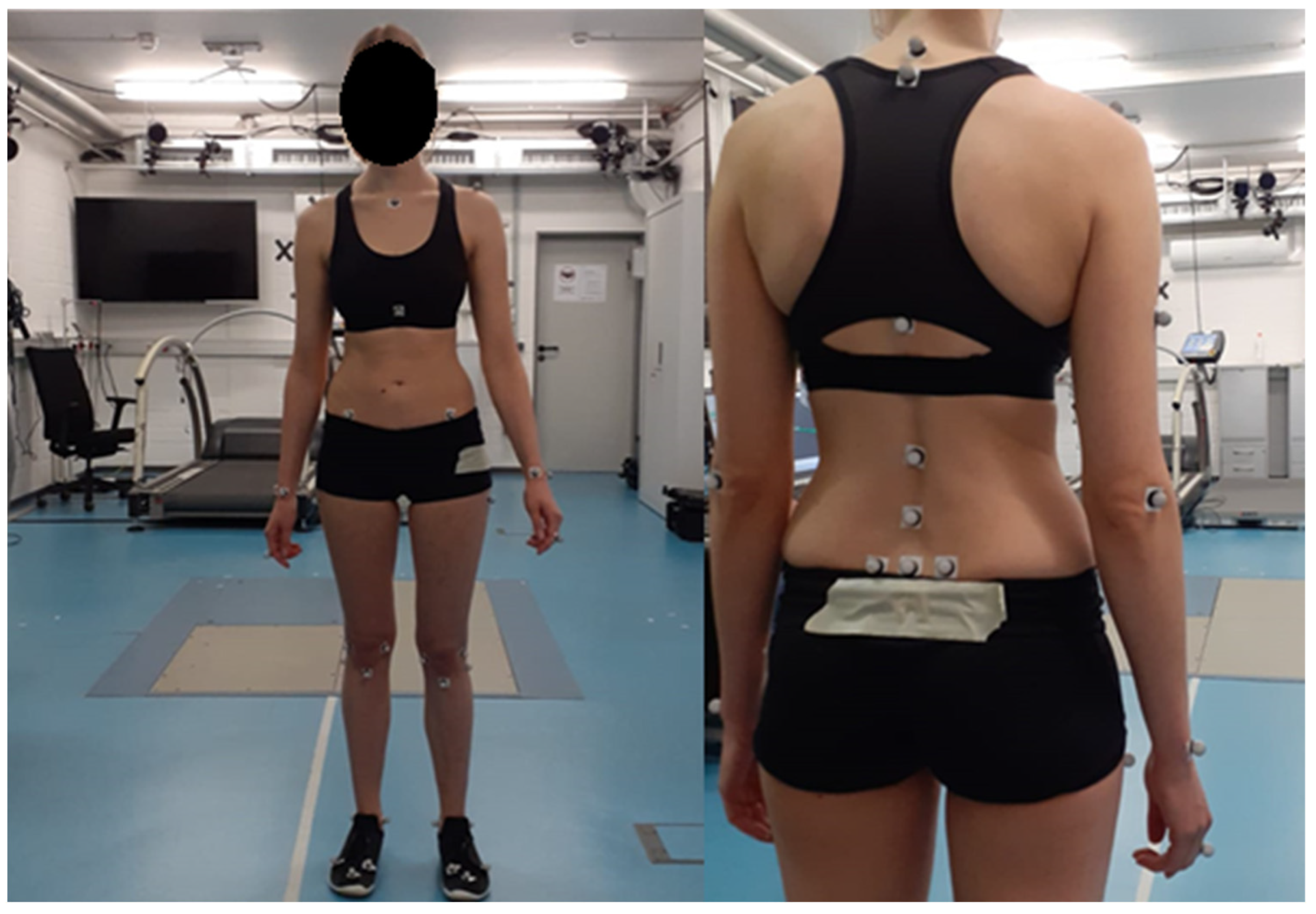
Figure 1. Picture displaying marker positioning on the participants.
Biomechanics 05 00100 g001
Figure 2. Boxplot of RMSD between marker-based measurements and the two markerless systems, old (blue) and new (orange), as well as both markerless systems (green) for all investigated joints.
Biomechanics 05 00100 g002
Figure 3. Average joint angle for wrist flexion of all trials of one subject with mean value and SD measured by the marker-based system (black), markerless system 2020 (blue), and markerless system 2023 (orange). The movement starts with “ball elevation” and ends with “ball release” plus 10 frames (0–100% time) [22,29].
Biomechanics 05 00100 g003
Figure 4. Average joint angle for knee flexion of all trials of one subject with mean value and SD measured by the marker-based system (black), markerless system 2020 (blue) and markerless system 2023 (orange). The movement starts with “ball elevation” and ends with “ball release” plus 10 frames (0–100% time) [22,29].
Biomechanics 05 00100 g004
Table 1. Outliers by joint and by version. Comparison 1 = Theia V.2020/Qualisys; Comparison 2 = Theia V.2023/Qualisys; Comparison 3 = Theia V.2020/V.2023.
JointComparison 1Comparison 2Comparison 3
Knee556
Hip324
Shoulder334
Elbow8410
Wrist352
Table 2. Intraclass Correlation Coefficient (ICC) for all pairwise comparisons calculated on the maximum flexion angle of the examined joints. Comparison 1 = Theia V.2020/Qualisys; Comparison 2 = Theia V.2023/Qualisys; Comparison 3 = Theia V.2020/V.2023.
JointComparison 1Comparison 2Comparison 3
Knee0.9140.9200.925
Hip0.5140.8450.654
Shoulder0.6930.7140.888
Elbow0.5930.8020.932
Wrist0.033−0.0010.273
Disclaimer/Publisher’s Note: The statements, opinions and data contained in all publications are solely those of the individual author(s) and contributor(s) and not of MDPI and/or the editor(s). MDPI and/or the editor(s) disclaim responsibility for any injury to people or property resulting from any ideas, methods, instructions or products referred to in the content.