
Review

Smart Textile Triboelectric Nanogenerators: Prospective Strategies for Improving Electricity Output Performance


1
Beijing Institute of Nanoenergy and Nanosystems, Chinese Academy of Sciences, Beijing 101400, China
2
College of Nanoscience and Technology, University of Chinese Academy of Sciences, Beijing 100049, China
3
School of Material Science and Engineering, Georgia Institute of Technology, Atlanta, GA 30332, USA
*
Author to whom correspondence should be addressed.
Nanoenergy Adv. 2022, 2(1), 133-164; https://doi.org/10.3390/nanoenergyadv2010006

Submission received: 4 January 2022 / Revised: 22 February 2022 / Accepted: 3 March 2022 / Published: 7 March 2022
(This article belongs to the Special Issue Recent Advances in Nanogenerators)

Abstract

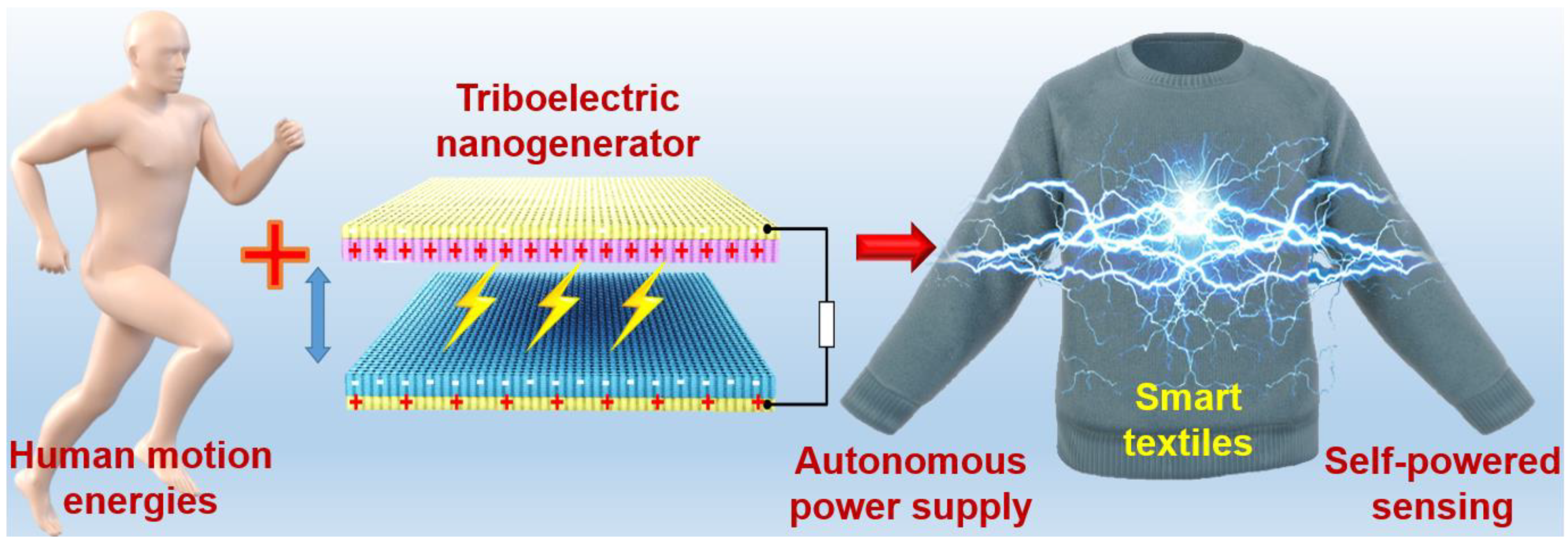
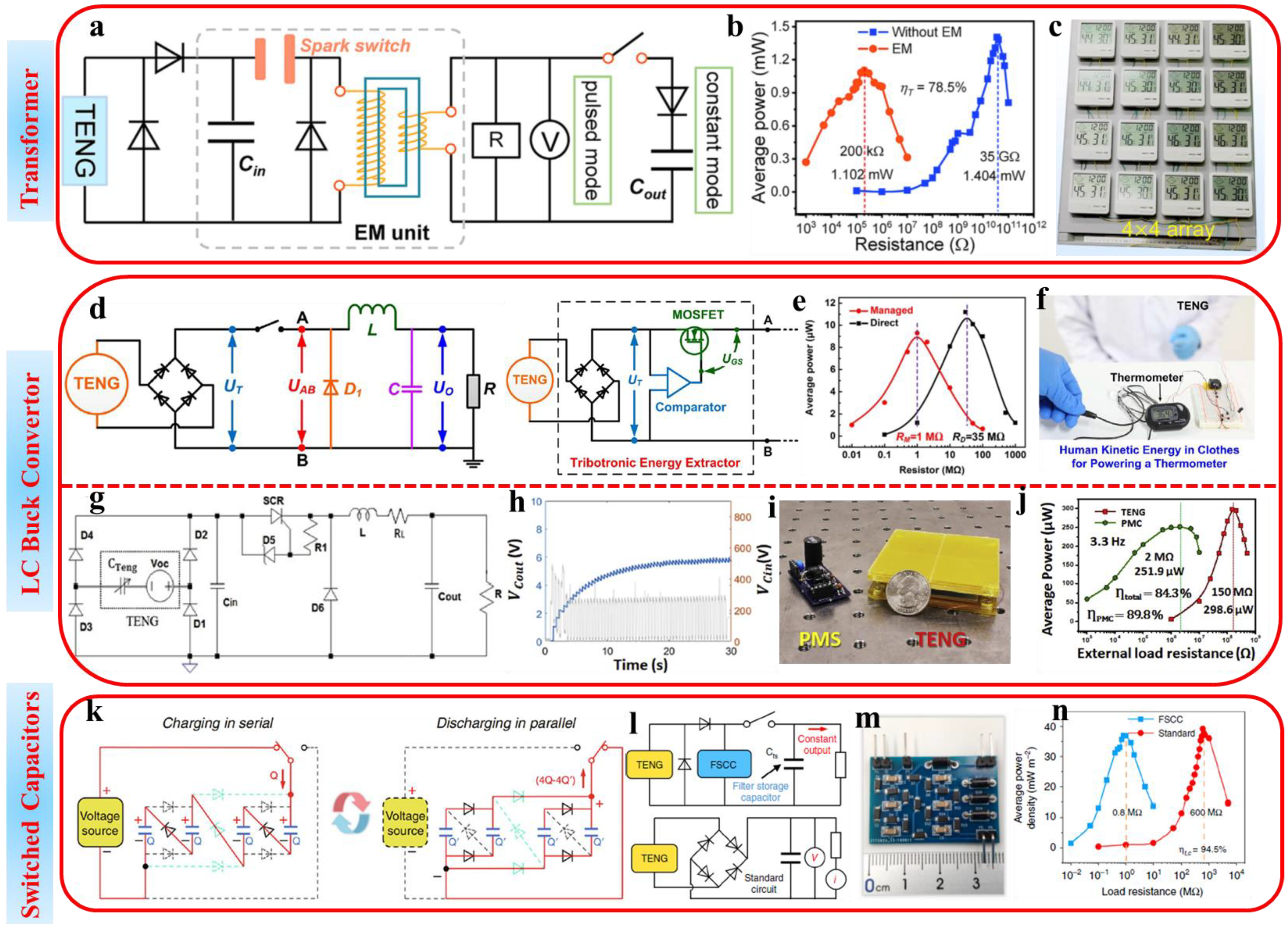
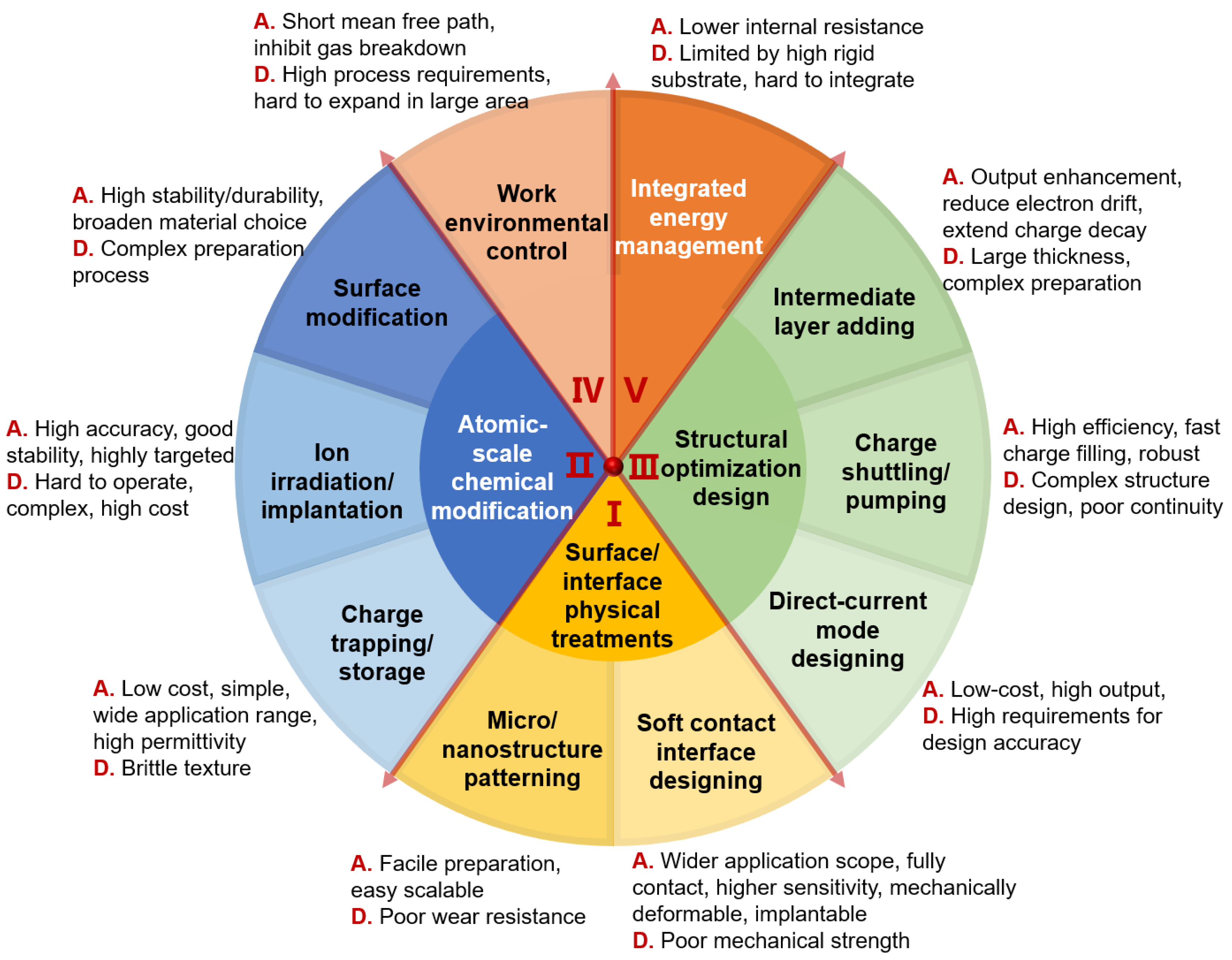
By seamlessly integrating the wearing comfortability of textiles with the biomechanical energy harvesting function of a triboelectric nanogenerator (TENG), an emerging and advanced intelligent textile, i.e., smart textile TENG, is developed with remarkable abilities of autonomous power supply and self-powered sensing, which has great development prospects in the next-generation human-oriented wearable electronics. However, due to inadequate interface contact, insufficient electrification of materials, unavoidable air breakdown effect, output capacitance feature, and special textile structure, there are still several bottlenecks in the road towards the practical application of textile TENGs, including low output, high impedance, low integration, poor working durability, and so on. In this review, on the basis of mastering the existing theory of electricity generation mechanism of TENGs, some prospective strategies for improving the mechanical-to-electrical conversion performance of textile TENGs are systematically summarized and comprehensively discussed, including surface/interface physical treatments, atomic-scale chemical modification, structural optimization design, work environmental control, and integrated energy management. The advantages and disadvantages of each approach in output enhancement are further compared at the end of this review. It is hoped that this review can not only provide useful guidance for the research of textile TENGs to select optimization methods but also accelerate their large-scale practical process.
Keywords: smart textiles; triboelectric nanogenerators; electricity generation; output enhancement; air breakdown smart textiles; triboelectric nanogenerators; electricity generation; output enhancement; air breakdown