
Chemoselective Reduction of 3-Methylcyclohex-2-enone into rac 3-Methylcyclohex-2-enol (Seudenol) by NaBH4 Alone, with Modifiers or via Catalytic Transfer Hydrogenation

 , and
, and
Abstract
1. Introduction
2. Materials and Methods
2.1. Reagents
2.1.1. 3-Methylcyclohex-2-enone (1)
2.1.2. NaBH4 and the Modifiers
2.1.3. Metal Oxide Catalysts
2.1.4. Hydrogen Donors
2.1.5. Other Reagents
- 3-methylcyclohexanone (4) (pure, Fluka, Buchs, Switzerland).
- 3-methylcyclohexanol (5) and (6) (mixture of cis and trans diastereoisomers, Koch-Light Lab. Ltd., Colnbrook, Bucks, UK).
- t-butylbenzene was prepared in our laboratory by alkylation of benzene with isobutylene in the presence of concentrated H2SO4 (98%, p.a., POCh, Gliwice, Poland). The organic fraction was washed, dried and distilled twice over metallic sodium under normal pressure. Purity 99.8% (GC).
- (rac) 3-methylcyclohex-2-enol (2). In an Erlenmeyer flask (250 cm3) equipped with a magnetic bar and immersed in an ice bath, 7.46 g (20 mmol) of CeCl3 · 7H2O (puriss. p.a., 99.0%, Fluka, Buchs, Switzerland) was dissolved in 50 cm3 of methanol (p.a., POCh, Gliwice, Poland). To this clear solution, 2.2 g, 2.30 cm3 (20 mmol) of 3-methylcyclohex-2-enone (1) (see Section 2.1.1) was added in one portion. Solid NaBH4 1.52 g (40 mmol) (98%, Aldrich, Poznań, Poland) was added portion by portion over 40 min. After the addition of the last portion of the NaBH4, the resulting mixture was stirred for the next 40 min. The reaction mixture was diluted with 150 cm3 of water and extracted with diethyl ether (3 × 40 cm3). The extracts were collected, washed with brine and dried over anhydrous MgSO4 (pure, POCh, Gliwice, Poland). Volatiles were distilled off in a rotary evaporator, leaving 1.81 g (16.1 mmol) of 3-methylcyclohex-2-enol (2) as a colorless liquid, with a yield of 80.5%.
- 3-methylcyclohex-3-enone (11) (solution of the ketone in 3-methylcyclohex-2-enone). To an 11.02 g (100 mmol) of 3-methylcyclohex-2-enone, placed in a round-bottomed flask equipped with a 30 cm long Vigreux column and a total condensation head, 1.461 g (10 mmol) of adipic acid (99%, Aldrich, Poznań, Poland) was added in one portion and a mixture was heated to boiling for 4 h [42]. The resulting solution was distilled under normal pressure, collecting a fraction (5.54 g) boiling at the temperature range of 449–453 K. The fraction contains two compounds according to GC-MS analysis, a starting ketone and the product of its deconjugation, 3-methylcyclohex-3-enone (11), in a ratio of 96.6:3.4.
2.2. Reduction Studies
2.2.1. Reduction of 3-Methylcyclohex-2-enone (1) by NaBH4 Alone
2.2.2. Reduction of 3-Methylcyclohex-2-enone (1) by NaBH4 in the Presence of Modifiers
2.2.3. Reduction of 3-Methylcyclohex-2-enone (1) via CTH
- Liquid-phase catalytic activity measurements. A weighed sample of a metal oxide (250 ± 2 mg) was introduced into a one-piece cylindrical glass reactor, equipped with a condenser, followed by a magnetic bar, the hydrogen donor, hydrogen acceptor, usually 5 mmol, and t-butylbenzene (400 μL) as an internal standard. The reactor was heated by silicon oil to a temperature 20 degrees higher than the boiling point of the donor to ensure ebullition of the solution. Samples of post-reaction mixtures were first centrifuged in order to separate the catalyst and then analyzed by GC.
- Vapor-phase catalytic activity measurements. A weighed sample of a metal oxide (250 ± 2 mg) was placed in a fixed-bed tubular glass reactor in a stream of nitrogen (50 cm3 min−1). After heating the reactor in the electric furnace to the set temperature, the reactant mixture containing 1.10 g (1.13 cm3, 10 mmol) of 3-methylcyclohex-2-enone (1), 3.61 g (4.60 cm3, 60 mmol) of 2-propanol and 400 μL of t-butylbenzene as the internal standard was dosed using a microdosing pump with the Liquid Hourly Space Velocity (LHSV) of 3 cm3 per 1 g of catalyst per hour. The resulting residence time of the gaseous reactants was 9000 h−1 (GHSV). The reaction products were collected in a receiver cooled to 273 K in an ice-water bath. The post-reaction mixture obtained during the first 60 min of the reaction was discarded. Samples were taken within 30 min of the reaction and their composition was determined by gas chromatography.
2.3. Characterization Studies
3. Results and Discussion
3.1. Reduction of 3-Methylcyclohex-2-enone (1) by NaBH4 (Without Modifiers)
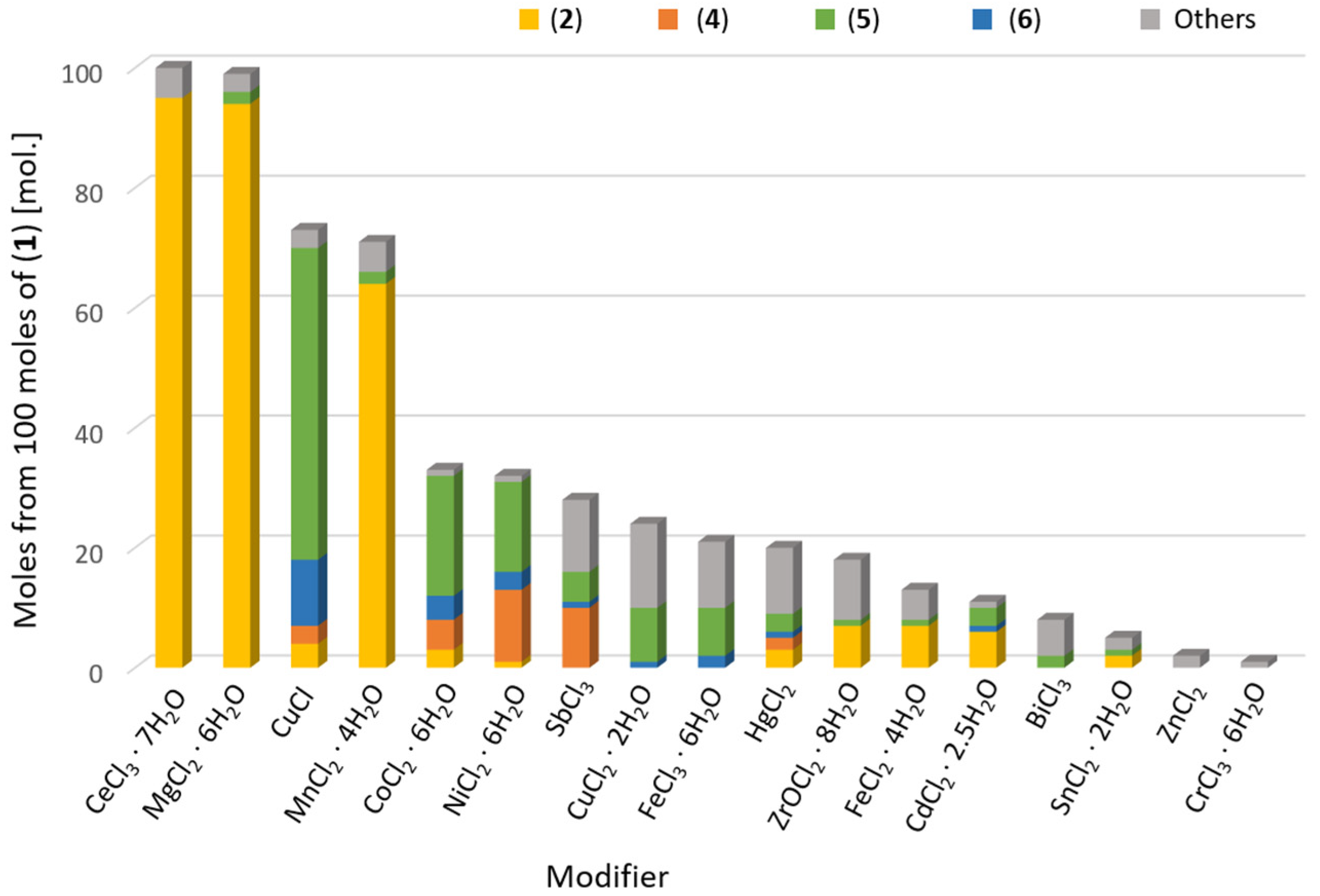
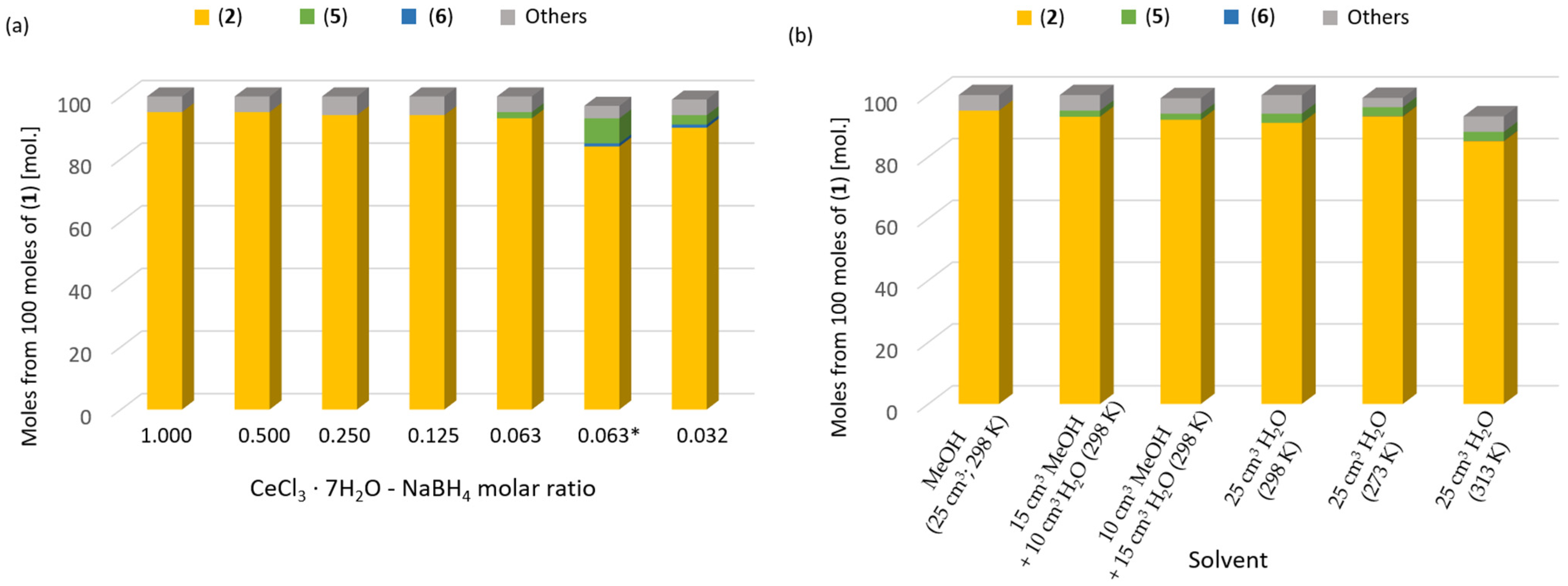
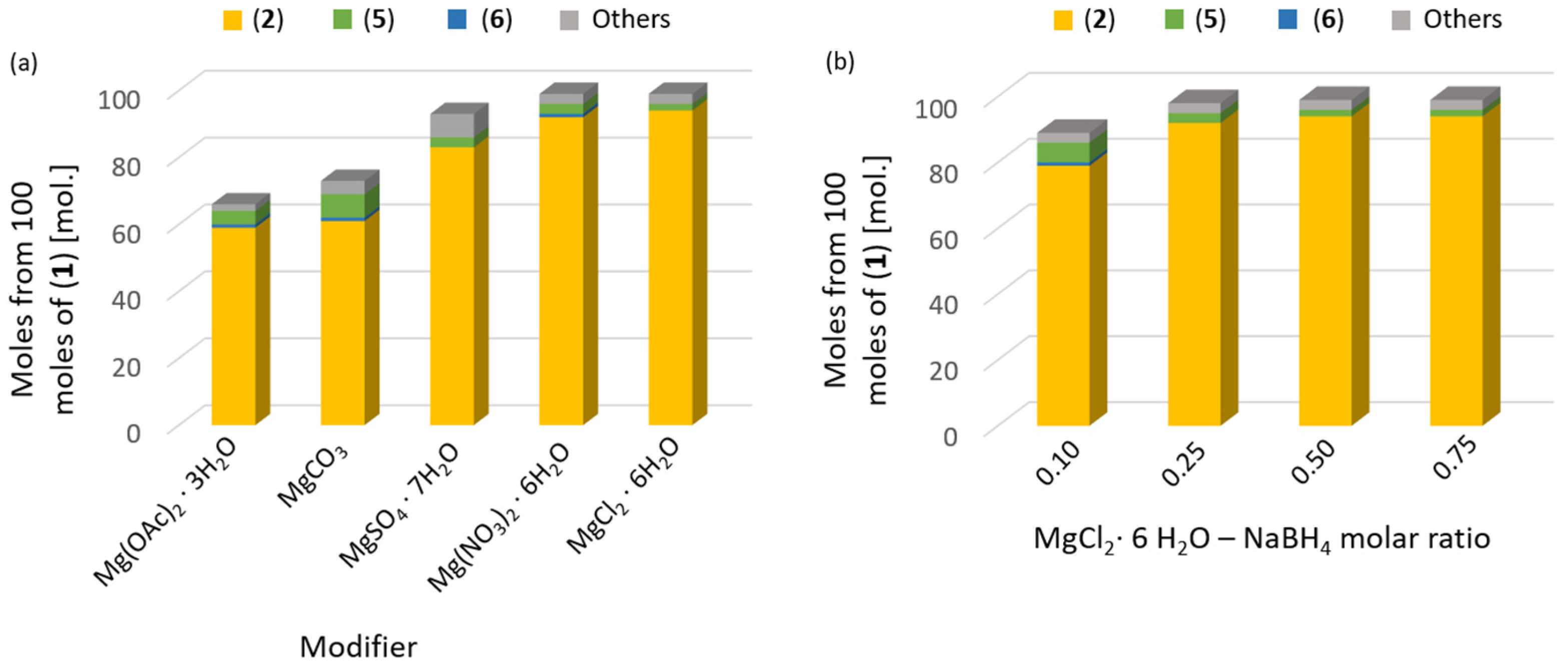
3.2. Reduction of 3-Methylcyclohex-2-enone by NaBH4 in the Presence of Various Modifiers
3.3. Characterization of Metal Oxide Catalysts
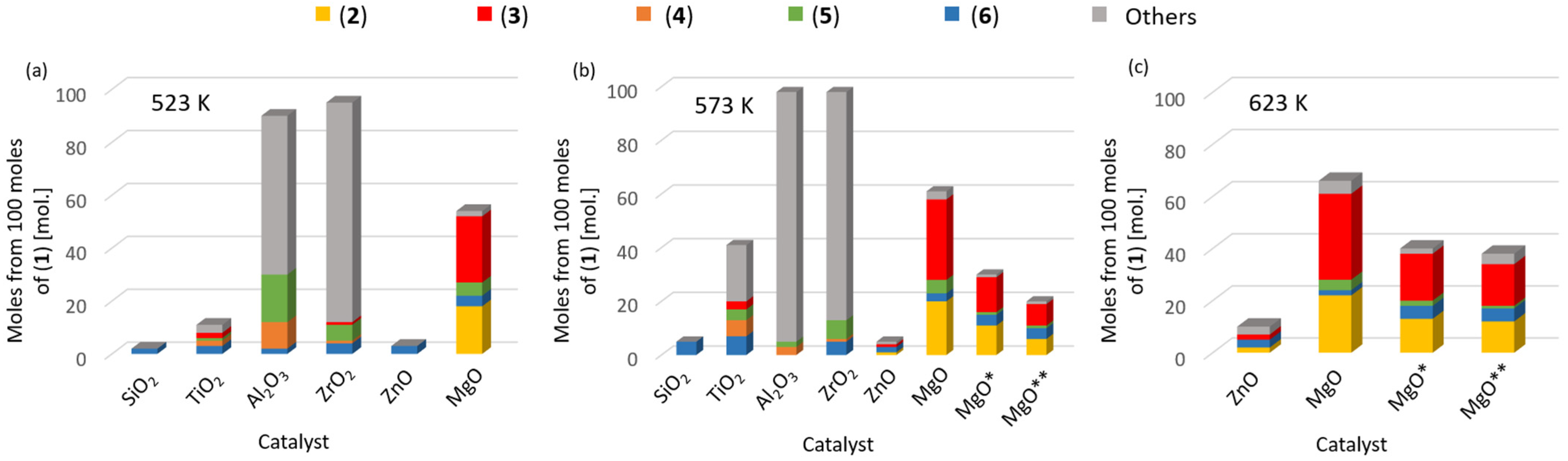
3.4. Vapor- and Liquid-Phase CTH of 3-Methylcyclohex-2-enone with Alcohols in the Presence of Various Metal Oxides as Catalysts
3.5. Transformations of the CTH Products Derived from 3-Methylcyclohex-2-enone (1) in the Presence of MgO as the Catalyst
4. Conclusions
Author Contributions
Funding
Data Availability Statement
Conflicts of Interest
References
- Vité, J.P.; Bakke, A.; Renwick, J.A. Pheromones in IPS (Coleoptera: Scolytidae): Occurrence and Production. Can. Entomol. 1972, 104, 1967–1975. [Google Scholar] [CrossRef]
- Kinzer, G.W.; Fentiman, A.F.; Foltz, R.Z.; Rudinsky, J.A. Bark beetle attractants: 3-methyl-2-cyclohexen-l-one isolated from Dendroctonus pseudotsugae. J. Econ. Entomol. 1971, 64, 970–971. [Google Scholar] [CrossRef]
- Pitman, G.B.; Vite, J.P. Biosynthesis of methylcyclohexenone by male Douglas-fir beetle. Environ. Entomol. 1974, 3, 886–887. [Google Scholar] [CrossRef]
- Nutaitis, C.J.; Bernardo, J.E. Regioselective 1,2-reduction of conjugated enones and enals with sodium monoacetoxyborohydride: Preparation of allylic alcohols. J. Org. Chem. 1989, 54, 5629–5630. [Google Scholar] [CrossRef]
- Plummer, E.L.; Stewart, T.E.; Byrne, K.; Pearce, G.T.; Silverstein, R.M. Determination of the enantiomeric composition of several insect pheromone alcohols. J. Chem. Ecol. 1976, 2, 307–331. [Google Scholar] [CrossRef]
- Mori, K.; Tamada, S.; Uchida, M.; Mizumachi, N.; Tachibana, Y.; Matsui, M. Synthesis of optically active forms of seudenol, the pheromone of douglas fir beetle. Tetrahedron 1978, 34, 1901–1905. [Google Scholar] [CrossRef]
- Orrenius, C.; Norin, T.; Hult, K.; Carrea, G. The Candida antarctica lipase B catalysed kinetic resolution of seudenol in non-aqueous media of controlled water activity. Tetrahedron Asymmetry 1995, 6, 3023–3030. [Google Scholar] [CrossRef]
- Fuller, J.C.; Stangeland, E.L.; Goralski, C.T.; Singaram, B. Aminoborohydrides. 2. Regiospecific Reductions of α,β-Unsaturated Carbonyl Compounds with Lithium Pyrrolidinoborohydride. A Facile Conversion of α,β-Unsaturated Aldehydes and Ketones to the Corresponding Allylic Alcohols in High Purity. Tetrahedron Lett. 1993, 34, 257–260. [Google Scholar] [CrossRef]
- Bianchini, C.; Farnetti, E.; Graziani, M.; Peruzzini, M.; Polo, A. Chemoselective Hydrogen-Transfer Reduction of α,β-Unsaturated Ketones Catalyzed by Isostructural Iron(II), Ruthenium(II), and Osmium(II) cis Hydride η2—Dihydrogen Complexes. Organometallics 1993, 12, 3753–3761. [Google Scholar] [CrossRef]
- Lindgren, B.S.; Gries, G.; Pierce, H.D., Jr.; Mori, K. Dendroctonus pseudotsugae hopkins (Coleoptera: Scolytidae): Production of and response to enantiomers of 1-methylcyclohex-2-en-1-ol. J. Chem. Ecol. 1992, 18, 1201–1208. [Google Scholar] [CrossRef] [PubMed]
- Sánchez-Martínez, G.; Mehmel, C.J.; González-Gaona, E.; Mori, S.R.R.; López-Hernández, J.A.; Monárrez-González, J.C.; García-Rodríguez, J.L.; Mejía-Bojórquez, J.M.; Gillette, N.E. 3-Methylcyclohex-2-en-1-one reduces the aggregation of Dendroctonus pseudotsugae barragani and corresponding mortality of Pseudotsugae menziesii in northern Mexico. Agric. For. Entomol. 2022, 24, 344–354. [Google Scholar] [CrossRef]
- Natelson, S.; Gottfried, S.P. Synthesis of derivatives of symmetrical diphenylethane related to materials occurring naturally. II. 3,4-Dihydro-5-methyl-3′-methoxydibenzyl, a compound related to estrone in structure. J. Am. Chem. Soc. 1939, 61, 1001–1002. [Google Scholar] [CrossRef]
- Robinson, P.L.; Evans, S.A. Reactions of diethoxyphenylphosphorane with diasteriomeric 3-methylcyclohexane-1,2-diols. Control of regioselectivity by methyl substitution during cyclodehydration and rearrangement of 1,2-diols. J. Org. Chem. 1985, 50, 3860–3863. [Google Scholar] [CrossRef]
- Bestmann, H.J.; Pichl, R.; Zimmermann, R. Synthese von α,β-ungesättigten cycloalkanonen aus bis[(1-acylalkyliden)-triphenylphosphoranen]—Eine method zur überführung von carbonsäure-anhydriden in carbocyclische und heterocyclische verbindungen. Chem. Ber. 1993, 126, 725–731. [Google Scholar] [CrossRef]
- Cahiez, G.; Alami, M. Organomanganese (II) reagents XVI: Copper-catalysed 1,4-addition of organomanganese chlorides to conjugated enones. Tetrahedron Lett. 1989, 30, 3541–3544. [Google Scholar] [CrossRef]
- Silvestre, A.J.; Válega, M.; Cavaleiro, J.A. Chemical transformation of 1,8-cineole: Synthesis of seudenone, an insect pheromone. Ind. Crops Prod. 2000, 12, 53–56. [Google Scholar] [CrossRef]
- Thurkauf, A.; Hillery, P.; Jacobson, A.E.; Rice, K.C. An Efficient Synthesis of Optically Pure (S)-(−)-3-Methylcyclohexanone. J. Org. Chem. 1987, 52, 5466–5467. [Google Scholar] [CrossRef]
- Kashiwagi, Y.; Yanagisawa, Y.; Shibayama, N.; Nakahara, K.; Kurashima, F.; Anzai, J.; Osa, J. Preparative, electroenzymatic reduction of ketones on an all components-immobilized graphite felt electrode. Electrochim. Acta 1997, 42, 2267–2270. [Google Scholar] [CrossRef]
- Johnson, M.R.; Rickborn, B. Sodium Borohydride Reduction of Conjugated Aldehydes and Ketones. J. Org. Chem. 1970, 35, 1041–1045. [Google Scholar] [CrossRef]
- Gliński, M.; Ulkowska, U. Vapour phase transfer hydrogenation of α,β-unsaturated carbonyl compounds. Thermodynamic and experimental studies. Appl. Catal. A Gen. 2016, 511, 131–140. [Google Scholar] [CrossRef]
- Gemal, A.L.; Luche, J.-L. The reduction of α-enones by sodium borohydride in the presence of lanthanoid chlorides: Synthetic and mechanistic aspects. J. Am. Chem. Soc. 1981, 103, 5454–5459. [Google Scholar] [CrossRef]
- Luche, J.-L. Selective 1,2 reductions of conjugated ketones. J. Am. Chem. Soc. 1978, 100, 2226–2227. [Google Scholar] [CrossRef]
- Fujii, H.; Oshima, K.; Utimoto, K. A Facile and Selective 1,2-Reduction of Conjugated Ketones with NaBH4 in the Presence of CaCl2. Chem. Lett. 1991, 20, 1847–1848. [Google Scholar] [CrossRef]
- Narasimhan, S.; Madhavan, S.S.; Prasad, K.G. Facile reduction of carboxylic acids to alcohols by zinc borohydride. J. Org. Chem. 1995, 60, 5314–5315. [Google Scholar] [CrossRef]
- Yoo, S.; Lee, S. Reduction of Organic Compounds with Sodium Borohydride-Copper(II) Sulfate System. Synlett 1990, 1990, 419–420. [Google Scholar] [CrossRef]
- Ono, A.; Maruyama, T.; Suzuki, N. Hydrogenation of Diaryl and Arylalkyl Ketones by Sodium Borohydride and Aluminum Chloride. Synth. Commun. 1987, 17, 1001–1005. [Google Scholar] [CrossRef]
- Ruiz, J.R.; Sanchidrian, C.J. Heterogeneous Catalysis in the Meerwein-Ponndorf-Verley Reduction of Carbonyl Compounds. Curr. Org. Chem. 2007, 11, 1113–1125. [Google Scholar] [CrossRef]
- Johnstone, R.A.; Wilby, A.H.; Entwistle, I.D. Heterogeneous Catalytic Transfer Hydrogenation and Its Relation to Other Methods for Reduction of Organic Compounds. Chem. Rev. 1985, 85, 129–170. [Google Scholar] [CrossRef]
- Gliński, M.; Armusiewicz, D.; Łukasik-Kwaśniewska, K.; Materowski, M.; Rułka, A.; Iwanek, E.M.; Kucharska, M. Diastereoselective Transfer Hydrogenation of Cyclic and Bicyclic Ketones over Selected Metal Oxides as Catalysts. Molecules 2025, 30, 2153. [Google Scholar] [CrossRef]
- Gliński, M. Structure-reactivity in transfer hydrogenation of aliphatic ketones over magnesium oxide. React. Kinet. Mechan. Cat. 2009, 97, 275–279. [Google Scholar] [CrossRef]
- Gliński, M. Catalytic hydrogen transfer over magnesia. Vapour and liquid phase reduction of various aralkyl ketones. Appl. Catal. A Gen. 2008, 349, 133–139. [Google Scholar] [CrossRef]
- Gliński, M.; Ulkowska, U. Reactivity of Alcohols in Chemoselective Transfer Hydrogenation of Acrolein over Magnesium Oxide as the Catalyst. Catal. Lett. 2011, 141, 293–299. [Google Scholar] [CrossRef]
- Vannice, M.A.; Sen, B. Metal-support effects on the intramolecular selectivity of crotonaldehyde hydrogenation over platinum. J. Catal. 1989, 115, 65–78. [Google Scholar] [CrossRef]
- Claus, P. Selective hydrogenation of α,β-unsaturated aldehydes and other C=O and C=C bonds containing compounds. Top. Catal. 1998, 5, 51–62. [Google Scholar] [CrossRef]
- Gallezot, P.; Richard, D. Selective Hydrogenation of α,β-Unsaturated Aldehydes. Catal. Rev.-Sci. Eng. 1998, 40, 81–126. [Google Scholar] [CrossRef]
- Belisle, C.M.; Young, Y.M.; Singaram, B. Catalytic reaction. 1. Catalytic 1,4-hydrogenation of α,β-unsaturated aldehydes and ketones using SC-1 nickel boride. Tetrahedron Lett. 1994, 35, 5595–5598. [Google Scholar] [CrossRef]
- Ide, M.S.; Hao, B.; Neurock, M.; Davis, R.J. Mechanistic Insights on the Hydrogenation of α,β-Unsaturated Ketones and Aldehydes to Unsaturated Alcohols over Metal Catalysts. ACS Catal. 2012, 2, 671–683. [Google Scholar] [CrossRef]
- Tamura, M.; Yonezawa, D.; Oshino, T.; Nakagawa, Y.; Tomishige, K. In Situ Formed Fe Cation Modified Ir/MgO Catalyst for Selective Hydrogenation of Unsaturated Carbonyl Compounds. ACS Catal. 2017, 7, 5103–5111. [Google Scholar] [CrossRef]
- Constantino, M.G.; Junior, V.L.; da Silva, G.V.J. Niobium Pentachloride Activation of Enone Derivatives: Diels-Alder and Conjugate Addition Products. Molecules 2002, 7, 456–465. [Google Scholar] [CrossRef]
- Gliński, M.; Iwanek, E.; Czajka, A.; Ulkowska, U.; Kaszkur, Z. Catalytic activity of high-surface amorphous MgO obtained from upsalite. Catalysts 2021, 11, 1338. [Google Scholar] [CrossRef]
- Gliński, M.; Dubinin, O.; Rostek, K.; Waniek, P. Chemoselective Transfer Hydrogenation over MgO as the Catalyst: Acetylnaphthalenes, Diacylbenzenes, Acetophenone, Benzaldehyde, and Various Aliphatic Ketones as Hydrogen Acceptors. Reactions 2025, 6, 4. [Google Scholar] [CrossRef]
- Nussbaumer, C.; Cadalbert, R.; Kraft, P. Identification of m-Mentha-3(8),6-diene (Isosylveterpinolene) in Black Pepper Oil. Helv. Chim. Acta 1999, 82, 53–58. [Google Scholar] [CrossRef]
- Varma, R.S.; Kabalka, G.W. Allylic Alcohols via the Chemoselective Reduction of Enone Systems with Sodium Borohydride in Methanolic Tetrahydrofuran. Synth. Commun. 1985, 15, 985–990. [Google Scholar] [CrossRef]
- Eliel, E.L.; Ro, H.S. Conformational Analysis. III. Epimerization Equilibria of Alkylcyclohexanols. J. Am. Chem. Soc. 1957, 79, 5992–5994. [Google Scholar] [CrossRef]
- Jaggavarapu, R.M.R.; Venkatanarayana, M.; Reddy, G.V.; Gudimella, K.K. An efficient and laboratory friendly synthesis of anti-glaucoma agent of bimatoprost. Int. J. Pharm. Sci. Res. 2021, 12, 2716–2725. [Google Scholar]
- Sande, A.R.; Jagadale, M.H.; Mane, R.R.; Salunkhe, M.M. Borohydride reducing agent derived from anion exchange resin: Selective reduction of α,β-unsaturated carbonyl compounds. Tetrahedron Lett. 1984, 25, 3501–3504. [Google Scholar] [CrossRef]







| NaBH4 Ketone Molar Ratio | Solvent | Conversion [%] | Moles from 100 mol of (1) | ||||
|---|---|---|---|---|---|---|---|
| (2) 1 | (3) 1 | (5) 1 | (6) 1 | Others | |||
| 1:1 | H2O | 91 | 53 | 2 | 29 | 5 | 2 |
| 2:1 | MeOH | 100 | 50 | 7 | 31 | 6 | 6 |
| 1:1 | MeOH | 99 | 49 | 8 | 29 | 6 | 7 |
| MeOH 2 | 94 | 44 | 7 | 31 | 6 | 6 | |
| 1:2 | MeOH | 86 | 42 | 9 | 24 | 5 | 6 |
| 1:4 | MeOH | 49 | 23 | 5 | 13 | 3 | 5 |
| 1:2 | MeOH 3 | 90 | 38 | 9 | 29 | 6 | 8 |
| 1:1 | EtOH | 100 | 50 | 9 | 33 | 5 | 3 |
| EtOH 4 | 99 | 49 | 8 | 34 | 5 | 3 | |
| EtOH 4,5 | 100 | 53 | 6 | 34 | 5 | 2 | |
| EtOH 4,6 | 100 | 49 | 10 | 33 | 5 | 3 | |
| EtOH 4,7 | 74 | 44 | 5 | 20 | 3 | 1 | |
| 2-PrOH | 100 | 51 | 5 | 37 | 5 | 3 | |
| t-BuOH | 89 | 51 | 0 | 32 | 4 | 2 | |
| 8 | 72 | 48 | 0 | 21 | 2 | 1 | |
| 9 | 100 | 51 | 0 | 42 | 5 | 2 | |
| Catalyst | 2θ [°]/(hkl) | Crystallite Size [nm] | SBET [m2 · g−1] | Acid-Base Properties | |
|---|---|---|---|---|---|
| Acidic | Basic | ||||
| SiO2 | -- | -- 1 | 253 | 0.8 < H0 ≤ 4.8 | 7.2 ≤ H− < 9.3 |
| Al2O3 | 67.1/(042) | 12 | 103 | −5.6 < H0 ≤ 4.8 | 7.2 ≤ H− < 9.3 |
| MgO | 42.9/(200) | 12 | 100 | n.a. | 7.2 ≤ H− < 33.0 |
| TiO2 | 25.3/(101) | 23 2 | 35 | −3.0 < H0 ≤ 4.8 | 7.2 ≤ H− < 9.3 |
| 27.4/(110) | 31 3 | ||||
| ZrO2 | 28.2/(111) | 18 | 32 | −3.0 < H0 ≤ 4.8 | 7.2 ≤ H− < 18.4 |
| ZnO | 36.2/(101) | 33 | 4 | 0.8 < H0 ≤ 4.8 | 7.2 ≤ H− < 15.0 |
| Time [min] | Conversion [%] | Moles from 100 mol of (1) | ||||
|---|---|---|---|---|---|---|
| (2) 1 | (3) 1 | (5) 1 | (6) 1 | Others | ||
| 30 | 58 | 14 | 23 | 12 | 7 | 2 |
| 60 | 43 | 13 | 21 | 5 | 3 | 1 |
| 120 | 33 | 10 | 18 | 2 | 2 | 1 |
| 180 | 30 | 9 | 16 | 2 | 2 | 1 |
| 240 | 28 | 8 | 15 | 2 | 2 | 1 |
| 300 | 27 | 8 | 15 | 1 | 2 | 1 |
| Hydrogen Donor | Time [min] | Conv. [%] | Moles from 100 mol of (1) | |
|---|---|---|---|---|
| (2) 1 | Others | |||
| 2-PrOH 2 | 30 | 0 | 0 | 0 |
| 360 | 2 | 2 | 0 | |
| 2-PeOH 3 | 30 | 3 | 3 | 0 |
| 60 | 5 | 5 | 0 | |
| 360 | 12 | 12 | 0 | |
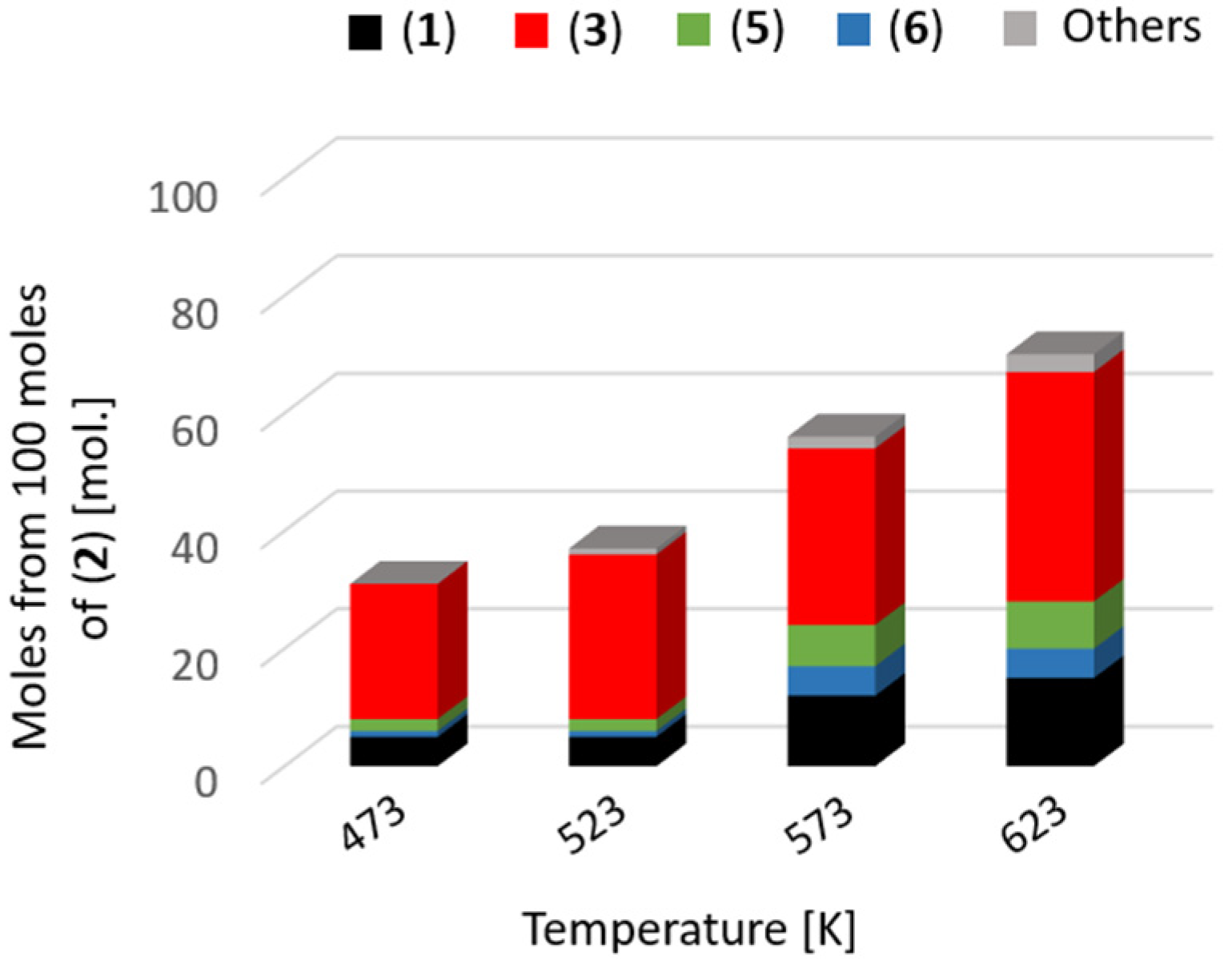
| Time [min] | Conversion [%] | Moles from 100 mol of (2) | ||
|---|---|---|---|---|
| (3) 1 | (4) 1 | Others | ||
| 60 | 6 | 5 | 1 | 0 |
| 180 | 16 | 12 | 3 | 1 |
| 360 | 24 | 19 | 3 | 2 |
Disclaimer/Publisher’s Note: The statements, opinions and data contained in all publications are solely those of the individual author(s) and contributor(s) and not of MDPI and/or the editor(s). MDPI and/or the editor(s) disclaim responsibility for any injury to people or property resulting from any ideas, methods, instructions or products referred to in the content. |
© 2026 by the authors. Licensee MDPI, Basel, Switzerland. This article is an open access article distributed under the terms and conditions of the Creative Commons Attribution (CC BY) license.
Share and Cite
Gliński, M.; Dąbrowski, A.; Kacprzak, A.; Iwanek, E.M.; Borucki, J. Chemoselective Reduction of 3-Methylcyclohex-2-enone into rac 3-Methylcyclohex-2-enol (Seudenol) by NaBH4 Alone, with Modifiers or via Catalytic Transfer Hydrogenation. Compounds 2026, 6, 18. https://doi.org/10.3390/compounds6010018
Gliński M, Dąbrowski A, Kacprzak A, Iwanek EM, Borucki J. Chemoselective Reduction of 3-Methylcyclohex-2-enone into rac 3-Methylcyclohex-2-enol (Seudenol) by NaBH4 Alone, with Modifiers or via Catalytic Transfer Hydrogenation. Compounds. 2026; 6(1):18. https://doi.org/10.3390/compounds6010018
Chicago/Turabian StyleGliński, Marek, Adrian Dąbrowski, Agata Kacprzak, Ewa M. Iwanek (nee Wilczkowska), and Jan Borucki. 2026. "Chemoselective Reduction of 3-Methylcyclohex-2-enone into rac 3-Methylcyclohex-2-enol (Seudenol) by NaBH4 Alone, with Modifiers or via Catalytic Transfer Hydrogenation" Compounds 6, no. 1: 18. https://doi.org/10.3390/compounds6010018
APA StyleGliński, M., Dąbrowski, A., Kacprzak, A., Iwanek, E. M., & Borucki, J. (2026). Chemoselective Reduction of 3-Methylcyclohex-2-enone into rac 3-Methylcyclohex-2-enol (Seudenol) by NaBH4 Alone, with Modifiers or via Catalytic Transfer Hydrogenation. Compounds, 6(1), 18. https://doi.org/10.3390/compounds6010018