1. Introduction
Salvia dumetorum Andrz. ex Besser, a species native to Central Asia and particularly widespread in Kazakhstan, belongs to the Lamiaceae family, which includes numerous medicinally valuable plants [
1]. While
Salvia officinalis is the only officially recognized species of the genus in the State Pharmacopoeia of the Republic of Kazakhstan, other species such as
S. dumetorum remain underexplored despite their phytochemical potential and abundance in natural habitats. Traditional uses of
Salvia species in folk medicine have included treatments for inflammation [
2], gastrointestinal disturbances [
3], skin disorders [
4], and respiratory ailments [
5]—effects often attributed to their rich content of polyphenols and flavonoids.
In recent years, plant-derived polyphenolic compounds have received increasing attention due to their potent antioxidant, anti-inflammatory, antimicrobial, and cytoprotective properties [
6]. These compounds play a significant role in neutralizing free radicals and preventing oxidative stress-related damage, which is implicated in aging and chronic diseases [
7]. The two primary groups of polyphenols in medicinal plants are flavonoids and phenolic acids, both of which are abundant in members of the
Salvia genus [
8,
9,
10,
11,
12,
13].
Efficient extraction of these compounds is crucial for their application in pharmaceuticals, nutraceuticals, and cosmetics. Among modern extraction techniques, microwave-assisted extraction (MAE) has emerged as a rapid, eco-friendly, and highly effective method [
14]. MAE enhances the release of intracellular bioactive compounds by using microwave energy to heat the solvent and plant material, leading to the disruption of plant cell walls and improved mass transfer [
15]. Compared to conventional techniques, MAE significantly reduces extraction time, solvent usage, and energy consumption, while preserving the integrity of heat-sensitive phytochemicals [
16]. The efficiency of MAE depends on several parameters, including microwave power, extraction time, solvent concentration, and solid-to-liquid ratio [
17]. However, despite its numerous advantages, MAE also has certain drawbacks and limitations. Excessive microwave power or prolonged exposure can cause thermal degradation of heat-sensitive compounds, leading to reduced extract quality [
18]. Additionally, MAE requires careful optimization of parameters such as solvent type, volume, and sample size, as inappropriate conditions may lead to solvent evaporation or pressure buildup. In addition to MAE, several other techniques have been employed for the extraction of polyphenols from
S. dumetorum. Previous studies on ultrasound-assisted extraction [
19] and supercritical fluid extraction [
20] have also been conducted to improve efficiency and selectivity.
Despite the growing interest in S. dumetorum, limited data are available on the optimal conditions for extracting its bioactive compounds. To the best of our knowledge, no prior studies have systematically optimized the MAE process for this species. The aim of the present study is to obtain a polyphenol-rich ethanolic extract of S. dumetorum using MAE and to evaluate the extraction yield, total phenolic content (TPC), total flavonoid content (TFC), and antioxidant activity. This work contributes to the scientific basis for the potential use of S. dumetorum as a source of natural antioxidants for pharmaceutical and cosmetic applications.
2. Materials and Methods
2.1. Chemicals and Drugs
All chemicals and reagents used in this study were of analytical grade. Ethanol (40%) was used as the extraction solvent. Folin–Ciocalteu reagent, sodium carbonate, gallic acid, aluminum chloride, sodium nitrite, aluminum chloride, sodium hydroxide, rutin, 2,2-diphenyl-1-picrylhydrazyl, ascorbic acid, orthophosphoric acid, acetonitrile HPLC grade ≥ 99.9%, ferulic acid, caffeic acid, chlorogenic acid, rosmarinic acid, rutin, myricetin and quercetin were used. All chemicals were purchased from Sigma-Aldrich (Saint Louis, MO, USA), Merck (Darmstadt, Germany), or equivalent suppliers, and distilled water was used throughout all procedures.
2.2. Preparation of Salvia dumetorum Leaf Ethanolic Extract
Leaves of
S. dumetorum Andrz. ex Besser [
21] were harvested in July 2024 from the area surrounding Karaganda (coordinates: 49°88.898′ N; 73°15.569′ E). The plant species was authenticated by Dr. Ishmuratova M.Yu., botanist at the Department of Botany, Karaganda University, named after Academician E.A. Buketov. A voucher specimen of
S. dumetorum Andrz. ex Besser (synonym
Salvia stepposa Des.-Shost), catalogued as QAR00068, was originally collected on 25 July 1988, from the Karkaraly Mountains (Karkaraly district, Karaganda region) and is currently preserved in the university herbarium. Before extraction, fresh leaves were air-dried in shaded conditions at 25–30 °C for seven days to avoid direct sunlight. The moisture content of the dried, ground leaves was measured at 4.2%. The dried leaf powder was then sieved through a stainless steel mesh with a pore size of 1.4 mm.
Extraction was performed using the MAE technique [
22] on an ETHOS X microwave system (Milestone, Sorisole, Italy). 10 g of the powdered
S. dumetorum leaves were mixed with 40% ethanol in the extraction chamber and subjected to microwave irradiation for 2 to 8 min. The microwave power was adjusted between 200 and 800 W, with 1 to 4 extraction cycles and solvent-to-material ratios ranging from 1:10 to 1:40 (g/mL). The resulting extracts were filtered, concentrated under reduced pressure using a rotary evaporator IKA RV 8 (IKA-Werke GmbH & Co. KG, Breisgau, Germany), and further dried in a water bath at 55 °C. The extraction yields ranged from 2.20% to 25.80% based on dry weight.
2.3. HPLC Analysis
The HPLC analysis of phenolic compounds in S. dumetorum leaf extracts was performed using a Shimadzu LC-20AD Prominence HPLC system (Shimadzu Corporation, Kyoto, Japan) equipped with a UV–Vis detector. Separation was carried out in isocratic mode on a Zorbax 300Extend-C18 column (Agilent Technologies, Waldbronn, Germany, 5 μm, 4.6 × 250 mm) at 30 °C. The mobile phase consisted of CH3CN–H2O–H3PO4 (18:82:0.05, v/v/v) at a flow rate of 0.6 mL/min. The injection volume was 10 μL, and detection was performed at 254 nm. The total run time for each sample was 46 min. Dry extracts were dissolved in 2 mL of 40% ethanol before injection. By keeping track of retention time and analyzing UV spectra, the peaks were identified by comparing them with reference standards, confirming them by running the samples with a small amount of the standards.
2.4. Determination of Total Phenolic Content
The TPC of the
S. dumetorum leaf extracts was determined using the Folin–Ciocalteu colorimetric method [
23]. Gallic acid was used as a standard (100–500 µg/mL). The extract (100 µL) was mixed with 500 µL of diluted Folin–Ciocalteu reagent (1:10
v/
v) and incubated for 6 min, followed by addition of 400 µL of 7.5% sodium carbonate solution. The mixture was incubated at 40 °C for 15 min, and absorbance was measured at 765 nm using a UV–Vis spectrophotometer (Agilent Cary 60 UV-Vis, Penang, Malaysia). TPC is expressed as mg gallic acid equivalents per g of dry extract (mg GAE/g). All measurements were performed in triplicate.
2.5. Determination of Total Flavonoid Content
The TFC of the
S. dumetorum leaf extracts was determined using the aluminum chloride colorimetric method [
24]. Rutin was used as the standard (10–100 µg/mL). The extract solution (1 mL) was mixed with 4 mL of distilled water and 0.3 mL of 5% sodium nitrite, followed by a 5-min incubation. Then, 0.3 mL of 10% aluminum chloride and, after 6 min, 2 mL of 1 M sodium hydroxide were added. Absorbance was measured at 415 nm using a UV–Vis spectrophotometer (Agilent Cary 60 UV-Vis, Penang, Malaysia). TFC is expressed as mg rutin equivalents per g of dry extract (mg RuE/g). All measurements were performed in triplicate.
2.6. DPPH Assay
The antioxidant activity of the
S. dumetorum leaf extracts was determined using the DPPH free radical scavenging assay [
25]. A 100 µM DPPH solution in 96% ethanol was mixed with the extract at various concentrations (5–50 µg/mL) and incubated in the dark at room temperature for 30 min. Absorbance was measured at 517 nm using a UV–Vis spectrophotometer (Agilent Cary 60 UV-Vis, Penang, Malaysia). Ascorbic acid (100 µg/mL) served as a positive control. The percentage inhibition was calculated, and the IC
50 value was obtained from the dose–response curve. All measurements were performed in triplicate.
2.7. Statistical Analysis
All experiments were performed in triplicate, and the results are presented as mean ± standard deviation (SD). One-way analysis of variance (one-way ANOVA) and post hoc comparisons using Tukey HSD were used to assess the statistical significance of the effects of factors (microwave power and extraction time) on extract yield, HPLC, TPC, TFC, and antioxidant activity, with significance set at p < 0.05. Additionally, multiple regression analysis was applied to evaluate the relationships between variables.
3. Results
In this study, the influence of various extraction parameters—including microwave power, irradiation time, solid-to-liquid ratio, and number of extraction cycles—was systematically evaluated to establish the optimal conditions for maximizing polyphenol yield. Data of optimization experiments are provided in
Supplementary Table S1. One-way ANOVA results demonstrated that microwave power and extraction time significantly influenced all measured parameters (
p < 0.001). Specifically, the F-statistic values indicated strong differences between groups for each response variable, confirming that extraction conditions have a substantial impact on the recovery of bioactive compounds and antioxidant capacity. Post hoc comparisons using Tukey HSD revealed that certain groups differed significantly from others. For extract yield, group ×1 was significantly higher than all other groups (
p < 0.001), whereas no significant differences were observed among groups ×2–×6 (
p > 0.05). Similar trends were observed for TPC, TFC, and DPPH, indicating that the selected optimal extraction condition (400 W, 8 min, 1:30 g/mL) provided superior recovery of bioactive compounds and antioxidant activity compared to other tested settings. These results highlight the importance of balancing microwave power and extraction duration for maximal extraction efficiency.
The experiment showed that MAE, including microwave power, and processing time, significantly affect the extract yield, TPC, TFC, and antioxidant activity determined by the DPPH method.
3.1. Influence of Combined Extraction Factors on Yield of S. dumetorum Leaf Extract
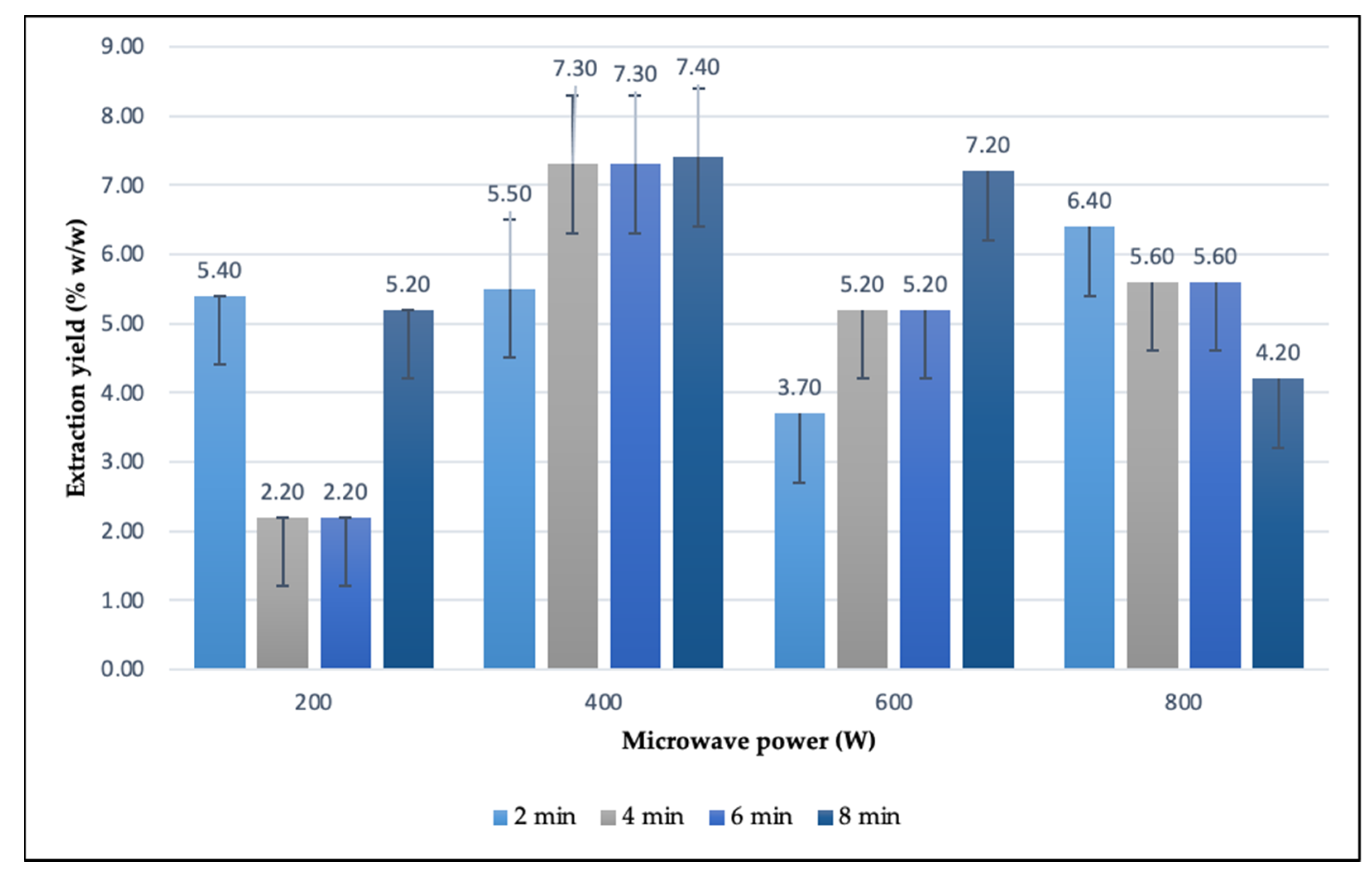
Figure 1 shows that the extraction yield of
S. dumetorum leaf extract ranged from 2.20% to 7.50% across the tested microwave-assisted extraction conditions. At a constant microwave power of 200 W, the yield varied between 2.20% and 5.40%, with the highest value observed at 2 min (5.40%) and the lowest at 4 min (2.20%). At 400 W, the yield ranged from 5.50% to 7.40%. The maximum yield (7.40%) was obtained at 8 min, while the minimum (5.50%) was recorded at 2 min. For 600 W, yields varied between 3.70% and 7.50%. The highest yield (7.50%) was achieved at 6 min, whereas the lowest (3.70%) was observed at 2 min. At the highest power level of 800 W, extraction yield ranged from 3.80% to 6.40%. The maximum yield (6.40%) occurred at 2 min, and the minimum (3.80%) at 6 min. Across all experiments, the highest overall yield (7.50%) was recorded under the condition of 600 W and 6 min.
3.2. Influence of Combined Extraction Factors on TPC of S. dumetorum Leaf Extract
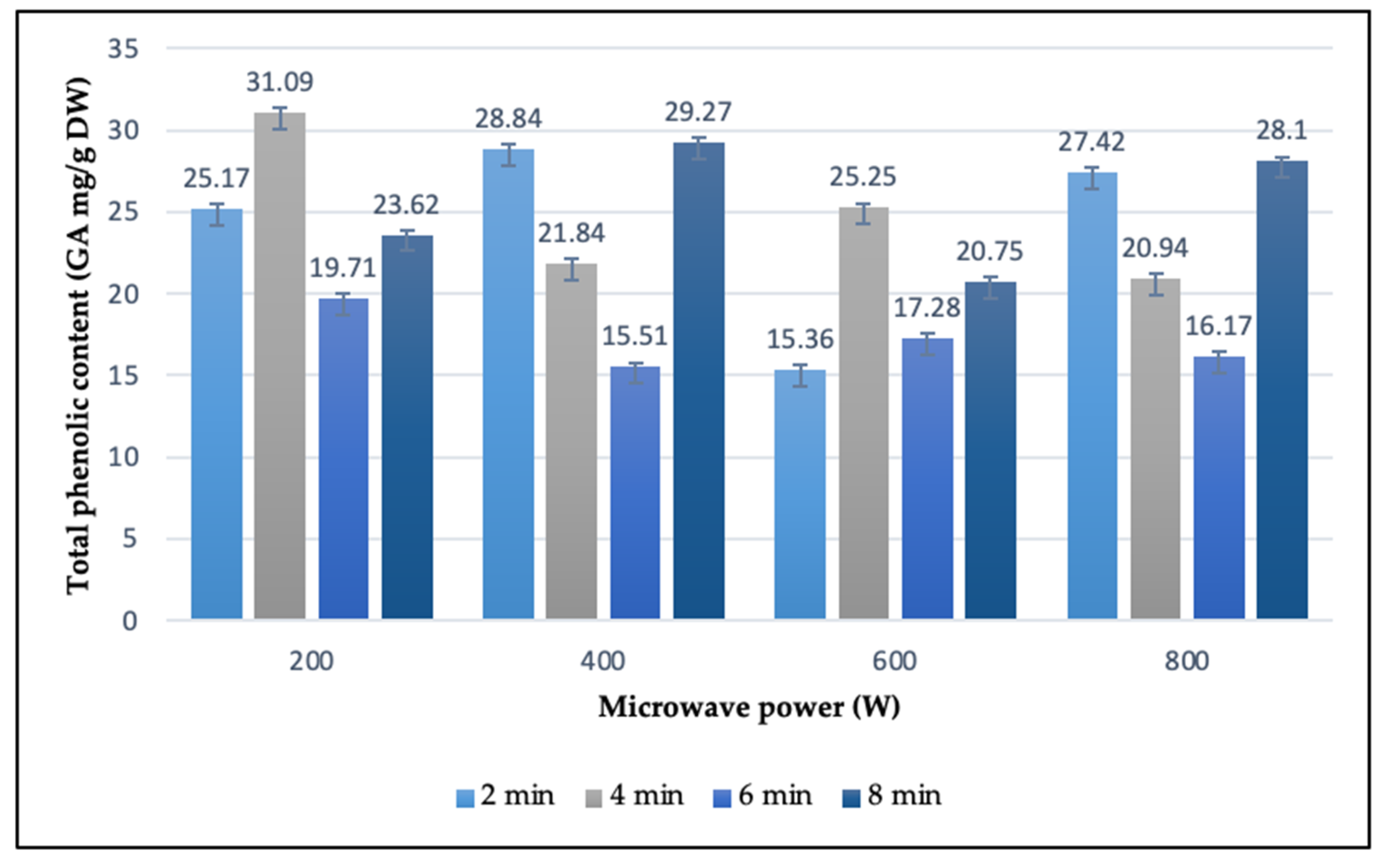
Figure 2 demonstrates that the TPC of
S. dumetorum leaf extract ranged from 15.36 to 31.09 mg GAE/g DW across the tested microwave-assisted extraction conditions. Under a microwave power of 200 W, TPC values fluctuated between 19.71 and 31.09 mg GAE/g DW. The highest concentration, 31.09 mg GAE/g DW, was obtained after 4 min of extraction, whereas the lowest, 19.71 mg GAE/g DW, was recorded after 6 min. At 400 W, TPC ranged from 15.51 to 29.27 mg GAE/g DW, with the maximum observed at 8 min, and the minimum at 6 min. When the power was increased to 600 W, the phenolic content varied between 15.36 and 25.25 mg GAE/g DW; the highest value was achieved at 4 min, while the lowest was measured at 2 min. In the case of 800 W, TPC values were between 16.17 and 28.10 mg GAE/g DW, peaking after 8 min and dropping to the lowest point at 6 min. Among all tested conditions, the greatest TPC (31.09 mg GAE/g DW) was reached under the combination of 200 W and 4 min of extraction.
3.3. Influence of Combined Extraction Factors on TFC of S. dumetorum Leaf Extract
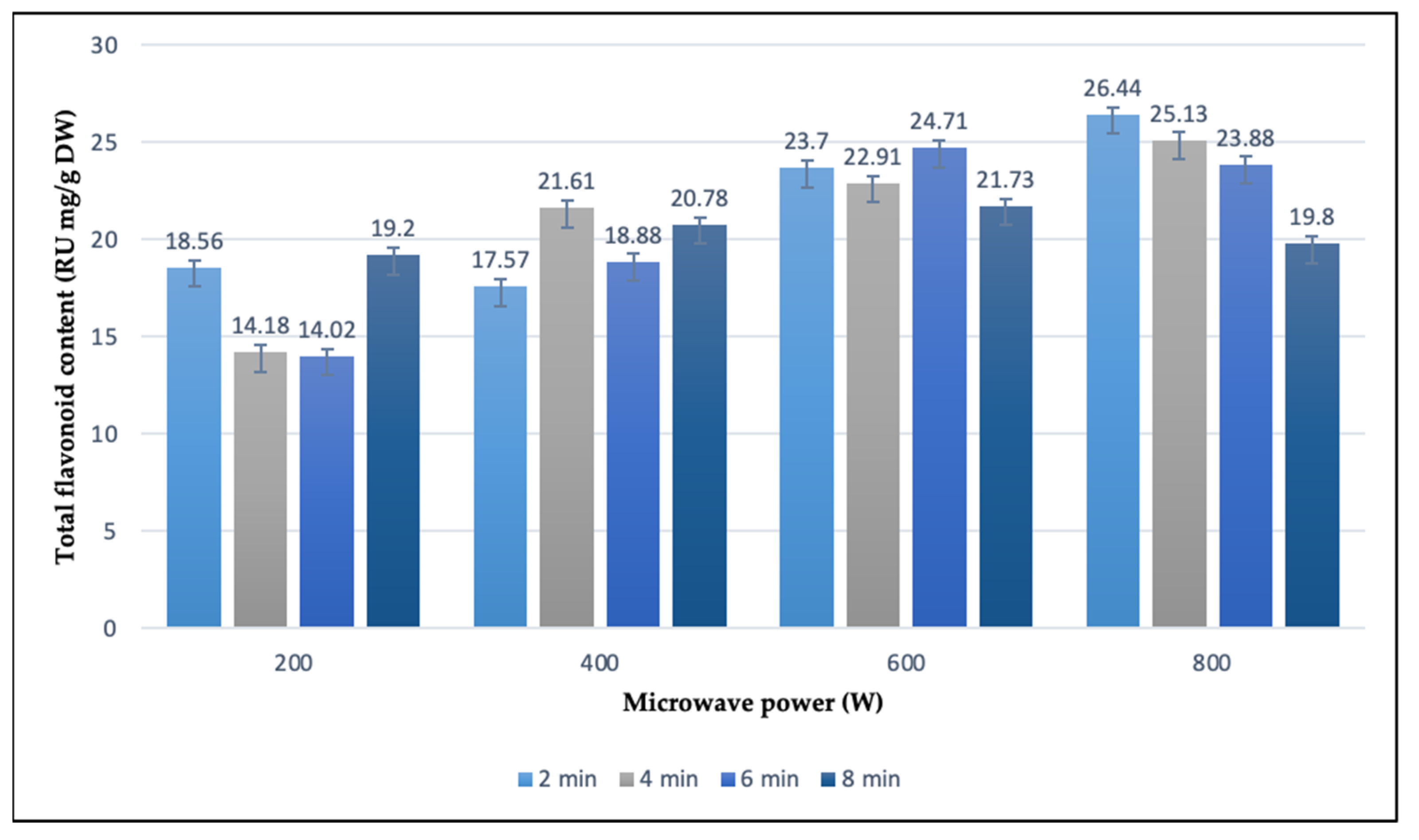
As presented in
Figure 3, the TFC of
S. dumetorum extracts demonstrated noticeable variation depending on the extraction settings, ranging from 14.02 to 26.44 mg RuE/g DW. When extractions were carried out at 200 W, TFC values spanned from 14.02 to 19.20 mg RuE/g DW. The lowest concentration was obtained after a 6-min extraction, whereas the highest was reached after 8 min. At 400 W, flavonoid levels rose modestly, fluctuating between 15.51 and 21.61 mg RuE/g DW. The peak in this group occurred with 4 min of extraction, while the minimum was observed following a longer duration of 6 min. A further increase in microwave power to 600 W resulted in a slightly narrower TFC range, from 21.73 to 24.71 mg RuE/g DW. The highest yield at this level was associated with 6 min, while the lowest value corresponded to the most prolonged extraction of 8 min. In contrast, experiments conducted at 800 W showed the broadest spread in TFC values among all groups, ranging from 19.80 to 26.44 mg RuE/g DW. Notably, the maximum flavonoid content, 26.44 mg RuE/g DW, was obtained in just 2 min, suggesting that short exposure was particularly effective. On the other hand, the least favorable outcome within this group, 19.80 mg RuE/g DW, resulted from the longest extraction of 8 min.
3.4. Influence of Combined Extraction Factors on Antioxidant Activity of S. dumetorum Leaf Extract
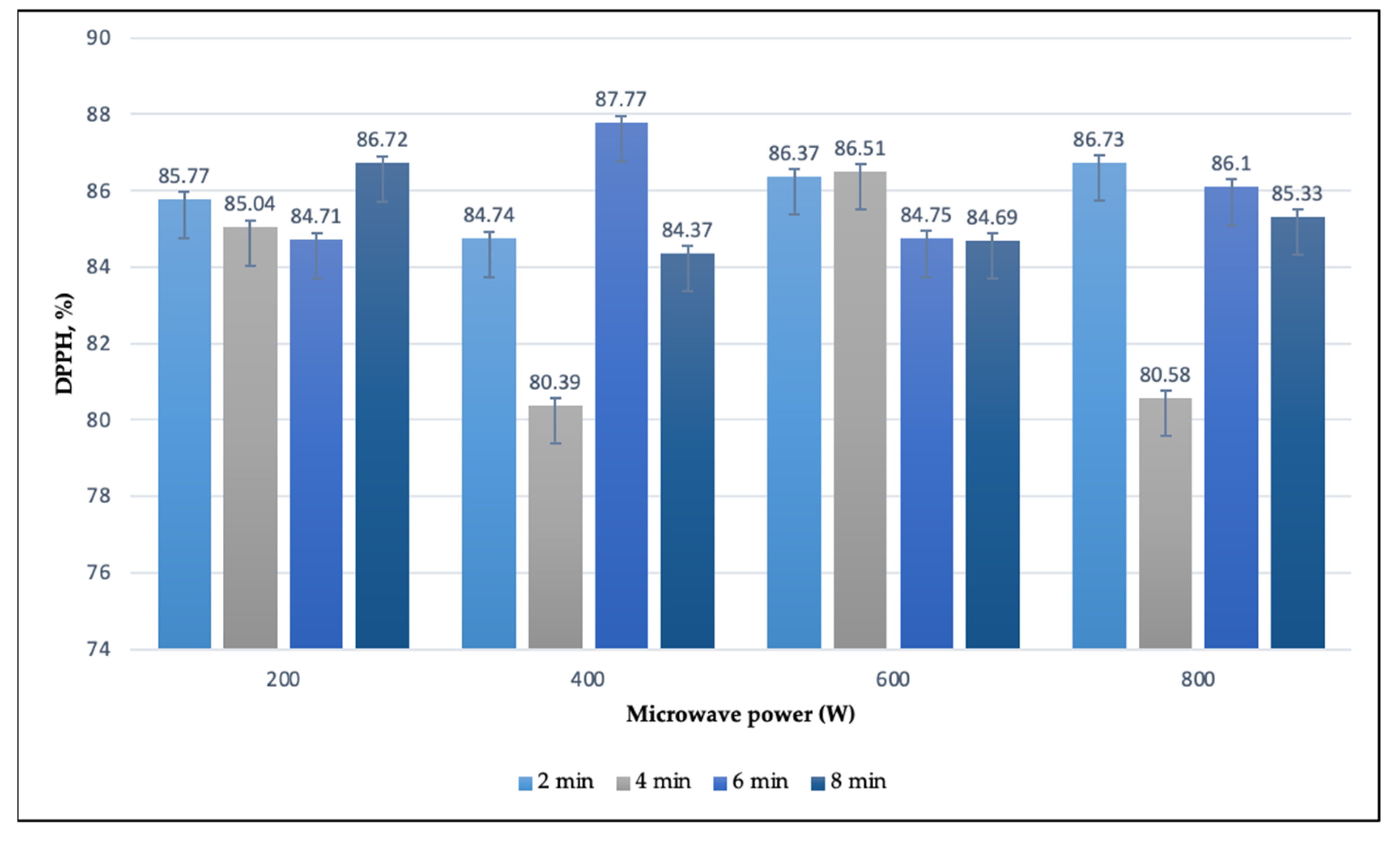
Figure 4 highlights the variation in antioxidant activity of
S. dumetorum leaf extracts, as measured by DPPH radical scavenging capacity. Across all microwave-assisted extraction conditions, values ranged from 79.81% to 87.77%, reflecting a generally high level of activity throughout. Under a microwave power of 200 W, antioxidant potential remained consistently strong, with DPPH values between 84.71% and 85.77%. The most active extract in this group was obtained following 2 min, while the lowest inhibition was recorded after 6 min. At 400 W, the antioxidant profile remained comparably high, spanning from 80.39% to 84.74%. Peak activity was noted after 6 min, indicating the efficiency of moderate extraction time. In contrast, the extract with the lowest DPPH value at this power level resulted from 4 min of extraction. When the extraction was performed using 600 W, results ranged from 84.69% to 86.51%, with the highest antioxidant capacity observed after 4 min. Interestingly, values in this group showed less fluctuation, suggesting that this power level may provide more stable antioxidant yields across conditions. For the 800 W extractions, DPPH values reached between 80.58% and 86.85%. The most potent antioxidant response occurred with 6 min, while the lowest was found at 4 min. Despite the higher power, antioxidant levels remained within a favorable range. Among all tested conditions, the highest overall DPPH radical scavenging activity, 87.77%, was achieved under 400 W following 6 min of extraction, underscoring the effectiveness of balanced extraction duration in preserving antioxidant properties.
Based on the single-factor experimental results, the extraction condition of 400 W microwave power and 8 min duration (Sample No. 8) demonstrated the highest and most balanced performance among all tested parameters. This sample exhibited the greatest both TPC and TFC of 29.27 mg GAE/g DW and 20.78 mg RuE/g DW, respectively. Additionally, it achieved an extract yield of 7.40% and a strong antioxidant activity with DPPH radical scavenging capacity reaching 81.40%. Due to its superior extraction efficiency, this condition was selected for further optimization studies, focusing on the influence of solvent-to-material ratio and the number of extraction cycles on the MAE process.
3.5. Effect of Solvent-to-Material Ratio and Number of Extraction Cycles on Yield, TPC, TFC and Antioxidant Activity
Based on this optimal condition for polyphenol extraction, further experiments were conducted to evaluate the influence of two additional parameters—the solvent-to-material ratio and the number of extraction cycles—on extraction efficiency and antioxidant potential of
S. dumetorum leaf extracts. These factors are known to significantly affect solute mass transfer and overall extraction performance. The influence of solvent-to-material ratio and the number of extraction cycles on the yield, TPC, TFC, and antioxidant activity of
S. dumetorum leaf extract is presented in
Supplementary Table S2.
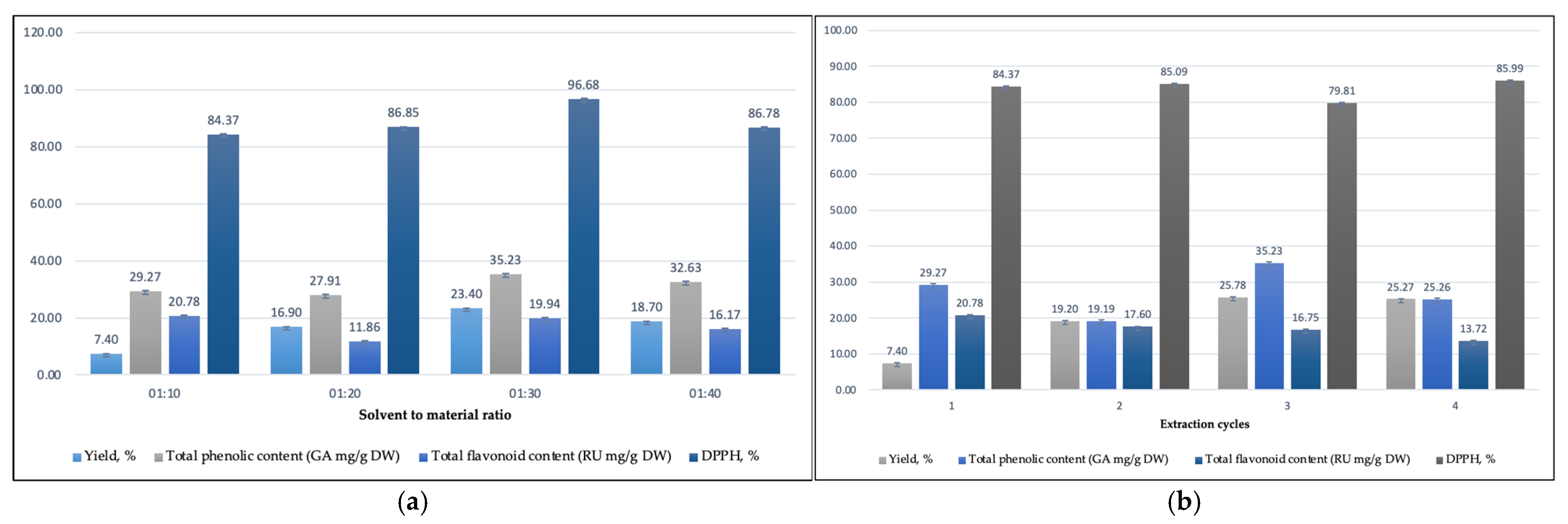
The influence of solvent-to-material ratio on extraction efficiency was evaluated under a single extraction cycle, with yields ranging from 16.90% to 23.40% (
Figure 5). The highest yield 23.40% was achieved at a ratio of 1:30, followed by 18.70% at 1:40, and the lowest yield 16.90% observed at 1:20. Correspondingly, TPC varied between 27.91 and 35.23 mg GAE/g DW, with the maximum value obtained at the 1:30 ratio. TFC ranged from 11.86 to 19.94 mg RuE/g DW, and antioxidant activity, as measured by DPPH radical scavenging capacity, exhibited values between 86.78% and 96.68%, with the highest activity also recorded at the 1:30 ratio.
At a fixed solvent-to-material ratio of 1:10, the effect of increasing the number of extraction cycles was investigated. Extraction yield increased progressively from 21.60% with 2 cycles to 25.80% after 4 cycles. The highest TPC 25.78 mg GAE/g DW and TFC 17.60 mg RuE/g DW were observed after 2 extraction cycles; however, further increases in cycle number resulted in a decline of these parameters, with TPC decreasing to 25.27 mg GAE/g DW and TFC to 13.72 mg RuE/g DW after 4 cycles. Antioxidant activity followed a similar trend, maintaining high levels throughout, with values ranging from 79.81% to 86.85%.
A one-way ANOVA revealed significant differences between extraction conditions with different solvent-to-material ratios and number of cycles (F(4,47) = 3.99, p = 0.0073). Subsequent analysis using Tukey HSD revealed that groups differed significantly in the variable of interest (p < 0.05), while the remaining pairs did not differ. These results confirm that increasing the number of cycles and certain solvent-to-material ratios significantly improve the extraction efficiency of bioactive compounds.
3.6. HPLC Analysis of Phenolic Compounds
During the HPLC analysis, six phenolic compounds were quantified: chlorogenic acid, caffeic acid, rutin, ferulic acid, myricetin, and rosmarinic acid (
Table S3). The HPLC chromatograms of tested extracts are shown in
Supplementary Figures S1–S22. In all extracts, rosmarinic acid showed the highest content, with concentrations ranging from 0.032 to 2.951 mg/mL. Maximum values were observed mainly at high microwave power (600–800 W) and increased extraction time. The minimum concentrations were recorded in the extracts treated at 200 W, which was accompanied by a decrease in the content of all other identified compounds. The chlorogenic acid content ranged from 0.014 to 0.537 mg/mL. The highest values were observed at a power of 400 W and a time of 6 min, while the minimum amount, similar to other components, was recorded in sample 3. The chlorogenic acid distribution profile shows a moderate increase in concentration with the transition to higher microwave powers. Caffeic acid concentrations remained low, ranging from 0.001 to 0.196 mg/mL. The maximum content was observed at 200 W, while the minimum values were obtained in samples 3 and 19. Despite the overall variability of the data, a moderate increase in caffeic acid concentration was noted with an increase in microwave energy exposure. Rutin showed a significant range of concentrations, from 0.001 to 0.468 mg/mL. The highest yield of the compound was recorded at a power of 600 W and an extraction time of 8 min, which may indicate the sensitivity of rutin to temperature increase and intensification of microwave exposure. In low-power and low-temperature samples, concentrations remained at a minimum level. Ferulic acid was present in all samples and ranged from 0.023 to 0.353 mg/mL. The highest content was observed at a power of 600 W, while the minimum values were again found in sample 3. The data indicate a marked increase in ferulic acid yield with increasing microwave power. Myricetin was found only in samples treated at 600 W, with concentrations ranging from 0.094 to 0.295 mg/mL. Its absence in the 200, 400, and 800 W samples may indicate a specific temperature-energy window required for its effective extraction. Statistical analysis (one-way ANOVA) confirmed that the concentrations of the major phenolic compounds differed significantly between extraction conditions (
p < 0.05). Rosmarinic acid showed the strongest dependence on microwave power (
p < 0.001), with the highest concentrations observed at 600–800 W. Significant differences were also detected for chlorogenic acid (
p < 0.01), caffeic acid (
p < 0.05), ferulic acid (
p < 0.01), and rutin (
p < 0.001). In general, the distribution profiles of phenolic compounds show a pronounced dependence on microwave extraction conditions. Increasing the MAE power and processing time contributed to an increase in the content of most of the metabolites studied.
Overall, the results indicate that both the solvent-to-material ratio and the number of extraction cycles exert a significant effect on extraction efficiency and the recovery of phytochemicals. Among the tested conditions, a solvent ratio of 1:30 with a single extraction cycle resulted in the highest total phenolic content 35.23 mg GAE/g DW, total flavonoid content 19.94 mg RuE/g DW, and DPPH radical scavenging activity 96.68% across all experiments. Although increasing the number of extraction cycles at a fixed 1:10 ratio led to higher extraction yields, it did not consistently improve the levels of bioactive compounds. These findings suggest that, under otherwise optimal MAE conditions, increasing solvent volume may enhance phytochemical recovery more effectively than applying multiple extraction cycles.
Based on this optimal condition for polyphenol extraction, further experiments were conducted to evaluate the half-maximal inhibitory concentration (IC50) of the S. dumetorum leaf extract obtained under optimum MAE conditions. The IC50 for sample 18 was found to be 10.24 µg/mL, showing great antioxidant potential.
4. Discussion
The growing interest in plant-derived bioactive compounds has driven the development of extraction strategies aimed at producing “rich extracts”—concentrated mixtures containing a broad spectrum of biologically active phytochemicals. MAE has emerged as a promising technique for achieving this goal, offering enhanced extraction efficiency, reduced solvent usage, and significantly shorter processing times. These advantages stem from the mechanism of microwave-induced molecular friction, which generates localized heating, disrupts plant cell walls, and promotes solvent diffusion [
26].
The results of the present study confirm the efficacy of MAE for the recovery of phenolic and flavonoid compounds from
S. dumetorum leaves. The selection of 40% ethanol as the extraction solvent was based on its proven efficiency in extracting a wide range of polyphenolic compounds with varying polarities. Aqueous ethanol provides an optimal balance between polarity and solvent penetration, allowing efficient disruption of plant cell walls and enhanced solubility of both hydrophilic and moderately lipophilic phytochemicals. Previous studies have shown that ethanol–water mixtures in the range of 30–50% often yield the highest recovery of total phenolics and flavonoids from plant matrices compared to pure solvents [
27,
28,
29]. Moreover, ethanol is a food-grade, non-toxic, and environmentally friendly solvent, making it suitable for applications in pharmaceuticals, nutraceuticals, and cosmetics. Therefore, 40% ethanol was chosen to maximize extraction efficiency while maintaining safety and sustainability [
27,
28,
30].
In the first phase of the study, the extraction condition of 400 W microwave power and 8 min (Sample No. 8) provided the most balanced performance, yielding 7.40%, 29.27 mg GAE/g DW TPC, 20.78 mg RuE/g DW TFC, and 81.40% DPPH inhibition, identifying it as the optimal condition within the tested group. Statistical analysis using Tukey HSD confirmed that this sample differed significantly from lower-performing conditions for yield, TPC, TFC, and antioxidant activity, demonstrating that the combination of moderate microwave power and optimized extraction time effectively maximizes bioactive compound recovery and radical scavenging potential. These findings support the selection of 400 W, 8 min, and a 1:30 g/mL solid-to-solvent ratio as the optimal extraction protocol. The results align with earlier reports emphasizing that moderate microwave power and controlled extraction duration are key for maximizing phytochemical release while minimizing thermal degradation [
31]. However, further optimization experiments investigating the effect of solvent-to-material ratio and extraction cycles revealed that sample No. 18 (1:30 ratio, 1 extraction cycle) markedly outperformed all previous conditions. This sample achieved the highest TPC 35.23 mg GAE/g DW, maximum TFC 19.94 mg RuE/g DW, and the most potent antioxidant activity 96.68% with IC
50 = 10.24 µg/mL.
Despite using only a single extraction cycle, this condition surpassed samples that underwent multiple cycles, indicating that solvent accessibility and diffusion efficiency play a more decisive role than repeated extraction under otherwise similar conditions [
32]. The enhanced performance of the 1:30 ratio can be attributed to several interrelated factors. First, the increased solvent volume likely facilitated better mass transfer by minimizing saturation effects and maintaining a high concentration gradient between plant matrix and solvent [
33]. This, in turn, enhanced the solubilization of both freely available and moderately bound phenolic and flavonoid compounds. Second, a larger solvent volume can promote more uniform microwave absorption and distribution, preventing local overheating and reducing degradation risk [
34]. These conditions appear particularly favorable for thermolabile flavonoids, whose stability during extraction is often compromised under high temperatures or prolonged exposure [
35]. These findings are in agreement with previous studies on other
Salvia species, where a solid-to-solvent ratio of 1:30 g/mL was also identified as optimal for maximizing the extraction of polyphenolic compounds. For instance, in the case of
S. fruticosa, the most effective extraction parameters for targeting polyphenols included 600 W microwave power, 15-min extraction time, 40 °C temperature, and a 1:30 g/mL ratio [
36]. Similarly, a study on
S. plebeia reported that a 1:30 ratio, combined with 560 W power and 5 min of extraction, yielded the highest flavonoid content 2.38 mg/g [
37]. These consistent results across different species reinforce the conclusion drawn from the present study, where the 1:30 g/mL ratio under a single extraction cycle led to the highest recovery of bioactive compounds from
S. dumetorum. In contrast,
S. officinalis L. required markedly different processing conditions to achieve optimal polyphenol extraction, with two effective parameter sets reported: 600 W for 4.75 min and 500 W for 9 min, respectively [
38,
39]. This variation highlights species-specific differences in cell wall structure, phytochemical profile, and thermal stability, which must be considered when designing MAE protocols. Nevertheless, the repeated identification of 1:30 as a favorable solid-to-liquid ratio across multiple
Salvia species suggests a broadly applicable guideline for optimizing extraction efficiency, particularly when targeting thermosensitive phenolic and flavonoid compounds.
In contrast, while increasing the number of extraction cycles at a fixed 1:10 ratio (samples 20–22) led to a gradual improvement in overall extract yield (up to 25.80% in sample 22), this was not accompanied by a corresponding increase in TPC or TFC. In fact, TPC and TFC peaked at 2 cycles and declined with further cycling. This trend suggests that extended extraction may lead to the co-extraction of undesirable oxidized or polymerized compounds, potentially diluting the concentration of bioactives. It also reinforces the idea that repeated exposure to microwaves can initiate degradation reactions, particularly for flavonoids, which are susceptible to oxidative and hydrolytic damage under thermal stress [
40,
41]. Notably, while sample No. 8 (400 W, 8 min) initially showed strong results—especially for TFC 20.78 mg RuE/g DW—it was ultimately surpassed by sample 18, which delivered comparable TFC 19.94 mg RuE/g DW but significantly higher TPC and DPPH value in a shorter, more efficient extraction. This finding underscores that a well-optimized solvent ratio can outperform longer or more intense extraction protocols, supporting a more energy- and resource-efficient process.
Previous studies on various
Salvia species have shown that rosmarinic acid often predominates among phenolic compounds, and that the overall phenolic profile and antioxidant activity strongly depend on species, harvest time and environmental factors. For example, in
S. officinalis leaves, rosmarinic acid was identified as the major phenolic acid [
42]. In another investigation of
S. viridis [
43] shoots, chlorogenic and caffeic acids were also reported alongside rosmarinic acid, although in lower amounts. In light of our findings, where we detected chlorogenic acid, caffeic acid, rutin, ferulic acid, rosmarinic acid and other phenolics across multiple extracts, the consistency with literature data supports the reliability of our HPLC-based profiling. Notably, the presence of rosmarinic acid and chlorogenic acid aligns with many
Salvia-based studies, suggesting these compounds are among the more ubiquitous phenolics in this genus. However, unlike some reports in which rosmarinic acid is overwhelmingly dominant, in our extracts, the relative peak height of rosmarinic acid was similar to or slightly higher than chlorogenic acid, indicating that extraction conditions (solvent, microwave power/time) may shift relative abundances.
Furthermore, the observed strong correlation between TPC/TFC levels and DPPH radical scavenging activity reinforces the central role of polyphenols and flavonoids in contributing to antioxidant potential. The high antioxidant activity observed in Sample 18 is consistent with the presence of hydroxyl-rich phenolic structures capable of neutralizing free radicals via electron or hydrogen atom donation [
44]. Similar patterns have been reported in
Salvia species, where compounds such as rosmarinic acid and luteolin derivatives have demonstrated strong antioxidant activity in both in vitro and in vivo systems [
45,
46,
47]. Notably, the antioxidant performance of
S. dumetorum surpasses that of several well-studied
Salvia species, suggesting its promising potential as a natural source of antioxidant compounds for use in nutraceutical or pharmaceutical applications. In the present study, the antioxidant potential of
S. dumetorum leaf extract obtained with optimum conditions was further evaluated by determining its IC
50 value in the DPPH radical scavenging assay, which was found to be 10.24 µg/mL. This result indicates a strong free radical scavenging capacity, positioning
S. dumetorum among the more active species within the
Salvia genus. For comparison, methanolic extract
S. glutinosa has demonstrated an IC
50 of 3.2 µg/mL, representing one of the most potent antioxidant activities reported [
48]. Other species such as
S. verticillata and
S. officinalis exhibit higher IC
50 values of 18.3–27.3 µg/mL, reflecting comparatively lower activity [
49]. In contrast, Brindisi et al. [
50] observed that significantly higher concentrations of
S. officinalis methanolic extract 10.3–12.4 µg/mL were needed to achieve 50% DPPH radical inhibition.
Despite the successful optimization of microwave-assisted extraction conditions and the evaluation of TPC, TFC, and antioxidant activity, this study has certain limitations. An advanced experimental design approach, such as response surface methodology (RSM) or factorial design, was not applied; only single-factor experiments were conducted. These limitations should be considered when interpreting the results and planning future research.




 ,
,