

Leishmaniasis Vaccine Development: A Review of Current Candidates and Cross-Species Protection Potential

Abstract
1. Introduction
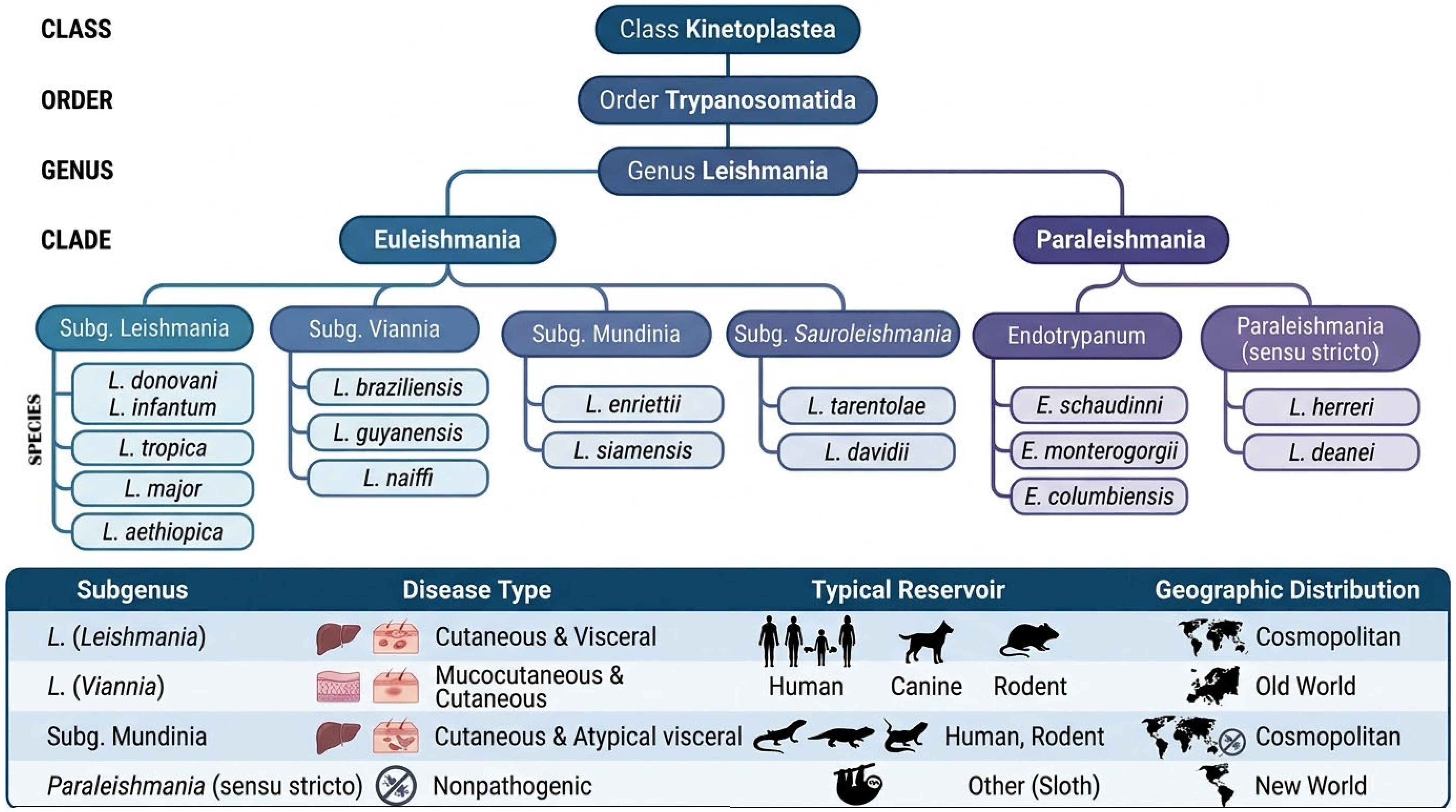
1.1. Background
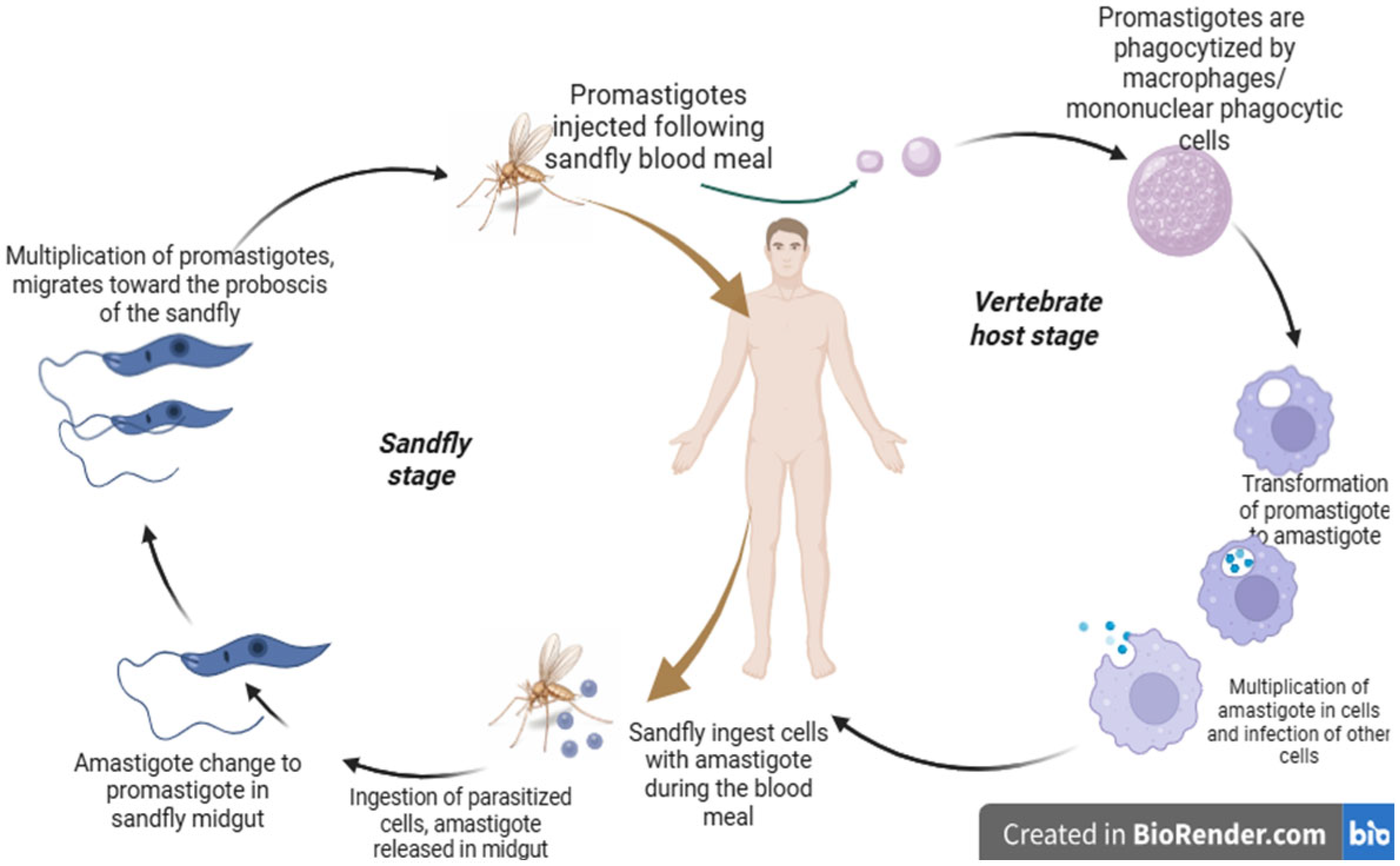
1.2. Lifecycle: Parasite and Vector

| Vaccine Name | Mechanism | Classification | Clinical Trial Phase | Vaccine Antigen | Adjuvant | Target | Findings | Reference |
|---|---|---|---|---|---|---|---|---|
| Leishvaccine (L. amazonensis) | CD4+, CD8+, and B cell activation | First generation | III | Whole-killed promastigotes of L. amazonensis | BCG | Dogs | Innate immunity (especially neutrophils and eosinophils) and activated CD4+T, CD8+T, and B cells. Safe but no immune response in humans. | [21] |
| L. mexicana + BCG | T cell activation | First generation | III | Killed Leishmania | BCG | Humans | Low levels of Leishmania skin test (LST) conversion. Decrease in parasite incidence. | [22] |
| L. mexicana + L. amazonensis + BCG | T cell activation | First generation | – | Killed Leishmania | BCG | Humans | Cost- effective CL infection treatment. No side effects. | [23] |
| ALM + BCG | T cell activation | First generation | II | Killed Leishmania | BCG | Humans | Treatment of CL and VL, with decrease in VL incidence in LST-converted individuals. | [24] |
| Leishmune (L. donovani) | T cell activation | First generation | III | Fractioned vaccine (FML) | Saponin | Dogs | Long lasting and strong protection against VL in dogs. | [25,26,27] |
| CaniLeish (L. infantum) | Th1 induction | First generation | III | LiESP | Saponin | Dogs | Only approved vaccine in France with high protection against canine leishmaniasis. Block Leishmania transmission from dogs to human. | [28,29] |
| Gentamicin- attenuated L. infantum | T and B cell activation | First generation | – | Live-attenuated Leishmania | None | Dogs | Strong protective effect against CVL in dogs. Reduced the occurrence of VL in human population. | [30] |
| Gentamicin- attenuated L. major | Th1 induction | First generation | III | Live-attenuated Leishmania | None | Humans | Safe and protective against CL in human population | [31] |
| LEISH-F1 | T cell activation | Second generation | I | TSA, LmSTI1, and LeIF | MPL-SE | Humans | Protection against VL in humans. The vaccine was safe and tolerable, inducing T cell production of IFN-γ and other cytokines in response to stimulation with the antigen. | [32] |
| LEISH-F2 | T cell activation | Second generation | II | TSA, LmSTI1, and LeIF | MPL-SE | Humans | Protection against CL in humans when combined with the adjuvant. | [33] |
| LEISH-F3 | T cell activation | Second generation | I | NH36 and SMT | MPL-SE and GLA-SE | Humans | Protection against VL in humans. Subjects vaccinated with Leish-F3 and GLA-SE had significant levels of antigen-specific IgG antibodies in their serum, along with IFN-γ, TNF, and IL-2 cytokines. | [34] |
| Leish-Tec | T cell activation | Second generation | III | L. donovani A2 protein | Saponin | Dogs | Protection against canine leishmaniasis. Vaccination of infected healthy animals significantly reduced clinical progression and decreased mortality. | [35] |
| LetiFend | Second generation | Second generation | III | L. infantum proteins (H2A, LiP2a, LiP2b, and LiP0) | None | Dogs | Overall efficacy in the prevention of confirmed cases of canine leishmaniasis in endemic areas with high disease pressure was shown to be 72%. | [36] |
| Chad63-KH | Cd8+ T cell activation | Third generation | II | KMP-11 and HASPB | None | Humans | Safe and protective against VL and PKDL in humans through innate and acquired immunity. It elicited a variety of CD8+ T cells specific to Leishmania antigens, IFN-γ and the activation of dendritic cells. | [37,38] |
1.3. Pathogenesis
2. Materials and Methods
2.1. Data Source and Search Strategy
2.2. Studies Screening
2.3. Inclusion and Exclusion
2.4. Data Extraction
3. Leishmania Vaccines
3.1. First-Generation Vaccines
3.1.1. Live-Attenuated Parasites
3.1.2. Whole-Killed Parasites
3.2. Second-Generation Vaccines
3.2.1. gp63 (63 kDa Surface Glycoprotein)
3.2.2. Hypothetical Proteins
3.2.3. LRP (Leishmania ribosomal Proteins)
3.2.4. NH36 (Nucleoside hydrolases)
3.2.5. TLR (Toll Like Receptor)
3.2.6. SMT (Sterol 24-C-Methyltranferase)
3.2.7. CPs (Cysteine Proteinases)
3.2.8. HASPB (Hydrophilic Acylated Surface Protein B)
3.2.9. KMP11 (Kinetoplastid Membrane Protein-11)
3.2.10. PHB (Prohibitin)
3.2.11. LACK (Leishmania Analog of the Receptor Kinase C)
3.2.12. Histone Proteins
3.2.13. A2 Proteins
3.2.14. PSA-2 (Promastigote Surface Antigen)/gp46/M-2
3.2.15. LPG (Lipophosphoglycan)
3.2.16. LdγGCS (L. donovani γ-Glutamylcysteine Synthetase)
3.3. Third-Generation Leishmania Vaccines
3.3.1. DNA Vaccines
3.3.2. mRNA Vaccines
4. Discussion
5. Conclusions
Author Contributions
Funding
Institutional Review Board Statement
Informed Consent Statement
Data Availability Statement
Conflicts of Interest
Abbreviations
| ALM | Autoclaved Leishmania major |
| BCG | Bacillus Calmette–Guérin |
| CL | Cutaneous leishmaniasis |
| CDC | Centre for Disease Control and Prevention |
| CMC | Chitosan microparticles |
| CP | Cysteine proteinases |
| CPA | Cysteine proteinase A |
| CPB | Cysteine proteinase B |
| DTH | Delayed-type hypersensitivity |
| GLA-SE | Glucopyranosyl lipid A stable oil-in-water nano-emulsion |
| gp63 | 63 kDa glycoprotein |
| HASPB | Hydrophilic acylated surface protein B |
| FML | Fractioned vaccine |
| FML | Fucose–mannose ligand |
| KMP-11 | Kinetoplastid membrane protein 11 |
| LCL | Localized cutaneous leishmaniasis |
| LACK | Leishmania analog of the receptor kinase |
| LdγGCS | L. donovani γ-glutamylcysteine synthetase |
| LeIF | L. braziliensis elongation and initiation factor |
| LiESP | L. infantum excreted–secreted protein |
| LmSTI1 | L. major stress-inducible protein 1 |
| LPG | Lipophosphoglycan |
| MCL | Mucocutaneous leishmaniasis |
| MAPK | Mitogen-activated protein kinases |
| MPL-SE | Monophosphoryl lipid A |
| NH | Nucleoside hydrolase |
| NO | Nitric oxide |
| NW | New world |
| OW | Old world |
| PBMC | Peripheral blood mononuclear cells |
| PKDL | Post-kala-azar |
| PSA | Promastigote surface antigen |
| repRNA | replicon RNA |
| SAM | Self-amplifying mRNA |
| SMT | Sterol 24-c-methyltransferase |
| spp | species |
| TSA | Thiol-specific antioxidant |
| TLR | Toll like receptor |
| TRYP | Tryparedoxin peroxidase |
| VL | Visceral leishmaniasis |
| WHO | World Health Organization |
References
- Alvar, J.; Vélez, I.D.; Bern, C.; Herrero, M.; Desjeux, P.; Cano, J.; Jannin, J.; de Boer, M.; The WHO Leishmaniasis Control Team. Leishmaniasis worldwide and global estimates of its incidence. PLoS ONE 2012, 7, e35671. [Google Scholar] [CrossRef] [PubMed]
- Hotez, P.J. The rise of Leishmaniasis in the twenty-first century. Trans. R. Soc. Trop. Med. Hyg. 2018, 112, 421–422. [Google Scholar] [CrossRef]
- Mohan, S.; Revill, P.; Malvolti, S.; Malhame, M.; Sculpher, M.; Kaye, P.M. Estimating the global demand curve for a leishmaniasis vaccine: A generalisable approach based on global burden of disease estimates. PLoS Negl. Trop. Dis. 2022, 16, e0010471. [Google Scholar] [CrossRef]
- Sasidharan, S.; Saudagar, P. Leishmaniasis: Where are we and where are we heading? Parasitol. Res. 2021, 120, 1541–1554. [Google Scholar] [CrossRef]
- Mann, S.; Frasca, K.; Scherrer, S.; Henao-Martínez, A.F.; Newman, S.; Ramanan, P.; Suarez, J.A. A Review of Leishmaniasis: Current Knowledge and future Directions. Curr. Trop. Med. Rep. 2021, 8, 121–132. [Google Scholar] [CrossRef]
- Akhoundi, M.; Kuhls, K.; Cannet, A.; Votýpka, J.; Marty, P.; Delaunay, P.; Sereno, D. A historical overview of the classification, evolution, and dispersion of Leishmania parasites and sandflies. PLoS Negl. Trop. Dis. 2016, 10, e0004349. [Google Scholar] [CrossRef]
- Espinosa, O.A.; Serrano, M.G.; Camargo, E.P.; Teixeira, M.M.G.; Shaw, J.J. An appraisal of the taxonomy and nomenclature of trypanosomatids presently classified as Leishmania and Endotrypanum. Parasitology 2018, 145, 430–442. [Google Scholar] [CrossRef]
- Du, R.; Hotez, P.J.; Al-Salem, W.S.; Acosta-Serrano, A. Old world cutaneous leishmaniasis and refugee crises in the Middle East and North Africa. PLoS Negl. Trop. Dis. 2016, 10, e0004545. [Google Scholar] [CrossRef]
- Kim, J.; Zieneldien, T.; Ma, S.; Cohen, B.A. Cutaneous leishmaniasis in the context of global travel, migration, refugee populations, and humanitarian crises. Clin. Pract. 2025, 15, 77. [Google Scholar] [CrossRef] [PubMed]
- Abbara, A.; González-Sanz, M.; AlKharrat, A.; Khalife, M.; Elferruh, Y.; Almhawish, N.; Abbara, S.; Marroush, S.; Shortall, C.; Ahmed, S.H. Leishmaniasis in Syria–A call for action of the European Society for Clinical Microbiology and Infectious Diseases (ESCMID) study groups for infections in travellers and migrants (ESGITM) and for clinical parasitology (ESGCP). Travel. Med. Infect. Dis. 2025, 66, 9. [Google Scholar] [CrossRef] [PubMed]
- Özbilgin, A.; Töz, S.; Harman, M.; Topal, S.G.; Uzun, S.; Okudan, F.; Güngör, D.; Erat, A.; Ertabaklar, H.; Ertuğ, S. The current clinical and geographical situation of cutaneous leishmaniasis based on species identification in Turkey. Acta Trop. 2019, 190, 59–67. [Google Scholar] [CrossRef]
- Rodríguez-Escolar, I.; Morchón, R.; Papadopoulos, E.; Sioutas, G.; Collado-Cuadrado, M.; Infante González-Mohino, E.; Balmori-de La Puente, A. Analysis of the Current Risk of Leishmania infantum Transmission in Greece and its Projection. Transbound. Emerg. Dis. 2025, 2025, 1087533. [Google Scholar] [CrossRef]
- Srivastava, S.; Shankar, P.; Mishra, J.; Singh, S. Possibilities and challenges for developing a successful vaccine for leishmaniasis. Parasit Vectors 2016, 9, 277. [Google Scholar] [CrossRef]
- Steverding, D. The history of leishmaniasis. Parasit Vectors 2017, 10, 82. [Google Scholar] [CrossRef] [PubMed]
- Pace, D. Leishmaniasis. J. Infect. 2014, 69, S10–S18. [Google Scholar] [CrossRef]
- Sunter, J.; Gull, K. Shape, form, function and Leishmania pathogenicity: From textbook descriptions to biological understanding. Open Biol. 2017, 7, 170165. [Google Scholar] [CrossRef] [PubMed]
- Slama, D.; Haouas, N.; Remadi, L.; Mezhoud, H.; Babba, H.; Chaker, E. First detection of Leishmania infantum (Kinetoplastida: Trypanosomatidae) in Culicoides spp. (Diptera: Ceratopogonidae). Parasit Vectors 2014, 7, 51. [Google Scholar] [CrossRef] [PubMed]
- Gossage, S.M.; Rogers, M.E.; Bates, P.A. Two separate growth phases during the development of Leishmania in sand flies: Implications for understanding the life cycle. Int. J. Parasitol. 2003, 33, 1027–1034. [Google Scholar] [CrossRef]
- Silva-Moreira, A.L.; Serravite, A.M.; Rios-Barros, L.V.; de Menezes, J.P.B.; Horta, M.F.; Castro-Gomes, T. New insights into the life cycle, host cell tropism, and infection amplification of Leishmania spp. Infect. Immun. 2025, 93, e00123-25. [Google Scholar] [CrossRef]
- de Menezes, J.P.; Saraiva, E.M.; da Rocha-Azevedo, B. The site of the bite: Leishmania interaction with macrophages, neutrophils and the extracellular matrix in the dermis. Parasites Vectors 2016, 9, 264. [Google Scholar] [CrossRef]
- Araújo, M.S.S.; de Andrade, R.A.; Vianna, L.R.; Mayrink, W.; Reis, A.B.; Sathler-Avelar, R.; Teixeira-Carvalho, A.; Andrade, M.C.; Mello, M.N.; Martins-Filho, O.A.; et al. Despite Leishvaccine and Leishmune® trigger distinct immune profiles, their ability to activate phagocytes and CD8+ T-cells support their high-quality immunogenic potential against canine visceral leishmaniasis. Vaccine 2008, 26, 2211–2224. [Google Scholar] [CrossRef]
- Sharples, C.E.; Shaw, M.-A.; Castes, M.; Convit, J.; Blackwell, J.M. Immune response in healthy volunteers vaccinated with BCG plus killed leishmanial promastigotes: Antibody responses to mycobacterial and leishmanial antigens. Vaccine 1994, 12, 1402–1412. [Google Scholar] [CrossRef]
- Vélez, I.D.; del Pilar Agudelo, S.; Arbelaez, M.P.; Gilchrist, K.; Robledo, S.M.; Puerta, J.A.; Zicker, F.; Berman, J.; Modabber, F. Safety and immunogenicity of a killed Leishmania (L.) amazonensis vaccine against cutaneous leishmaniasis in Colombia: A randomized controlled trial. Trans. R. Soc. Trop. Med. Hyg. 2000, 94, 698–703. [Google Scholar] [CrossRef]
- Satti, I.N.; Osman, H.Y.; Daifalla, N.S.; Younis, S.A.; Khalil, E.A.G.; Zijlstra, E.E.; El Hassan, A.M.; Ghalib, H.W. Immunogenicity and safety of autoclaved Leishmania major plus BCG vaccine in healthy Sudanese volunteers. Vaccine 2001, 19, 2100–2106. [Google Scholar] [CrossRef]
- Dantas-Torres, F. Leishmune® vaccine: The newest tool for prevention and control of canine visceral leishmaniosis and its potential as a transmission-blocking vaccine. Vet. Parasitol. 2006, 141, 1–8. [Google Scholar] [CrossRef]
- da Silva, V.O.; Borja-Cabrera, G.P.; Pontes, N.N.C.; de Souza, E.P.; Luz, K.G.; Palatnik, M.; Palatnik de Sousa, C.B. A phase III trial of efficacy of the FML-vaccine against canine kala-azar in an endemic area of Brazil (Sao Goncalo do Amaranto, RN). Vaccine 2000, 19, 1082–1092. [Google Scholar] [CrossRef]
- Borja-Cabrera, G.P.; Pontes, N.N.C.; da Silva, V.O.; Paraguai de Souza, E.; Santos, W.R.; Gomes, E.M.; Luz, K.G.; Palatnik, M.; Palatnik de Sousa, C.B. Long lasting protection against canine kala-azar using the FML-QuilA saponin vaccine in an endemic area of Brazil (Sao Goncalo do Amarante, RN). Vaccine 2002, 20, 3277–3284. [Google Scholar] [CrossRef]
- Lemesre, J.-L.; Holzmuller, P.; Gonçalves, R.B.; Bourdoiseau, G.; Hugnet, C.; Cavaleyra, M.; Papierok, G. Long-lasting protection against canine visceral leishmaniasis using the LiESAp-MDP vaccine in endemic areas of France: Double-blind randomised efficacy field trial. Vaccine 2007, 25, 4223–4234. [Google Scholar] [CrossRef] [PubMed]
- Velez, R.; Domenech, E.; Cairó, J.; Gállego, M. The impact of canine leishmaniosis vaccination with CaniLeish® in Leishmania infantum infection seroprevalence studies. Acta Trop. 2020, 202, 105259. [Google Scholar] [CrossRef] [PubMed]
- Daneshvar, H.; Namazi, M.J.; Kamiabi, H.; Burchmore, R.; Cleaveland, S.; Phillips, S. Gentamicin-attenuated Leishmania infantum vaccine: Protection of dogs against canine visceral leishmaniosis in endemic area of southeast of Iran. PLoS Negl. Trop. Dis. 2014, 8, e2757. [Google Scholar] [CrossRef] [PubMed]
- Alvar, J.; Croft, S.L.; Kaye, P.; Khamesipour, A.; Sundar, S.; Reed, S.G. Case study for a vaccine against leishmaniasis. Vaccine 2013, 31, 244–249. [Google Scholar] [CrossRef] [PubMed]
- Chakravarty, J.; Kumar, S.; Trivedi, S.; Rai, V.K.; Singh, A.; Ashman, J.A.; Laughlin, E.M.; Coler, R.N.; Kahn, S.J.; Beckmann, A.M.A. A clinical trial to evaluate the safety and immunogenicity of the LEISH-F1+ MPL-SE vaccine for use in the prevention of visceral leishmaniasis. Vaccine 2011, 29, 3531–3537. [Google Scholar] [CrossRef] [PubMed]
- NCT01011309. A Study of the Efficacy and Safety of the LEISH-F2 + MPL-SE Vaccine for Treatment of Cutaneous Leishmaniasis 2024. Available online: https://clinicaltrials.gov/study/NCT01011309 (accessed on 15 May 2025).
- Coler, R.N.; Duthie, M.S.; Hofmeyer, K.A.; Guderian, J.; Jayashankar, L.; Vergara, J.; Rolf, T.; Misquith, A.; Laurance, J.D.; Raman, V.S.; et al. From mouse to man: Safety, immunogenicity and efficacy of a candidate leishmaniasis vaccine LEISH-F3+ GLA-SE. Clin. Transl. Immunol. 2015, 4, e35. [Google Scholar] [CrossRef]
- Toepp, A.; Larson, M.; Wilson, G.; Grinnage-Pulley, T.; Bennett, C.; Leal-Lima, A.; Anderson, B.; Parrish, M.; Anderson, M.; Fowler, H.; et al. Randomized, controlled, double-blinded field trial to assess Leishmania vaccine effectiveness as immunotherapy for canine leishmaniosis. Vaccine 2018, 36, 6433–6441. [Google Scholar] [CrossRef]
- Yan, S.; Zhao, J.; Xie, D.; Huang, X.; Cheng, J.; Guo, Y.; Liu, C.; Ma, Z.; Yang, H.; Zhang, G. Attenuation, safety, and efficacy of a QX-like infectious bronchitis virus serotype vaccine. Vaccine 2018, 36, 1880–1886. [Google Scholar] [CrossRef] [PubMed]
- Osman, M.; Mistry, A.; Keding, A.; Gabe, R.; Cook, E.; Forrester, S.; Wiggins, R.; Di Marco, S.; Colloca, S.; Siani, L.; et al. A third generation vaccine for human visceral leishmaniasis and post kala azar dermal leishmaniasis: First-in-human trial of ChAd63-KH. PLoS Negl. Trop. Dis. 2017, 11, e0005527. [Google Scholar] [CrossRef]
- Younis, B.M.; Osman, M.; Khalil, E.A.G.; Santoro, F.; Furini, S.; Wiggins, R.; Keding, A.; Carraro, M.; Musa, A.E.A.; Abdarahaman, M.A.A.; et al. Safety and immunogenicity of ChAd63-KH vaccine in post-kala-azar dermal leishmaniasis patients in Sudan. Mol. Ther. 2021, 29, 2366–2377. [Google Scholar] [CrossRef]
- Scott, P.; Novais, F.O. Cutaneous leishmaniasis: Immune responses in protection and pathogenesis. Nat. Rev. Immunol. 2016, 16, 581–592. [Google Scholar] [CrossRef]
- Fiuza, J.A.; Gannavaram, S.; da Costa Santiago, H.; Selvapandiyan, A.; Souza, D.M.; Passos, L.S.A.; de Mendonca, L.Z.; da Silveira Lemos-Giunchetti, D.; Ricci, N.D.; Bartholomeu, D.C.; et al. Vaccination using live attenuated Leishmania donovani centrin deleted parasites induces protection in dogs against Leishmania infantum. Vaccine 2015, 33, 280–288. [Google Scholar] [CrossRef]
- Palatnik-de-Sousa, C.B. Vaccines for leishmaniasis in the fore coming 25 years. Vaccine 2008, 26, 1709–1724. [Google Scholar] [CrossRef]
- Mohammadi, A.M.; Duthie, M.S.; Reed, S.G.; Javadi, A.; Khamesipour, A. Evolution of antigen-specific immune responses in cutaneous leishmaniasis patients. Parasite Immunol. 2021, 43, e12814. [Google Scholar] [CrossRef] [PubMed]
- Romano, A.; Doria, N.A.; Mendez, J.; Sacks, D.L.; Peters, N.C. Cutaneous infection with Leishmania major mediates heterologous protection against visceral infection with Leishmania infantum. J. Immunol. 2015, 195, 3816–3827. [Google Scholar] [CrossRef] [PubMed]
- Ghadimi, S.N.; Homayoon, L.; Shahriarirad, R.; Fatehpour, S.; Rastegarian, M.; Sarkari, B. Attenuated Leishmania major induce a high level of protection against Leishmania infantum in BALB/c mice. Iran. J. Parasitol. 2019, 14, 310. [Google Scholar]
- Mendez, S.; Tabbara, K.; Belkaid, Y.; Bertholet, S.; Verthelyi, D.; Klinman, D.; Seder, R.A.; Sacks, D.L. Coinjection with CpG-containing immunostimulatory oligodeoxynucleotides reduces the pathogenicity of a live vaccine against cutaneous leishmaniasis but maintains its potency and durability. Infect. Immun. 2003, 71, 5121–5129. [Google Scholar] [CrossRef]
- Porrozzi, R.; Teva, A.; Amaral, V.F.; da Costa, M.V.S.; Grimaldi, G. Cross-immunity experiments between different species or strains of Leishmania in rhesus macaques (Macaca mulatta). Am. J. Trop. Med. Hyg. 2004, 71, 297–305. [Google Scholar] [CrossRef] [PubMed]
- Volpedo, G.; Pacheco-Fernandez, T.; Holcomb, E.A.; Zhang, W.-W.; Lypaczewski, P.; Cox, B.; Fultz, R.; Mishan, C.; Verma, C.; Huston, R.H.; et al. Centrin-deficient Leishmania mexicana confers protection against New World cutaneous leishmaniasis. NPJ Vaccines 2022, 7, 32. [Google Scholar] [CrossRef] [PubMed]
- Anand, S.; Madhubala, R. Genetically engineered ascorbic acid-deficient live mutants of Leishmania donovani induce long lasting protective immunity against visceral leishmaniasis. Sci. Rep. 2015, 5, 10706. [Google Scholar] [CrossRef]
- Bhattacharya, P.; Dey, R.; Dagur, P.K.; Kruhlak, M.; Ismail, N.; Debrabant, A.; Joshi, A.B.; Akue, A.; Kukuruga, M.; Takeda, K.; et al. Genetically modified live attenuated Leishmania donovani parasites induce innate immunity through classical activation of macrophages that direct the Th1 response in mice. Infect. Immun. 2015, 83, 3800–3815. [Google Scholar] [CrossRef]
- Sharma, R.; Avendaño Rangel, F.; Reis-Cunha, J.L.; Marques, L.P.; Figueira, C.P.; Borba, P.B.; Viana, S.M.; Beneke, T.; Bartholomeu, D.C.; de Oliveira, C.I. Targeted deletion of centrin in Leishmania braziliensis using CRISPR-Cas9-based editing. Front. Cell. Infect. Microbiol. 2022, 11, 790418. [Google Scholar] [CrossRef]
- Dey, R.; Natarajan, G.; Bhattacharya, P.; Cummings, H.; Dagur, P.K.; Terrazas, C.; Selvapandiyan, A.; McCoy, J.P.; Duncan, R.; Satoskar, A.R.; et al. Characterization of cross-protection by genetically modified live-attenuated Leishmania donovani parasites against Leishmania mexicana. J. Immunol. 2014, 193, 3513–3527. [Google Scholar] [CrossRef]
- Saljoughian, N.; Taheri, T.; Rafati, S. Live vaccination tactics: Possible approaches for controlling visceral leishmaniasis. Front. Immunol. 2014, 5, 134. [Google Scholar] [CrossRef] [PubMed]
- Selvapandiyan, A.; Debrabant, A.; Duncan, R.; Muller, J.; Salotra, P.; Sreenivas, G.; Salisbury, J.L.; Nakhasi, H.L. Centrin gene disruption impairs stage-specific basal body duplication and cell cycle progression in Leishmania. J. Biol. Chem. 2004, 279, 25703–25710. [Google Scholar] [CrossRef]
- Zhang, W.W.; Karmakar, S.; Gannavaram, S.; Dey, R.; Lypaczewski, P.; Ismail, N.; Siddiqui, A.; Simonyan, V.; Oliveira, F.; Coutinho-Abreu, I.V.; et al. A second generation leishmanization vaccine with a markerless attenuated Leishmania major strain using CRISPR gene editing. Nat. Commun. 2020, 11, 3461. [Google Scholar] [CrossRef] [PubMed]
- Karmakar, S.; Volpedo, G.; Zhang, W.-W.; Lypaczewski, P.; Ismail, N.; Oliveira, F.; Oristian, J.; Meneses, C.; Gannavaram, S.; Kamhawi, S.; et al. Centrin-deficient Leishmania mexicana confers protection against Old World visceral leishmaniasis. NPJ Vaccines 2022, 7, 157. [Google Scholar] [CrossRef]
- Avendaño-Rangel, F.; Agra-Duarte, G.; Borba, P.B.; Moitinho, V.; Avila, L.T.; da Silva, L.O.; Viana, S.M.; Sharma, R.; Gannavaram, S.; Nakhasi, H.L.; et al. Immunization with centrin-deficient Leishmania braziliensis does not protect against Homologous challenge. Vaccines 2024, 12, 310. [Google Scholar] [CrossRef]
- Karmakar, S.; Ismail, N.; Oliveira, F.; Oristian, J.; Zhang, W.W.; Kaviraj, S.; Singh, K.P.; Mondal, A.; Das, S.; Pandey, K.; et al. Preclinical validation of a live attenuated dermotropic Leishmania vaccine against vector transmitted fatal visceral leishmaniasis. Commun. Biol. 2021, 4, 929. [Google Scholar] [CrossRef]
- Papadopoulou, B.; Roy, G.; Breton, M.; Kündig, C.; Dumas, C.; Fillion, I.; Singh, A.K.; Olivier, M.; Ouellette, M. Reduced infectivity of a Leishmania donovani biopterin transporter genetic mutant and its use as an attenuated strain for vaccination. Infect. Immun. 2002, 70, 62–68. [Google Scholar] [CrossRef]
- Zhang, W.; Matlashewski, G. Characterization of the A2–A2rel gene cluster in Leishmania donovani: Involvement of A2 in visceralization during infection. Mol. Microbiol. 2001, 39, 935–948. [Google Scholar] [CrossRef]
- Silvestre, R.; Cordeiro-Da-Silva, A.; Santarém, N.; Vergnes, B.; Sereno, D.; Ouaissi, A. SIR2-deficient Leishmania infantum induces a defined IFN-γ/IL-10 pattern that correlates with protection. J. Immunol. 2007, 179, 3161–3170. [Google Scholar] [CrossRef] [PubMed]
- Frame, M.J.; Mottram, J.C.; Coombs, G.H. Analysis of the roles of cysteine proteinases of Leishmania mexicana in the host–parasite interaction. Parasitology 2000, 121, 367–377. [Google Scholar] [CrossRef]
- Carrión, J.; Folgueira, C.; Soto, M.; Fresno, M.; Requena, J.M. Leishmania infantum HSP70-II null mutant as candidate vaccine against leishmaniasis: A preliminary evaluation. Parasit Vectors 2011, 4, 150. [Google Scholar] [CrossRef] [PubMed]
- Dey, R.; Dagur, P.K.; Selvapandiyan, A.; McCoy, J.P.; Salotra, P.; Duncan, R.; Hira, L. Live attenuated Leishmania donovani p27 gene knockout parasites are nonpathogenic and elicit long-term protective immunity in BALB/c mice. J. Immunol. 2013, 190, 2138–2149. [Google Scholar] [CrossRef] [PubMed]
- Elikaee, S.; Mohebali, M.; Rezaei, S.; Eslami, H.; Khamesipour, A.; Keshavarz, H.; Eshraghian, M.R. Leishmania major p27 gene knockout as a novel live attenuated vaccine candidate: Protective immunity and efficacy evaluation against cutaneous and visceral leishmaniasis in BALB/c mice. Vaccine 2019, 37, 3221–3228. [Google Scholar] [CrossRef]
- Topuz Ata, D.; Hussain, M.; Jones, M.; Best, J.; Wiese, M.; Carter, K.C. Immunisation with transgenic, L. tarentolae expressing gamma glutamyl cysteine synthetase from pathogenic Leishmania species protected against, L. major and, L. donovani infection in a murine model. Microorganisms 2023, 11, 1322. [Google Scholar] [CrossRef]
- Khalil, E.A.G. Vaccines for visceral leishmaniasis: Hopes and hurdles. In Leishmaniases as Re-Emerging Diseases; IntechOpen: London, UK, 2018; pp. 95–104. [Google Scholar] [CrossRef]
- Mayrink, W.; Williams, P.; Da Costa, C.A.; Magalhães, P.A.; Melo, M.N.; Dias, M.; Lima, A.O.; Michalick, M.S.M.; Carvalho, E.F.; Barros, G.C. An experimental vaccine against American dermal leishmaniasis: Experience in the State of Espírito Santo, Brazil. Ann. Trop. Med. Parasitol. 1985, 79, 259–269. [Google Scholar] [CrossRef]
- Vélez, I.D.; Gilchrist, K.; Arbelaez, M.P.; Rojas, C.A.; Puerta, J.A.; Antunes, C.M.F.; Zicker, F.; Modabber, F. Failure of a killed Leishmania amazonensis vaccine against American cutaneous leishmaniasis in Colombia. Trans. R. Soc. Trop. Med. Hyg. 2005, 99, 593–598. [Google Scholar] [CrossRef]
- Armijos, R.X.; Weigel, M.M.; Romero, L.; Garcia, V.; Salazar, J. Field trial of a vaccine against new world cutaneous leishmaniasis in an at-risk child population: How long does protection last? J. Infect. Dis. 2003, 187, 1959–1961. [Google Scholar] [CrossRef]
- Khamesipour, A.; Rafati, S.; Davoudi, N.; Maboudi, F.; Modabber, F. Leishmaniasis vaccine candidates for development: A global overview. Indian J. Med. Res. 2006, 123, 423. [Google Scholar]
- Convit, J.; Ulrich, M.; Zerpa, O.; Borges, R.; Aranzazu, N.; Valera, M.; Villarroel, H.; Zapata, Z.; Tomedes, I. Immunotherapy of American cutaneous leishmaniasis in Venezuela during the period 1990–1999. Trans. R. Soc. Trop. Med. Hyg. 2003, 97, 469–472. [Google Scholar] [CrossRef]
- Convit, J.; Ulrich, M.; Polegre, M.A.; Avila, A.; Rodríguez, N.; Mazzedo, M.I.; Blanco, B. Therapy of Venezuelan patients with severe mucocutaneous or early lesions of diffuse cutaneous leishmaniasis with a vaccine containing pasteurized Leishmania promastigotes and bacillus Calmette-Guerin: Preliminary report. Mem. Inst. Oswaldo Cruz 2004, 99, 57–62. [Google Scholar] [CrossRef] [PubMed]
- Misra, A.; Dube, A.; Srivastava, B.; Sharma, P.; Srivastava, J.K.; Katiyar, J.C.; Naik, S. Successful vaccination against Leishmania donovani infection in Indian langur using alum-precipitated autoclaved Leishmania major with BCG. Vaccine 2001, 19, 3485–3492. [Google Scholar] [CrossRef]
- Mohebali, M.; Khamesipour, A.; Mobedi, I.; Zarei, Z.; Hashemi-Fesharki, R. Double-blind randomized efficacy field trial of alum precipitated autoclaved Leishmania major vaccine mixed with BCG against canine visceral leishmaniasis in Meshkin-Shahr district, IR Iran. Vaccine 2004, 22, 4097–4100. [Google Scholar] [CrossRef]
- Kamil, A.A.; Khalil, E.A.G.; Musa, A.M.; Modabber, F.; Mukhtar, M.M.; Ibrahim, M.E.; Zijlstra, E.E.; Sacks, D.; Smith, P.G.; Zicker, F.; et al. Alum-precipitated autoclaved Leishmania major plus bacille Calmette-Guerrin, a candidate vaccine for visceral leishmaniasis: Safety, skin-delayed type hypersensitivity response and dose finding in healthy volunteers. Trans. R. Soc. Trop. Med. Hyg. 2003, 97, 365–368. [Google Scholar] [CrossRef]
- Khalil, E.A.G.; Hassan, A.; Zijlstra, E.E.; Mukhtar, M.M.; Ghalib, H.W.; Musa, B.; Ibrahim, M.E.; Kamil, A.A.; Elsheikh, M.; Babiker, A.; et al. Autoclaved Leishmania major vaccine for prevention of visceral leishmaniasis: A randomised, double-blind, BCG-controlled trial in Sudan. Lancet 2000, 356, 1565–1569. [Google Scholar] [CrossRef]
- Khalil, E.A.G.; Musa, A.M.; Modabber, F.; El-Hassan, A.M. Safety and immunogenicity of a candidate vaccine for visceral leishmaniasis (Alum-precipitated autoclaved Leishmania major + BCG) in children: An extended phase II study. Ann. Trop. Paediatr. 2006, 26, 357–361. [Google Scholar] [CrossRef]
- Musa, A.M.; Khalil, E.A.G.; Mahgoub, F.A.E.; Elgawi, S.H.H.; Modabber, F.; Elkadaru, A.E.M.Y.; Aboud, M.H.; Noazin, S.; Ghalib, H.W.; El-Hassan, A.M. Immunochemotherapy of persistent post-kala-azar dermal leishmaniasis: A novel approach to treatment. Trans. R. Soc. Trop. Med. Hyg. 2008, 102, 58–63. [Google Scholar] [CrossRef] [PubMed]
- Bruhn, K.W.; Birnbaum, R.; Haskell, J.; Vanchinathan, V.; Greger, S.; Narayan, R.; Chang, P.; Tran, T.A.; Hickerson, S.M.; Beverley, S.M.; et al. Killed but metabolically active Leishmania infantum as a novel whole-cell vaccine for visceral leishmaniasis. Clin. Vaccine Immunol. 2012, 19, 490–498. [Google Scholar] [CrossRef]
- Coutinho De Oliveira, B.; Duthie, M.S.; Alves Pereira, V.R. Vaccines for leishmaniasis and the implications of their development for American tegumentary leishmaniasis. Hum. Vaccines Immunother. 2020, 16, 919–930. [Google Scholar] [CrossRef]
- Coler, R.N.; Reed, S.G. Second-generation vaccines against leishmaniasis. Trends Parasitol. 2005, 21, 244–249. [Google Scholar] [CrossRef]
- Jaafari, M.R.; Ghafarian, A.; Farrokh-Gisour, A.; Samiei, A.; Kheiri, M.T.; Mahboudi, F.; Barkhordari, F.; Khamesipour, A.; McMaster, W.R. Immune response and protection assay of recombinant major surface glycoprotein of Leishmania (rgp63) reconstituted with liposomes in BALB/c mice. Vaccine 2006, 24, 5708–5717. [Google Scholar] [CrossRef] [PubMed]
- Tsagozis, P.; Karagouni, E.; Dotsika, E. Dendritic cells pulsed with peptides of gp63 induce differential protection against experimental cutaneous leishmaniasis. Int. J. Immunopathol. Pharmacol. 2004, 17, 343–352. [Google Scholar] [CrossRef] [PubMed]
- Chen, G.; Darrah, P.A.; Mosser, D.M. Vaccination against the intracellular pathogens Leishmania major and, L. amazonensis by directing CD40 ligand to macrophages. Infect. Immun. 2001, 69, 3255–3263. [Google Scholar] [CrossRef]
- Martins, V.T.; Chavez-Fumagalli, M.A.; Costa, L.E.; Martins, A.M.C.C.; Lage, P.S.; Lage, D.P.; Duarte, M.C.; Valadares, D.G.; Magalhaes, R.D.M.; Ribeiro, T.G.; et al. Antigenicity and protective efficacy of a Leishmania amastigote-specific protein, member of the super-oxygenase family, against visceral leishmaniasis. PLoS Negl. Trop. Dis. 2013, 7, e2148. [Google Scholar] [CrossRef]
- Martins, V.T.; Lage, D.P.; Duarte, M.C.; Costa, L.E.; Chávez-Fumagalli, M.A.; Roatt, B.M.; Menezes-Souza, D.; Tavares, C.A.P.; Coelho, E.A.F. Cross-protective efficacy from a immunogen firstly identified in Leishmania infantum against tegumentary leishmaniasis. Parasite Immunol. 2016, 38, 108–117. [Google Scholar] [CrossRef]
- Lage, D.P.; Martins, V.T.; Duarte, M.C.; Costa, L.E.; Tavares, G.S.; Ramos, F.F.; Chávez-Fumagalli, M.A.; Menezes-Souza, D.; Roatt, B.M.; Tavares, C.A.P.; et al. Cross-protective efficacy of Leishmania infantum LiHyD protein against tegumentary leishmaniasis caused by Leishmania major and Leishmania braziliensis species. Acta Trop. 2016, 158, 220–230. [Google Scholar] [CrossRef]
- Lage, D.P.; Martins, V.T.; Duarte, M.C.; Garde, E.; Chávez-Fumagalli, M.A.; Menezes-Souza, D.; Roatt, B.M.; Tavares, C.A.P.; Soto, M.; Coelho, E.A.F. Prophylactic properties of a Leishmania-specific hypothetical protein in a murine model of visceral leishmaniasis. Parasite Immunol. 2015, 37, 646–656. [Google Scholar] [CrossRef]
- Coelho, E.A.F.; Costa, L.E.; Lage, D.P.; Martins, V.T.; Garde, E.; de Jesus Pereira, N.C.; Lopes, E.G.P.; Borges, L.F.N.M.; Duarte, M.C.; Menezes-Souza, D.; et al. Evaluation of two recombinant Leishmania proteins identified by an immunoproteomic approach as tools for the serodiagnosis of canine visceral and human tegumentary leishmaniasis. Vet. Parasitol. 2016, 215, 63–71. [Google Scholar] [CrossRef]
- Duarte, M.C.; Pimenta, D.C.; Menezes-Souza, D.; Magalhães, R.D.M.; Diniz, J.L.C.P.; Costa, L.E.; Chávez-Fumagalli, M.A.; Lage, P.S.; Bartholomeu, D.C.; Alves, M.J.M.; et al. Proteins selected in Leishmania (Viannia) braziliensis by an immunoproteomic approach with potential serodiagnosis applications for tegumentary leishmaniasis. Clin. Vaccine Immunol. 2015, 22, 1187–1196. [Google Scholar] [CrossRef]
- Duarte, M.C.; Lage, D.P.; Martins, V.T.; Costa, L.E.; Carvalho, A.M.R.S.; Ludolf, F.; de Oliveira Santos, T.T.; Vale, D.L.; Roatt, B.M.; Menezes-Souza, D.; et al. A vaccine composed of a hypothetical protein and the eukaryotic initiation factor 5a from Leishmania braziliensis cross-protection against Leishmania amazonensis infection. Immunobiology 2017, 222, 251–260. [Google Scholar] [CrossRef]
- Ribeiro, P.A.F.; Dias, D.S.; Novais, M.V.M.; Lage, D.P.; Tavares, G.S.V.; Mendonça, D.V.C.; Oliveira, J.S.; Chávez-Fumagalli, M.A.; Roatt, B.M.; Duarte, M.C.; et al. A Leishmania hypothetical protein-containing liposome-based formulation is highly immunogenic and induces protection against visceral leishmaniasis. Cytokine 2018, 111, 131–139. [Google Scholar] [CrossRef] [PubMed]
- Dumas, C.; Muyombwe, A.; Roy, G.; Matte, C.; Ouellette, M.; Olivier, M.; Papadopoulou, B. Recombinant Leishmania major secreting biologically active granulocyte-macrophage colony-stimulating factor survives poorly in macrophages in vitro and delays disease development in mice. Infect. Immun. 2003, 71, 6499–6509. [Google Scholar] [CrossRef]
- Murray, H.W.; Cervia, J.S.; Hariprashad, J.; Taylor, A.P.; Stoeckle, M.Y.; Hockman, H. Effect of granulocyte-macrophage colony-stimulating factor in experimental visceral leishmaniasis. J. Clin. Investig. 1995, 95, 1183–1192. [Google Scholar] [CrossRef]
- Martins, V.T.; Chávez-Fumagalli, M.A.; Lage, D.P.; Duarte, M.C.; Garde, E.; Costa, L.E.; da Silva, V.G.; Oliveira, J.S.; Magalhães-Soares, D.F.d.; Teixeira, S.M.R.; et al. Antigenicity, immunogenicity and protective efficacy of three proteins expressed in the promastigote and amastigote stages of Leishmania infantum against visceral leishmaniasis. PLoS ONE 2015, 10, e0137683. [Google Scholar] [CrossRef]
- Costa, L.E.; Chavez-Fumagalli, M.A.; Martins, V.T.; Duarte, M.C.; Lage, D.P.; Lima, M.I.S.; Pereira, N.C.D.J.; Soto, M.; Tavares, C.A.P.; Goulart, L.R.; et al. Phage-fused epitopes from Leishmania infantum used as immunogenic vaccines confer partial protection against Leishmania amazonensis infection. Parasitology 2015, 142, 1335–1347. [Google Scholar] [CrossRef] [PubMed]
- Iborra, S.; Parody, N.; Abánades, D.R.; Bonay, P.; Prates, D.; Novais, F.O.; Barral-Netto, M.; Alonso, C.; Soto, M. Vaccination with the Leishmania major ribosomal proteins plus CpG oligodeoxynucleotides induces protection against experimental cutaneous leishmaniasis in mice. Microbes Infect. 2008, 10, 1133–1141. [Google Scholar] [CrossRef] [PubMed]
- Ramírez, L.; Santos, D.M.; Souza, A.P.; Coelho, E.A.F.; Barral, A.; Alonso, C.; Escutia, M.R.; Bonay, P.; de Oliveira, C.I.; Soto, M. Evaluation of immune responses and analysis of the effect of vaccination of the Leishmania major recombinant ribosomal proteins L3 or L5 in two different murine models of cutaneous leishmaniasis. Vaccine 2013, 31, 1312–1319. [Google Scholar] [CrossRef] [PubMed]
- Ramirez, L.; Corvo, L.; Duarte, M.C.; Chávez-Fumagalli, M.A.; Valadares, D.G.; Santos, D.M.; de Oliveira, C.I.; Escutia, M.R.; Alonso, C.; Bonay, P.; et al. Cross-protective effect of a combined L5 plus L3 Leishmania major ribosomal protein based vaccine combined with a Th1 adjuvant in murine cutaneous and visceral leishmaniasis. Parasit Vectors 2014, 7, 3. [Google Scholar] [CrossRef]
- Nico, D.; Claser, C.; Borja-Cabrera, G.P.; Travassos, L.R.; Palatnik, M.; da Silva Soares, I.; Rodrigues, M.M.; Palatnik-de-Sousa, C.B. Adaptive immunity against Leishmania nucleoside hydrolase maps its C-terminal domain as the target of the CD4+ T cell–driven protective response. PLoS Negl. Trop. Dis. 2010, 4, e866. [Google Scholar] [CrossRef]
- Nico, D.; Gomes, D.C.; Palatnik-de-Sousa, I.; Morrot, A.; Palatnik, M.; Palatnik-de-Sousa, C.B. Leishmania donovani nucleoside hydrolase terminal domains in cross-protective immunotherapy against Leishmania amazonensis murine infection. Front. Immunol. 2014, 5, 273. [Google Scholar] [CrossRef]
- Alves-Silva, M.V.; Nico, D.; de Luca, P.M.; Palatnik de-Sousa, C.B. The F1F3 recombinant chimera of Leishmania donovani-nucleoside hydrolase (NH36) and its epitopes induce cross-protection against Leishmania (V.) braziliensis infection in mice. Front. Immunol. 2019, 10, 724. [Google Scholar] [CrossRef]
- Miret, J.; Nascimento, E.; Sampaio, W.; França, J.C.; Fujiwara, R.T.; Vale, A.; Dias, E.S.; Vieira, E.; da Costa, R.T.; Mayrink, W.; et al. Evaluation of an immunochemotherapeutic protocol constituted of N-methyl meglumine antimoniate (Glucantime®) and the recombinant Leish-110f® + MPL-SE® vaccine to treat canine visceral leishmaniasis. Vaccine 2008, 26, 1585–1594. [Google Scholar] [CrossRef]
- Bertholet, S.; Goto, Y.; Carter, L.; Bhatia, A.; Howard, R.F.; Carter, D.; Coler, R.N.; Vedvick, T.S.; Reed, S.G. Optimized subunit vaccine protects against experimental leishmaniasis. Vaccine 2009, 27, 7036–7045. [Google Scholar] [CrossRef]
- Vélez, I.D.; Gilchrist, K.; Martínez, S.; Ramírez-Pineda, J.R.; Ashman, J.A.; Alves, F.P.; Coler, R.N.; Bogatzki, L.Y.; Kahn, S.J.; Beckmann, A.M.; et al. Safety and immunogenicity of a defined vaccine for the prevention of cutaneous leishmaniasis. Vaccine 2009, 28, 329–337. [Google Scholar] [CrossRef]
- Skeiky, Y.A.W.; Coler, R.N.; Brannon, M.; Stromberg, E.; Greeson, K.; Thomas Crane, R.; Campos-Neto, A.; Reed, S.G. Protective efficacy of a tandemly linked, multi-subunit recombinant leishmanial vaccine (Leish-111f) formulated in MPL® adjuvant. Vaccine 2002, 20, 3292–3303. [Google Scholar] [CrossRef]
- Coler, R.N.; Goto, Y.; Bogatzki, L.; Raman, V.; Reed, S.G. Leish-111f, a recombinant polyprotein vaccine that protects against visceral leishmaniasis by elicitation of CD4+ T cells. Infect. Immun. 2007, 75, 4648–4654. [Google Scholar] [CrossRef]
- Sakai, S.I.; Takashima, Y.; Matsumoto, Y.; Reed, S.G.; Hayashi, Y.; Matsumoto, Y. Intranasal immunization with Leish-111f induces IFN-γ production and protects mice from Leishmania major infection. Vaccine 2010, 28, 2207–2213. [Google Scholar] [CrossRef]
- Nascimento, E.; Fernandes, D.F.; Vieira, E.P.; Campos-Neto, A.; Ashman, J.A.; Alves, F.P.; Coler, R.N.; Bogatzki, L.Y.; Kahn, S.J.; Beckmann, A.M.; et al. A clinical trial to evaluate the safety and immunogenicity of the LEISH-F1+ MPL-SE vaccine when used in combination with meglumine antimoniate for the treatment of cutaneous leishmaniasis. Vaccine 2010, 28, 6581–6587. [Google Scholar] [CrossRef] [PubMed]
- Llanos-Cuentas, A.; Calderón, W.; Cruz, M.; Ashman, J.A.; Alves, F.P.; Coler, R.N.; Bogatzki, L.Y.; Bertholet, S.; Laughlin, E.M.; Kahn, S.J.; et al. A clinical trial to evaluate the safety and immunogenicity of the LEISH-F1 + MPL-SE vaccine when used in combination with sodium stibogluconate for the treatment of mucosal leishmaniasis. Vaccine 2010, 28, 7427–7435. [Google Scholar] [CrossRef] [PubMed]
- Gillespie, P.M.; Beaumier, C.M.; Strych, U.; Hayward, T.; Hotez, P.J.; Bottazzi, M.E. Status of vaccine research and development of vaccines for leishmaniasis. Vaccine 2016, 34, 2992–2995. [Google Scholar] [CrossRef] [PubMed]
- Goto, Y.; Bogatzki, L.Y.; Bertholet, S.; Coler, R.N.; Reed, S.G. Protective immunization against visceral leishmaniasis using Leishmania sterol 24-c-methyltransferase formulated in adjuvant. Vaccine 2007, 25, 7450–7458. [Google Scholar] [CrossRef]
- Goto, Y.; Bhatia, A.; Raman, V.S.; Vidal, S.E.Z.; Bertholet, S.; Coler, R.N.; Howard, R.F.; Reed, S.G. Leishmania infantum sterol 24-c-methyltransferase formulated with MPL-SE induces cross-protection against, L. major infection. Vaccine 2009, 27, 2884–2890. [Google Scholar] [CrossRef]
- Coler, R.N.; Skeiky, Y.A.W.; Bernards, K.; Greeson, K.; Carter, D.; Cornellison, C.D.; Modabber, F.; Campos-Neto, A.; Reed, S.G. Immunization with a polyprotein vaccine consisting of the T-Cell antigens thiol-specific antioxidant, Leishmania major stress-inducible protein 1, and Leishmania elongation initiation factor protects against leishmaniasis. Infect. Immun. 2002, 70, 4215–4225. [Google Scholar] [CrossRef]
- Christiaansen, A.F.; Dixit, U.G.; Coler, R.N.; Beckmann, A.M.; Reed, S.G.; Winokur, P.L.; Zimmerman, M.B.; Varga, S.M.; Wilson, M.E. CD11a and CD49d enhance the detection of antigen-specific T cells following human vaccination. Vaccine 2017, 35, 4255–4261. [Google Scholar] [CrossRef]
- Buxbaum, L.U.; Denise, H.; Coombs, G.H.; Alexander, J.; Mottram, J.C.; Scott, P. Cysteine protease B of Leishmania mexicana inhibits host Th1 responses and protective immunity. J. Immunol. 2003, 171, 3711–3717. [Google Scholar] [CrossRef]
- Rafati, S.; Kariminia, A.; Seyde-Eslami, S.; Narimani, M.; Taheri, T.; Lebbatard, M. Recombinant cysteine proteinases-based vaccines against Leishmania major in BALB/c mice: The partial protection relies on interferon gamma producing CD8+ T lymphocyte activation. Vaccine 2002, 20, 2439–2447. [Google Scholar] [CrossRef]
- Zadeh-Vakili, A.; Taheri, T.; Taslimi, Y.; Doustdari, F.; Salmanian, A.-H.; Rafati, S. Immunization with the hybrid protein vaccine, consisting of Leishmania major cysteine proteinases Type I (CPB) and Type II (CPA), partially protects against leishmaniasis. Vaccine 2004, 22, 1930–1940. [Google Scholar] [CrossRef]
- Stäger, S.; Smith, D.F.; Kaye, P.M. Immunization with a recombinant stage-regulated surface protein from Leishmania donovani induces protection against visceral leishmaniasis. J. Immunol. 2000, 165, 7064–7071. [Google Scholar] [CrossRef] [PubMed]
- Mohapatra, T.M.; Singh, D.P.; Sen, M.R.; Bharti, K.; Sundar, S. Compararative evaluation of rK9, rK26 and rK39 antigens in the serodiagnosis of Indian visceral leishmaniasis. J. Infect. Dev. Ctries. 2010, 4, 114–117. [Google Scholar] [CrossRef] [PubMed]
- Mortazavidehkordi, N.; Fallah, A.; Abdollahi, A.; Kia, V.; Khanahmad, H.; Najafabadi, Z.G.; Hashemi, N.; Estiri, B.; Roudbari, Z.; Najafi, A.; et al. A lentiviral vaccine expressing KMP11-HASPB fusion protein increases immune response to Leishmania major in BALB/C. Parasitol. Res. 2018, 117, 2265–2273. [Google Scholar] [CrossRef] [PubMed]
- Mortazavidehkordi, N.; Farjadfar, A.; Khanahmad, H.; Ghayour Najafabadi, Z.; Hashemi, N.; Fallah, A.; Najafi, A.; Kia, V.; Hejazi, S.H. Evaluation of a novel lentiviral vaccine expressing KMP 11-HASPB fusion protein against Leishmania infantum in BALB/c mice. Parasite Immunol. 2016, 38, 670–677. [Google Scholar] [CrossRef]
- Stebeck, C.E.; Beecroft, R.P.; Singh, B.N.; Jardim, A.; Olafson, R.W.; Tuckey, C.; Prenevost, K.D.; Pearson, T.W. Kinetoplastid membrane protein-11 (KMP-11) is differentially expressed during the life cycle of African trypanosomes and is found in a wide variety of kinetoplastid parasites. Mol. Biochem. Parasitol. 1995, 71, 1–13. [Google Scholar] [CrossRef] [PubMed]
- Guha, R.; Das, S.; Ghosh, J.; Naskar, K.; Mandala, A.; Sundar, S.; Dujardin, J.C.; Roy, S. Heterologous priming–boosting with DNA and vaccinia virus expressing kinetoplastid membrane protein-11 induces potent cellular immune response and confers protection against infection with antimony resistant and sensitive strains of Leishmania (Leishmania) donovani. Vaccine 2013, 31, 1905–1915. [Google Scholar] [CrossRef]
- Maroof, A.; Brown, N.; Smith, B.; Hodgkinson, M.R.; Maxwell, A.; Losch, F.O.; Fritz, U.; Walden, P.; Lacey, C.N.J.; Smith, D.F.; et al. Therapeutic vaccination with recombinant adenovirus reduces splenic parasite burden in experimental visceral leishmaniasis. J. Infect. Dis. 2012, 205, 853–863. [Google Scholar] [CrossRef]
- Jain, R.; Ghoshal, A.; Mandal, C.; Shaha, C. Leishmania cell surface prohibitin: Role in host–parasite interaction. Cell. Microbiol. 2010, 12, 432–452. [Google Scholar] [CrossRef]
- Dias, D.S.; Ribeiro, P.A.F.; Martins, V.T.; Lage, D.P.; Ramos, F.F.; Dias, A.L.T.; Rodrigues, M.R.; Portela, Á.S.B.; Costa, L.E.; Caligiorne, R.B.; et al. Recombinant prohibitin protein of Leishmania infantum acts as a vaccine candidate and diagnostic marker against visceral leishmaniasis. Cell. Immunol. 2018, 323, 59–69. [Google Scholar] [CrossRef]
- Stobie, L.; Gurunathan, S.; Prussin, C.; Sacks, D.L.; Glaichenhaus, N.; Wu, C.Y.; Seder, R.A. The role of antigen and IL-12 in sustaining Th1 memory cells in vivo: IL-12 is required to maintain memory/effector Th1 cells sufficient to mediate protection to an infectious parasite challenge. Proc. Natl. Acad. Sci. USA 2000, 97, 8427–8432. [Google Scholar] [CrossRef]
- Dondji, B.; Pérez-Jimenez, E.; Goldsmith-Pestana, K.; Esteban, M.; McMahon-Pratt, D. Heterologous prime-boost vaccination with the LACK antigen protects against murine visceral leishmaniasis. Infect. Immun. 2005, 73, 5286–5289. [Google Scholar] [CrossRef] [PubMed]
- de Oliveira Gomes, D.C.; da Silva Costa Souza, B.L.; De Matos Guedes, H.L.; Lopes, U.G.; Rossi-Bergmann, B. Intranasal immunization with LACK-DNA promotes protective immunity in hamsters challenged with Leishmania chagasi. Parasitology 2011, 138, 1892–1897. [Google Scholar] [CrossRef] [PubMed]
- de Oliveira Gomes, D.C.; Pinto, E.F.; De Melo, L.D.B.; Lima, W.P.; Larraga, V.; Lopes, U.G.; Rossi-Bergmann, B. Intranasal delivery of naked DNA encoding the LACK antigen leads to protective immunity against visceral leishmaniasis in mice. Vaccine 2007, 25, 2168–2172. [Google Scholar] [CrossRef]
- Hugentobler, F.; Yam, K.K.; Gillard, J.; Mahbuba, R.; Olivier, M.; Cousineau, B. Immunization against Leishmania major infection using LACK-and IL-12-expressing Lactococcus lactis induces delay in footpad swelling. PLoS ONE 2012, 7, e30945. [Google Scholar] [CrossRef]
- Coelho, E.A.F.; Tavares, C.A.P.; Carvalho, F.A.A.; Chaves, K.F.; Teixeira, K.N.; Rodrigues, R.C.; Charest, H.; Matlashewski, G.; Gazzinelli, R.T.; Fernandes, A.P. Immune responses induced by the Leishmania (Leishmania) donovani A2 antigen, but not by the LACK antigen, are protective against experimental Leishmania (Leishmania) amazonensis infection. Infect. Immun. 2003, 71, 3988–3994. [Google Scholar] [CrossRef]
- Gonzalo, R.M.; del Real, G.; Rodriguez, J.R.; Rodriguez, D.; Heljasvaara, R.; Lucas, P.; Larraga, V.; Esteban, M. A heterologous prime–boost regime using DNA and recombinant vaccinia virus expressing the Leishmania infantum P36/LACK antigen protects BALB/c mice from cutaneous leishmaniasis. Vaccine 2002, 20, 1226–1231. [Google Scholar] [CrossRef]
- Miura, R.; Kooriyama, T.; Yoneda, M.; Takenaka, A.; Doki, M.; Goto, Y.; Sanjoba, C.; Endo, Y.; Fujiyuki, T.; Sugai, A.; et al. Efficacy of recombinant canine distemper virus expressing Leishmania antigen against Leishmania challenge in dogs. PLoS Negl. Trop. Dis. 2015, 9, e0003914. [Google Scholar] [CrossRef]
- Baharia, R.K.; Tandon, R.; Sahasrabuddhe, A.A.; Sundar, S.; Dube, A. Nucleosomal histone proteins of, L. donovani: A combination of recombinant H2A, H2B, H3 and H4 proteins were highly immunogenic and offered optimum prophylactic efficacy against Leishmania challenge in hamsters. PLoS ONE 2014, 9, e97911. [Google Scholar] [CrossRef] [PubMed]
- Chenik, M.; Louzir, H.; Ksontini, H.; Dilou, A.; Abdmouleh, I.; Dellagi, K. Vaccination with the divergent portion of the protein histone H2B of Leishmania protects susceptible BALB/c mice against a virulent challenge with Leishmania major. Vaccine 2006, 24, 2521–2529. [Google Scholar] [CrossRef]
- Meddeb-Garnaoui, A.; Toumi, A.; Ghelis, H.; Mahjoub, M.; Louzir, H.; Chenik, M. Cellular and humoral responses induced by Leishmania histone H2B and its divergent and conserved parts in cutaneous and visceral leishmaniasis patients, respectively. Vaccine 2010, 28, 1881–1886. [Google Scholar] [CrossRef]
- Carmelo, E.; Martínez, E.; González, A.C.; Piñero, J.E.; Patarroyo, M.E.; Del Castillo, A.; Valladares, B. Antigenicity of Leishmania braziliensis histone H1 during cutaneous leishmaniasis: Localization of antigenic determinants. Clin. Vaccine Immunol. 2002, 9, 808–811. [Google Scholar] [CrossRef]
- Smirlis, D.; Bisti, S.N.; Xingi, E.; Konidou, G.; Thiakaki, M.; Soteriadou, K.P. Leishmania histone H1 overexpression delays parasite cell-cycle progression, parasite differentiation and reduces Leishmania infectivity in vivo. Mol. Microbiol. 2006, 60, 1457–1473. [Google Scholar] [CrossRef]
- Ghosh, A.; Labrecque, S.; Matlashewski, G. Protection against Leishmania donovani infection by DNA vaccination: Increased DNA vaccination efficiency through inhibiting the cellular p53 response. Vaccine 2001, 19, 3169–3178. [Google Scholar] [CrossRef]
- Zanin, F.H.C.; Coelho, E.A.F.; Tavares, C.A.P.; Marques-da-Silva, E.A.; Costa, M.M.S.; Rezende, S.A.; Gazzinelli, R.T.; Fernandes, A.P. Evaluation of immune responses and protection induced by A2 and nucleoside hydrolase (NH) DNA vaccines against Leishmania chagasi and Leishmania amazonensis experimental infections. Microbes Infect. 2007, 9, 1070–1077. [Google Scholar] [CrossRef]
- Mizbani, A.; Taheri, T.; Zahedifard, F.; Taslimi, Y.; Azizi, H.; Azadmanesh, K.; Papadopoulou, B.; Rafati, S. Recombinant Leishmania tarentolae expressing the A2 virulence gene as a novel candidate vaccine against visceral leishmaniasis. Vaccine 2009, 28, 53–62. [Google Scholar] [CrossRef]
- Resende, D.M.; Caetano, B.C.; Dutra, M.S.; Penido, M.L.O.; Abrantes, C.F.; Verly, R.M.; Resende, J.M.; Piló-Veloso, D.; Rezende, S.A.; Bruna-Romero, O.; et al. Epitope mapping and protective immunity elicited by adenovirus expressing the Leishmania amastigote specific A2 antigen: Correlation with IFN-γ and cytolytic activity by CD8+ T cells. Vaccine 2008, 26, 4585–4593. [Google Scholar] [CrossRef]
- Regina-Silva, S.; Feres, A.M.L.T.; França-Silva, J.C.; Dias, E.S.; Michalsky, É.M.; de Andrade, H.M.; Coelho, E.A.F.; Ribeiro, G.M.; Fernandes, A.P.; Machado-Coelho, G.L.L. Field randomized trial to evaluate the efficacy of the Leish-Tec® vaccine against canine visceral leishmaniasis in an endemic area of Brazil. Vaccine 2016, 34, 2233–2239. [Google Scholar] [CrossRef]
- de Souza Testasicca, M.C.; dos Santos, M.S.; Machado, L.M.; Serufo, A.V.; Doro, D.; Avelar, D.; Tibúrcio, A.M.L.; de Freitas Abrantes, C.; Machado-Coelho, G.L.L.; Grimaldi, G., Jr.; et al. Antibody responses induced by Leish-Tec®, an A2-based vaccine for visceral leishmaniasis, in a heterogeneous canine population. Vet. Parasitol. 2014, 204, 169–176. [Google Scholar] [CrossRef]
- Kaur, S.; Kaur, T.; Garg, N.; Mukherjee, S.; Raina, P.; Athokpam, V. Effect of dose and route of inoculation on the generation of CD4+ Th1/Th2 type of immune response in murine visceral leishmaniasis. Parasitol. Res. 2008, 103, 1413–1419. [Google Scholar] [CrossRef]
- Saljoughian, N.; Taheri, T.; Zahedifard, F.; Taslimi, Y.; Doustdari, F.; Bolhassani, A.; Doroud, D.; Azizi, H.; Heidari, K.; Vasei, M.; et al. Development of novel prime-boost strategies based on a tri-gene fusion recombinant, L. tarentolae vaccine against experimental murine visceral leishmaniasis. PLoS Negl. Trop. Dis. 2013, 7, e2174. [Google Scholar] [CrossRef]
- Ostolin, T.L.V.D.P.; Gusmão, M.R.; Mathias, F.A.S.; de Oliveira Cardoso, J.M.; Roatt, B.M.; de Oliveira Aguiar-Soares, R.D.; Ruiz, J.C.; de Melo Resende, D.; de Brito, R.C.F.; Reis, A.B. A specific Leishmania infantum polyepitope vaccine triggers Th1-type immune response and protects against experimental visceral leishmaniasis. Cell. Immunol. 2022, 380, 104592. [Google Scholar] [CrossRef]
- Almeida, A.P.M.M.; Machado, L.F.M.; Doro, D.; Nascimento, F.C.; Damasceno, L.; Gazzinelli, R.T.; Fernandes, A.P.; Junqueira, C. New vaccine formulations containing a modified version of the amastigote 2 antigen and the non-virulent Trypanosoma cruzi CL-14 strain are highly antigenic and protective against Leishmania infantum challenge. Front. Immunol. 2018, 9, 465. [Google Scholar] [CrossRef]
- Handman, E.; Symons, F.M.; Baldwin, T.M.; Curtis, J.M.; Scheerlinck, J.P. Protective vaccination with promastigote surface antigen 2 from Leishmania major is mediated by a TH1 type of immune response. Infect. Immun. 1995, 63, 4261–4267. [Google Scholar] [CrossRef] [PubMed]
- Sjölander, A.; Baldwin, T.M.; Curtis, J.M.; Bengtsson, K.L.; Handman, E. Vaccination with recombinant parasite surface antigen 2 from Leishmania major induces a Th1 type of immune response but does not protect against infection. Vaccine 1998, 16, 2077–2084. [Google Scholar] [CrossRef]
- Petitdidier, E.; Pagniez, J.; Papierok, G.; Vincendeau, P.; Lemesre, J.-L.; Bras-Gonçalves, R. Recombinant forms of Leishmania amazonensis excreted/secreted promastigote surface antigen (PSA) induce protective immune responses in dogs. PLoS Negl. Trop. Dis. 2016, 10, e0004614. [Google Scholar] [CrossRef]
- Petitdidier, E.; Pagniez, J.; Pissarra, J.; Holzmuller, P.; Papierok, G.; Vincendeau, P.; Lemesre, J.L.; Bras-Gonçalves, R. Peptide-based vaccine successfully induces protective immunity against canine visceral leishmaniasis. NPJ Vaccines 2019, 4, 49. [Google Scholar] [CrossRef]
- Descoteaux, A.; Avila, H.A.; Zhang, K.; Turco, S.J.; Beverley, S.M. Leishmania LPG3 encodes a GRP94 homolog required for phosphoglycan synthesis implicated in parasite virulence but not viability. EMBO J. 2002, 21, 4458–4469. [Google Scholar] [CrossRef]
- Ni, M.; Lee, A.S. ER chaperones in mammalian development and human diseases. FEBS Lett. 2007, 581, 3641–3651. [Google Scholar] [CrossRef] [PubMed]
- Beverley, S.M.; Turco, S.J. Lipophosphoglycan (LPG) and the identification of virulence genes in the protozoan parasite Leishmania. Trends Microbiol. 1998, 6, 35–40. [Google Scholar] [CrossRef]
- Hosseini, M.; Haji-Fatahaliha, M.; Miahipour, A.; Yousefi, M. New insights to structure and immunological features of Leishmania lipophosphoglycan3. Biomed. Pharmacother. 2017, 95, 1369–1374. [Google Scholar] [CrossRef] [PubMed]
- Miahipour, A.; Haji-Fatahaliha, M.; Keshavarz, H.; Gharavi, M.J.; Mohamadi, H.; Babaloo, Z.; Kafil, H.S.; Yousefi, M. T Helper 1 (Th1), Th2, and Th17 responses to Leishmania major lipophosphoglycan 3. Immunol. Investig. 2016, 45, 692–702. [Google Scholar] [CrossRef]
- Rasolzadeh, S.; Fatahaliha, M.H.; Hosseini, M.; Jafari, R.; Miahipour, A.; Sadreddini, S.; Babalo, Z.; Kafil, H.S.; Yousefi, M. Recombinant LPG3 stimulates IFN-Γ and TNF-A secretion by human NK cells. Iran. J. Parasitol. 2015, 10, 457. [Google Scholar] [PubMed]
- Pirdel, L.; Zavaran Hosseini, A. Immune response to recombinant Leishmania infantum lipophosphoglycan 3 plus CpG oligodeoxynucleotides in BALB/c mice. Parasite Immunol. 2017, 39, e12345. [Google Scholar] [CrossRef]
- de Oliveira Emerick, S.; de Carvalho, T.V.; Miranda, B.M.; da Silva, A.C.; Martins, T.V.F.; de Oliveira, L.L.; de Almeida Marques-da-Silva, E. Lipophosphoglycan-3 protein from Leishmania infantum chagasi plus saponin adjuvant: A new promising vaccine against visceral leishmaniasis. Vaccine 2021, 39, 282–291. [Google Scholar] [CrossRef]
- Carter, K.C.; Henriquez, F.L.; Campbell, S.A.; Roberts, C.W.; Nok, A.; Mullen, A.B.; McFarlane, E. DNA vaccination against the parasite enzyme gamma-glutamylcysteine synthetase confers protection against Leishmania donovani infection. Vaccine 2007, 25, 4502–4509. [Google Scholar] [CrossRef]
- Henriquez, F.L.; Campbell, S.A.; Roberts, C.W.; Mullen, A.B.; Burchmore, R.; Carter, K.C. Vaccination with recombinant Leishmania donovani gamma-glutamylcysteine synthetase fusion protein protects against, L. donovani infection. J. Parasitol. 2010, 96, 929–936. [Google Scholar] [CrossRef]
- Melo, A.R.d.S.; de Macêdo, L.S.; Invenção, M.d.C.V.; de Moura, I.A.; da Gama, M.A.T.M.; de Melo, C.M.L.; Silva, A.J.D.; Batista, M.V.d.A.; Freitas, A.C.d. Third-generation vaccines: Features of nucleic acid vaccines and strategies to improve their efficiency. Genes 2022, 13, 2287. [Google Scholar] [CrossRef]
- Liu, M.A.; Wahren, B.; Hedestam, G.B.K. DNA vaccines: Recent developments and future possibilities. Hum. Gene Ther. 2006, 17, 1051–1061. [Google Scholar] [CrossRef]
- Qin, F.; Xia, F.; Chen, H.; Cui, B.; Feng, Y.; Zhang, P.; Chen, J.; Luo, M. A guide to nucleic acid vaccines in the prevention and treatment of infectious diseases and cancers: From basic principles to current applications. Front. Cell Dev. Biol. 2021, 9, 633776. [Google Scholar] [CrossRef] [PubMed]
- Engwerda, C.R.; Matlashewski, G. Development of Leishmania vaccines in the era of visceral leishmaniasis elimination. Trans. R. Soc. Trop. Med. Hyg. 2015, 109, 423–424. [Google Scholar] [CrossRef] [PubMed]
- Dinc, R. Leishmania Vaccines: The current situation with its promising aspect for the future. Korean J. Parasitol. 2022, 60, 379–391. [Google Scholar] [CrossRef]
- Ghaffarifar, F.; Jorjani, O.; Sharifi, Z.; Dalimi, A.; Hassan, Z.M.; Tabatabaie, F.; Khoshzaban, F.; Hezarjaribi, H.Z. Enhancement of immune response induced by DNA vaccine cocktail expressing complete LACK and TSA genes against Leishmania major. APMIS 2013, 121, 290–298. [Google Scholar] [CrossRef]
- Sanchez-Sampedro, L.; Gómez, C.E.; Mejias-Perez, E.; Sorzano, C.O.S.; Esteban, M. High quality long-term CD4+ and CD8+ effector memory populations stimulated by DNA-LACK/MVA-LACK regimen in Leishmania major BALB/c model of infection. PLoS ONE 2012, 7, e38859. [Google Scholar] [CrossRef]
- Jorjani, O.; Ghaffarifar, F.; Sharifi, Z.; Dalimi, A.; Ziaei-Hezarjaribi, H.; Talebi, B. LACK Gene’s immune response induced by cocktail DNA vaccine with IL-12 gene against cutaneous leishmaniasis in BALB/c mice. Avicenna J. Med. Biotechnol. 2018, 10, 134. [Google Scholar] [PubMed]
- Gomes, D.C.O.; da Silva Souza, B.L.D.S.C.; Schwedersky, R.P.; Covre, L.P.; de Matos Guedes, H.L.; Lopes, U.G.; Ré, M.I.; Rossi-Bergmann, B. Intranasal immunization with chitosan microparticles enhances LACK-DNA vaccine protection and induces specific long-lasting immunity against visceral leishmaniasis. Microbes Infect. 2022, 24, 104884. [Google Scholar] [CrossRef]
- Tabatabaie, F.; Mahdavi, M.; Faezi, S.; Dalimi, A.; Sharifi, Z.; Akhlaghi, L.; Ghaffarifar, F. Th1 platform immune responses against Leishmania major induced by thiol-specific antioxidant-based DNA vaccines. Jundishapur J. Microbiol. 2014, 7, e8974. [Google Scholar] [CrossRef] [PubMed]
- Aguilar-Be, I.; da Silva Zardo, R.; Paraguai de Souza, E.; Borja-Cabrera, G.P.; Rosado-Vallado, M.; Mut-Martin, M.; del Rosario García-Miss, M.; Palatnik de Sousa, C.B.; Dumonteil, E. Cross-protective efficacy of a prophylactic Leishmania donovani DNA vaccine against visceral and cutaneous murine leishmaniasis. Infect. Immun. 2005, 73, 812–819. [Google Scholar] [CrossRef] [PubMed]
- Souza, L.O.P.; Palatnik de Sousa, C.B. The Nucleoside hydrolase DNA vaccine VR1012NH36 in prophylactic vaccination against mice tegumentar leishmaniasis. Procedia Vaccinol. 2009, 1, 120–123. [Google Scholar] [CrossRef]
- Samant, M.; Gupta, R.; Kumari, S.; Misra, P.; Khare, P.; Kushawaha, P.K.; Sahasrabuddhe, A.A.; Dube, A. Immunization with the DNA-encoding N-terminal domain of proteophosphoglycan of Leishmania donovani generates Th1-type immunoprotective response against experimental visceral leishmaniasis. J. Immunol. 2009, 183, 470–479. [Google Scholar] [CrossRef]
- Kumari, S.; Singh, S.; Saha, B.; Paliwal, P.K. Leishmania major MAP kinase 10 is protective against experimental, L. major infection. Vaccine 2011, 29, 8783–8787. [Google Scholar] [CrossRef]
- Kumar, S.; Zutshi, S.; Patidar, A.; Bodhale, N.; Roy, S.; Sarkar, A.; Saha, B. LmjMAPK10 offers protection against Leishmania donovani infection. Parasite Immunol. 2020, 42, e12687. [Google Scholar] [CrossRef]
- Kumar, S.; Bodhale, N.; Patra, S.K.; Sarode, A.; Zhao, L.; Sarkar, A.; Saha, B. Interleukin-7 potentiates MAPK10-elicited host-protective vaccine against Leishmania donovani. Cytokine 2024, 174, 156475. [Google Scholar] [CrossRef]
- Campbell, K.; Diao, H.; Ji, J.; Soong, L. DNA immunization with the gene encoding P4 nuclease of Leishmania amazonensis protects mice against cutaneous leishmaniasis. Infect. Immun. 2003, 71, 6270–6278. [Google Scholar] [CrossRef]
- Basu, R.; Bhaumik, S.; Basu, J.M.; Naskar, K.; De, T.; Roy, S. Kinetoplastid membrane protein-11 DNA vaccination induces complete protection against both pentavalent antimonial-sensitive and-resistant strains of Leishmania donovani that correlates with inducible nitric oxide synthase activity and IL-4 generation: Evidence for mixed Th1-and Th2-like responses in visceral leishmaniasis. J. Immunol. 2005, 174, 7160–7171. [Google Scholar] [CrossRef]
- Bhaumik, S.; Basu, R.; Sen, S.; Naskar, K.; Roy, S. KMP-11 DNA immunization significantly protects against, L. donovani infection but requires exogenous IL-12 as an adjuvant for comparable protection against, L. major. Vaccine 2009, 27, 1306–1316. [Google Scholar] [CrossRef]
- Rodríguez-Cortés, A.; Ojeda, A.; López-Fuertes, L.; Timón, M.; Altet, L.; Solano-Gallego, L.; Sánchez-Robert, E.; Francino, O.; Alberola, J. Vaccination with plasmid DNA encoding, KMPII, TRYP, LACK and GP63 does not protect dogs against Leishmania infantum experimental challenge. Vaccine 2007, 25, 7962–7971. [Google Scholar] [CrossRef]
- Domínguez-Bernal, G.; Horcajo, P.; Orden, J.A.; De La Fuente, R.; Herrero-Gil, A.; Ordóñez-Gutiérrez, L.; Carrión, J. Mitigating an undesirable immune response of inherent susceptibility to cutaneous leishmaniosis in a mouse model: The role of the pathoantigenic HISA70 DNA vaccine. Vet. Res. 2012, 43, 59. [Google Scholar] [CrossRef]
- Domínguez-Bernal, G.; Horcajo, P.; Orden, J.A.; Ruiz-Santa-Quiteria, J.A.; De La Fuente, R.; Ordóñez-Gutiérrez, L.; Martínez-Rodrigo, A.; Mas, A.; Carrión, J. HisAK70: Progress towards a vaccine against different forms of leishmaniosis. Parasit Vectors 2015, 8, 629. [Google Scholar] [CrossRef]
- Mas, A.; Hurtado-Morillas, C.; Martínez-Rodrigo, A.; Orden, J.A.; de la Fuente, R.; Domínguez-Bernal, G.; Carrión, J. A tailored approach to leishmaniases vaccination: Comparative evaluation of the efficacy and cross-protection capacity of DNA vs. peptide-based vaccines in a murine model. Int. J. Mol. Sci. 2023, 24, 12334. [Google Scholar] [CrossRef]
- Martínez-Rodrigo, A.; Dias, D.S.; Ribeiro, P.A.F.; Roatt, B.M.; Mas, A.; Carrión, J.; Coelho, E.A.; Domínguez-Bernal, G. Immunization with the HisAK70 DNA Vaccine induces resistance against Leishmania amazonensis infection in BALB/c mice. Vaccines 2019, 7, 183. [Google Scholar] [CrossRef] [PubMed]
- Pirdel, L.; Zavaran Hosseini, A.; Rasouli, M. Immune response in susceptible BALB/c mice immunized with DNA encoding Lipophosphoglycan 3 of Leishmania infantum. Parasite Immunol. 2014, 36, 700–707. [Google Scholar] [CrossRef] [PubMed]
- Rafati, S.; Gholami, E.; Hassani, N.; Ghaemimanesh, F.; Taslimi, Y.; Taheri, T.; Soong, L. Leishmania major heat shock protein 70 (HSP70) is not protective in murine models of cutaneous leishmaniasis and stimulates strong humoral responses in cutaneous and visceral leishmaniasis patients. Vaccine 2007, 25, 4159–4169. [Google Scholar] [CrossRef] [PubMed]
- Tonui, W.K. Vaccination of BALB/c mice with Leishmania donovani derived lipophosphoglycan does not conver cross-protection to, L. major infections. East Afr. Med. J. 2003, 80, 260–263. [Google Scholar] [CrossRef]
- De Beuckelaer, A.; Grooten, J.; De Koker, S. Type I interferons modulate CD8+ T cell immunity to mRNA vaccines. Trends Mol. Med. 2017, 23, 216–226. [Google Scholar] [CrossRef]
- Versteeg, L.; Almutairi, M.M.; Hotez, P.J.; Pollet, J. Enlisting the mRNA vaccine platform to combat parasitic infections. Vaccines 2019, 7, 122. [Google Scholar] [CrossRef]
- Duthie, M.S.; Van Hoeven, N.; MacMillen, Z.; Picone, A.; Mohamath, R.; Erasmus, J.; Hsu, F.C.; Stinchcomb, D.T.; Reed, S.G. Heterologous immunization with defined RNA and subunit vaccines enhances T cell responses that protect against Leishmania donovani. Front. Immunol. 2018, 9, 2420. [Google Scholar] [CrossRef]
- Savar, N.S.; Shengjuler, D.; Doroudian, F.; Vallet, T.; Mac Kain, A.; Arashkia, A.; Khamesipour, A.; Lundstrom, K.; Vignuzzi, M.; Niknam, H.M. An alphavirus-derived self-amplifying mRNA encoding PpSP15-LmSTI1 fusion protein for the design of a vaccine against leishmaniasis. Parasitol. Int. 2022, 89, 102577. [Google Scholar] [CrossRef]
- Savar, N.S.; Vallet, T.; Azizi, M.; Arashkia, A.; Lundstrom, K.; Vignuzzi, M.; Niknam, H.M. Quantitative evaluation of PpSP15-LmSTI1 fusion gene expression following transfection with an alphavirus-derived self-amplifying mRNA and conventional DNA vaccine platforms. Mol. Cell. Probes 2021, 59, 101749. [Google Scholar] [CrossRef]
- Parkash, V.; Kaye, P.M.; Layton, A.M.; Lacey, C.J. Vaccines against leishmaniasis: Using controlled human infection models to accelerate development. Expert. Rev. Vaccines 2021, 20, 1407–1418. [Google Scholar] [CrossRef] [PubMed]
- Ayala, A.; Llanes, A.; Lleonart, R.; Restrepo, C.M. Advances in Leishmania vaccines: Current development and future prospects. Pathogens 2024, 13, 812. [Google Scholar] [CrossRef]
- Garg, R.; Dube, A. Animal models for vaccine studies for visceral leishmaniasis. Indian. J. Med. Res. 2006, 123, 439–454. [Google Scholar]
- Shital, S.; Madan, E.; Selvapandiyan, A.; Ganguly, N.K. An update on recombinant vaccines against leishmaniasis. Indian J. Med. Res. 2024, 160, 323. [Google Scholar] [CrossRef] [PubMed]
- Kamhawi, S.; Oliveira, F.; Valenzuela, J.G. Using humans to make a human leishmaniasis vaccine. Sci. Transl. Med. 2014, 6, 234fs18. [Google Scholar] [CrossRef] [PubMed]
- Rashidi, S.; Faraji, S.N.; Mamaghani, A.J.; Hatam, S.; Kazemi, B.; Bemani, P.; Tabaei, S.J.S.; Hatam, G. Bioinformatics analysis for the purpose of designing a novel multi-epitope DNA vaccine against Leishmania major. Sci. Rep. 2022, 12, 18119. [Google Scholar] [CrossRef]
- Seyed, N.; Peters, N.C.; Rafati, S. Translating observations from leishmanization into non-living vaccines: The potential of dendritic cell-based vaccination strategies against Leishmania. Front. Immunol. 2018, 9, 1227. [Google Scholar] [CrossRef]
- Shams, M.; Nourmohammadi, H.; Basati, G.; Adhami, G.; Majidiani, H.; Azizi, E. Leishmanolysin gp63: Bioinformatics evidences of immunogenic epitopes in Leishmania major for enhanced vaccine design against zoonotic cutaneous leishmaniasis. Inf. Med. Unlocked 2021, 24, 100626. [Google Scholar] [CrossRef]
- Saha, S.; Vashishtha, S.; Kundu, B.; Ghosh, M. In-silico design of an immunoinformatics based multi-epitope vaccine against Leishmania donovani. BMC Bioinform. 2022, 23, 319. [Google Scholar] [CrossRef] [PubMed]
- Bongiorno, G.; Paparcone, R.; Manzillo, V.F.; Oliva, G.; Cuisinier, A.-M.; Gradoni, L. Vaccination with LiESP/QA-21 (CaniLeish®) reduces the intensity of infection in Phlebotomus perniciosus fed on Leishmania infantum infected dogs—A preliminary xenodiagnosis study. Vet. Parasitol. 2013, 197, 691–695. [Google Scholar] [CrossRef]
- Gradoni, L. Canine Leishmania vaccines: Still a long way to go. Vet. Parasitol. 2015, 208, 94–100. [Google Scholar] [CrossRef]
- Dikhit, M.R.; Sen, A. Elucidation of conserved multi-epitope vaccine against Leishmania donovani using reverse vaccinology. J. Biomol. Struct. Dyn. 2024, 42, 1293–1306. [Google Scholar] [CrossRef]
- Seyed, N.; Taheri, T.; Rafati, S. Post-genomics and vaccine improvement for Leishmania. Front. Microbiol. 2016, 7, 467. [Google Scholar] [CrossRef]
- Dikhit, M.R.; Kumar, A.; Das, S.; Dehury, B.; Rout, A.K.; Jamal, F.; Sahoo, G.C.; Topno, R.K.; Pandey, K.; Das, V.N.R.; et al. Identification of potential MHC Class-II-restricted epitopes derived from Leishmania donovani antigens by reverse vaccinology and evaluation of their CD4+ T-cell responsiveness against visceral leishmaniasis. Front. Immunol. 2017, 8, 1763. [Google Scholar] [CrossRef]
- Bidmos, F.A.; Siris, S.; Gladstone, C.A.; Langford, P.R. Bacterial vaccine antigen discovery in the reverse vaccinology 2.0 era: Progress and challenges. Front. Immunol. 2018, 9, 2315. [Google Scholar] [CrossRef]
- Moxon, R.; Reche, P.A.; Rappuoli, R. Reverse vaccinology. Front. Immunol. 2019, 10, 2776. [Google Scholar] [CrossRef] [PubMed]


| Subgenus | Species | Old/New World | Clinical Disease | Geographical Distribution | Main Reservoir | Vector |
|---|---|---|---|---|---|---|
| Leishmania | L. aethiopica | OW | LCL, DCL | East Africa (Ethiopia, Kenya) | Hyraxes (dassie) | Phlebotomus spp. |
| L. amazonensis (syn L garnhami) | NW | LCL, DCL, MCL | South America (Brazil, Venezuela, Bolivia) | Rodents, possums | Lutzomyia spp. | |
| L. donovani (syn L archibaldi) | OW | VL, PKDL | Central Africa, South Asia, Middle East, India, China | Human | Phlebotomus spp. | |
| L. infantum | OW | CL | Mediterranean countries (North Africa and Europe), Southeast Europe, Middle East, Central Asia, North, Central and South America (Mexico, Venezuela, Brazil, Bolivia), China | Dog, hare | Lutzomyia spp. | |
| L. infantum chagasi | NW | VL | Central and South America | Dog, fox | Lutzomyia spp. | |
| L. major | OW | CL | North and Central Africa, Middle East, Central Asia | Rodents | Phlebotomus spp. | |
| L. mexicana (syn. L. pifanoi) | NW | LCL, DCL | USA, Ecuador, Venezuela, Peru | Rodents, marsupials | Lutzomyia spp. | |
| L. tropica | OW | LCL, VL | North and Central Africa, Middle East, Central Asia, India | Human | Phlebotomus spp. | |
| L. venezuelensis | NW | LCL | Northern South America, Venezuela | Human, cats | Lutzomyia spp. | |
| L. waltoni | NW | DCL | Dominican Republic | Rodents | Lutzomyia spp. | |
| Viannia | L. braziliensis | NW | LCL, MCL | Western Amazon Basin, South America (Guatemala, Venezuela, Brazil, Bolivia, Peru) | Rodents, dogs | Lutzomyia spp. |
| L. guyanensis | NW | LCL, MCL | Northern South America (French Guinea, Suriname, Brazil, Bolivia) | Possums, sloths, and anteaters | Lutzomyia spp. | |
| L. lainsoni | NW | LCL | Brazil, Bolivia, Peru | Rodents, sloths | Lutzomyia spp. | |
| L. lindenbergi | NW | LCL | Brazil | Rodents, sloths | Lutzomyia spp. | |
| L. naiffi | NW | LCL | Brazil, French Guinea | Armadillos | Lutzomyia spp. | |
| L. panamensis | NW | LCL, MCL | Central and South America (Panama, Columbia, Venezuela, Brazil) | Sloths | Lutzomyia spp. | |
| L. peruviana | NW | LCL, MCL | Peru, Bolivia | Humans, dogs. rodents | Lutzomyia spp. | |
| L. shawi | NW | LCL | Brazil | Sloths, nonhuman primates | Lutzomyia spp. | |
| Mundinia | L. martiniquensis | NW, OW | LCL, VL | Martinique, Thailand | Human, rodents | Vectors unknown, possibly Sergentomyia spp. and Culicoides spp. (OW), Lutzomyia spp. (NW) |
| Sauroleishmania | L. tarentolae | Unknown | North Africa, southern Europe, Middle East | Lizards | Sergentomyia spp. |
| Database | Search String | Total Results |
|---|---|---|
| Pubmed | (“cross protection”[MeSH Terms] OR (“cross”[All Fields] AND “protection”[All Fields]) OR “cross protection”[All Fields]) AND (“leishmaniasis”[MeSH Terms] OR “leishmaniasis”[All Fields] OR “leishmaniases”[All Fields] OR “leishmaniasis vaccines”[MeSH Terms] OR (“leishmaniasis”[All Fields] AND “vaccines”[All Fields]) OR “leishmaniasis vaccines”[All Fields]) | 107 |
| Web of Science | ALL = (cross-protection and leishmaniasis) | 121 |
| SciELO | Leishmania AND (vaccine OR vacuna OR vacina) AND (“cross protection” OR “protección cruzada” OR “proteção cruzada”) | 981 |
| HINARI | ((cross-protection) OR (cross immunity) OR (cross resistance)) AND ((leishmaniasis or Leishmania) OR (cross-protection and Leishmania) OR (cross immunity and leishmaniasis)) | 405 |
| Google scholar | ((cross-protection) OR (cross immunity) OR (cross resistance)) AND ((leishmaniasis or Leishmania) OR (cross-protection and Leishmania) OR (cross immunity and leishmaniasis)) | 40 |
| Total | 1654 |
Disclaimer/Publisher’s Note: The statements, opinions and data contained in all publications are solely those of the individual author(s) and contributor(s) and not of MDPI and/or the editor(s). MDPI and/or the editor(s) disclaim responsibility for any injury to people or property resulting from any ideas, methods, instructions or products referred to in the content. |
© 2026 by the authors. Licensee MDPI, Basel, Switzerland. This article is an open access article distributed under the terms and conditions of the Creative Commons Attribution (CC BY) license.
Share and Cite
Yona, C.; Dey, A.K.; Moshiro, E.; Lupala, A.; Macha, M. Leishmaniasis Vaccine Development: A Review of Current Candidates and Cross-Species Protection Potential. Parasitologia 2026, 6, 16. https://doi.org/10.3390/parasitologia6020016
Yona C, Dey AK, Moshiro E, Lupala A, Macha M. Leishmaniasis Vaccine Development: A Review of Current Candidates and Cross-Species Protection Potential. Parasitologia. 2026; 6(2):16. https://doi.org/10.3390/parasitologia6020016
Chicago/Turabian StyleYona, Clara, Amit Kumar Dey, Eva Moshiro, Abel Lupala, and Magreth Macha. 2026. "Leishmaniasis Vaccine Development: A Review of Current Candidates and Cross-Species Protection Potential" Parasitologia 6, no. 2: 16. https://doi.org/10.3390/parasitologia6020016
APA StyleYona, C., Dey, A. K., Moshiro, E., Lupala, A., & Macha, M. (2026). Leishmaniasis Vaccine Development: A Review of Current Candidates and Cross-Species Protection Potential. Parasitologia, 6(2), 16. https://doi.org/10.3390/parasitologia6020016