1. Introduction
Ticks and tick-borne diseases (TBDs) pose a significant threat to livestock production worldwide [
1]. They are responsible for substantial economic losses in cattle production in most African countries, where most cattle owners are the resource-poor communal farmers [
2]. The abundance of ticks and tick-borne pathogens is determined by biotic and abiotic factors such as host presence, rainfall, humidity and temperature [
3,
4]. The most prevalent tick-borne pathogens in Africa, particularly in Zambia, include
Babesia bovis,
Babesia bigemina,
Anaplasma spp.,
Ehrlichia ruminantium,
Theileria parva,
Theileria mutans, and
Theileria taurotragi [
5]. Furthermore, tick-borne pathogens prevalent in South African provinces include
Babesia bovis,
Babesia bigemina,
Anaplasma spp., and
Theileria spp., as shown in
Table 1. These pathogens cause major TBDs, including babesiosis, anaplasmosis, heartwater, and theileriosis, which cause significant losses in cattle production by reducing productivity and fertility and leading to mortality [
6]. Animals infected with
Babesia parasites often manifest haemolytic anaemia, but signs may vary depending on the agent and host factors, such as age and breed type [
7].
The use of communal livestock farming as a tool to reduce unemployment and increase food security has the highest prospects of success in South Africa, particularly in the Northern Cape, Eastern Cape and Limpopo provinces [
11]. However, the poorly resourced communal farmers who keep their livestock on natural pastures to meet a range of needs are more vulnerable to the negative impacts of TBDs [
12]. Communal farmers face constraints in accessing veterinary services and information regarding the prevention and treatment of TBDs [
13]. They primarily rely on conventional medicine to address the limitations of tick-borne pathogens, given the costs associated with accessing veterinary drugs and services [
14]. Currently, TBDs are controlled by spraying, pouring, and dipping animals with acaricides to eliminate tick vectors [
15,
16]. The South African government’s initiatives are also in place to supply acaricides to communal farmers and provide dip tanks to communities. Nevertheless, in most African countries, this initiative continues to endanger emerging rural farmers, as the untimely and excessive application of chemical acaricides has led to tick pathogens developing resistance [
17,
18]. This has highlighted the need for increased monitoring, appropriate use of acaricides, improved farmer support services, and a better understanding of farmers’ perceptions of emerging acaricide resistance [
16].
To effectively control TBDs, it is crucial to understand farmers’ perceptions of the TBDs. Participatory epidemiological surveys can achieve this by engaging farmers in solving veterinary-related problems [
19]. Some study findings have shown that in rural areas, older farmers are more knowledgeable about animal diseases and better management practices, despite having a lower level of education [
20]. The majority of farmers have 15 years or more of farming experience and are older than 40 years [
21]. Men have greater knowledge about ticks and TBDs as they have had more opportunities to attend government meetings and training programs. In contrast, women were often less favoured, as they were perceived as being suited for household responsibilities [
22].
The currently held concept of TBDs control has to be revised and should consider the indigenous knowledge of livestock keepers [
23]. Literature search on the involvement of farmers in studying the epidemiology of diseases in South Africa emphasised the need to investigate and consolidate findings on TBDs affecting livestock, particularly cattle [
24], understanding the distribution of tick pathogens [
25], and raising public awareness, particularly among smallholder farmers in specific geographical areas [
26]. Therefore, this review summarises publications on the perceptions, knowledge and attitudes of communal farmers toward TBDs in South Africa, and the implications for disease prevention and control. Furthermore, it identifies and documents gaps in current knowledge and perceptions regarding TBD prevention techniques.
3. Knowledge, Attitudes and Practices (KAPs): A Framework for Analysis
The success of tick control initiatives relies on gaining a thorough understanding of farmers’ knowledge of ticks and TBDs, their perceptions of the efficacy of proposed control measures, and the sociocultural setting in which such programs are to be implemented [
94]. Such information is typically collected using the most widely used KAP survey [
102], despite criticism of KAP surveys that their data is extrapolated to a larger population for planning purposes. In the ticks and TBD field, these surveys have contributed to the establishment of successful intervention strategies [
46,
61,
103]. The technique establishes the baseline for future evaluation and analysis of the impact of knowledge, attitudes, and practices on the modification of TBD-related problems. It proposes an intervention approach that considers the distinct local circumstances and the cultural factors influencing them, and designs activities suitable for the particular community concerned [
104].
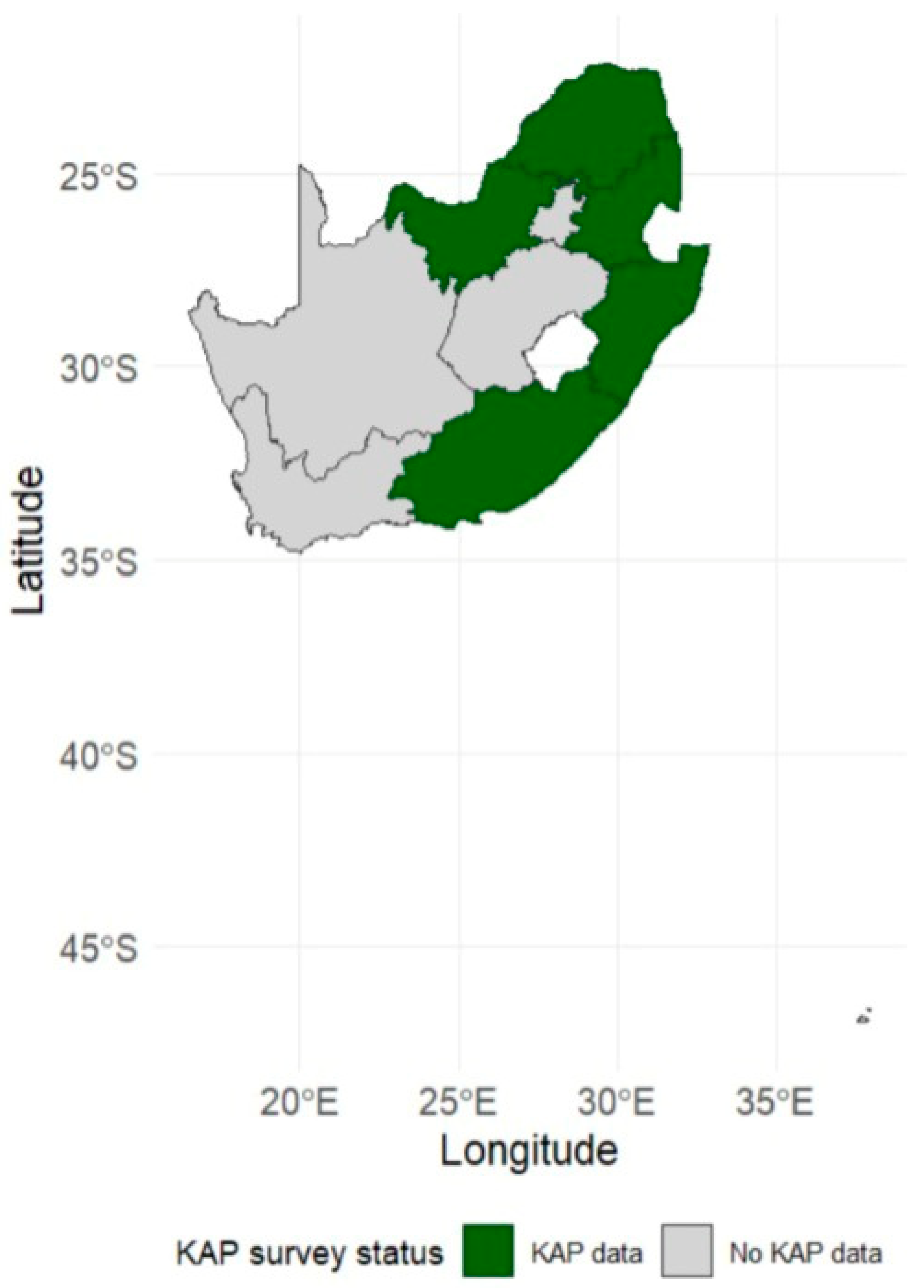
The KAP data are crucial for formulating effective strategies to manage acaricidal tick resistance and improve livestock health, as well as the income of marginal animal owners in South Africa. To provide evidence-based tick control strategies, a few KAP studies have been conducted in South Africa to gather baseline data on farmers’ KAP regarding ticks and TBDs in livestock. KAP data is currently limited, with a few studies documenting findings across the provinces, as shown in
Figure 3. To address the TBD problem in the targeted area, a KAP-based research was conducted in the KwaZulu-Natal province to identify the limitations and constraints experienced by communal livestock farmers, as well as to evaluate farmers’ knowledge of zoonotic diseases [
105]. Ticks and TBDs remain a significant problem in rural KZN, despite the dipping program in the study area, which is managed by the provincial government and the local livestock association [
106]. The effectiveness of acaricides could be attributed to the emergence of tick resistance or farmers’ inadequate application of these chemicals in dip tanks, deviating from the recommended manufacturer guidelines [
107]. Therefore, it will be crucial to understand whether farmers share the government’s perception of TBDs, as well as to investigate their level of participation in tick control programs [
46].
Dipping is one of the central state interventions in communal livestock production systems in the ECP. The discontinuation of government tick control is expected to lead to a significant increase in TBD-related livestock mortalities, unless owners begin purchasing acaricides themselves [
50]. This would require farmers to be provided with information and training on selection, dosage and correct use of the different acaricides available on the market [
20]. This will require a change in farmers’ perceptions and practices, which can be fostered during dipping days and through group discussions, as these occasions are suitable for sharing information and providing training to livestock owners [
29]. Ref. [
47] assessed the KAP of communal cattle farmers regarding ticks and TBDs and found that vegetation types influenced the prevalence of TBDs in the ECP. The majority of farmers in the study used alternative tick control methods in addition to the government dip. Old motor engine oil and Jeyes fluid, a household disinfectant, were among the products mentioned as beneficial against ticks, with babesiosis, anaplasmosis, and heartwater being the most frequently reported diseases [
14]. Farmers also identified acaricide resistance, inadequate dipping infrastructure, and uncontrolled cattle movement as significant challenges in tick control, leading to the adoption of alternative methods, such as using motor oil and household disinfectants [
50]. Therefore, more KAP studies should be conducted to identify the TBDs affecting farmers in South African provinces and to document the traditional methods farmers employ to reduce tick and TBD loads.
Table 3 shows KAP-related studies conducted across South African provinces, emphasising the existing knowledge gap regarding farmers’ KAP in many provinces, as fewer studies have been conducted there.
3.1. Synthesis of Farmers’ KAP Studies Toward Tick-Borne Diseases
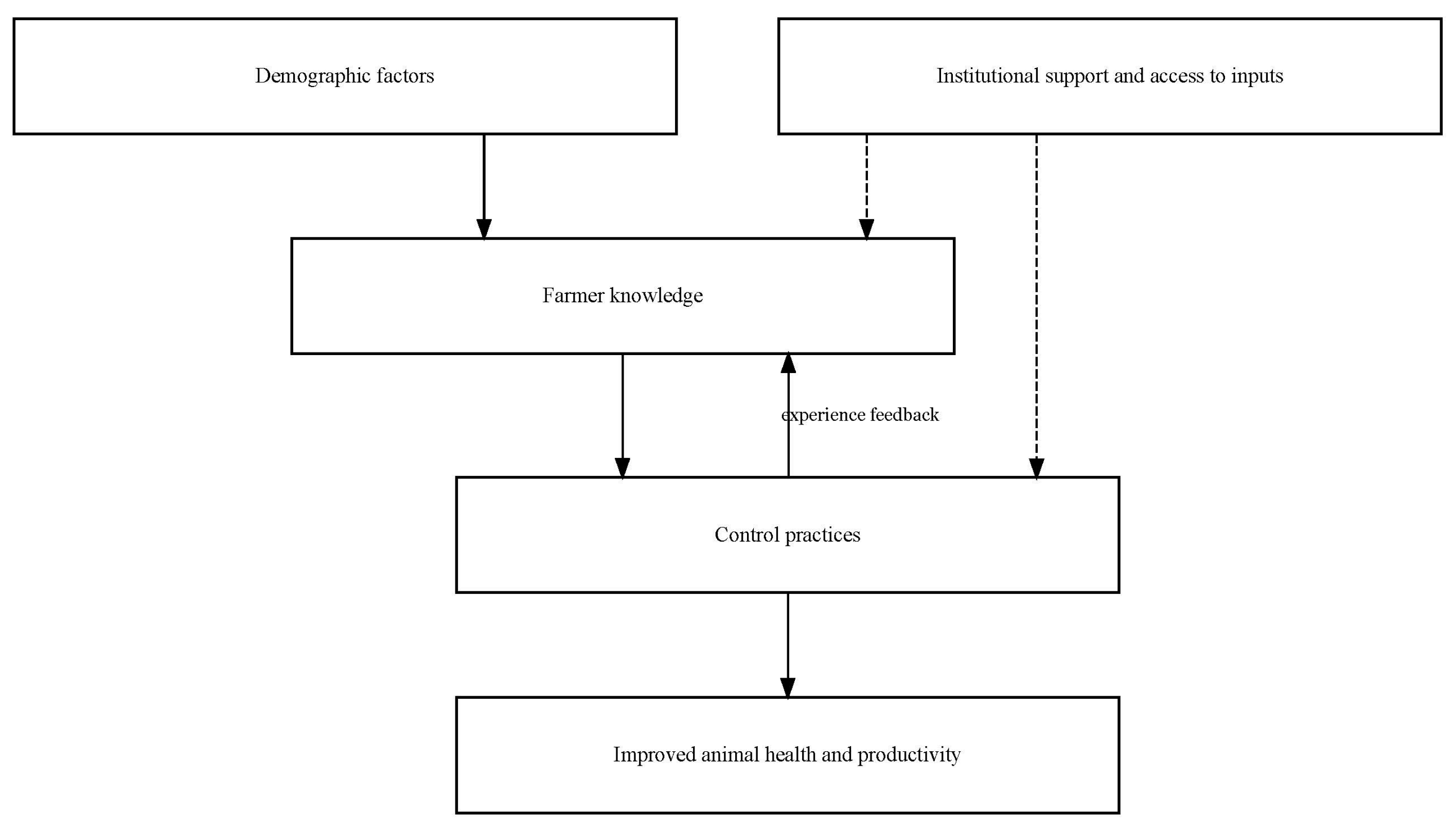
Several factors, as shown in
Figure 4, including age, gender roles, education level, access to extension services, and the impact of traditional knowledge and beliefs, influence the awareness and response of communal farmers to TBDs [
113]. Compared to younger farmers, older farmers have more knowledge in managing and preventing zoonotic diseases, despite their lower educational background [
21]. Most participants in KAP studies in communal areas were older [
109,
114]. This was associated with young people moving to urban areas for better opportunities, thus, increasing the proportion of elderly communal farmers in these areas [
115,
116]. This is also in line with the study by Monkwe, Gxasheka [
114], who noted that elderly farmers have more time to farm than young people who are either studying for other professions or employed in cities.
Improper tick control methods remain a significant concern due to illiteracy, with most communal farmers having only primary-level education [
63]. Similarly, Chenyambuga, Waiswa [
91] and Mdungela, Bahta [
115] also reported increased tick populations and incidences of acaricide resistance among farmers who fail to correctly read the dosage instructions, which is associated with low education level. These findings, however, contrast with those of Sungirai, Moyo [
46], and Madder [
117], who observed that the majority of farmers in Zimbabwe had a secondary education level. The study also reported that farmers older than 40 years who received basic farmer training were knowledgeable about animal diseases. The low degree of awareness and knowledge about animal diseases among respondents with higher education could be the result of the youth’s lack of interest in livestock farming [
20]. The findings of a recent study assessing the risks of zoonotic diseases among livestock farmers from smallholder communities in Ethiopia revealed that respondents who had never attended school were three times more likely to answer zoonosis-related questions than those who had participated in school [
113]. In contrast, a recent study by Sadiq, Song-Lin [
118] found that dairy cattle farmers in Malaysia with higher education had a better understanding of zoonoses. Lack of awareness regarding the transmission of zoonotic diseases in livestock and wildlife among communal farmers in KZN, South Africa, and Ethiopia, respectively, was also reported [
105,
118].
The majority of farmers in communal areas have significant experience in livestock production, with many having over 10 years of experience in cattle farming. This is because older people participate more in agriculture than younger people. This is consistent with the findings of [
52], which showed that farmers’ years of farming experience exceeded 15 years. Similarly, Rinchen, Tenzin [
119] also reported that the majority of farmers had more than 21 years of experience in raising cattle. This implies that most farmers in communal areas have experience in livestock farming. In contrast, Soltan-Alinejad, Rezaei [
120] reported that farmers had up to 10 years of livestock farming experience. A recent study conducted in Iran assessed the KAP of small ruminant farmers and identified a correlation between experience and knowledge of several infectious diseases [
120]. This is consistent with a study of Chakale, Asong [
13], who found that farmers who had indicated that TBDs were a problem in their area were able to either identify the disease or explain its symptoms in their indigenous language. A strong correlation was also found between high disease prevalence and awareness; however, farmers incorrectly identified mastitis and joint ill [
121]. The study of Rajput, Sajid [
122] revealed the need for introductory farmer training courses, as it was shown that this training significantly enhanced their ability to identify diseases and utilise alternative tick control methods.
The study findings also showed that men own more livestock than women, which may be related to their role in cattle management activities, such as daily herding of cattle to grazing areas [
114]. Furthermore, research by Katiyatiya, Muchenje [
21] supported the finding that men own a large share of livestock, which they attributed to management challenges. A key factor could be that men are more likely than women to attend government-initiated meetings and training programs, which gives them a greater understanding of ticks and TBDs [
20]. Similarly, Tesfaye and Abate [
22] observed that men are more knowledgeable than women, which might be attributed to the fact that men receive more opportunities to attend government-initiated meetings and community-based training programs, as some cultures forbid women from attending public meetings and favour men instead, who are viewed as the family’s representatives. The extension system for livestock production in communal areas proved to be inadequate over time [
48]. With fewer studies highlighting the role of extension officers in communal areas. Due to a lack of extension programs that educate farmers about zoonoses and the limited availability of veterinary and health workers in rural communities, Ref. [
20] highlighted the need for training farmers on locally relevant aspects of disease transmission.
3.2. Potential Roles of Indigenous Knowledge and Traditional Practices in Improving Tick Control in Different Provinces
3.2.1. Indigenous Knowledge
Rhipicephalus species are one of the major concerns affecting livestock in the tropics and subtropics, as they spread pathogens that cause TBDs such as heartwater [
123]. The primary methods for controlling ticks and TBDs are the application of synthetic acaricides by hand spraying, spray racing, and plunge dipping [
124]. Tick resistance to the majority of these pesticide compounds has been shown as a result of excessive use of synthetic acaricides [
75,
125]. Although synthetic acaricides are expensive and readily available, farmers are turning to ethnoveterinary medicine (EVM) as an affordable alternative to western veterinary treatments [
13], to find alternate methods of control and approaches involving natural products to deal with livestock diseases [
126]. In the ECP, farmers frequently use medicinal plants like
Euclea undulata,
Protea,
Grewia occidentalis, and
Aloe maculata to treat heartwater,
Aloe ferox,
Vernonia mespilifolia,
Rhoicissus tomentosa, and
Strychnos henningsii to treat babesiosis, with Dietes leaves combined with commercial vinegar used to treat anaplasmosis in livestock [
126], as shown in
Table 4. A study conducted in the North West province discovered that farmers in that region also rely on plants, namely,
Gomphocarpus fruticosus (L.) and
Opuntia ficus-indica (L.).
Mill.,
Schkuhria pinnata (Lam.) Kuntzeex Thell.,
Portulaca oleracea L., and
Solanum lichtensteinii Willd. to treat TBDs [
13].
Farmers in these provinces commonly used the leaves, followed by the roots, bark, stem, and the whole plant [
13]. This supports the findings of [
71,
126,
127], which showed that the leaves were the most utilised part of the plant. Decoction, grinding, infusion, maceration, poulticing, and burning are the most commonly used preparation methods, respectively [
13]. The preparation method differs from those of other countries, such as Karamoja in Uganda [
128], the Mana Angetu district of southeastern Ethiopia [
129], and Yalo Woreda in the Afar Regional State, Ethiopia, where the most common methods were crushing and pounding. Older farmers utilised indigenous knowledge (IK) more frequently than individuals of all other ages, as knowledge on the use of medicinal plants in the communities was traditionally limited to them [
130]. This is also because younger farmers are more likely to adopt innovations, while older farmers rely more on traditional methods to control ticks [
111]. Although farmers use these plants to treat their livestock, validation using standardised procedures for the evaluation of their efficacy, safety, quality, and dosage regimens is still necessary to develop a secure drug [
126]. Fewer studies from different provinces have documented the use of medicinal plants to treat TBDs; this gap is due to a lack of studies documenting plants that farmers use as alternatives to control ticks.
3.2.2. Conventional Acaricides
Studies in Limpopo [
109], Free State [
14], KwaZulu-Natal [
111], and Mpumalanga [
108] identified dipping, spraying, pour-on, injection, and manual removal of ticks as tick control methods. In line with the findings by van den Heever, Lombard [
131], who reported that cattle farmers mainly apply acaricides about 24 times a year, or twice a month, the pour-on approach was the most economically viable method for goats in Mpumalanga, while the plunge dipping method was the most cost-effective for cattle and sheep [
131]. The use of acaricide chemicals is also the most widely practised measure for controlling ticks in Botswana [
132]. This contrasts with reports from [
133] in South Africa and [
64] in Zimbabwe, in which researchers reported that most resource-poor farmers also seek alternative methods to manage ticks, such as using engine oil, Jeyes fluid, paraffin, chickens, and manual removal, due to the high cost of acaricides. Goats are, however, less prioritised, yet in natural rangelands, cattle and goats coexist, and specific tick species (
R. microplus), though prevalent in cattle, complete their life cycle on goats [
133]. Since there are no dipping systems for goats, Ref. [
111] emphasised the necessity to determine the level of IK usage among goat keepers. The study’s findings indicated that farmers who received formal livestock training used little IK since extension services promote the use of commercial acaricides. Extension officers, non-governmental organisations, and policymakers need to involve IK custodians in goat development programmes, as goats serve as reservoirs for various tick species and are rarely dipped [
111]. The widespread use of IK among older farmers may reflect poverty, the high cost of acaricides, and young people’s avoidance of IK [
134]. Since goats are infrequently dipped, they serve as reservoirs for many tick species; hence, extension agents, non-governmental organisations, and legislators must include IK caretakers in goat development programs [
111].
These results are consistent with a study by Gaorekwe, Ledwaba [
109]. This highlighted the need for the Department of Agriculture (DoA) to enhance communal farmers’ knowledge and practices by developing and implementing actionable policies to strengthen surveillance, control, and reduce the impact of ticks and TBDs in rural communities. These policies should include teaching farmers the value of rotational grazing to help break the tick life cycle and lower the risk of disease transmission, as well as using vaccines to reduce the incidence and severity of infections. This finding aligns with that by Guerrero, Lovis [
135], which demonstrated that vaccines are the most effective method for preventing diseases. However, farmers view vaccines as costly and not readily available in rural areas. Although most farmers are familiar with certain TBDs, such as heartwater and babesiosis, they lacked knowledge about the control of these diseases [
111]. Communal livestock farmers rely on experiential learning and their fellow farmers as their primary source of information about ticks and TBDs [
136]. Frequently, the information may be incorrect, unreliable, or outdated. Due to limited resources, TBD awareness campaigns in communal areas are inadequate [
137]. This may be due to a lack of interest in attending DoA-organized events; therefore, it is necessary to encourage farmers’ attendance at these events to enhance their knowledge, attitudes, and practices regarding TBDs [
109].
4. Socioeconomic Impacts of TBDs on Rural Livelihoods
Livestock contribute significantly to the livelihoods of the majority of the rural populace [
138]. In underdeveloped countries, smallholder farming is a vital sector that provides financial flexibility to many households, yet it is severely impacted by TBDs that threaten livelihoods and food security [
139]. The burden of TBDs significantly reduces agricultural productivity in sub-Saharan Africa, and resource-constrained farmers struggle to maintain operations due to the high costs of vaccinations and treatments [
29]. Despite the growing concern, there is still limited research on TBDs in sub-Saharan Africa, as the socioeconomic factors make it challenging to control ticks in these regions effectively [
24]. In addition to their direct impacts, TBDs have equally high indirect costs [
96]. The annual global costs of TBDs, as shown in
Table 5, and treatment are estimated to exceed USD 15 billion [
139]. The annual estimated loss due to TBDs is also equally high in African countries [
140]. Heartwater disease is estimated to cause a total annual loss of USD 1.059 million in South Africa [
131].
There are two types of livestock farming sectors in South Africa: commercial and subsistence farming systems. The latter, which communal rural farmers commonly practise, accounts for about 40% of agricultural income [
11]. Ticks negatively impact cattle production both directly (via severe infestations and skin damage) and indirectly (through the transmission of tick-borne pathogens), which can affect growth rates and health of herds [
26]. Livestock production in these areas is seriously threatened by the high prevalence of diseases caused by the limited use of drugs by communal farmers to treat their animals [
74,
75].
7. Communication Barriers and Outreach Opportunities
Participatory epidemiology is a strategy that involves the active participation of stakeholders, including farmers, veterinarians, and other community members [
19], which can be used to obtain farmers’ knowledge and attitudes about the TBDs [
169]. The strategies for tick infestation and TBD management, such as improved animal husbandry practices, targeted use of acaricides, and vaccination programs, help identify various risk factors through interviews and surveys with farmers and other stakeholders [
96,
170]. The widespread use of herbal remedies and informal discussions with livestock owners and extension officers in the ECP helped identify TBDs such as heartwater, babesiosis, and anaplasmosis as the second-most important cause of morbidity and mortality among cattle in communal areas [
110].
TBDs continue to be a significant problem in communal areas, despite the implementation of control strategies, underscoring the need for integrated approaches to manage them effectively [
79]. To address the TBD problem in Kenya, an interdisciplinary project, Environmental Virtual Observatories for Connective Actions (EVOCA), was launched in 2015 by Wageningen University and Research, focusing on mobile phone-based information sharing for TBD. Furthermore, mobile phones have become new technological tools for engaging participants [
171]. They provide participants with unprecedented access to both their own and others’ observations, promoting effective information sharing. Given the utility of mobile phones, it is imperative to investigate how this technology may be used to address the TBD problem. Innovative approaches are crucial for enhancing monitoring, delivering extension services, and enhancing information sharing, thereby effectively coordinating and strengthening partnerships among stakeholders with diverse opinions, interests, and perceptions [
20]. The introduction of mobile phones and their extensive use in many developing African countries, particularly Kenya, coupled with new methods of information sharing like citizen science, could be used to address complex agricultural and environmental problems like TBDs, which continue to pose a significant threat to food security, human health, and the cultural well-being of many people who rely on livestock production [
150].
Given the current lack of information and knowledge sharing, which is perceived as one of the reasons for inadequate disease management or eradication [
81], it is assumed that mobile phones and related technologies can be utilised for collective action. The reasoning is that, in developing countries, formal organisations involved in addressing TBD problems are often weak and underfunded, or lack the resources needed for effective control and the provision of elaborate extension services. To ensure that citizen science functions effectively, people should report and communicate the TBD problem in the area using mobile phones [
150]. Therefore, collaboration and information sharing among all stakeholders involved in tick and TBD control, including government agencies, livestock farmers, and veterinarians, can help develop more effective and well-coordinated tick control strategies.
Citizen science approaches can empower local people to bypass the need for such formal systems and promote collaborative action. Despite the presence of necessary technological infrastructure, such as high mobile phone adoption rates and a wide range of stakeholders, Ref. [
170] found insufficient evidence to support the idea that the TBD problem could be solved by leveraging mobile phones and information sharing. Accordingly, this study proposes that, for citizen science to be practical and address the TBD problem, it should focus on the urgent local issues that people report and communicate about using mobile phones, such as inadequate security, conflicts between humans and wildlife, and the occurrence of notifiable diseases [
150]. Few studies have evaluated the use of mobile phones to disseminate information about TBDs, particularly in Africa. This may be due to poor mobile network coverage in most rural areas of Africa, as well as the affordability of mobile phones and data costs. Insufficient government training and support in adopting mobile technology contribute to communal farmers’ reluctance to use mobiles to communicate about TBDs, as the technology is not user-friendly, and most communal farmers are older.
8. Discussion
Despite the damage caused by ticks and TBDs to livestock production, veterinary services remain scarce in many developing countries, leading farmers to use traditional methods as alternatives to synthetic acaricides to reduce tick infestation in livestock. Poor veterinary services, farmers’ inability to purchase veterinary medicines, uncontrolled translocation of animals, the wildlife–livestock interface, and burning of grazing land promote the emergence and re-emergence of tick-borne pathogens in resource-poor areas, where effects of climate change are also notable [
170]. Since farmers are the ones directly affected by tick infestations and are responsible for implementing control measures, their attitudes and behaviours play a critical role in the success or failure of tick management strategies [
170]. Gathering insights into farmers’ knowledge about ticks, their perceptions of the risks associated with TBDs, and the actions they take to protect their livestock is essential for developing effective, evidence-based interventions in South Africa.
The age, education, and gender of farmers influence the knowledge and practices used in animal health and management in most communal areas. Many studies have highlighted that females lack knowledge of livestock management and tick control methods, as males are often considered responsible for livestock well-being in most African cultures. The responsibilities given to males positively influenced their usage of IK to control ticks [
111]. The findings of this study also revealed that the majority of livestock owners surveyed were male, consistent with the general trend of male dominance in the livestock sector in many developing countries. These results corroborate findings that reported managerial challenges, such as handling animals and carrying heavy objects, contribute to the sector’s continued dominance by males [
21,
61,
170,
171,
172,
173]. Similar findings were also reported in Zimbabwe [
174] and Nigeria [
175]. Cultural norms and social structures contribute to the unequal gender distribution in cattle farming, resulting in a greater presence of males than females [
176]. Therefore, stakeholders engaged in policy development should provide policies that are accommodating to both genders, allowing females to participate in government meetings and farmer training programs, thereby promoting equality in these rural areas. This is in line with a study by Aphane [
108] who recommended that the government provides training to women and implements relevant education programmes to significantly increase the number of women involved in livestock farming, thereby breaking stereotypes that prohibit women from rearing livestock.
Many studies [
26,
46,
109,
151] reported that older farmers participated in government training programs in greater numbers than youth. Ref. [
114] also noted this, suggesting that elderly farmers have more time to farm than young individuals. This may also be due to a lack of programs that enable young people to learn about ticks and the impact of TBDs on the livestock industry. Through the adoption of citizen science approached in the study by Chepkwony, van Bommel [
171] TBD information can be easily disseminated through mobile phones, which young people use more often to communicate than elders. The dissemination of information by mobile phones will allow both young and older farmers to receive information on ticks and TBDs prevalent in the areas near them, to put proper control measures in place, and also inform them of workshop attendance to improve awareness among all age groups, while identifying knowledge gaps regarding tick and TBD prevalence in the area. Furthermore, the DoA, in collaboration with the Department of Science, Technology and Innovation (DSTI), should have a comprehensive programme that equips extensionists with relevant skills to ensure the successful dissemination of knowledge on ticks and TBDs, thereby promoting animal health [
108].
Local cultural and economic factors may influence how farmers perceive and respond to tick-related challenges. Ref. [
21] found that farmers facing tick challenges in their herds use either acaricides or EVM to control ticks, while some use both methods. Tick resistance in herds can be reduced through integrated control techniques that include a variety of measures such as acaricide use, ethnoveterinary practices, and vaccinations [
17]. Knowledge of farmers on acaricide resistance is generally influenced by the level of education a farmer possesses, but the use of EVM was commonly associated with farming experience, showing that age can influence knowledge about EVM [
63]. The study by Aphane [
108] reported that farmers interviewed felt that acaricides and vaccines were costly, and recommended that the DoA should have policies that work towards subsidising farmers when purchasing animal healthcare products such as vaccines. Most communal farmers used traditional medicinal plants to control ticks in their areas. In South Africa, farmers used medicinal plants such as
E. undulata,
Protea,
G. occidentalis,
A. maculata,
A. ferox,
V. mespilifolia,
R. tomentosa and
S. henningsii to treat babesiosis and heartwater [
126]. Furthermore,
G. fruticosus (L.),
O. ficus-indica (L.)
Mill.,
S. pinnata (Lam.) K. Thell.,
P. oleracea L., and
S. lichtensteinii Willd plants were also used to treat TBDs [
13]. Farmers from neighbouring countries, such as Zimbabwe, also used EVM to reduce tick infestations in their livestock.
C. quadrangularis L.,
L. javanica,
P. livida Willd, and
Aloe spp. were used to control ticks [
149]. Although acaricide resistance was identified as an issue in many studies, many farmers preferred using them, while others integrated the use of synthetic acaricides with EVM. Studies conducted in various South African provinces listed dipping, spraying, pour-on, injection and manual removal of ticks as the methods to control ticks in their areas [
13,
21,
109,
151]. Zimbabwe, Kenya, Rwanda, Tunisia, and India are also countries where farmers used synthetic acaricides to control ticks and prevent TBDs. Effective control of ticks will help reduce the development and spread of acaricide resistance and maintain endemic stability. Since many traditional methods have not yet been scientifically proven effective, more studies in South African provinces are needed to document additional plants that help communal farmers control ticks, thereby proving their efficacy and making them viable alternatives globally.
A One Health approach, emphasising the necessity for increased national investment in TBD surveillance and prevention, especially in areas of high risk, is essential. Ref. [
163] noted that there is limited information on the tick microbiome ecology and their involvement in drug resistance in local African cattle breeds, despite the increasing concerns of drug resistance development in tick-borne pathogens. Through One Health approach, which acknowledges the interconnection of human, animal, and environmental health, and promotes the collaboration of public health officials, veterinarians, and ecological scientists to address the complex challenges posed by ticks and TBDs [
58], stakeholders can develop comprehensive strategies that address broader ecological issues influencing disease transmission, in addition to tick population control, by fostering interdisciplinary relationships [
175]. Regular monitoring of the prevalence of TBD in livestock populations can help identify high-risk populations and locations to target interventions, such as education campaigns or tick control measures, where they are most needed [
122]. There is limited data on tick microbiomes and acaricide resistance genes in South African communal systems. Therefore, studies focusing on the comprehensive characterisation of microbial communities and the use of gene sequencing data to reduce acaricide resistance are necessary in South Africa.
9. Knowledge Gaps and Research Priorities
The study identified gaps which include the following:
Limited data on farmer knowledge of acaricide resistance, tick microbiomes, and metagenomics and antibiotic resistance biomarkers in South Africa.
Limited KAP data from the Limpopo, Mpumalanga, and North West provinces, and little to no KAP data, are evident in the Gauteng, Free State, Northern Cape, and Western Cape provinces.
Limited studies on farmers’ indigenous practices for controlling ticks and the proven efficacy of medicinal plants.
Limited KAP data linking farmers to molecular findings in South Africa.
Lack of data promoting the usage of mobile phones for sharing information on TBDs among communal farmers in South Africa.
11. Methodology
A comprehensive search strategy was developed to retrieve relevant studies from multiple databases, including Scopus, Google Scholar, and ScienceDirect. The search incorporated controlled vocabulary and free-text keywords related to ticks, tick-borne diseases, knowledge, attitudes, practices, farmers and South Africa. Boolean operators (AND, OR) were used to refine search results and optimise retrieval in all databases except Google Scholar. The search was limited to articles from the last thirty years, mostly from South African provinces, and included only English-language publications to ensure relevance and accessibility. The study area included veterinary, immunology and microbiology, social science, environmental science, agricultural and biological sciences, biochemistry, genetics, and molecular biology.
The Scopus database was searched using the following search terms: (“farmer” OR “communal farmer” OR “smallholder” OR “rural farmer” OR “livestock keeper” OR “cattle owner”) AND (“perception” OR “knowledge” OR “attitude” OR “knowledge attitude practice” OR “KAP” OR “awareness” OR “belief”) AND (“tick-borne disease” OR “tick borne disease” OR “tick-borne infection” OR “tick”) AND (“South Africa” OR “South African”), resulting in n = 22 articles before filters, and total of n = 18 articles used after filters. The ScienceDirect database was searched using the following search terms: (“farmer” OR “communal farmer”) AND (“perception” OR “knowledge” OR “attitude” OR “knowledge attitude practice” OR “KAP”) AND (“tick borne disease”) AND (“South Africa”), resulting in n = 243 articles before filters, and n = 55 after filters. The Google Scholar database was searched using keywords such as “smallholder farmers”, “KAP of ticks” and “tick-borne disease”, resulting in n = 2490 articles before filtering and n = 177 articles after filtering.
The geographical scope of the study begins with case studies from South African provinces, then moves to African countries and the world to consolidate farmers’ methods for controlling ticks and TBDs. The South African studies were mainly conducted in the Eastern Cape and KwaZulu-Natal provinces, with fewer studies from Limpopo, Free State, North West, and Mpumalanga, as well as other provinces, namely, Gauteng, Northern Cape, and Western Cape. The study designs of many KAP studies were cross-sectional, with data collected using questionnaires to gain in-depth knowledge of ticks and TBDs in communal areas, while others used web-based surveys. Most studies used a quantitative research approach, more than a qualitative approach. Limitations of many studies included small sample sizes, with samples as small as 40 in areas where only a few farmers can participate.



 ,
,