Article

Determination of Common Metabolites for Methoxylated Fentanyl Analogs

1
Department of Chemistry, University of Central Florida, Orlando, FL 32816, USA
2
National Center for Forensic Science, University of Central Florida, Orlando, FL 32626, USA
*
Author to whom correspondence should be addressed.
Forensic Sci. 2026, 6(1), 31; https://doi.org/10.3390/forensicsci6010031
Submission received: 3 February 2026 / Revised: 9 March 2026 / Accepted: 13 March 2026 / Published: 15 March 2026

Abstract

Background/Objectives: The opioid crisis is an ongoing problem in the United States, and fentanyl analogs play a major role in the issue, as novel fentanyl analogs are constantly being developed. Substitutions and additions to the fentanyl scaffold impact the potency of the substances and can sometimes influence the biotransformation of the drugs. This study aimed to determine whether one or more common metabolites could be detected among a group of five methoxylated fentanyl analogs, for the purpose of eventually providing a more rapid detection method for new and unknown fentanyl-related compounds in toxicological samples. Methods: In vitro metabolism via pooled human liver microsomes (HLMs) was performed for five methoxylated fentanyl analogs (para-methoxyfentanyl, ortho- and para-methoxy butyryl fentanyl, and ortho- and para-methoxy furanyl fentanyl) to generate metabolites. Assays were analyzed via liquid chromatography–tandem mass spectrometry. Results: Nine metabolites were detected. A common metabolite was observed between fentanyl analogs that were methoxylated at the para-position. Conclusions: Similarities between metabolites of five methoxylated fentanyl analogs were noted. It appeared that the major pathway of metabolism for methoxylated fentanyl analogs is largely consistent, regardless of the location of the methoxy substituent so long as the piperidine nitrogen is unobstructed and is available for N-dealkylation. This research provides valuable insight to potentially find new ways for toxicologists to identify novel methoxylated fentanyl analogs in biological matrices.

1. Introduction

Illicit drug manufacturers produced fentanyl analogs seeking to circumvent the legal consequences of possessing or distributing fentanyl. However, in 2018, a temporary rule was passed that grouped all fentanyl-like substances into the schedule I category in an effort to mitigate overdose deaths [1]. Before the expiration of the temporary scheduling of fentanyl analogs in September 2025, a new bill was introduced in January 2025 titled the Halt All Lethal Trafficking of Fentanyl Act (HALT fentanyl act) [2,3,4,5]. This bill proposed to permanently place fentanyl analogs into schedule I of the Controlled Substances Act and, as of the writing of this article, this bill has passed the U.S. House of Representatives [5]. Considering the supporting reasons for the proposal of this bill indicates that illegal and inappropriate use of fentanyl analogs is still a concern, as such, there is a pressing need for continued research about this suite of drugs. Fentanyl analogs (i.e., altered fentanyls) are drugs that have a similar core structure to fentanyl; however, they differ with modifications to various moieties on the common fentanyl scaffold. These modifications can include substitutions, deletions, or additions of functional groups such as methyl, methoxy, or aromatic moieties such as thiophene or furan. Modifications to the general fentanyl scaffold have the potential to yield fentanyl analogs far more potent than fentanyl, which can have devastating consequences for an unknowing consumer of the illicit substance. These consequences often take the form of an overdose or acute drug intoxication which could lead to death of the user. In these scenarios, a determination of the toxin consumed is often the request made to forensic toxicology laboratories to aid in the death investigation. When novel synthetic drugs are the toxin, metabolites are often analytes of interest, due to their prevalence in blood, urine, and other biological samples. This is vital when the parent drug is not readily detectable in the sample, as is often the case with cocaine and its metabolites [6,7,8]. These samples are analyzed via liquid chromatography–mass spectrometry (LC-MS) to detect certain metabolites to gain an understanding of the patient’s drug consumption [9,10]. Metabolism is a natural process by which a xenobiotic is made more polar in order to aid in the excretion of the toxin in the urine or other biological fluid [11]. This is primarily due to the work of enzymes in the cytochrome P450 superfamily, which is responsible for many of the commonly observed oxidative biotransformations of drugs [12,13]. The function of enzymes in this superfamily can be emulated in laboratory settings outside of the body via in vitro metabolism techniques using human liver microsomes (HLMs), which are rich in the concentration of these P450 enzymes.
The metabolic pathway of fentanyl is well documented; this drug is primarily metabolized via oxidative N-dealkylation to yield the major metabolite norfentanyl [14]. Other metabolic reactions observed include amide hydrolysis to yield 4-anilino-N-phenylethylpiperidine (4-ANPP), as well as various hydroxylations to yield hydroxylated fentanyl metabolites [14,15]. It should also be noted that 4-ANPP is a common precursor in the illicit synthesis of fentanyl analogs and may occasionally be detected in samples as a contaminant rather than as a result of the biotransformation of the drug [16]. There have been many investigations into the metabolic pathways of fentanyl analogs [14,17], the detection of a variety of fentanyl analogs in bodily matrices [18,19], and pharmacological studies of altered fentanyls [20,21], as well as studies which investigate the substitutions in fentanyl analogs and how that impacts the resulting mass spectra of the drugs [22]. However, to date, there has not been any concerted effort to understand how similar modifications to the fentanyl scaffold effect the biotransformation of these analogs. This paper aims to address that gap, specifically for methoxylated fentanyl analogs.
The purpose of this study was to determine if there were any common metabolites among a group of methoxylated fentanyl analogs. Unlike traditional in vitro metabolism studies, the goal of this study was to determine the presence or absence of metabolites which were shared between fentanyl analogs which contained a methoxy group. Traditional studies which use HLMs for in vitro metabolism primarily focus on the overall absorption, distribution, metabolism and excretion of drugs (ADME studies) to provide pharmacokinetic information about novel drugs or drug candidates [23,24,25], identification of the specific P450 isoenzymes responsible for biotransformations of xenobiotics and major metabolite identification [26,27,28], or investigation of the metabolite formations or the longevity and stability of metabolites formed [29,30,31]. One common occurrence in these studies is the detailed analysis of the major metabolite(s) of the xenobiotics of interest, including a focus on pharmacokinetic information, whereas this study is a broad exploration of the metabolites of these methoxylated fentanyl analogs to determine commonalities in their biotransformations, thus presenting a range of expected compounds for rapid subsequent classification, and does not consider pharmacokinetic parameters.
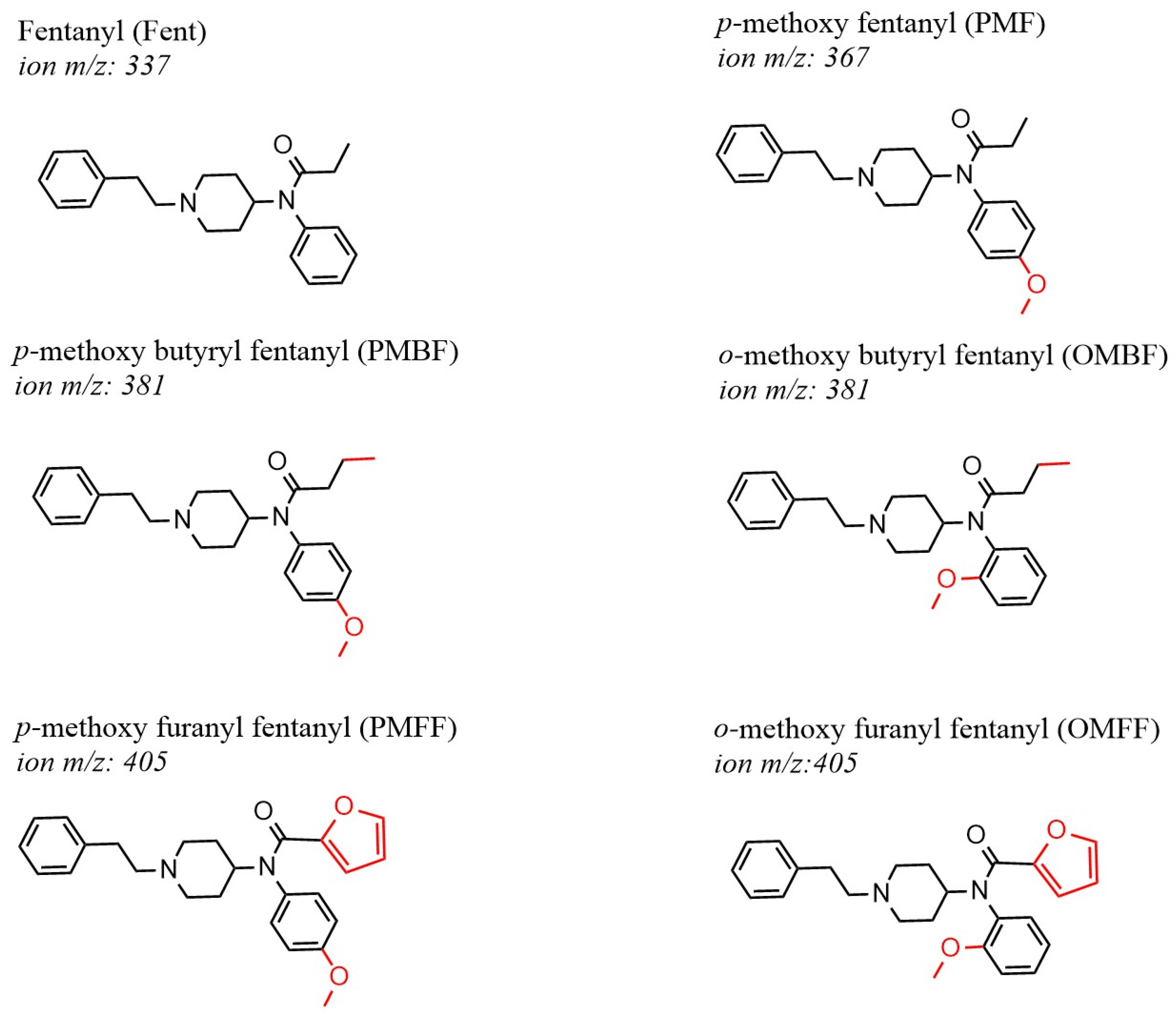
The group of methoxylated analogs investigated herein include para-methoxyfentanyl (PMF), ortho- and para-methoxy butyryl fentanyl (OMBF, PMBF), as well as ortho- and para-methoxy furanyl fentanyl (OMFF, PMFF). Structures of these analogs are presented in Figure 1. Fentanyl analogs with similar alterations were expected to undergo a parallel process of biotransformation and thus it was anticipated that methoxylated fentanyl analogs may generate a comparable metabolite profile or share metabolites. Therefore, common metabolites may be targeted to determine whether an unknown fentanyl analog was methoxylated to narrow down potential identities of a questioned drug. The metabolites of five methoxylated fentanyl analogs were investigated to discern whether one or more common metabolites could be determined among this group of altered fentanyls.
It is important to realize that most samples submitted to the toxicology laboratory are truly unknown and if a novel fentanyl analog was consumed, it could take precious time to classify or identify the toxin. By understanding the commonalities in the metabolites generated by altered fentanyls, it would provide the forensic toxicology community with a way to quickly associate a novel analog to a class of altered fentanyls based on the metabolites detected. This advancement could benefit this community by saving time in unknown case analysis determinations. The findings herein are representative of a preliminary metabolic model and should be treated accordingly.

2. Materials and Methods

2.1. Materials

Solid fentanyl and the hydrochloride salt form of fentanyl analogs: para-methoxyfentanyl (PMF), ortho-methoxy butyryl fentanyl (OMBF), para-methoxy butyryl fentanyl (PMBF), ortho-methoxy furanyl fentanyl (OMFF), and para-methoxy furanyl fentanyl (PMFF) were purchased from Cayman Chemical (Ann Arbor, MI, USA). Acetonitrile and formic acid were purchased from Fisher Scientific (Fair Lawn, NJ, USA). Pooled (50) human liver microsomes (HLMs) were purchased from Thermo Fisher Scientific (Lot: PL050I. Waltham, MA, USA). The microsomes were obtained from a pool of both male and female donors (36 male, 14 female). A 0.1 M phosphate buffer was purchased from Sigma-Aldrich (St. Louis, MO, USA). This formulation of phosphate buffer solution was prepared with monobasic potassium phosphate, and the pH was adjusted with sodium hydroxide by the manufacturer to a pH of 7.51. The RapidStart NADPH Regeneration Kit was purchased from XenoTech (Kansas City, KS, USA). Methanol came from Alfa Aesar (Ward Hall, MA, USA). A micron pore filter with a nylon membrane was purchased from Cobetter Filtration (Waltham, MA, USA). Ultrapure water (99.9%) was obtained using a Thermo Fisher Scientific Barnstead Smart2Pure 3 UV/UF water filtration system.

2.2. Stock Solution Generation

Stock solutions of each drug were prepared using 1 mg of the controlled substance in a 4:1 ultrapure water:acetonitrile solution to achieve a concentration of 950 µM. Concentrations were calculated and reported in micromolar values to maintain a consistent molar concentration regardless of the differences in molecular weight between the fentanyl analogs.

2.3. Assay Generation

Incubation assays were generated in glass autosampler vials by combining 183 µL of 0.1 M phosphate buffer, 2.0 µL of drug stock solution, and 5.0 µL of 20 mg/mL pooled HLMs.
After adding the pooled HLMs, assays were pre-incubated in a water bath at 37 °C for five minutes. During the pre-incubation step, the RapidStart NADPH Regeneration Kit (XenoTech, Kansas City, KS, USA) was activated by introducing 100 µL of ultrapure water to the regeneration kit. Following activation, 10 µL of RapidStart was added to the incubation vials to initiate metabolism. The assays were moved to an orbital shaker and incubated at 37 °C for 60 to 90 min. Incubation times of up to 60 min were recommended by the microsome incubation protocol [32], and an additional time point of 90 min was included to promote further biotransformation of the drug. Incubations were completed in triplicate to ensure reproducibility of results. Control incubations consisted of all of the above components with the exception of the RapidStart NADPH Regeneration Kit. A matrix blank was also prepared, which included phosphate buffer, the RapidStart NADPH Regeneration Kit, ultrapure water, and methanol.
The reaction was terminated by adding 200 µL of cold methanol (99.8+%). Assays were then vortexed for approximately 20 s and centrifuged at 3000 rpm for 6 min to aid in protein precipitation.

2.4. Instrumental Analysis

Samples were prepared for analysis via filtration. A 1 mL syringe was used to aspirate the supernatant. The needle attachment was then replaced with a 13 mm, 0.22-micron pore filter with a nylon membrane, and the supernatant was pushed through the filter into a new autosampler vial insert for subsequent analysis. Filtered samples were analyzed via liquid chromatography–tandem mass spectrometry (LC-MS/MS).
The LC-MS/MS method consisted of two solvents: solvent A) water with 0.1% formic acid and solvent B) methanol with 0.1% formic acid. The gradient started with 95% solvent A and 5% solvent B at a flow rate of 0.4 mL/min. The mobile phase gradient composition and additional instrument parameters are listed in Table 1.
Mass spectral analysis was performed in product ion scanning mode, with the first quadrupole scanning for the specific masses of expected and predicted metabolites. The masses targeted had m/z ratios of 233 (norfentanyl), 249 (hydroxy-norfentanyl), 263 (methoxy-norfentanyl), 277 (methoxy-butyryl-norfentanyl), 279 (hydroxy-methoxy-norfentanyl), 293 (hydroxy-methoxy-butyryl-norfentanyl), 297 (hydroxy-4-ANPP), 301 (methoxy-furanyl-norfentanyl), 311 (methoxy-4-ANPP), 327 (hydroxy-methoxy-4-ANPP), 329 (hydroxy-methoxy-furanyl-norfentanyl) and 353 (hydroxy-fentanyl). Each predicted metabolite was targeted across each of the investigated fentanyl analogs. Predictions were based on the results of in silico metabolism via the online software Biotransformer (version 3.0). Additional predictions about common metabolites were made based on the general trends of biotransformation observed for fentanyl-like substances.
Metabolites generated through in vitro metabolism were determined to be present via interpretation of MS/MS data from the incubated sample. Standards for many of these metabolites were not readily available to be purchased for comparison purposes. The determination of the proposed metabolites structures was based on the fragmentation data collected via the experimentation. High resolution mass accuracy was not evaluated, as the instrument utilized in this study had only unit mass resolution. Alternative isomeric structures of the proposed metabolites cannot be excluded.
This study was conducted using a targeted approach rather than a full scan method, and it is therefore possible that other common metabolites may exist between these fentanyl analogs that were not targeted in this experiment.

3. Results

Of the 12 ions monitored, metabolites were not detected for three of the targeted masses, e.g., m/z ratios of 327, 329 and 353. Therefore, the rest of the discussion will be focused on the nine detected ions as presented in Table 2.
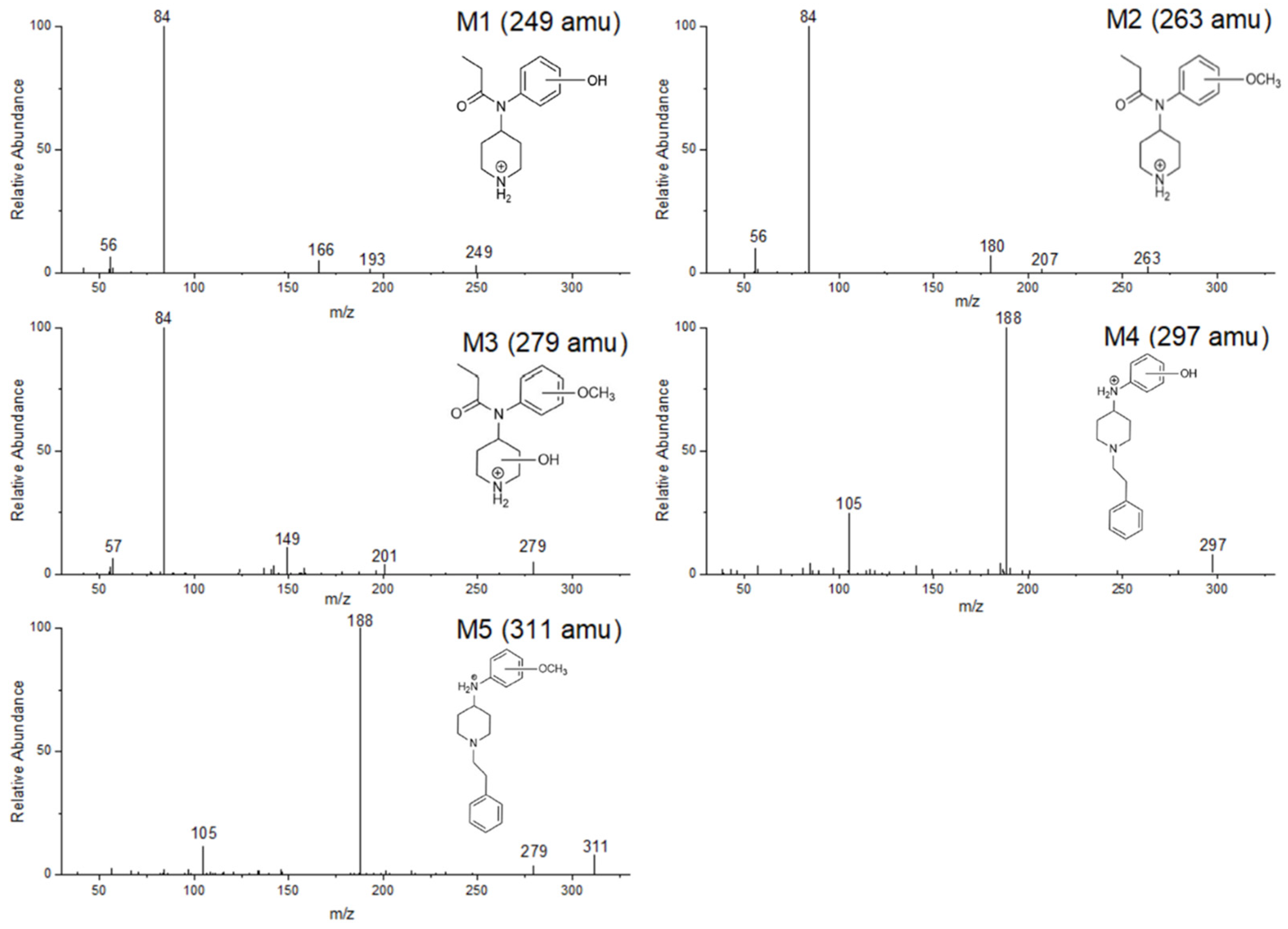
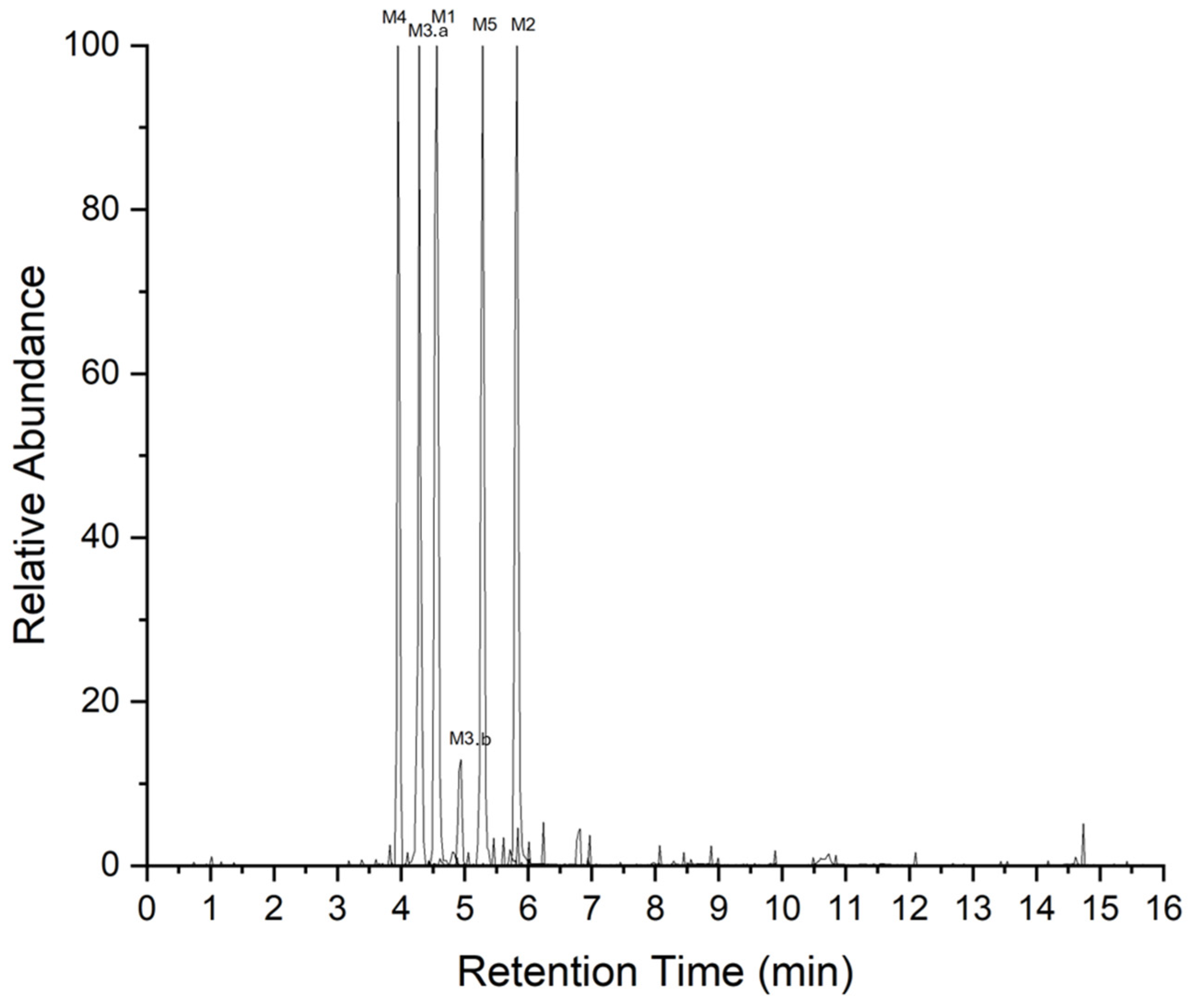
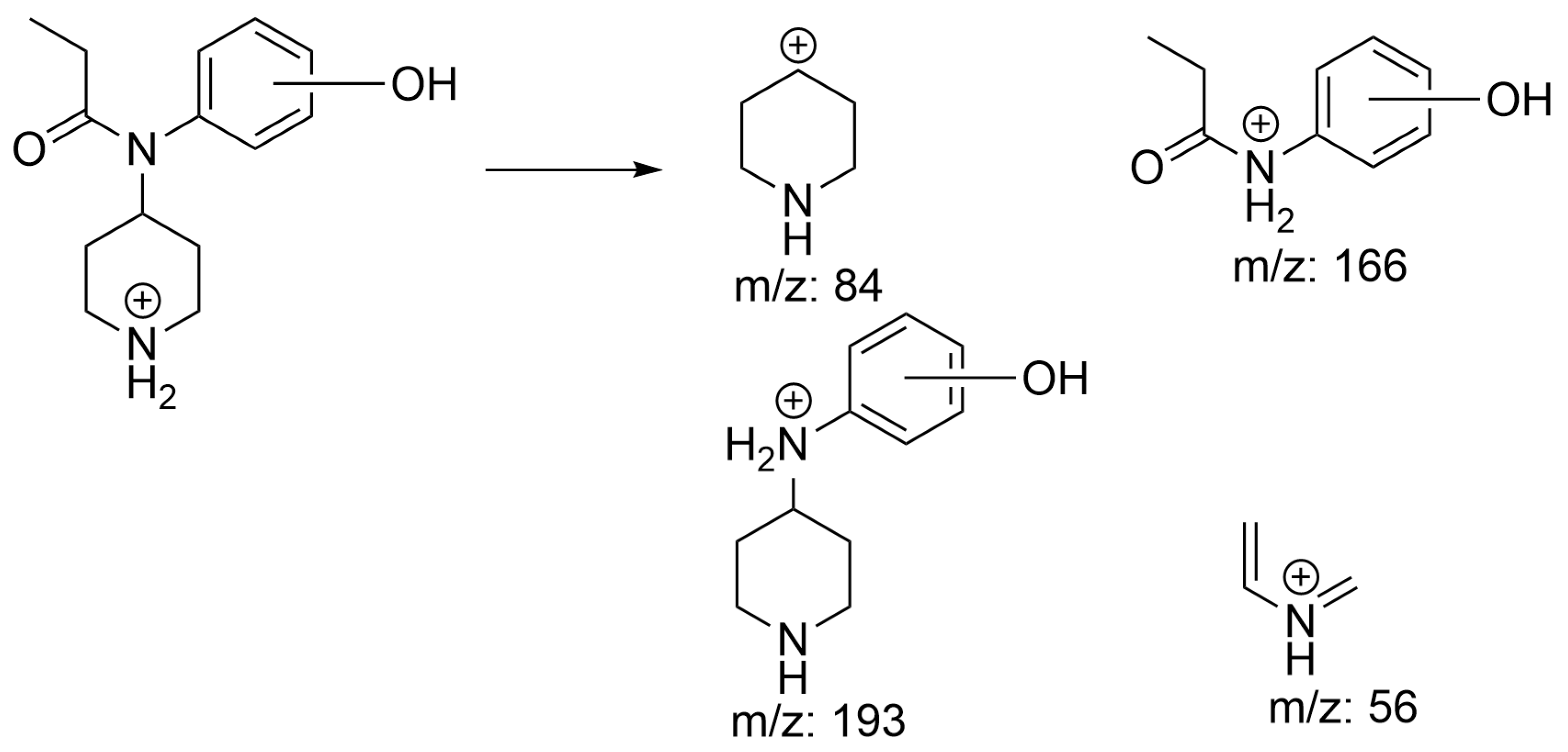
Only two metabolites were detected for fentanyl (Table 2), particularly metabolites M1 and M6. The M6 ion was determined to be norfentanyl with a molecular m/z of 233 located at the retention time of 5.34 min. The M1 ion, a norfentanyl-like metabolite with a m/z of 249, was observed at 4.5 min (Figure 2). Product ion scans for the matrix blank are provided in Figure 3. Major fragments of M1 had m/z ratios of 84, 56, 166, and 193, listed in order of decreasing abundance (refer to Figure 4).
Five metabolites were observed for para-methoxyfentanyl (PMF) (Table 3 and Figure 2), which was the greatest number of metabolites observed for these methoxylated fentanyl analog samples. Several norfentanyl-like metabolites were observed (M1–M3), including a hydroxylated version, a methoxylated version, and a hydroxylated and methoxylated version of the metabolite, respectively. Additionally, 4-ANPP-like metabolites were also observed for PMF (M4–M5). The M1 ion (m/z 249) was the same metabolite detected in the fentanyl profile, shown in Figure 2. The analyte M2 (m/z 263) eluted at 5.8 min. The fragmentation of M2 followed a pattern similar to that of M1; major fragments had m/z ratios of 84, 56, 180, and 207. Metabolite M3.a (m/z 279) eluted primarily at 4.3 min. The major fragments of this metabolite had m/z ratios of 84, 149, and 57. A smaller, secondary peak (17% relative abundance) was noted at 4.9 min, noted in the table as M3.b. This smaller peak was determined to be a structural isomer of M3.a, possibly hydroxylated but at a different location. This metabolite had major fragments with m/z ratios of 84, 149, 57, 201, 141, 142, 158 and 159. Metabolite M4 (m/z 297) eluted at 3.9 min. This metabolite had major fragment peaks with a m/z of 188 and 105. Metabolite M5 (m/z 311) eluted at 5.3 min and was observed across several fentanyl analogs (Table 2). The fragment ions produced from this metabolite had m/z ratios of 188, 105, and 279. Of these first five metabolites, M1–M3 were above the baseline without additional data processing required. However, M4 and M5 metabolites required an extracted ion search to observe the resulting peak in the chromatogram above the baseline.
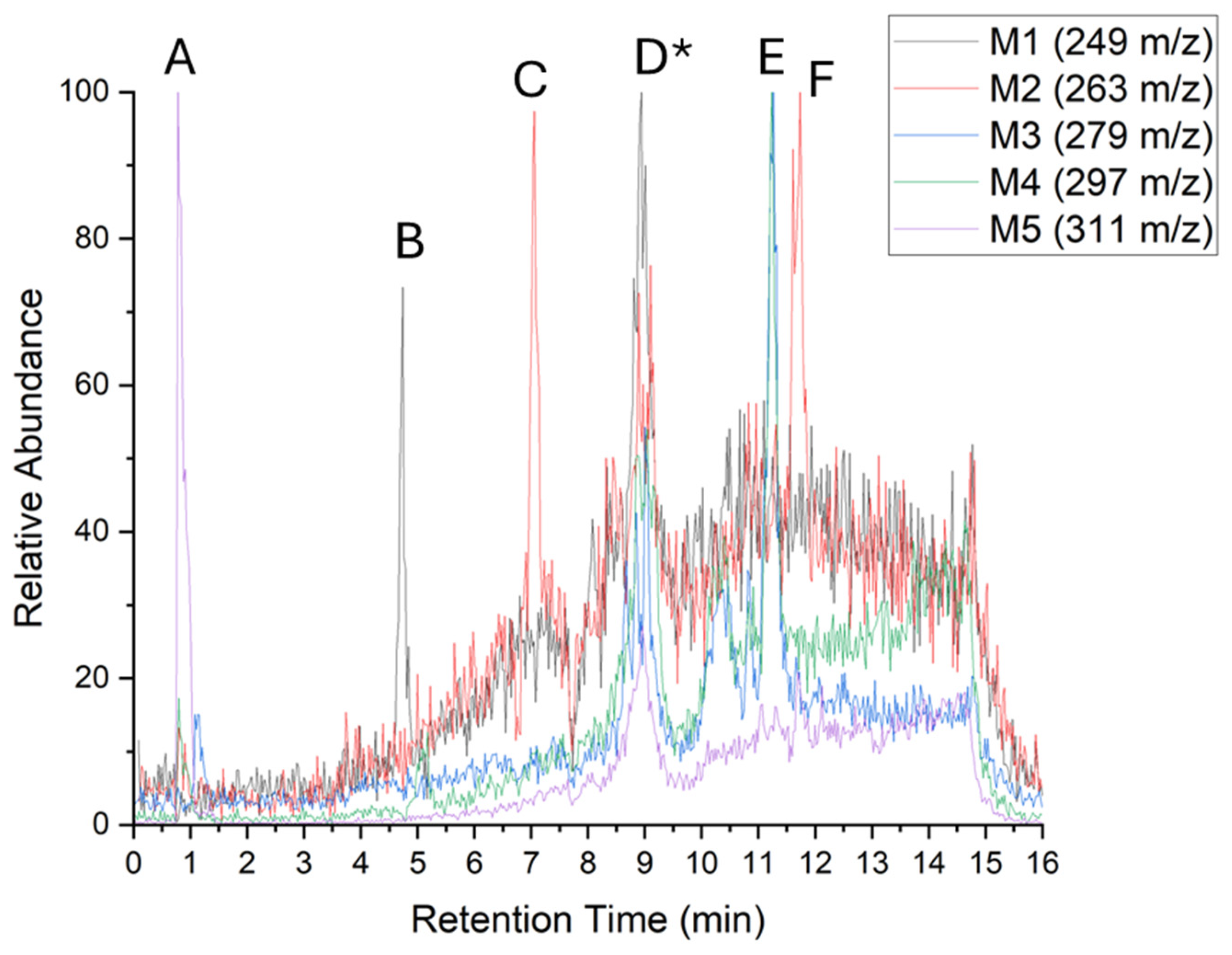
Individual MS data for the labeled peaks in the matrix blank are available in Supplementary Materials, Supplemental Figures S1–S10. The retention times of these peaks are not the same as the retention times for the metabolites targeted. The retention times for the matrix blank peaks are as follows: A: 0.780 min, B: 4.737 min, C: 7.059 min, D*: 8.8–9.1 min, E: 11.3 min, and F: 11.7 min.
Para-methoxy furanyl fentanyl (PMFF) generated two metabolites: M5 and M7 (Table 2). The M5 ion was the same metabolite ion observed in the PMF profile, with a m/z ratio of 311, and it had the same fragment ions. A new metabolite, M7 (m/z 301), was detected for PMFF at RT = 5.7 min. The fragment ions of this metabolite had the following m/z ratios: 84, 56, and 218. The ortho-methoxy furanyl fentanyl (OMFF) samples only generated one discernable metabolite, M7, at RT = 5.6 min.
It was found that para-methoxy butyryl fentanyl (PMBF) yielded four metabolites: M2, M5, M8, and M9. Metabolites M2 and M5 were the same metabolites detected for PMF (Table 2). However, new metabolites M8 and M9 were observed for PMBF. The metabolite M8 (m/z 277) was detected at RT = 6.47 min and had fragment ions with the following m/z ratios: 84, 194, 56, and 207. The metabolite M9 (m/z 293) had fragment ions with a m/z of 85, 124, and 56, and was detected at RT = 5.0 for PMBF and RT = 4.9 min for OMBF. Similarly, ortho-methoxy butyryl fentanyl (OMBF) had the following metabolites detected: M2, M8, and M9. Chromatograms and mass spectra for M6–M9 are available in Supplementary Materials, Supplemental Figures S11–S22.
There was a much higher abundance noted for the detection of M8, M2, M7, and M6 (on the order of 108 absolute counts) than for M1, M3, and M9 (order of 106 absolute counts) and for M5 and M4 (order of 105 absolute counts). While no direct quantitation was performed, this semi-quantitative information could be of interest in future studies to aid in the determination of forensic relevance of target metabolites. The limit of detection (LOD) was calculated using the extraction ion chromatogram of the matrix blank for each of the product ion scans [33]. The LOD ranged from 104 to 107 counts depending on the scan. In all cases, the observed metabolite signals exceeded these limits.

4. Discussion

Five metabolites were observed for para-methoxyfentanyl (Table 3) that aligned with generally established pathways of metabolism for fentanyl-related compounds, resulting in metabolites similar to norfentanyl, 4-ANPP, and hydroxylated metabolites. Several variations in norfentanyl-like metabolites were observed (M1–M3), including a hydroxylated variant, a methoxylated variant, and a hydroxylated and methoxylated variant of the metabolite, respectively. These metabolites were the result of oxidative N-dealkylation of the drug. This is the same biotransformation that occurs in the metabolism of fentanyl to produce the major metabolite norfentanyl [14,34]. The nor-metabolite of PMF (M2) was also formed via N-dealkylation. Another metabolite (M1) was formed, where the methoxy moiety was lost in addition to the N-dealkylation of the drug. The formation of M1 from PMF was initially unexpected due to the lack of a methoxy group when compared to M2. However, enzymes in the cytochrome P450 superfamily are capable of oxidative O-demethylation, among other oxidative biotransformation mechanisms [35,36,37,38]. Since HLMs are richly concentrated with enzymes in this superfamily, it is possible that PMF was initially O-demethylated at the methoxy moiety and then further transformed via N-dealkylation into M1. It is also possible that PMF was first transformed into M2, and then further transformed into M1 via O-demethylation. In the case of M3, this metabolite was likely the result of N-dealkylation of PMF, followed by a subsequent hydroxylation. Similar biotransformation processes have been proposed for other analogs of fentanyl, including 3-methylfentanyl and isofentanyl [38], as well as for 3-phenylpropanoylfentanyl [39].
The primary product of amide hydrolysis on fentanyl is 4-ANPP [14,34]. With respect to PMF, this pathway yielded metabolites M4 and M5 which have a structure similar to 4-ANPP. Specifically, amide hydrolysis of PMF followed by the O-demethylation of the methoxy moiety resulted in the formation of the M4 metabolite. Metabolite M5 was also formed by the amide hydrolysis of PMF. As with M1, it is possible that PMF was initially O-demethylated and subsequently underwent amide hydrolysis, or M5 was formed first and then further transformed into M4. To date, no metabolism studies have been conducted for PMF; however, hydroxyl-4-ANPP has been observed as a metabolite for other fentanyl analogs [14,40,41]. Chromatograms and mass spectra from LC-MS/MS analysis of PMF samples are shown in Figure 2 and Figure 4.
The M1 ion (m/z 249) yielded a fragment ion at m/z 84 that represented piperidine, which is the most abundant product ion for M1. This product ion is common between each of the norfentanyl-like metabolites observed (M1–M3). It is expected that this product ion will be observed between all norfentanyl-like metabolites, regardless of the additional substitutions on the original analog provided that the piperidine structure itself is unaltered. This same fragment with a m/z 84 has been observed frequently in fentanyl analog studies and is known to be the result of the cleavage of the C-N bond between the piperidine nitrogen and the adjacent carbon on the alkyl chain, as well as the C-N bond between the amide nitrogen and the piperidine ring [22,42]. The fragment ion at m/z 56 is a result of the fragmentation of the piperidine moiety. While this fragment ion appears to be less commonly observed than the m/z 84 ion in fentanyl fragmentation, it was also observed in other piperidine-containing drugs and was noted to be generated via an oxidative rearrangement of the piperidine ring [43]. The fragment ion with a m/z 166 is the result of the cleavage of the C-N bond between the amide nitrogen and the piperidine. A fragment ion with the same m/z ratio was described for a similar norfentanyl-like metabolite of fentanyl and resulted from this same cleavage [44]. The fragment ion at m/z 193 was the result of cleaving the C-N bond between the carbonyl carbon and the adjacent nitrogen. Proposed structures are illustrated in Scheme 1.
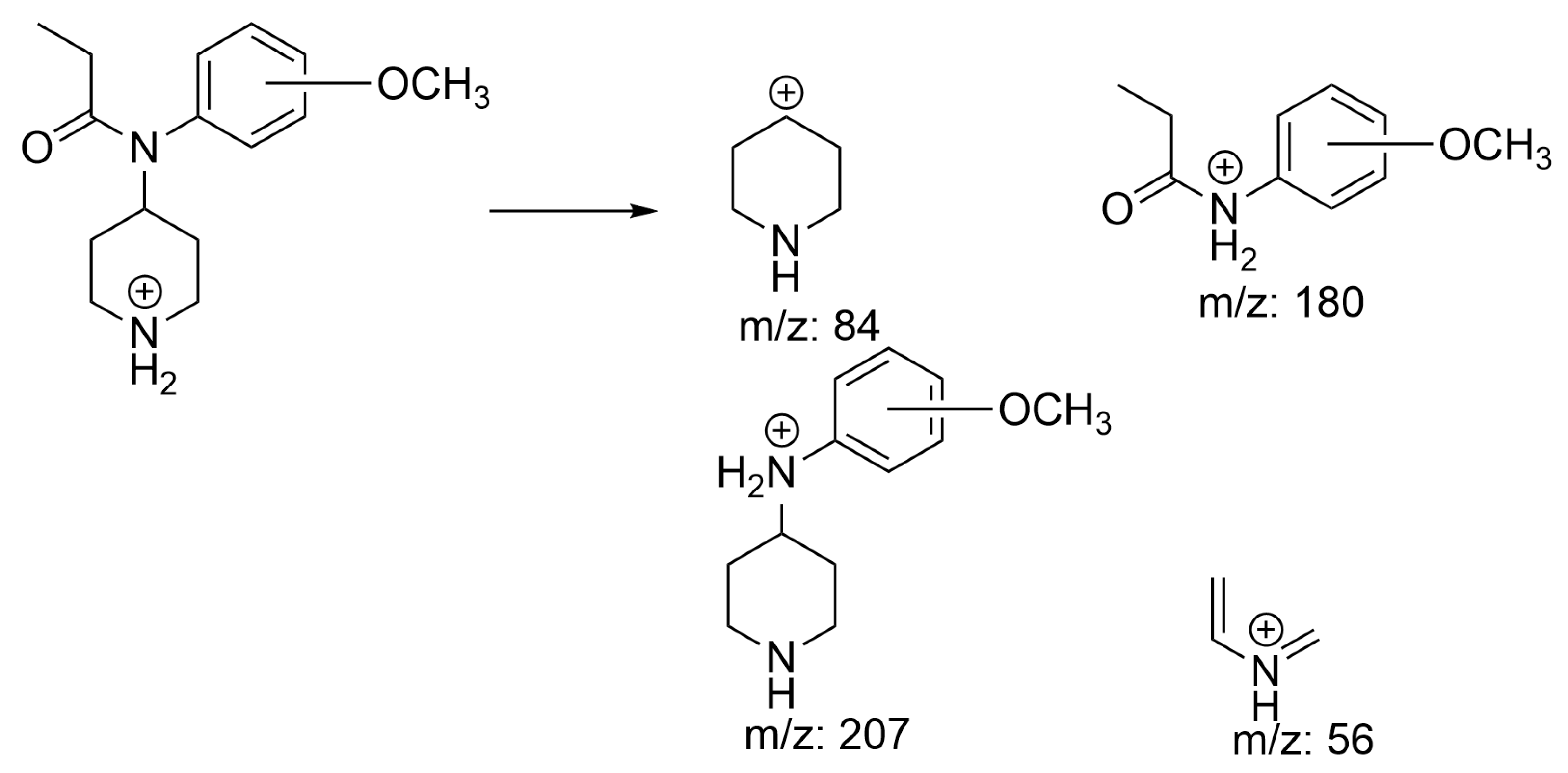
The proposed structures of the M2 analyte (m/z 263) fragments are shown in Scheme 2. The fragments at m/z 84 and 56 were identical to the ones described for M1. The formation of the fragments at m/z 180 and 207 was analogous to the formation of the fragments described for M1 (m/z 166 and 193, respectively); however, these fragments contained the methoxy functional group as opposed to the hydroxy functional group in M1 fragments. These fragments were also formed via the cleavage of the C-N bond between the piperidine and the amide nitrogen, and the cleavage of the C-N bond between the carbonyl carbon and the amide nitrogen, respectively.
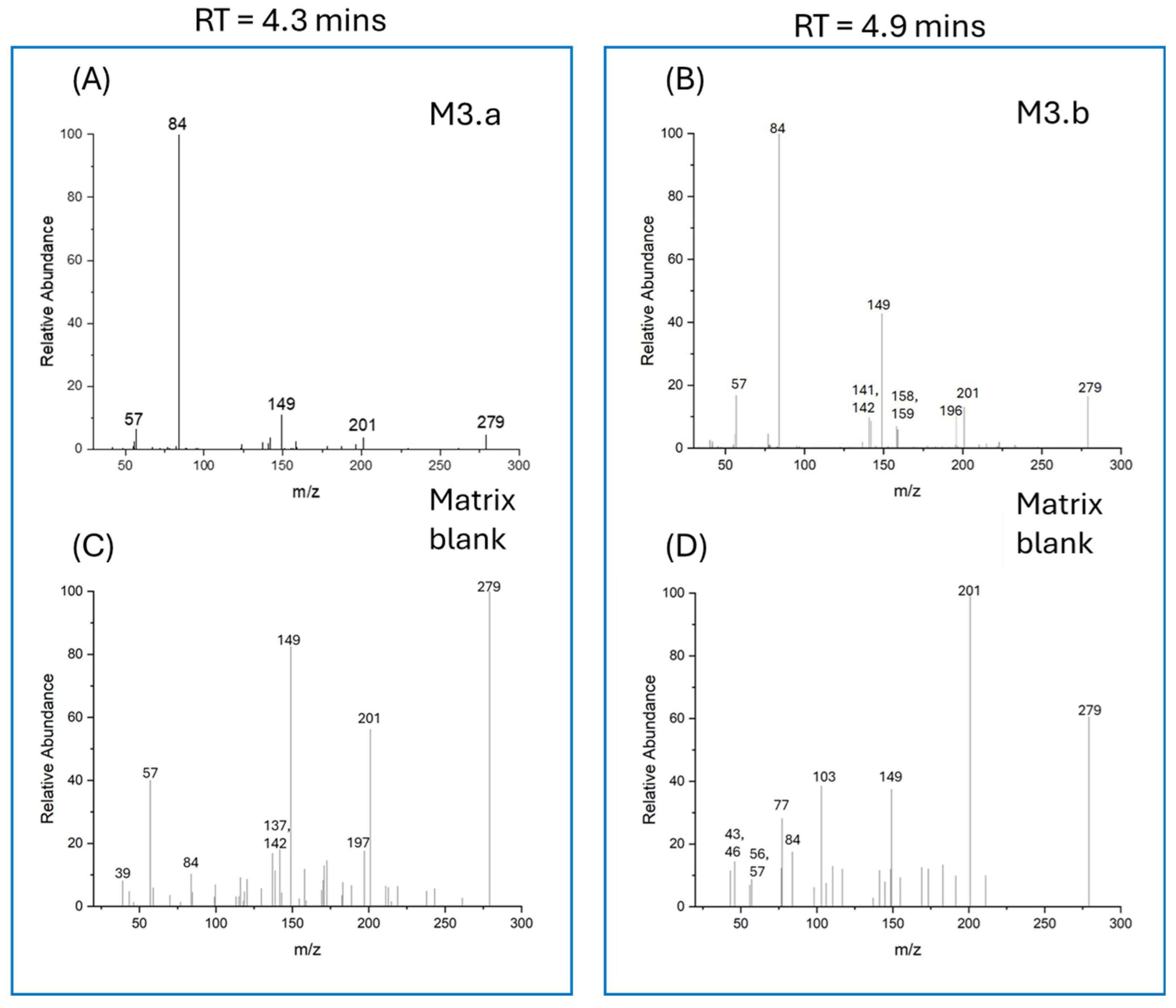
The fragmentation of the M3.a ion (m/z 279, RT = 4.3 min) and M3.b ion (m/z 279, RT = 4.9 min) did not appear to follow the same pattern as the previously described metabolites. The mass spectra for the analyte at both retention times are shown in Figure 5 along with the matrix blank for the same RT and the same m/z. This illustrates that M3.a and M3.b ions are similar to each other, based on relative peak abundances, but that they differ from the matrix blank.
It should be noted that the sample mass spectra share many common peaks with the matrix blank mass spectra; namely, peaks at m/z 84, 149, 201, and 57, albeit at different relative abundances. It is, therefore, possible that M3 is not a metabolite at all, and is instead a component of the background matrix. However, this remains undetermined considering the structured similarities of the relative abundances between these peaks in the target spectra that is not observed in the matrix blank spectra. Several structural possibilities are explored herein (Scheme 3 and Scheme 4).
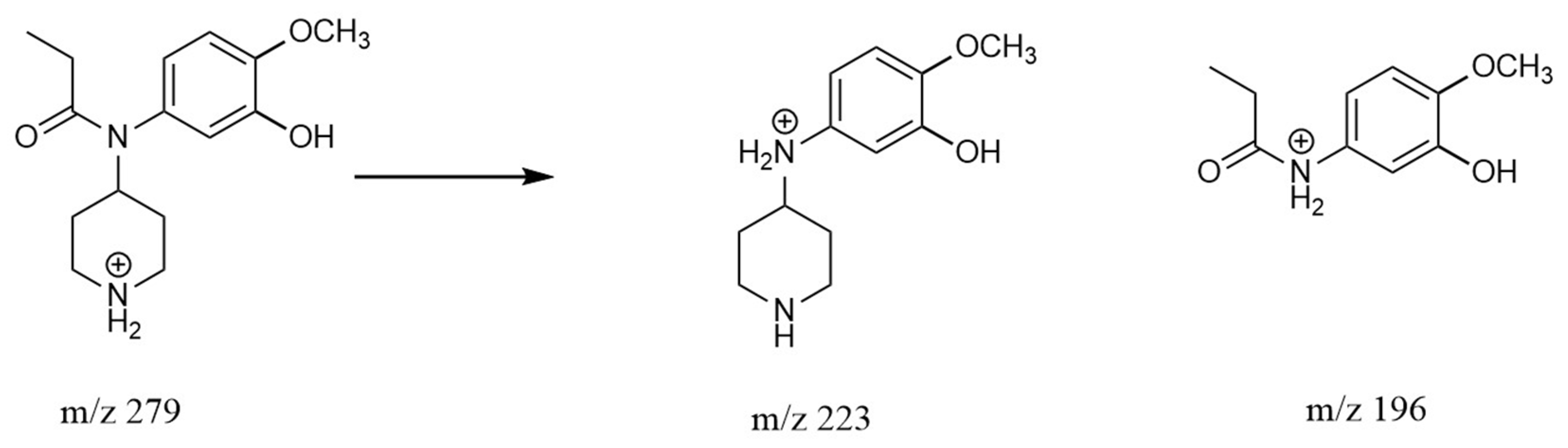
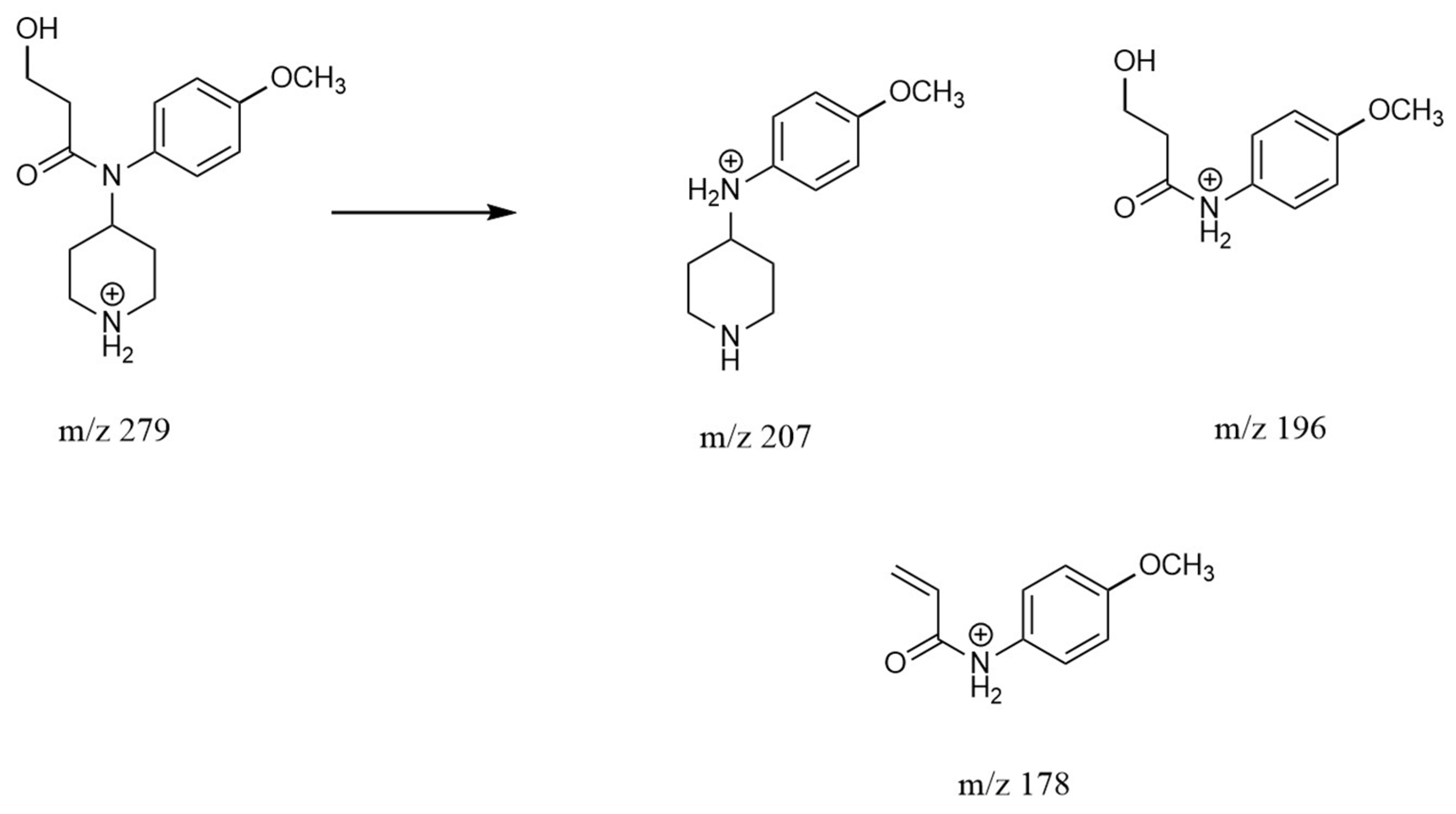
The fragment at m/z 84, from metabolite M3.a and M3.b, was expected to be the same piperidine fragment as previously described for the above metabolites; however, this was unexpected because of the positioning of the hydroxy group. While the position of the OH is unconfirmed, the lack of fragment ions with a m/z of 207, 196, or 178 indicated that the OH is likely not located on the alkyl chain, and the lack of fragments at m/z 223 and 196 also implies that the hydroxyl group is not present on the aniline ring. The proposed fragment ions are shown in Scheme 3 and Scheme 4.
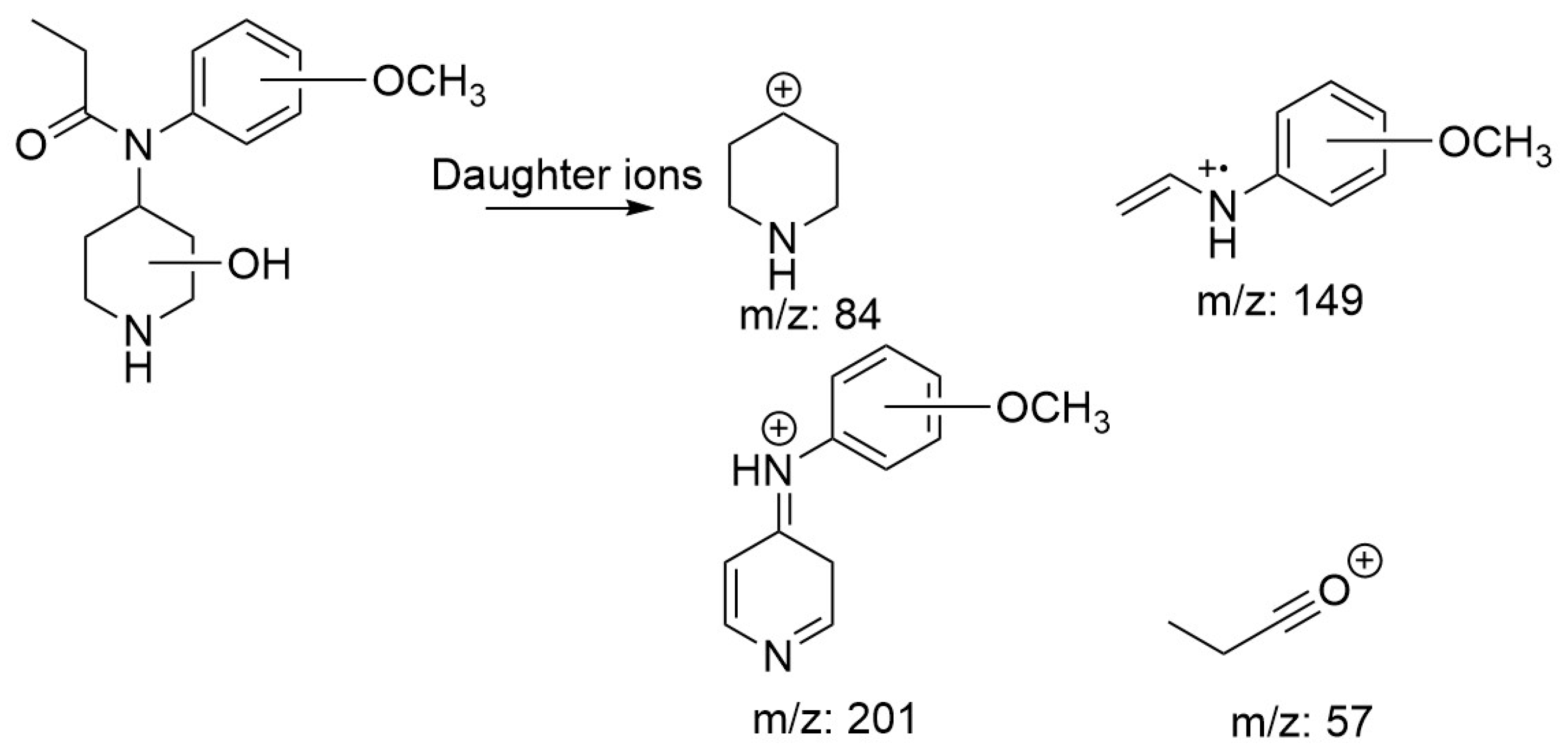
The base peak observed for this metabolite, M3.a and M3.b, was a fragment ion detected at m/z 84 which may be due to the cleavage of the N-C bond between the amide nitrogen and the piperidine ring, followed by a loss of water. Biotransformation via hydroxylation on the piperidine moiety has been reported for butyrfentanyl and for cyclopropylfentanyl. A common fragment ion observed for the piperidine-hydroxylated metabolite of cyclopropylfentanyl and two of four piperidine-hydroxylated metabolites of butyrfentanyl included the tropylium ion (m/z 91) [45,46]. The tropylium ion was not detected for the fragmentation of the M3 metabolites discussed herein, potentially due to the presence of the methoxy group on the anilinophenyl ring. Moreover, fentanyl analog metabolites containing a hydroxy group on the piperidine moiety do not generally appear to produce a product fragment ion of m/z 84 [45,46]. Unlike the fragmentation observed for the M1 and M2 molecules, it appears that the fragment ion at m/z 149 is the result of the elimination of the hydroxyl group from the piperidine ring, followed by cleavage of a C-C bond in the piperidine ring as well as the amide N-C bond. Additionally, the fragment at m/z 57 was formed by the cleavage of the amide N-C bond resulting in an acylium ion (Scheme 5).
Metabolite M3.b (m/z 279, RT = 4.9 min) was determined to be related to the previously described metabolite and produced several of the same major fragments (m/z 84, 149, 201, and 57). However, the difference in the location of the OH group may have caused the distribution of electrons to shift, therefore influencing the fragmentation of this metabolite. Several fragments, which significantly increased in abundance compared to the 4.3 min peak, had m/z ratios of 141, 142, 158, 159, and 196. It is theorized that a neutral loss occurred between the molecular ion and the 158 fragment, with a loss of 121 amu. This was potentially attributed to the methoxylated anilinophenyl moiety after a rearrangement that occurred between the OH and the carbonyl, similar to the conversion of amides to esters. However, the mechanism for this rearrangement has not yet been determined. The difference between the 158 fragment and the 141 fragment is 17 amu, equivalent to the loss of an OH; therefore, it is expected that the 159 and 142 ions are related in the same way. Structures for these fragments have not yet been elucidated.
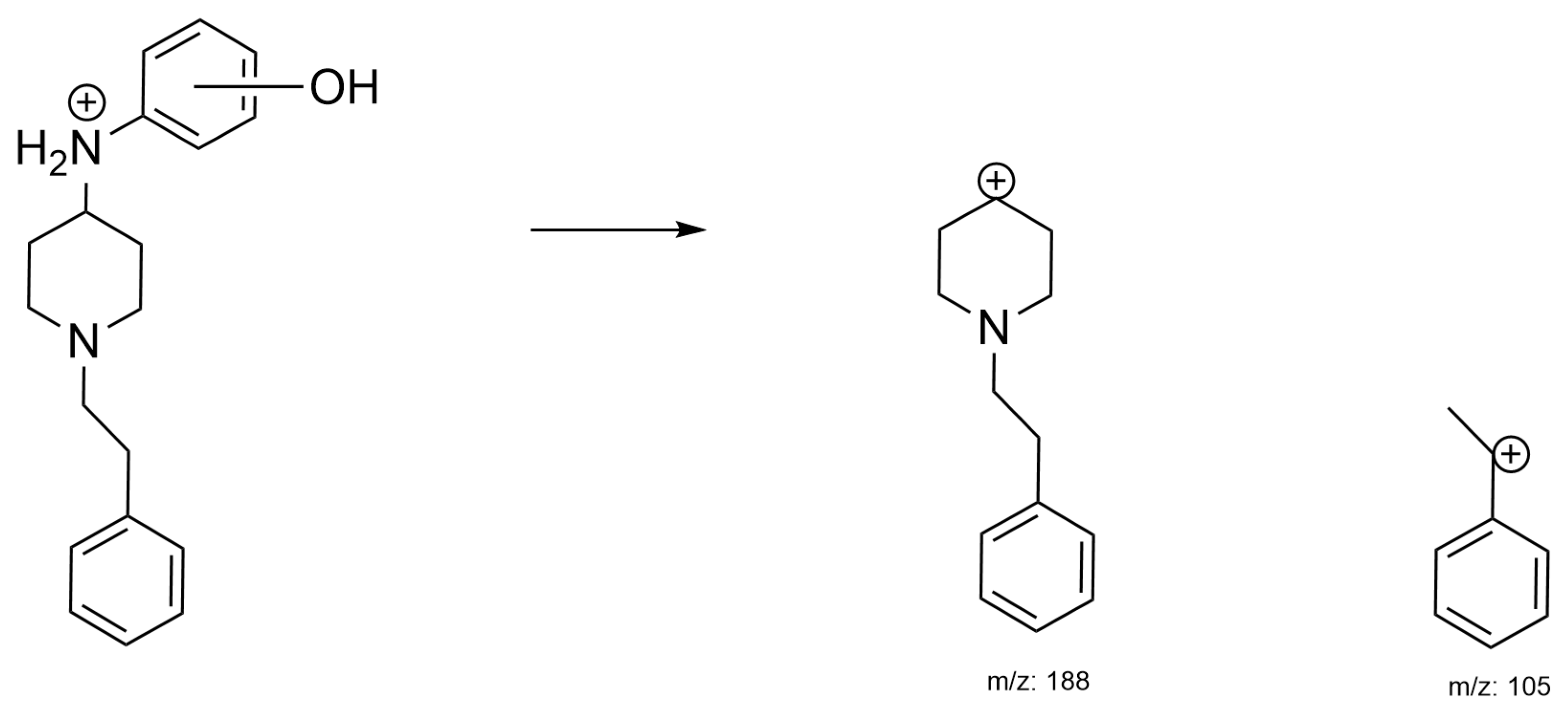
Metabolite M4 ion (m/z 297) had a fragment detected at m/z 188, which was the result of the cleavage of the C-N bond between the anilinophenyl nitrogen and the adjacent carbon of the piperidine moiety. A similar fragmentation pattern was observed in the investigation of substituted acetyl fentanyls, where a 4-ANPP-like metabolite generated a characteristic product ion at m/z 188, which was attributed to a McLafferty rearrangement [47]. The fragment ion at m/z 105 was the result of the cleavage between the piperidine nitrogen and the adjacent carbon on the phenylethyl moiety (Scheme 6). A similar metabolite has been observed for cyclohexylfentanyl; however, the observed fragmentation was entirely different than what was determined experimentally herein, likely due to the difference in proposed position of the OH group [45]. The metabolite observed for cyclohexylfentanyl indicated a hydroxylation on the phenylethyl moiety, whereas M4 is hydroxylated on the anilinophenyl ring.
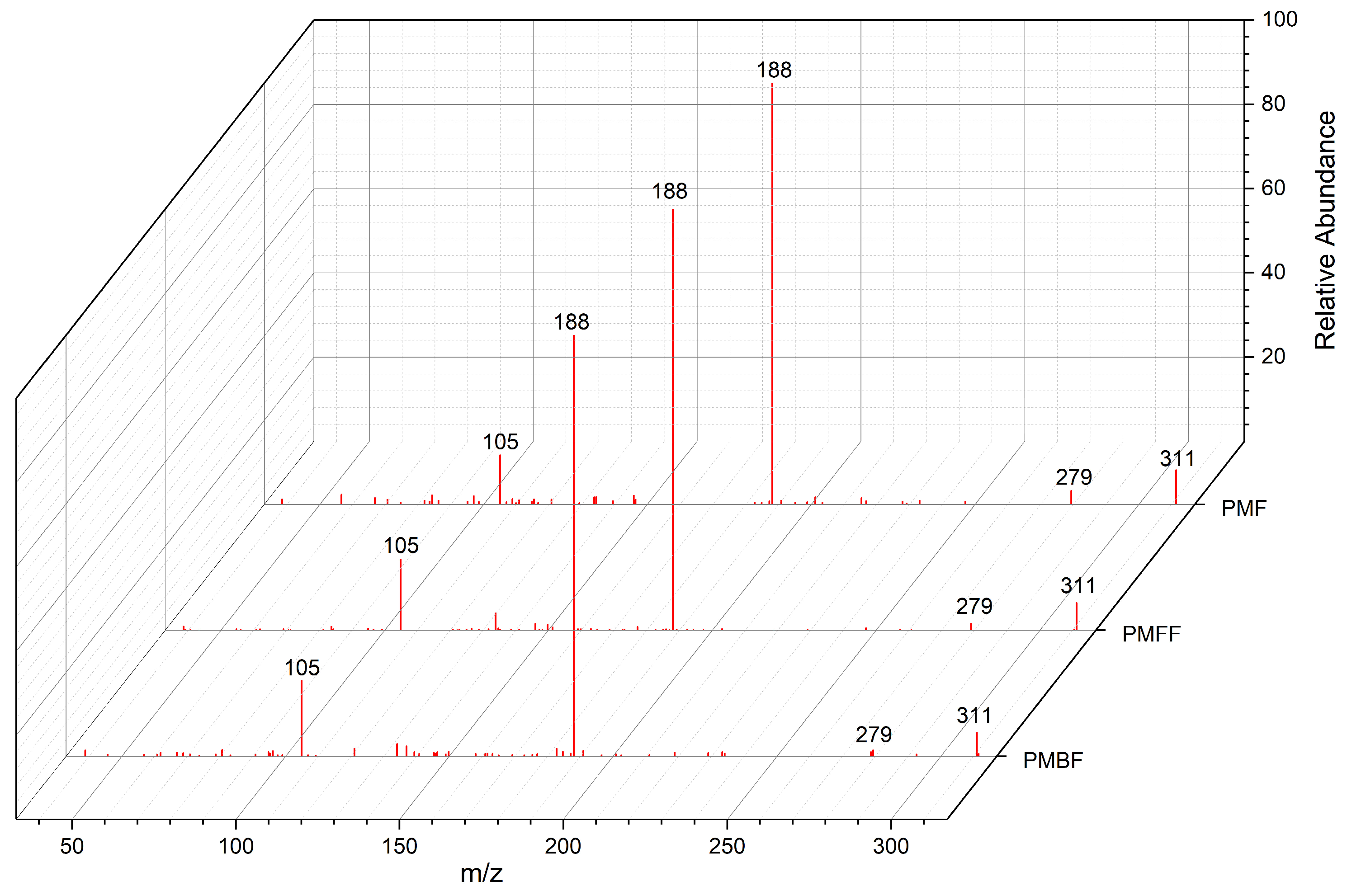
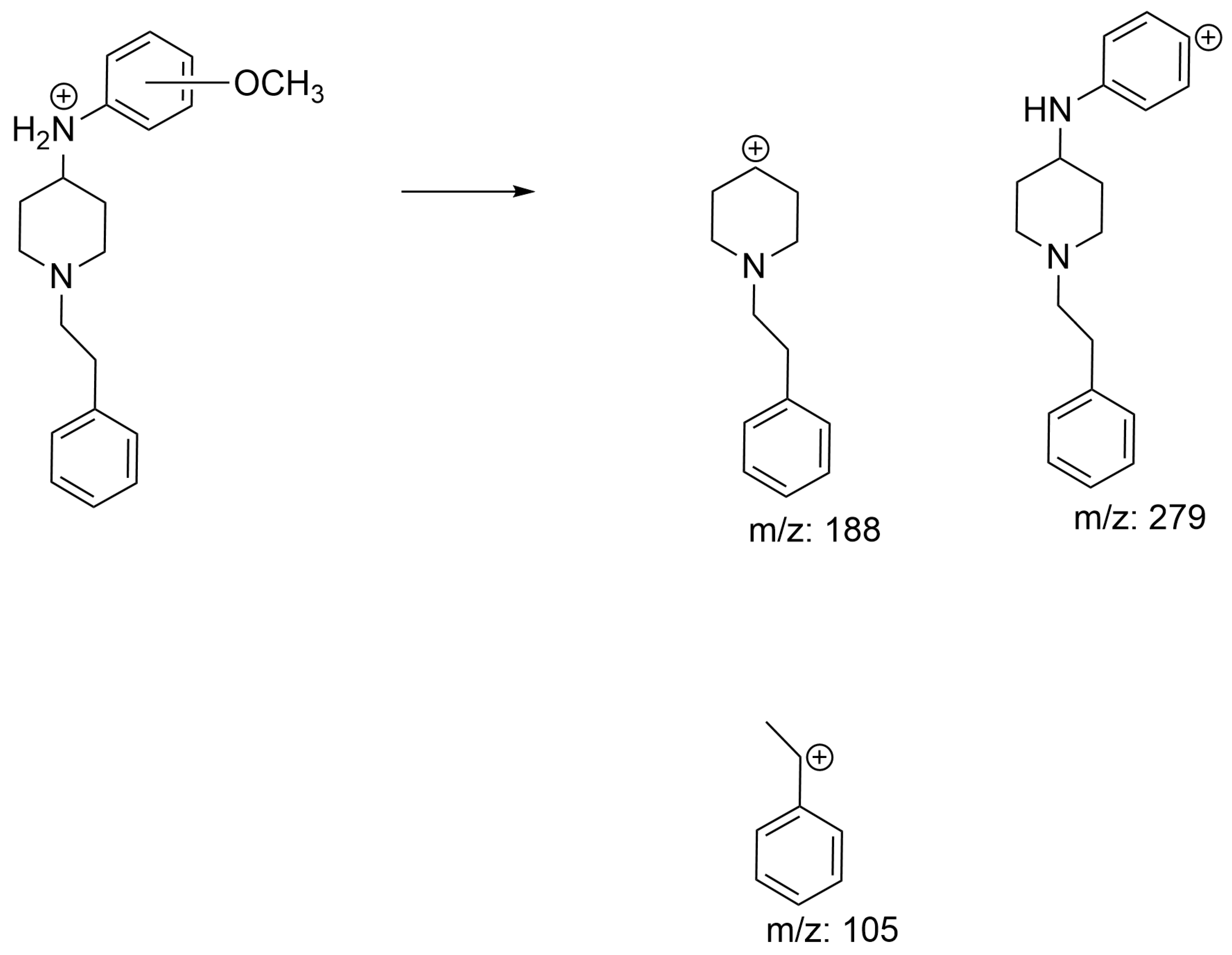
Figure 6 shows mass spectral data for metabolite M5 ion (m/z 311) across three methoxylated fentanyl analog incubations (PMF, PMFF, and PMBF). The proposed structures of the M5 fragments are illustrated in Scheme 7. As observed with M4, the fragment at m/z 188 is likely the result of cleavage of the C-N bond between the piperidine and the anilinophenyl nitrogen. The fragment at m/z 105 is the result of cleavage between the piperidine nitrogen and the phenylethyl moiety. The fragment at m/z 279 is the result of the loss of the methoxy group (Scheme 7).
Metabolites detected for fentanyl included norfentanyl (M6) and hydroxy-norfentanyl (M1). Other previously reported minor metabolites of fentanyl were expected, including hydroxylated variants of fentanyl, as discussed in the literature [14]. A common biotransformation mechanism of enzymes in the P450 superfamily is hydroxylation, which acts to make the xenobiotic more polar to aid in the excretion of the drug. However, no hydroxylated fentanyl metabolites were identified in this study, possibly because any hydroxylated fentanyl metabolite was further transformed via N-dealkylation to the hydroxy-norfentanyl metabolite. Fentanyl metabolites that were hydroxylated in other areas of the fentanyl scaffold may have been below the instrumental limit of detection. It should be noted that while 4-ANPP is sometimes encountered as a metabolite of fentanyl, it was not expected in this instance because it is most frequently observed as a minor metabolite of illicitly manufactured fentanyl [14,34,48]. In a study with an in vivo zebrafish model of the metabolism of fentanyl, it is interesting to note that along with norfentanyl, both 4-ANPP and a hydroxy-fentanyl metabolite were detected [49]. A potential reason for this difference in observed metabolites is the inherent biological variance between humans and zebrafish, as well as the differences associated with in vivo versus in vitro models of metabolism; however, it is also interesting to note that in a study with valerylfentanyl the comparison of the in vivo zebrafish metabolism model and in vitro HLM model produced comparable results [50].
Many metabolites were detected in the incubation samples of PMF, including hydroxy-norfentanyl (M1), which was likely an oxidized byproduct of the formation of methoxy-norfentanyl (M2), which was also observed. The presence of these metabolites indicated that PMF underwent a similar process of biotransformation as fentanyl, with respect to the major transformative pathway of N-dealkylation. Hydroxy-methoxy-norfentanyl (M3) was also detected, along with hydroxy-4-ANPP (M4) and methoxy-4-ANPP (M5). The presence of the methoxy group on the anilinophenyl ring may encourage the hydroxylation of the resulting metabolite. This action is likely due to the electron-donating properties of the functional group making further oxidation of the aromatic moiety more favorable than for a standard fentanyl anilinophenyl moiety, hence the presence of the metabolite M3.
A graphical summary of the observed metabolites from PMF, PMFF, and PMBF is presented in Table 2. PMF, PMFF, and PMBF produced one metabolite in common, M5 (m/z 311). This was an expected result, due to the fact that the differences between the structures of these three analogs lie only in the amide moiety. Since the transformation to a 4-ANPP-like metabolite is the process of amide hydrolysis, the distinguishing feature between each of these three analogs was removed, resulting in the formation of the common metabolite. It is expected that most fentanyl analogs that contain a methoxy substituent in the para position with additional alterations only on the amide moiety may produce this common metabolite.
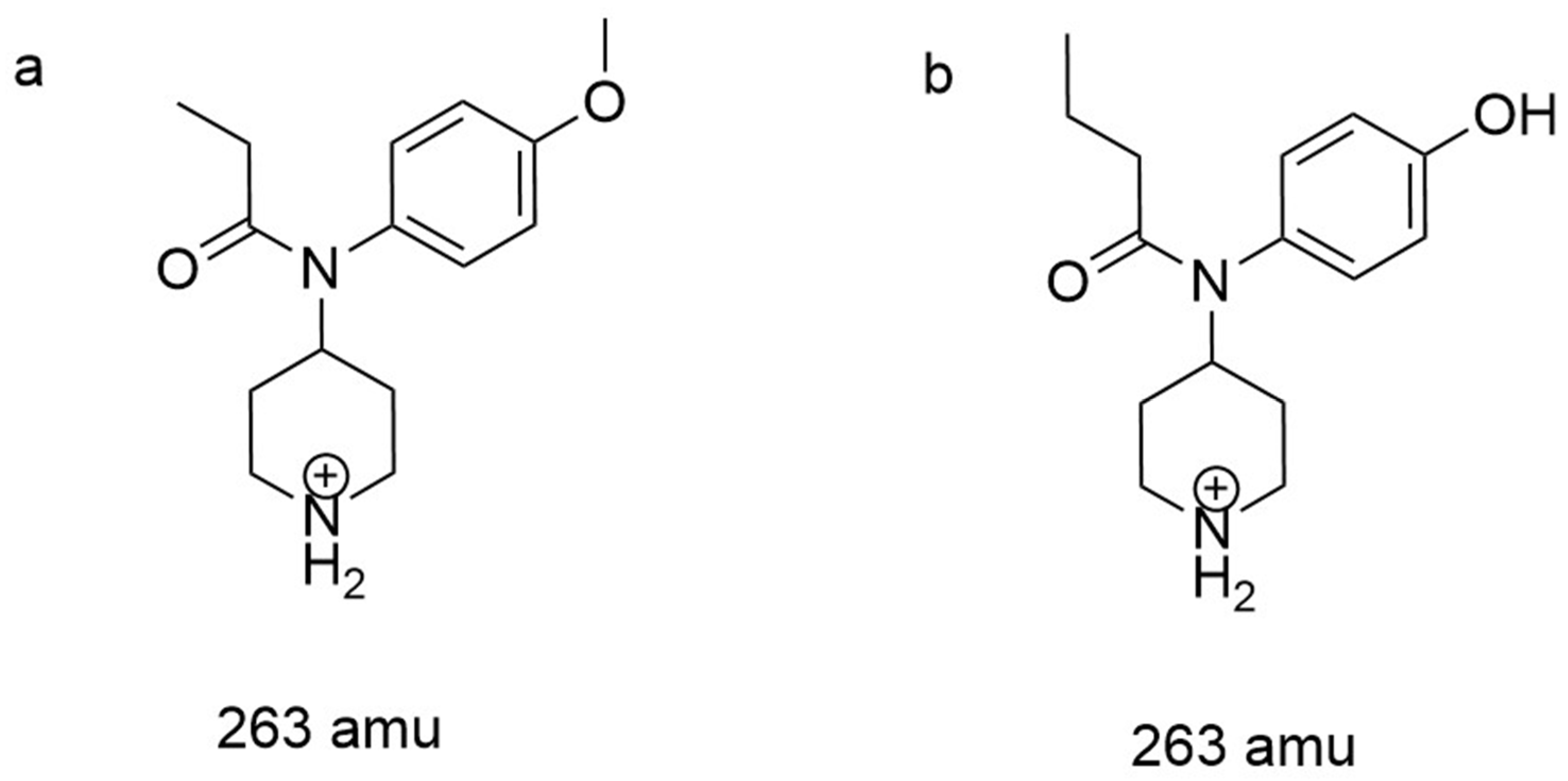
Although a metabolite M2 (m/z 263) was observed for both PMF and PMBF, it was likely not the same metabolite formed for both drugs, but they were isomers as determined by the different MS fragmentation patterns. The methoxylated norfentanyl-like metabolite (M2) for PMF was formed via oxidative N-dealkylation, which resulted in the cleavage of the N-C bond between the piperidine nitrogen and the phenylethyl moiety. In the case of PMBF, it is theorized that M2 was formed via the same oxidative N-dealkylation and followed by O-demethylation of the methoxy moiety. This appears to be a parallel process similar to what was proposed for the formation of M1 from PMF where the nor-metabolite may have undergone oxidative O-demethylation on the methoxy moiety, which resulted in the production of a “hydroxylated” norfentanyl-like metabolite (Figure 4, M1). In the formation of M2 from PMBF, the methoxy group of the nor-metabolite was demethylated to yield a “hydroxylated” butyryl-norfentanyl-like metabolite (Figure 7b) (C15H22N2O2) which would have the same molecular weight as a methoxylated norfentanyl-like metabolite (C15H22N2O2) (Figure 7a) which resulted from PMF.
Methoxylated furanyl fentanyl analogs OMFF and PMFF shared a common metabolite ion with a m/z of 301, which indicated a methoxy furanyl norfentanyl variant (M7). It is likely that each drug was transformed into the corresponding ortho- or para-metabolite, via the same process of N-dealkylation. While these drugs are isomeric, it is interesting that the metabolite at 311, methoxy 4-ANPP (M5), was only observed in the para-isomer’s incubated sample. It is possible that the presence of the methoxy group in the ortho-position hinders the amide hydrolysis that would need to take place to produce this metabolite and is therefore not as energetically favorable to form.
OMBF and PMBF are isomers that differ from one another only in the positioning of the methoxy group on the anilinophenyl ring. These analogs shared several common metabolites, including methoxy-norfentanyl (M2, m/z 263), methoxy-butyryl-norfentanyl (M8, m/z 277), and hydroxy-methoxy-butyryl-norfentanyl (M9, m/z 293). It is expected that these metabolites are isomers of one another, that is, an ortho- and para- variant of M2, M8, and M9 are expected. The methoxy-4-ANPP metabolite was also only detected in the para-isomer’s incubated sample for methoxy butyryl fentanyl.

5. Conclusions

The major pathway of metabolism for fentanyl generally appears to be consistent across methoxylated fentanyl analogs, as indicated by the detection of norfentanyl analogs that correspond to the changes in the original drug’s structure. This is expected since norfentanyl is the major metabolite of fentanyl, which is a result of the fentanyl scaffold being prone to undergo oxidative N-dealkylation at the piperidine nitrogen. Many methoxylated fentanyl analogs are substituted in such a way that would not hinder this process (i.e., on the anilinophenyl moiety), and, therefore, would not prevent the formation of the corresponding nor-metabolite.
It was expected that isomeric drugs would result in isomeric metabolite profiles; however, the results of this study also appear to indicate that isomeric analogs will not always result in entirely similar metabolite profiles. This is evident due to the lack of detection of the methoxy-4-ANPP metabolite in the ortho-methoxylated analogs. A possible explanation for the absence of methoxy-4-ANPP in the ortho-methoxylated samples could be the interference of the methoxy group with the availability of the amide nitrogen for acid-catalyzed amide hydrolysis. A substitution in the ortho position results in more steric crowding of the nitrogen than a substitution in the para position, which could contribute to making this reaction slightly less likely to occur.
Of the fentanyl analogs investigated in this study, a common metabolite was determined between para-methoxylated fentanyl analogs. Methoxylated 4-ANPP was detected in the incubated samples for para-methoxyfentanyl, para-methoxy furanyl fentanyl, and para-methoxy butyryl fentanyl. It is expected that other fentanyl analogs that include a methoxy group in the para position, have an accessible amide, and are unaltered in the piperidine and phenylethyl moieties will also result in the formation of this common metabolite. Future work to investigate this as a potential common metabolite includes the analysis of analogs such as para-methoxy acetyl fentanyl, para-methoxy tetrahydrofuran fentanyl, para-methoxy acrylfentanyl, and para-methoxy methoxyacetyl fentanyl.

Supplementary Materials

The following supporting information can be downloaded at: https://www.mdpi.com/article/10.3390/forensicsci6010031/s1, Supplemental Figure S1. Mass spectrum of peak A from Figure 3 (main text), retention time 0.780 mins for the matrix blank; Supplemental Figure S2. Mass spectrum of peak B from Figure 3 (main text), retention time 4.737 mins for the matrix blank; Supplemental Figure S3. Mass spectrum of peak C from Figure 3 (main text), retention time 7.059 mins for the matrix blank; Supplemental Figure S4. Mass spectrum of peak D* from Figure 3 (main text), retention time 8.853 mins for the matrix blank; Supplemental Figure S5. Mass spectrum of peak D* from Figure 3 (main text), retention time 8.895 mins for the matrix blank; Supplemental Figure S6. Mass spectrum of peak D* from Figure 3 (main text), retention time 8.937 mins for the matrix blank; Supplemental Figure S7. Mass spectrum of peak D* from Figure 3 (main text), retention time 9.004 mins for the matrix blank; Supplemental Figure S8. Mass spectrum of peak D* from Figure 3 (main text), retention time 9.096 mins for the matrix blank; Supplemental Figure S9. Mass spectrum of peak E from Figure 3 (main text), retention time 11.268 mins for the matrix blank; Supplemental Figure S10. Mass spectrum of peak F from Figure 3 (main text), retention time 11.737 mins for the matrix blank; Supplemental Figure S11. (A) Product ion scans for M6-M9 from incubated samples of fentanyl (for M6), para-methoxy furanyl fentanyl (for M7[p]), ortho-methoxy furanyl fentanyl (for M7[o]) and ortho-methoxy butyryl fentanyl (for M8[o] and M9[o]), and para-methoxy butyryl fentanyl (M8[p] and M9[p]). Ions used for each extracted ion scan were the following: M6: 233 m/z, M7[p]: 301 m/z, M7[o]: 301 m/z, M8[p]: 277 m/z, M8[o]: 277 m/z, M9[p]: 293 m/z, and M9[o]: 293 m/z. Plots for M7-M9 were further processed via extraction of the 84 m/z fragment ion to clean up background peaks. (B) Zoomed in close up of peaks between retention times 4.0 and 9.0 min; Supplemental Figure S12. Mass spectrum of M6, retention time 5.34 mins for an incubated sample of fentanyl. Associated chromatogram is in Supplemental Figure S11; Supplemental Figure S13. Mass spectrum of M7, retention time 5.58 mins for an incubated sample of ortho-methoxy furanyl fentanyl. Associated chromatogram is in Supplemental Figure S11; Supplemental Figure S14. Mass spectrum of M7, retention time 5.70 mins for an incubated sample of para-methoxy furanyl fentanyl. Associated chromatogram is in Supplemental Figure S11; Supplemental Figure S15. Mass spectrum of the peak at retention time 8.72 mins from the scan for M7 for an incubated sample of ortho-methoxy furanyl fentanyl. Associated chromatogram is in Supplemental Figure S11; Supplemental Figure S16. Mass spectrum of M8, retention time 6.47 mins for an incubated sample of ortho-methoxy butyryl fentanyl. Associated chromatogram is in Supplemental Figure S11; Supplemental Figure S17. Mass spectrum of M8, retention time 6.47 mins for an incubated sample of para-methoxy butyryl fentanyl. Associated chromatogram is in Supplemental Figure S11; Supplemental Figure S18. Mass spectrum of M9, retention time 4.4 mins for an incubated sample of ortho-methoxy butyryl fentanyl. Associated chromatogram is in Supplemental Figure S11; Supplemental Figure S19. Mass spectrum of M9, retention time 4.65 mins for an incubated sample of ortho-methoxy butyryl fentanyl. Associated chromatogram is in Supplemental Figure S11; Supplemental Figure S20. Mass spectrum of M9, retention time 4.9 mins for an incubated sample of ortho-methoxy butyryl fentanyl. Associated chromatogram is in Supplemental Figure S11; Supplemental Figure S21. Mass spectrum of M9, retention time 4.47 mins for an incubated sample of para-methoxy butyryl fentanyl. Associated chromatogram is in Supplemental Figure S11; Supplemental Figure S22. Mass spectrum of M9, retention time 5.02 mins for an incubated sample of para-methoxy butyryl fentanyl. Associated chromatogram is in Supplemental Figure S11.

Author Contributions

Conceptualization, C.B.; methodology, J.M.; formal analysis, J.M.; Investigation, J.M.; resources, C.B.; writing—original draft preparation, J.M.; writing—review and editing, C.B.; visualization, J.M.; supervision, C.B.; project administration, C.B. All authors have read and agreed to the published version of the manuscript.

Funding

This research received no external funding. Article processing charges were provided in part by the UCF College of Graduate Studies Open Access Publishing Fund.

Institutional Review Board Statement

Ethical review and approval were waived for this study due to it not being human subjects research because the HLMs were de-identified from the manufacturer.

Informed Consent Statement

Not applicable.

Data Availability Statement

The raw data supporting the conclusions of this article are contained within the article.

Acknowledgments

The authors would like to thank Holly Pierzynski from Cayman Chemical for assistance in fragment structural elucidation.

Conflicts of Interest

The authors declare no conflicts of interest.

Abbreviations

The following abbreviations are used in this manuscript:
4-ANPP4-Anilino-N-phenylethylpiperidine
ADMEAbsorption, Distribution, Metabolism and Excretion
HLMHuman Liver Microsome
LC-MSLiquid Chromatography–Mass Spectrometry
LC-MS/MSLiquid Chromatography–Tandem Mass Spectrometry
m/zMass-to-charge Ratio
NADPHNicotinamide Adenine Dinucleotide Phosphate
OMBFOrtho-methoxy Butyryl Fentanyl
OMFFOrtho-methoxy Furanyl Fentanyl
PMBFPara-methoxy Butyryl Fentanyl
PMFPara-methoxyfentanyl
PMFFPara-methoxy Furanyl Fentanyl
RTRetention Time

References

  1. Federal Register. Drug Enforcement Administration, Department of Justice, 21 CFR Part 1308, DEA-476. 2018. Available online: https://www.federalregister.gov/documents/2018/02/06/2018-02319/schedules-of-controlled-substances-temporary-placement-of-fentanyl-related-substances-in-schedule-i (accessed on 6 February 2025).
  2. United States Congress. Public Law 118-158. 2024. Available online: https://www.congress.gov/118/bills/hr10545/BILLS-118hr10545enr.pdf (accessed on 27 February 2025).
  3. Drug Enforcement Administration. Diversion Control Division, Drug & Chemical Evaluation Section, Fentanyl Related Substances. 2025. Available online: https://www.deadiversion.usdoj.gov/drug_chem_info/frs.pdf (accessed on 27 February 2025).
  4. United States Congress. Public Law 119-4. 2025. Available online: https://www.congress.gov/bill/119th-congress/house-bill/1968/text (accessed on 15 January 2026).
  5. United States Congress. H.R.27. 2025. Available online: https://www.congress.gov/bill/119th-congress/house-bill/27 (accessed on 15 January 2026).
  6. Szeremeta, M.; Pietrowska, K.; Niemcunowicz-Janica, A.; Kretowski, A.; Ciborowski, M. Applications of Metabolomics in Forensic Toxicology and Forensic Medicine. Int. J. Mol. Sci. 2021, 22, 3010. [Google Scholar] [CrossRef]
  7. Nordmeier, F.; Richter, L.H.J.; Schmidt, P.H.; Schaefer, N.; Meyer, M.R. Studies on the in vitro and in vivo metabolism of the synthetic opioids U-51754, U-47931E, and methoxyacetylfentanyl using hyphenated high-resolution mass spectrometry. Sci. Rep. 2019, 9, 13774. [Google Scholar] [CrossRef] [PubMed]
  8. Cone, E.J.; Tsadik, A.; Oyler, J.; Darwin, W.D. Cocaine Metabolism and Urinary Excretion After Different Routes of Administration. Ther. Drug Monit. 1998, 20, 556–560. [Google Scholar] [CrossRef]
  9. Fraser, A.D.; Coffin, L.; Worth, D. Drug and chemical metabolites in clinical toxicology investigations: The importance of ethylene glycol, methanol and cannabinoid metabolite analyses. Clin. Biochem. 2022, 35, 501–511. [Google Scholar] [CrossRef]
  10. Pope, J.D.; Black, M.J.; Drummer, O.H.; Schneider, H.G. Urine toxicology screening by liquid chromatography time-of-flight mass spectrometry in a quaternary hospital setting. Clin. Biochem. 2021, 95, 66–72. [Google Scholar] [CrossRef] [PubMed]
  11. Talevi, A.; Bellera, C.L. Drug Metabolism. In ADME Processes in Pharmaceutical Sciences, 2nd ed.; Talevi, A., Quiroga, P.A., Eds.; Springer: Cham, Switzerland, 2024; pp. 81–110. [Google Scholar]
  12. McDonnell, A.M.; Dang, C.H. Basic Review of the Cytochrome P450 System. J. Adv. Pract. Oncol. 2013, 4, 263–268. [Google Scholar] [CrossRef]
  13. Gibson, G.G.; Skett, P. Introduction to Drug Metabolism, 3rd ed.; Nelson Thornes Ltd.: Cheltenham, UK, 2001. [Google Scholar]
  14. Wilde, M.; Pichini, S.; Pacifici, R.; Tagliabracci, A.; Busardo, F.P.; Auwärter, V.; Solimini, R. Metabolic Pathways and Potencies of New Fentanyl Analogs. Front. Pharmacol. 2019, 10, 238. [Google Scholar] [CrossRef]
  15. O’Donnell, J.K.; Halpin, J.; Mattson, C.L.; Goldberger, B.A.; Gladden, R.M. Deaths Involving Fentanyl, Fentanyl Analogs, and U-47700—10 States, July-December 2016. Morb. Mortal. 2017, 66, 1197–1202. [Google Scholar] [CrossRef] [PubMed]
  16. Laraia, N.; Bierly, J.; Chan-Hosokawa, A. 4-ANPP: The potential caution flag for illicit fentanyl. Anal. Tox. 2026, bkaf111. [Google Scholar] [CrossRef]
  17. Armenian, P.; Vo, K.T.; Barr-Walker, J.; Lynch, K.L. Fentanyl, fentanyl analogs and novel synthetic opioids: A comprehensive review. Neuropharmacology 2018, 134, 121–132. [Google Scholar] [CrossRef]
  18. Rab, E.; Flanagan, R.J.; Hudson, S. Detection of fentanyl and fentanyl analogues in biological samples using liquid chromatography-high resolution mass spectrometry. For. Sci. Int. 2019, 300, 13–18. [Google Scholar] [CrossRef]
  19. Moody, M.T.; Diaz, S.; Shah, P.; Papsun, D.; Logan, B.K. Analysis of fentanyl analogs and novel synthetic opioids in blood, serum/plasma, and urine in forensic casework. Drug Test. Anal. 2018, 10, 1358–1367. [Google Scholar] [CrossRef] [PubMed]
  20. Bird, H.E.; Huhn, A.S.; Dunn, K.E. Fentanyl Absorption, Distribution, Metabolism, and Excretion: Narrative Review and Clinical Significance Related to Illicitly Manufactured Fentanyl. J. Addict. Med. 2023, 17, 503–508. [Google Scholar] [CrossRef]
  21. Zhang, S.; Xu, Y.; Zeng, X.; Ran, J.; Chen, Y.; Kuai, L.; Li, K.; Xu, P.; Yan, F.; Wang, D. QSAR-based physiologically based pharmacokinetic (PBPK) modeling for 34 fentanyl analogs: Model validation, human pharmacokinetic prediction and abuse risk insights. Front. Pharmacol. 2025, 16, 1692293. [Google Scholar] [CrossRef] [PubMed]
  22. Davidson, J.T.; Sasiene, Z.J.; Jackson, G.P. The influence of chemical modifications on the fragmentation behavior of fentanyl and fentanyl-related compounds in electrospray ionization tandem mass spectrometry. Drug Test. Anal. 2020, 12, 957–967. [Google Scholar] [CrossRef]
  23. Gangl, E.T.; Markandu, R.; Sharma, P.; Sykes, A.; Pop-Damkov, P.; Sarkar, U.; Andersson, L.; Morentin-Gutierrez, P.; Scott, J.S.; Fretland, A.J.; et al. The application of mechanistic absorption, distribution, metabolism and excretion studies and physiologically-based pharmacokinetic modeling in the discovery of the next-generation oral selective estrogen receptor degrader camizestrant to achieve an acceptable human pharmacokinetic profile. Drug Met. Dispos. 2025, 53, 100110. [Google Scholar] [CrossRef]
  24. Attwa, M.W.; Abdelhameed, A.S.; Kadi, A.A. An Ultra-Fast Validated Green UPLC-MS/MS Approach for Assessing Revumenib in Human Liver Microsomes: In Vitro Absorption, Distribution, Metabolism, and Excretion and Metabolic Stability Evaluation. Medicina 2024, 60, 1914. [Google Scholar] [CrossRef] [PubMed]
  25. Xiao, G.; Chen, Y.; Dedic, N.; Xie, L.; Koblan, K.S.; Galluppi, G.R. In Vitro ADME and Preclinical Pharmacokinetics of Ulotaront, a TAAR1/5-HT1A Receptor Agonist for the Treatment of Schizophrenia. Pharm. Res. 2022, 39, 837–850. [Google Scholar] [CrossRef]
  26. Li, Y.; Sun, C.; Zhang, Y.; Chen, X.; Huang, H.; Han, L.; Xing, H.; Zhao, D.; Chen, X.; Zhang, Y. Phase I Metabolism of Pterostilbene, a Dietary Resveratrol Derivative: Metabolite Identification, Species Differences, Isozyme Contribution, and Further Bioactivation. J. Agric. Food Chem. 2023, 71, 331–346. [Google Scholar] [CrossRef]
  27. Cartus, A.T.; Schrenk, D. Metabolism of carcinogenic alpha-asarone by human cytochrome P450 enzymes. Naunyn-Schmiedeberg’s Arch. Pharmacol. 2020, 393, 213–223. [Google Scholar] [CrossRef]
  28. Peet, C.F.; Enos, T.; Nave, R.; Zech, K.; Hall, M. Identification of enzymes involved in Phase I metabolism of ciclesonide by human liver microsomes. Eur. J. Drug Metab. Pharmacokinet. 2005, 30, 275–286. [Google Scholar] [CrossRef]
  29. Huang, B.; Hua, Z.; Liu, C.; Li, J.; Shu, J.; Li, Z. Metabolism of Six Novel Nitazenes in Human Liver Microsomes Based on Ultra-High-Performance Liquid Chromatography Coupled With High-Resolution Mass Spectrometry. Drug Test. Anal. 2024, 17, 1323–1335. [Google Scholar] [CrossRef]
  30. Godoi, A.B.; Antunes, N.J.; Cunha, K.F.; Martins, A.F.; Huestis, M.A.; Costa, J.L. Metabolic Stability and Metabolite Identification of N-Ethyl Pentedrone Using Rat, Mouse, and Human Liver Microsomes. Pharmaceutics 2024, 16, 257. [Google Scholar] [CrossRef] [PubMed]
  31. Attwa, M.W.; Al-Shakliah, N.; AlRabiah, H.; Kadi, A.A.; Abdelhameed, A.S. Estimation of zorifertinib metabolic stability in human liver microsomes using LC-MS/MS. J. Pharm. Biomed. Anal. 2022, 211, 114626. [Google Scholar] [CrossRef]
  32. ThermoFisher Scientific. Thawing & Incubating Human & Animal Liver Microsomes. Available online: https://www.thermofisher.com/us/en/home/references/protocols/drug-discovery/adme-tox-protocols/microsomes-protocol.html (accessed on 19 July 2021).
  33. Harvey, D. Modern Analytical Chemistry, 1st ed.; McGraw-Hill: New York, NY, USA, 2000; pp. 95–96. [Google Scholar]
  34. Labroo, R.B.; Paine, M.F.; Thummel, K.E. Fentanyl metabolism by human hepatic and intestinal cytochrome P450 3A4: Implications for interindividual variability in disposition, efficacy, and drug interactions. Drug Metab. Dispos. 1997, 25, 1072–1080. [Google Scholar] [PubMed]
  35. Nagayoshi, H.; Murayama, N.; Tsujino, M.; Takenaka, S.; Katahira, J.; Kim, V.; Kim, D.; Komori, M.; Yamazaki, H.; Guengerich, F.P.; et al. Preference for O-demethylation reactions in the oxidation of 2′-, 3′-, and 4′-methoxyflavones by human cytochrome P450 enzymes. Xenobiotica 2020, 50, 1158–1169. [Google Scholar] [CrossRef]
  36. Zanger, U.M.; Schwab, M. Cytochrome P450 enzymes in drug metabolism: Regulation of gene expression, enzyme activities, and impact of genetic variation. Pharmacol. Ther. 2013, 138, 103–141. [Google Scholar] [CrossRef]
  37. Holmquist, G.L. Opioid Metabolism and Effects of Cytochrome P450. Pain Med. 2009, 10, S20–S29. [Google Scholar] [CrossRef]
  38. Meyer, M.R.; Dinger, J.; Schwaninger, A.E.; Wissenbach, D.K.; Zapp, J.; Fritschi, G.; Maurer, H.H. Qualitative studies on the metabolism and the toxicological detection of the fentanyl-derived designer drugs 3-methylfentanyl and isofentanyl in rats using liquid chromatography–linear ion trap–mass spectrometry (LC-MSn). Anal. Bioanal. Chem 2012, 402, 1249–1255. [Google Scholar] [CrossRef]
  39. Rautio, T.; Vangerven, D.; Dahlen, J.; Watanabe, S.; Kronstrand, R.; Vikingsson, S.; Konradsson, P.; Wu, X.; Gréen, H. In vitro metabolite identification of acetylbenzylfentanyl, benzoylbenzylfentanyl, 3-fluoro-methoxyacetylfentanyl, and 3-phenylpropanoylfentanyl using LC-QTOF-HRMS together with synthesized references. Drug Test. Anal. 2023, 15, 711–729. [Google Scholar] [CrossRef] [PubMed]
  40. Mardal, M.; Johansen, S.S.; Davidsen, A.B.; Telving, R.; Jornil, J.R.; Dalsgaard, P.W.; Hasselstrøm, J.B.; Øiestad, Å.M.; Linnet, K.; Andreasen, M.F. Postmortem analysis of three methoxyacetylfentanyl-related deaths in Denmark and in vitro metabolite profiling in pooled human hepatocytes. For. Sci Int. 2018, 290, 310–317. [Google Scholar] [CrossRef]
  41. Kronstrand, R.; Åstrand, A.; Watanabe, S.; Gréen, H.; Vikingsson, S. Circumstances, Postmortem Findings, Blood Concentrations and Metabolism in a Series of Methoxyacetylfentanyl-Related Deaths. J. Anal. Toxicol. 2021, 45, 760–771. [Google Scholar] [CrossRef]
  42. Nan, Q.; Hejian, W.; Ping, X.; Baohua, S.; Junbo, Z.; Hongxiao, D.; Huosheng, Q.; Fenyun, S.; Yan, S. Investigation of Fragmentation Pathways of Fentanyl Analogues and Novel Synthetic Opioids by Electron Ionization High-Resolution Mass Spectrometry and Electrospray Ionization High-Resolution Tandem Mass Spectrometry. J. Am. Soc. Mass Spec. 2020, 31, 277–291. [Google Scholar] [CrossRef]
  43. Hardwick, E.; Davidson, J.T. Structural Characterization of Nitazene Analogs Using Electrospray Ionization–Tandem Mass Spectrometry (ESI–MS/MS). Drug Test. Anal. 2025, 17, 2127–2140. [Google Scholar] [CrossRef]
  44. Liu, M.; Huang, J.; Zhao, S.; Wang, B.; Zhou, H.; Liu, Y. Comparative analysis of the metabolites and biotransformation pathways of fentanyl in the liver and brain of zebrafish. Front. Pharmacol. 2023, 14, 1325932. [Google Scholar] [CrossRef] [PubMed]
  45. Steuer, A.E.; Williner, E.; Staeheli, S.N.; Kraemer, T. Studies on the metabolism of the fentanyl-derived designer drug butyrfentanyl in human in vitro liver preparations and authentic human samples using liquid chromatography-high resolution mass spectrometry (LC-HRMS). Drug Test. Anal. 2017, 9, 1085–1092. [Google Scholar] [CrossRef]
  46. Åstrand, A.; Töreskog, A.; Watanabe, S.; Kronstrand, R.; Gréen, H.; Vikingsson, S. Correlations between metabolism and structural elements of the alicyclic fentanyl analogs cyclopropyl fentanyl, cyclobutyl fentanyl, cyclopentyl fentanyl, cyclohexyl fentanyl and 2,2,3,3-tetramethylcyclopropyl fentanyl studied by human hepatocytes and LC-QTOF-MS. Arch. Toxicol. 2019, 93, 95–106. [Google Scholar] [CrossRef]
  47. Luo, X.; Li, Q.; Huang, K.; Liu, X.; Yang, N.; Luo, Q. In vitro metabolic profiling and structure–metabolism relationships of substituted acetyl fentanyl-type new psychoactive substances. Arch. Toxicol. 2025, 99, 5033–5045. [Google Scholar] [CrossRef] [PubMed]
  48. Schueler, H.E. Emerging Synthetic Fentanyl Analogs. Acad. Forensic Pathol. 2017, 7, 36–40. [Google Scholar] [CrossRef]
  49. Cooman, T.; Bergeron, S.A.; Coltogirone, R.; Horstick, E.; Arroyo, L. Evaluation of fentanyl toxicity and metabolism using a zebrafish model. J. Appl. Toxicol. 2022, 42, 706–714. [Google Scholar] [CrossRef] [PubMed]
  50. Cooman, T.; Hoover, B.; Sauvé, B.; Bergeron, S.A.; Quinete, N.; Gardinali, P.; Arroyo, L. The metabolism of valerylfentanyl using human liver microsomes and zebrafish larvae. Drug Test. Anal. 2022, 14, 1116–1129. [Google Scholar] [CrossRef] [PubMed]
Figure 1. Structures of fentanyl and several methoxylated analogs. (NOTE: Functional groups in red indicate variations from the original fentanyl structure).
Forensicsci 06 00031 g001
Figure 2. Product ion scans for M1–M5 from an incubated sample of para-methoxy fentanyl. Ions used for each extracted ion scan were the following: M1: 249 m/z, M2: 263 m/z, M3: 279 m/z, M4: 297 m/z, and M5: 311 m/z.
Forensicsci 06 00031 g002
Figure 3. Product ion scans for M1–M5 from the matrix blank. Ions used for each extracted ion scan were the following: M1: 249 m/z, M2: 263 m/z, M3: 279 m/z, M4: 297 m/z, and M5: 311 m/z. The asterisk (*) indicates overlapping peaks; mass spectra of individual peaks are provided in Supplementary Materials.
Forensicsci 06 00031 g003
Figure 4. Mass spectral data for M1–M5 from incubated samples of PMF.
Forensicsci 06 00031 g004
Scheme 1. Proposed fragment ions for M1.
Forensicsci 06 00031 sch001
Scheme 2. Proposed fragment ions for M2.
Forensicsci 06 00031 sch002
Figure 5. Mass spectral data collected from the incubated PMF samples that yielded metabolites M3.a (A) and M3.b (B) (m/z 279) and the matrix blank at retention times 4.3 min (C) and 4.9 min (D).
Forensicsci 06 00031 g005
Scheme 3. Proposed fragment ions for M3, if the OH group was located on the alkyl chain.
Forensicsci 06 00031 sch003
Scheme 4. Proposed fragment ions for M3, if the OH group was located on the aniline.
Forensicsci 06 00031 sch004
Scheme 5. Proposed fragment ions of M3, if the OH group was located on the piperidine.
Forensicsci 06 00031 sch005
Scheme 6. Proposed fragment ions of M4.
Forensicsci 06 00031 sch006
Figure 6. Mass spectral data for M5 (m/z 311), from three samples: (PMF) incubated para-methoxy fentanyl, (PMFF) incubated para-methoxy furanyl fentanyl, (PMBF) incubated para-methoxy butyryl fentanyl. Several fragment ions indicate the analyte is a methoxylated 4-ANPP-like metabolite.
Forensicsci 06 00031 g006
Scheme 7. Proposed fragment ions of M5.
Forensicsci 06 00031 sch007
Figure 7. Proposed structures for: (a) the M2 metabolite of PMF and (b) the M2 metabolite of PMBF.
Forensicsci 06 00031 g007
Table 1. LC-MS/MS instrument parameters.
InstrumentWaters Acquity UPLC/Xevo TQ-S LC-MS/MS
ColumnInfinityLab Poroshell 120 EC-C18, 2.1 × 100 mm, 4-micron
Flow rate0.4 mL/min
Injection Volume5.0 µL
Ion SourceDual ESI
Ion PolarityPositive
Gas Temp350 °C
Drying gas400 L/h
Capillary3.50 Kv
Cone20 V
Source Gas Flow (cone)10 L/h
Collision Energy MS3 V
Source Temp150 °C
Gradient mobile phaseTime (min)% Solvent A
0.0095
0.3185
1.2575
2.5065
3.7550
5.0040
5.6310
6.2530
7.5015
8.7510
10.005
11.252
12.5095
13.7595
Table 2. Metabolites observed.
Parent Drug
NameDescription [M+H]+ Fent PMF PMFF OMFF PMBF OMBF
M1Hydroxy-norfentanyl249
M2Methoxy-norfentanyl263
M3Hydroxy-methoxy-norfentanyl279
M4Hydroxy-4-ANPP297
M5Methoxy-4-ANPP311
M6Norfentanyl233
M7Methoxy-furanyl-norfentanyl301
M8Methoxy-butyryl-norfentanyl277
M9Hydroxy-methoxy-butyryl-norfentanyl293
NOTE: The checkmark (✓) represents the observation of the corresponding metabolite in the designated incubated sample of the parent drug.
Table 3. In vitro metabolites of para-methoxy fentanyl, showing retention time of molecular peak, molecular m/z ratio and fragment m/z ratios in decreasing peak abundance.
NameDescriptionQ1 MS ScanMost Abundant Fragment IonsRT (min)
M1Hydroxy-norfentanyl249 84, 56, 166, 1934.5
M2Methoxy-norfentanyl263 84, 56, 180, 2075.8
M3.aHydroxy-methoxy-norfentanyl279 84, 149, 57 4.3
M3.bHydroxy-methoxy-norfentanyl27984, 149, 57, 201, 141, 142, 158, 1594.9
M4Hydroxy-4-ANPP297 188, 1053.9
M5Methoxy-4-ANPP311 188, 105, 2795.3
Disclaimer/Publisher’s Note: The statements, opinions and data contained in all publications are solely those of the individual author(s) and contributor(s) and not of MDPI and/or the editor(s). MDPI and/or the editor(s) disclaim responsibility for any injury to people or property resulting from any ideas, methods, instructions or products referred to in the content.