
Article

A New Species of the Genus Ptyctolaemus Peters, 1864 (Squamata, Agamidae) from Yunnan, China †
1
Kunming Natural History Museum of Zoology, Kunming Institute of Zoology, Chinese Academy of Sciences, Kunming 650223, China
2
Yunnan Key Laboratory of Biodiversity Information, Kunming Institute of Zoology, Chinese Academy of Sciences, Kunming 650201, China
3
Museum of Biology, School of Life Sciences, East China Normal University, Shanghai 200241, China
4
College of Continuing (Online) Education, Sichuan Normal University, Chengdu 610068, China
5
Yunnan Tongbiguan Provincial Natural Reserve Management and Protection Bureau, Yingjiang, Kunming 679399, China
6
Kunming Institute of Zoology, Chinese Academy of Sciences, Kunming 650201, China
*
Authors to whom correspondence should be addressed.
Zoobank: urn:lsid:zoobank.org:pub:1D976259-F230-4F81-8323-729E6B582C4E; urn:lsid:zoobank.org:act:5330EFCC-5748-48B0-9AAF-2944930394F7.
Taxonomy 2026, 6(1), 4; https://doi.org/10.3390/taxonomy6010004
Submission received: 28 November 2025 / Revised: 13 December 2025 / Accepted: 17 December 2025 / Published: 3 January 2026

Abstract

A new species of the genus Ptyctolaemus Peters, 1864 is described from Yunnan Tongbiguan Provincial Nature Reserve, China. The new species phylogenetically formed a clade sister to P. namdaphaensis, but it can be easily distinguished from P. namdaphaensis by the difference in the color of the dewlap. The new species is superficially most similar to P. chindwinensis; however, it can be distinguished from P. chindwinensis by the difference in the color of the oral cavity and tongue. This discovery increases the number of named Ptyctolaemus species to six.

1. Introduction

The species of the genus Ptyctolaemus Peters, 1864 are a group of small to medium sized agamids, which are usually diurnal and arboreal and males typically have foldable colored dewlap [1,2]. The genus Ptyctolaemus was established more than 150 years ago, and for more than 100 years thereafter, this genus was considered to contain only one species, namely P. gularis (Peters, 1864). In 1991, Manthey and Nabhitabhata [3] described P. phuwuanensis Manthey & Nabhitabhata, 1991 from Thailand, adding a species to this genus, but then this species was removed from this genus by Ananjeva and Stuart [1]. After that, Schulte and Vindum [4] described P. collicristatus Schulte & Vindum, 2004 from Chin State, Myanmar and Liu et al. [5] described P. chindwinensis Liu, Hou, Lwin & Rao, 2021 from Sagaing Division, Myanmar. Recently, Balan et al. [2] redefined the true P. gularis and described another two new species from India, namely P. namdaphaensis Balan, Das, Boruah, Tillack, Lalronunga & Deepak, 2025 and P. siangensis Balan, Das, Boruah, Tillack, Lalronunga & Deepak, 2025. To date, the genus Ptyctolaemus includes five recognized species [6].
Yunnan Tongbiguan Provincial Nature Reserve is located in Yingjiang County, Dehong Prefecture, Yunnan Province, China. It is the westernmost part of the tropical region of China and is also the only area in China with tropical biota of the Irrawaddy River system [7]. As a refuge of the Quaternary glaciation, this reserve has preserved a large amount of ancient tropical rainforest vegetation and many tropical animals [8].
During our fieldwork in western Yunnan Province, China, from 2013 to 2018, two specimens of Ptyctolaemus were collected from Yunnan Tongbiguan Provincial Nature Reserve. Morphological and molecular analyses showed that they belong to a distinct taxon and are different from the five named species of Ptyctolaemus. Herein, we describe these two specimens as a new species.

2. Materials and Methods

Specimens were collected by hand at night. After being anesthetized by the intracelomic injection of MS-222, specimens were put in 95% ethanol for 12 h for anesthetized and fixation. Eventually, the specimens were preserved in 75% ethanol and deposited at Kunming Natural History Museum of Zoology, Kunming Institute of Zoology, Chinese Academy of Sciences.
Genomic DNA was isolated from liver or muscle tissues using a standard phenol-chloroform extraction protocol [9]. Partial fragments of the mitochondrial gene NADH dehydrogenase subunit 2 (ND2) gene were amplified and sequenced by using the primers L4437b: 5′-AAGCAGTTGGGCCCATACC-3′ and H5540: 5′-TTTAGGGCTTTGAAGGC-3′ [10]. The amplification conditions of polymerase chain reaction (PCR) were the same as those in Pal et al. [11]: the initial denaturation was at 94 °C for three minutes, the denaturation for 35 cycles was at 94 °C for 50 s, the annealing was at 45 °C for one minute, the extension was at 72 °C for 40 s, and the final extension was at 72 °C for five minutes. The PCR products were purified and sequenced by Tsingke Biotechnology Co., Ltd. (Beijing, China). The raw sequences were edited and manually managed using SeqMan in Lasergene 7.1 [12]. New sequences were deposited in GenBank. Draco blanfordii Boulenger, 1885 was used as the outgroup according to Balan et al. [2]. Homologous and outgroup sequences were obtained from GenBank (Table 1).
Sequences were aligned using ClustalW [13] in MEGA 11.0.13 [14]. The uncorrected pairwise distances (p-distance) were calculated in MEGA 11.0.13 [14]. The best substitution models were selected in ModelFinder [15] using the Akaike information criterion. Bayesian inference was performed in MrBayes 3.2.6 [16] using the GTR + F + G4 model for all three partitions. Maximum likelihood phylogenetic analysis was performed in IQ-TREE 1.6.12 [17] using the TVM + F + G4 model for the first codon position, the TN + F + G4 model for the second codon position, and the TIM3 + F + G4 model for the third codon position. The technical computation methods for Bayesian inference and maximum likelihood analyses were the same as those in Nguyen et al. [18].
Measurements were taken with digital calipers to the nearest 0.1 mm, except for tail length, which was measured using a thread and a ruler [19]. Paired meristic characteristics are given as left/right. Morphological terminologies followed Liu et al. [5]: SVL, snout–vent length; TAL, tail length; HL, head length, the distance from the tip of the snout to the rear border of the right angle of the jaw; HW, head width, at the widest point in the temporal region, anterior to the tympanum; SEL, snout to eye length, measured from the anterior edge of the orbit to the tip of the snout; OD, orbit diameter, measured from the posterior edge to the anterior edge of the orbit; IOD, interorbital distance; FLL, forelimb length, from the forelimb insertion to the end of the fourth finger; HLL, hindlimb length, from the thigh insertion to the end of the fourth toe; T4L, fourth toe length, from the base or the fourth toe to the toe tip; TRL, trunk length, the distance between the posterior edge of the forelimb insertion to the anterior edge of the hindlimb insertion; SupL, supralabials, the number of the enlarged scales bordering the left and right margin of the upper lip (not including the rostral scale); InfL, infralabials, the number of enlarged scales bordering the left and right margin of the lower lip (not including the mental scale); T4S, the number of the subdigital lamellae on the left and right fourth toe; NC, the number of the nuchal crest spines, the enlarged mid-dorsal crest scales from the posterior portion of the head to the posterior portion of the nape; MB, the number of the scales around the midbody; VSR, the number of the ventral scale rows, the scale rows between the posterior margin of the gular and the anterior edge of the vent; VT, the number of the scales on the vertebral, counted from the first nuchal scale to the scale directly above the cloacal opening.
Principal component analysis was used to test the morphological differences between the species. The morphometric characteristics SVL, TAL, HL, HW, SEL, OD, IOD, FLL, HLL, T4L, and TRL and the pholidosis characteristics SupL, InfL, T4S, NC, MB, VSR, and VT were used in the analysis, respectively. The morphometric data were only used from adults, and the pholidosis data were used from all individuals. Data for Ptyctolaemus chindwinensis, P. gularis, P. namdaphaensis, and P. siangensis were from Liu et al. [5] and Balan et al. [2]. Principal component analysis was performed using the prcomp command in R 4.2.2, and the scatterplot was plotted using the ggplot2 package in R 4.2.2 [20].

3. Results

3.1. Phylogenetic Relationship

The topologies that resulted from Bayesian inference and maximum likelihood analyses were consistent (Figure 1). The specimens from Yingjiang County formed a clade sister to Ptyctolaemus namdaphaensis with strong support by Bayesian inference but not supported by maximum likelihood phylogenetic analysis. The uncorrected pairwise distance (p-distance) between the sequences of the specimens from Yingjiang and other species of the genus ranged from 7.7% (vs. P. namdaphaensis) to 26.3% (vs. P. collicristatus) (Table 2).

3.2. Morphological Analysis

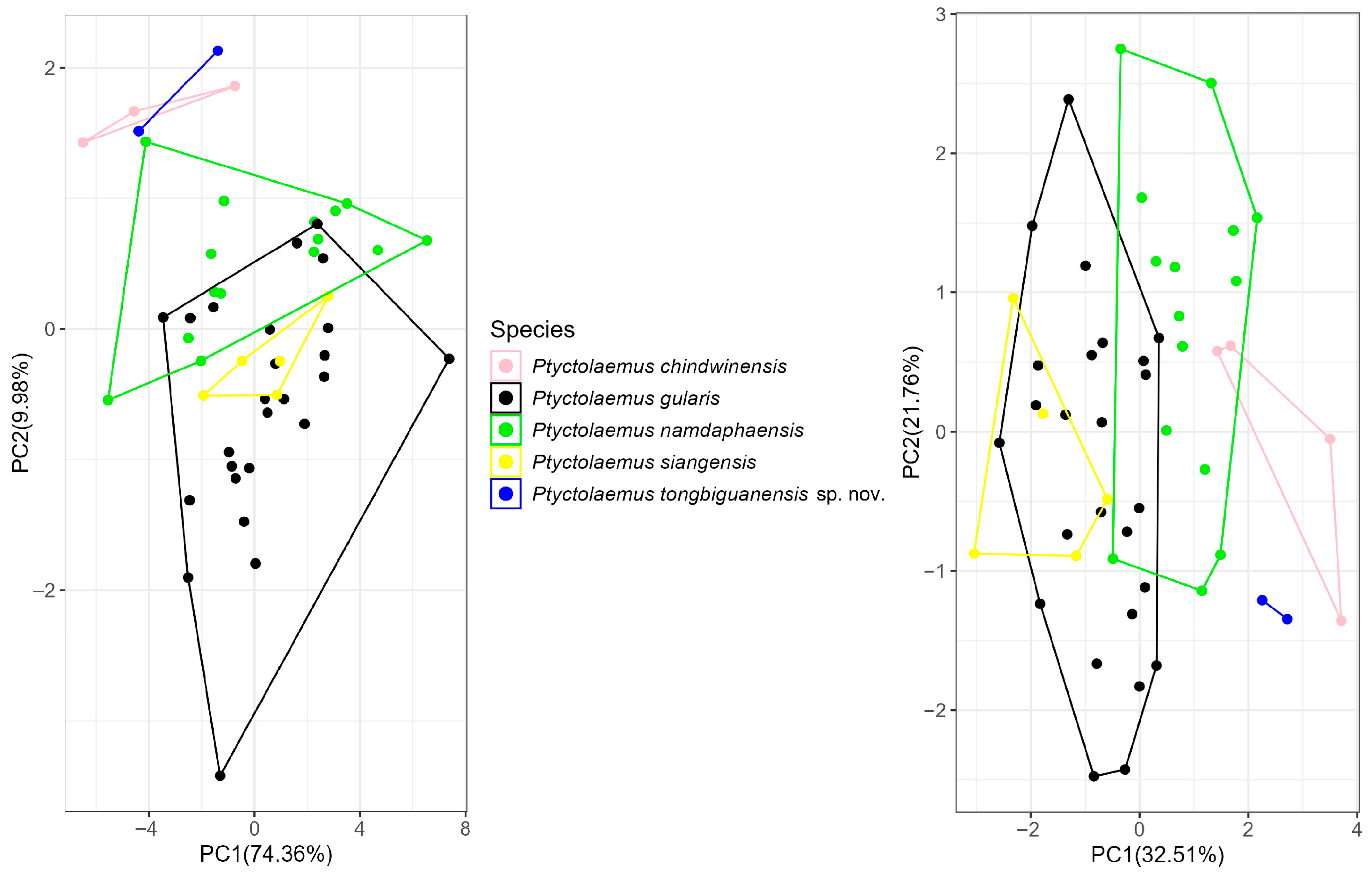
The scatterplot based on the first two major principal components showed significant overlaps between Ptyctolaemus gularis, P. namdaphaensis, and P. siangensis in both morphometric and pholidosis characteristics, slight overlap between P. chindwinensis and the new species in morphometric characteristics and between P. chindwinensis and P. namdaphaensis in pholidosis characteristics, and no overlap between the new species and the other four species in pholidosis characteristics (Figure 2).

3.3. Taxonomic Account

Ptyctolaemus tongbiguanensis sp. nov.
urn:lsid:zoobank.org:act:5330EFCC-5748-48B0-9AAF-2944930394F7
Holotype. KIZ 20140059, adult male, collected from Daonong Village, Nabang Town, Yingjiang County, Dehong Prefecture, Yunnan Province, China (24°40′39″ N, 97°35′18″ E, 580 m elevation) on 14 September 2013 by Xiaoyu Zhu.
Paratype. KIZ 059188, adult female, 5 September 2018, the same collection site as the holotype.

3.4. Etymology

The specific epithet refers to Yunnan Tongbiguan Provincial Natural Reserve, the locality in which the new species was found. We suggested “Tongbiguan fan-throated lizard” for the common English name and “铜壁关喉褶蜥” for the common Chinese name.

3.5. Diagnosis

The new species is assigned to the genus Ptyctolaemus based upon the following set of morphological characteristics: body size medium, body and limbs slender, tail and limbs long, tympanum concealed, nuchal crest undeveloped, dorsal scales small and heterogeneous in size, gular region with foldable colored dewlap in males. The new species can be distinguished from its congeners by a combination of the following morphological characteristics: SVL 68–79 mm, ratio of tail length to snout–vent length 2.45–2.60, ratio of forelimb length to snout–vent length 0.46–0.48, ratio of hindlimb length to snout–vent length 0.91–0.93, nuchal crest low and flat, nuchal crest spines 12–21, scales around midbody 86–88, subdigital lamellae under fourth toe 36–37, dewlap light yellow with black stripes in males and no colorful dewlap in females, oral cavity light blue, tongue bluish gray.

3.6. Description of Holotype

Adult male, SVL 78.5 mm; body slender, slightly compressed laterally; tail long, TAL 192.5 mm, TAL/SVL 2.45.
Head relatively long and narrow, HL 22.0 mm, HL/SVL 0.28, HW/HL 0.55; snout long, SEL 8.6 mm, SEL/HL 0.39; rostral nearly semicircular, width approximately 1.7 times of height, seven scales in contact with rostral including the two first supralabials; nasal oval, separated from rostral by one scale, eight scales in contact with nasal on each side; canthus rostralis sharp; scales on dorsal head irregular in shape and size, keeled; an inverted Y-shaped pattern on snout; eight supralabials on each side; tympanum concealed, covered with small scales; three enlarged and keeled scales posterior to orbit; three enlarged and protruding scales on temporal region; mental triangular, width approximately 1.6 times of height; mental followed by two first infralabials laterally and two postmentals posteriorly; five significantly enlarged chin shields on each side; eight infralabials on each side; scales on ventral head heterogeneous, feebly keeled, scales on middle line of gular pouch larger than others. Nuchal crest poorly developed, composed of 21 conical scales; scales on lateral neck small, feebly keeled, interspersed with some enlarged protruding scales. Dorsal body scales pointing backwards, heterogeneous, small feebly keeled scales interspersed with enlarged strongly keeled mucronate scales. Ventral body scales larger than most dorsal scales, strongly keeled, imbricate, mucronate, pointing backwards.
Limbs slender, covered with strongly keeled imbricate scales, scales on limbs larger than ventral scales; relative length of digits IV > III > II > V > I, relative length of toes IV> III > II> V > I; 36 subdigital lamellae under fourth toe on left side and 37 subdigital lamellae under fourth toe on right side.
Scales on dorsal tail heterogeneous, strongly keeled, slightly smaller than scales on limbs; scales on ventral tail strongly keeled, larger than ventral scales.

3.7. Coloration of Holotype in Life

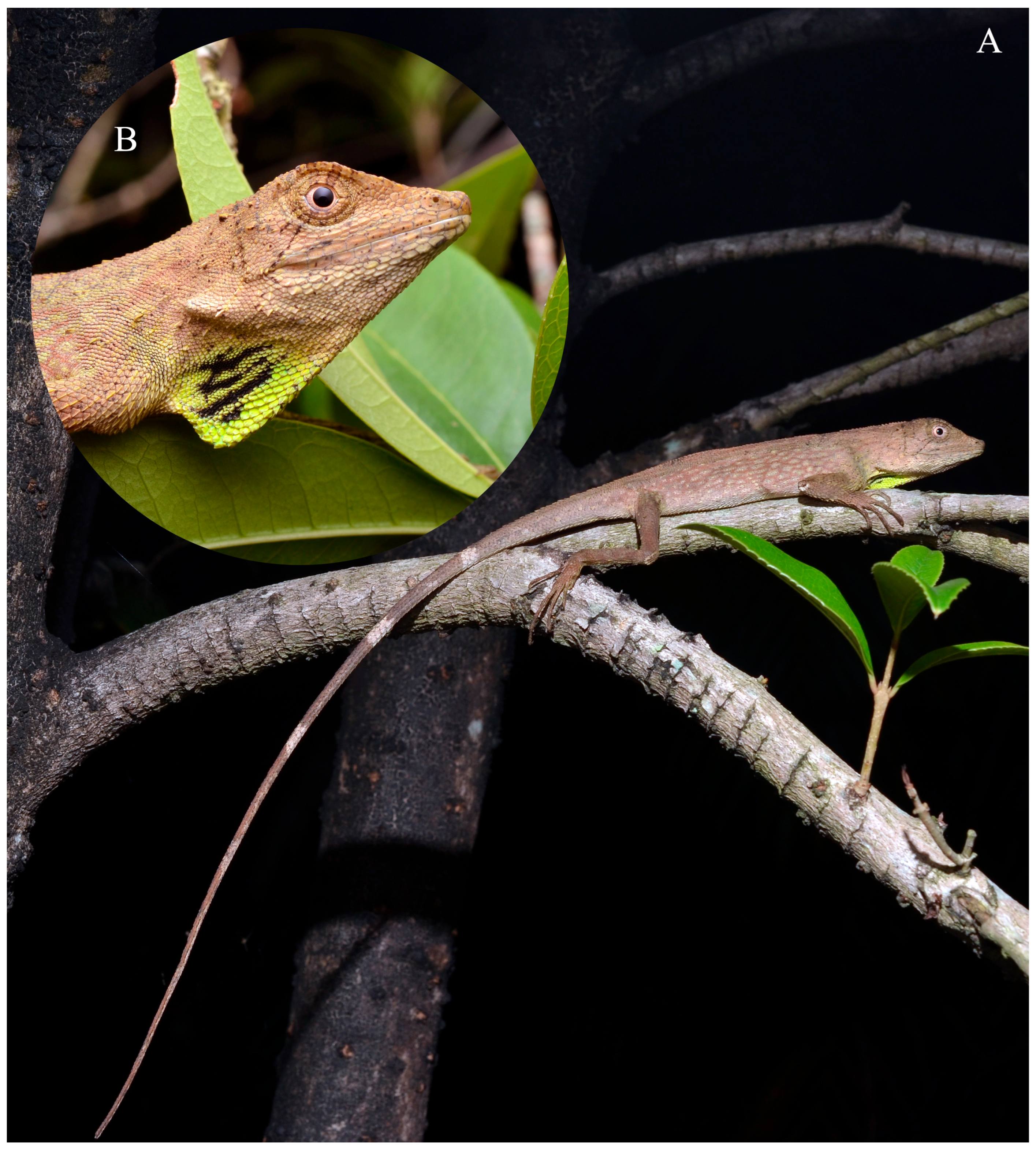
Dorsal surface of head light brown, no distinct transverse stripes on dorsal head; dorsal surface of body light brown with purplish brown reticulated pattern; dorsal surface of limbs brown with no distinct transverse stripes, white patches on elbows and knees; dorsal surface of tail grayish brown to brown with three distinct white transverse stripes and two indistinct light transverse stripes. Lateral surface of head light brown, some indistinct radial dark stripes around eye. Ventral surface of head light grayish brown, dewlap light yellow with four parallel narrow black stripes, upper three long, bottom one short, width of spacing between stripes almost same as width of stripes; ventral surface of body, limbs, and tail grayish white with some small dark spots. Iris light reddish brown; oral cavity light blue; tongue bluish gray (Figure 3).

3.8. Coloration of Holotype in Preservative

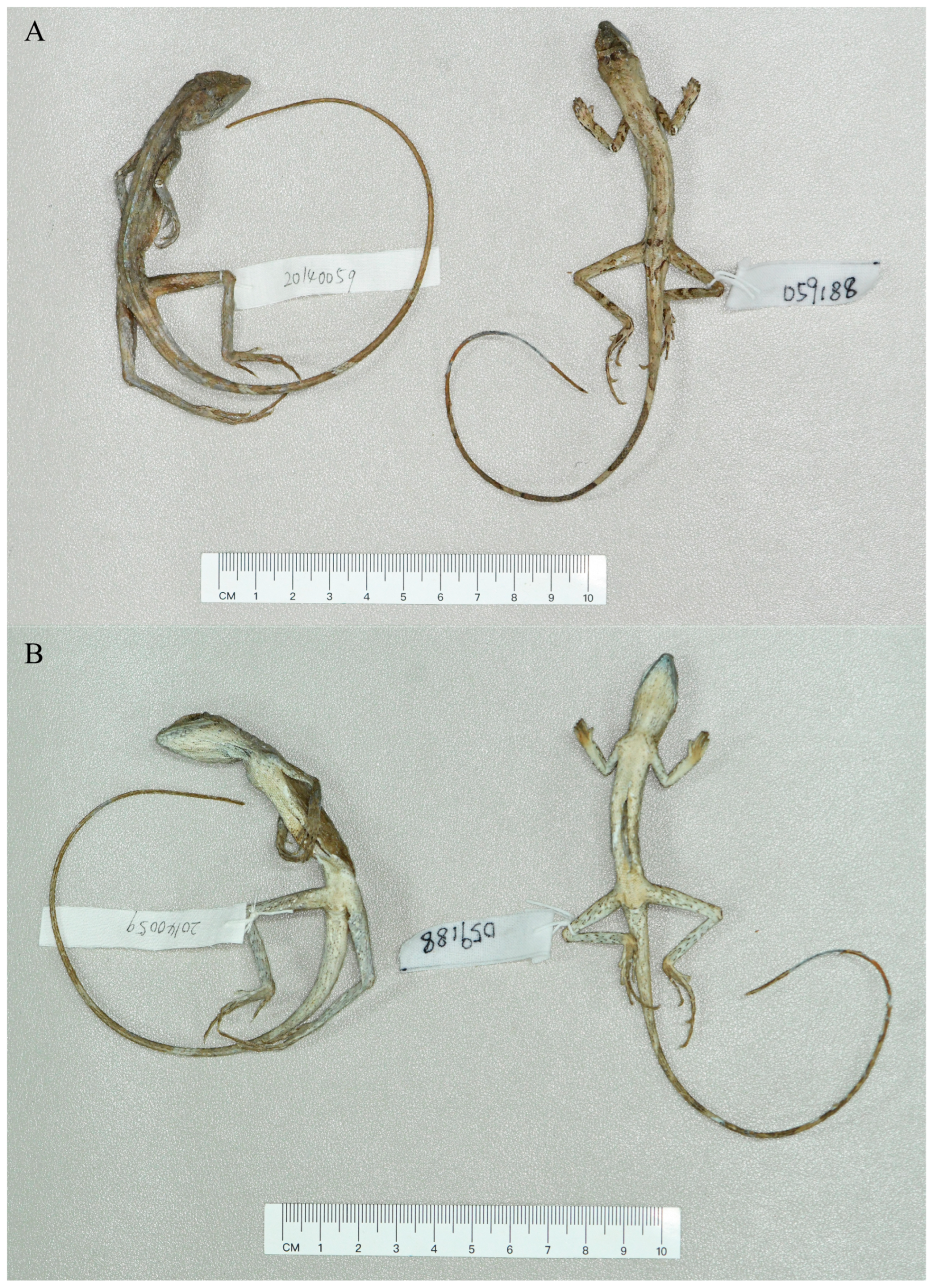
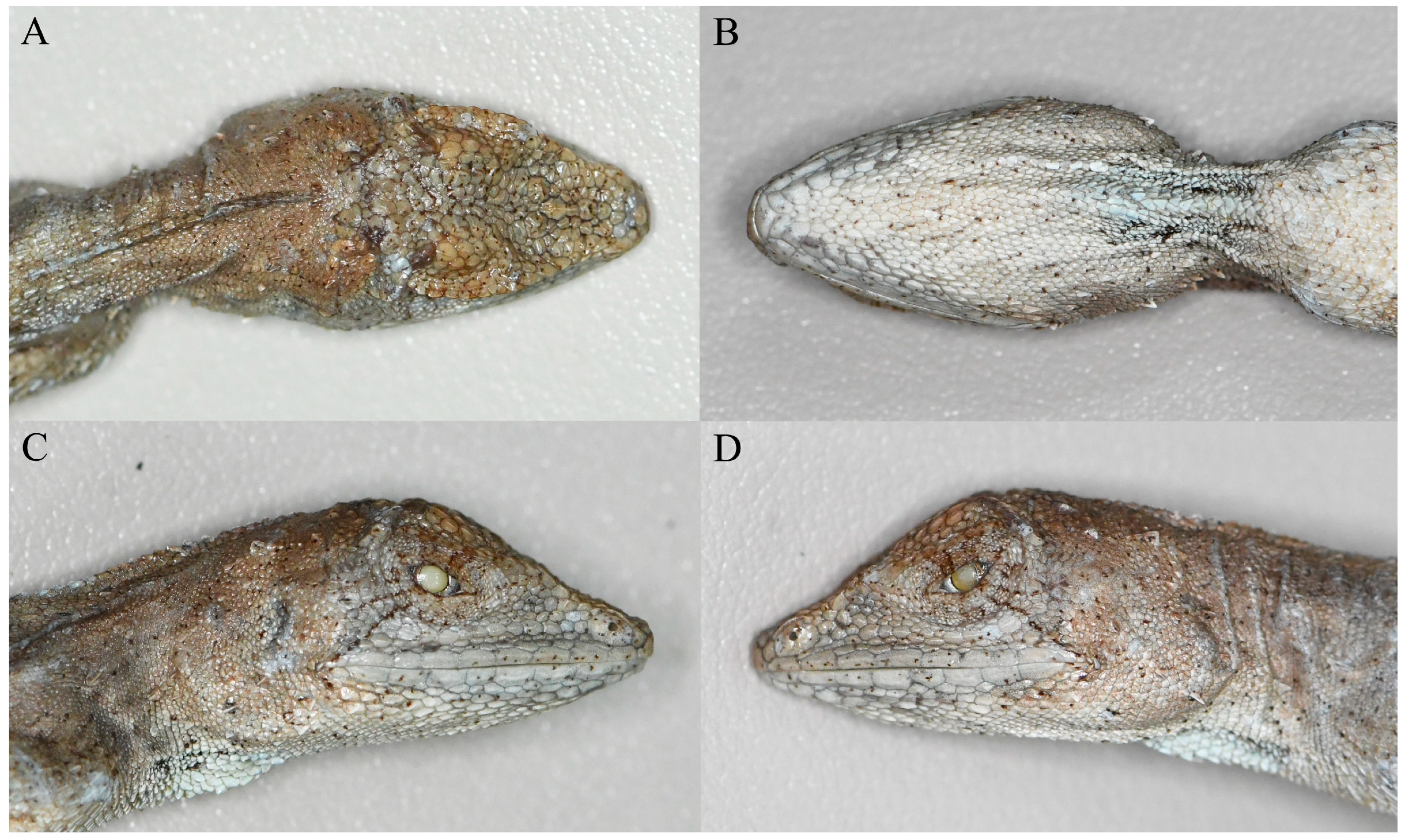
Dorsal surface turned to light grayish brown, reticulated pattern on lateral body became invisible; ventral surface turned to yellowish white to grayish white, yellow on dewlap faded, black stripes on dewlap and small dark spots on ventral body, limbs, and tail still visible (Figure 4 and Figure 5).

3.9. Variations

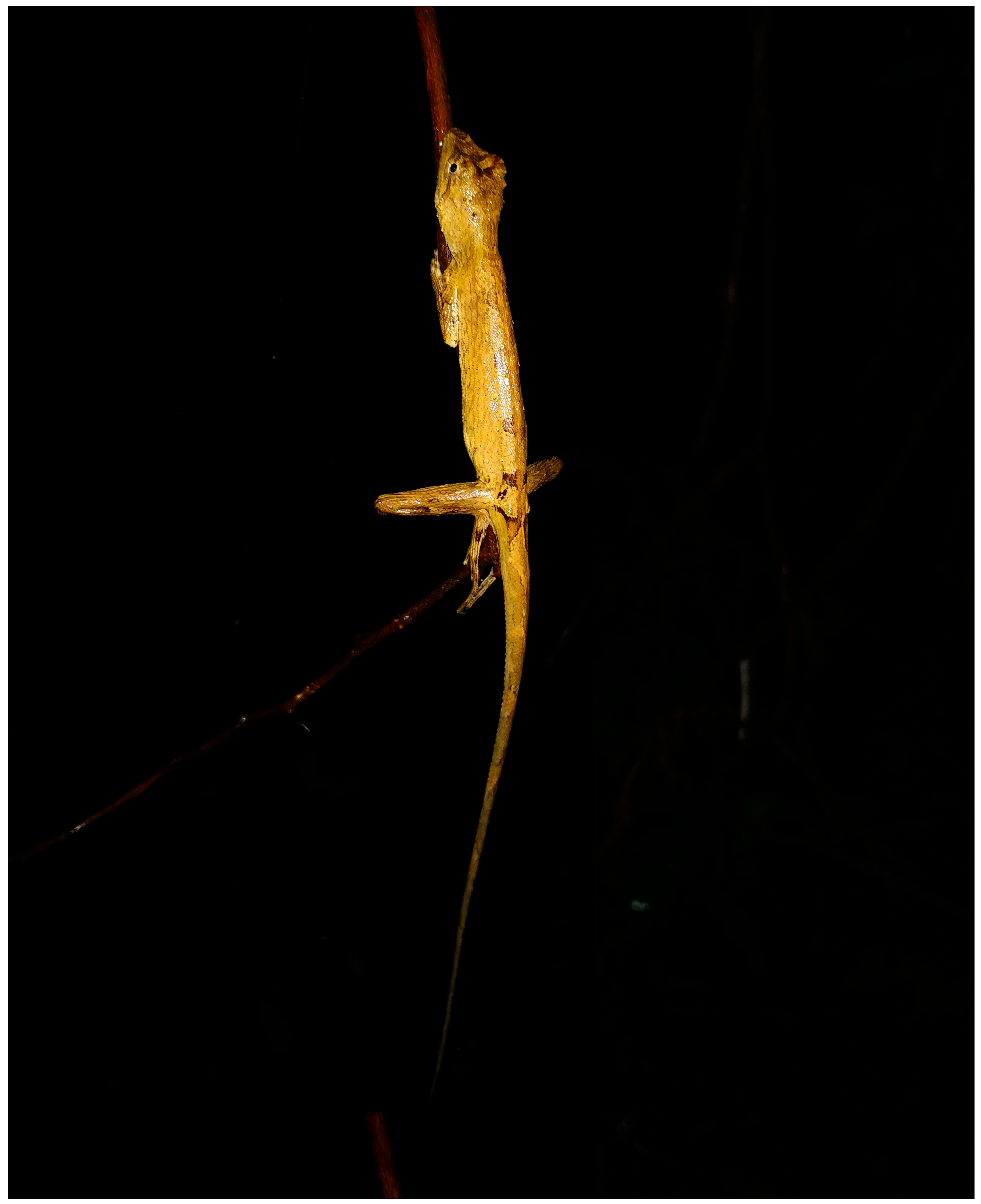
The female paratype is similar to the holotype in morphometric and scalation characteristics except that it has much fewer nuchal crest spines (Table 3). For coloration, the female paratype also resembles the holotype except that it has dark transverse stripes on the dorsal head and limbs, and the dewlap is grayish white with no black stripes (Figure 6).

3.10. Natural History

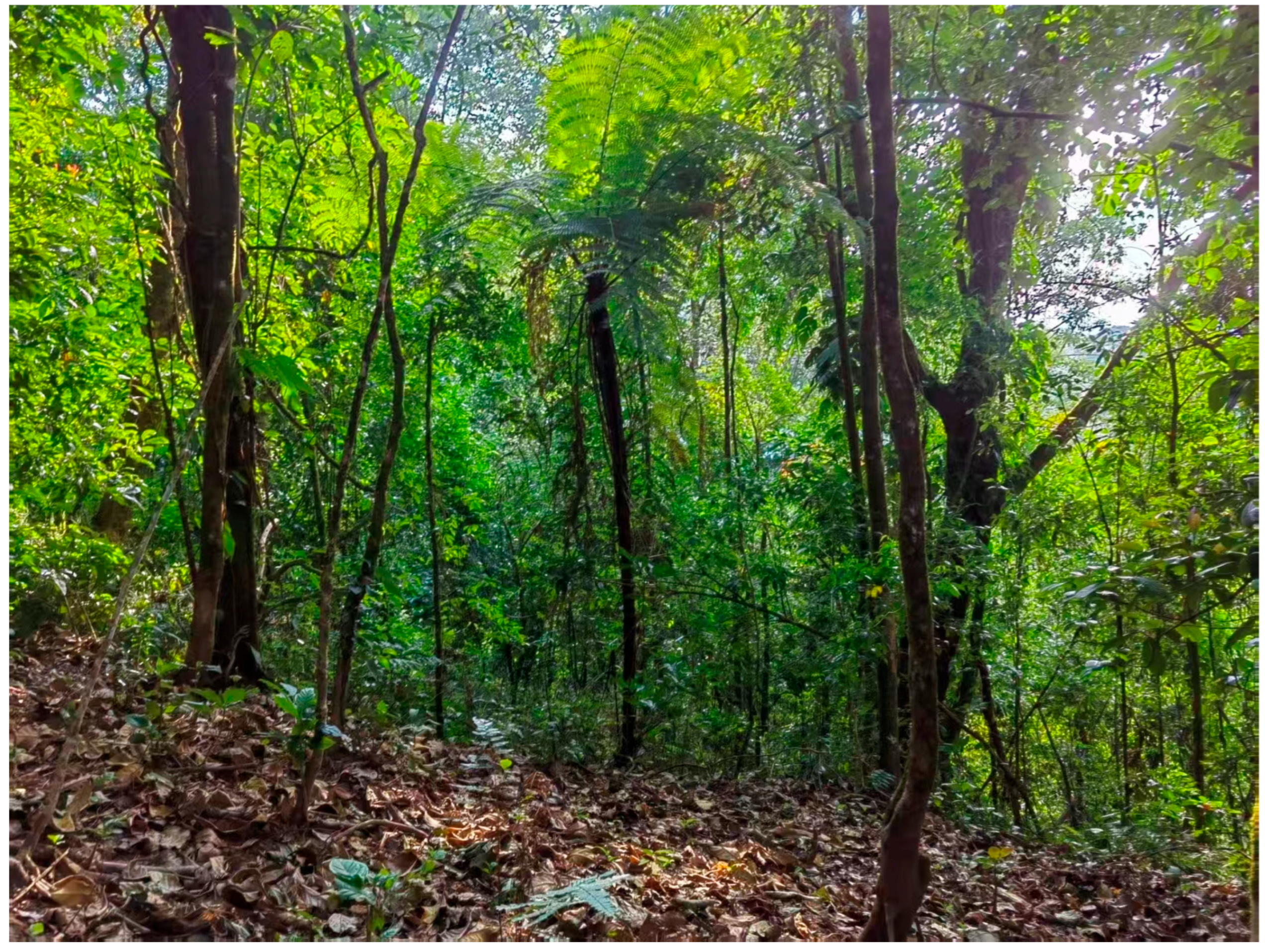
The specimens of the new species were collected on tree branches at night. The collection site is surrounded by primitive forest (Figure 7). Other species of amphibians and reptiles found around the site include Acanthosaura tongbiguanensis Liu & Rao, 2019, Cyrtodactylus dianxiensis Liu & Rao, 2021, Limnonectes longchuanensis Suwannapoom, Yuan, Sullivan & McLeod, 2016, Raorchestes longchuanensis (Yang & Li, 1978), Theloderma moloch (Annandale, 1912), Trimeresurus popeiorum Smith, 1937, and Zhangixalus smaragdinus (Blyth, 1852).

3.11. Distribution

Ptyctolaemus tongbiguanensis sp. nov. is currently only known from Yunnan Tongbiguan Provincial Natural Reserve, Dehong Prefecture, Yunnan Province, China.

3.12. Comparisons

Ptyctolaemus tongbiguanensis sp. nov. can be easily distinguished from P. gularis and P. siangensis by having light yellow dewlap with black stripes in males and no colorful dewlap in females (vs. white or light blue dewlap with dark blue stripes in both sexes).
Ptyctolaemus tongbiguanensis sp. nov. can be distinguished from P. collicristatus by having relatively longer limbs (FLL/SVL 0.46–0.48 vs. 0.39–0.45, HLL/SVL 0.91–0.93 vs. 0.64–0.74), a longer tail (TAL/SVL 2.45–2.60 vs. 1.77–2.13), and a lower nuchal crest in adult males (vs. a more prominent nuchal crest in adult males).
Ptyctolaemus tongbiguanensis sp. nov. can be distinguished from P. namdaphaensis by having light yellow dewlap with distinct black stripes in males and no colorful dewlap in females (vs. light green dewlap with black spots or indistinct black stripes in males and pale yellow dewlap in females), and a lower nuchal crest in adult males (vs. a more prominent nuchal crest in adult males).
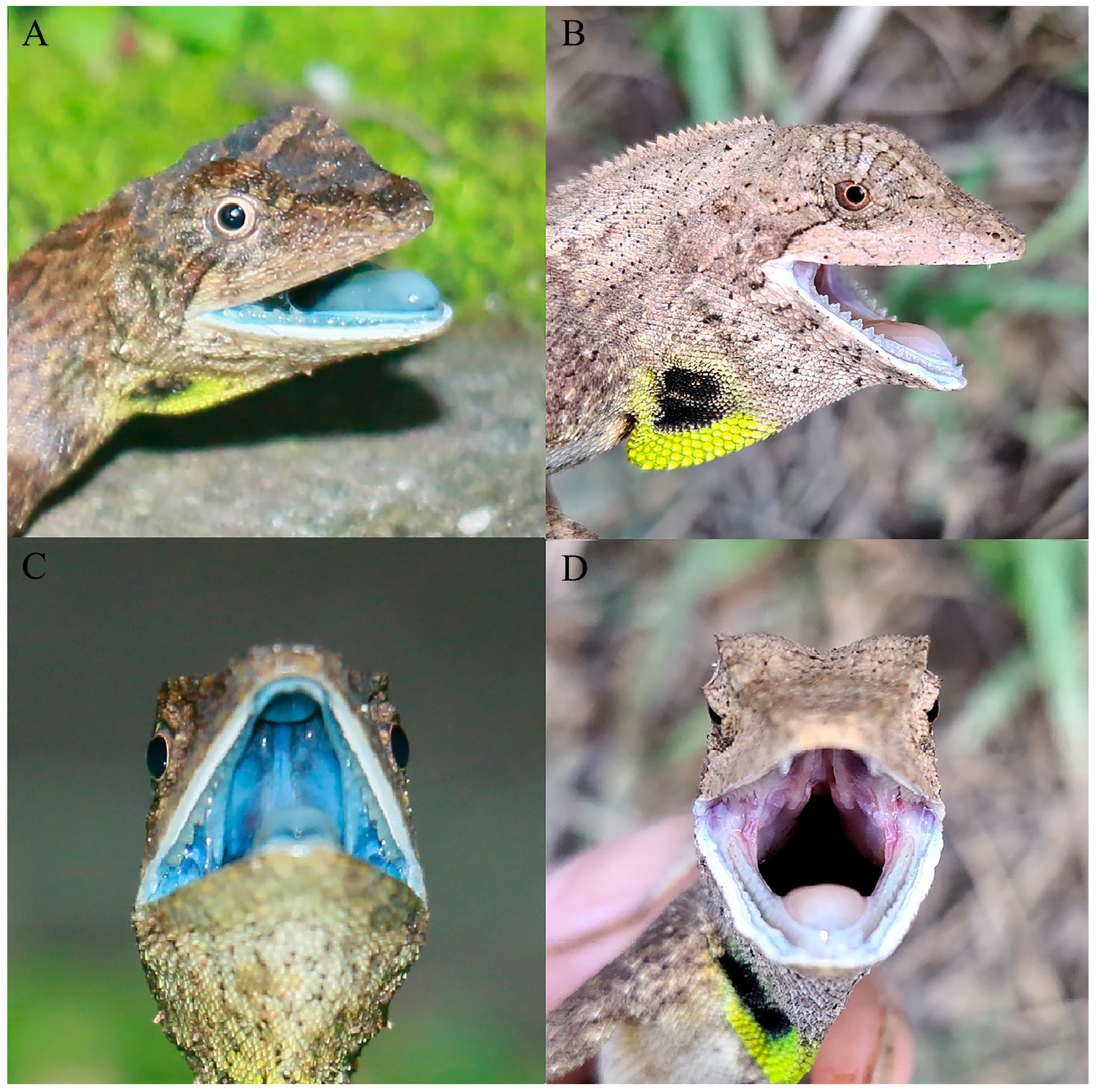
Ptyctolaemus tongbiguanensis sp. nov. most resembles P. chindwinensis; however, Ptyctolaemus tongbiguanensis sp. nov. can be distinguished from P. chindwinensis by the obviously different color of the oral cavity and tongue (oral cavity is light blue and tongue is bluish gray in Ptyctolaemus tongbiguanensis sp. nov. vs. oral cavity is pink and tongue is light flesh color in P. chindwinensis; see Figure 8). In addition, Ptyctolaemus tongbiguanensis sp. nov. differs from P. chindwinensis by the slightly more subdigital lamellae on the fourth toe (T4S 36–37 vs. 31–35), fewer scales around the midbody (MB 86–88 vs. 101–113), and fewer nuchal crest spines (NC 12–21 vs. 26–30).

4. Discussion

The genus Ptyctolaemus is a morphologically conserved group, and there are extensive overlaps in external morphological characteristics between species of this genus [2,5]. Therefore, the species of this genus often cannot be accurately identified through morphological comparison. Balan et al. [2] found overlaps between the three species of Ptyctolaemus from India in principal component analysis based on morphometric characteristics. Similarly, overlaps in morphospace between species are also observed in this study based on both morphometric and pholidosis characteristics (Figure 2). Although this study shows a separation between the new species and the other four species in pholidosis characteristics, this may be due to the small sample size. Perhaps the separation will no longer exist after increasing the sample size. Balan et al. [2] distinguish species of Ptyctolaemus mainly based on the different color of the gular region. This characteristic has been used for species diagnoses in many lizards [21,22,23,24,25,26,27,28,29] because although the body coloration may vary within a species, the color of the gular region is usually stable within the same species. In addition, the color of the oral cavity and tongue is a more reliable characteristic, which is stable within the same species and does not change along with the changes in the color of the body surface; therefore, it has also been used for species diagnoses in many lizards [30,31,32,33,34,35,36]. Ptyctolaemus tongbiguanensis sp. nov. has overlap in morphometrics and body ratios and scale characteristics with its most similar species P. chindwinensis, but it has significantly different colors of the oral cavity and tongue from those of P. chindwinensis. This can demonstrate that they are not the same species. Furthermore, although Ptyctolaemus tongbiguanensis sp. nov. and P. chindwinensis have similar color of the gular region, there are subtle differences. The black stripes on the dewlap are short and wide and closely adjacent to each other in P. chindwinensis, whereas they are long and narrow and usually apart from each other in Ptyctolaemus tongbiguanensis sp. nov. However, due to the small sample size, we are unable to determine whether the difference in the color of the gular region is a stable difference between these two species. More specimens are needed to verify whether this distinction can stably distinguish these two species.
The mitochondrial ND2 gene has been widely used in phylogenetic analyses of lizards and is considered to be able to better distinguish different species [2,4,5,21,23,26,32,34,35,36,37]. The genetic distances between species of Ptyctolaemus are relatively large, compared to those in other genera, such as Diploderma Hallowell, 1861 and Sitana Cuvier, 1829 [23,25]. This also demonstrates that although the morphological differences between species of Ptyctolaemus are not significant, they are valid species. Furthermore, it may also imply that there are several undiscovered species within this genus hidden among these genetically highly differentiated known species. The revelation of the cryptic diversity of this genus is anticipated.
The population status of Ptyctolaemus tongbiguanensis sp. nov. is currently unknown; however, the type locality is within Yunnan Tongbiguan Provincial Nature Reserve, which has a good natural habitat and is protected by law. Therefore, we speculate that this new species is not endangered at present. More field surveys are needed to clarify the distribution range and conservation status of this species.

Author Contributions

Conceptualization, D.R., F.Y., S.L. and M.H.; methodology, X.Z., M.H., Z.D., C.Z. and F.Y.; formal analysis, S.L.; investigation, S.L., X.Z., Z.D., C.Z., F.Y. and D.R.; resources, F.Y. and D.R.; writing—original draft preparation, S.L.; writing—review and editing, S.L., X.Z., M.H., F.Y. and D.R. All authors have read and agreed to the published version of the manuscript.

Funding

This research was supported by Biological Resources Programme, Chinese Academy of Sciences, the Position of Bioclassonomist of Chinese Academy of Sciences (grant no. CAS-TAX-24), and Foundation of Yunnan Key Laboratory of Biodiversity Information, Kunming Institute of Zoology, Chinese Academy of Sciences.

Institutional Review Board Statement

The specimen collection was performed in accordance with the Wild Animals Protection Law of the People’s Republic of China, and the study on animals was approved by the Ethics Committee of Kunming Institute of Zoology, Chinese Academy of Sciences on 21 December 2019 and 24 October 2024 (protocol codes: SMKX-20191221-216, IACUC-OE-2024-10-001).

Data Availability Statement

All data are presented in this article and in GenBank (https://www.ncbi.nlm.nih.gov (accessed on 28 November 2025)).

Acknowledgments

We thank Tao Zhang for providing photos of the specimen. Thanks also to the forest rangers of Yunnan Tongbiguan Provincial Natural Reserve for their assistance in the field. We also appreciate the valuable comments from the editor and reviewers on this manuscript.

Conflicts of Interest

The authors declare no conflicts of interest.

References

  1. Ananjeva, N.B.; Stuart, B.L. The Agamid Lizard Ptyctolaemus Phuwuanensis Manthey and Nabhitabhata, 1991 from Thailand and Laos Represents a New Genus. Russ. J. Herpetol. 2001, 8, 165–170. [Google Scholar]
  2. Balan, A.; Das, A.; Boruah, B.; Tillack, T.; Lalronunga, S.; Deepak, V. Description of two new species of Ptyctolaemus (Squamata: Agamidae) from northeast India. Vert. Zool. 2025, 75, 487–516. [Google Scholar] [CrossRef]
  3. Manthey, U.; Nabhitabhata, J. Eine neue Agame, Ptyctolaemus phuwuanensis sp. n. (Sauria: Agamidae), aus Nordost-Thailand. Sauria 1991, 13, 3–6. [Google Scholar]
  4. Schulte, J.A., II; Vindum, J.V.; Win, H.; Thin, T.; Lwin, K.S.; Shein, A.K. Phylogenetic relationships of the genus Ptyctolaemus (Squamata: Agamidae), with a description of a new species from Chin Hills of Western Myanmar. Proc. Calif. Acad. Sci. 2004, 55, 222–247. [Google Scholar]
  5. Liu, S.; Hou, M.; Lwin, Y.H.; Rao, D.Q. A new species of the genus Ptyctolaemus Peters, 1864 (Squamata, Agamidae) from Sagaing, Myanmar. Evol. Sys. 2021, 5, 347–357. [Google Scholar] [CrossRef]
  6. Uetz, P.; Freed, P.; Hošek, J. The Reptile Database. Available online: http://www.reptiledatabase.org (accessed on 28 November 2025).
  7. Yang, Y.M.; Du, F. Intergrated Scientific Studies of Yunnan Tongbiguan Nature Reserve; Yunnan Science and Technology Press: Kunming, China, 2006. [Google Scholar]
  8. Zhao, T.; Yi, X.; Zeng, Z.; Feng, T. MobileNet-Yolo Based Wildlife Detection Model: A Case Study in Yunnan Tongbiguan Nature Reserve, China. J. Intell. Fuzzy Syst. 2021, 41, 2171–2181. [Google Scholar] [CrossRef]
  9. Sambrook, J.; Fritsch, E.F.; Maniatis, T. Molecular Cloning: A Laboratory Manual, 2nd ed.; Cold Spring Harbor Laboratory: Cold Spring Harbor, NY, USA, 1989. [Google Scholar]
  10. Macey, J.R.; Schulte, J.A.; Larson, A.; Ananjeva, N.B.; Wang, Y.; Pethiyagoda, R.; Rastegar-Pouyani, N.; Papenfuss, T.J. Evaluating trans-tethys migration: An example using acrodont lizard phylogenetics. Syst. Biol. 2000, 49, 233–256. [Google Scholar] [CrossRef]
  11. Pal, S.; Vijayakumar, S.; Shanker, K.; Jayarajan, A.; Deepak, V. A systematic revision of Calotes Cuvier, 1817 (Squamata: Agamidae) from the Western Ghats adds two genera and reveals two new species. Zootaxa 2018, 4482, 401–450. [Google Scholar] [CrossRef]
  12. Burland, T.G. DNASTAR’s Lasergene sequence analysis software. Methods Mol. Biol. 2000, 132, 71–91. [Google Scholar]
  13. Thompson, J.D.; Higgins, D.G.; Gibson, T.J. CLUSTAL W: Improving the Sensitivity of Progressive Multiple Sequence Alignment Through Sequence Weighting, Position-Specific Gap Penalties and Weight Matrix Choice. Nucleic Acids Res. 1994, 22, 4673–4680. [Google Scholar] [CrossRef]
  14. Tamura, K.; Stecher, G.; Kumar, S. MEGA11: Molecular Evolutionary Genetics Analysis Version 11. Mol. Biol. Evol. 2021, 38, 3022–3027. [Google Scholar] [CrossRef]
  15. Kalyaanamoorthy, S.; Minh, B.Q.; Wong, T.K.; Von Haeseler, A.; Jermiin, L.S. ModelFinder: Fast Model Selection for Accurate Phylogenetic Estimates. Nat. Methods 2017, 14, 587–589. [Google Scholar] [CrossRef] [PubMed]
  16. Ronquist, F.; Teslenko, M.; Van Der Mark, P.; Ayres, D.L.; Darling, A.; Höhna, S.; Larget, B.; Liu, L.; Suchard, M.A.; Huelsenbeck, J.P. MrBayes 3.2: Efficient Bayesian Phylogenetic Inference and Model Choice Across a Large Model Space. Syst. Biol. 2012, 61, 539–542. [Google Scholar] [CrossRef] [PubMed]
  17. Nguyen, L.T.; Schmidt, H.A.; Von Haeseler, A.; Minh, B.Q. IQ-TREE: A Fast and Effective Stochastic Algorithm for Estimating Maximum-Likelihood Phylogenies. Mol. Biol. Evol. 2015, 32, 268–274. [Google Scholar] [CrossRef]
  18. Nguyen, T.T.; Nguyen, H.H.; Ninh, H.T.; Le, L.T.H.; Bui, H.T.; Orlov, N.; Hoang, C.V.; Ziegler, T. Zhangixalus thaoae sp. nov., a new green treefrog species from Vietnam (Anura, Rhacophoridae). ZooKeys 2024, 1197, 93–113. [Google Scholar] [CrossRef]
  19. Giri, V.B.; Chaitanya, R.; Mahony, S.; Lalrounga, S.; Lalringhhana, C.; Das, A.; Sarkar, V.; Karanth, P.; Deepak, V. On the systematic status of the genus Oriocalotes Günther, 1864 (Squamata: Agamidae: Draconinae) with the description of a new species from Mizoram state, Northeast India. Zootaxa 2019, 4638, 451–484. [Google Scholar] [CrossRef] [PubMed]
  20. R Core Team. R: A Language and Environment for Statistical Computing; R Foundation for Statistical Computing: Vienna, Austria, 2022; Available online: https://www.R-project.org (accessed on 21 November 2022).
  21. Grismer, L.L.; Quah, E.S.H.; Wood, P.L., Jr.; Anuar, S.; Muin, A.; Davis, H.R.; Murdoch, M.L.; Grismer, J.L.; Cota, M.; Cobos, A.J. Dragons in the mist: Three new species of Pseudocalotes Fitzinger (Squamata: Agamidae) from the sky island archipelago of Peninsular Malaysia. Zootaxa 2016, 4136, 461–490. [Google Scholar] [CrossRef]
  22. Deepak, V.; Giri, V.B.; Asif, M.; Dutta, S.K.; Vyas, R.; Zambre, A.M.; Bhosale, H.; Karanth, K.P. Systematics and phylogeny of Sitana (Reptilia: Agamidae) of Peninsular India, with the description of one new genus and five new species. Contrib. Zool. 2016, 85, 67–111. [Google Scholar] [CrossRef]
  23. Ambekar, M.; Murthy, A.; Mirza, Z.A. A new species of fan-throated lizard of the genus Sitana Cuvier, 1829 (Squamata: Agamidae) from northern Karnataka, India. Bonn Zool. Bull. 2020, 69, 157–164. [Google Scholar] [CrossRef]
  24. Das, S.; Pal, S.; Narayanan, S.; Subin, K.; Palot, M.J.; Rajkumar, K.P.; Deepak, V. Discovery of a new species of kangaroo lizard (Squamata: Agamidae: Agasthyagama) from the southern Western Ghats of India. Vert. Zool. 2024, 74, 151–168. [Google Scholar] [CrossRef]
  25. Wang, K.; Ren, J.; Wu, J.; Jiang, K.; Jin, J.; Hou, S.; Zheng, P.; Xie, F.; Siler, C.D.; Che, J. Systematic revision of Mountain Dragons (Reptilia: Agamidae: Diploderma) in China, with descriptions of six new species and discussion on their conservation. J. Zool. Syst. Evol. Res. 2021, 59, 222–263. [Google Scholar] [CrossRef]
  26. Wang, K.; Gao, W.; Wu, J.; Dong, W.; Feng, X.; Shen, W.; Jin, J.; Shi, X.; Qi, Y.; Siler, C.D.; et al. Two new species of Diploderma Hallowell, 1861 (Reptilia: Squamata: Agamidae) from the Hengduan Mountain Region in China and rediscovery of D. brevicaudum (Manthey, Wolfgang, Hou, Wang, 2012). Zootaxa 2021, 4941, 1–32. [Google Scholar] [CrossRef]
  27. Marín, C.M.; Bocanumenth, D.; Daza, J.M. The colorful giants: Revisiting the systematics of the Anolis latifrons series (Squamata: Anolidae). Vert. Zool. 2025, 75, 441–457. [Google Scholar] [CrossRef]
  28. Poe, S.; Ryan, M.J. Description of two new species similar to Anolis insignis (Squamata: Iguanidae) and resurrection of Anolis (Diaphoranolis) brooksi. Amph. Rep. Cons. 2017, 11, 1–16. [Google Scholar]
  29. Ayala-Varela, F.; Valverde, S.; Poe, S.; Narváez, A.E.; Yánez-Muñoz, M.H.; Torres-Carvajal, O. A new giant anole (Squamata: Iguanidae: Dactyloinae) from southwestern Ecuador. Zootaxa 2021, 4991, 295–317. [Google Scholar] [CrossRef] [PubMed]
  30. Harvey, M.B.; Hamidy, A.; Kurniawan, N.; Shaney, K.; Smith, E.N. Three new species of Pseudocalotes (Squamata: Agamidae) from southern Sumatra, Indonesia. Zootaxa 2014, 3841, 211–238. [Google Scholar] [CrossRef]
  31. Harvey, M.B.; Shaney, K.; Hamidy, A.; Kurniawan, N.; Smith, E.N. A new species of Pseudocalotes (Squamata: Agamidae) from the Bukit Barisan Range of Sumatra with an Estimation of its phylogeny. Zootaxa 2017, 4276, 215–232. [Google Scholar] [CrossRef] [PubMed]
  32. Wang, K.; Wu, J.W.; Jiang, K.; Chen, J.M.; Miao, B.F.; Siler, C.D.; Che, J. A new species of Mountain Dragon (Reptilia: Agamidae: Diploderma) from the D. dymondi complex in southern Sichuan Province, China. Zool. Res. 2019, 40, 456–465. [Google Scholar] [CrossRef]
  33. Liu, S.; Hou, M.; Mo, M.Z.; Rao, D.Q. A new species of the genus Acanthosaura (Squamata, Agamidae) from Yunnan, China, with comments on its conservation status. ZooKeys 2020, 959, 113–135. [Google Scholar] [CrossRef] [PubMed]
  34. Liu, S.; Hou, M.; Rao, D.; Ananjeva, N.B. Three new species of Diploderma Hallowell, 1861 (Squamata, Agamidae) from the Hengduan Mountain Region, south-western China. ZooKeys 2022, 1131, 1–30. [Google Scholar] [CrossRef]
  35. Xu, Y.; Gong, Y.; Hou, M.; Weng, S.; Liu, S.; Deng, J.; Hu, J.; Peng, L. A New Species of the Genus Pseudocalotes (Squamata: Agamidae) from Southwest Yunnan, China. Animals 2024, 14, 826. [Google Scholar] [CrossRef] [PubMed]
  36. Liu, F.J.; Wu, Y.Y.; Zhang, J.D.; Yang, G.; Liu, S.; Chen, X.; Chang, J.; Xie, Q.; Cai, B. A new species of Diploderma Hallowell, 1861 (Squamata, Agamidae) discovered in the upper Dadu River valley of the Hengduan Mountains, Sichuan, China. ZooKeys 2025, 1251, 17–38. [Google Scholar] [CrossRef] [PubMed]
  37. Zug, G.R.; Brown, H.H.; Schulte, J.A.; Vindum, J.V. Systematics of the garden lizards, Calotes versicolor group (Reptilia, Squamata, Agamidae), in Myanmar: Central dry zone populations. Proc. Calif. Acad. Sci. 2006, 57, 35–68. [Google Scholar]
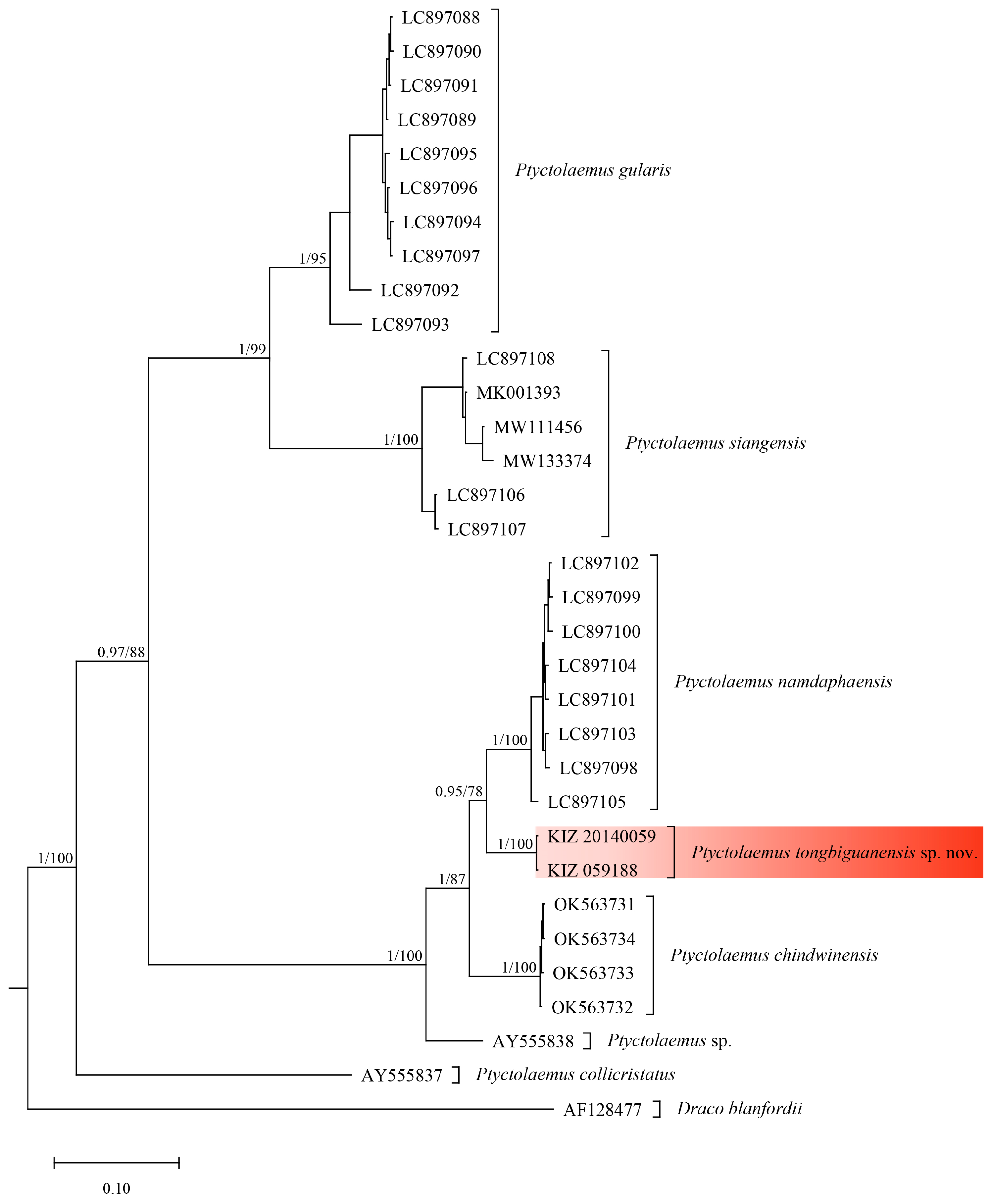
Figure 1. Phylogenetic tree inferred from Bayesian inference based on ND2 gene sequences. Nodal numbers before and after slashes represent Bayesian posterior probabilities and inference bootstrap support from maximum likelihood analysis, respectively.
Taxonomy 06 00004 g001
Figure 2. Scatterplot of the first two major principal components of morphometric characteristics (left) and pholidosis characteristics (right).
Taxonomy 06 00004 g002
Figure 3. The holotype (KIZ 20140059) of Ptyctolaemus tongbiguanensis sp. nov. in life. (A) General view; (B) close-up view of the head.
Taxonomy 06 00004 g003
Figure 4. The type specimens of Ptyctolaemus tongbiguanensis sp. nov. in preservative. (A) Dorsal view; (B) ventral view.
Taxonomy 06 00004 g004
Figure 5. Head views of the holotype (KIZ 20140059) of Ptyctolaemus tongbiguanensis sp. nov. in preservative. (A) Dorsal; (B) ventral; (C) right; (D) left.
Taxonomy 06 00004 g005
Figure 6. The paratype (KIZ 059188) of Ptyctolaemus tongbiguanensis sp. nov. in situ.
Taxonomy 06 00004 g006
Figure 7. Habitat of Ptyctolaemus tongbiguanensis sp. nov. at the type locality.
Taxonomy 06 00004 g007
Figure 8. Comparison of the tongue and the oral cavity between Ptyctolaemus tongbiguanensis sp. nov. (A,C) and P. chindwinensis (B,D).
Taxonomy 06 00004 g008
Table 1. Sequences (ND2) used in the phylogenetic analysis of this study. Museum abbreviations are as follows: California Academy of Sciences (CAS), Kunming Natural History Museum of Zoology, Kunming Institute of Zoology, Chinese Academy of Sciences (KIZ), Museum of Vertebrate Zoology (MVZ), Southeast Asia Biodiversity Research Institute, Chinese Academy of Sciences (SEABRI), United States National Museum (USNM), Wildlife Institute of India (WII), and Zoological Survey of India (ZSI).
SpeciesLocalityVoucherGenBank
Ptyctolaemus chindwinensisHtamanthi, Sagaing, MyanmarSEABRI 2019120076OK563731
Ptyctolaemus chindwinensisHtamanthi, Sagaing, MyanmarSEABRI 2019120016OK563732
Ptyctolaemus chindwinensisHtamanthi, Sagaing, MyanmarSEABRI 2019120031OK563733
Ptyctolaemus chindwinensisHtamanthi, Sagaing, MyanmarSEABRI 2019120046OK563734
Ptyctolaemus collicristatusMin Dat, Chin, MyanmarUSNM 559811AY555837
Ptyctolaemus gularisChanglang, Arunachal Pradesh, IndiaWII-ADR3292LC897088
Ptyctolaemus gularisLohit, Arunachal Pradesh, IndiaWII-ADR3018LC897091
Ptyctolaemus gularisChanglang, Arunachal Pradesh, IndiaWII-ADR1406LC897090
Ptyctolaemus gularisEast Garo Hills, Meghalaya, IndiaWII-ADR1436LC897093
Ptyctolaemus gularisEast Khasi Hills, Meghalaya, IndiaWII-ADR3180LC897092
Ptyctolaemus gularisEast Jaintia Hills, Meghalaya, IndiaZSI-R-29477LC897094
Ptyctolaemus gularisMamit, Mizoram, IndiaWII-ADR1152LC897096
Ptyctolaemus gularisLawngtlai, Mizoram, IndiaWII-ADR1054LC897095
Ptyctolaemus gularisCachar, Assam, IndiaWII-ADR3476LC897097
Ptyctolaemus gularisDibrugarh, Assam, IndiaWII-ADR3475LC897089
Ptyctolaemus namdaphaensisChanglang, Arunachal Pradesh, IndiaWII-ADR1403LC897099
Ptyctolaemus namdaphaensisChanglang, Arunachal Pradesh, IndiaWII-ADR1409LC897100
Ptyctolaemus namdaphaensisChanglang, Arunachal Pradesh, IndiaWII-ADR1410LC897101
Ptyctolaemus namdaphaensisChanglang, Arunachal Pradesh, IndiaWII-ADR1411LC897102
Ptyctolaemus namdaphaensisChanglang, Arunachal Pradesh, IndiaWII-ADR1427LC897103
Ptyctolaemus namdaphaensisChanglang, Arunachal Pradesh, IndiaWII-ADR3178LC897105
Ptyctolaemus namdaphaensisChanglang, Arunachal Pradesh, IndiaWII-ADR3283LC897104
Ptyctolaemus namdaphaensisChanglang, Arunachal Pradesh, IndiaZSI-R-29481LC897098
Ptyctolaemus siangensisEast Siang, Arunachal Pradesh, IndiaWII-ADR1176LC897107
Ptyctolaemus siangensisUpper Siang, Arunachal Pradesh, IndiaWII-ADR1210LC897108
Ptyctolaemus siangensisLower Subansiri, Arunachal Pradesh, IndiaWII-ADR465LC897106
Ptyctolaemus siangensisMedog, Xizang, ChinaKIZ 016452MK001393
Ptyctolaemus siangensisMedog, Xizang, ChinaKIZ 06654MW111456
Ptyctolaemus siangensisMedog, Xizang, ChinaKIZ 09947MW133374
Ptyctolaemus sp.Putao, Kachin, MyanmarCAS 221515AY555838
Ptyctolaemus tongbiguanensis sp. nov.Yingjiang, Yunnan, ChinaKIZ 20140059PX724370
Ptyctolaemus tongbiguanensis sp. nov.Yingjiang, Yunnan, ChinaKIZ 059188PX724371
Draco blanfordiiAn Khe, Gia Lai, VietnamMVZ 222156AF128477
Table 2. The uncorrected pairwise distances (p-distance, %) among species of Ptyctolaemus inferred from ND2 gene sequences.
123456
1 Ptyctolaemus chindwinensis
2 Ptyctolaemus collicristatus26.3
3 Ptyctolaemus gularis23.622.1
4 Ptyctolaemus namdaphaensis9.226.223.7
5 Ptyctolaemus siangensis25.925.015.225.3
6 Ptyctolaemus sp.10.326.022.29.524.9
7 Ptyctolaemus tongbiguanensis sp. nov.8.526.324.17.725.311.2
Table 3. Measurements (in mm) and scalation data of the type specimens of Ptyctolaemus tongbiguanensis sp. nov. For abbreviations, see the Materials and Methods Section.
KIZ 20140059
Holotype
Male
KIZ 059188
Paratype
Female
SVL78.568.4
TAL192.5178.0
TAL/SVL2.452.60
HL22.018.8
HW12.211.2
HW/HL0.550.60
HL/SVL0.280.27
SEL8.67.0
OD6.56.1
IOD7.76.8
FLL36.032.9
HLL71.163.8
FLL/SVL0.460.48
HLL/SVL0.910.93
T4L16.915.4
T4L/SVL0.220.23
T4L/HLL0.240.24
TRL37.433.6
SupL8/88/7
InfL8/88/9
T4S36/3737/37
NC2112
MB8688
VSR6872
VT9093
Disclaimer/Publisher’s Note: The statements, opinions and data contained in all publications are solely those of the individual author(s) and contributor(s) and not of MDPI and/or the editor(s). MDPI and/or the editor(s) disclaim responsibility for any injury to people or property resulting from any ideas, methods, instructions or products referred to in the content.