


Abstract
Boesenbergia burmanica Boonma, P.Saensouk & Saensouk, a new species from Naypyidaw Union Territory, Myanmar, is described based on morphological examination of specimens collected during field surveys in 2024–2025. The genus Boesenbergia is taxonomically complex, and ongoing botanical exploration in Southeast Asia continues to reveal undescribed taxa. Comparative analyses of living plants, herbarium materials, and published descriptions were conducted to determine diagnostic features. Boesenbergia burmanica is closely related to B. meghalayensis Aishwarya & M.Sabu but differs in having ovoid, branched rhizomes, a pubescent lamina on both surfaces, and an oblanceolate labellum with bright red markings. It grows in shady, sandy-loam habitats at 140–145 m elevation and flowers from August to September, producing inflorescences with nine to ten flowers. Species of Boesenbergia are traditionally used in Myanmar and neighboring regions as medicinal and ornamental plants, and notes on local ethnobotanical knowledge are provided. The new species exhibits high ornamental potential due to its compact clumping habit and attractive floral coloration. Cultivation guidelines are provided to support ex situ conservation and horticultural development for sustainable use. This discovery increases the number of Boesenbergia species recorded in Myanmar to 14 and highlights the importance of continued field-based taxonomic and conservation research on regional Zingiberaceae diversity.
Keywords:
Boesenbergia; conservation; ethnobotany; Myanmar flora; new species; plant diversity; taxonomy; Zingibereae 1. Introduction
Boesenbergia Kuntze (Zingiberaceae) is a diverse genus of approximately 100 species distributed across South and Southeast Asia, the Malay Archipelago, and the Philippines [1,2,3,4,5,6,7,8,9,10,11,12,13,14,15,16,17,18,19,20,21,22,23,24,25,26,27,28,29,30,31]. Many species are valued for their culinary, medicinal, and ornamental uses [27,28,32,33,34,35,36,37], with several cultivated for their showy foliage and flowers. Despite this, taxonomic challenges remain due to high morphological variability and limited documentation in certain regions.
Myanmar is recognized as an important area of Boesenbergia diversity. Since the first records during the 19th century [38,39,40], subsequent studies have expanded the national checklist [41,42,43,44,45,46]. Recently, B. moodii Nob.Tanaka & Paing was described as a new species [47], and B. meghalayensis Aishwarya & M. Sabu and B. siphonantha (King ex Baker) M.Sabu, Prasanthk. & Škorničk were newly recorded for Myanmar [27]. According to the recently published updated checklist of vascular plants of Myanmar [48], a total of 15 species of Boesenbergia are recorded for the country. However, this study did not provide any voucher specimens confirming the presence of B. thorelii in Myanmar and instead referred to the earlier checklist [45]. The recent checklist [48] also mentioned the presence of B. kerbyi R.M. Sm., a species native to Borneo [31], by citing specimen “N.Tanaka, A.Naiki, S.Tagane & M.M.Aung No. MY698” which was deposited at RAF and TNS. Upon our examination, these specimens were found to be B. kerrii. Therefore, we follow previous studies [10,27,46,47], which state that no voucher specimens support the occurrence of B. thorelii in Myanmar. Additionally, we found that no specimens support the occurrence of B. kerbyi in Myanmar either, resulting in a current total of 13 documented species in the country. These discoveries and recorded findings highlight the ongoing need for field-based taxonomic research and documentation, particularly for taxa with potential horticultural applications.
During recent botanical surveys in Myanmar, a population resembling Boesenbergia meghalayensis was discovered by U Nanda Kyaw and U Min Thu and introduced to the local authors for further study. Morphological examination revealed clear differences from all known congeners, indicating a previously undescribed species. Here, we describe this species as a new species for the flora of Myanmar, increasing the total number of Boesenbergia species known from the country to 14 [10,27,45,46,47,48].
The discovery and formal documentation of new species are essential for advancing our understanding of plant biodiversity, evolutionary relationships, and conservation priorities. In addition to providing a detailed morphological description and illustrative figures, this study highlights the ornamental potential of Boesenbergia burmanica and presents preliminary cultivation guidelines to support its sustainable utilization. By integrating field observations, herbarium research, and literature analysis, this work contributes to both the fundamental knowledge of plant systematics and applied aspects of horticultural development, bridging taxonomy, conservation, and practical use within tropical flora. This study aims to describe and illustrate Boesenbergia burmanica as a new species from Myanmar, provide notes on its morphology, horticultural potential, and present an updated account of Boesenbergia diversity in the country.
2. Materials and Methods
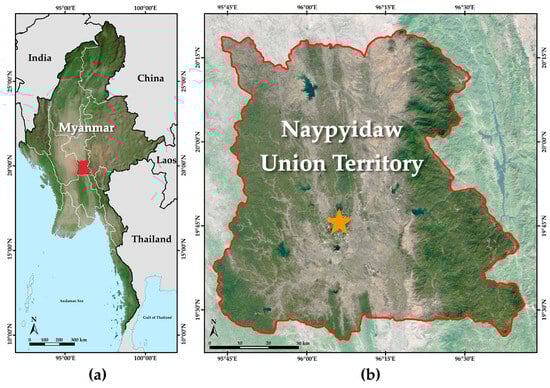
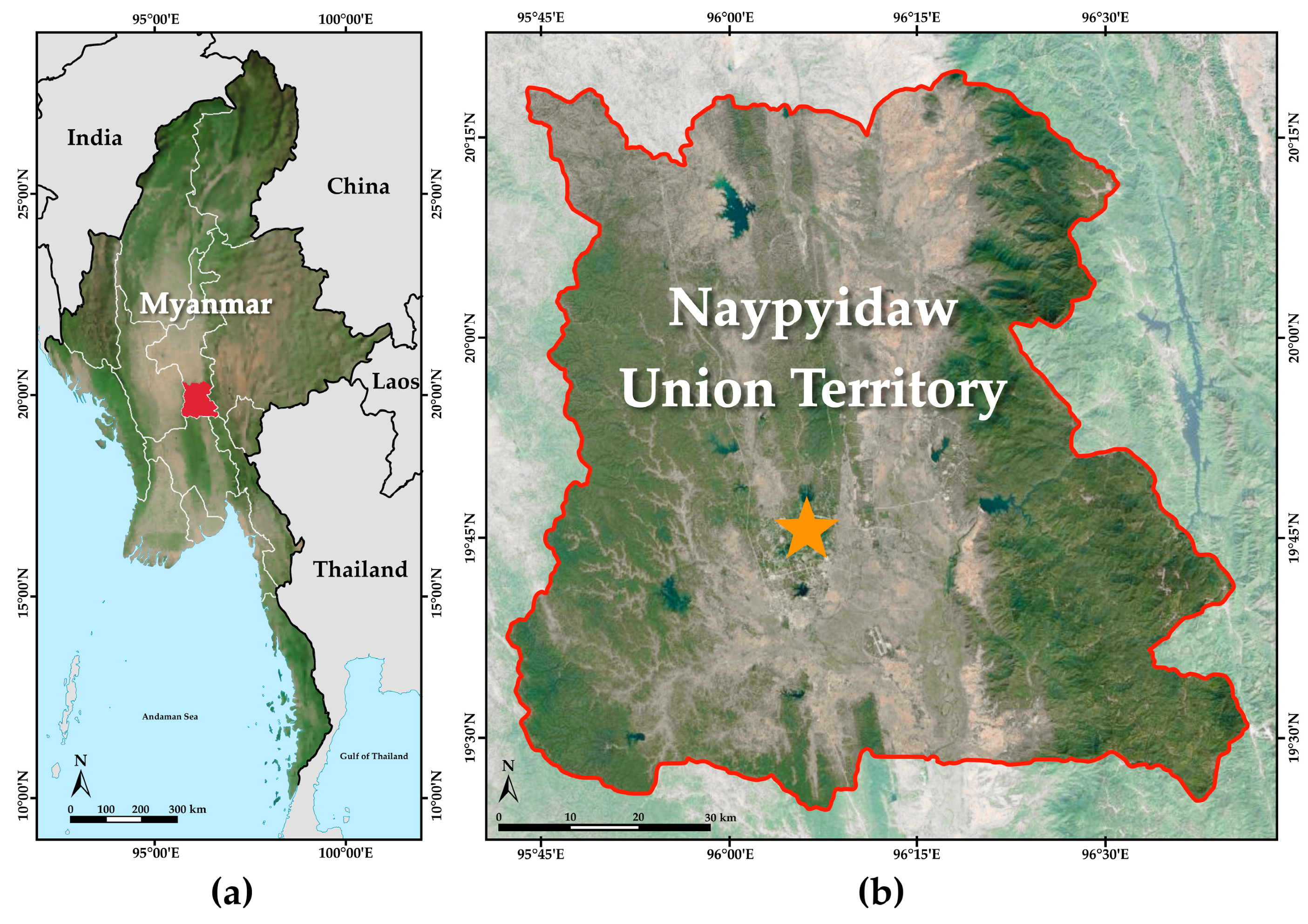
Plant material was collected from Naypyidaw, Myanmar (Figure 1). Field surveys were conducted from 2024 to 2025 by co-local researchers. Voucher specimens—including leaves, rhizomes, and flowers—were collected following standard botanical protocols [49], with flowers preserved in alcohol for detailed examination. Type specimens were pressed, labeled with unique collection numbers, and deposited in RAF. Notes on habitat and associated vegetation were recorded in the field for each population. Herbarium material from throughout Myanmar was also examined, with additional living specimens cultivated at Mawlamyine, Myanmar.
Figure 1.
Study area: (a) Map showing the position of Naypyidaw Union Territory (highlighted in red) within Myanmar. (b) Topographic map of Naypyidaw Union Territory. Base map adapted from Esri Topographic Map—Source: Esri, Garmin, GEBCO, NOAA NGDC, and other contributors (accessed on 12 October 2025): the star symbol indicates the collection site coordinates. Created by Thawatphong Boonma using Pixelmator Pro (Version 3.6.15, Archipelago, 2025; Pixelmator Team, Vilnius, Lithuania).
Species identification and morphological observations were conducted using dichotomous keys and relevant taxonomic literature, including Flora of China Vol. 24 [2], Flora of Vietnam Vol. 21 [21], Flora of Thailand Vol. 16 Part 2 [50], and additional publications on Boesenbergia taxonomy [1,2,3,4,5,6,7,8,9,10,11,12,13,14,15,16,17,18,19,20,21,22,23,24,25,26,27,28,29,30]. Morphological traits of vegetative and reproductive structures were measured using a ruler and vernier caliper (Mitutoyo Vernier Caliper; Mitutoyo Corporation, Kawasaki, Japan) and examined under a stereoscopic microscope (Stemi 2000-C; Zeiss, Oberkochen, Germany). Specimens were examined onsite at BK, BKF, HN, HNPM, HNU, IMDY, KKU, QBG, VMSU, and VNM. High-resolution images of specimens were also consulted via herbaria A, AAU, B, BM, C, CAL, E, IBK, K, L, P, SING, TNS, and VNMN through JSTOR Global Plants (https://plants.jstor.org, accessed 7 October 2025) and the Chinese virtual herbarium (https://www.cvh.ac.cn, accessed 7 October 2025). Nomenclature follows Plants of the World Online [31] and the International Plant Names Index [51], while herbarium acronyms conform to the Index Herbariorum [52], and morphological terminology follows Beentje [53]. The conservation status of each species was assessed following the IUCN Red List categories and criteria [54]. Species diversity of Boesenbergia was assessed by integrating previously published records with data from field surveys. In addition, verbal interviews were conducted with 30 local informants to document the uses, local names, and occurrences of species in the surveyed areas.
3. Results
This study led to the discovery of a new species, B. burmanica, increasing the total number of Boesenbergia species known from Myanmar to 14. The identification of Boesenbergia burmanica is based on its distinctive morphological characteristics, which clearly separate it from its close ally B. meghalayensis, particularly by its larger anther with a smaller, non-appressed crest; an oblanceolate, non-saccate labellum with bright red markings; and a narrowly elliptic lamina pubescent on both surfaces. These distinctive morphological traits may also have ecological or adaptive significance, relevant for conservation planning and horticultural utilization.
3.1. Taxonomic Treatment
Boesenbergia burmanica Boonma, P.Saensouk & Saensouk sp. nov.
Type: MYANMAR, Naypyidaw Union Territory, Pyinmana District, c. 145 m elevation, 27 August 2025, N.N.Htway 25827 (holotype RAF).
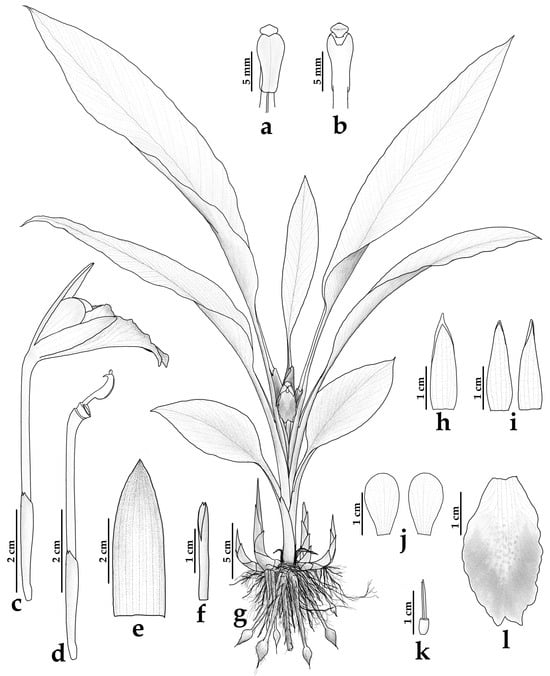
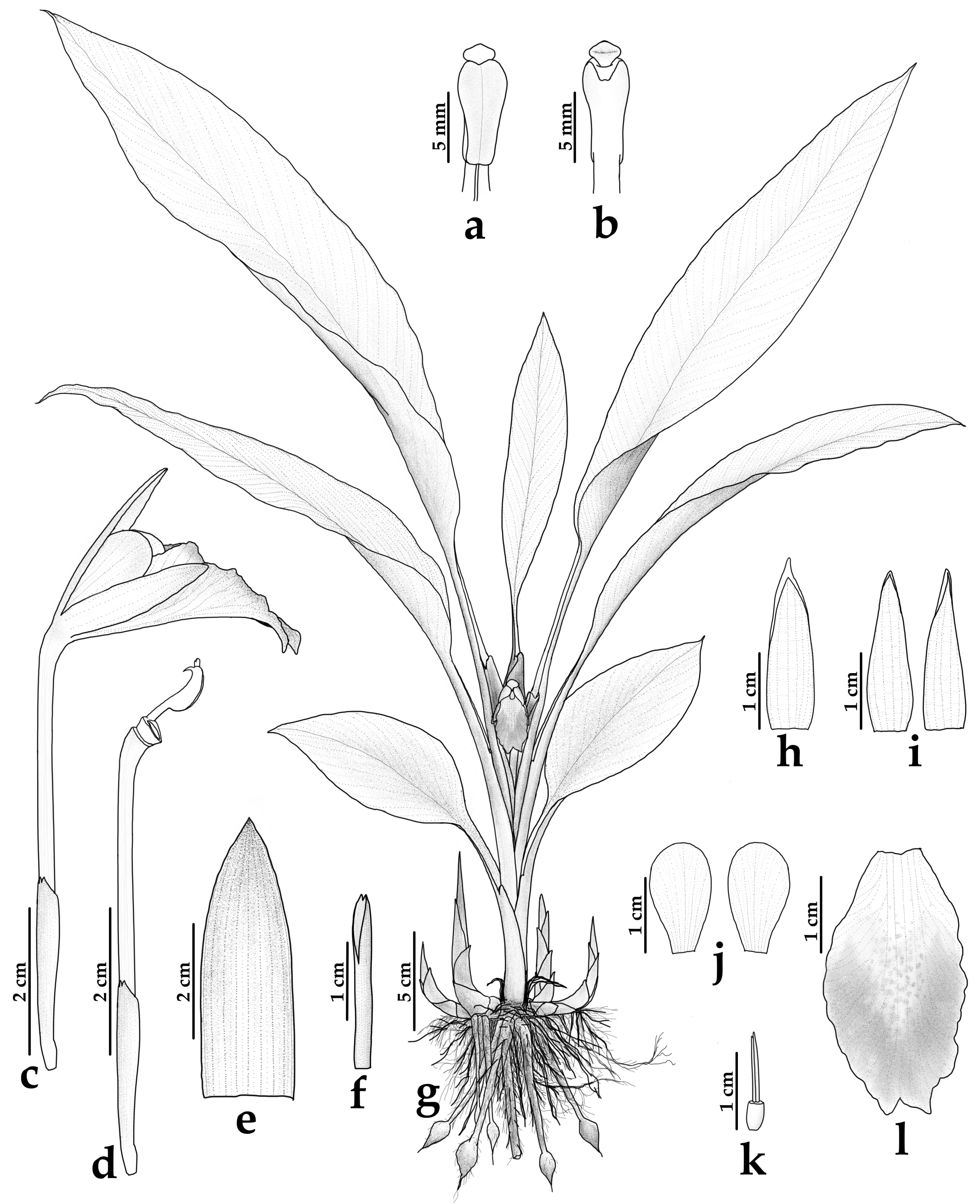
Diagnosis. Boesenbergia burmanica is similar to B. meghalayensis Aishwarya & M.Sabu, but differs in having ovoid, branched rhizomes (vs. running); ovoid tuberous roots (vs. cylindrical); ligule 3–5 mm long (vs. 1–2 mm); lamina narrowly elliptic, pubescent on both surfaces (vs. elliptic, glabrous); bracts pale green, puberulent (vs. white, glabrous); bracteole puberulent (vs. glabrous); rachis elongate with 9–10 flowers (vs. 4–5 flowers); labellum oblanceolate, not saccate, apex incised, white with bright red towards the apex and reddish spots on the mid-lobe (vs. ovate, saccate, apex acute, white with maroon towards the tip, maroon spots in the throat, and pale yellow along the mid-lobe); and larger anther (7.5–7.7 × 3.4–3.6 mm) with smaller crest not touching the anther backside (vs. 5–6 × 2 mm, crest 2.5 × 2 mm, tip touching backside) (Table 1, Figure 2 and Figure 3).
Table 1.
Morphological comparison of Boesenbergia meghalayensis and B. burmanica.
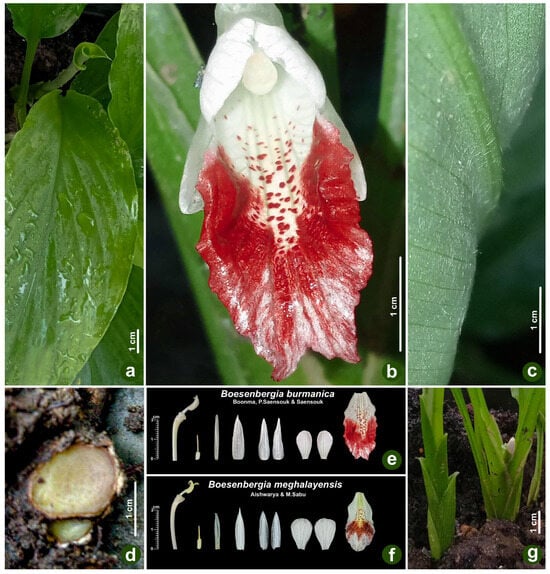
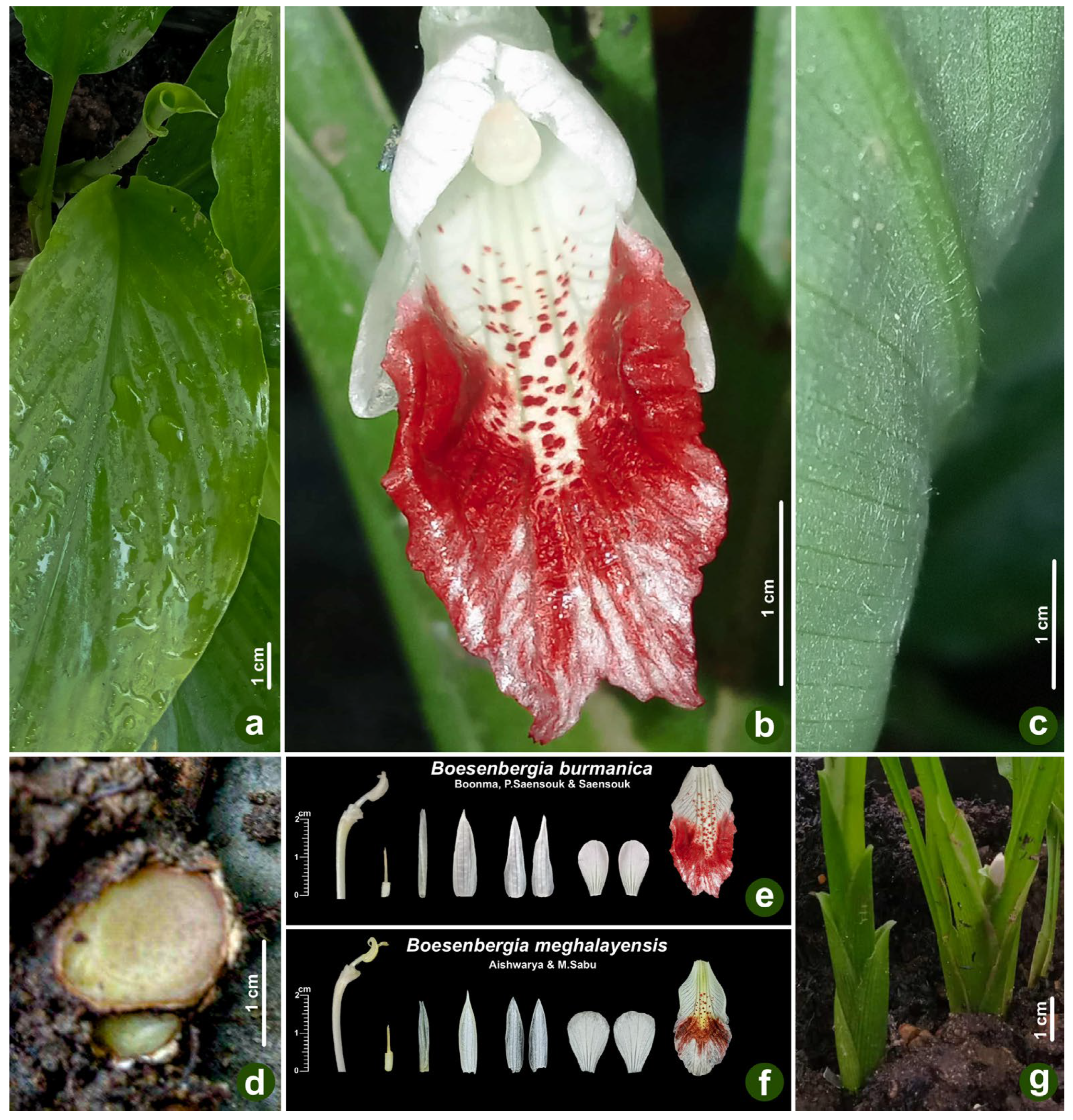
Figure 2.
Boesenbergia burmanica Boonma, P.Saensouk & Saensouk: (a) Top view of habits. (b) Front view of flower. (c) Abaxial of leaf. (d) Rhizome dissected to show the internal coloration. (e) Parts of flower of B. burmanica from left to right: side view of anther, epigynous glands with ovary, calyx, dorsal corolla lobe, lateral corolla lobes, staminodes and labellum. (f) Parts of flower of B. meghalayensis from left to right: side view of anther, epigynous glands with ovary, calyx, dorsal corolla lobe, lateral corolla lobes, staminodes, and labellum. (g) Side view of pseudostems.
Figure 3.
Boesenbergia burmanica Boonma, P.Saensouk & Saensouk sp. nov.: (a) Front view of anther. (b) Back view of anther. (c) Side view of flower. (d) Side view of anther with floral tube, calyx, and ovary. (e) Bract. (f) Calyx. (g) Habit. (h) Dorsal corolla lobe. (i) Lateral corolla lobes. (j) Staminodes. (k) Epigynous glands and ovary. (l) Labellum. Illustration drawn by Thawatphong Boonma.
Description: Perennial rhizomatous herb, 40–50 cm tall. Rhizome ovoid, 1.5–2 cm in diameter, externally brown, internally cream to pale yellow, aromatic; branching near the base of the primary pseudostem, with branches growing in opposite directions and producing new shoots, forming a clump. Roots fibrous with ovoid tubers, tapering at the distal end. Pseudostem 12–15 cm long, puberulent. Leaves 5–7 per pseudostem; ligule bilobed, 3–5 mm long, lobes oblong, pale green; petiole 4–8 cm long, canaliculate, green, puberulent; lamina 10–34 × 4–7.5 cm, narrowly elliptic, green, adaxial puberulent, abaxial pubescent, base cuneate to attenuate, apex attenuate, margin entire and undulate. Inflorescence terminal, 8–8.7 cm long, peduncle c. 3 cm long, cylindrical, pale green, puberulent; enclosed within the innermost leaf-sheaths, elongate rachis; spike c. 5–6 cm long. Bracts 5–5.5 × 0.7–1 cm, oblong, pale green, puberulent, apex attenuate. Bracteoles 4–4.3 × 0.6–0.8 cm, translucent greenish white, apex attenuate, puberulent. Spike with 9–10 flowers, one open per day, Flowers 8–9 cm long. Calyx tubular 2.2–2.5 cm long, 0.3–0.35 mm in diameter, membranous, apex bifid, white, puberulent, with a unilateral slit up to 9 mm long. Floral tube cylindrical, with curved apex, 5.5–5.8 cm long, white, sparsely puberulent; dorsal corolla lobe lanceolate, 2.2–2.4 × 0.7–0.8 cm, slightly incurved, apex acuminate, hooded, white, sparsely puberulent at the tip; lateral corolla lobes lanceolate, 2.1–2.2 × 0.6–0.7 cm, incurved, apex acute, slightly hooded, white, sparsely puberulent. Lateral staminodes two, obovate, 1.4–1.5 × 0.8–0.9 cm, white, apex rounded, margin entire, sparsely puberulent. Labellum oblanceolate, not saccate, basal margins involute, 2.8–3.4 × 1.8–1.9 cm, apex incised, white with bright red towards the apex and reddish spots in the midlobe, margin undulate towards the apex, puberulous. Stamen 1, 11–12 mm long, white; filament c. 4 × 2 mm, white, puberulent; anther 7.5–7.7 × 3.4–3.6 mm, white, with very pale reddish tinge at the back; anther crest c. 1 × 1 mm, recurved backwards, apex emarginate. Style filiform, 6.9–7 cm long, white; stigma cup-shaped, ciliate, white. Epigynous glands two, 7.4–8 mm long, linear, cream-colored. Ovary cylindrical, c. 3 × 2 mm, axile placentation, trilocular, glabrous. Fruit not seen.
Distribution and habitat: Boesenbergia burmanica is currently known only from its type locality in Pyinmana District, Naypyidaw Union Territory, Myanmar. It grows on sandy loam soil mixed with rocks in a shady area, at an elevation of approximately 140–145 m a.s.l.
Phenology: Flowering in August to September, fruit not seen.
Etymology: The specific epithet “burmanica” refers to Myanmar (formerly Burma), the country where the species was discovered.
Additional specimens examined (paratype): MYANMAR, Naypyidaw Union Territory, Pyinmana District, c. 140 m elevation, 27 August 2025, N.N.Htway 25828, (RAF, spirit collection); ibid. N.N.Htway 25829 (RAF).
Utilization: Ornamental pot plant.
Provisional conservation status: This new species is currently known only from a single locality, and further field studies and collections are needed to determine whether it occurs elsewhere. Due to limited data on its distribution, population size, and potential threats, we propose classifying it as ‘Data Deficient’ (DD) according to the Guidelines for using the IUCN Red List categories and criteria, version 16 [53].
3.2. Horticultural Potential of Boesenbergia burmanica
Boesenbergia burmanica exhibits significant potential as an ornamental plant due to its striking combination of floral and foliar characteristics. The flowers are white with bright red at the distal part and reddish spots on the midlobe of the labellum, creating a strong visual contrast with the green leaves and pseudostem. This color contrast, together with the compact clumping growth habit, makes it particularly suitable for container cultivation. At maturity, the species reaches a height of 40–50 cm and forms neat clumps that fit well in pots with a diameter of 8–10 inches, making it ideal for small gardens, home balconies, or lightly shaded areas. Its manageable size and visually appealing form make B. burmanica a desirable species for botanical gardens, collectors, and enthusiasts of rare Zingiberaceae. Cultivation in controlled environments not only enhances ornamental value but also contributes to the conservation of this endemic species. Ex situ cultivation thus supports both horticultural uses and species conservation of this endemic species.
When cultivated in Mawlamyine, Mon State, Myanmar, B. burmanica was found to be relatively easy to care for and grows well in pots. It adapts well to temperatures ranging from 25–34 °C when kept in lightly shaded areas without direct sunlight. In the future, if further studies confirm its medicinal properties, it could be integrated into mixed gardens or intercropped with perennial crops, offering both ornamental and potential economic value. Its adaptability, low-maintenance requirements, and tolerance of moderately high temperatures suggest it could be a promising addition to home gardens, botanical collections, and sustainable agroforestry systems.
3.3. Cultivation Guidelines for Boesenbergia burmanica
Based on observations at its type locality in Pyinmana District, Naypyidaw Union Territory, the following recommendations are proposed for cultivating Boesenbergia burmanica.
3.3.1. Soil Requirements
The species grows best in well-drained sandy loam soils mixed with rocks or coarse material to prevent waterlogging and rhizome rot. Potting mixes incorporating sand, perlite, or small gravel are recommended for container cultivation.
3.3.2. Light Conditions
Partial to full shade is optimal, reflecting its natural habitat under forest canopy. Direct sunlight should be avoided to prevent leaf scorch, while filtered or morning sun promotes healthy foliage and flowering. If cultivated in a greenhouse, it should be provided with approximately 50% shade.
3.3.3. Watering
Maintain consistently moist soil during active growth, allowing the top layer to dry slightly between waterings. Watering should be reduced during dormancy or periods of slower growth.
3.3.4. Temperature and Humidity
B. burmanica prefers warm, humid tropical conditions. Avoid exposure to frost or prolonged cold, which can damage rhizomes and foliage.
3.3.5. Container Cultivation
Suitable for 8–10 inch pots with adequate drainage. Repotting every 2–3 years is recommended to refresh the soil and allow rhizomes to expand naturally.
3.3.6. Propagation
Propagation is primarily achieved through division of branched rhizomes or new shoots. New shoots can be separated during the rainy season, or rhizome branches can be divided from the parent clump during dormancy. Each rhizome or shoot should be planted individually in fresh, well-draining soil to ensure successful establishment. Seed propagation has not been observed, but it may be possible if fruiting occurs.
3.3.7. Fertilization
Occasional application of balanced, slow-release fertilizer or organic amendments such as composted leaf litter or well-rotted manure supports vegetative growth and flowering.
3.3.8. Maintenance and Flowering Care
In the wild, the plant flowers between August and September, but under cultivation, it has been observed to bloom from July to October. Although a single plant may produce only a few flowers, its clumping growth habit allows younger shoots to flower later, extending the overall flowering period. Typically, only one flower opens per day. Senescent leaves should be removed to maintain plant health and appearance. Regular monitoring for pests and diseases is recommended, particularly in high-humidity environments. Common pests include slugs, which feed on flowers, and caterpillars, which feed on leaves. Slugs can be controlled by regularly removing them from the cultivation area or by placing pots on trays filled with water to prevent them from climbing up. Caterpillars should be monitored on leaves and removed promptly. If necessary, appropriate and plant-safe biological or chemical controls may be applied.
3.3.9. Conservation-Oriented Cultivation
Cultivating B. burmanica ex situ supports the preservation of this endemic species by providing a source of propagation material, reducing pressure on wild populations, and facilitating research or horticultural development.
By following these guidelines, Boesenbergia burmanica can be successfully grown as a compact and visually striking ornamental plant while also contributing to its conservation.
3.4. Notes on the Diversity of Boesenbergia in Myanmar
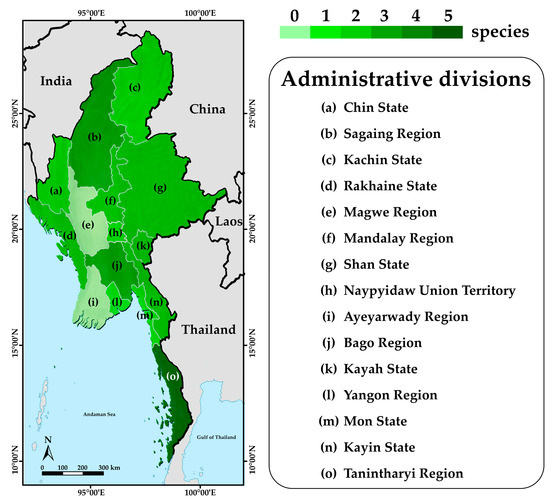
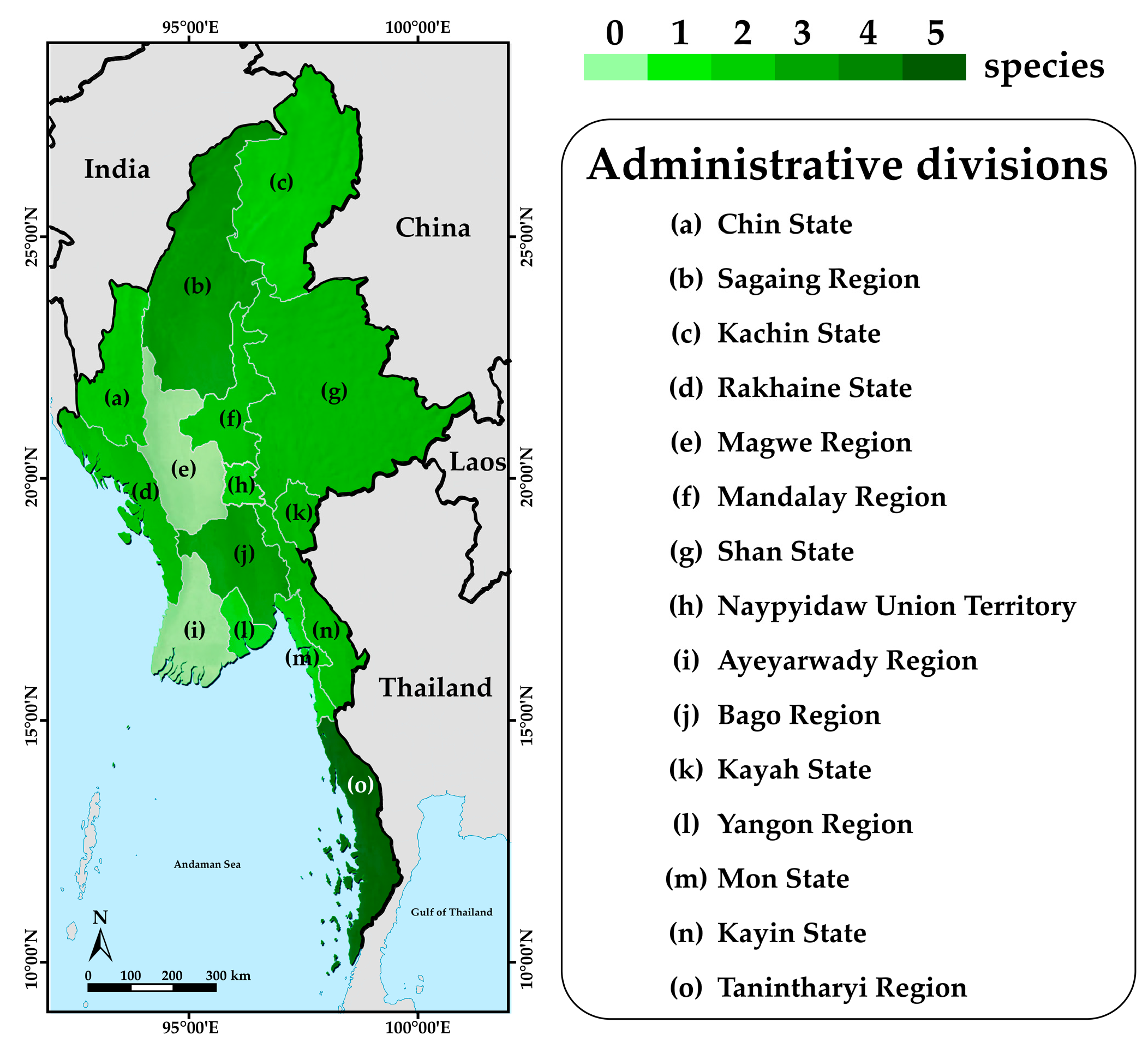
The genus Boesenbergia is represented in Myanmar by a diverse assemblage of species inhabiting a wide range of ecological zones, from lowland evergreen forests to montane regions. The diverse habitats occupied by Boesenbergia species highlight the ecological complexity and conservation importance of the genus in Myanmar. An updated overview of diversity (Table 2; Figure 4) and a key to facilitate species identification (Table 3) are presented, summarizing all currently recognized Boesenbergia taxa recorded from the country.
Table 2.
Diversity of Boesenbergia species in Myanmar, with their local distribution, global range, and literature references.
Figure 4.
Diversity of Boesenbergia species across the administrative divisions of Myanmar. Map created using Pixelmator Pro (Version 3.6.15, Archipelago, 2025; Pixelmator Team, Vilnius, Lithuania); administrative boundaries adapted from the Transnational Institute (TNI) administrative map of Myanmar, sourced from the website https://www.tni.org/.
Table 3.
Key to Boesenbergia species in Myanmar.
3.5. Notes on Utilization of Boesenbergia Species in Myanmar
Among the fourteen Boesenbergia species recorded in Myanmar, thirteen are primarily cultivated as ornamental plants, including B. albomaculata, B. burmanica, B. kerrii, B. kingii, B. longiflora, B. maxwellii, B. meghalayensis, B. moodii, B. parvula, B. plicata, B. pulcherrima, B. purpureorubra, and B. siphonantha. These species are commonly grown as potted ornamentals due to their attractive foliage and brightly colored flowers. Although there is no previous literature reporting the use of B. moodii, as it was only recently described, our field surveys conducted by local co-researchers in Myanmar revealed that these species are indeed cultivated as an ornamental potted plant by local ginger collectors. In contrast, B. rotunda serves both culinary and medicinal purposes. Its rhizome and tuberous roots are widely used as a spice in curries and fish dishes, often pounded with chili, turmeric, and garlic to reduce fishy odors and enhance flavor. Additionally, the rhizome is used in traditional medicine, typically boiled or ground, to treat digestive disorders, flatulence, and fatigue, and is regarded as a general tonic.
4. Discussion
The discovery of Boesenbergia burmanica underscores the continuing discovery of taxonomic diversity within the genus and underscores the importance of continued field exploration in Myanmar. Its distinct morphological characteristics, including the clumping growth habit, pubescent lamina surfaces, and brightly colored labellum, clearly differentiate it from closely related congeners [1,2,3,4,5,6,7,8,9,10,11,12,13,14,15,16,17,18,19,20,21,22,23,24,25,26,27,28,29,30]. These features may reflect microhabitat adaptations and contribute to the morphological diversity observed within Boesenbergia, consistent with patterns reported in Southeast Asian species [16,17,18,20,22,23,25,29,30].
The discrepancies observed between the updated checklist of vascular plants of Myanmar [48] and verifiable voucher specimens further underscore the need for critical reassessment in floristic studies. Although the checklist reported 15 species of Boesenbergia, no voucher material was provided to support the presence of B. thorelii in Myanmar, and this record appears to have been carried forward from an earlier source [45] without additional verification. Likewise, the listing of B. kerbyi R.M. Sm.—a species native to Borneo [31]—was based on the specimen “N. Tanaka, A. Naiki, S. Tagane & M.M. Aung No. MY698, while these specimens correspond to B. kerrii [55], suggesting that the record of B. kerbyi in Myanmar may have been erroneous. The findings highlight the importance of using well-documented herbarium vouchers to ensure accurate assessments of national floristic diversity.
The ecological preferences of Boesenbergia burmanica appear more specialized compared with B. meghalayensis [17]. B. burmanica occurs in shaded, rocky sandy loam, suggesting an adaptation to stable, semi-closed microhabitats. In contrast, B. meghalayensis is found in both open roadsides and semi-shaded areas, reflecting a broader ecological tolerance [17,27]. This contrast indicates that B. burmanica may be more vulnerable to habitat disturbance, whereas B. meghalayensis exhibits greater ecological flexibility, which could contribute to its wider distribution. The genus Boesenbergia as a whole exhibits considerable ecological diversity across tropical and subtropical Southeast Asia, occupying a wide range of habitats from lowland evergreen forests to semi-deciduous and disturbed areas. Several species, including B. parvula, B. pulcherrima, and B. siphonantha, prefer riparian zones and shaded understories, often in association with bamboo or other understory vegetation, suggesting facilitative interactions that enhance soil stability and microclimatic conditions [4,10,11,12,15,27]. In contrast, species such as B. kerrii, B. plicata, and B. purpureorubra are more specialized, restricted to substrates derived from limestone, granite, or sandstone [7,8,10,27]. Other taxa, including B. albomaculata, B. kingii, B. longiflora, B. maxwellii, and B. moodii, occupy tropical to subtropical evergreen or semi-deciduous forests, frequently near streams, on hill slopes, or in well-shaded understory environments, illustrating a range of ecological strategies within the genus [7,10,27,47]. B. rotunda displays notable habitat plasticity, occurring across a variety of forested environments. Collectively, these species occupy a gradient of habitats from lowland sandy or alluvial soils to montane and limestone-derived substrates, highlighting both ecological versatility and niche differentiation. Many species are associated with shaded understories, riparian zones, or semi-disturbed habitats, reflecting ecological specialization that likely influences their distribution, population structure, and long-term persistence in the region.
The distribution patterns of Boesenbergia species in Myanmar reveal clear phytogeographical trends, reflecting both regional endemism and biogeographical connectivity across continental Southeast Asia. Among the 14 species recorded, several, such as B. burmanica, B. longiflora, and B. moodii appear to be endemic to Myanmar, indicating localized speciation possibly driven by habitat isolation and adaptation to specific microenvironments [8,27,47]. These endemics are mostly confined to central and western Myanmar, including Naypyidaw, Rakhine, and Tanintharyi, regions characterized by complex topography and transitional climatic conditions.
In contrast, species with wider distributions, including B. kingii, B. maxwellii, B. parvula, B. plicata, B. pulcherrima, B. purpureorubra, and B. rotunda, extend into neighboring countries such as Thailand, Laos, India, China, and Malaysia [7,10,12,15,27]. This pattern highlights Myanmar as a biogeographical link between the Indo-Himalayan and Indo-Malaysian regions. The Tanintharyi Region, in particular, harbors several taxa shared with Peninsular Thailand and Malaysia (e.g., B. kerrii, B. parvula, B. plicata, and B. purpureorubra) [7,8,10,12,27], reflecting strong affinity with the Sundaic flora. Northern and western species, such as B. albomaculata, B. kingii, and B. maxwellii, connect the flora of Myanmar with that of Yunnan (China), northeastern India, and the eastern Himalayan foothills, forming part of the Indo-Burmese floristic transition zone [7,10,27]. Widespread species such as B. rotunda and B. siphonantha occur in a variety of forest types, ranging from tropical evergreen to mixed deciduous forests, indicating high ecological plasticity and adaptability [4,11,27,28]. In contrast, narrow endemics such as B. burmanica emphasize the importance of conserving microhabitats and maintaining habitat heterogeneity in Myanmar, particularly in areas facing rapid land use change.
B. burmanica exhibits notable potential as an ornamental species due to its compact stature and visually striking floral display. The clumping habit and contrasting coloration of the labellum and leaves make it suitable for cultivation in small containers or shaded garden areas. Observations from cultivation at Mawlamyine demonstrate the species’ adaptability and manageable growth, reinforcing its potential for ex situ conservation, horticultural applications, and also suggest that flowering can occur over an extended period under cultivation, providing opportunities to enhance its ornamental value.
Ex situ cultivation and applied horticultural potential of Boesenbergia burmanica demonstrate clear opportunities for applied horticulture beyond ornamental use. Its compact clumping growth habit, manageable size, and tolerance to a range of temperatures make it suitable for container cultivation, small gardens, and botanical collections. Establishing ex situ populations can support both conservation and horticultural exploitation, providing material for research, propagation, and sustainable commercial use. In addition, cultivation under controlled conditions could facilitate further studies on growth optimization, flowering phenology, and potential secondary metabolites, integrating systematic, ecological, and applied botanical research.
Although its distribution is currently known only from the type locality, the species could also have potential for future pharmacological applications. If chemical studies confirm the presence of bioactive compounds, B. burmanica may become valuable as a medicinal plant [32,36], as observed in studies of other genera where species within the same genus commonly share similar phytochemicals such as Conamomum Ridl. [56] and Zingiber Mill. [57], ex situ cultivation could be considered in advance to ensure material availability for research, while simultaneously supporting conservation.
Long-term monitoring of natural populations is essential to detect trends in population size, reproductive success, and habitat condition. Since significant portions of suitable habitat remain outside formal protected areas, designating these regions as Other Effective Area-Based Conservation Measures (OECMs) could strengthen in situ conservation while allowing sustainable use by local communities [58]. Comparative studies with closely related species may further clarify evolutionary relationships and the ecological significance of morphological traits such as leaf pubescence and floral coloration [1,2,3,4,5,6,7,8,9,10,11,12,13,14,15,16,17,18,19,20,21,22,23,24,25,26,27,28,29,30].
Boesenbergia burmanica represents a valuable addition to the flora of Myanmar, offering both horticultural and potential pharmacological interest. Continued research integrating taxonomy, phytochemistry, and conservation planning will be important to ensure its sustainable use and preservation.
5. Conclusions
Boesenbergia burmanica Boonma, P.Saensouk & Saensouk is described here as a new species from Naypyidaw Union Territory, Myanmar. The species is readily distinguished by its compact clumping habit, pubescent lamina, and brightly colored labellum. Its discovery increases the total number of Boesenbergia species recorded in Myanmar to 14. Beyond its taxonomic importance, B. burmanica possesses notable horticultural potential due to its attractive floral characteristics, small stature, and adaptability under cultivation. Although currently known only from its type locality, further field surveys and ex situ propagation are recommended to assess its distribution, conservation status, and potential applications. Future research integrating taxonomy, ecology, and phytochemistry will be essential to explore the species’ possible medicinal value and support sustainable use. The findings emphasize the importance of continued field-based taxonomic studies and the establishment of conservation measures, including recognition of suitable habitats as Other Effective Area-Based Conservation Measures (OECMs), to ensure the long-term preservation of Boesenbergia diversity in Myanmar.
Author Contributions
Conceptualization, P.S., S.S., T.B., N.N.H., W.P.O., M.K.N. and A.J.; methodology, P.S., S.S., T.B., N.N.H., W.P.O., M.K.N. and A.J.; software, T.B.; validation, P.S., S.S. and T.B.; formal analysis, P.S., S.S. and T.B.; investigation, N.N.H., W.P.O. and M.K.N.; resources, N.N.H., W.P.O. and M.K.N.; data curation, T.B.; writing—original draft preparation, T.B.; writing—review and editing, P.S., S.S., T.B., N.N.H., W.P.O., M.K.N. and A.J.; visualization, T.B.; supervision, P.S., S.S., T.B. and A.J.; project administration, P.S., S.S. and T.B.; funding acquisition, S.S. All authors have read and agreed to the published version of the manuscript.
Funding
This research project was financially supported by Mahasarakham University.
Data Availability Statement
The original contributions presented in this study are included in the article; further inquiries can be directed to the corresponding author.
Acknowledgments
This research was financially supported by Mahasarakham University, particularly through the Division of Research Facilitation and Dissemination. The third author extends special thanks to Khant Zaw Hein for assisting with Burmese–English translations. The authors also acknowledge the invaluable support of the curators of all the herbaria visited. We further extend our gratitude to the Walai Rukhavej Botanical Research Institute, Mahasarakham University, and to all administrators of the Native Species Conservation and Identification (NSCI) Myanmar.
Conflicts of Interest
The authors declare no conflicts of interest.
Abbreviations
The following abbreviations are used in this manuscript:
| A | Harvard University, Cambridge, Massachusetts, U.S.A. |
| AAU | Aarhus University, Denmark |
| B | Botanic Garden and Botanical Museum Berlin-Dahlem, Germany |
| BK | Bangkok Herbarium, Department of Agriculture, Thailand |
| BKF | Department of National Parks, Wildlife and Plant Conservation, Thailand |
| BM | The Natural History Museum, London, England, U.K. |
| C | University of Copenhagen, Copenhagen, Denmark |
| CAL | Botanical Survey of India, Howrah, West Bengal, India |
| E | Royal Botanic Garden Edinburgh, Edinburgh, United Kingdom |
| HN | Vietnam Academy of Science and Technology (VAST), Hanoi, Vietnam |
| HNPM | National Institute of Medicinal Materials, Vietnam |
| HNU | VNU University of Science, Hanoi, Vietnam |
| IBK | Guangxi Institute of Botany, China |
| IMDY | Chinese Academy of Medical Sciences, China |
| K | Royal Botanic Gardens, United Kingdom |
| KKU | Khon Khan University Herbarium, Thailand |
| L | Naturalis Biodiversity Center, Leiden, Netherlands |
| P | Muséum National d’Histoire Naturelle, Paris, France |
| QBG | Queen Sirikit Botanic Garden, The Botanical Garden Organization, Thailand |
| RAF | Forest Research Institute, Nay Pyi Taw, Myanmar |
| SGN | Southern Institute of Ecology, Ho Chi Minh City, Vietnam |
| SING | National Parks Board, Singapore |
| TNS | National Museum of Nature and Science, Tokyo, Japan |
| VMSU | Vascular Plant Herbarium, Mahasarakham University, Thailand |
| VNM | Institute of Tropical Biology, Ho Chi Minh City, Vietnam |
| VNMN | Vietnam National Museum of Nature, Hanoi, Vietnam |
References
- Larsen, K.; Ibrahim, H.; Khaw, S.H.; Saw, L.G. Gingers of Peninsular Malaysia and Singapore; Natural History Publications (Borneo): Kota Kinabalu, Malaysia, 1999. [Google Scholar]
- Wu, D.; Larsen, K. (Eds.) Zingiberaceae. In Flora of China; Harvard University Herbaria: Cambridge, MA, USA, 2000; Volume 24, Available online: http://www.efloras.org/florataxon.aspx?flora_id=2&taxon_id=10960 (accessed on 16 August 2025).
- Kress, W.J.; Prince, L.M.; Williams, K.J. The phylogeny and a new classification of the gingers (Zingiberaceae): Evidence from molecular data. Am. J. Bot. 2002, 89, 1682–1696. [Google Scholar] [CrossRef] [Scilit] [PubMed]
- Sabu, M.; Prasanthkumar, M.G.; Škorničková, J.; Jayasree, S. Transfer of Kaempferia siphonantha Baker to Boesenbergia Kuntze (Zingiberaceae). Rheedea 2004, 14, 55–59. Available online: https://rheedea.in/storages/submission/file/1902858105.pdf (accessed on 16 August 2025).
- Larsen, K.; Larsen, S.S. Gingers of Thailand; Queen Sirikit Botanic Garden: Chiang Mai, Thailand, 2006. [Google Scholar]
- Meekiong, K.; Lim, C.K. The unusual branching Boesenbergia from Belum, Perak, and notes on the genus in Peninsular Malaysia. Folia Malays. 2014, 15, 41–50. [Google Scholar]
- Mood, J.D.; Prince, L.M.; Veldkamp, J.-F.; Dey, S. The history and identity of Boesenbergia longiflora (Zingiberaceae) and descriptions of five related new taxa. Gard. Bull. Singap. 2013, 65, 47–95. [Google Scholar]
- Mood, J.D.; Veldkamp, J.-F.; Prince, L.M. A new species and a new record of Boesenbergia (Zingiberaceae) for Thailand. Gard. Bull. Singap. 2014, 66, 207–214. [Google Scholar]
- Mood, J.D.; Veldkamp, J.-F.; Dey, S.; Prince, L.M. Nomenclatural changes in Zingiberaceae: Caulokaempferia is a superfluous name for Monolophus and Jirawongsea is reduced to Boesenbergia. Gard. Bull. Singap. 2014, 66, 215–231. [Google Scholar]
- Mood, J.D.; Tanaka, N.; Aung, M.M.; Murata, J. The genus Boesenbergia (Zingiberaceae) in Myanmar with two new records. Gard. Bull. Singap. 2016, 68, 299–318. [Google Scholar] [CrossRef] [Scilit]
- Mood, J.D.; Trần, H.Đ.; Veldkamp, J.-F.; Prince, L.M. Boesenbergia siphonantha (Zingiberaceae)—A new record for Thailand and Vietnam with notes on molecular phylogeny. Gard. Bull. Singap. 2016, 68, 125–137. [Google Scholar] [CrossRef] [Scilit]
- Mood, J.D.; Trần, H.Đ.; Veldkamp, J.-F.; Prince, L.M. Taxonomy of Boesenbergia parvula (Zingiberaceae) with new synonymy. Thai For. Bull. Bot. 2018, 46, 10–24. [Google Scholar] [CrossRef] [Scilit]
- Mood, J.D.; Veldkamp, J.-F.; Mandáková, T.; Prince, L.M.; de Boer, H.J. Three new species of Boesenbergia (Zingiberaceae) from Thailand and Lao P.D.R. Gard. Bull. Singap. 2019, 71, 473–495. [Google Scholar] [CrossRef] [Scilit]
- Mood, J.D.; Ardiyani, M.; Veldkamp, J.-F.; Mandáková, T.; Prince, L.M.; de Boer, H.J. Nomenclature changes in Zingiberaceae: Haplochorema is reduced to Boesenbergia. Gard. Bull. Singap. 2020, 72, 77–95. [Google Scholar] [CrossRef] [Scilit]
- Aishwarya, K.; Sabu, M. Boesenbergia pulcherrima and B. tiliifolia (Zingiberaceae) in India: Notes on the identity, variability and typification. Rheedea 2015, 25, 59–68. Available online: https://www.researchgate.net/publication/282375330_Boesenbergia_pulcherrima_and_B_tiliifolia_Zingiberaceae_in_India_Notes_on_the_identity_variability_and_typification (accessed on 16 August 2025).
- Aishwarya, K.; Sabu, M. On the IUCN status of Boesenbergia albolutea and B. rubrolutea (Zingiberaceae) and typification of B. rubrolutea. J. Threat. Taxa 2021, 13, 20133–20135. [Google Scholar] [CrossRef] [Scilit]
- Aishwarya, K.; Vinitha, M.R.; Thomas, G.; Sabu, M. A new species of Boesenbergia and rediscovery of B. rotunda (Zingiberaceae) from India. Phytotaxa 2015, 197, 186–196. [Google Scholar] [CrossRef] [Scilit]
- Izzaty, M.M.; Tawan, C.S.; Meekiong, K. Boesenbergia atropurpurea, a new Boesenbergia species from Sarawak, Malaysia. Folia Malays. 2015, 16, 45–50. [Google Scholar]
- Leong-Škorničková, J.; Newman, M.F. Gingers of Cambodia, Laos and Vietnam; Oxford Graphic Printer: Singapore, 2015. [Google Scholar] [CrossRef] [Scilit]
- Lý, N.-S. Boesenbergia quangngaiensis (Zingiberaceae), a new species from Central Vietnam. Phytotaxa 2017, 324, 84. [Google Scholar] [CrossRef] [Scilit]
- Nguyen, Q.B. Boesenbergia . In Flora of Vietnam; Le, P.L., Nguyen, V.V., Eds.; Ministry of Science and Technology and Vietnam Academy of Science and Technology: Hanoi, Vietnam, 2017; Volume 21. [Google Scholar]
- Docot, R.V.A.; Santiago, L.C.P.; Funakoshi, H.; Lam, N.F. Two new species of Boesenbergia (Zingiberaceae) from Palawan, Philippines. Edinb. J. Bot. 2020, 77, 377–390. [Google Scholar] [CrossRef] [Scilit]
- Saensouk, S.; Saensouk, P. Boesenbergia isanensis (Zingiberaceae), a new species from Thailand. Jpn. J. Bot. 2020, 95, 65–68. [Google Scholar]
- Saensouk, P.; Saensouk, S. Karyological study of five species of Boesenbergia (Zingiberaceae) in Thailand. Cytologia 2022, 87, 123–128. [Google Scholar] [CrossRef] [Scilit]
- Lam, N.F.; Ibrahim, H.; Sam, Y.Y.; Zakaria, R.M.; Poulsen, A.D. Two new species of Boesenbergia (Zingiberaceae) from Sabah, Malaysia. PhytoKeys 2022, 211, 81–92. [Google Scholar] [CrossRef] [Scilit]
- Tad-O, R.V.B.; Alafag, J.I.; Napaldet, J.T. Boesenbergia igorota (Zingiberaceae), a new species from the Cordillera Central Range, Northern Philippines. Taiwania 2022, 67, 311–317. [Google Scholar] [CrossRef]
- Saensouk, P.; Saensouk, S.; Boonma, T.; Oo, W.P.; Htet, N.M.; Maknoi, C.; Bongcheewin, B.; Htway, N.N.; Minn, H.M. Two new records of Boesenbergia Kuntze (Zingibereae: Zingiberaceae) for the flora of Myanmar. Biodiversitas 2025, 26, 480–489. [Google Scholar] [CrossRef] [Scilit]
- Saensouk, P.; Saensouk, S.; Boonma, T.; Song, D.; Maknoi, C.; Setyawan, A.D. Boesenbergia Kuntze (Zingiberaceae) in Cambodia: Four new records with notes on their potential horticultural significance, cultivation guidelines, and lectotypification of B. xiphostachya (Gagnep.) Loes. Horticulturae 2025, 11, 178. [Google Scholar] [CrossRef] [Scilit]
- Debnath, S.; Patil, S.; Vijayan, D. Boesenbergia ashihoi (Zingiberaceae), a new species from northeast India. Nord. J. Bot. 2024, 2024, e04319. [Google Scholar] [CrossRef] [Scilit]
- Santharam, S.T.; Kaliamoorthy, S. Boesenbergia kalakadensis sp. nov. (Zingiberaceae) from Southern Western Ghats, India. Nord. J. Bot. 2024, 2024, e04445. [Google Scholar] [CrossRef] [Scilit]
- POWO. Available online: https://www.plantsoftheworldonline.org/ (accessed on 8 October 2025).
- Kanjanasirirat, P.; Suksatu, A.; Manopwisedjaroen, S.; Munyoo, B.; Tuchinda, P.; Jearawuttanakul, K.; Seemakhan, S.; Charoensutthivarakul, S.; Wongtrakoongate, P.; Rangkasenee, N.; et al. High-content screening of Thai medicinal plants reveals Boesenbergia rotunda extract and its component Panduratin A as anti-SARS-CoV-2 agents. Sci. Rep. 2020, 10, 19963. [Google Scholar] [CrossRef] [Scilit]
- Silalahi, M.; Nisyawati, N.; Purba, E.C.; Abinawanto, D.W.; Wahyuningtyas, R.S. Ethnobotanical study of Zingiberaceae rhizomes as traditional medicine ingredients by medicinal plant traders in Pancur Batu Traditional Market, North Sumatra, Indonesia. J. Trop. Ethnobiol. 2021, 4, 78–95. [Google Scholar] [CrossRef] [Scilit]
- Boonma, T.; Saensouk, S.; Saensouk, P. Diversity and traditional utilization of the Zingiberaceae plants in Nakhon Nayok Province, Central Thailand. Diversity 2023, 15, 904. [Google Scholar] [CrossRef] [Scilit]
- Boonma, T.; Saensouk, S.; Saensouk, P. Biogeography, conservation status, and traditional uses of Zingiberaceae in Saraburi Province, Thailand, with Kaempferia chaveerachiae sp. nov. Horticulturae 2024, 10, 934. [Google Scholar] [CrossRef] [Scilit]
- Hop, N.Q.; Son, N.T. Boesenbergia rotunda (L.) Mansf.: A review of phytochemistry, pharmacology, and pharmacokinetics. Curr. Org. Chem. 2023, 27, 1842–1856. [Google Scholar] [CrossRef] [Scilit]
- Inta, A.; Trisonthi, C.; Pongamornkul, W.; Panyadee, P. Ethnobotany of Zingiberaceae in Mae Hong Son, Northern Thailand. Biodiversitas 2023, 24, 2114–2124. [Google Scholar] [CrossRef] [Scilit]
- Wallich, N. Plantae Asiaticae Rariores; Treuttel & Würz: London, UK, 1829; Volume 1, pp. 22–23. [Google Scholar]
- Baker, J.G. Scitamineae. In The Flora of British India; Hooker, J.D., Ed.; Reeve & Co.: London, UK, 1890. [Google Scholar]
- Kuntze, O. Revisio Generum Plantarum; Felix: Leipzig, Germany, 1891. [Google Scholar]
- Lace, J.H.; Rodger, A. List of Trees, Shrubs, Herbs and Principal Climbers, etc. Recorded from Burma; Forest Department: Rangoon, Burma, 1912. [Google Scholar]
- Rodger, A. List of Trees, Shrubs, Herbs and Principal Climbers, etc. Recorded from Burma with Vernacular Names, 2nd ed.; Forest Department: Rangoon, Burma, 1922. [Google Scholar]
- Hundley, H.G.; Ko, U.C.K. List of Trees, Shrubs, Herbs and Principal Climbers, etc. Recorded from Burma with Vernacular Names, 3rd ed.; Superintendent, Govt. Printing and Stationery: Thattanchavady, Pondicherry, India, 1961. [Google Scholar]
- Hundley, H.G. List of Trees, Shrubs, Herbs and Principal Climbers, etc. Recorded from Burma with Vernacular Names, 4th ed.; Forest Department; Swe Daw Oo Press: Mayangon, Myanmar, 1987. [Google Scholar]
- Kress, W.J.; DeFilipps, R.A.; Farr, E.; Kyi, D.Y.Y. A Checklist of the Trees, Shrubs, Herbs and Climbers of Myanmar; Department of Systematic Biology—Botany, National Museum of Natural History: Washington, DC, USA, 2003. [Google Scholar]
- Tanaka, N.; Tagane, S.; Naiki, A.; Aung, M.M.; Tanaka, N.; Dey, S.; Mood, J.; Murata, J. Contributions to the flora of Myanmar I: Nine taxa of monocots newly recorded from Myanmar. Bull. Natl. Mus. Nat. Sci. Ser. B Bot. 2018, 44, 31–39. [Google Scholar]
- Tanaka, N.; Paing, C.S.; Aung, M.M. Taxonomic studies of Zingiberaceae in Myanmar V: A new species of Boesenbergia from Rakhine State. Bull. Natl. Mus. Nat. Sci. Ser. B Bot. 2024, 50, 149–152. [Google Scholar] [CrossRef]
- Aung, Y.L.; Aung, M.H.; Tan, Y.; Jin, X. An updated checklist of vascular plants of Myanmar. PhytoKeys 2025, 261, 135–164. [Google Scholar] [CrossRef] [Scilit]
- Davies, N.; Drinkell, C.; Utteridge, T. (Eds.) The Herbarium Handbook; Kew Publishing: Richmond, UK, 2023. [Google Scholar]
- Newman, M.F.; Barfod, A.S.; Esser, H.J.; Simpson, D.; Parnell, J.A.N. Flora of Thailand; The Forest Herbarium, Department of National Parks, Wildlife and Plant Conservation: Bangkok, Thailand, 2023; Volume 16, Part 2. [Google Scholar]
- IPNI. Available online: https://www.ipni.org/ (accessed on 8 October 2025).
- Index Herbariorum. Available online: https://sweetgum.nybg.org/science/ih/ (accessed on 8 October 2025).
- Beentje, H. The Kew Plant Glossary, an Illustrated Dictionary of Plant Terms, 2nd ed.; Royal Botanic Gardens: Kew, UK, 2016; 184p. [Google Scholar]
- IUCN. Guidelines for Using the IUCN Red List Categories and Criteria; Version 16; IUCN: Gland, Switzerland, 2024; Available online: https://nc.iucnredlist.org/redlist/content/attachment_files/RedListGuidelines.pdf (accessed on 1 August 2025).
- FOMDB (2020–) Flora of Myanmar Database, National Museum of Nature and Science. Available online: https://www.kahaku.go.jp/research/db/botany/myanmarflora/database/index.php?mode=detail&code=3372 (accessed on 12 December 2025).
- Chen, T.V.; Boonma, T.; Triet, N.T.; Nguyen Duc, D.P.; Nghia, N.T.; Saensouk, S.; Thi Thu Hien, N. Exploring the botany and pharmacology of the genus Conamomum Ridl. (Zingiberaceae). Nord. J. Bot. 2024, 42, e04504. [Google Scholar] [CrossRef] [Scilit]
- Chen, T.V.; Boonma, T.; Thi Thu Hien, N. An overview of the chemical compositions and biological activities of essential oils from selected Zingiber species (Zingiberaceae). Nat. Prod. Commun. 2025, 20, 1–10. [Google Scholar] [CrossRef] [Scilit]
- IUCN-WCPA. IUCN-WCPA Task Force on OECMs: Recognising and Reporting Other Effective Area-Based Conservation Measures; IUCN: Gland, Switzerland, 2019. [Google Scholar]

Disclaimer/Publisher’s Note: The statements, opinions and data contained in all publications are solely those of the individual author(s) and contributor(s) and not of MDPI and/or the editor(s). MDPI and/or the editor(s) disclaim responsibility for any injury to people or property resulting from any ideas, methods, instructions or products referred to in the content. |
© 2025 by the authors. Licensee MDPI, Basel, Switzerland. This article is an open access article distributed under the terms and conditions of the Creative Commons Attribution (CC BY) license (https://creativecommons.org/licenses/by/4.0/).