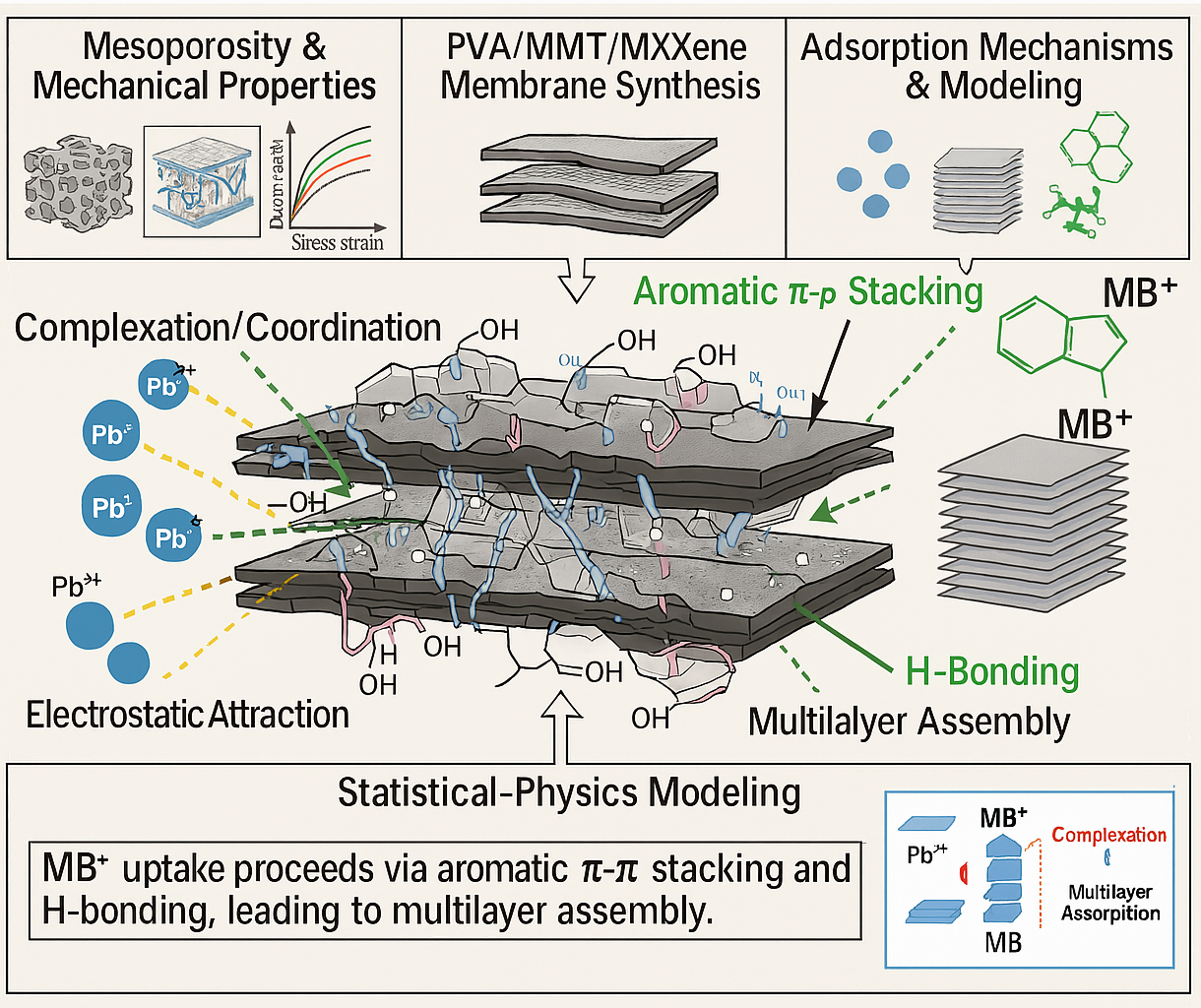

Mesoporosity, Mechanical Properties, and Statistical–Physics Modeling of PVA/MMT/MXene Nanocomposite Membranes for Pb2+ and Methylene Blue Adsorption


Abstract
1. Introduction
2. Materials and Methods
2.1. Materials
2.1.1. Starting Materials
2.1.2. Synthesis of MXene
2.1.3. MXene Quality Control
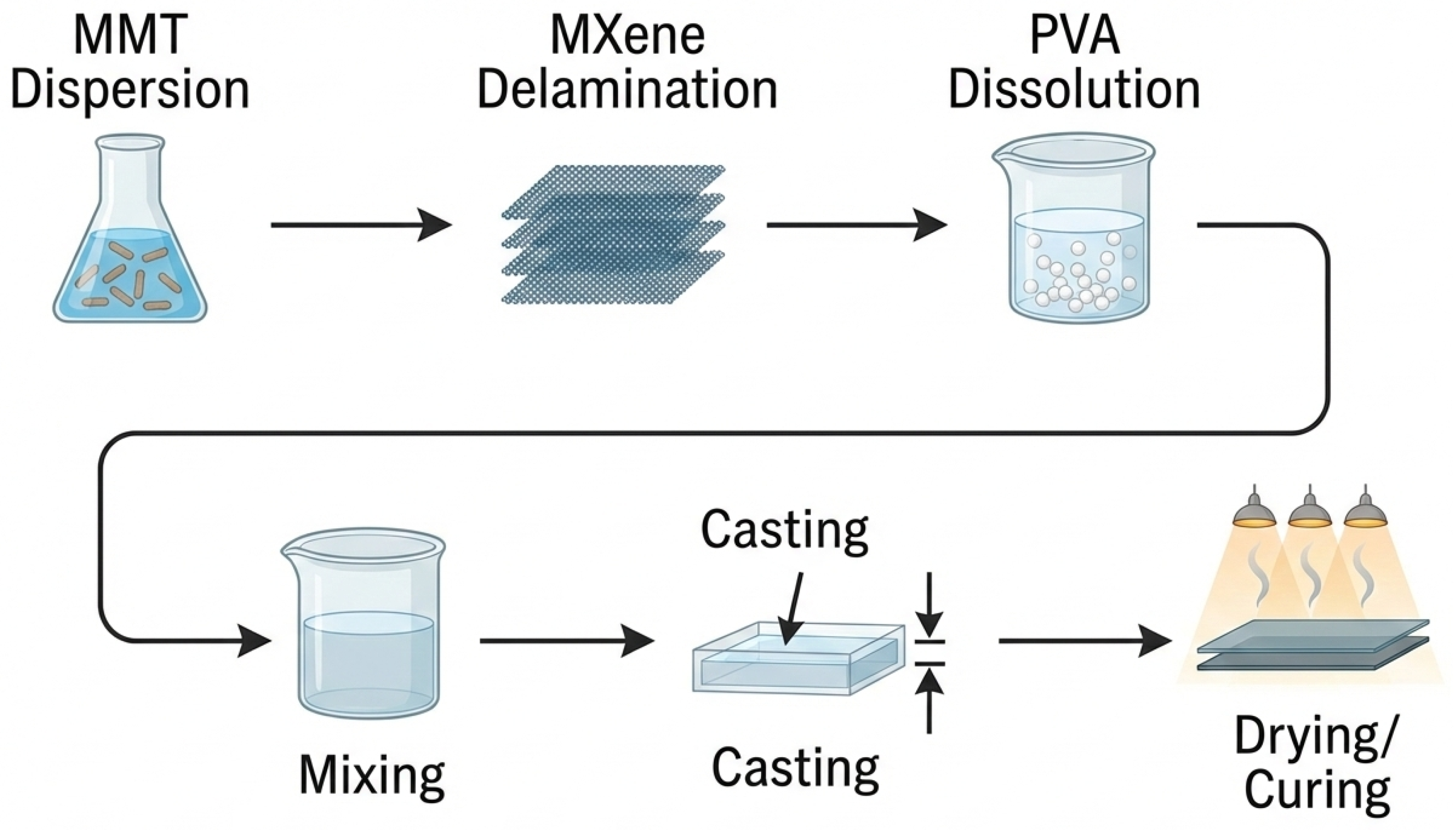
2.1.4. Synthesis of PVA/MMT/MXene Nanocomposite Membranes
2.2. Structural Analysis
2.3. Mechanical Characterization
2.3.1. Tensile Testing (ASTM D882 Standard [45])
2.3.2. Swelling Behavior Analysis
2.3.3. Compaction and Reswelling Tests
2.4. Adsorption Experiments
2.4.1. Preparation of Pollutant Solutions
2.4.2. Batch Adsorption Tests
2.5. Statistical Physics Modeling
2.5.1. Background of Statistical Physics Models
2.5.2. Key Parameters and Their Interpretation
2.5.3. Model Equations
Single-Layer Model
Double-Layer Model
Multilayer Model
Fitting and Analysis
2.6. Pore Structure Characterization (BJH Method)
3. Results and Discussion
3.1. Structural Characterization
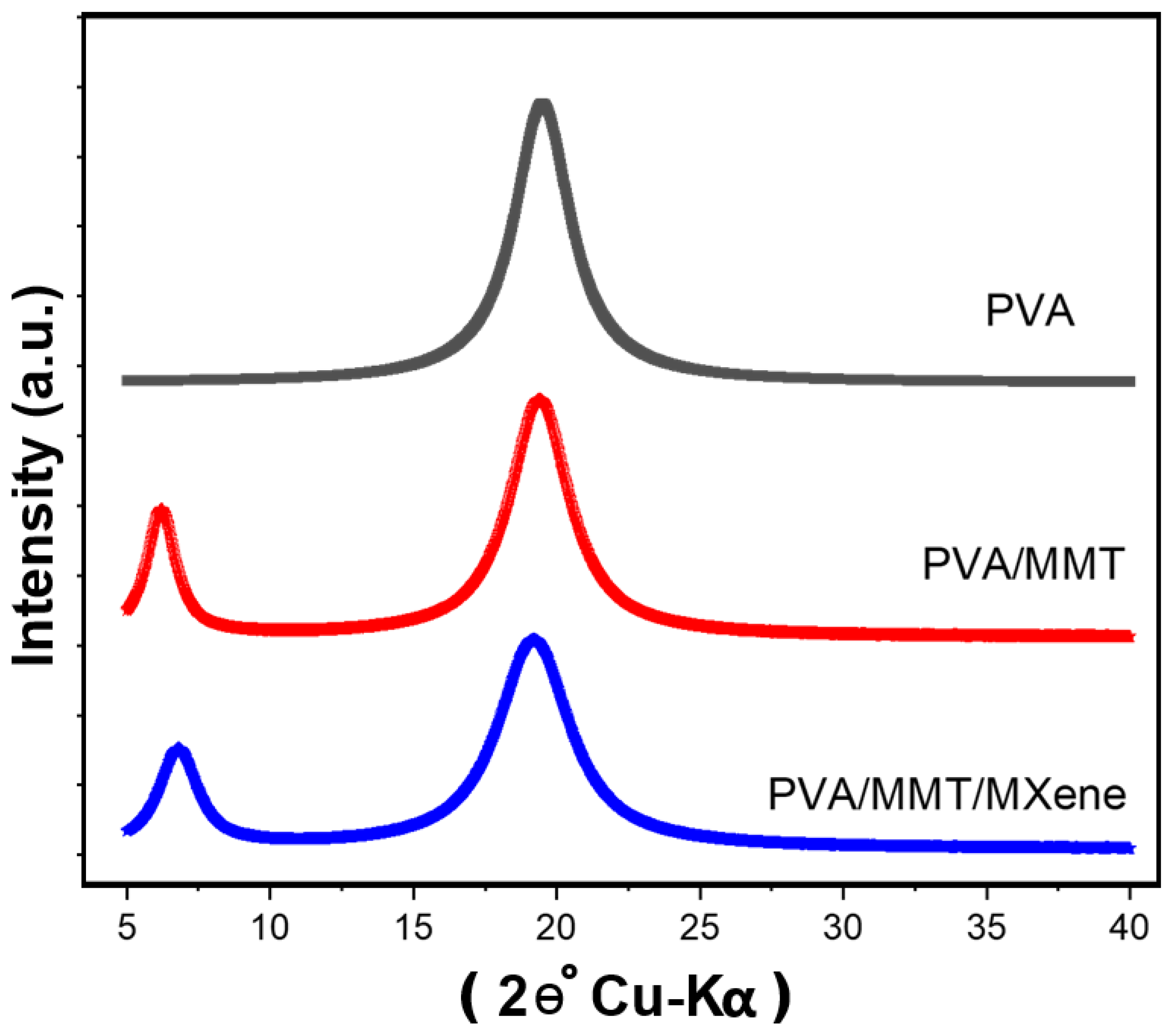
3.1.1. XRD Analysis
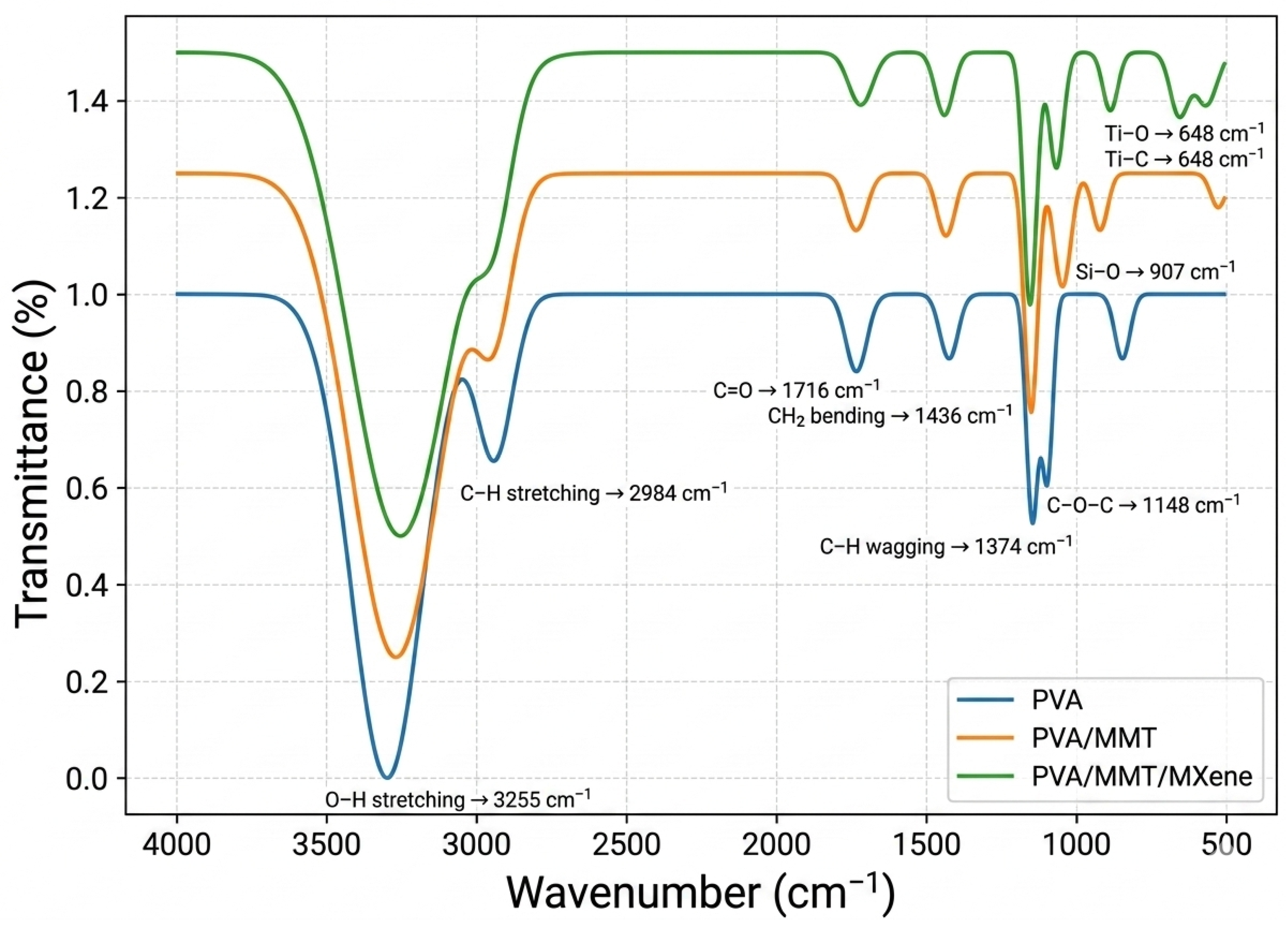
3.1.2. FTIR Spectroscopy
3.2. Mechanical Properties
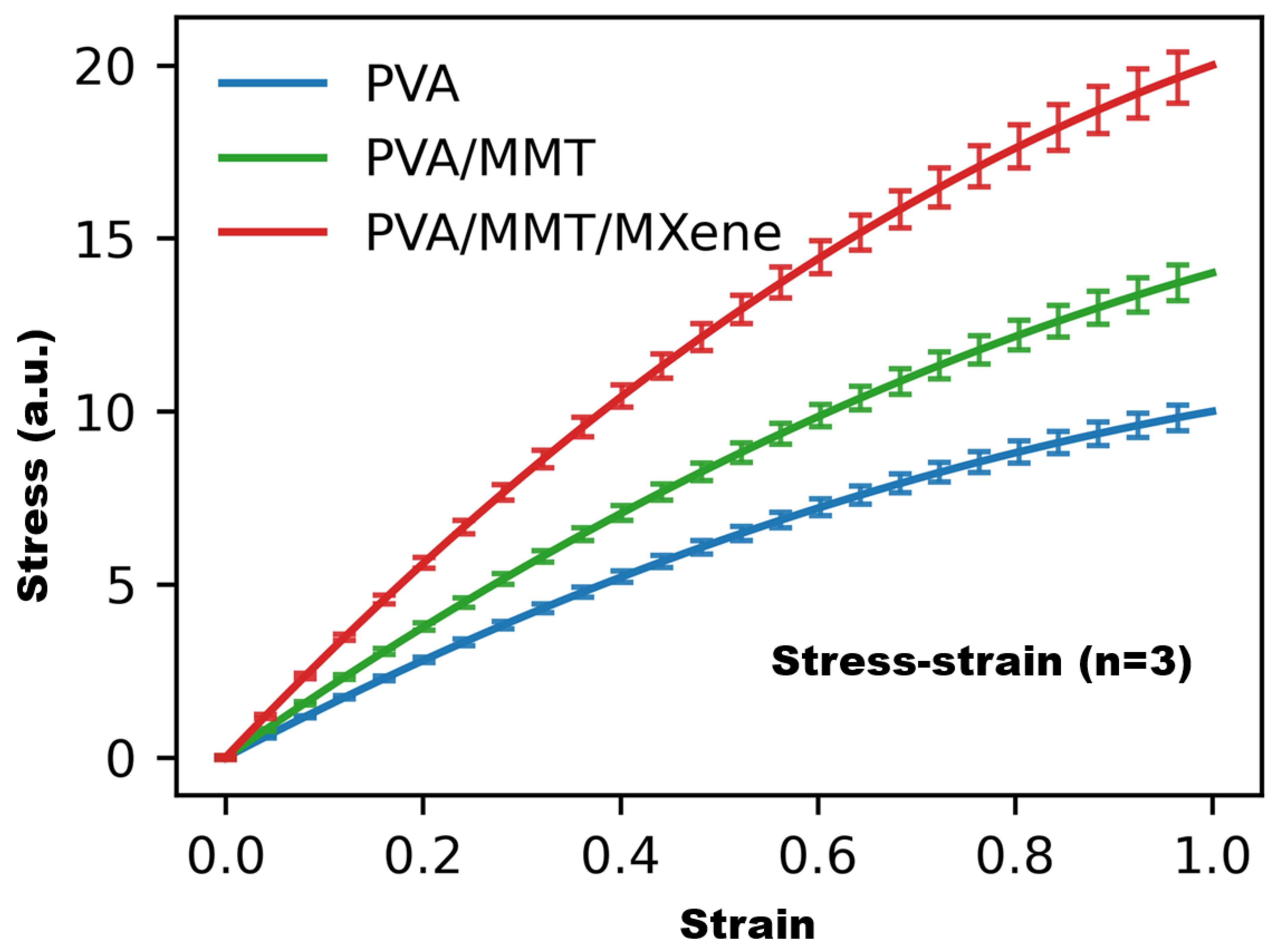
3.2.1. Stress–Strain Behavior
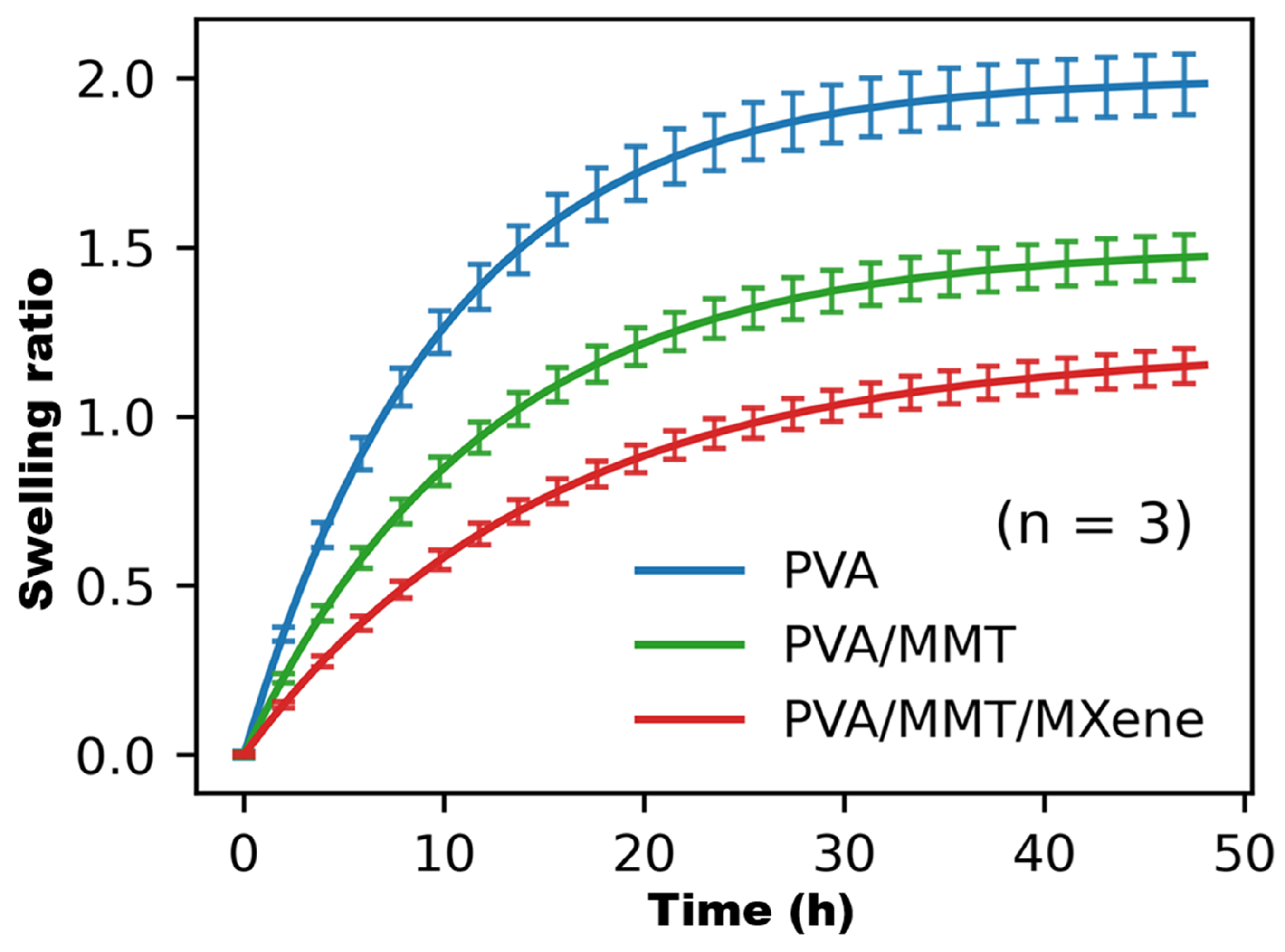
3.2.2. Swelling Behavior
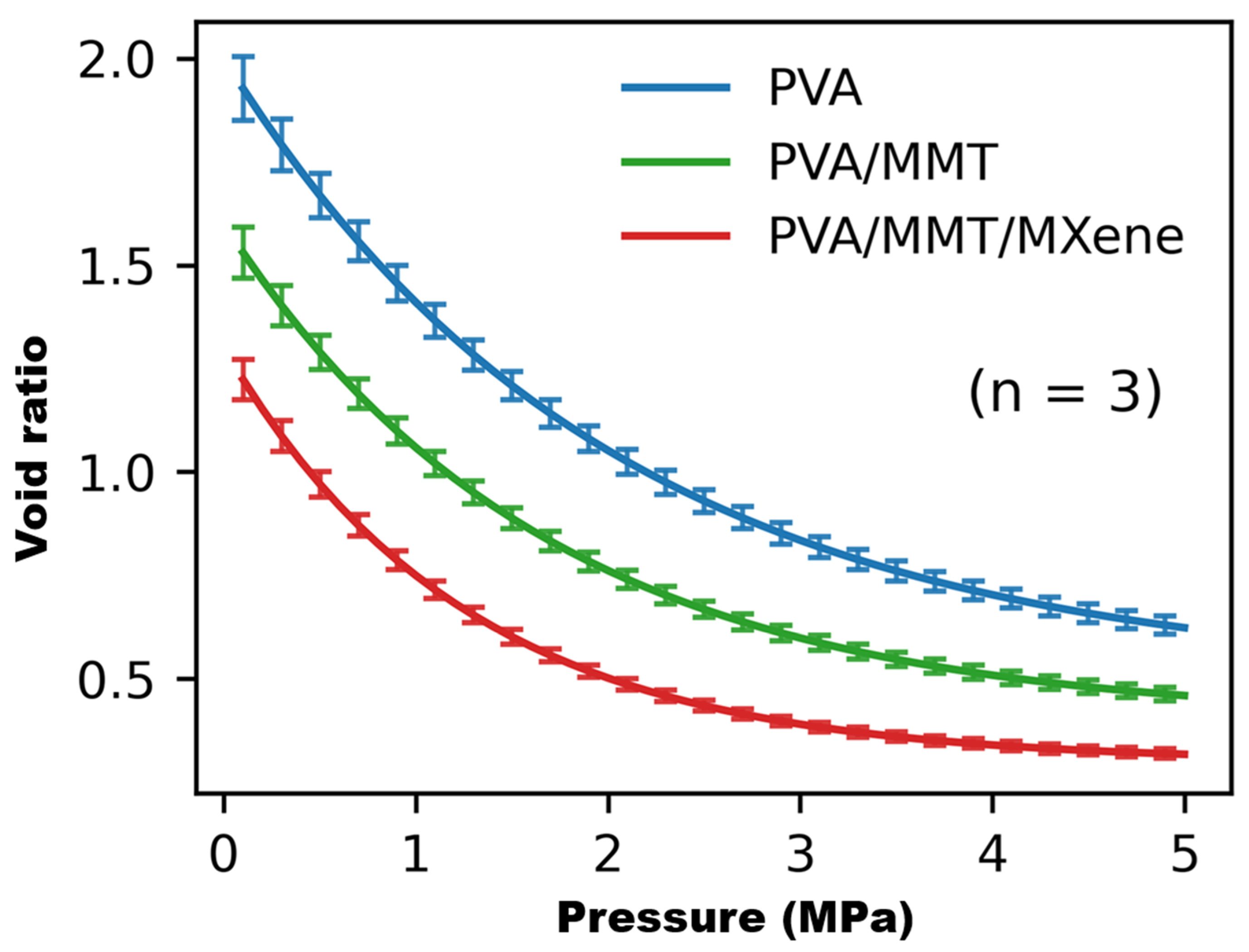
3.2.3. Compaction Behavior
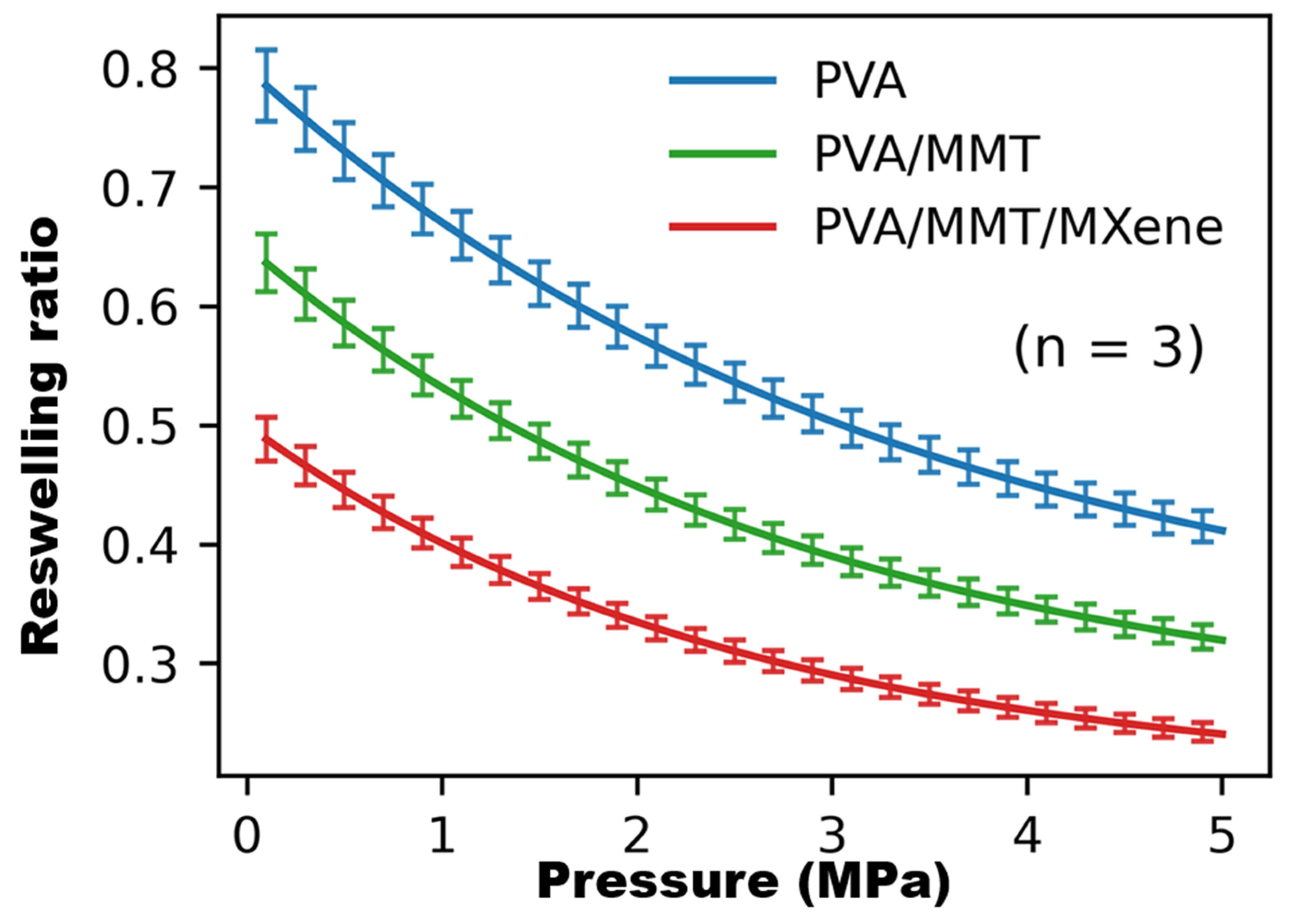
3.2.4. Reswelling Behavior After Compression
3.3. Adsorption Properties and Statistical–Physics Modeling
3.3.1. Equilibrium Isotherms (Mono-Solute)
3.3.2. Statistical–Physics Modeling: Microscopic Interpretation
- (i)
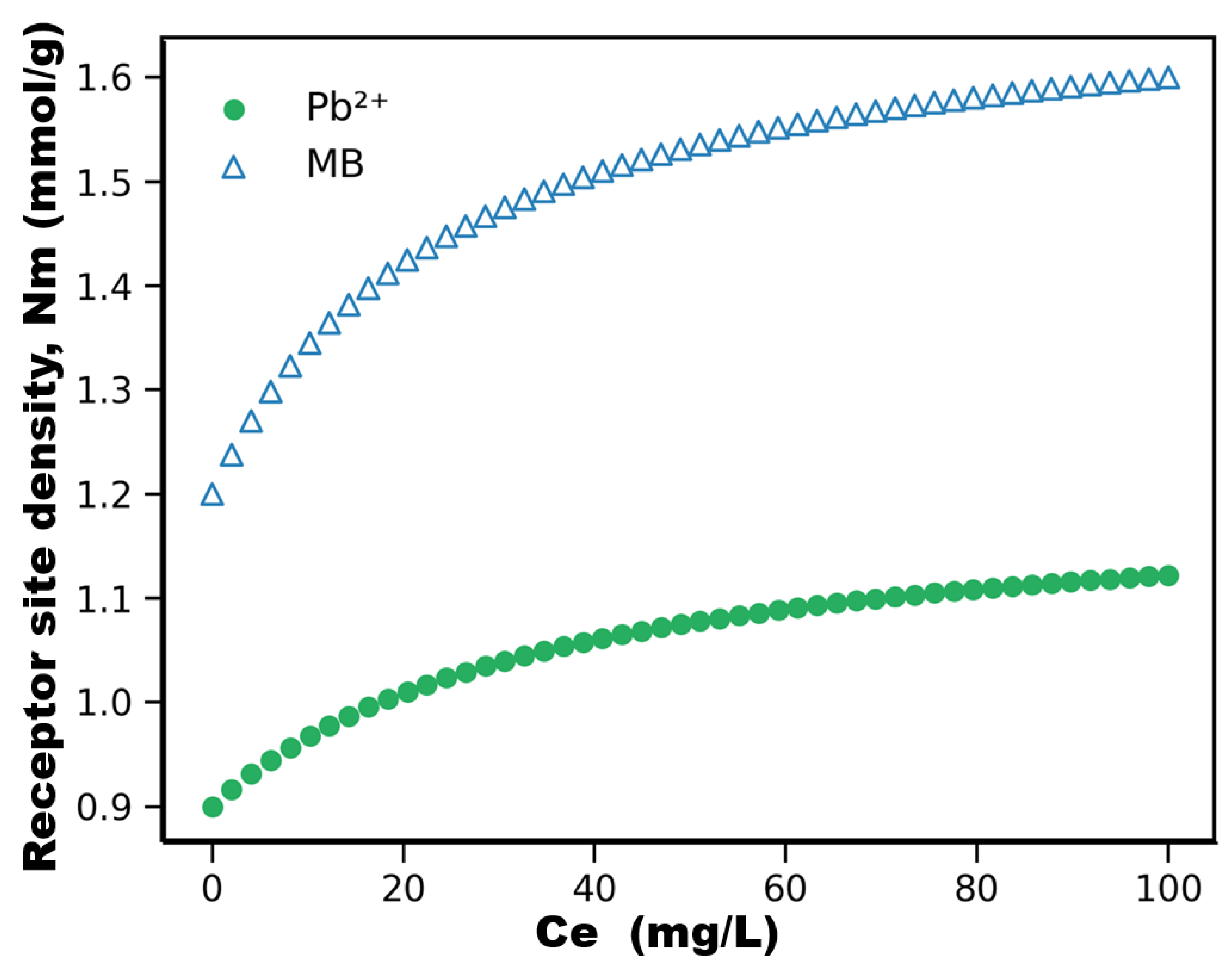
- Receptor site density, Nm.
- (ii)
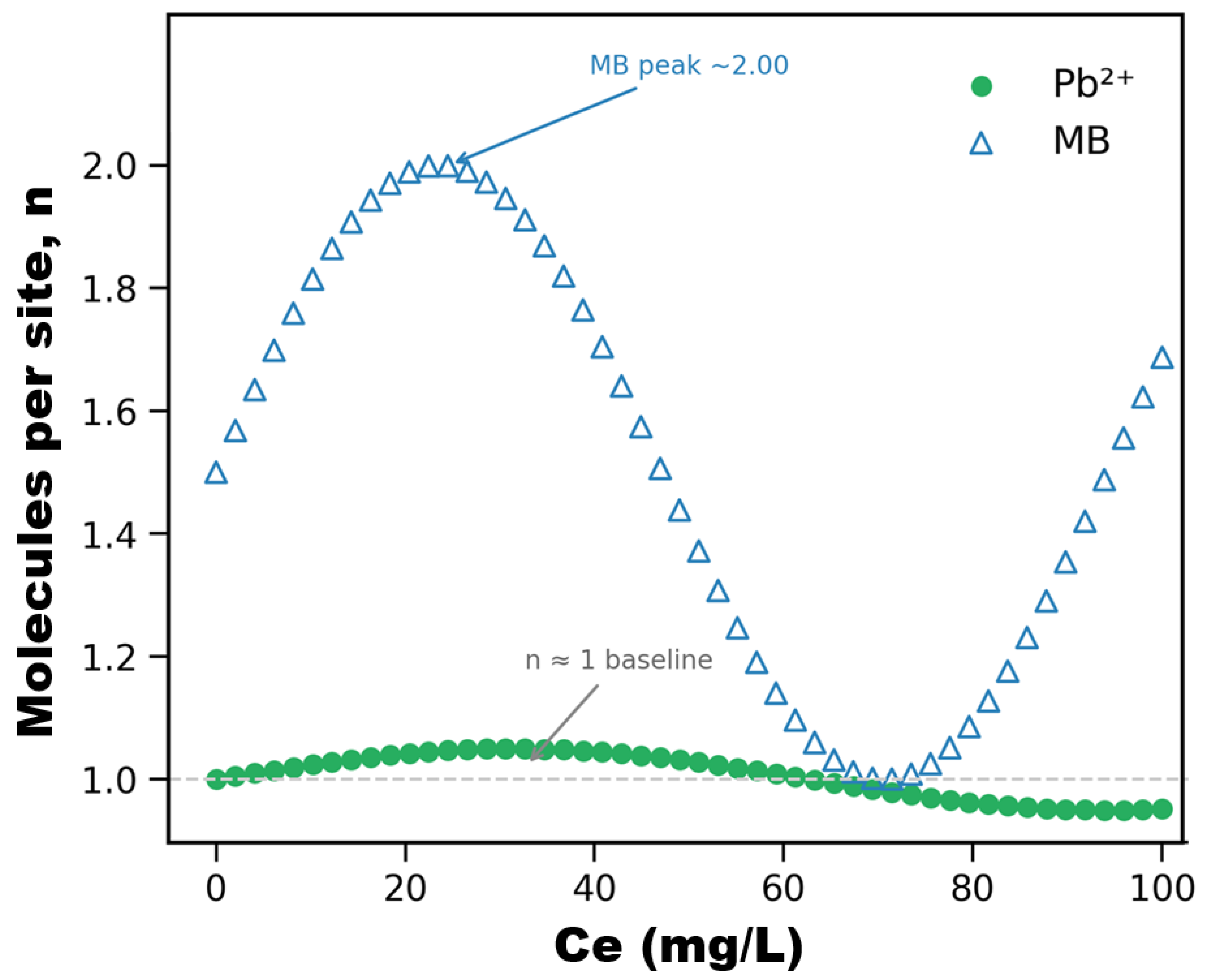
- Molecules per site, n.
- (iii)
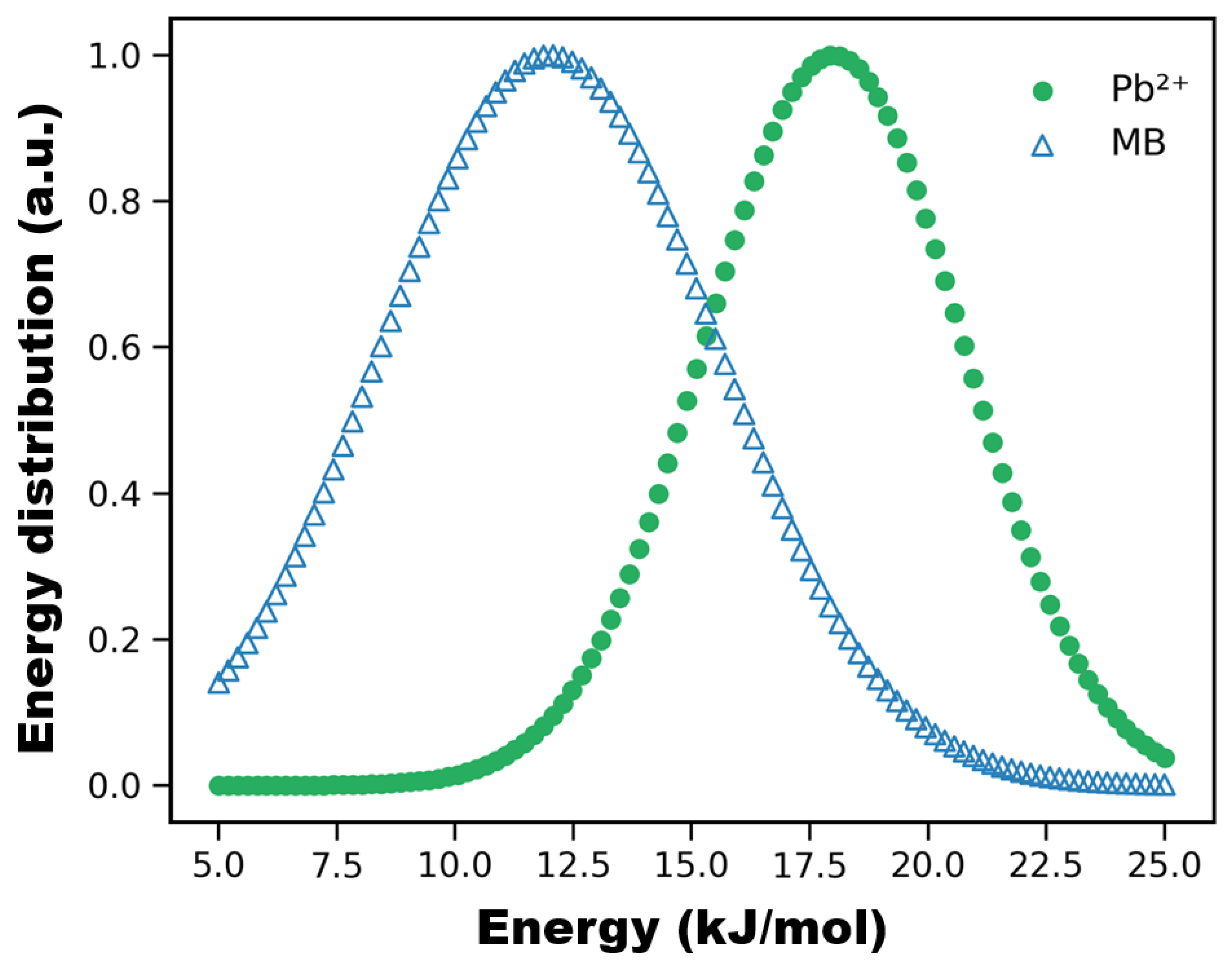
- Adsorption energy distribution.
- (iv)
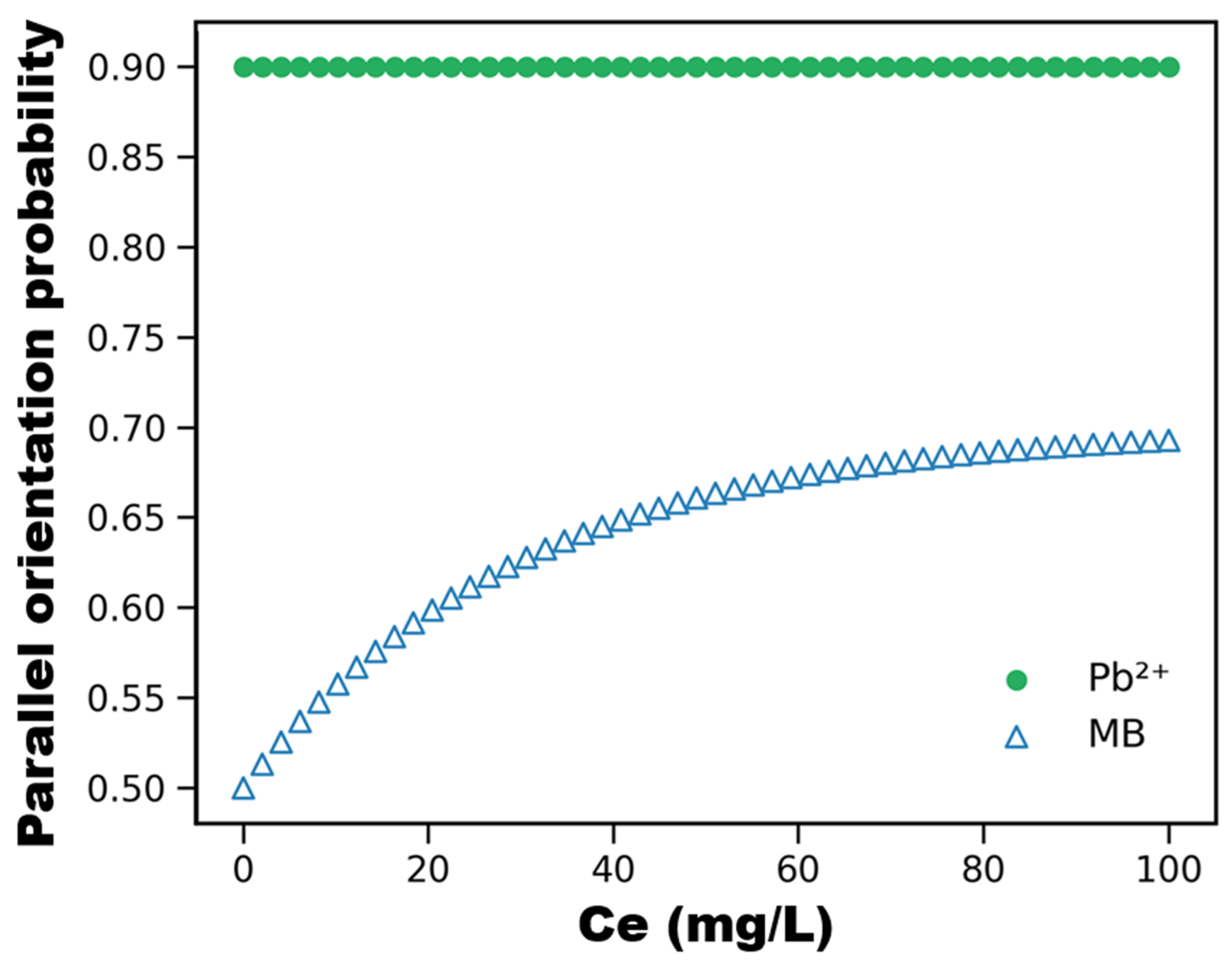
- Orientation probability.
- (v)
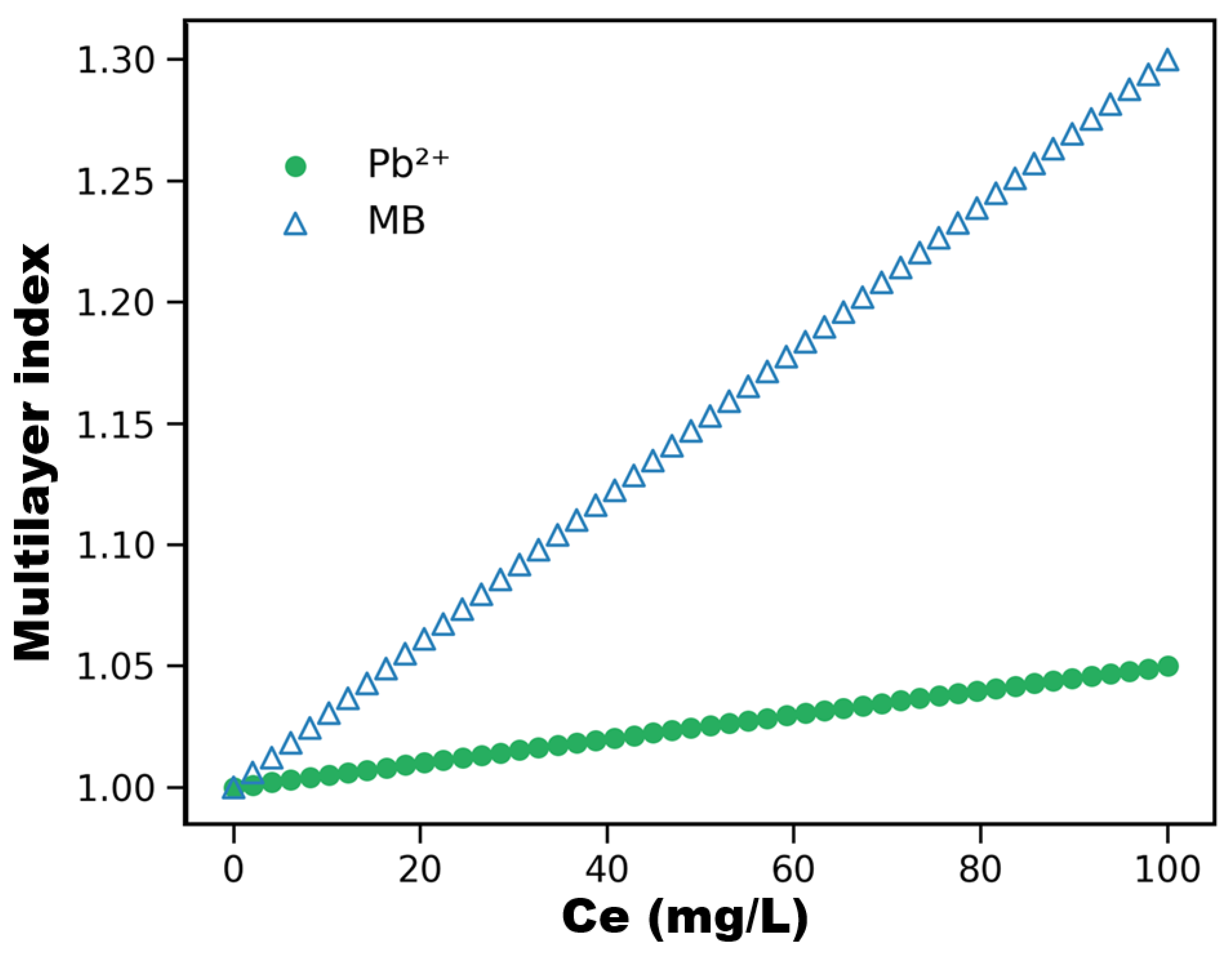
- Multilayer growth index.
3.3.3. Multilayer Formation and Comparative Adsorption Pathways

| Material System | Target Pollutant | Adsorption Capacity (mg·g−1) | Refs |
|---|---|---|---|
| PVA–AMPS sulfonated microspheres | MB | ≈20.7 mg·g−1 | [82] |
| Modified clays/MMT-based systems | Pb2+ | 100–250 mg·g−1 | [83,84] |
| PVA/MMT composites (general) | Heavy metals | 50–150 mg·g−1 | [85] |
| MXene-based composites | Cationic dyes/metals | 150–300 mg·g−1 | [85] |
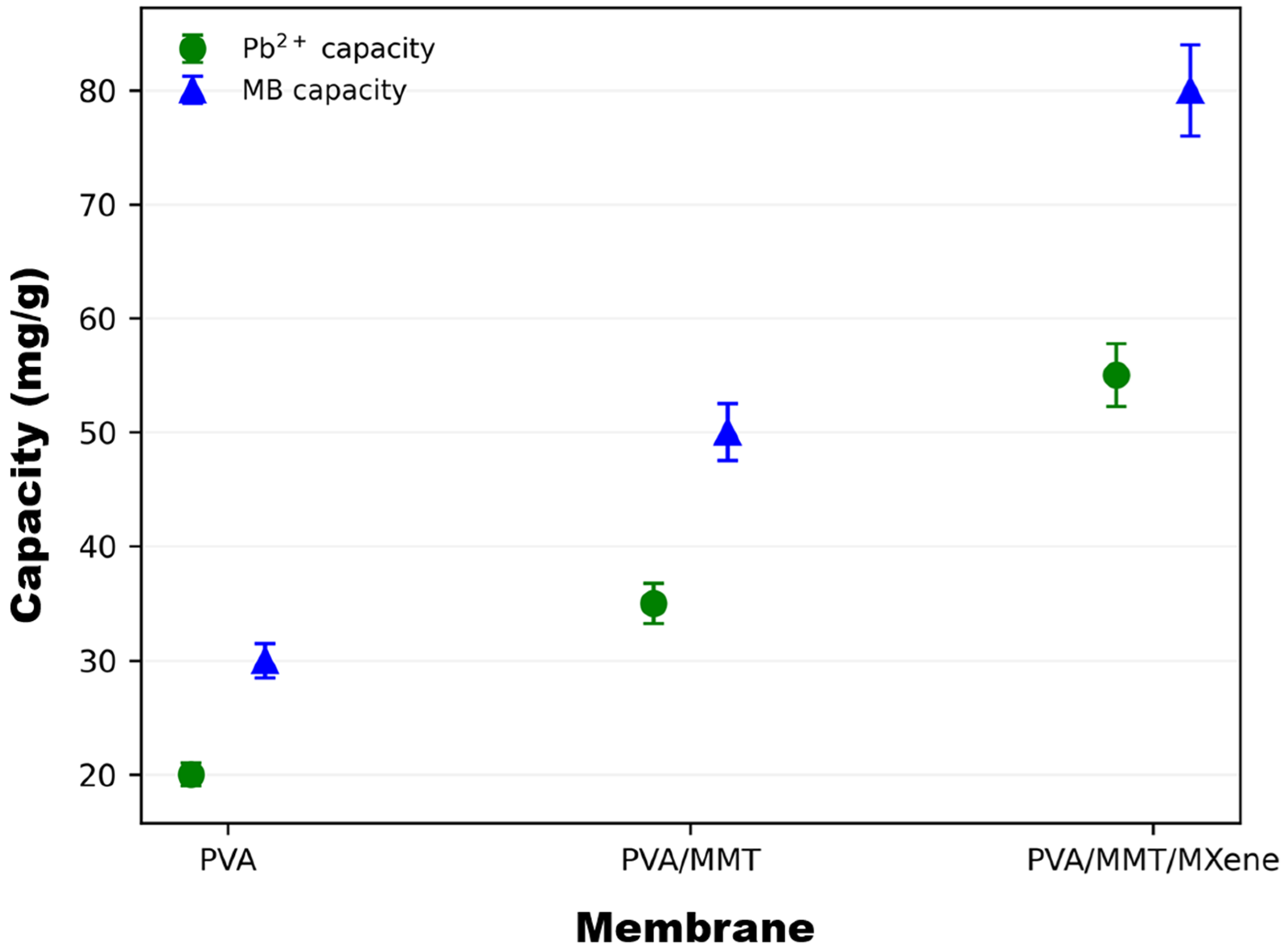
| PVA/MMT/MXene (this work) | Pb2+ | 55 mg·g−1 | This work |
| PVA/MMT/MXene (this work) | MB | 80 mg·g−1 | This work |
3.3.4. Interpretation of the Energy Landscape and Layering Behavior
- Stabilizes specific binding sites for Pb2+ (explaining the narrower, higher-energy distribution),
- Provides extended surface planes and micro-domains favorable for MB stacking,
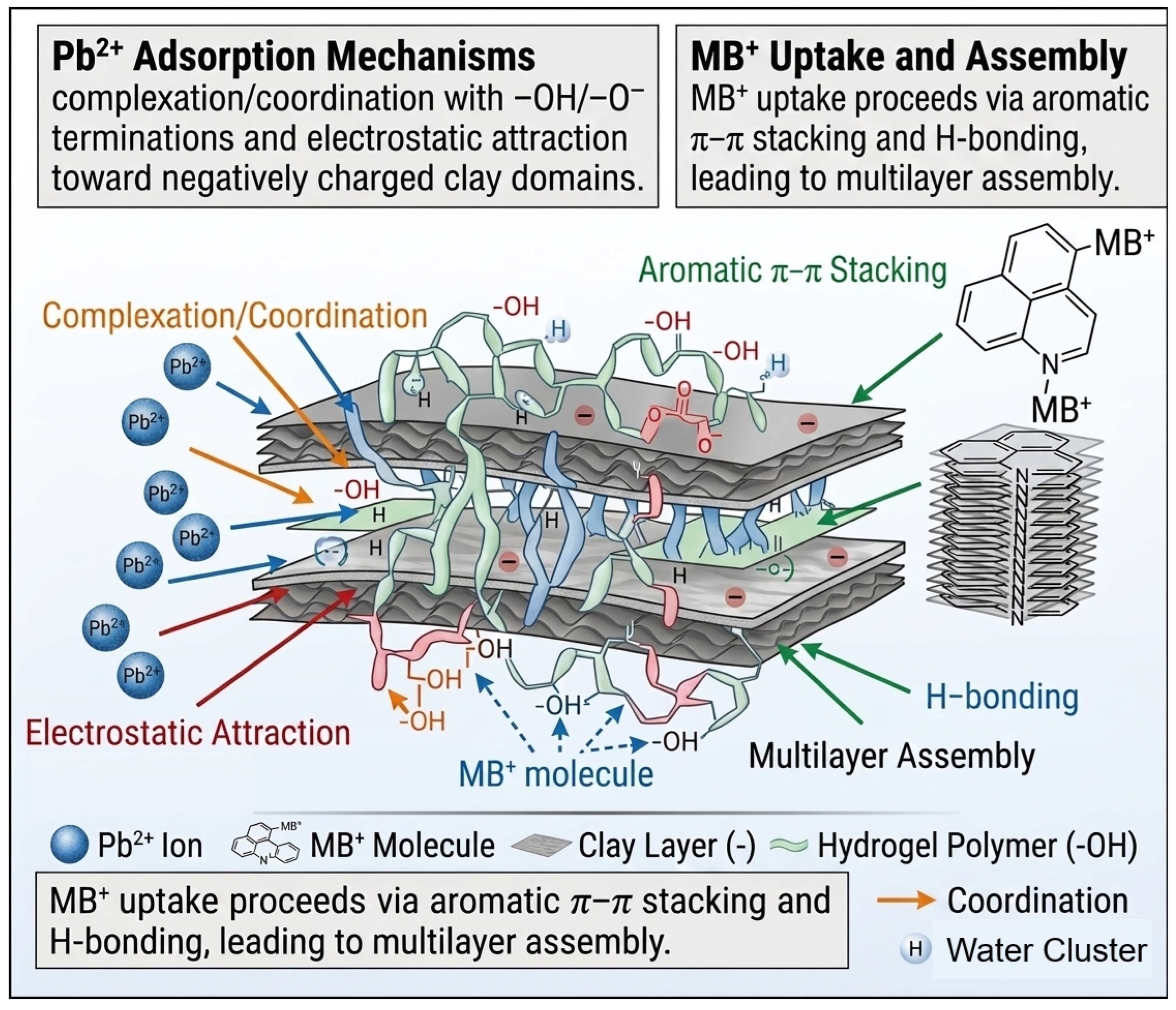
- Increases accessible surface area for the formation of secondary and tertiary MB layers, consistent with the elevated multilayer index (Figure 16).
3.3.5. Structure–Mechanism Link and Role of the Hybrid 2D Network
3.4. Porosity Analysis (BJH Method)
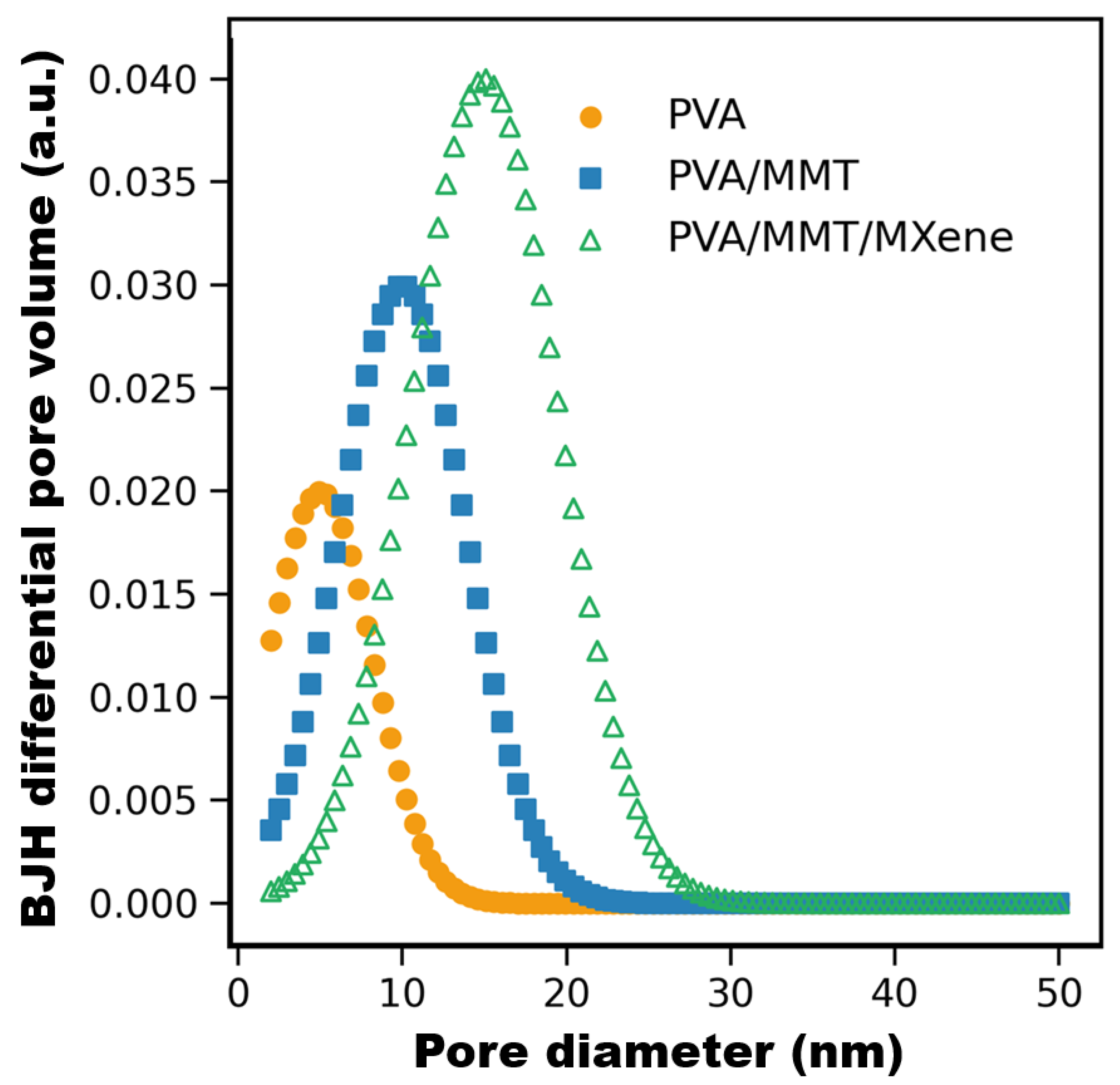
3.4.1. Pore Size Distribution
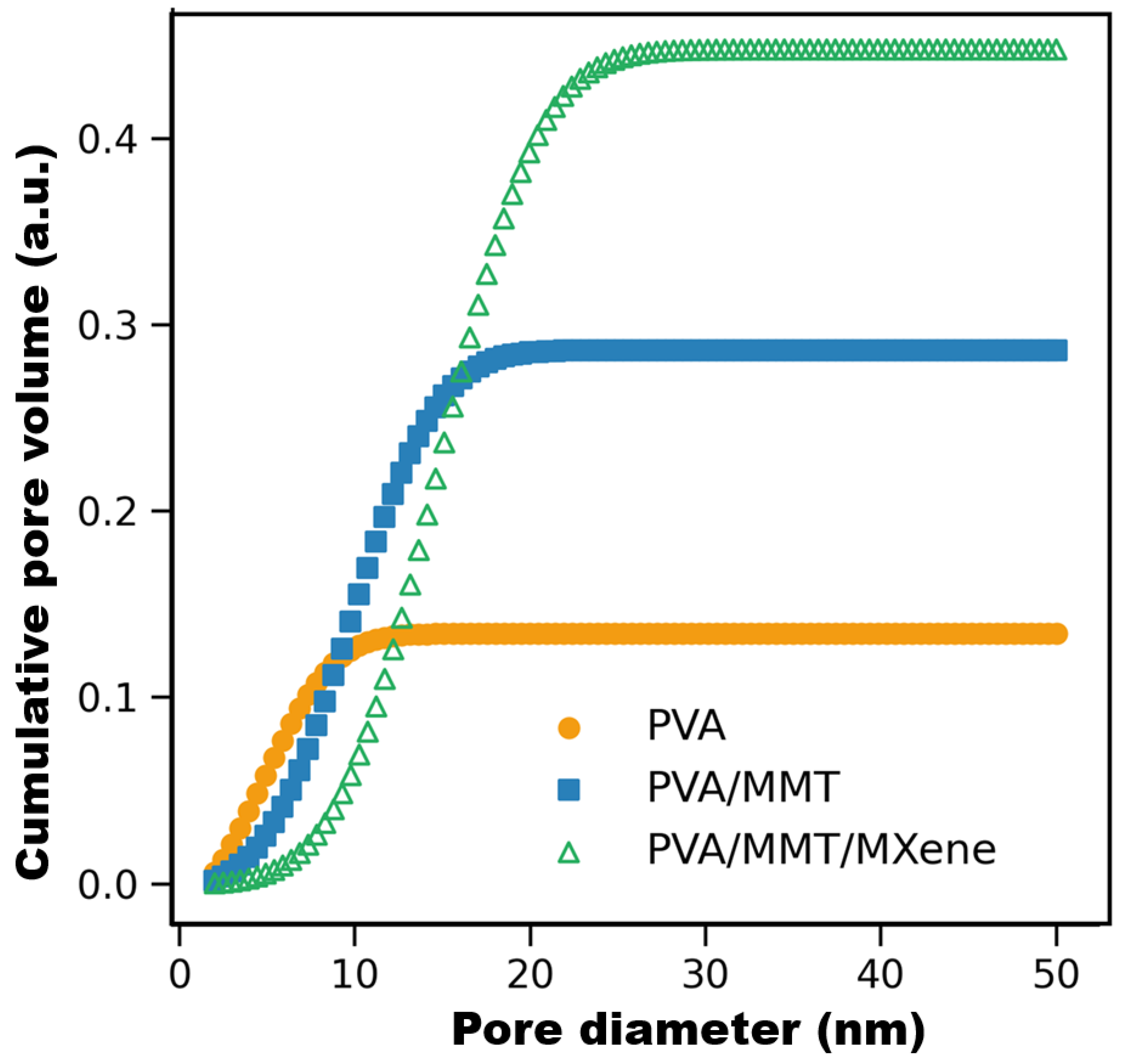
3.4.2. Cumulative Pore Volume
4. Conclusions
Author Contributions
Funding
Data Availability Statement
Acknowledgments
Conflicts of Interest
Abbreviations
| PVA | Poly(vinyl alcohol) |
| MMT | Montmorillonite |
| MXene | Ti3C2(OH)1.2 nanosheets |
| MB | Methylene Blue |
| Pb2+ | Lead ions Nm: Receptor site density |
| N | Number of molecules per site |
| ε | Adsorption energy |
| Ce | Equilibrium concentration |
| BET | Brunauer–Emmett–Teller |
| BJH | Barrett–Joyner–Halenda |
References
- Filimon, A.; Dobos, A.M.; Onofrei, M.D.; Serbezeanu, D. Polyvinyl Alcohol-Based Membranes: A Review of Research Progress on Design and Predictive Modeling of Properties for Targeted Application. Polymers 2025, 17, 1016. [Google Scholar] [CrossRef] [PubMed]
- Bercea, M. Recent Advances in Poly(vinyl alcohol)-Based Hydrogels. Polymers 2024, 16, 2021. [Google Scholar] [CrossRef]
- Rezvova, M.A.; Glushkova, T.V.; Klyshnikov, K.Y.; Pykin, A.L.; Tkachenko, T.B.; Akentieva, T.N.; Kostyunin, A.E.; Onishchenko, P.S.; Borisova, N.N.; Fokeeva, M.P.; et al. Biocompatible Nanocomposite Cryogels with Improved Mechanical Properties Based on Polyvinyl Alcohol and Carbon Nanotubes for Cardiovascular Applications. Front. Bioeng. Biotechnol. 2025, 13, 1635837. [Google Scholar] [CrossRef]
- Saini, T.; Meena, J.; Verma, V.; Saini, S.; Malik, R. Polyvinyl Alcohol: Recent Advances and Applications in Sustainable Materials. Polym.-Plast. Technol. Mater. 2025, 64, 794–825. [Google Scholar] [CrossRef]
- Vu, N.Q.; Le, T.M.; Ngo, A.N.; Nguyen, M.H.; Liao, Y.C.; Tran, T.T. Engineering Functional PVA: A Comprehensive Review of Chemical Modifications and Prospective Developments. ACS Polym. Au 2025, 6, 33–60. [Google Scholar] [CrossRef] [PubMed]
- Venkatesan, R.; Mayakrishnan, V.; Alrashed, M.M.; Kim, S.C. Recent Advances in PBAT (Nano)Composite Materials for Food Packaging: A Comprehensive Review. J. Appl. Polym. Sci. 2025, 142, e57163. [Google Scholar] [CrossRef]
- Maalihan, R.D.; Domalanta, M.R.B.; Corrales, A.C.C.; Caldona, E.B. Advances in Interfacially Engineered Surface-Functionalized Fillers for Multifunctional Polymer Composite Coatings. Polym. Compos. 2025, 46, 5857–5881. [Google Scholar] [CrossRef]
- Nimitha, K.C.; Abraham, J.; Sharika, T.N. Barrier properties of polymer nanoclay and hybrid composites. In Polymer-Based Nanostructured Barrier Materials; Elsevier: Amsterdam, The Netherlands, 2026; pp. 245–266. [Google Scholar]
- Bastos Andrade, C.G.; Santos, G.A.M.D.; Camargo, M.C.; Gonzaga Neto, A.C.; Valera, T.S.; Toffoli, S.M. Effect of a Montmorillonite Modification on the Rheology and Mechanical Properties of a Clay/Natural Rubber Nanocomposite. Minerals 2025, 15, 1151. [Google Scholar] [CrossRef]
- Gajdosova, V.; Strachota, B.; Pokorny, V.; Brozova, L.; Kozisek, J.; Pavlova, E.; Stary, Z.; Slouf, M.; Strachota, A. Thermoplastic Starch Composites with Highly Exfoliated Nano-Clay Fillers and Excellent Barrier Properties. Materials 2026, 19, 347. [Google Scholar] [CrossRef]
- Salah, Z.; Aloulou, H.; Algieri, C.; Dammak, L.; Ben Amar, R. Polysulfone/MMT Clay Mixed Matrix Membranes for Efficient Diclofenac Removal and Improved Antifouling Performance in Wastewater Treatment. Membranes 2025, 15, 344. [Google Scholar] [CrossRef]
- Musa, A.A.; Bello, A.; Adams, S.M.; Onwualu, A.P.; Anye, V.C.; Bello, K.A.; Obianyo, I.I. Nano-Enhanced Polymer Composite Materials: A Review of Current Advancements and Challenges. Polymers 2025, 17, 893. [Google Scholar] [CrossRef] [PubMed]
- Kabdrakhmanova, S.K.; Kerimkulova, A.Z.; Nauryzova, S.Z.; Aryp, K.; Shaimardan, E.; Kukhareva, A.D.; Kantay, N.; Beisebekov, M.M.; Thomas, S. Bentonite-Based Composites in Medicine: Synthesis, Characterization, and Applications. J. Compos. Sci. 2025, 9, 310. [Google Scholar] [CrossRef]
- Vilarinho, F.; Vaz, M.F.; Silva, A.S. The Use of Montmorillonite (MMT) in Food Nanocomposites: Methods of Incorporation, Characterization of MMT/Polymer Nanocomposites and Main Consequences in the Properties. Recent Pat. Food Nutr. Agric. 2020, 11, 13–26. [Google Scholar] [CrossRef] [PubMed]
- Hossain, S.I.; Kukushkina, E.A.; Izzi, M.; Sportelli, M.C.; Picca, R.A.; Ditaranto, N.; Cioffi, N. A Review on Montmorillonite-Based Nanoantimicrobials: State of the Art. Nanomaterials 2023, 13, 848. [Google Scholar] [CrossRef]
- Taha, Z.T.; Bata, A.; Molnár, B.; Ronkay, F. Impact of Montmorillonite Reinforcement on the Physical Recyclability of Biobased and Petroleum-Based Polyesters. Heliyon 2025, 11, e29754. [Google Scholar] [CrossRef]
- Chen, Z.; Meng, Z.; Zhang, Z.; Ma, W. MXene-Polymer Nanocomposites for High-Efficiency Photocatalytic Antibiotic Degradation Review: Microstructure Control, Environmental Adaptability and Future Prospects. Polymers 2025, 17, 2630. [Google Scholar] [CrossRef]
- Alaneme, G.U.; Attah, I.C.; Duru, S.C.; Olaiya, B.C.; Adewumi, A.E. MXene and its derivative composites for heavy metal adsorption: Advances in sustainable water remediation. In Composites and Biocomposites for Heavy Metal Adsorption; Woodhead Publishing: Cambridge, UK, 2026; pp. 125–141. [Google Scholar]
- Debow, S.; Shen, Z.; Kulathuvayal, A.S.; Song, F.; Zhang, T.; Fisher, H.; Brown, J.B.; Qian, Y.; Huang-Fu, Z.-C.; Wang, H.; et al. Interface Catalysts of In Situ-Grown TiO2/MXenes for High-Faraday-Efficiency CO2 Reduction. Molecules 2025, 30, 4025. [Google Scholar] [CrossRef]
- Jiang, Y. Applications and Perspectives of Ti3C2Tx MXene in Electrochemical Energy Storage Systems. Int. J. Electrochem. Sci. 2025, 20, 100948. [Google Scholar] [CrossRef]
- Nezami, S.; Ghaemi, A.; Yousefi, T. Experimental Exploring of Ti3C2Tx MXene for Efficient and Deep Removal of Magnesium in Water Sample. Sci. Rep. 2024, 14, 27508. [Google Scholar] [CrossRef]
- Protyai, M.I.H.; Rashid, A.B. A Comprehensive Overview of Recent Progress in MXene-Based Polymer Composites: Their Fabrication Processes, Advanced Applications, and Prospects. Heliyon 2024, 10, e32907. [Google Scholar] [CrossRef]
- Li, X.; Xue, N.; Yao, Q.; Han, L.; Zhao, X.; Li, B.; He, T.; Tao, X. Obtaining Ambient-Stable MXene Ti3C2Tx through Avoidance of Surface Oxidation Active Sites. Adv. Mater. Interfaces 2022, 9, 2200991. [Google Scholar] [CrossRef]
- Habib, T.; Zhao, X.; Shah, S.A.; Chen, Y.; Sun, W.; An, H.; Lutkenhaus, J.L.; Radovic, M.; Green, M.J. Oxidation Stability of Ti3C2Tx MXene Nanosheets in Solvents and Composite Films. npj 2D Mater. Appl. 2019, 3, 8. [Google Scholar] [CrossRef]
- Abidli, A.; Rejeb, Z.B.; Zaoui, A.; Naguib, H.E.; Park, C.B. Comprehensive insights into the application of graphene-based aerogels for metals removal from aqueous media: Surface chemistry, mechanisms, and key features. Adv. Colloid Interface Sci. 2025, 335, 103338. [Google Scholar] [CrossRef]
- Lin, J.; Dai, L.; Luo, K.; Fang, H.; Yang, X.; Ding, Y. Polyvinyl Alcohol/Polyethyleneimine-Modified MXene Nanocomposite Coatings for Food Packaging: Enhanced Mechanical, Barrier, and Antimicrobial Properties. J. Appl. Polym. Sci. 2026, 143, e70402. [Google Scholar] [CrossRef]
- Zagabathuni, A.; Rabeeh, V.P.M.; Pranavi, G.S. Development of MXene-enhanced polyvinyl alcohol nanofibers: A comprehensive study on synthesis and characterization. J. Polym. Res. 2025, 32, 155. [Google Scholar] [CrossRef]
- Amrhar, O.; El Gana, L.; Mobarak, M. Calculation of Adsorption Isotherms by Statistical Physics Models: A Review. Environ. Chem. Lett. 2021, 19, 4519–4547. [Google Scholar] [CrossRef]
- Sellaoui, L.; Guedidi, H.; Knani, S.; Reinert, L.; Duclaux, L.; Lamine, A.B. Application of Statistical Physics Formalism to the Modeling of Adsorption Isotherms of Ibuprofen on Activated Carbon. Fluid Phase Equilib. 2015, 387, 103–110. [Google Scholar]
- Nasir, M.; Shahid, D.; Khan, W.; Afroz, A.; Samdani, M.S.; Mia, M.A.R. Mechanistic Insights into Paracetamol Adsorption from Water Using ZnO Nanoparticle-Immobilized Chitosan–Inulin Composites: Fractal Kinetics, Statistical Physics, Thermodynamic Analysis, and Application to Real Water Samples. Environ. Sci. Water Res. Technol. 2025, 11, 1460–1484. [Google Scholar] [CrossRef]
- Adedoja, O.S.; Sadiku, E.R.; Hamam, Y. Theoretical modeling of interphase/interface of polymer nanocomposites. In Design of Functional Polymer Nanocomposites; Woodhead Publishing: Cambridge, UK, 2025; pp. 97–126. [Google Scholar]
- Fernández, J.A.H.; Prieto Palomo, J.A.; Toloza, C.A.T. Theoretical/Experimental Study of the Heavy Metals in Poly (vinylalcohol)/Carboxymethyl Starch-g-Poly (vinyl imidazole)-Based Magnetic Hydrogel Microspheres. J. Compos. Sci. 2025, 9, 193. [Google Scholar]
- Naifar, A.; Askri, M.; Ben Torkia, Y.; Sghaier, W.; Bouzid, M.; Ben Lamine, A. Statistical Physics Approach for Modeling Adsorption Isotherms and Enhancing Desalination Efficiency Using Silica Gel/Water System. Int. J. Environ. Sci. Technol. 2025, 22, 1451–1462. [Google Scholar]
- Allahkarami, E.; Allahkarami, E.; Azadmehr, A.; Shahrabadi, M.E. Kinetics and Statistical Physics Modeling of Heavy Metal Ions Adsorption onto Functionalized Pyrite Composite: Experimental and Modeling. Results Chem. 2025, 102536. [Google Scholar] [CrossRef]
- Bardestani, R.; Patience, G.S.; Kaliaguine, S. Experimental Methods in Chemical Engineering: Specific Surface Area and Pore Size Distribution Measurements—BET, BJH, and DFT. Can. J. Chem. Eng. 2019, 97, 2781–2791. [Google Scholar] [CrossRef]
- Kandel, D.R.; Poudel, M.B.; Gaudel, P.; Yoo, D.J.; Lee, J. Phytic acid-functionalized Zr-MOF mixed matrix membranes with UF-level water permeance, NF-level separation efficiency, and antifouling properties for the removal of dyes and heavy metals. Desalination 2025(619), 119509. [CrossRef]
- Sapalidis, A.A. Porous Polyvinyl Alcohol Membranes: Preparation Methods and Applications. Symmetry 2020, 12, 960. [Google Scholar] [CrossRef]
- Mubarak, M.F.; Taha, E.O.; Abdelraheem, O.H.; El Sharkawy, H.M. Effective PVC–PVA@Chitosan Quantum Dot Membrane for Sustainable Water Purification. RSC Adv. 2025, 15, 13323–13336. [Google Scholar] [CrossRef]
- Razmgar, K.; Nasiraee, M. Polyvinyl Alcohol-Based Membranes for Filtration of Aqueous Solutions: A Comprehensive Review. Polym. Eng. Sci. 2022, 62, 25–43. [Google Scholar] [CrossRef]
- Choudhury, R.R.; Gohil, J.M.; Dutta, K. Poly(vinyl alcohol)-Based Membranes for Fuel Cell and Water Treatment Applications: A Review on Recent Advancements. Polym. Adv. Technol. 2021, 32, 4175–4203. [Google Scholar] [CrossRef]
- Panigrahy, S.K.; Nandha, A.; Chaturvedi, M.; Mishra, P.K. Novel Nanocomposites with Advanced Materials and Their Role in Wastewater Treatment. Next Sustain. 2024, 4, 100042. [Google Scholar] [CrossRef]
- Darwish, M.S.; Mostafa, M.H.; Al-Harbi, L.M. Polymeric Nanocomposites for Environmental and Industrial Applications. Int. J. Mol. Sci. 2022, 23, 1023. [Google Scholar] [CrossRef]
- Bhat, A.H.; Rangreez, T.A.; Inamuddin; Chisti, H.T.N. Wastewater Treatment and Biomedical Applications of Montmorillonite-Based Nanocomposites: A Review. Curr. Anal. Chem. 2022, 18, 269–287. [Google Scholar] [CrossRef]
- Cai, Z.; Kim, H. Recent advances in MXene gas sensors: Synthesis, composites, and mechanisms. npj 2D Mater. Appl. 2025, 9, 66. [Google Scholar] [CrossRef]
- ASTM D882; Standard Test Method for Tensile Properties of Thin Plastic Sheeting. ASTM International: West Conshohocken, PA, USA, 2021.
- Huang, K. Introduction to Statistical Physics; Chapman and Hall/CRC: Boca Raton, FL, USA, 2009. [Google Scholar]
- Selim, A.Q.; Sellaoui, L.; Mobarak, M. Statistical physics modeling of phosphate adsorption onto chemically modified carbonaceous clay. J. Mol. Liq. 2019, 279, 94–107. [Google Scholar] [CrossRef]
- Xue, H.; Gao, X.; Seliem, M.K.; Mobarak, M.; Dong, R.; Wang, X.; Fu, K.; Li, Q.; Li, Z. Efficient Adsorption of Anionic Azo Dyes on Porous Heterostructured MXene/Biomass Activated Carbon Composites: Experiments, Characterization, and Theoretical Analysis via Advanced Statistical Physics Models. Chem. Eng. J. 2023, 451, 138735. [Google Scholar] [CrossRef]
- Buff, F.P.; Stillinger, F.H., Jr. Statistical Mechanical Theory of Double-Layer Structure and Properties. J. Chem. Phys. 1963, 39, 1911–1923. [Google Scholar] [CrossRef]
- Dutcher, C.S.; Ge, X.; Wexler, A.S.; Clegg, S.L. Statistical Mechanics of Multilayer Sorption: Extension of the Brunauer–Emmett–Teller (BET) and Guggenheim–Anderson–de Boer (GAB) Adsorption Isotherms. J. Phys. Chem. C 2011, 115, 16474–16487. [Google Scholar] [CrossRef]
- Ncibi, M.C. Applicability of some statistical tools to predict optimum adsorption isotherm after linear and non-linear regression analysis. J. Hazard. Mater. 2008, 153, 207–212. [Google Scholar] [CrossRef] [PubMed]
- Albouchi, W.; Meftah, M.; Amara, A.B.H.; Oueslati, W. Effect of Reactant Ratio and Nanofillers Type on the Microstructural Properties, Porosity Fluctuations and Heavy Metal Removal Ability of Chitosan–Clay Hybrid Materials. Appl. Surf. Sci. Adv. 2023, 13, 100387. [Google Scholar] [CrossRef]
- Oueslati, W.; Mejri, C.; Ben Haj Amara, A. Impact of uniaxial mechanical perturbation on structural properties and smectite porosity features: Ion exchanger efficiency and adsorption performance fate. Adv. Civ. Eng. 2022, 2022, 4441705. [Google Scholar] [CrossRef]
- Hossen, M.R.; Talbot, M.W.; Kennard, R.; Bousfield, D.W.; Mason, M.D. A Comparative Study of Methods for Porosity Determination of Cellulose-Based Porous Materials. Cellulose 2020, 27, 6849–6860. [Google Scholar] [CrossRef]
- Chaudhary, D.S.; Prasad, R.; Gupta, R.K.; Bhattacharya, S.N. Clay Intercalation and Influence on Crystallinity of EVA-Based Clay Nanocomposites. Thermochim. Acta 2005, 433, 187–195. [Google Scholar] [CrossRef]
- Wilson, R.; George, S.M.; Maria, H.J.; Plivelic, T.S.; Kumar, A.; Thomas, S. Clay Intercalation and Its Influence on the Morphology and Transport Properties of EVA/Clay Nanocomposites. J. Phys. Chem. C 2012, 116, 20002–20014. [Google Scholar] [CrossRef]
- Zerda, A.S.; Lesser, A.J. Intercalated clay nanocomposites: Morphology, mechanics, and fracture behavior. J. Polym. Sci. Part B Polym. Phys. 2001, 39, 1137–1146. [Google Scholar] [CrossRef]
- Saha, M.; Ray, R.; Choudhury, A.R.; De Bhowmik, P.; Ballabh, T.K. Impact of Exfoliation/Intercalation of Nano-Clay on Structure, Morphology and Electrical Properties of Poly(Ethylene Oxide)-Based Solid Nanocomposite Electrolytes. J. Polym. Res. 2021, 28, 299. [Google Scholar] [CrossRef]
- Karimi, A.; Wan Daud, W.M.A. Materials, preparation, and characterization of PVA/MMT nanocomposite hydrogels: A review. Polym. Compos. 2017, 38, 1086–1102. [Google Scholar] [CrossRef]
- Agboola, O.; Fayomi, O.S.I.; Ayodeji, A.; Ayeni, A.O.; Alagbe, E.E.; Sanni, S.E.; Okoro, E.E.; Moropeng, L.; Sadiku, R.; Kupolati, K.W.; et al. A Review on Polymer Nanocomposites and Their Effective Applications in Membranes and Adsorbents for Water Treatment and Gas Separation. Membranes 2021, 11, 139. [Google Scholar] [CrossRef]
- Pouramini, Z.; Mousavi, S.M.; Babapoor, A.; Hashemi, S.A.; Rumjit, N.P.; Garg, S.; Chiang, W.H. Recent Advances in MXene-Based Nanocomposites for Wastewater Purification and Water Treatment: A Review. Water 2023, 15, 1267. [Google Scholar] [CrossRef]
- Dong, M.; Bilotti, E.; Zhang, H.; Papageorgiou, D.G. Recyclable PVA/starch/Ti3C2Tx MXene nanocomposite films with superior mechanical and barrier properties. Int. J. Biol. Macromol. 2025, 295, 139545. [Google Scholar] [CrossRef]
- Nazarlou, Z.; Hosseini, S.F.; Seyed Dorraji, M.; Rasoulifard, M.H.; Aydemir, U. Ti3C2 MXene/polyaniline/montmorillonite nanostructures toward solvent-free powder coatings with enhanced corrosion resistance and mechanical properties. ACS Appl. Nano Mater. 2023, 6, 8804–8818. [Google Scholar] [CrossRef]
- Parajuli, D.; Murali, N.; Devendra, K.C.; Karki, B.; Samatha, K.; Kim, A.A.; Park, M.; Pant, B. Advancements in MXene-polymer nanocomposites in energy storage and biomedical applications. Polymers 2022, 14, 3433. [Google Scholar] [CrossRef]
- Qin, X.; Wu, Z.; Fang, J.; Li, S.; Tang, S.; Wang, X. MXene-intercalated montmorillonite nanocomposites for long-acting antibacterial. Appl. Surf. Sci. 2023, 616, 156521. [Google Scholar] [CrossRef]
- Socrates, G. Infrared and Raman Characteristic Group Frequencies: Tables and Charts, 3rd ed.; Wiley: Hoboken, NJ, USA, 2004. [Google Scholar]
- Wójcik-Bania, M. TG/MS/FTIR study on thermal degradation process of clay mineral–polysiloxane nanocomposites. Polym. Degrad. Stab. 2022, 206, 110200. [Google Scholar] [CrossRef]
- Chinnasamy, C.; Perumal, N.; Choubey, A.; Rajendran, S. Recent Advancements in MXene-Based Nanocomposites as Photocatalysts for Hazardous Pollutant Degradation—A Review. Environ. Res. 2023, 233, 116459. [Google Scholar] [CrossRef] [PubMed]
- Hameed, M.U.; Amjad, Z.; Al Alwan, B.; El Jery, A.; Hassan, H.M.A.; Ali, L.; Ahmad, A.; Khan, S.; Raza, S. Recent Progress in 2D-MXene-Based Membranes for Water Treatments: Fabrication, Properties, and Advanced Desalination Application. Desalination 2025, 599, 118462. [Google Scholar] [CrossRef]
- Sultana, S.; Ali, M.H.; Dutta, S.K.; Al Mamun, M.S.; Chakrabarty, S.; Hasan, M.K. MXenes: Advances in Synthesis, Characterisation, and Applications in Water Purification. Environ. Technol. Rev. 2025, 14, 273–309. [Google Scholar] [CrossRef]
- Ahmaruzzaman, M. MXenes and MXene-Supported Nanocomposites: Novel Materials for Aqueous Environmental Remediation. RSC Adv. 2022, 12, 34766–34789. [Google Scholar] [CrossRef]
- Knani, S.; Ben Khemis, I.; Zahrouni, W.; Graba, B.; Selmi, R.; Mahmoud, S.A.; Alenazi, A.; Alshammari, A.; Dotto, G.L. Advanced Analysis via Statistical Physics Model to Study the Efficiency of Catechol Removal from Wastewater Using Brazil Nut Shell Activated Carbon. Sci. Rep. 2024, 14, 31634. [Google Scholar] [CrossRef]
- Naifar, A.; Oueslati, K.; Lima, E.C.; Aouaini, F.; Ben Lamine, A. In-Depth Study of Captopril Adsorption on a Biosourced Adsorbent: Statistical Physics Approach and Pore Characterization. Langmuir 2025, 41, 16115–16127. [Google Scholar] [CrossRef]
- Mobarak, M.; Mohamed, E.A.; Selim, A.Q.; Mohamed, F.M.; Sellaoui, L.; Bonilla-Petriciolet, A.; Seliem, M.K. Statistical Physics Modeling and Interpretation of Methyl Orange Adsorption on Mesoporous MCM-48 Silica with Treated Rice Husk. J. Mol. Liq. 2019, 285, 678–687. [Google Scholar] [CrossRef]
- Khalfaoui, M.; Baouab, M.H.V.; Gauthier, R.; Lamine, A.B. Statistical Physics Modelling of Dye Adsorption on Modified Cotton. Adsorpt. Sci. Technol. 2002, 20, 17–31. [Google Scholar] [CrossRef]
- Ahmad, I.; Rahman, N. Site Energy Distribution Coupled with Statistical Physics Modeling for Cr(VI) Adsorption onto Coordination Polymer Gel. Langmuir 2024, 40, 26956–26974. [Google Scholar] [CrossRef]
- Shimizu, S.; Matubayasi, N. Replacing the Langmuir Isotherm with the Statistical Thermodynamic Fluctuation Theory. J. Phys. Chem. Lett. 2024, 15, 3683–3689. [Google Scholar] [CrossRef]
- Bartelt, M.C.; Privman, V. Kinetics of irreversible monolayer and multilayer adsorption. Int. J. Mod. Phys. B 1991, 5, 2883–2907. [Google Scholar] [CrossRef]
- Saadi, R.; Saadi, Z.; Fazaeli, R.; Fard, N.E. Monolayer and Multilayer Adsorption Isotherm Models for Sorption from Aqueous Media. Korean J. Chem. Eng. 2015, 32, 787–799. [Google Scholar] [CrossRef]
- Scheufele, F.B.; Módenes, A.N.; Borba, C.E.; Ribeiro, C.; Espinoza-Quiñones, F.R.; Bergamasco, R.; Pereira, N.C. Monolayer–Multilayer Adsorption Phenomenological Model: Kinetics, Equilibrium and Thermodynamics. Chem. Eng. J. 2016, 284, 1328–1341. [Google Scholar] [CrossRef]
- Wang, C.H.; Hwang, B.J. A general adsorption isotherm considering multi-layer adsorption and heterogeneity of adsorbent. Chem. Eng. Sci. 2000, 55, 4311–4321. [Google Scholar] [CrossRef]
- Verón, M.G.; Soria, L.A.; Prado, M.O. Porous sulfonated PVA microspheres for controlled molecules delivery: A methylene blue study. J. Mater. Appl. 2021, 10, 27–42. [Google Scholar] [CrossRef]
- Wang, P.; Shen, X.; Qiu, S.; Zhang, L.; Ma, Y.; Liang, J. Clay-based materials for heavy metals adsorption: Mechanisms, advancements, and future prospects in environmental remediation. Crystals 2024, 14, 1046. [Google Scholar] [CrossRef]
- Lamrani, M.; Mouchane, M.; Taybi, H.; Mouadili, A. Comprehensive review on the adsorption properties of clay minerals for enhanced removal of toxic dyes and heavy metals. J. Water Environ. Nanotechnol. 2025, 10, 85–107. [Google Scholar]
- Aslam, M.; Kalyar, M.A.; Raza, Z.A. Polyvinyl Alcohol: A Review of Research Status and Use of Polyvinyl Alcohol-Based Nanocomposites. Polym. Eng. Sci. 2018, 58, 2119–2132. [Google Scholar] [CrossRef]




| Wavenumber (cm−1) | Assignment | PVA | PVA/MMT | PVA/MMT/MXene | Refs |
|---|---|---|---|---|---|
| 3300–3400 | O–H stretching (H-bonded) | Broad | Shifted | More shifted | [59,65,66,67] |
| 2940–2910 | C–H asymmetric stretching | Present | Slight decrease | Slight decrease | [62,63,64,65,66,67] |
| 1720–1735 | C=O stretching | Weak | Moderate | Strong | [65,66,67] |
| 1420–1440 | CH2 bending | Clear | Slight change | Slight change | [65,66,67] |
| 1330–1370 | C–H wagging | Visible | Stronger | Strong | [65,66,67] |
| 1080–1140 | C–O–C stretching | Strong | Stronger | Strongest | [63,64,65,66,67] |
| 920–1000 | Si–O stretching | Absent | Present | Stronger | [66,67] |
| 650–750 | Ti–O/Ti–C bands | Absent | Absent | Present | [65,66,67] |
| Membrane | UTS (MPa) | Young Modulus (MPa) | Elongation at Break (%) | Swelling Ratio (g/g) |
|---|---|---|---|---|
| PVA | 10 | 14.77 | 100 | 2.0 |
| PVA/MMT | 14 | 19.73 | 100 | 1.5 |
| PVA/MMT/MXene | 20 | 29.55 | 100 | 1.15 |
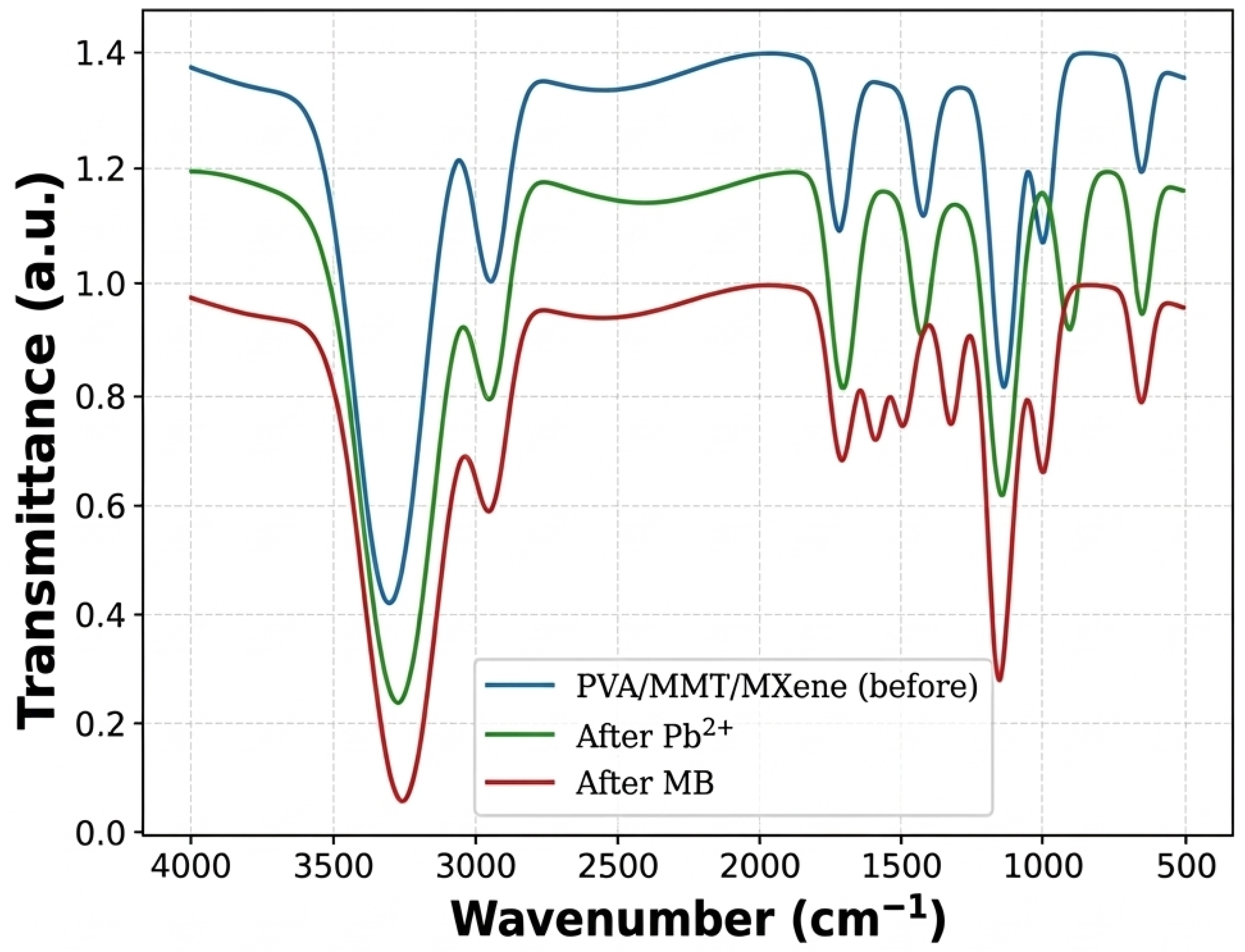
| Wavenumber (cm−1) | Assignment | Before Adsorption | After Pb2+ | After MB |
|---|---|---|---|---|
| 3300–3250 | O–H stretching | Strong/broad | Shift to ~3270 | Slight perturbation |
| 2940–2910 | C–H stretching | Present | Minor change | Minor change |
| 1730–1720 | C=O stretching | Weak–moderate | Shift to ~1715–1718 | Slight change |
| 1430–1415 | CH2 bending | Clear | Small change | Small change |
| 1145–1080 | C–O–C stretching | Strong band | Intensity/shift change | Intensity increase |
| 1000–915 | Si–O stretching (MMT) | Present | Perturbed | Present |
| 650–550 | Ti–O/Ti–OH (MXene) | Present | Perturbed | Present |
| 1600 | Aromatic C=C (MB) | Absent | Absent | Strong new band |
| 1500 | Aromatic skeletal (MB) | Absent | Absent | New band |
| 1330 | C–N (MB) | Absent | Absent | Strong new band |
| 1170 | C–N/aromatic bending (MB) | Absent | Absent | New band |
| System | Nm (mmol/g) | n | ε (kJ.mol−1) | Orientation | Multilayer |
|---|---|---|---|---|---|
| PVA—Pb2+ | ~0.5–0.7 | 1.0 | 18 | 0.9 | 1.00 |
| PVA/MMT—Pb2+ | ~0.8–1.0 | 1.0 | 18 | 0.9 | 1.02 |
| PVA/MMT/MXene—Pb2+ | 1.1–1.2 | 1.0 | 18 | 0.9 | 1.05 |
| PVA—MB | ~0.8–1.0 | >1 | 12 | 0.50 | 1.10 |
| PVA/MMT—MB | ~1.2–1.4 | ~1.5 | 12 | 0.55 | 1.20 |
| PVA/MMT/MXene—MB | ~1.6 | 1.3–2.0 | 12 | 0.69 | 1.30 |
| Membrane | BJH Surface Area (m2·g−1)Total | SBJH (2–12nm) (m2·g−1) | SBJH (12–50nm) (m2·g−1) | Total Pore Volume (cm3·g−1) | Average Pore Diameter (nm) | Pore Type Classification |
|---|---|---|---|---|---|---|
| PVA | 106.0 | 105.5 | 0.5 | 0.134 | 5.6 | Broad, weakly structured mesoporosity |
| PVA/MMT | 136.3 | 114.7 | 21.6 | 0.286 | 9.9 | Narrowed, refined mesoporosity (clay-induced tortuosity) |
| PVA/MMT/MXene | 136.4 | 57.5 | 78.9 | 0.448 | 14.8 | Interconnected mesoporous architecture (2D MXene galleries) |
Disclaimer/Publisher’s Note: The statements, opinions and data contained in all publications are solely those of the individual author(s) and contributor(s) and not of MDPI and/or the editor(s). MDPI and/or the editor(s) disclaim responsibility for any injury to people or property resulting from any ideas, methods, instructions or products referred to in the content. |
© 2026 by the authors. Licensee MDPI, Basel, Switzerland. This article is an open access article distributed under the terms and conditions of the Creative Commons Attribution (CC BY) license.
Share and Cite
Bejaoui, M.; Meftah, M.; Oueslati, W. Mesoporosity, Mechanical Properties, and Statistical–Physics Modeling of PVA/MMT/MXene Nanocomposite Membranes for Pb2+ and Methylene Blue Adsorption. Solids 2026, 7, 16. https://doi.org/10.3390/solids7020016
Bejaoui M, Meftah M, Oueslati W. Mesoporosity, Mechanical Properties, and Statistical–Physics Modeling of PVA/MMT/MXene Nanocomposite Membranes for Pb2+ and Methylene Blue Adsorption. Solids. 2026; 7(2):16. https://doi.org/10.3390/solids7020016
Chicago/Turabian StyleBejaoui, Mohamed, Mahdi Meftah, and Walid Oueslati. 2026. "Mesoporosity, Mechanical Properties, and Statistical–Physics Modeling of PVA/MMT/MXene Nanocomposite Membranes for Pb2+ and Methylene Blue Adsorption" Solids 7, no. 2: 16. https://doi.org/10.3390/solids7020016
APA StyleBejaoui, M., Meftah, M., & Oueslati, W. (2026). Mesoporosity, Mechanical Properties, and Statistical–Physics Modeling of PVA/MMT/MXene Nanocomposite Membranes for Pb2+ and Methylene Blue Adsorption. Solids, 7(2), 16. https://doi.org/10.3390/solids7020016