Article

Controlled ATRP Synthesis of PtBA and PNIPAM for Surface Grafting onto Graphene with Tunable Thermoresponse


Department of Chemistry and Biochemistry, North Carolina Central University, Durham, NC 27707, USA
*
Author to whom correspondence should be addressed.
Solids 2026, 7(2), 14; https://doi.org/10.3390/solids7020014
Submission received: 26 January 2026 / Revised: 25 February 2026 / Accepted: 28 February 2026 / Published: 3 March 2026

Abstract

Enhancing the solubility and processability of graphene remains a critical challenge, limiting its integration into advanced materials systems. In this work, poly(tert-butyl acrylate) (PtBA) and poly(N-isopropyl acrylamide) (PNIPAM) were grafted onto graphene via controlled atom transfer radical polymerization (ATRP) to create well-defined polymer–graphene hybrids with tunable interfacial properties. ATRP enabled the synthesis of PtBA and PNIPAM homopolymers with narrow molecular weight distributions and systematically varied chain lengths (4–18 kDa), allowing direct correlation between polymer architecture and material performance. Notably, the thermos-responsive behavior of PNIPAM was strongly dependent on chain length, highlighting the importance of controlled polymer design. Raman and FTIR spectroscopy confirmed successful grafting and chemical modification of the graphene surface. In addition, pilot studies demonstrate the ATRP synthesis of PtBA-b-PNIPAM block copolymers and their hydrolysis to PAA-b-PNIPAM, providing a platform for future development of multifunctional graphene interfaces. Overall, this study establishes a versatile and precisely controlled route for engineering polymer-grafted graphene with enhanced solubility and tunable functionality, enabling broader applications in smart materials and hybrid nanocomposites.

1. Introduction

Stimuli-responsive polymers (SRPs) are well-defined molecular chains that exhibit distinct property changes when subjected to external or chemical stimuli [1,2]. A key feature of SRPs is their capacity to respond at the molecular level to environmental factors, such as temperature, pH, light, specific solvents, and pressure. Two widely studied SRPs are polyacrylic acid (PAA) and poly(N-isopropyl acrylamide) (PNIPAM) [3,4]. PAA is well known for its sensitivity to pH changes, while PNIPAM is distinguished by its thermoresponsive behavior and shape memory properties. Both polymers have demonstrated versatility across a range of fields, including biomedical applications, aerospace, textiles, energy systems, civil engineering, bionics, and electronic technologies [5,6]. Despite their functional advantages, both PAA and PNIPAM suffer from relatively low mechanical strength, which limits their use in load-bearing biomedical applications, such as vascular grafts and cardiac valves [7,8]. Graphene and its derivatives are a class of mechanically robust materials that exhibit high specific surface area and easy functionalization [9]. While graphene-based technologies have limitations, such as non-specific adsorption of proteins, poor stability in biological fluids, and cytotoxicity, these challenges can be overcome by functionalization with SRPs to create a combined-materials platform with the best attributes of both [10,11,12].
Attaching polymers covalently to graphene has been accomplished by three techniques: “grafted-to”, “grafting-through”, and “grafted-from” [13,14,15,16,17]. The grafting-from strategy involves initiating chain growth directly from surface-bound initiators on the graphene, allowing high grafting densities and well-defined brushes. Seifert et al. [18] demonstrated this approach using UV-induced photopolymerization on hydrogenated CVD-grown graphene, enabling a precisely controlled polymer chain composition and architecture. However, the grafting-from approach presents challenges due to the requirement of prior functionalization of the GO surface with initiator or chain transfer agents, often utilizing harsh chemical conditions or toxic reagents that may damage the GO structure [19]. Moreover, the in situ nature of the polymerization often complicates the characterization of the resulting polymer chains and can introduce variability between synthesis batches [19]. The grafting-through approach—where surface-anchored macromonomers are incorporated during polymerization—offers an alternative route to controlled architectures, but is often constrained by macromonomer reactivity and steric crowding. In contrast, the grafting-to approach enables preformed polymers to attach to the surface, a particularly attractive attribute for GO due to its abundance of functional groups. Mondal et al. [20] demonstrated this by attaching [3-(2-aminoethyl amino) propyl] trimethoxy silane to graphene, resulting in improved electrical response and adhesion for use as an electrically conductive adhesive in solar cells. Tang et al. [21,22] favored grafting-to for conductive composites, as dense polymer chains afforded by the grafting-from technique could hinder electrical and thermal properties. However, the grafting-to approach does have some drawbacks. In particular, there is less uniform polymer distribution, as the functional groups are concentrated on the surface [23]. Moreover, the diffusion and attachment of polymer chains are kinetically and sterically hindered as surface coverage increases, thus limiting the maximum brush density. Despite these challenges, there are advantages to the grafting-to approach. Specifically, the precise control over polymer molecular characteristics, the ability to process under mild conditions compatible with graphene oxide, and the feasibility of attaching complex, predefined polymer architectures, make the grafting-to technique a valuable and complementary strategy for the surface functionalization of graphene-based materials.
Our continued interest in graphene surfaces modified with polymers having precisely controlled molecular weight and polydispersity [22,23] led to the present study showcasing a straightforward adaptation of the grafting-to methodology for graphene oxide (GO). The polymer was first synthesized independently via ATRP to yield well-defined polymer chains bearing reactive terminal groups. The pre-formed polymer was subsequently covalently attached to functionalized GO via a coupling reaction between the polymer end group and the surface functional groups of GO. Since the polymer chains were synthesized prior to attachment and then reacted with the GO surface, this procedure corresponds to a grafting-to methodology. No surface-immobilized initiators were used, and polymer chain growth did not occur from the GO surface. Specifically, poly(tert-butyl acrylate) (PtBA) and poly(N-isopropyl acrylamide) (PNIPAM) are grafted to the surface of functionalized graphene. Our study highlights how variations in polymer molecular weight and architecture impact their behavior before and after grafting onto the two-dimensional graphene surface. By adjusting the number and length of polymer chains, the study aims to modulate the physicochemical properties of both homopolymers and block copolymers. These modifications are systematically examined to assess their influence on the performance of the resulting graphene–polymer hybrids. The choice of PAA and PNIPAM is supported by their solubility, affordability, and successful synthesis using a range of polymerization methods, including free radical polymerization [24], reversible addition−fragmentation chain-transfer (RAFT), and atom transfer radical polymerization (ATRP). This study leverages these techniques to achieve precise control over polymer architecture and MW, which are critical for tailoring physical properties. By controlling the synthesis process, it becomes possible to fine-tune the polymer characteristics.

2. Materials and Methods

97% copper (I) chloride (CuCl), 97% methyl 2-chloropropionate (MCP), Tris 2-(dimethylamino)ethyl amine (Me6TREN), 99% N,N,N′,N″,N″-pentamethyl diethylene triamine (PMDETA), and chloroethyl benzene (1-PECl). N-isopropylacrylamide (NIPAM), 2-propanol, high-quality graphite (10 mesh), 1N sulfuric acid, 85% phosphoric acid, potassium permanganate, 3% hydrogen peroxide, 1N hydrochloric acid, hydrazine hydrate, 2-(4-aminophenyl) ethanol, isoamyl nitrite, trimethylamine, 2- bromo-isobutyl-bromide, and copper bromide (CuBr), tetrahydrofuran were purchased from Van Waters and Rogers (VWR, Chester, PA, USA) [25,26,27,28].

2.1. Synthesis of Poly(tert-butyl acrylate)

As previously reported in the literature [28], poly(tert-butyl acrylate) (PtBA) was pre-pared by atom transfer radical polymerization (ATRP) of the monomer tert-butyl alcohol (tBA), the initiator 1-PECl, the catalyst CuCl, and the ligand pentamethyl diethylene triamine (PMDETA). The adapted procedure for the macroinitiator is described as follows. Initially, 0.10 g of CuCl followed by 0.42 mL of PMDETA were added to a reaction flask before 6 mL of a blended solvent of methyl ethyl ketone and 2-propanol (7:3 v/v) was added. The yellow-green solution was frozen, pumped, and thawed (FPT) twice before 11.4 mL of tBA was added. Lastly, 136 µL of 1-PECl was added, and the last FPT was performed, causing the solution to turn a deep purple before quickly turning a dark green. The solution was allowed to reach room temperature before heating. The polymerization was performed at 100 °C for 5 h under Ar gas. Purification was completed by passing through an Al2O3 packed fritted funnel under vacuum before precipitation in a mixture of methanol and water (20:80 v/v). The precipitate was dried in a vacuum oven at room temperature to yield the final product.

2.2. Synthesis of Poly(N-isopropyl acrylamide) (PNIPAM)

As previously reported [29], PNIPAM was prepared by ATRP of the monomer NIPAM, the initiator MCP, the catalyst CuCl, and the ligand Me6TREN. The adapted procedure for the homopolymer is described as follows. Initially, 2.0 g of NIPAM, CuCl (0.037 g, 0.37 mmol), and 5.1 mL of anhydrous 2-propanol were added to a reaction flask and deoxygenated by bubbling argon gas for a minimum of 30 min. Afterward, 94 µL of Me6TREN was added, forcing a color change to purple. The solution was allowed to react for 20 min until the color changed to green when MCP (0.045 g, 0.37 mmol) was added. The reaction was allowed to polymerize at room temperature for 7 h under Ar gas flow. At the end of the reaction, the sample was dried and dissolved in tetrahydrofuran (THF) before purification through a fritted funnel packed with silica gel. The filtrate was then precipitated into pentane (1:12 v/v) before being dried and placed under vacuum at 60 °C.

2.3. Synthesis of Poly(tert-butyl acrylate)-b-poly(N-isopropyl acrylamide)

Poly(tert-butyl acrylate)-b-poly(N-isopropyl acrylamide) (PtBA-b-PNIPAM) was prepared by ATRP of the monomer NIPAM, the initiator PtBA, the catalyst CuCl, and the ligand Me6TREN. The adapted procedure [28] for the block-copolymer is described as follows. Initially, 5.0 g of PtBA, followed by 6 mL of the blended solvent of methyl ethyl ketone and 2-propanol (6:4 v/v), were added to a reaction flask. The solution was degassed by bubbling Ar for 30 min. CuCl (0.15 g), 0.35 g of Me6TREN, and 10.0 g of NIPAM were then added to the flask and degassed for another 20 min. The polymerization was carried out at 40 °C for 24 h. Purification was completed by passing through a fritted funnel packed with Al2O3 under vacuum before precipitation in a mixture of methanol and water (20:80 v/v). The precipitate was dried in a vacuum oven at room temperature to yield the final product.

2.4. Synthesis of poly(acrylic acid)-b-poly(N-isopropyl acrylamide)

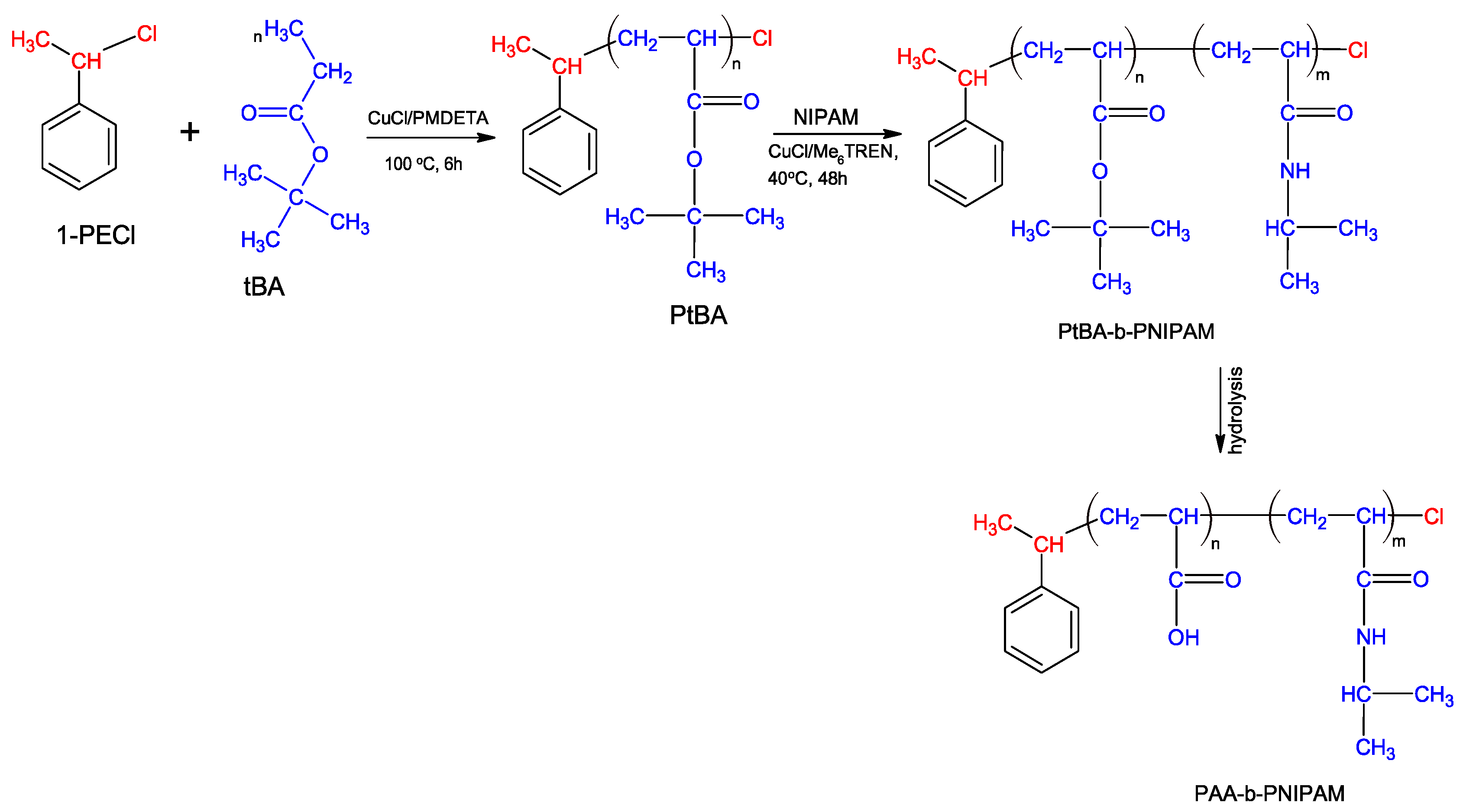
The copolymer poly(acrylic acid)-b-poly(N-isopropyl acrylamide) (PAA-b-PNIPAM) was formed through the hydrolysis of PtBA-b-PNIPAM [28] by first dissolving in di-chloromethane before trifluoroacetic acid was added at a molar ratio five times that of the initial block copolymer. The reaction continued for 24 h at room temperature. After completion, the solvent was evaporated, washed with solvent, and dried under vacuum to obtain the copolymer (see Scheme 1).

2.5. Synthesis of Reduced Graphene Oxide (GO)

GO was prepared from 10 mesh high-quality graphite by a modified Hummers method. In a three-neck round-bottom flask, 0.3 g of 10 mesh graphite and 1.8 g of potassium permanganate were introduced before 32 mL of 1 N sulfuric acid and 8 mL of phosphoric acid were added. The flask was stirred for 48 h at 0 °C. At the conclusion of the 48 h, 100 mL of deionized (DI) water was added, followed by trifluoroacetic acid. The mixture was then sonicated using a glass probe at 20 kHz for 1 h at 35% amplitude while maintained in an ice bath. Afterward, 3% H2O2 was added slowly until the solution turned from a deep purple to a greenish yellow. This color change represents the development of GO, as well as signifying the quenching of the reaction by ceasing further oxidation. The GO was recovered by centrifugation before being washed once with 10–15 mL of 1 N HCl and 45–50 mL of DI water until the pH was neutral. Once neutralized, the product was lyophilized [26].

2.6. Synthesis of Graphene Hydroxide (G-OH)

The synthesis of G-OH began by dispersing 0.4 g of GO into 100 mL of DI water through sonication and stirring. Afterward, the GO was reduced with 2.5 mL of hydrazine hydrate and stirred at 100 °C. After 4 h, 1.6 g of 2-(4aminophenyl) ethanol and 1.2 mL of isoamyl nitrite were added into the flask, and the temperature was decreased to 80 °C. After 12 h, the mixture was cooled to room temperature before passing through a 0.45 µm nylon membrane filter. The product was washed excessively with water and dimethyl formamide (DMF) until the filtrate changed from black to transparent. The product was then dried under vacuum at 60 °C for 24 h [27].

2.7. Graphene Initiator (GI)

The synthesis of GI began by dispersing 125 mg of GO-OH into 10 mL of THF through sonication. The dispersion was then chilled to 0 °C with an ice bath after 1 mL of trimethylamine was added. While stirring vigorously, 2-Bromoisobutyryl bromide (0.61 mL) and THF (10 mL) were added dropwise to the solution. The solution was left to stir at room temperature for 24 h under argon. Afterward, the product was passed through a 0.45 µm nylon membrane filter and washed with water, DMF, and acetone until the filtrate was colorless. The final product was dried under vacuum at 60 °C for 48 h [27].

2.8. Procedure for Grafting Polymer from Graphene

To graft a polymer from the surface of graphene, 30 mg of GI was dispersed into 10 mL of the selected polymer’s solvent (as described in the previous Section 2.2) by sonication. To this dispersion, the following reagents were added: 64.8 mg of CuBr, 25 mmol of the monomer, and 0.45 mmol of the ligand. The solution was degassed and allowed to stir under argon for an hour before being heated to 80 °C. After 20 h, the solution was diluted with a solvent before being passed through a 0.45 µm nylon membrane filter. The filter cake was washed with solvent until the filtrate was transparent. The solids were placed under a vacuum at 50 °C for 24 h [25,27,28].

2.9. Spectral Analysis

Homopolymers PNIPAM and PtBA were extensively characterized, as well as block copolymers PtBA-b-PNIPAM, and PAA-b-PNIPAM. A Varian 500 MHz spectrophotometer was used to perform 1H-NMR. As the units for chemical shifts were stated in parts per million (ppm), the initial reference tetramethylsilane (TMS) resided at 0.0 ppm. Polymer samples of PtBA, PNIPAM, and PtBA-b-PNIPAM were prepared in chloroform. Polymer samples PAA and PAA-b-PNIPAM were prepared in deuterium. All graphene samples were analyzed using a Horiba Scientific LabRAM HR Evolution Raman Spectrometer. Graphene samples were dispersed in methanol, and 1 µL was dried on a silica wafer for analysis. The laser choice was 473 nm, while the objective was 100× and the grating was 600 gr/mm. Further instrument setup resulted in an ND filter of 100% and a hole of 100 in the visible range.
A Hewlett Packard Model 7084 Fourier Transform Infrared Spectroscopy (FTIR) was also used for confirmation analysis. Samples were prepared using a potassium bromide pellet. Once the analysis was executed, the results were processed using Origin 2017 9.4 software to magnify the data 20x. The stimulus response property of PNIPAM was observed using UV to measure light scattering as temperature changes. A Hewlett-Packard Model 8453 UV-Vis spectrophotometer was used for all UV-Vis absorption measurements. PNIPAM samples were prepared at a 1:10 ratio in DI water. The constant wavelength of 550 nm was examined for absorption with temperatures ranging from 50 °C to 25 °C. The samples were warmed in a water bath and analyzed as they cooled.

2.10. Gel Permeation Chromatography (GPC)

The molecular weight and Ð for homopolymers as the molecular weight increased was observed by GPC. An Agilent 1260 infinity system was used, coupled with a Wyatt mini-DAWN TREOS multi-angle light scattering detector and a Wyatt Optilab T-rEX refractive index detector. Polymer samples were dissolved in THF (stabilized with BHT) and analyzed at a flow rate of 1.0 mL/min using two PLgel 5 μm Mixed-C columns (7.5 × 300 mm) for fractionation. A 100 μL of polymer solution (3–4 mg/mL) was injected for each run. Data acquisition and analysis were performed using ASTRA 6.1.7.17 software from Wyatt Technology. (Santa Barbara, CA USA). Absolute molecular weights were determined using the refractive index increment (dn/dc) values calculated under the assumption of 100% mass recovery.

2.11. DSC Measurements

Glass transition temperatures (Tg) and thermodynamic parameters were measured using a TA Instruments thermal gravimetric analyzer coupled with simultaneous differential scanning calorimetry (TGA/DSC). Polymers containing PNIPAM were heated at a rate of 1 °C/min, whereas all other polymers were heated at 10 °C/min. Each sample had an initial mass of 10 mg and was heated to 250 °C for Tg analysis.

2.12. UV-Vis Spectrophotometer

The stimuli response property of PNIPAM was observed by the use of UV to measure the light scattering as temperature changes. A Hewlett-Packard Model 8453 UV-Vis spectrophotometer was used for all UV-Vis absorption measurements. PNIPAM samples were prepared at a 1:10 ratio in DI water. The constant wavelength of 550 nm was examined for absorption with temperatures ranging from 50 °C to 25 °C. The samples were warmed in a water bath and analyzed as they cooled.

2.13. Electrochemical Measurements

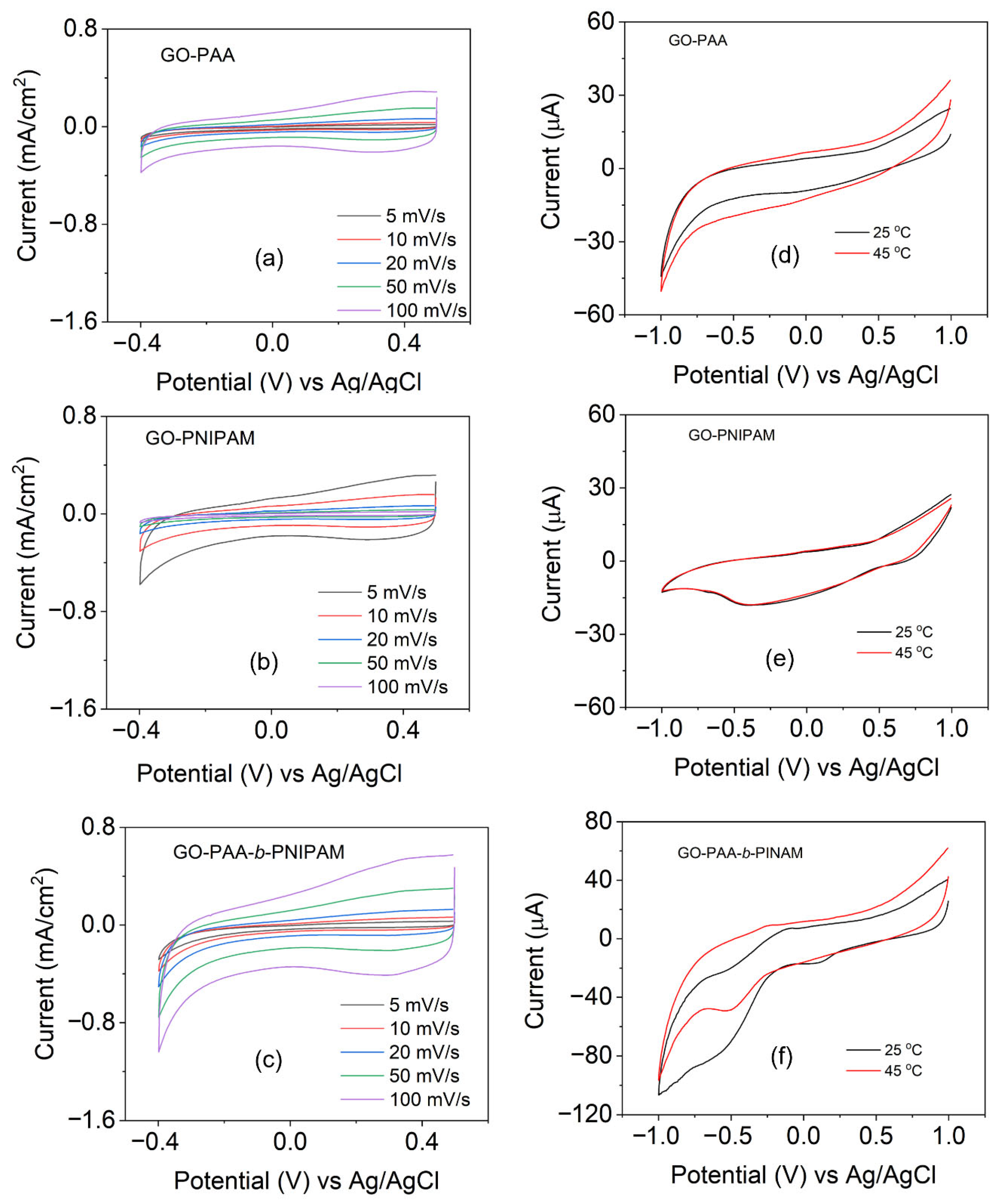
For electrochemical characterization, the films were ground into tiny flakes for better dispersibility. The catalyst inks used for the electrochemical characterization were prepared by dispersing 5 mg of each sample in a mixture of 900 µL of isopropanol, 100 µL of deionized water, and 20 µL of a 1% chitosan solution in acetic acid (binder). The suspension was then sonicated for 60 min to achieve homogeneous dispersion. Capacitance measurements were performed using a rotating ring–disk electrode (RRDE) with a 5 mm diameter disk as the working electrode. Before modification, the RRDE surface was polished, rinsed, and cleaned. Then, 10 µL of the prepared ink was drop-cast onto the disk and dried in an oven at 80 °C to obtain a homogeneous film. Electrochemical tests were performed in 0.5 M H2SO4, previously saturated with N2 for at least 20–30 min to avoid oxygen-related currents. Cyclic voltammetry scans were recorded in static mode in a wide potential window between +0.5 and −0.4 V vs. Ag/AgCl, at scan rates of 5, 10, 20, 50, and 100 mV s−1. Capacitance values were calculated from the steady-state CV curves and then normalized by the geometric area of the RRDE disk.
The thermoresponsive electrochemical behavior was assessed using a conventional three-electrode configuration, which constituted a glassy carbon working electrode (3 mm diameter), a platinum wire counter electrode, and an Ag/AgCl (3.5 M KCl) reference electrode. In this context, the glassy carbon electrode was first polished and cleaned, followed by modification via drop-casting 2.5 µL of the same ink (sonicated), which was dried at 80 °C. All the thermoresponse measurements were made in 15 mL of PBS buffer (1X, pH 7.4). The electrolyte was purged with Ar gas for 30 min before each experiment to remove dissolved oxygen. Later, the voltametric cell was positioned in a thermostatted water bath, and the CV curves were recorded at two temperatures, 25 °C and 45 °C, corresponding to below and above the PNIPAM LCST. The temperature was allowed to equilibrate before each dataset recording, and purging was stopped during the voltage sweep to avoid convection effects. CV scans collected in the same potential window used in the thermoresponse plots were analyzed to compare the temperature-dependent changes in electrochemical activity.

3. Results

3.1. Structural Confirmation

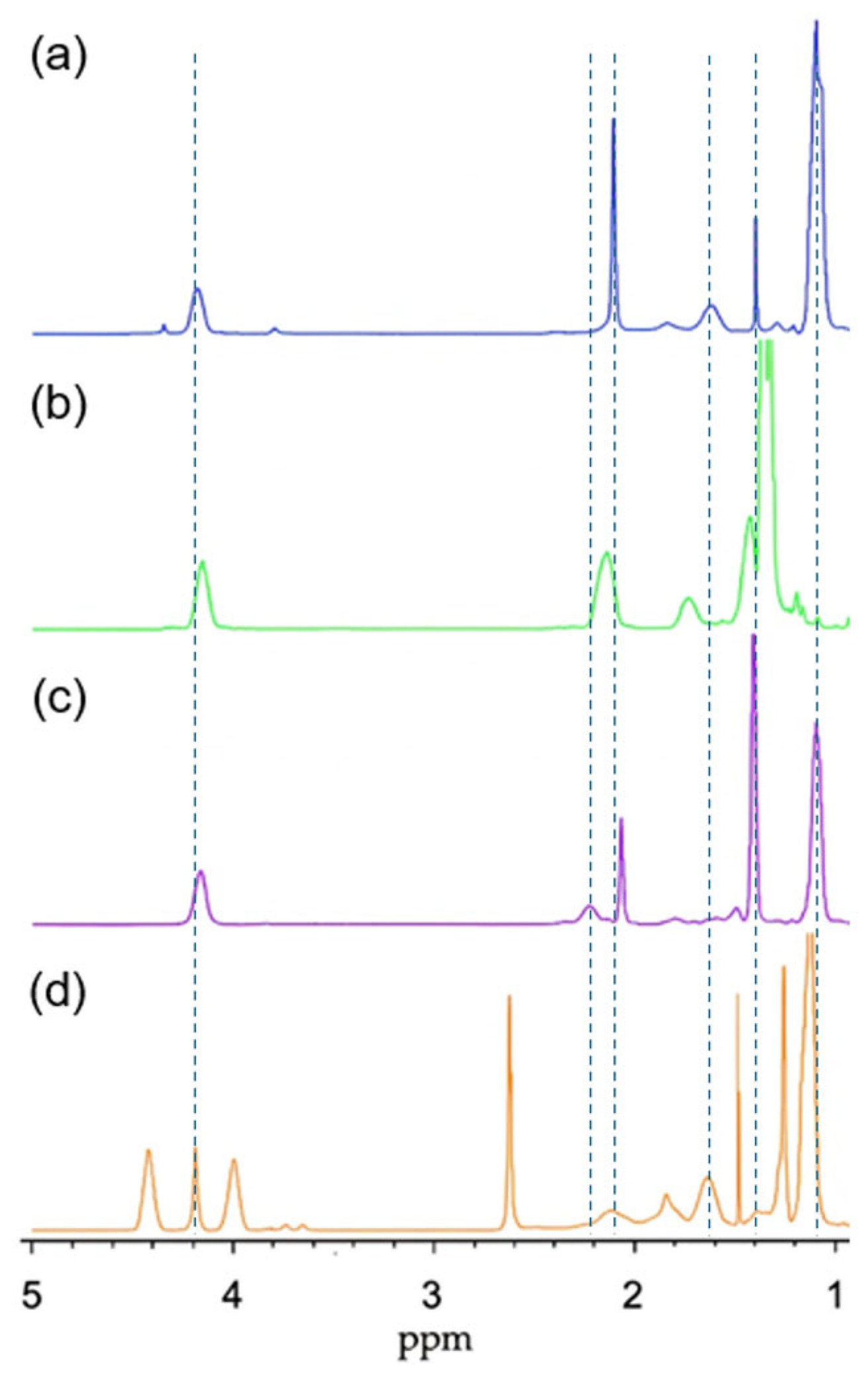
The successful synthesis and hydrolysis of the block copolymers were confirmed by 1H-NMR spectroscopy. Figure 1c shows the spectrum for PtBA-b-PNIPAM recorded in CDCl3. The tert-butyl methyl protons of the PtBA block appeared as a strong singlet at 1.40 ppm, while the PNIPAM isopropyl methyl and methine protons were observed at 1.1 ppm and ~4.1 ppm, respectively. The polymer backbone methylene and methine protons were observed at 1.8 ppm and 2.2 ppm, respectively. Following hydrolysis, the tert-butyl signal disappeared in the PAA-b-PNIPAM spectrum recorded in D2O (see Figure 1d), indicating the quantitative conversion of PtBA to PAA. The polymer backbone methine proton of PAA-b-PNIPAM appeared as a broad signal at 2.5 ppm, while backbone methylene protons remained in the ~2 ppm range. Additional peaks observed at 4.0–4.4 ppm were assigned to the methine protons of the isopropyl side groups in the PNIPAm block. The appearance of multiple closely spaced peaks in this region arises from tacticity-related triad sequences of PNIPAM and local microenvironment effects associated with the block copolymer architecture.
Exchangeable protons, including the PNIPAM amide and PAA carboxylic acid protons, were not observed due to rapid H/D exchange, resulting in broad signals. The isopropyl methyl protons remained clearly identifiable, although the peak exhibited a slight shift (~1.15 ppm in Figure 1d) compared to the PNIPAM homopolymer in CDCl3 (see Figure 1a), reflecting the influence of the polymer, the hydrogen-bonding aqueous environment, and the block copolymer microenvironment. The monomer, shown for comparison in Supporting Information, produced signals at 6.1, 6.0, and 5.6 ppm that decreased during polymerization.
Comparison with the homopolymers further supports these assignments: PNIPAM in CDCl3 exhibited similar isopropyl methyl and methine signals, whereas PtBA in CDCl3 (see Figure 1b) showed only the tert-butyl singlet and backbone resonances. Collectively, these observations confirm the block copolymer structure and the successful transformation of PtBA to PAA, with the PNIPAM block remaining intact.

3.2. GPC and DSC Analysis

Gel permeation chromatography (GPC) was used to obtain the molecular weight and polydispersity index (Ð) of PNIPAM and PtBA homopolymers prepared with different monomer-to-initiator ratios. Table 1 shows the results for three PNIPAM homopolymers for which the chromatographic data (see Figure S2) were automatically processed by the WinGPC software (version 8) to provide number average molecular weight (Mn) as well as polydispersity indices (Ð). The amount of solvent and the monomer/initiator ratios were the variables used to alter the molecular weight. As can be seen, the molecular weight of PNIPAM was altered from 4 to 14 kDalton, with little change in dispersity. The glass transition temperature (Tg) of the PNIPAM samples was directly correlated with increasing molecular weight, as shown in Table 1.
Table 2 summarizes the molecular weights of PtBA obtained from theoretical calculations as well as those obtained from processing the GPC elution curves (shown in Figure S3). The polydispersity and molecular weight of the homopolymers are critical because they serve as macroinitiators for subsequent block copolymer synthesis. The reaction yielding Ð = 1.45 is best described as moderately controlled; nevertheless, the systematic reduction in dispersity to Ð = 1.19 upon optimization confirms the effectiveness of ATRP in achieving controlled PtBA growth. When the monomer-to-initiator ratio was raised by 50%, PtBA, as well as the PNIPAM polymers (reported in Table 1), exhibited a significant increase in molecular weight of around 7 kDa. However, unlike PNIPAM, the Tg of PtBA demonstrated a decrease as the molecular weight increased. The decreased Tg of PtBA 2 is attributed to the higher proportion of lower molecular weight species observed in the GPC distribution (Figure S3). The increased concentration of chain ends and enhanced segmental mobility associated with shorter chains contribute to Tg depression, consistent with the Fox–Flory relationship [30].
It has been demonstrated that ATRP offers some control over the molecular weight of polymers; however, a discrepancy of approximately ±2 kDa often exists between theoretical and actual weights. While calculated molecular weights tend to increase steadily, experimentally obtained values show more variability. Although the molecular weight does increase, it does not always match the targeted value precisely. The discrepancies observed in this study are less pronounced, but may stem from calculations based on monomer-to-initiator ratios rather than direct NMR analysis, which was not used in this study to derive molecular weights independently.

3.3. Thermoresponsive Analysis

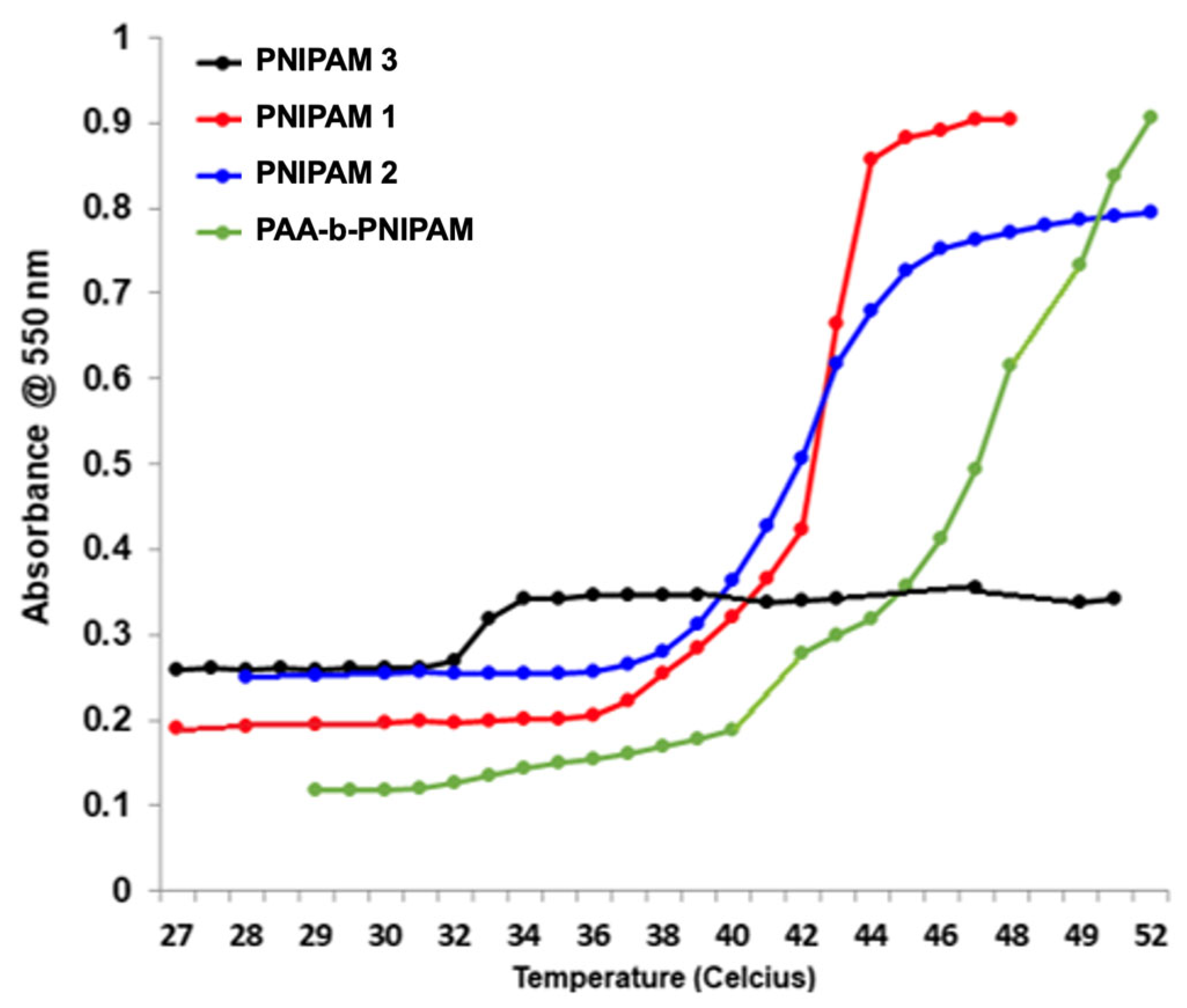
The thermoresponsive behavior of PNIPAM was analyzed using UV-Vis spectroscopy, with results shown in Figure 2 for PNIPAM samples 1–3 and the PAA-b-PNIPAM copolymer. The onset observed in all measurements reflects the gradual transition from hydrated and molecularly dissolved PNIPAm chain coils to dehydrated and aggregated globules at the corresponding lower critical solution temperature (LCST). This coil-to-globule transition process occurs over a temperature range rather than at a single temperature, producing a characteristic onset-type transition. According to the existing literature, PNIPAM exhibits an LCST in water at around 32 °C [28] and is known to depend on molecular weight [31,32]. PNIPAM-1 (5.8 kDa) exhibits an LCST of 40 °C while PNIPAM-3 (8.6 kDa) displays an LCST of 33 °C. In the block copolymer, the phase-shift process is displayed as more gradual and shifted to higher temperatures, presumably due to block connectivity and additional intermolecular interactions. The increased visibility of this phase shift in the high molecular weight samples suggests that the polymer’s chain length may enhance its responsiveness to temperature changes.
Notably, PNIPAM 3 exhibited a thermoresponsive transition around 33 °C, while PNIPAM 2 responded at approximately 43 °C—temperatures that are relatively close. This observation is consistent with findings in previous studies that have highlighted the influence of molecular weight on the thermoresponsiveness of PNIPAM. These results suggest that slight variations in polymer chain length and structure can lead to subtle shifts in the lower critical solution temperature (LCST), reinforcing the sensitivity of PNIPAM’s thermal behavior to molecular characteristics. When PAA was incorporated to form the block copolymer PAA-PNIPAM, the thermoresponsive transition was delayed, occurring at approximately 47 °C. This result aligns with expectations, as PAA does not possess intrinsic thermoresponsive properties and therefore modulates or slows the thermal response of the PNIPAM segment. The observed shift in transition temperature reflects the influence of PAA on the copolymer’s overall behavior.

3.4. Raman Studies

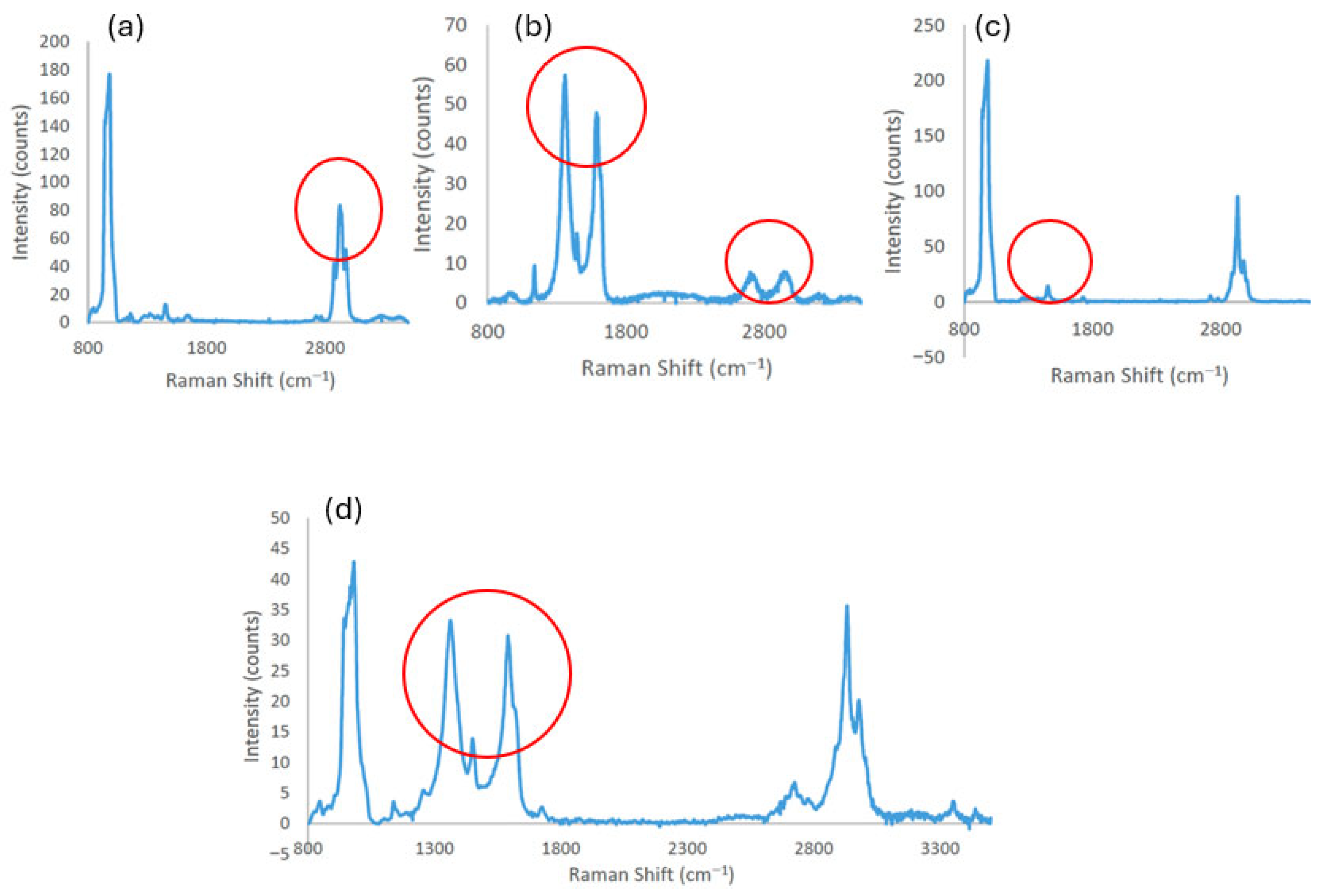
The PNIPAM, GO-PNIPAM, PtBA, and GO-PtBA samples were analyzed by Raman spectroscopy, and the results are presented in Figure 3a–d. The GO, rGO, and GO modified with initiator were also analyzed, and their Raman spectra are presented in Supporting Information (see Figure S4). The Raman spectrum of PNIPAM (Figure 3a) shows characteristic bands near 800 cm−1 and 2800 cm−1. After incorporation of graphene oxide, the GO–PNIPAM spectrum (Figure 3b) exhibits additional features within the 800–1800 cm−1 region. These bands correspond to the typical vibrational modes of GO observed in its pristine spectrum, confirming the successful integration of GO into the PNIPAM matrix. For GO–PtBA (Figure 3c), signals attributable to both the polymer and graphene components are evident. Prominent bands around 800 cm−1 and 1000 cm−1 are assigned to PtBA, while the GO–PtBA spectrum (Figure 3d) further displays characteristic graphene oxide peaks, verifying the presence of GO within the polymer structure.
This data aligns with the results presented by Wang et al., which demonstrate a similar relationship in Raman analysis [27]. In Figure 3d, the strong Raman bands originating from PtBA almost overlap the G and D bands in GO. However, a small shoulder was found on the lower energy side of the 1364 cm−1 band in the PtBA-GO spectrum. This shoulder was not found in the Raman spectrum of the polymer alone. This suggests that GO has been successfully incorporated into the polymer.

3.5. FTIR Studies

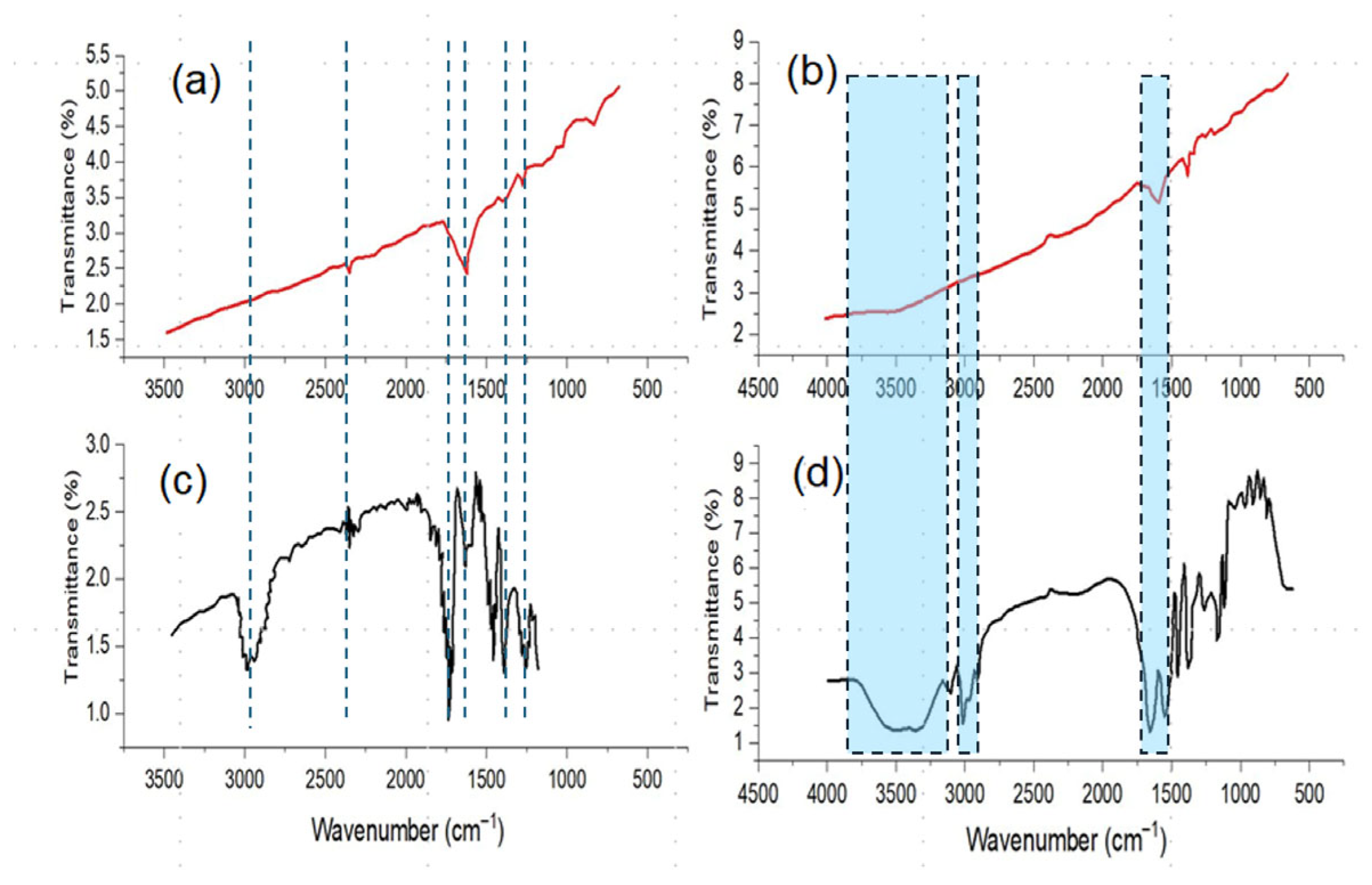
Fourier transform infrared spectroscopy (FTIR) of the samples provided qualitative evidence of GO–polymer composite formation. For reference, the spectrum of GI, showing distinct peaks between 1250–1700 cm−1, is provided in Supporting Information (see Figure S5). Compared to the FTIR spectrum of the respective homopolymers, the GO–polymer composites displayed a sloped baseline and a reduced resolution of individual vibrational bands. This behavior arises from the superposition of broad oxygen-containing absorptions from graphene oxide, light-scattering effects associated with GO sheets, and the heterogeneity of the surface. The FTIR spectrum of the GO-PtBA (Figure 4b) displayed a dominant broad absorption spanning approximately 1750–1500 cm−1. This band results from the convolution of several overlapping vibrational contributions, including the ester C=O stretching of PtBA (~1725 cm−1), carbonyl and carboxyl functionalities of GO, bending modes of adsorbed water (~1600–1640 cm−1), and aromatic C=C vibrations associated with graphitic domains. Strong interfacial interactions and hydrogen bonding between PtBA ester groups and GO oxygen-containing functionalities further broaden these absorptions, yielding a single unresolved envelope rather than discrete peaks. The homopolymer PtBA (see Figure 4c) displayed a broad asymmetric CH3 stretching vibration at 2973 cm−1 as well as a strong, broad absorption in the 1370–1395 cm−1 region corresponding to tert-buty CH3 bending vibrations [29]. Although these later modes are sometimes reported as doublets, they can merge into a single broadened band, as displayed in Figure 4c, as a result of spectral resolution or chain disorder.
Figure 4b,d show comparative FTIR analysis of grafted GO-PNIPAM and homopolymer PNIPAM. In the GO-PNIPAM spectrum, multiple vibrational contributions appear from the N-H stretching of the PNIAM amide group (3430–3500 cm−1), hydroxyl groups of GO, and adsorbed water. Hydrogen bonding between the PNIPAM chains and GO further broadens these bands, producing the observed low-resolution blip and slope at the baseline of the spectrum. Similar effects have been reported in the literature for PNIPAM homopolymers and GO-PNIPAM composites, where overlapping and perturbed vibrations lead to broad, unresolved spectral envelopes rather than discrete peaks. Characteristic PNIPAM absorptions are also observed in GO-PNIPAM. The amide I (C=O stretch) band near 1650 cm−1 and amide II (N-H bend) near 1540 cm−1 present as a single broad peak in the composite spectrum. The characteristic C-H stretching vibrations of PNIPAM (2970–2870 cm−1) are not clearly visible in the composite spectrum (Figure 4b). Diminished C-H features can arise from physical sampling effects as well as overlapping vibrational contributions, as reported by other literature reports for GO–polymer composites [33,34]. These features confirm the presence of the polymer in the composite. The changes in peak intensity and shape relative to the neat PNIPAM also support successful grafting and strong interfacial interactions between PNIPAM and the GO surface.

3.6. Electrochemical Studies

Conductive substrates functionalized with stimuli-responsive polymers represent a rapidly expanding area in material chemistry and electrochemical interface design [35]. Beyond thermoresponsive systems, redox-responsive polymer brushes have been widely explored for controllable electrochemical interfaces, including ferrocene-containing systems grafted onto conductive substrates, such as ITO or polystyrene derivatives, which exhibit reversible redox switching behavior relevant to sensing and actuation applications [36].
Cyclic voltammetry was employed to assess the electrochemical behavior and electrolyte accessibility of the three GO-grafted polymer materials in N2-saturated acidic (0.5 M H2SO4) and physiological (PBS) environments (see Figure 5a–c). While PNIPAM exhibits thermoresponsive behavior associated with LCST-driven hydration changes, such transitions do not inherently generate redox-active signals and are therefore not expected to produce distinct temperature-dependent features in CV profiles. Consequently, the CV data are interpreted in terms of interfacial charge transport and capacitive behavior rather than direct evidence of thermos-responsive phase transitions, which are more appropriately characterized by temperature-dependent optical measurements, as shown in Figure 2.
At 25 °C, all GO–polymer electrodes exhibit quasi-rectangular CV profiles characteristic of capacitive behavior. GO-PAA shows stable electric double-layer capacitance (EDLC) responses with minimal faradaic contribution across all scan rates. The modest increment of current upon increasing the scan rate indicates a reasonably fast yet limited ion-accessible surface area, which is consistent with the hydrophilic yet non-redox-active nature of PAA. On the other hand, GO-PNIPAM and GO-PAA-b-PNIPAM (see Figure 5b,c respectively) display progressively larger enclosed areas, indicating enhanced interfacial charge storage. Upon increasing the temperature to 45 °C, GO-PAA exhibits minimal changes, consistent with the non-thermoresponsive nature of PAA. In contrast, GO-PNIPAM shows distorted CV profiles above the LCST of PNIPAm, reflecting polymer dehydration and reduced interfacial ion accessibility. Notably, GO-PAA-b-PNIPAM displays an expanded CV envelope at elevated temperatures, suggesting temperature-induced reorganization of the block copolymer that preserves or enhances ionic transport at the GO interface. We believe that the polarization occurring on the surface of the electrode material could be another important factor for enhanced capacitance, which we plan to investigate further in the future. These results indicate that thermoresponsive polymer conformation influences electrochemical behavior indirectly by modulating interfacial structure and ion accessibility rather than through direct redox activity.

4. Conclusions

Poly(tert-butyl acrylate) (PtBA) and poly(N-isopropyl acrylamide) (PNIPAM) were targeted for controlled polymerization via atom transfer radical polymerization (ATRP) to produce materials with specific molecular weights, external environmental responsiveness (such as phase transition temperature), and chain architectures suitable for block copolymers. The ATRP technique facilitated manipulation of polymer chain lengths by varying the monomer-to-initiator molar ratios, enabling an increase in molecular weight while maintaining a low polydispersity index (Ð). As the molecular weight increased, the glass transition temperature (Tg) of both homopolymers also rose, along with the thermos-responsive temperature of PNIPAM, supporting trends observed in the literature. The polymers were successfully grafted from the surface of functionalized graphene, starting from the conversion of graphene oxide (GO) from mesh graphite to graphene hydroxide (GO-OH), and finally to initiated graphene (GI). Once initialized, the graphene served as the substrate for the polymerization of both PtBA and PNIPAM individually. Notably, poly(PNIPAM) appeared to cover the surface of GI less densely than poly (PtBA), as confirmed by Raman and FTIR analyses. To further expand upon the grafting-to approach reported here, future studies could explore the grafting-from approach, in which block copolymers, such as PtBA-b-PNIPAM and PAA-b-PNIPAM, are grown directly from initiator-functionalized surfaces of graphene.

Supplementary Materials

The following supporting information can be downloaded at: https://www.mdpi.com/article/10.3390/solids7020014/s1. Figure S1: Comparison of proton NMR spectra obtained for the monomer N-isopropal acrylamide (top) and the polymer, PNIPAM; Figure S2: GPC trace for the three different samples of homopolymer, PNIPAM 1 (green), PNIPAM 2 (blue), PNIPAM 3 (red); Figure S3: GPC traces for three different samples of homopolymer, PtBA: PtBA 1 (blue), PtBA 2 (pink), PtBA 3 (black). Different molecular weight fractions are characterized by the peak retention volume; Figure S4: Raman spectra of (A) GO showing the defect D band at ~1300 cm−1 and the graphene G band at ~1600 cm−1 showing a ID/IG ~1.3. G-OH (B), GI (C) and the bromine initiator (D) are also shown; Figure S5: FTIR spectra of GI. References [37,38,39,40] are cited in the Supplementary Materials.

Author Contributions

Conceptualization, D.K.T.; methodology, S.A.-B.; software, R.K.; validation, visualization, U.R. All authors have read and agreed to the published version of the manuscript.

Funding

This research received no external funding.

Data Availability Statement

All data produced are mentioned in the article and Supplementary Information.

Acknowledgments

The authors wish to acknowledge National Science Foundation (Award # 2122044), the NSF PREM for Hybrid Nanoscale Systems between NCCU and Penn State for providing financial assistance.

Conflicts of Interest

The authors declare no conflicts of interest.

References

  1. Hoffman, A.S. Stimuli-responsive polymers: Biomedical applications and challenges for clinical translation. Adv. Drug Del. Rev. 2013, 65, 10–16. [Google Scholar] [CrossRef]
  2. Ding, C.; Tong, L.; Feng, J.; Fu, J. Recent advances in stimuli-responsive release function drug delivery systems for tumor treatment. Molecules 2016, 21, 1715. [Google Scholar] [CrossRef]
  3. Das, A.; Babu, A.; Chakraborty, S.; Van Guyse, J.F.R.; Hoogenboom, R.; Maji, S. Poly(N-isopropylacrylamide) and Its Copolymers: A Review on Recent Advances in the Areas of Sensing and Biosensing. Adv. Funct. Mater. 2024, 34, 2402432. [Google Scholar] [CrossRef]
  4. Ansari, M.J.; Rajendran, R.R.; Mohanto, S.; Agarwal, U.; Panda, K.; Dhotre, K.; Manne, R.; Deepak, A.; Zafar, A.; Yasir, M.; et al. Poly(N-isopropylacrylamide)-Based Hydrogels for Biomedical Applications: A Review of the State-of-the-Art. Gels 2022, 8, 454. [Google Scholar] [CrossRef]
  5. Narayana, S.; Gowda, B.H.J.; Hani, U.; Ahmed, M.G.; Asiri, Z.A.; Paul, K. Smart Poly(N-isopropylacrylamide)-Based Hydrogels: A Tour D’horizon of Biomedical Applications. Gels 2025, 11, 207. [Google Scholar] [CrossRef] [PubMed] [PubMed Central]
  6. Arkaban, H.; Barani, M.; Akbarizadeh, M.R.; Pal Singh Chauhan, N.; Jadoun, S.; Dehghani Soltani, M.; Zarrintaj, P. Polyacrylic Acid Nanoplatforms: Antimicrobial, Tissue Engineering, and Cancer Theranostic Applications. Polymers 2022, 14, 1259. [Google Scholar] [CrossRef]
  7. Shi, Y.; Peng, L.; Yu, G. Nanostructured conducting polymer hydrogels for energy storage applications. Nanoscale 2015, 7, 12796–12806. [Google Scholar] [CrossRef]
  8. Neal, C.A.; Shetty, A.M.; Linn, J.D.; Quan, M.C.; Casas, J.D.; Calabrese, M.A. Magnetic field-dependent rheological behavior of thermoresponsive poly(N-isopropylacrylamide) solutions. Rheol. Acta 2024, 63, 493–512. [Google Scholar] [CrossRef]
  9. Katsigiannopoulos, D.; Grana, E.; Tsitoni, K.; Moutsios, I.; Manesi, G.-M.; Nikitina, E.A.; Chalmpes, N.; Moschovas, D.; Gournis, D.; Ivanov, D.A.; et al. Structure/Properties Relationship of Anionically Synthesized Diblock Copolymers “Grafted to” Chemically Modified Graphene. Polymers 2021, 13, 2308. [Google Scholar] [CrossRef]
  10. Chalmpes, N.; Moschovas, D.; Tantis, I.; Bourlinos, A.B.; Bakandritsos, A.; Fotiadou, R.; Patila, M.; Stamatis, H.; Avgeropoulos, A.; Karakassides, M.A.; et al. Carbon Nanostructures Derived through Hypergolic Reaction of Conductive Polymers with Fuming Nitric Acid at Ambient Conditions. Molecules 2021, 26, 1595. [Google Scholar] [CrossRef]
  11. Bessif, B.; Pfohl, T.; Reiter, G. Self-Seeding Procedure for Obtaining Stacked Block Copolymer Lamellar Crystals in Solution. Polymers 2021, 13, 1676. [Google Scholar] [CrossRef]
  12. Schultheiss, A.; White, J.; Le, K.; Boone, N.; Riaz, U.; Taylor, D.K. The Synthesis, Characterization, and Theoretical Study of Ruthenium (II) Polypyridyl Oligomer Hybrid Structures with Reduced Graphene Oxide for Enhanced Optoelectronic Applications. Int. J. Mol. Sci. 2024, 25, 12989–13013. [Google Scholar] [CrossRef]
  13. Schultz, B.J.; Jaye, C.; Lysaght, P.S.; Fischer, D.A.; Prendergast, D.; Banerjee, S. On chemical bonding and electronic structure of graphene–metal contacts. Chem. Sci. 2013, 4, 494–502. [Google Scholar] [CrossRef]
  14. Potts, J.R.; Lee, S.H.; Alam, T.M.; An, J.; Stoller, M.D.; Piner, R.D.; Ruoff, R.S. Thermomechanical properties of chemically modified graphene/poly (methyl methacrylate) composites made by in situ polymerization. Carbon 2011, 49, 2615–2623. [Google Scholar] [CrossRef]
  15. Degirmenci, A.; Sanyal, R.; Klok, H.-A.; Sanyai, A. Orthogonally Functionalizable Redox-Responsive Polymer Brushes: Catch and Release Platform for Proteins and Cells. J. Am. Chem. Soc. 2025, 147, 24672–24683. [Google Scholar] [CrossRef]
  16. Zhang, Y.; Li, M.; Li, B.; Sheng, W. Surface Functionalization with Polymer Brushes via Surface-Initiated Atom Transfer Radical Polymerization: Synthesis, Applications, and Current Challenges. Langmuir 2024, 40, 5571–5589. [Google Scholar] [CrossRef]
  17. Liu, J.; Qian, Y.; Li, D.; Wu, W.; Zhang, M.; Yan, J.; Li, B.; Zhou, F. Oil-soluble polymer brushes-functionalized nanoMOFs for highly efficient friction and wear reduction. Friction 2024, 12, 1499–1511. [Google Scholar] [CrossRef]
  18. Seifert, M.; Koch, A.H.; Deubel, F.; Simmet, T.; Hess, L.H.; Stutzmann, M.; Jordan, R.; Garrido, J.A.; Sharp, I.D. Functional polymer brushes on hydrogenated graphene. Chem. Mater. 2013, 25, 466–470. [Google Scholar] [CrossRef]
  19. Layek, R.K.; Nandi, A.K. A review on synthesis and properties of polymer functionalized graphene. Polymer 2013, 54, 5087–5103. [Google Scholar] [CrossRef]
  20. Mondal, T.; Bhowmick, A.K.; Krishnamoorti, R. Conducting instant adhesives by grafting of silane polymer onto expanded graphite. ACS Appl. Mater. Interfac. 2014, 6, 16097–16105. [Google Scholar] [CrossRef]
  21. Fang, Z.; Ito, A.; Stuart, A.C.; Luo, H.; Chen, Z.; Vinodgopal, K.; You, W.; Meyer, T.J.; Taylor, D.K. Soluble Reduced Graphene Oxide Sheets Grafted with Polypyridylruthenium-Derivatized Polystyrene Brushes as Light Harvesting Antenna for Photovoltaic Applications. ACS Nano 2013, 7, 7992–8002. [Google Scholar] [CrossRef]
  22. Fang, Z.; Ito, A.; Keinan, S.; Chen, Z.; Watson, Z.; Rochette, J.; Kanai, Y.; Taylor DSchanze, K.; Meyer, T. ATRP Preparation and Photophysical Properties of Polypyridylruthenium Derivatized Polystyrenes. Inorg. Chem. 2013, 52, 8511–8520. [Google Scholar] [CrossRef]
  23. Dreyer, D.R.; Park, S.; Bielawski, C.W.; Ruoff, R.S. The chemistry of graphene oxide. Chem. Soc. Rev. 2010, 39, 228–240. [Google Scholar] [CrossRef]
  24. Jayes, F.L.; Corder, R.D.; Vachieri, R.B.; Khan, S.A.; Taylor, D.K. Multiple hour antifibrotic drug release enabled by a thermosensitive quadpolymer. Int. J. Pharm. 2025, 669, 125097. [Google Scholar] [CrossRef] [PubMed]
  25. Xia, Y.; Yin, X.; Burke, N.A.; Stöver, H.D. Thermal Response of Narrow-Disperse Poly(N-isopropyl acrylamide) Prepared by Atom Transfer Radical Polymerization. Macromolecules 2005, 38, 5937–5943. [Google Scholar] [CrossRef]
  26. Hummers, W.S., Jr.; Offeman, R.E. Preparation of graphitic oxide. J. Am. Chem. Soc. 1958, 80, 1339. [Google Scholar] [CrossRef]
  27. Wang, D.; Ye, G.; Wang, X.; Wang, X. Graphene functionalized with azo polymer brushes: Surface-initiated polymerization and photoresponsive properties. Adv. Mater. 2011, 23, 1122–1125. [Google Scholar] [CrossRef]
  28. Li, G.; Song, S.; Guo, L.; Ma, S. Self-assembly of thermal- and pH-responsive poly(acrylic acid)-b-poly(N-isopropyl acrylamide) micelles for drug delivery. J. Polym. Sci. A Polym. Chem. 2008, 46, 5028–5035. [Google Scholar] [CrossRef]
  29. Treat, N.D.; Ayres, N.; Boyes, A.S.G.; Brittain, W.J. A Facile Route to Poly(acrylic acid) Brushes Using Atom Transfer Radical Polymerization. Macromolecules 2006, 39, 26–29. [Google Scholar] [CrossRef]
  30. Fox, T.G.; Flory, P.J. Second-Order Transition Temperatures and Related Properties of Polystyrene. I. Influence of Molecular Weight. J. Appl. Phys. 1950, 21, 581–591. [Google Scholar] [CrossRef]
  31. Mellati, A.; Kiamahalleh, M.V.; Dai, S.; Bi, J.; Jin, B.; Zhang, H. Influence of polymer molecular weight on the in vitro cytotoxicity of poly(N-isopropylacrylamide). Mater. Sci. Eng. C 2016, 59, 509–513. [Google Scholar] [CrossRef]
  32. Yuan, Y.; Raheja, K.; Milbrandt, N.B.; Beilharz, S.; Tene, S.; Oshabaheebwa, S.; Gurkan, U.A.; Samia, A.C.S.; Karayilan, M. Thermoresponsive polymers with LCST transition: Synthesis, characterization, and their impact on biomedical frontiers. RSC Appl. Polym. 2023, 1, 158–189. [Google Scholar] [CrossRef]
  33. Meng, X.; Ji, Y.; Yu, G.; Zhai, Y. Preparation and Properties of Polyvinylidene Fluoride Nanocomposited Membranes based on Poly(N-Isopropylacrylamide) Modified Graphene Oxide Nanosheets. Polymers 2019, 11, 473. [Google Scholar] [CrossRef]
  34. Tan, J.; Yang, Q.; Hu, G.; Zhang, H.; Pei, L.; Wang, J. Experimental study on the temperature-sensitive behavior of poly-n-isopropylacrylamide/graphene oxide composites and the flexible conductive cotton fabrics. Polym. Test. 2022, 110, 107563–107574. [Google Scholar] [CrossRef]
  35. Wang, X.; Shan MZhang, S.; Chen XLiu, W.; Chen, J.; Liu, X. Stimuli-responsive antibacterial materials; Molecular structures, design principles, and biomedical applications. Adv. Sci. 2022, 9, 2104843–2104868. [Google Scholar] [CrossRef]
  36. Mazurowski, M.; Gallei, M.; Li, J.; Didzoleit, H.; Stuhn, B.; Rehahn, M. Redox-responsive polymer brushes grafted from polystyrene nanoparticles by means of surface-initiated atom transfer radical polymerization. Macromolecules 2012, 45, 8970–8981. [Google Scholar] [CrossRef]
  37. Zeng, F.; Tong, Z.; Feng, H.N.m.r. investigation of phase separation in poly(N-isopropyl acrylamide)/water solutions. Polymer 1997, 38, 5539–5544. [Google Scholar] [CrossRef]
  38. Qian, Q.; Niu, S.; Williams, G.R.; Wu, J.; Zhang, X.; Zhu, L.-M. Peptide functionalized dual-responsive chitosan nanoparticles for controlled drug delivery to breast cancer cells. Colloids Surf. A Physicochem. Eng. Asp. 2019, 564, 122–130. [Google Scholar] [CrossRef]
  39. Rodzinski, A.; Guduru, R.; Liang, P.; Hadjikhani, A.; Stewart, T.; Stimphil, E.; Runowicz, C.; Cote, R.; Altman, N.; Datar, R.; et al. Targeted and controlled anticancer drug delivery and release with magnetoelectric nanoparticles. Sci. Rep. 2016, 6, 20867. [Google Scholar] [CrossRef]
  40. Anirudhan, T.S.; Binusreejayan, B.; Christa, J. Multi-polysaccharide based stimuli responsive polymeric network for the in vitro release of 5-fluorouracil and levamisole hydrochloride. New J. Chem. 2017, 41, 11979–11990. [Google Scholar] [CrossRef]
Scheme 1. Synthesis of diblock copolymers of PAA-b-PNIPAM.
Solids 07 00014 sch001
Figure 1. 1H-NMR of polymers (a) PNIPAM (b) PtBA (c) PtBA-b-PNIPAM and (d) PAA-b-PNIPAM.
Solids 07 00014 g001
Figure 2. Effect of temperature on polymers with different compositions of PNIPAM targeted at three different molecular weights, as well as the block copolymer.
Solids 07 00014 g002
Figure 3. Raman spectra of PNIPAM where polymer peak resides at ~1000 cm−1 (a). GO-PNIPAM, (b) PtBA, (c) GO-PtBA PtBA (d) are also shown. Note peaks in red circles associated with changes after GO addition.
Solids 07 00014 g003
Figure 4. FTIR transmittance of the GO-grafted polymers GO-PtBA (a) and GO-PNIPAM (b) compared with the homopolymers PtBA (c) and PNIPAM (d).
Solids 07 00014 g004
Figure 5. Cyclic voltammograms of (a) GO-PAA, (b) GO-PNIPAM, and (c) GO-PAA-b-PNIPAM in 0.5 M H2SO4 saturated with nitrogen. Cyclic voltammograms of (d) GO-PAA, (e) GO-PNIPAM, and (f) GO-PAA-b-PNIPAM in 1X PBS buffer.
Solids 07 00014 g005
Table 1. Monomer conversion, molecular weight (Mn), polydispersity (Ð), and glass transition temperature (Tg) of homopolymer PNIPAM.
Sample[M]o:[I]oConv (%)Mn,th
(kDa)
Mn, GPC
(kDa)
ÐTg
(°C)
PNIPAM 160:1865.83.961.03133
PNIPAM 271:1897.25.921.02140
PNIPAM 383:1908.614.31.01175
Table 2. Monomer conversion, molecular weight (Mn), polydispersity (Ð), and glass transition temperature (Tg) of homopolymer PtBA.
[M]o:[I]o Conv (%)Mn,th
(kDa)
Mn,GPC
(kDa)
ÐTg
(°C)
PtBA 194:18410.17.691.45199
PtBA 2113:18812.710.21.37174
PtBA 3132:19015.218.01.19n/a
Disclaimer/Publisher’s Note: The statements, opinions and data contained in all publications are solely those of the individual author(s) and contributor(s) and not of MDPI and/or the editor(s). MDPI and/or the editor(s) disclaim responsibility for any injury to people or property resulting from any ideas, methods, instructions or products referred to in the content.