1. Introduction
Underground gas storage facilities (UGS) are a key element of the energy supply infrastructure, in which natural gas, crude oil, brine, and/or hydrogen are stored in deep geological structures. Depleted oil and natural gas reservoirs, aquifers, or salt caverns can be used for this purpose [
1]. The main objective is to ensure a stable supply, balance fluctuations in demand, and cushion price fluctuations [
2,
3,
4]. UGS also plays a strategic role in mitigating supply disruptions (security of supply) due to technical or geopolitical factors and is therefore a central component of national energy security strategy [
3,
4].
Each type of storage has unique characteristics. Natural porous layers offer a large storage volume but with low injection and withdrawal rates, which limits the flexibility of supply [
4]. The increasing importance of salt caverns stems from their high-pressure integrity and significantly faster injection and withdrawal processes [
4] (
Figure 1). Caverns are created by solution mining [
5,
6,
7,
8].
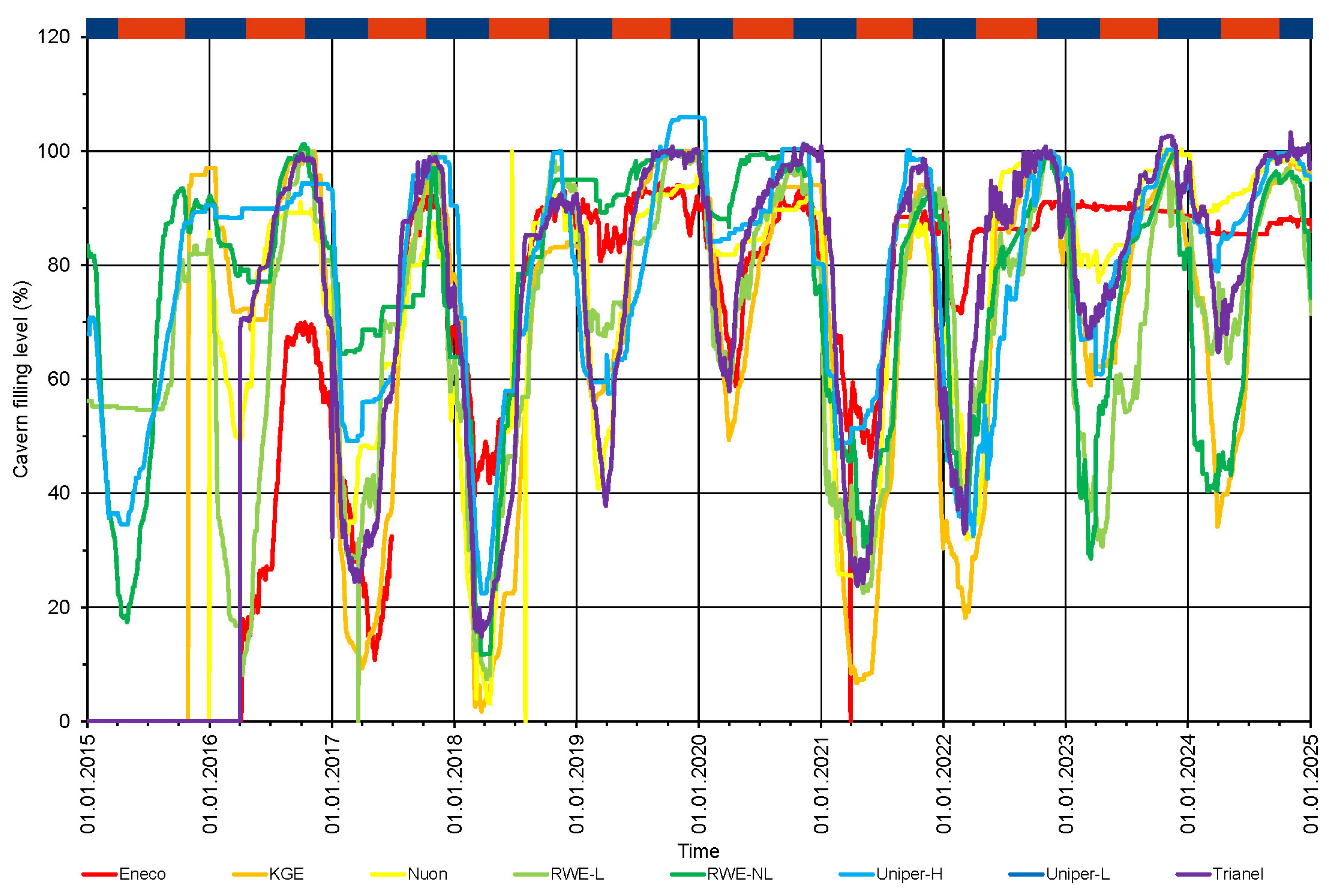
Figure 1.
The operating cycles of the various cavern storage facilities in the cavern field Gronau-Epe show the relative gas volume in the caverns (different colours depending on the company), the phases of injection (red bars) and withdrawal (blue bars) [
9].
Figure 1.
The operating cycles of the various cavern storage facilities in the cavern field Gronau-Epe show the relative gas volume in the caverns (different colours depending on the company), the phases of injection (red bars) and withdrawal (blue bars) [
9].
Various interactions can be derived from underground gas storage [
2]:
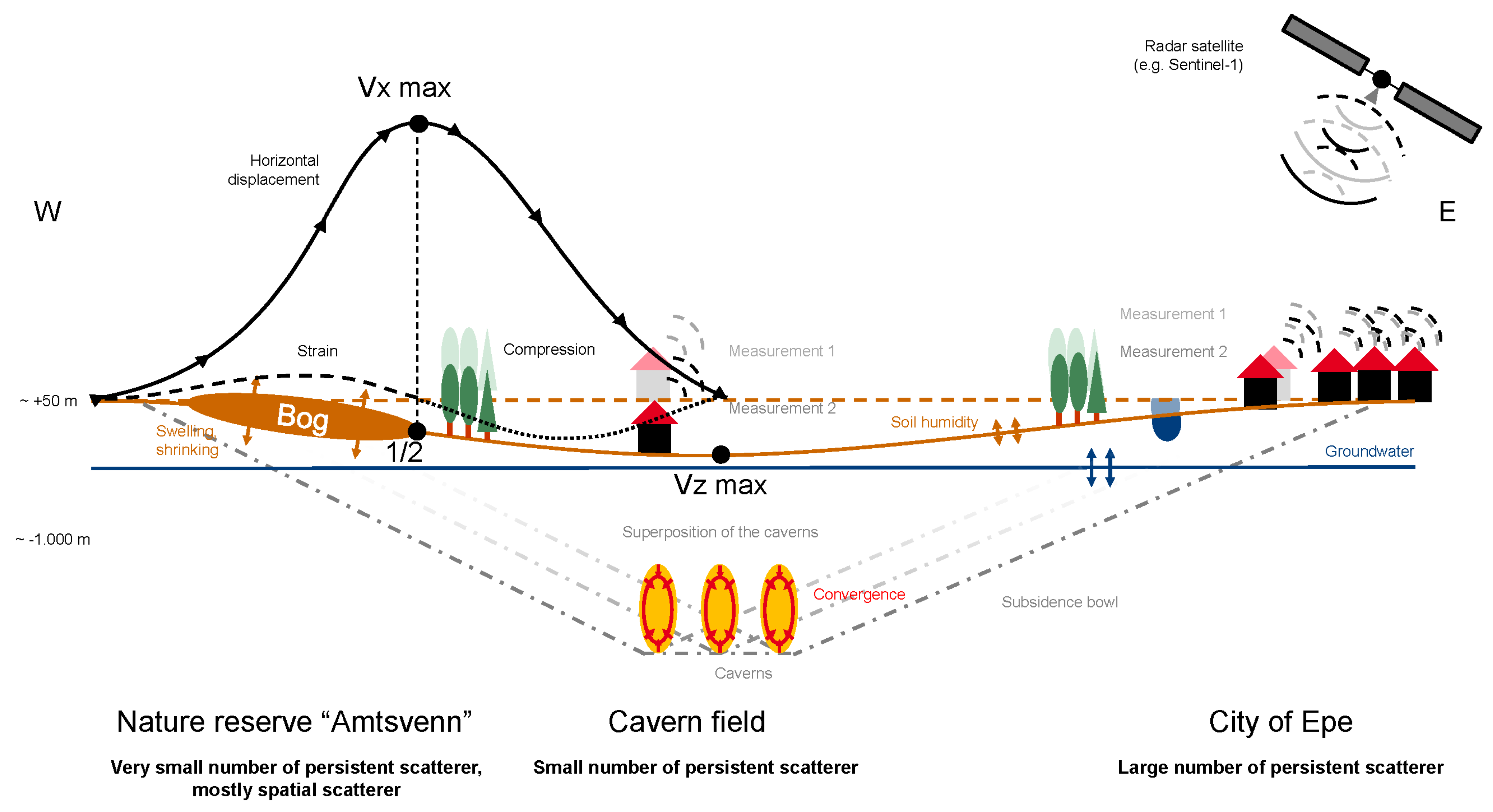
Subsurface phenomena result mainly from stress changes (convergence) (
Figure 2) within the stored formation and the overlying cap rock and overburden layers.
Surface phenomena such as subsidence are caused by the subsurface convergence of the individual caverns and their superposition [
2,
10,
11]. These changes can lead to measurable deformations of the earth’s surface in all directions [
5] (
Figure 2). Depending on the type of use of the cavern, different annual volume losses are observed. For brine production, convergence is 0.5% to 0.9% per year for oil storage, or 0.2% to 0.3% per year for inactive caverns, and for natural gas storage, 0.6% to 2.5% per year [
5].
Figure 2.
Schematic section in W–E direction of the cavern field Gronau-Epe with the processes influencing ground movements. Half-page illustration of the processes of horizontal ground movement (Vx) and vertical ground movement (Vz) in a subsidence depression (after [
6,
12]).
Figure 2.
Schematic section in W–E direction of the cavern field Gronau-Epe with the processes influencing ground movements. Half-page illustration of the processes of horizontal ground movement (Vx) and vertical ground movement (Vz) in a subsidence depression (after [
6,
12]).
The convergence of gas caverns can generally be predicted if geomechanical, thermal, and operational conditions are taken into account in suitable models. Differences in the observed values result primarily from site-specific properties, cavern geometry, and the dynamics of storage operation. Measurements, e.g., mine survey maps, show both vertical subsidence and horizontal displacement of the surface above cavern fields (
Figure 2). Although there is a correlation between the subsidence gradient (inclination) and horizontal displacement, unlike in deep mining, complete subsidence is not achieved during operation, which leads to deviations from classic deformation models [
5]. Cyclical, and in some cases, spatially varying injection and withdrawal processes in UGS (
Figure 1) alter the effective stress state in the subsurface, leading to measurable ground movements ranging from millimetres to several centimetres over the course of the year [
5,
6,
13].
Traditional monitoring systems for UGS, which are based on in situ measurements such as mining levelling and/or the use of GNSS (Global Navigation Satellite System) stations, involve considerable technical and personnel costs. In addition, due to their limited spatial and temporal coverage and the usually low measurement frequency, they offer only limited possibilities for comprehensively recording and evaluating dynamic underground processes.
This technological gap can be closed by modern remote sensing technologies. Satellite-based synthetic aperture radar interferometry (InSAR) is a remote sensing technique that enables comprehensive monitoring of ground movements (
Figure 2). It uses radar signals to precisely record topographical changes in the Earth’s surface [
14,
15]. InSAR measures deformations by comparing phase differences between SAR satellite images (e.g., ESA Sentinel-1), regardless of the time of day or weather conditions. In principle, the method allows for the detection of deformations in the sub-centimetre range at regular intervals (e.g., weekly). However, availability depends on the chosen carrier system (commercial = TerraSAR-X, open geodata = Sentinel-1). The accuracy of the results depends on various factors, including surface conditions, ground cover, and external influences such as precipitation, soil moisture, and solar radiation. These parameters can influence the backscatter behaviour of the radar signal and thus limit the reliability of the derived deformation values.
InSAR analyses offer various ways of comparing a time-series of datasets on ground movements. This usually involves persistent scatterer interferometry (PSI), which relies on the presence of stable scatterers (PS = persistent scatterers) for the radar signal, such as buildings. However, when applying radar interferometry to a rural area such as the cavern field Gronau-Epe, a method must be chosen that allows for the most comprehensive representation of ground movements possible despite the very low building density. One method suitable for this purpose is Small Baseline Subset (SBAS). The radar interferometric analyses performed are therefore primarily based on SBAS. Both methods can be combined to perform a comprehensive spatiotemporal analysis (SBAS-InSAR), to calculate vertical ground movement as well as horizontal ground movement in the east–west-direction. The horizontal ground movement is limited to the E–W direction due to the polar orbit of the satellites.
The use of Interferometric Synthetic Aperture Radar for monitoring underground storage facilities offers various advantages but also has limitations. InSAR data show the totality of movements on the surface, enabling the detection of small-scale ground movements and thus indicating anomalous deformation patterns. These observations may potentially be related to other processes such as changes in the soil layers, the overburden, or even discontinuities.
Nevertheless, InSAR is increasingly establishing itself as a key tool for the comprehensive monitoring and assessment of underground infrastructure. It enables highly accurate, spatially continuous, and long-term recording of ground movements, which can be interpreted as indicators of structural and geomechanical processes in the underground. In connection with the construction and operation of underground gas storage facilities (UGS) and along with other outer environmental and soil parameters, InSAR is therefore an essential tool for the quantitative analysis of near-surface ground movements that can be caused by changes in the stress and pressure conditions in the subsurface.
2. Aim of the Research
The aim of the research is to apply radar interferometric analyses to monitor, to analyse, and to classify ground movements above the cavern field Gronau-Epe. The specific objective is to identify ground movement patterns associated with the operation of the caverns and to differentiate the different vectors of movement. In this way, areas with different vertical and horizontal ground movements can be identified. Another important aspect of this research is the use of a geostatistical cluster analysis method and correlation analyses to determine patterns in ground movements in space and time for further analysis.
3. Overview
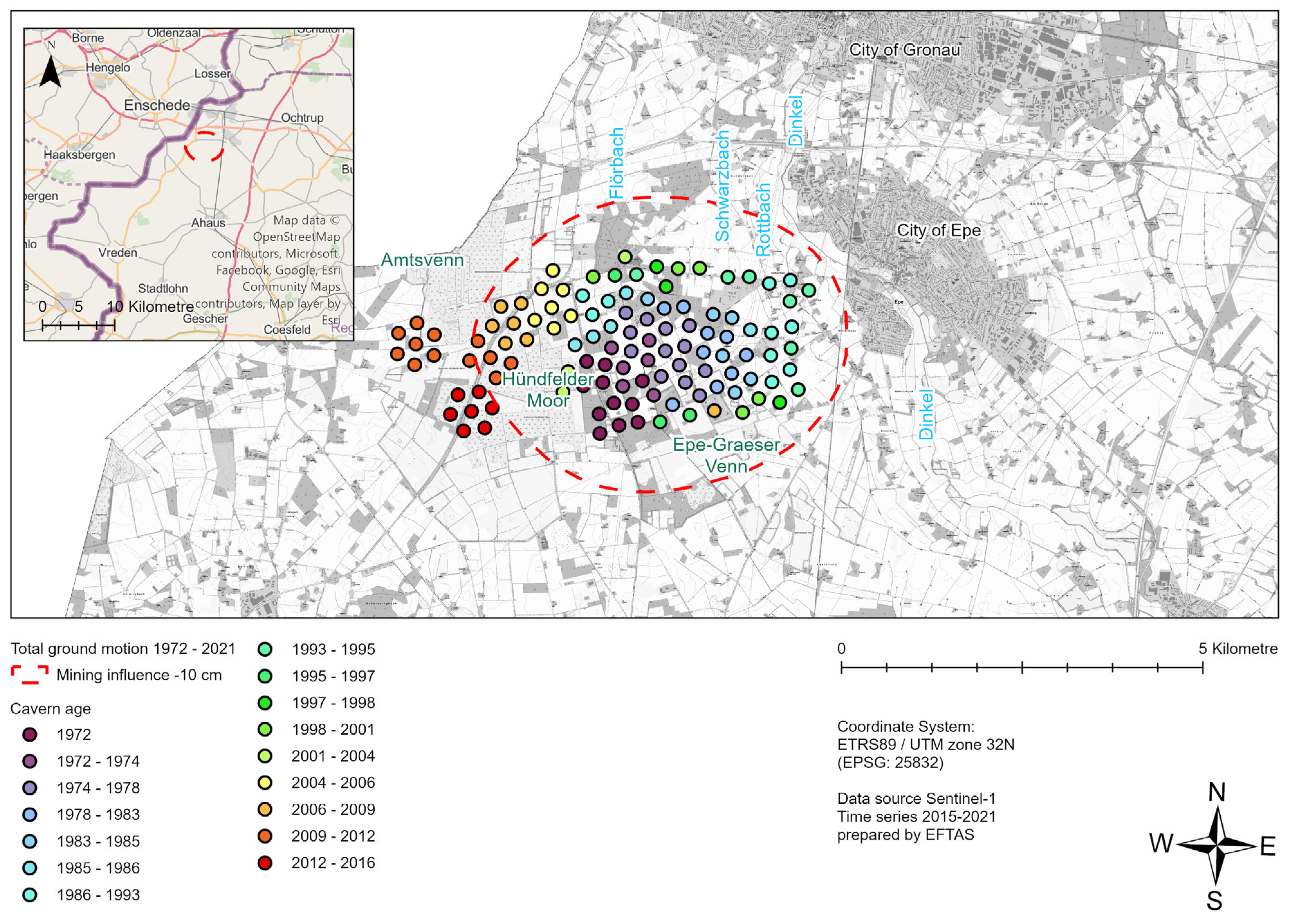
The research area, the cavern field Gronau-Epe, is located in the northwest of North Rhine-Westphalia in the German–Dutch border region of Gronau (Germany) and Enschede (The Netherlands) (
Figure 3) [
5,
6,
7,
16].
The coloured dots on the map mark the underground locations of the caverns and their development [
6,
16,
17]. At this location, various companies store liquids and gaseous energy sources in caverns in a 400 m thick salt layer at a depth of about 1000 m below surface. The salt layers are covered by a layered overburden. The total storage volume (as of 2025) is 3.4 billion m
3 of working gas in 76 natural gas caverns [
17].
Figure 3.
Location of the cavern field Gronau-Epe with the city of Epe (NW) and the city of Gronau (N), the local water courses, and the bog areas (Basemap [
18]).
Figure 3.
Location of the cavern field Gronau-Epe with the city of Epe (NW) and the city of Gronau (N), the local water courses, and the bog areas (Basemap [
18]).
The dashed line shows the impact of mining (
Figure 3). Within this area, there is a ground subsidence greater than 10 cm, meaning that, according to the Federal Mining Act, the operator is responsible for any changes at the surface. The western caverns, which are in the solution mining process, have not yet had any impact on ground movements at the surface.
The landscape of the research area is predominantly characterized by agricultural land and grassland. The region is crisscrossed by watercourses and small streams (W to E: Flörbach, Schwarzbach, Rottbach, and Dinkel) (
Figure 3). They form a branched network and are important for both agriculture and the water balance of this region with its low topography. A special feature are the two raised bogs in the western part, which formerly formed the closed moorland area of the Amtsvenn-Hündfelder Moor and Epe-Graeser Venn/Lasterfeld, and are now designated as nature reserves [
6,
16].
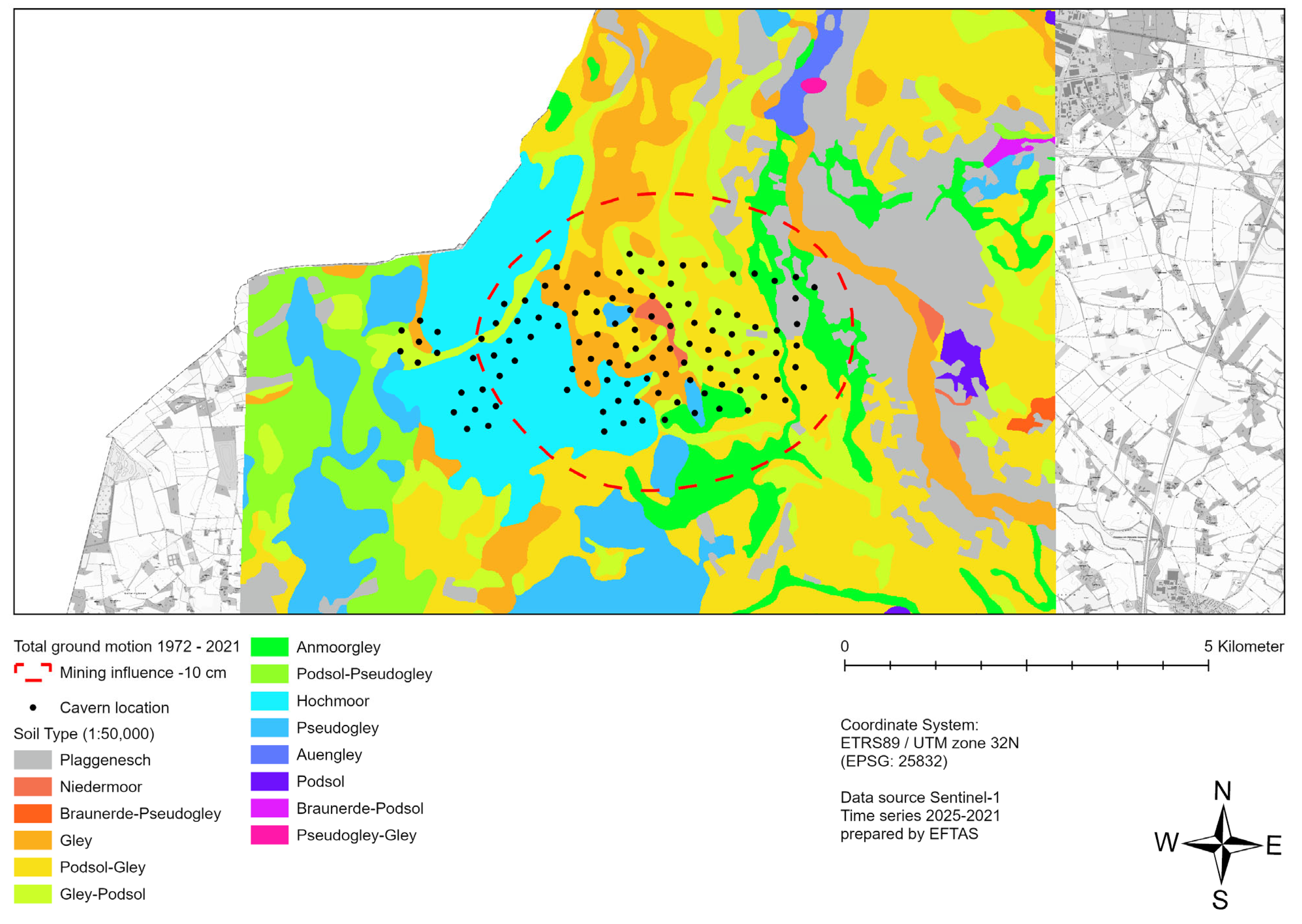
The research area exhibits a marked diversity of soil types of various thicknesses, which is closely linked to the natural landscape and topography of the region (
Figure 4). It is a gently undulating lowland with slightly elevated terminal moraines, extensive sander areas, marshy depressions, and flood plains.
4. Methodology
As part of this research, a systematic analysis of ground movements in the area of the cavern field Gronau-Epe was carried out [
6]. The evaluation is based on SBAS-InSAR data collected from December 2015 to December 2021 (Research cooperation—Monitoring Epe [
20]). The results of this project were used as source data in this research.
The present research cooperation analyses the movement patterns by applying the K-Means clustering algorithm to identify specific areas with similar deformation behaviour. This clustering allows for a structured grouping of ground movements according to patterns and intensity. The results are visualized in GIS, which clearly displays the spatial distribution of the clusters and performs a multi-criteria analysis to evaluate influence potentials. To this end, in a first analysis, the information from the NRW soil map with its different soil types on a scale of 1:50,000 is integrated in a first step.
The final analysis includes the integration of operational data per storage operator according to the open aggregated gas storage inventory AGSI+ [
9]. This enables the further identification of detailed movement patterns. All results were correlated with the official mine survey maps.
4.1. Data Collection
In order to carry out a spatially comprehensive and temporally high-resolution analysis of ground movements, this research used the interferometric SAR time-series techniques Persistent Scatterer Interferometry (PSI) and Small Baseline Subset (SBAS). The analysis is based on data from the European Copernicus Sentinel-1 mission. The PSI method uses multiple interferograms from fixed scatterers to reconstruct changes in the deformation behaviour of objects on the Earth’s surface over time. The SBAS method uses multiple interferograms with short temporal and spatial baselines to reconstruct changes in the deformation behaviour of the Earth’s surface over time. SBAS provides a basis for detecting ground movements, particularly in areas with slow, non-linear movements.
The chosen approach is a robust and largely automatable methodology for the comprehensive monitoring of ground movements. The results of this research confirm the suitability of SBAS-InSAR as a versatile tool in satellite-based analysis of ground movements, as described in the literature [
5,
6]. The local results were checked against first epoch GNSS measurements and showed a good match [
21,
22].
4.2. Clustering
The cluster analysis available in ESRI ArcGIS 3.6.1 software from a temporal–spatial perspective is an evaluation technique that enables the investigation of the dynamics of phenomena in the context of their spatial and temporal dimensions. The core element of this methodology is the creation of a so-called spatiotemporal cube, also known as a Space–Time Cube, which aggregates data in three dimensions: two spatial dimensions, consisting of longitude and latitude, and one temporal dimension. This structure consists of cells, known as bins, which represent specific values for specific locations and time periods. Such a snapshot preserves all information about the distribution and variability of the data in time and space, which is crucial for accurate modelling and analysis.
Various algorithms are used in the spatial-temporal analysis of clusters to identify significant clusters and trends in the data. In this research, a K-Means (K stands for the number of clusters, Means stands for the calculation of the mean values within a cluster) was used.
The K-Means method is a clustering algorithm that divides a dataset into k groups based on similarity. Data processing takes place in several steps (after [
23]):
Initialization: At the beginning, k centroids are selected at random. Each centroid represents the centre of a potential cluster.
Assignment of points: Each data point is assigned to the nearest centroid. The distance between the points and the centroids is measured using Euclidean distance.
Updating the centroids: After all points have been assigned to the corresponding clusters, the centroids are updated. The new position of the centroid is the arithmetic mean of the positions of all points belonging to this cluster.
Iteration: The steps of point assignment and centroid updating are repeated until the positions of the centroids no longer change significantly, which means stability.
4.3. Multi-Criteria Analysis
Further analysis of ground movements requires an approach that integrates both static (e.g., geological structure) and dynamic parameters (e.g., movement processes recorded at the surface). Due to the complexity of this research, a multi-criteria decision analysis (MCDA) is used [
24]. MCDA methods are particularly useful when spatiotemporal solutions with comprehensive geodata are required [
25,
26,
27].
In order to systematize the complex problem of assessing ground movements in the cavern field Gronau-Epe in connection with underground storage in salt caverns, assessment criteria and their weights were defined, and a visualized result was then created in the form of a map. Modern technological tools that enable effective visualization, analysis, and modelling of complex data play a crucial role in performing multi-criteria analyses. The geographic information system (GIS) ArcGIS Pro and the programming language Python form the analytical environment for this.
A variety of parameters can be used for a multi-criteria analysis. For the first analysis, the following parameters, among others, are suitable for a cavern storage facility:
Ground movements (vertical, horizontal) (1st criterion)
Pressure data per cavern/operational cavern cluster
Spatiotemporal changes in maximum subsidence
Soil types (2nd criterion)
Geology of the overburden
Tectonics in the overburden
Changes in the groundwater level
Changes in soil moisture
Local precipitation behaviour
A multi-criteria decision analysis was used in the cavern field Gronau-Epe to map various dimensions of the soil in a comparable decision model. In the research conducted, two main criteria were used as key indicators for ground movements (
Table 1):
The criteria for the classification of the soils resulted in two groups of soils:
Soils with high soil movement (level 5):
This group includes organic and peaty soils characterized by high water retention capacity, high humus content, and a high tendency to shrink and swell.
Soils with lower soil movement (level 2):
These are primarily mineral soils that are less susceptible to change and exhibit better permeability and mechanical stability.
The use of soil map data and the assignment of point values made it possible to consider the influence of soil type on site stability in a numerical and comparable manner [
19].
These two criteria, ground movements and soil types, were deliberately chosen because they are based on different, complementary datasets. The SBAS-InSAR data provide continuous, high-resolution observation of current deformation processes, while the soil science information provides the static context.
Each criterion was rated on a scale of 1 to 5 to quantify its relative importance in the decision-making model. In the context of underground caverns, these processes can basically be divided into primary and secondary influencing factors.
4.4. Spatiotemporal Correlation of Storage Data
In the final step of the analysis, the operational cavern data for each storage operator were combined with the SBAS-InSAR data. For this purpose, the freely available bulk storage datasets per operator (not per cavern) from AGSI+ were used and assigned to the caverns. Additionally, the results from the analysis of horizontal and vertical ground movements from SBAS-InSAR data were assigned to the cavern location.
It is important to note that this analysis does not replace a cavern-specific evaluation using operational data for each cavern. Nevertheless, this should serve as a first step towards better understanding the behaviour of ground movements at the respective locations. The results were presented as diagrams showing changes in filling level and ground movement over time and then categorized into ground movement classes.
5. Results
The results of this research enable an understanding of the complexity of the factors influencing horizontal and vertical ground movements.
5.1. Clustering of Horizontal Movements
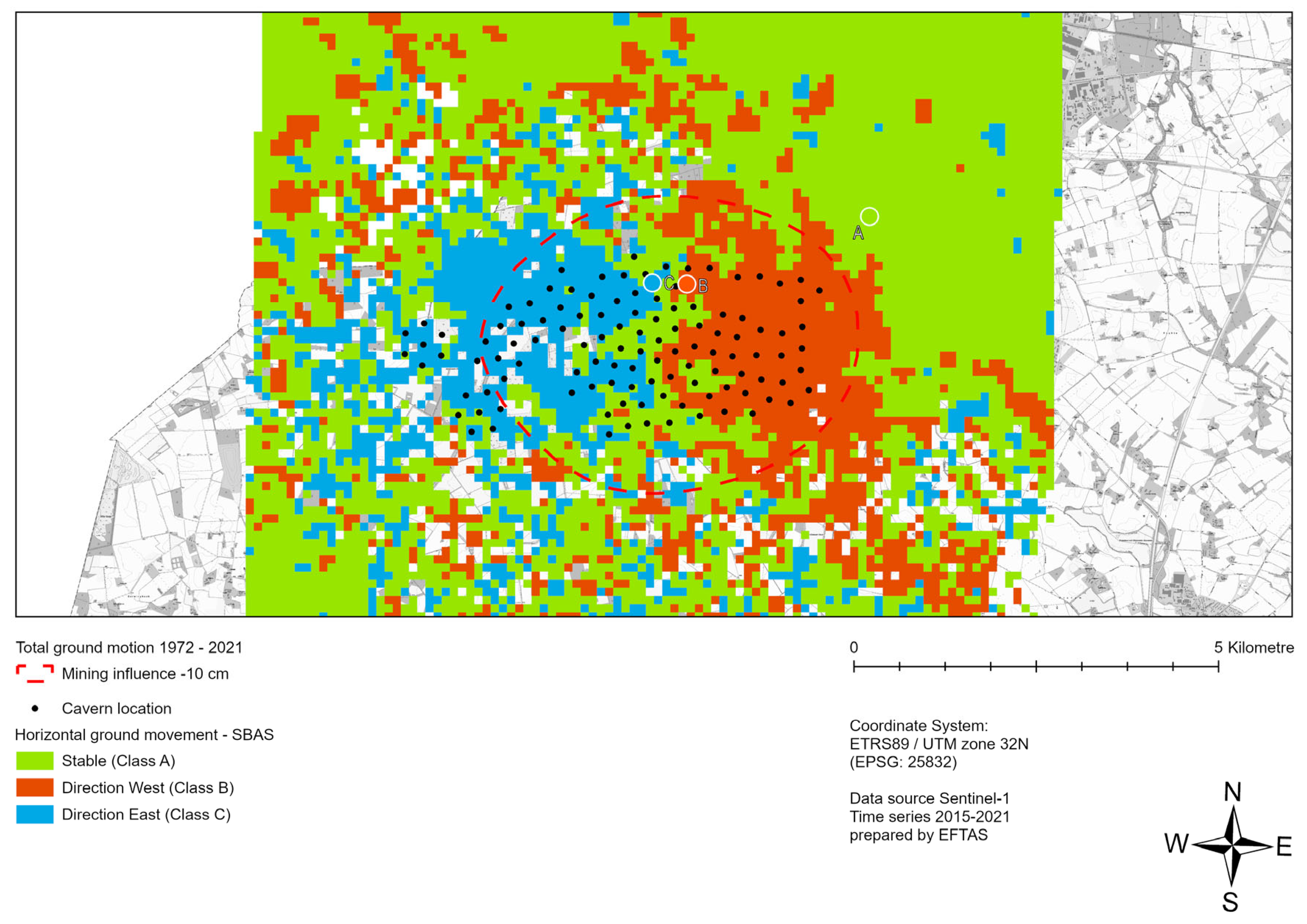
Horizontal clustering focuses on the analysis of horizontal ground movements in the research area, evaluating the movement dynamics exclusively along the east–west axis (
Figure 5).
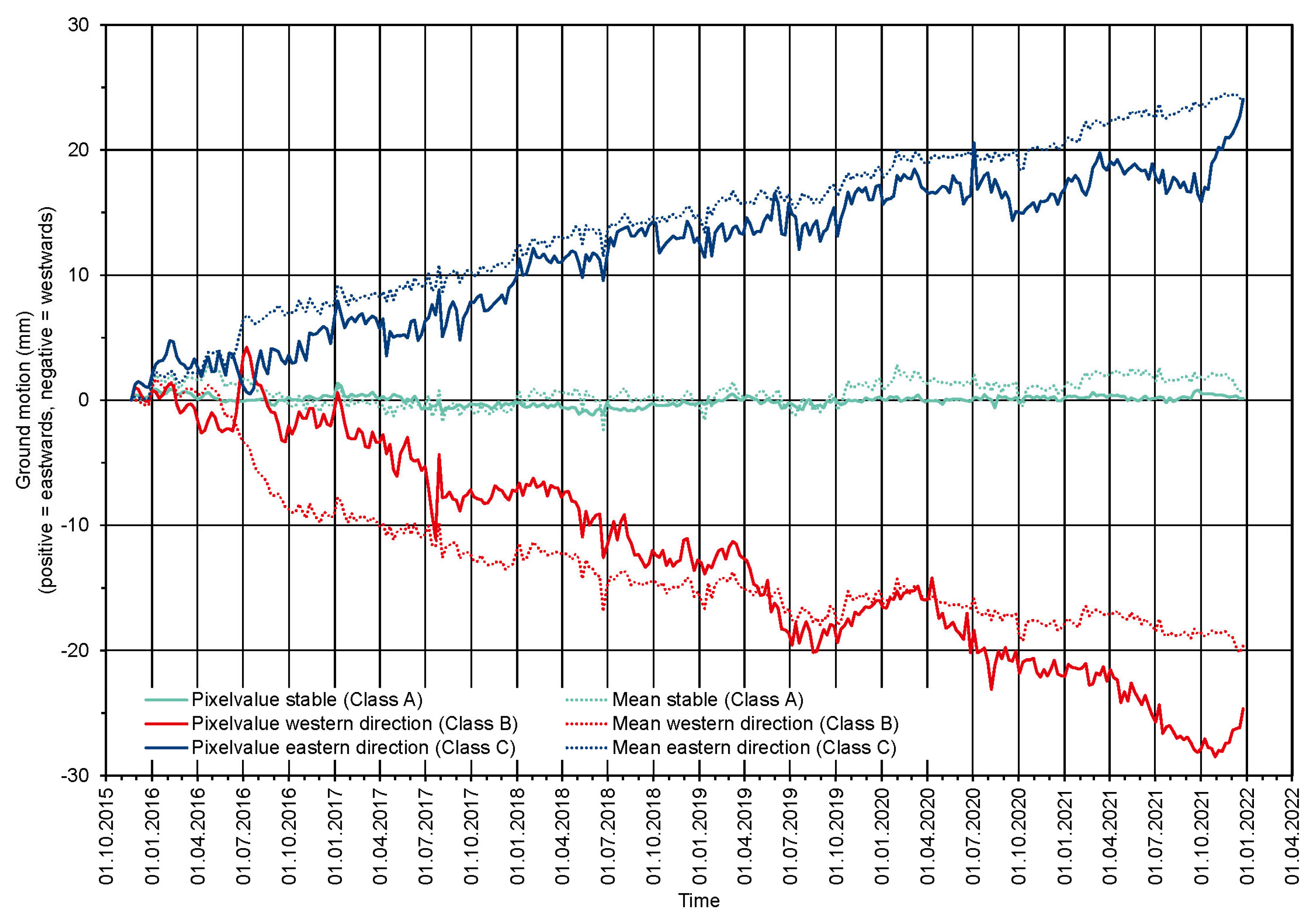
The green clusters (Class A) are the reference areas with stable horizontal ground movements (
Figure 6). These zones are predominantly located at the edges of the research area and form a kind of “frame” around the more active movement zones. In these areas, horizontal ground movement is minimal or non-existent. The solid green line shows short-term fluctuations of up to ±5 mm and represents a randomly selected evaluation point within the green cluster. The dotted line, on the other hand, represents the mean value of all evaluation points in the green cluster and reflects the smoothed course of the horizontal ground movement. After smoothing, a weak but continuous positive trend can be observed: from a starting value close to 0 mm in 2016, the value has increased to approximately +5 mm in 2020.
The blue clusters (class C) exhibit horizontal ground movement in an eastern direction (
Figure 6). Both blue curves have a similar course, indicating a high degree of spatial coherence of the movement within this cluster. A clear, continuous positive trend is evident in both the raw data and the smoothed mean: from 0 mm in 2016, the value increased to approximately +25 mm by the end of 2021. This suggests a consistent, long-term ground movement in an eastward direction.
The red clusters (Class B) exhibit horizontal ground movement in a westward direction (
Figure 6). The trend reaches values of up to −25 mm by the end of 2021. The close correlation of the two curves indicates high spatial coherence within the cluster. The points thus shift synchronously and uniformly. The negative trend indicates long-term, horizontal ground movement in a westward direction. Compared to the blue clusters, the red clusters exhibit a smaller spatial extent and greater dispersion. They occur predominantly east of the main cavern field and partially encircle it.
The analysis of the horizontal clustering in the research area reveals significant horizontal ground movements along the east–west axis, particularly around actively used caverns. Three main clusters were identified: a stable reference area (green cluster) with slight fluctuations, a strong, coherent eastward movement (red cluster), and an equally coherent westward movement (blue cluster).
5.2. Vertical Clustering
Vertical clustering is used to analyse and classify vertical ground movements within the research area. The goal is to identify patterns of vertical deformation and to group areas with similar dynamics.
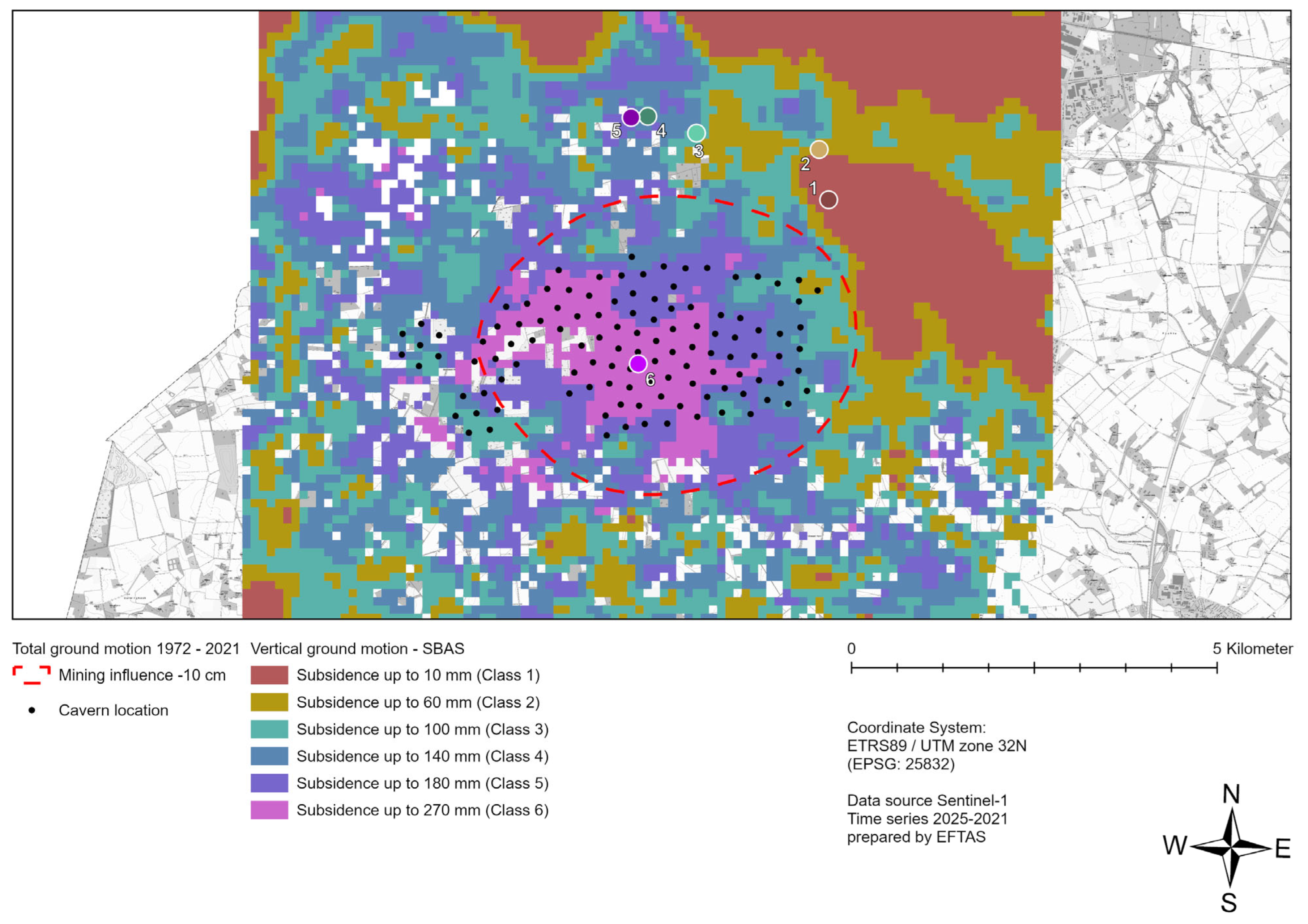
The detected vertical subsidence, which occurs primarily in the vicinity of actively used caverns, is also outside the visible cavern field (
Figure 7). The observed subsidence areas can be divided in this first analysis into six main classes, reflecting different intensities and spatial characteristics of the vertical ground movement. The clusters identified in this way allow for a differentiated analysis of zones with similar movement characteristics, which in turn enables conclusions to be drawn about the spatial variability of the subsurface movement and its potential relationship to the operating conditions of the caverns.
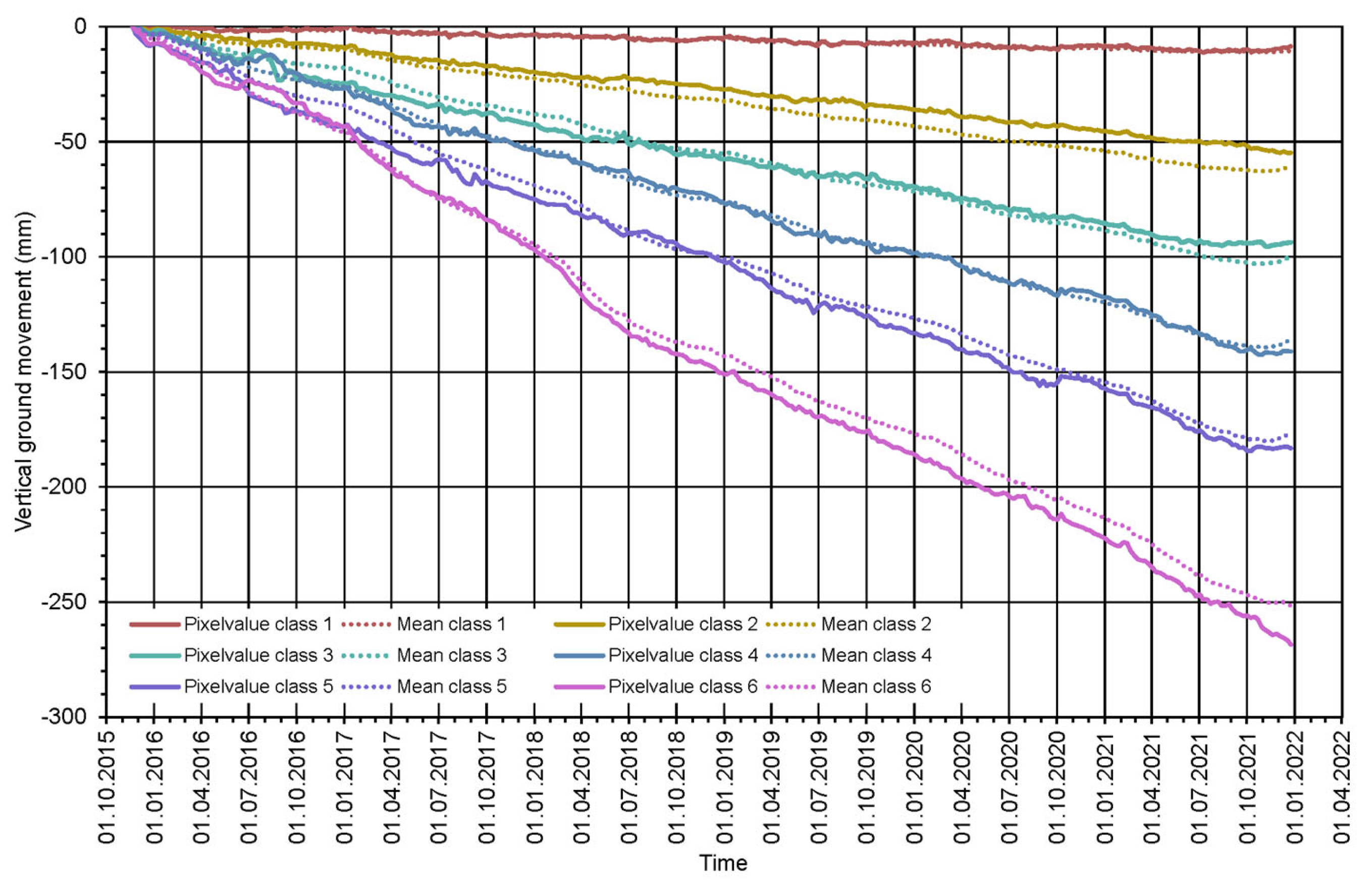
The dark red clusters (Class 1) serve as a stable reference area with minimal vertical subsidence of approximately −10 mm (
Figure 8). This zone is suitable as a basis for comparison to classify more active ground movement zones within the research area. The solid line represents the trajectory of a single, randomly selected evaluation point within the cluster, while the dotted line represents the smoothed mean of all evaluation points in the cluster and reflects the general course of vertical ground movement (
Figure 8). Both lines show a nearly stable trajectory, indicating very low dynamics and confirming the suitability of the cluster as a reference area.
The olive clusters (Class 2) are characterized by a moderate subsidence of up to −60 mm (
Figure 8). Both lines show a consistent negative trend over the entire observation period, indicating slow but continuous subsidence. The olive cluster comprises zones with moderate vertical ground movement and forms a broad ring around the previously described, more active movement zones. It thus represents a transitional region between the stable areas and the more severely affected zones with pronounced movements.
The green-blue clusters (Class 3) are characterized by a vertical ground movement of up to −100 mm (
Figure 8). The vertical ground movements are moderate but persistent and indicate a moderate subsidence pattern. This cluster forms a broader boundary around the previously described, more intense subsidence zones. Compared to the inner clusters, it is spatially more extensive and extends further away from the centre of the underground activity and outside the mining influence (−10 cm line). It thus marks a transition zone where the effects of the underground processes are still noticeable but already attenuated.
The blue clusters are (Class 4) characterized by a clear negative trend with vertical ground movements of up to −140 mm (
Figure 8). This cluster is characterized by strong vertical ground movements, which form an outer boundary around the clusters described later. It thus forms a kind of fringe zone with intense vertical ground movements.
The violet clusters (Class 5) are characterized by strong vertical ground movements of up to −170 mm (
Figure 8). This cluster is characterized by strong vertical ground movements. The purple cluster is spatially larger than the brown areas and forms another intense zone of vertical ground movement around the caverns.
The pink clusters (Class 6) are characterized by the largest measured vertical ground movements of up to −280 mm (
Figure 8). The map shows that these pink clusters are closest to, and often directly overlap with, the locations of the black dots marking the western caverns in the centre of the main cavern complex. This is an area of extremely intense vertical movement. The spatial extent is indicating very localized but deep-reaching deformation.
5.3. Integration of Horizontal and Vertical Ground Movement Analysis
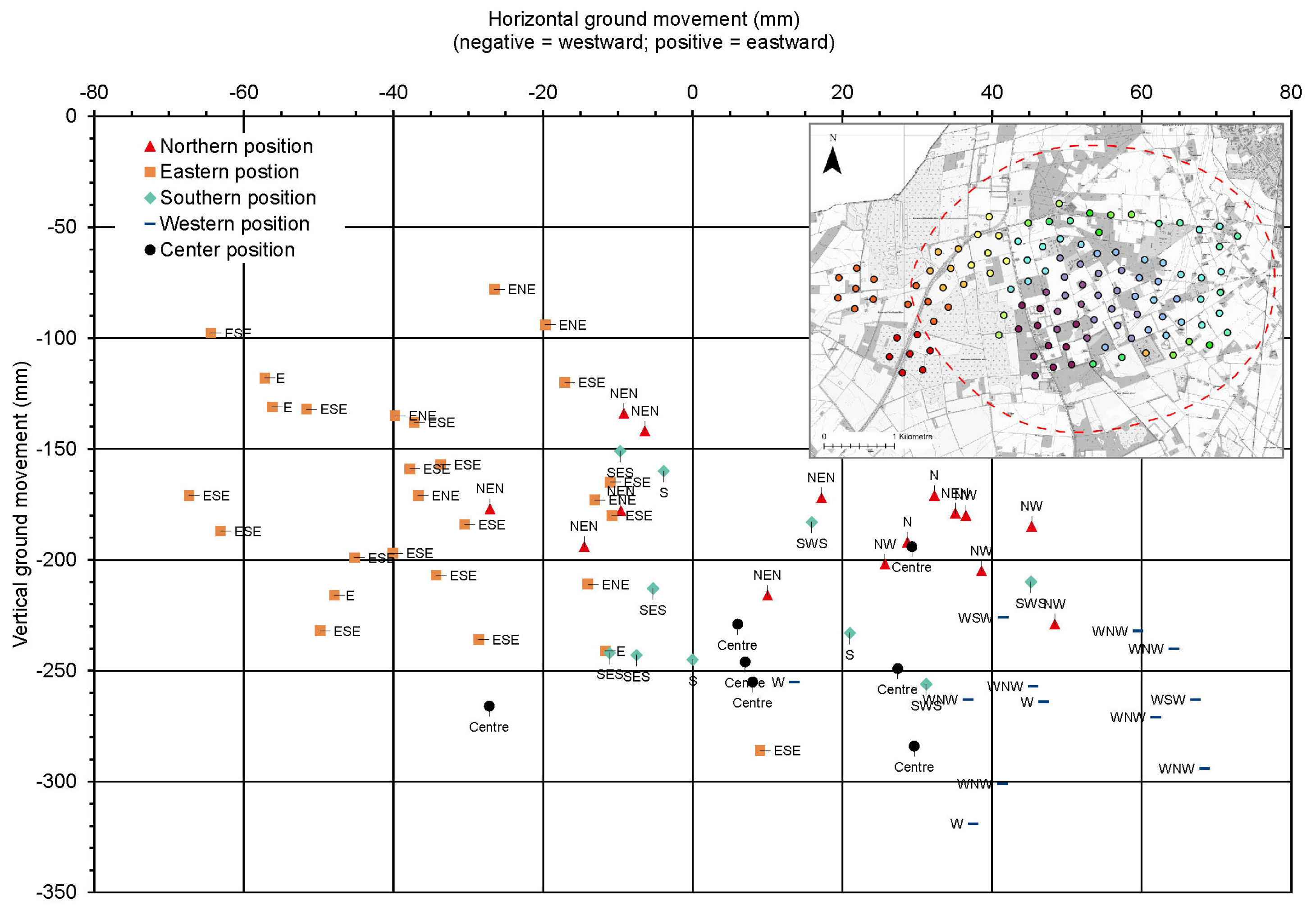
The horizontal and vertical ground movements are cross plotted and analysed with the recent locations of the caverns in the cavern field Gronau-Epe (
Figure 9). The cross plot shows principally that the eastern-located caverns move horizontally towards the west (negative values) and that the western-located caverns move horizontally to the east (positive values). Both the northern and southern caverns show some heterogeneric horizontal ground movement in various directions. The same applies to the caverns currently located in the centre of the cavern field.
The eastern-located caverns show a vertical ground movement of −100 mm up to −250 mm, whereas the western-located caverns show a vertical ground movement of −200 mm up to −330 mm. The caverns in the north show a vertical ground movement of −120 mm up to −254 mm, while the caverns in the south and in the centre show vertical ground movements of −150 mm up to −300 mm.
5.4. Multi-Criteria Analysis Considering the Horizontal SBAS-InSAR Analysis and Soil Types
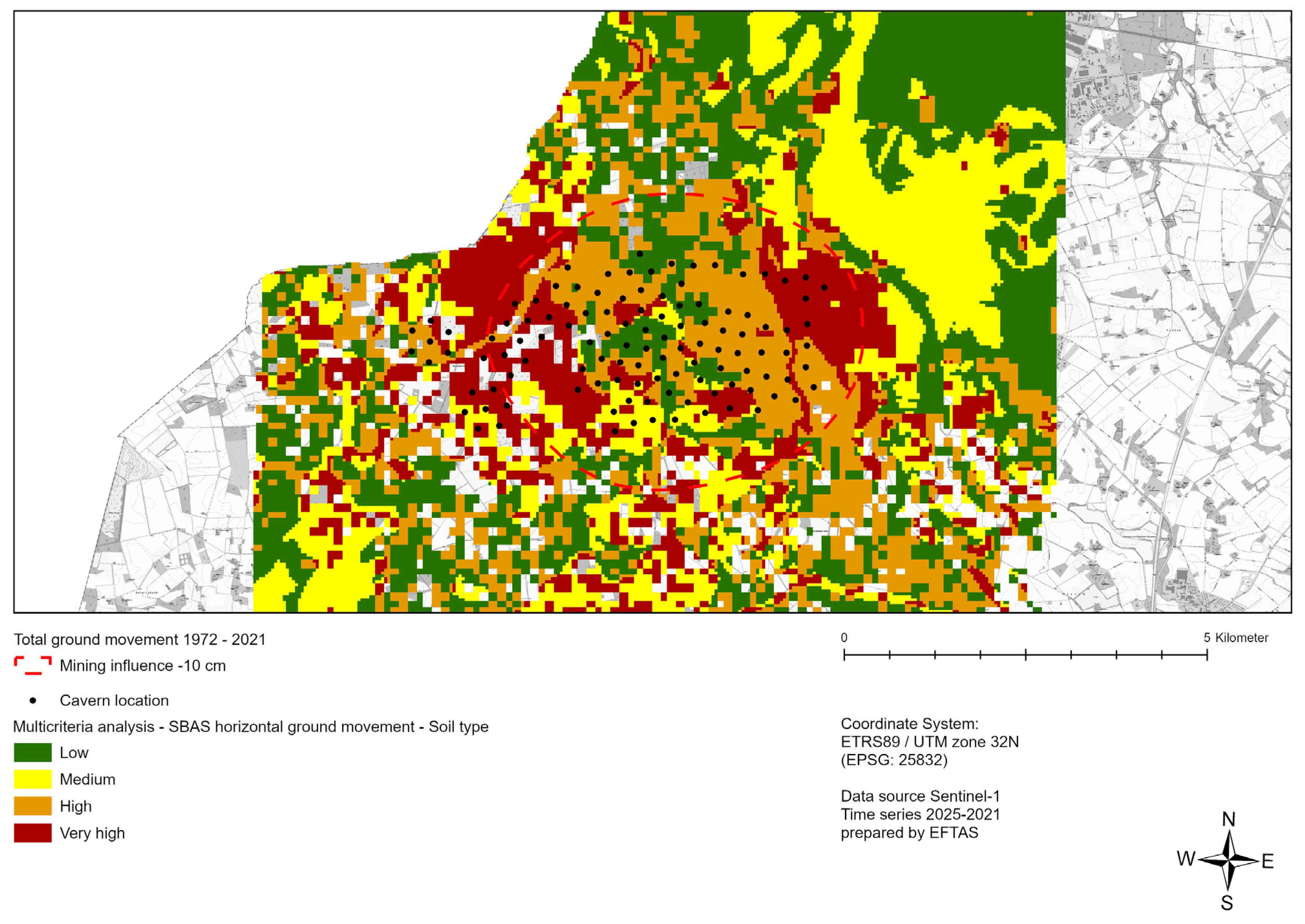
The multi-criteria analysis considering the horizontal SBAS-InSAR analysis and soil types results in the classification of the potential for horizontal ground movement in the cavern field Gronau-Epe (
Figure 10).
The red clusters refer to areas with a very high potential for horizontal ground movement where unfavourable factors are concentrated, such as strong horizontal ground movement, and the presence of soils that are particularly susceptible to fluctuations. A large area with a very high potential for horizontal soil movement is located in the central part of the research area, which includes the Amtsvenn-Hündfelder Moor (
Figure 3 and
Figure 10). This is a complex of former raised bog areas with remnants of moor and heath vegetation, predominantly agricultural areas with arable land, fertile grassland, and wet grassland. The floodplains along the Dinkel River and the northern sections of the Schwarzbach and Rottbach watercourses are also included. They extend partly through the orange to red zones in the northeast and influence the potential for horizontal soil movement caused by water-saturated, compaction-sensitive soils.
The orange clusters indicate a high potential for horizontal ground movement, although not as strong as in the red zones. These areas are mainly located near caverns with soil types susceptible to fluctuations. A large area with a very high potential for horizontal ground movement is noteworthy in the central part of the image, encompassing the peat-extracted areas of the Eper-Graeser Venn (
Figure 3 and
Figure 10). This area is of great importance due to its numerous standing water bodies created for nature conservation or as part of compensatory measures [
28].
The yellow clusters represent areas with a medium potential for horizontal ground movement. These areas are often characterized by mixed soil conditions. These areas are predominantly, for example, built-up areas in the city of Epe and the Eichendorff settlement (SW corner of the research area) (
Figure 3 and
Figure 10).
In contrast, the green clusters indicate areas with a low potential for horizontal ground movement, meaning that they exhibit stable conditions. These areas are predominantly built-up areas (city of Gronau) (
Figure 3 and
Figure 10). The green areas within the cavern field show a low potential for horizontal ground movement; some partially overlap with the blue areas (
Figure 10). While horizontal ground movement is detectable in these areas, it is regularly distributed and shows no sudden gradients, indicating a certain degree of displacement without structural instability.
5.5. Multi-Criteria Analysis Considering the Vertical SBAS-InSAR Analysis and Soil Types
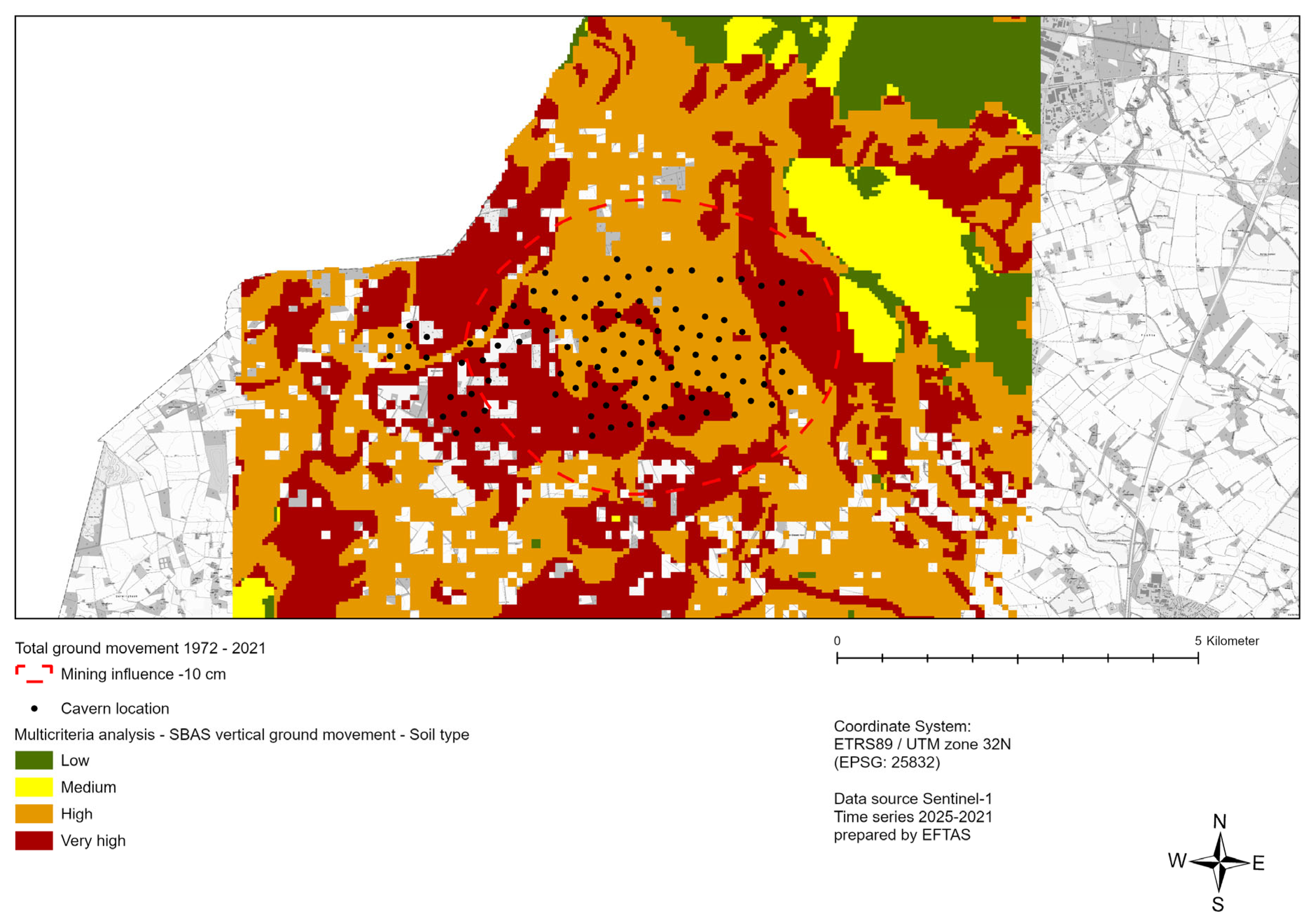
The multi-criteria analysis, considering the vertical SBAS-InSAR analysis and soil types, results in the classification of the potential for vertical ground movement in the cavern field Gronau-Epe (
Figure 11).
The red clusters refer to areas with a very high influence potential of vertical ground movements where unfavourable factors are concentrated, such as the presence of soils that are particularly susceptible to fluctuations. A large area with a very high influence potential of vertical ground movements is noteworthy in the central part of the image, where the Amtsvenn-Hündfelder Moor is located (
Figure 3 and
Figure 11). This is a complex of former raised bog areas with remnants of moor and heath vegetation, predominantly agricultural areas, and grassland. The floodplains along the watercourses of Dinkel, as well as the northern sections of the Schwarzbach and Rottbach, are hydrologically relevant. They extend partly through the orange to red zones in the northeast and may influence the potential for vertical ground movement due to water-saturated, compaction-prone soils.
The orange clusters indicate a high potential for vertical ground movement and are primarily located near caverns with soil types susceptible to fluctuations. Of particular note is a large area with a very high potential for vertical ground movement in the central part of the research area, specifically in the area of the extracted peat bog of the Eper-Graeser Venn (
Figure 3 and
Figure 11). This area is of great importance due to its numerous standing water bodies created for nature conservation or as part of compensatory measures [
28].
The yellow clusters represent areas with a medium potential for vertical ground movement and are characterized by mixed soil conditions. These areas are predominantly, for example, built-up areas in the city of Epe and Eichendorffsiedlung (
Figure 3 and
Figure 11).
In contrast, the green clusters indicate areas with low potential for vertical ground movement and stable soil conditions, and are predominantly built-up areas (City of Gronau) (
Figure 3 and
Figure 11).
5.6. Correlation with Operational Data
The final step of the data analysis involves correlating the ground movements with information on the filling level of each gas storage facility in the caverns from the AGSI+ database (
Figure 1) [
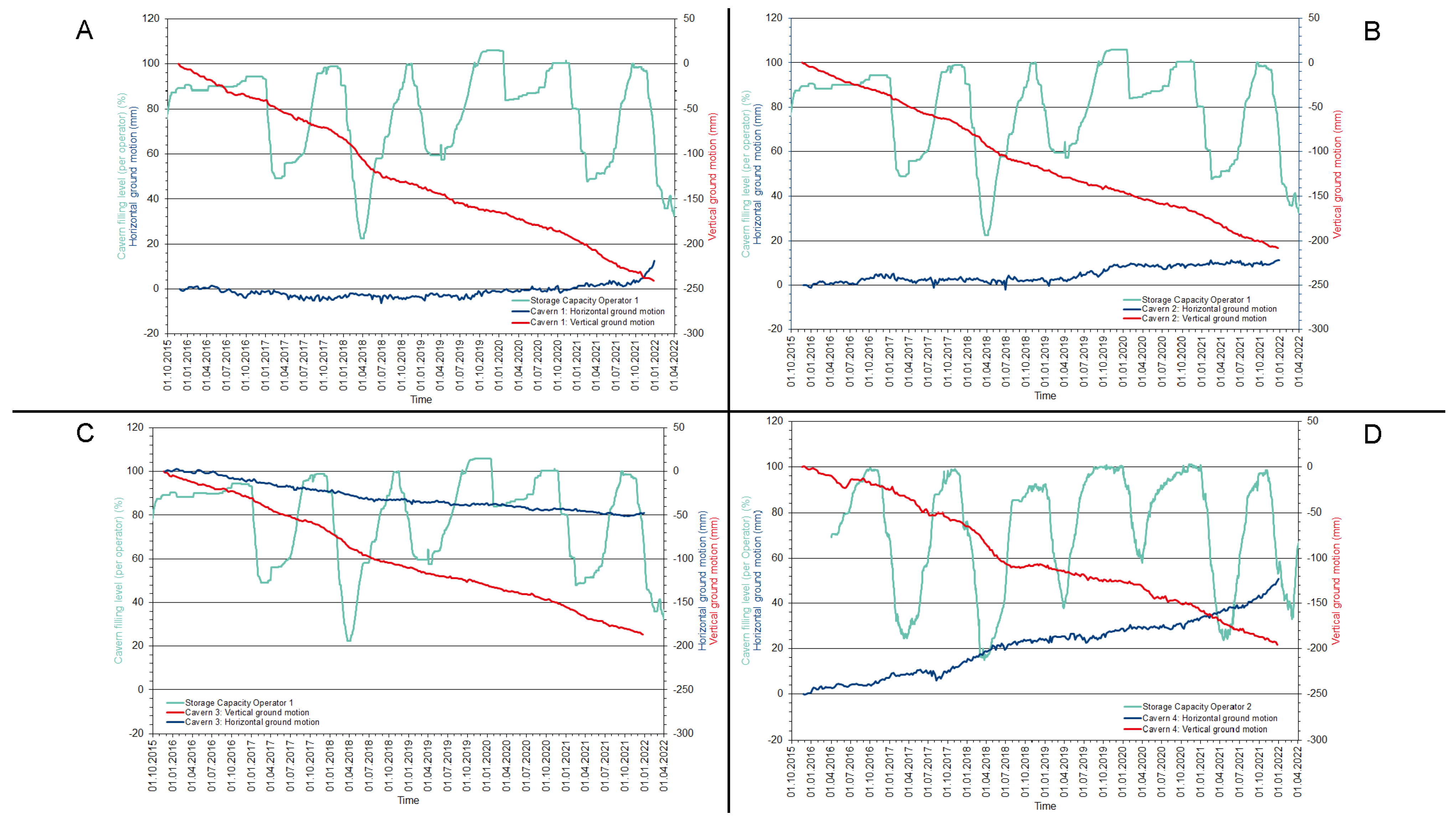
9]. For a further analysis, some time-series data per cavern is plotted (
Figure 12).
Cavern 1 is located at the subsidence maximum (
Figure 12A and Figure 14). The vertical ground movement shows a very pronounced subsidence of up to −240 mm, which is typical for the area at the subsidence maximum. Following the winter of 2017/2018, with its significant gas withdrawal, the cavern exhibited accelerated subsidence. Simultaneously, for the subsequent summer of 2018, the gradient of the vertical ground movement decreases as the cavern refills. The horizontal ground movement, also typical for the area at the subsidence maximum, is small. Nevertheless, it is evident that the horizontal movements from 2015 to the end of 2019 were predominantly westward, after which, they reversed to an eastward direction. Furthermore, minor shifts in direction between eastward and westward movements are observed over the course of the horizontal ground movements from 2015 to 2021.
Cavern 2 is located in the southwestern part of the subsidence maximum of the subsidence depression (
Figure 12B and Figure 14). The vertical ground movement is comparable to that of cavern 1, but with a lower subsidence of −210 mm. Similar to cavern 1, the dependence on the filling level can also be observed. The horizontal ground movements tended to move eastward from 2015 to 2016, followed by slight shifts westward from 2016 to 2019. From 2019 onward, horizontal movements to the east are evident.
Cavern 3 is located in the eastern part of the subsidence depression (
Figure 12C and Figure 14). The vertical ground movement is less pronounced at −190 mm than in cavern 1 and cavern 2, but the dependence on the filling level is also evident. The horizontal ground movement is very pronounced at −50 mm, moving westward. The movement here is uniform.
Cavern 4 is located on the northern edge of the subsidence depression (
Figure 12D and Figure 14). The vertical ground movement, at −190 mm, is similar to that of cavern 3. This vertical ground movement also correlates with the filling level. The horizontal ground movement, at 140 mm, is clearly directed eastward, although some minor changes in direction can be observed. This was evident in the summers of 2017, 2019, and 2020.
6. Interpretation
The ground movements in the cavern field Gronau-Epe were documented using SBAS-PSI radar satellite remote sensing for the period of 2015 to 2021. Weekly scenes were analysed for this purpose. These scenes were classified into classes of horizontal and vertical ground movements using a cluster analysis with K-Means. A multi-criteria analysis with surface soil data was conducted, and operational data on filling levels were integrated.
The horizontal cluster analysis for the caverns in the cavern field Gronau-Epe shows that they can be clearly classified according to the direction of their horizontal ground movement. Of the 71 caverns examined, 37 exhibited horizontal ground movements in a westward direction, while 34 caverns showed horizontal ground movements in an eastward direction. That fits the general concept of a subsidence depression. The transition zone between these two directions of movement lies on the north–south axis. Within this zone, even though the caverns should show only a north–south ground movement, some showed horizontal east–west ground movement. This is probably related to the ground movement processes in the overburden layers, and is possibly influenced by the structural development of the cavern field, which first developed from W to E, and then in a circular motion back from E to W. Also, different operational storage schemes over time (annual and long-term) need to be considered. Interestingly, very distinct horizontal ground movements also occurred outside the area of influence. The areas around the bogs west of the influence zone showed eastward movement, probably related to the water catchment areas west of the bogs. Here, the organic soils, with their seasonal shrinkage and swelling processes, play a significant role.
The interpretation of the vertical ground movements shows that the areas in the centre, i.e., at the subsidence maximum, undergo the highest vertical soil movements. In detail, it becomes apparent that the western caverns exhibit the highest levels of ground movement, whereas the eastern caverns show lower levels. This can be explained by the history of the cavern field’s development. It began in the 1970s in the south/southwest, from where the cavern field developed north-eastward and then westward. The newly brine-excavated caverns for brine extraction, which are not yet in storage operation, are located in the west. Theses western caverns are located in the south/southwest and are currently not in storage operation, which means only small convergences and therefore small subsidence at the surface. Still, this spatiotemporal development of the cavern field triggers changes in subsidence both underground and at the surface, and consequently, in the overall geometry of the subsidence depression. In the long term, the subsidence maximum shifted north-eastward over the first few years but is currently moving westward. These spatial changes can be observed in the small-scale shifts in the horizontal movements of the caverns within the subsidence maximum.
The correlation analysis of horizontal ground movement with soil types shows that horizontal soil movement correlates, in some areas, very strongly with organic soils. This is particularly evident in the bog areas in the west and the peat-extracted areas in the south, as well as in the floodplains along the Dinkel, Rottbach, and Schwarzbach watercourses in the east of the subsidence area. In contrast, the built-up areas in the city of Epe in the northeast, and then northward to the city of Gronau, show significantly lower correlations. Integrating the correlation analysis with vertical soil movements confirms the results of the horizontal soil movement analysis. However, it also demonstrates that the soils generally exhibit strong vertical ground movements outside the mining influence. Only built-up areas show lower correlations in this respect. These two analyses indicate that ground movements in and around the cavern field Gronau-Epe are subject to strong fluctuations. Processes in the topsoil layers also play a role here. Fluctuations in groundwater levels and soil moisture, as well as the direct influence of precipitation events, should be mentioned here. Also, individual operational schemes per cavern should be used to distinguish the influence of the cavern convergence on ground movement. This would warrant further detailed investigation in a follow-up study.
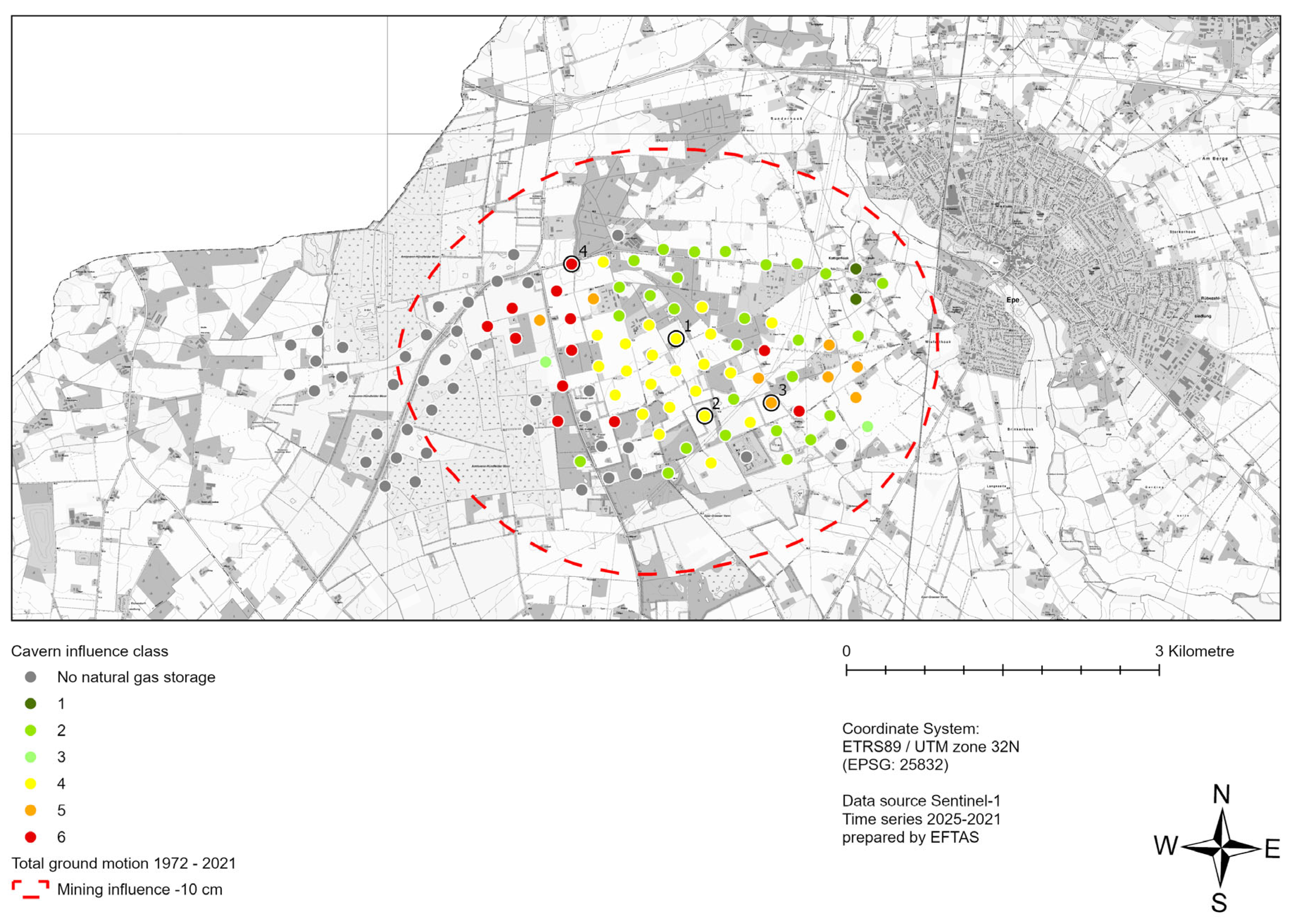
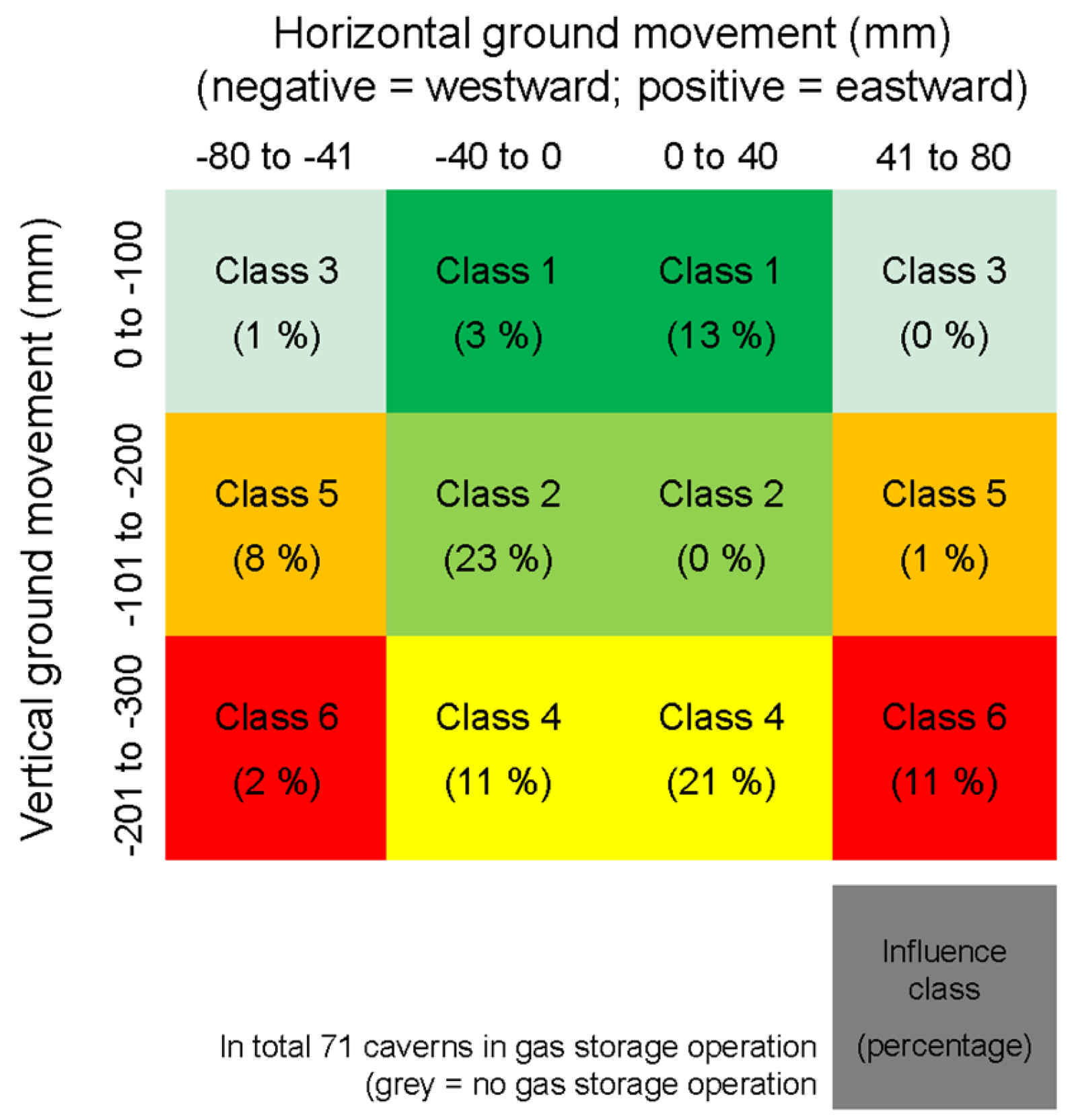
The ground movement analysis results for the individual analysis for each cavern in the natural gas storage operation, for the period of 2015–2021, prioritizes the areas according to their ground movement characteristics (
Figure 13). The combined assessment is based on the integration of the vertical and horizontal multi-criteria analysis (
Figure 10 and
Figure 11). This classification is divided into six overall classes (
Figure 13). Due to the correlation of vertical and horizontal ground movements and for the purpose of better visualization, the classes of the cluster analysis were grouped together.
The classes were then spatially applied to the caverns (
Figure 14). The class 1, class 2, and class 3 caverns are found in the outer areas of the cavern field. These are primarily located in the south, east, and northeast. The class 4 caverns are found in the center of the subsidence depression, where vertical ground movements predominate. The class 5 caverns are found in the central marginal area of the subsidence depression, specifically in the southeast and northwest. The class 6 caverns are also found in the central marginal area of the subsidence depression, with most of them located in the west of the subsidence maximum, towards the newly solution-mined caverns. This is the area where the changes in movement direction, due to the concept of the subsidence depression, occur (
Figure 2). Depending on the general development of the subsidence depression towards the west, the western part of the cavern field Gronau-Epe undergoes a strong change. This induces a lot of geomechanical stress with spatial changes in compression and strain.
The mining-induced anisotropy of horizontal and vertical ground movements indicates that the stress field in the subsurface is not isotropic. Despite the limitations imposed by the lack of north–south ground movement data, the recorded displacements along the east–west axis provide valuable information about the local geomechanical dynamics over time. The measurements show a strong correlation with the fundamental understanding of salt cavern convergence and the concept models of subsidence developments, confirming that the analysis of radar interferometric data provides a representation of subsurface geomechanical processes.
7. Summary
In this research, via the application of SBAS-InSAR techniques, a cluster analysis and a multi-criteria analysis at the cavern field Gronau-Epe have provided important data on the model of ground movements at the surface.
The integration of horizontal and vertical ground movements with soil types clarifies the complex interactions between natural ground movement influences and anthropogenic influences from cavern operations. The integration of a spatiotemporal approach in the form of space–time cube models opens up the possibility of systematically identifying zones with increasing deformation, linking these with geological and soil science information, as well as with operational data. First, attention should be paid to the influence of organic soils and the remnants of the bogs in the western cavern field. Here, a clear influence of soil movements with very high impact classes is evident. Second, attention must be paid to the central areas of the cavern field, where vertical subsidence in the range of −140 mm to −330 mm was observed. Simultaneously, horizontal ground movements of up to +/−70 mm to the east and west were detected. This region is interesting because there is a spatial overlap and changes in the direction of ground movements due to the different ages of the caverns.
The analysis of the potential influences, using SBAS-InSAR technology and a detailed cluster analysis, enables a comprehensive and high-resolution temporal view of surface movements in the area of the cavern field Gronau-Epe. Unlike previous point-based geodetic surveys, this method provides significantly denser spatial coverage, thus allowing for a more differentiated identification of spatial patterns. While conventional surveying methods were primarily able to depict overarching relationships between surface movements and subsurface processes, they lacked the capability to systematically capture small-scale spatiotemporal variations. Modern spatiotemporal analysis closes this gap and improves the observability of changes in their spatial structure and temporal development. The scientific approach of this research thus expands the possibilities for more precise understanding of long-term trends, as well as specific dynamics of ground movements.
For a more detailed evaluation of the causes and mechanisms of the observed ground movements, it is necessary to systematically consider the location of the centre of influence at the time of observation. In further interpretation, it is important to consider that the dynamics of the ground movements originate from the underground cavern centre, i.e., the actual subsurface location and extent of the subsurface cavity. The cavern centre determines both the symmetry and the intensity of the convergence and subsidence processes (superposition). Therefore, all surface-related analyses must be aligned with the projection of the caverns to the surface. This ensures that the geodetic time-series (e.g., SBAS-InSAR) can be assigned to the actual zones of influence of subsurface processes and provides a technically consistent basis for the interpretation of the spatiotemporal movement fields.
Based on the analyses carried out in this research, further development work is recommended to build a deeper understanding of the processes. It is therefore recommended to integrate additional data sources (including GNSS measurements, individual cavern filling levels, local climate and precipitation data, soil moisture data) and to extend the SBAS-InSAR time-series. This could lead to the establishment of an integrated monitoring system.
In summary, the results of the research underscore the relevance of an integrated, interdisciplinary approach for the future monitoring of ground movements at a cavern storage site. The effective integration of modern SBAS-InSAR technologies with comprehensive geoscientific knowledge of the site provides important insights for site assessment and can thus form a sound basis for future management strategies.
Author Contributions
Conceptualization, T.R.; methodology, M.P.P., C.-H.Y. and T.R., validation, M.P.P., C.-H.Y., M.H. and T.R.; formal analysis, T.R. and M.P.P.; investigation, M.P.P. and C.-H.Y.; resources, T.R.; data curation, C.-H.Y.; writing—original draft preparation, T.R. and M.P.P.; writing—review and editing, T.R., M.P.P., C.-H.Y., R.P., A.M., S.T. and M.H.; visualization, T.R.; supervision, T.R.; project administration, T.R.; funding acquisition, T.R. All authors have read and agreed to the published version of the manuscript.
Funding
This research was funded by Uniper Energy Storage GmbH as part of a research cooperation project with the Forschungszentrum Nachbergbau (FZN) at Technische Hochschule Georg Agricola and EFTAS Fernerkundung Technologietransfer GmbH with a contract from 26 September 2023.
Data Availability Statement
Acknowledgments
The authors would like to thank Uniper Energy Storage GmbH for supporting this scientific research. Furthermore, we would like to thank the colleagues of Uniper Energy Storage GmbH for the comprehensive and intensive exchanges on this technical topic. Additionally, the authors would like to thank Peter Goerke-Mallet for his expert insights into this cavern storage system. Finally, the authors would like to thank the reviewers for their expert feedback.
Conflicts of Interest
The co-authors Chia-Hsiang Yang, Andreas Müterthies, Sebastian Teuwsen and Roman Przyrowski are affiliated with the companies EFTAS Remote Sensing and Technology Transfer (EFTAS Fernerkundung Technologietransfer GmbH) and Uniper Energy Storage GmbH, respectively. The remaining authors declare that the research was conducted in the absence of any commercial or financial relationships that could be construed as a potential conflict of interest.
References
- Al-Shafi, M.; Massarweh, O.; Abushaikha, A.S.; Bicer, Y. A review on underground gas storage systems: Natural gas, hydrogen and carbon sequestration. Energy Rep. 2023, 9, 6251–6266. [Google Scholar] [CrossRef]
- Teatini, P.; Castelletto, N.; Ferronato, M.; Gambolati, G.; Janna, C.; Cairo, E.; Marzorati, D.; Colombo, D.; Ferretti, A.; Bagliani, A.; et al. Geomechanical response to seasonal gas storage in depletedreservoirs: A case study in the Po River basin, Italy. J. Geophys. Res. 2011, 116, 21. [Google Scholar]
- Fibbi, G.; Del Soldato, M.; Fanti, R. Review of the Monitoring Applications Involved in the Underground Storage of Natural Gas and CO2. Energies 2023, 16, 26. [Google Scholar] [CrossRef]
- Fibbi, G.; Landini, N.; Intrieri, E.; Del Ventisette, C.; Del Soldato, M. Open-Source InSAR Data to Detect Ground Displacement Induced by Underground Gas Storage Reservoirs. Earth Syst. Environ. 2025, 9, 3083–3100. [Google Scholar] [CrossRef]
- Meyer, S. Stakeholdermanagement aus Sicht des Markscheiders—Außenpolitik eines Bergbaubetriebes. Markscheidewesen 2023, 130, 3–10. [Google Scholar]
- Rudolph, T.; Goerke-Mallet, P.; Homölle, A.; Müterthies, A.; Perrevort, H.; Teuwsen, S.; Yang, C.-H. Participatory Geomonitoring for Future Mining—Resilience Management in the Cavern Storage Epe (Germany). Mining 2024, 4, 230–247. [Google Scholar] [CrossRef]
- Rudolph, T.; Goerke-Mallet, P.; Müterthies, A.; Tomlik, C.; Teuwsen, S.; Yang, C.-H. Monitoring von Bodenbewegungen—Das Große Puzzel am Kavernenspeicher Gronau-Epe; Geographische Kommission Westfalen: Münster, Germany, 2023. [Google Scholar]
- Rudolph, T.; Goerke-Mallet, P.; Homölle, A.; Müterthies, A.; Perrevort, H.; Teuwsen, S.; Tomlik, C.; Yang, C.-H. Öffentliche Beteiligung im Geomonitoring—Das Fallbeispiel aus dem Kavernenfeld Epe. Markscheidewesen 2023, 130, 3–13. [Google Scholar]
- GIE AGSI. AGSI Storage Inventory. 2026. Available online: https://agsi.gie.eu/ (accessed on 19 January 2026).
- Baú, D.; Gambolati, G.; Teatini, P. Residual Land SubsidenceNear Abandoned Gas FieldsRaises Concern OverNorthern Adriatic Coastland. Eos Trans. Am. Geophys. Union 2000, 81, 245–249. [Google Scholar] [CrossRef]
- Tajdus, K.; Sroka, A.; Misa, R.; Tajdus, A.; Meyer, S. Surface Deformations Caused by the Convergence of Large. Energies 2021, 14, 11. [Google Scholar] [CrossRef]
- Kratsch, H. Bergschadenkunde; Deutscher Markscheider-Verein e.V.: Peine, Germany, 2008; p. 932. [Google Scholar]
- Rapant, P.; Struhár, J.; Lezecký, M. Radar Interferometry as a Comprehensive Tool for Monitoring the Fault Activity in the Vicinity of Underground Gas Storage Facilities. Remote Sens. 2020, 12, 18. [Google Scholar] [CrossRef]
- Andersson, J.; Benndorf, J.; Busch, W.; Isaac, M.; Lohsträter, O.; Reitze, A.; Rudolph, T.; Spreckels, V.; Walter, D.; Wenzig, E.; et al. Radarinterferometrie (InSAR)—Grundsätze zur Erfassung von Bodenbewegungen Mithilfe der Radarinterferometrie; DMV e.V.: Peine, Germany, 2025. [Google Scholar]
- Ferretti. Satellite InSAR Data—Reservoir Monitoring from Space; EAGE: Bunnik, The Netherlands, 2014; p. 160. [Google Scholar]
- Haske, B. Drohnen- und Satelliten-Fernerkundung als Beitrag zu einem integrierten, sicherheits- und umwelttechnischen Monitoring von Untergrundspeichern. Ph.D. Dissertation, TU Bergakademie Freiberg, Freiberg, Germany, 2025. [Google Scholar]
- Niedersächsischen Landesamts für Bergbau, Energie und Geologie (LBEG). Untertage-Erdgasspeicherung in Deutschland. EEK 2025, 141, 27–33. [Google Scholar]
- Bezirksregierung Köln. Digitale Topographische Karte 1:10,000 NRW. Available online: https://www.bezreg-koeln.nrw.de/geobasis-nrw/produkte-und-dienste/topographische-karten/aktuelle-topographische-karten/digitale (accessed on 30 January 2026).
- Geschäftsstelle des IMA GDI Nordrhein Westfalen, GEO.portal.NRW. 2026. Available online: https://www.geoportal.nrw/?activetab=portal (accessed on 19 January 2026).
- Forschungskooperation Epe. Monitoring Epe—Forschung und Transfer für Epe. Available online: https://monitoring-epe.de/ (accessed on 26 January 2026).
- Forschungskooperation Epe. Abschlusspräsentation mit hoher Bürgerbeteiligung. 2023. Available online: https://monitoring-epe.de/abschlusspraesentation/ (accessed on 26 January 2026).
- Bezirksregierung Köln. AFIS-NRW Webanwendung—Amtliches Festpunktinformationssystem. Available online: https://afis.nrw.de/Uebersichtskarte (accessed on 26 January 2026).
- Everitt, B.S.; Landau, S.; Leese, M.; Stahl, D. Cluster Analysis, 5th ed.; Wiley: Hoboken, NJ, USA, 2011. [Google Scholar]
- Uliasz-Misiak, B.; Lewandowska-Śmierzchalska, J.; Matula, R. Selection of Underground Hydrogen Storage Risk Assessment Techniques. Energies 2021, 14, 13. [Google Scholar] [CrossRef]
- Şener, B. Landfill site selection by using geographic information systems. Environ. Geol. 2004, 49, 376–388. [Google Scholar] [CrossRef]
- Watróbski, J.; Jankowski, J.; Ziemba, P.; Karczmarczyk, A.; Ziołoa, M. Generalised framework for multi-criteria method selection. OMega 2019, 86, 107–124. [Google Scholar]
- Matos, C.R.; Carneiro, J.F.; da Silva, P.P.; Henriques, C.O. A GIS-MCDA Approach Addressing Economic-Social-Environmental Concerns for Selecting the Most Suitable Compressed Air Energy Storage Reservoirs. Energies 2021, 14, 22. [Google Scholar] [CrossRef]
- Biologische Station Zwillbrock e.V. Zwillbrock—Biologische Station. Available online: https://www.bszwillbrock.de/de/biologische-station-zwillbrock/ (accessed on 26 January 2026).
| Disclaimer/Publisher’s Note: The statements, opinions and data contained in all publications are solely those of the individual author(s) and contributor(s) and not of MDPI and/or the editor(s). MDPI and/or the editor(s) disclaim responsibility for any injury to people or property resulting from any ideas, methods, instructions or products referred to in the content. |




 ,
,