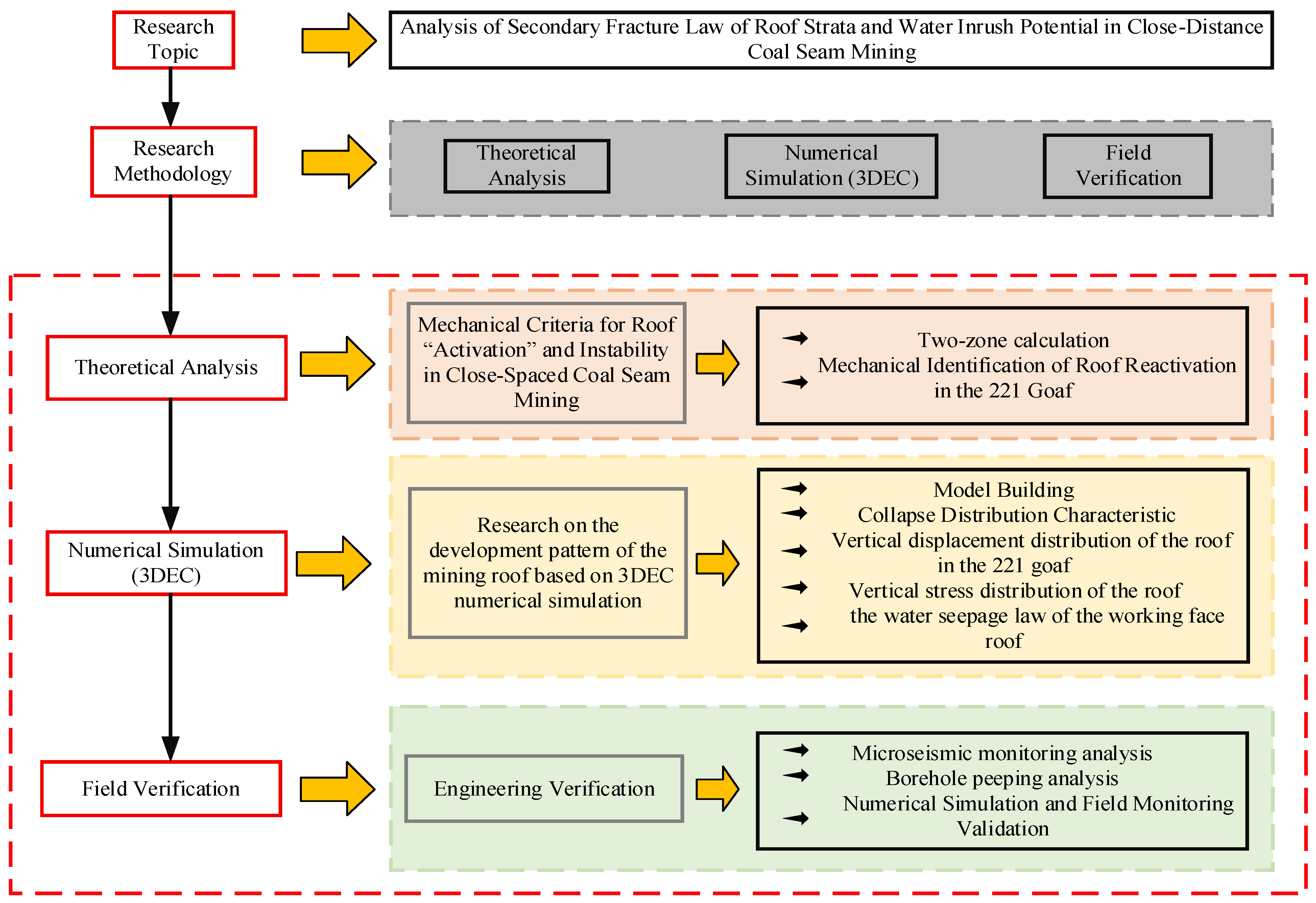

Analysis of Secondary Fracture Law of Roof Strata and Water Inrush Potential in Close-Distance Coal Seam Mining

Abstract
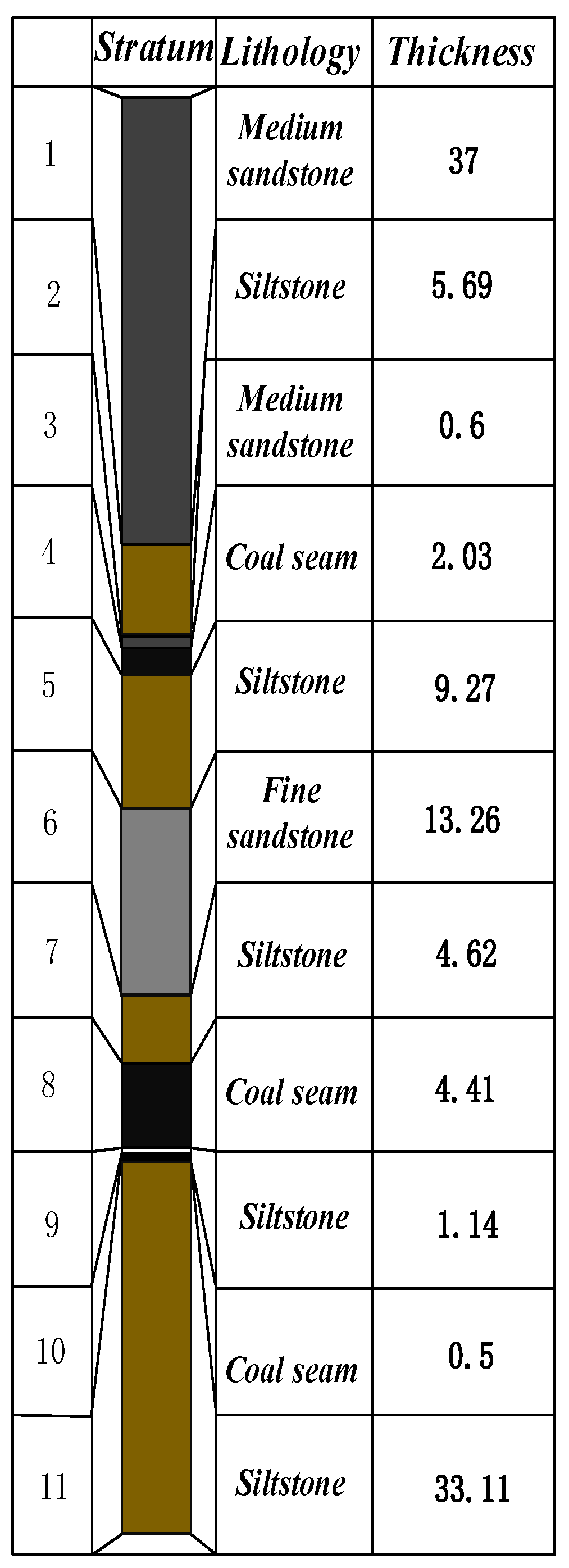
1. Introduction
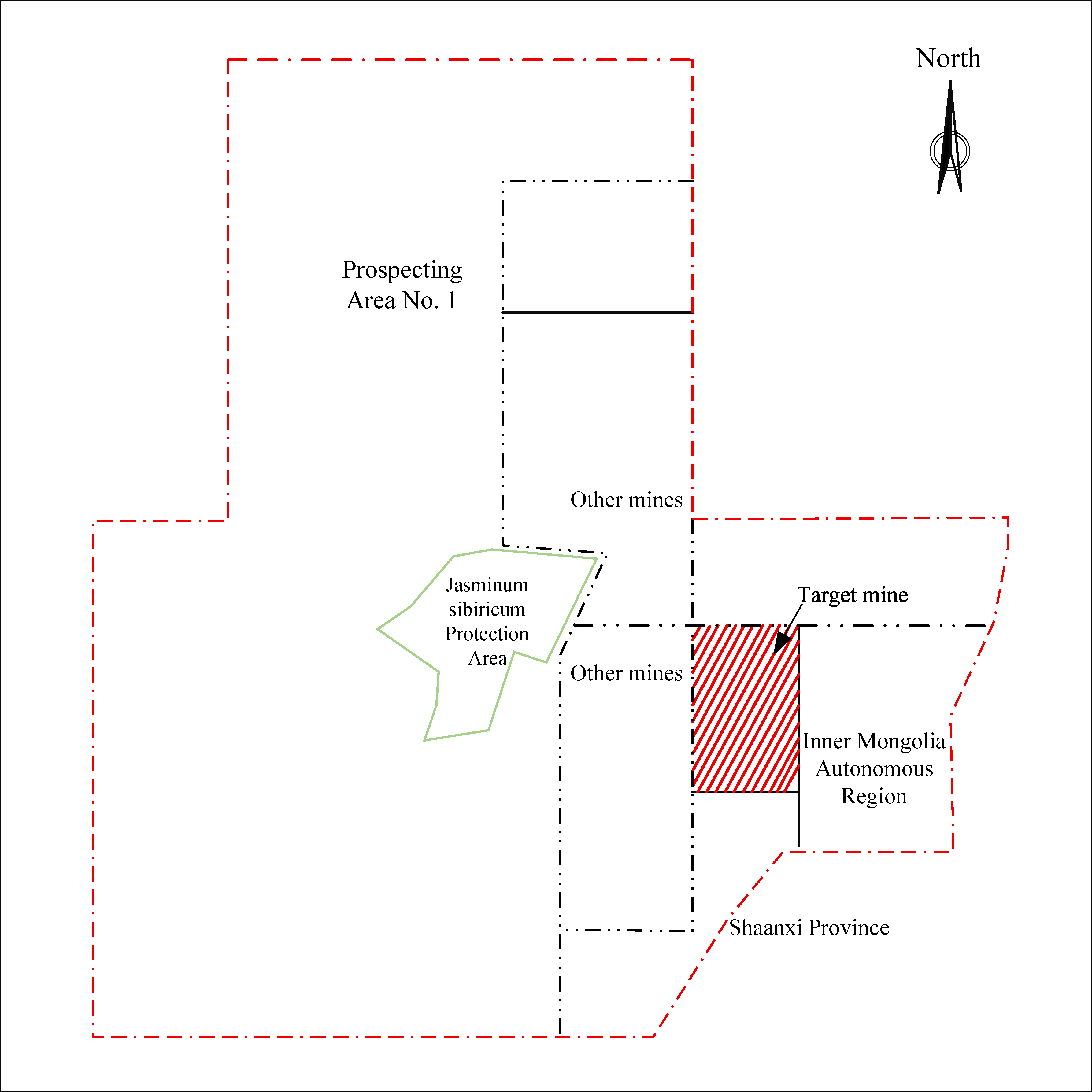
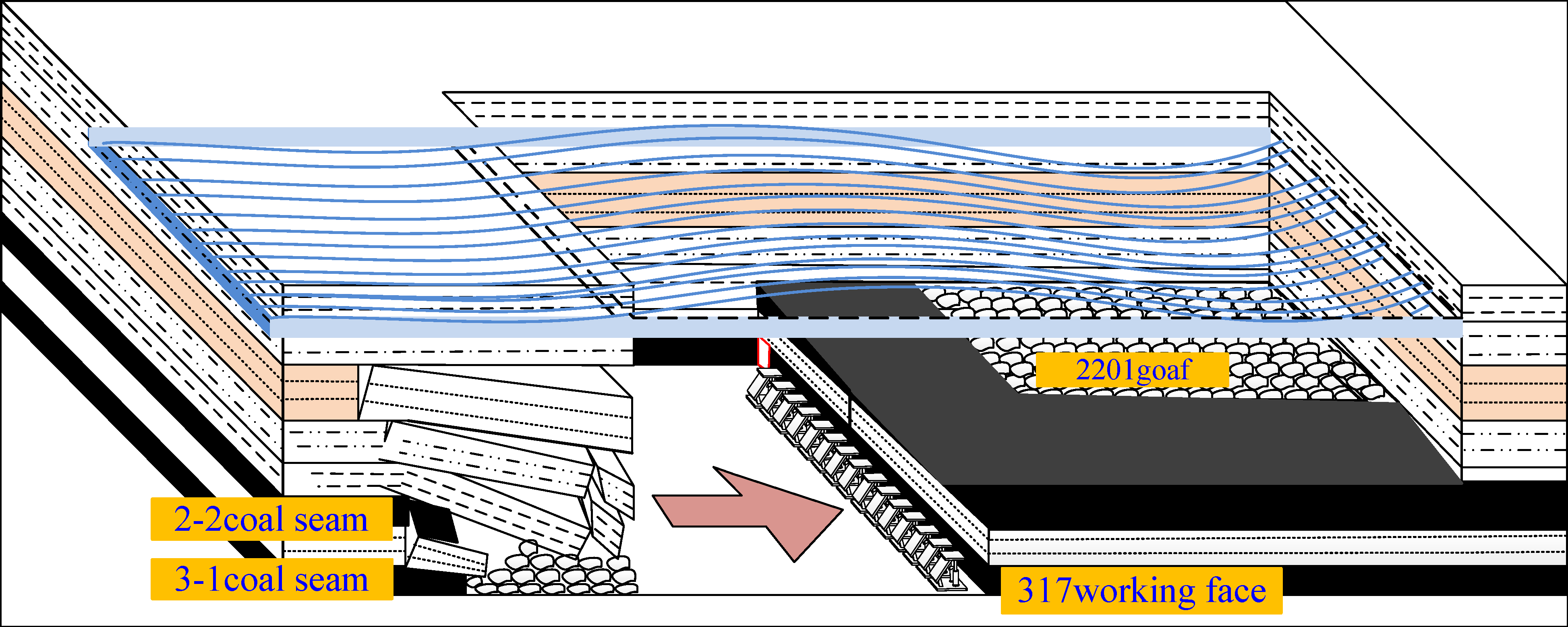
2. Overview of Mining
3. Mechanical Criteria for Roof “Activation” and Instability in Close-Spaced Coal Seam Mining
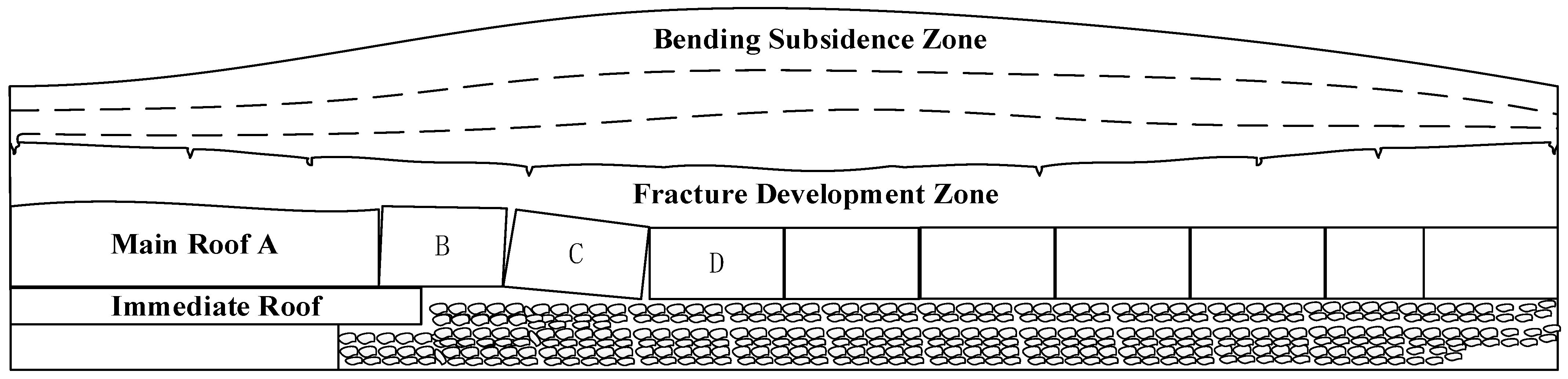
3.1. Two-Zone Calculation
3.2. Mechanical Identification of Roof Reactivation in the 221 Goaf
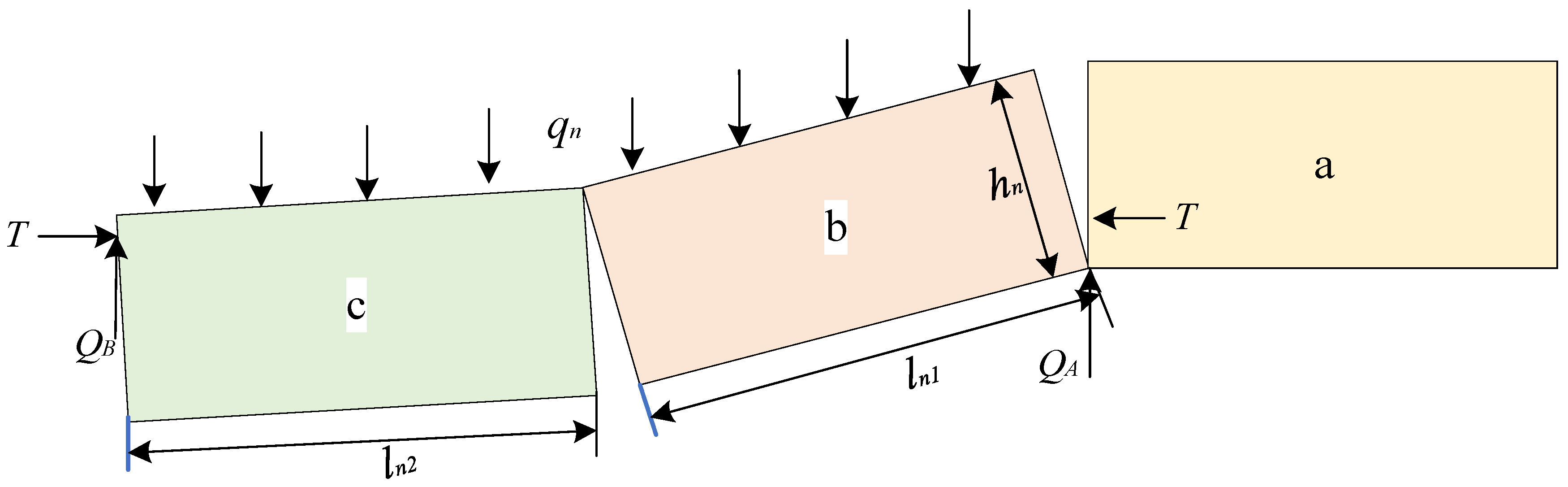
3.3. Force Analysis of the Broken Block
4. Determination of Fundamental Mechanical Properties of the Coal Seam Roof
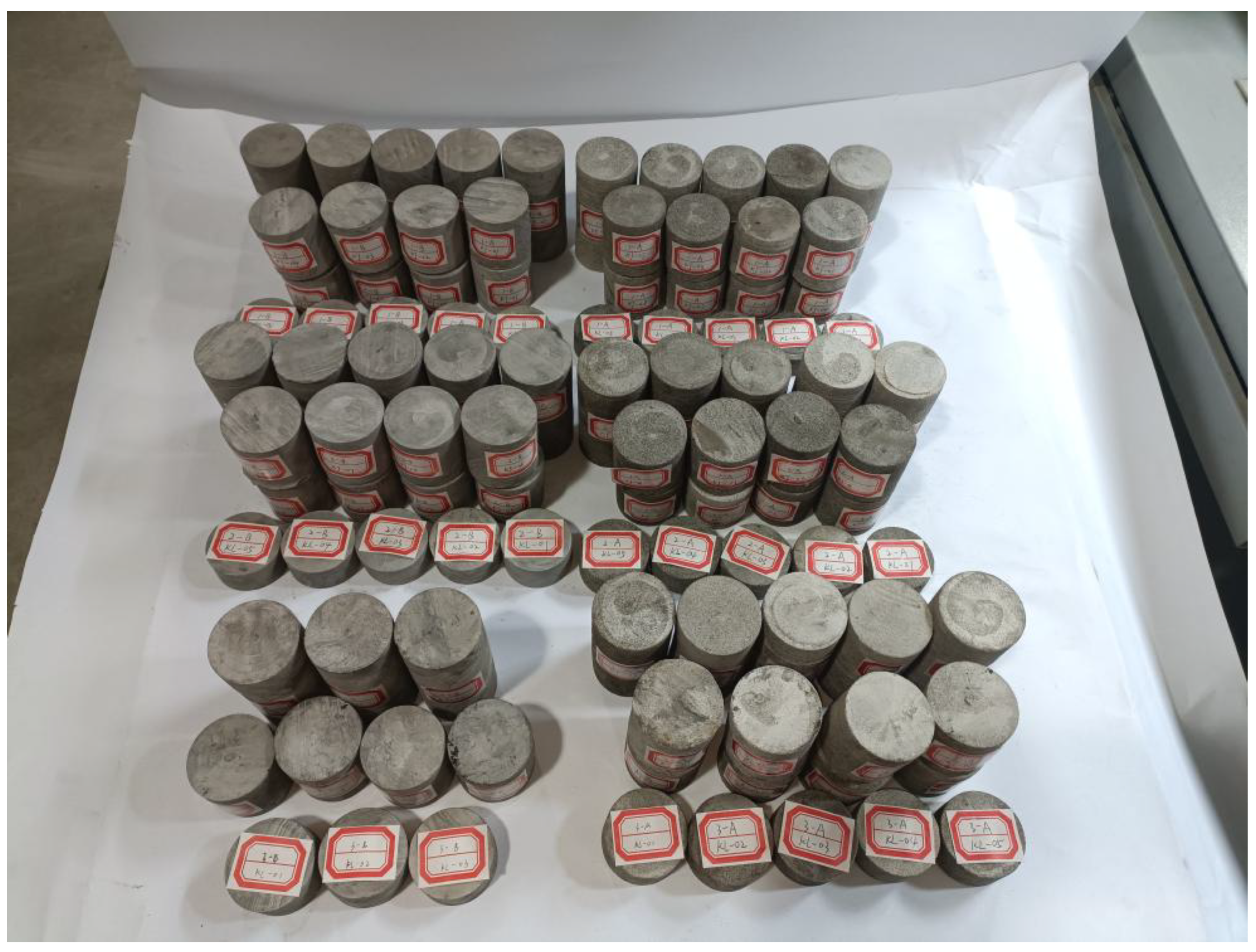
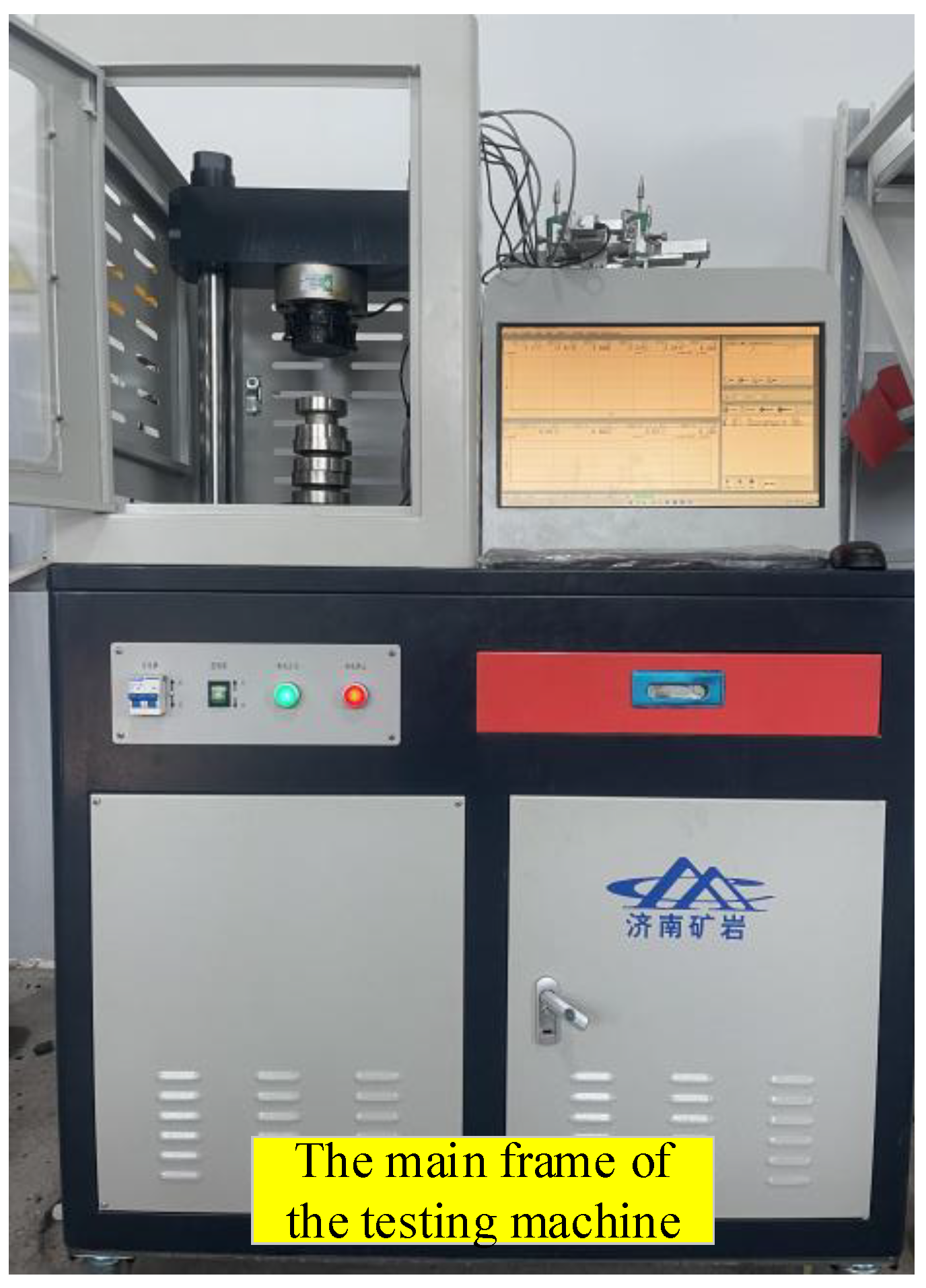
4.1. Preparation of Coal-Rock Block Specimens and Testing Apparatus
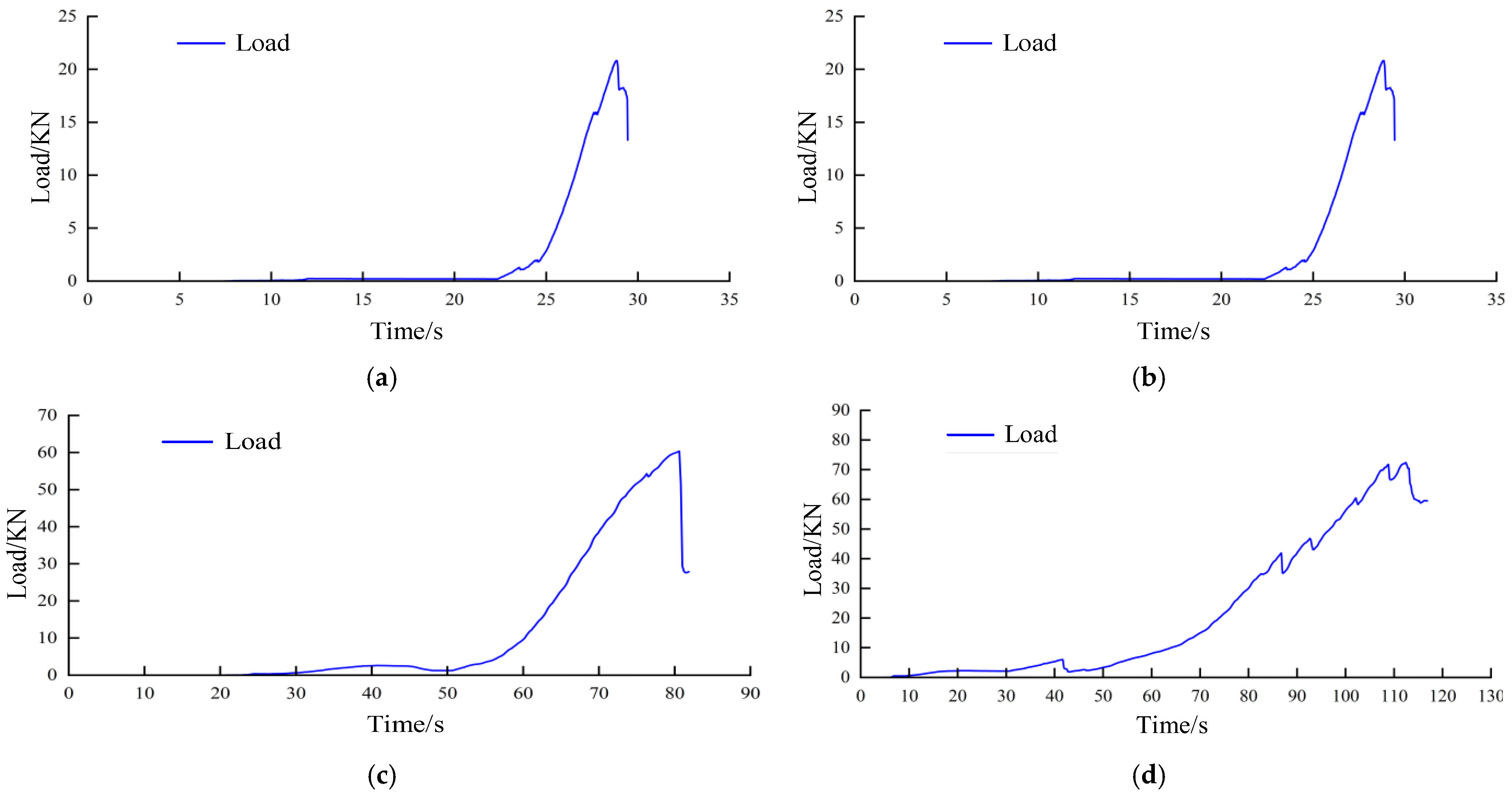
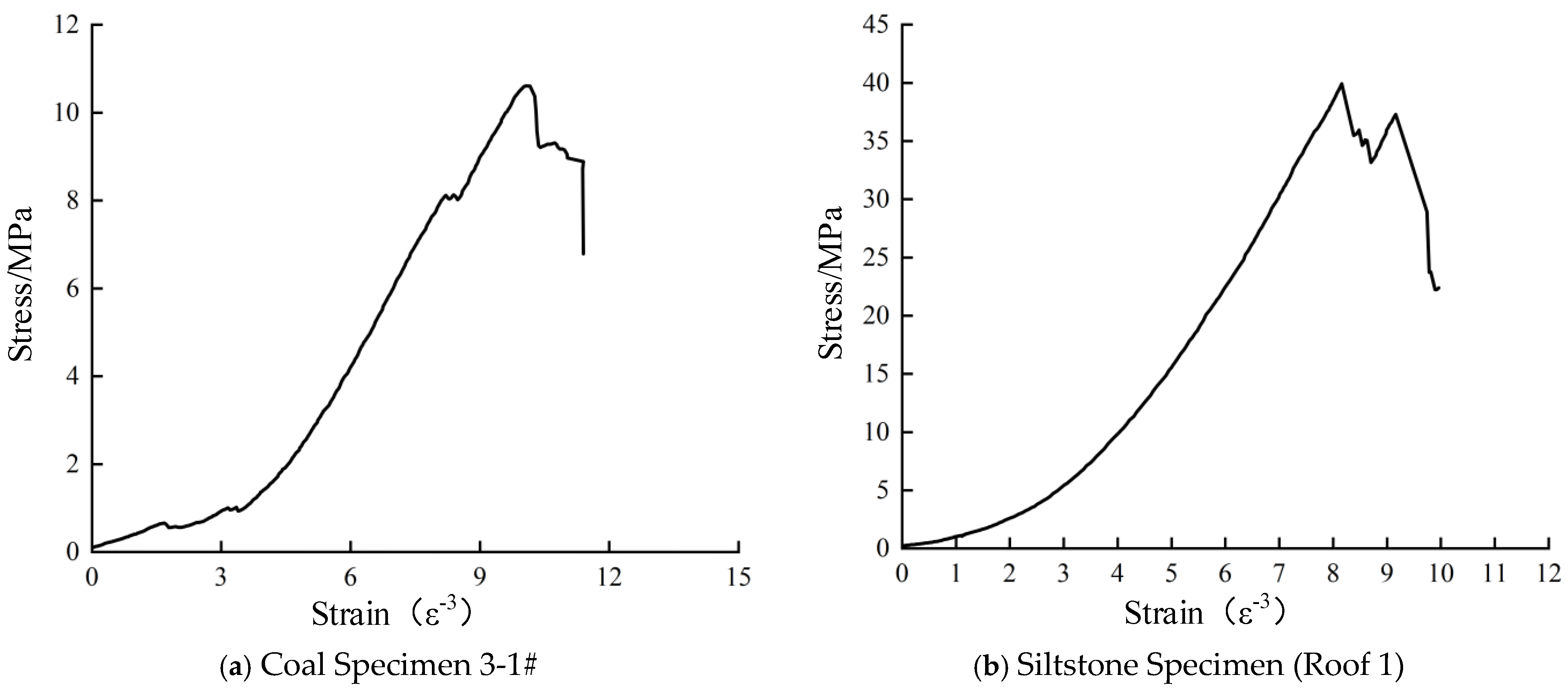
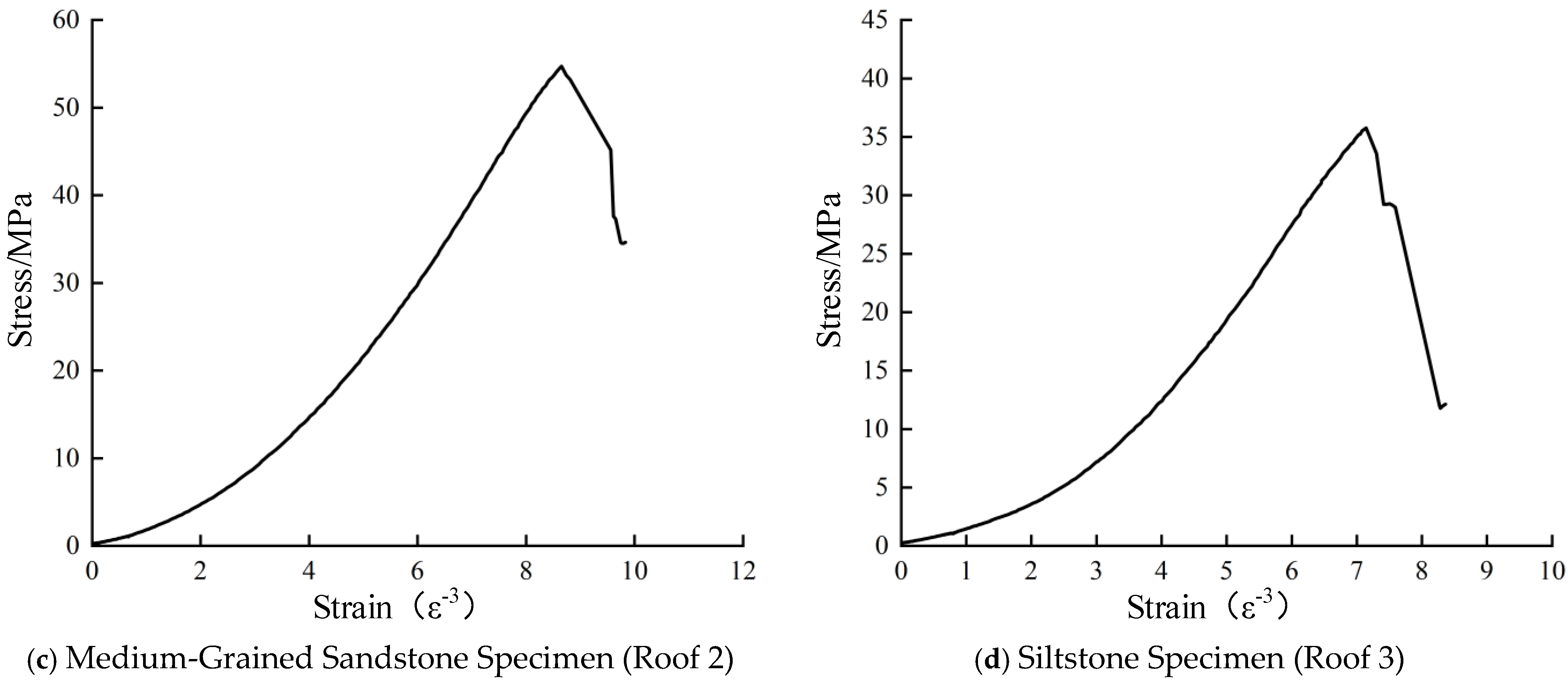
4.2. Analysis of Compressive Strength Testing for Coal and Rock Specimens
4.3. Strength Test Results of Coal and Rock Specimens
5. Research on the Development Pattern of the Mining Roof Based on 3DEC Numerical Simulation
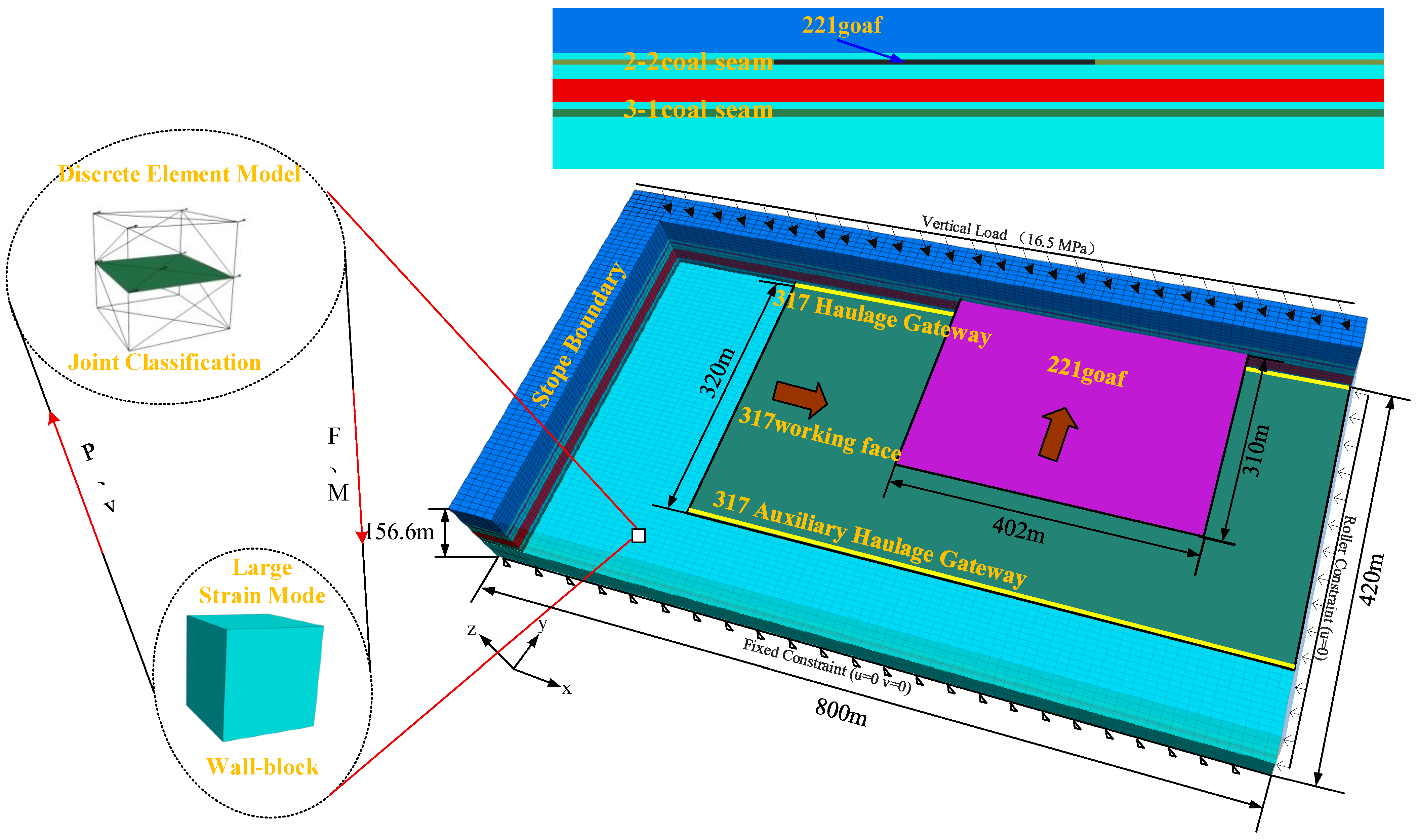
5.1. Model Building
- Initial In Situ Stress Equilibrium: The model was first brought to an initial equilibrium state under gravitational loading (self-weight) to establish the virgin in situ stress field before any mining activities.
- Extraction of the Upper Seam (221 Coal Seam): The 221 coal seam was excavated to simulate the formation of the overlying goaf. The model was allowed to reach a new equilibrium state, capturing the primary disturbance and the resulting settled state of the overburden.
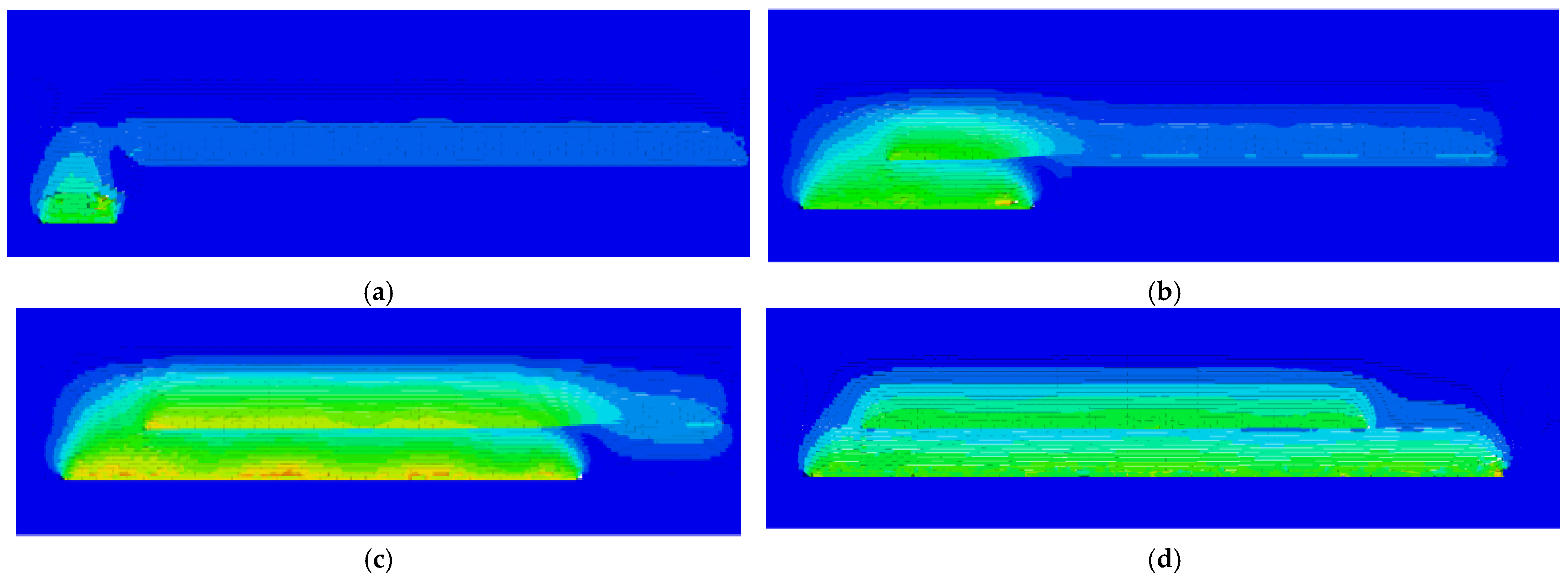
- Stepwise Advancement of the 317 Working Face: The 317 working face was excavated progressively to capture the dynamic evolution of the strata. Initial Step: An advance of 50 m from the open-off cut. Subsequent Steps: Three increments of 200 m each, totaling a 650 m advance. After each advancement, stress equilibrium calculations were performed. Throughout this process, key metrics were monitored, including vertical and horizontal stress, strata displacement, and the vertical height and lateral extent of the plastic failure zone.
5.2. Vertical Displacement Distribution of the Roof in the 221 Goaf During the Recovery Period of the 317 Working Face
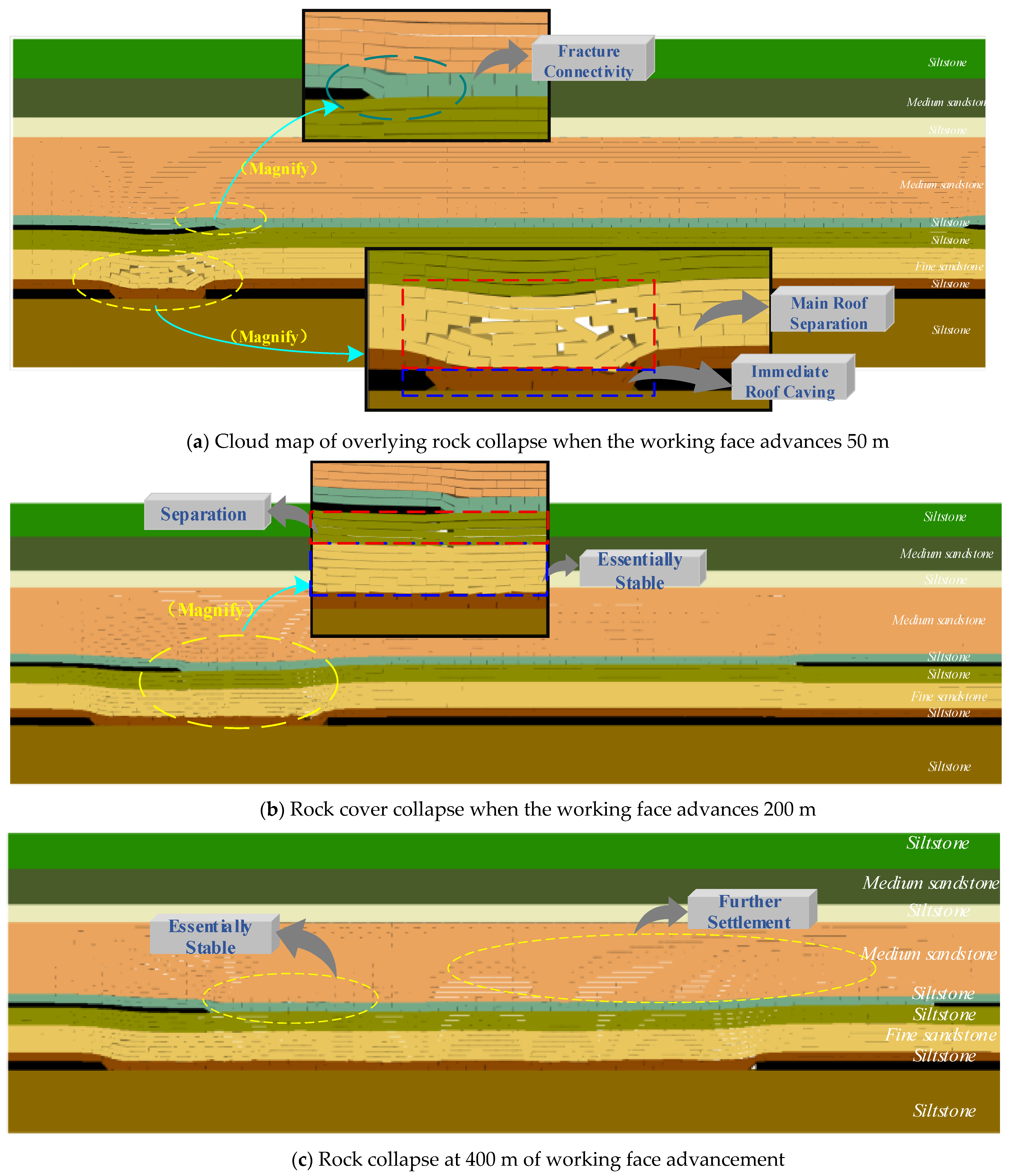
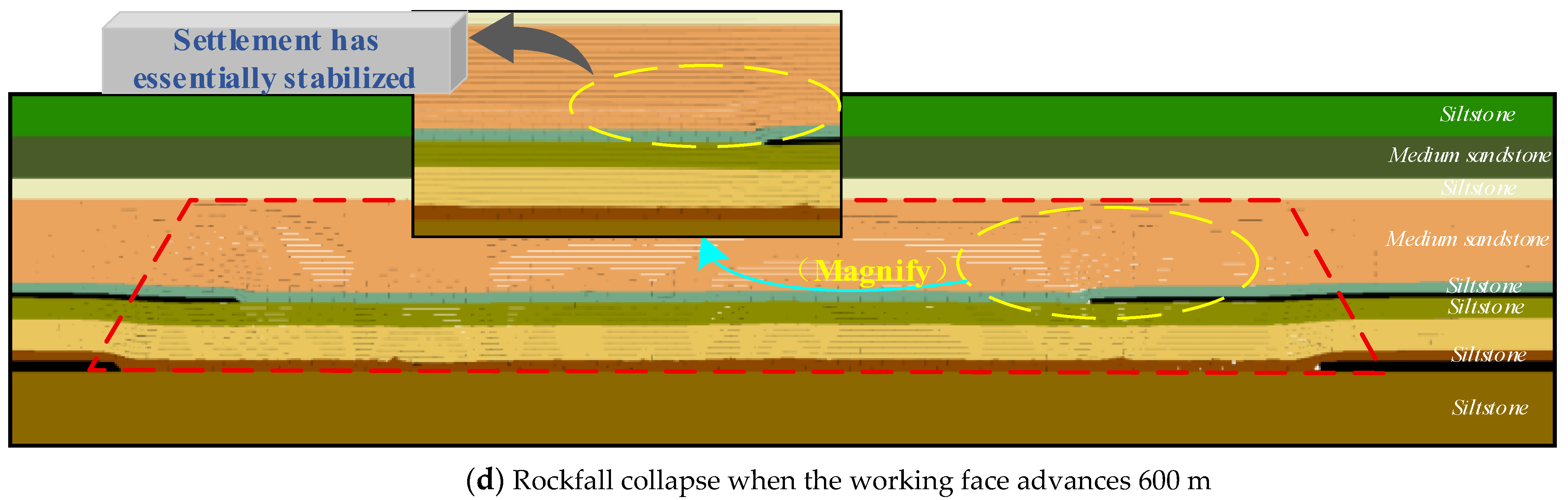
5.2.1. The Distribution Characteristics of the Collapse
5.2.2. Conclusions
5.2.3. Vertical Displacement Contour Plot
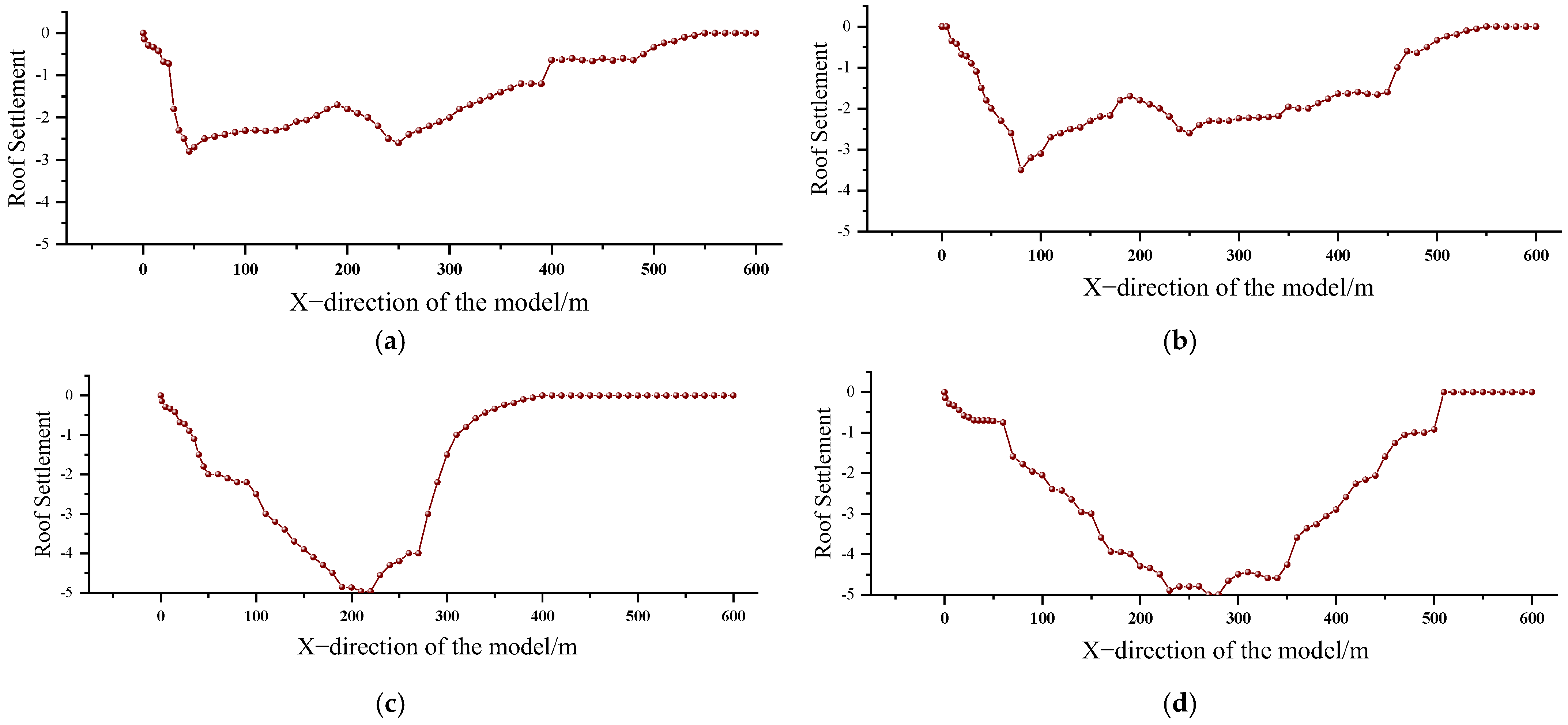
5.2.4. Vertical Displacement Contour Plot Analysis
5.2.5. Conclusions
5.3. Vertical Stress Distribution of the Roof During the Recovery of the 317 Working Face
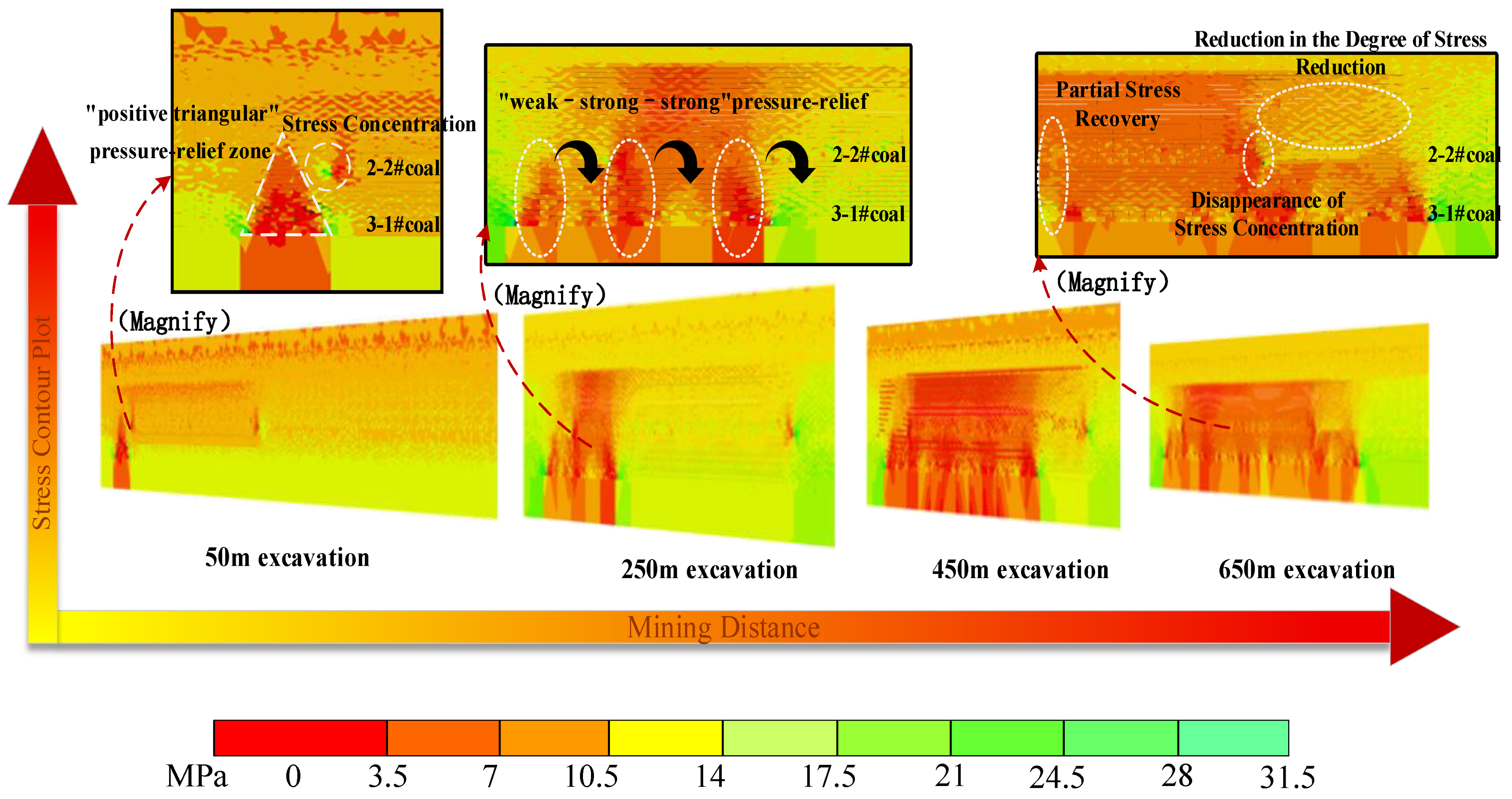
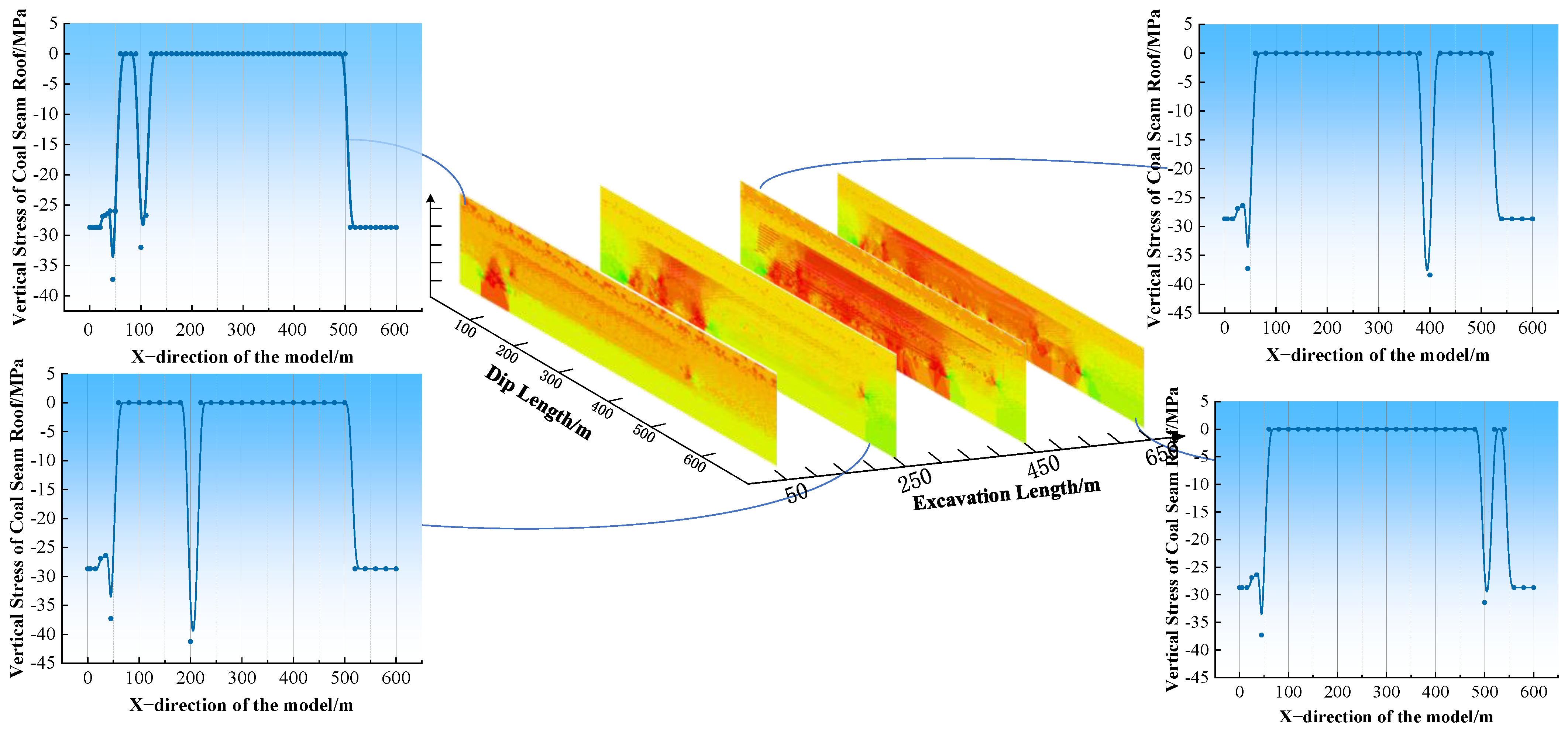
5.3.1. Vertical Stress Distribution of the Roof Analysis
5.3.2. Conclusions
5.4. Study on the Water Seepage Law of the Working Face Roof
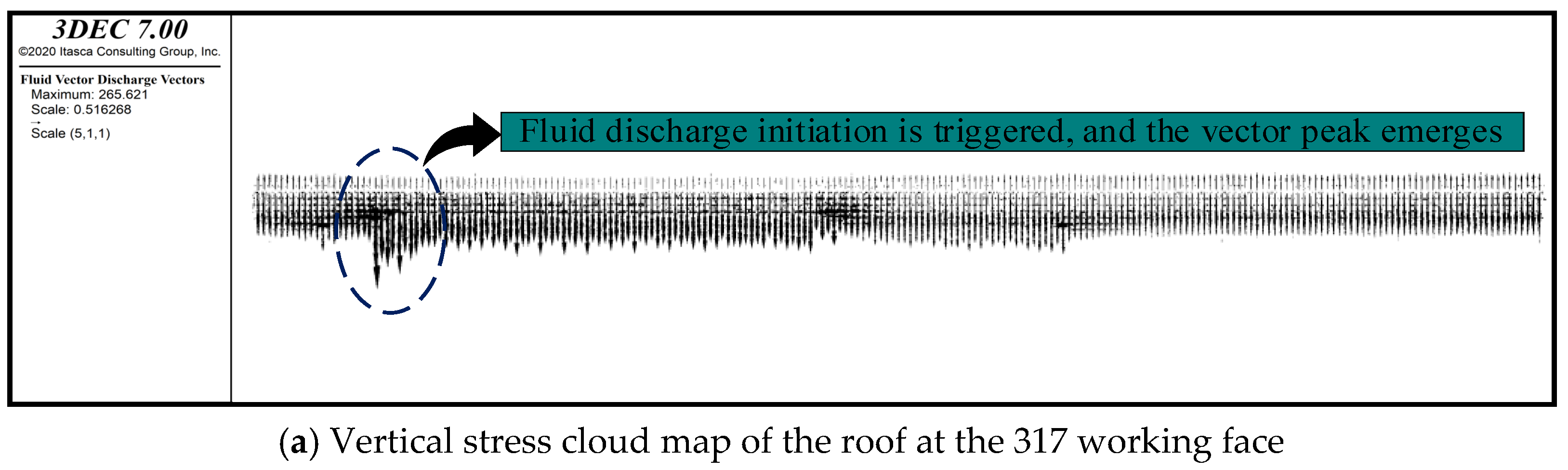
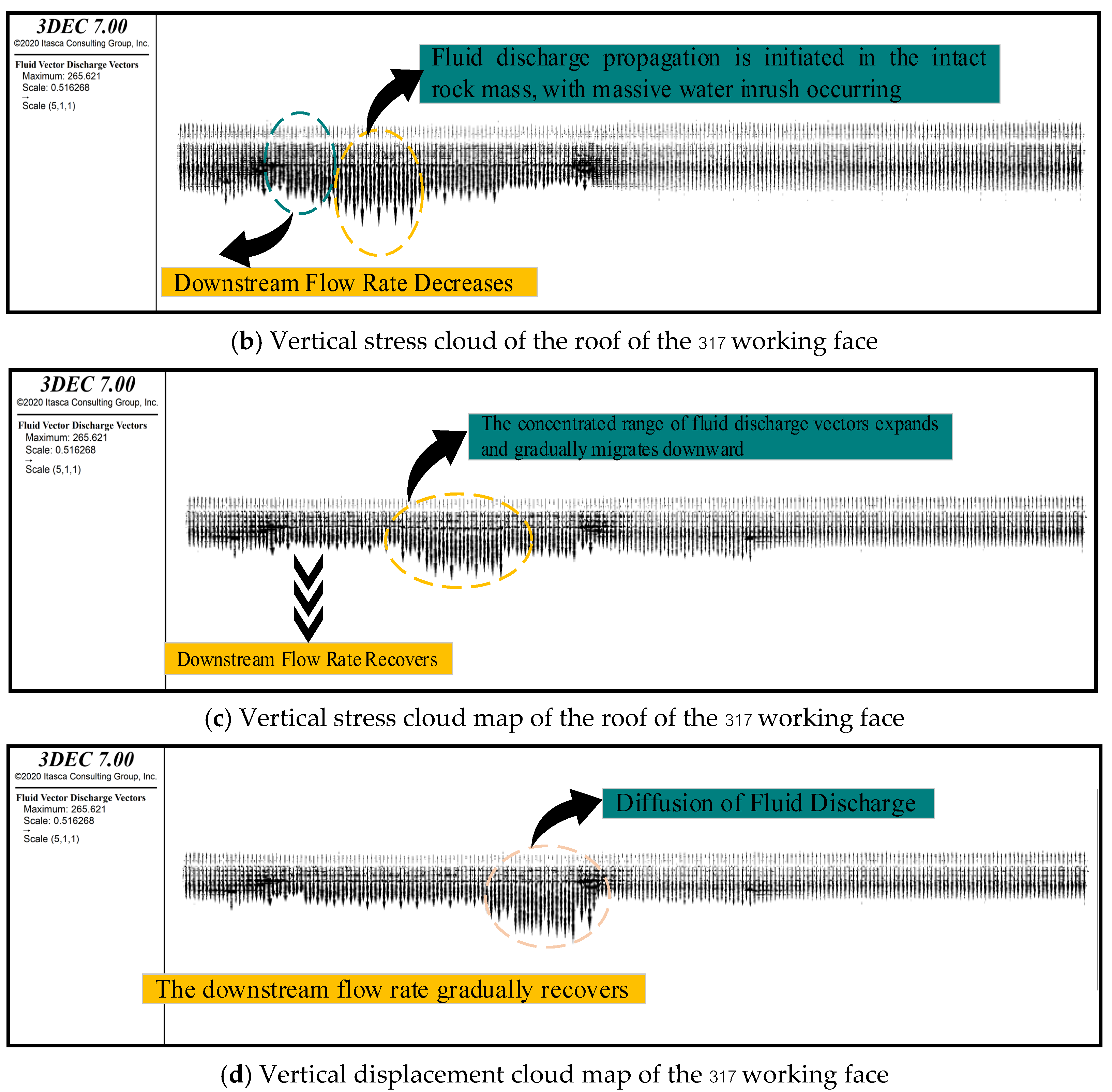
5.4.1. The Evolution of Fluid Discharge Vectors Analysis
- Stage I: Fluid Initiation
- Stage II: Migration within the Rock-Beam Structure
- Stage III: Migration within a Stable Plastic Rock Mass
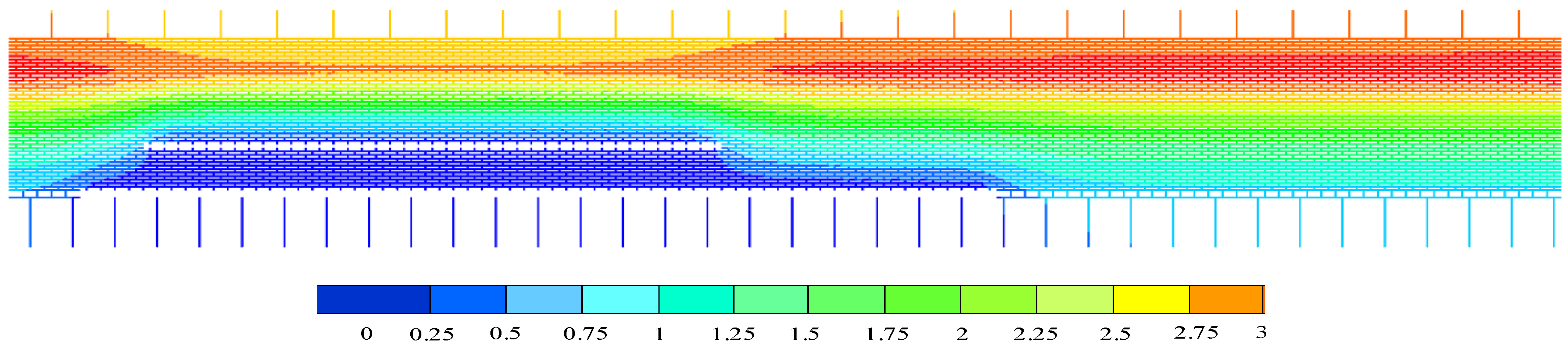
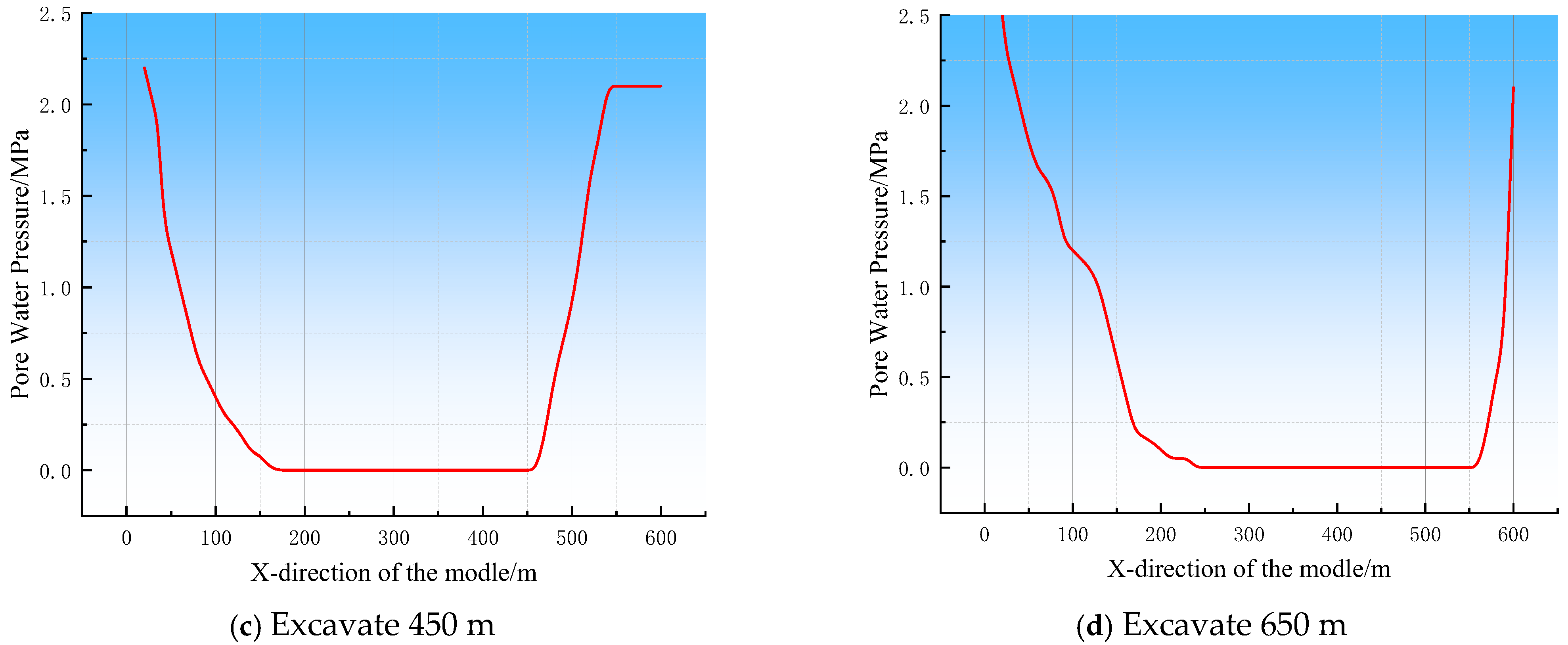
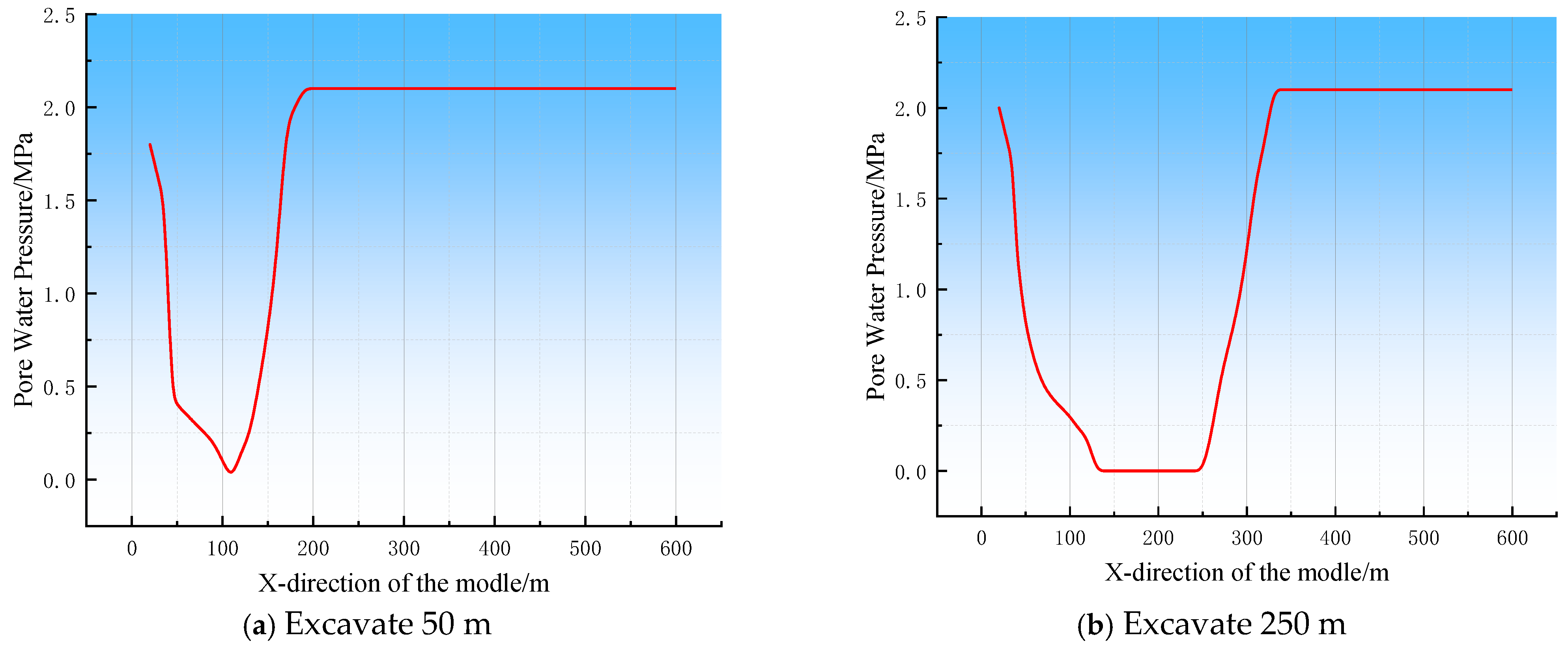
5.4.2. The Contour Maps of Joint Pore Water Pressure Analysis
- Initial Stage: Hinged Cantilever Beam Formation
- Intermediate Stage: Fluid Propagation in the Rock-Beam Structure
- Final Stage: Migration within a Stable Plastic Rock Mass
5.4.3. Conclusions
6. Engineering Verification
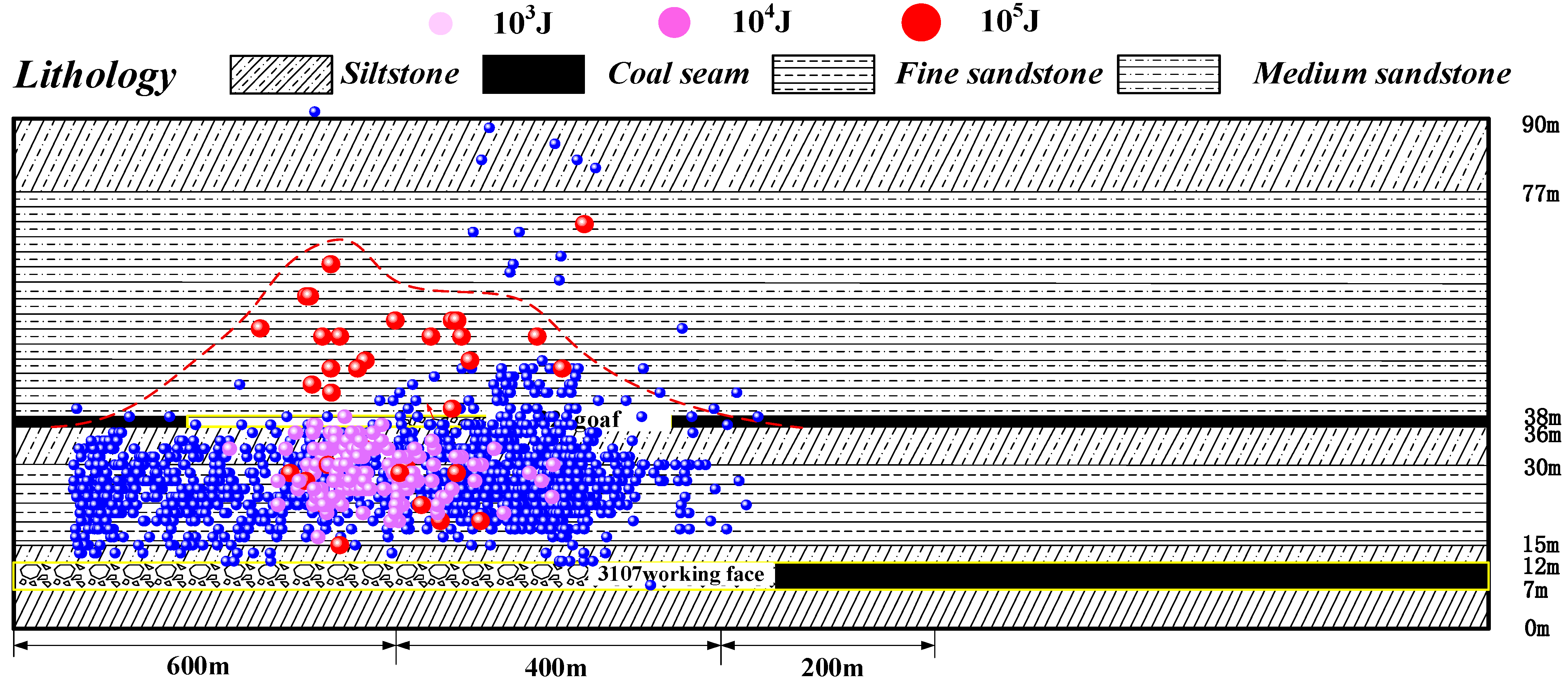
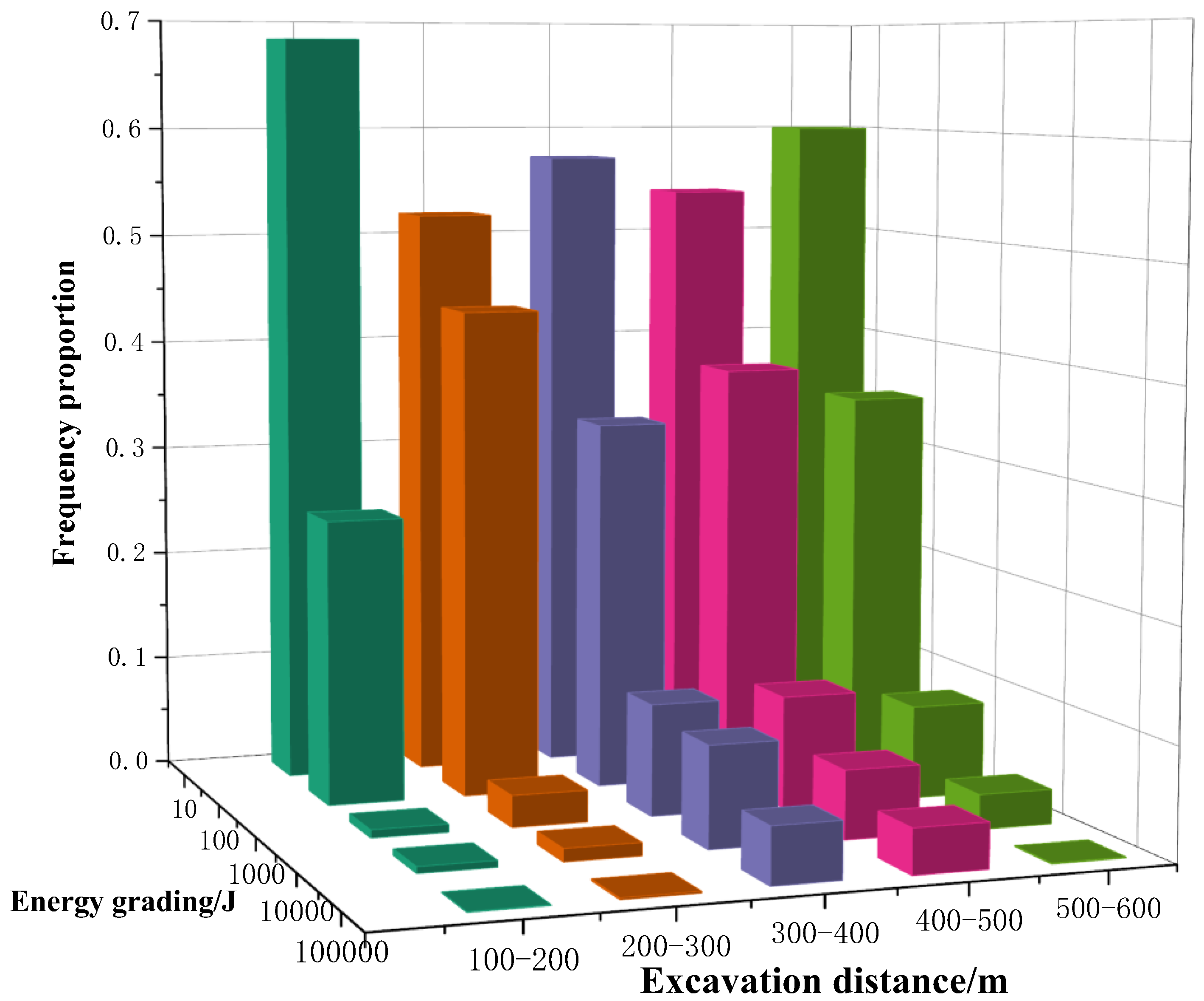
6.1. Microseismic Monitoring Analysis
- Spatial Distribution and Energy Characteristics
- Strata Impact and Hydrological Risk
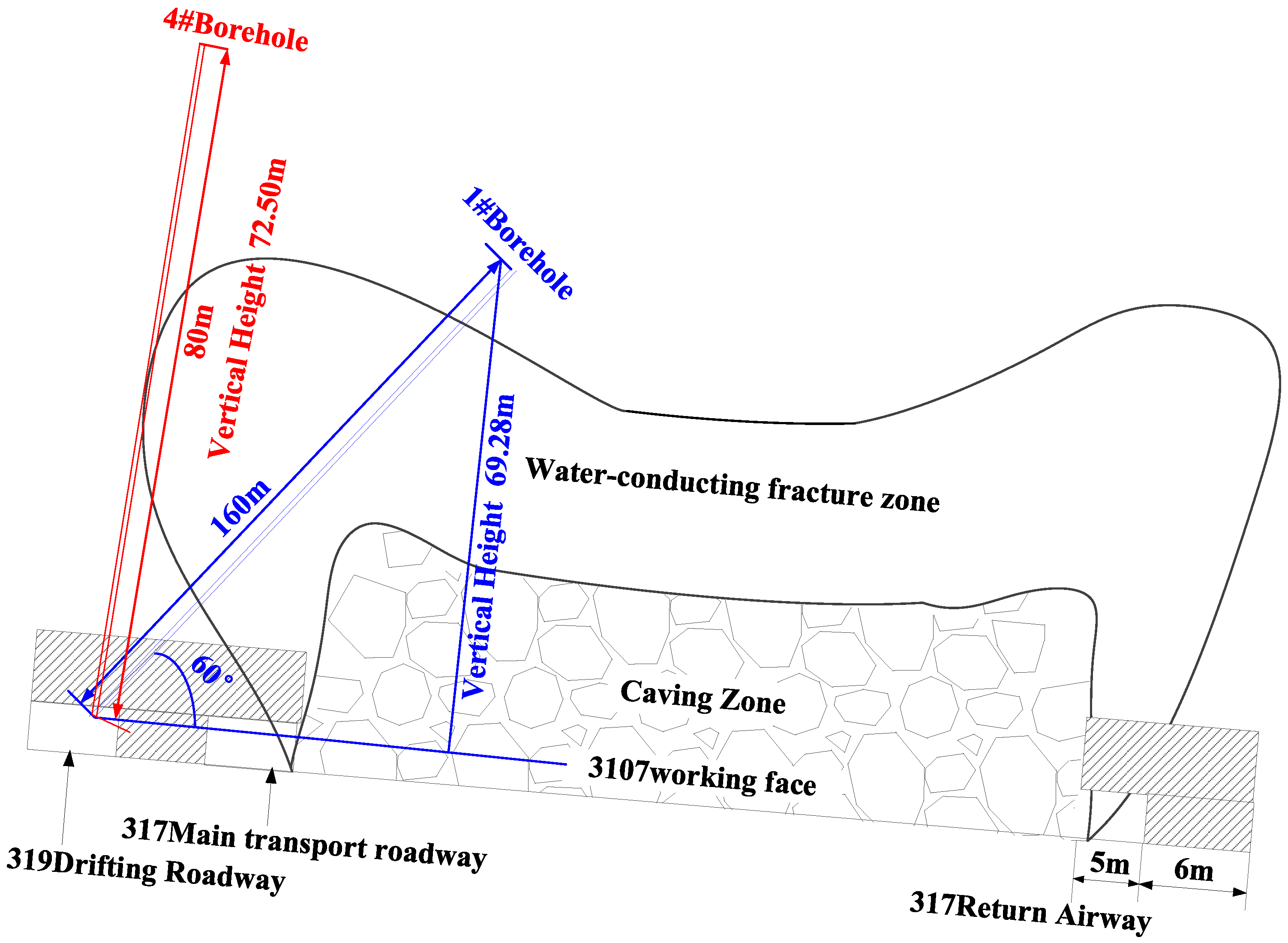
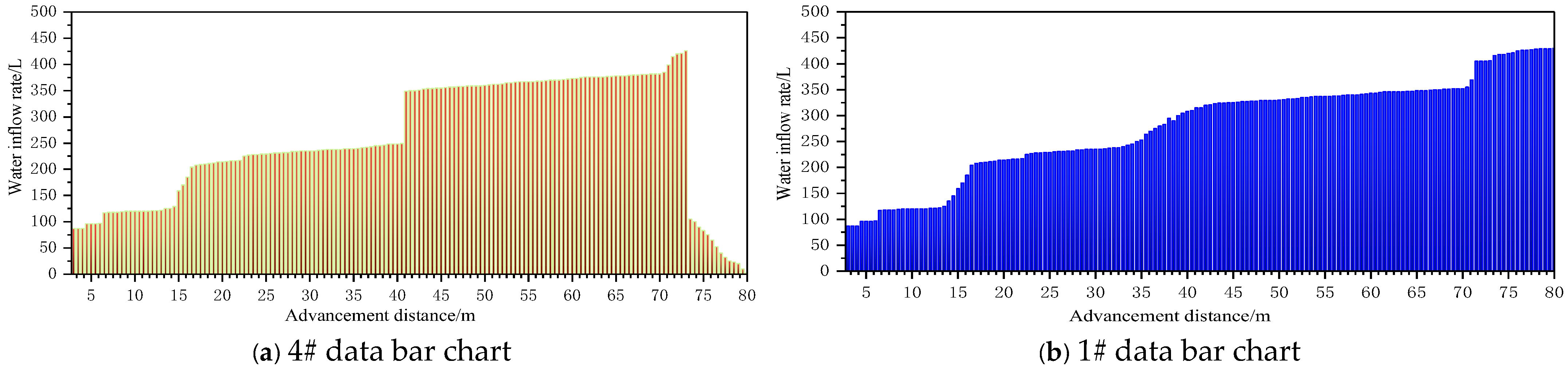
6.2. Borehole Peeping Analysis
- Comparative Analysis: Borehole No. 1
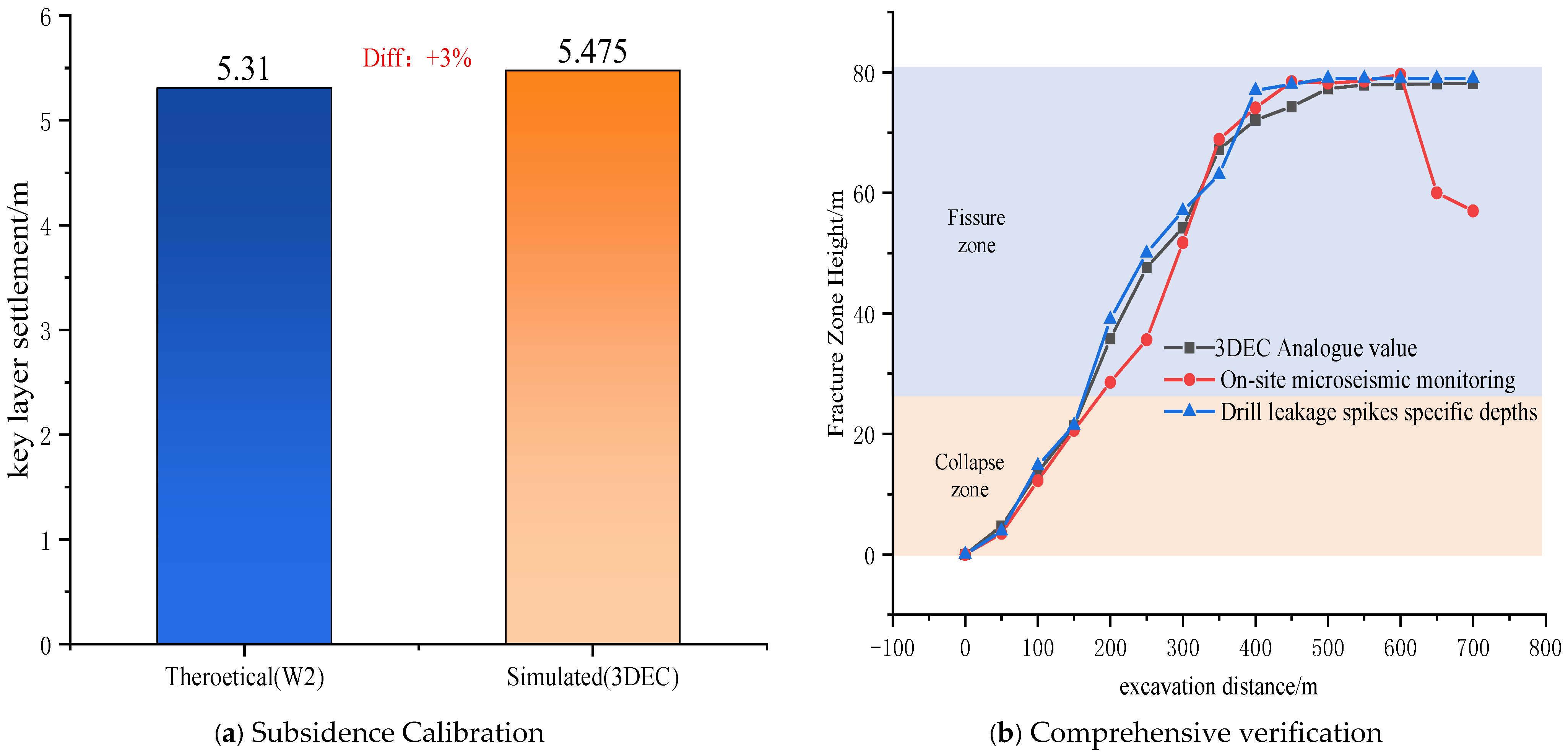
6.3. Numerical Simulation and Field Monitoring Validation
7. Conclusions and Limitations
7.1. Conclusions
- For the lower coal seam, the subsidence of the key rock block associated with the failure of the low-position fine-grained sandstone key stratum satisfies 3.17 m < W1 = 4.61 m < 18 m. For the 3-1# coal seam, the subsidence of the key rock block resulting from the failure of the mid-position medium-grained sandstone key stratum satisfies 3.17 m < W2 = 5.31 m < 69.6 m. These results indicate that during extraction of the 3-1# coal seam, fracture of the mid-position fine-grained sandstone key stratum in the basic roof of the overburden leads to “reactivated” instability of the key rock blocks.
- Mining-induced fracture initiation and propagation trigger strata reactivation. As the distance to the center of the goaf decreases, the subsidence of the overburden increases, ultimately resulting in a “trapezoidal” bending deformation pattern. Competent overlying strata above the 317 working face exert a significant controlling effect. This structural stiffness suppresses the expansion of both the caving zone and the water-conducting fracture zone, restricting the maximum subsidence to 5.475 m. During extraction, the stress field undergoes a distinct evolution: it transitions from an initial “regular triangular” pressure-relief zone into a tripartite “weak–strong–strong” distribution. As the working face continued to advance, fluid discharge in the spatially connected and overlapping zone between the 317 working face and the 221 goaf increased sequentially, exhibiting an “alternating” pattern of vector peak evolution. This behavior indicates that rock mass damage zones significantly enhance the potential for water inrush.
- Within the 300–500 m range, numerous low-energy microseismic events were recorded, together with multiple fourth-order (104 J) and fifth-order (105 J) energy events. Events with energies of 104 J and 105 J occurred most frequently, indicating large-scale fracturing above the upper working face and the occurrence of secondary fracturing. The primary concentration zone of microseismic activity migrated upward from the low-level strata—comprising approximately 3 m of siltstone and 3–29 m of fine-grained sandstone above the lower coal seam—to the 29–50 m siltstone layer. These observations demonstrate that secondary excavation activities affected the aquifer, and that the associated water-inrush hazard poses a direct threat to the working face.
7.2. Control Strategies
- Source control: Pre-drain aquifers (e.g., via floor pre-drainage or directional drilling) to reduce stress concentration at key strata fracture points—lowering water-inrush intensity at its origin.
- Structural stabilization: Apply paste filling in rigid rocks (e.g., medium-grained sandstone, siltstone) to create buffer zones. This suppresses subsidence, limits the height of the water-conducting fracture zone, prevents water inflow into the goaf, and forms a functional water-resisting barrier.
- Roadway reinforcement: Increase support strength to enhance intrinsic resistance to water inrush and mitigate its mechanical impact on roadways.
7.3. Limitations
- The findings derive from one gently inclined coal seam in Northwest China; applicability to steeply inclined seams remains unverified.
- 3DEC modeling assumes homogeneous blocks and statistical joint distributions—potentially missing local geological anomalies.
- Microseismic data identify fracture zones, but the link between seismic energy and permeability evolution is still qualitative; no quantitative damage–permeability–flow constitutive relationship has been established.
Author Contributions
Funding
Data Availability Statement
Conflicts of Interest
References
- Dawson, G.K.W.; Esterle, J.S. Controls on coal cleat spacing. Int. J. Coal Geol. 2010, 82, 213–218. [Google Scholar] [CrossRef]
- Mark, C. An Updated Empirical Model for Ground Control in U.S. Multiseam Coal Mines. Int. J. Min. Sci. Technol. 2021, 31, 163–174. [Google Scholar] [CrossRef]
- Bukowski, P. Water Hazard Assessment in Active Shafts in Upper Silesian Coal Basin Mines. Mine Water Environ. 2011, 30, 302–311. [Google Scholar] [CrossRef]
- Sun, Z.; Bao, W.; Li, M. Comprehensive Water Inrush Risk Assessment Method for Coal Seam Roof. Sustainability 2022, 14, 10475. [Google Scholar] [CrossRef]
- Saadat, M.; Khishvand, M.; Seccombe, A. FLAC3D Simulation of Caving Mechanism and Strata Fracture Response in Underground Mining. Mining 2024, 4, 818–840. [Google Scholar] [CrossRef]
- Miao, Y. Study on the failure law of overlying rock under coal seam in close distance coal seam and feasibility discrimination of upward mining. Sci. Rep. 2025, 15, 40924. [Google Scholar] [CrossRef]
- Odintsov, E.; Zhao, Z.; Gusev, V.; Wang, K.; Wang, W. Integrated Physical and Numerical Assessment of the Formation of Water-Conducting Fracture Zones in Deep Ore Mines with Structural Faults. Mining 2026, 6, 10. [Google Scholar] [CrossRef]
- Nagy, N. Seismic Vulnerability Assessment of Non-Overflow Concrete Gravity Dam Section. IOP Conf. Ser. Earth Environ. Sci. 2024, 1396, 012012. [Google Scholar] [CrossRef]
- Odintsov, E.E.; Gusev, V.N. Rock Mass Condition Control by the Method of Predicting of Water-conducting Fracture Zone Parameters for the Deposits of Polymetallic Ores. Int. J. Eng. 2026, 39, 1326–1333. [Google Scholar] [CrossRef]
- Armah, A.; Whajah, J.; Annankra, J.A. The geomechanical behavior of mine waste rock slopes under climate-induced stressors: A global perspective. J. Eng. Comput. Sci. 2025, 4, 454–466. [Google Scholar]
- Mark, C.; Chase, F.E.; Pappas, D.M. Analysis of Multiple Seam Stability. In Proceedings of the International Conference on Ground Control in Mining, Morgantown, WV, USA, 31 July–2 August 2007; pp. 5–18. [Google Scholar]
- Ghabraie, B.; Ren, G.; Barbato, J.; Smith, J.V. A predictive methodology for multi-seam mining induced subsidence. Int. J. Rock Mech. Min. Sci. 2017, 93, 280–294. [Google Scholar] [CrossRef]
- Wang, K.; Zhang, X.; Wang, Y.; Li, K.; Sun, J.; Zhou, A.; Du, F.; Guo, Y. Progressive failure analysis and fractures space model construction of overlying strata in shallow multi-seam overlapping mining. Eng. Fail. Anal. 2025, 173, 109462. [Google Scholar] [CrossRef]
- Yao, W.; Yu, J.; Liu, X.; Zhang, Z.; Feng, X.; Cai, Y. Experimental and theoretical investigation of coupled damage of rock under combined disturbance. Int. J. Rock Mech. Min. Sci. 2023, 164, 105355. [Google Scholar] [CrossRef]
- Zou, J.; Wang, M.; Bai, L.; Yan, C. Numerical study on migration of overlying strata and propogation of cracks during multi-coal seams mining. Front. Earth Sci. 2023, 11, 1326597. [Google Scholar] [CrossRef]
- Milsch, H.; Hofmann, H.; Blocher, G. An experimental and numerical evaluation of continuous fracture permeability measurements during effective pressure cycles. Int. J. Rock Mech. Min. Sci. 2016, 89, 109–115. [Google Scholar] [CrossRef]
- Wang, Y.; Chen, F.; Li, X.; Yin, X.; Lei, Y. The variable-mass seepage law of broken porous rock: An experimental study. Nat. Hazards Risk 2020, 11, 1991–2005. [Google Scholar] [CrossRef]
- Ma, K.; Wang, L.; Peng, Y.; Long, L.; Wang, S.; Chen, T. Permeability characteristics of fractured rock mass: A case study of the Dongjiahe coal mine. Nat. Hazards Risk 2020, 11, 1724–1742. [Google Scholar] [CrossRef]
- Yang, T.H.; Liu, J.; Zhu, W.C.; Elsworth, D.; Tham, L.G.; Tang, C.A. A coupled flow-stress-damage model for groundwater outbursts from an underlying aquifer into mining excavations. Int. J. Rock Mech. Min. Sci. 2007, 44, 87–97. [Google Scholar] [CrossRef]
- Jafari, A.; Babadagli, T. Relationship between percolation–fractal properties permeability of 2-Dfracture networks. Int. J. Rock Mech. Min. Sci. 2013, 60, 353–362. [Google Scholar] [CrossRef]
- Xiao, P.; Li, D.Y.; Zhao, G.Y.; Zhu, Q.Q.; Liu, H.X.; Zhang, C.S. Mechanical properties and failure behavior of rock with different flaw inclinations under coupled static and dynamic loads. J. Cent. South Univ. 2020, 27, 2945–2958. [Google Scholar] [CrossRef]
- Li, J.C.; Li, N.N.; Li, H.B.; Zhao, J. An SHPB test study on wave propagation across rock masses with different contact area ratios of joint. Int. J. Impact Eng. 2017, 105, 109–116. [Google Scholar] [CrossRef]
- Hu, T.; Hou, G.; Bu, S.; Zhu, Z.; Wang, Y.; Hu, Z.; Li, Z. A Novel Approach for Predicting the Height of Water-Conducting Fracture Zone under the High Overburden Caving Strength Based on Optimized Processes. Processes 2020, 8, 950. [Google Scholar] [CrossRef]
- Jiang, D.; Tang, Y.; Huang, W.; Hou, K.; Luo, Y.; Liu, J. Research on the Height of the Water-Conducting Fracture Zone in Fully Mechanized Top Coal Caving Face under Combined-Strata Structure. Sustainability 2022, 14, 13781. [Google Scholar] [CrossRef]
- Peng, S.S. Coal Mine Ground Control, 3rd ed.; Morgantown; John Wiley & Sons: Hoboken, NJ, USA, 2008. [Google Scholar]
- Qian, M.; Shi, P.; Xu, J. Mine Pressure and Rock Formation Control; China University of Mining and Technology Press: Xuzhou, China, 2010. [Google Scholar]
- Xu, J.; Lian, G.; Zhu, W. Surface subsidence in deep mining key strata to influence. J. Coal 2007, 32, 686–690. [Google Scholar]
- Xu, J.; Qian, M. Key strata movement of strata and surface movement influence study. J. Coal 2000, 25, 122–126. [Google Scholar]
- Maria, E.; Stavroulaki, M.E.; Liarakos, V.B. Dynamic analysis of a masonry wall with reinforced concrete lintels or tie-beams. Eng. Struct. 2012, 44, 23–33. [Google Scholar] [CrossRef]
- Kuang, T.; Li, Z.; Zhu, W.; Xie, J.; Ju, J.; Liu, J.; Xu, J. The impact of key strata movement on ground pressure behaviour in the Datong coalfield. Int. J. Rock Mech. Min. Sci. 2019, 119, 193–204. [Google Scholar] [CrossRef]
- Wang, J.C.; Wang, Z.H.; Tang, Y.S.; Li, M.; Chang, K.L.; Gong, H.; Xu, G.L. Experimental study on mining-induced dynamic impact effect of main roofs in deeply buried thick coal seams with weakly consolidated thin bed rock. Chin. J. Rock Mech. Eng. 2021, 40, 2377–2391. [Google Scholar]
- Tien, Y.M.; Kuo, M.C. A failure criterion for transversely isotropic rocks. Int. J. Rock Mech. Min. Sci. 2001, 38, 399–412. [Google Scholar] [CrossRef]
- Itasca Consulting Group. 3DEC—3-Dimensional Distinct Element Code, User’s Guide (Version 7.0); Itasca Consulting Group: Minneapolis, MN, USA, 2019. [Google Scholar]
- Huandong, P.; Fuxing, J. Application of Micro Seismic Technique in Emergency Management. In Proceedings of the 2010 IEEE International Conference on Emergency Management and Management Sciences, Beijing, China, 8–10 August 2010; IEEE: Piscataway, NJ, USA, 2010; pp. 472–475. [Google Scholar]
- Mao, H.; Xu, N.; Li, X.; Li, B.; Xiao, P.; Li, Y.; Li, P. Analysis of rockburst mechanism and warning based on microseismic moment tensors and dynamic Bayesian networks. J. Rock Mech. Geotech. Eng. 2023, 15, 2521–2538. [Google Scholar] [CrossRef]











| Rock Formation Names | Density/kg·m | Compressive Strength/MPa | Tensile Strength/MPa | Cohesion /MPa | Internal Friction Angle/° | Poisson’s Ratio | Elastic Modulus /GPa |
|---|---|---|---|---|---|---|---|
| Siltstone | 2574.0 | 52.8 | 2.5 | 10.3 | 31.4 | 0.2 | 7.7 |
| Fine-grained sandstone | 2407.0 | 53.0 | 6.2 | 17.0 | 34.8 | 0.2 | 8.9 |
| Siltstone | 2574.0 | 52.8 | 2.5 | 10.3 | 31.4 | 0.2 | 7.7 |
| Medium-grained sandstone | 2407.0 | 53.0 | 6.2 | 17.0 | 34.8 | 0.2 | 8.9 |
| Siltstone | 2574.0 | 52.8 | 2.5 | 10.3 | 31.4 | 0.2 | 7.7 |
| Medium-grained sandstone | 2407.0 | 53.0 | 6.2 | 17.0 | 34.8 | 0.2 | 8.9 |
| Siltstone | 2574.0 | 52.8 | 2.5 | 10.3 | 31.4 | 0.2 | 7.7 |
| 2-2 coal | 2597.0 | 21.1 | 1.3 | 6.3 | 31.7 | 0.3 | 3.7 |
| Siltstone | 2574.0 | 52.8 | 2.5 | 10.3 | 31.4 | 0.2 | 7.7 |
| Fine-grained sandstone | 2407.0 | 53.0 | 6.2 | 17.0 | 34.8 | 0.2 | 8.9 |
| Siltstone | 2574.0 | 52.8 | 2.5 | 10.3 | 31.4 | 0.2 | 7.7 |
| 3-1 Coal | 1390.0 | 12.8 | 0.6 | 2.4 | 28.4 | 0.2 | 3.3 |
| Siltstone | 2574.0 | 52.8 | 2.5 | 10.3 | 31.4 | 0.2 | 7.7 |
| Rock Strata | Normal Stiffness/GPa | Shear Stiffness GPa | Joint Cohesion/MPa | Joint Internal Friction Angle/MPa | Joint Tensile Strength/MPa |
|---|---|---|---|---|---|
| Siltstone | 13.3 | 8.3 | 1.6 | 35.0 | 1.0 |
| Fine-grained sandstone | 13.3 | 8.3 | 1.6 | 35.0 | 1.0 |
| Siltstone | 13.3 | 8.3 | 1.6 | 35.0 | 1.0 |
| Medium-grained sandstone | 13.3 | 8.3 | 1.6 | 35.0 | 1.0 |
| Siltstone | 13.3 | 8.3 | 1.6 | 35.0 | 1.0 |
| Medium-grained sandstone | 13.3 | 8.3 | 1.6 | 35.0 | 1.0 |
| Siltstone | 13.3 | 8.3 | 1.6 | 35.0 | 1.0 |
| 2-2 coal | 4.3 | 1.1 | 0.1 | 18.0 | 0.1 |
| Siltstone | 13.3 | 8.3 | 1.6 | 35.0 | 1.0 |
| Fine-grained sandstone | 13.3 | 8.3 | 1.6 | 35.0 | 1.0 |
| Siltstone | 13.3 | 8.3 | 1.6 | 35.0 | 1.0 |
| 3-1 Coal | 4.3 | 1.1 | 0.1 | 18.0 | 0.1 |
| Siltstone | 13.3 | 8.3 | 1.6 | 35.0 | 1.0 |
Disclaimer/Publisher’s Note: The statements, opinions and data contained in all publications are solely those of the individual author(s) and contributor(s) and not of MDPI and/or the editor(s). MDPI and/or the editor(s) disclaim responsibility for any injury to people or property resulting from any ideas, methods, instructions or products referred to in the content. |
© 2026 by the authors. Licensee MDPI, Basel, Switzerland. This article is an open access article distributed under the terms and conditions of the Creative Commons Attribution (CC BY) license.
Share and Cite
Liu, Y.; Li, H. Analysis of Secondary Fracture Law of Roof Strata and Water Inrush Potential in Close-Distance Coal Seam Mining. Mining 2026, 6, 14. https://doi.org/10.3390/mining6010014
Liu Y, Li H. Analysis of Secondary Fracture Law of Roof Strata and Water Inrush Potential in Close-Distance Coal Seam Mining. Mining. 2026; 6(1):14. https://doi.org/10.3390/mining6010014
Chicago/Turabian StyleLiu, Yun, and Hui Li. 2026. "Analysis of Secondary Fracture Law of Roof Strata and Water Inrush Potential in Close-Distance Coal Seam Mining" Mining 6, no. 1: 14. https://doi.org/10.3390/mining6010014
APA StyleLiu, Y., & Li, H. (2026). Analysis of Secondary Fracture Law of Roof Strata and Water Inrush Potential in Close-Distance Coal Seam Mining. Mining, 6(1), 14. https://doi.org/10.3390/mining6010014