
Estimating Brain Health from Facial Expressions: An Exploratory Study

 , ,
, ,
Abstract
1. Study I: Development of Digital Technology to Estimate Standardized Brain Health from Facial Expressions
1.1. Introduction
1.2. Materials and Methods
1.2.1. Participants
1.2.2. BHQ Indicators
1.2.3. MRI Data Acquisition
1.2.4. MRI Data Analysis
1.3. Analysis
- (a)
- MRI brain imaging
- (b)
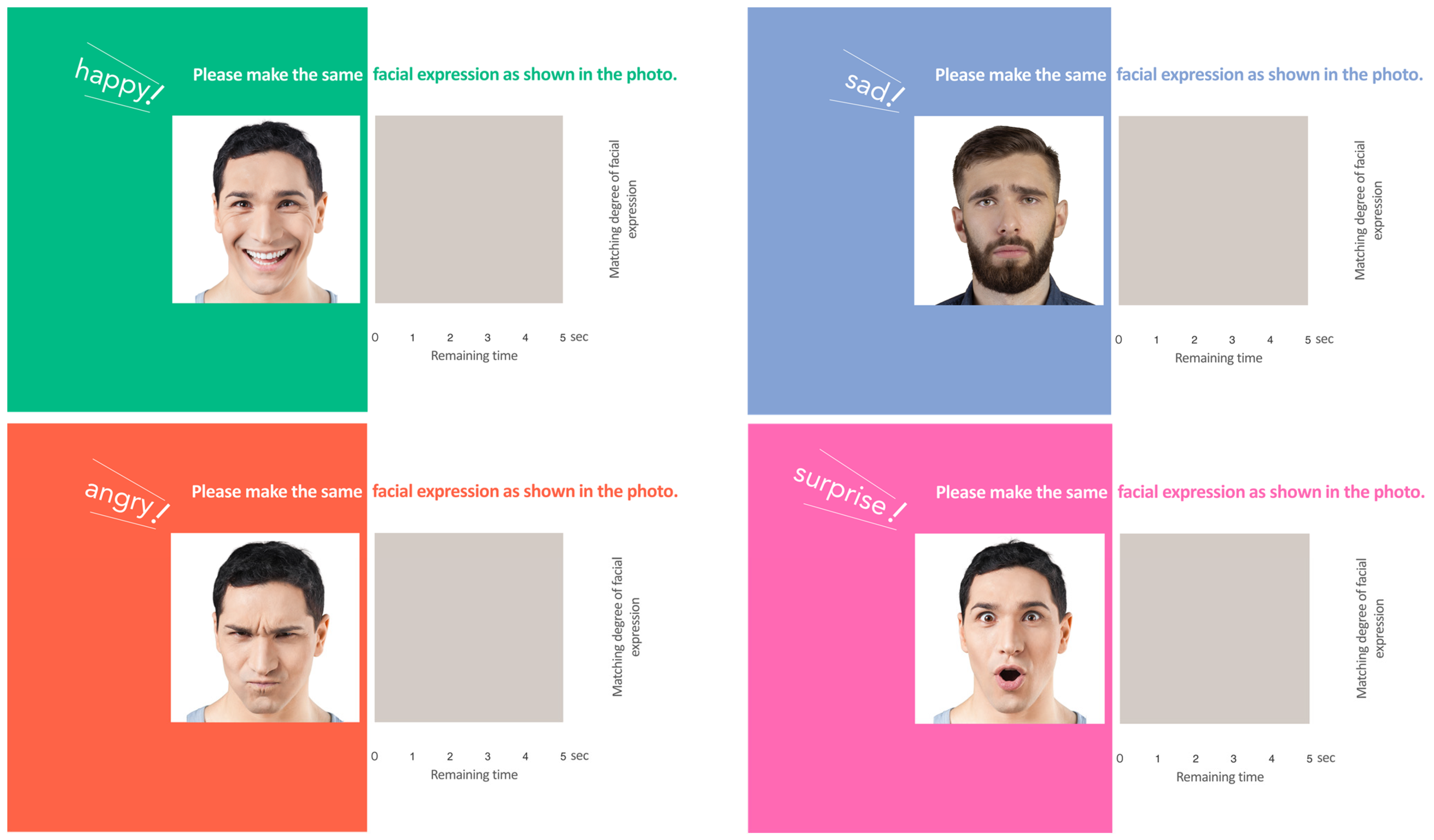
- Facial expression measurement
- (a)
- BHQ from MRI brain images
- (b)
- Facial expression measurement data
1.4. Results
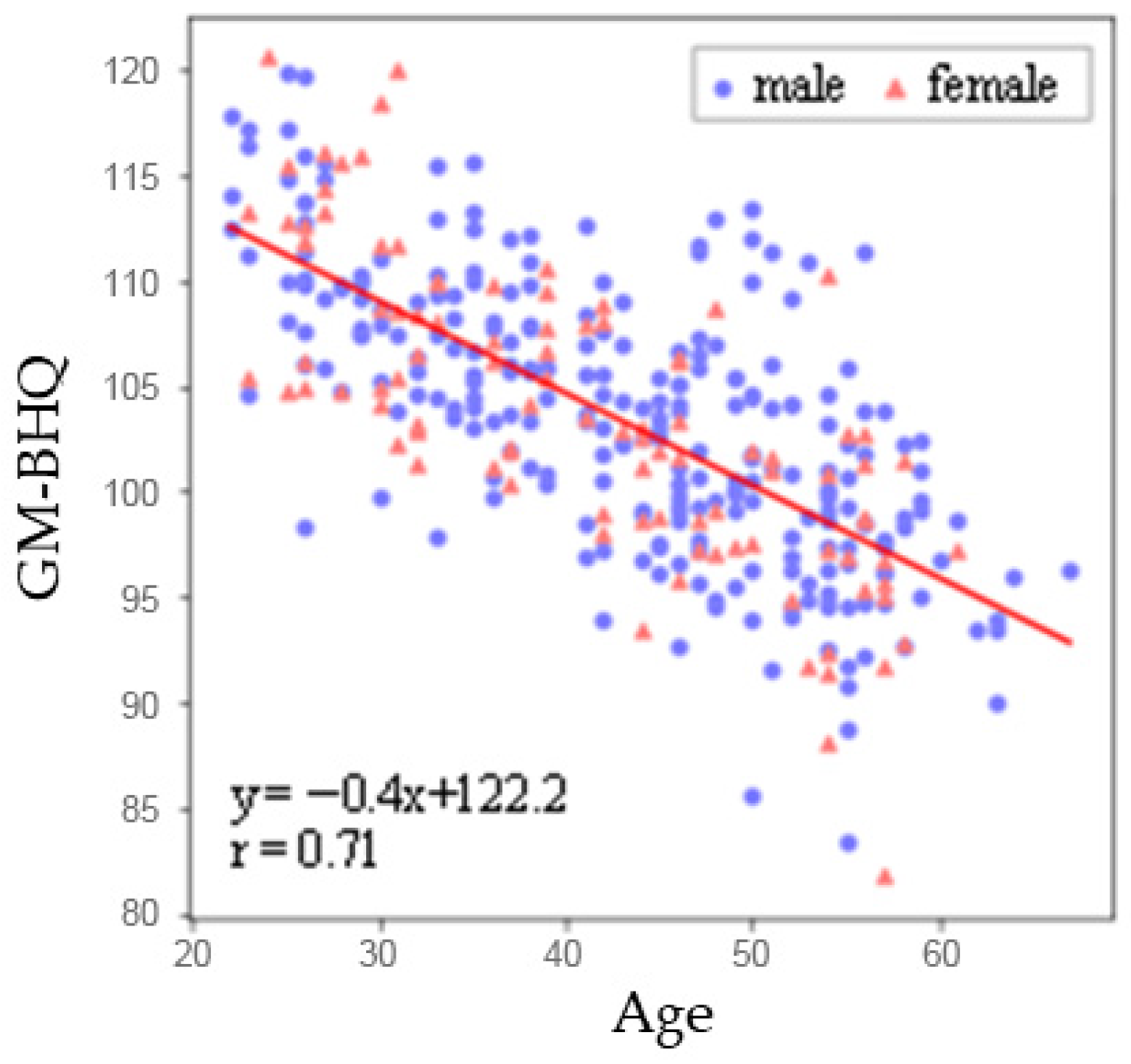
1.4.1. Association Between BHQ and Age
1.4.2. Building a BHQ Estimation Model
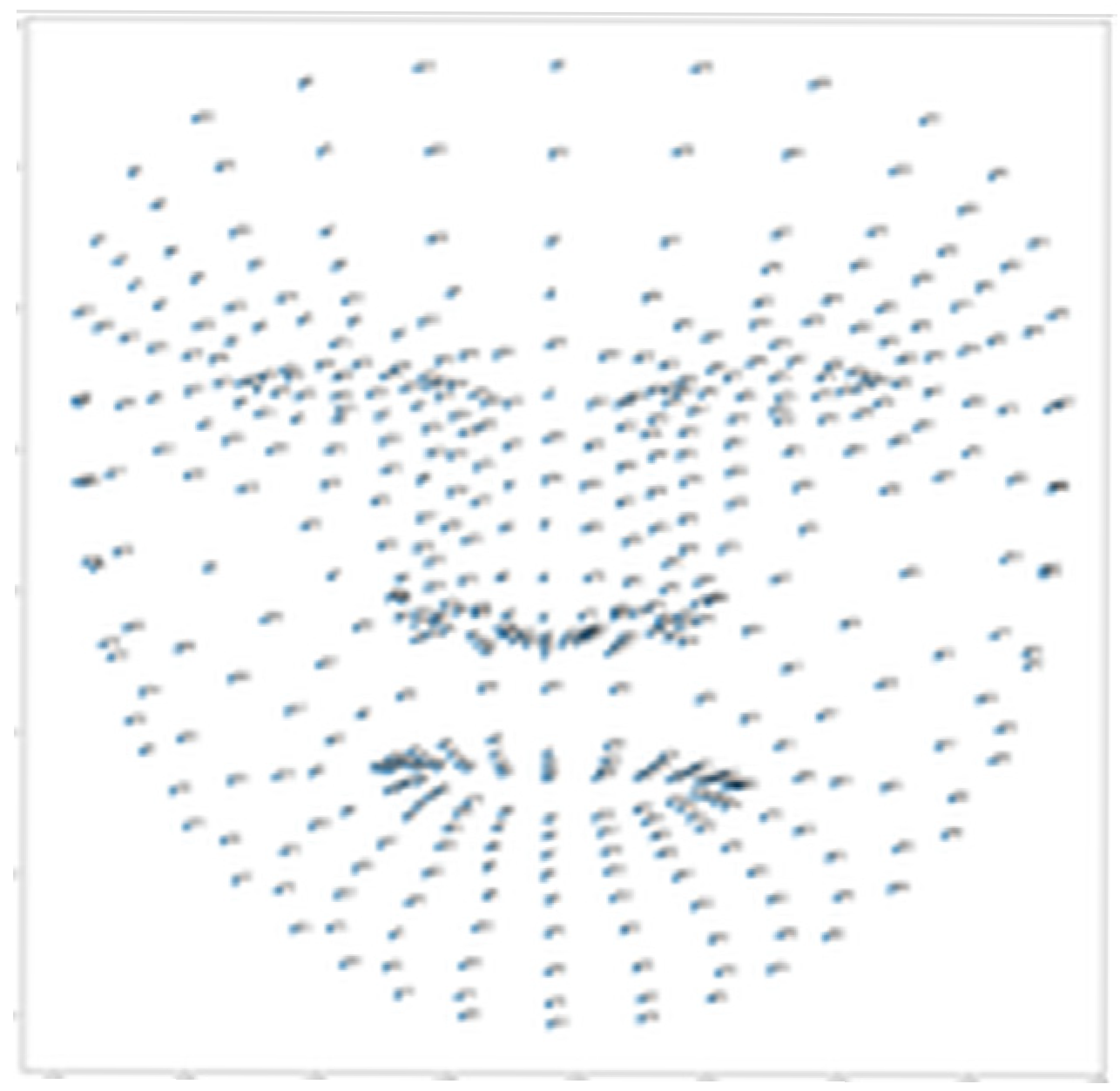
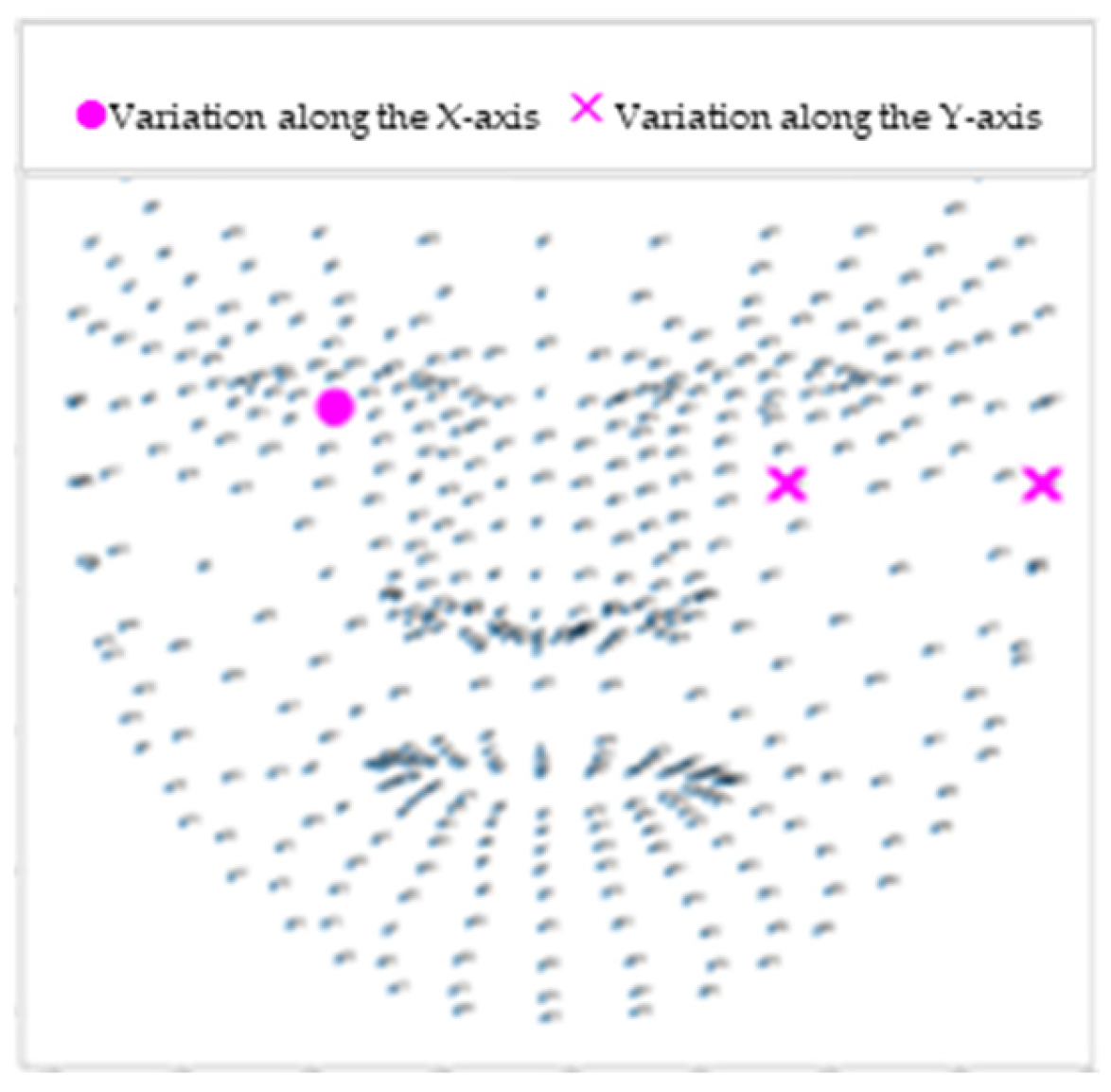
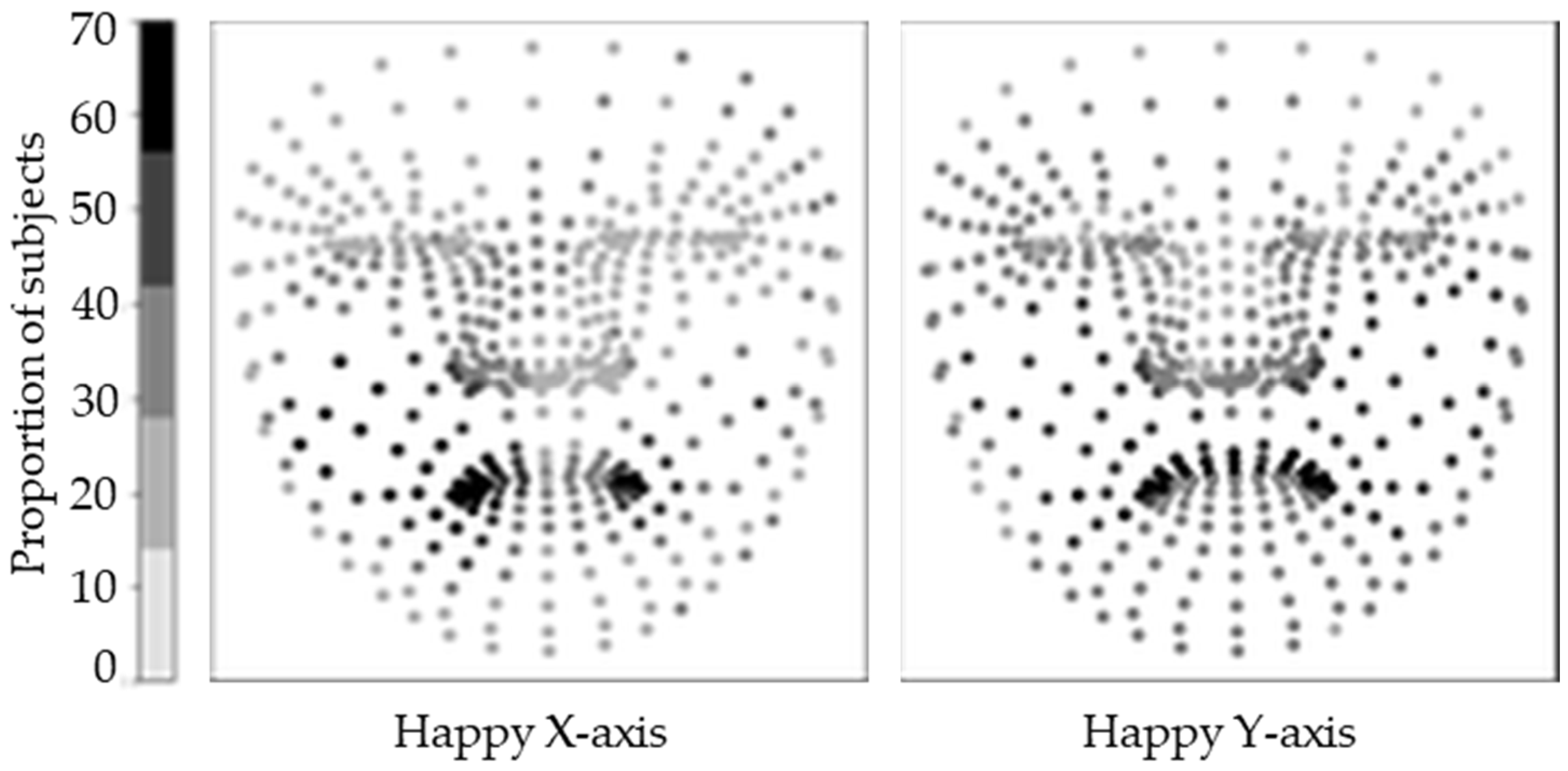
1.4.3. Extracted Features
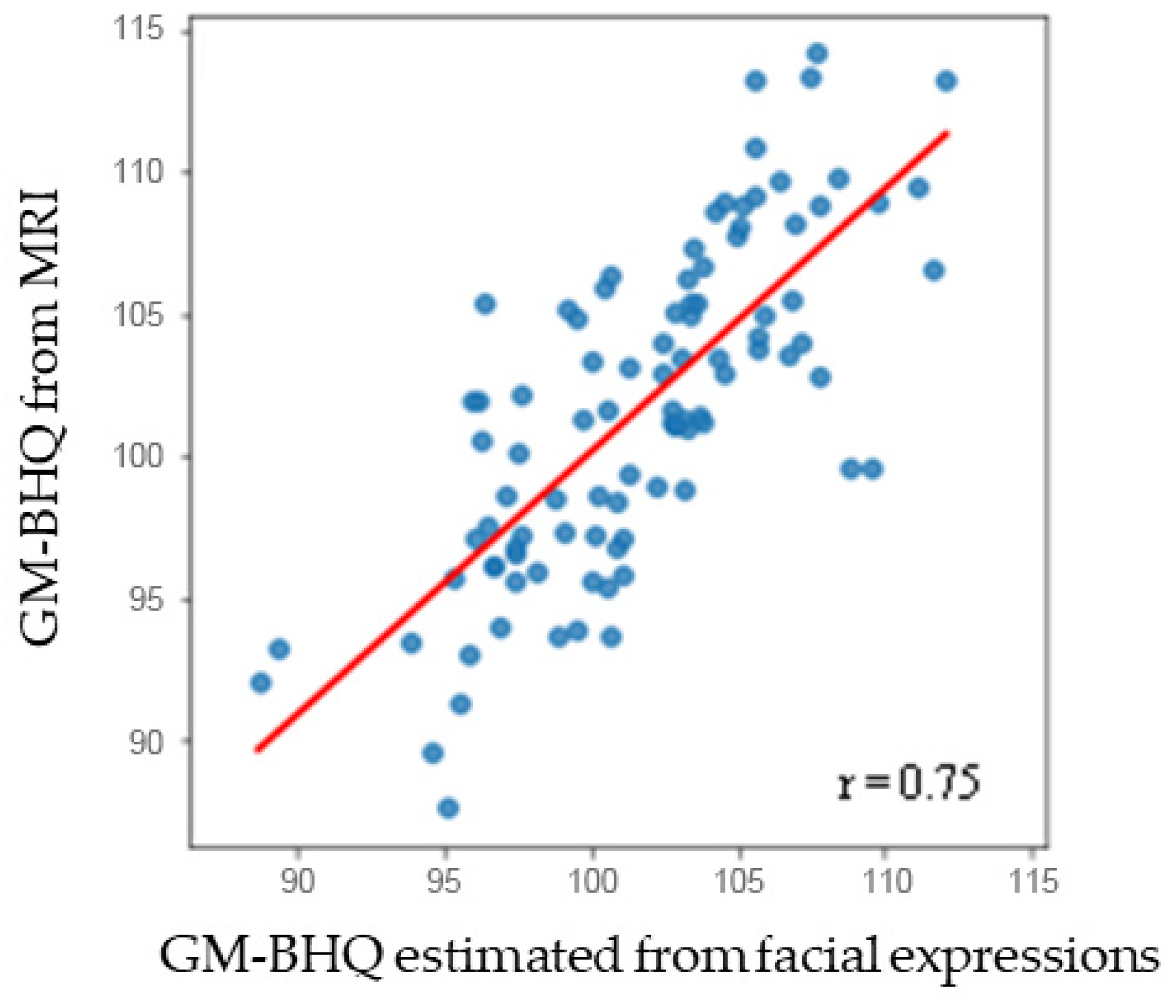
1.4.4. Predictive Performance for Whole-Brain res_GM-BHQ
1.4.5. Predictive Performance for res_DMN, res_CEN, and res_SN
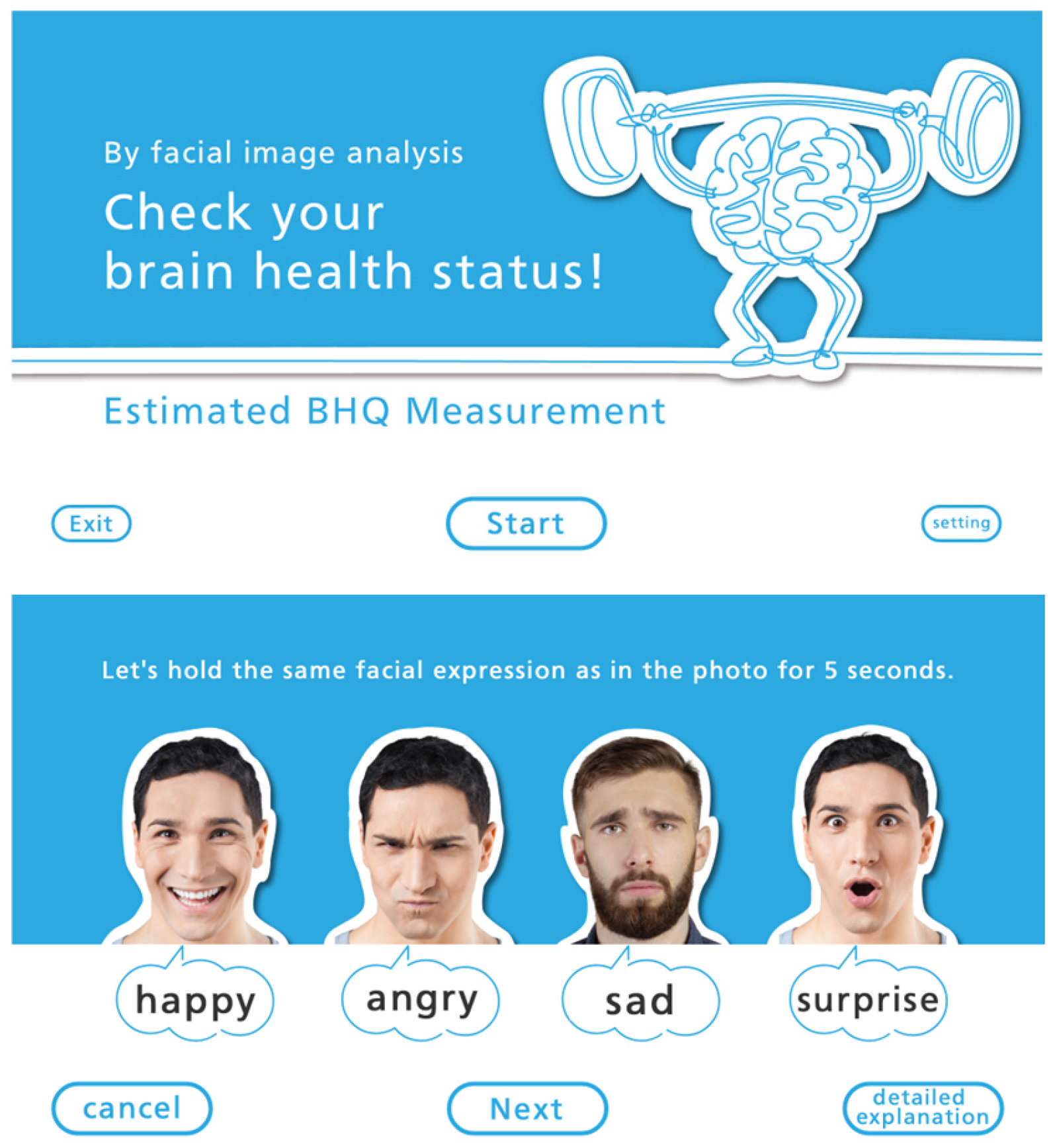
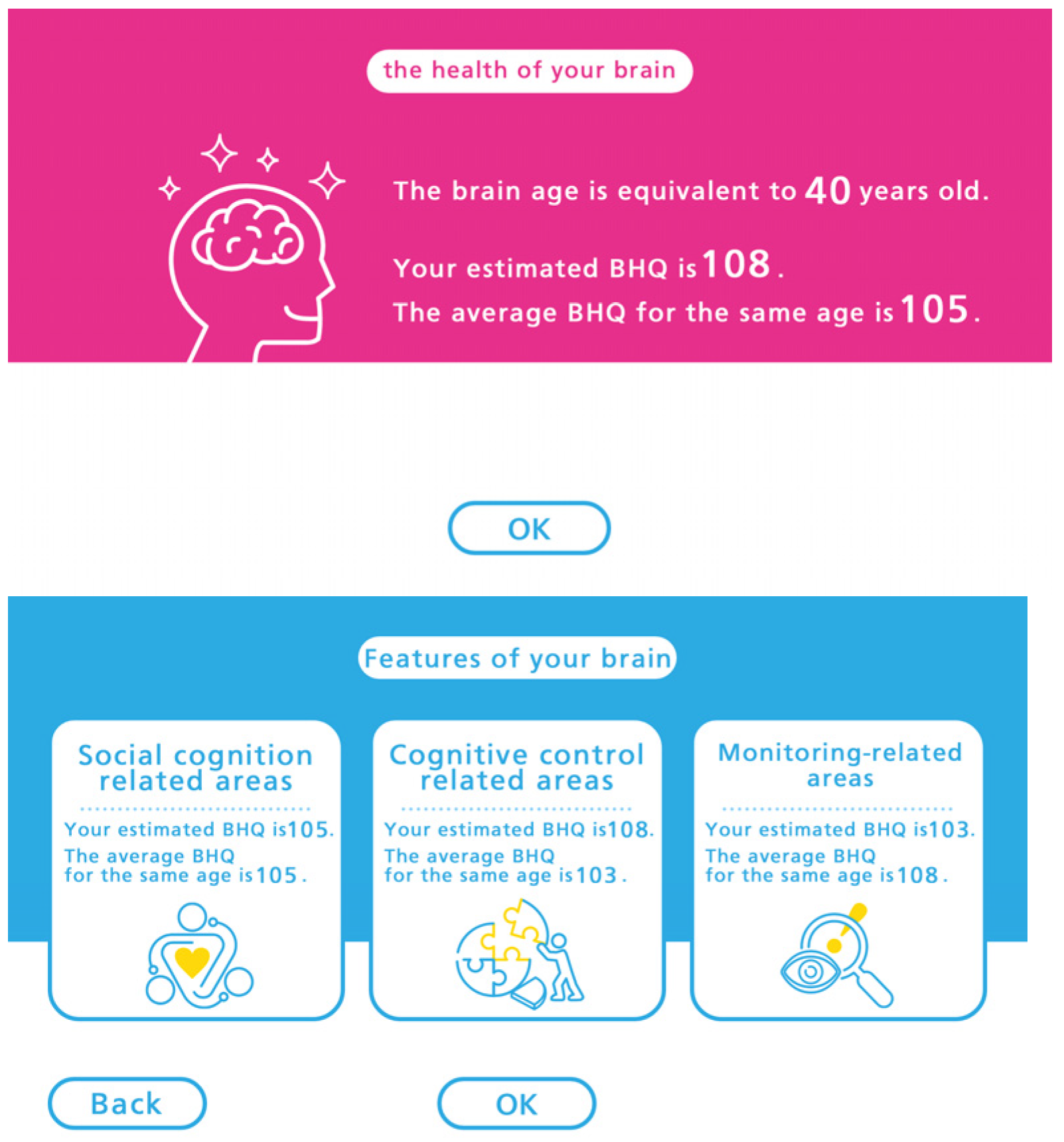
1.4.6. Developing Applications
1.5. Discussion
1.6. Limitations
2. Study II: An Application of Estimated GMV to Neuroaesthetics Research
2.1. Introduction
2.2. Materials and Methods
2.2.1. Participants
2.2.2. Estimating Brain Information Using Facial Expression Information
2.3. Psychological Test
2.3.1. Creative Behavior
2.3.2. Reading Habits
2.3.3. Control Variables
2.4. Data Analysis
2.5. Results
2.6. Discussion
2.7. Limitations
3. Conclusions
Author Contributions
Funding
Institutional Review Board Statement
Informed Consent Statement
Data Availability Statement
Conflicts of Interest
Abbreviations
| GM-BHQ | Gray Matter–Brain Healthcare Quotient |
| DMN | Default Mode Network |
| CEN | Central Executive Network |
| SN | Salience Network |
References
- Cannavacciuolo, A.; Paparella, G.; Salzillo, M.; Colella, D.; Canevelli, M.; Costa, D.; Birreci, D.; Angelini, L.; Guerra, A.; Ricciardi, L.; et al. Facial emotion expressivity in patients with Parkinson’s and Alzheimer’s disease. J. Neural Transm. 2024, 131, 31–41. [Google Scholar] [CrossRef] [PubMed]
- Matsumoto, D.; Lee, M. Consciousness, volition, and the neuropsychology of facial expressions of emotion. Conscious Cogn. 1993, 2, 237–254. [Google Scholar] [CrossRef]
- Berenbaum, H.; Rotter, A. The relationship between spontaneous facial expressions of emotion and voluntary control of facial muscles. J. Nonverbal Behav. 1992, 16, 179–190. [Google Scholar] [CrossRef]
- Trémeau, F.; Malaspina, D.; Duval, F.; Corrêa, H.; Hager-Budny, M.; Coin-Bariou, L.; Macher, J.P.; Gorman, J.M. Facial expressiveness in patients with schizophrenia compared to depressed patients and nonpatient comparison subjects. Am. J. Psychiatry 2005, 162, 92–101. [Google Scholar] [CrossRef]
- Williams, J.H.; Nicolson, A.T.; Clephan, K.J.; Grauw, H.D.; Perrett, D.I. A novel method testing the ability to imitate composite emotional expressions reveals an association with empathy. PLoS ONE 2013, 8, e61941. [Google Scholar] [CrossRef]
- Fernandez-Duque, D.; Hodges, S.D.; Baird, J.A.; Black, S.E. Empathy in frontotemporal dementia and Alzheimer’s disease. J. Clin. Exp. Neuropsychol. 2010, 32, 289–298. [Google Scholar] [CrossRef] [PubMed]
- Kumfor, F.; Piguet, O. Disturbance of emotion processing in frontotemporal dementia: A synthesis of cognitive and neuroimaging findings. Neuropsychol. Rev. 2012, 22, 280–297. [Google Scholar] [CrossRef]
- Rosen, H.J.; Perry, R.J.; Murphy, J.; Kramer, J.H.; Mychack, P.; Schuff, N.; Weiner, M.; Levenson, R.W.; Miller, B.L. Emotion comprehension in the temporal variant of frontotemporal dementia. Brain 2002, 125, 2286–2295. [Google Scholar] [CrossRef]
- Irish, M.; Hodges, J.R.; Piguet, O. Right anterior temporal lobe dysfunction underlies theory of mind impairments in semantic dementia. Brain 2014, 137, 1241–1253. [Google Scholar] [CrossRef]
- Kamminga, J.; Kumfor, F.; Burrell, J.R.; Piguet, O.; Hodges, J.R.; Irish, M. Differentiating between right-lateralised semantic dementia and behavioural-variant frontotemporal dementia: An examination of clinical characteristics and emotion processing. J. Neurol. Neurosurg. Psychiatry 2015, 86, 1082–1088. [Google Scholar] [CrossRef]
- Seeley, W.W.; Bauer, A.M.; Miller, B.L.; Gorno-Tempini, M.L.; Kramer, J.H.; Weiner, M.; Rosen, H.J. The natural history of temporal variant frontotemporal dementia. Neurology 2005, 64, 1384–1390. [Google Scholar] [CrossRef]
- Gola, K.A.; Shany-Ur, T.; Pressman, P.; Sulman, I.; Galeana, E.; Paulsen, H.; Nguyen, L.; Wu, T.; Adhimoolam, B.; Poorzand, P.; et al. A neural network underlying intentional emotional facial expression in neurodegenerative disease. NeuroImage Clin. 2017, 14, 672–678. [Google Scholar] [CrossRef]
- Cooper, S.E.; Miranda, R.; Mennin, D.S. Behavioral indicators of emotional avoidance and subsequent worry in generalized anxiety disorder and depression. J. Exp. Psychopathol. 2013, 4, 566–583. [Google Scholar] [CrossRef]
- Gaebel, W.; Wölwer, W. Facial expressivity in the course of schizophrenia and depression. Eur. Arch. Psychiatry Clin. Neurosci. 2004, 254, 335–342. [Google Scholar] [CrossRef] [PubMed]
- Harati, S.; Crowell, A.; Huang, Y.; Mayberg, H.; Nemati, S. Classifying depression severity in recovery from major depressive disorder via dynamic facial features. IEEE J. Biomed. Health Inform. 2019, 24, 815–824. [Google Scholar] [CrossRef]
- Renneberg, B.; Heyn, K.; Gebhard, R.; Bachmann, S. Facial expression of emotions in borderline personality disorder and depression. J. Behav. Ther. Exp. Psychiatry 2005, 36, 183–196. [Google Scholar] [CrossRef]
- Strauss, G.P.; Cohen, A.S. A transdiagnostic review of negative symptom phenomenology and etiology. Schizophr. Bull. 2017, 43, 712–719. [Google Scholar] [CrossRef]
- Levenson, R.W.; Sturm, V.E.; Haase, C.M. Emotional and behavioral symptoms in neurodegenerative disease: A model for studying the neural bases of psychopathology. Annu. Rev. Clin. Psychol. 2014, 10, 581–606. [Google Scholar] [CrossRef] [PubMed]
- Cohen, A.S.; Cowan, T.; Le, T.P.; Schwartz, E.K.; Kirkpatrick, B.; Raugh, I.M.; Chapman, H.C.; Strauss, G.P. Ambulatory digital phenotyping of blunted affect and alogia using objective facial and vocal analysis: Proof of concept. Schizophr. Res. 2020, 220, 141–146. [Google Scholar] [CrossRef]
- Riehle, M.; Lincoln, T.M. Investigating the social costs of schizophrenia: Facial expressions in dyadic interactions of people with and without schizophrenia. J. Abnorm. Psychol. 2018, 127, 202–215. [Google Scholar] [CrossRef] [PubMed]
- Troisi, A.; Pompili, E.; Binello, L.; Sterpone, A. Facial expressivity during the clinical interview as a predictor functional disability in schizophrenia. A pilot study. Prog. Neuro-Psychopharmacol. Biol. Psychiatry 2007, 31, 475–481. [Google Scholar] [CrossRef]
- Grigoriou, M.; Upthegrove, R. Blunted affect and suicide in schizophrenia: A systematic review. Psychiatry Res. 2020, 293, 113355. [Google Scholar] [CrossRef]
- Cowan, T.; Masucci, M.D.; Gupta, T.; Haase, C.M.; Strauss, G.P.; Cohen, A.S. Computerized analysis of facial expressions in serious mental illness. Schizophr. Res. 2022, 241, 44–51. [Google Scholar] [CrossRef] [PubMed]
- Gavrilescu, M.; Vizireanu, N. Predicting depression, anxiety, and stress levels from videos using the facial action coding system. Sensors 2019, 19, 3693. [Google Scholar] [CrossRef] [PubMed]
- Kong, X.; Yao, Y.; Wang, C.; Wang, Y.; Teng, J.; Qi, X. Automatic identification of depression using facial images with deep convolutional neural network. Med. Sci. Monit. 2022, 28, e936409-1. [Google Scholar] [CrossRef]
- Vogt, N. Predicting neural activity from facial expressions. Nat. Methods 2024, 21, 9. [Google Scholar] [CrossRef]
- More, S.; Antonopoulos, G.; Hoffstaedter, F.; Caspers, J.; Eickhoff, S.B.; Patil, K.R.; Alzheimer’s Disease Neuroimaging Initiative. Brain-age prediction: A systematic comparison of machine learning workflows. NeuroImage 2023, 270, 119947. [Google Scholar] [CrossRef]
- Cole, J.H.; Raffel, J.; Friede, T.; Eshaghi, A.; Brownlee, W.J.; Chard, D.; De Stefano, N.; MAGNIMS Study Group. Longitudinal assessment of multiple sclerosis with the brain-age paradigm. Ann. Neurol. 2020, 88, 93–105. [Google Scholar] [CrossRef]
- Boyle, R.; Jollans, L.; Rueda-Delgado, L.M.; Rizzo, R.; Yener, G.G.; McMorrow, J.P.; Kinght, S.P.; Whelan, R. Brain-predicted age difference score is related to specific cognitive functions: A multi-site replication analysis. Brain Imaging Behav. 2021, 15, 327–345. [Google Scholar] [CrossRef] [PubMed]
- Richard, G.; Kolskår, K.; Sanders, A.M.; Kaufmann, T.; Petersen, A.; Doan, N.T.; Sanches, J.M.; Westlye, L.T. Assessing distinct patterns of cognitive aging using tissue-specific brain age prediction based on diffusion tensor imaging and brain morphometry. PeerJ 2018, 6, e5908. [Google Scholar] [CrossRef]
- Gaser, C.; Franke, K.; Klöppel, S.; Koutsouleris, N.; Sauer, H.; Alzheimer’s Disease Neuroimaging Initiative. BrainAGE in mild cognitive impaired patients: Predicting the conversion to Alzheimer’s disease. PLoS ONE 2013, 8, e67346. [Google Scholar] [CrossRef]
- Monté-Rubio, G.C.; Falcón, C.; Pomarol-Clotet, E.; Ashburner, J. A comparison of various MRI feature types for characterizing whole brain anatomical differences using linear pattern recognition methods. NeuroImage 2018, 178, 753–768. [Google Scholar] [CrossRef]
- Panasonic Corporation. Mission, Panasonic Corporation, Osaka, Japan. 1 August 2023. Available online: https://holdings.panasonic/jp/corporate/pac.html (accessed on 2 May 2025).
- Yamakawa, Y. Brain MRI index useful for dementia prevention—BHQ (Brain healthcare quotient). J. Jpn. Soc. Brain Dock 2019, 9, 23–27. [Google Scholar]
- Japan Science and Technology Agency. About the BHQ, Japan Science and Technology Agency, Tokyo, Japan. 26 July 2018. Available online: https://www.jst.go.jp/impact/hp_yamakawa/index.html (accessed on 2 May 2025).
- International Telecommunication Union (ITU). ITU-T H.861.1: Requirements on Establishing Brain Healthcare Quotients; ITU: Geneva, Switzerland, 2018; Available online: https://www.itu.int/rec/T-REC-H.861.1 (accessed on 2 May 2025).
- Uddin, L.Q.; Supekar, K.S.; Ryali, S.; Menon, V. Dynamic reconfiguration of structural and functional connectivity across core neurocognitive brain networks with development. J. Neurosci. 2011, 31, 18578–18589. [Google Scholar] [CrossRef]
- Nemoto, K.; Oka, H.; Fukuda, H.; Yamakawa, Y. MRI based Brain Healthcare Quotients: A bridge between neural and behavioral analyses for keeping the brain healthy. PLoS ONE 2017, 12, e0187137. [Google Scholar] [CrossRef]
- Ashburner, J. A fast diffeomorphic image registration algorithm. Neuroimage 2007, 38, 95–113. [Google Scholar] [CrossRef]
- Tzourio-Mazoyer, N.; Landeau, B.; Papathanassiou, D.; Crivello, F.; Etard, O.; Delcroix, N.; Tzourio-Mazoyer, B.; Joliot, M. Automated anatomical labeling of activations in SPM using a macroscopic anatomical parcellation of the MNI MRI single-subject brain. Neuroimage 2002, 15, 273–289. [Google Scholar] [CrossRef] [PubMed]
- Kokubun, K.; Yamakawa, Y. Association between food patterns and gray matter volume. Front. Hum. Neurosci. 2019, 13, 384. [Google Scholar] [CrossRef] [PubMed]
- Kokubun, K.; Pineda, J.C.D.; Yamakawa, Y. Unhealthy lifestyles and brain condition: Examining the relations of BMI, living alone, alcohol intake, short sleep, smoking, and lack of exercise with gray matter volume. PLoS ONE 2021, 16, e0255285. [Google Scholar] [CrossRef] [PubMed]
- Kokubun, K.; Yamakawa, Y.; Nemoto, K. The link between the brain volume derived index and the determinants of social performance. Curr. Psychol. 2023, 42, 12309–12321. [Google Scholar] [CrossRef]
- Kokubun, K.; Yamakawa, Y.; Hiraki, K. Association between behavioral ambidexterity and brain health. Brain Sci. 2020, 10, 137. [Google Scholar] [CrossRef]
- Otsuka, T.; Kokubun, K.; Okamoto, M.; Yamakawa, Y. The Brain That Understands Diversity: A Pilot Study Focusing on the Triple Network. Brain Sci. 2025, 15, 233. [Google Scholar] [CrossRef]
- Logothetis, N.K. What we can do and what we cannot do with fMRI. Nature 2008, 453, 869–878. [Google Scholar] [CrossRef] [PubMed]
- Winkler, A.M.; Kochunov, P.; Blangero, J.; Almasy, L.; Zilles, K.; Fox, P.T.; Duggirala, R.; Glahn, D.C. Cortical thickness or grey matter volume? The importance of selecting the phenotype for imaging genetics studies. Neuroimage 2010, 53, 1135–1146. [Google Scholar] [CrossRef] [PubMed]
- Panasonic Corporation. Developing an “Estimated BHQ” Measuring Device that Visualizes Brain Health from Facial Images: Contributing to Increasing Motivation of Fitness Club Users, Press Release, Panasonic Corporation, Osaka, Japan. 1 August 2023. Available online: https://news.panasonic.com/jp/press/jn230801-2 (accessed on 2 May 2025).
- Panasonic Corporation. Topix, Panasonic Corporation, Osaka, Japan. 1 August 2023. Available online: https://news.panasonic.com/jp/topics/205281 (accessed on 2 May 2025).
- Panasonic Corporation. Topix, Panasonic Corporation, Osaka, Japan. 1 August 2023. Available online: https://news.panasonic.com/jp/topics/205423 (accessed on 2 May 2025).
- Ishizu, T.; Zeki, S. The brain’s specialized systems for aesthetic and perceptual judgment. Eur. J. Neurosci. 2013, 37, 1413–1420. [Google Scholar] [CrossRef]
- Mastandrea, S.; Fagioli, S.; Biasi, V. Art and psychological well-being: Linking the brain to the aesthetic emotion. Front. Psychol. 2019, 10, 739. [Google Scholar] [CrossRef] [PubMed]
- Beaty, R.E.; Christensen, A.P.; Benedek, M.; Silvia, P.J.; Schacter, D.L. Creative constraints: Brain activity and network dynamics underlying semantic interference during idea production. NeuroImage 2017, 148, 189–196. [Google Scholar] [CrossRef]
- Khalil, R.; Godde, B.; Karim, A.A. The link between creativity, cognition, and creative drives and underlying neural mechanisms. Front. Neural Circuits 2019, 13, 18. [Google Scholar] [CrossRef]
- Cela-Conde, C.J.; García-Prieto, J.; Ramasco, J.J.; Mirasso, C.R.; Bajo, R.; Munar, E.; Flexas, A.; Maestú, F. Dynamics of brain networks in the aesthetic appreciation. Proc. Natl. Acad. Sci. USA 2013, 110, 10454–10461. [Google Scholar] [CrossRef]
- van Leeuwen, J.E.; Boomgaard, J.; Bzdok, D.; Crutch, S.J.; Warren, J.D. More than meets the eye: Art engages the social brain. Front. Neurosci. 2022, 16, 738865. [Google Scholar] [CrossRef]
- Clewett, D.; DuBrow, S.; Davachi, L. Transcending time in the brain: How event memories are constructed from experience. Hippocampus 2019, 29, 162–183. [Google Scholar] [CrossRef]
- Lövdén, M.; Bodammer, N.C.; Kühn, S.; Kaufmann, J.; Schütze, H.; Tempelmann, C.; Heinze, H.J.; Lindenberger, U. Experience-dependent plasticity of white-matter microstructure extends into old age. Neuropsychologia 2010, 48, 3878–3883. [Google Scholar] [CrossRef]
- Yang, Z.; Wildschut, T.; Izuma, K.; Gu, R.; Luo, Y.L.; Cai, H.; Sedikides, C. Patterns of brain activity associated with nostalgia: A social-cognitive neuroscience perspective. Soc. Cogn. Affect. Neurosci. 2022, 17, 1131–1144. [Google Scholar] [CrossRef] [PubMed]
- Piolino, P.; Coste, C.; Martinelli, P.; Macé, A.L.; Quinette, P.; Guillery-Girard, B.; Belleville, S. Reduced specificity of autobiographical memory and aging: Do the executive and feature binding functions of working memory have a role? Neuropsychologia 2010, 48, 429–440. [Google Scholar] [CrossRef] [PubMed]
- Stern, Y. Cognitive reserve. Neuropsychologia 2009, 47, 2015–2028. [Google Scholar] [CrossRef]
- Tucker, A.; Stern, Y. Cognitive reserve in aging. Curr. Alzheimer Res. 2011, 8, 354–360. [Google Scholar] [CrossRef] [PubMed]
- Corbo, I.; Marselli, G.; Di Ciero, V.; Casagrande, M. The protective role of cognitive reserve in mild cognitive impairment: A systematic review. J. Clin. Med. 2023, 12, 1759. [Google Scholar] [CrossRef]
- Smith, E.E.; Jonides, J. Neuroimaging analyses of human working memory. Proc. Natl. Acad. Sci. USA 1998, 95, 12061–12068. [Google Scholar] [CrossRef]
- Wager, T.D.; Smith, E.E. Neuroimaging studies of working memory: A meta-analysis. Cogn. Affect. Behav. Neurosci. 2003, 3, 255–274. [Google Scholar] [CrossRef]
- Seeley, W.W.; Menon, V.; Schatzberg, A.F.; Keller, J.; Glover, G.H.; Kenna, H.; Reiss, A.L.; Greicius, M.D. Dissociable intrinsic connectivity networks for salience processing and executive control. J. Neurosci. 2007, 27, 2349–2356. [Google Scholar] [CrossRef]
- Goulden, N.; Khusnulina, A.; Davis, N.J.; Bracewell, R.M.; Bokde, A.L.; McNulty, J.P.; Mullins, P.G. The salience network is responsible for switching between the default mode network and the central executive network: Replication from DCM. Neuroimage 2014, 99, 180–190. [Google Scholar] [CrossRef]
- Cai, W.; Chen, T.; Ryali, S.; Kochalka, J.; Li, C.S.R.; Menon, V. Causal interactions within a frontal-cingulate-parietal network during cognitive control: Convergent evidence from a multisite–multitask investigation. Cereb. Cortex 2016, 26, 2140–2153. [Google Scholar] [CrossRef] [PubMed]
- Chen, T.; Michels, L.; Supekar, K.; Kochalka, J.; Ryali, S.; Menon, V. Role of the anterior insular cortex in integrative causal signaling during multisensory auditory–visual attention. Eur. J. Neurosci. 2015, 41, 264–274. [Google Scholar] [CrossRef] [PubMed]
- Ham, T.; Leff, A.; de Boissezon, X.; Joffe, A.; Sharp, D.J. Cognitive control and the salience network: An investigation of error processing and effective connectivity. J. Neurosci. 2013, 33, 7091–7098. [Google Scholar] [CrossRef]
- Menon, V.; Uddin, L.Q. Saliency, switching, attention and control: A network model of insula function. Brain Struct. Funct. 2010, 214, 655–667. [Google Scholar] [CrossRef] [PubMed]
- Sridharan, D.; Levitin, D.J.; Menon, V. A critical role for the right fronto-insular cortex in switching between central-executive and default-mode networks. Proc. Natl. Acad. Sci. USA 2008, 105, 12569–12574. [Google Scholar] [CrossRef]
- Uddin, L.Q. Salience processing and insular cortical function and dysfunction. Nat. Rev. Neurosci. 2015, 16, 55–61. [Google Scholar] [CrossRef]
- Andrews-Hanna, J.R.; Reidler, J.S.; Sepulcre, J.; Poulin, R.; Buckner, R.L. Functional-anatomic fractionation of the brain’ default network. Neuron 2010, 65, 550–562. [Google Scholar] [CrossRef]
- Buckner, R.L.; Andrews-Hanna, J.R.; Schacter, D.L. The brain’s default network—Anatomy, function, and relevance to disease. Ann. N. Y. Acad. Sci. 2008, 1124, 1–38. [Google Scholar] [CrossRef]
- Shulman, G.L.; Fiez, J.A.; Corbetta, M.; Buckner, R.L.; Miezin, F.M.; Raichle, M.E.; Petersen, S.E. Common blood flow changes across visual tasks: II. Decreases in cerebral cortex. J. Cogn. Neurosci. 1997, 9, 648–663. [Google Scholar] [CrossRef]
- Li, W.; Mai, X.; Liu, C. The default mode network and social understanding of others: What do brain connectivity studies tell us. Front. Hum. Neurosci. 2014, 8, 74. [Google Scholar] [CrossRef]
- Krönke, K.M.; Wolff, M.; Shi, Y.; Kräplin, A.; Smolka, M.N.; Bühringer, G.; Goschke, T. Functional connectivity in a triple-network saliency model is associated with real-life self-control. Neuropsychologia 2020, 149, 107667. [Google Scholar] [CrossRef] [PubMed]
- Acevedo, B.P.; Aron, E.N.; Aron, A.; Sangster, M.D.; Collins, N.; Brown, L.L. The highly sensitive brain: An fMRI study of sensory processing sensitivity and response to others’ emotions. Brain Behav. 2014, 4, 580–594. [Google Scholar] [CrossRef]
- Bilevicius, E.; Kolesar, T.A.; Smith, S.D.; Trapnell, P.D.; Kornelsen, J. Trait emotional empathy and resting state functional connectivity in default mode, salience, and central executive networks. Brain Sci. 2018, 8, 128. [Google Scholar] [CrossRef]
- Kim, S.J.; Kim, S.E.; Kim, H.E.; Han, K.; Jeong, B.; Kim, J.J.; Namkoong, K.; Kim, J.W. Altered functional connectivity of the default mode network in low-empathy subjects. Yonsei Med. J. 2017, 58, 1061–1065. [Google Scholar] [CrossRef] [PubMed]
- Nummenmaa, L.; Hirvonen, J.; Parkkola, R.; Hietanen, J.K. Is emotional contagion special? An fMRI study on neural systems for affective and cognitive empathy. NeuroImage 2008, 43, 571–580. [Google Scholar] [CrossRef]
- Shamay-Tsoory, S.G.; Aharon-Peretz, J.; Perry, D. Two systems for empathy: A double dissociation between emotional and cognitive empathy in inferior frontal gyrus versus ventromedial prefrontal lesions. Brain 2009, 132, 617–627. [Google Scholar] [CrossRef]
- Watanabe, K.; Kakeda, S.; Nemoto, K.; Onoda, K.; Yamaguchi, S.; Kobayashi, S.; Yamakawa, Y. Grey-matter brain healthcare quotient and cognitive function: A large cohort study of an MRI brain screening system in Japan. Cortex 2021, 145, 97–104. [Google Scholar] [CrossRef]
- Kokubun, K.; Nemoto, K.; Yamakawa, Y. Whole-brain gray matter volume mediates the relationship between psychological distress and job satisfaction. Acta Psychol. 2025, 256, 105059. [Google Scholar] [CrossRef] [PubMed]
- Kokubun, K.; Nemoto, K.; Oka, H.; Fukuda, H.; Yamakawa, Y.; Watanabe, Y. Association of fatigue and stress with gray matter volume. Front. Behav. Neurosci. 2018, 12, 154. [Google Scholar] [CrossRef]
- Kokubun, K.; Nemoto, K.; Ikaga, T.; Yamakawa, Y. Whole-brain gray matter volume and fractional anisotropy of the posterior thalamic radiation and sagittal stratum in healthy adults correlate with the local environment. NeuroImage 2025, 308, 121033. [Google Scholar] [CrossRef] [PubMed]
- Innocenti, G.M. Defining neuroplasticity. Handb. Clin. Neurol. 2022, 184, 3–18. [Google Scholar] [CrossRef]
- Nemoto, K.; Kokubun, K.; Ogata, Y.; Koike, Y.; Arai, T.; Yamakawa, Y. Dark chocolate intake may reduce fatigue and mediate cognitive function and gray matter volume in healthy middle-aged adults. Behav. Neurol. 2022, 2022, 6021811. [Google Scholar] [CrossRef] [PubMed]
- Kokubun, K.; Nemoto, K.; Yamakawa, Y. Continuous inhalation of essential oil increases gray matter volume. Brain Res. Bull. 2024, 208, 110896. [Google Scholar] [CrossRef]
- Schlotz, W.; Wallot, S.; Omigie, D.; Masucci, M.D.; Hoelzmann, S.C.; Vessel, E.A. The Aesthetic Responsiveness Assessment (AReA): A screening tool to assess individual differences in responsiveness to art in English and German. Psychol. Aesthet. Creat. Arts. 2020, 15, 682–696. [Google Scholar] [CrossRef]
- Magsamen, S.; Ross, I. Your Brain on Art: How the Arts Transform Us; Random House: New York, NY, USA, 2024. [Google Scholar]
- Organisation for Economic Co-operation and Development (OECD). Programme for International Student Assessment (PISA); Organisation for Economic Co-operation and Development: Paris, France, 2024. [Google Scholar]
- Vessel, E.A.; Starr, G.G.; Rubin, N. The brain on art: Intense aesthetic experience activates the default mode network. Front. Hum. Neurosci. 2012, 6, 66. [Google Scholar] [CrossRef] [PubMed]
- Vessel, E.A.; Starr, G.G.; Rubin, N. Art reaches within: Aesthetic experience, the self and the default mode network. Front. Neurosci. 2013, 7, 258. [Google Scholar] [CrossRef]
- Vartanian, O.; Skov, M. Neural correlates of viewing paintings: Evidence from a quantitative meta-analysis of functional magnetic resonance imaging data. Brain Cogn. 2014, 87, 52–56. [Google Scholar] [CrossRef]
- Sesma, H.W.; Mahone, E.M.; Levine, T.; Eason, S.H.; Cutting, L.E. The contribution of executive skills to reading comprehension. Child Neuropsychol. 2009, 15, 232–246. [Google Scholar] [CrossRef]
- Follmer, D.J. Executive function and reading comprehension: A meta-analytic review. Educ. Psychol. 2018, 53, 42–60. [Google Scholar] [CrossRef]
- Patael, S.Z.; Farris, E.A.; Black, J.M.; Hancock, R.; Gabrieli, J.D.; Cutting, L.E.; Hoeft, F. Brain basis of cognitive resilience: Prefrontal cortex predicts better reading comprehension in relation to decoding. PLoS ONE 2018, 13, e0198791. [Google Scholar] [CrossRef]
- Jaušovec, N. The neural code of intelligence: From correlation to causation. Phys. Life Rev. 2019, 31, 171–187. [Google Scholar] [CrossRef]
- Hammond, D.C. What is neurofeedback: An update. J. Neurother. 2011, 15, 305–336. [Google Scholar] [CrossRef]
- Marzbani, H.; Marateb, H.R.; Mansourian, M. Neurofeedback: A comprehensive review on system design, methodology and clinical applications. Basic Clin. Neurosci. 2016, 7, 143–158. [Google Scholar] [CrossRef]
- Zaidel, D.W. Neuroesthetics is not just about art. Front. Hum. Neurosci. 2015, 9, 80. [Google Scholar] [CrossRef]
- Boccia, M.; Barbetti, S.; Piccardi, L.; Guariglia, C.; Ferlazzo, F.; Giannini, A.M.; Zaidel, D.W. Where does brain neural activation in aesthetic responses to visual art occur? Meta-analytic evidence from neuroimaging studies. Neurosci. Biobehav. Rev. 2016, 60, 65–71. [Google Scholar] [CrossRef] [PubMed]
- Cela-Conde, C.J.; Ayala, F.J. Brain keys in the appreciation of beauty: A tale of two worlds. Rend. Lincei 2014, 25, 277–284. [Google Scholar] [CrossRef]





| Network | AAL Code | Region Name |
|---|---|---|
| DMN | AAL023 | Superior Medial Frontal Gyrus (Left) |
| AAL024 | Superior Medial Frontal Gyrus (Right) | |
| AAL035 | Posterior Cingulate Gyrus (Left) | |
| AAL036 | Posterior Cingulate Gyrus (Right) | |
| AAL061 | Inferior Parietal Lobule (Left) | |
| AAL062 | Inferior Parietal Lobule (Right) | |
| AAL067 | Precuneus (Left) | |
| AAL068 | Precuneus (Right) | |
| CEN | AAL003 | Superior Frontal Gyrus (Left) |
| AAL004 | Superior Frontal Gyrus (Right) | |
| AAL059 | Superior Parietal Lobule (Left) | |
| AAL060 | Superior Parietal Lobule (Right) | |
| SN | AAL029 | Insula (Left) |
| AAL030 | Insula (Right) | |
| AAL031 | Anterior Cingulate Gyrus (Left) | |
| AAL032 | Anterior Cingulate Gyrus (Right) |
| Estimated Results from Facial Expressions | Estimated Results from Age | |||
|---|---|---|---|---|
| Regions of brain | Correlation coefficient | MAE | Correlation coefficient | MAE |
| res_GM-BHQ | 0.75 | 3.12 | 0.66 | 3.54 |
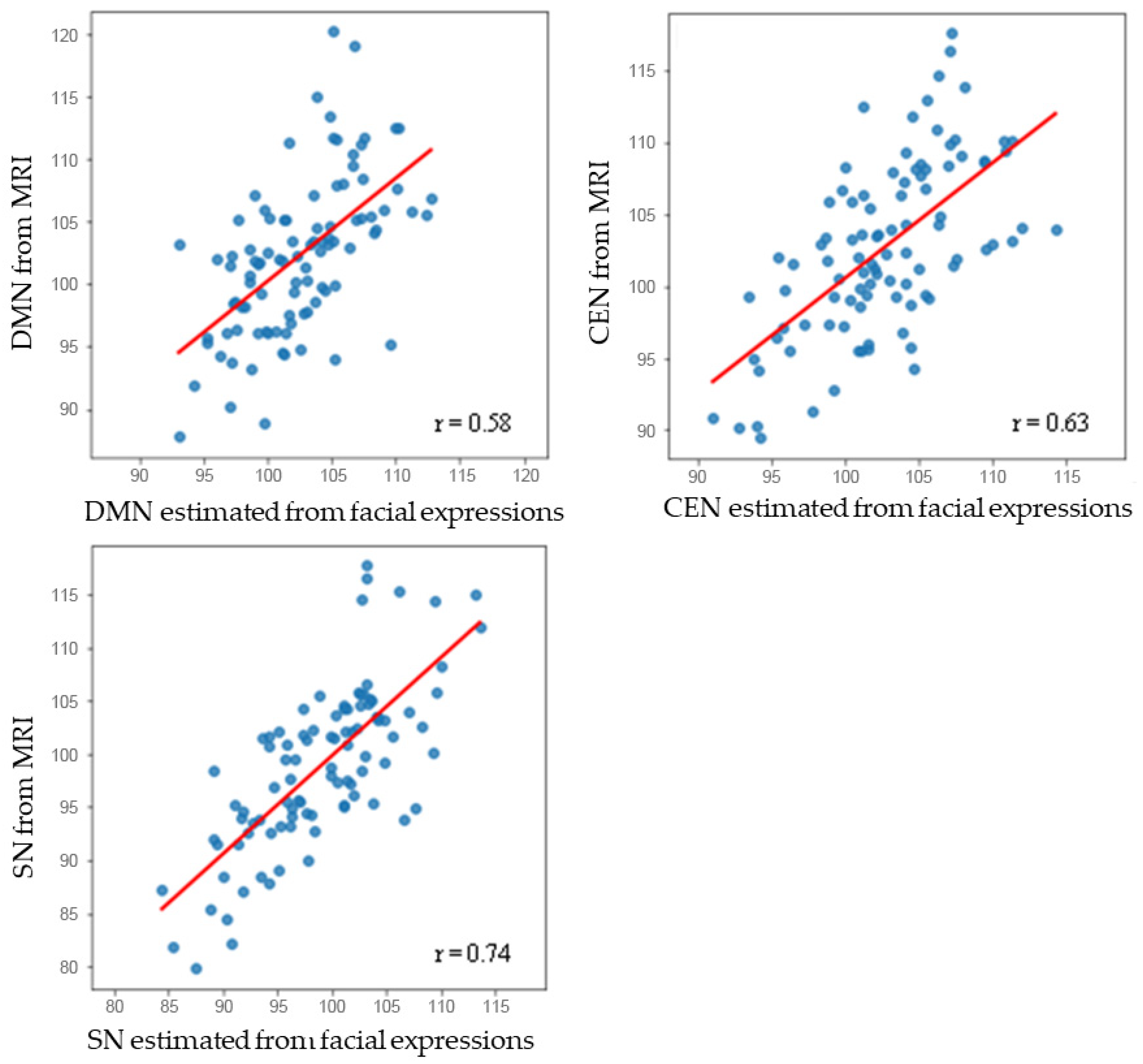
| res_DMN | 0.58 | 4.14 | 0.53 | 4.34 |
| res_CEN | 0.63 | 3.87 | 0.50 | 4.25 |
| res_SN | 0.74 | 4.05 | 0.68 | 4.53 |
| N | % | |
|---|---|---|
| Sex | ||
| Male | 58 | 51.3 |
| Female | 54 | 47.8 |
| No answer | 1 | 0.9 |
| Position | ||
| Executives/executives | 6 | 5.3 |
| Department head | 2 | 1.8 |
| Manager/leader | 40 | 35.4 |
| General/professional | 62 | 54.9 |
| Contract/individual business | 3 | 2.7 |
| Occupation | ||
| Managerial occupations | 17 | 15 |
| Research/technical occupations | 9 | 8 |
| Professional occupations such as legal affairs, management, culture/arts, etc. | 17 | 15 |
| Clerical occupations | 26 | 23 |
| Sales/sales occupations | 5 | 4.4 |
| Service occupations | 39 | 34.5 |
| Mean | N | SD | Min | Max | |
|---|---|---|---|---|---|
| Age | 39.0 | 113 | 10.1 | 24 | 68 |
| BMI | 22.8 | 113 | 4.5 | 17.2 | 55.2 |
| Years of education | 16.7 | 113 | 2.0 | 6 | 22 |
| Years of employment | 3.5 | 113 | 1.7 | 1 | 6 |
| 1 | 2 | 3 | 4 | 5 | 6 | ||
|---|---|---|---|---|---|---|---|
| 1 | GM-BHQ | 0.650 *** | 0.568 *** | 0.737 *** | −0.012 | 0.186 | |
| 2 | DMN | 0.923 *** | 0.643 *** | 0.610 *** | 0.095 | 0.231 * | |
| 3 | CEN | 0.858 *** | 0.878 *** | 0.617 *** | 0.231 * | −0.028 | |
| 4 | SN | 0.940 *** | 0.910 *** | 0.872 *** | 0.076 | 0.166 | |
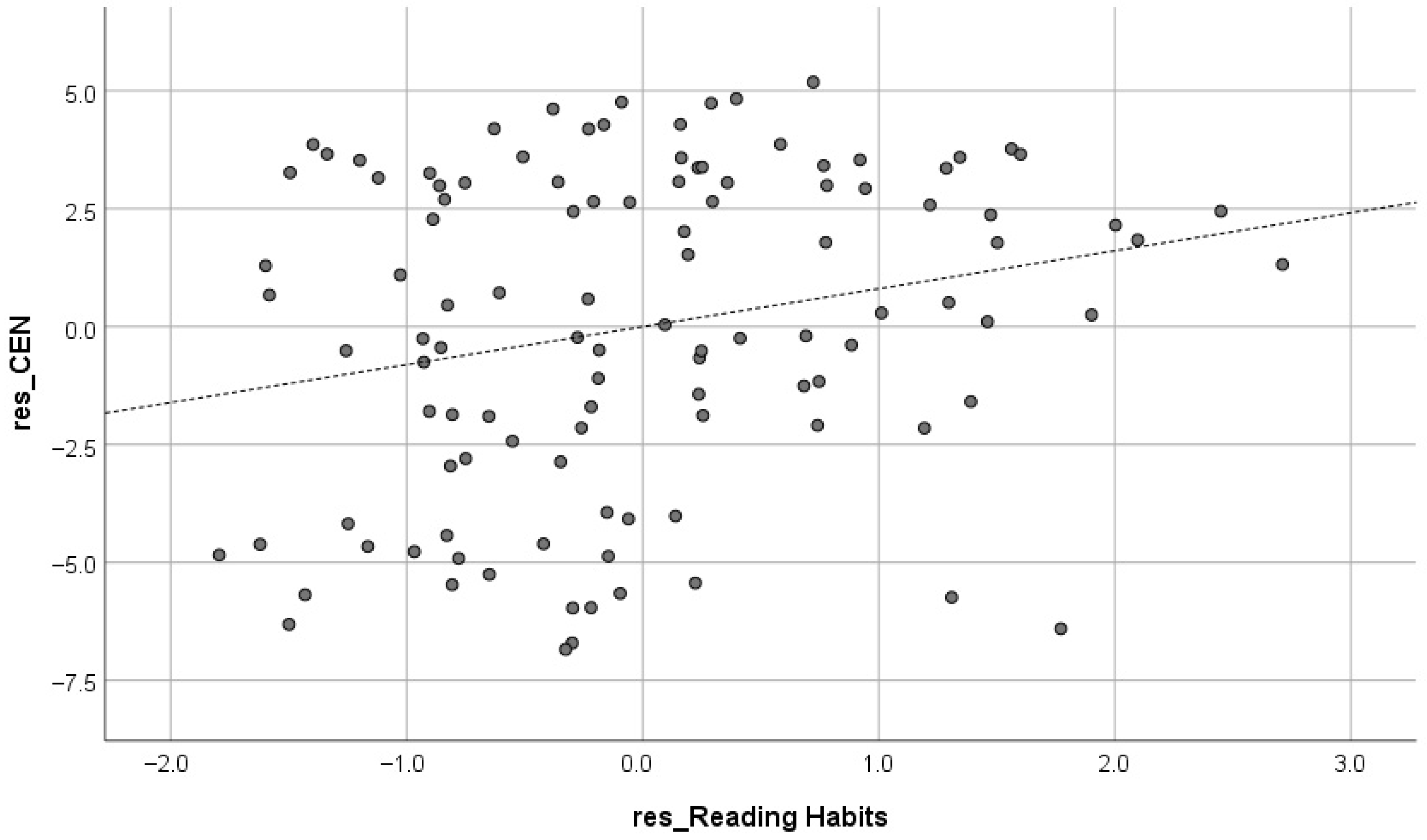
| 5 | Reading habits | −0.074 | −0.042 | 0.060 | −0.044 | 0.253 ** | |
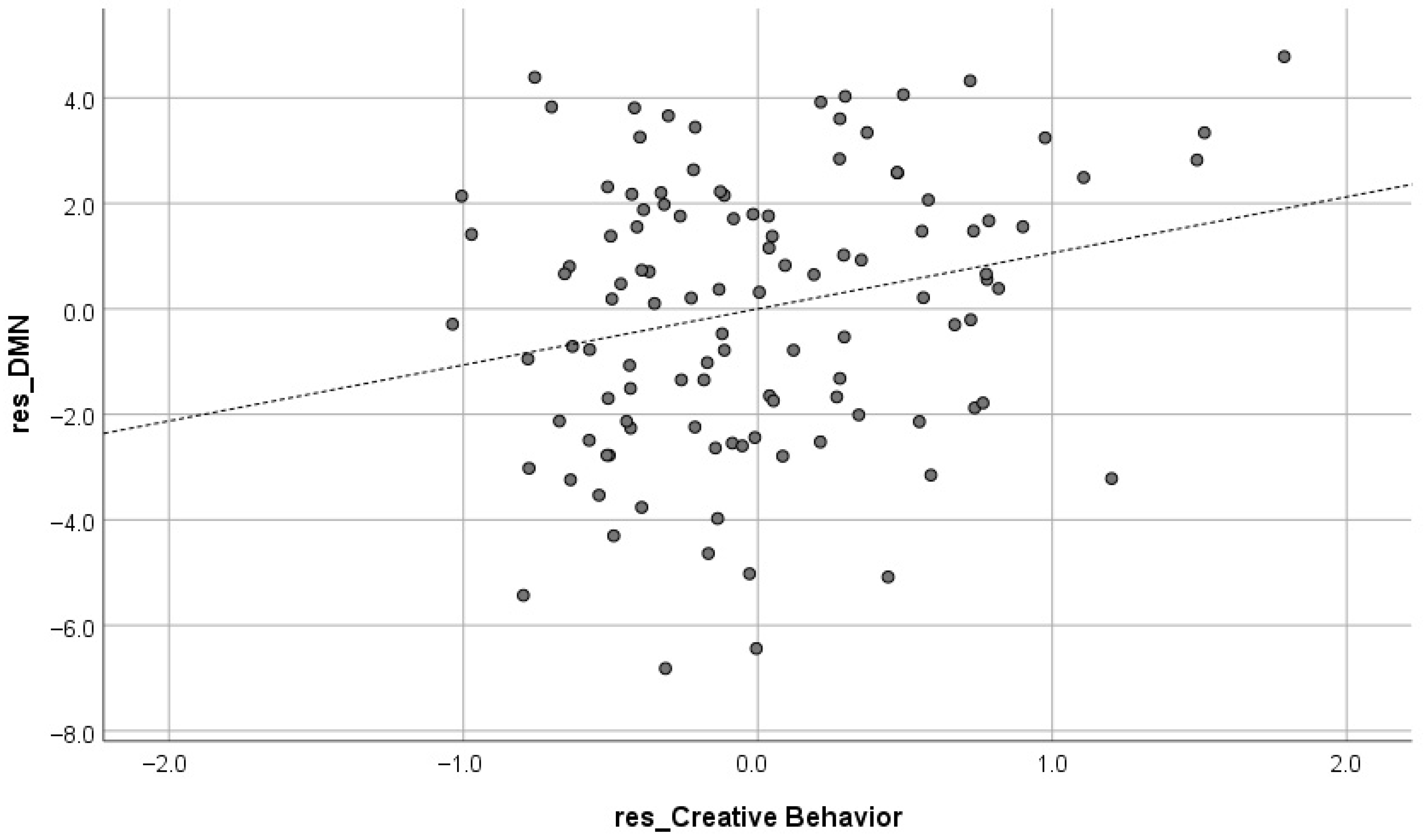
| 6 | Creative behavior | 0.164 | 0.187 * | 0.065 | 0.167 | 0.195 * |
Disclaimer/Publisher’s Note: The statements, opinions and data contained in all publications are solely those of the individual author(s) and contributor(s) and not of MDPI and/or the editor(s). MDPI and/or the editor(s) disclaim responsibility for any injury to people or property resulting from any ideas, methods, instructions or products referred to in the content. |
© 2026 by the authors. Licensee MDPI, Basel, Switzerland. This article is an open access article distributed under the terms and conditions of the Creative Commons Attribution (CC BY) license.
Share and Cite
Abe, K.; Sato, Y.; Namba, Y.; Kokubun, K.; Nemoto, K.; Okamoto, M.; Yamakawa, Y. Estimating Brain Health from Facial Expressions: An Exploratory Study. Digital 2026, 6, 38. https://doi.org/10.3390/digital6020038
Abe K, Sato Y, Namba Y, Kokubun K, Nemoto K, Okamoto M, Yamakawa Y. Estimating Brain Health from Facial Expressions: An Exploratory Study. Digital. 2026; 6(2):38. https://doi.org/10.3390/digital6020038
Chicago/Turabian StyleAbe, Keiko, Yasuhito Sato, Yoshihiko Namba, Keisuke Kokubun, Kiyotaka Nemoto, Maya Okamoto, and Yoshinori Yamakawa. 2026. "Estimating Brain Health from Facial Expressions: An Exploratory Study" Digital 6, no. 2: 38. https://doi.org/10.3390/digital6020038
APA StyleAbe, K., Sato, Y., Namba, Y., Kokubun, K., Nemoto, K., Okamoto, M., & Yamakawa, Y. (2026). Estimating Brain Health from Facial Expressions: An Exploratory Study. Digital, 6(2), 38. https://doi.org/10.3390/digital6020038