Article

Unsupervised Metal Artifact Reduction in Dental CBCT Using Fine-Tuned Cycle-Consistent Adversarial Networks


by
Thamindu Chamika
1,
Sithum N. A. Dhanapala
1,
Sasindu Nimalaweera
1,
Maheshi B. Dissanayake
1,* and
Ruwan D. Jayasinghe
2
1
Department of Electrical and Electronic Engineering, University of Peradeniya, Peradeniya 20400, Sri Lanka
2
Department of Oral Medicine and Periodontology, Faculty of Dental Sciences, University of Peradeniya, Peradeniya 20400, Sri Lanka
*
Author to whom correspondence should be addressed.
Digital 2026, 6(2), 31; https://doi.org/10.3390/digital6020031

Submission received: 5 February 2026 / Revised: 8 April 2026 / Accepted: 13 April 2026 / Published: 17 April 2026

Abstract

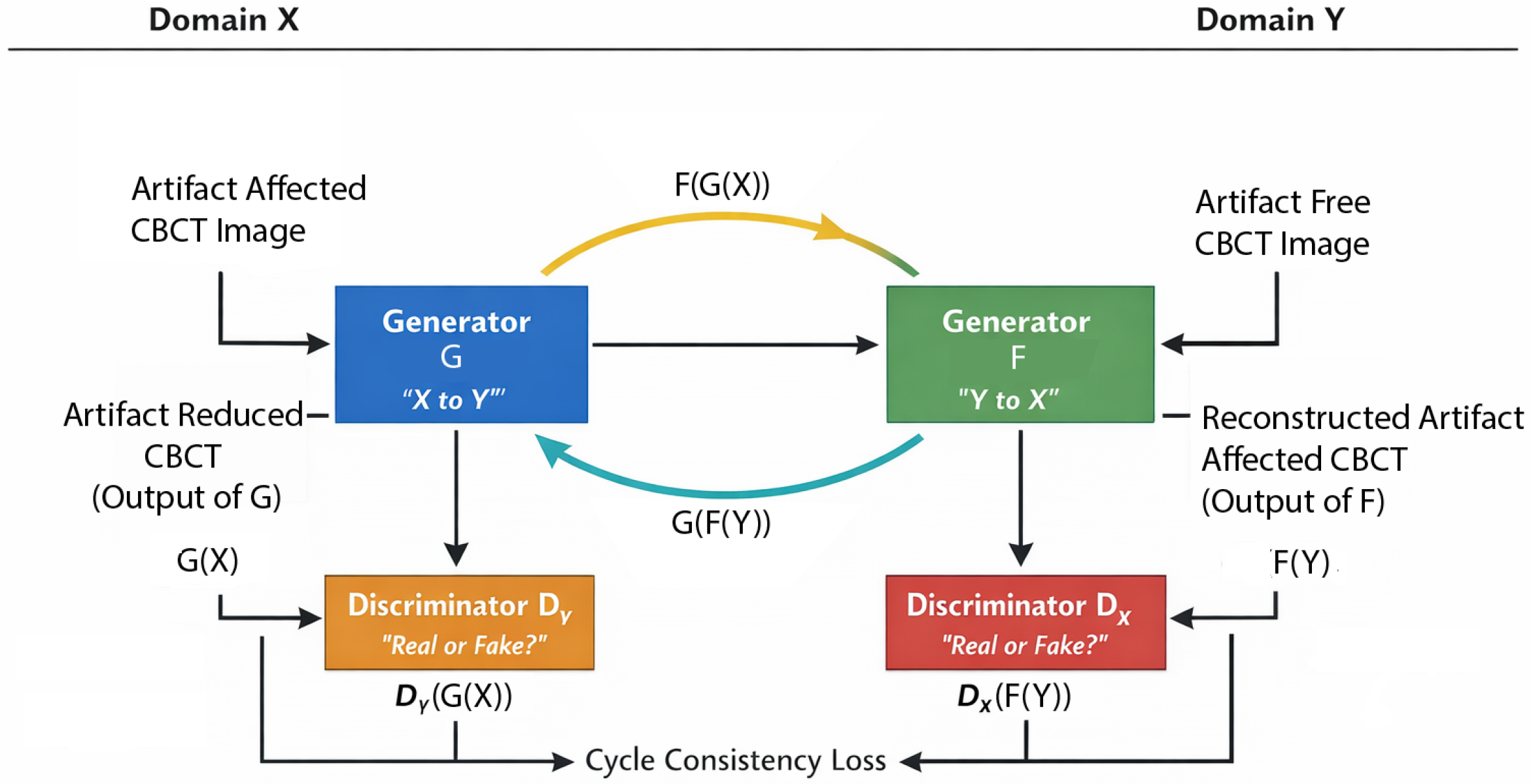
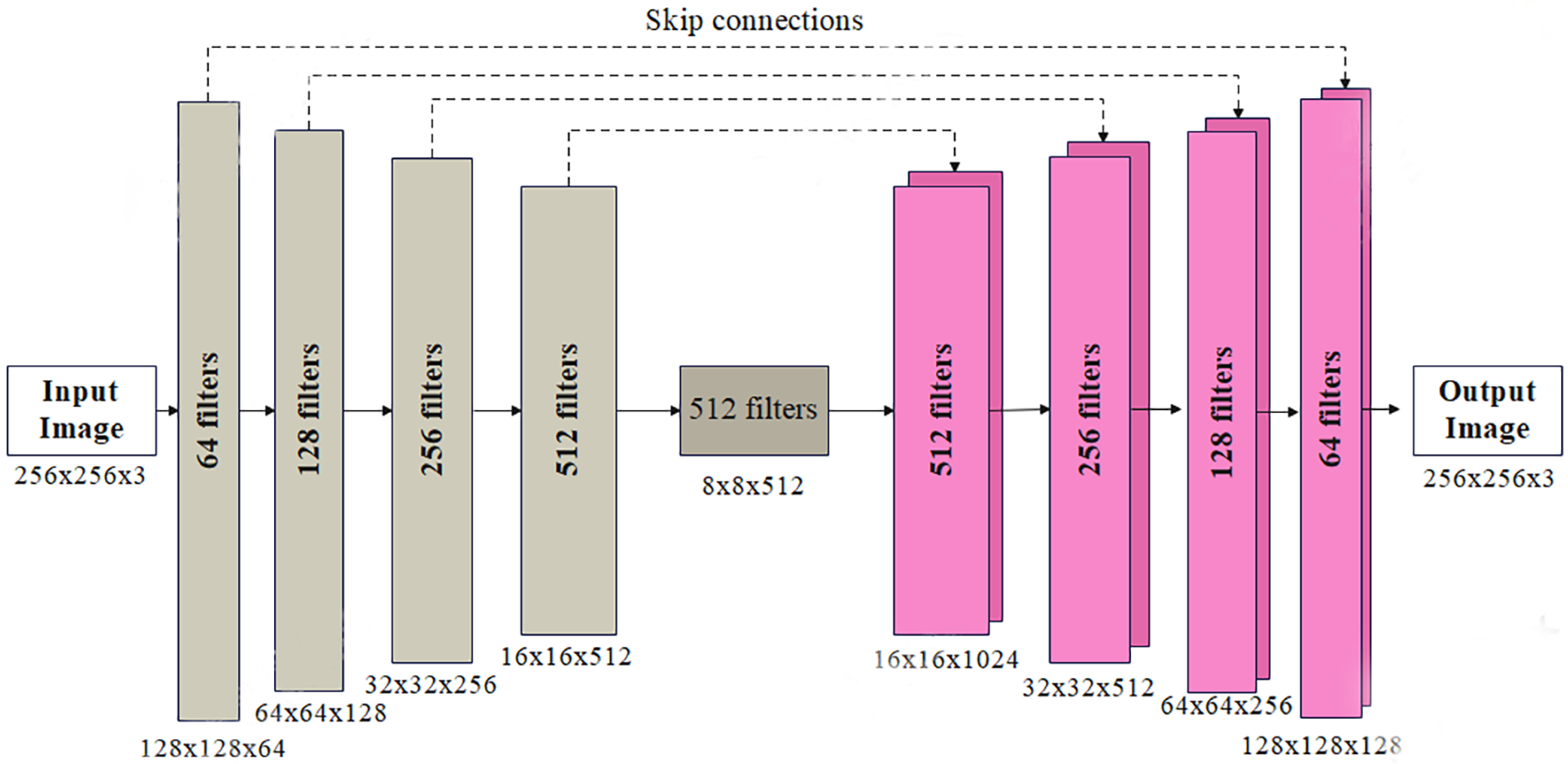
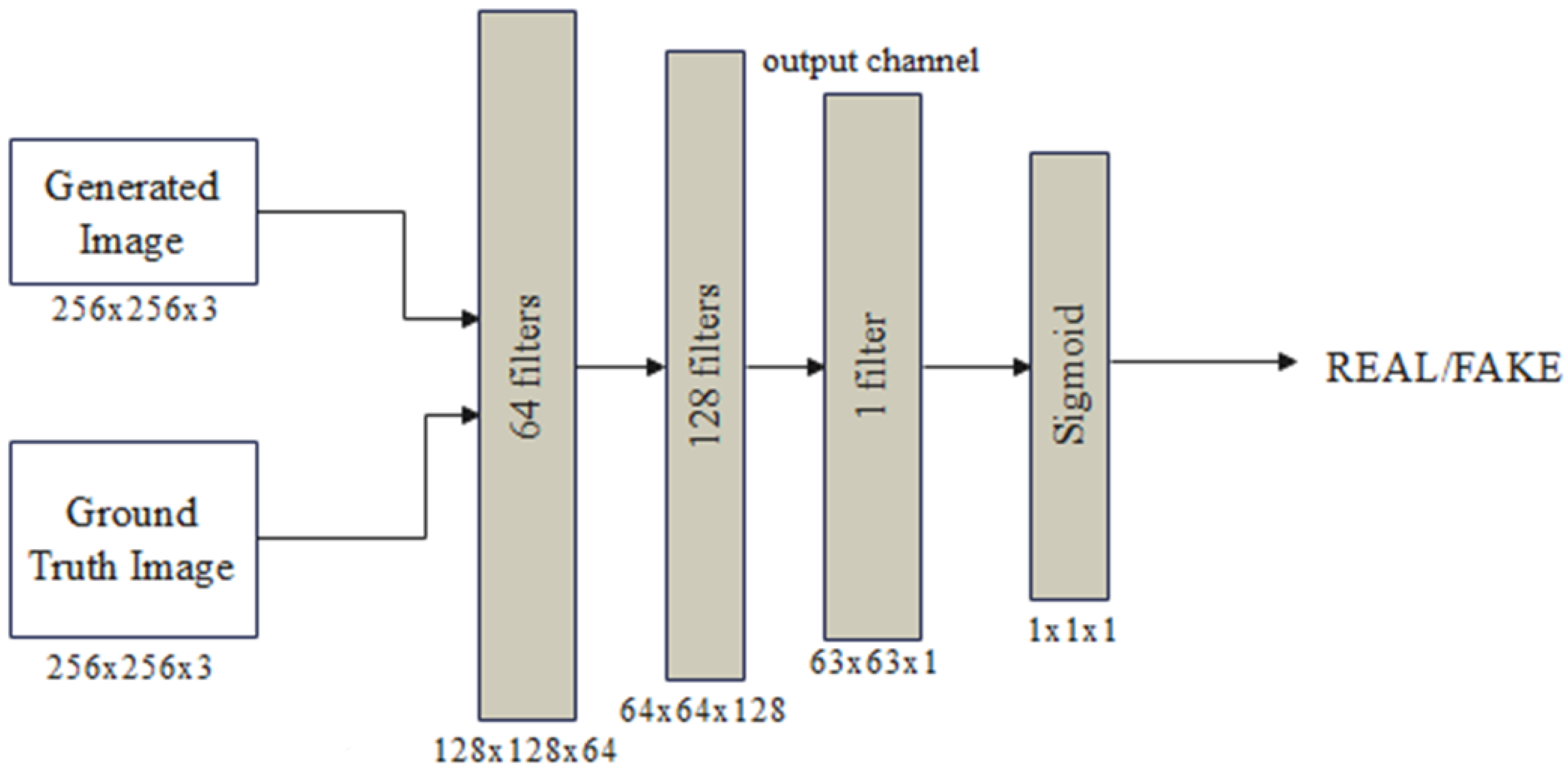
Metal artifacts generated by dental implants significantly degrade cone-beam computed tomography (CBCT) volumes, obscuring critical anatomical structures and compromising diagnostic precision. To address this, an unsupervised deep learning framework has been proposed for Metal Artifact Reduction (MAR) utilizing a Cycle-Consistent Adversarial Network (CycleGAN) optimized for high-fidelity restoration. Unlike supervised methods that rely on unattainable voxel-aligned paired datasets, the proposed approach leverages an unpaired dataset of approximately 4000 images, curated from the public ToothFairy dataset. The architecture integrates U-Net-based generators and PatchGAN discriminators, specifically tuned to mitigate generative hallucinations and preserve morphological integrity. Quantitative benchmarking on a held-out test set demonstrates a 34.6% improvement in the Blind/Referenceless Image Spatial Quality Evaluator (BRISQUE) score, a substantial reduction in Fréchet Inception Distance (FID) from 207.03 to 157.04, and a superior Structural Similarity Index Measure (SSIM) of 0.9105. The framework achieves real-time efficiency with a 3.03 ms inference time per slice, effectively suppressing artifacts while preserving anatomical detail. Expert validation confirms high fidelity; however, to ensure reliability in extreme cases, the architecture is recommended as a clinical decision-support tool under human-in-the-loop oversight. By enhancing diagnostic clarity via a scalable software pipeline, this study provides a robust solution for high-fidelity dental implant imaging.
Keywords: cone-beam computed tomography; metal artifact reduction; CycleGAN; unsupervised learning; dental imaging; deep learning; image-to-image translation cone-beam computed tomography; metal artifact reduction; CycleGAN; unsupervised learning; dental imaging; deep learning; image-to-image translation