Article

A Survey on the Use of Online Health Videos in Medical Education: Insights from Mozambican Students


1
Faculty of Arts and Humanities, Licungo University, Beira 2025, Mozambique
2
EPIUnit-Institute of Public Health, Laboratory for Integrative and Translational Research in Population Health (ITR), Department of Communication and Information Sciences, Faculty of Arts and Humanities, University of Porto, 4150-564 Porto, Portugal
3
Faculty of Health Sciences, Catholic University of Mozambique, Center for Health Training and Research (Hospital Central da Beira), College of Psychiatry and Mental Health (Ordem dos Médicos de Moçambique), Beira 1100, Mozambique
*
Author to whom correspondence should be addressed.
Digital 2026, 6(1), 17; https://doi.org/10.3390/digital6010017
Submission received: 12 December 2025 / Revised: 25 February 2026 / Accepted: 26 February 2026 / Published: 28 February 2026
(This article belongs to the Collection Multimedia-Based Digital Learning)

Abstract

The proliferation of digital health education content (DHEC) offers a transformative opportunity for medical training worldwide. While students in high-income countries routinely integrate these tools, their use and impact in low-resource settings such as Mozambique remain poorly understood. Exploring this topic offers interesting possibilities at the intersection of global health equity, digital literacy, and pedagogical innovation. This study assessed how Mozambican medical students engage with online health videos, examining the types of content they search for, preferred platforms, perceived benefits, and attitudes toward integrating these materials into medical training. A quantitative cross-sectional survey was administered to 151 second-year medical students at the Catholic University of Mozambique and Alberto Chipande University. A structured online questionnaire, comprising multiple-choice, Likert-scale, and open-ended questions, was used. Data were analyzed using descriptive statistics, cross-tabulation, chi-square test, and Cramer’s V effect size. All students (100%) reported searching for online health videos. They primarily do so via YouTube (92.1%) and use mobile phones (98.7%). Students mainly searched topics related to basic biomedical sciences (60%). They reported that video enhances their learning (86.8%), academic work (11.3%), and other skills (1.9%). Mean scores for utility (4.06), self-reported knowledge gain (4.05), and interest in continuing use (4.30) reflected positive perceptions. Furthermore, an overwhelming majority (91.4%) supported the institutional production of educational videos, whereas 8.6% disagreed, citing videos as a tool that diverts students’ focus from reading and a preference for traditional classes. No statistically significant gender-based differences were observed in usefulness, learning levels, or core interest in continuing to search for online videos (p > 0.05). Online health videos are widely used and positively perceived by Mozambican medical students as a supplementary learning tool. The findings highlight the need for institutions to create curriculum-aligned video libraries and strengthen students’ digital literacy, an affordable strategy for enhancing medical education in low-resource contexts.

1. Introduction

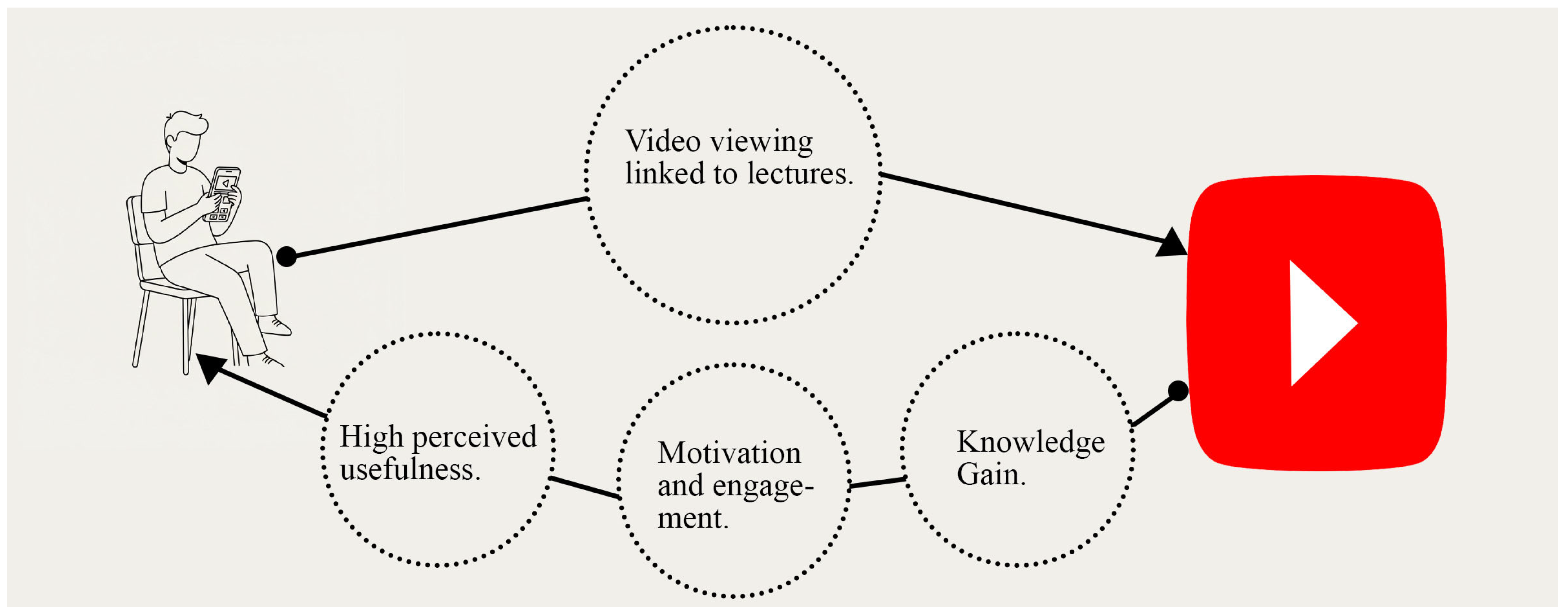
Online health videos have become learning tools in medical education worldwide, yet their use and impact in low-resource settings such as Mozambique remain underexplored. Medical students are increasingly relying on these videos as flexible, self-paced supplements to their formal learning [1,2,3,4]. This practice has become deeply integrated into their learning process, as students value the content for its ability to complement their knowledge and provide flexible, self-paced access at any time and from anywhere. Health education videos provide notable benefits. They enhance both theoretical and practical understanding, improve decision-making skills, and develop psychomotor abilities [5,6,7,8]. Platforms such as YouTube, Dailymotion, TikTok, and Facebook provide such content freely, enhancing access for learners. Their ability to disseminate health information has transformed traditional learning methods, giving rise to video-based learning as an emerging pedagogical approach [9]. YouTube has been identified as the most widely used social media platform for accessing health-related videos [10], exam preparation [11], and other topics of interest [12]. Figure 1 illustrates the conceptual pathway of how medical students access, evaluate, and incorporate online videos into their learning process.
Although online health videos have educational value, many lack scientific validation or institutional approval, and popularity metrics such as views or likes often do not indicate quality [10,13,14,15,16]. Multiple studies have found that many health-related videos lack peer review [17], omit quality checks [12], or serve commercial interests while purporting to be educational [18]. Even institutional videos can face challenges with creativity and reach, limiting their educational effectiveness [19,20], suggesting a need for pedagogical innovation that combines accuracy with engagement. Therefore, medical schools and faculty members are essential in this effort. They should act as facilitators, guiding students in assessing credible sources and integrating high-quality videos into structured curricula. Additionally, they can also safeguard their health education videos for authorized learners by leveraging privacy settings and integrated learning platforms [21,22]. This can be achieved by curating credible resources, producing in-house educational content, and partnering with vetted video libraries to ensure quality and accuracy [23,24], as well as by implementing awareness programs that teach students to evaluate online resources critically [25].
In this context, the issues mentioned earlier also intersect with broader challenges related to technology infrastructure, bandwidth costs, and institutional capacity [26]. Despite a significant rise in smartphone use over the past few years, disparities in access to the internet and digital devices persist [27]. It remains crucial to understand how medical students utilize, assess, and perceive educational videos, as this influences their engagement with online learning materials. Gaining such insights is vital for creating equitable and effective e-learning strategies.
Previous research has examined how medical students use online videos as additional learning resources in various educational settings. Cross-sectional surveys of medical and dental students from different regions consistently show a strong dependence on platforms such as YouTube to boost theoretical understanding, prepare for exams, and improve clinical skills [12,13,28,29,30]. These studies often emphasize students’ favorable views of video-based learning, highlighting benefits such as accessibility, flexibility, and better understanding of complex subjects.
This study examines how Mozambican medical students search for, utilize, and perceive the educational value of health education videos in their institutions. It assesses their preferred platforms and devices, most-accessed content types, perceived benefits, learning outcomes, and attitudes toward educational videos produced by their institutions. By exploring these aspects, the study adds to ongoing discussions about digital inclusion, quality assurance, and innovation in medical education across Africa. The remainder of this article is structured as follows: Section 2 presents the study design and methodology, Section 3 reports the results, Section 4 discusses the findings in the context of the existing literature, and Section 5 outlines the study’s limitations, implications, and directions for future research.

2. Method

2.1. Study Design

This study employed a quantitative, descriptive, cross-sectional design among second-year medical students at the Catholic University of Mozambique and Alberto Chipande University. The chosen method is well-suited to efficiently collect behavioral and attitudinal data within a single timeframe, making it suitable for exploratory assessments of digital learning practices. The survey aimed to measure students’ search behaviors, the frequency and purpose of video use, and self-reported knowledge-gain effects. This approach was particularly appropriate in the Mozambican context, where inconsistent internet connectivity and student availability might restrict the feasibility of longitudinal research.

2.2. Participants Recruitment and Data Collection

Recruitment was conducted at two universities in Beira, Central Mozambique, as previously referred, both of which offer the region’s only undergraduate medical training programs. The study population comprised all second-year medical students enrolled in the 2025 academic year. This cohort was purposively selected as they had completed their foundational science curriculum and were advancing to the pre-clinical stage, which entails increased educational resource requirements. Furthermore, second-year students were more logistically accessible than those in later years, who were often engaged in external clinical rotations.
Students participated on a voluntary and anonymous basis after providing informed consent. No student explicitly declined to take part. Prior to data collection, the research team visited both institutions to present the study’s objectives and ethical safeguards, emphasizing that participation was entirely optional and would have no impact on students’ grades or academic standing. The survey was administered online using Google Forms between March and April 2025. The link was disseminated through the university WhatsApp class groups, which are the primary channels students use to receive academic announcements. Weekly reminder messages were posted to mitigate the rapid turnover of content typical of these platforms and to maximize the survey response rate.

2.3. Questionnaire Design

The questionnaire contained five multiple-choice items, three Likert-scale items, and three open-ended items. The final questionnaire consisted of four structured sections, such as: (1) Sociodemographic information (covering age, gender, university of enrollment), (2) Video usage patterns (platforms, devices, frequency of use, and topics viewed); (3) Perceived efficacy and preferences (Likert-scale on usefulness, knowledge gained, and continued interest); and, (4) Suggestions and Opinions (views on faculty-produced educational videos). Additional supporting data are available in the Supplementary Material (S1: dataset, S2: survey).
The questions were designed in accordance with best practices outlined by Zimba & Gasparyan [31], emphasizing clarity, internal consistency, and relevance to the research aims. To ensure accuracy and comprehensibility, the authors applied the Expert Review Technique [32], which involved reviewing and refining each question to reduce ambiguity and measurement errors. The questionnaire was initially developed in Portuguese to ensure linguistic accessibility and avoid misunderstandings. Reliability was assessed using Cronbach’s alpha (α = 0.844), which indicated high internal consistency.

3. Data Management and Statistical Analysis

All data collected via the Google Form were exported to Microsoft Excel for preliminary cleaning. No duplicate or incomplete submissions were identified. Categorical responses were standardized to ensure consistency across the dataset. The cleaned data were then imported into IBM SPSS Statistics (version 30.0.0.0) for analysis.
Descriptive statistics, including frequencies, means, and standard deviations, were used to summarize demographic characteristics and main outcomes. Relationships between gender and perception variables were examined using cross-tabulations, and the significance of these associations was assessed using chi-square tests (χ2) at the 95% confidence level (p < 0.05). To enhance statistical transparency, Cramer’s V was computed alongside each Chi-square test to quantify the strength of association, with effect sizes interpreted according to Cohen’s guidelines [33].
The study was reviewed and approved by the Comité Interinstitucional de Bioética para Saúde (CIBS/Sofala) on 17 December 2024 (ref. 032/CIBS-Sofala/2024). The committee confirmed that no further ethical approval was required because the study involved an anonymous survey that contained no personally identifiable or sensitive information. All participants provided informed written consent and were informed that participation was voluntary and could be withdrawn at any time without penalty. Survey data were stored securely and used solely for academic research purposes.

4. Results

A total of 151 medical students from both universities participated in the study by completing the questionnaire. Of these, 38.4% were males and 61.6% females. The participant rate was 37%. About 73.5% (n = 111) of students were 18 to 24 years old, 22.5% were 25 to 35 years old, and 4.0% (n = 6) were 36 years old and older. Overall, 100% of respondents affirmed using online health videos. YouTube emerged as the dominant platform (92.1%), followed by other social media (7.9%). The majority preferred searching for videos on mobile phones (98.7%), followed by other devices (1.3%), such as desktop computers and tablets. Some accessed the videos weekly (39.1%), while others viewed them as needed (31.8%), rarely (25.2%), or occasionally (4%). A comprehensive summary of participants’ sociodemographic characteristics is provided in Table 1.
The responses to the open-ended questions were categorized. First, all the responses were reviewed and selected based on similarity or repetition. The number of respondents per category was also counted. This process provided a clear overview of the most frequently expressed viewpoints among respondents (see Table 2). Moreover, this approach was crucial for assessing the most frequently searched health topics among students and their benefits for the learning process. Furthermore, their stance on institution-led video production was also evaluated.
Regarding topics students researched, 39.7% searched for videos on fundamental biomedical sciences, such as anatomy, histology, physiology, and embryology, whereas 27.2% preferred lectures focused on healthcare in general. Other topics, whose content varied significantly, accounted for 33.1%: weight loss, first aid, and mass muscle recovery. The perceived benefits of videos were commonly reported by the vast majority of participants as maximizing learning (86.8%) and supporting academic work (9.9%).
As previously indicated, the survey assessed students’ opinions on whether the medical faculty should produce educational health videos for classroom use. An overwhelming majority (91.4%) agreed, while 8.6% did not. Among those in favor, students preferred locally produced videos addressing core biomedical science subjects (e.g., embryology, anatomy, histology, and biochemistry), recorded lectures, and additional topics such as physical exercise, autopsy, anxiety, and diagnosis.
Conversely, those who opposed institution-led video production reported concerns that it could narrow students’ learning to video content, potentially leading them to neglect reading and other educational resources (5.3%). They also preferred traditional learning methods (3.3%) because video-led sessions can limit interaction between students and lecturers, reduce focus, promote passivity, and lead to monotony.
Three Likert-scale items were used to assess students’ perceptions of utility, learning, and interest in using health-related videos (see Table 3). Regarding perceived utility, most students strongly agreed that the video was helpful (37.1%), with a mean score of 4.05 (σ = 0.915). The exact number of respondents who strongly agreed that they had achieved a high level of learning from videos was 4.04 (σ = 0.908). The mean score was 4.30 (σ = 0.900), further confirming students’ high interest in continuing to watch health videos online. More than half of the participants (53.6%) strongly agreed, and 27.8% agreed.
Because females comprised the dominant gender group (n = 93) at both universities, compared with males (n = 58), a chi-square test and Cramer’s V were conducted to assess whether the disproportionate participation would influence students’ evaluations of video-based learning, as shown in Table 4. Female respondents generally reported marginally higher positive perceptions in all three satisfaction areas: utility, learning, and interest level in continuing to watch videos during classes.
However, these differences did not reach statistical significance (p > 0.05), suggesting that students’ gender did not significantly influence their interaction with or appreciation of online health videos. This finding is consistent with Cramer’s V values, which accounted for 0.181 for utility, 0.050 for perceived learning, and 0.115 for interest. It indicates a small effect size (value below 0.10), implying that gender had a minimal impact on these perceptions.

5. Discussion

This study focused on second-year medical students from Mozambican universities, examining their use, evaluation, and perceptions of online health-related videos in their educational context. The findings show a high level of engagement, with 100% (n = 151) of students using videos reactively when they are relevant to their class topics. This indicates that video-based learning is widely adopted and has become a key component of their daily self-directed education, consistent with prior research showing that students prefer videos for clarification, review, and reinforcement of complex topics [9].
The findings highlight YouTube’s centrality in academic self-learning and underscore its accessibility, even in low-bandwidth settings, as previously reported in African medical education environments [34]. However, research across various fields of medical education indicates that students frequently use platforms such as YouTube to supplement their learning [35,36,37]. This platform’s popularity arises not only from its extensive video library but also from its open access and user-friendly navigation, even for users with unreliable internet connections. Given the general unreliability of internet connections in sub-Saharan Africa [38,39], students often use adaptive strategies to cope with limited access, such as offline-first [40], which has been found to be effective [41]. This approach enables educational content to be fully accessible offline, as the material is stored locally on students’ devices and synchronized or updated when an internet connection is available. Although these behaviors were not directly assessed in this study, existing research on offline-first and data-saving learning methods indicates that such approaches are essential for maintaining digital education in contexts with limited bandwidth.
In Mozambique, the use of YouTube reflects a rapid shift toward informal digital learning, despite limited infrastructure [42]. The finding that 98.7% of students access videos using smartphones aligns with sub-Saharan and national trends, suggesting that smartphones are the primary means of internet access for medical students [43,44]. This also highlights the growing role of m-learning in sub-Saharan educational systems, with recent studies supporting this trend. For instance, in Nigeria, students at teaching hospitals have reported using YouTube as their primary source to learn surgical procedures [45], and similar trends are observed in other African countries [46,47,48]. A mini-review highlights the increasing use of e-learning and digital platforms to promote critical thinking and essential professional skills [49]. This regional parallel also shows how accessibility, portability, and low cost influence students’ device and platform choices, reflect global digital consumption trends, and highlight the importance of optimizing digital media use for accessing online health videos [50,51,52,53].
Within the targeted faculties, students benefit from faculty-provided internet access, which can somewhat reduce infrastructural challenges often seen in low-resource environments. Additionally, mobile network providers in Mozambique are increasingly offering affordable data plans, making it easier for students to access online educational videos both on and off campus, though connectivity is sometimes unstable and data allowances are quickly exhausted. Although this study did not specifically examine behaviors like offline downloading or reliance solely on campus networks, these factors might partly explain the high engagement with video-based learning observed in this cohort.
In terms of educational value, high average ratings for utility (4.05), self-reported knowledge gain (4.04), and high interest (4.30) suggest that students view learning via video as both valuable and motivating. These findings align with prior studies from both high-income and developing countries, which have shown increased student satisfaction, performance, and understanding when videos are integrated into the medical curriculum [10,11,54,55]. Additionally, students’ open-ended responses offer valuable insights into the types of content they accessed. The majority (39.7%) searched for foundational sciences, and a noteworthy portion (27.2%) focused on lecture-related content. This dual focus reflects both academic and practical needs, demonstrating students’ desire to integrate clinical relevance into their study routines [56,57,58].
Regarding faculty-led video production, 91.4% of students support it, indicating a strong preference for institutionally produced and controlled content. Moreover, they suggest content types such as basic biomedical sciences and clinical demonstrations. These findings align with previous research suggesting that students value locally produced content, specifically curriculum-aligned and tailored to their context [14,16,59]. Interestingly, 8.6% of opponents of institutional video production and the reasons they hold this stance reflect broader pedagogical discussions about passive learning and the dangers of overreliance on asynchronous tools [19,22,58].
Despite female students reporting marginally higher levels of enthusiasm across all video-perception categories (utility, benefits, and interest), the observed differences with males were not statistically significant. Therefore, their learning outcomes, as well as their interest in continuing to watch the videos, align with prior research indicating that video-based learning is broadly accepted and effective across various demographic groups [9,60,61]. Future research could investigate whether the slightly higher engagement observed among female students is attributable to differences in collaborative learning styles, self-regulation practices, or confidence in navigating digital environments.
Challenges remain for educators trying to bridge the gap between casual viewing and formal academic use of videos [62]. Studies have shown that health-related videos on open platforms often lack peer review, scientific accuracy, and adherence to ethical standards [63,64,65]. This reliance on such sources increases the risk of misinformation and misinterpretation. To address this, medical institutions should proactively curate content, as it has become a standard in health content [66,67], and include AI-driven video-based production for tailored classes [68,69,70,71,72], ensuring students have access to scientifically accurate, pedagogically sound, and contextually relevant materials.
Overall, this study emphasizes both the opportunities and responsibilities involved. Medical students at both universities are keen to adopt digital learning methods, yet they navigate an information environment that necessitates proper guidance. Ultimately, expanding the use of digital videos will enhance classroom learning and equip future Mozambican clinicians to interact confidently with digital health systems.

5.1. Limitations and Future Directions

The present study offers valuable insights into the integration of online health videos in Mozambican medical education; however, several limitations must be acknowledged to inform future work.
The first limitation of this study was the missed opportunity to identify technical issues, ambiguous questions, or respondent fatigue. This is justified by the fact that the questionnaire was not piloted before data collection, as its design was concise and employed simple, clear language. The authors ensured clarity and internal consistency. Nonetheless, future research should include a structured pilot phase to enhance instrument validity and ensure cross-cultural understanding.
Secondly, because the sample included only second-year students, the findings may not be generalizable to medical students across all Mozambican universities. Focusing on a single academic level also constrains the ability to draw conclusions about how attitudes evolve over time.
Thirdly, the study did not assess students’ preferred language for educational videos or their current English proficiency. Completion of English Plus is a prerequisite for admission to medical school at both faculties, given that most medical learning materials are available in English; however, updating proficiency levels remains important, as variation in language skills may influence how well students understand the videos and how useful and effective they perceive them to be.
Fourthly, the survey did not include questions about internet access habits, bandwidth constraints, or specific strategies students use to cope with connectivity issues, such as offline viewing or video downloads, because these aspects formed part of the inclusion criteria. Future research in low-resource educational environments should incorporate detailed assessments of digital access and data management strategies to better understand how students navigate technological limitations. Additionally, the 37% response rate and reliance on WhatsApp as the main recruitment strategy may have introduced digital survivor bias, whereby students with better internet access, higher levels of digital engagement, or more frequent use of online platforms are more likely to participate. Subsequent studies should adopt more inclusive recruitment procedures, combining online and offline approaches and using multiple communication channels, to promote broader participation and minimize bias related to digital access.
Lastly, the study relied on self-reported perceptions and behaviors, such as improved learning, which are prone to recall bias and may not reflect current outcomes or engagement. Incorporating qualitative or experimental designs could validate future findings. Overall, both universities should adopt emerging video technology by: (1) Developing multimodal curricula combining traditional and video elements that ensure accuracy and access; (2) Adding digital literacy training into faculty plans to help students and staff critically evaluate videos; and (3) Partnering with internet providers to offer affordable, permanent data for students, removing the internet as a barrier. Additionally, multi-institutional, longitudinal studies should examine how ongoing exposure to online videos affects learning skills and competence. Technologies such as AI-generated patient videos, synthetic patients, and immersive simulations should also be explored to improve medical training.

5.2. Conclusions

This research evaluated how medical students in Mozambique interact with online health videos and their perceptions of the educational value of these videos. The findings reveal that such videos are widely used, highly valued for accessibility and clarity, and strongly supported as a supportive tool. Students rely on YouTube as their primary platform, search for content on mobile devices, and show a strong interest in faculty-produced videos integrated into the curriculum.
The study provides new evidence from a low-resource setting, the Mozambican context, where research on the potential of videos for practical learning in medical education is still limited. It highlights that even in low-resource environments, students are active digital learners who see the value of video-based tools. Incorporating the latter into the curriculum could be an affordable and scalable way to tap into students’ enthusiasm and improve medical education in LMICs. Therefore, medical schools should focus on developing their own video repositories and building capacity in digital literacy and content creation to ensure that students and lecturers critically engage with online information.
Ultimately, this research underscores that the intelligent use of online video tools, coupled with institutional support and policy alignment, can substantially improve educational equity, cultivate digital skills, and make the future of healthcare professionals in low-resource settings more predictable.

Supplementary Materials

The following supporting information can be downloaded at: https://www.mdpi.com/article/10.3390/digital6010017/s1.

Author Contributions

Conceptualization, P.F.I. and J.A.; methodology, P.F.I., J.A. and V.C.; software, P.F.I. and J.A.; validation, P.F.I., J.A. and V.C.; formal analysis, P.F.I.; investigation, P.F.I., J.A. and V.C.; resources, P.F.I. and J.A., data curation, P.F.I., writing—original draft preparation, P.F.I., J.A. and V.C.; writing—review and editing, P.F.I., J.A. and V.C.; supervision, J.A. and V.C.; project administration, P.F.I.; funding acquisition, J.A. All authors have read and agreed to the published version of the manuscript.

Funding

This research was funded by the Doctoral Program—Digital Media, Faculty of Engineering, University of Porto. The sponsors did not play any role in the study design, data collection, analysis, decision to publish, or preparation of the manuscript.

Informed Consent Statement

Informed consent was obtained from all subjects involved in the study.

Data Availability Statement

Data are contained within the article, and a Supplementary Dataset was uploaded.

Acknowledgments

I appreciate J.A. and V.C. for collaborating with me on this scientific journey, as well as the boards of the Catholic University of Mozambique and Alberto Chipande University, whose contributions to health communication strategies are significant.

Conflicts of Interest

The authors declare no conflicts of interest.

Abbreviations

The following abbreviations are used in this manuscript:
DHECDigital Health Education Content
CIBSComité Interinstitucional de Bioética para Saúde
SDStrongly disagree
DDisagree
NNeutral
AAgree
SAStrongly agree
LMICsLow- and Middle-Income Countries

References

  1. Guze, P.A. Using Technology to Meet the Challenges of Medical Education. Trans. Am. Clin. Clim. Assoc. 2015, 126, 260–270. [Google Scholar]
  2. Meyerhoff, H.S.; Merkt, M.; Schröpel, C.; Meder, A. Medical education videos as a tool for rehearsal: Efficiency and the cases of background music and difficulty. Instr. Sci. 2022, 50, 879–901. [Google Scholar] [CrossRef] [PubMed]
  3. Jalgaonkar, S.; Tripathi, R.; Sarkate, P.; Salagre, S.; Itolikar, S.; Rege, N. Online Videos as a Supplement Tool to Train II MBBS Students in Drug Administration Skills. J. Pharmacol. Pharmacother. 2019, 10, 111. [Google Scholar] [CrossRef]
  4. Flatt, E.; Brewer, P.; Racy, M.; Mushtaq, F.; Ashworth, R.; Ali, F.; Tomlinson, J. Can educational video resources improve learning when used to augment traditional teaching of clinical examination? A randomized control trial of novice medical students. BMC Med. Educ. 2023, 23, 21. [Google Scholar] [CrossRef]
  5. Fu, M.W.; Kalaichelvan, A.; Liebman, L.S.; Burns, L.E. Exploring predoctoral dental student use of YouTube as a learning tool for clinical endodontic procedures. J. Dent. Educ. 2022, 86, 726–735. [Google Scholar] [CrossRef] [PubMed]
  6. Gayef, A.; ÇAylan, A. Use of Youtube in Medical Education. Konuralp Med. J. 2021, 13, 640–647. [Google Scholar] [CrossRef]
  7. Gromer, A.; Chesnut, S. Strengthening psychomotor skills in nursing students using video debriefing and instructor feedback: A pilot study. Teach. Learn. Nurs. 2025, 20, e1119–e1125. [Google Scholar] [CrossRef]
  8. Clerkin, R.; Patton, D.; Moore, Z.; Nugent, L.; Avsar, P.; O’Connor, T. What is the impact of video as a teaching method on achieving psychomotor skills in nursing? A systematic review and meta-analysis. Nurse Educ. Today 2022, 111, 105280. [Google Scholar] [CrossRef] [PubMed]
  9. Ashour, O.; Alkhatib, A.M.; Zureikat, Q.A.; Al-Shaikhli, M.; Ata, B.B.; Massad, T.; Al-Huneidy, L.; Al-Sabbagh, M.Q.; Al-Ani, A. Investigating medical students’ satisfaction towards video-based learning versus face-to-face lectures: A Jordanian tertiary teaching hospital experience. Korean J. Med. Educ. 2023, 35, 21–32. [Google Scholar] [CrossRef]
  10. Khanagar, S.B.; Alolayan, L.S.; Alobaid, T.A.; Alharbi, A.A.; Alazaz, N.N.; Alanazi, M.H. Use of YouTube as a Learning Modality for Clinical Procedures among Dental Students in Riyadh, Saudi Arabia—A Cross-Sectional Study. Appl. Sci. 2022, 12, 11977. [Google Scholar] [CrossRef]
  11. Laghaei Farimani, P.; Mashayekhi, M.; Kassam, F.; Doroudi, M. The Pedagogical Analysis of Digital Media Utilization in the Anatomical Sciences: An Innovative Approach to Teaching the Cadaveric Dissection and Anatomy of the Heart. FASEB J. 2022, 36. [Google Scholar] [CrossRef]
  12. Greeves, S.; Oz, M. YouTube in higher education: Comparing student and instructor perceptions and practices. Front. Educ. 2024, 8, 1330405. [Google Scholar] [CrossRef]
  13. Aldallal, S.N.; Yates, J.M.; Ajrash, M. Use of YouTube™ as a self-directed learning resource in oral surgery among undergraduate dental students: A cross-sectional descriptive study. Br. J. Oral Maxillofac. Surg. 2019, 57, 1049–1052. [Google Scholar] [CrossRef] [PubMed]
  14. Haslam, K.; Doucette, H.; Hachey, S.; MacCallum, T.; Zwicker, D.; Smith-Brilliant, M.; Gilbert, R. YouTube videos as health decision aids for the public: An integrative review. Can J. Dent. Hyg. 2019, 53, 53–66. [Google Scholar] [PubMed]
  15. Memioglu, T.; Ozyasar, M. Analysis of YouTube videos as a source of information for myocarditis during the COVID-19 pandemic. Clin. Res. Cardiol. 2022, 111, 1113–1120. [Google Scholar] [CrossRef] [PubMed]
  16. Sachs, J.P.; Weissman, A.C.; Wagner, K.R.; Joyce, K.M.; Pickens, T.; Bi, A.S.; Cole, B.J. YouTube Is an Inconsistent Source of Information on Orthobiologics: Implications for Content Quality, Reliability, Comprehensiveness, and Patient Decision Making. Arthrosc. J. Arthrosc. Relat. Surg. 2025, 41, 4225–4234. [Google Scholar] [CrossRef] [PubMed]
  17. Helming, A.; Adler, D.; Keltner, C.; Igelman, A.; Woodworth, G. The Content Quality of YouTube Videos for Professional Medical Education: A Systematic Review. Acad. Med. J. Assoc. Am. Med. Coll. 2021, 96, 1484–1493. [Google Scholar] [CrossRef]
  18. Osman, W.; Mohamed, F.; Elhassan, M.; Shoufan, A. Is YouTube a reliable source of health-related information? A systematic review. BMC Med. Educ. 2022, 22, 382. [Google Scholar] [CrossRef]
  19. Shortt, M.T.; Smeets, I.; Wiig, S.; Berg, S.H.; Lungu, D.A.; Thune, H.; Røislien, J. Shortcomings in Public Health Authorities’ Videos on COVID-19: Limited Reach and a Creative Gap. Front. Commun. 2021, 6, 764220. [Google Scholar] [CrossRef]
  20. Quinn, E.K.; Fenton, S.; Ford-Sahibzada, C.A.; Harper, A.; Marcon, A.R.; Caulfield, T.; Fazel, S.S.; Peters, C.E. COVID-19 and Vitamin D Misinformation on YouTube: Content Analysis. JMIR Infodemiol. 2022, 2, e32452. [Google Scholar] [CrossRef]
  21. Farrell, E.H.; Whistance, R.N.; Phillips, K.; Morgan, B.; Savage, K.; Lewis, V.; Kelly, M.; Blazeby, J.M.; Kinnersley, P.; Edwards, A. Systematic review and meta-analysis of audio-visual information aids for informed consent for invasive healthcare procedures in clinical practice. Patient Educ. Couns. 2014, 94, 20–32. [Google Scholar] [CrossRef]
  22. Attardi, S.M.; Gould, D.J.; Pratt, R.L.; Roach, V.A. YouTube-based course orientation videos delivered prior to matriculation fail to alleviate medical student anxiety about anatomy. Anat Sci. Educ. 2022, 15, 685–697. [Google Scholar] [CrossRef] [PubMed]
  23. Madathil, K.C.; Rivera-Rodriguez, A.J.; Greenstein, J.S.; Gramopadhye, A.K. Healthcare information on YouTube: A systematic review. Health Inform. J. 2015, 21, 173–194. [Google Scholar] [CrossRef]
  24. Pennsulvania, U.O. Penn Nursing. 2025. Available online: https://www.nursing.upenn.edu/its/resources/learning-technology-services/panopto/ (accessed on 15 April 2025).
  25. Bansal, A. Expanding Free Open-Access Medical Education. Front. Med. 2021, 8, 794667. [Google Scholar] [CrossRef]
  26. Roy, S.; Lartey, S.T.; Durneva, P.; Jha, N.; Ofori, M.A.; Zeba, Z.; Dockery, S.; Scarboro, N.S.; Taylor, M.; Joshi, A. Digital Health Technology Infrastructure Challenges to Support Health Equity in the United States: Scoping Review. J. Med. Internet Res. 2025, 27, e70856. [Google Scholar] [CrossRef] [PubMed]
  27. Neter, E.; Western, M.J.; Cooper, R.; Silva, A.M.; König, L.M. Towards bridging the digital divide: Training healthcare professionals for digitally inclusive healthcare systems. Glob. Health Res. Policy 2025, 10, 31. [Google Scholar] [CrossRef]
  28. Shah, H.; Ahmed, S.; Ayaz, S.; Gul, A.; Fatima, U.; Abbas, M.T. YouTube as a learning modality for clinical procedures among medical and dental students: A study in public sector teaching institutes. J. Pak Med. Assoc. 2024, 74, 1659–1664. [Google Scholar] [CrossRef]
  29. Curran, V.; Simmons, K.; Matthews, L.; Fleet, L.; Gustafson, D.L.; Fairbridge, N.A.; Xu, X. YouTube as an Educational Resource in Medical Education: A Scoping Review. Med. Sci. Educ. 2020, 30, 1775–1782. [Google Scholar] [CrossRef]
  30. Rapp, A.K.; Healy, M.G.; Charlton, M.E.; Keith, J.N.; Rosenbaum, M.E.; Kapadia, M.R. YouTube is the Most Frequently Used Educational Video Source for Surgical Preparation. J. Surg. Educ. 2016, 73, 1072–1076. [Google Scholar] [CrossRef] [PubMed]
  31. Zimba, O.; Gasparyan, A.Y. Designing, Conducting, and Reporting Survey Studies: A Primer for Researchers. J. Korean Med. Sci. 2023, 38, e403. [Google Scholar] [CrossRef]
  32. Ikart, E. Survey Questionnaire Survey Pretesting Method: An Evaluation of Survey Questionnaire via Expert Reviews Technique. Asian J. Soc. Sci. Stud. 2019, 4, 1. [Google Scholar] [CrossRef]
  33. Cohen, J. Statistical Power Analysis for the Behavioral Sciences, 2nd ed.; Lawrence Erlbaum Associates: Hillsdale, MI, USA, 1988. [Google Scholar]
  34. Williams, C.; Pitchforth, E.; O’Callaghan, C. Computers, the Internet and medical education in Africa. Med. Educ. 2010, 44, 485–488. [Google Scholar] [CrossRef] [PubMed]
  35. Akakpo, M.G.; Akakpo, P.K. Recognizing the role of YouTube in medical education. Discov. Educ. 2024, 3, 73. [Google Scholar] [CrossRef]
  36. Pozza, D.H.; Neto, F.L.; Costa-Pereira, J.T.; Tavares, I. Medical Education: Are Reels a Good Deal in Video-Based Learning? Educ. Sci. 2025, 15, 981. [Google Scholar] [CrossRef]
  37. Maj, M.C.; Upadhya, S.; Andrew, K. Embracing Social Media Trends: Use of Short-Form Videos in Medical Education. In Academic Medicine—New Trends and Developments for the 2030s; Stawicki, S.P., Ed.; IntechOpen: London, UK, 2025. [Google Scholar] [CrossRef]
  38. Achieng, M.S. A realist synthesis of the implementation of digital health strategies for enhanced health outcomes in Sub-Saharan Africa. Int. J. Inf. Manag. Data Insights 2026, 6, 100391. [Google Scholar] [CrossRef]
  39. Nderemani, M. Designing Accessible Educational Services: A Human-Centered Framework from Sub-Saharan African Student Communities. In Proceedings of 28th International Academic Mindtrek Conference, Tampere, Finland, 7–10 October 2025; Association for Computing Machinery: Maputo, Mozambique, 2025; pp. 379–383. [Google Scholar]
  40. Umar, I.; Argungu, K. Offline Capable Mobile Learning Solutions for Low Connectivity Regions. Int. J. Sustain. Soc. Sci. (IJSSS) 2025, 3, 337–354. [Google Scholar] [CrossRef]
  41. Kyaw, B.M.; Posadzki, P.; Dunleavy, G.; Semwal, M.; Divakar, U.; Hervatis, V.; Tudor Car, L. Offline Digital Education for Medical Students: Systematic Review and Meta-Analysis by the Digital Health Education Collaboration. J. Med. Internet Res. 2019, 21, e13165. [Google Scholar] [CrossRef]
  42. McKay, V. Country Profile Report Mozambique: Study on the Use of Ict in Education and Remote Learning During Crises and the Required Investment for Digital Transformation for African Countries; Association for the Development of Education in Africa (ADEA): Abidjan, Côte d’Ivoire, 2023. [Google Scholar]
  43. Barteit, S.; Jahn, A.; Banda, S.S.; Bärnighausen, T.; Bowa, A.; Chileshe, G.; Guzek, D.; Jorge, M.M.; Lüders, S.; Malunga, G.; et al. E-Learning for Medical Education in Sub-Saharan Africa and Low-Resource Settings: Viewpoint. J. Med. Internet Res. 2019, 21, e12449. [Google Scholar] [CrossRef]
  44. Hampshire, K.; Porter, G.; Owusu, S.A.; Mariwah, S.; Abane, A.; Robson, E.; Munthali, A.; DeLannoy, A.; Bango, A.; Gunguluza, N. Informal m-health: How are young people using mobile phones to bridge healthcare gaps in Sub-Saharan Africa? Soc. Sci. Med. 2015, 142, 90–99. [Google Scholar] [CrossRef] [PubMed]
  45. Daniel, A.; Precious, A.J.-O.; Saka, S.A.; Oghobaghase, V.; Oseyomon, O.-O.; Ufuah, F.; Solomon, A. Exploring the Knowledge and Utilization of Video-Based Surgical Learning Among Medical Students in a Teaching Hospital in Nigeria: A Mixed-Methods Study. J. Med. Educ. Curric. Dev. 2025, 12, 23821205251329676. [Google Scholar] [CrossRef] [PubMed]
  46. Saleh, I.; Mba, C. Utilization of YouTube and Twitter as source of information for research by medical students at Usmanu Danfodiyo University, Sokoto. J. Health Inf. Librariansh. 2023, 6, 59–66. [Google Scholar]
  47. Pilitsi, E.; Steiropoulos, P. Introduction of new technologies in Pneumonology training Μedical students can show us the way. Pneumon 2018, 31, 17–23. [Google Scholar]
  48. Wever, G.S.; McCaul, J.; Workman, M.; Laubscher, M.; Elliot, I.; Dunn, R.N.; Held, M. Viewership footprint for a low-resource, student-centred collaborative video platform to teach orthopaedics in southern Africa. S. Afr. Med. J. 2020, 110, 532–536. [Google Scholar] [CrossRef]
  49. Ghani, N.; Taiebine, M.; Farih, M.H.; Nejjari, C. A mini-review of innovative learning methods in medical education: Insights from African countries. Discov. Educ. 2025, 4, 140. [Google Scholar] [CrossRef]
  50. Latif, M.Z.; Hussain, I.; Saeed, R.; Qureshi, M.A.; Maqsood, U. Use of Smart Phones and Social Media in Medical Education: Trends, Advantages, Challenges and Barriers. Acta Inf. Med. 2019, 27, 133–138. [Google Scholar] [CrossRef] [PubMed]
  51. Mohapatra, D.; Mohapatra, M.; Chittoria, R.; Mt, F.; Kumar, S.D. The scope of mobile devices in health care and medical education. Int. J. Adv. Med. Health Res. 2015, 2, 3–8. [Google Scholar] [CrossRef]
  52. Singh, K.; Sarkar, S.; Gaur, U.; Gupta, S.; Adams, O.P.; Sa, B.; Majumder, M.A.A. Smartphones and Educational Apps Use Among Medical Students of a Smart University Campus. Front. Commun. 2021, 6, 649102. [Google Scholar] [CrossRef]
  53. Car, J.; Ong, Q.C.; Erlikh Fox, T.; Leightley, D.; Kemp, S.J.; Švab, I.; Tsoi, K.K.F.; Sam, A.H.; Kent, F.M.; Hertelendy, A.J.; et al. The Digital Health Competencies in Medical Education Framework: An International Consensus Statement Based on a Delphi Study. JAMA Netw. Open 2025, 8, e2453131. [Google Scholar] [CrossRef]
  54. Engmann, S.T. Use of audio-visual aids and case studies to enhance understanding of family medicine among medical students. Afr. J. Prm. Health Care Fam. Med. 2024, 16, a4278. [Google Scholar] [CrossRef] [PubMed]
  55. Balogun, M.; Akodu, B.; Olubodun, T.; Yesufu, V.; Chima-Oduko, A.; Oderinu, O.; Shoemaker, D. Acceptability, facilitators and barriers to video-based learning at a community health officers’ training school in Nigeria. Health Prof. Educ. 2025, 11, 2. [Google Scholar] [CrossRef]
  56. Jang, H.W.; Kim, K.J. Use of online clinical videos for clinical skills training for medical students: Benefits and challenges. BMC Med. Educ. 2014, 14, 56. [Google Scholar] [CrossRef]
  57. Krumm, I.R.; Miles, M.C.; Clay, A.; Carlos Ii, W.G.; Adamson, R. Making Effective Educational Videos for Clinical Teaching. Chest 2022, 161, 764–772. [Google Scholar] [CrossRef]
  58. Saeed, S.; Khan, M.H.; Siddiqui, M.M.U.; Dhanwani, A.; Hussain, A.; Ali, M.M. Hybridizing video-based learning with simulation for flipping the clinical skills learning at a university hospital in Pakistan. BMC Med. Educ. 2023, 23, 595. [Google Scholar] [CrossRef] [PubMed]
  59. Ott, T.; Demare, T.; Möhrke, J.; Silber, S.; Schwab, J.; Reuter, L.; Westhphal, R.; Schmidtmann, I.; Dietz, S.-O.; Pirlich, N.; et al. Does an instructional video as a stand-alone tool promote the acquisition of practical clinical skills? A randomised simulation research trial of skills acquisition and short-term retention. BMC Med. Educ. 2024, 24, 714. [Google Scholar] [CrossRef] [PubMed]
  60. Koch, M.; Günster, S.A.; Widder, A.; Seyfried, F.; Germer, C.T.; Backhaus, J.; König, S.; Lock, J.F. Improved Learning Gain in Medical Students by Using Animated Whiteboard-Videos in Comparison to Textbooks in Surgery. J. Med. Educ. Curric. Dev. 2024, 11, 23821205241262684. [Google Scholar] [CrossRef] [PubMed]
  61. Chi, D.L.; Pickrell, J.E.; Riedy, C.A. Student Learning Outcomes Associated with Video vs. Paper Cases in a Public Health Dentistry Course. J. Dent. Educ. 2014, 78, 24–30. [Google Scholar] [CrossRef]
  62. Ho, C.-M.; Yeh, C.-C.; Wang, J.-Y.; Hu, R.-H.; Lee, P.-H. Pre-class online video learning and class style expectation: Patterns, association, and precision medical education. Ann. Med. 2021, 53, 1390–1401. [Google Scholar] [CrossRef]
  63. Akakpo, M.G.; Owusu Roberts, E. Is it safe? Health promotion videos on YouTube and the safety of viewers—Views from Ghana. Prev. Med. Rep. 2024, 45, 102836. [Google Scholar] [CrossRef]
  64. Cerci Akcay, H.; Kargu, E.C.; Seker, N. Assessing the reliability and educational value of YouTube videos on computer-controlled local anesthesia in dentistry. PLoS ONE 2025, 20, e0329291. [Google Scholar] [CrossRef]
  65. Kara, M.O.E.; Mercan Kara, M.; Hanci, V.; Erkin, Y. Assessing the quality and reliability of YouTube videos as a source of information on inflammatory back pain. PeerJ 2024, 12, e17215. [Google Scholar] [CrossRef]
  66. Khanchandani, A.T.; Larkins, M.C.; Tooley, A.M.; Meyer, D.B.; Chaudhary, V.; Fallon, J.T. The impact of curated educational videos on pathology health literacy for patients with a pancreatic, colorectal, or prostate cancer diagnosis. Acad. Pathol. 2022, 9, 100038. [Google Scholar] [CrossRef] [PubMed]
  67. Pothugunta, K.; Liu, X.; Susarla, A.; Padman, R. On Curating Responsible and Representative Healthcare Video Recommendations for Patient Education and Health Literacy: An Augmented Intelligence Approach. arXiv 2022, arXiv:2207.07915. [Google Scholar] [CrossRef]
  68. Verma, S.; Leddo, J. Comparing the Effectiveness between Human-generated Videos and AI-Generated Videos on Learning. Int. J. Soc. Sci. Econ. Res. 2024, 9, 4071–4076. [Google Scholar] [CrossRef]
  69. Chu, S.N.; Goodell, A.J. Synthetic Patients: Simulating Difficult Conversations with Multimodal Generative AI for Medical Education. arXiv 2024, arXiv:2405.19941. [Google Scholar] [CrossRef]
  70. Lippitsch, A.; Steglich, J.; Ludwig, C.; Kellner, J.; Hempel, L.; Stoevesandt, D.; Thews, O. Development and evaluation of a software system for medical students to teach and practice anamnestic interviews with virtual patient avatars. Comput. Methods Programs Biomed. 2024, 244, 107964. [Google Scholar] [CrossRef]
  71. Zhang, Y.; Lucas, M.; Bem-haja, P.; Pedro, L. The effect of student acceptance on learning outcomes: AI-generated short videos versus paper materials. Comput. Educ. Artif. Intell. 2024, 7, 100286. [Google Scholar] [CrossRef]
  72. Contreras, I.; Hossfeld, S.; de Boer, K.; Wiedler, J.T.; Ghidinelli, M. Revolutionising Faculty Development and Continuing Medical Education Through AI-Generated Videos. J. CME 2024, 13, 2434322. [Google Scholar] [CrossRef] [PubMed]
Figure 1. Pathway of medical student engagement with online health videos.
Digital 06 00017 g001
Table 1. Sociodemographic description of the students.
VariablesCategoriesFrequency (N)Percent (%)
Age18–2411173.5
25–353422.5
36+64.0
GenderFemale9361.6
Male5838.4
Study locationAlberto Chipande University5335.1
Catholic University of Mozambique9864.9
Table 2. Health Video Topics Searched by Students, Associated Benefits, and Attitudes Toward University-Led Production.
VariablesTypes of VideosFrequency (N)Percent (%)
Video topics searchedBasic biomedical sciences6039.7
Lectures4127.2
Others5033.1
Benefit of health videosSupport academic work1711.3
Enhance understanding31.9
Maximize learning13186.8
In support of institution-led video productionBasic biomedical sciences4831.8
Lectures and tutorials5536.4
Others3523.2
Table 3. Usefulness of health videos, self-reported knowledge gain levels, and interest in continuing to watch them.
ItemsScalesMeanSD
SDDNASA
Online Health Videos are very useful2
(1.3)
5
(3.3)
32
(21.2)
56
(37.1)
56
(37.1)
4.050.915
I have achieved good learning level from online health Videos0
(0.0)
9
(6.0)
32
(21.2)
54
(35.8)
56
(37.1)
4.040.908
I am highly interested to continue watching health-related videos online1
(0.7)
6
(4.0)
21
(13.9)
42
(27.8)
81
(53.6)
4.300.900
SD: Strongly disagree; D: Disagree; N: Neutral; A: Agree; SA: Strongly agree.
Table 4. Gender-based perception analysis: chi-square test and effect size among students.
Dimension
Analyzed
Chi-Square Value (X2)Degrees of FreedomCramer’s VEffect Size
Perceived Utility of Health Videos4.95440.181Small
Self-reported knowledge gain Achieved0.38230.050Small
Interest in Continuing to Watch Health Videos2.01140.115Small
Disclaimer/Publisher’s Note: The statements, opinions and data contained in all publications are solely those of the individual author(s) and contributor(s) and not of MDPI and/or the editor(s). MDPI and/or the editor(s) disclaim responsibility for any injury to people or property resulting from any ideas, methods, instructions or products referred to in the content.