1. Introduction
Advances in machine learning (ML), intelligent systems, and deep learning have enabled a wide range of applications, from efficient information transmission to real-time decision making. Artificial Intelligence (AI) is increasingly transforming communication systems by supporting fast and reliable decision-making, behavioral pattern identification, delay reduction, and timely delivery of information records [
1,
2]. In particular, AI has attracted considerable attention in the healthcare domain, where it is used for patient health monitoring, therapeutic response modeling, accurate prediction of clinical events, and rapid decision-making through fast and efficient communication protocols [
3].
Extensive research has been carried out in which organizations have adopted new techniques, methods, and schemes in their respective domains to provide efficient, effective, and seamless communication or information transmission [
4,
5,
6]. The integration of smart systems and intelligent devices with traditional record-based applications not only enhances communication, but also improves the overall performance of the underlying network. The healthcare sector is widely recognized as one of the most critical domains for modernizing traditional approaches to treatment and record management [
7,
8]. The use of intelligent systems, ML, and AI techniques can provide a broad set of novel solutions and approaches for diagnosis, prediction, and decision-making. Furthermore, the management of patient records, including the preservation of data integrity and privacy, can be strengthened through a variety of ML-/AI-based and security-oriented mechanisms [
9].
1.1. Motivation and Objective
A large number of schemes and approaches have been proposed by researchers and practitioners to improve healthcare systems using AI/ML and other intelligent techniques. Existing work has focused on record management, information security, and the secure transmission of patient records. In addition, several schemes have been designed for real-time decision-making and accurate prediction while analyzing and collecting raw data from intelligent devices.
However, healthcare scenarios involve highly sensitive and confidential data, and the volume of patient records continues to grow. Handling such a large amount of information is challenging, and generating reliable predictions and sound decisions in this context is both crucial and delicate [
10,
11]. Therefore, there is a clear need for new techniques and methods that make record transmission, disease prediction, and real-time decision-making more convenient, robust, and efficient. Moreover, existing GA methods focus on single-layer optimization that operates statically. However, in the case of a healthcare system where intelligent devices generate millions of records, the existing methods are not adaptive to the real-time signaling process. They consider the information statistically and process the records offline. However, the proposed GA methodology considers the architectural and conceptual enhancements by adapting the real-time signaling of records from smart devices in the network. The proposed framework does not perform clinical decision-making, and instead supports the downstream clinical network by optimizing communication. QoS means that clinical patient prioritization is implemented at the network level where urgency data and delay metrics are assigned higher transmission rather than medical diagnosis to predict the outcome of the framework.
1.2. Contribution
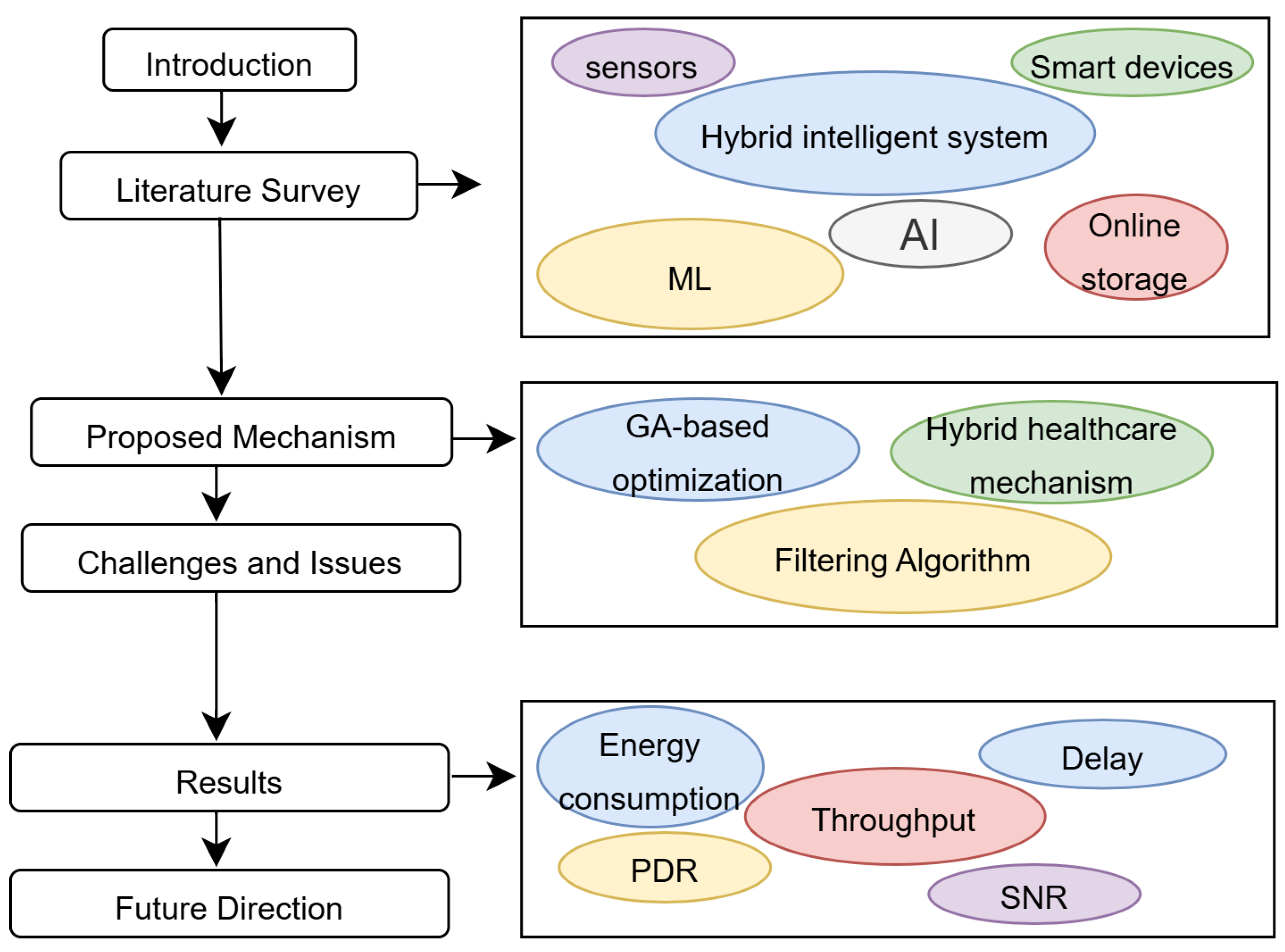
The proposed mechanism integrates an efficient communication and storage framework for medical records by combining a Genetic Algorithm (GA) with a Filtration Mechanism (FM) [
12,
13] using AODV routing protocols. IoMT challenges, such as unreliable links and real-time information transmission, are managed and handled using filtering and GA-based schemes. The GA is employed to optimize dynamic parameter generation and to select efficient routing paths, whereas the Filtration Mechanism is used to reduce noise and communication delay, thereby enabling smoother information transmission in the network. The general flow of the proposed framework is illustrated in
Figure 1. The main contributions of this work are summarized as follows:
A GA-based optimization module is designed to enhance the information analysis process by filtering out less-significant parameters based on their behavior and contribution to the network.
A Filtration Mechanism is incorporated to improve communication efficiency by reducing noise and communication delay while simultaneously analyzing the legitimacy and behavior of each communicating device.
The proposed mechanism is extensively evaluated against several performance metrics, including the packet delivery ratio, Quality of Service (QoS), throughput, Signal-to-Noise Ratio (SNR), energy consumption, and communication delay.
Furthermore, in the proposed mechanism, the filter lengths such as 8–32 taps are selected to balance the computational constraints along with noise suppression rather than diagnosing the signal morphology. Clinical validation, along with signal-specific tuning, is identified as future direction of this paper. The remainder of this paper is organized as follows.
Section 2 reviews the existing schemes for efficient information transmission and storage in smart healthcare environments.
Section 3 details the proposed methodology, including the pseudo-code and corresponding flowchart.
Section 4 presents the validation and verification of the proposed mechanism against several performance metrics in comparison with baseline methods. Finally,
Section 5 concludes this paper and outlines the potential directions for future work.
2. Related Work
This section reviews the existing schemes and approaches for efficient and secure healthcare monitoring and patient record management that have been proposed by various researchers.
Ezz et al. [
14] proposed a transparent and secure information transmission framework that integrates smart contracts with zero-knowledge proofs. The authors focused on promoting ethical AI in healthcare by governing information flows within the network, and validated their scheme in terms of patient privacy and data security. Su et al. [
15] introduced a high-fidelity radar dataset designed to preserve patient privacy during data sharing and storage. Their work explicitly incorporates occlusion scenarios to study and mitigate data leakage, thereby improving the applicability of radar-based sensing in real-world healthcare environments. The authors monitored the personal identity and behavioral patterns of patients in critical care rooms. Silva-Aravena et al. [
16] proposed a surgical prioritization framework that combines reinforcement learning with digital twins, demonstrating substantial improvements over traditional scheduling strategies. Their results indicate reduced waiting time, lower surgical risk, and improved utilization of healthcare resources.
Pradhan et al. [
17] presented an AI-assisted healthcare system leveraging 5G technology to enhance communication and information transmission in the network. They examined how AI and 5G can be jointly utilized in intelligent healthcare systems and showed improvements in average communication time as well as reductions in computational cost when adopting smart healthcare techniques. Alruwaili et al. [
18] integrated AI with transparent technologies such as blockchain and deep convolutional neural networks (CNNs) to enable a secure smart healthcare system. The authors investigated the security risks associated with transmitting information over the network and evaluated the framework using benchmark medical datasets. They also highlighted the use of Jellyfish search optimization to address multiple optimization concerns [
19]. Akter et al. [
20] proposed a federated-learning-based privacy-preserving mechanism using edge intelligence for smart healthcare systems. They provided a theoretical convergence bound for federated learning and validated their approach on recent benchmark datasets such as STL-10, MNIST, CIFAR-10, and COVID-19 chest X-ray images.
Siddiqui et al. [
21] developed a Markov-process-based queuing model for smart healthcare mechanisms. Their approach aims to enhance the overall Quality of Service in healthcare by improving patient care workflows and disease diagnosis processes, and they assessed the use of blockchain systems in the context of smart healthcare. Mishra and Singh [
22] discussed the significance of integrating smart technologies for planning and managing medical care facilities to provide better patient care. They also outlined several challenges and opportunities in achieving higher standards associated with Healthcare 5.0. Patil et al. [
23] proposed a blockchain-based framework for preventing cyberattacks while managing medical records in smart healthcare systems. The authors evaluated their mechanism in terms of response time, demonstrating the effectiveness of Hyperledger-based smart contracts when compared with several existing approaches and mechanisms as summarised in
Table 1.
In addition, Pang [
24] and Singh et al. [
25] have proposed several GA-based schemes and approaches in order to optimize and ensure an adaptive communication mechanism in the network. The existing GA mechanisms provided a significant communication of records specifically for the static behavior of records. However, the real-time signalizing of information that can be adaptive in nature needs to be focused on the case of healthcare records.
Several existing researchers/scientists have proposed efficient and effective smart healthcare approaches that ensure secure information transmission and data storage [
26,
27]. Several schemes have been proposed to integrate intelligent and smart healthcare into traditional data analysis and medical record diagnosis. It is also necessary to propose an efficient way to process and analyze records in healthcare systems. In addition, the existing GA mechanisms provided a significant communication of records specifically for the static behavior of records; however, the real-time signalizing of information that can be adaptive in nature needs to be focused on the case of healthcare record. The proposed mechanism is defined as two-level filtering: LMS adaptation and GA-based decision filtering. The level-1 filtering performs denoising and equalization of IoMT devices by continuously adapting the sample-by-sample weights. The level-2 filtering applies the GA decision filtering level, which executes periodic routing and channel configuration through an evolutionary selection process. The LMS converges the selected GA metrics while GA converges the bounded space without disturbing the dynamics of LMS. Moreover, the proposed algorithm terminates the maximum generation count in order to improve the fitness function.
3. Proposed Approach
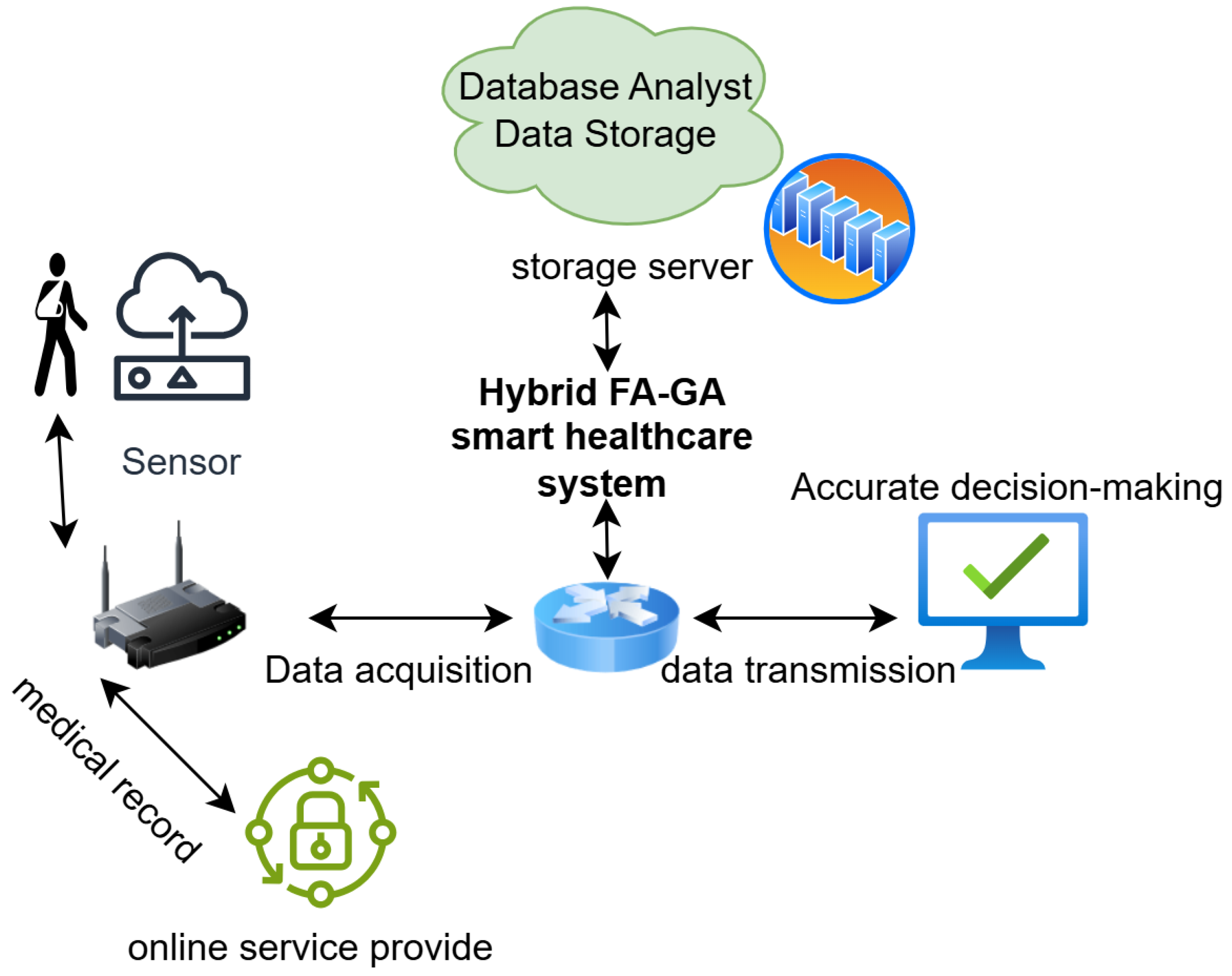
The aim of this manuscript is to propose an efficient and effective smart healthcare mechanism that integrates a genetic algorithm to optimize the dynamic optimization and filtering algorithm (LMS) for noise reduction. As intelligent devices generate tons of information in every hour, it is necessary to filter the significant information from the received data for providing an efficient transmission of information. A genetic algorithm is used to filter or select the routing parameters for filtering out the transmission power and energy consumption of each communicating device. In addition, the Filtration Mechanism adapt the wireless fluctuating conditions while reducing the noise distortion and communication delay.
Figure 2 presents the workflow of the proposed mechanism integrating Filtration Mechanism and GA, consisting of several components for smooth data transmission and communication for a smart healthcare network.
Data Collection and Acquisition: The information is collected from sensors placed in the patient room, including signals such as BP, glucose, ECG, patient movement, room temperature, etc.
Data Pre-processing: The raw information collected from the sensors is passed through an LMS filter to remove noise, motion artifacts, and interference.
GA optimization: The GA selects the optimal routing path by measuring the transmission power, nature, behavior, channel allocation, and minimum delay required to process the record.
Integrated Filtration Mechanism and GA: The GA processes only those records received from the Filtration Mechanism after noise reduction and with less communication delay devices/sensors in order to optimize the communication process after each epoch.
Data transmission: The optimized record is transmitted by the devices to their edge servers by performing real-time data analysis.
Looping: The network conditions are continuously recorded by updating the channel noise and the filtration process of each record.
The LMS adaptation rule
for optimizing the information by reducing the noise is processed as
where,
is the filter weight vector,
is the optimized route,
is the error signal, and
is the input vector received from the sensors. In Equation (1), the desired signal represents the estimate or local reference of the physiological model obtained using low pass reference model. The error signal is analyzed as difference between the filter output and the computed reference that directly quantifies the distortion and residual noise filtering. The chosen filter lengths detail the trade-off between energy constraints and noise suppression of wearable devices. In addition, the step size is used to ensure mean-square stability according to LMS theory with the range of 0–1.
GA function (F) is computed as
where D is delay, SNR is Signal-to-Noise Ratio, E stands for energy, and PLR stands for packet loss ratio. In the GA fitness function, the values of
are chosen through domain prioritization integrating an empirical tuning process, considering defined as 0.35, 0.30, 0.20, and 0.15 values. In addition, the fitness function weights are context dependent reflecting deployments priorities such as energy constraints and delay sensitivity. The weights can be re-tuned per application scenario using policy-driven or sensitivity analysis configurations. In addition, the population size is 40, with crossover and mutation probabilities of 0.8 and 0.03, respectively. A real-valued representation is defined by computing the routing path index, channel allocation index, and LMS step size. In addition, a 10 convergence threshold is defined, ensuring bounded and convergent computational cost. The fitness weights
to
are determined through a two-step process: (1) domain priorities that are used to define a reasonable weight range of smart healthcare, and (2) grid-based sensitivity analyses that are performed to determine a weight combination providing balanced and stable convergence performance. The selected weight decision-making method is used to fix and report all the experimental results to ensure reproducibility and transparency.
The pseudo code of the above integrated mechanism is presented in Algorithm 1.
| Algorithm 1 Integrated Filtration Mechanism and GA for smart healthcare communication in the network |
Require: Devices as , signals , GA parameters as p, routing path, Transmission power and fitness weights
Ensure: Efficient and clean signal of information to the edge
1: Deploy the Filtration Mechanism with default weights as
2: The GA initialized the population, i.e., 30–50 chromosomes
3: Random generation multi-path routing is used to transmit the data
4: Tournament selection operator is used
5: as stopping criteria and top 1–2 chromosomes as best solution extraction
6: for all = 1 device in Population size
7: Generate chromosome as routing, as packet transmission, and as mutation
8: Estimate the fitness as 9: Apply the GA by choosing the probability of mutation, crossover, and repair by evaluating the F(child)
10: Select the best chromosome for the final population
11: end for |
The will be exclusively reserved for LMS step size and will remain consistent with standard filtering theory. In addition, the optimized routing decision is denoted by and mutation rate is denoted by . The GA distribution of output, along with Filtration Mechanism adaptation, is presented in Algorithm 2.
On a cold start, the GA population is initialized using precomputed routing paths such as k-shortest with channel parameter and transmission power drawn uniformly without exploration of delays. In addition, the LMS weights were initialized with small random values that are refined within first few epochs. The GA is executed on gateway at coarse time scale with moderate parameters, resulting in a computational complexity of
, where F is fitness evaluation, P denotes GA population size, and G denotes number of GA generations. The proposed mechanism is defined as two-level filtering operating at LMS adaptation and GA-based decision filtering. The level 1 filtering performs denoising and equalization of IoMT devices by continuously adapting the sample-by-sample weights. Moreover, the level 2 filtering applies the GA decision filtering level that executes the periodic routing and channel configuration through an evolutionary selection process. The LMS covers the selected GA metrics while GA converges the bounded space without disturbing the dynamics of LMS. The proposed algorithm terminates the maximum generation count in order to improve the fitness function. The overall complexity of the proposed solution is O(PGA) for GA and O(L)/sample for LMS in order to confirm the computational feasibility of the record.
| Algorithm 2 Distribution and Adaptation of GA and LMS outputs |
Require: Devices as , signals , GA parameters as , routing path, Transmission power and fitness weights
Ensure: an Efficient and clean signal of information to the edge
1: Devices send the best chromosome by selecting the optimal routing path to the IoMT device as: where, RT is the routing table, Tx is the transmission time, is the weight and filtered device
2: Filtration process adopts the sample paths running on each device d as: 3: Further error rate is defined as: 4: Filtration adaptation rule is applied as: 5: for all do g = 1 to
6: Select, crossover, mutate and find the fitness evaluation
7: Update routing table and transmission power for all
8: compute PDR, SNR, Energy consumption during each epoch
9: if Epoch length elapsed, use logged statistics for next GA run
10: end for |
4. Performance Analysis
The proposed approach is validated against the existing baseline approaches over the GA and Filtration Mechanism approaches. While performing the implementation, the chromosomes are represented as a mixture of integer genes as routing path, channel ID, transmission power, and initial weights. The fitness estimation is computed as speed, an analytical estimator using path statistics and probe packet generation. In addition, constraints are handled as a penalty function for infeasible chromosomes exceeding the power budget. For validating the proposed approach, the population size is considered as 30–100 devices, generation is defined as GenMax being between 50 and 200, the crossover rate is considered to be between 0.7 and 0.9, and the filtration length is defined as being between 8 and 32. The proposed mechanism is simulated over the NS-3 network simulator with a random mesh topology where 50 IoMT nodes are uniformly deployed over a 100 × 100 m area. A single edge server is placed at the center to aggregate the health data following wireless communication as the IEEE 802.15.6 standard. Each device generates periodic traffic at the rate of 2 packet/sec with a size of 256 bytes. The battery capacity of each device is defined as 1000 mAh with an initial energy of 2 J, transmission range of 0/5–10 mW. In addition, 20 independent simulation runs are defined per scenario at random speeds to report the results across runs. The device failures and topology changes are identified using link-quality missing or degradation and logged at the gateways. The GA is then re-triggered in coming epoch to evaluate the feasible routing path without interrupting the LMS filtering.
The baseline approaches target the same objective and optimize communication, considering GA-based and LMS routing without defining static route or filtering objectives. The proposed mechanism considers the inconsistencies and ambiguities in order to relate the proposed mechanism in comparison to the existing approach. The baseline mechanism discusses the low-delay communication and architectural aspects of the network. The simulation environment is described in NS-3, where the network topology, traffic model, node density, and channel model are considered to target the communication process.
4.1. Baseline Approaches
The proposed mechanism is validated against several performance-based metrics such as packet delivery ratio, Quality of Service (QoS), throughput, Signal to Noise Ratio (SNR), energy consumption, and communication delay against two considered existing approaches, BA1 and BA2. Alruwaili et al. [
18] have integrated AI and transparent techniques, such as blockchain and deep CNNs, to enable a smart healthcare system, which is considered the Baseline Approach 1 (BA1). The authors have examined the security risks while communicating the information over the network along with executing the benchmark medical datasets. The authors highlighted the Jellyfish search optimization by measuring several concerns, whereas Mishra and Singh [
22], who considered the Baseline Approach2 (BA2), discussed the significance of integrating smart technology to manage and plan medical care facilities and enhance patient care. The authors discussed several challenges along with achieving the higher standards of healthcare 5.0. Both approaches are considered in comparison to the Proposed Approach (PA) validation and verification over several parameters. The baseline approaches are simulated and compared against their architectural scope. BA1, which emphasizes blockchain communication, the energy-aware routing logic, along with control overhead, are modeled, while BA2, the adaptive routing mechanism using data prioritization are approximated. The performance metrics are reproduced directly, aligning with original papers by assuming the unavailable parameters to ensure fairness in the program.
4.2. Evaluating Metrics
The performance metrics are considered, as discussed below, for the simulation and experimentation of the proposed and existing approaches. In this proposed mechanism, the GA employs a hybrid constraint-aware strategy presenting heterogeneous optimization metrics in a single chromosome. The routing path and channel identifiers are encoded using integer-valued genes referring gene reference pre-computed feasible path through the k-shortest path set. In addition, transmission power and the LMS filter are encoded with predefined bounds. The feasibility of the proposed methodology is preserved using gene-wise bounded operators by validating the invalid routing paths, resulting in the offspring remaining the valid configuration.
End-to-End Delay: Defined as the average latency time required per successfully receiving of packets by the device.
where
and
are defined as receiving and sending information i in the network and
is defined as the number of successful receptions of packets.
Packet Delivery Ratio: Defined as the ratio of the number of packets received versus the number of packets sent by the device d.
Throughput: Defined as the useful data successfully received by the device d per unit of time.
where
stands for observation time.
Energy Consumption: Defined as the amount of energy required to transmit information from one device to another.
4.3. Results and Discussion
This section presents the graphs generated over several discussed parameters in comparison of the existing and proposed approaches. In addition, the authors assert that the BA1 and BA2 addresses complementary, narrower objectives without focusing on state-of-the-practice routing protocols, although both approaches were included to highlight the difference from the recent healthcare framework, rather than serve as canonical routing. As the problem statement, we have acknowledged that comparison with the standard IoMT routing scheme would strengthen the evaluation and is planned as part of future work. In addition, in this manuscript, BA1, and BA2 are repositioned as enhanced contextual reference frameworks rather than primary routing benchmarks. Further, this enhancement allows us to clearly demonstrate the performance gains of the proposed GA-LMS approach.
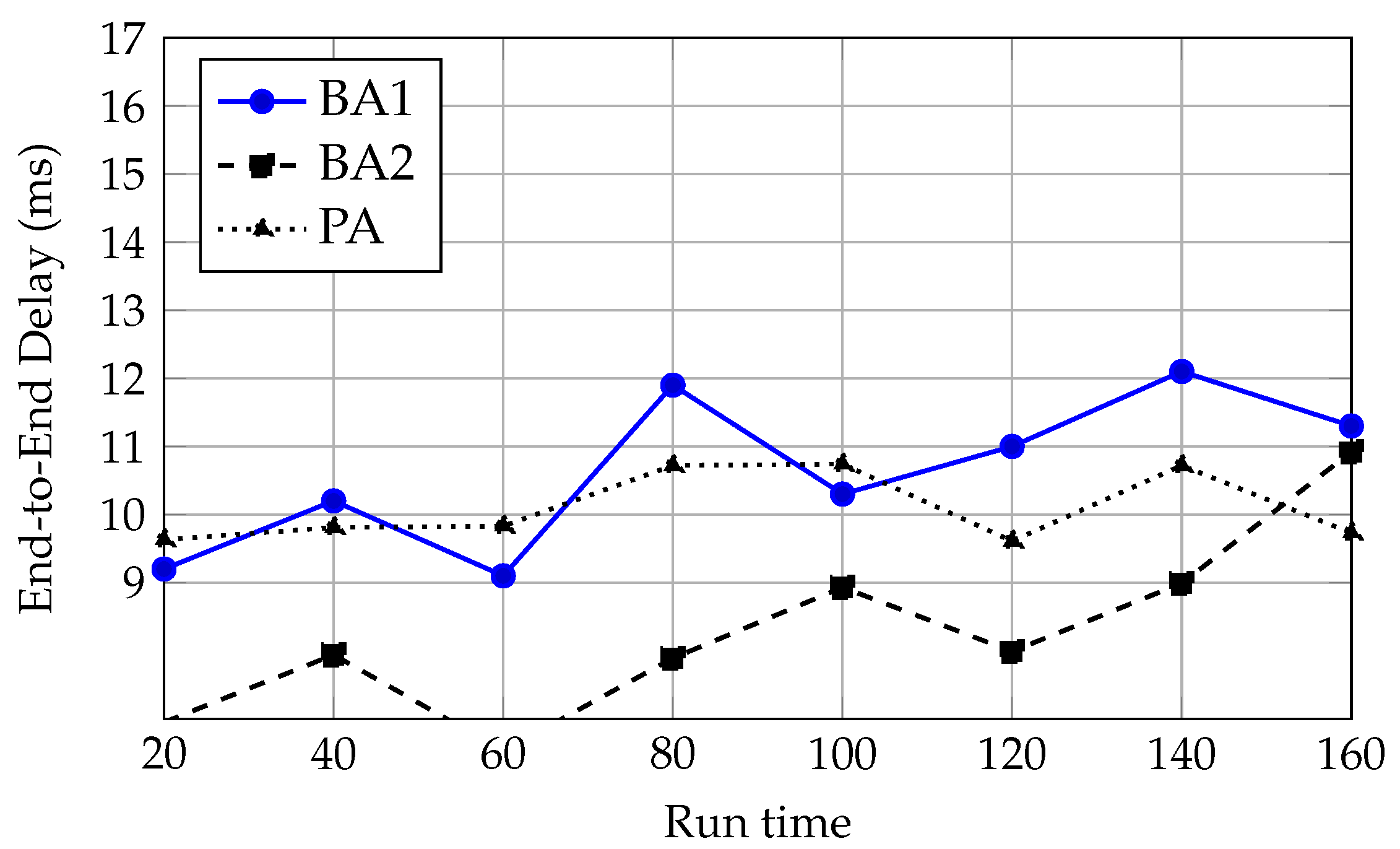
Figure 3 presents the end-to-end delay graph, which refers to the amount of time required to receive the packet by a device d in the network. The delay in the case of the proposed mechanism is very small compared to existing approaches, as the proposed mechanism reduces the noise and also filters the unnecessary parameters required to analyze the behavior of a communicating device in the network.
Furthermore,
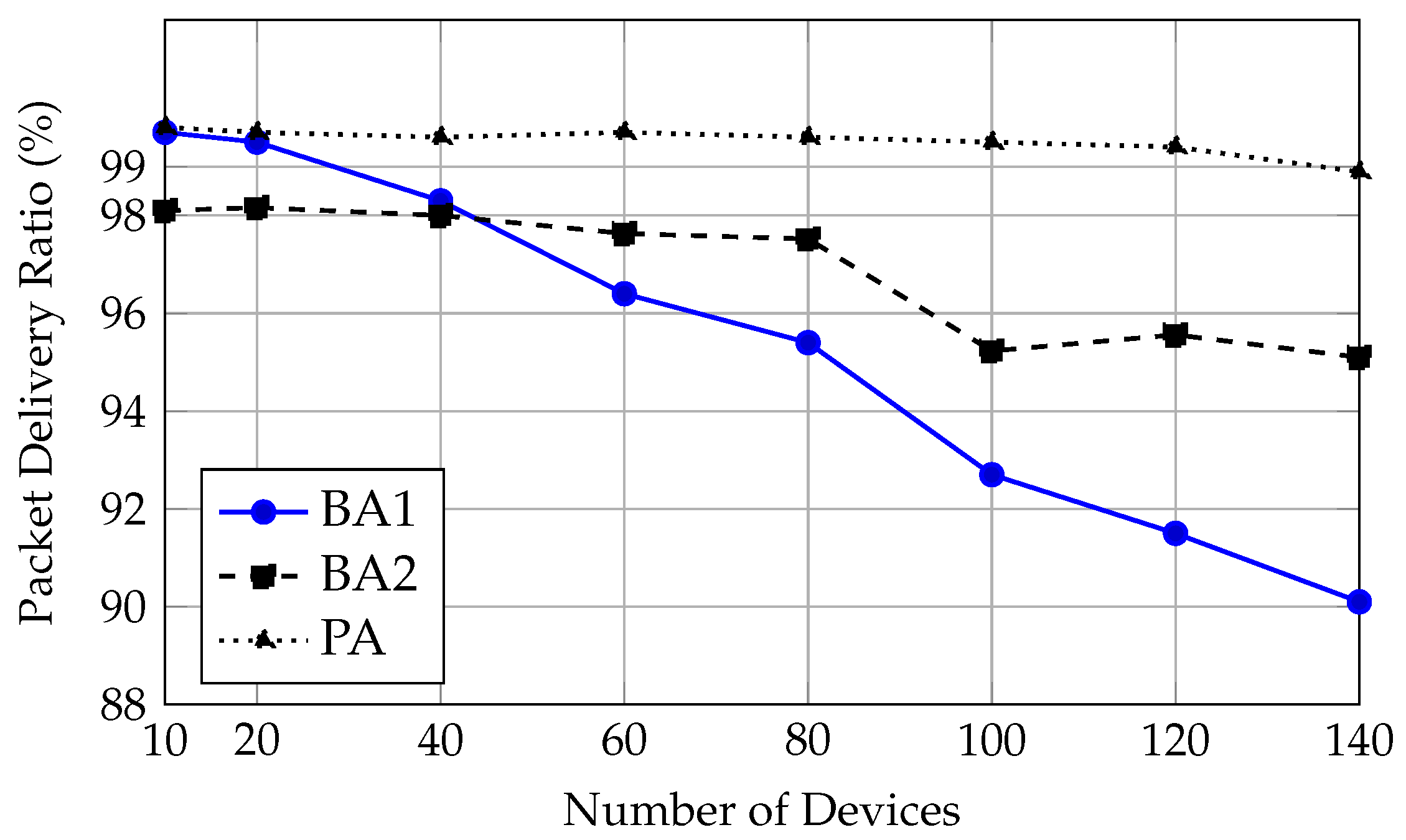
Figure 4 presents the packet delivery ratio, which is the ratio of the number of packets received to the number of packets sent. The packet delivery ratio of the proposed mechanism is better compared to existing approaches, as, in the case of the proposed mechanism, we applied the Filtration Mechanism, which filters and selects the best routing path available to receive and send the packets.
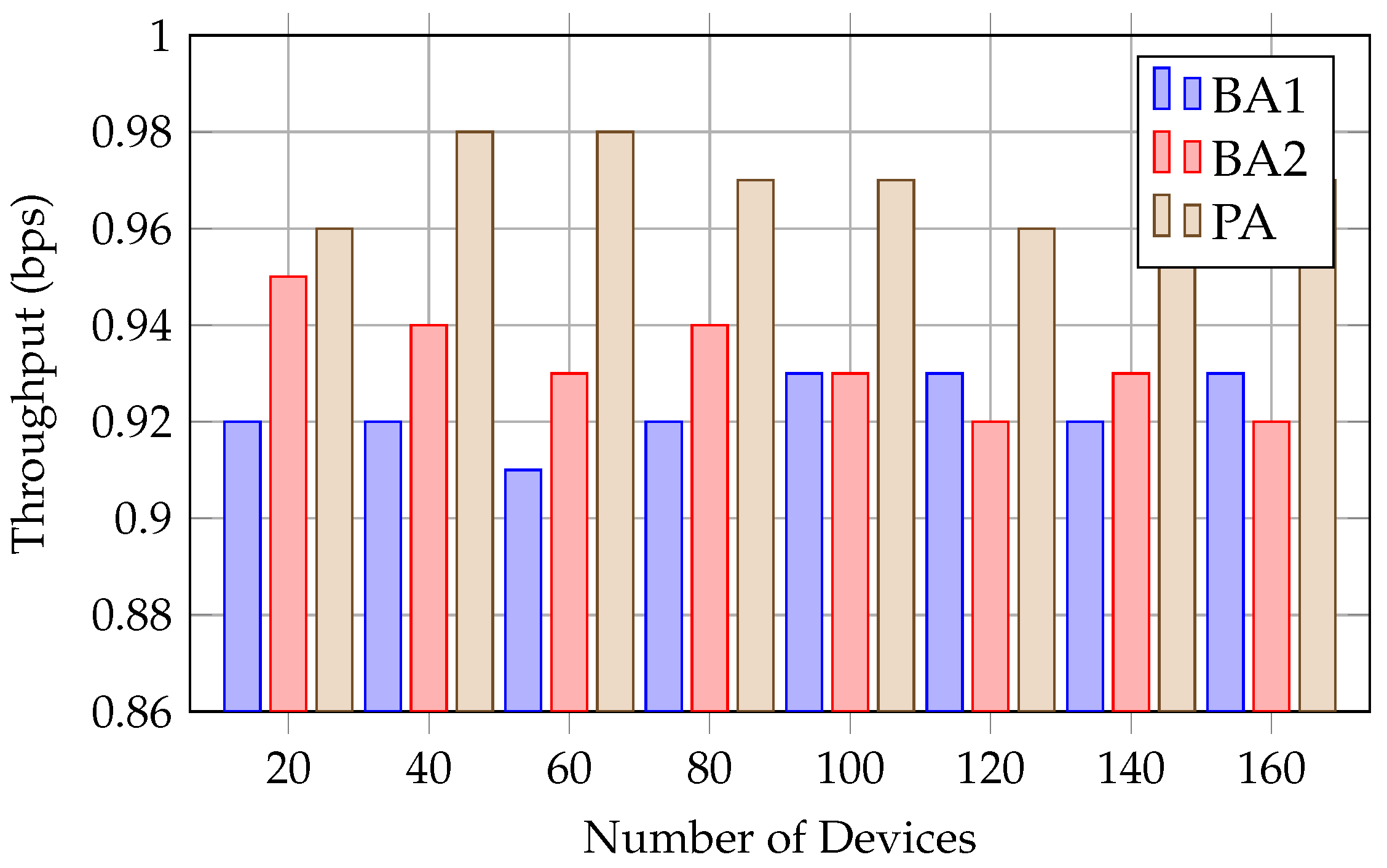
Figure 5 presents the throughput. The proposed mechanism outperforms the existing approaches because it filters out the noise and unnecessary parameters while transmitting and sending the records in the network. The optimal selection of parameters chooses the best-suited path for the transmission of packets in the network.
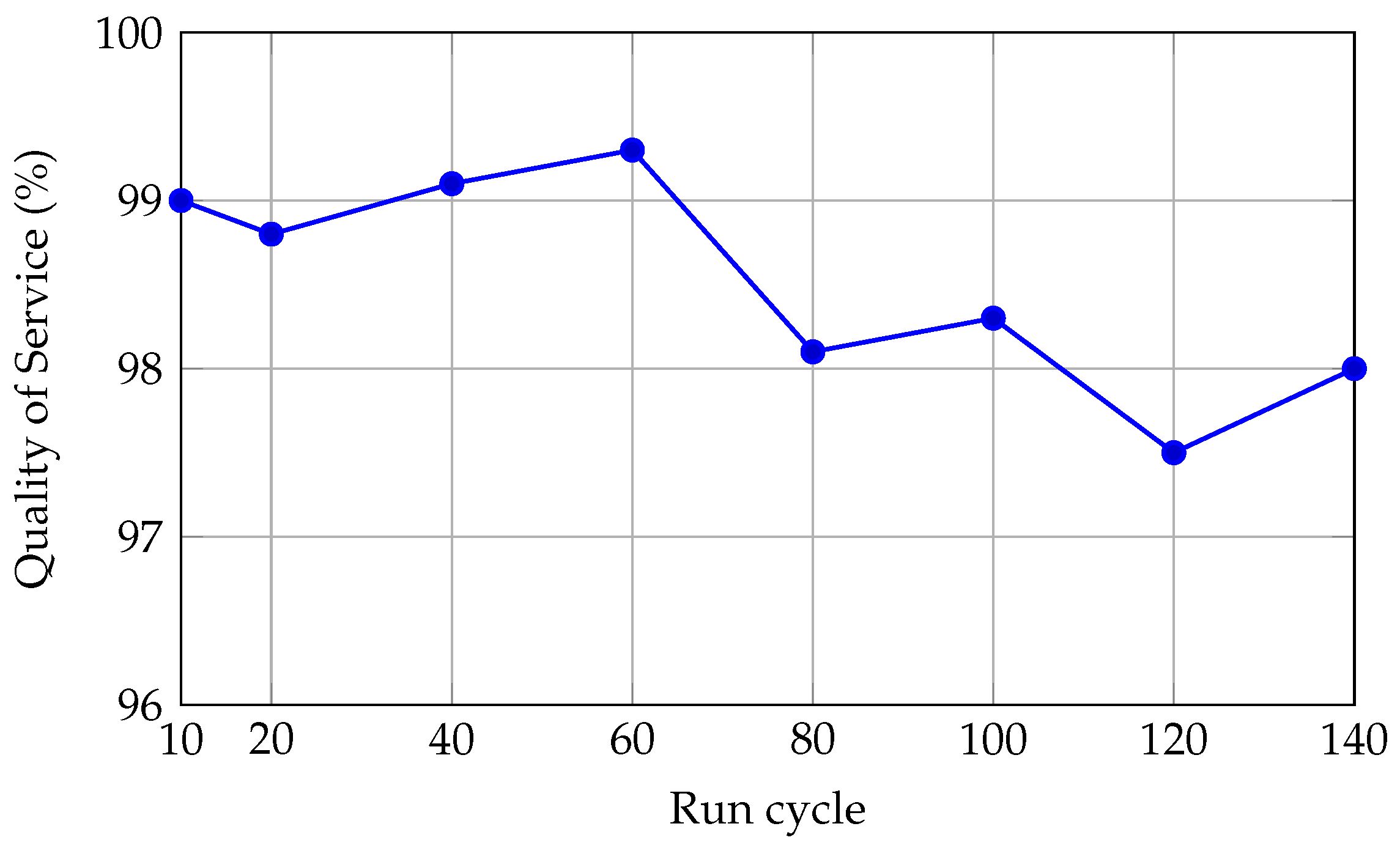
Figure 6 and
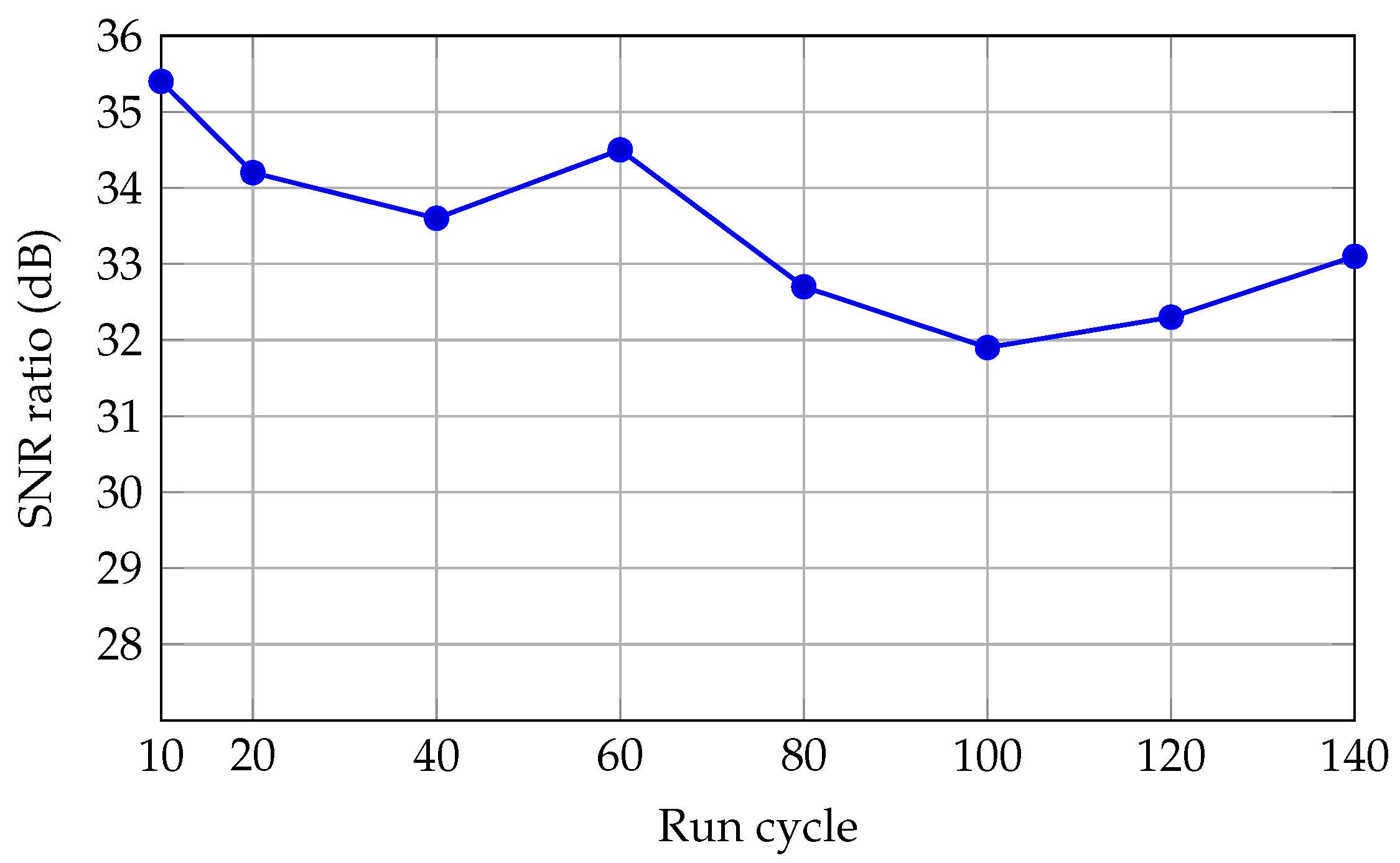
Figure 7 present the QoS and SNR of the proposed mechanism over ten run cycles, showing a continuous improvement in quality while sending the records and noise reduction because of the involvement of the filtration mechanism.
Furthermore,
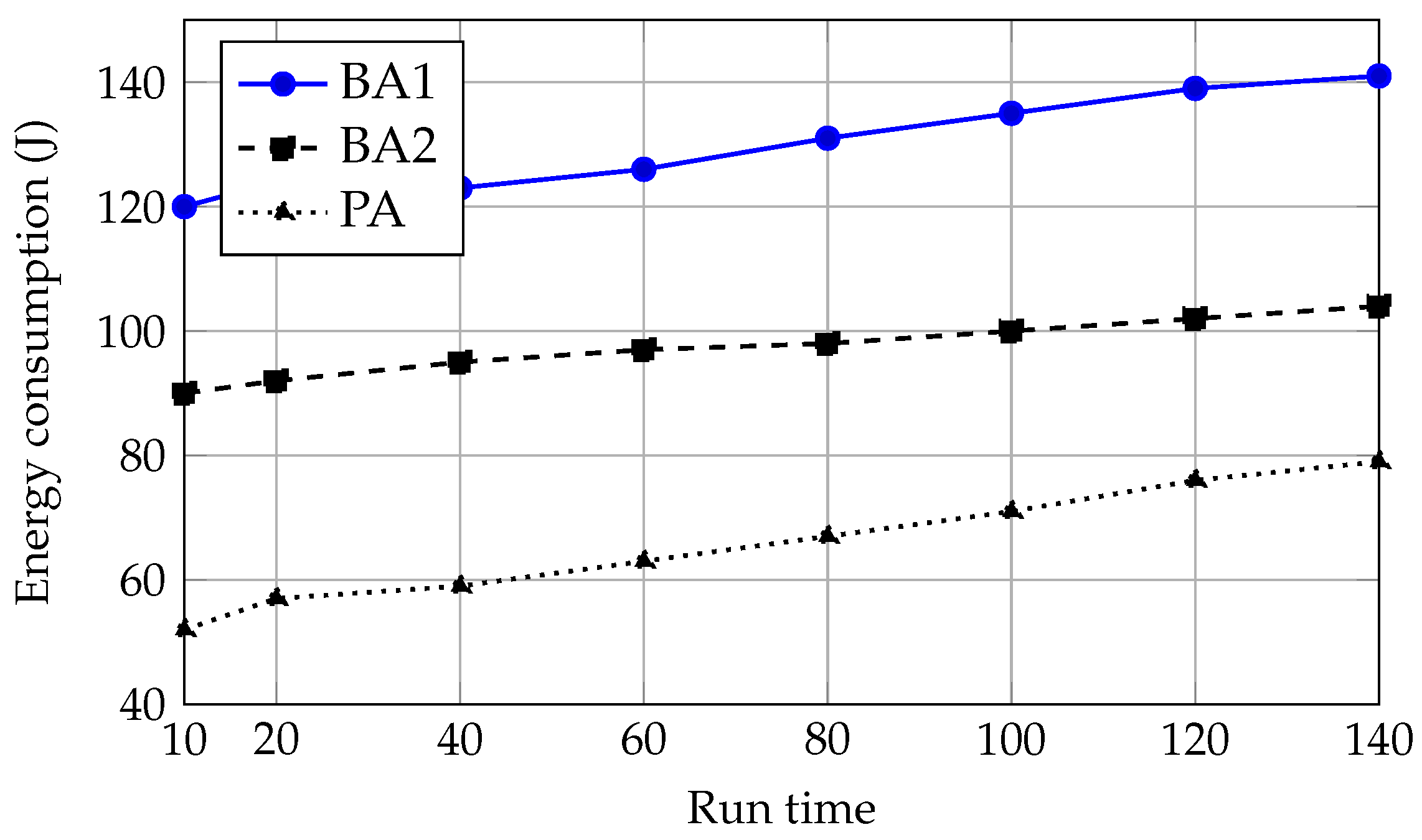
Figure 8 presents the energy consumption of the proposed mechanism in comparison of existing approaches. The integration of Filtration Mechanism and GA an efficient and smooth transmission of information while collecting the raw data from intelligent devices.
In addition,
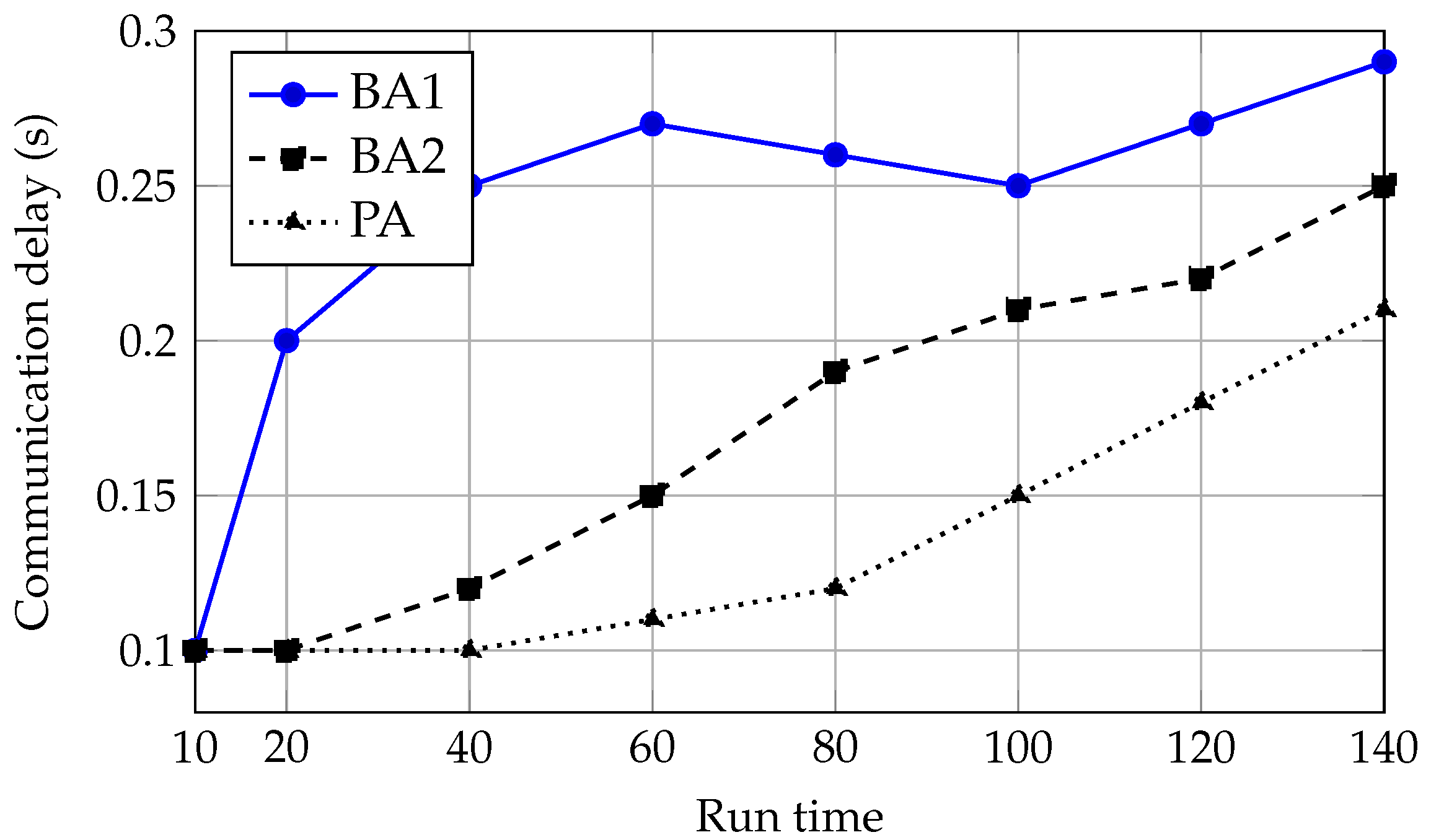
Figure 9 presents the communication delay while transmitting the information among devices. The involvement of ideal behavioral devices in the network provides less communication delay compared to devices that cannot be analyzed at the initial stage. The current analysis of the proposed mechanism is confined to controlled simulation scenarios predefining traffic and channel variability. The proposed framework is designed to handle disturbances by identifying rapid adaptation to signal anomalies using LMS and optimizing responses using a GA algorithm. The algorithms are validated using dynamic node leaving/joining, physiological dataset, abrupt link-quality, and testbed deployment in healthcare environments. In addition, the sensor data is assigned with priority tags such as routine, which are critical based upon the threshold-based anomaly detection. The GA incorporate priority-aware delay weights while MAC layer uses priority queues for forwarding expenditure.
4.4. Ablation Analysis
This section, Ablation Analysis, has been added to the updated version of this manuscript to quantify the combined and separated contributions of the proposed components. LMS alone improves the signal quality by approximately 8–10% with a 5–7% reduction in packet loss. In addition, GA alone optimizes the network decisions, reducing energy consumption and end-to-end delay by 10–13% and 12–15%, respectively. In addition, the combined GA-LMS framework achieves an 18–22% reduction in delay, 15–18% savings in energy, and a 20% improvement in SNR, which are further added in
Table 2.
4.5. Summary
The integration of the GA and Filtration Mechanism enhanced communication efficiency in the smart healthcare system by optimizing routing paths, network conditions, and transmission power, and by reducing noise during information transmission. The hybrid proposal ensures less delay, efficient throughput, SNR ratio, and energy consumption, and a better packet delivery ratio in comparison to conventional approaches. The proposed mechanism offers an intelligent and robust communication framework while collecting the raw information of the patient by continuous monitoring, resource constraint, and emergency alerts. Furthermore, the authors acknowledge that the present study is based entirely on simulation in NS-3 environments. However, the simulation allows for the repeatable, controlled evaluation and analysis of the optimization and communication behavior of devices without capturing all the practical constraints of validating the GA-LMS framework during clinical deployments. The real-world IoMT testbed implementation, experimentation, and validation using a physiological dataset, along with interoperability with regulatory requirements and hospital IT infrastructure, are considered to be the future direction of this paper. The simulation study will be extended to include an event-driven, busty traffic scenario by emulating the anomaly alerts where devices generate high-priority packets upon detection. The scenario evaluates the framework alertness under sudden load and ability to manage high packet delivery and low delay for urgent data. The resulting performance will be reported and compared against the baseline scheme to determine the robustness and feasibility under real healthcare traffic.
5. Robustness and Sensitivity Analysis
In this section, we investigate the robustness of the proposed GA and two-level filtering framework with respect to key algorithmic and network parameters. Specifically, we study the sensitivity of the main performance indicators (end-to-end delay, packet delivery ratio, throughput, SNR, and energy consumption) to the GA hyperparameter, LMS filter configuration, and network size.
5.1. Sensitivity to the GA Hyperparameter
The GA configuration strongly influences convergence speed and the quality of the selected routing solutions. We varied the population size between 30 and 100 individuals and the maximum number of generations, GenMax, between 50 and 200, while keeping the crossover and mutation rates within the ranges used in
Section 4. The results show that, although the absolute values of delay and energy consumption change slightly with the GA configuration, the proposed framework consistently outperforms EA1 and EA2 across all tested settings. This indicates that the performance gains are not limited to a narrow hyperparameter configuration, but are robust to reasonable changes in the GA setup.
5.2. Effect of LMS Filter Parameters
To analyze the impact of the filtration stage, we varied the LMS filter length between 8, 16, and 32 taps and adjusted the step size within a stable range. Increasing the filter length improves the SNR and QoS at the cost of a modest increase in computational complexity per sensor node. Importantly, even with the shortest filter length, the two-level filtration scheme significantly improves PDR and reduces end-to-end delay compared to baseline approaches, confirming that the filtration stage is a key contributor to the observed performance improvements.
5.3. Scalability with Network Size
Finally, we examined the scalability of the proposed mechanism by increasing the number of IoMT devices from 50 to 150 under higher traffic loads. While all schemes experience an increase in delay and a slight degradation in PDR as the network becomes denser, the GA and filtration-based framework exhibits a slower performance degradation than EA1 and EA2. This behavior can be attributed to the adaptive selection of routing paths based on delay, SNR, energy, and packet loss ratio. These findings demonstrate that the proposed system can support larger smart healthcare deployments while maintaining acceptable QoS levels.
6. Conclusions
This work presents an automated smart healthcare communication mechanism that combines a two-level filtering scheme with a multi-objective Genetic Algorithm to address key challenges in IoMT-based healthcare networks, namely noisy physiological signals, constrained energy resources and stringent latency requirements. At the sensing layer, an adaptive LMS-based Filtration Mechanism was employed to mitigate channel noise and motion artifacts, thereby improving the quality of physiological signals before transmission. At the network layer, the GA was used to optimize routing paths and transmission parameters by simultaneously considering delay, SNR, energy consumption, and packet loss, resulting in more reliable and resource-aware data delivery. The integrated framework was validated through simulation and compared against two state-of-the-art smart healthcare approaches. The proposed mechanism consistently achieved lower end-to-end delay and communication latency, higher packet delivery ratio and throughput, improved SNR and QoS, and reduced energy consumption. These improvements stem from the joint effect of denoising at the signal level and selective, GA-driven routing at the network level, which together ensure that legitimate, high-quality medical records are transmitted through the most suitable paths. From a practical perspective, the proposed system can support continuous patient monitoring, early detection of anomalies, and prioritization of high-risk cases in smart healthcare environments, particularly where many heterogeneous devices generate large volumes of data. By reducing false alarms and communication overhead, the framework has the potential to improve responsiveness and reliability in enabling timely delivery for clinical decision support systems.
Future work will focus on extending the proposed framework with end-to-end security and privacy mechanisms, such as lightweight authentication, access control and privacy-preserving data sharing, to better protect sensitive medical records. In addition, validating the approach on real-world clinical datasets and deploying it on testbed IoMT platforms will be important to assess scalability, interoperability and robustness under realistic operating conditions, and to integrate the mechanism more tightly with existing healthcare information systems. In future work, the proposed mechanism will be validated on a small-scale testbed using wearable devices and real physical datasets, such as the MIT-BIH ECG database. In addition, the clinical partners collaborate to assess the robustness, interoperability, and practical feasibility in a real healthcare environment.
Author Contributions
Conceptualization, methodology, G.R., H.S., C.A.K., R.D. and M.C.G.; software, validation, G.R., H.S., R.D. and M.C.G.; formal analysis, investigation, resources, data curation, writing—original draft preparation, writing—review and editing, visualization, supervision, project administration, G.R., H.S., C.A.K., R.D. and M.C.G.; funding acquisition, G.R. and M.C.G. All authors have read and agreed to the published version of the manuscript.
Funding
This research received no external funding.
Institutional Review Board Statement
Not applicable.
Informed Consent Statement
Not applicable.
Data Availability Statement
No new data were created or analyzed in this study. Data sharing is not applicable to this article.
Conflicts of Interest
The authors declare no conflicts of interest.
References
- Mazhar, T.; Irfan, H.M.; Haq, I.; Ullah, I.; Ashraf, M.; Shloul, T.A.; Ghadi, Y.Y.; Imran; Elkamchouchi, D.H. Analysis of challenges and solutions of IoT in smart grids using AI and machine learning techniques: A review. Electronics 2023, 12, 242. [Google Scholar] [CrossRef]
- Mondal, R.S.; Akter, L.; Bhuiyan, M.N.A. Integrating AI and ML techniques in modern microbiology. Appl. IT Eng. 2025, 3, 1–10. [Google Scholar] [CrossRef]
- Farzaan, M.A.; Ghanem, M.C.; El-Hajjar, A.; Ratnayake, D.N. AI-powered system for an efficient and effective cyber incidents detection and response in cloud environments. IEEE Trans. Mach. Learn. Commun. Netw. 2025, 3, 623–643. [Google Scholar] [CrossRef]
- Shaheen, M.Y. Applications of Artificial Intelligence (AI) in healthcare: A review. ScienceOpen Prepr. 2021. [Google Scholar] [CrossRef]
- Valavanidis, A. Artificial Intelligence (AI) Applications; Department of Chemistry, National and Kapodistrian University of Athens: Athens, Greece, 2023. [Google Scholar]
- Konya, A.; Nematzadeh, P. Recent applications of AI to environmental disciplines: A review. Sci. Total Environ. 2024, 906, 167705. [Google Scholar] [CrossRef] [PubMed]
- Han, L.; Liu, J.; Evans, R.; Song, Y.; Ma, J. Factors influencing the adoption of health information standards in health care organisations: A systematic review based on best fit framework synthesis. JMIR Med. Inform. 2020, 8, e17334. [Google Scholar] [CrossRef]
- Khanijahani, A.; Iezadi, S.; Dudley, S.; Goettler, M.; Kroetsch, P.; Wise, J. Organisational, professional, and patient characteristics associated with artificial intelligence adoption in healthcare: A systematic review. Health Policy Technol. 2022, 11, 100602. [Google Scholar] [CrossRef]
- Vadisetty, R.; Polamarasetti, A. AI/Decision ML-Driven Support Clinical and Medical Imagining. In Sustainable Healthcare Systems in Africa; CRC Press: Boca Raton, FL, USA, 2025; p. 154. [Google Scholar]
- Sivaprasad Yerneni, K.; Ravi Teja, A.; Sri Harsha, K.; Naresh Kiran Kumar Reddy, Y. Towards Proactive Cloud Security: A Survey on ML and Deep Learning-Based Intrusion Detection Systems. J. Contemp. Educ. Theory Artif. Intell. JCETAI-116 2025, 4, 100116. [Google Scholar]
- Prasad, T.V.K.P.; Sujatha, G.; Satish, T.; Rao, N.B. Protection of Sensitive Information Utilizing AutoML and Merkel Tree based on AONT-EHR. In Algorithms in Advanced Artificial Intelligence; CRC Press: Boca Raton, FL, USA, 2025; pp. 23–29. [Google Scholar]
- Sharma, S.; Kumar, V. Application of genetic algorithms in healthcare: A review. In Next Generation Healthcare Informatics; Springer: Singapore, 2022; pp. 75–86. [Google Scholar]
- Mirza, S.S.; Ur Rahman, M.Z. Efficient adaptive filtering techniques for thoracic electrical bio-impedance analysis in health care systems. J. Med. Imaging Health Inform. 2017, 7, 1126–1138. [Google Scholar] [CrossRef]
- Ezz, M.; Alaerjan, A.S.; Mostafa, A.M. Ethical AI in Healthcare: Integrating Zero-Knowledge Proofs and Smart Contracts for Transparent Data Governance. Bioengineering 2025, 12, 1236. [Google Scholar] [CrossRef]
- Su, Y.; Hou, H.; Lan, H.; Ma, C.Z.H. A High-Fidelity mmWave Radar Dataset for Privacy-Sensitive Human Pose Estimation. Bioengineering 2025, 12, 891. [Google Scholar] [CrossRef] [PubMed]
- Silva-Aravena, F.; Morales, J.; Jayabalan, M. e-Health strategy for surgical prioritization: A methodology based on Digital Twins and reinforcement learning. Bioengineering 2025, 12, 605. [Google Scholar] [CrossRef]
- Pradhan, B.; Das, S.; Roy, D.S.; Routray, S.; Benedetto, F.; Jhaveri, R.H. An AI-assisted smart healthcare system using 5G communication. IEEE Access 2023, 11, 108339–108355. [Google Scholar] [CrossRef]
- Alruwaili, F.F.; Alabduallah, B.; Alqahtani, H.; Salama, A.S.; Mohammed, G.P.; Alneil, A.A. Blockchain enabled smart healthcare system using jellyfish search optimisation with dual-pathway deep convolutional neural network. IEEE Access 2023, 11, 87583–87591. [Google Scholar] [CrossRef]
- Basnet, A.S.; Ghanem, M.C.; Dunsin, D.; Kheddar, H.; Sowinski-Mydlarz, W. Advanced persistent threats (APT) attribution using deep reinforcement learning. Digit. Threat. Res. Pract. 2025, 6, 14. [Google Scholar] [CrossRef]
- Akter, M.; Moustafa, N.; Lynar, T.; Razzak, I. Edge intelligence: Federated learning-based privacy protection framework for smart healthcare systems. IEEE J. Biomed. Health Inform. 2022, 26, 5805–5816. [Google Scholar] [CrossRef]
- Siddiqui, S.; Fatima, S.; Ali, A.; Gupta, S.K.; Singh, H.K.; Kim, S. Modelling of queuing systems using blockchain based on Markov process for smart healthcare systems. Sci. Rep. 2025, 15, 17248. [Google Scholar] [CrossRef]
- Mishra, P.; Singh, G. Healthcare 5.0: Smart and Connected Healthcare Systems for Sustainable Smart Cities. In Sustainable Smart Cities 2.0; Springer: Cham, Switzerland, 2025; pp. 251–289. [Google Scholar]
- Patil, S.M.; Dakhare, B.S.; Satre, S.M.; Pawar, S.D. Blockchain-based privacy preservation framework for preventing cyberattacks in smart healthcare big data management systems. Multimed. Tools Appl. 2025, 84, 25547–25566. [Google Scholar] [CrossRef]
- Pang, X.; Ge, Y.F.; Wang, K.; Traina, A.J.; Wang, H. Patient assignment optimisation in cloud healthcare systems: A distributed genetic algorithm. Health Inf. Sci. Syst. 2023, 11, 30. [Google Scholar] [CrossRef]
- Singh, S.; Nandan, A.S.; Malik, A.; Kumar, R.; Awasthi, L.K.; Kumar, N. A GA-based sustainable and secure green data communication method using IoT-enabled WSN in healthcare. IEEE Internet Things J. 2021, 9, 7481–7490. [Google Scholar] [CrossRef]
- Wang, X.; Hu, J.; Lin, H.; Liu, W.; Moon, H.; Piran, M.J. Federated learning-empowered disease diagnosis mechanism in the internet of medical things: From the privacy-preservation perspective. IEEE Trans. Ind. Inform. 2022, 19, 7905–7913. [Google Scholar] [CrossRef]
- Ge, Y.; Xu, L.; Wang, X.; Que, Y.; Piran, M.J. A novel framework for multimodal brain tumor detection with scarce labels. IEEE J. Biomed. Health Inform. 2024, 29, 5368–5380. [Google Scholar] [CrossRef]
| Disclaimer/Publisher’s Note: The statements, opinions and data contained in all publications are solely those of the individual author(s) and contributor(s) and not of MDPI and/or the editor(s). MDPI and/or the editor(s) disclaim responsibility for any injury to people or property resulting from any ideas, methods, instructions or products referred to in the content. |




 ,
,