1. Introduction
The rapid advancement of digital technologies has profoundly transformed the landscape of marketing and consumer behavior. Artificial intelligence (AI), big data analytics, and automated decision systems now enable firms to optimize targeting, personalize advertisements, and enhance customer engagement in real-time [
1,
2]. However, this technological progress has also introduced new ethical and social challenges concerning data transparency, algorithmic bias, and consumer trust [
3,
4]. The increasing reliance on AI-mediated marketing highlights a fundamental paradox: while consumers value personalized and efficient communication, they simultaneously express concerns about privacy, fairness, and manipulation in data-driven practices [
5,
6].
In today’s digital marketplace, consumers no longer evaluate only the functional attributes of products or services; they also judge the moral integrity and ethical image of the companies behind them [
7,
8]. This shift has intensified the need for organizations to demonstrate corporate responsibility and ethical alignment in their digital strategies. Studies show that trust and perceived ethicality significantly influence consumers’ willingness to accept AI-based recommendations, advertisements, and decision support tools [
2,
9,
10]. When consumers perceive transparency and accountability in algorithmic systems, they tend to form more positive attitudes toward the brand and exhibit higher levels of engagement [
11].
Recent national statistics show that Internet penetration in Greece has reached particularly high levels. According to the Hellenic Statistical Authority (ELSTAT), in 2024, 86.9% of households had Internet access, while 86.3% of individuals aged 16–74 reported using the Internet during the first quarter of the year [
12]. At the European level, Eurostat highlights a steady growth in the adoption of artificial intelligence technologies: in 2023, 8% of EU enterprises reported using AI applications, and this percentage increased to 13% in 2024 [
13,
14]. These figures illustrate the expanding role of digital technologies and AI in both consumer and business environments and reinforce the relevance of examining trust, ethical perceptions, and the acceptance of AI-based systems within the Greek digital marketplace.
Despite growing interest in AI-driven marketing, several research gaps remain. Much of the existing literature focuses on technological or functional adoption models—such as the Technology Acceptance Model (TAM) and the Unified Theory of Acceptance and Use of Technology (UTAUT)—without fully addressing the ethical and relational dimensions of trust [
15,
16]. Furthermore, few empirical studies have examined how the ethical image of businesses and consumer trust in AI interact to shape behavioral outcomes such as the acceptance of AI-based advertising or ethical purchasing intentions [
17,
18,
19]. Addressing this gap is crucial for understanding how digital transformation can coexist with responsible and trustworthy marketing communication.
This study aims to contribute to this emerging field by exploring how consumers’ familiarity and trust in AI influence two key behavioral dimensions: (a) the acceptance of AI-driven advertising and (b) the intention toward ethical consumption. Drawing on data from Greek digital consumers, the research develops and empirically tests a conceptual framework linking digital engagement, ethical confidence, and purchasing behavior. The contribution is twofold: theoretically, it integrates trust and ethical corporate image within a behavioral model of consumer decision-making; practically, it offers insights for companies seeking to design transparent, ethically responsible, and consumer-centered marketing strategies in the digital era [
7,
9,
11,
19].
2. Theoretical Framework and Hypothesis Development
The theoretical framework of this study builds on previous research examining the role of trust, ethics, and digital engagement in shaping consumer attitudes and behavioral outcomes in technology-mediated marketing environments. Trust has been widely recognized as a cornerstone of successful digital relationships between consumers and firms. When consumers perceive a technology or platform as transparent, reliable, and fair, they are more likely to accept its use in personalized communication, data sharing, and decision assistance [
20]. In contrast, a lack of clarity, accountability, or perceived ethical legitimacy can undermine confidence, creating resistance to digital tools and skepticism toward AI-mediated marketing [
21].
In recent years, the discussion surrounding the use of artificial intelligence has increasingly emphasized the importance of transparency and the need for algorithms to operate in ways that can be understood and monitored. Studies in the field of AI ethics indicate that when organizations adopt responsible practices—such as clear communication about data usage, mechanisms for accountability, and safeguards against potential biases—users feel greater security and trust toward automated systems [
9,
22]. At the same time, research on explainable AI shows that when systems provide understandable explanations for their decisions, consumers tend to perceive them as more reliable and fair, which reduces uncertainty and strengthens their willingness to accept them [
11,
23,
24]. These factors may serve as an important context within which trust in AI transforms into acceptance of AI-driven advertising and ethical evaluations of business practices while also offering meaningful directions for extending the theoretical model in future research. Existing research also shows that familiarity and previous experience with digital systems enhance perceived ease of use, competence, and confidence [
25]. As consumers increasingly interact with automated systems—chatbots, recommender engines, or voice assistants—they develop a more nuanced understanding of how such technologies function, which can foster greater comfort and trust [
11]. Consequently, familiarity not only reduces uncertainty but also supports more positive ethical evaluations of technology providers who are seen as transparent and responsible [
25].
2.1. Trust and Familiarity with Artificial Intelligence
Trust represents one of the most decisive factors shaping consumer attitudes toward artificial intelligence (AI) and the companies that deploy it. Recent studies emphasize that trust in AI extends beyond the technical reliability of algorithms, encompassing consumers’ belief that technology is applied responsibly, transparently, and in alignment with social and ethical norms [
9,
11]. When consumers perceive AI-based systems as fair and accountable, their acceptance and confidence toward the firms behind them increase [
8,
26,
27]. Familiarity with AI plays a crucial cognitive role in the formation of trust. Consumers who are more exposed to AI applications—such as recommendation systems, chatbots, or personalized advertisements—tend to experience less uncertainty and develop stronger perceptions of reliability [
25]. Familiarity functions as a learning mechanism that enhances understanding of how AI operates and reduces perceived risks [
25]. As a result, it fosters both cognitive and affective trust toward the technology and its providers [
20].
Recent work in the field of Explainable Artificial Intelligence (XAI) highlights that the transparency and interpretability of algorithmic outputs play an important role in shaping how users evaluate and trust AI systems. Studies have shown that when consumers can understand—even at a basic level—how an AI system arrives at a recommendation, their perceptions of fairness, accountability, and appropriateness tend to increase [
11]. Reducing the sense of algorithmic opacity also contributes to a stronger feeling of ethical legitimacy, as users are better able to assess whether automated decisions align with broader social and moral expectations [
28]. Furthermore, recent research suggests that providing meaningful explanations, even in simplified forms, can reinforce both the cognitive and ethical dimensions of trust in AI [
29]. In this sense, the XAI literature offers a valuable extension to traditional trust frameworks, emphasizing that trust in AI is not only a matter of technical accuracy but also of how understandable and ethically compatible algorithmic decisions appear to consumers.
The literature consistently highlights the multidimensional nature of AI trust, involving not only perceived competence and consistency but also perceived fairness, benevolence, and ethical integrity [
30,
31]. Recent research shows that concerns about algorithmic fairness, data use and the potential for hidden biases play a significant role in how users form moral trust toward AI systems, shaping their willingness to rely on automated outputs [
22,
32].
When organizations communicate openly about how their AI systems collect and use data, and when they implement clear safeguards to prevent unfair or biased outcomes, consumers are more likely to see these practices as ethically responsible. Recent studies show that transparency, fairness mechanisms and responsible data stewardship play an important role in shaping moral trust in AI technologies, leading to more positive attitudes toward firms that adopt AI in a socially accountable way [
9,
28,
32]. Recent empirical findings show that consumers’ familiarity with AI strengthens their trust, which subsequently enhances their acceptance of AI-driven marketing and decision-making tools [
6,
10,
17]. Trust therefore acts as a mediating construct that channels the effect of cognitive understanding (familiarity) into behavioral readiness to adopt AI-enabled interactions [
20]. The relationship between familiarity and trust also reflects broader processes of ethical evaluation: when users feel knowledgeable and empowered, they tend to expect fairness, transparency, and respect for personal data [
3].
In summary, familiarity and trust form an interdependent system: knowledge reduces uncertainty, and trust strengthens the willingness to engage with AI-based services. Recent research shows that repeated exposure to AI systems helps consumers form clearer expectations about how these technologies function, reducing uncertainty and shaping more stable perceptions of reliability and fairness. Familiarity therefore plays a cognitive role in developing trust, as users who understand AI processes tend to feel more confident and less vulnerable to potential risks associated with automated decision-making [
22,
25].
Based on this reasoning, the following hypothesis is proposed:
H1. Familiarity with artificial intelligence positively influences consumers’ trust in AI and in companies that employ it.
2.2. Acceptance of AI-Based Advertising
Acceptance of AI-based advertising depends critically on consumers’ prior trust in the technology and in the organizations employing it. Individuals are more likely to accept personalized messages when they perceive AI-generated content as useful, transparent, and respectful of privacy and autonomy [
2,
33]. From the perspective of procedural fairness, consumers evaluate not only the outcomes of advertising but also the processes by which ads are created, targeted, and delivered [
17]. The legitimacy of algorithmic procedures thus becomes a moral criterion that influences how persuasive and acceptable AI-generated messages appear [
32].
Trust operates as a cognitive filter that lowers perceived risk and enhances openness to AI-mediated communication [
5]. When algorithmic systems are seen as accountable, explainable, and free from manipulative intent, consumers attribute greater credibility both to the message and to the sponsoring brand [
34,
35]. In this way, perceived trustworthiness shapes the moral and psychological conditions under which consumers respond to AI-based advertising. The acceptance of such advertising is therefore conceptualized as a proximal outcome of trust in AI—a critical link that connects technological confidence to broader ethical and evaluative judgments of firms [
7,
18].
H2. Trust in AI positively influences consumers’ acceptance of AI-based advertising.
Several studies highlight that trust is a central driver of consumers’ willingness to adopt AI-based systems. When users believe that an AI application is competent, fair and aligned with responsible practices, they are more likely to accept its outputs and engage with it in everyday decision-making. Trust reduces perceived risks and increases openness toward AI-driven communication [
20,
22,
36].
2.3. Ethical Consumption Intention
Ethical consumption intention reflects consumers’ tendency to incorporate social, environmental, and moral considerations into their purchasing decisions [
6]. It involves both the avoidance of products associated with unethical practices and preference for firms perceived as responsible and transparent. In digital marketplaces, the accessibility of ethical information—such as sourcing, labor conditions, or sustainability ratings—is increasingly mediated by AI systems that recommend or filter product information. These systems can strengthen moral decision-making when perceived as fair and unbiased but may undermine it when perceived as intrusive or manipulative [
30,
33].
Acceptance of AI-based advertising can serve as a cognitive activation frame that links technological trust to ethical behavior. When consumers accept AI-mediated communication as legitimate and transparent, they are more inclined to generalize positive moral expectations toward the company, reinforcing perceptions of ethical image and integrity [
37]. Consequently, consumers who view AI-based marketing as trustworthy are more likely to reward responsible firms through their ethical purchase choices.
H3. Acceptance of AI-based advertising positively influences ethical consumption intention.
Ethical decision-making is closely connected with consumers’ perceptions of fairness, responsibility and value alignment in digital environments. Research indicates that when individuals accept a technology and perceive it as operating responsibly, they are more likely to evaluate related consumption behaviors through an ethical lens [
23]. Acceptance can therefore activate ethical considerations by framing AI-enabled practices as trustworthy and socially aligned.
2.4. Mediation of AI Advertising Acceptance
Beyond direct effects, prior research suggests that technology acceptance frequently mediates the pathway from cognitive antecedents—such as familiarity and trust—to behavioral intentions [
15,
16]. Acceptance of AI-based advertising can thus be understood as the mechanism through which trust in AI translates into ethically oriented behavior. When consumers perceive AI advertising as transparent and legitimate, they infer that the company’s technological practices align with broader social and moral standards [
38]. This inference legitimizes the use of AI in marketing, turning trust into proactive engagement with ethically perceived brands [
39].
H4. Acceptance of AI-based advertising mediates the relationship between trust in AI and ethical consumption intention.
Recent work suggests that acceptance can act as a pathway through which trust shapes ethical judgments. When consumers trust an AI system but also accept its use in a specific context, this acceptance can strengthen the influence of trust on value-driven decisions and ethical intentions [
32]. Acceptance thus functions as a mediating mechanism linking trust to moral evaluation [
33].
In addition to the direct relationships proposed in this study, recent research suggests that several contextual and individual factors may influence how trust in AI is formed and how it translates into acceptance. Studies on algorithmic fairness show that users are more willing to engage with AI systems when they perceive them as fair, unbiased, and free from discriminatory patterns [
40]. At the same time, research on privacy concerns indicates that individuals who feel uncertain or worried about how their personal data are used tend to hesitate more when it comes to adopting AI-based applications, even when they trust the technology itself [
41]. Furthermore, recent work on trust in AI highlights that perceptions of system transparency and competence remain essential conditions that shape whether trust ultimately leads to positive behavioral intentions. Although these factors are not incorporated into the present conceptual model, they provide meaningful directions for future research and illustrate how broader contextual influences may strengthen or weaken the pathways proposed in this study.
2.5. Summary and Link to Methods
In summary, the proposed framework suggests a sequential pathway linking digital familiarity, trust, and ethical consumption intentions through the acceptance of AI-based advertising. Familiarity with AI fosters trust, which enhances the acceptance of AI-mediated communication and, ultimately, encourages consumers to act according to ethical values in their purchasing decisions. This conceptual model aligns with the empirical design and the regression analyses presented in the Results Section, where each stage (H1–H4) corresponds to a specific statistical model testing these theoretical links.
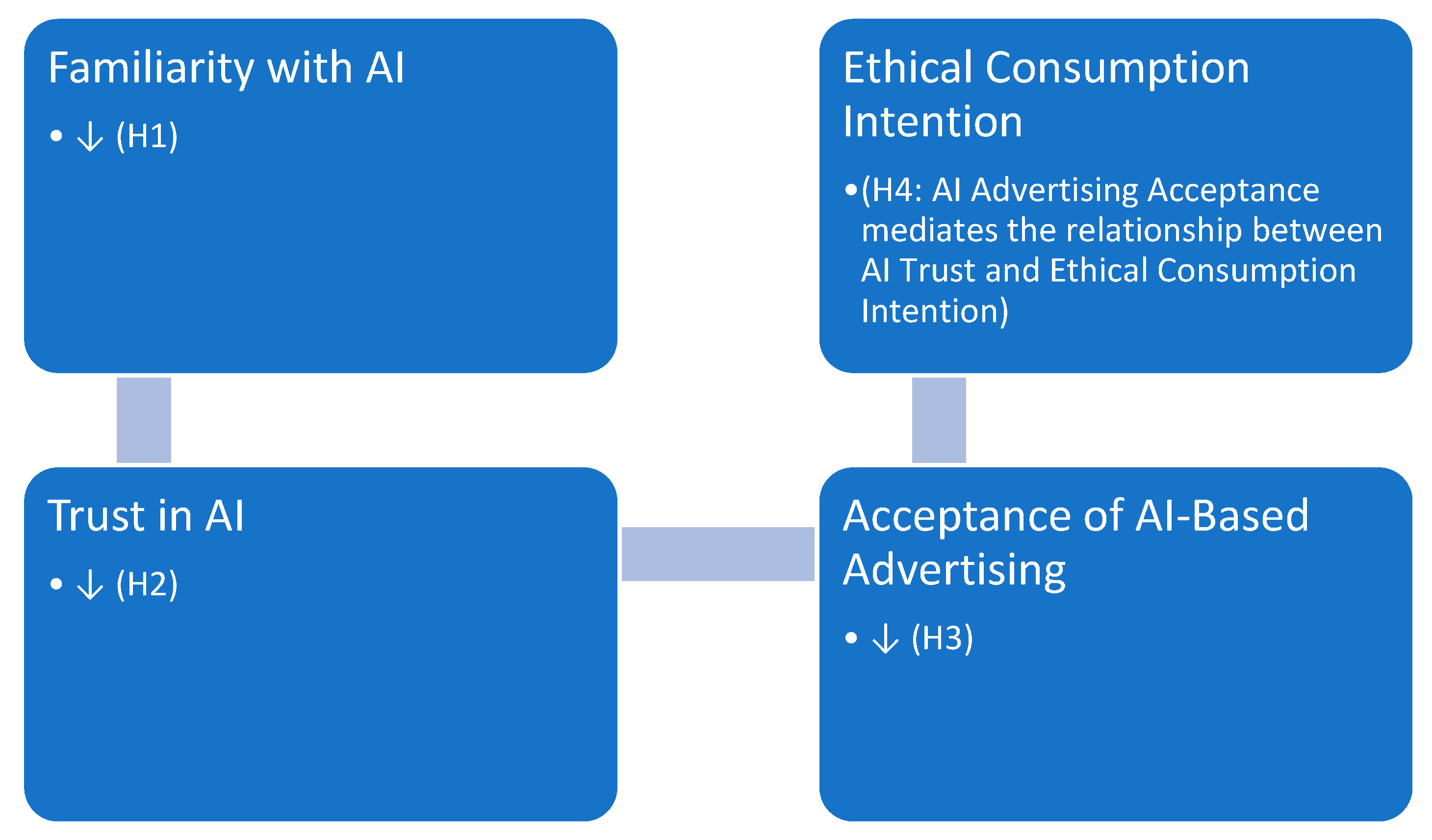
Figure 1 illustrates the proposed conceptual model and the hypothesized relationships (H1–H4). Familiarity with AI influences trust, which subsequently affects the acceptance of AI-based advertising and consumers’ ethical consumption intentions. Acceptance of AI-based advertising acts as a mediating variable linking trust in AI to ethical consumption.
3. Materials and Methods
3.1. Research Design
The present study was designed as a quantitative, cross-sectional survey, aiming to investigate how familiarity with artificial intelligence, trust in AI systems, and the acceptance of AI-based advertising relate to consumers’ ethical consumption intentions. A structured online questionnaire was used as the main research tool, as this approach allows for the efficient collection of attitudes and self-reported behaviors from a diverse group of participants within a relatively short period of time.
The questionnaire was developed by the author as part of a broader doctoral research project and draws on established findings in the fields of digital marketing, consumer ethics and AI-related trust. All questions were organized into clearly defined thematic sections corresponding to the key constructs of the study, ensuring consistency and clarity throughout the data collection process.
3.2. Sample and Data Collection
The study was conducted among Greek adult consumers aged 23 years and above who use the Internet regularly for communication, information seeking, and online purchases. Data were collected during the first half of 2025 through an online questionnaire created and distributed via Google Forms. A convenience sampling approach was used, drawing participants from social media platforms (such as Facebook and LinkedIn), university mailing lists, and professional networks.
Within the broader doctoral research project from which this study derives, data were collected using both online and paper-based questionnaires. The total dataset consisted of 650 completed questionnaires. For the purposes of the present analysis, only the 505 online responses were retained, in order to ensure that all participants had adequate digital familiarity and the necessary technological experience to evaluate AI-based advertising. This decision enhanced the consistency of the sample with the study’s focus on technology-mediated consumer interactions.
Participation in the study was voluntary and fully anonymous. No personal identifying information was collected, and respondents were informed that they could withdraw at any point before submitting their answers. The final analytical sample of 505 respondents is sufficient for the regression-based analyses conducted in this study and is in line with common practices in consumer behavior research.
3.3. Measures
The questionnaire used in this study was developed within the framework of the author’s doctoral research and was based on established concepts in the fields of artificial intelligence, consumer trust, and ethical consumption. All constructs were measured using multiple items, each reflecting a specific aspect of the underlying concept. The items were phrased in simple and accessible language to facilitate understanding among participants with diverse backgrounds.
Familiarity with AI was assessed through three binary items that captured participants’ prior exposure to AI-enabled tools, such as the use of chatbots, the use of ChatGPT-3.5, and the use of AI-based applications in the workplace. Prior research shows that direct experience with AI technologies is an important antecedent of consumer perceptions and serves as a basis for forming trust in algorithmic systems [
25].
Trust in AI was measured with two binary items reflecting the participants’ belief that AI systems operate reliably and in line with basic ethical expectations (e.g., “Do you trust AI?”, “Do you consider AI ethical?”). This operationalization is consistent with recent research that highlights trust as a multi-dimensional concept combining perceived reliability, fairness, and moral legitimacy.
Acceptance of AI-based advertising was measured through a single binary item assessing the extent to which participants approve the use of AI technologies in delivering personalized advertising content. Existing studies indicate that trust in AI is a key predictor of users’ acceptance of AI-generated communication and marketing applications. Ethical consumption intention was captured with a binary item assessing consumers’ willingness to avoid purchasing from firms perceived as unethical in their practices. Recent work suggests that consumers’ ethical judgments and intentions are influenced by their perceptions of fairness and responsibility in technology-mediated environments [
23].
All items were coded so that higher values represented greater alignment with the corresponding construct (e.g., higher familiarity, stronger trust, higher acceptance, or stronger ethical intention). The binary format of the items ensured clear and unambiguous responses and was consistent with the overall design of the doctoral research instrument.
3.4. Procedure
The data collection process took place online and followed a simple and standardized procedure to ensure clarity and consistency for all participants. Before accessing the questionnaire, respondents were provided with a short introduction explaining the general purpose of the study, the voluntary nature of participation and the guarantee of anonymity. They were informed that no personal identifying information would be collected and that they could exit the survey at any stage before submitting their responses.
Participants then proceeded to the structured questionnaire, which was organized into thematic sections corresponding to the main constructs of the study. The average completion time was approximately 5–7 min, depending on the participants’ familiarity with the topics. All responses were submitted electronically through Google Forms and were automatically recorded in a secure database accessible only to the research team.
To ensure data quality, the questionnaire included a brief filter that confirmed whether respondents met the minimum participation criteria (adult age and regular Internet use). Responses that were incomplete or did not meet these criteria were removed before the final analysis. The overall procedure allowed for efficient, uniform, and ethically sound data collection in line with the objectives of the study.
3.5. Ethics and Informed Consent
The study was conducted in accordance with ethical research standards and followed the principles of voluntary participation, anonymity, and confidentiality. Before starting the questionnaire, all participants were informed about the general purpose of the research, the voluntary character of their involvement, and their right to withdraw at any time without consequences. No personal identifying or sensitive data were collected during the survey.
Informed consent was obtained electronically prior to participation. The introductory page of the questionnaire clearly stated that the study formed part of a doctoral dissertation at the University of Western Macedonia, that responses would remain anonymous and confidential, and that the data would be used solely for research purposes. By proceeding with the survey, participants confirmed their consent to take part in the study.
As the research involved minimal risk and collected only anonymous, non-identifiable information, no formal approval from an institutional ethics committee was required under the guidelines applicable at the time of data collection. Nevertheless, the study adhered fully to ethical norms for social science research and complied with the journal’s ethical requirements.
3.6. Common Method Bias
Since all constructs were measured through self-reported data collected in a single survey, the possibility of common method bias was examined. Harman’s single-factor test was conducted by loading all measurement items into an unrotated factor solution. The results indicated that the first factor accounted for 40.9% of the variance, which is below the commonly referenced threshold of 50% in the literature [
42]. Therefore, common method bias was not considered a critical concern in the present study.
In addition to the statistical test, several procedural safeguards were incorporated into the data collection process to minimize potential method bias. These included ensuring complete anonymity, informing participants that there were no right or wrong answers, using simple and clearly worded items, and allowing respondents to withdraw at any stage before submission. Such measures are known to reduce social desirability effects and response consistency tendencies in self-report surveys.
3.7. Data Analysis
The dataset was first examined using descriptive statistics to summarize the demographic characteristics of the sample and the distribution of the study variables. To evaluate the internal structure and reliability of the multi-item constructs, principal component analysis and Cronbach’s alpha coefficients were computed.
The hypotheses were tested using hierarchical and binary logistic regression models, in line with the categorical nature of the dependent variables. In the first step, demographic controls (age, gender, education and income) were entered to account for potential background influences. In the subsequent steps, the main predictors were added sequentially to assess their unique contribution to trust, acceptance of AI-based advertising, and ethical consumption intention.
All analyses were conducted using IBM SPSS Statistics version 29.0, and statistical significance was evaluated at the 5% level. The analytical strategy followed the structure of the proposed conceptual model and allowed for the examination of both direct and mediating relationships among the study variables [
43].
4. Results
4.1. Descriptive Statistics of the Sample
The empirical analysis was based on data collected from Greek adult consumers aged 23 years and above who regularly use the Internet for communication, information seeking, and online purchases. Data gathering took place during the first half of 2025 through a structured online questionnaire created in Google Forms. A convenience sampling method was applied, using social media platforms (Facebook, LinkedIn), university mailing lists, and professional networks to ensure efficient and cost-effective data collection [
44,
45].
Out of 650 distributed questionnaires, 505 valid responses were retained, corresponding to a response rate of 77.7%. This sample size meets the requirements for multivariate and logistic regression analyses and is consistent with thresholds suggested for consumer-behavior studies employing similar techniques [
43,
45].
The sample consisted of 55% female and 45% male respondents, with an average age of 36 years. Regarding educational attainment, 28.1% had completed secondary education, 32.5% held a tertiary degree, 33.9% possessed postgraduate qualifications, and 2.8% had doctoral studies. The high share of well-educated and professionally active participants mirrors findings from other digital consumer surveys, which indicate that individuals with higher digital literacy are more likely to participate in online questionnaires [
12].
In terms of monthly personal income, 28.5% of respondents earned €601–900, 19.4% €901–1200, 21.2% €1201–1500, and 13.9% reported earnings above €1500, while only 7.5% declared less than €600. This distribution suggests that the sample largely represents middle- and higher-income brackets, typical of digitally active consumers [
12]. The gender and age proportions were broadly aligned with national census data from the Hellenic Statistical Authority (ELSTAT, 2024), showing no substantial deviations from the population structure [
46].
A potential bias toward digitally literate users is acknowledged due to the online nature of data collection. Nevertheless, the heterogeneity of demographic characteristics and the adequate sample size ensure robust representativeness for analyzing relationships between AI trust, advertising acceptance, and ethical consumer intentions. Internal reliability was confirmed through Cronbach’s alpha coefficients ranging from 0.800 to 0.819, indicating satisfactory internal consistency across the composite variables [
45,
47].
Although several demographic characteristics were reported in the descriptive section to provide a complete overview of the sample, only a theoretically relevant subset of these variables was incorporated into the regression models. In line with prior behavioral research, the models included specific control variables (age, gender, marital status, income level and job responsibility) that could plausibly influence trust, acceptance of AI-based advertising, and ethical consumption behavior. For instance, income was operationalized through a “low-income” indicator rather than full income categories, as this approach aligns more closely with studies examining vulnerability and risk sensitivity in digital environments. The remaining demographic variables were not entered into the models as they did not correspond directly to the theoretical focus of the analysis and were not required for the parsimony of the regression framework.
Table 1 presents the demographic characteristics of the sample, providing an overview of the respondents’ gender, age, educational attainment, and income distribution.
4.2. Reliability Analysis
To assess the internal consistency and reliability of the measurement constructs, Cronbach’s alpha coefficients were computed for each composite variable included in the analysis. Reliability coefficients above the threshold of 0.70, as proposed by Nunnally and Bernstein, are generally considered satisfactory for behavioral and marketing research [
48].
The first construct, AI Exposure Use, comprised three items capturing the participants’ interaction with AI-based tools—such as chatbots, recommendation engines, and AI applications—in professional or everyday contexts. The obtained Cronbach’s alpha value of 0.819 indicates high internal consistency, suggesting that the items reliably reflect a common underlying dimension representing consumers’ familiarity with AI technologies.
The second construct, AI Trust and Ethics, consisted of two items measuring the perceived trust and ethical evaluation of AI systems. The resulting Cronbach’s alpha of 0.800 also demonstrated acceptable reliability, confirming that perceptions of technological trustworthiness and moral integrity form closely related dimensions of the same latent concept. Similar reliability levels have been reported in prior studies examining consumer trust and ethical attitudes toward algorithmic and AI-mediated systems [
47,
48].
Overall, both indices of Cronbach’s alpha confirm that the measurement instruments exhibit adequate psychometric robustness, supporting reliable interpretation of the regression analyses and hypothesis testing presented in the subsequent sections. Internal consistency was further verified through item–total correlations, all of which exceeded 0.50, consistent with the recommended thresholds for construct reliability in behavioral and marketing research [
48,
49,
50]. As shown in
Table 2, the reliability analysis indicated satisfactory internal consistency for both multi-item constructs.
4.3. Validity Analysis
To assess the construct validity of the variables related to consumers’ trust and familiarity with artificial intelligence (AI_TrustEthics and AI_ExposureUse), a Principal Component Analysis (PCA) was performed. The analysis aimed to examine whether these variables represent a single conceptual dimension associated with consumers’ ethical and cognitive evaluations of AI-based systems.
The results indicate that the Kaiser–Meyer–Olkin (KMO) measure of sampling adequacy was 0.500, which is considered marginally acceptable for analyses involving a limited number of variables, particularly when the objective is to explore their conceptual association rather than conduct a full-scale factor model [
35]. The Bartlett’s Test of Sphericity was statistically significant (χ
2 = 150.066, df = 1,
p < 0.001), confirming that the variables were sufficiently correlated to justify the application of PCA.
The Communalities value for both variables was 0.754, and the extracted component explained 75.4% of the total variance, indicating strong convergent validity and suggesting that the two measures capture the same underlying concept. The factor loadings (0.868 and 0.868) further support the existence of a unified construct that represents the consumers’ trust and familiarity with AI technologies. Overall, these results confirm the internal coherence and conceptual convergence of the two indicators, in line with methodological recommendations for small-scale factor analyses in behavioral and marketing research [
46,
48].
To further examine the construct validity of the measurement instruments, item-level factor loadings were assessed through Principal Component Analysis (PCA).
For the Familiarity with AI construct, the PCA produced a clear single-factor solution explaining 73.98% of the variance. All three items showed strong factor loadings above the recommended threshold of 0.70, indicating satisfactory convergent validity (see
Table 3).
A similar PCA was conducted for the Trust in AI construct. The analysis yielded a single-factor structure that accounted for 83.35% of the total variance, with both items loading highly on the underlying dimension (see
Table 4). These results provide strong evidence of convergent validity for the trust measure.
4.4. Hierarchical Regression Analysis on Trust in Artificial Intelligence (AI_TrustEthics)
To examine the determinants of consumers’ trust in artificial intelligence (AI) and its ethical dimensions, a hierarchical multiple regression analysis was conducted in three steps.
In Model 1, demographic variables were entered (age, gender, marital status, low income, and job responsibility). The model was statistically significant, F(5, 499) = 51.45, p < 0.001, explaining 33.4% of the variance in AI trust (Adjusted R2 = 0.334). Age (β = −0.337, p < 0.001), gender (β = 0.187, p < 0.001), marital status (β = −0.174, p < 0.001), and low income (β = −0.306, p < 0.001) were significant predictors, while job responsibility had a marginal effect (β = −0.077, p = 0.035). Younger, male, unmarried, and higher-income respondents exhibited greater trust in AI systems.
In Model 2, attitudinal and value-based predictors were added, including considers_env_criteria, bought_for_self_identity, ethical_origin_influence, consumption_identity, and willing_pay_more_for_green. The model improved slightly, ΔR2 = 0.025, F(10, 494) = 29.20, p < 0.001. Willingness to pay more for green products (β = 0.115, p = 0.002) and ethical origin influence (β = 0.087, p = 0.011) had positive effects, indicating that consumers valuing ethical and sustainable production show higher trust in AI technologies.
In Model 3, digital behavior indicators (Omnichannel and AI_ExposureUse) were entered. The final model explained 51.4% of the variance (Adjusted R
2 = 0.514, F(12, 492) = 45.44,
p < 0.001), representing a substantial increase (ΔR
2 = 0.155). AI_ExposureUse was the strongest predictor (β = 0.415,
p < 0.001), followed by Omnichannel behavior (β = 0.115,
p = 0.004). Thus, greater exposure and familiarity with AI correlate with stronger ethical trust in AI systems. As shown in
Table 5, the hierarchical regression analysis revealed the incremental contribution of demographic, ethical, and digital behavior variables to consumers’ trust in AI across the three successive models.
Overall, the hierarchical model suggests that demographic variables explained the initial variance in AI trust, while direct experience and interaction with AI technologies played a decisive role in shaping consumer confidence toward ethically reliable AI practices.
4.5. Logistic Regression Analysis: Acceptance of AI-Based Advertising
To investigate the determinants of consumers’ acceptance of AI-based advertising, a two-step binary logistic regression analysis was conducted.
In Model 1, demographic and socioeconomic variables were included (age, gender, education, job responsibility, income satisfaction, and marital status).
In Model 2, the variable AI_TrustEthics—representing consumers’ trust and ethical perceptions of artificial intelligence—was added to evaluate its additional explanatory effect.
The Omnibus Tests of Model Coefficients confirmed that both models were statistically significant (Model 1: χ2 = 110.904, df = 6, p < 0.001; Model 2: χ2 = 179.058, df = 7, p < 0.001), indicating an overall good fit.
The Nagelkerke R2 increased from 0.300 in Model 1 to 0.454 in Model 2, showing that the inclusion of AI_TrustEthics substantially improved the model’s explanatory power, accounting for approximately 45% of the variance in the likelihood of accepting AI-driven advertisements.
The model’s classification accuracy also improved from 82.6% to 84.2% between the two stages, demonstrating satisfactory predictive performance.
According to the regression coefficients, age (B = −0.066, p < 0.001), job responsibility (B = −1.234, p < 0.001), and marital status (B = 0.639, p = 0.042) were significant predictors.
In addition, income satisfaction (B = 0.743, p < 0.001) and education (B = 0.897, p = 0.008) positively influenced the probability of acceptance.
Most notably, AI_TrustEthics had a strong and positive effect (B = 2.477, Exp(B) = 11.904, p < 0.001), indicating that consumers with higher trust and more favorable ethical attitudes toward AI are roughly twelve times more likely to accept AI-based advertising compared to those with lower trust.
Although the Hosmer–Lemeshow test yielded a significant result (
p < 0.05), suggesting minor deviations from perfect fit, the overall predictive capacity and classification accuracy remained high, confirming the robustness of the model. As presented in
Table 6, the logistic regression analysis identified the key demographic, socioeconomic, and attitudinal determinants influencing consumers’ acceptance of AI-based advertising.
Socioeconomic factors—particularly income satisfaction, education, and marital status—positively influence the likelihood of accepting AI-based advertising, whereas age and job responsibility have negative effects.
However, trust and ethical perception of AI emerged as the strongest determinant, confirming that higher moral confidence in artificial intelligence substantially increases consumers’ readiness to engage with AI-driven marketing initiatives.
4.6. Logistic Regression Analysis: Ethical Purchase Behavior
To explore the determinants of consumers’ ethical purchasing behavior, a binary logistic regression was conducted. The dependent variable (Ethical Purchase) represents whether consumers avoid products associated with unethical practices, or conversely, prefer companies perceived as socially and environmentally responsible.
Twelve predictors were included in the model: age, gender, education, number of children, income, ethical origin influence, consumption identity, shopping satisfaction stress, preference for online shopping, AI_TrustEthics, willingness to pay more for green products, and showrooming behavior.
The model was statistically significant (χ2 = 214.105, df = 12, p < 0.001), indicating a good overall fit. The Nagelkerke R2 = 0.508 suggests that approximately 50.8% of the variance in ethical purchasing is explained by the included predictors. The model achieved a classification accuracy of 83.8%, reflecting strong predictive performance.
Among the predictors, several factors were statistically significant. Age (B = 0.108, p < 0.001) and income (B = 0.321, p = 0.002) positively influenced ethical consumption, indicating that older and financially secure consumers are more aware of ethical aspects in their purchase choices. Having children (B = 2.134, p < 0.001, Exp(B) = 8.45) was one of the strongest positive predictors, suggesting that family responsibilities enhance consumers’ social and environmental awareness.
Trust in AI and ethical perceptions (AI_TrustEthics) had a strong positive effect (B = 2.824, p < 0.001, Exp(B) = 16.84), meaning that individuals with greater moral confidence in AI are far more likely to make ethically driven purchase decisions. Likewise, preference for online shopping (B = 2.667, p < 0.001) and willingness to pay more for green products (B = 0.554, p = 0.039) positively affected ethical behavior, linking digital familiarity and sustainability awareness to moral decision-making.
Conversely, gender (B = −1.044, p = 0.007) and shopping satisfaction stress (B = −0.926, p = 0.003) negatively affected ethical consumption, suggesting that women and consumers who experience stress or dissatisfaction while shopping are less likely to prioritize ethical criteria. Education (B = −3.296, p < 0.001) and showrooming behavior (B = −2.716, p < 0.001) also had negative coefficients, implying that higher educational attainment or emphasis on price comparison may diminish ethical sensitivity.
Overall, the model shows that ethical consumption is driven by a combination of demographic, attitudinal, and behavioral factors. Consumers with higher trust in AI, stronger sustainability values, and active online engagement are significantly more likely to integrate ethical considerations into their purchasing decisions. As shown in
Table 7, the logistic regression model identified the demographic, attitudinal, and behavioral factors that significantly influence consumers’ ethical purchase behavior.
4.7. Summary of Results
Table 6 presents a summary of the main empirical findings from the regression analyses, linking the statistical results to the hypotheses proposed in the conceptual framework (
Figure 1). Overall, the results provide strong support for the theoretical model, indicating that consumers’ familiarity with and trust in artificial intelligence (AI) play a decisive role in shaping their acceptance of AI-based advertising and their intention to engage in ethical consumption.
H1 was supported: hierarchical regression analysis confirmed that familiarity with AI technologies (AI_ExposureUse) significantly and positively influenced the consumers’ trust and ethical perceptions of AI (β = 0.415, p < 0.001).
H2 was supported: trust in AI had a strong positive effect on the likelihood of accepting AI-based advertising (B = 2.477, Exp(B) = 11.90, p < 0.001).
H3 was also supported: acceptance of AI-based advertising increased the probability of ethical purchasing (B = 2.824, Exp(B) = 16.84, p < 0.001).
H4 was confirmed through the sequential pattern of results, suggesting that acceptance of AI-based advertising mediates the relationship between trust in AI and ethical consumption intentions.
These findings underscore the importance of ethical confidence and digital familiarity as drivers of sustainable consumer behavior in the digital era. Consumers who perceive AI systems as transparent, fair, and socially responsible are more receptive to AI-driven marketing and more likely to integrate ethical considerations into their purchasing decisions. As summarized in
Table 8, all four hypotheses were supported, with the empirical results confirming the sequential relationships proposed in the conceptual model.
5. Discussion
5.1. Interpretation of Findings
Building upon the empirical results summarized in
Section 3.5, this section discusses how consumers’ familiarity with, and trust in, artificial intelligence (AI) influence their acceptance of AI-based advertising and their ethical consumption behavior. The findings are interpreted in light of existing theories on trust, digital engagement, and ethical consumer decision-making, highlighting both theoretical insights and practical implications.
The analyses confirmed that familiarity with AI technologies enhances consumer trust and ethical confidence toward AI systems. This result supports earlier studies showing that repeated interaction with AI-based tools reduces uncertainty and increases perceived reliability [
20,
31]. Consumers who actively engage with chatbots, recommendation engines, or automated digital services appear to form stronger perceptions of competence and fairness in technology. This aligns with the “trust learning” mechanism proposed by Gefen and Pavlou [
20], whereby familiarity encourages affective and cognitive trust in digital environments. Beyond technical acceptance, this study extends the discussion by emphasizing that familiarity also fosters ethical acceptance—a dimension that previous technology adoption models such as TAM and UTAUT often overlook [
16,
49].
Furthermore, trust in AI emerged as a key predictor of consumers’ acceptance of AI-driven advertising. This finding is consistent with prior evidence suggesting that perceived transparency, fairness, and benevolence enhance consumers’ willingness to engage with algorithmic marketing [
5,
9]. When consumers believe that AI-based recommendations are ethically designed and socially responsible, they attribute higher credibility both to the message and the sponsoring firm. These results resonate with Boerman et al. [
5], who noted that transparency and perceived control mitigate privacy concerns and improve attitudes toward personalized advertising. Therefore, in line with Kim et al. [
6], this study reinforces the idea that moral trust in AI is essential for consumer openness to automated communication.
The results also revealed that acceptance of AI-based advertising positively influences ethical consumption intentions. This relationship reflects the “ethical spillover effect”, in which positive moral perceptions of corporate practices in one domain extend to broader evaluations of brand integrity [
7]. When AI-mediated advertising is viewed as transparent and accountable, consumers generalize these moral cues to the company, perceiving it as an ethical actor. This interpretation aligns with Brown and Dacin [
7], who showed that positive corporate associations significantly shape product evaluations and consumer loyalty. Hence, ethical engagement with AI marketing can foster more responsible consumer choices, reinforcing the link between digital trust and sustainable behavior.
The sequential regression results also supported the mediating role of AI advertising acceptance between trust in AI and ethical consumption. Acceptance operates as a behavioral bridge, translating moral confidence in technology into concrete responsible purchasing. This dynamic relationship complements previous findings that acceptance of digital tools mediates the effects of trust and perceived usefulness on behavioral intentions [
8]. In this context, acceptance of AI-driven advertising does not merely reflect technological approval but also moral alignment with perceived corporate responsibility. Such findings contribute to the emerging discussion on responsible AI and ethical marketing, suggesting that transparent and explainable AI can promote—not undermine—ethical consumer behavior [
6,
21].
5.2. Explainable and Transparent AI
Recent research on explainable and transparent AI further supports these interpretations. Studies show that when AI systems provide clear and understandable explanations about how data are processed and how decisions are made, users report higher levels of trust and are more willing to rely on algorithmic services [
11]. Explainable AI can reduce the perceived opacity of “black box” systems and help consumers evaluate whether automated outcomes are fair and consistent with their expectations [
23,
28]. In marketing and recommender-system contexts, explanation mechanisms have been found to improve users’ attitudes toward personalized suggestions and strengthen the perceived legitimacy of AI-driven communication [
35]. These insights reinforce the present study’s argument that transparency and explainability act as important ethical cues shaping consumers’ acceptance of AI-based advertising.
Although the findings offer important insights into how familiarity, trust, and acceptance interact within AI-mediated consumer environments, the cross-sectional design of the study limits the ability to infer causal relationships among the variables. Cross-sectional surveys capture attitudes and behaviors at a single point in time and therefore cannot determine whether the observed effects represent true temporal sequences or whether alternative causal pathways may also exist. For example, while trust may enhance openness to AI-driven advertising, positive advertising experiences could equally reinforce trust over time. These concerns are consistent with methodological literature emphasizing that longitudinal or experimental designs are required to establish causal direction with confidence [
37]. Future research using repeated measurements or controlled interventions would allow for a more precise examination of the temporal ordering of these relationships.
5.3. Theoretical Contributions
From a theoretical standpoint, this study contributes to the literature by integrating ethical and technological perspectives within a single behavioral model. It demonstrates that moral trust acts simultaneously as a cognitive and ethical antecedent of digital acceptance, bridging the gap between technology adoption and sustainability-oriented marketing research. These results expand the scope of AI trust models, revealing that consumers evaluate technologies not only based on efficiency but also according to their social and ethical implications.
From a managerial perspective, the findings underscore the importance of transparency, fairness, and explainability in the deployment of AI systems. Companies using AI in marketing should clearly communicate how algorithms process data, protect privacy, and align with ethical principles. This aligns with recommendations for responsible AI governance, which emphasize openness and accountability as critical to consumer trust [
51]. By embedding ethical standards into AI communication, firms can enhance credibility, improve consumer engagement, and strengthen the long-term relationship between technology and social responsibility. In practical terms, fostering ethical confidence in AI may become a key differentiator for companies competing in increasingly digital and value-conscious markets.
5.4. Limitations
Although the study provides useful insights into how consumers evaluate AI-based advertising and ethical consumption, several limitations should be acknowledged. First, the data were collected through a cross-sectional survey, which captures attitudes and behaviors at a single point in time. As a result, the study cannot establish causal relationships among familiarity, trust, advertising acceptance, and ethical consumption. The observed associations may also be influenced by unmeasured factors or alternative causal pathways.
Second, all variables were measured using self-reported items, creating the possibility of common method bias or social desirability effects, despite the procedural safeguards implemented in the research design. Third, the use of a convenience sample of digitally active Greek consumers limits the generalizability of the findings. Although the sample is appropriate for exploring technology-related behaviors, it may not fully represent consumers with lower digital literacy or different cultural backgrounds.
5.5. Future Research Directions
Future studies could address these limitations by employing longitudinal or experimental designs to investigate the temporal ordering of familiarity, trust, and ethical decision-making. Tracking consumers over time or manipulating the level of AI transparency would provide stronger evidence regarding the causal mechanisms identified in this research. Additionally, expanding the study to more diverse cultural contexts or to populations with varying levels of digital literacy would enhance the external validity of the findings.
Further research could also refine the measurement of familiarity and trust by incorporating multi-item validated scales and behavioral indicators. Finally, examining additional moderators—such as privacy concerns, algorithmic literacy or perceived fairness—would offer deeper insights into the conditions under which AI-based advertising promotes ethical and responsible consumer behavior.
5.6. Managerial Implications
The findings of this study provide several practical insights for organizations that use artificial intelligence in their marketing and communication activities. First, the results highlight the importance of transparency. When companies explain in simple and clear terms how AI systems operate, how data are processed, and why a particular advertisement or recommendation is shown to a consumer, users feel more secure and are more willing to trust AI-driven communication. Offering accessible explanations can reduce uncertainty and help consumers evaluate automated messages more confidently.
Second, the study shows that ethical principles—such as fairness, responsibility, and respect for personal data—play an essential role in shaping consumers’ trust. Organizations that design AI systems in line with these principles are more likely to gain credibility and strengthen the relationship with their audience. Demonstrating accountability in how algorithmic decisions are made can enhance brand legitimacy and reduce concerns related to privacy or potential bias.
Third, familiarity with AI appears to support both trust and acceptance. This suggests that companies may benefit from initiatives that help users understand AI technologies better, such as short educational content, interactive guides, or transparent communication campaigns. By increasing consumers’ comfort with AI, firms can foster more positive attitudes toward AI-based advertising and encourage more meaningful engagement.
Overall, prioritizing transparency, ethical safeguards, and clear communication can become a source of competitive advantage. In a digital environment where consumers increasingly value responsible and trustworthy practices, adopting these principles may help organizations build stronger and more sustainable relationships with their customers.
6. Conclusions
This study examined how familiarity with artificial intelligence, trust in algorithmic systems, and acceptance of AI-based advertising relate to consumers’ ethical consumption intentions. The findings indicate that people who feel more comfortable with AI tend to trust it more, and this trust makes them more open to AI-driven communication. Acceptance of AI-based advertising was also linked to stronger ethical consumption intentions, showing a clear sequence among the variables.
The results highlight the importance of transparency, fairness. and simple communication when AI is used in marketing. When consumers understand how automated decisions are made and feel that these practices respect basic ethical principles, they respond with more confidence and are more willing to make responsible choices. Like any study, this work has limitations related to its cross-sectional design, the use of self-reported measures, and the focus on digitally active Greek consumers. Future studies could use longitudinal or experimental designs and broader samples to examine these relationships in more depth.
Overall, the study shows that ethical trust plays a meaningful role in how consumers evaluate AI in marketing contexts. Companies that use AI in a clear and responsible way may be better positioned to strengthen credibility and build more stable, value-based relationships with their customers.