
Regulatory Stipulations and Scientific Underpinnings for Inhaled Biologics for Local Action in the Respiratory Tract—Part II: A Characterization of Inhaled Biological Proteins †


Abstract
1. Introduction
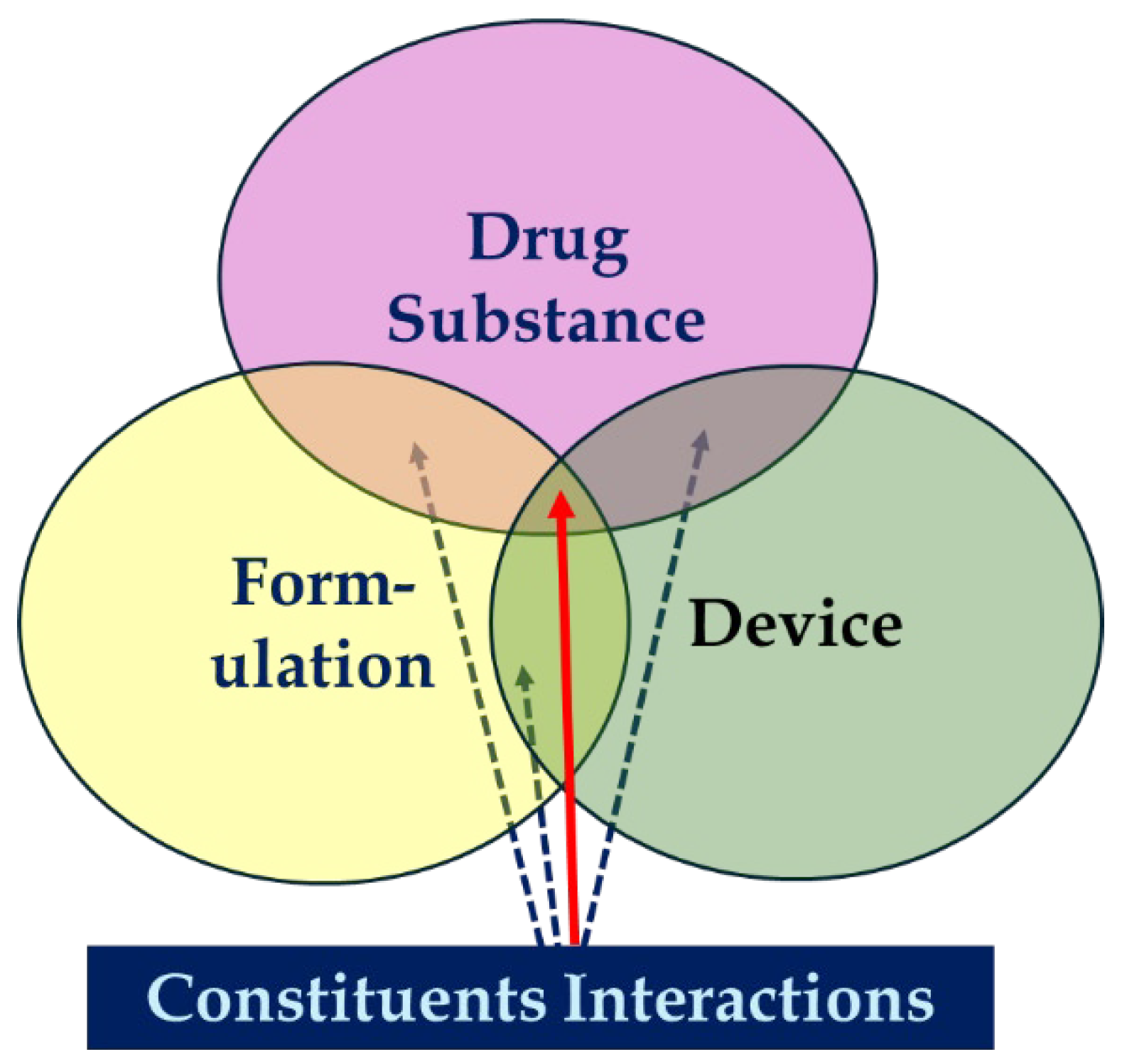
2. Quality Considerations
3. In Vitro Drug Delivery Testing
4. Specifications
5. Stability Testing
6. Alterations During Product Development and Post-Approval
7. Regulatory Gaps
8. Conclusions
Author Contributions
Funding
Data Availability Statement
Conflicts of Interest
References
- Pulmozyme® Label. U.S. Food and Drug Administration. Available online: https://www.accessdata.fda.gov/drugsatfda_docs/label/2024/103532s5194lbl.pdf (accessed on 30 September 2025).
- Afrezza® Label. U.S. Food and Drug Administration. Available online: https://www.accessdata.fda.gov/drugsatfda_docs/label/2014/022472lbl.pdf (accessed on 30 September 2025).
- Xolair® Label. U.S. Food and Drug Administration. Available online: https://www.accessdata.fda.gov/drugsatfda_docs/label/2024/103976s5245lbl.pdf (accessed on 30 September 2025).
- Nucala® Label. U.S. Food and Drug Administration. Available online: https://www.accessdata.fda.gov/drugsatfda_docs/label/2015/125526Orig1s000Lbl.pdf (accessed on 30 September 2025).
- Fasenra® Label. U.S. Food and Drug Administration. Available online: https://www.accessdata.fda.gov/drugsatfda_docs/label/2017/761070s000lbl.pdf (accessed on 30 September 2025).
- Cinqair® Label. U.S. Food and Drug Administration. Available online: https://www.accessdata.fda.gov/drugsatfda_docs/label/2016/761033lbl.pdf (accessed on 30 September 2025).
- Dupixent® Label. U.S. Food and Drug Administration. Available online: https://www.accessdata.fda.gov/drugsatfda_docs/label/2024/761055s057lbl.pdf (accessed on 30 September 2025).
- Wei, T.; Sun, Y.; Cheng, Q.; Chatterjee, S.; Traylor, Z.; Johnson, L.T.; Coquelin, M.L.; Wang, J.; Torres, M.J.; Lian, X.; et al. Lung SORT LNPs enable precise homology-directed repair–mediated CRISPR/Cas genome correction in cystic fibrosis models. Nat. Commun. 2023, 14, 7322. [Google Scholar] [CrossRef]
- Maillet, A.; Guilleminault, L.; Lemarié, E.; Lerondel, S.; Azzopardi, N.; Montharu, J.; Congy-Jolivet, N.; Reverdiau, P.; Legrain, B.; Parent, C.; et al. The airways, a novel route for delivering monoclonal antibodies to treat lung tumors. Pharm. Res. 2011, 28, 2147–2156. [Google Scholar] [CrossRef] [PubMed]
- Wu, S.; Huang, J.; Zhang, Z.; Wu, J.; Zhang, J.; Hu, H.; Zhu, T.; Zhang, J.; Luo, L.; Fan, P.; et al. Safety, tolerability, and immunogenicity of an aerosolised adenovirus type-5 vector-based COVID-19 vaccine (Ad5-nCoV) in adults: Preliminary report of an open-label and randomised phase 1 clinical trial. Lancet Infect. Dis. 2021, 21, 1654–1664. [Google Scholar] [CrossRef]
- He, S.; Gui, J.; Xiong, K.; Chen, M.; Gao, H.; Fu, Y. A roadmap to pulmonary delivery strategies for the treatment of infectious lung diseases. J. Nanobiotechnol. 2022, 20, 101. [Google Scholar] [CrossRef]
- NIH 2024. Regulatory Knowledge Guide for Biological Products. Available online: https://seed.nih.gov/sites/default/files/2024-03/Regulatory-Knowledge-Guide-Biological-Products.pdf (accessed on 25 September 2025).
- U.S. Food and Drug Administration (FDA). Guidance for Industry: Process Validation—General Principles and Practices; FDA: Silver Spring, MD, USA, 2011. Available online: https://www.fda.gov/media/71021/download (accessed on 25 September 2025).
- U.S. Food and Drug Administration (FDA). Questions and Answers on Current Good Manufacturing Practice Regulations: Production and Process Controls; FDA: Silver Spring, MD, USA, 2025. Available online: https://www.fda.gov/drugs/guidances-drugs/questions-and-answers-current-good-manufacturing-practice-regulations-production-and-process (accessed on 30 September 2025).
- European Medicines Agency (EMA). Process Validation for the Manufacture of Biotechnology-Derived Active Substances and Data to Be Provided in the Regulatory Submission; Scientific Guideline; EMA: London, UK, 2016. Available online: https://www.ema.europa.eu/en/documents/scientific-guideline/guideline-process-validation-manufacture-biotechnology-derived-active-substances-and-data-be-provided-regulatory-submission_en.pdf (accessed on 30 September 2025).
- European Medicines Agency (EMA). Guideline on Process Validation for Finished Products—Information and Data to Be Provided in Regulatory Submissions; EMA: London, UK, 2016. Available online: https://www.ema.europa.eu/en/documents/scientific-guideline/guideline-process-validation-finished-products-information-and-data-be-provided-regulatory-submissions-revision-1_en.pdf (accessed on 30 September 2025).
- Zahel, T. Successful Process Characterization in Biotech: A How-to Guide in 7 Steps. 2025. Available online: https://www.koerber-pharma.com/blog/pharma-software-how-to-perform-successful-process-characterization (accessed on 30 September 2025).
- Madsen, R.E., Jr. Understanding validation and technical transfer. In Biologics and Sterile Drug Manufacturing; eBook series; Pharmaceutical Technology: Iselin, NJ, USA, 2018; pp. 50–62. Available online: https://www.e-digitaleditions.com/i/988595-pharmaceutical-technology-ebook-biologics-and-sterile-drug-manufacturing/0 (accessed on 28 September 2025).
- Sollner, E. From Lab to Large-Scale Process Validation: Mastering Regulatory Requirements; Lonza: Basel, Switzerland, 2024; Available online: https://www.lonza.com/-/media/Lonza/knowledge/Microbial/Mastering_Regulatory_Compliance_MIC.pdf (accessed on 30 September 2025).
- European Medicines Agency (EMA). ICH Topic Q5E: Comparability of Biotechnological/Biological Products; EMA: London, UK, 2005. Available online: https://www.ema.europa.eu/en/documents/scientific-guideline/ich-q-5-e-comparability-biotechnologicalbiological-products-step-5_en.pdf (accessed on 30 September 2025).
- Singh, G.J.P.; Hickey, A.J. Regulatory stipulations and scientific underpinnings for inhaled biologics for local action in the respiratory tract. Part I: Development of inhaled therapeutic protein products. Biochem, 2026; submitted. [Google Scholar] [CrossRef]
- Yang, S.; Hu, X.; Zhu, J.; Zheng, B.; Bi, W.; Wang, X.; Wu, J.; Mi, Z.; Wu, Y. Aspects and implementation of pharmaceutical quality by design from conceptual frameworks to industrial applications. Pharmaceutics 2025, 17, 623. [Google Scholar] [CrossRef]
- Simões, A.; Veiga, F.; Vitorino, C. Question-based review for pharmaceutical development: An enhanced quality approach. Eur. J. Pharm. Biopharm. 2024, 195, 114174. [Google Scholar] [CrossRef]
- Das, V.; Bhairav, B.; Saudagar, R.B. Quality by design approaches to analytical method development. J. Pharm. Technol. 2017, 10, 3188–3194. [Google Scholar] [CrossRef]
- Jayagopal, B.; Shivashankar, M. Analytical quality by design—A legitimate paradigm for pharmaceutical analytical method development and validation. Mech. Mater. Sci. Eng. 2017, 9. Available online: https://api.semanticscholar.org/CorpusID:57953916 (accessed on 28 September 2025).
- Kendrick, B.S.; Gabrielson, J.P.; Hunt, D.; Christie, M.; Bowen, S.; Vessely, C.; Rogers, R.S.; Cleveland, C.; Maluf, K.; Roach, S.; et al. Quality risk management and data integrity in R&D laboratories supporting the CMC lifecycle of biological products. J. Pharm. Sci. 2024, 113, 3123–3136. [Google Scholar] [CrossRef] [PubMed]
- Xu, L. Quality by Design for Orally Inhaled Drug Products. 2009. Available online: https://pqri.org/wp-content/uploads/2015/08/pdf/QbD_for_Inhalation_Products_Yu.pdf (accessed on 25 September 2025).
- U.S. Food and Drug Administration (FDA). Metered Dose Inhaler (MDI) and Dry Powder Inhaler (DPI) Products—Quality Considerations: Guidance for Industry. 2018. Available online: https://www.fda.gov/media/70851/download. (accessed on 25 September 2025).
- European Medicines Agency (EMA). Guideline on the Pharmaceutical Quality of Inhalation and Nasal Medicinal Products. 2024. Available online: https://www.ema.europa.eu/en/documents/scientific-guideline/draft-guideline-pharmaceutical-quality-inhalation-nasal-medicinal-products-revision-1_en.pdf (accessed on 25 September 2025).
- Buttini, F.; Rozou, S.; Rossi, A.; Zoumpliou, V.; Rekkas, D.M. The application of quality by design framework in the pharmaceutical development of dry powder inhalers. Eur. J. Pharm. Sci. 2018, 113, 64–76. [Google Scholar] [CrossRef]
- Forbes, B.; Bäckman, P.; Christopher, D.; Dolovich, M.; Li, B.V.; Morgan, B. In Vitro testing for orally inhaled products: Developments in science-based regulatory approaches. AAPS J. 2015, 17, 837–852. [Google Scholar] [CrossRef] [PubMed]
- Ding, L.; Brunaugh, A.D.; Stegemann, S.; Jermain, S.V.; Herpin, M.J.; Kalafat, J.; Smyth, H.D.C. A quality by design framework for capsule-based dry powder inhalers. Pharmaceutics 2021, 13, 1213. [Google Scholar] [CrossRef] [PubMed]
- Batykefer, L.; Exline, D. Developing Orally Inhaled and Nasal Drug Products Using Quality by Design. 2010. Available online: https://www.inhalationmag.com/wp-content/uploads/pdf/inh_20101201_0012.pdf (accessed on 25 September 2025).
- Pallagi, E.; Karimi, K.; Ambrus, R.; Szabó-Révész, P.; Csóka, I. New aspects of developing a dry powder inhalation formulation applying the quality-by-design approach. Int. J. Pharm. 2016, 511, 151–160. [Google Scholar] [CrossRef]
- Vannari, J.A. Applying QbD Principles to Device Selection. Inhalation 2008. Available online: https://www.inhalationmag.com/wp-content/uploads/pdf/inh_20081001_0010.pdf (accessed on 25 September 2025).
- Yuan, Q.; Li, W.; Regan, L. Implementing Quality by Design in Analytical Development: A Case Study on the Development of an Anion-Exchange HPLC Method. 2017. Available online: https://www.bioprocessintl.com/regulatory-affairs/implementing-quality-by-design-in-analytical-development-a-case-study-on-the-development-of-an-anion-exchange-hplc-method (accessed on 25 September 2025).
- Li, W. Considering Quality by Design (QbD) in Analytical Development for Protein Therapeutics. Available online: https://www.slideshare.net/slideshow/considering-quality-by-design-qbd-in-analytical-development-for-protein-therapeutics/124072479 (accessed on 25 September 2025).
- Lim, H.J. Application of analytical quality by design to cIEF of protein biopharmaceuticals. Biomed. J. Sci. Technical Res. 2019, 22, 6822–16823. [Google Scholar] [CrossRef]
- Lee, E.J.; Koo, N.; Kim, M.J.; Lee, K.; Chae, Y. Integrating analytical quality by design into bioanalytical method development: An HPLC-FLD method for quantification of alectinib in biological matrices. BMC Chem. 2025, 19, 248. [Google Scholar] [CrossRef]
- Gurba-Bryśkiewicz, L.; Dawid, U.; Smuga, D.A.; Maruszak, W.; Delis, M.; Szymczak, K.; Stypik, B.; Moroz, A.; Błocka, A.; Mroczkiewicz, M.; et al. Implementation of QbD approach to the development of chromatographic methods for the determination of complete impurity profile of substances at the preclinical and clinical stages of drug discovery studies. Int. J. Mol. Sci. 2022, 23, 10720. [Google Scholar] [CrossRef]
- Zhang, Y.; Guo, J. Characterization and QC of biopharmaceuticals by MS-based multi-attribute method: Advantages and challenges. Bioanalysis 2017, 9, 499–502. [Google Scholar] [CrossRef]
- Moore, R. Leveraging Platform Analytical Methods for Biopharma QbD. Pharma Manufacturing. 2017. Available online: https://www.pharmamanufacturing.com/development/qbd/article/11309195/leveraging-platform-analytical-methods-for-biopharma-qbd (accessed on 25 September 2025).
- Harish, V.; Almalki, W.H.; Alshehri, A.; Alzahrani, A.; Gupta, M.M.; Alzarea, S.I.; Kazmi, I.; Gulati, M.; Tewari, D.; Gupta, G.; et al. Quality by design (QbD)-based method for estimation of xanthohumol in bulk and solid lipid nanoparticles and validation. Molecules 2023, 28, 472. [Google Scholar] [CrossRef] [PubMed]
- Bairagi, A.; Kothrukar, R.; Chikhale, H.; Kosanam, S.; Borse, L. AQbD—Novel strategy for analytical methods. Future J. Pharm. Sci. 2024, 10, 138. [Google Scholar] [CrossRef]
- International Council for Harmonisation (ICH). ICH Q14 Guideline on Analytical Procedure Development: Step 5; ICH: Geneva, Switzerland, 2023; Available online: https://www.ema.europa.eu/en/documents/scientific-guideline/ich-q14-guideline-analytical-procedure-development-step-5_en.pdf (accessed on 25 September 2025).
- Chatterjee, S. QbD considerations for analytical methods—FDA perspective. In Proceedings of the IFPAC Annual Meeting, Baltimore, MD, USA, 22–25 January 2013; Available online: https://qbdworks.com/wp-content/uploads/2014/06/AnalyticalQbDIFPAC.pdf (accessed on 25 September 2025).
- U.S. Food and Drug Administration (FDA). Q2(R2) Validation of Analytical Procedures: Guidance for Industry; FDA: Silver Spring, MD, USA, 2024. Available online: https://www.fda.gov/media/161201/download (accessed on 25 September 2025).
- FDA/CDER. Perspectives on Analytical Procedure Development and Validation. 2023. Available online: https://www.casss.org/docs/default-source/wcbp/2023-speaker-presentations/hsu-amy-cder-fda-2023.pdf (accessed on 25 September 2025).
- Haestadt, J.E. The Lung as a Dissolution Vessel: Do we Understand Biorelevance of Drug Dissolution in the Lung? Inhalation, 1 December 2014. Available online: https://www.inhalationmag.com/wp-content/uploads/pdf/inh_20141201_0018.pdf (accessed on 25 September 2025).
- Strong, P.; Ito, K.; Murray, J.; Rapeport, G. Current approaches to the discovery of novel inhaled medicines. Drug Discov. Today 2018, 23, 1705–1717. [Google Scholar] [CrossRef]
- Eedara, B.B.; Bastola, R.; Das, S.C. Dissolution and absorption of inhaled drug particles in the lungs. Pharmaceutics 2022, 14, 2667. [Google Scholar] [CrossRef] [PubMed]
- Somby, K.; Hingleb, M.; Tomi, I.; Forbes, B. The importance of dissolution for orally inhaled drug products: Pharmaceutical, regulatory, and clinical considerations. Expert Opin. Drug Deliv. 2023, 20, 1033–1036. [Google Scholar] [CrossRef] [PubMed]
- Velaga, S.P.; Djuriš, J.; Cvijić, S.; Rozou, S.; Russo, P.; Colombo, G.; Rossi, A. Dry powder inhalers: An overview of the In Vitro dissolution methodologies and their correlation with the biopharmaceutical aspects of the drug products. Eur. J. Pharm. Sci. 2018, 113, 18–28. [Google Scholar] [CrossRef] [PubMed]
- Boc, S. Challenges with Method Standardization for Inhalation and Nasal Drug Products. FDA. 2025. Available online: https://www.fda.gov/media/188013/download (accessed on 28 September 2025).
- Hassoun, M. Development of In Vitro Dissolution Tests for Orally Inhaled Products. Ph.D. Thesis, King’s College London, London, UK, 2018. Available online: https://kclpure.kcl.ac.uk/ws/portalfiles/portal/106675629/2019_Hassoun_Mireille_0926250_ethesis.pdf (accessed on 27 September 2025).
- Price, R. Developing an In Vitro Dissolution and Release System for Orally Inhaled Drug Products. 2020. Available online: https://www.ondrugdelivery.com/developing-an-in-vitro-dissolution-and-release-system-for-orally-inhaled-drug-products/ (accessed on 28 September 2025).
- Nokhodchi, A.; Chavan, S.; Ghafourian, T. In Vitro dissolution and permeability testing of inhalation products: Challenges and advances. Pharmaceutics 2023, 15, 983. [Google Scholar] [CrossRef]
- Kshirsagar, V. QbD in Dissolution Method Development. 2015. Available online: https://www.scribd.com/document/323623653/QbD-in-Dissolution-Method-Development-Kshirsagar (accessed on 27 September 2025).
- Chen, H.; Wang, R.; McElderry, J.-D. Discriminative dissolution method development through an analytical QbD approach. AAPS PharmSciTech 2023, 24, 255. [Google Scholar] [CrossRef]
- dos Santos, M.S.; do Nascimento, D.D.; Medeiros, J.J.S.; Lourenço, F.R.; de Oliveira, C.A.; Prado, L.D. Analytical quality by design and measurement uncertainty in the development of a discriminative dissolution method for pediatric fixed-dose combination dispersible tablets of isoniazid and rifampicin. J. Pharm. Biomed. Anal. 2025, 265, 116994. [Google Scholar] [CrossRef]
- Pawar, J.; Tayade, A.; Gangurde, A.; Moravkar, K.; Amin, P. Solubility and dissolution enhancement of efavirenz hot-melt extruded amorphous solid dispersions using a combination of polymeric blends: A QbD approach. Eur. J. Pharm. Sci. 2016, 88, 37–49. [Google Scholar] [CrossRef]
- Attimarad, M.; Alali, M.J.; Alali, H.A.; Alabdulmuhsin, D.H.; Alnajdi, A.K.; Venugopala, K.N.; Nair, A.B. Design of experimental approach for development of rapid high-performance liquid chromatographic process for simultaneous estimation of metoprolol, telmisartan, and amlodipine from formulation: Greenness and whiteness evaluation. Molecules 2024, 29, 1087. [Google Scholar] [CrossRef]
- Tumpa, A.; Stajić, A.; Jančić-Stojanović, B.; Medenica, M. Quality by Design in the development of a hydrophilic interaction liquid chromatography method with gradient elution for the analysis of olanzapine. J. Pharm. Biomed. Anal. 2017, 134, 18–26. [Google Scholar] [CrossRef]
- Ye, C.; Terfloth, G.; Li, Y.; Kord, A. A systematic stability evaluation of analytical RP-HPLC columns. J. Pharm. Biomed. Anal. 2009, 50, 426–443. [Google Scholar] [CrossRef]
- U.S. Food and Drug Administration (FDA). Draft Guidance on Budesonide; FDA: Silver Spring, MD, USA, 2012. Available online: https://www.accessdata.fda.gov/drugsatfda_docs/psg/Budesonide_Inhalation_Sus_20929_RC_09-12.pdf (accessed on 11 July 2025).
- Barry, P.W.; O’Callaghan, C. Drug output from nebulizers is dependent on the method of measurement. Eur. Respir. J. 1998, 12, 463–466. [Google Scholar] [CrossRef]
- Chang, K.H.; Moon, S.H.; Yoo, S.K.; Park, B.J.; Nam, K.C. Aerosol delivery of dornase alfa generated by jet and mesh nebulizers. Pharmaceutics 2020, 12, 721. [Google Scholar] [CrossRef] [PubMed]
- McCallion, O.N.M.; Patel, M.J. Viscosity effects on nebulisation of aqueous solutions. Int. J. Pharm. 1996, 130, 245–249. [Google Scholar] [CrossRef]
- Ghazanfari, T.; Elhissi, A.M.; Ding, Z.; Taylor, K.M.G. The influence of fluid physicochemical properties on vibrating-mesh nebulization. Int. J. Pharm. 2007, 339, 103–111. [Google Scholar] [CrossRef] [PubMed]
- Bauer, A.; McGlynn, P.; Bovet, L.L.; Mims, P.L.; Curry, L.A.; Hanrahan, J.P. The influence of breathing pattern during nebulization on the delivery of arformoterol using a breath simulator. Respir. Care 2009, 54, 1488–1492. [Google Scholar] [PubMed]
- Bennett, G.; Joyce, M.; Sweeney, L.; MacLoughlin, R. In Vitro study of the effect of breathing pattern on aerosol delivery during high-flow nasal therapy. Pulm. Ther. 2019, 5, 43–54. [Google Scholar] [CrossRef]
- Park, H.M.; Chang, K.H.; Moon, S.-H. In Vitro delivery efficiencies of nebulizers for different breathing patterns. BioMed. Eng. OnLine 2021, 20, 59. [Google Scholar] [CrossRef]
- Ohar, J.A.; Bauer, A.; Sharma, S. In Vitro effect of different airflow rates on the aerosol properties of nebulized glycopyrrolate in the eFlow Closed System and tiotropium delivered in the HandiHaler. Pulm. Ther. 2020, 6, 289–301. [Google Scholar] [CrossRef]
- U.S. Food and Drug Administration (FDA). Product Quality Review of Lonhala Magnair; FDA: Silver Spring, MD, USA, 2017. Available online: https://www.accessdata.fda.gov/drugsatfda_docs/nda/2017/208437Orig1s000ChemR.pdf (accessed on 12 July 2025).
- U.S. Food and Drug Administration (FDA). Lonhala Magnair—Drug Label; FDA: Silver Spring, MD, USA, 2017. Available online: https://www.accessdata.fda.gov/drugsatfda_docs/label/2017/208437Orig1s000lbl.pdf (accessed on 12 July 2025).
- Naik, S.; Vaidhun, G. Evaluation of aerodynamic particle size distribution of drugs used in inhalation therapy: A concise review. Int. J. Res. 2020, 8, 264–271. [Google Scholar] [CrossRef]
- Zhou, Y.; Cheng, Y.S.; Norenberg, J.P. Influence of impactor operating flow rate on particle size distribution of four jet nebulizers. Pharm. Dev. Technol. 2007, 12, 353–359. [Google Scholar] [CrossRef] [PubMed]
- Bielski, E. Advancements in In Vitro Studies for Alternative Bioequivalence (BE) Approaches to Comparative Clinical Endpoint BE Studies. 2020. Available online: https://www.complexgenerics.org/wp-content/uploads/crcg/prsnt-Bielski20200930-SBIA.pdf (accessed on 20 June 2025).
- Gobetti, C.; Dissanayake, S.; Shur, J.; Ganley, W.; Silva, L.; Salem, I.; Najib, O.; Harb, U. Bioequivalence of two tiotropium dry powder inhalers and the utility of realistic impactor testing. J. Aerosol Med. Pulm. Drug Deliv. 2023, 36, 257–267. [Google Scholar] [CrossRef] [PubMed]
- Olsson, B.; Borgström, L.; Lundbäck, H.; Svensson, M. Validation of a general In Vitro approach for prediction of total lung deposition in healthy adults for pharmaceutical inhalation products. J. Aerosol Med. Pulm. Drug Deliv. 2013, 26, 355–369. [Google Scholar] [CrossRef]
- Olson, B.; Bäckman, P. Mimetikos Preludium™: A new pharma-friendly aerosol drug deposition calculator. Respir. Drug Deliv. 2018, 1, 103–112. [Google Scholar]
- Olson, B.; Kassinos, S. On the validation of generational lung deposition computer models using planar scintigraphic images: The case of Mimetikos Preludium. J. Aerosol Med. Pulm. Drug Deliv. 2021, 34, 115–123. [Google Scholar] [CrossRef]
- Wei, X.; Hindle, M.; Kaviratna, A. In Vitro tests for aerosol deposition. VI: Realistic testing with different mouth–throat models and In Vitro–In Vivo correlations for a dry powder inhaler, metered dose inhaler, and soft mist inhaler. J. Aerosol Med. Pulm. Drug Deliv. 2018, 31, 358–370. [Google Scholar] [CrossRef]
- Singh, G.J.P.; Poochikian, G. Development and approval of inhaled respiratory drugs—A US regulatory science perspective. In Controlled Release Science and Technology: Pulmonary Delivery; Smyth, H., Hickey, A., Eds.; Springer: New York, NY, USA, 2011; pp. 489–527. [Google Scholar]
- Thirugnanasampanthar, M.; Tian, L.; Rhem, R.G.; Libera, D.D.; Gomez, M.; Jackson, K.; Fox-Robichaud, A.E.; Dolovich, M.B.; Hosseinidoust, Z. Unraveling the impact of operational parameters and environmental conditions on the quality of viable bacterial aerosols. Proc. Natl. Acad. Sci. USA Nexus 2024, 3, 473. [Google Scholar] [CrossRef]
- Ibrahim, M.; Wallace, I.; Ghazvinia, S.; Manetz, S.; Cordoba-Rodriguez, R.; Patel, S.M. Protein aggregates in inhaled biologics: Challenges and considerations. J. Pharm. Sci. 2023, 112, 1341–1344. [Google Scholar] [CrossRef]
- Bodier-Montagutelli, E.; Respaud, R.; Perret, G.; Baptista, L.; Duquenne, P.; Heuzé-Vourc’h, N.; Vecellio, L. Protein stability during nebulization: Mind the collection step! Eur. J. Pharm. Biopharm. 2020, 152, 23–34. [Google Scholar] [CrossRef]
- Antoniak, D.; Rogeuda, R.; Stuart, S.; Purkins, G.; Vernall, C.; Hallisey, D.; O’Connell, S.; Lambert, M. Inhaled Biologics: From Nebules to SMIs—Dornase Alfa in MRX004. Drug Deliv. Lungs 2023, 34. Available online: https://ddl-conference.com/ddl2023/conference-papers/inhaled-biologics-from-nebules-to-smis-dornase-alfa-in-mrx004/ (accessed on 5 October 2025).
- Cortez-Jugo, C.; Qi, A.; Rajapaksa, A.; Friend, J.R.; Yeo, L.Y. Pulmonary monoclonal antibody delivery via a portable microfluidic nebulization platform. Biomicrofluidics 2015, 9, 052603. [Google Scholar] [CrossRef]
- Mahri, S.; Wilms, T.; Hagedorn, P.; Guichard, M.; Vanvarenberg, K.; Dumoulin, M.; Frijlink, H.; Vanbever, R. Nebulization of PEGylated recombinant human deoxyribonuclease I using vibrating membrane nebulizers: A technical feasibility study. Eur. J. Pharm. Sci. 2023, 189, 106522. [Google Scholar] [CrossRef]
- Mišík, O.; Kejíková, J.; Cejpe, O.; Malý, M.; Jugl, A.; Bělka, M.; Mravec, F.; Lízal, F. Nebulization and In Vitro upper airway deposition of liposomal carrier systems. Mol. Pharm. 2024, 21, 1848–1860. [Google Scholar] [CrossRef] [PubMed]
- Scherer, T.; Geller, D.E.; Owyang, L.; Tservistas, M.; Keller, M.; Boden, N.; Kesser, K.C.; Shire, S.J. A technical feasibility study of dornase alfa delivery with eFlow® vibrating membrane nebulizers: Aerosol characteristics and physicochemical stability. J. Pharm. Sci. 2009, 100, 98–109. [Google Scholar] [CrossRef] [PubMed]
- Röhm, M.; Carle, S.; Maigler, F.; Flamm, J.; Kramer, V.; Mavoungou, C.; Schmid, O.; Schindowski, K. A comprehensive screening platform for aerosolizable protein formulations for intranasal and pulmonary drug delivery. Int. J. Pharm. 2017, 532, 537–546. [Google Scholar] [CrossRef] [PubMed]
- Darquenne, C. Aerosol deposition in health and disease. J. Aerosol Med. Pulm. Drug Deliv. 2012, 25, 140–147. [Google Scholar] [CrossRef]
- Guilleminault, L.; Azzopardi, N.; Arnoult, C.; Sobilo, J.; Hervé, V.; Montharu, J.; Guillon, A.; Andres, C.; Herault, O.; Pape, A.L.; et al. Fate of inhaled monoclonal antibodies after the deposition of aerosolized particles in the respiratory system. J. Control. Release 2014, 196, 344–354. [Google Scholar] [CrossRef]
- Wolff, R.K. Perspectives on lung dose and inhaled biomolecules. Toxicol. Pathol. 2021, 49, 378–385. [Google Scholar] [CrossRef]
- Flandre, T.D.; Hey, A.S.; Spence, F.J. Nonclinical safety assessment of an inhaled formulation of serelaxin: A recombinant human protein in rats and cynomolgus monkeys (Macaca fascicularis). Toxicol. Pathol. 2021, 49, 286–295. [Google Scholar] [CrossRef]
- Lasagna-Reeves, C.A.; Clos, A.L.; Midoro-Hiriuti, T.; Goldblum, R.M.; Jackson, G.R.; Kayed, R. Inhaled insulin forms toxic pulmonary amyloid aggregates. Endocrinology 2010, 151, 4717–4724. [Google Scholar] [CrossRef]
- Sécher, T.; Bodier-Montagutelli, E.; Parent, C.; Bouvart, L.; Cortes, M.; Ferreira, M.; MacLoughlin, R.; Ilango, G.; Schmid, O.; Respaud, R.; et al. Aggregates associated with instability of antibodies during aerosolization induce adverse immunological effects. Pharmaceutics 2022, 14, 671. [Google Scholar] [CrossRef]
- Barnard, J.G.; Babcock, K.; Carpenter, J.F. Characterization and quantitation of aggregates and particles in interferon-β products: Potential links between product quality attributes and immunogenicity. J. Pharm. Sci. 2013, 102, 915–928. [Google Scholar] [CrossRef]
- Koepf, E.; Eisele, S.; Schroeder, R. Notorious but not understood: How liquid–air interfacial stress triggers protein aggregation. Int. J. Pharm. 2018, 537, 202–212. [Google Scholar] [CrossRef]
- Lacroix, G.; Koch, W.; Ritter, D.; Gutleb, A.C.; Larsen, S.T.; Loret, T.; Zanetti, F.; Constant, S.; Chortarea, S.; Rothen-Rutishauser, B.; et al. Air–liquid interface In Vitro models for respiratory toxicology research: Consensus workshop and recommendations. Appl. In Vitro Toxicol. 2018, 4, 91–106. [Google Scholar] [CrossRef]
- Baldassi, D.; Gabold, B.; Merkel, O. Air–liquid interface cultures of the healthy and diseased human respiratory tract: Promises, challenges and future directions. Adv. Nanobiomed Res. 2021, 1, 2000111. [Google Scholar] [CrossRef]
- Leiske, D.L.; Shieh, I.C.; Tse, M.L. A method to measure protein unfolding at an air–liquid interface. Langmuir 2016, 32, 9930–9937. [Google Scholar] [CrossRef] [PubMed]
- Bessa, M.J.; Brandão, F.; Fokkens, P.H.B.; Leseman, D.L.A.C.; Boere, A.J.F.; Cassee, F.R.; Salmatonidis, A.; Viana, M.; Vulpoi, A.; Simon, S.; et al. In Vitro toxicity of industrially relevant engineered nanoparticles in human alveolar epithelial cells: Air–liquid interface versus submerged cultures. Nanomaterials 2021, 11, 3225. [Google Scholar] [CrossRef]
- Horota, S.; Leiner, S. Developing performance specifications for pulmonary products. In Controlled Pulmonary Drug Delivery; Chapter 22; Smyth, H.D.C., Hickey, A.J., Eds.; Advances in Delivery Science and Technology; Springer: New York, NY, USA, 2011. [Google Scholar] [CrossRef]
- ICH Harmonised Tripartite Guideline. Q6A: Specifications—Test Procedures and Acceptance Criteria for New Drug Substances and New Drug Products: Chemical Substances; ICH: Geneva, Switzerland, 1999; Available online: https://database.ich.org/sites/default/files/Q6A%20Guideline.pdf (accessed on 4 May 2025).
- U.S. Food and Drug Administration (FDA). Q2(R1): Validation of Analytical Procedures: Text and Methodology—Guidance for Industry; FDA: Silver Spring, MD, USA, 2021. Available online: https://www.fda.gov/media/152208/download (accessed on 30 September 2025).
- ICH Harmonised Tripartite Guideline. Q3B(R2): Impurities in New Drug Products; ICH: Geneva, Switzerland, 2006; Available online: https://database.ich.org/sites/default/files/Q3B%28R2%29%20Guideline.pdf (accessed on 29 September 2025).
- ICH Harmonised Tripartite Guideline. Q6B: Specifications—Test Procedures and Acceptance Criteria for Biotechnological/Biological Products; ICH: Geneva, Switzerland, 1999; Available online: https://database.ich.org/sites/default/files/Q6B%20Guideline.pdf (accessed on 4 May 2025).
- ICH Harmonised Tripartite Guideline. Q5C: Stability Testing of Biotechnological/Biological Products; ICH: Geneva, Switzerland, 1995; Available online: https://database.ich.org/sites/default/files/Q5C%20Guideline.pdf (accessed on 18 June 2022).
- ICH Harmonised Tripartite Guideline. M4Q(R1): Common Technical Document (CTD) for the Registration of Pharmaceuticals for Human Use: Quality; ICH: Geneva, Switzerland, 2002; Available online: https://database.ich.org/sites/default/files/M4Q_R1_Guideline.pdf (accessed on 3 May 2025).
- European Medicines Agency (EMA). Guideline on Similar Biological Medicinal Products Containing Biotechnology-Derived Proteins as Active Substance: Quality Issues; EMA: London, UK, 2014. Available online: https://www.ema.europa.eu/en/documents/scientific-guideline/guideline-similar-biological-medicinal-products-containing-biotechnology-derived-proteins-active_en-0.pdf (accessed on 4 May 2025).
- U.S. Food and Drug Administration (FDA). M10 Bioanalytical Method Validation and Study Sample Analysis—Guidance for Industry; FDA: Silver Spring, MD, USA, 2023. Available online: https://www.fda.gov/regulatory-information/search-fda-guidance-documents/m10-bioanalytical-method-validation-and-study-sample-analysis (accessed on 4 May 2025).
- Xu, Y.; Wang, D.; Mason, B.; Rossomando, T.; Li, N.; Liu, D.; Cheung, J.K.; Xu, W.; Raghava, S.; Katiyar, A.; et al. Structure, heterogeneity and developability assessment of therapeutic antibodies. mABs 2019, 11, 239–264. [Google Scholar] [CrossRef]
- Ambrogelly, A. The different colors of mAbs in solution. Antibodies 2021, 10, 21. [Google Scholar] [CrossRef] [PubMed]
- Du, C.; Xiu, J.; Song, H.; Tao, L.; Lewandowski, A.; Ghose, S.; Borys, M.C.; Li, Z.J. Mechanisms of color formation in drug substance and mitigation strategies for the manufacture and storage of therapeutic proteins produced using mammalian cell culture. Process Biochem. 2019, 86, 127–135. [Google Scholar] [CrossRef]
- United States Pharmacopeia (USP). <788> Particulate Matter in Injections; USP–NF; USP: Rockville, MD, USA, 2013; Available online: https://doi.usp.org/USPNF/USPNF_M99586_02_01.html (accessed on 4 May 2025).
- United States Pharmacopeia (USP). <790> Visible Particulates in Injections; USP–NF; USP: Rockville, MD, USA; Available online: https://doi.usp.org/USPNF/USPNF_M7197_01_01.html (accessed on 4 May 2025).
- Maas, C.; Hermeling, S.; Bouma, B.; Jiskoot, W.; Gebbink, M.F. A role for protein misfolding in immunogenicity of biopharmaceuticals. J. Biol. Chem. 2007, 282, 2229–2236. [Google Scholar] [CrossRef]
- United States Pharmacopeia (USP). <1086> Impurities in Drug Substances and Drug Products; USP–NF; USP: Rockville, MD, USA; Available online: https://doi.org/10.31003/USPNF_M99805_04_01 (accessed on 4 May 2025). [CrossRef]
- Vanderlaan, M.; Zhu-Shimoni, J.; Lin, S. Experience with host cell protein impurities in biopharmaceuticals. Biotechnol. Prog. 2018, 34, 828–837. [Google Scholar] [CrossRef]
- Limpikirati, P.K.; Mongkoltipparat, S.; Denchaipradit, T. Basic regulatory science behind drug substance and drug product specifications of monoclonal antibodies and other protein therapeutics. J. Pharm. Anal. 2024, 14, 100916. [Google Scholar] [CrossRef] [PubMed]
- Pilely, K.; Johansen, M.R.; Lund, R.R.; Kofoed, T.; Jørgensen, T.K.; Skriver, L.; Mørtz, E. Monitoring process-related impurities in biologics—Host cell protein analysis. Anal. Bioanal. Chem. 2022, 414, 747–758. [Google Scholar] [CrossRef]
- Larivière, L.; Krüger, J.E.; von Hirschheydt, T. End-to-end approach for the characterization and control of product-related impurities in T cell bispecific antibody preparations. Int. J. Pharm. 2023, 5, 100157. [Google Scholar] [CrossRef] [PubMed]
- Ambrogelly, A.; Gozo, S.; Katiyar, A.; Dellatore, S.; Kune, Y.; Bhat, R.; Sun, J.; Li, N.; Wang, D.; Nowak, C.; et al. Analytical comparability study of recombinant monoclonal antibody therapeutics. mAbs 2018, 10, 513–538. [Google Scholar] [CrossRef]
- Beck, A.; Wagner-Rousset, E.; Ayoub, D.; Van Dorsselaer, A.; Sanglier-Cianférani, S. Characterization of therapeutic antibodies and related products. Anal. Chem. 2013, 85, 715–736. [Google Scholar] [CrossRef] [PubMed]
- Kaltashov, I.A.; Wang, S.; Wang, G. Mass Spectrometry in Biopharmaceutical Analysis; De Gruyter: Berlin, Germany, 2022. [Google Scholar]
- Gabrielson, J.P.; Weiss, W.F., IV. Technical decision-making with higher order structure data: Starting a new dialogue. J. Pharm. Sci. 2015, 104, 1240–1245. [Google Scholar] [CrossRef]
- Bailey, A.O.; Han, G.; Phung, W.; Gazis, P.; Sutton, J.; Josephs, J.L.; Sandoval, W. Charge variant native mass spectrometry benefits mass precision and dynamic range of monoclonal antibody intact mass analysis. mAbs 2018, 10, 1214–1225. [Google Scholar] [CrossRef]
- Jung, S.K.; Lee, K.H.; Jeon, J.W.; Lee, J.W.; Kwon, B.O.; Kim, Y.J.; Bae, J.S.; Kim, D.I.; Lee, S.Y.; Chang, S.J. Physicochemical characterization of Remsima®. mAbs 2014, 6, 1163–1177. [Google Scholar] [CrossRef]
- Ruppen, I.; Beydon, M.E.; Solís, C.; Sacristán, D.; Vandenheede, I.; Ortiz, A.; Sandra, K.; Adhikary, L. Similarity demonstrated between isolated charge variants of MB02, a biosimilar of bevacizumab, and Avastin® following extended physicochemical and functional characterization. Biologicals 2021, 73, 41–56. [Google Scholar] [CrossRef]
- Wang, H.; Wu, L.; Wang, C.; Xu, J.; Yin, H.; Guo, H.; Zheng, L.; Shao, H.; Chen, G. Biosimilar or not: Physicochemical and biological characterization of MabThera and its two biosimilar candidates. ACS Pharmacol. Transl. Sci. 2021, 4, 790–801. [Google Scholar] [CrossRef]
- Füssl, F.; Trappe, A.; Cook, K.; Scheffler, K.; Fitzgerald, O.; Bones, J. Comprehensive characterisation of the heterogeneity of adalimumab via charge variant analysis hyphenated on-line to native high-resolution Orbitrap mass spectrometry. mAbs 2019, 11, 116–128. [Google Scholar] [CrossRef]
- United States Pharmacopeia (USP). Somatropin for Injection; USP–NF; USP: Rockville, MD, USA, 2018; Available online: https://doi.usp.org/USPNF/USPNF_M77500_03_01.html (accessed on 26 October 2022).
- United States Pharmacopeia (USP). Insulin Aspart Injection; USP–NF; USP: Rockville, MD, USA, 2019; Available online: https://doi.usp.org/USPNF/USPNF_M1450_04_01.html (accessed on 26 October 2022).
- United States Pharmacopeia (USP). rAlbumin Human; USP–NF; USP: Rockville, MD, USA, 2018; Available online: https://doi.usp.org/USPNF/USPNF_M2992_03_01.html (accessed on 26 October 2022).
- EDQM—Council of Europe. Infliximab Concentrated Solution (2928). In European Pharmacopoeia, 10.3 ed.; EDQM—Council of Europe: Strasbourg, France, 2021; pp. 5019–5024. [Google Scholar]
- White, J.R.; Abodeely, M.; Ahmed, S.; Debauve, G.; Johnson, E.; Meyer, D.M.; Mozier, N.M.; Naumer, M.; Pepe, A.; Qahwash, I.; et al. Best practices in bioassay development to support registration of biopharmaceuticals. Biotechniques 2017, 67, 126–137. [Google Scholar] [CrossRef] [PubMed]
- Dash, R.; Singh, S.K.; Chermoula, N.; Rathore, A.S. Assessment of functional characterization and comparability of biotherapeutics: A review. AAPS J. 2021, 24, 15. [Google Scholar] [CrossRef]
- Ruesch, M.N.; Benetti, L.; Berkay, E.; Cirelli, D.J.; Frantz, N.; Gastens, M.H.; Kelley, W.P.; Kretsinger, J.; Lewis, M.; Novick, S.; et al. Strategies for setting patient-centric commercial specifications for biotherapeutic products. J. Pharm. Sci. 2021, 110, 771–784. [Google Scholar] [CrossRef] [PubMed]
- Kretsinger, J.; Frantz, N.; Hart, S.A.; Kelley, W.P.; Kitchen, B.; Novick, S.; Rellahan, B.; Stranges, D.; Stroop, C.J.M.; Yin, P.; et al. Expectations for phase-appropriate drug substance and drug product specifications for early-stage protein therapeutics. J. Pharm. Sci. 2019, 108, 1442–1452. [Google Scholar] [CrossRef]
- Krause, S.O. PCMO L01—Setting specifications for biological investigational medicinal products. PDA J. Pharm. Sci. Technol. 2015, 69, 569–589. [Google Scholar] [CrossRef] [PubMed]
- Cheng, Y.S. Mechanisms of Pharmaceutical Aerosol Deposition in the Respiratory Tract. AAPS PharmSciTech. 2014, 15, 630–640. [Google Scholar] [CrossRef]
- Janssen, P.H.M.; Bastiaansen, M.; Buijvoets, L.B. Smart specification setting for dry powder inhalation carriers. J. Pharm. Sci. 2023, 112, 2301–2306. [Google Scholar] [CrossRef]
- Ferrati, S.; Wu, T.; Kanapuram, S.R.; Smyth, H.D.C. Dosing considerations for inhaled biologics. Int. J. Pharm. 2018, 549, 58–66. [Google Scholar] [CrossRef]
- U.S. Food and Drug Administration (FDA). Guidance for Industry: Nasal Spray and Inhalation Solution, Suspension, and Spray Drug Products—Chemistry, Manufacturing, and Controls Documentation; FDA: Silver Spring, MD, USA, 2020. Available online: https://www.fda.gov/media/70857/download (accessed on 5 May 2025).
- Kuzman, D.; Bunc, M.; Ravnik, M.; Reiter, F.; Žagar, L.; Bončina, M. Long-term stability predictions of therapeutic monoclonal antibodies in solution using Arrhenius-based kinetics. Sci. Rep. 2021, 11, 20534. [Google Scholar] [CrossRef]
- U.S. Food and Drug Administration (FDA). M4 Organization of the Common Technical Document for the Registration of Pharmaceuticals for Human Use—Guidance for Industry; FDA: Silver Spring, MD, USA, 2017. Available online: https://www.fda.gov/files/drugs/published/M4-Organization-of-the-Common-Technical-Document-for-the-Registration-of-Pharmaceuticals-for-Human-Use-Guidance-for-Industry.pdf (accessed on 5 July 2025).
- Evers, A.; Clénet, D.; Pfeiffer-Marek, S. Long-Term Stability Prediction for Developability Assessment of Biopharmaceutics Using Advanced Kinetic Modeling. Pharmaceutics 2022, 14, 375. [Google Scholar] [CrossRef] [PubMed]
- Dillon, M.; Xu, J.; Thiagarajan, G.; Skomski, D.; Procopio, A. Predicting the Long-Term Stability of Biologics with Short-Term Data. Mol. Pharm. 2024, 21, 4673–4687. [Google Scholar] [CrossRef]
- Huelsmeyer, M.; Kuzman, D.; Bončina, M.; Martinez, J.; Steinbrugger, C.; Weusten, J.; Calero-Rubio, C.; Roche, W.; Niederhaus, B.; VanHaelst, Y.; et al. A Universal Tool for Stability Predictions of Biotherapeutics, Vaccines and In Vitro Diagnostic Products. Sci. Rep. 2023, 13, 10077. [Google Scholar] [CrossRef] [PubMed]
- Kretsinger, J.; Frantz, N.; Hart, S.A. Expectations for Phase-Appropriate Drug Substance and Drug Product Specifications for Early-Stage Protein Therapeutics. J. Pharm. Sci. 2019, 108, 1442–1452. [Google Scholar] [CrossRef] [PubMed]
- Pokar, D.; Rajput, N.; Sengupta, P. Industrial Approaches and Consideration of Clinical Relevance in Setting Impurity Level Specifications for Drug Substances and Drug Products. Int. J. Pharm. 2020, 576, 119018. [Google Scholar] [CrossRef]
- U.S. Food and Drug Administration (FDA). BROVANA® (Arformoterol Tartrate) Inhalation Solution Label; FDA: Silver Spring, MD, USA, 2006. Available online: https://www.accessdata.fda.gov/drugsatfda_docs/label/2006/021912lbl.pdf (accessed on 6 July 2025).
- U.S. Food and Drug Administration (FDA). PULMICORT RESPULES® (Budesonide) Inhalation Suspension Label; FDA: Silver Spring, MD, USA, 2019. Available online: https://www.accessdata.fda.gov/drugsatfda_docs/label/2019/020929s052lbl.pdf (accessed on 5 July 2025).
- Mayor, A.; Thibert, B.; Huille, S. Inhaled Antibodies: Formulations Require Specific Development to Overcome Instability Due to Nebulization. Drug Deliv. Transl. Res. 2021, 11, 1625–1633. [Google Scholar] [CrossRef]
- Rosenberg, A.S. Effects of Protein Aggregates: An Immunologic Perspective. AAPS J. 2006, 8, E501–E507. [Google Scholar] [CrossRef]
- Descotes, J.; Gouraud, A. Clinical Immunotoxicity of Therapeutic Proteins. Expert Opin. Drug Metab. Toxicol. 2008, 4, 1537–1549. [Google Scholar] [CrossRef]
- Dimitrov, D.S. Therapeutic Proteins; Methods and Protocols; Humana: Totowa, NJ, USA, 2012; Volume 899, pp. 1–26. [Google Scholar] [CrossRef]
- Bigi, A.; Lombardo, E.; Cascella, R.; Cecchi, C. The Toxicity of Protein Aggregates: New Insights into the Mechanisms. Int. J. Mol. Sci. 2023, 24, 7974. [Google Scholar] [CrossRef] [PubMed]
- Carpenter, J.F.; Randolph, T.W.; Jiskoot, W.; Crommelin, D.J.A.; Middaugh, C.R.; Winter, G.; Fan, Y.; Kirshner, S.; Verthelyi, D.; Kozlowski, S.; et al. Overlooking Subvisible Particles in Therapeutic Protein Products: Gaps That May Compromise Product Quality. J. Pharm. Sci. 2009, 98, 1201–1205. [Google Scholar] [CrossRef] [PubMed]
- Akers, M.J.; Vasudevan, V.; Stickelmyer, M. Formulation Development of Protein Dosage Forms. In Development and Manufacture of Protein Pharmaceuticals; Nail, S.L., Akers, M.J., Eds.; Kluwer Academic/Plenum Press: New York, NY, USA, 2002; pp. 47–127. [Google Scholar]
- Cromwell, M.E.; Hilario, E.; Jacobson, F. Protein Aggregation and Bioprocessing. AAPS J. 2006, 8, E572–E579. [Google Scholar] [CrossRef] [PubMed]
- Tyagli, A.K.; Randolph, T.W.; Dong, A.; Maloney, K.M.; Hitscherich, C.; Carpenter, J.F. IgG Particle Formation during Filling Pump Operation: A Case Study of Heterogeneous Nucleation on Stainless Steel Nanoparticles. J. Pharm. Sci. 2009, 98, 94–104. [Google Scholar] [CrossRef]
- Singh, S.K.; Toler, M. Monitoring of Subvisible Particles in Therapeutic Proteins. In Therapeutic Proteins: Methods and Protocols; Voynov, V., Caravella, J.A., Eds.; Methods in Molecular Biology, Volume 899; Humana Press: New York, NY, USA, 2012; pp. 379–401. [Google Scholar] [CrossRef]
- Kim, M.; Ma, Y.; Srinivasa, C.; O’Connor, T.; Telikepalli, S.; Ripple, D.; Lute, S.; Bhirde, A. Analytical Method Development to Characterize Subvisible Particles Using Morphologically Directed Raman Spectroscopy. FDA Sci. Forum 2023, Poster. Available online: https://www.fda.gov/media/169140/download (accessed on 30 September 2025).
- Carpenter, J.F.; Fradkin, A.H.; Vessely, C. Meeting biopharmaceutical analytical requirements for subvisible particle sizing and counting. Eur. Pharm. Rev. 2015, 20, 71–75. Available online: https://www.europeanpharmaceuticalreview.com/article/35952/meeting-biopharmaceutical-analytical-requirements-for-subvisible-particle-sizing-and-counting/ (accessed on 30 September 2025).
- Linkers, M.; Laskina, O.; Valet, O.K. Subvisible particle identification in protein-based formulations by Raman spectroscopy. Eur. Pharm. Rev. 2017, 22, 22–24. Available online: https://www.europeanpharmaceuticalreview.com/article/77447/subvisible-particle-identification-in-protein-based-formulations-by-raman-spectroscopy/ (accessed on 30 September 2025).
- Das, T.K. Protein particulate detection issues in biotherapeutics development—Current status. AAPS PharmSciTech 2012, 13, 732–746. [Google Scholar] [CrossRef]
- European Medicines Agency (EMA). Guideline on Immunogenicity Assessment of Therapeutic Proteins; EMA: Amsterdam, The Netherlands, 2017. Available online: https://www.ema.europa.eu/en/documents/scientific-guideline/guideline-immunogenicity-assessment-therapeutic-proteins-revision-1_en.pdf (accessed on 30 September 2025).
- U.S. Food and Drug Administration (FDA). Guidance for Industry: Immunogenicity Assessment for Therapeutic Protein Products; FDA: Silver Spring, MD, USA, 2014. Available online: https://www.fda.gov/media/85017/download (accessed on 1 October 2025).
- World Health Organization (WHO). Annex 10. Stability testing of active pharmaceutical ingredients and finished pharmaceutical products. In WHO Technical Report Series 1010; WHO: Geneva, Switzerland; Available online: https://cdn.who.int/media/docs/default-source/medicines/norms-and-standards/guidelines/regulatory-standards/trs1010-annex10-who-stability-testing-of-active-pharmaceutical-ingredients.pdf (accessed on 23 July 2025).
- United States Pharmacopeia (USP). Stability Considerations in Dispensing Practice (General Chapter ⟨1191⟩); USP: Rockville, MD, USA, 2020; Available online: http://www.uspbpep.com/usp32/pub/data/v32270/usp32nf27s0_c1191.html (accessed on 30 September 2025).
- González-González, O.; Ramirez, I.O.; Ramirez, B.I.; O’Connell, P.; Ballesteros, M.P.; Torrado, J.J.; Serrano, D.R. Drug Stability: ICH versus accelerated predictive stability studies. Pharmaceutics 2022, 14, 2324. [Google Scholar] [CrossRef]
- Carstensen, J.T. Drug Stability: Principles and Practices; Elsevier: New York, NY, USA, 2000. [Google Scholar]
- McNamara, L. Regulatory Stability Considerations for Biological Products. Available online: https://www.bdo.com/getattachment/dc4a9d33-df2d-4639-bf26-0a9797dfa012/LS_Regulatory-Stability-Considerations-for-Biological-Products_Insight_WEB.pdf (accessed on 22 July 2025).
- U.S. Food and Drug Administration (FDA). Guidance for Industry: Q1A(R2) Stability Testing of New Drug Substances and Products; FDA: Silver Spring, MD, USA, 2003. Available online: https://www.fda.gov/media/71707/download (accessed on 30 September 2025).
- European Medicines Agency (EMA). Guideline on Stability Testing: Stability Testing of Existing Active Substances and Related Finished Products; EMA: London, UK, 2004. Available online: https://www.ema.europa.eu/en/documents/scientific-guideline/guideline-stability-testing-stability-testing-existing-active-substances-and-related-finished-products-revision-1-corr_en.pdf (accessed on 30 September 2025).
- U.S. Food and Drug Administration (FDA). Q5C Quality of Biotechnological Products: Stability Testing of Biotechnological/Biological Products; FDA: Silver Spring, MD, USA, 1996. Available online: https://www.fda.gov/regulatory-information/search-fda-guidance-documents/q5c-quality-biotechnological-products-stability-testing-biotechnologicalbiological-products (accessed on 30 September 2025).
- European Medicines Agency (EMA). ICH Q6A: Specifications—Test Procedures and Acceptance Criteria for New Drug Substances and New Drug Products: Chemical Substances—Scientific Guideline; EMA: London, UK, 2000. Available online: https://www.ema.europa.eu/en/ich-q6a-specifications-test-procedures-and-acceptance-criteria-new-drug-substances-and-new-drug-products-chemical-substances-scientific-guideline (accessed on 30 September 2025).
- Manning, M.C.; Holcomb, R.E.; Payne, R.; Stillahn, J.M.; Connolly, B.D.; Katayama, D.S.; Liu, H.; Matsuura, J.E.; Murphy, B.M.; Henry, C.S.; et al. Stability of protein pharmaceuticals: Recent advances. Pharm. Res. 2024, 41, 1301–1367. [Google Scholar] [CrossRef]
- Nagel, K.M. Introduction to Biologic and Biosimilar Product Development and Analysis; Springer: Cham, Switzerland, 2018. [Google Scholar]
- Manning, M.C.; Chou, D.K.; Murphy, B.M.; Payne, R.W.; Katayama, D.S. Stability of protein pharmaceuticals: An update. Pharm. Res. 2010, 27, 544–575. [Google Scholar] [CrossRef] [PubMed]
- Elsayed, Y.Y.; Kühl, T.; Imhof, D. Regulatory guidelines for the analysis of therapeutic peptides and proteins. J. Pept. Sci. 2025, 31, e70001. [Google Scholar] [CrossRef] [PubMed]
- European Medicines Agency. ICH Topic Q5C. Quality of Biotechnological Products: Stability Testing of Biotechnological/Biological Products. Available online: https://www.ema.europa.eu/en/documents/scientific-guideline/ich-topic-q-5-c-quality-biotechnological-products-stability-testing-biotechnologicalbiological-products_en.pdf (accessed on 30 September 2025).
- Jimenez, A.G.; Brake, B. ICH Q5C Stability Testing of Biotechnological/Biological Products; ICH CGC ASEAN Training: Kuala Lumpur, Malaysia, 2011; Available online: https://admin.ich.org/sites/default/files/inline-files/SESSION_Ia_ICH_Q5C.pdf (accessed on 23 July 2025).
- International Council for Harmonisation (ICH). ICH Q1A(R2): Stability Testing of New Drug Substances and Products; ICH: Geneva, Switzerland, 2003. [Google Scholar]
- European Medicines Agency (EMA). Guideline on Stability Testing for Biological Medicinal Products; EMA: London, UK, 2018.
- World Health Organization (WHO). Guidelines on Stability Evaluation of Vaccines; WHO Technical Report Series No. 962; WHO: Geneva, Switzerland, 2011. [Google Scholar]
- U.S. Food and Drug Administration (FDA). Q1D Bracketing and Matrixing Designs for Stability Testing of New Drug Substances and Products; FDA: Silver Spring, MD, USA, 2003. Available online: https://www.fda.gov/media/71720/download (accessed on 23 July 2025).
- European Medicines Agency (EMA). ICH Q1D Bracketing and Matrixing Designs for Stability Testing of Drug Substances and Drug Products—Scientific Guideline; EMA: London, UK, 2002. Available online: https://www.ema.europa.eu/en/ich-q1d-bracketing-and-matrixing-designs-stability-testing-drug-substances-and-drug-products-scientific-guideline (accessed on 23 July 2025).
- U.S. Food and Drug Administration (FDA). Guidance for Industry: Q1E Evaluation of Stability Data; FDA: Silver Spring, MD, USA, 2004. Available online: https://www.fda.gov/media/71722/download (accessed on 23 July 2025).
- European Medicines Agency (EMA). ICH Q1E Evaluation of Stability Data—Scientific Guideline; EMA: London, UK, 2003. Available online: https://www.ema.europa.eu/en/documents/scientific-guideline/ich-q-1-e-evaluation-stability-data-step-5_en.pdf (accessed on 23 July 2025).
- European Medicines Agency (EMA). Guideline on the Requirements for Quality Documentation Concerning Biological Investigational Medicinal Products in Clinical Trials (Revision 2); EMA: Amsterdam, The Netherlands, 2022. Available online: https://www.ema.europa.eu/en/documents/scientific-guideline/guideline-requirements-quality-documentation-concerning-biological-investigational-medicinal-products-clinical-trials-revision-2_en.pdf (accessed on 23 July 2025).
- U.S. Food and Drug Administration (FDA). Guidance for Industry: Content and Format of Investigational New Drug Applications (INDs) for Phase 1 Studies of Drugs, Including Well-Characterized, Therapeutic, Biotechnology-Derived Products; FDA: Silver Spring, MD, USA, 1995. Available online: https://www.fda.gov/media/71203/download (accessed on 23 July 2025).
- U.S. Food and Drug Administration (FDA). Guidance for Industry: INDs for Phase 2 and Phase 3 Studies—Chemistry, Manufacturing, and Controls Information; FDA: Silver Spring, MD, USA, 2003. Available online: https://www.fda.gov/media/70822/download (accessed on 23 July 2025).
- U.S. Food and Drug Administration (FDA). Guidance for Industry: CGMP for Phase 1 Investigational Drugs; FDA: Silver Spring, MD, USA. Available online: https://www.fda.gov/media/70975/download (accessed on 23 July 2025).
- European Union. Regulation (EU) No 536/2014 of the European Parliament and of the Council of 16 April 2014 on Clinical Trials on Medicinal Products for Human Use, and Repealing Directive 2001/20/EC. Off. J. Eur. Union 2014, L158, 1–76. Available online: https://eur-lex.europa.eu/legal-content/EN/TXT/PDF/?uri=CELEX:32014R0536 (accessed on 23 July 2025).
- International Council for Harmonisation (ICH). ICH Q1 Guideline on Stability Testing of Drug Substances and Drug Products (Step 2b, Draft); ICH: Geneva, Switzerland, 2025; Available online: https://www.ema.europa.eu/en/documents/scientific-guideline/draft-ich-q1-guideline-stability-testing-drug-substances-drug-products-step-2b_en.pdf (accessed on 3 July 2025).
- U.S. Food and Drug Administration (FDA). Guideline for Industry: Quality of Biotechnological Products—Stability Testing of Biotechnological/Biological Products; FDA: Silver Spring, MD, USA, 1996. Available online: https://www.fda.gov/media/71441/download (accessed on 3 July 2025).
- U.S. Food and Drug Administration (FDA). Chemistry, Manufacturing, and Controls Changes to an Approved Application: Certain Biological Products—Guidance for Industry; FDA: Silver Spring, MD, USA, 2021. Available online: https://www.fda.gov/media/109615/download (accessed on 3 July 2025).
- U.S. Food and Drug Administration (FDA). CMC Postapproval Manufacturing Changes for Specified Biological Products to Be Documented in Annual Reports—Guidance for Industry; FDA: Silver Spring, MD, USA, 2021. Available online: https://www.fda.gov/media/106935/download (accessed on 3 July 2025).
- U.S. Food and Drug Administration (FDA). SUPAC-IR: Immediate-Release Solid Oral Dosage Forms—Scale-Up and Post-Approval Changes; FDA: Silver Spring, MD, USA, 1995. Available online: https://www.fda.gov/media/70949/download (accessed on 3 July 2025).
- U.S. Food and Drug Administration (FDA). SUPAC-MR: Modified Release Solid Oral Dosage Forms—Scale-Up and Postapproval Changes; FDA: Silver Spring, MD, USA, 1997. Available online: https://www.fda.gov/media/70956/download (accessed on 3 July 2025).
- U.S. Food and Drug Administration (FDA). SUPAC-SS: Nonsterile Semisolid Dosage Forms—Scale-Up and Post-Approval Changes; FDA: Silver Spring, MD, USA, 1997. Available online: https://www.fda.gov/media/71141/download (accessed on 3 July 2025).
- U.S. Food and Drug Administration (FDA). Postapproval Changes to Drug Substances—Guidance for Industry; FDA: Silver Spring, MD, USA, 2018. Available online: https://www.fda.gov/media/115733/download (accessed on 4 July 2025).
- U.S. Food and Drug Administration (FDA). ICH Q12: Implementation Considerations for FDA-Regulated Products—Draft Guidance for Industry; FDA: Silver Spring, MD, USA, 2021. Available online: https://www.fda.gov/media/148947/download (accessed on 3 July 2025).
- European Medicines Agency (EMA). ICH Q12: Technical and Regulatory Considerations for Pharmaceutical Product Lifecycle Management—Scientific Guideline; EMA: Amsterdam, The Netherlands, 2020. Available online: https://www.ema.europa.eu/en/ich-q12-technical-regulatory-considerations-pharmaceutical-product-lifecycle-management-scientific-guideline (accessed on 3 July 2025).
- International Council for Harmonisation (ICH). Technical and Regulatory Considerations for Pharmaceutical Product Lifecycle Management (Q12); ICH: Geneva, Switzerland, 2019; Available online: https://database.ich.org/sites/default/files/Q12_Guideline_Step4_2019_1119.pdf (accessed on 3 July 2025).
- U.S. Food and Drug Administration (FDA). Guidance for Industry: Container Closure Systems for Packaging Human Drugs and Biologics—Chemistry, Manufacturing, and Controls Documentation; FDA: Silver Spring, MD, USA, 1999. Available online: https://www.fda.gov/media/70788/download (accessed on 3 July 2025).
- Singh, G.J.P.; Peri, S.P. Scale-Up and Post-Approval Changes in Orally Inhaled Drug Products: Scientific and Regulatory Considerations. J. Aerosol Med. Pulm. Drug Deliv. 2025, 38, 39–63. [Google Scholar] [CrossRef] [PubMed]
- U.S. Food and Drug Administration (FDA). Guidance for Industry: Analytical Procedures and Methods Validation for Drugs and Biologics; FDA: Silver Spring, MD, USA, 2015.
- U.S. Food and Drug Administration (FDA). Guidance for Industry: Immunogenicity Testing of Therapeutic Protein Products—Developing and Validating Assays for Anti-Drug Antibody Detection; FDA: Silver Spring, MD, USA, 2023.
- International Council for Harmonisation (ICH). ICH Q5A(R2): Viral Safety Evaluation of Biotechnology Products Derived from Cell Lines of Human or Animal Origin; ICH: Geneva, Switzerland, 2023. [Google Scholar]


| CLINICAL ATTRIBUTE | PERFORMANCE TESTING (IN VITRO) | NEBULIZERS | DRY POWDER INHALERS | SOFT MIST INHALERS | |
|---|---|---|---|---|---|
| QTPP | CQA | ||||
| EFFICACY | REPRODUCIBLE TARGETED DRUG DELIVERY | DELIVERED DOSE (DD) | DELIVERED AMOUNT | SINGLE | |
| ACTUATION CONTENT (SAC) | |||||
| IMPACTOR SIZED MASS (ISM) | FRACTION OF DD DEPOSITED IN THE IMPACTOR FROM STAGE 1 TO FILTER | ||||
| FINE PARTICLE DOSE (FPD) | FRACTION OF DD < 5μ | ||||
| FINE PARTICLE FRACTION | FPD EXPRESSED AS PERCENT OF DD | ||||
| PULMONARY DELIVERY | TOTAL LUNG DEPOSITION AND WITHIN-LUNG DISTRIBUTION | ||||
| DELIVERY RATE | AMOUNT/MIN | NA | |||
| NEBULIZATION TIME | YES | NA | |||
| RESIDUAL VOLUME/AMOUNT | % SINGLE DOSE a | NA | |||
| FORMULATION PSD | YES | NA | |||
| APSD b | MMAD c, GSD d | ||||
| DRUG RELEASE/DISSOLUTION | FOR SUSPENSIONS | YES | NA | ||
| BIOLOGICAL ACTIVITY | YES | ||||
| AGGREGATION/STRUCTURAL INTEGRITY | YES | YES | YES | ||
| PLUME SPEED | NA | YES | |||
| PLUME DURATION | NA | YES | |||
| DEVICE PERFORMANCE | FLOW RATE, BREATHING PATTERNS, FLOW PROFILE, INSPIRATORY VOLUME | YES | |||
| ROBUSTNESS | YES | ||||
| RESISTANCE | NA | YES | |||
| PATIENT HANDLING | YES | ||||
| PATIENT IN-USE | YES | ||||
| SAFETY | STABILITY | TESTING | DD, FPD, IMPURITIES/DEGRADANTS, LEACHABLES | ||
| AGGREGATION, IMMUNOGENCITY | |||||
| BATCH RELEASE | YES | ||||
| SHELF LIFE | YES | ||||
| SHIPPING AND STORAGE | YES | ||||
| Aspect | Route of Administration | |
|---|---|---|
| Parenteral | Inhalation | |
|
Size limits for
particles/aggregates | Pharmacopeial limits for particulate matter apply (e.g., USP <788>: particles ≥ 10 μm and ≥ 25μm per container) to control safety risks such as embolism and inflammation. | No inhalation-specific numeric limits. Aggregate or particulate thresholds for inhaled biologics are not defined. Regulatory expectations are risk-based and product-specific. |
| Regulatory framework | ICH Q5C (stability), ICH Q6B (specifications), FDA/EMA biologics quality guidance; USP <788> for injectables. | General biologics guidance (ICH Q5C, Q6B) combined with inhalation product quality guidance (FDA/EMA); no dedicated aggregate limits for lungs. |
| Analytical expectations | Routine, validated testing for soluble and insoluble aggregates (e.g., SEC, DLS, MFI, light obscuration) as part of release and stability programs. | Comparable analytical tools expected, plus assessment before and after aerosolization/ to demonstrate molecular integrity through the device and process. |
| Stress (Device and process) | Minimal (direct injection); aggregation primarily driven by formulation, storage, and handling | Nebulization, spray drying, shear, air-liquid interfaces, and, device materials can induce unfolding and aggregation; regulators expect stress and compatibility studies. |
| Immunogenicity | Aggregates recognized as a key contributor to systemic immunogenicity; evaluated per FDA Immunogenicity Guidance. | Uncertainty regarding local lung and systemic immune responses; regulators may expect a risk-based justification linking aggregate data to local tolerance and systemic exposure. |
| Specification setting | Defined specifications justified against pharmacopeial limits and clinical experience. | Sponsor-defined specifications supported by scientific rationale, device performance data, and nonclinical/clinical risk assessment. |
| Regulatory maturity | Well established regulatory history and harmonized expectations. | Evolving—case-by-case -assessment with reliance on totality of evidence. |
| Test/Parameter | In Vitro Test | Objective | Predictability Gaps | Clinical Relevance |
|---|---|---|---|---|
| Aerodynamic Particle Size | Laser Diffraction, Cascade Impactor, Next Generation | Determine Emitted Dose and Aerodynamic Particle Size Distribution. | Utilizes Pharmacopeia listed flow rates. Does not account for biological activity and ignores patient variability (breathing patterns, airway geometry). | Limited clinical reference as the testing ignores patient variability (breathing patterns, airway geometry). |
| Pulmonary Deposition | Impactor | Determine Fine Particle Dose/Fraction. | ||
| Protein Stability & Aggregation | SEC, DLS, MFI, stress tests | Detect aggregates, fragments, chemical degradation. | Conducted in simplified buffer systems that may not reflect lung microenvironment. | Aggregates may behave differently in vivo, affecting immunogenicity and efficacy. |
| Dissolution/Solubility | Artificial lung fluid or saline dissolution | Predict release of protein in lungs. | Simplified media do not mimic surfactant composition, pH gradients, and mucus interactions. | Biopharmaceutics and bioavailability predictions may be inaccurate. |
| Cellular Uptake/Barrier Models | Calu-3, 16HBE, A549 and primary alveolar epithelial cells, Trans well monolayers | Study epithelial permeability, transport, or immune activation. | Overly simplified; lack alveolar macrophages, surfactant, dynamic airflow. | Limits prediction of systemic exposure, local clearance, and immune response. |
| Device–Protein Compatibility | Aerosolization tests, shear stress simulation | Assess protein integrity post-device. | Uses fixed flow rates and temperature; patient inhalation varies. | May misrepresent delivered dose, deposition, and protein integrity in humans. |
| Immunogenicity Screening | PBMC cytokine release, aggregation-induced response | Early prediction of immune response. | Lacks lung-specific immune cells and microenvironment. | Poor correlation with local lung immune activation or systemic immunogenicity risk. |
| Microbial/Particulate Safety | Filter-based particle counting, sterility tests | Detect sub-visible particles or contaminants. | In vitro conditions do not mimic particle clearance or local host defenses. | Particles may aggregate or be cleared differently in vivo; risk assessment may be inaccurate. |
| Stress Condition | Degradation Mechanism | Analytical Readout |
|---|---|---|
| Aerosolization/Shear | Aggregation, particle formation, unfolding | Size-exclusion chromatography (SEC), Dynamic light scattering (DLS), Microscopic imaging (MFI), FTIR |
| Air–Liquid/Solid–Air Interfaces | Surface-induced aggregation, adsorption | Surface plasmon resonance (SPR), SEC, MFI, Quartz crystal microbalance (QCM) |
| Temperature (Refrigerated/Accelerated/Stress) | Denaturation, chemical modifications (deamidation, oxidation) | Circular dichroism (CD), Mass spectroscopy (MS), HPLC, ELISA potency |
| Humidity/Residual Moisture (for lyophilized powders) | Hydrolysis, crystallization, aggregation | Karl Fischer titration, DSC, SEC, Visual inspection |
| Light/Photo stress | Photo-oxidation, degradation of sensitive residues | UV–Vis spectroscopy, HPLC, MS, Fluorescence spectroscopy |
| Agitation/Vibration (during filling, shipping, or device actuation) | Aggregation, fragmentation, cavitation | SEC, DLS, MFI, SDS-PAGE |
| TESTING CONDITION | ||
|---|---|---|
| Accelerated | Long Term | Stress |
| +5 ± 3 °C and/or +25 ± 2 °C/60% RH | ≤−20 ± 5 °C | Temperature, pH, light, oxidation, shaking, freeze–thaw, device robustness… |
| +25 ± 2 °C/60% RH | +5 ± 3 °C | |
| +40 ± 2 °C/75% RH | +25 ± 2 °C/60% RH or +30 ± 2 °C/65% RH | |
| Shelf Life | Testing Frequency | Time Points |
|---|---|---|
| ≤One Year | Every month for up to 3 months then at 3-month intervals | 1, 2, 3 6, 9, and 12 |
| ≥One Year | Every 3 months during the first year, then every 6 months | 0, 3, 6, 9, 12, 18, 24, 36, 48… |
Disclaimer/Publisher’s Note: The statements, opinions and data contained in all publications are solely those of the individual author(s) and contributor(s) and not of MDPI and/or the editor(s). MDPI and/or the editor(s) disclaim responsibility for any injury to people or property resulting from any ideas, methods, instructions or products referred to in the content. |
© 2026 by the authors. Licensee MDPI, Basel, Switzerland. This article is an open access article distributed under the terms and conditions of the Creative Commons Attribution (CC BY) license.
Share and Cite
Singh, G.J.P.; Hickey, A.J. Regulatory Stipulations and Scientific Underpinnings for Inhaled Biologics for Local Action in the Respiratory Tract—Part II: A Characterization of Inhaled Biological Proteins. BioChem 2026, 6, 4. https://doi.org/10.3390/biochem6010004
Singh GJP, Hickey AJ. Regulatory Stipulations and Scientific Underpinnings for Inhaled Biologics for Local Action in the Respiratory Tract—Part II: A Characterization of Inhaled Biological Proteins. BioChem. 2026; 6(1):4. https://doi.org/10.3390/biochem6010004
Chicago/Turabian StyleSingh, Gur Jai Pal, and Anthony J. Hickey. 2026. "Regulatory Stipulations and Scientific Underpinnings for Inhaled Biologics for Local Action in the Respiratory Tract—Part II: A Characterization of Inhaled Biological Proteins" BioChem 6, no. 1: 4. https://doi.org/10.3390/biochem6010004
APA StyleSingh, G. J. P., & Hickey, A. J. (2026). Regulatory Stipulations and Scientific Underpinnings for Inhaled Biologics for Local Action in the Respiratory Tract—Part II: A Characterization of Inhaled Biological Proteins. BioChem, 6(1), 4. https://doi.org/10.3390/biochem6010004