Review

Investigation of the Impact of the Mediterranean Diet on Periodontal Health Status: A Narrative Review


by
Filippos Fytros
1,
Vasileios Zisis
1,2,*,
Petros Papadopoulos
2,
Thomas Chontos
3,
Konstantinos Poulopoulos
2,
Christina Charisi
2,
Andreas Yiannouras
1,
Vasiliki Arsoudi
3,
Athanasios Poulopoulos
2 and
Smaragda Diamanti
1,*
1
Department of Dentistry (Oral Medicine-Oral Pathology), School of Dentistry, European University Cyprus, Diogenous Street 6, Nicosia 2404, Cyprus
2
Department of Oral Medicine and Pathology, School of Dentistry, Aristotle University of Thessaloniki, 54124 Thessaloniki, Greece
3
First University Clinic of Ophthalmology, GNA Gennimatas General Hospital of Athens, 11527 Athens, Greece
*
Authors to whom correspondence should be addressed.
Submission received: 6 February 2026 / Revised: 30 March 2026 / Accepted: 1 April 2026 / Published: 3 April 2026

Abstract

Background: The Mediterranean diet (MD) represents a nutritionally balanced eating pattern characterized by high consumption of fruits, vegetables, legumes, nuts, whole grains, olive oil, fish, and extra-virgin olive oil as the principal fat source and limited intake of red meat and refined sugars. Emerging evidence indicates that the MD’s anti-inflammatory and antioxidant properties extend beyond systemic health, potentially reducing the risk and severity of periodontitis. This narrative review aimed to synthesize current evidence on the relationship between adherence to the MD and periodontal health outcomes. Methods: A comprehensive electronic literature search was conducted in PubMed without restrictions on publication date. Fourteen studies, ranging from 2019 to 2025, were included, encompassing human, clinical, experimental, and review designs that examined MD adherence and its effects on periodontal parameters. Eligible studies included cross-sectional, cohort, randomized controlled trials; systematic reviews; and animal models assessing clinical periodontal indices, inflammatory biomarkers, or microbial composition. Extracted data included study design, population characteristics, dietary assessment methods, and primary periodontal findings. Results: Most studies demonstrated that greater adherence to the MD was associated with improved periodontal parameters, including reduced probing pocket depth, clinical attachment loss, and bleeding on probing. Interventional trials showed significant reductions in systemic inflammatory markers such as IL-1β, TNF-α, and CRP, along with decreased counts of periodontopathogenic bacteria. Experimental studies further revealed the protective role of oleic acid and polyphenols in regulating macrophage activity, suppressing osteoclastogenesis, and enhancing IL-10 expression via epigenetic modulation. However, heterogeneity in dietary scoring systems, sample characteristics, and follow-up duration limited direct comparison, and not all associations reached statistical significance. Conclusions: Current evidence supports a beneficial association between MD adherence and periodontal health, mediated through anti-inflammatory, antioxidant, and microbiome-stabilizing mechanisms. Further standardized longitudinal and interventional studies are needed to confirm causality and refine nutritional strategies for periodontal disease prevention and management.

1. Introduction

Periodontitis is a chronic multifactorial inflammatory disease affecting the supporting apparatus of the teeth and is considered one of the most prevalent diseases worldwide, with approximately half of the global population experiencing some form of periodontal disease [1,2,3,4]. The main characteristics of periodontitis are clinical attachment loss (CAL), periodontal pocket formation, bleeding on probing (BOP), and alveolar bone loss that may later result in the loss of teeth unless addressed effectively [5]. It is a continuation of untreated gingivitis, which is a reversible inflammatory condition, to irreversible tissue destruction [5]. The disease involves both local soft tissue damage and hard tissue degradation (alveolar bone resorption). According to global epidemiological data, periodontal disease ranks as the sixth most prevalent disease worldwide, with the severe form of periodontitis affecting approximately 10.6% of the global population [1]. Interestingly, 45–50% of adults are affected by the mild and moderate forms of periodontitis, and 10–13% of the global population is affected by the severe form [4]. Periodontitis has been shown to be more prominent in populations with increased age, socioeconomic disadvantage and limited access to dental care. It represents a major public health concern because the disease leads to a significant burden on non-infectious disease-at-population-level health and economic policies, affecting quality of life, productivity, and health expenditures [6,7]. The pathogenesis of periodontitis is a multifactorial process, and it starts with the polymicrobial synergy and dysbiosis of the oral microbiome, in which dental pathogens establish a pathogenic subgingival biofilm as well as a dysregulated host immune response [8]. The principal pathogens that are known to be particularly present and active in the affected periodontal sites, also known as “periodontopathogens”, are Porphyromonas gingivalis, Aggregatibacter actinomycetemcomitans, Tannerella forsythia, Treponema denticola and Fusobacterium nucleatum [2]. All of these are Gram-negative anaerobic bacteria. It is important to note that periodontal disease is not caused by just one microorganism but is the result of a synergistic pathogenic community giving rise to the polymicrobial synergy and dysbiosis model. All these keystone pathogens cause dysregulation by inducing cytokines like IL-1b, TNF-α, IL-6, PGE2, MMP-8, and MMP-9, which facilitate chronic inflammation, tissue destruction and alveolar bone resorption [9,10,11,12,13,14]. Periodontitis contributes to systemic low-grade inflammation through bacterial components that enter the bloodstream, leading to metastatic infections and distant tissue damage. This localized inflammatory process may also carry a systemic effect with progression of the condition, which can be used to explain the well-documented strong associations between periodontitis and diabetes, cardiovascular disease, rheumatoid arthritis, Chronic Obstructive Pulmonary Disease (COPD) and respiratory infections, adverse pregnancy outcomes, inflammatory bowel disease, and even neurodegenerative diseases such as Alzheimer’s [9,10,11,12,13,14]. There are several risk factors that contribute to the development of periodontitis, and they can be divided into modifiable risk factors and non-modifiable risk factors. Major modifiable risk factors include smoking, uncontrolled diabetes, poor oral hygiene, obesity, metabolic dysfunction, high-carbohydrate and pro-inflammatory diets, and stress. Non-modifiable risk factors include age, sex, and genetics in terms of host susceptibility [14]. Risk factors have a crucial role in the development of periodontitis, with roughly 80% of periodontal disease cases linked to host-related variables, while only around 20% are associated with dental biofilm alone [15]. According to the 1999 classification of periodontal diseases established by the American Academy of Periodontology (APP), the disease can be divided into chronic and aggressive forms. Evidence later revealed that these entities were genuinely biologically separate and frequently overlapped clinically, resulting in diagnostic inconsistency. This approach mainly relied on clinical presentation, age of onset, and perceived rate of progression. To address this misunderstanding and confusion, a new classification by the 2017 World Workshop was introduced. The new system abandoned the chronic/aggressive distinction and instead defined periodontitis using clear criteria based on interdental clinical attachment loss and exclusion of non-periodontal causes (e.g., caries, recession, and endodontic lesions) as outlined in the presentation’s diagnostic slide. It then introduced staging and grading, which describe disease severity, complexity of management, tooth loss, and extent (localized, generalized, or molar–incisor pattern), together with the anticipated progression rate and influence of systemic risk factors such as smoking and diabetes. Stages I–IV now reflect increasing severity and complexity from initial disease to severe periodontitis with potential loss of dentition, while grades A–C reflect slow, moderate, or rapid progression [3,16]. Periodontitis leads to irreversible bone loss, unlike gingivitis, which can be reversed. So, the treatment of periodontitis aims to stabilize the reduced bone level, not to bring back the lost tissue. Conventional treatment includes non-surgical therapy/scaling and root planning under local anesthesia, which is the gold standard of care. In very specific circumstances, surgical therapy may be needed as well as adjunctive antimicrobials. Biofilm removal remains the foundation of periodontal therapy, but the patient’s compliance in adherence to meticulous oral hygiene and control of modifiable risk factors plays a pivotal role in the result of the treatment [17].
Over recent years, increasing attention has been given to lifestyle-related factors as potential determinants of periodontal health, with nutrition being a key component of this relationship [18]. Conventional studies have primarily focused on single vitamins or fatty acids, such as vitamin C, vitamin D, omega-3 fatty acids, and so on, and have not comprehensively described their dietary effects on periodontitis risk [19]. This has contributed to the shift in focus to the entire nutrition system, in particular, the Mediterranean one, which is abundant in fruits, vegetables, whole grains, legumes, fish, nuts, and olive oil and is low in red/processed meat and refined sugars [19,20]. There are antioxidant and anti-inflammatory effects of the MD that have been associated with a lower chronic inflammatory disease baseline, a better metabolic health baseline, and an enhanced immune response [21]. Given the close association between periodontitis and systemic inflammatory responses, such dietary patterns may significantly contribute to the regulation and prevention of periodontal disease progression [21]. Furthermore, the Mediterranean diet has been shown to reduce inflammatory cytokines and oxidative stress, improve lipid metabolism, and support immune regulation, so it is a protective factor in periodontal inflammation [19,20,21]. Given the growing evidence on the role of diet in inflammatory diseases, this narrative review aimed to investigate the impact of the MD on periodontal health status.

2. Materials and Methods

A comprehensive electronic literature search was conducted in PubMed, and the study eligibility was defined as follows. Our literature review included publications that described the association with and the impact of MD (or components of the Mediterranean dietary pattern) on periodontal health status. Studies that involved human participants or animal models relevant to the research were considered eligible. No limitation was placed on the included studies regarding year of publication. Only studies written in English were included. Other types of articles, such as narrative reviews and methodological studies, were excluded.
Search strategy:
A search was performed in PubMed, and the research was accessed for the last time on 24 November 2025. The following keywords were applied in our search: periodontitis, periodontal disease, periodontal health, gingival inflammation, periodontal inflammation, bone loss, bone gain, mediterranean diet, mediterranean dietary pattern, MD adherence, oleic acid, nutrition, periodontitis AND mediterranean diet, mediterranean diet AND periodontal disease, mediterranean diet AND periodontal inflammation, periodontal health AND MD adherence.
Fourteen studies met the inclusion criteria, ranging from 2019 to 2025, encompassing human, clinical, experimental, and review designs that examined MD adherence and its effects on periodontal parameters. Eligible studies included cross-sectional, cohort, randomized controlled trials; systematic reviews; and animal models assessing clinical periodontal indices, inflammatory biomarkers, or microbial composition. Extracted data included study design, population characteristics, dietary assessment methods, and primary periodontal findings.

3. Results

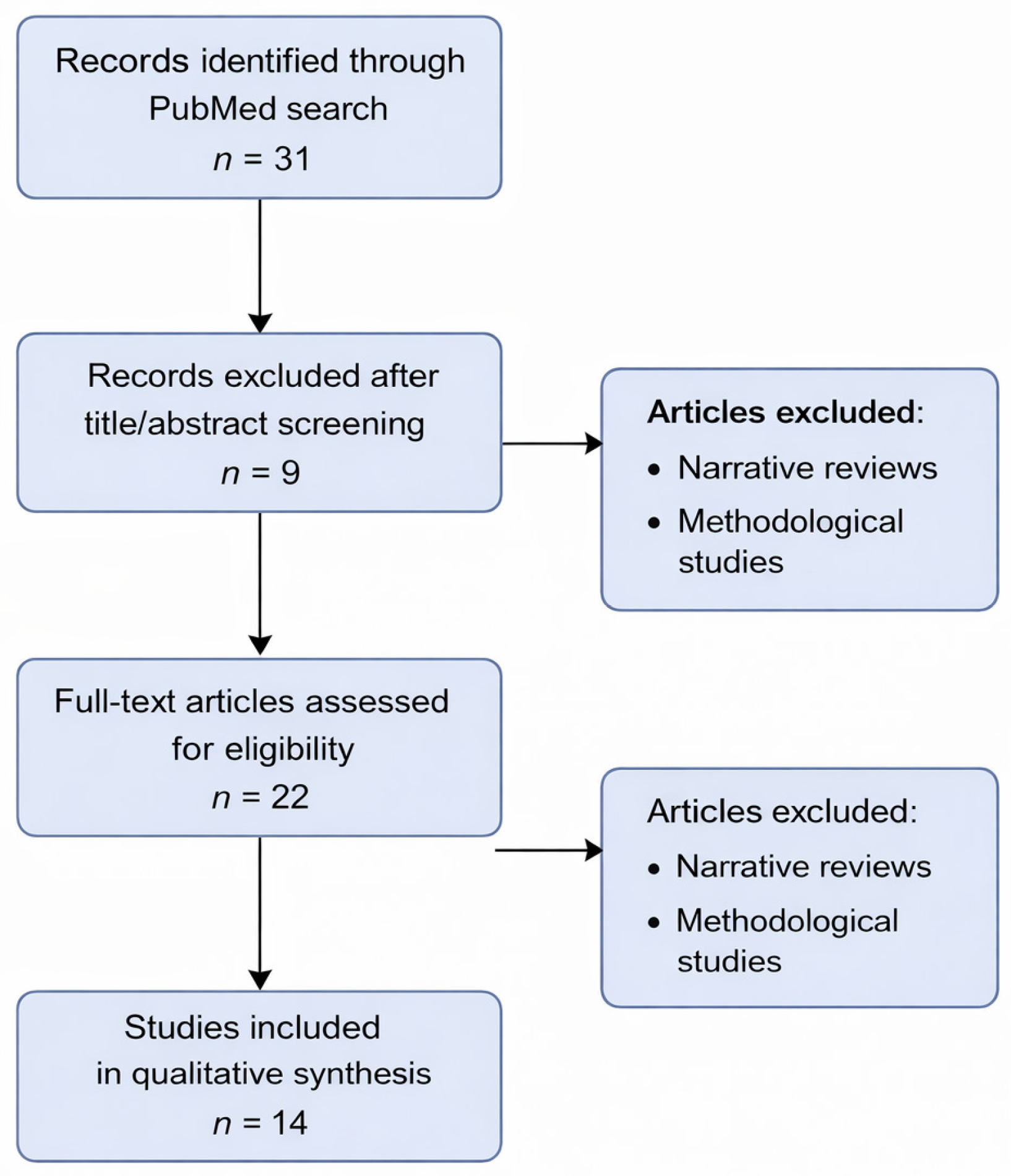
Based on the keywords and inclusion criteria, 31 articles were selected from PubMed, with 9 of them being removed because of unrelated abstracts and/or titles. Of the 22 eligible studies, 7 studies were narrative reviews, 7 were cross-sectional studies, 1 was a prospective cohort study, 3 were animal studies, 1 was a randomized controlled trial, 1 was a clinical dietary intervention, 1 was a systematic review and 1 was a methodological study. Narrative reviews and methodological studies were excluded from the research. The result was that 14 articles were submitted for further analysis (Figure 1). Table 1, Table 2 and Table 3 summarize our results based on the interconnections of the cited articles.

4. Discussion

Bringing together the three animal and in vitro studies creates a clear model that shows how periodontal inflammation and destruction may benefit from adherence to the MD [22,23,24]. OA consumption helps change the way the organism processes fats in order to reduce the harmful effects of inflammation and make the gut and oral microbiome more stable, protecting overall bone health [22,23,24]. At the cellular level, OA inhibits lipotoxicity, lowers inflammatory cytokines, improves osteoblast function, and decreases the growth and activity of osteoclasts. These actions are considered crucial in preventing bone loss related to periodontitis [22,23,24]. OA protects the periodontal ligament against excessive mechanical and inflammatory damage by increasing IL-10 production and chromatin acetylation at the molecular and epigenetic levels [22,23,24]. Additionally, OA is connected to lipid metabolism, regulates cytokine signaling and gene expression, and promotes anti-inflammatory effects [22,23,24].
This fact indicates that dietary fats not only give calories, as commonly believed, but also actively participate in the maintenance of the balance and health of human tissues [22,23,24]. Comparing two diets (PA vs. OA), it is quite significant to mention that it is not quantity that has a potential benefit for human tissues but quality, and the type of dietary fat determines the progression of the host–microbe and bone–immune relations in periodontitis. OA acts as both a metabolic substrate and a signaling molecule. It modulates the amount of acetyl CoA that can be utilized in histone acetylation, aids in keeping the production of energy in mitochondria constant and in an optimal state, and assists in the formation of anti-inflammatory lipid mediators [22,23,24]. This leads to feedback between epigenetics and metabolism, with improved cellular energy and easier access to chromatin supporting each other to maintain low inflammation. This convergence of pathways elucidates why Mediterranean-style diets, distinguished by elevated MUFA-to-SFA ratios, have consistently been linked to reduced prevalence of periodontal disease and improved systemic outcomes [22,23,24].
The most recent animal study that was conducted in mice utilized an elderly model exposed to Porphyromonas gingivalis, which is a Gram-negative anaerobe and a principal periodontopathogen [22]. This specific periodontopathogen was used because it can stimulate human chronic infection (like periodontitis) and the results and influence of using dietary fatty acids on a systematic level could be examined and evaluated [22]. The results showed a clear difference between the effects of saturated and monounsaturated fat consumption [22]. First of all, animals subjected to a diet rich in palmitic acid (PA) demonstrated substantial loss of trabecular bone in the alveolar crest (and in the femur), as well as a significant proliferation of osteoclasts in the bone marrow and, interestingly, an inflammatory lipid profile with elevated concentrations of ceramide-16 (Cer16) and 16:0-diacylglycerol (DAG) [22]. In contrast, the individuals that consumed the OA-rich diet showed maintenance of bone architecture without changes in quantity or quality and a significant decrease in osteoclastogenesis, even though the same viral attack occurred [22]. The lipidomic profiles were key to this distinction. OA feeding restored phosphatidylinositol (18:1/18:1) species, which are known to stabilize cell membranes and reduce lipotoxic stress, while also inhibiting pro-inflammatory ceramides and saturated diacylglycerols [22]. As a result, the OA-rich Mediterranean-like diet not only controlled inflammation but also changed and shaped the entire cellular lipid structure, supporting the body’s ability to adapt to stress and preventing bone loss caused by oxidative stress and cytokines [22]. Serum concentrations of pro-inflammatory cytokines such as IL-6 and TNF-a were low in both the palmitic acid and oleic acid groups in mice that were infected with P. gingivalis [22]. According to the previous finding, it is suggested that oleic acid helps protect bone integrity (as oleic acid-treated mice had 30–40% less bone loss) and regulate osteoclasts by changes in local metabolism rather than suppressing the immune system [22]. This means that OA’s protective effect comes from specific metabolic changes in bone and immune environments, not from general anti-inflammatory suppression [22].
The results of the mouse study [22] are complemented by the 2023 study by the same authors, who observed cell-to-cell interactions driving inflammatory bone loss. The study showed that the OA-ED group preserved trabecular bone structure, but also that when the diet changed from PA to OA the bone recovered to normal levels, comparable to OA. This suggests reversibility of bone damage after switching to oleic acid. The researchers used co-culture systems of osteoblasts and bone marrow-derived precursors to show that PA exposure caused oxidative stress, mitochondrial dysfunction, and higher IL-6 release from osteoblasts. This, in turn, activated osteoclast differentiation in nearby marrow cells and set up a paracrine loop similar to the chronic bone resorption seen in periodontitis [23]. OA, however, showed exactly opposite results, meaning that osteoblast viability was preserved, normal mitochondrial architecture was maintained, and IL-6 expression was reduced, which disrupts the inflammatory signals between osteoblasts and osteoclasts [23]. A significant reduction in the production of tartrate-resistant acid phosphatase (TRAP), a key marker of osteoclast development, was noticed when marrow precursors were exposed to conditioned media from osteoblasts treated with osteoarthritis [23]. This finding suggests that OA can affect cells either directly or provide protective benefits to other cells within the bone microenvironment [23]. The study showed that these immunometabolic changes were linked to how lipids are used and stored [23]. OA kept mitochondria healthy and prevented cell death by forming neutral lipid droplets and lowering ceramide levels inside cells. These cellular results support the animal findings mentioned and show that OA’s benefits are due to its ability to shift lipid metabolism away from harmful, pro-inflammatory intermediates toward more energy-efficient and stress-resistant forms [23].
While the two most recent studies [22,23] clearly showed that OA can act both as a systemic and cellular regulator of inflammation and bone metabolism, Schuldt et al. (2022) explained through their study the molecular and epigenetic details of this process within the periodontal ligament [24]. In this study, human periodontal ligament fibroblasts were used in order to expose them to compressive mechanical stress (mimicking occlusal load or orthodontic movement). After the introduction of OA, the results showed upregulated anti-inflammatory cytokine IL-10 alongside an increase in histone H3 acetylation at lysines 9 and 14 (H3K9/14ac) [24]. Chromatin immunoprecipitation showed that these acetylation changes were mainly found in the IL10 promoter region, and this suggests that OA creates a chromatin state that makes IL10 transcription easier [24]. When the histone acetyltransferase (HAT) inhibitor C646 was added, it completely blocked histone acetylation and IL10 production. This shows that the p300/CBP HAT complex plays a key role and shows that OA acts as an epigenetic mediator. It changes dietary and metabolic signals into changes in gene expression by altering chromatin structure, which directly links diet to how inflammation is controlled at the gene level [24]. The most significant result is that the effect was found to be greatest when mechanical stress was applied, indicating that there is a dynamic process which exists between mechanical loading and metabolic signaling in the periodontal ligament [24]. OA, in contrast, showed little activity when there was no force applied, implying that the anti-inflammatory action largely seen after stress or injury in order to revert to homeostasis is due to its acting as a chemical regulator [24].
Taken together, these studies provide strong biological support for clinical findings that link following the MD to less severe periodontitis and better recovery [22,23,24]. That means OA consumption can act as a supplementary element together with periodontal therapy and/or with periodontal therapy maintenance because it not only diminishes bacterial load but also significantly contributes to the strengthening of host resilience, reprogramming bone, ligament, and immune cells to resist inflammatory damage [22,23,24]. Such epigenetic findings may have useful implications. For example, the personalization of diets and medications to alter histone acetylation and IL-10 levels could be used to treat chronic oral inflammation by modifying nutrition [22,23,24]. Epidemiological evidence is connected to the mechanisms of the MD through research conducted on animal and cellular models. Its benefits go beyond basic nutrition and support the body’s defense, bone health, and gene regulation at the molecular level [22,23,24].
Three more studies, a systematic review, a randomized clinical trial and a dietary intervention, together support the idea that Mediterranean-style nutrition and periodontal health may be associated [25,26,27]. The systematic review and meta-analysis bring together seven studies with about 13.900 participants, offering the most comprehensive perspective on whether greater adherence to the MD significantly reduces periodontitis risk or severity at the population level [25]. The combined results did not show a statistically significant association, even though some individual studies suggested a protective effect [25]. The lack of a clear meta-analytic result is best understood by looking at the differences between the studies. The measurement of Mediterranean adherence relied on various approaches and methods, and so did the methods of measurement of periodontal status. The researchers studied different groups, which differed in terms of age, health, and diet [25]. The overall point is that, despite the numerous studies that propose a positive relationship, the variability of studies undermines the overall outcomes. In order to obtain more comprehensive responses in future meta-analyses, researchers should employ standard definitions of exposures and outcomes [25].
In this respect, dietary intervention can be used to explain the mechanisms, as it demonstrates that weight loss is not the primary factor but diet composition is. It also highlights the salivary ecosystem as an early and likely mediator [26]. Eight weeks of isocaloric MD were applied to overweight or obese, yet healthy adults. They consumed fruits and vegetables, whole grains, legumes, nuts, and olive oil and less refined sugar and saturated fat. As the energy intake was adjusted to maintain body weight, any shift in the oral environment can be attributed to food quality rather than weight change [26]. The salivary microbiome shifted to a more “eubiotic” pattern, meaning that alpha diversity increased, beta diversity altered, and the levels of key periodontopathogens such as Porphyromonas gingivalis, Tannerella forsythia, Treponema denticola, Prevotella intermedia, and Fusobacterium nucleatum decreased. Meanwhile, health-related bacteria such as Streptococcus, Veillonella, Rothia and Neisseria increased [26]. The functional predictions showed changes in taxonomy. There were taxonomic changes in the functional predictions. The processes associated with lipopolysaccharide biosynthesis, indicative of an inflammatory possibility, decreased, whereas the ability to synthesize vitamins and amino acids increased [26]. Notably, the relationships among adherence indicators, including the consumption of fruit, fiber, and polyphenols and pathogen suppression, indicated a dose–response correlation. Moreover, weight loss was not likely to be a confounding factor because it was not associated with BMI or calorie change. The trial also supports the theory that consuming a Mediterranean-style diet reduces the occurrence of bacteria associated with gum disease and enhances bacteria and activities that thrive in a healthier, oxygen-enriched and antioxidant-supported mouth [26]. Clinically, these changes in microbiome composition are similar to what is seen after successful periodontal debridement. This implies that a healthy diet can supplement mechanical treatment by lowering the inflammation and pathogenic organisms that stimulate the development of the disease [26].
A randomized, double-blind trial placed “Mediterranean-like” nutrients in the practical context of periodontal care [27]. All participants received non-surgical periodontal therapy (full-mouth disinfection with scaling/root planning, chlorhexidine, and short-course amoxicillin plus metronidazole), then were randomized for three months to an adjunctive regimen of antioxidant/omega-3-rich supplements versus placebo [27]. As expected, the debridement–antibiotic protocol showed substantial improvements in full-mouth plaque and bleeding scores, probing depth, the percentage of sites with PPD >3 mm, and clinical attachment level across both arms. There were no significant differences between groups of clinical endpoints at any time, which is not surprising, as a high-quality non-surgical treatment and systemic antibiotics create a strong ceiling effect [27]. Still, the biomarker profile hints that diet-aligned supplementation may confer additional local anti-inflammatory traction since the salivary MMP-8 and MMP-9 decreased significantly over time [27]. Antioxidant and omega-3 inputs can further quiet protease-driven tissue catabolism at the gingival level—but that effect is subtle relative to the dominant impact of therapy itself and may require longer follow-up, larger samples, or biomarker-first endpoints to confidently resolve between-group analyses [27].
Synthesizing across the three articles, a coherent picture emerges. The isocaloric Mediterranean diet intervention shows that simply improving diet quality, even without weight loss, changes the salivary microbiome away from red-complex and orange-complex profiles and lowers predicted inflammatory capacity [26]. With fewer LPS-rich Gram-negative anaerobes, less proteolysis, and a better redox balance, there is less BOP, shallower pockets, and lower collagenolytic enzyme activity over time [26]. The supplement RCT did not outperform the standard-of-care package on main clinical measures, but it did show greater reductions in salivary MMP-8 and MMP-9, which are the enzymes most involved in connective-tissue breakdown. This suggests that nutrient patterns typical of MD, such as omega-3 fatty acids, antioxidants, and plant-based bioactives, may help control harmful host responses even after bacterial levels have been quickly reduced [27]. Mechanical biofilm control and antimicrobials target the immediate cause, while a Mediterranean-style diet changes the body’s baseline and inflammation, making disease less likely to start, spread, or return [25,26,27].
Methodological factors help explain why the meta-analysis did not show a statistically significant association. Periodontal outcomes varied from self-reported gum health to examiner-measured BOP, PPD, and CAL. Some studies grouped severities together, while others looked at risk by stage. The populations studied ranged from general community groups to clinical samples. The adjustment sets often combined confounders and mediators, such as BMI and diabetes, which can lead to over-adjustment. Finally, most studies used cross-sectional designs, which may introduce healthy-user bias. For example, people who follow Mediterranean-like diets also tend to brush and floss more and visit the dentist more regularly [30,32]. Notably, even when such behaviors are adjusted, the dietary signal remains in many models, strengthening the argument that physiology—not just lifestyle clustering—contributes to the association [25,26,27].
During prevention and maintenance, it makes sense to recommend a Mediterranean-style diet as part of overall periodontal care [25,26,27]. The biggest emphasis should be placed on olive oil as the primary fat source (due to OA), but other elements of the MD like fruits, vegetables, legumes, whole grains, regular intake of nuts and fish, and moderation in processed meats, refined sugars, and ultra-processed foods should also be promoted. This nutritional advice is considered low-risk, matches current cardiometabolic health guidelines, and is backed by research on how it affects the microbiome, inflammation, and periodontal health [26,27]. In patients with treated periodontitis, high-quality non-surgical therapy is still the main factor in clinical improvement. However, Mediterranean-style nutrients, especially omega-3 fatty acids and antioxidant-rich foods, may further reduce local proteolytic activity and inflammation. These nutrients can be added to personalized maintenance plans, but it is realistic to expect only small improvements in probing depth or attachment level if the main therapy is already working well [27].
Recent cross-sectional research shows a clear link between following the MD and better periodontal health in people from different backgrounds (a variety of populations with different socioeconomic statuses) using a range of study methods [11,28,29,31,32,33,34] (Table 3). All the studies in the template showed that MD exerts protective effects against periodontal inflammation and destruction through both direct biological mechanisms and indirect behavioral choices, despite the variation in the way that each study was conducted, for example, differences in dietary indices, periodontal assessment criteria, and population demographics [11,33].
Ying et al. (2025) found in their study, which included adolescents in Zhejiang, China, that those who followed the MD less closely, as measured by the KIDMED index, had worse periodontal health, shown by more cases of gingival bleeding and calculus [28]. According to this study, it was identified that low adherence to the MD resulted in 29.5% having poor health, but high MD adherence resulted in 16.2% having poor health, and even after adjusting for confounders such as parental education, household income, smoking and oral hygiene habits, low adherence showed a 75% higher odds of poor periodontal status. This shows that dietary quality affects gingival and periodontal health beyond traditional behavioral and socioeconomic factors. This study stands out because it looked at an age group with minimal or little tissue loss, which suggests that diet primarily affects early inflammation instead of causing structural damage [28]. The study’s finding that diet independently affects early periodontal changes in young people suggests that starting nutritional interventions early could help reduce their risk of developing periodontal disease over their lifetime [28].
Moving from adolescence to adulthood, a limited number of cross-sectional studies have confirmed and expanded on this association between MD and periodontitis. Yue et al. (2024), using data from the Women’s Health Initiative OsteoPerio cohort, studied how different dietary quality indices such as the Healthy Eating Index (HEI), the Alternative Healthy Eating Index (AHEI), Dietary Approaches to Stop Hypertension (DASH), and the alternate Mediterranean Diet Score (aMed) relate to detailed periodontal measures in postmenopausal women [30]. The results showed that higher HEI and aMed scores, meaning higher adherence to MD-like patterns, were associated with significantly lower periodontal inflammation, as clinical attachment loss (CAL) and bleeding on probing (BOP) were reduced. Interestingly, it was hypothesized in this study that nutrition could influence inflammation faster than tissue structure changes due to the passage of time, since proven markers of active inflammation demonstrated the strongest relations, whereas measures such as probing pocket depth (PPD) and alveolar bone height (ACH) were less closely related (Yue et al., 2024) [30]. People with higher HEI, DASH, and aMed scores were less likely to lose teeth due to periodontal disease. This suggests that long-term dietary habits may help protect oral tissues [30].
This research found that increased adherence to the Mediterranean diet as measured by aMed, HEI-2020 and DASH indices resulted in reduced odds of periodontitis when the risk factors, including smoking, diabetes, education and body mass index, were adjusted [11]. HEI lost its significance when all dietary indicators were examined together, although aMed and DASH continued to have distinct protective benefits. The unexpected negative correlation between DII and inflammatory disease, which were expected to be positively associated, was believed to be a statistical artifact that was caused by the overlap between indices and the methods that were used to measure dietary components [11]. This research demonstrated that diets that have an abundance of fruits, vegetables, legumes, and healthy fats, such as MD-like and DASH diets, are associated with low prevalence rates of periodontal disease in a large and diverse group of people [11].
Research from European populations provides valuable information since individuals there may adhere to diets more consistently. For instance, a cross-sectional study investigated the relationship between periodontitis severity and adhering to both the MD and physical activity among Italian university students [33]. They discovered that individuals who did not strictly adhere to the Mediterranean diet were at a higher risk of developing severe (Stage III/IV) periodontitis, with those who were not physically active and had poor diet adherence having the highest risk [33]. Clinical improvement was measured with variable parameters such as the percentage of sites with a probing pocket depth > 4 mm (%PPD), %PPD = 5 to 6 mm, furcation involvement, tooth mobility, number of bleeding pockets, and teeth lost due to periodontal causes. In contrast, the healthiest periodontal status was seen in participants with high adherence to the MD and moderate to high physical activity status [33]. An increase in compliance with the MD was associated with a major reduction in the concentration of such microbes as Porphyromonas gingivalis, Prevotella intermedia, and Treponema denticola. Eating more MD foods may shift the saliva’s microbial balance and help support the body’s immune defenses. The study shows that combining diet and lifestyle habits can have a stronger and synergistic effect. It suggests that the Mediterranean diet’s anti-inflammatory and antioxidant effects may work together with the benefits of physical activity (metabolic and vascular benefits) to reduce periodontal inflammation [33].
In a cross-sectional study conducted in Germany with 6209 participants, Altun et al. (2021) employed food pattern extraction rather than pre-established indices [34]. Their findings showed that people who followed a plant-based diet, which includes more vegetables, fruits, legumes, and fish, had much lower chances of developing periodontitis than those who ate Western diets high in refined grains and processed meats [34]. Participants with low adherence to the MD had a higher plaque index (10.42 vs. 3.57) and more frequently exhibited severe periodontitis (20.4 vs. 18.8%) compared with participants with high adherence to the diet. Participants who ate more Mediterranean-style foods had about a 24% lower odds of having severe periodontitis, even after adjusting for age, smoking, BMI, and diabetes. This supports the idea that the link between the MD and periodontitis applies to more than just Mediterranean populations. It also shows that unsaturated fats, antioxidants, and polyphenols are the main factors behind the diet’s benefits for periodontal health [34].
These findings were expanded in the study by Radić et al. (2022) to a unique clinical group of kidney transplant recipients in Croatia, a population marked by immunosuppressive medication and persistent low-grade inflammation [32]. The researchers found that people who followed the Mediterranean Diet Serving Score (MDSS) and showed greater adherence had more remaining teeth, less plaque, reduced probing depths, and a better quality of life related to oral health [32]. This research also found that individuals who adhered to the MD had a higher fat-free mass and skeletal muscle and hence a better immune and metabolic condition, which may indirectly favor periodontal stability [32]. Such results indicate that in patients with medical conditions the MD can be used to improve overall and oral health, potentially through an influence on the processes of inflammation and oxidation [32].
Researchers in Latin America made similar findings. Sáenz-Ravello et al. (2023) state that Chilean people with higher scores on the Mediterranean Diet Index indicated less mouth discomfort and gingival bleeding [31]. The issue with this study is that it was based on self-report measures (bleeding and comfort), which would have restricted the accuracy that a clinical assessment would provide. Nevertheless, it also contributes to the cross-cultural applicability of the association and shows that even subjective views on oral health can be enhanced by following the MD principles [31]. In Turkey, Sen et al. (2024) reported that the rate of periodontal disease and caries was lower in individuals with improved dietary habits and those with better physical activity. The interaction between diet and exercise indicates that a great number of factors influence periodontal health and that it is essential to take into account lifestyle modifications as components of treatment [29].
Taken together, these studies suggest that there are several likely biological and behavioral mechanisms that explain and prove the observed associations [11,28,29,30,31,32,33]. MD is characterized by high percentages of monounsaturated fats (especially oleic acid from olive oil), omega-3 polyunsaturated fats, dietary fiber, and polyphenolic compounds, all of which contribute to reduced systemic oxidative stress and inflammatory cytokine production. These components help regulate the immune system by lowering NF-κB activation; reducing proinflammatory mediators like IL-1β, IL-6, and TNF-α; and increasing anti-inflammatory cytokines such as IL-10. The Mediterranean diet, which is rich in antioxidants from vitamins C and E, carotenoids, and polyphenols, can reduce tissue damage caused by reactive oxygen species (ROS), a key factor in periodontal destruction. Olive oil and plant polyphenols have shown that they exert anti-inflammatory effects, reducing osteoclast differentiation and alveolar bone resorption in experimental settings, providing biological plausibility to the clinical findings observed in these cross-sectional studies [11,28,29,30,31,32,33,34].
In addition to the biological factors explained before, certain behaviors may also help explain the connection between following the MD and better periodontal health. Several studies found that people who stick closely to the MD tend to have better oral hygiene, e.g., brushing and flossing more often and visiting the dentist regularly [30,32]. These behavioral patterns suggest that adherence to the MD could serve as a proxy for a broader health-conscious lifestyle encompassing diet, physical activity, and preventive care [32,33]. However, even after adjusting for these behaviors, diet remained an independent predictor in most models, suggesting that the association is not purely behavioral but also physiologically driven [11,30,34].
Cross-sectional studies cannot prove cause and effect, but the fact that similar results have been found in different studies across different continents, age groups, and study designs makes the association more credible and reliable [29,30,31,32,33,34]. The cross-sectional studies include a wide variety of sociodemographic strata, including results across adolescents, adults, postmenopausal women, and medically compromised populations, and this suggests that the cause is biological and not limited to a specific group of people [28,30,32]. Furthermore, the agreement with interventional and animal studies, which show that Mediterranean-type diets reduce inflammatory cytokines, change microbiota composition, and limit alveolar bone loss, adds causal weight by combining different types of evidence [22,23].
However, there are still a number of methodological issues. The content and scoring systems of dietary assessment instruments, such as the Mediterranean Diet Quality Index for Children and Adolescents (KIDMED), the Healthy Eating Index (HEI), and Dietary Approaches to Stop Hypertension (DASH), differ across studies, which makes the comparability of the results more difficult [11,28,30]. Also, there is a lack of standardized periodontal outcome assessment, as some of the studies used self-reported gingival bleeding and others clinically measured CAL and BOP, which also complicates the process of synthesis [31,33,34]. What must not be forgotten is that the results may be misleading with respect to variables such as socioeconomic level, level of dental hygiene and health-related activities. The actual effect of food on periodontal health might be underemphasized if a few other factors, such as BMI or diabetes status, are over-adjusted [11,30].
Despite the major limitations of such results, most of the studies point to the fact that consumption of the elements of the MD is linked to lower rates and less severe cases of periodontal disease. It has also been found that periodontal disease can be prevented and controlled through dietary counseling [30,32]. To complement regular therapies, encouraging patients to adopt Mediterranean-style dietary practices, including consuming olive oil and increasing intake of fruit and vegetables, legumes, nuts, and whole grains, as well as consuming moderate quantities of fish, could help to deal with inflammation in periodontal disease [28,31]. These associations are strong in different groups and are supported by clear and proven mechanisms and consistent results from experiments and interventions [30,32].
The research displays several limitations. First of all, the literature search was conducted exclusively in PubMed, and it only included studies written in the English language, which may have led to the omission of relevant studies. Additionally, there was heterogenicity in the design and MD adherence assessment tools of each study. Another limitation is that most of the studies did not exclude other confounding factors such as systemic conditions, race, gender, age, smoking or socioeconomic status, which may influence periodontal outcomes.

5. Conclusions

Current evidence supports a beneficial association between MD adherence and periodontal health, mediated by anti-inflammatory, antioxidant, and microbiome stabilizing mechanisms. Dietary counseling aligned with MD principles can be reasonably included in periodontal prevention and long-term maintenance strategies. Further standardized longitudinal and interventional studies are needed to confirm causality and refine nutritional strategies for periodontal disease prevention and management.

Author Contributions

Conceptualization, F.F., V.Z., P.P., T.C., K.P., C.C., A.Y., V.A., A.P. and S.D.; methodology, F.F., V.Z., P.P., T.C., K.P., C.C., A.Y., V.A., A.P. and S.D.; writing—original draft preparation, F.F., V.Z., P.P., T.C., K.P., C.C., A.Y., V.A., A.P. and S.D.; writing—review and editing, F.F., V.Z., P.P., T.C., K.P., C.C., A.Y., V.A., A.P. and S.D.; supervision, S.D. All authors have read and agreed to the published version of the manuscript.

Funding

This research received no external funding.

Data Availability Statement

The original data presented in the study are included in the article; further inquiries can be directed to the corresponding author.

Conflicts of Interest

The authors declare no conflicts of interest.

References

  1. Li, X.; Zhao, D.; Xie, J.; Wen, H.; Liu, C.; Li, Y.; Li, W.; Wang, S. Deep learning for classifying the stages of periodontitis on dental images: A systematic review and meta-analysis. BMC Oral Health 2023, 23, 1017. [Google Scholar] [CrossRef]
  2. Bud, E.; Pop, S.I.; Bud, A.; Steele, B.R.; Vlasa, A. Bony Defect Regeneration in Periodontitis: A Systematic Review of the Literature Regarding the Use of Enamel Matrix Derivative Proteins. Dent. J. 2025, 13, 92. [Google Scholar] [CrossRef]
  3. Chmielewski, M.; Pilloni, A.; Cuozzo, A.; D’Albis, G.; D’Elia, G.; Papi, P.; Marini, L. The 2018 Classification of Periodontitis: Challenges from Clinical Perspective. Dent. J. 2025, 13, 361. [Google Scholar] [CrossRef]
  4. West, N.X.; Gormley, A.; Pollard, A.J.; Izzetti, R.; Marruganti, C.; Graziani, F. Evaluating the Performance and Implementation of the 2018 Classification of Periodontal Diseases: A Systematic Review and Survey. J. Clin. Periodontol. 2025, 52, 34–57. [Google Scholar] [CrossRef]
  5. Yekani, M.; Dastgir, M.; Fattahi, S.; Shahi, S.; Dizaj, S.M.; Memar, M.Y. Microbiological and molecular aspects of periodontitis pathogenesis: An infection-induced inflammatory condition. Front. Cell. Infect. Microbiol. 2025, 15, 1533658. [Google Scholar] [CrossRef]
  6. Hashim, N.T.; Babiker, R.; Padmanabhan, V.; Ahmed, A.T.; Chaitanya, N.C.S.K.; Mohammed, R.; Priya, S.P.; Ahmed, A.; El Bahra, S.; Islam, M.S.; et al. The Global Burden of Periodontal Disease: A Narrative Review on Unveiling Socioeconomic and Health Challenges. Int. J. Environ. Res. Public Health 2025, 22, 624. [Google Scholar] [CrossRef]
  7. Aysha, A.B.; Sulijaya, B.; Soeroso, Y.; Haerani, N.; Tadjoedin, F.M.; Rahardjo, A. Cost analysis of treatment for periodontitis stages I–IV based on periodontal status and number of visits: A retrospective study at the Dental Teaching Hospital. Front. Dent. Med. 2025, 6, 1684749. [Google Scholar] [CrossRef]
  8. Kim, T.H.; Heo, S.Y.; Chandika, P.; Kim, Y.M.; Kim, H.W.; Kang, H.W.; Je, J.Y.; Qian, Z.J.; Kim, N.; Jung, W.K. A literature review of bioactive substances for the treatment of periodontitis: In vitro, in vivo and clinical studies. Heliyon 2024, 10, e24216. [Google Scholar] [CrossRef]
  9. El Chaar, E. Periodontal Disease: A Contributing Factor to Adverse Outcome in Diabetes. J. Diabetes 2025, 17, e70136. [Google Scholar] [CrossRef]
  10. Naghsh, N.; Karimi, F.; Tarrahi, M.J.; Rahimi, A. Evaluation of the association between periodontitis and inflammatory bowel disease: A systematic review and Meta-analysis. BMC Gastroenterol. 2025, 25, 594. [Google Scholar] [CrossRef]
  11. Zhang, R.; Zhang, Z.; Ji, S.; Yang, W.; Long, T. Comparison of the association between different dietary pattern scoring indices and periodontitis and their population heterogeneity. Front. Nutr. 2025, 12, 1590694. [Google Scholar] [CrossRef]
  12. Motaghi, A.; Bayani, M.; Mehrafarid, H.; Abdolalian, F.; Almasi-Hashiani, A. Increased risk of peptic ulcer following periodontitis: A systematic review and meta-analysis. Eur. J. Med. Res. 2025, 30, 584. [Google Scholar] [CrossRef]
  13. Camps-Plomer, G.B.; Márquez-Arrico, C.F.; Iranzo-Cortés, J.E.; Montiel-Company, J.M. Association Between Migraine and Periodontitis: A Systematic Review and Meta-Analysis. Eur. J. Neurol. 2025, 32, e70391. [Google Scholar] [CrossRef]
  14. Qadir, B.H.; Mahmood, M.K.; Amin, Y.M.M.; Kurda, H.A.; Rasheed, T.A.; Noori, A.H.; Noori, Z.F.; Abdulghafor, M.A.; Fadhil, H.N.M.; Fatih, M.T.; et al. Periodontitis and Tooth Loss Are Associated with Higher Risks of Cognitive Disorders: A Systematic Umbrella Meta-Analys. Clin. Exp. Dent. Res. 2025, 11, e70240. [Google Scholar] [CrossRef]
  15. Portes, J.; Bullon, B.; Gallardo, I.; Fernandez-Riejos, P.; Quiles, J.L.; Giampieri, F.; Bullon, P. Prevalence of undiagnosed diabetes and prediabetes related to periodontitis and its risk factors in elderly individuals. J. Dent. 2023, 132, 104480. [Google Scholar] [CrossRef]
  16. Saleh, O.; Abdulmunim, A.; Aboushakra, I.; Shah, M.; Hakam, A.; Alsabeeha, N.H.; Atieh, M.A. Periodontitis: Grade Modifiers Revisited. Oral Dis. 2025, 31, 1637–1646. [Google Scholar] [CrossRef]
  17. Tripathi, K.P.; Mittal, N.; Gautam, A.; Dubey, P.; Pandey, A.; Gupta, S.; Kumar, A.; Choubey, V. In vitro characterization of drynaria in-situ gel: A novel approach to periodontal disease management. Bioinformation 2025, 21, 2006–2011. [Google Scholar] [CrossRef]
  18. Rezvaninejad, R.; Behzadi, S.; Jamali, Z.; Khalili, P.; Sardou, S.S.; Rezvaninejad, R. Association between micronutrient intake and periodontal health: A cross-sectional analysis of the Rafsanjan cohort study. BMC Oral Health 2025, 25, 1761. [Google Scholar] [CrossRef]
  19. Chen, J.L.; Tran, N.; Liu, L. A Brief Review of the Mediterranean Diet’s Role in Mediating Inflammation and in Management of Rheumatoid Arthritis. Perm. J. 2025, 29, 134. [Google Scholar] [CrossRef]
  20. Faris, M.E.; Benajiba, N.; Aboul-Enein, B.H.; Abu Shihab, K.; Alshaalan, R.; Aldahash, R.; Almoayad, F. Adherence to the Mediterranean Diet Across the League of Arab States: A Systematic Review. Healthcare 2025, 13, 2217. [Google Scholar] [CrossRef]
  21. Mao, J.-S.; Cui, H.-Y.; Zhou, X.-Z.; Zhang, S.-W. Recent Progress in Exploring Dietary Nutrition and Dietary Patterns in Periodontitis with a Focus on SCFAs. Nutrients 2025, 17, 3150. [Google Scholar] [CrossRef]
  22. Döding, A.; Wurschi, L.; Zubiria-Barrera, C.; Klassert, T.E.; Bereuter, L.; Rao, Z.; Bär, A.K.; Domuncu, A.; Koeberle, A.; Noels, H.; et al. Mediterranean diet component oleic acid decreases systemic impact of periodontal Porphyromonas gingivalis-infection in age: Addressing role of stress resistance and microbiome. npj Aging 2025, 11, 54. [Google Scholar] [CrossRef]
  23. Döding, A.; Zimmermann, S.; Maghames, A.; Reimann, M.; Symmank, J.; Thürmer, M.; Gräler, M.H.; Wolf, M.; Jacobs, C.; Koeberle, A.; et al. Immunometabolic capacities of nutritional fatty acids in regulation of inflammatory bone cell interaction and systemic impact of periodontal infection. Front. Immunol. 2023, 14, 1213026. [Google Scholar] [CrossRef]
  24. Schuldt, L.; von Brandenstein, K.; Jacobs, C.; Symmank, J. Oleic acid-related anti-inflammatory effects in force-stressed PdL fibroblasts are mediated by H3 lysine acetylation associated with altered IL10 expression. Epigenetics 2022, 17, 1892–1904. [Google Scholar] [CrossRef]
  25. Aalizadeh, Y.; Khamisi, N.; Asghari, P.; Safari, A.; Mottaghi, M.; Taherkhani, M.H.; Alemi, A.; Ghaderi, M.; Rahmanian, M. The Mediterranean diet and periodontitis: A systematic review and meta-analysis. Heliyon 2024, 10, e35633. [Google Scholar] [CrossRef]
  26. Laiola, M.; De Filippis, F.; Vitaglione, P.; Ercolini, D. A Mediterranean Diet Intervention Reduces the Levels of Salivary Periodontopathogenic Bacteria in Overweight and Obese Subjects. Appl. Environ. Microbiol. 2020, 86, e00777-20. [Google Scholar] [CrossRef]
  27. Rasperini, G.; Pellegrini, G.; Sugai, J.; Mauro, C.; Fiocchi, S.; Mora, P.C.; Dellavia, C. Effects of food supplements on periodontal status and local and systemic inflammation after nonoperative periodontal treatment. J. Oral Sci. 2019, 61, 213–220. [Google Scholar] [CrossRef]
  28. Ying, Y.; Zhang, L.; Zhou, H.; Sun, R.; Dai, J.; Zhang, W. Association Between Mediterranean Diet Adherence and Periodontal Health Among Junior High School Students in China. Int. Dent. J. 2025, 75, 103922. [Google Scholar] [CrossRef]
  29. Şen, D.Ö.; Yarkaç, F.U.; Eroğlu, Z.T.; Yıldız, K. The relationship between periodontal status, physical activity, dietary practices, and dental caries. Sci. Rep. 2024, 14, 29086. [Google Scholar] [CrossRef]
  30. Yue, Y.; Hovey, K.M.; LaMonte, M.J.; Wactawski-Wende, J.; Andrews, C.A.; Millen, A.E. Association between dietary patterns and periodontal disease: The OsteoPerio cohort study. J. Clin. Periodontol. 2024, 51, 863–873. [Google Scholar] [CrossRef]
  31. Sáenz-Ravello, G.; Matamala, L.; Cisternas, P.; Gamonal, J.; Hernández, P.; Santos, N.C.D.; Deng, K.; Baeza, M. Association between the Mediterranean Diet Index and self-reported Gingival Health Status Indicators in a population of Chilean adults: A cross-sectional study. J. Appl. Oral Sci. 2023, 31, e20230100. [Google Scholar] [CrossRef]
  32. Radić, J.; Vučković, M.; Gelemanović, A.; Roguljić, M.; Orešković, J.; Kovačević, K.; Kolak, E.; Nenadić, D.B.; Radić, M. Interconnectedness between periodontitis stage, oral hygiene habits, adherence to the Mediterranean diet and nutritional status in Dalmatian kidney transplant recipients: A cross-sectional study. Sci. Rep. 2022, 12, 11614. [Google Scholar] [CrossRef]
  33. Marruganti, C.; Traversi, J.; Gaeta, C.; Ferrari Cagidiaco, E.; Parrini, S.; Discepoli, N.; Grandini, S. Adherence to Mediterranean diet, physical activity level, and severity of periodontitis: Results from a university-based cross-sectional study. J. Periodontol. 2022, 93, 1218–1232. [Google Scholar] [CrossRef]
  34. Altun, E.; Walther, C.; Borof, K.; Petersen, E.; Lieske, B.; Kasapoudis, D.; Jalilvand, N.; Beikler, T.; Jagemann, B.; Zyriax, B.-C.; et al. Association between dietary pattern and periodontitis—A cross-sectional study. Nutrients 2021, 13, 4167. [Google Scholar] [CrossRef]
Figure 1. A flowchart illustrating the methodology and search strategy used for selecting the articles in the review.
Oral 06 00039 g001
Table 1. Animal and in vitro studies (n = 3).
No.Author, Year, CountryObjectiveSampleMethodsMain Findings
1Döding A., et al. (2025) [22],
Germany
To investigate whether dietary oleic acid (Mediterranean diet component) modulates the systemic impact of periodontal Porphyromonas gingivalis infection during aging.Young (5-week-old) and aged (>73-week-old) male C57BL6 mice fed normal diet, palmitic acid-enriched diet, or oleic acid-enriched diet.Murine model of P. gingivalis-induced periodontitis with dietary palmitic vs. oleic acid intervention; microbiome sequencing, bone histomorphometry, lipidomic and cytokine analyses.Palmitic acid diet increased CEJ–ABC distance and osteoclast numbers, indicating greater alveolar bone loss and microbiome disruption. Oleic acid diet preserved microbiome stability, maintained PI(18:1/18:1) levels, and reduced inflammatory bone responses.
2Döding A., et al. (2023) [23], GermanyTo investigate the immunometabolic effects of dietary fatty acids (palmitic acid vs. oleic acid) on inflammatory bone metabolism and systemic effects of periodontal Porphyromonas gingivalis infection.Male C57BL/6 mice fed palmitic acid- or oleic acid-enriched diets for 16 weeks with oral P. gingivalis infection; additional osteoblast and osteoclast cell culture experiments.Murine periodontitis model with palmitic or oleic acid diets; bone histomorphometry, cytokine assays, lipidomic analysis, and osteoblast/osteoclast cell culture experiments.Palmitic acid reduced trabecular bone volume and increased IL-6 production and osteoclast differentiation. Oleic acid reduced osteoclast formation, increased protective lipokine PI (18:1/18:1), and restored osteoblast mineralization.
3Schuldt L., et al. (2022) [24], GermanyTo investigate whether oleic acid modulates the inflammatory response of force-stressed periodontal ligament fibroblasts via epigenetic regulation of histone acetylation and IL10 expression.Human periodontal ligament fibroblasts exposed to oleic acid and mechanical compression.In vitro study of compressed human periodontal ligament fibroblasts exposed to oleic acid; gene expression and histone acetylation analyses.Oleic acid increased histone H3 acetylation and IL-10 expression, indicating an anti-inflammatory response. Inhibition of histone acetyltransferase reduced IL-10 expression and reversed this effect.
Table 2. Systematic review, randomized clinical trial and dietary intervention (n = 3).
No.Author, Year, CountryObjectiveSampleMethodsMain Findings
1Aalizadeh Y., et al. (2024) [25], IranTo evaluate the association between adherence to the Mediterranean diet and periodontitis.7 studies included (1 cohort, 5 cross-sectional, 1 randomized); 16,168 participants in total.Systematic review and meta-analysis following PRISMA; pooled effect estimation using random-effects meta-analysis; periodontal outcomes included PPD, CAL, BOP, GI, PI, and PISA.No significant pooled association between Mediterranean diet adherence and periodontitis risk. However, several included studies reported lower PPD, CAL, plaque indices, and inflammatory markers with higher Mediterranean diet adherence.
2Laiola M., et al. (2020) [26], ItalyTo investigate the effect of a Mediterranean diet intervention on salivary microbiota and periodontal pathogens.Randomized dietary intervention; saliva collection at baseline, 4 and 8 weeks; DNA extraction and 16S RNA sequencing; microbiome analysis.Randomized dietary intervention; saliva collection at baseline, 4 and 8 weeks; DNA extraction and 16S rRNA sequencing (V3–V4 region); microbiome analysis (QIIME, OTU analysis, Spearman correlation with dietary variables).After eight weeks of Mediterranean diet intervention, the relative abundance of Porphyromonas gingivalis, Prevotella intermedia, and Treponema denticola in saliva decreased, while Streptococcus cristatus, which is antagonistic to P. gingivalis, increased. Periodontopathogenic species showed a negative correlation with adherence to the Mediterranean diet and dietary fiber intake.
3Rasperini G., et al. 2019) [27], ItalyTo evaluate the effect of a multi-micronutrient dietary supplement on periodontal clinical parameters and inflammatory biomarkers in patients with severe chronic periodontitis adhering to a Mediterranean diet.30 patients with severe chronic periodontitis undergoing non-surgical periodontal therapy (SRP); micronutrient supplement group vs. olive-oil control group.Double-blind randomized clinical trial; periodontal clinical examination (FMPS, FMBS, PPD, CAL); saliva collection and cytokine quantification (MMP-8, MMP-9); serum analysis of CRP; follow-up at baseline, 1 month, and 3 months.Non-surgical periodontal therapy improved periodontal parameters, including full-mouth plaque score, full-mouth bleeding score, probing pocket depth, percentage of sites with PPD >3 mm, and clinical attachment level in both groups. Salivary MMP-8 and MMP-9 decreased over time, with significant reductions at three months in the micronutrient group. Full-mouth bleeding score was significantly correlated with salivary MMP-8.
Abbreviations: PPD, probing pocket depth; CAL, clinical attachment loss; BOP, bleeding on probing; GI, gingival index; PI, plaque index; PISA, periodontal inflamed surface area; QIIME, Quantitative Insights Into Microbial Ecology; OTU, operational taxonomic unit; FMPS, full-mouth plaque score; FMBS, full-mouth bleeding score; MMP-8, matrix metalloproteinase-8; MMP-9, matrix metalloproteinase-9; CRP, C-reactive protein.
Table 3. Cross-sectional studies (n = 8).
No.Author, Year, CountryObjective SampleMethodsMain Findings
1Ying Y., et al. (2025) [28], ChinaTo investigate the association between Mediterranean diet adherence and periodontal health among adolescents.1462 junior high school students aged 13–16 years.Cross-sectional study assessing Mediterranean diet adherence (KIDMED) and periodontal status among adolescents.Low Mediterranean diet adherence was associated with poorer periodontal health and a 72% higher risk of periodontal disease.
2Zhang R., et al. (2025) [11], ChinaTo compare the associations between four dietary pattern indices (HEI-2020, aMED, DASH, and DII) and the risk of periodontitis and to evaluate their relative contribution to disease risk.8571 adults, ≥30 years, from the NHANES 2009–2014 dataset.Cross-sectional analysis using NHANES data; periodontal examination assessing clinical attachment loss and probing depth; dietary intake assessed by two 24 h recalls; calculation of HEI-2020, aMED, DASH and DII scores; multivariable logistic regression models, ROC analysis, and restricted cubic spline analysis to evaluate associations and dose–response relationships.Lower adherence to healthy dietary patterns was associated with a higher prevalence of periodontitis. In multivariable models, the DASH index showed the strongest and most consistent association with periodontitis risk, while aMED showed a weaker but significant association and HEI-2020 was not significant after adjustment. The DII showed an inverse association in the cross-sectional analysis.
3Şen DÖ., et al. (2024) [29], TurkeyTo evaluate the relationship between periodontal status, adherence to the Mediterranean diet, physical activity levels, carbohydrate consumption, and dental caries.185 adults classified as healthy (n = 62), gingivitis (n = 61), and periodontitis (n = 62).Cross-sectional clinical study; periodontal examination, including probing depth, clinical attachment level, plaque index, gingival index, and bleeding on probing; dietary assessment using the Mediterranean Diet Score questionnaire; physical activity evaluated with the International Physical Activity Questionnaire; DMFT index recorded.Patients with periodontitis showed higher plaque index, gingival index, bleeding on probing, probing depth, and DMFT scores compared with healthy individuals. No significant association was found between Mediterranean diet adherence or carbohydrate consumption and periodontal disease. Physical activity showed a protective effect against periodontitis, while increasing age was associated with a higher risk of periodontal disease.
4Yue Y., et al. (2024) [30], USATo examine the association between adherence to different dietary patterns and periodontal disease prevalence and progression over five years.1197 postmenopausal women from the OsteoPerio cohort at baseline; 894 completed the 5-year follow-up.Prospective cohort study; dietary intake assessed using food frequency questionnaires and dietary pattern scores (HEI-2015, AHEI, DASH, and alternate Mediterranean diet); periodontal examination, including alveolar crestal height, probing pocket depth, clinical attachment loss, percentage of bleeding on probing, and tooth loss due to periodontal disease.Higher adherence to healthy dietary patterns was associated with lower clinical attachment loss, lower percentage of bleeding on probing, and lower odds of tooth loss due to periodontal disease. AHEI and Mediterranean diet scores were also associated with lower odds of severe periodontitis. In prospective analyses over five years, higher AHEI scores were associated with greater progression of alveolar crestal height loss, although this association disappeared after accounting for tooth loss due to periodontal disease and pre-existing comorbidities.
5Sáenz-Ravello G., et al. (2023) [31], ChileTo evaluate the association between adherence to the Mediterranean Diet Index and self-reported gingival health indicators in Chilean adults.351 adults aged 18–60 years recruited through an online survey from the University of Chile community.Cross-sectional web-based study using validated questionnaires; Mediterranean Diet Index (MDI) used to assess diet quality; self-reported gingival health indicators, including gum health perception, bleeding on toothbrushing, and gingival redness/swelling; multivariate logistic regression adjusted for age, sex, education, smoking, and dental attendance.Higher Mediterranean diet adherence was significantly associated with better gingival health indicators. Each one-point increase in the MDI score was associated with higher odds of reporting good or very good gingival health, absence of bleeding during toothbrushing, and absence of gingival redness or swelling after adjustment for confounders.
6Radić J., et al. (2022) [32], CroatiaTo investigate the associations between adherence to the Mediterranean diet, nutritional status, muscle strength, and periodontal health in kidney transplant recipients.89 kidney transplant recipients (45% women; median age: 61 years).Cross-sectional study; Mediterranean Diet Serving Score (MDSS); periodontal examination (PPD, BOP, plaque score, gingival recession, CAL); body composition by bioelectrical impedance; handgrip strength; multivariate regression analysis.Periodontitis was highly prevalent, with nearly half presenting severe disease. Lower periodontitis severity was associated with higher muscle mass, fat-free mass, skeletal muscle mass, and stronger handgrip strength. Higher MDSS and adherence to olive oil recommendations were associated with a greater number of teeth, while cereal consumption was inversely associated with severe periodontitis.
7Marruganti C., et al. (2022) [33], ItalyTo evaluate the association between Mediterranean diet adherence and physical activity with periodontitis severity.235 adults attending a university periodontal clinic.Cross-sectional study; Mediterranean diet assessed with QueMD questionnaire; physical activity assessed with IPAQ; full periodontal examination (PPD, CAL, BOP, plaque score); logistic regression analysis.Low Mediterranean diet adherence was strongly associated with severe periodontitis. Individuals with low adherence had significantly higher prevalence of Stage III/IV periodontitis and worse periodontal parameters, including higher probing depth, clinical attachment loss, bleeding pockets, tooth mobility, furcation involvement, and tooth loss. The combination of low Mediterranean diet adherence and low physical activity increased the odds of Stage III/IV periodontitis by about 10 times. Age, smoking, and family history were also significant predictors.
8Altun E., et al. (2021) [34], GermanyTo investigate the association between dietary patterns (Mediterranean and DASH diets) and periodontitis prevalence.6209 adults from the Hamburg City Health Study.Cross-sectional cohort study; dietary intake assessed with food frequency questionnaire and DASH/MEDAS scores; periodontal examination, including probing depth, gingival recession, plaque index, BOP, CAL, and DMFT; ordinal logistic regression.Higher adherence to DASH and Mediterranean diets was associated with lower odds of periodontitis. Participants with low adherence showed higher plaque and bleeding on probing indices and a higher prevalence of severe periodontitis. Regression analysis confirmed that greater adherence to both diets significantly reduced the likelihood of periodontitis.
Abbreviations: PPD, probing pocket depth; CAL, clinical attachment loss; BOP, bleeding on probing; KIDMED, Mediterranean Diet Quality Index for children and adolescents; NHANES, National Health and Nutrition Examination Survey; HEI-2020, Healthy Eating Index 2020; AHEI, Alternative Healthy Eating Index; aMED, alternate Mediterranean Diet Score; DASH, Dietary Approaches to Stop Hypertension; DII, Dietary Inflammatory Index; DMFT, decayed, missing and filled teeth.
Disclaimer/Publisher’s Note: The statements, opinions and data contained in all publications are solely those of the individual author(s) and contributor(s) and not of MDPI and/or the editor(s). MDPI and/or the editor(s) disclaim responsibility for any injury to people or property resulting from any ideas, methods, instructions or products referred to in the content.