Systematic Review

Incipient and In Situ Merkel Cell Carcinoma of the Skin: A Review

by
Saeed Ali Alshehri
1,
Toka Mahmoud R. Abdelwahed Hussein
2 and
Mahmoud Rezk Abdelwahed Hussein
3,*
1
Department of Pathology and Laboratory Medicine, Armed Forces Hospitals Southern Region, Khamis Mushait P.O. Box 101, Saudi Arabia
2
Faculty of Medicine, Sohag University, Sohag 82524, Egypt
3
Department of Pathology, Faculty of Medicine, Assiut University, Assiut 71515, Egypt
*
Author to whom correspondence should be addressed.
Submission received: 28 October 2025 / Revised: 6 January 2026 / Accepted: 13 January 2026 / Published: 21 January 2026
(This article belongs to the Special Issue Reviews in Dermatology: Current Advances and Future Directions)

Abstract

Background and Objectives: Merkel cell carcinoma (MCC) is a rare, aggressive, invasive cutaneous neuroendocrine carcinoma. It commonly affects the skin of the extremities and head and neck regions in elderly patients. In situ MMC represents MMC confined to the epidermis. Incipient MCC is a descriptive term that represents in situ MCC with early focal dermal microinvasion. In situ MCC and incipient MCC have a much better prognosis than MCC. In this study, we aimed to address the clinicopathologic features of early lesions of MCCs, including both incipient and in situ forms. Methods: We conducted a PubMed search using the following keywords: (“Merkel cell carcinoma” OR “Merkel carcinoma” OR “Merkel” OR “MCC”) AND (“in situ” OR “incipient” OR “intraepidermal”) AND (“skin” OR “cutaneous”. The inclusion criteria included (i) human studies, and (ii) case reports and series published in the English language with the above-mentioned search keywords. Studies not meeting all inclusion criteria were excluded. Results: Incipient and in situ MCCs are extremely rare events (15 case reports). They usually appear as tiny (2 mm to 6 mm) erythematous papules or nodules over the skin. Immunohistology (for CK20, EMA, and neuroendocrine markers) was required to establish the diagnosis of these lesions. Conclusions: MCCs carry a significantly high mortality rate due to their aggressive nature. However, for in situ MCC and incipient MCC, local surgical excision is usually curative, and the prognosis is excellent. Therefore, dermatologists and dermatopathologists should remain vigilant for these forms of early lesions of MCCs. This will help with early detection and prompt treatment.

1. Introduction

In 1875, Merkel cells (MCs) were first discovered at the base of rete pegs of the epidermis of pigs by Friedrich Sigmund Merkel. These cells represent dermal sensory, neuroendocrine, and mechanoreceptors. Their developmental origin includes either the neural crest or epidermal origin. MCs are found both in the skin and in some parts of the mucosa. In 1972, Toker first described Merkel cell carcinoma (MCC). It is an aggressive cutaneous primary small cell tumor with a global incidence currently ~0.6–0.7 per 100,000 population [1,2,3]. MCC is an aggressive neuroendocrine skin cancer. While localized forms exist, the prognosis for invasive MCC is notably poor. Large epidemiologic studies, primarily from SEER registries (Surveillance, Epidemiology, and End Results program), report a five-year relative survival rate of approximately 30–40% for patients with invasive disease [4].
The proposed cells of origin include epidermal Merkel cells (neural crest-derived neuroendocrine cells), dermal totipotent stem cells, and cutaneous mechanoreceptors—the latter is evidenced by Piezo2 expression [5]. Recent preclinical data, however, increasingly point toward a follicular epithelial origin [6].
The risk factors of MCC include immunosuppression, fair skin, and sun exposure (mutations associated with UV radiation). Other risk factors include advanced age (greater than 50 years) and having another malignancy [7]. Patients may present with local disease (65%), lymph node involvement (26%), or distant metastasis (8%) [8]. Dermoscopic evaluation (pre-histologic diagnosis) can improve the early recognition of MCC by providing key features that distinguish it from clinical mimics [9,10]. Treatments of MCC include wide local surgical excision, lymphadenectomy, radiotherapy, and adjuvant chemotherapy based on the stage of the disease [11,12]. Chemotherapy is now used selectively in locally advanced MCC and advanced metastatic MCC. Chemotherapy is typically used as second-line therapy after immune checkpoint inhibitors [13,14].
Histologically, there are three variants of MCC: trabecular type, small cell type, and intermediate type [15]. In MCPyV-positive MCC, viral DNA first integrates into the host genome. This event is required for the expression of a truncated, oncogenic form of the Large T antigen, which then promotes clonal expansion of the tumor cells [8]. MCCs often present as rapidly growing, painless lesions, and usually range in size from 0.8 cm to 2 cm. MCC involves the extremities and the head and neck region.
Here, we hypothesize that the pathogenesis of Merkel cell carcinoma (MCC) follows a multistep tumorigenesis model. In this proposed sequence, MCC evolves through the following sequential stages: beginning as carcinoma in situ (in situ MCC) and progressing to a microinvasive or incipient stage. Then, incipient MCCs progress to early invasive carcinoma, subsequently to fully invasive MCC, and ultimately disseminate as metastatic disease.
The earliest recognizable form of MCC is in situ MCC. It represents a precursor lesion of MMC confined to the epidermis (also known as intraepidermal MCC or non-invasive MCC) [1,8,16,17]. In situ MCC is a pathologic diagnosis where the atypical Merkel cells are entirely confined to the epidermis (a pure intraepidermal malignant tumor), i.e., no malignant cells break through the basement membrane into the underlying dermis. In situ MCC is an exceptionally rare neoplasm. The biopsy is usually obtained for another suspected condition, such as squamous cell carcinoma [18], melanoma, seborrheic keratosis [16], cyst, and actinic keratosis [19]. In situ MCC is a histologically challenging diagnosis. It can be misdiagnosed as other intraepithelial lesions, such as Bowen’s disease, if neuroendocrine markers are not used. Most in situ MCCs arise in association with other keratinocytic lesions such as actinic keratosis, squamous cell carcinoma [18], seborrheic keratosis [16], and infundibular cysts [19].
To date, there are few case series of in situ MCC [4,18,20]. Jour et al. reported a case series of three elderly patients with in situ MCCs, involving the head and neck area (two cases), and one case involving a finger [20]. Truong et al. conducted a comprehensive review until June 2021. The authors recognized 26 published cases of in situ MCC, including 19 males and 7 female patients with a median age of 74 years. The face, neck, and limbs were the most common sites of involvement. Three patients underwent sentinel lymph node biopsy with negative results. Adjuvant radiotherapy was given to one patient only. No deaths were reported in all patients [4]. Brem et al. identified 17 cases of MCC till 2022. Most of these cases (13 cases) were in situ MCCs evolving against a background of other epithelial lesions such as seborrheic keratosis, actinic keratosis, cutaneous cysts, and squamous cell carcinoma [16]. The remaining 7 cases had no association [18].
Incipient MCC is a provisional, descriptive term (not a specific pathologic diagnosis). This term is used to characterize in situ MCC with early focal dermal microinvasion—an entity not specifically detailed in the prior studies. To date, this terminology and its clinical implications are considered tentative and preliminary until substantiated by larger-scale studies. Incipient MCCs are small tumors that are rarely diagnosed because they grow and progress to the subsequent stages of MCC very quickly [21]. Requena et al. reported two cases of very early incipient MCC, both measuring about 5 mm in diameter. One tumor was located on the nose of a 79-year-old man and was limited to the epidermis and papillary dermis. The other occurred on the buttock of an 82-year-old woman and was located deep in the dermis, close to the hypodermis. In both patients, the lesions had appeared only a few weeks earlier [21].
Primary MCC lesions that are small (<1 cm) and localized represent an early invasive stage of MCC with excellent prognosis, highlighting the critical window for early detection [22,23].
To date, there are no recent available comprehensive reviews on the incipient and in situ forms of MCCs. Here, we conduct literature searches for the published case reports and series of these lesions. The clinicopathologic features are addressed.

2. Materials and Methods

2.1. Protocol

We followed PRISMA guidelines (Preferred Reporting Items for Systematic Reviews and Meta-Analyses) [24]. The record has been published on PROSPERO and is available at https://www.crd.york.ac.uk/PROSPERO/view/CRD420251234961 (accessed on 8 November 2025).

2.2. Search Strategy

A literature search was conducted using the PubMed database to examine the clinicopathological features of incipient MCC and in situ MCC. Our investigation did not involve any interaction or intervention with the patients, nor did it access any of their identifiable private information. The research was conducted in accordance with the principles outlined in the Declaration of Helsinki [25]. Our review targeted relevant case reports and case series concerning incipient MCC and in situ MCC. These studies are published in international peer-reviewed journals (English language literature). A comprehensive PubMed literature search was conducted for case reports and case series published in the English language between 1972 and 2023. We used the following Boolean search strategy: (“Merkel cell carcinoma” OR “Merkel carcinoma” OR “Merkel” OR MCC) AND (“in situ” OR incipient OR intraepidermal) AND (skin OR cutaneous). Medical subject headings were used when applicable and combined with free-text keywords to maximize search sensitivity. A flow chart of the literature search and study selection for cases of incipient and in situ Merkel cell carcinoma is depicted in Figure 1.

2.3. Selection Criteria and Data Extraction

The eligible case reports were initially considered based on their titles, abstracts, and publication dates. Then we examined the full texts to confirm their eligibility and inclusion in our investigation (Figure 1). The authors independently reviewed and analyzed all eligible studies. The inclusion criteria included: (i) human studies, and (ii) case reports and series published in the English language with the above-mentioned search keywords. Studies not meeting all inclusion criteria were excluded. We extracted the following data for analysis: age, sex, presenting symptoms, and pathological, biochemical, serological, and ultrastructural features.

2.4. Assessment of Study Quality and Risk of Bias

We used the Critical Appraisal Skills Programme (CASP) checklist to assess each article’s methods and potential for bias. We chose this tool because it provides a clear structure suitable for various study types [26].

2.5. Data Synthesis

The primary aim of this narrative and descriptive review was to provide a comprehensive descriptive synthesis of the existing literature on clinicopathological aspects of incipient MCC and in situ MCC. The authors independently reviewed and interpreted all eligible studies. The data extracted (from the studies included) were grouped and synthesized to address the following aspects: clinicopathologic features of incipient MCC and in situ MCC of the skin. A summary of these findings is shown in Table 1.

3. Results

3.1. Flow Trial and the PubMed Literature Analysis

The flow chart illustrating the literature search and the selection of cases is depicted in Figure 1. Our literature search resulted in 372 findings. The studies spanned a duration of 51 years (from 1972 to 2023). Case reports and series (n = 357) were excluded from the analysis for several reasons. These reasons included inadequate quality due to the absence of supporting pathological data and the unavailability of full texts. The remaining 15 case reports concerning incipient MCC and in situ MCC underwent an “abstract review”. Three case series of in situ MCC were identified in the literature [4,18,20]. They reported 3, 17 and 26 cases respectively [4,18,20]. These articles were included in the study and are detailed in Table 1.

3.2. Clinical Features of the Cases of Incipient MCC and In Situ MCC

The clinical presentation of this condition is characterized by a demographic profile with a mean age of 77.1 ± 2.3 years [4,18,20]. The average age of patients identified with incipient MCC and in situ MCC in the analysis was 77.1 +/− 2.3 years. These cases were predominantly observed in males (13 cases) and in 2 females, with a male-to-female ratio of 6.5 to 1. Lesions predominantly occur on the face, neck, and upper and lower limbs. Dermatological examination typically reveals asymptomatic papules or nodules, which are notably tiny, ranging in size from 2 to 6 mm [4,18,20]. All lesions were less than 1 cm [27]. A summary of these findings is presented in Table 1.

3.3. Immunohistological Features of Incipient MCC and In Situ MCC

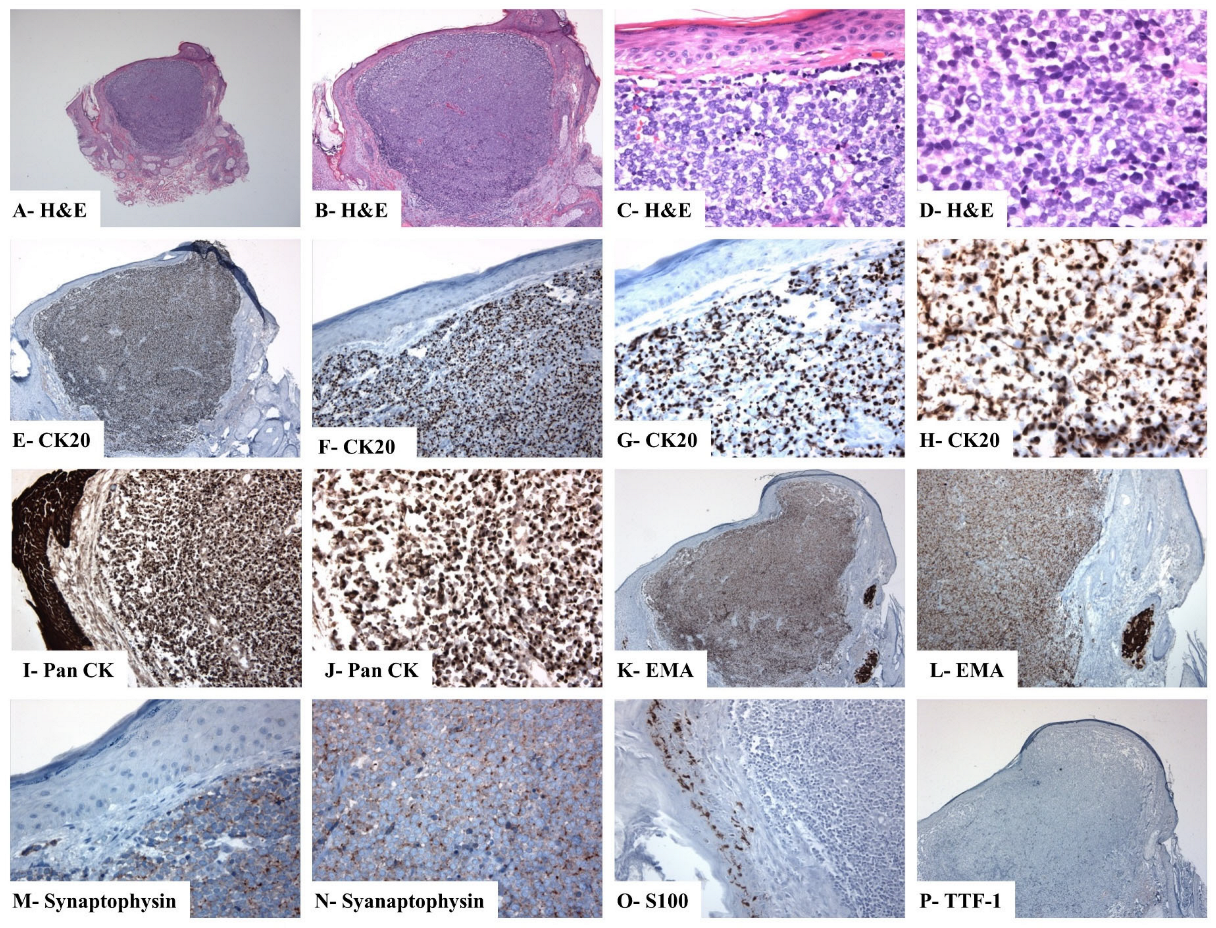
Histological examination demonstrated intraepidermal/in situ tumors (in situ MCC) or intraepidermal tumors with microfocal involvement of the dermis (still with tumor size less than 1 cm and therefore qualified as incipient MCC). The tumors were well-circumscribed. They consisted of dark blue neoplastic nodules that were either entirely intraepidermal (13 cases, in situ MCC) or extending into the dermis (incipient MCC, two cases) [21]. The tumors were composed of monotonous, blue, round tumor cells with indistinct cell borders, large hyperchromatic nuclei, frequent mitotic figures, and little eosinophilic cytoplasm. The malignant cells were consistently tested positive for CK20 and neuroendocrine markers (CD56, chromogranin, and synaptophysin) [4,18]. In a reported case of Merkel cell carcinoma (MCC), Richardson et al. described an unusual immunohistochemical profile. While the tumor cells were strongly positive for synaptophysin and faintly positive for other neuroendocrine markers (CD56, chromogranin, pancytokeratin), they were notably negative for CK7 and CK20 [36]. All the cases were consistently negative for TTF-1, Melan A, and S100, effectively ruling out small cell lung carcinoma and melanoma [4,18]. A summary of the immunohistological features of a case of incipient MCC is depicted in Figure 2.

4. Discussion

To date, rare case reports and case series of patients with incipient and in situ MCC have been identified in the literature [4]. Therefore, our knowledge about these lesions is still incomplete. We carried out this investigation to fill this existing gap in the literature. Our literature search encompassed 372 studies published over a 51-year period (1972–2023). This exceptionally broad timeframe enables a thorough and longitudinal analysis of reported cases, providing critical historical context for the field. Our study is complementary to the previous reports, including that of [18,19,21,27,28,29,30,31,32,33,34,35,36,37]. Also, it provides several important additions. Most notably, we addressed the concept of “incipient MCC,” a descriptive category representing in situ MCC with early focal dermal microinvasion—an entity that was only a single prior study [21]. In addition, our work expands on the existing literature by systematically summarizing the clinicopathologic features of in situ MCCs.
Our review revealed the following observations: (i) incipient MCC and in situ MCC are exceptionally rare malignant tumors; (ii) the face, neck and upper limbs are the most commonly affected sites; (iii) these tumors affect elderly patients and are more common in males than in females; (iv) 1972 to 2023; (v) some lesions arise with association with other epithelial lesions and they appear clinically asymptomatic tiny papules or nodules, usually less than 1.0 cm in size; and (vi) the diagnosis of incipient MCC and in situ MCC relies on the constellation of immunohistological findings.
The diagnostic confusion in cases of in situ and incipient MCC can be effectively resolved by using a panel of Immunostains. This helps separate MCCs from the other blue cell tumors (lymphoma, small cell lung carcinoma, and Ewing’s/Primitive neuroectodermal tumor). Although the neoplastic cells of the incipient MCC and in situ MCC were reactive for neuroendocrine markers, anti-CK20 was the most helpful immunostain that established the diagnosis. The paranuclear dot-like staining pattern of anti-CK20 in MCC (at the immunohistological level) is attributed to the clumping of intermediate filaments (at the ultrastructural level).
In MCC, various serological, chemical, and genetic alterations serve diagnostic and prognostic purposes. These include elevated antibodies against the Merkel cell polyomavirus (MCPyV), and particularly its capsid protein VP1 and oncogenic T-antigens. Alternatively, low VP1 antibodies at diagnosis predict poorer outcomes, and rising T-antigen antibodies indicate disease progression [38,39]. Serum neuron-specific enolase (NSE) levels correlate with disease extent and treatment response [40]. Other changes involve DNA methylation, histone modification, and increased somatostatin receptor expression [38,41]. Ultrastructurally, MCC cells are characterized by neurosecretory granules, paranuclear intermediate filaments, abundant Golgi bodies, and intranuclear MCPyV [42,43]. Future studies should aim to investigate whether these serological, chemical, and genetic alterations are also present in in situ MCC and incipient MCC.
The study has some limitations. One limitation is the restriction of the literature search to a single database, PubMed. The inclusion criteria were restricted to case reports and series published in the English language. Future studies should be unrestricted by language. They also should include more search engines such as EMBASE Lilacs, Cochrane Library, SCOPUS, and Web of Science databases.

5. Conclusions

MCC is almost 100 times less common than malignant melanoma, but its mortality is much higher as a deadly neoplasm. Moreover, MCC has a great tendency for local recurrence, lymph node metastasis, and fatal metastatic outcome. The collective findings from these cases indicated that incipient MCC and in situ MCC are exceptionally rare. They primarily affect elderly men on sun-exposed skin, manifesting as tiny papules or nodules that can often mimic other common benign or malignant skin lesions. Alternatively, incipient MCC and in situ MCC may arise against the background of other skin lesions. This accordingly underscores the importance of immunohistopathological analysis to obtain a diagnosis [18,19,21,27,28,29,30,31,32,33,34,35,36,37]. The local surgical excision of incipient MCCs is curative, and as such, they have a good prognosis.
Available evidence suggests that local surgical excision of in situ MCC is associated with a favorable outcome, with no reported MCC-related mortality in the limited cases described to date. Although long-term overall and disease-specific survival data remain sparse, these lesions appear to have a good prognosis. Therefore, physicians should be cognizant of these incipient and in situ forms of MCCs to ensure their prompt management.

Author Contributions

Conceptualization, M.R.A.H.; writing—original draft preparation, M.R.A.H., S.A.A. and T.M.R.A.H.; writing—review and editing, S.A.A. and T.M.R.A.H.; and supervision, M.R.A.H. and S.A.A. All authors have read and agreed to the published version of the manuscript.

Funding

This research received no external funding.

Institutional Review Board Statement

Not applicable.

Informed Consent Statement

Not applicable.

Data Availability Statement

All data and materials are included in the manuscript.

Conflicts of Interest

The authors declare no conflicts of interest.

References

  1. Paulson, K.G.; Park, S.Y.; Vandeven, N.A.; Lachance, K.; Thomas, H.; Chapuis, A.G.; Harms, K.L.; Thompson, J.A.; Bhatia, S.; Stang, A.; et al. Merkel cell carcinoma: Current US incidence and projected increases based on changing demographics. J. Am. Acad. Dermatol. 2018, 78, 457–463.e452. [Google Scholar] [CrossRef]
  2. Toker, C. Trabecular carcinoma of the skin. Arch. Dermatol. 1972, 105, 107–110. [Google Scholar] [CrossRef]
  3. Hodgson, N.C. Merkel cell carcinoma: Changing incidence trends. J. Surg. Oncol. 2005, 89, 1–4. [Google Scholar] [CrossRef] [PubMed]
  4. Truong, K.; Goldinger, S.M.; Chou, S.; Howle, J.R.; Veness, M.J.; Fernandez-Penas, P.; Varey, A.H.R. Merkel cell carcinoma in situ: A systematic review of prognosis and management. Australas. J. Dermatol. 2022, 63, e6–e12. [Google Scholar] [CrossRef] [PubMed]
  5. Garcia-Mesa, Y.; Martin-Sanz, R.; Garcia-Piqueras, J.; Cobo, R.; Munoz-Bravo, S.; Garcia-Suarez, O.; Martin-Biedma, B.; Vega, J.A.; Feito, J. Merkel Cell Carcinoma Display PIEZO2 Immunoreactivity. J. Pers. Med. 2022, 12, 894. [Google Scholar] [CrossRef]
  6. Scotti, B.; Broseghini, E.; Ricci, C.; Corti, B.; Viola, C.; Misciali, C.; Baraldi, C.; Vaccari, S.; Lambertini, M.; Venturi, F.; et al. Merkel Cell Carcinoma: An Updated Review Focused on Bone and Bone Marrow Metastases. Cancers 2025, 17, 2253. [Google Scholar] [CrossRef]
  7. Uchi, H. Merkel Cell Carcinoma: An Update and Immunotherapy. Front. Oncol. 2018, 8, 48. [Google Scholar] [CrossRef] [PubMed]
  8. Harms, K.L.; Healy, M.A.; Nghiem, P.; Sober, A.J.; Johnson, T.M.; Bichakjian, C.K.; Wong, S.L. Analysis of Prognostic Factors from 9387 Merkel Cell Carcinoma Cases Forms the Basis for the New 8th Edition AJCC Staging System. Ann. Surg. Oncol. 2016, 23, 3564–3571. [Google Scholar] [CrossRef]
  9. Koumaki, D.; Evangelou, G.; Katoulis, A.C.; Apalla, Z.; Lallas, A.; Papadakis, M.; Gregoriou, S.; Lazaridou, E.; Krasagakis, K. Dermoscopic characteristics of Merkel cell carcinoma. BMC Cancer 2024, 24, 785. [Google Scholar] [CrossRef]
  10. Korecka, K.; Badiu, I.M.; Tschandl, P.; Akay, B.N.; Apalla, Z.; Hofmann-Wellenhof, R.; Kittler, H.; Kremer, N.; Lanssens, S.; Longo, C.; et al. Dermoscopy in Merkel Cell Carcinoma-A Multicenter Retrospective Study of the International Dermoscopy Society. Int. J. Dermatol. 2025. ahead of print. [Google Scholar] [CrossRef]
  11. Lucandri, G.; Mazzocchi, P.; Bascone, B.; Giordano, M.; Castaldi, M.; Lazzarini, A.; Carotenuto, F. Unusual ulcerated Merkel cell carcinoma of the skin: Report of a case. Tumori 2006, 92, 555–558. [Google Scholar] [CrossRef] [PubMed]
  12. Papamichail, M.; Nikolaidis, I.; Nikolaidis, N.; Glava, C.; Lentzas, I.; Marmagkiolis, K.; Karassavsa, K.; Digalakis, M. Merkel cell carcinoma of the upper extremity: Case report and an update. World J. Surg. Oncol. 2008, 6, 32. [Google Scholar] [CrossRef]
  13. Mortier, L.; Blom, A.; van Hille, B.; Samimi, M.; Luciani, L.; Cahuzac, C.; Robert, C.; Quereux, G.; Maubec, E.; Miotti, H.; et al. Avelumab as second-line or later treatment in patients with metastatic Merkel cell carcinoma: Analysis of real-world outcomes in France using the CARADERM database linked to the French national healthcare database. Eur. J. Cancer 2024, 209, 114261. [Google Scholar] [CrossRef]
  14. Zijlker, L.P.; Levy, S.; Wolters, W.; van Thienen, J.V.; van Akkooi, A.C.J.; Tesselaar, M.E.T. Avelumab treatment for patients with metastatic Merkel cell carcinoma can be safely stopped after 1 year and a PET/CT-confirmed complete response. Cancer 2024, 130, 433–438. [Google Scholar] [CrossRef]
  15. Munde, P.B.; Khandekar, S.P.; Dive, A.M.; Sharma, A. Pathophysiology of merkel cell. J. Oral. Maxillofac. Pathol. 2013, 17, 408–412. [Google Scholar] [CrossRef] [PubMed]
  16. McFalls, J.; Okon, L.; Cannon, S.; Lee, J.B. Intraepidermal proliferation of Merkel cells within a seborrheic keratosis: Merkel cell carcinoma in situ or Merkel cell hyperplasia? J. Cutan. Pathol. 2017, 44, 480–485. [Google Scholar] [CrossRef]
  17. Harms, P.W.; Harms, K.L.; Moore, P.S.; DeCaprio, J.A.; Nghiem, P.; Wong, M.K.K.; Brownell, I.; International Workshop on Merkel Cell Carcinoma Research Working Group. The biology and treatment of Merkel cell carcinoma: Current understanding and research priorities. Nat. Rev. Clin. Oncol. 2018, 15, 763–776. [Google Scholar] [CrossRef] [PubMed]
  18. Brem, C.E.; Wolpowitz, D.; Chang, K.H.; Bhawan, J. Merkel Cell Carcinoma In Situ: No More Serendipity? Am. J. Dermatopathol. 2022, 44, 297–301. [Google Scholar] [CrossRef]
  19. Peralta, I.; Dacey, E.B.; King, R. Merkel Cell Carcinoma In Situ Arising in Association With an Infundibular Cyst With Unusual Reticulated Infundibulocystic Proliferation. Am. J. Dermatopathol. 2023, 45, e58–e60. [Google Scholar] [CrossRef]
  20. Jour, G.; Aung, P.P.; Rozas-Munoz, E.; Curry, J.L.; Prieto, V.; Ivan, D. Intraepidermal Merkel cell carcinoma: A case series of a rare entity with clinical follow up. J. Cutan. Pathol. 2017, 44, 684–691. [Google Scholar] [CrossRef]
  21. Requena, C.; Traves, V.; Llombart, B.; Guillen, C. Incipient merkel cell carcinoma: A report of 2 cases. Actas Dermo-Sifiliográficas (Engl. Ed.) 2013, 104, 71–74. [Google Scholar] [CrossRef]
  22. Fields, R.C.; Busam, K.J.; Chou, J.F.; Panageas, K.S.; Pulitzer, M.P.; Allen, P.J.; Kraus, D.H.; Brady, M.S.; Coit, D.G. Five hundred patients with Merkel cell carcinoma evaluated at a single institution. Ann. Surg. 2011, 254, 465–473; discussion 73–75. [Google Scholar] [CrossRef]
  23. Fields, R.C.; Coit, D.G. Is a “Merkel” just like a melanoma? The pathologic analysis of Merkel cell carcinoma specimens. Ann. Surg. Oncol. 2012, 19, 3304–3306. [Google Scholar] [CrossRef][Green Version]
  24. Arya, S.; Kaji, A.H.; Boermeester, M.A. PRISMA Reporting Guidelines for Meta-analyses and Systematic Reviews. JAMA Surg. 2021, 156, 789–790. [Google Scholar] [CrossRef] [PubMed]
  25. Schmidt, U.; Frewer, A.; Sprumont, D. Ethical Research: The Declaration of Helsinki, and the Past, Present and Future of Human Experimentation; Oxford University Press: New York, NY, USA, 2020. [Google Scholar]
  26. Purssell, E. Can the Critical Appraisal Skills Programme check-lists be used alongside Grading of Recommendations Assessment, Development and Evaluation to improve transparency and decision-making? J. Adv. Nurs. 2020, 76, 1082–1089. [Google Scholar] [CrossRef]
  27. Chiarelli, T.G.; Grant-Kels, J.M.; Sporn, J.R.; Rezuke, W.N.; Whalen, J.D. Unusual presentation of a Merkel cell carcinoma. J. Am. Acad. Dermatol. 2000, 42, 366–370. [Google Scholar] [CrossRef]
  28. Brown, H.A.; Sawyer, D.M.; Woo, T. Intraepidermal Merkel cell carcinoma with no dermal involvement. Am. J. Dermatopathol. 2000, 22, 65–69. [Google Scholar] [CrossRef]
  29. Al-Ahmadie, H.A.; Mutasim, D.F.; Mutema, G.K. A case of intraepidermal Merkel cell carcinoma within squamous cell carcinoma in-situ: Merkel cell carcinoma in-situ? Am. J. Dermatopathol. 2004, 26, 230–233. [Google Scholar] [CrossRef] [PubMed]
  30. Ferringer, T.; Rogers, H.C.; Metcalf, J.S. Merkel cell carcinoma in situ. J. Cutan. Pathol. 2005, 32, 162–165. [Google Scholar] [CrossRef] [PubMed]
  31. Su, W.; Kheir, S.M.; Berberian, B.; Cockerell, C.J. Merkel cell carcinoma in situ arising in a trichilemmal cyst: A case report and literature review. Am. J. Dermatopathol. 2008, 30, 458–461. [Google Scholar] [CrossRef]
  32. Ferrara, G.; Goos, S.D.; Stefanato, C.M. Merkel cell carcinoma in situ associated with actinic keratosis: Fortuitous or serendipitous? J. Cutan. Pathol. 2010, 37, 1112–1113. [Google Scholar] [CrossRef]
  33. Yang, A.; Cordoba, C.; Cheung, K.; Konya, J. Merkel cell carcinoma in situ: New insights into the cells of origin. Australas. J. Dermatol. 2019, 60, e311–e313. [Google Scholar] [CrossRef]
  34. Song, Y.; Zheng, S.; Guo, Y. Intraepidermal Merkel Cell Carcinoma Mimicking Melanoma in Situ: A Case Report. Am. J. Dermatopathol. 2020, 42, 977–980. [Google Scholar] [CrossRef]
  35. Cevallos Abad, M.I.; Cordoba Iturriagagoitia, A.; Vives Nadal, R.; Fernandez de Los Reyes, I.; Larrea Ramirez, A.; Panizo Santos, A.; Yanguas Bayona, J.I. Intraepidermal Merkel cell carcinoma with INSM1 expression. A case report. Rev. Esp. Patol. 2021, 54, 281–288. [Google Scholar] [CrossRef]
  36. Richardson, W.M.; Hohmann, A.; Usmani, H.; Lozeau, D.; Huston, T.L. CK20/CK7 double-negative Merkel cell carcinoma in situ: A case report. J. Cutan. Pathol. 2022, 49, 947–956. [Google Scholar] [CrossRef]
  37. Mazumder, A.; Khoshnoodi, P.; Gruber, J.; Burkemper, N.M. MCPyV-Negative Merkel Cell Carcinoma In Situ Associated With Immunosuppression. Am. J. Dermatopathol. 2023, 45, 242–245. [Google Scholar] [CrossRef]
  38. Paulson, K.G.; Carter, J.J.; Johnson, L.G.; Cahill, K.W.; Iyer, J.G.; Schrama, D.; Becker, J.C.; Madeleine, M.M.; Nghiem, P.; Galloway, D.A. Antibodies to merkel cell polyomavirus T antigen oncoproteins reflect tumor burden in merkel cell carcinoma patients. Cancer Res. 2010, 70, 8388–8397. [Google Scholar] [CrossRef]
  39. Samimi, M.; Molet, L.; Fleury, M.; Laude, H.; Carlotti, A.; Gardair, C.; Baudin, M.; Gouguet, L.; Maubec, E.; Avenel-Audran, M.; et al. Prognostic value of antibodies to Merkel cell polyomavirus T antigens and VP1 protein in patients with Merkel cell carcinoma. Br. J. Dermatol. 2016, 174, 813–822. [Google Scholar] [CrossRef]
  40. van Veenendaal, L.M.; Bertolli, E.; Korse, C.M.; Klop, W.M.C.; Tesselaar, M.E.T.; van Akkooi, A.C.J. The Clinical Utility of Neuron-Specific Enolase (NSE) Serum Levels as a Biomarker for Merkel Cell Carcinoma (MCC). Ann. Surg. Oncol. 2021, 28, 1019–1028. [Google Scholar] [CrossRef]
  41. Fagerstedt, K.W.; Vesterinen, T.; Leijon, H.; Sihto, H.; Bohling, T.; Arola, J. Somatostatin receptor expression in Merkel cell carcinoma: Correlation with clinical data. Acta Oncol. 2023, 62, 1001–1007. [Google Scholar] [CrossRef]
  42. Wetzels, C.T.; Hoefnagel, J.G.; Bakkers, J.M.; Dijkman, H.B.; Blokx, W.A.; Melchers, W.J. Ultrastructural proof of polyomavirus in Merkel cell carcinoma tumour cells and its absence in small cell carcinoma of the lung. PLoS ONE 2009, 4, e4958. [Google Scholar] [CrossRef] [PubMed]
  43. Fornelli, A.; Eusebi, V.; Pasquinelli, G.; Quattrone, P.; Rosai, J. Merkel cell carcinoma of the parotid gland associated with Warthin tumour: Report of two cases. Histopathology 2001, 39, 342–346. [Google Scholar] [CrossRef] [PubMed]
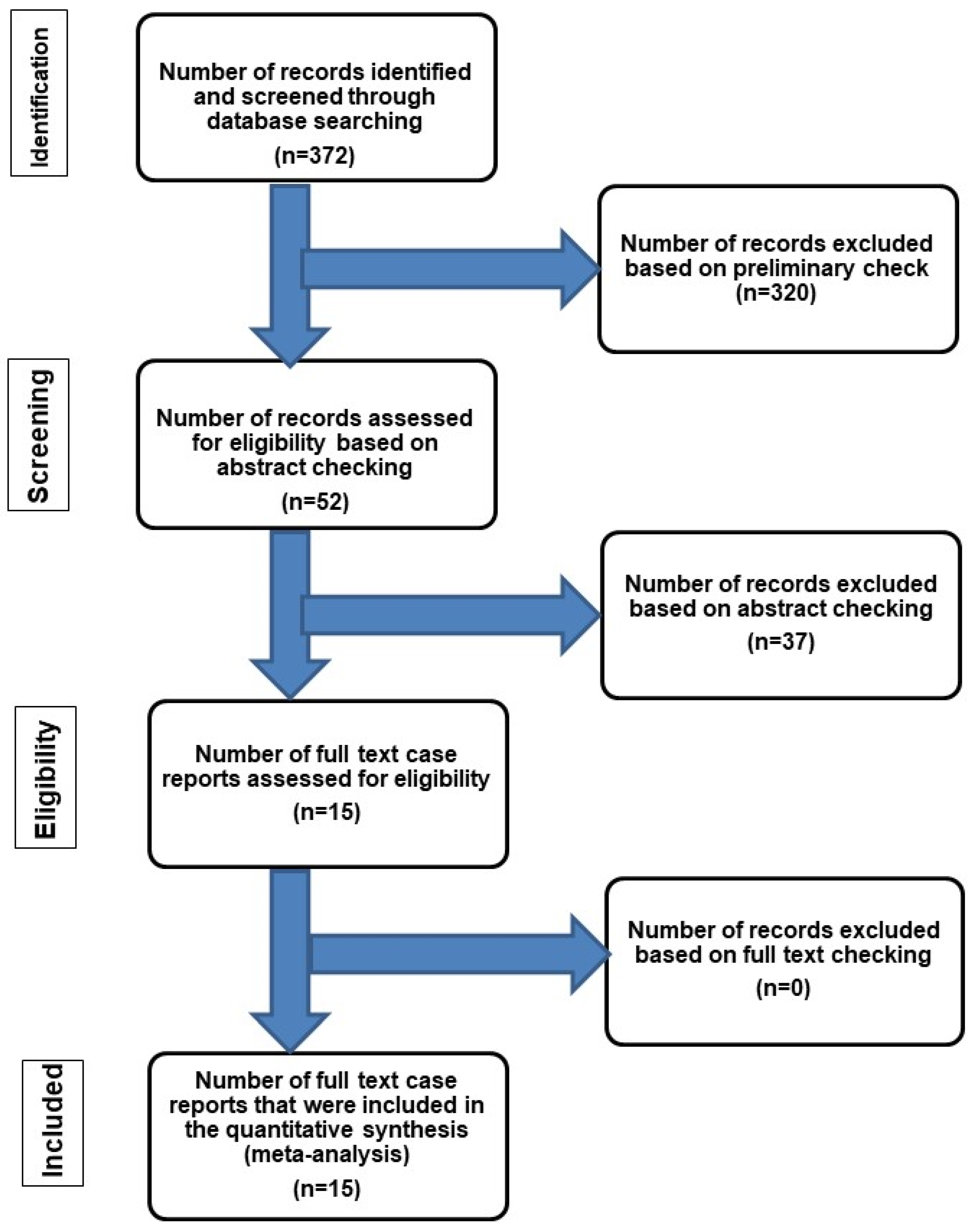
Figure 1. Flow chart of literature search and study selection for cases of incipient and in situ Merkel cell carcinoma and incipient MCC. A comprehensive PubMed literature search (1972–2023) using defined Boolean terms and medical subject headings identified eligible English-language case reports/series on cutaneous in situ Merkel cell carcinoma, from which data on clinical, pathological, and diagnostic features were independently extracted by the authors based on predefined inclusion criteria. The inclusion criteria were strictly defined as (i) human studies and (ii) English-language case reports or series identified by the search. Studies failing to meet these criteria were excluded. Following initial screening of titles and abstracts, the authors independently reviewed the full texts of potentially eligible studies to confirm their inclusion, after which data on age, sex, symptoms, and pathological features were systematically extracted for analysis.
Dermato 06 00004 g001
Figure 2. Immunohistological features of incipient Merkel cell carcinoma (courtesy of Prof. Dr. Hussein). (A,B) Low power microscopic view of the skin of the right nasal ala showing intact overlying atrophic epidermis, a single dark blue tumor nodule in the dermis (Hematoxylin and eosin-stained section, magnification (A): ×2 and (B): ×4). The tumor is composed of patently malignant monotonous, blue, round tumor cells with indistinct cell borders, large hyperchromatic nuclei, frequent mitotic figures, and little eosinophilic cytoplasm (Hematoxylin and eosin-stained section, magnification (C): ×20 and (D): ×40). The tumor cells stained positively for CK20 (paranuclear, dot-like staining pattern, magnification (E): ×4, (F): ×10, (G): ×20 and (H): ×40), pan-cytokeratin (AE1/AE3, magnification (I): ×10 and (J): ×20), epithelial membrane antigen (EMA, magnification (K): ×10 and (L): ×20), and Synaptophysin (magnification (M): ×10 and (N): ×20). Negative stains included S100 (magnification (O): ×10) and TTF-1 (magnification (P): ×10). Other negative staining included CD45, Melan A, TTF-1, CD31, and CD99, excluding lymphoma, melanoma, small cell lung carcinoma, vascular neoplasms, and primitive neuroectodermal tumor, respectively.
Dermato 06 00004 g002
Table 1. Summary of some reported cases of incipient and in situ Merkel cell carcinoma of the skin.
Cases Age SexSite/SizeDermatological Examination Studies
176Male Nose/2 mmA crusted skin erosion (2 mm)[27]
274Male left index fingerA 2.0 cm solitary verrucous papule[28]
379Male WristAn erythematous, plaque[29]
476Male Right handA tender pink papule [30]
573Male Right fourth finger
4 mm
A smooth, dome-shaped lesion [31]
680Female Right cheekMMC in situ arising in a background of actinic keratosis[32]
779Male Nose/2 mmAn erythematous papule (2 mm) [21]
882 Female Buttock < 1 cmA small subcutaneous nodule[21]
971Male CheekA small plaque on his cheek[33]
1088Male faceBlack patch [34]
1190Male left cheekAn erythematous desquamative plaque [35]
1250Male Right shoulder/1 cmA scaly, papule [18]
1383Male Lower limb/5 mmA small (pink non-ulcerated papule [36]
1476Male Right cheekA pink, warty plaque (seborrhiec keratosis-like lesion, harboring MCC)[37]
1580Male right buttockA nodular lesion in an infundibular cyst[19]
Disclaimer/Publisher’s Note: The statements, opinions and data contained in all publications are solely those of the individual author(s) and contributor(s) and not of MDPI and/or the editor(s). MDPI and/or the editor(s) disclaim responsibility for any injury to people or property resulting from any ideas, methods, instructions or products referred to in the content.