Skip to Content
BirdsBirds
  • Article
  • Open Access

11 March 2026

Prophylactic Mobbing via Chick-a-Dee Calls in Wintering Willow Tits (Poecile montanus)


,
,

,
and
1
Department of Ecology, Faculty of Medicine and Life Sciences, University of Latvia, 1048 Riga, Latvia
2
Latvian Biomedical Research and Study Centre, 1067 Riga, Latvia
3
Department of Biodiversity, Institute of Life Sciences and Technology, 5401 Daugavpils, Latvia
4
Department of Psychology, University of Michigan, Ann Arbor, MI 48109, USA

Simple Summary

Small birds face a constant trade-off between finding food and avoiding predators, especially in winter when energy demands are high. Willow Tits often produce chick-a-dee calls, which are commonly associated with mobbing predators. However, these calls are also heard when no predator is visible. We investigated whether Willow Tits use these calls in a proactive manner when approaching potentially risky feeding sites. By observing winter flocks approaching feeders placed in either dense or open forest, and by comparing these situations with presentations of a model owl, we found that birds adjusted their calling behavior and recruitment patterns when visibility was reduced. Calling patterns in predator-absent but visually obstructed habitats showed similar structural features to those produced during predator presentations. Calls from higher-ranking birds were associated with faster recruitment of flock members. These findings suggest that chick-a-dee calls are not only reactive alarm signals but may also function as mobbing-like signals in situations of uncertain predation risk, potentially helping groups coordinate inspection of risky sites.

Abstract

Predation risk influences how animals approach predictable food sources where ambush predators may be present. In parids, chick-a-dee calls are used in a wide variety of contexts related to social cohesion and are well known as mobbing signals. Here, we examined whether they are also produced in the absence of visible predators in contexts in which predation risk may nevertheless be latent or uncertain. We tested whether chick-a-dee calls emitted by Willow Tits (Poecile montanus) during feeder approach exhibit acoustic and recruitment characteristics comparable to mobbing calls elicited by predator models. The study included repeated observations of 44 individuals across 11 flocks, enabling within-individual comparisons across habitat contexts. We analyzed call structure, calling duration, and recruitment latency in relation to habitat visibility and dominance status. Calls produced during the feeder approach showed overlapping structural features with mobbing calls and were associated with the recruitment of flock members, particularly in dense habitat. Mixed-effects models confirmed significant effects of habitat structure, predator presentation, and social rank on calling behavior and recruitment dynamics. These patterns are consistent with mobbing-like signaling under conditions of uncertain predation risk. Because predator presence and detection outcomes were not directly measured, our findings provide behavioral evidence compatible with proactive signaling rather than functional confirmation of predator probing.

1. Introduction

Predation risk is a major selective force shaping animal behavior, particularly in social species that forage in groups [1,2]. Ambush strategies are commonly used by predators of small passerines foraging in social groups, exploiting moments when individuals are temporarily isolated or distracted, such as during food search [2]. To mitigate this risk, birds have evolved a suite of antipredator behaviors, including vigilance, closer-proximity grouping, alarm calling, and mobbing [3,4,5]. While mobbing is traditionally viewed as a reactive response to a detected predator, increasing evidence suggests that antipredator signals may also be used proactively under conditions of uncertain predation risk [1,6,7].
Among parids, chick-a-dee calls are among the most intensively studied vocalizations and serve multiple functions, including contact maintenance, recruitment, and predator mobbing [6,8,9,10,11]. Chick-a-dee calls constitute a graded vocal system in which specific acoustic features, particularly the number of D-notes and calling duration, have been associated with predator-related contexts [12]. Evidence for categorical encoding of predator type is less consistent, but variation in call structure across contexts nevertheless suggests flexible risk-related signaling. This framework provides measurable criteria for distinguishing mobbing-like signaling from alternative interpretations, such as contact or recruitment calls, through differences in acoustic structure and recruitment responses [12,13,14,15]. Flock members respond flexibly to these acoustic cues, adjusting approach behavior, vigilance, and recruitment accordingly [6,12]. Importantly, chick-a-dee calls are not emitted exclusively after predators are visually detected; callers may also produce signals under conditions of uncertain predation risk, which can subsequently serve as sources of social information for receivers [7,9,15,16].
Ambush predators such as owls and hawks frequently exploit predictable foraging sites, including concentrated food resources such as bird feeders, and they are especially difficult to detect in dense vegetation [2,17]. In such habitats, visual cues alone may be insufficient to confirm predator absence [18]. Acoustic signals produced by prey species have been proposed to increase the likelihood of detectable predator movements—such as head turning or eye blinking—that could reveal a concealed predator [12,19]. This raises the possibility that birds may employ mobbing-like calls prophylactically under conditions of uncertain predation risk prior to committing to feeding [20,21].
Social structure further complicates antipredator decision-making. In mixed-age flocks of Willow Tits (Poecile montanus), individuals differ in dominance status, experience, and risk-taking behavior [22,23]. Dominant birds, typically adult males, often act as leaders during foraging and predator inspection, while subordinates may rely more heavily on social information [22]. If chick-a-dee calls convey information about potential danger, responses to these calls may depend not only on call structure but also on the social rank of the caller [21]. High-ranking individuals may be treated as more reliable sources of social information, potentially leading to faster recruitment and a coordinated approach to potentially risky sites [21].
Habitat structure is also expected to influence calling behavior and responses [24,25,26]. In open forest patches with sparse understory, predators are more easily detected visually, potentially reducing the need for prolonged visual and acoustic assessment [2]. In contrast, dense forest patches with limited visibility may favor extended vigilance and stronger recruitment responses, particularly when birds approach food sources alone [20,27]. Such habitat-dependent adjustments would be consistent with calling in a risk-related context rather than simple contact signaling [7,28,29]. Habitat structure may also influence acoustic transmission properties, including signal attenuation and reverberation, potentially affecting call detectability and recruitment latency independently of predation risk [16]. Accordingly, habitat-related differences in calling behavior should be interpreted with caution.
In this study, we investigated whether chick-a-dee calls produced during feeder approach exhibit mobbing-like acoustic and recruitment characteristics consistent with a prophylactic signaling interpretation under conditions of uncertain predation risk. Specifically, we examined (1) whether calling behavior differed between dense and open forest habitats when no predator was experimentally presented, (2) whether recruitment dynamics depended on the social rank of the calling individual, and (3) whether call rate and call structure in predator-absent contexts showed directional and structural overlap with those produced during mobbing of a predator model [12,13]. To address these questions, we recorded calling behavior and flock responses when individual birds arrived alone at feeders located either in dense or open forest patches, both without and with presentation of a model predator [12,17]. Predator decoys are widely used in mobbing research to standardize predator stimuli and elicit antipredator responses in parids and other passerines. By integrating habitat structure, social rank, and detailed vocal metrics, this study aimed to clarify whether mobbing-like calls may operate under uncertain predation risk rather than exclusively as reactive responses to detected predators. Such findings would contribute to refining the traditional view of mobbing as a strictly reactive behavior and inform discussion of proactive signaling in collective risk management in social birds [1,7].

2. Materials and Methods

2.1. Study Site, Birds, and Social Structure

The study was conducted on Willow Tits during the winters of 2023–2024 and 2024–2025, and the autumn of 2025, during periods when individuals form stable mixed-sex flocks [30,31,32]. The main part of the study was carried out in an 80–100-year-old coniferous forest dominated by Scots pine (Pinus sylvestris) and Norway spruce (Picea abies) near the town of Krāslava (55°53′ N, 27°10′ E) in southeastern Latvia. Observations were conducted between 11:00 and 13:00 across fall and winter sampling periods. Ambient temperatures ranged from −3 °C to 8 °C in autumn and from −5 °C to 2 °C in winter, with comparable daytime conditions across years. Snow cover was occasionally present, precipitation was absent, and wind conditions were generally light during observational hours.
We observed 11 Willow Tit groups, each embedded within larger mixed-species parid flocks that included Coal Tits (Periparus ater), Crested Tits (Lophophanes cristatus), Great Tits (Parus major), European Nuthatches (Sitta europaea), and Common Treecreepers (Certhia familiaris). In the study population, Willow Tit winter groups typically consisted of four individuals (one adult male, one adult female, one juvenile male, and one juvenile female), reflecting the species’ natural social structure. Group composition and territorial boundaries remained stable throughout the study period. Adult pairs held permanent territories, while juvenile birds joined these groups during the wintering season.
Although Willow Tits typically associate with other parids in mixed-species flocks, these flocks frequently split into species-centered subunits around midday. During this period, Willow Tits often forage independently from heterospecific associates, typically at distances exceeding 100 m. This temporary segregation has been associated with reduced interspecific interactions and shifting social dynamics within flocks [29,30]. Field observations in the study area indicate that raptor activity is generally lower during the middle part of the day compared to early morning and late afternoon periods [31,32]. Observations were therefore conducted between 11:00 and 13:00 to standardize sampling under comparable social and environmental conditions. This temporal choice does not imply the absence of predation risk but reflects consistent diel activity patterns observed in the system.
Dominance order was assessed within each group through repeated observations of dyadic interactions at temporary feeders provisioned with sunflower seeds and lard. Interactions were scored based on displacement and access to food resources. Observed dominance relationships corresponded closely with age–sex classification, which has previously been validated as a reliable proxy for dominance in this species. Individuals were therefore assigned to one of four hierarchical ranks: juvenile females (rank 1, most subordinate), adult females (rank 2), juvenile males (rank 3), and adult males (rank 4, most dominant).
Birds were captured using mist nets (Ecotone, Sopot, Poland) at temporary feeders baited with sunflower seeds and lard. Each individual was fitted with uniquely identifiable plastic color rings. Age was determined based on rectrix shape following established criteria [33], and most adult birds were already known from previous breeding and wintering seasons. Sex was assigned based on behavioral characteristics and confirmed by DNA analysis. Buccal swab samples were collected, and DNA was extracted using a Chelex-based protocol [34].

2.2. Experimental Setup and Habitat

Each flock was associated with two feeders placed within its territory. Feeders were located in two structurally distinct habitat types: open forest (open), characterized by a thinned canopy and sparse understory allowing relatively unobstructed visual fields, and dense forest (dense), characterized by thick understory vegetation and reduced visibility, where visual detection distances are shorter. Predators such as Eurasian Pygmy Owls (Glaucidium passerinum), Eurasian Sparrowhawks (Accipiter nisus), Tawny Owls (Strix aluco), and feral cats (Felis catus) are known to use feeders and other concentrated food sources as ambush sites in Europe and also in our study area [29,35]. Bird territory boundaries were known.
To simulate predator presence, a taxidermic Tawny Owl was placed 1.0–1.2 m from the feeder on one occasion per flock in each habitat type. We mounted the Owl on a pole on a small platform 1.2 m above ground, and positioned it 1 m from the feeder. The Owl was looking toward the feeder. Prior to presentation, the model was concealed with fabric and revealed remotely by pulling a thin rope from a distance of approximately 28–30 m when the focal Willow Tit approached the feeder, thereby minimizing observer disturbance.

2.3. Behavioral Observations

Observations were conducted when sunflower seeds were available at the feeder. Typically, entire flocks tooe seeds until the feeder was empty because willow tits are caching species. As food became depleted, individual birds frequently returned alone to inspect the feeder. We focused on cases in which a single Willow Tit arrived first and, upon detecting sunflower seeds, postponed feeding while producing chick-a-dee calls [36].
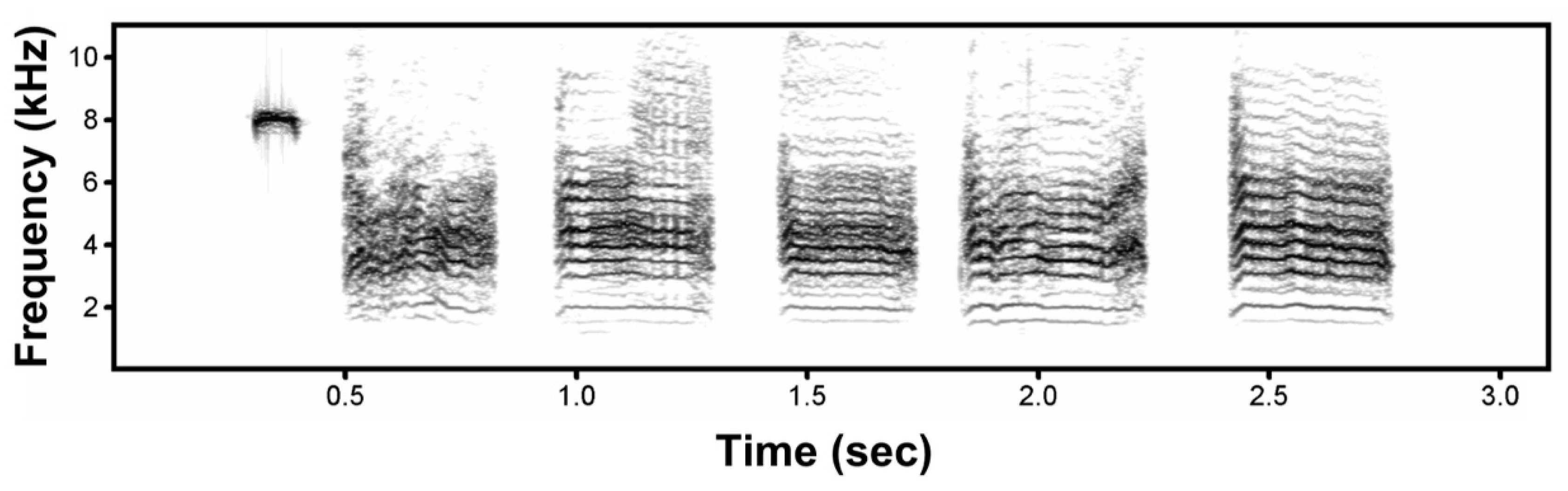
For each observation, we recorded: (1) individual identity, (2) habitat type, (3) call duration (s): total time spent calling by the first bird, (4) recruitment latency (s): time from onset of calling until arrival of another flock member, (5) call rate: number of chick-a-dee calls per 60 s, (6) D-notes per call: mean number of D-notes per call (Figure 1), and (7) predator context: model owl absent or present.
Figure 1. Spectrogram of the chick-a-dee call of the Willow Tit.
Each individual was observed five times per habitat type in predator-absent conditions and once per habitat type with the owl present. Only a single predator presentation was conducted per individual because repeated exposure to predator models can induce rapid habituation; therefore, initial responses were considered the most ecologically relevant measure of antipredator behavior.
Calls were segmented visually and aurally using spectrogram inspection, and D-notes were counted following established chick-a-dee call criteria [37]. Call duration was analyzed only for predator-absent trials. In predator-present trials, calling often ceased following removal of the model by the observer, resulting in externally constrained durations that were not directly comparable to naturally terminated calling sequences.
Across all observations, solitary Willow Tits consistently produced chick-a-dee calls before initiating feeding. No instances were recorded in which a first-arrival individual began feeding without calling.

2.4. Supplementary Observational Component

In addition to the main experimental protocol, we conducted exploratory observations to document whether chick-a-dee calls could elicit observable reactions from potential ambush predators under naturalistic conditions. In a limited number of cases (n = 16), chick-a-dee calls were broadcast using a portable loudspeaker (JBL Go Essential; Los Angeles, CA, USA) positioned approximately 3–4 m from feral cats resting near feeders. Each cat was observed only once. Visible responses such as head or ear movements were recorded descriptively.
We also documented natural feeder visits during early morning periods when cats were already positioned near feeding sites (n = 12, each cat observed once). In these cases, we noted predator movements and the behavioral responses of first-arriving Willow Tits.
These supplementary observations were not part of the formal experimental design, were based on small sample sizes, and are therefore presented descriptively without formal statistical analysis.

2.5. Statistical Analyses

All analyses were conducted in R [38] using the lme4 package [39]. Continuous response variables (call duration and log-transformed arrival latency) were analyzed using linear mixed-effects models (LMMs) fitted by restricted maximum likelihood (REML) with Gaussian error distributions. Count-based response variables (call rate and D-notes per call) were analyzed using generalized linear mixed-effects models (GLMMs) with Poisson error distributions and log link functions, fitted via maximum likelihood using Laplace approximation.
Random intercepts for individual identity (nested within flock) and flock identity were included to account for repeated measures and non-independence within social groups. Fixed effects included habitat type, predator treatment, dominance status, and their specified interactions for each model. Models including random slopes for habitat within individuals were initially explored, but resulted in singular fits and unstable variance estimates due to the limited number of repeated measures per individual. Accordingly, random-intercept models were retained to ensure model stability and avoid overparameterization.
For Poisson GLMMs, overdispersion was assessed by examining dispersion parameters (residual deviance divided by residual degrees of freedom). Dispersion values were close to 1, indicating that the Poisson error structure was appropriate and that negative binomial alternatives were not required.
Inference for both LMMs and GLMMs was based on Wald statistics derived from asymptotic normal approximations. Model summaries report Wald z statistics calculated as the ratio of the fixed-effect estimate to its standard error (estimate/SE). Degrees-of-freedom approximations (e.g., Satterthwaite or Kenward–Roger) were not applied. Statistical significance was evaluated at α = 0.05.
For GLMMs, model coefficients were estimated on the log (link) scale. For ease of biological interpretation, fixed-effect estimates presented in Table 1C,D are reported on the response scale. Confidence intervals for GLMMs were calculated using Wald intervals on the link scale and, where appropriate, back-transformed to the response scale for presentation.
Table 1. Mixed-effects model outputs testing effects of habitat (open vs. dense), predator context (Owl absent vs. present), and social rank (1–4) on chick-a-dee call behavior and flock recruitment. Random intercepts included individual identity (nested within flock) and flock (variance component). Call duration was analyzed only in Owl-absent trials because bout termination in Owl-present trials was constrained by observer removal of the model predator. Arrival latency was analyzed on the log scale. For GLMMs (C,D), fixed-effect estimates are presented on the response scale. (A) Call duration (Owl absent only; LMM); (B) Arrival latency (log latency; LMM); (C) Call rate (calls/60 s; GLMM); (D) D-notes per call (GLMM).
Arrival latency was log-transformed prior to analysis to satisfy normality and homoscedasticity assumptions. Estimated marginal means for this model were calculated on the log scale and subsequently exponentiated for presentation in seconds.
Social rank was initially included in the call rate and D-note models; however, it did not contribute significantly to model fit and did not alter estimates of habitat or predator effects. Therefore, rank was removed from the final models for parsimony.

3. Results

3.1. Prophylactic Calling Effort in Predator-Absent Trials (Call Duration)

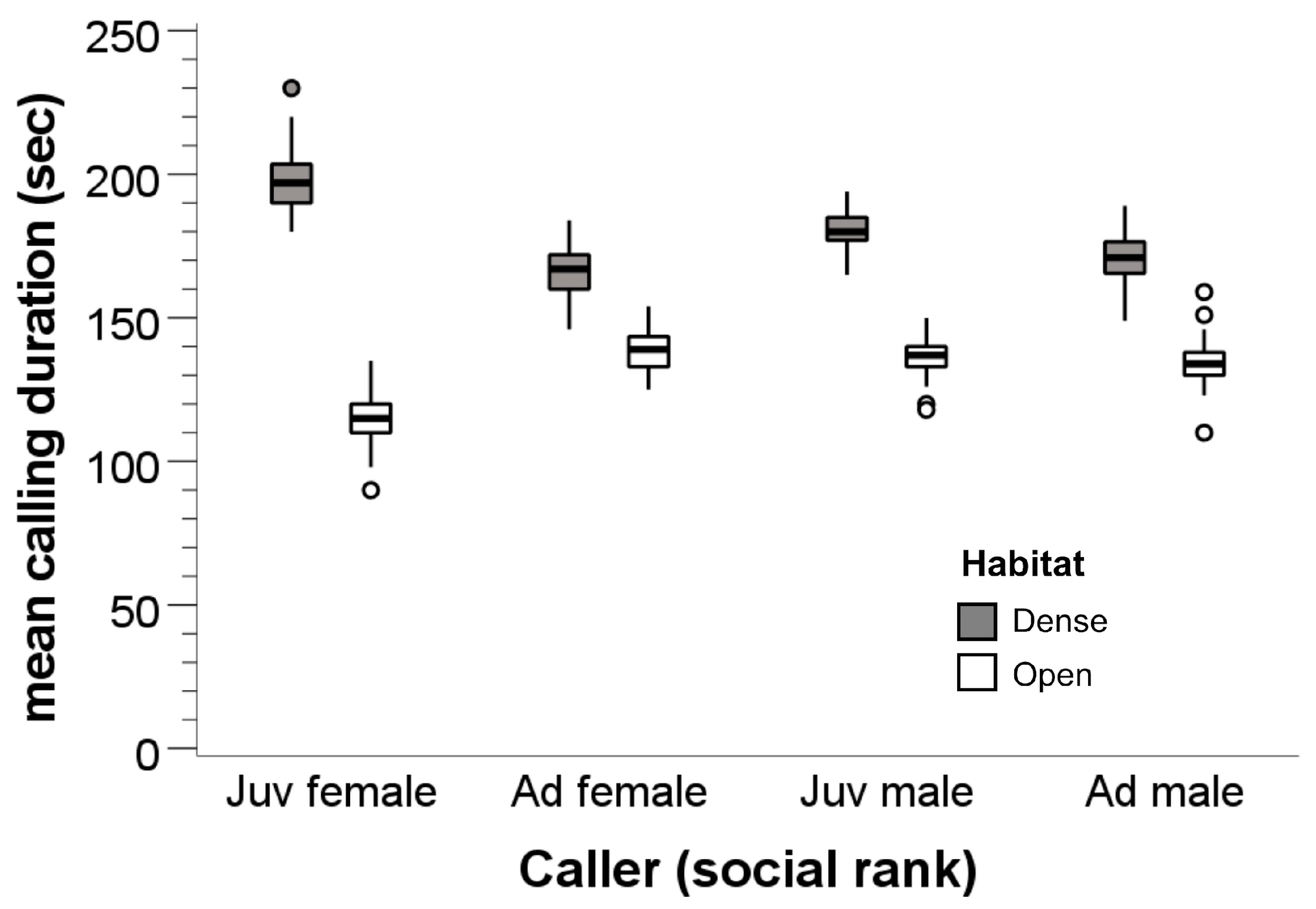
Call bout duration (owl absent only; n = 440 trials, 11 flocks, 44 individuals) varied as a function of habitat and social rank (habitat × rank interaction; Table 1; Figure 2). Within each dominance class, calling bouts were longer in dense forest than in open forest, although the magnitude of this difference depended on rank. Estimated marginal means (EMMs) indicated that juvenile females (rank 1) exhibited a large increase in call duration in dense forest (open: 114.0 s [95% CI 112.1–115.9] vs. dense: 197.6 s [195.7–199.5]; Δ = 83.6 ± 2.7 s, z = 31.0, p < 0.001). The dense–open increase was also significant for adult females (rank 2; Δ = 28.2 ± 2.7 s, z = 10.4, p < 0.001), juvenile males (rank 3; Δ = 43.7 ± 2.7 s, z = 16.2, p < 0.001), and adult males (rank 4; Δ = 36.0 ± 2.7 s, z = 13.3, p < 0.001). Overall, birds increased calling effort under reduced visibility, with the strongest habitat-associated difference observed in the most subordinate class (Figure 2).
Figure 2. Call durations (sec) for focal birds arriving first at the feeder in open versus dense forest patches during days when predator models were absent. Raw data are plotted as medians (thick horizontal lines), 25- and 75-percentiles (boxes), ranges not including outliers (whiskers), and outliers (circles). Focal birds were adult and juvenile female and male Willow Tits, and social rank on the X-axis ranges from the most subordinate (juvenile females) to the most dominant (adult males).
In all solitary arrival events recorded during focal trials, first-arriving individuals produced chick-a-dee calls before initiating feeding; silent feeding by a solitary first arrival was not observed.

3.2. Recruitment Dynamics (Arrival Latency)

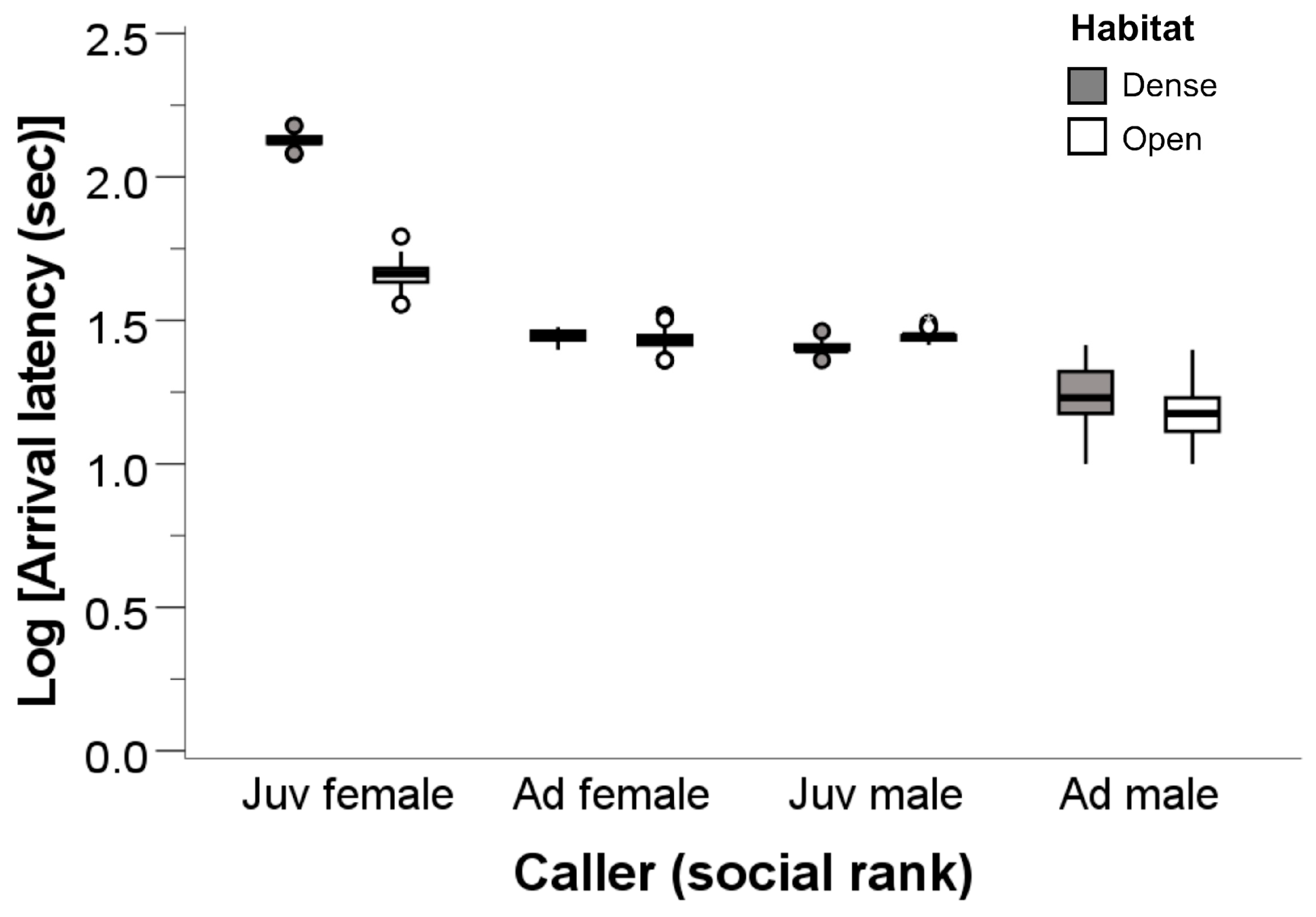
Arrival latency of flockmates (n = 528 trials) varied as a function of social rank and exhibited a significant habitat × rank interaction (Table 1; Figure 3). In predator-absent trials, rank 4 callers were associated with the shortest recruitment latencies in open forest (14.2 s [95% CI 13.6–14.8]), whereas rank 1 callers were associated with the longest latencies (44.6 s [42.9–46.4]). Habitat effects were rank-specific: for juvenile female callers (rank 1), recruitment latency increased substantially in dense forest (132.9 s [127.8–138.3]) compared to open forest (44.6 s [42.9–46.4]), whereas ranks 2–4 showed comparatively small habitat-related differences (Figure 3).
Figure 3. Arrival latency (sec; log-transformed) for the first additional flock member to arrive at the feeder following the calling of the first Willow Tit to arrive at the feeder in open versus dense forest patches. Data are plotted as in Figure 2. Shorter latencies indicate faster recruitment/collective inspection of the feeder.
Predator presentation did not significantly influence arrival latency in this dataset (main effect of owl presence: z = 0.59, p = 0.556), and no rank × predator interaction terms were significant at α = 0.05 (Table 1). Recruitment dynamics were therefore primarily associated with caller rank and, for rank 1 individuals, habitat context rather than with the experimental predator manipulation.

3.3. Call Rate and Call Structure (D-Notes)

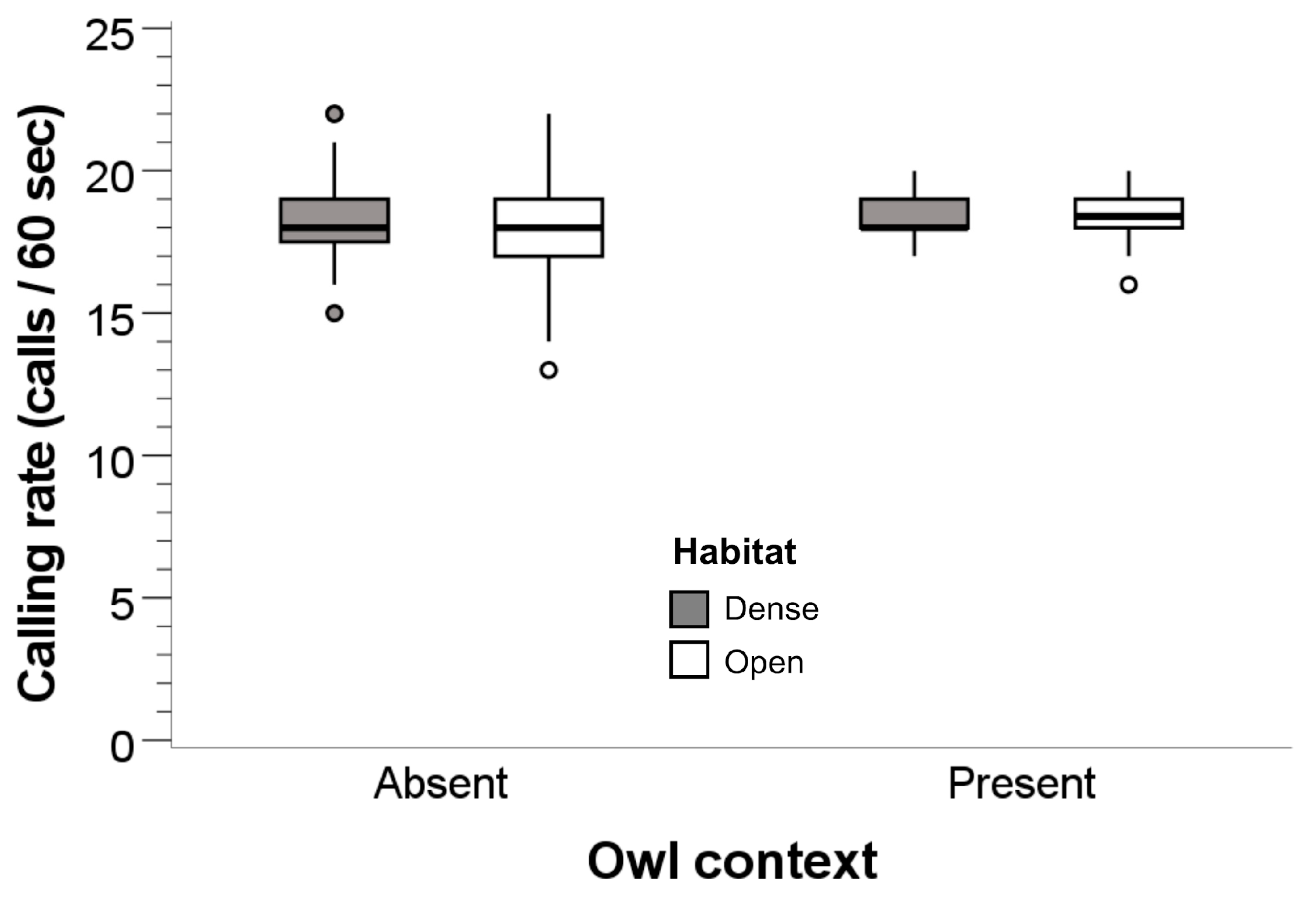
Call rate (calls per 60 s) varied as a function of predator context and habitat (predator × habitat interaction; Table 1; Figure 4). Owl presence was associated with higher call rates (estimate = 0.854 ± 0.067, z = 12.8, p < 0.001), and this effect was stronger in dense forest (interaction estimate = 0.344 ± 0.095, z = 3.61, p < 0.001). Model-predicted marginal means indicated minimal habitat differences when the predator was absent (open: 18.24 vs. dense: 18.40 calls/60 s), but greater separation under predator-present conditions (open: 19.09 vs. dense: 19.59 calls/60 s; Figure 4).
Figure 4. Call rates (calls per 60 sec) in Owl-absent versus Owl-present trials in open versus dense forest patches. Data are plotted as in Figure 2.
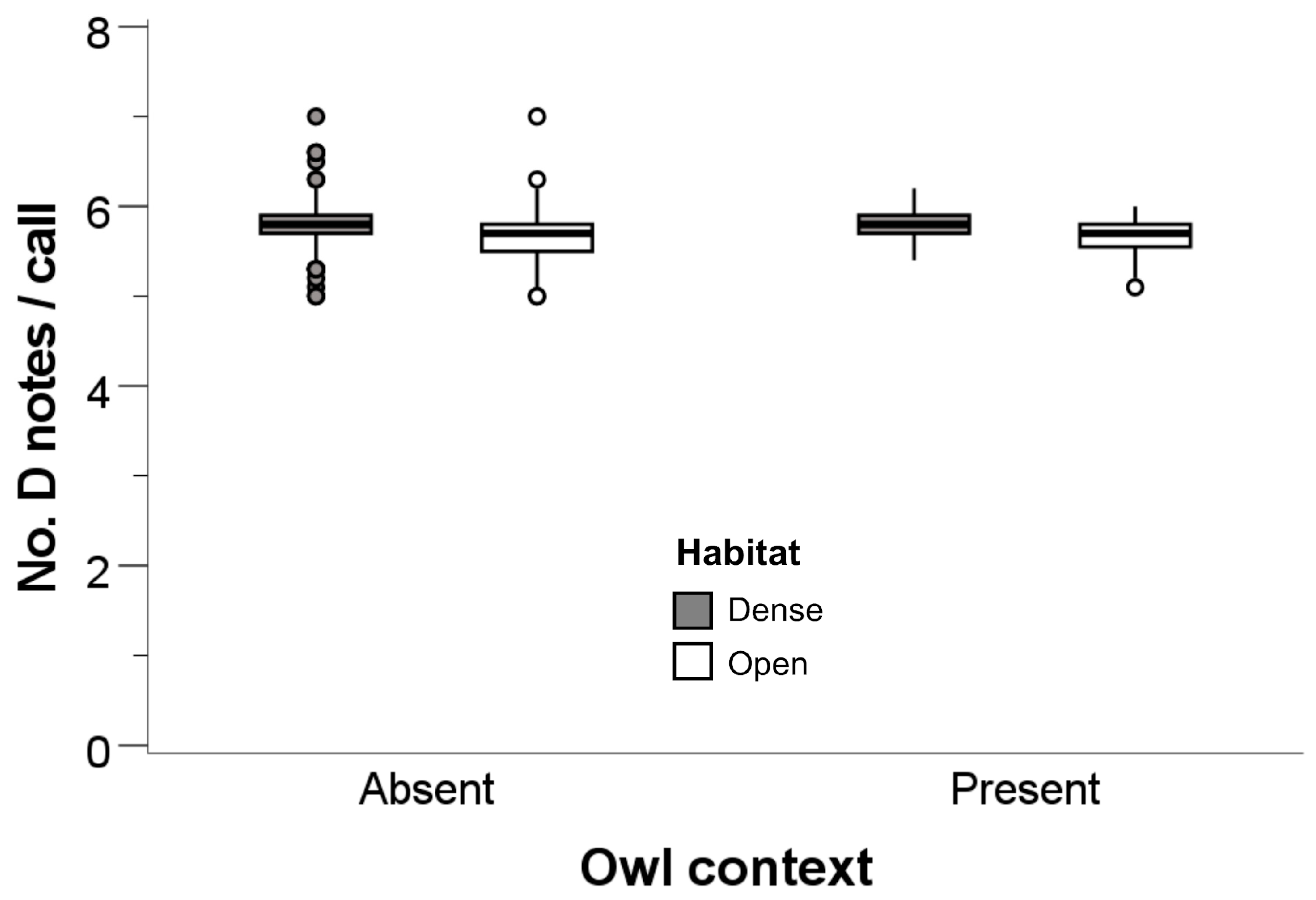
The number of D-notes per call was higher in dense habitat and higher when the owl was present (Table 1; Figure 5). Dense forest was associated with a small increase in D-notes (estimate = 0.060 ± 0.013, z = 4.70, p < 0.001), whereas owl presence showed a larger effect (estimate = 0.260 ± 0.013, z = 19.93, p < 0.001). No habitat × predator interaction was detected (z = 0.24, p = 0.809; Table 1). Overall, predator presentations were associated with increased call rate and D-note production, whereas habitat structure was associated with smaller shifts in D-note structure.
Figure 5. Note composition of calls (D-notes per call) in Owl-absent versus Owl-present trials in open versus dense forest patches. Data are plotted as in Figure 2.

3.4. Descriptive Observations

Playback of Willow Tit chick-a-dee calls elicited observable movements in feral cats in 16 cases: 14 cats rotated their heads toward the sound source, and two showed ear movements; none remained completely motionless.
During natural feeder observations, cats positioned near feeders were occasionally observed to make subtle head movements while in ambush positions. In some instances, first-arriving Willow Tits altered their behavior following such movements.
These observations were not conducted under controlled experimental conditions and were not subjected to formal statistical analysis. They are therefore presented descriptively. Nonetheless, they are consistent with the possibility that chick-a-dee calls can be associated with detectable movements in potential ambush predators under naturalistic conditions. No raptor responses to chick-a-dee playbacks were observed.

4. Discussion

This study provides behavioral evidence consistent with prophylactic mobbing in Willow Tits. Individuals arriving alone at feeders modulated their calling behavior across habitat structure, social rank, and predator contexts. Although predator presence did not significantly alter recruitment latency, Owl presentations were associated with increased call rate and D-note production. These context-dependent modifications of call structure suggest that chick-a-dee calls may operate beyond purely reactive mobbing, contributing to social cohesion of the group under uncertain predation risk [1,2,12,40]. This interpretation does not exclude alternative explanations such as food recruitment [11,36].

4.1. Calling Effort

In predator-absent trials, birds called for longer durations in dense forest than in open forest. Dense vegetation reduces visual detection distances of predators. In our study region, sit-and-wait predators such as the Eurasian Pygmy Owl represent a principal ambush risk to Willow Tits, although the experimental stimulus used here was a Tawny Owl model [27,31,41,42,43]. Under these conditions, prolonged calling is consistent with hypotheses proposing that mobbing calls may facilitate predator detection [44], but this possibility was not directly evaluated in the present study. In contrast, shorter calling in open forest—where predators are more easily detected visually—suggests reduced need for acoustic probing. Importantly, this habitat effect occurred in trials without predator presentation, indicating that call modulation can occur even when no immediate predator stimulus is provided [45,46]. These findings align with previous work showing that unpredictability and variability in antipredator behavior can enhance survival, particularly in species facing ambush predation [1,2,38].

4.2. Recruitment Dynamics

Arrival latency of other flock members depended strongly on the social rank of the calling individual. Calls produced by higher-ranking birds, especially adult males, elicited faster recruitment than calls from lower-ranking individuals. The rank effect was detectable across environmental contexts, particularly in dense forests. However, predator presence did not significantly influence recruitment latency nor interact with social rank in this dataset [7,21,47]. The observed pattern may reflect differences in caller identity; however, spatial positioning and hierarchical structure in feeder access may also contribute to these recruitment dynamics. Accordingly, this result is interpreted as a social-context association rather than evidence of signaling credibility per se. High-ranking individuals may be perceived as more reliable sources of information or may occupy positions that make them more likely to detect predators first, or this pattern may simply be an outcome of their despotic behavior [32,48]. Faster recruitment to calls from dominant birds may enhance collective vigilance and reduce individual risk during feeder inspection. Conversely, delayed recruitment to calls from low-ranking individuals may reflect skepticism about threat credibility or strategic risk avoidance by flock members, especially because subordinates have been observed manipulating other group members by eliciting false alarm calls [48,49,50,51].

4.3. Call Structure

While call rate and D-note composition varied with habitat and predator context (though the effects were small), they did not differ systematically across social ranks. This pattern indicates context-dependent variation in call structure across habitats, although the present study did not directly measure perception and cannot exclude potential acoustic transmission effects. Higher call rates and elevated D-note usage in dense forest and in the presence of the Owl are consistent with well-established findings that D-notes function as graded signals of threat intensity [12,13,16]. Although call structure varied quantitatively across contexts, predator-absent calls showed structural and directional patterns overlapping with Owl-associated calls. This pattern is consistent with mobbing-like signaling, without implying strict functional equivalence [7]. Flock members responded to these calls with comparable recruitment dynamics across contexts, suggesting that the calls elicited coordinated group responses without demonstrating predator-specific interpretation.

4.4. Limitations

This study has several limitations. Although it demonstrates consistent behavioral patterns across flocks and individuals, it does not directly measure predator detection success or survival outcomes. Future experiments could manipulate perceived predation risk more systematically or combine behavioral observations with direct predator response measures to evaluate whether calling influences predator detectability. In the present study, predator detection or movement was not measured, and therefore, mechanistic interpretations remain hypothetical. Additionally, while we focused on chick-a-dee calls, other modalities such as body posture or subtle movement patterns may also contribute to risk-related signaling. Comparative studies across species differing in predation pressure and social structure would further clarify how widespread prophylactic mobbing-like strategies are among passerines [1,7,12,47].
Because the dataset included repeated observations within individuals and flocks, standard errors were small, and Wald z-statistics were correspondingly large. Although mixed-effects modeling accounts for nested structure, large sample sizes can produce highly significant p-values even for modest effect sizes. Therefore, emphasis should be placed on the magnitude and biological relevance of estimated effects rather than statistical significance alone.
Chick-a-dee calls are acoustically distinct from low-amplitude contact calls typically used for routine flock cohesion in Willow Tits. Winter flocks frequently maintain group cohesion using quiet contact vocalizations without producing conspicuous chick-a-dee calls [52]. Because chick-a-dee calls are louder and more salient, and therefore potentially more conspicuous to predators, their production during feeder approach appears to be associated with contexts involving heightened social or environmental uncertainty rather than routine cohesion maintenance.

5. Conclusions

Our findings indicate that chick-a-dee calls in wintering Willow Tits exhibit context-dependent modulation consistent with mobbing-like signaling during feeder approaches. These calls were adjusted according to habitat structure, social rank, and predator context, and were consistently produced before feeding in first-arrival episodes. This pattern suggests asymmetric information during initial resource inspection and supports the interpretation that chick-a-dee calls may function in situations of uncertain predation risk. However, because predator detection outcomes were not measured, our results should be interpreted as behavioral evidence compatible with proactive signaling rather than direct confirmation of predator probing. Together, these findings broaden the functional framework of mobbing-like communication and highlight how conspicuous social signals may operate during the initial inspection of potentially risky sites.

Author Contributions

Conceptualization, I.A.K., C.B.A., T.M.F. and T.K.; Methodology, I.A.K.; R.K. and T.K.; Software, I.A.K.; Validation, I.A.K., R.K., C.B.A., T.K.; Formal Analysis, I.A.K., T.M.F.; Investigation, I.A.K., R.K., C.B.A., T.M.F., T.K.; Resources, I.A.K., R.K., T.K.; Data Curation, I.A.K.; Writing—Original Draft Preparation, I.A.K.; Writing—Review and Editing, I.A.K., R.K., C.B.A., T.M.F. and T.K.; Visualization, T.M.F.; Supervision, T.K.; Project Administration, I.A.K. and T.K.; Funding Acquisition, I.A.K., R.K. and T.K. All authors have read and agreed to the published version of the manuscript.

Funding

This study was supported by the Latvian Council of Science (grant lzp-2022/1-0348).

Institutional Review Board Statement

The Ethical Committee of the Food and Veterinary Service of the Republic of Latvia issued the permission #87 for this animal study. Birds were caught and banded under bird banding permit #40 issued to Indrikis A. Krams by the Latvian Ringing Centre. The study was conducted in accordance with the local legislation and institutional requirements.

Data Availability Statement

The data that support the findings of this study are available from the Zenodo repository (doi: 10.5281/zenodo.18099828, accessed on 30 December 2025).

Acknowledgments

We thank the Fulbright US Student Program, the Latvian Fulbright Post, and the US Department of State.

Conflicts of Interest

The authors declare no conflicts of interest.

References

  1. Lima, S.L. Nonlethal effects in the ecology of predator–prey interactions. BioScience 1998, 48, 25–34. [Google Scholar] [CrossRef]
  2. Lima, S.L. Putting predators back into behavioral predator–prey interactions. Trends Ecol. Evol. 2002, 17, 70–75. [Google Scholar] [CrossRef]
  3. Caro, T.M. Antipredator Defenses in Birds and Mammals; University of Chicago Press: Chicago, IL, USA, 2005. [Google Scholar]
  4. Lima, S.L. Predators and the breeding bird: Behavioral and reproductive flexibility under the risk of predation. Biol. Rev. 2009, 84, 485–513. [Google Scholar] [CrossRef]
  5. Hollen, L.I.; Radford, A.N. The development of alarm call behaviour in mammals and birds. Anim. Behav. 2009, 78, 791–800. [Google Scholar] [CrossRef]
  6. Clucas, B.; Freeberg, T.M.; Lucas, J.R. Chick-a-dee call syntax, social context, and season affect vocal responses of Carolina chickadees (Poecile carolinensis). Behav. Ecol. Sociobiol. 2004, 57, 187–196. [Google Scholar] [CrossRef]
  7. Templeton, C.N.; Greene, E. Nuthatches eavesdrop on variations in heterospecific chickadee mobbing calls. Proc. Natl. Acad. Sci. USA 2007, 104, 5479–5482. [Google Scholar] [CrossRef] [PubMed]
  8. Hailman, J.P.; Ficken, M.S.; Ficken, R.W. The “chick-a-dee” call of Parus atricapillus: A recombinant system of animal communication compared with written English. Semotica 1985, 56, 191–224. [Google Scholar] [CrossRef]
  9. Freeberg, T.M. Complexity in the chick-a-dee call of Carolina chickadees: Associations of context and signaler behavior. J. Acoust. Soc. Am. 2008, 123, 519–523. [Google Scholar]
  10. Suzuki, T.N.; Wheatcroft, D.; Griesser, M. Experimental evidence for compositional syntax in bird calls. Nat. Commun. 2016, 7, 10986. [Google Scholar] [CrossRef]
  11. Suzuki, T.N.; Kutsukake, N. Foraging intention affects whether willow tits call to attract members of mixed-species flocks. R. Soc. Open Sci. 2017, 4, 170222. [Google Scholar] [CrossRef]
  12. Templeton, C.N.; Greene, E.; Davis, K. Allometry of alarm calls: Black-capped chickadees encode information about predator size. Science 2005, 308, 1934–1937. [Google Scholar] [CrossRef]
  13. Soard, C.M.; Ritchison, G. “Chick-a-dee” calls of Carolina chickadees convey information about degree of threat posed by avian predators. Behaviour 2009, 146, 1045–1068. [Google Scholar] [CrossRef]
  14. Krams, I.; Krama, T.; Freeberg, T.M.; Kullberg, C.; Lucas, J.R. Linking social complexity and vocal complexity: A parid perspective. Philos. Trans. R. Soc. B Biol. Sci. 2012, 367, 1879–1891. [Google Scholar] [CrossRef]
  15. Hoeschele, M.; Gammon, D.E.; Moscicki, M.K.; Sturdy, C.B. Note types and coding in Parid vocalizations: The chick-a-dee call of the chestnut-backed chickadee (Poecile rufuscens). J. Acoust. Soc. Am. 2009, 126, 2088–2099. [Google Scholar] [CrossRef] [PubMed]
  16. Proppe, D.S.; Bloomfield, L.L.; Sturdy, C.B. Acoustic transmission of the chick-a-dee call of the Black-capped Chickadee (Poecile atricapillus): Forest structure and note function. Can. J. Zool. 2010, 88, 788–794. [Google Scholar] [CrossRef]
  17. Rensel, L.J.; Wilder, J.D. The effects of owl decoys and non-threatening objects on bird feeding behavior. Quercus Linfield J. Undergrad. Res. 2012, 1, 4. [Google Scholar]
  18. Cunha, F.C.R.D.; Fontenelle, J.C.R.; Griesser, M. Predation risk drives the expression of mobbing across bird species. Behav. Ecol. 2017, 28, 1517–1523. [Google Scholar] [CrossRef]
  19. Cunningham, S.; Magrath, R.D. Functionally referential alarm calls in noisy miners communicate about predator behaviour. Anim. Behav. 2017, 129, 171–179. [Google Scholar] [CrossRef]
  20. Baker, M.C.; Becker, A.M. Mobbing calls of Black-capped Chickadees: Effects of distance and cover. Auk 2002, 119, 419–426. [Google Scholar]
  21. Nolen, M.T.; Lucas, J.R. Asymmetries in mobbing behaviour and correlated intensity during predator mobbing by Nuthatches, Chickadees and Titmice. Anim. Behav. 2009, 77, 1137–1146. [Google Scholar] [CrossRef]
  22. Ekman, J.; Askenmo, C. Social rank and winter survival in the Willow Tit Parus montanus. Ornis Scand. 1984, 15, 199–206. [Google Scholar]
  23. Helle, P. Longevity of Willow Tits (Parus montanus). Ornis Fenn. 1989, 66, 130–133. [Google Scholar]
  24. Desrochers, A.; Bélisle, M.; Bourque, J. Do mobbing calls affect the perception of predation risk by forest birds? Anim. Behav. 2002, 64, 709–714. [Google Scholar] [CrossRef]
  25. Sieving, K.E.; Contreras, T.A.; Maute, K.L. Heterospecific facilitation of forest-boundary crossing by mobbing understory birds in north-central Florida. Auk 2004, 121, 738–751. [Google Scholar] [CrossRef]
  26. Dagan, U.; Izhaki, I. The effect of pine forest structure on bird-mobbing behavior: From individual response to community composition. Forests 2019, 10, 762. [Google Scholar] [CrossRef]
  27. Adams, C.B.; Papeş, M.; Price, C.A.; Freeberg, T.M. Influence of social and physical environmental variation on antipredator behavior in mixed-species parid flocks. PLoS ONE 2023, 18, e0295910. [Google Scholar] [CrossRef]
  28. Billings, A.C. The low-frequency acoustic structure of mobbing calls differs across habitat types in three passerine families. Anim. Behav. 2018, 138, 39–49. [Google Scholar] [CrossRef]
  29. Krams, I. Length of feeding day and body weight of great tits in a single-and a two-predator environment. Behav. Ecol. Sociobiol. 2000, 48, 147–153. [Google Scholar] [CrossRef]
  30. Krams, I.A.; Krams, T.; Cernihovics, J. Selection of foraging sites in mixed willow and crested tit flocks: Rank-dependent survival strategies. Ornis Fenn. 2001, 78, 1–11. [Google Scholar]
  31. Kullberg, C. Strategy of pygmy owl while hunting avian and mammalian prey. Ornis Fenn. 1995, 72, 72–78. [Google Scholar]
  32. Krams, I.A.; Luoto, S.; Krama, T.; Krams, R.; Sieving, K.; Trakimas, G.; Elferts, D.; Rantala, M.J.; Goodale, E. Egalitarian mixed-species bird groups enhance winter survival of subordinate group members but only in high-quality forests. Sci. Rep. 2020, 10, 4005. [Google Scholar] [CrossRef]
  33. Laaksonen, M.; Lehikoinen, E. Age determinations of willow and crested tit Parus montanus and P. cristatus. Ornis Fenn. 1976, 53, 9–14. [Google Scholar]
  34. Adam, I.; Scharff, C.; Honarmand, M. Who is who? Non-invasive methods to individually sex and mark altricial chicks. J. Vis. Exp. JoVE 2014, 87, 51429. [Google Scholar]
  35. Tryjanowski, P.; Mikula, P.; Morelli, F. Dynamic interactions at birdfeeders: Attracting both prey and predators across urban and rural habitats. Basic Appl. Ecol. 2024, 79, 84–89. [Google Scholar] [CrossRef]
  36. Mahurin, E.J.; Freeberg, T.M. Chick-a-dee call variation in Carolina chickadees and recruiting flockmates to food. Behav. Ecol. 2009, 20, 111–116. [Google Scholar] [CrossRef]
  37. Freeberg, T.M. Social Complexity Can Drive Vocal Complexity: Group Size Influences Vocal Information in Carolina Chickadees: Group Size Influences Vocal Information in Carolina Chickadees. Psychol. Sci. 2006, 17, 557–561. [Google Scholar] [CrossRef]
  38. R Core Team. R: A Language and Environment for Statistical Computing; R Foundation for Statistical Computing: Vienna, Austria, 2024. [Google Scholar]
  39. Bates, D.; Mächler, M.; Bolker, B.; Walker, S. Fitting Linear Mixed-Effects Models Using lme4. J. Stat. Softw. 2015, 67, 1–48. [Google Scholar] [CrossRef]
  40. Mathot, K.J.; Arteaga-Torres, J.D.; Besson, A.; Hawkshaw, D.M.; Klappstein, N.; McKinnon, R.A.; Sridharan, S.; Nakagawa, S. A systematic review and meta-analysis of unimodal and multimodal predation risk assessment in birds. Nat. Commun. 2024, 15, 4240. [Google Scholar] [CrossRef]
  41. Rodríguez, A.; Andrén, H.; Jansson, G. Habitat-mediated predation risk and decision making of small birds at forest edges. Oikos 2001, 95, 383–396. [Google Scholar] [CrossRef]
  42. Krama, T.; Krams, R.; Cīrule, D.; Moore, F.R.; Rantala, M.J.; Krams, I.A. Intensity of haemosporidian infection of parids positively correlates with proximity to water bodies, but negatively with host survival. J. Ornithol. 2015, 156, 1075–1084. [Google Scholar] [CrossRef]
  43. Frazier, E.K.; Selman, Z.A.; Price, C.A.; Papeş, M.; Freeberg, T.M. Mixed-species flock diversity and habitat density are associated with antipredator behavior in songbirds. Diversity 2025, 17, 363. [Google Scholar] [CrossRef]
  44. Carlson, N.V.; Pargeter, H.M.; Templeton, C.N. Sparrowhawk movement, calling, and presence of dead conspecifics differentially impact blue tit (Cyanistes caeruleus) vocal and behavioral mobbing responses. Behav. Ecol. Sociobiol. 2017, 71, 133. [Google Scholar] [CrossRef]
  45. Griesser, M. Referential calls signal predator behavior in a group-living bird species. Curr. Biol. 2008, 18, 69–73. [Google Scholar] [CrossRef] [PubMed]
  46. Griesser, M. Mobbing calls signal predator category in a kin group-living bird species. Proc. R. Soc. B Biol. Sci. 2009, 276, 2887–2892. [Google Scholar] [CrossRef] [PubMed]
  47. Kalb, N.; Randler, C. Behavioral responses to conspecific mobbing calls are predator-specific in great tits (Parus major). Ecol. Evol. 2019, 9, 9207–9213. [Google Scholar] [CrossRef] [PubMed]
  48. Krama, T.; Krams, R.; Elferts, D.; Sieving, K.E.; Krams, I.A. Selective selfishness in alarm calling behaviour by some members of wintering mixed-species groups of crested tits and willow tits. Philos. Trans. R. Soc. B 2023, 378, 20220102. [Google Scholar] [CrossRef]
  49. Flower, T. Fork-tailed drongos use deceptive mimicked alarm calls to steal food. Proc. R. Soc. B Biol. Sci. 2011, 278, 1548–1555. [Google Scholar] [CrossRef]
  50. Igic, B.; McLachlan, J.; Lehtinen, I.; Magrath, R.D. Crying wolf to a predator: Deceptive vocal mimicry by a bird protecting young. Proc. R. Soc. B Biol. Sci. 2015, 282, 20150798. [Google Scholar] [CrossRef]
  51. Møller, A.P. False alarm calls as a means of resource usurpation in the great tit Parus major. Ethology 2010, 79, 25–30. [Google Scholar] [CrossRef]
  52. Smith, S.T. Communication and other social behavior in Parus carolinensis. In Publications of Nuttall Ornithological Club; Nuttall Ornithological Club: Cambridge, MA, USA, 1972; Volume 11, pp. 1–125. [Google Scholar]
Disclaimer/Publisher’s Note: The statements, opinions and data contained in all publications are solely those of the individual author(s) and contributor(s) and not of MDPI and/or the editor(s). MDPI and/or the editor(s) disclaim responsibility for any injury to people or property resulting from any ideas, methods, instructions or products referred to in the content.

Article Metrics

Citations

Article Access Statistics

Multiple requests from the same IP address are counted as one view.