Article

Fecal Microbiota of the Yellow-Headed Blackbird (Xanthocephalus xanthocephalus) in Northern Mexico: An Ecological and One Health Perspective


by
Jorge Luis Cortinas-Salazar
1,
Cristina García-De la Peña
1,*,
Quetzaly K. Siller-Rodríguez
1,
Sergio I. Barraza-Guerrero
2,
Verónica Ávila-Rodríguez
1,
Jesús Vásquez-Arroyo
3,
Juan Carlos Herrera-Salazar
1,
Luis M. Valenzuela-Núñez
1,
Juan Carlos Ontiveros-Chacón
4,
Annely Zamudio-López
1,
Judith Correa-Gómez
1,
Alexandra M. Arellano-Correa
1 and
Dannia I. Orozco-López
1
1
Conservation Medicine Laboratory, Biological Sciences Faculty, Juarez University of the State of Durango, Gomez Palacio 35010, Mexico
2
Faculty of Veterinary Medicine and Animal Zootechny, Antonio Narro Agrarian Autonomous University, Torreón 27054, Mexico
3
Faculty of Chemical Sciences, Juarez University of the State of Durango, Gomez Palacio 35010, Mexico
4
Faculty of Zootechnics and Ecology, Autonomous University of Chihuahua, Chihuahua 31453, Mexico
*
Author to whom correspondence should be addressed.
Birds 2026, 7(1), 15; https://doi.org/10.3390/birds7010015
Submission received: 30 November 2025 / Revised: 5 February 2026 / Accepted: 24 February 2026 / Published: 2 March 2026

Simple Summary

Wild birds host a diverse intestinal microbiota influencing their nutrition, physiology, and overall health. The yellow-headed blackbird (Xanthocephalus xanthocephalus), a migratory and highly social species, winters in urban and agricultural areas of northern Mexico, where it interacts closely with human-modified environments. In this study, we analyzed the fecal bacterial microbiota of this species using DNA sequencing and computational analyses, combined with a conservative screening of tentatively identified bacterial species, to assess potential zoonotic relevance. The gut microbiota was dominated by the bacterial phyla Firmicutes_D, Actinobacteriota, and Campylobacterota, reflecting strong environmental and dietary influences. A small number of bacterial species previously reported as human pathogens or potential zoonotic agents were detected; however, all occurred at very low relative abundances and therefore do not indicate a significant public health risk under natural conditions. This work provides the first microbiological baseline for X. xanthocephalus and highlights its value as a sentinel of environmental microbial circulation within a One Health framework in semiarid regions of Mexico.

Abstract

The gut microbiota plays a key role in the health of wild birds, reflecting the influence of diet, habitat, and social behavior. Migratory and highly gregarious species such as the yellow-headed blackbird (Xanthocephalus xanthocephalus) provide valuable opportunities to explore host–microbe–environment interactions within a One Health framework. During migration, birds are exposed to diverse environments and dietary sources, which can promote highly diverse intestinal microbial communities and facilitate transient acquisition of environmental microorganisms. Here, we present the first taxonomic characterization of the fecal bacterial microbiota of X. xanthocephalus in northern Mexico based on 16S rRNA gene sequencing of the V3–V4 region. In addition, we performed a conservative screening to assess whether any bacterial taxa tentatively assigned at the species level have been previously reported as human pathogens or as having potential zoonotic relevance. Fecal samples were collected noninvasively from communal roosts within an urban–agricultural landscape of the Comarca Lagunera region during a winter season. A highly diverse bacterial community (39 phyla, 369 families, and 1195 bacterial species) was identified. Firmicutes_D, Actinobacteriota, and Campylobacterota were the dominant phyla. Among the bacterial taxa tentatively assigned at the species level, only three have been reported to exhibit zoonotic potential in the literature; however, none corresponded to avian-adapted pathogens or bacterial species historically associated with major zoonotic outbreaks, and all were detected at very low relative abundances. Overall, our findings establish an initial microbiological baseline for X. xanthocephalus and underscore the role of migratory birds as indicators of environmental microbial dynamics rather than direct sources of zoonotic risk in semiarid regions of northern Mexico.

1. Introduction

The intestinal microbiota plays essential roles in the physiology, nutrition, and health of birds, contributing to digestion, energy metabolism, immune modulation, and protection against pathogens [1]. In avian ecology, the analysis of the fecal microbiota provides valuable insights into how diet, habitat, and behavior shape microbial communities, while also offering a noninvasive window into population health and ecological status [2]. Beyond host ecology, avian fecal microbiota can influence microbial persistence, colonization resistance, and environmental dissemination across natural and human-modified landscapes [3]. In this context, the detection of opportunistic or potentially zoonotic taxa in wild birds is best interpreted within a One Health framework, emphasizing ecological circulation rather than direct disease risk [4].
Previous studies have shown that avian gut communities are typically dominated by Firmicutes, Bacteroidota, Actinobacteriota, and Proteobacteria, with relative abundances strongly influenced by trophic ecology and environmental exposure [1,5]. For example, raptors and scavengers often harbor communities enriched in Clostridium, Peptostreptococcus, and Fusobacterium, reflecting protein- and lipid-rich diets [6,7]. In contrast, domestic birds (chickens, turkeys, and ducks) exhibit high proportions of Lactobacillus, Bacteroides, and Faecalibacterium associated with carbohydrate fermentation [8,9]. Urban and synanthropic species such as the Rock Dove (Columba livia), House Sparrow (Passer domesticus), and gulls (Larus spp.) show increased representation of Firmicutes, Actinobacteriota, Enterobacteriaceae and Staphylococcaceae, reflecting their access to human-influenced food sources [10,11,12].
The yellow-headed blackbird (Xanthocephalus xanthocephalus) is a particularly informative model for studying avian microbial ecology. This migratory passerine (family Icteridae) native to North America winters in northern and central Mexico, including the Comarca Lagunera region between the states of Coahuila and Durango, where large flocks roost in urban trees and forage across agricultural landscapes [13]. Its gregarious behavior, omnivorous diet, and seasonal mobility provide an ideal ecological framework for exploring how habitat heterogeneity and social dynamics influence the composition and function of the intestinal microbiota [14]. Understanding the microbiota of migratory birds is also relevant from a One Health perspective [15]. Their long-distance movements and frequent use of human-modified habitats facilitate microbial exchange among regions, environments, and species, highlighting a potential role in the ecological circulation of bacteria [3,16].
Despite its abundance and ecological importance, the fecal microbiota of X. xanthocephalus remains virtually uncharacterized, limiting our understanding of its microbial ecology and its relevance within a One Health framework. High-throughput sequencing of the 16S rRNA gene [17], combined with established bioinformatic pipelines (QIIME2), provides a robust approach for characterizing fecal bacterial communities at fine taxonomic resolution. In this study, we aimed to characterize the fecal bacterial microbiota of the yellow-headed blackbird in northern Mexico and to apply a conservative, ecology-oriented screening of bacterial taxa tentatively assigned at the species level and previously reported as having zoonotic potential. Rather than assessing disease risk, this approach evaluates whether bacteria historically linked to human infections are detected at biologically meaningful abundances or instead occur sporadically at very low levels consistent with environmental circulation. Within a One Health framework, our results establish a first microbiological baseline for the yellow-headed blackbird in Mexico and support the interpretation of migratory birds as indicators of environmental microbial dynamics, rather than as sources of zoonotic threat.

2. Materials and Methods

2.1. Study Area

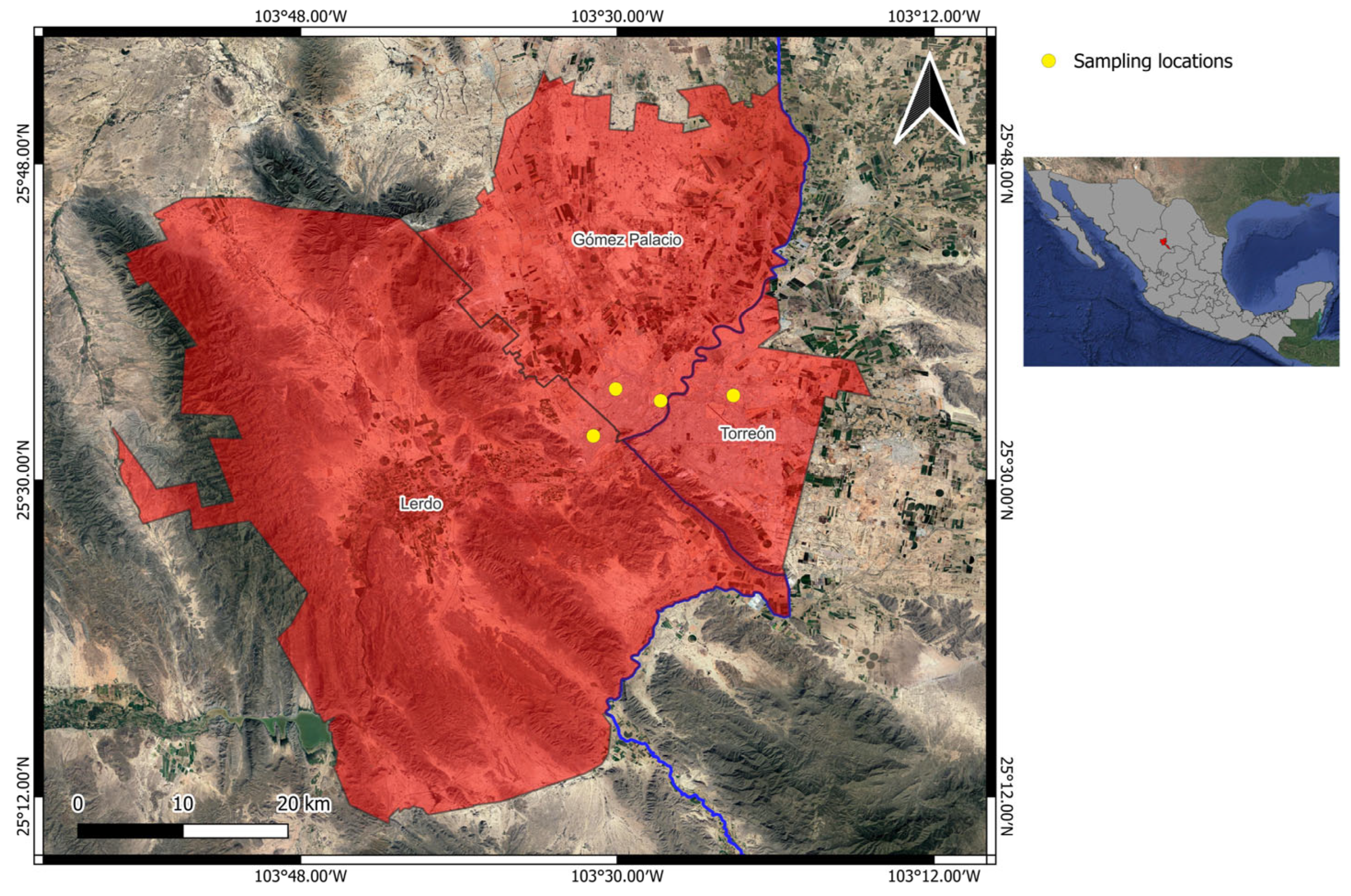
The study was conducted between December 2023 and January 2024 in four urban parks and green areas located in the municipalities of Torreón (Coahuila), Gómez Palacio, and Lerdo (Durango), northern Mexico (25°32′38″ N, 103°25′08″ W; Figure 1). The area is characterized by a semiarid warm climate, mean annual temperatures of 18–22 °C, and annual precipitation of 100–400 mm concentrated during summer months [18]. Peripheral areas are dominated by xerophytic shrubland (Larrea tridentata and Prosopis glandulosa), whereas the sampling sites within urban areas contain introduced ornamental vegetation, including trees commonly used in parks, medians, and public plazas [19]. Sampling sites were selected based on their regular use as communal roosting areas by flocks of X. xanthocephalus and their accessibility for noninvasive fecal sample collection. These sites are embedded within human-modified environments influenced by urban infrastructure and surrounding agricultural activity.

2.2. Fecal Sample Collection

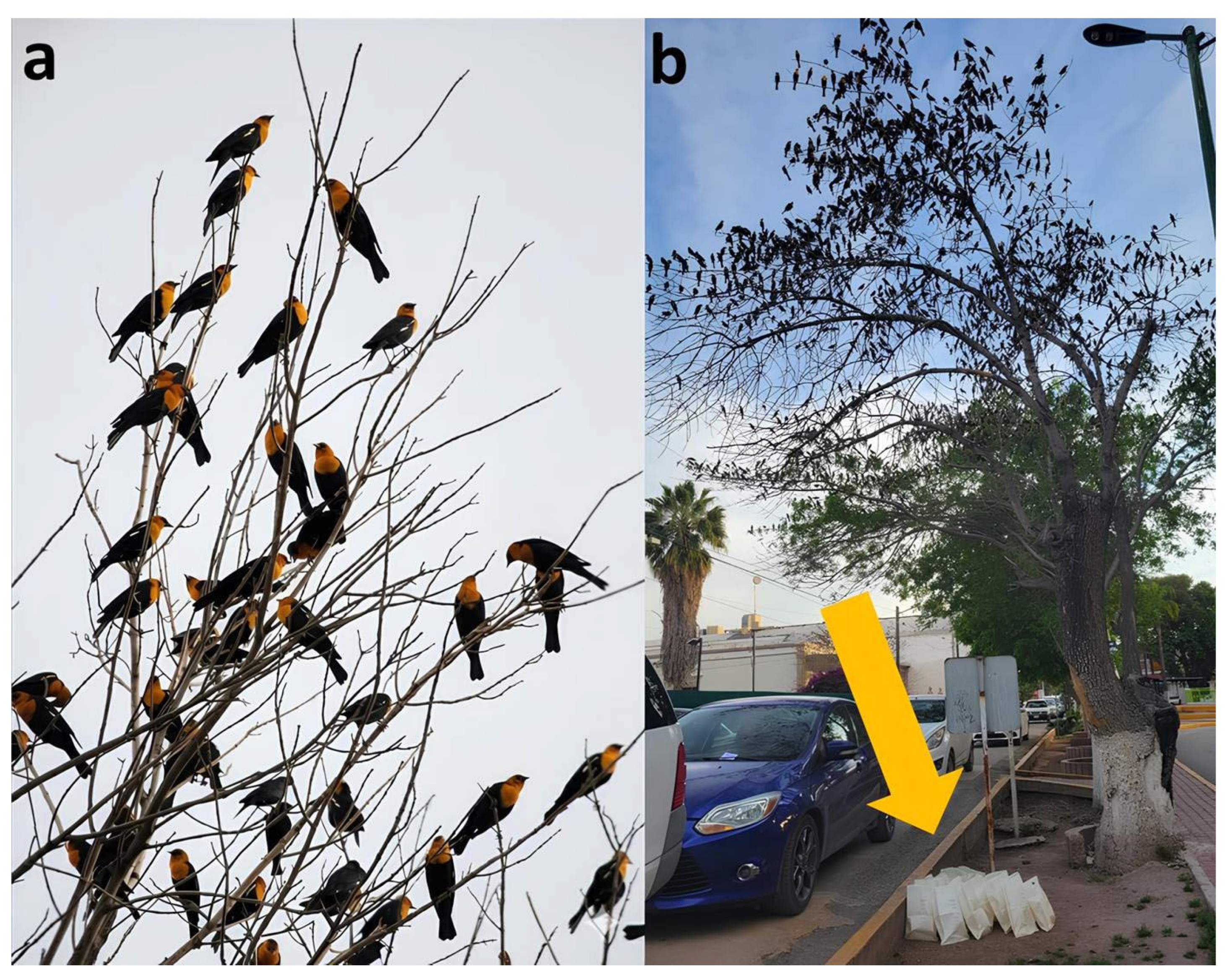
Fecal samples were collected from trees used as communal roosting sites by flocks of X. xanthocephalus. Prior to sampling, each flock was visually confirmed to consist exclusively of this species to avoid interspecific contamination (Figure 2a). At each sampling site, sterile paper bags were placed beneath roosting trees (Figure 2b). Pooling of ten fecal deposits per sampling site was employed as a non-invasive strategy to characterize the fecal microbiota associated with communal roosts. The number of deposits per pool was selected as a balance between capturing representative microbial diversity at the roost level and maintaining logistical feasibility and consistency across sampling sites. Pooling multiple fresh deposits increases the likelihood of incorporating microbiota from multiple individuals and dietary inputs, thereby broadening taxonomic coverage and reducing the influence of idiosyncratic microbiota from a single bird. Due to the large flock size (dozens to hundreds of yellow-headed blackbirds) and the simultaneous defecation of multiple individuals, fecal material accumulated rapidly beneath roosting trees. Only visually fresh deposits were collected within a short time window, and although deposits were not necessarily widely spaced, the high number of birds defecating concurrently made it highly unlikely that multiple deposits within a single pool originated from the same individual. Under these field conditions, the probability of repeated sampling from a single bird was considered negligible. Each pooled sample (n = 4) was transferred into a tube containing 750 µL of Zymo Research BashingBead™ lysis/stabilization buffer (Zymo Research, Irvine, CA, USA) and silica beads to ensure DNA preservation. Samples were homogenized for 30 s using a TerraLyzer™ mechanical disruptor (Zymo Research, Irvine, CA, USA) and transported under refrigerated conditions to the Conservation Medicine Laboratory, Faculty of Biological Sciences, Juarez University of Durango State, where they were stored at −20 °C until further processing.

2.3. Laboratory Work

Bacterial DNA was extracted using the ZymoBIOMICS™ DNA MiniPrep Kit (Zymo Research, Irvine, CA, USA), following the manufacturer’s instructions. All laboratory procedures were conducted in a UV-sterilized laminar flow cabinet to reduce the risk of low-level background contamination. However, taxonomic assignments and relative abundances were interpreted cautiously, particularly for low-abundance taxa.
Extracted DNA was sent to Novogene Corporation, Inc. (Davis, CA, USA) for amplification and sequencing of the V3–V4 region of the 16S rRNA gene. Universal primers 341F (CCTAYGGGRBGCASCAG) and 806R (GGACTACNNGGTATCTAAT) were used. Polymerase chain reactions (PCRs) were performed in a final volume of 15 µL using Phusion® High-Fidelity PCR Master Mix (New England Biolabs, Ipswich, MA, USA), with 2 µM of each primer and approximately 10 ng of template DNA. The thermal cycling program consisted of an initial denaturation at 98 °C for 1 min, followed by 30 cycles of denaturation at 98 °C for 10 s, annealing at 50 °C for 30 s, and extension at 72 °C for 30 s. Amplified products were visualized by electrophoresis on a 2% agarose gel stained with SYBR™ Green (Thermo Scientific, Waltham, MA, USA) using 1× loading buffer. Amplicons were pooled in equimolar concentrations and purified with a QIAquick Gel Extraction Kit (Qiagen™, Hilden, Germany). Sequencing libraries were prepared using a TruSeq® DNA PCR-Free Sample Preparation Kit (Illumina, San Diego, CA, USA), incorporating index codes for sample identification. Library quality and concentration were assessed using a Qubit® 2.0 fluorometer (Thermo Scientific) and an Agilent Bioanalyzer 2100 system (Agilent Technologies, Santa Clara, CA, USA). Finally, sequencing was performed on an Illumina NovaSeq 6000 platform (Illumina, San Diego, CA, USA), generating paired-end 250 bp reads. Extraction blanks and PCR negative controls were not included in this study; therefore, formal in silico decontamination approaches (e.g., decontam) were not applied. This methodological limitation is acknowledged and was taken into account during downstream analyses and interpretation of the results.

2.4. Bioinformatic Analysis

Sequence processing was conducted in QIIME2 (Quantitative Insights Into Microbial Ecology) version 2023.5 on a Linux–Ubuntu environment [20]. Raw paired-end reads were denoised using the Divisive Amplicon Denoising Algorithm (DADA2) pipeline [21] to remove low-quality reads and chimeras and to infer high-resolution amplicon sequence variants (ASVs). Good’s coverage [22] was calculated for each pooled sample to assess sequencing depth completeness; values between 0.95 and 1.00 were indicative of adequate coverage. Taxonomic classification was performed using a Naïve Bayes classifier trained on the Greengenes2 reference database [23].
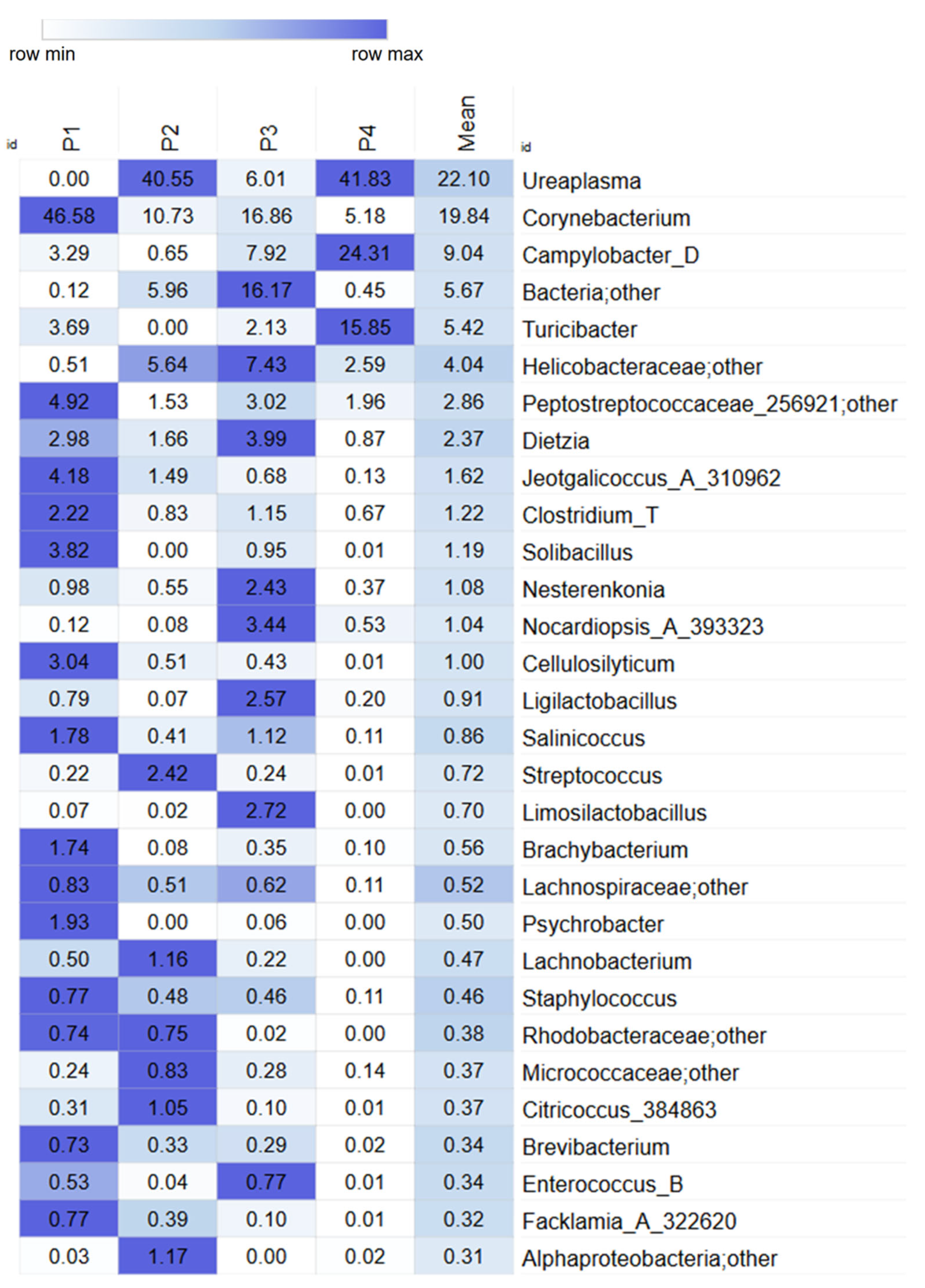
Heatmaps representing the relative abundances of ASVs at the phylum, family, and genus levels were generated using Morpheus software https://software.broadinstitute.org/morpheus/ (accessed on 5 December 2025). Each flock was represented by a single pooled sample composed of ten fecal depositions; consequently, no formal statistical tests were applied and results are presented descriptively. Species-level assignments were attempted using strict BLAST+ 2.17.0 criteria (E = 0.0, ≥98% sequence identity, 100% query coverage). However, taxonomic resolution based on the V3–V4 region of the 16S rRNA gene is inherently limited for several bacterial groups, particularly among closely related taxa. Accordingly, species-level assignments derived from partial 16S rRNA sequences were considered tentative and interpreted with caution [24,25,26].
Alpha diversity metrics, including observed ASVs, Shannon diversity, and Pielou’s evenness, were calculated using the qiime diversity alpha plugin. Observed ASVs were used as an estimator of taxonomic richness, Shannon diversity as a composite index incorporating both richness and relative abundance, and Pielou’s index as a measure of community evenness, following standard ecological and microbiome analytical frameworks [27,28].

2.5. Conservative Screening of Tentatively Assigned Bacterial Taxa for Potential Contamination and Reported Zoonotic Associations

Bacterial taxa that achieved tentative assignment at the species level based on strict BLAST criteria (Table S2) were subjected to a conservative, multi-step screening to provide ecological context for downstream interpretation. Because extraction blanks and PCR negative controls were not included, workflow was designed as a sensitivity-oriented screening rather than a formal contaminant removal procedure. First, each taxon tentatively assigned at the species level was evaluated to determine its likelihood of representing kit-, reagent-, or skin-associated contamination, based on published lists and discussions of recurrent contaminants in low-biomass microbiome studies [29,30]. In parallel, taxa were annotated with environmental context using EFILTER (Environmental FILTERing [31]; https://efilter.shinyapps.io/EFilter-app/ (accessed on 7 January 2026), which assigns taxa to broad habitat categories (e.g., human/skin, built environments, laboratory settings, soil, water, gut/digestive system). Taxa primarily associated with human skin, built/laboratory environments, or other non-gut habitats unexpected for fecal samples were flagged as “possible contaminant” for cautious interpretation; this step was used exclusively for contextual screening and did not constitute contaminant exclusion (Table S4). Second, taxa not flagged as potential contaminants by the above conservative screening were treated as plausible biological signals in fecal/gut-associated communities and were further assessed for reported human pathogenicity by cross-referencing the Bacteria–Human Pathogens Database (BaHPD) and its associated source list [32], complemented by targeted literature searches in PubMed, Scopus, and Web of Science. For each taxon retained, reported clinical contexts and typical exposure routes (e.g., inhalation of airborne spores, ingestion/fecal–oral, direct contact/environmental) were extracted. Finally, evidence for documented zoonotic transmission (animal-to-human infection or clear zoonotic attribution) was assessed through targeted literature reviews (Table S5). Throughout, detections were interpreted as evidence of environmental presence rather than infection, transmission, or public health risk, and the presence of a taxon was not taken as proof of pathogenicity or epidemiological relevance. This conservative framework was designed to maximize ecological interpretability while minimizing overestimation of zoonotic relevance.

3. Results

3.1. Alpha Diversity: Bacterial Richness, Abundance and Evenness

A total of 3162 amplicon sequence variants (ASVs) were obtained from the four pooled fecal samples collected from X. xanthocephalus in the Comarca Lagunera. The average number of raw reads per pool was 181,018, and the mean number of nonchimeric reads after DADA2 filtering was 162,275, representing 82.92% retention. Good’s coverage values were 0.999 for each pool, indicating that sequencing depth was sufficient to capture the majority of bacterial diversity (Table S1). Across all samples, 39 phyla, 74 classes, 206 orders, 369 families, 843 genera, and 1195 bacterial species were identified. Of these, 211 taxa with valid Latin binomials underwent manual NCBI BLAST validation to support their tentative species-level assignment (Table S2).
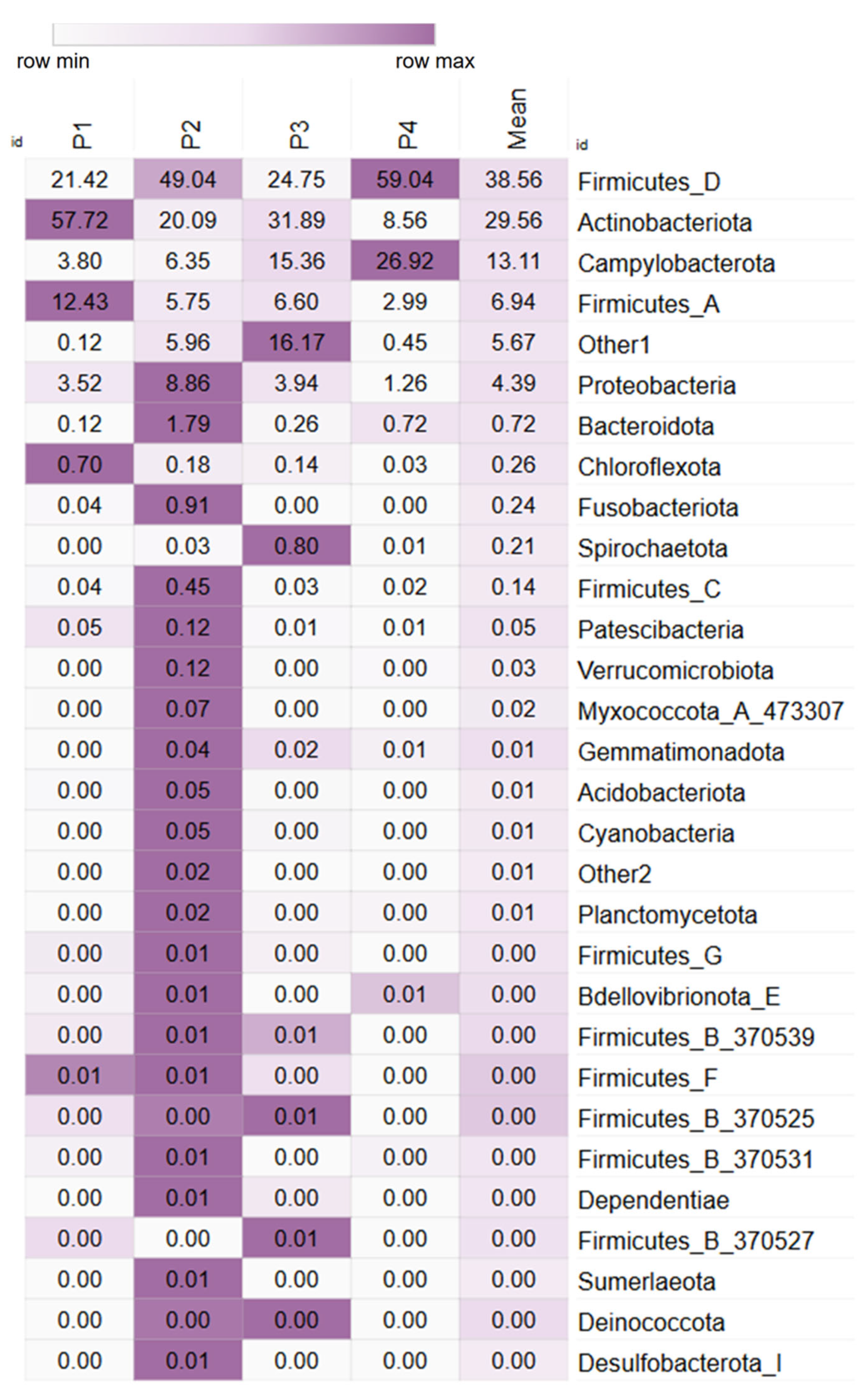
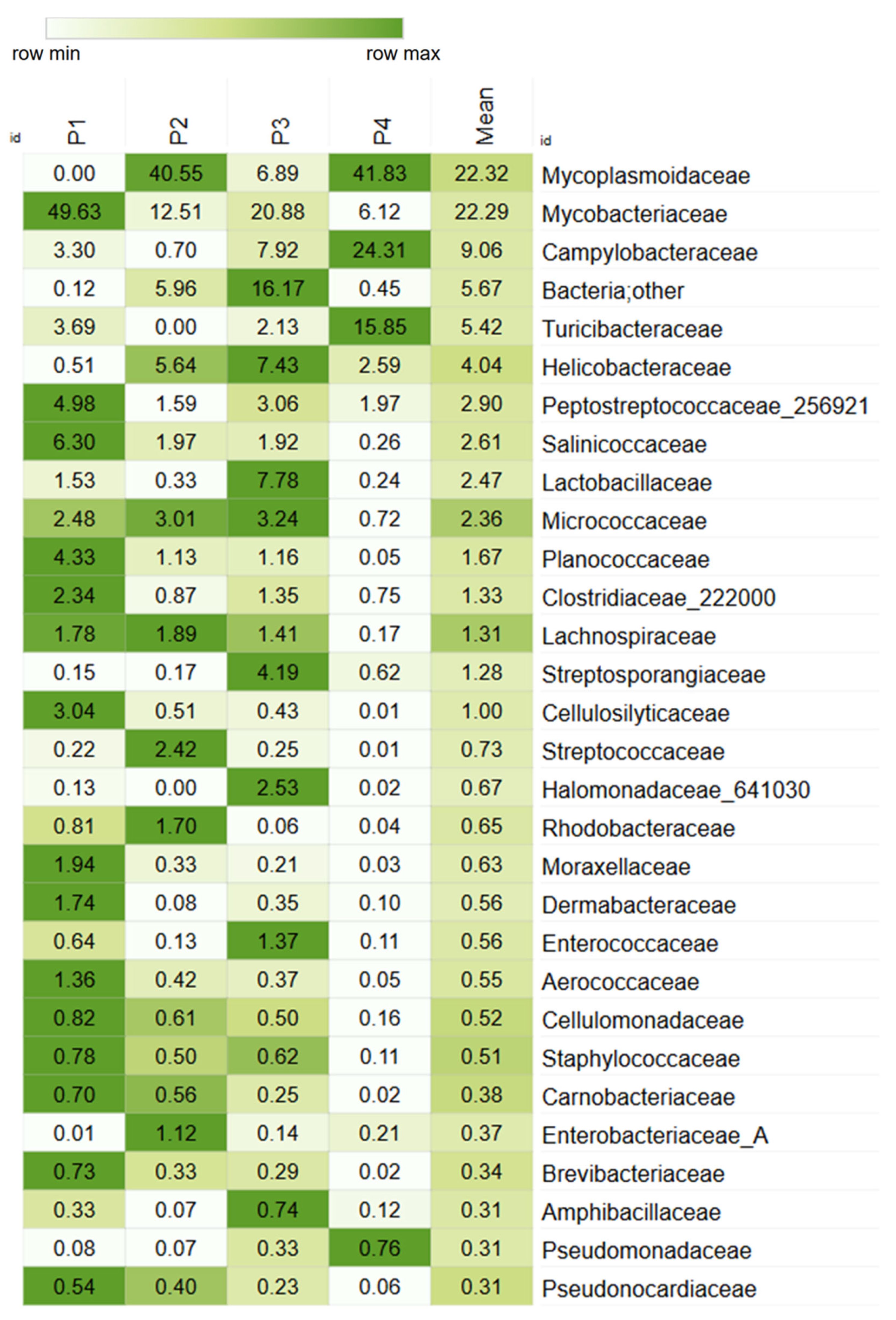
At the phylum level, the most abundant groups were Firmicutes_D ( x ¯ = 38.56%), Actinobacteriota ( x ¯ = 29.56%), and Campylobacterota ( x ¯ = 13.10%) (Figure 3). At the family level, Mycoplasmoidaceae ( x ¯ = 22.31%), Mycobacteriaceae ( x ¯ = 22.28%), and Campylobacteraceae ( x ¯ = 9.05%) predominated (Figure 4). At the genus level, Ureaplasma ( x ¯ = 22.09%), Corynebacterium ( x ¯ = 19.83%) and Campylobacter_D ( x ¯ = 9.04%), were the most abundant taxa (Figure 5). Alpha diversity metrics varied among pools, reflecting differences in community structure at the flock level (Table S3). Observed ASV richness ranged from 558 to 1450, Shannon diversity values ranged from 3.90 to 6.46, and Pielou’s evenness ranged from 0.42 to 0.63.

3.2. Conservative Screening of Tentatively Assigned Taxa and Potential Zoonotic Relevance

Among the 211 bacterial taxa tentatively assigned at the species level and supported by manual BLAST validation, 22 were classified as likely contaminants based on available literature describing recurrent kit-, reagent-, or skin-associated taxa in low-biomass microbiome studies (Table S4). The remaining 189 taxa were cross-referenced with the Bacteria–Human Pathogens Database (BaHPD) and its associated source list [32]. Of these, 35 taxa have been previously reported as human pathogens under specific clinical contexts [33,34,35,36,37,38,39,40,41,42,43,44,45,46,47,48,49,50,51,52,53,54]. Importantly, only three taxa (Enterococcus faecalis, Clostridium perfringens, and Clostridioides difficile) have documented evidence of zoonotic potential based on published reports [52,53,54]. All three were detected at very low relative abundances across samples (<0.007%; Table S5).

4. Discussion

4.1. Fecal Bacteria in Xanthocephalus xanthocephalus

The present study provides the first comprehensive characterization of the fecal bacterial microbiota of X. xanthocephalus in northern Mexico. The high taxonomic richness detected (39 phyla and 1195 species) reflects a complex and dynamic microbial community shaped by environmental exposure, dietary plasticity, and the migratory ecology of this species. Such patterns are consistent with observations in other free-living and migratory birds, where gut microbiota composition is strongly influenced by habitat heterogeneity, foraging behavior, and contact with anthropogenic landscapes rather than strict host specialization [1,5,55].
At the phylum level, the dominance of Firmicutes, Actinobacteriota, and Campylobacterota aligns with previous reports from birds [11,56,57]. These phyla are commonly associated with carbohydrate fermentation, lipid metabolism, and rapid microbial turnover, processes that may support energetic demands during migration and fluctuating dietary inputs [1,58]. The presence of Campylobacterota, although variable in abundance, has been recurrently reported in migratory bird systems and may reflect environmental acquisition rather than stable host association [55].
The genus Ureaplasma was detected at high relative abundance in two of the four fecal pools analyzed. This genus has been previously reported in association with the conjunctiva, nasal cavity, oropharynx, and upper and lower trachea of clinically healthy chickens [59,60]. However, its presence has more recently been documented in fecal samples from apparently healthy tropical larks (Alaudidae) [61] and vampire finches (Geospiza septentrionalis) [62], similar to the blackbirds examined in the present study. Therefore, the ecological significance and potential role of Ureaplasma within the fecal microbiota of domestic and wild birds remains to be elucidated. The pronounced heterogeneity observed among pooled fecal samples likely reflects differences in flock-level habitat use, local foraging substrates, and micro-environmental exposure. Pooling fecal samples is a common strategy in noninvasive wildlife microbiome studies when individual identification is not feasible [63]; however, it can mask within-flock variability while amplifying signals from transient or environmentally derived taxa. This is particularly relevant in migratory birds that exploit multiple habitats over short temporal scales, leading to frequent microbial turnover and limited community stabilization [1,55]. Accordingly, the detection of low-abundance environmental or reagent-associated taxa is not unexpected in low-biomass fecal samples, especially in the absence of extraction blanks or PCR negative controls [29,30]. Rather than excluding these taxa outright, they were interpreted conservatively within an ecological framework, acknowledging both environmental circulation of microorganisms and methodological limitations inherent to wildlife microbiome studies. These considerations were explicitly incorporated into downstream taxonomic interpretation to avoid overestimation of biologically meaningful associations.

4.2. Zoonotic and Opportunistic Potential of Fecal Bacteria

None of the detected taxa corresponded to avian-adapted pathogens or bacterial species historically associated with major zoonotic outbreaks. Although a subset of taxa tentatively assigned at the species level corresponded to bacteria reported as human pathogens in clinical databases, the vast majority lacked documented evidence of animal-to-human transmission. These findings support the interpretation that the fecal microbiota of the yellow-headed blackbird primarily reflects environmental microbial circulation rather than representing a significant source of zoonotic risk. Nevertheless, even after conservative screening, the detection of low-abundance taxa previously reported as zoonotic cannot exclude contributions from environmental deposition or residual reagent contamination, and confirmatory approaches such as culture-based assays, shotgun metagenomics, full-length 16S rRNA sequencing, or targeted qPCR are required to validate true host association and microbial viability.
Although a limited subset of taxa tentatively assigned at the species level corresponded to bacteria previously reported as human pathogens, only three have documented evidence supporting zoonotic transmission (Enterococcus faecalis, Clostridium perfringens, and Clostridioides difficile) [52,53,54], and all were detected at extremely low relative abundances (<0.007%). This pattern suggests that the presence of clinically relevant taxa in the fecal microbiota does not necessarily imply epidemiological risk. These results align with recent studies emphasizing that migratory birds often act as transient carriers of environmentally acquired microbes rather than stable reservoirs of zoonotic pathogens [1,55]. The lack of taxonomic convergence across migratory systems further suggests that similar ecological functions may be fulfilled by different microbial assemblages, shaped primarily by environmental recruitment and diet rather than by long-term host–microbe coevolution [64].
Our findings are further supported by culture-based evidence from North American populations of the yellow-headed blackbird. A study conducted in North Dakota reported the presence of facultative enteric bacteria, including members of Enterobacteriaceae, in fecal samples of X. xanthocephalus, with Pantoea agglomerans as the most frequently isolated species and only sporadic detection of Escherichia coli [65]. Although some E. coli isolates exhibited virulence traits and pathogenicity in experimental chicken embryo assays, these strains were neither widespread nor associated with major avian disease outbreaks or extensive antimicrobial resistance. Together with our amplicon-based results, this convergence across methodologies and geographic regions supports the interpretation that the fecal microbiota of X. xanthocephalus primarily reflects environmental exposure and microbial circulation within agro-urban landscapes, rather than stable colonization by avian-adapted or zoonotic pathogens.
In urban and agroecosystem contexts, fecal accumulation beneath communal roosts can facilitate environmental dispersal of microorganisms through dust, runoff, or mechanical vectors. However, the present findings indicate that such dispersal does not equate to elevated zoonotic risk. Instead, these microbial assemblages should be interpreted as part of a broader environmental microbiome shared among soils, water, vegetation, and wildlife [66]. Preventive measures such as routine cleaning of heavily used roosting areas, public hygiene education, and urban habitat management can further mitigate exposure without contributing to stigmatization of migratory bird species.
Within a One Health framework, the fecal microbiota of X. xanthocephalus appears to function primarily as an indicator of environmental microbial dynamics rather than as a source of zoonotic threat. These findings reinforce the importance of integrating ecological context, conservative taxonomic interpretation, and transmission evidence when evaluating potential public health implications of wildlife microbiomes.

4.3. Methodological Scope and Future Directions

The noninvasive sampling approach employed in this study proved suitable for obtaining high-quality bacterial DNA while minimizing disturbance to birds. This methodology aligns with ethical recommendations for wildlife microbiome research and reduces potential behavioral and physiological impacts associated with invasive sampling techniques [67,68]. Although cloacal swabs or postmortem intestinal sampling can provide more anatomically precise information, such approaches may introduce additional biases as well as logistical and ethical constraints, particularly when studying free-ranging migratory species [69,70]. In this context, the collection of freshly deposited fecal samples under sterile conditions represents a practical and ethical compromise between biological representativeness and animal welfare [71].
From a methodological perspective, the integration of high-resolution amplicon sequencing with conservative taxonomic validation and ecology-oriented screening enabled the generation of a robust baseline description of the fecal microbiota of X. xanthocephalus. The analytical framework adopted here prioritized cautious interpretation of taxa tentatively assigned at the species level, explicit consideration of environmental and methodological confounders, and avoidance of overinterpretation of low-abundance taxa.
Beyond the taxa tentatively assigned at the species level, a substantial proportion of ASVs could not be confidently classified to known species under short-read 16S rRNA (V3–V4) sequencing and strict BLAST criteria. These unresolved taxa likely represent poorly characterized environmental lineages, novel bacterial diversity, or taxa underrepresented in current reference databases, a common limitation in wildlife and environmental microbiome studies. While their taxonomic identity and potential functional roles remain unknown, their presence highlights the need for continued investigation of the fecal microbiota of X. xanthocephalus using complementary approaches such as full-length 16S sequencing, shotgun metagenomics, and longitudinal sampling. Such efforts will progressively refine taxonomic resolution and improve our understanding of the ecological and potential health relevance of the broader microbial diversity associated with this migratory species.
Future research should expand our X. xanthocephalus microbiome knowledge by incorporating longitudinal sampling across the migratory cycle to assess temporal microbiome dynamics, as well as habitat-specific comparisons to disentangle environmental from host-associated microbial signatures. The application of shotgun metagenomics would allow direct assessment of functional genes and metabolic potential, while targeted screening for antimicrobial resistance (AMR) determinants could further refine the One Health implications of migratory bird microbiomes. Together, these approaches would strengthen our understanding of how the yellow-headed blackbird interacts with its environment and participates in microbial exchange across natural, agricultural, and urban landscapes.

5. Conclusions

This study provides the first comprehensive characterization of the fecal bacterial microbiota of the yellow-headed blackbird (X. xanthocephalus) in northern Mexico, integrating taxonomic composition, alpha diversity metrics, and a conservative screening for zoonotic associations. The fecal microbiota of this bird was highly diverse and reflected the combined influence of habitat heterogeneity, social flocking behavior, and the use of urban–agricultural landscapes characteristic of the Comarca Lagunera region.
Although three taxa tentatively assigned at the species level have been previously reported as having zoonotic potential, all were detected at very low relative abundances and none corresponded to avian-adapted pathogens or taxa historically linked to major zoonotic outbreaks. These findings suggest a minimal public health risk under natural conditions and support the interpretation of migratory blackbirds as vectors of environmental microbial circulation rather than sources of zoonotic threat. Importantly, the detection of low-abundance taxa previously reported as possibly zoonotic should be interpreted cautiously, as presence in fecal material does not imply host colonization, microbial viability, or transmission potential.
From a One Health perspective, this study highlights the value of free-ranging migratory birds as sentinels of landscape-level microbial dynamics, reflecting environmental exposure and habitat use rather than active disease transmission. These findings underscore the importance of cautious, ecology-oriented interpretation of wildlife microbiome data, particularly when analyses involve low-biomass samples and taxa tentatively assigned at the species level. Despite being based on a limited number of pooled samples, this work establishes a foundational microbiological baseline for X. xanthocephalus in Mexico. Future studies incorporating replicated and longitudinal sampling across seasons and migratory stages, together with shotgun metagenomic approaches and targeted screening for antimicrobial resistance, will further elucidate the ecological interactions linking birds, their microbiota, and human-modified environments in semiarid regions.

Supplementary Materials

The following supporting information is available online at https://www.mdpi.com/article/10.3390/birds7010015/s1, Table S1: DADA2 read-processing statistics for V3–V4 amplicon sequences and Good’s coverage estimates from fecal samples of the yellow-headed blackbird (Xanthocephalus xanthocephalus). Table S2: Relative abundances of bacterial taxa detected in fecal samples of the yellow-headed blackbird (Xanthocephalus xanthocephalus); species-level assignments were considered tentative and supported by conservative manual NCBI BLAST validation; query coverage, E-value, percent identity, and accession numbers are reported only for taxa meeting these criteria. Table S3: Alpha diversity metrics across pooled fecal samples of the yellow-headed blackbird (Xanthocephalus xanthocephalus). Table S4: Conservative screening of taxa tentatively assigned at the species level for potential kit-, reagent-, or skin-associated contamination based on published low-biomass microbiome studies and environmental metadata (screening was performed for contextual interpretation only and did not involve contaminant removal). Table S5: Bacterial taxa tentatively assigned at the species level with reported human pathogenicity and documented zoonotic potential detected in fecal samples of the yellow-headed blackbird (Xanthocephalus xanthocephalus).

Author Contributions

Conceptualization, J.L.C.-S. and C.G.-D.l.P.; methodology, J.L.C.-S. and S.I.B.-G.; resources, V.Á.-R., J.V.-A. and J.C.O.-C.; validation, C.G.-D.l.P. and Q.K.S.-R.; formal analysis, J.L.C.-S., V.Á.-R. and J.V.-A.; investigation, J.C.H.-S., J.C.O.-C. and A.Z.-L.; data curation, Q.K.S.-R., L.M.V.-N. and A.Z.-L.; software, J.C.-G., A.M.A.-C. and D.I.O.-L.; writing—original draft preparation, J.L.C.-S.; writing—review and editing, C.G.-D.l.P. and S.I.B.-G.; visualization, J.C.-G., A.M.A.-C. and D.I.O.-L.; project administration, C.G.-D.l.P. and J.C.H.-S.; funding acquisition, J.L.C.-S., C.G.-D.l.P. and L.M.V.-N. All authors have read and agreed to the published version of the manuscript.

Funding

This research was funded by SECIHTI (Secretaría de Ciencia, Humanidades, Tecnología e Innovación) through a doctoral scholarship awarded to Jorge Luis Cortinas-Salazar (number 561285).

Institutional Review Board Statement

All the methods and activities of this study were in strict accordance with accepted guidelines for the ethical use, care, and welfare of animals in research at the international level and were approved by the Biological Sciences Faculty UJED ethics committee on 18 September 2023 (code: 0013).

Data Availability Statement

The raw data supporting the conclusions of this article are available at the National Center for Biotechnology Information (PRJNA1354092). In addition, QIIME2 visualization files (.qzv) corresponding to the main taxonomic analyses are available in the Supplementary Materials. All analyses were performed using standard QIIME2 workflows as described in the Section 2.

Acknowledgments

Thanks are extended to SECIHTI (Secretaría de Ciencia, Humanidades, Tecnología e Innovación) for the doctoral scholarship awarded to Jorge Luis Cortinas-Salazar. We would like to thank Johana Adriana Puentes-Novella, Estela Isabel Delgado-Cortinas, Brenda Paola Peña-Martínez, Yeimy Alejandra Banda-Sustaita, Keila Daniela Salas-Preciado, Natalia López-Robledo and Génesis Merari Rodríguez-Gutiérrez for their support in the fieldwork and sample collection. Thanks are extended to Omar Suárez-García and two anonymous reviewers for excellent suggestions that improved the manuscript.

Conflicts of Interest

The authors declare no conflicts of interest.

Abbreviations

The following abbreviations are used in this manuscript:
DNAdeoxyribonucleic acid
rRNAribosomal ribonucleic acid
NGSnext-generation sequencing
QIIME2Quantitative Insights into Microbial Ecology
ASVsamplicon sequence variants
BLASTBasic Local Alignment Search Tool
DADA2Divisive Amplicon Denoising Algorithm
NCBINational Center for Biotechnology Information

References

  1. Grond, K.; Sandercock, B.K.; Jumpponen, A.; Zeglin, L.H. The avian gut microbiota: Community, physiology and function in wild birds. J. Avian Biol. 2018, 49, e01788. [Google Scholar] [CrossRef]
  2. Bodawatta, K.H.; Hird, S.M.; Grond, K.; Poulsen, M.; Jønsson, K.A. Avian Gut Microbiomes Taking Flight. Trends Microbiol. 2022, 30, 268–280. [Google Scholar] [CrossRef] [PubMed]
  3. Guardia, T.; Varriale, L.; Minichino, A.; Balestrieri, R.; Mastronardi, D.; Russo, T.P.; Dipineto, L.; Fioretti, A.; Borrelli, L. Wild birds and the ecology of antimicrobial resistance: An approach to monitoring. J. Wildl. Manag. 2024, 88, e22588. [Google Scholar] [CrossRef]
  4. Abdullahi, I.N.; Fernández-Fernández, R.; Juárez-Fernández, G.; Martínez-Álvarez, S.; Eguizábal, P.; Zarazaga, M.; Lozano, C.; Torres, C. Wild animals are reservoirs and sentinels of Staphylococcus aureus and MRSA Clones: A problem with “One Health” concern. Antibiotics 2021, 10, 1556. [Google Scholar] [CrossRef]
  5. Hird, S.M.; Sánchez, C.; Carstens, B.C.; Brumfield, R.T. Comparative gut microbiota of 59 neotropical bird species. Front. Microbiol. 2015, 6, 1403. [Google Scholar] [CrossRef]
  6. Kreisinger, J.; Čížková, D.; Kropáčková, L.; Albrecht, T. Cloacal microbiome structure in a long-distance migratory bird assessed using deep 16sRNA pyrosequencing. PLoS ONE 2015, 10, e0137401. [Google Scholar] [CrossRef]
  7. Oliveira, B.C.M.; Murray, M.; Tseng, F.; Widmer, G. The fecal microbiota of wild and captive raptors. Anim. Microbiome 2020, 2, 15. [Google Scholar] [CrossRef]
  8. Oakley, B.B.; Lillehoj, H.S.; Kogut, M.H.; Kim, W.K.; Maurer, J.J.; Pedroso, A.; Lee, M.D.; Collett, S.R.; Johnson, T.J.; Cox, N.A. The chicken gastrointestinal microbiome. FEMS Microbiol. Lett. 2014, 360, 100–112. [Google Scholar] [CrossRef]
  9. Videnska, P.; Faldynova, M.; Juricova, H.; Babak, V.; Sisak, F.; Havlickova, H.; Rychlik, I. Chicken faecal microbiota and disturbances induced by single or repeated therapy with tetracycline and streptomycin. BMC Vet. Res. 2013, 9, 30. [Google Scholar] [CrossRef]
  10. Dolka, B.; Czopowicz, M.; Chrobak-Chmiel, D.; Ledwoń, A.; Szeleszczuk, P. Prevalence, antibiotic susceptibility and virulence factors of Enterococcus species in racing pigeons (Columba livia f. domestica). BMC Vet. Res. 2020, 16, 7. [Google Scholar] [CrossRef] [PubMed]
  11. Teyssier, A.; Matthysen, E.; Hudin, N.S.; de Neve, L.; White, J.; Lens, L. Diet contributes to urban-induced alterations in gut microbiota: Experimental evidence from a wild passerine. Proc. R. Soc. B 2020, 287, 20192182. [Google Scholar] [CrossRef]
  12. Ottinger, M.A.; Mani, S.; Krüger, S.; Coverdale, B.; Willows-Munro, S.; Combrink, L. Microbiomes in birds: A review of links to health and reproduction. Reprod. Fertil. 2024, 5, e230076. [Google Scholar] [CrossRef]
  13. BirdLife International. Species Factsheet: Yellow-Headed Blackbird Xanthocephalus xanthocephalus. 2025. Available online: https://datazone.birdlife.org/species/factsheet/yellow-headed-blackbird-xanthocephalus-xanthocephalus (accessed on 23 February 2026).
  14. Twedt, D.J.; Crawford, R.D. Yellow-headed Blackbird (Xanthocephalus xanthocephalus), version 1.0. In Birds of the World; Poole, A.F., Gill, F.B., Eds.; Cornell Lab of Ornithology: Ithaca, NY, USA, 2020. [Google Scholar] [CrossRef]
  15. Smith, O.M.; Snyder, W.E.; Owen, J.P. Are we overestimating risk of enteric pathogen spillover from wild birds to humans? Biol. Rev. 2020, 95, 652–679. [Google Scholar] [CrossRef]
  16. Elsohaby, I.; Samy, A.; Elmoslemany, A.; Alorabi, M.; Alkafafy, M.; Aldoweriej, A.; Al-Marri, T.; Elbehiry, A.; Fayez, M. Migratory wild birds as a potential disseminator of antimicrobial-resistant bacteria around Al-Asfar Lake, Eastern Saudi Arabia. Antibiotics 2021, 10, 260. [Google Scholar] [CrossRef]
  17. Clarridge, J.E., 3rd. Impact of 16S rRNA gene sequence analysis for identification of bacteria on clinical microbiology and infectious diseases. Clin. Microbiol. Rev. 2004, 17, 840–862. [Google Scholar] [CrossRef]
  18. García, E. Modificaciones al Sistema de Clasificación Climática de Köppen: Para Adaptarlo a las Condiciones de la República Mexicana; Instituto de Geografía, UNAM: Ciudad de México, México, 2004. [Google Scholar]
  19. Flores-De la O, J.L.; Villanueva-Solis, J.; Quiroa-Herrera, J.A. Assessment of the Microclimatic Effects of Vegetation on the Mitigation of Urban Heat Island: Park in the City of Torreon, Mexico. Rev. Cienc. Ambient. (Trop. J. Environ. Sci.) 2018, 52, 123–140. [Google Scholar] [CrossRef]
  20. Bolyen, E.; Rideout, J.R.; Dillon, M.R.; Bokulich, N.A.; Abnet, C.C.; Al-Ghalith, G.A.; Alexander, H.; Alm, E.J.; Arumugam, M.; Asnicar, F.; et al. Reproducible, interactive, scalable and extensible microbiome data science using QIIME 2. Nat. Biotechnol. 2019, 37, 852–857. [Google Scholar] [CrossRef] [PubMed]
  21. Callahan, B.J.; Mcmurdie, P.J.; Rosen, M.J.; Han, A.W.; Johnson, A.J.A.; Holmes, S.P. DADA2: High-resolution sample inference from Illumina amplicon data. Nat. Methods 2016, 13, 581–583. [Google Scholar] [CrossRef]
  22. Good, I.J. The population frequencies of species and the estimation of population parameters. Biometrika 1953, 40, 237–264. [Google Scholar] [CrossRef]
  23. McDonald, D.; Jiang, Y.; Balaban, M.; Cantrell, K.; Zhu, Q.; Gonzalez, A.; Morton, J.T.; Nicolaou, G.; Parks, D.H.; Karst, S.M.; et al. Greengenes2 unifies microbial data in a single reference tree. Nat. Biotechnol. 2024, 42, 715–718. [Google Scholar] [CrossRef] [PubMed]
  24. Stackebrandt, E.; Goebel, B.M. Taxonomic note: A place for DNA–DNA reassociation and 16S rRNA sequence analysis in the present species definition in bacteriology. Int. J. Syst. Bacteriol. 1994, 44, 846–849. [Google Scholar] [CrossRef]
  25. Janda, J.M.; Abbott, S.L. 16S rRNA gene sequencing for bacterial identification in the diagnostic laboratory: Pluses, perils, and pitfalls. J. Clin. Microbiol. 2007, 45, 2761–2764. [Google Scholar] [CrossRef] [PubMed]
  26. Yarza, P.; Yilmaz, P.; Pruesse, E.; Glöckner, F.O.; Ludwig, W.; Schleifer, K.H.; Whitman, W.B.; Euzéby, J.; Amann, R.; Rosselló-Móra, R. Uniting the classification of cultured and uncultured bacteria and archaea using 16S rRNA gene sequences. Nat. Rev. Microbiol. 2014, 12, 635–645. [Google Scholar] [CrossRef] [PubMed]
  27. Kers, J.G.; Saccenti, E. The power of microbiome studies: Some considerations on which alpha and beta metrics to use and how to report results. Front. Microbiol. 2022, 12, 796025. [Google Scholar] [CrossRef]
  28. Pielou, E.C. The measurement of diversity in different types of biological collections. J. Theor. Biol. 1966, 13, 131–144. [Google Scholar] [CrossRef]
  29. Salter, S.J.; Cox, M.J.; Turek, E.M.; Calus, S.T.; Cookson, W.O.; Moffatt, M.F.; Turner, P.; Parkhill, J.; Loman, N.J.; Walker, A.W. Reagent and laboratory contamination can critically impact sequence-based microbiome analyses. BMC Biol. 2014, 12, 87. [Google Scholar] [CrossRef]
  30. de Goffau, M.C.; Lager, S.; Salter, S.J.; Wagner, J.; Kronbichler, A.; Charnock-Jones, D.S.; Peacock, S.J.; Smith, G.C.S.; Parkhill, J. Recognizing the reagent microbiome. Nat. Microbiol. 2018, 3, 851–853. [Google Scholar] [CrossRef]
  31. Bewick, S.; Dong, X.; Karig, D.; Fagan, W.F. Efilter: A tool for identifying unexpected and erroneous taxids in sequencing data. Res. Sq. 2020. [Google Scholar] [CrossRef]
  32. Bartlett, A.; Padfield, D.; Lear, L.; Bendall, R.; Vos, M. A comprehensive list of bacterial pathogens infecting humans. Microbiology 2022, 168, 001269. [Google Scholar] [CrossRef]
  33. Taylor, L.H.; Latham, S.M.; Woolhouse, M.E.J. Risk factors for human disease emergence. Phil. Trans. R. Soc. B. 2001, 356, 983–989. [Google Scholar] [CrossRef] [PubMed]
  34. Bosshard, P.P.; Zbinden, R.; Altwegg, M. Turicibacter sanguinis gen. nov., sp. nov., a novel anaerobic, Gram-positive bacterium. Int. J. Syst. Evol. Microbiol. 2002, 52, 1263–1266. [Google Scholar] [CrossRef]
  35. Woo, P.C.Y.; Teng, J.L.L.; Leung, K.W.; Lau, S.K.P.; Yuen, K.Y. Leptotrichia hongkongensis sp. nov., a novel Leptotrichia species with the oral cavity as its natural reservoir. J. Zhejiang Univ. Sci. B 2010, 11, 391–401. [Google Scholar] [CrossRef]
  36. Bernard, K.; Burdz, T.; Wiebe, D.; Alfa, M.; Bernier, A.M. Clostridium neonatale sp. nov. linked to necrotizing enterocolitis in neonates and a clarification of species assignable to the genus Clostridium (Prazmowski 1880) emend. Lawson and Rainey 2016. Int. J. Syst. Evol. Microbiol. 2018, 68, 2416–2423. [Google Scholar] [CrossRef]
  37. Nemec, A.; De Baere, T.; Tjernberg, I.; Vaneechoutte, M.; van der Reijden, T.J.K.; Dijkshoorn, L. Acinetobacter ursingii sp. nov. and Acinetobacter schindleri sp. nov., isolated from human clinical specimens. Int. J. Syst. Evol. Microbiol. 2001, 51, 1891–1899. [Google Scholar] [CrossRef] [PubMed]
  38. Toprak, N.U.; Bozkurt, I.; Sener, A.G.; Yilmaz, G.; Gul, H.C. Alloprevotella rava isolated from a mixed infection of an elderly patient with chronic mandibular osteomyelitis mimicking oral squamous cell carcinoma. New Microbes New Infect. 2021, 42, 100880. [Google Scholar] [CrossRef] [PubMed]
  39. Han, X.Y.; Meltzer, M.C.; Woods, J.T.; Fainstein, V. Endocarditis with ruptured cerebral aneurysm caused by Cardiobacterium valvarum sp. nov. J. Clin. Microbiol. 2004, 42, 1590–1595. [Google Scholar] [CrossRef] [PubMed]
  40. Berinson, B.; Brossier, F.; Bouvet, D.; Sougakoff, W.; Jarlier, V.; Cambau, E. Identification of Kosakonia cowanii as a rare cause of acute cholecystitis: Case report and review of the literature. BMC Infect. Dis. 2020, 20, 366. [Google Scholar] [CrossRef]
  41. Toprak, N.U.; Sener, A.G.; Gursoy, N.C.; Akgun, Y.; Yilmaz, G. Butyricimonas virosa: The first clinical case of bacteraemia. New Microbes New Infect. 2015, 4, 7. [Google Scholar] [CrossRef]
  42. Maillet, F.; Passeron, A.; Podglajen, I.; Ranque, B.; Pouchot, J. Lactobacillus delbrueckii urinary tract infection in a male patient. Med. Mal. Infect. 2019, 49, 226–228. [Google Scholar] [CrossRef]
  43. Brancaccio, M.; Legendre, G.G. Megasphaera elsdenii endocarditis. J. Clin. Microbiol. 1979, 10, 72–74. [Google Scholar] [CrossRef]
  44. Pinon, G.; Grollier, G.; Romet-Lemonne, J.L.; de Rautlin de la Roy, Y. Fatal Selenomonas sputigena septicemia probably originating from lung abscess. Eur. J. Clin. Microbiol. 1985, 4, 343–344. [Google Scholar] [CrossRef]
  45. Krizova, L.; McGinnis, J.; Maixnerova, M.; Nemec, M.; Poirel, L.; Mingle, L.; Sedo, O.; Wolfgang, W.; Nemec, A. Acinetobacter variabilis sp. nov. (formerly DNA group 15 sensu Tjernberg & Ursing), isolated from humans and animals. Int. J. Syst. Evol. Microbiol. 2015, 65, 857–863. [Google Scholar] [CrossRef]
  46. Buhl, M.; Marschal, M. Prevotella vespertina sp. nov., isolated from an abscess of a hospital patient. Int. J. Syst. Evol. Microbiol. 2020, 70, 4576–4582. [Google Scholar] [CrossRef]
  47. Delaunay, E.; Abat, C.; Rolain, J.-M. Enterococcus cecorum human infection, France. New Microbes New Infect. 2015, 7, 50–51. [Google Scholar] [CrossRef]
  48. Ebinger, M.; Nichterlein, T.; Schumacher, U.K.; Manncke, B.; Schmidt, D.; Böhn, I. Isolation of Capnocytophaga granulosa from an abscess in an immunocompetent adolescent. Clin. Infect. Dis. 2000, 30, 606–607. [Google Scholar] [CrossRef][Green Version]
  49. Jadhav, K.P.; Pai, P.G. A rare infective endocarditis caused by Vagococcus fluvialis. J. Cardiol. Cases 2019, 20, 129–131. [Google Scholar] [CrossRef]
  50. Song, Y.; Könönen, E.; Rautio, M.; Liu, C.; Bryk, A.; Eerola, E.; Finegold, S.M. Alistipes onderdonkii sp. nov. and Alistipes shahii sp. nov., of human origin. Int. J. Syst. Evol. Microbiol. 2006, 56, 1985–1990. [Google Scholar] [CrossRef] [PubMed]
  51. Gomez, C.A.; Gerber, D.A.; Zambrano, E.; Banaei, N.; Deresinski, S.; Blackburn, B.G. First case of infectious endocarditis caused by Parvimonas micra. Anaerobe 2015, 36, 53–55. [Google Scholar] [CrossRef] [PubMed]
  52. Hasan, K.A.; Ali, S.A.; Rehman, M.; Bin-Asif, H.; Zahid, S. The unravelled Enterococcus faecalis zoonotic superbugs: Emerging multiple resistant and virulent lineages isolated from poultry environment. Zoonoses Public Health 2018, 65, 921–935. [Google Scholar] [CrossRef] [PubMed]
  53. Cabodevilla, X.; Malo, J.E.; Aguirre de Cárcer, D.; Zurdo, J.; Chaboy-Cansado, R.; Rastrojo, A.; García, F.J.; Traba, J. Zoonotic potential of urban wildlife faeces, assessed through metabarcoding. Sci. Total Environ. 2024, 952, 175866. [Google Scholar] [CrossRef]
  54. Brown, A.W.W.; Wilson, R.B. Clostridium difficile colitis and zoonotic origins—A narrative review. Gastroenterol. Rep. 2018, 6, 157–166. [Google Scholar] [CrossRef]
  55. Capilla-Lasheras, P.; Risely, A. Migratory microbiomes: The role of the gut microbiome in bird migration eco-physiology. J. Avian Biol. 2025, 2025, e03406. [Google Scholar] [CrossRef]
  56. Waite, D.W.; Taylor, M.W. Characterizing the avian gut microbiota: Membership, driving influences, and potential function. Front. Microbiol. 2014, 5, 223. [Google Scholar] [CrossRef]
  57. Lu, Z.; Li, S.; Wang, M.; Wang, C.; Meng, D.; Liu, J. Comparative analysis of the gut microbiota of three sympatric terrestrial wild bird species overwintering in farmland habitats. Front. Microbiol. 2022, 13, 905668. [Google Scholar] [CrossRef]
  58. Kohl, K.D. Diversity and function of the avian gut microbiota. J. Comp. Physiol. B 2012, 182, 591–602. [Google Scholar] [CrossRef] [PubMed]
  59. Koshimizu, K.; Kotani, H.; Magaribuchi, T.; Yagihashi, T.; Shibata, K.; Ogata, M. Isolation of ureaplasmas from poultry and experimental infection in chickens. Vet. Rec. 1982, 110, 426–429. [Google Scholar] [CrossRef]
  60. Soto Priante, E.; Lemus Flores, C.; Ortiz Muñiz, A. Primer aislamiento e identificación de Ureaplasma spp y de Mycoplasma lipofaciens de gallinas comerciales en México. Rev. Mex. Cienc. Pecu. 2011, 2, 85–92. [Google Scholar]
  61. Michel, A.J.; Ward, L.M.; Goffredi, S.K.; Dawson, K.S.; Baldassarre, D.T.; Brenner, A.; Gotanda, K.M.; McCormack, J.E.; Mullin, S.W.; O’Neill, A.; et al. The gut of the finch: Uniqueness of the gut microbiome of the Galápagos vampire finch. Microbiome 2018, 6, 167. [Google Scholar] [CrossRef]
  62. van Veelen, H.P.J.; Ibáñez-Álamo, J.D.; Horrocks, N.P.C.; Hegemann, A.; Ndithia, H.K.; Shobrak, M.; Tieleman, B.I. Cloacal microbiota are biogeographically structured in larks from desert, tropical and temperate areas. BMC Microbiol. 2023, 23, 40. [Google Scholar] [CrossRef] [PubMed]
  63. Gaire, T.N.; Young, J.; Wehri, T.; Schwartz, M.; Singer, R.; Pieters, M.; Noyes, N.R. The impact of pooling on the observed microbiome profile of preweaned piglet feces. FEMS Microbiol. Ecol. 2025, 101, fiaf058. [Google Scholar] [CrossRef]
  64. Louca, S.; Polz, M.F.; Mazel, F.; Albright, M.B.N.; Huber, J.A.; O’Connor, M.I.; Ackermann, M.; Hahn, A.S.; Srivastava, D.S.; Crowe, S.A.; et al. Function and functional redundancy in microbial systems. Nat. Ecol. Evol. 2018, 2, 936–943. [Google Scholar] [CrossRef]
  65. Gibbs, P.S.; Kasa, R.; Newbrey, J.L.; Petermann, S.R.; Wooley, R.E.; Vinson, H.M.; Reed, W. Identification, antimicrobial resistance profiles, and virulence of members from the family enterobacteriaceae from the feces of Yellow-Headed Blackbirds (Xanthocephalus xanthocephalus) in North Dakota. Avian Dis. 2007, 51, 649–655. [Google Scholar] [CrossRef]
  66. Sessitsch, A.; Wakelin, S.; Schloter, M.; Maguin, E.; Cernava, T.; Champomier-Verges, M.-C.; Charles, T.C.; Cotter, P.D.; Fer-rocino, I.; Kriaa, A.; et al. Microbiome interconnectedness throughout environments with major consequences for healthy people and a healthy planet. Microbiol. Mol. Biol. Rev. 2023, 87, e0021222. [Google Scholar] [CrossRef] [PubMed]
  67. Knutie, S.A.; Gotanda, K.M. A non-invasive method to collect fecal samples from wild birds for microbiome studies. Microb. Ecol. 2018, 76, 851–855. [Google Scholar] [CrossRef] [PubMed]
  68. Pallen, M.J.; Ponsero, A.J.; Telatin, A.; Moss, C.J.; Baker, D.; Heavens, D.; Davidson, G.L. Faecal metagenomes of great tits and blue tits provide insights into host, diet, pathogens and microbial biodiversity. Access Microbiol. 2025, 7, 000910. [Google Scholar] [CrossRef] [PubMed]
  69. Videvall, E.; Strandh, M.; Engelbrecht, A.; Cloete, S.; Cornwallis, C.K. Measuring the gut microbiome in birds: Comparison of faecal and cloacal sampling. Mol. Ecol. Resour. 2018, 18, 424–434. [Google Scholar] [CrossRef]
  70. Berlow, M.; Kohl, K.D.; Derryberry, E.P. Evaluation of non-lethal gut microbiome sampling methods in a passerine bird. IBIS 2020, 162, 911–923. [Google Scholar] [CrossRef]
  71. Li, X.; Shi, X.; Yao, Y.; Shen, Y.; Wu, X.; Cai, T.; Liang, L.; Wang, F. Effects of stool sample preservation methods on gut microbiota biodiversity: New original data and systematic review with meta-analysis. Microbiol. Spectr. 2023, 11, e0429722. [Google Scholar] [CrossRef]
Figure 1. Location of the study area in the Comarca Lagunera region, northern Mexico, showing the municipalities of Torreón, Gómez Palacio, and Lerdo (red area). Yellow points indicate the four sampling locations where fecal samples of the yellow-headed blackbird (Xanthocephalus xanthocephalus) were collected.
Birds 07 00015 g001
Figure 2. (a) Flock of yellow-headed blackbirds (Xanthocephalus xanthocephalus) roosting in an urban park in Lerdo, Comarca Lagunera, northern Mexico. (b) Sterile paper bags placed beneath roosting trees (yellow arrow) to collect freshly deposited feces for noninvasive sampling.
Birds 07 00015 g002
Figure 3. Heatmap showing the relative abundances (%) and the mean of the 30 most abundant phyla across the four pooled fecal samples of Xanthocephalus xanthocephalus collected in the Comarca Lagunera, northern Mexico.
Birds 07 00015 g003
Figure 4. Heatmap showing the relative abundances (%) and the mean of the 30 most abundant families across the four pooled fecal samples of Xanthocephalus xanthocephalus collected in the Comarca Lagunera, northern Mexico.
Birds 07 00015 g004
Figure 5. Heatmap showing the relative abundances (%) and the mean of the 30 most abundant genera across the four pooled fecal samples of Xanthocephalus xanthocephalus collected in the Comarca Lagunera, northern Mexico.
Birds 07 00015 g005
Disclaimer/Publisher’s Note: The statements, opinions and data contained in all publications are solely those of the individual author(s) and contributor(s) and not of MDPI and/or the editor(s). MDPI and/or the editor(s) disclaim responsibility for any injury to people or property resulting from any ideas, methods, instructions or products referred to in the content.