Article

Correlates of Bird Visits to One Single Tree in Durban, South Africa: Ecological and Birdwatching Implications


by
Şerban Procheş
* and
Erwin J. J. Sieben
Discipline of Geography, University of KwaZulu-Natal, Westville Campus, PB X54001, Durban 4000, South Africa
*
Author to whom correspondence should be addressed.
Birds 2026, 7(1), 16; https://doi.org/10.3390/birds7010016
Submission received: 23 December 2025 / Revised: 25 February 2026 / Accepted: 26 February 2026 / Published: 3 March 2026

Simple Summary

Birds that visited one single suburban tree were observed during 108 one-hour intervals over the course of one year, on the subtropical east coast of South Africa. Over six hundred visits by birds belonging to nearly fifty species were analyzed and placed in the context of the local bird fauna. The tree appears to be mainly used as a stopover, but some birds use it to find food (mainly insects), as well as for display. More birds visit in the early morning and in the warm season. Larger birds use larger branches to perch on and typically stay for longer. This research is an example of what could also be achieved by citizen scientists within the confines of their immediate surroundings.

Abstract

Birds are a popular group of organisms for researchers and laymen alike, and citizen science data are widely used in understanding bird ecology. This study investigates the correlates of bird visits to a single tree in the suburb of Westville, located in the city of Durban (eThekwini Municipality), in coastal subtropical South Africa. Of the 416 bird species recorded locally (within the quarter-degree square where the tree is located), 47 visited the tree during the 108 observation hours spread over one year. Of the 636 bird visits, most were very brief (shorter than one minute), with birds departing in a direction different from the one from which they came, suggesting that the tree was most often used as a stopover. Feeding (mostly on insects) was observed during 112 visits, while other behaviors were rare. Bird activity was higher in spring/summer and in the early morning, with a weak second peak in the late afternoon. Larger birds used larger branches as perches and paid longer visits. There was a negative relationship between bird activity and butterfly activity, driven by different seasonal patterns, and this creates an opportunity for butterfly watching at a time of the year with low bird activity. These results are used to discuss potential directions for similar projects while harnessing citizen science.

1. Introduction

Birds are one of the best studied groups of organisms, and alongside this attention from the research community, there is an even greater amount of interest from citizen scientists. Indeed, birdwatching is the most common form of nature-related pastime [1]. This substantial injection of citizen science has meant that the geographic distributions of bird species are exceptionally well mapped compared to most other groups of animals and plants, especially in those countries where large numbers of birdwatchers are permanently based (the United States, Western Europe, Australia, and to some extent also South Africa) [2,3]. Nevertheless, the fine-scale distribution and movements of birds, their habitat preferences, and the factors that affect their movements, although well-understood on an intuitive basis by birdwatchers and especially birdwatching guides, remain patchily documented in the scientific literature [4]. Existing knowledge places great emphasis on the time of the year when species can be expected in a given region [5] and at nesting sites [6], which represent the most reliable variables when trying to locate a species.
The understanding of variables affecting fine-scale (non-migratory) movements in birds is insufficiently quantified, which means bird motivations in pursuing such movements are also inadequately understood. Apart from seasonality, which is best understood for migratory species [7] but not restricted to them [8], time of day is an important factor affecting bird activity [9], alongside weather conditions [10]. In terms of spatial locations, bird species are commonly associated with specific microhabitats, often driven by vegetation structure [11]. However, the specific vegetation density and the size of the perches used remain poorly explored. All of these aspects are important to understanding bird ecology and, thus, indirectly to conservation, even though they can be answered at much finer spatial scales than required in conservation planning exercises.
This study presents data on bird visits to one single tree located in the suburb of Westville in the eThekwini Metropolitan Municipality (city of Durban) in the province of KwaZulu-Natal, South Africa. While a single tree may appear to represent too limited a target, trees have branches of different sizes, foliage (in this case seasonal—as are flowers and fruit) and can accommodate vast arrays of organisms, large and small, as natural science studies have long noted [12]. Furthermore, the recent COVID-19-related lockdowns have marked for many a return to nature, despite (and even because) of the inability to travel [13]. This reinforced the emphasis on nature watching in a limited space—which can produce meaningful results even within a few square meters [14]. Such fine-scale citizen science, while still only representing a minority of the overall data generated, is particularly important in providing a more inclusive platform available to people with disabilities or limited transport options.
The one-tree data presented here is used to explore both bird movement and habitat associations and the potential usefulness of such data for birdwatching and bird tourism. Specifically, this study sets out to (a) record bird visits and behavior; (b) look for temporal patterns in bird activity; (c) explore how body size influences perch choice and visit duration; (d) look for relationships between the activity of birds and that of other organisms; and (e) discuss the relevance of these findings for birdwatching as a hobby and for the gathering of meaningful bird data through citizen science.

2. Materials and Methods

2.1. Study Area

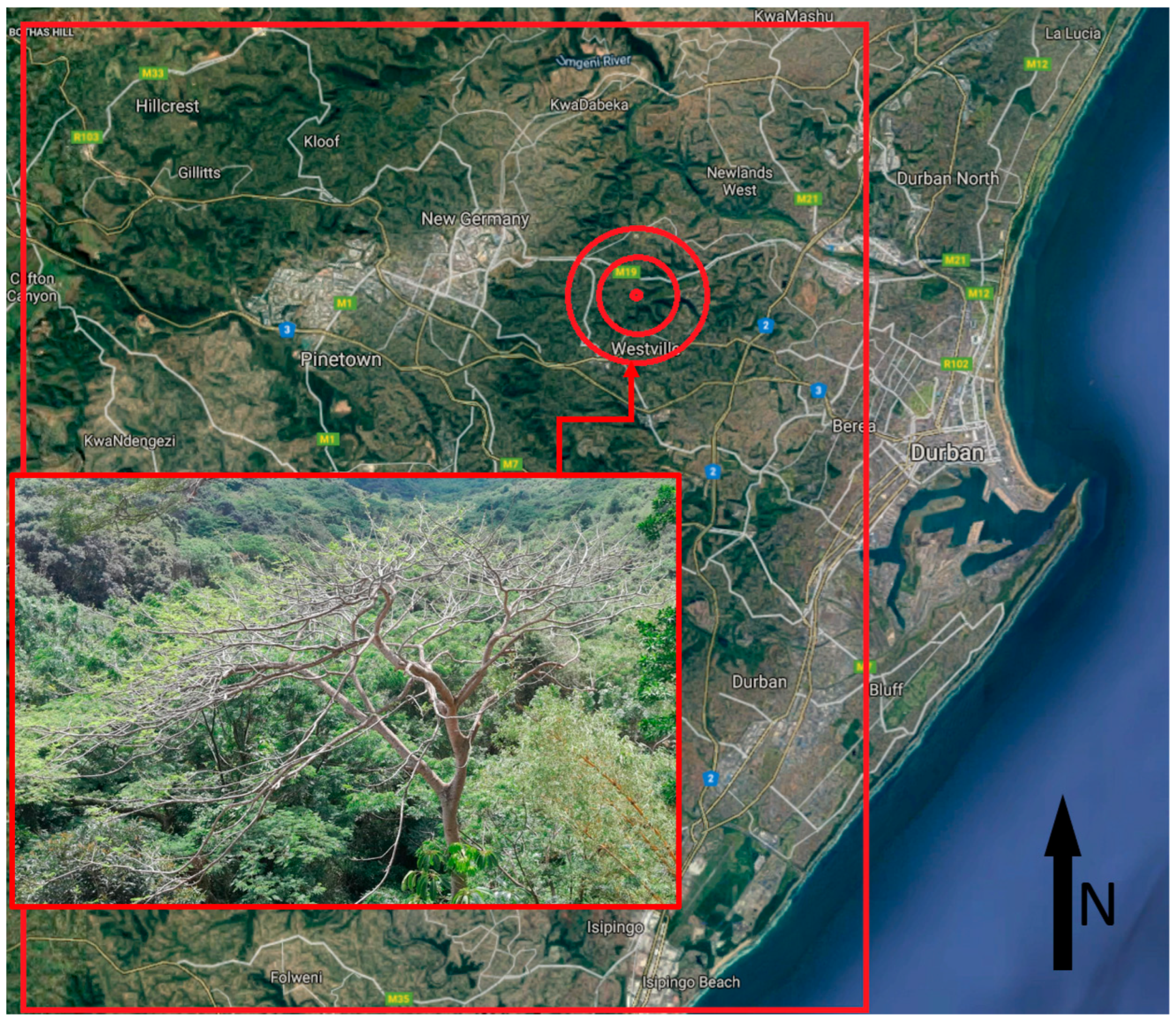
The quarter-degree square where the tree is located (29.75–30.00° S; 30.75–31.00° E) includes a large proportion of the eThekwini Municipality, from the inland areas of Hillcrest and KwaMashu (in places over 600 m above sea level) to coastal areas such as Isipingo Beach (Figure 1). It incorporates both highly built-up areas and several conservation areas protecting forest, grassland, savanna and small water bodies. The climate in the eThekwini area is subtropical to tropical, with rainy summers and drier winters (approximately half the trees lose their leaves then), highs on most days in the twenties (more seldom teens or thirties) in all seasons, and winter lows occasionally in the single digits. The immediate area surrounding the study tree is a hilly suburban setting with natural vegetation on one side, partly invaded by alien trees, and moderately built-up in the opposite direction, with numerous cultivated trees, both indigenous and alien. Overall, from a bird point of view both the natural vegetation and the cultivated trees offer a setting similar to a moderately dense forest, with low availability of both grass and particularly high trees, meaning that savanna and grassland specialists, on the one hand, and dense forest specialists on the other may not find an ideal habitat, but generalists and tree-dependent species which do not require mature forest have plenty of suitable sites. The closest permanent water course is a couple of hundred meters away in a straight line, and the sea is nine kilometers away.
The target individual tree (Delonix regia (Boj. ex Hook.) Raf., in English referred to as Flamboyant, belonging to the legume family/Fabaceae and indigenous to Madagascar, a cultivated alien species in South Africa), was selected based on its large size (ca. 11 m tall), proximity the University of KwaZulu-Natal’s Westville campus, thorough visibility from a comfortable observation site, relatively sparse foliage, and separation from the canopies of neighboring trees. This species loses its leaves in winter and typically flowers in spring (though in some years there are no flowers), with variable pod output. The aspect of flowers and the indehiscent woody pods respectively suggest butterfly pollination and dispersal by medium-sized parrots in its native land [15]. At the study site, there are numerous potential equivalent pollinators but no seed dispersers. During the year of dedicated observations, there were pods remaining from the previous year’s flowers, but there was no flowering.

2.2. Data Collection

Birds’ visits to the tree were recorded by the senior author over one-hour intervals spread as evenly as possible over the duration of one year (between 24 April 2019 and 7 April 2020), with the intention of collecting data at all times of day (as long as the one-hour interval fell entirely during daylight). The observer was located approximately 6 m away from the closest branches, and 12 m away from the furthest, and in a concealed location so as not to influence bird behavior. Bird species, behavior, compass direction where coming from and flying off to, the minute of the hour when landing and taking off, and the size of the branch where perching on (1 small branches (<2 cm diameter); 2 medium (2–10 cm); 3 large (10–20 cm); 4 main trunk (>20 cm)) were all noted (branch size estimated by comparison with known bird body size). While some photographic records were made, it was impossible to visually record all visiting birds in a consistent way, so the emphasis was on making notes on every single visiting bird, which was successfully achieved. The presence of other organisms on the tree (notably butterflies) was also noted minute by minute. Butterfly activity in the tree space (flight within one meter of the tree) could not be recorded minute by minute and was categorized as none (0), low (1; butterflies present for less than 10 of the 60 min), moderate (2; 10–20 min), or high (>20 min). Additionally, cloud cover was estimated visually to the closest 5%; rainfall was visually recorded as either soft, moderate or heavy; temperature, wind direction and wind speed were recorded from the website weather.com at the beginning of each observation hour for the ‘Westville, KwaZulu-Natal’ locality. To calculate time since sunrise and day length, the beginning and end of astronomical twilight were recorded for all days with observation data from the website www.dateandtime.com. As the tree is deciduous, with leaflets falling off before the leaf rachis falls, the percentage of leaflets still on the tree was visually estimated to the closest 5%. Circular variables such as wind direction, as well as the direction of bird flight (from which cardinal point, prior to perching, and to which, upon leaving), were broken down into two variables each: a north–south component (‘northness’) and a west–east component (‘eastness’) [16,17]. Similarly, seasonality, which is also circular, was broken down into an equinoctial and a solstitial component.
To place the diversity of birds observed as described above in the context of the broader bird diversity of the study area, in addition to these dedicated observation hours, the occurrence of birds (1) on the study tree, (2) on other trees/ground/structures within 20 m of the study tree, and (3) in flight within 20 m of the study tree were noted whenever possible between April 2010 and September 2025. Information on other bird species occurring within (4) 1 km, (5) 2 km, and (6) within the same quarter-degree square as the study tree were derived from the authors’ observations between April 1999 and September 2025, as well as from the iNaturalist (www.inaturalist.org) and eBird (ebird.org) platforms (accessed during 10–20 October 2025), noting at each level how many of the species were only recorded once (potentially accidental occurrences).

2.3. Data Analysis

The relationships between environmental variables, bird activity and butterfly activity were investigated using correlation, regression (linear or quadratic, whichever one had higher R2 value) and generalized multiple regression analyses in IBM SPSS ver. 30.0.0.0. Percentage variables were arcsine transformed. CANOCO 5 [18] was used to carry out canonical correspondence analysis to explain the presence of bird species on the basis of multiple explanatory variables and visualize the links between these in the form of two-dimensional plots. Variable inclusion here was being guided by the results of the previous analyses to avoid collinearity. To avoid overstating the effect of environmental variables on species that only visited the tree once or twice (and so were well-aligned with the conditions on those rare occasions), two CANOCO ordinations were performed, one using bird species data only for those species that visited on at least three occasions, and one analyzing bird families rather than species and thus pooling the data for rare species at family level. To investigate the influence of bird body size on bird visit parameters, average body weight values for the observed species were derived from a regional reference book [19] and used in a regression analysis against the (i) average size category values for the branches used as perches (treated as ordinal) during each visit to the tree and (ii) average visit duration.

3. Results

In the quarter-degree square where the study tree is located, 416 bird species have been recorded, 53 of which only once. Of the total of 416 species, 106 belong to families never recorded within 20 m of the study tree—typically waterbirds and grassland birds for whom the environment surrounding the study tree would not be suitable. Within 2 km of the study tree, 249 species were recorded: 178 of these occurring within 1 km of the study tree, and 139 within 20 m, of which 39 (mostly raptors, swifts, and a few waterbirds) were only seen in flight, while 100 were actually on trees, on the ground or on structures in this 20 m radius area. On the actual study tree, over the 15 years of incidental observations, 81 species were recorded, of which 47 were recorded during the dedicated observation hours. The birds observed within 20 m of the tree represented as much as 49% of the raptors known from the entire quarter-degree square; for perching birds, this percentage was 36%, while for water birds it was a mere 11% for this last group, all seen in flight only. All these species are documented in Supplementary Table S1.
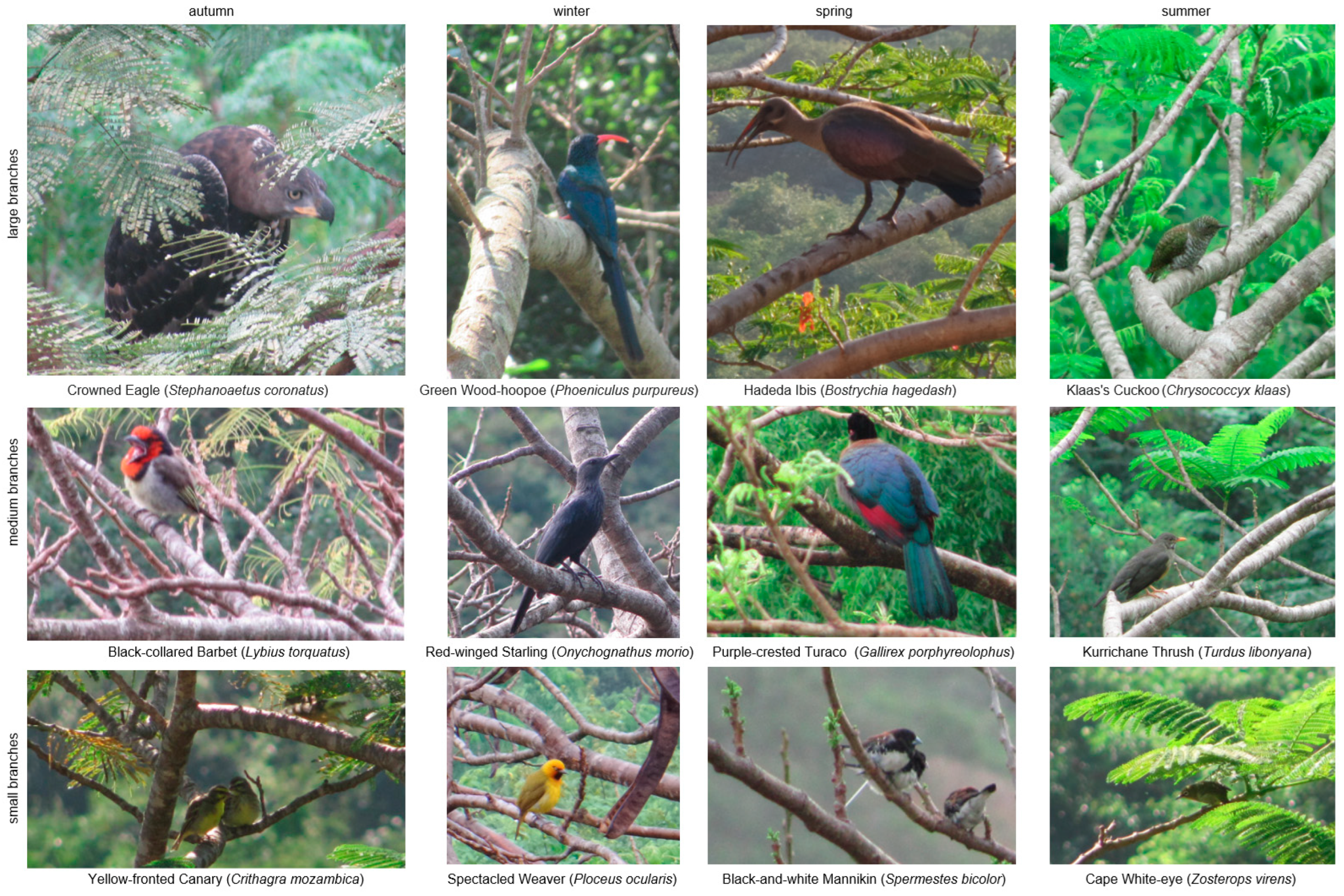
Of the 47 species recorded during the dedicated observation hours, the most common six accounted for over half of the 636 bird visits. These were the Common Bulbul, Black-bellied Starling, Cape White-eye, Ashy Flycatcher, Fork-tailed Drongo and Purple-crested Turaco (some photos in Figure 2). Of these, the Ashy Flycatchers were seen nesting on a nearby man-made structure, while the other five species presumably also nested nearby, although this was not confirmed. Among the species with intermediate occurrence values (6–32 visits), one can distinguish some that only visited in flocks on a couple of instances only (e.g., Black-and-white Mannikin), while others were typically solitary (e.g., Collared Sunbird). Of the species that can be classified as rare (five or fewer visits), nearly half visited once only.
The number of visits was well correlated overall with the number of minutes, hours and seasons when the species were recorded (Table 1), the most important deviations having to do with seasonality (see specific patterns mentioned below when describing and discussing the results of the CANOCO analyses). The vast majority of the bird visits were shorter than one minute; the longest visit was by the largest species recorded (Hadeda Ibis, 17 min). Several species visited the tree as more than one individual at a time. Starlings and mannikins were often present in numbers (up to seven), while turacos typically move around in fours, although all four were never recorded on the tree at the same time. Less than one in three bird visits involved any of the recorded behaviors, as follows. During 112 visits, birds were observed feeding, during 28, calling, while beak cleaning, territorial displays, the collection of nest material, rain bathing, or the feeding of another individual were noted in less than ten instances each. Of the 108 one-hour observation intervals, 40 had zero bird visits, while others had multiple bird visits, with over ten species present within the hour in six cases.
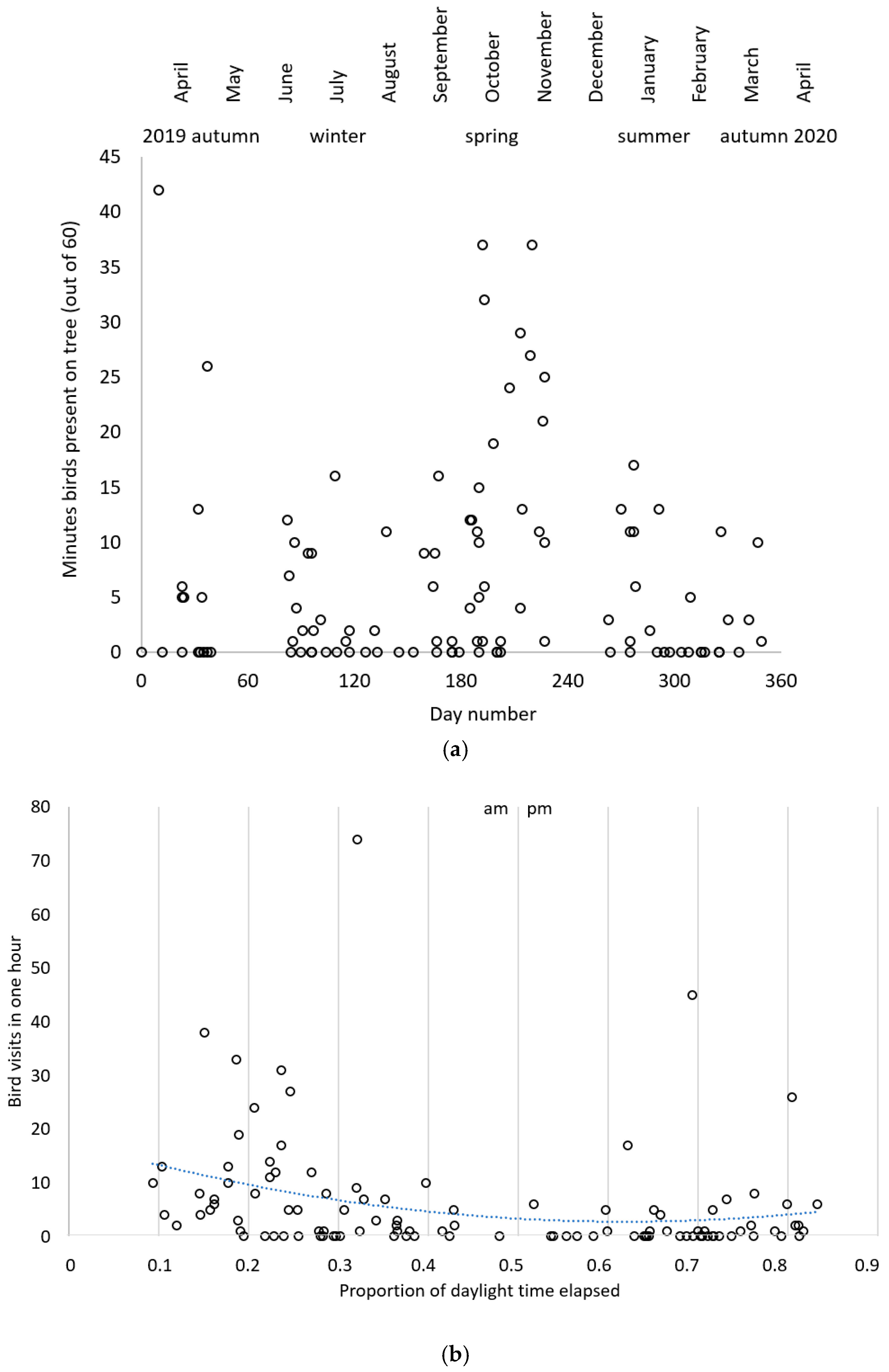
Time of day and daylength were significantly correlated to bird activity (either bird species richness, number of visits, or total number of minutes in an hour when birds were present on the tree; Table 2). More specifically, day length (indicating seasonal changes) was positively correlated with the amount of time birds spent on the tree, while time of day was negatively correlated with all measures of bird activity (Figure 3a). Diel patterns showed high morning activity, peaking one to two hours into daylight, and a second, lower peak towards the late afternoon (Figure 3b). When attempting generalized linear models, this was also the case with a large number of interactions between these factors. However, the overall variation explained was not particularly high—no amount of effort could bring the AIC values below 300, meaning that the overall predictive value of the variables was modest (results not presented). In 231 of the bird visits to the tree, the bird flew back towards the same cardinal point from which it had arrived, whereas in 402 visits it flew off in a different direction (different by at least 90°).
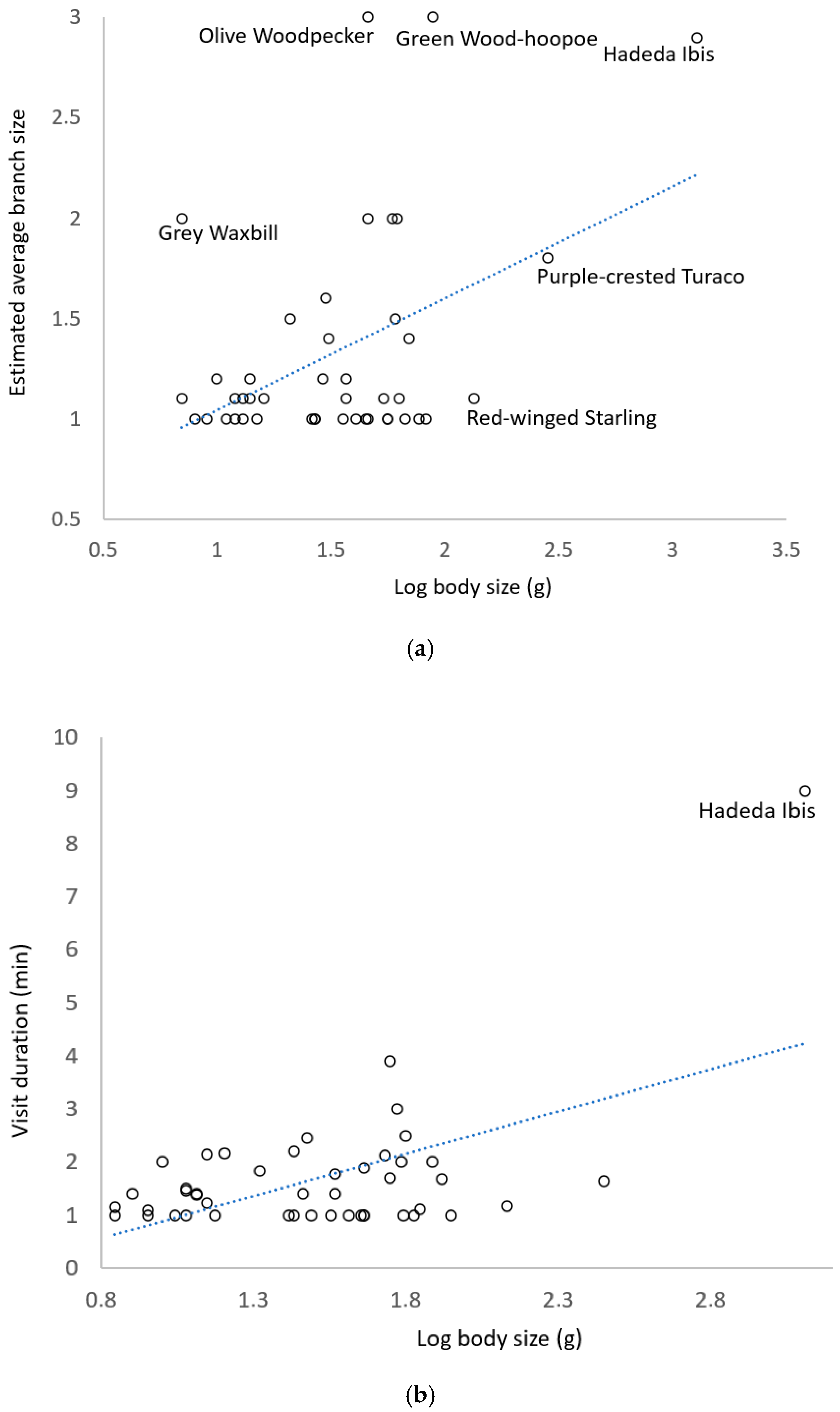
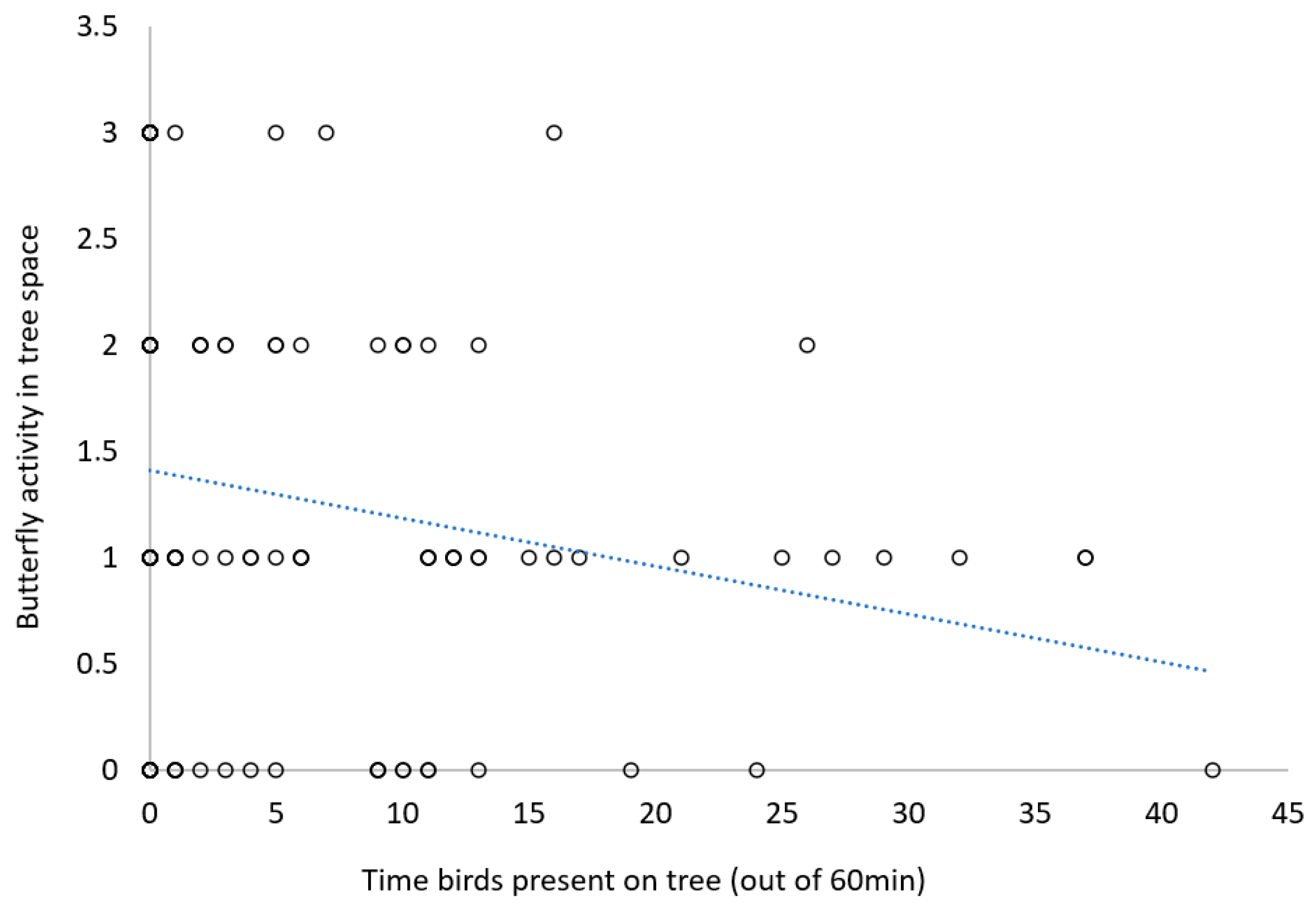
There was a positive correlation between body size and estimated branch size, although there was a broad scatter of points, with some small birds commonly associated with large branches; an even stronger relationship was detected between bird body size and the duration of the visits (Figure 4). Bird visit duration was also influenced by whether a bird is a common resident within the area immediately neighboring the tree, as measured here by the total number of visits (R2 = 0.004; p = 0.006). There was a negative relationship between bird activity and butterfly activity. (Figure 5).
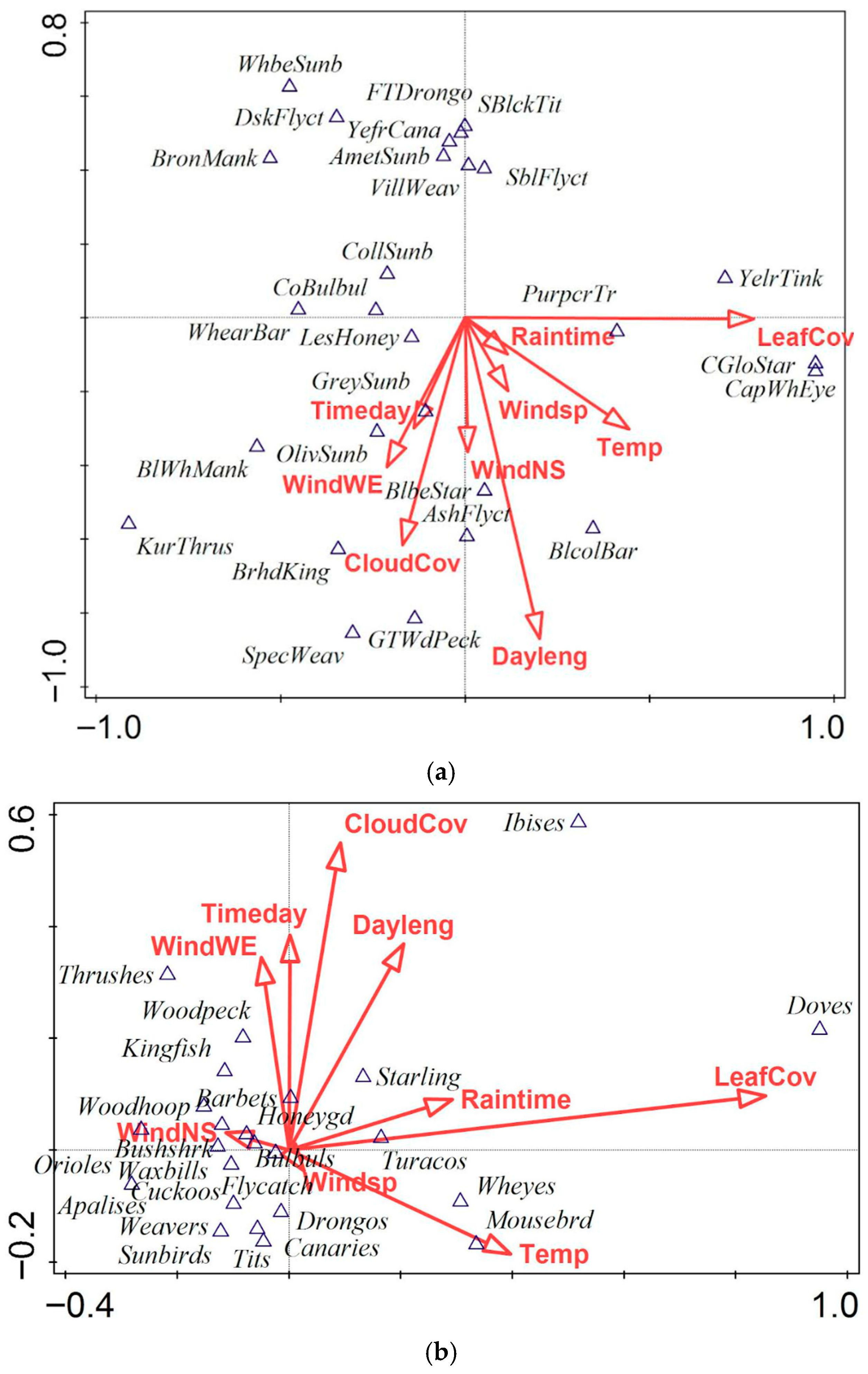
In the CANOCO ordination analyses (Figure 6), some species were associated with specific environmental variables. For example, Cape White-eyes and Yellow-rumped Tinkerbirds were more common on the tree when leaf cover was high, while the opposite was noted in Common Bulbuls and White-eared Barbets. Ashy Flycatchers visited more in spring and summer when they were nesting nearby, reflected in a positive relationship with day length; birds more commonly visiting in winter included the Fork-tailed Drongo, Yellow-fronted Canary, Southern Black Tit, and Southern Black Flycatcher, Amethyst Sunbird and Village Weaver. Birds noted more on cooler days included the Bronze Mannikin and White-bellied Sunbird. Brown-hooded kingfishers tended to visit later in the day. In some cases, this was also visible in the simplified plots where birds were pooled at the family level, either because families were represented by a single species (doves, white-eyes) or because the effects were noted across species (sunbirds and weavers noted more often in winter).

4. Discussion

The patterns in number of species across spatial scales presented here (Supplementary Materials) probably paint an image characteristic of subtropical bird assemblages. The large numbers of single visits listed at each spatial scale could be indicative of passage, exploratory behavior or occasional disorientation, as are the data presented here for bird movement directionality and the large number of very short visits to the study tree. These rare and short visits at various scales all make the data harder to interpret, as they are not associated with other quantifiable behavioral patterns. At the same time, they are precisely the type of rare visits that make birdwatching exciting, with the possibility of unlikely visitors—observable all the way from the regional scale to the scale of a single tree, as was the case here.
The presence and behavior of different birds in the tree space can be discussed in terms of factors that may attract them to the tree, factors repelling them, and other explanations. As mentioned in the description of the study tree, the tree did not flower in the year of dedicated observations, and the pods present from the previous year are not utilized by any seed-consuming species present. In this context, arthropods represent the main food source potentially being exploited on the tree, and indeed most observed behavioral patterns referred to insects being exploited as food. White-eyes were observed gleaning prey from foliage, woodpeckers and wood-hoopoes extracting larvae from the main tree trunk and larger branches, and drongos and flycatchers hawking, all in ways well documented in the literature [19]. Clearer inferences about feeding in these birds could only be made by quantifying prey availability, which was not done here. On a smaller scale, the tree was used as a display stage for territorial or mating-related vocal performances, as was the case most commonly in the Kurrichane Thrush.
The factors deterring birds away from the study tree could include the presence of potential predators (albeit uncommon), species with aggressive behavior, or behavior interpreted by the birds as such. Despite numerous birds of prey being recorded in the vicinity (21 of the 43 raptor species occurring in the entire quarter-degree square were spotted at least once within 20 m of the study tree), they were, in fact, rare occurrences. Only six species were noted perched on the tree over a period of more than fifteen years (e.g., Crowned Eagle in Figure 1), with none during the dedicated observation hours. The only species often circling above the tree, the Yellow-billed Kite, does not commonly take live birds. This means that the importance of raptors should not be overstated here. Among those not usually described as birds of prey, drongos are aggressive birds, known to chase and occasionally feed on other birds [20] (one instance of preying on a Bronze Mannikin also observed nearby in the study area); but during the extensive periods of time when Fork-tailed Drongos were present on the study tree, their coexistence with other birds was overwhelmingly peaceful. Vervet monkeys are known to raid the nests of several of the bird species recorded here (e.g., Purple-crested Turaco, [21]), and have indeed raided the nests of two flycatcher species in the study area (authors’ observations), but their visits during observation hours were insufficient to prove a relationship in this case. Observer’s presence in itself may have been a deterring factor in a couple of instances, but this effect was minimized as much as possible. Heat and strong wind, more prevalent in the early afternoon, are likely factors limiting bird visits to the study tree, with birds known to be typically moving around less under such conditions [10,22].
The high percentage of visits when birds left in a direction different from the one where they came suggests that the study tree was possibly just a stopover station for a large proportion of the visiting birds. This was most obvious in Purple-crested Turacos, which typically moved uphill in the morning, hopping or in short flights from branch to branch. Downhill movements were not recorded here, as the return towards the nearby valley was achieved in a single flight, with no tree visits (observed numerous times both during and outside observation hours).
The association between larger-bodied birds and larger branches, although tested here in a novel way, is unsurprising and has also been elsewhere shown to be linked to feeding niches. While this has been best illustrated in different environments [23], the feeding niches of widespread bird families are fairly consistent across regions and well documented regionally [19]. Larger birds also tend to be characterized by longer visits, which can be expected based on their slower movement and metabolic theory. This is aligned with the way the fractal dimensions of habitats dictate body size in other organisms [24]. Feeding guilds can be defined using such dimensions and tend to show commonalities across biogeographic regions [25]. From a birdwatching point of view, this relationship is relevant in the sense that, for a complete birding list, one has to visit areas rich in different microhabitats, e.g., young growth vs. old growth forest, etc. [26].
Multiple factors that affect the levels of bird activity can also affect bird detection [27]. The architecture and phenology of the tree species studied here, with seasonal loss of leaves and fairly sparse foliage when this is present, meant that detection was practically certain (although a small number of missed bird visits on the tree side opposite to the observation station, in the season when foliage was present, cannot be ruled out). Thus, the patterns observed should be a true reflection of bird activity on the study tree. The nature of the study, where a single tree is considered, means that it cannot be ascertained where the birds are when they are not on the study tree, nor can direct comparisons be made as to what the environmental factors are that make them prefer that location. Nevertheless, diel movements and the observation of the flight direction, in conjunction with the vast literature available, can allow us to make some inferences.
Multivariate methods such as CANOCO are often used to illustrate the alignment of plant species to environmental variables but are less efficient in attaining this for animal species, which are mobile and thus further from representing an ecological community in equilibrium with the environment. Similar methods applied to animals tend to explain low proportions of the variation even when good levels of association with the environmental variables measured would be expected, such as with insects and the traits of their host plants [28]. Even though the amount of variation explained in the analyses presented here was indeed not very high, the ordinations did confirm some known species-specific preferences. Higher-level taxa, such as families, are not particularly useful in plants where there is a lot of vegetative organ variation within a family [29] but appear to be more relevant in birds, where families tend to have clearly defined niches, as shown here.
The substantial percentage of the bird fauna characteristic of the entire quarter-degree square which was spotted on a single tree over the years, but the much smaller percentage observed during the dedicated study hours, is a confirmation of the value of citizen science in documenting the geographic ranges of species but also of how much more effort is needed to make this sort of data meaningful for ecological projects [30]. The low amount of variation explained by the fairly large range of variables recorded only serves to say something that birdwatchers already know: while some birds can be easily seen when and where expected, many encounters with birds remain hard to predict. Far from being a deterrent, this unpredictability may well be one of the key drawing cards of birdwatching [13,31]. The findings reported here regard the times of day and seasonality in bird activity as purely confirmatory [32,33], while once again highlighting the large amount of variability in the data.
The negative relationship between bird activity and butterfly activity can have multiple explanations. Indeed, butterfly activity in the study area peaks around April, when bird activity is low. This pattern may relate to caterpillars completing their development over the summer months and the adults emerging thereafter but also with avoiding bird predation, which is more severe in the tropics compared to the better-studied temperate environments [34]. Butterfly watching is an important component of nature watching, butterflies being arguably the most popular invertebrates to spot, and often butterfly watchers are converted birdwatchers [35]. In this context, the different seasonal peaks offer an opportunity for birdwatchers to focus on this alternative group seasonally. This may be the case in the study area and possibly at other tropical and subtropical locations, while in temperate and cold regions, the difference between the seasonal peaks in these two groups may be subtler [36].
A non-indigenous tree was the study target here, primarily for the convenience of observation. A nearby fig tree (Ficus burkei) could have been a far more meaningful target in the sense that (apart from being indigenous) it provides fruit to a large range of the species observed here. The insect assemblages of indigenous and alien trees also differ, although these differences should not be overstated [37]. However, apart from the more difficult observation angle, the fig tree itself is a lot more difficult to observe due to the dense, opaque, year-round foliage. Nevertheless, besides providing replication and a greater range of values for the variables, the inclusion of multiple trees belonging to different species would no doubt reveal a range of other interesting facts.
Citizen science was mentioned in the introduction, and it may be fitting to end by returning to it. In the six years since the data used here was collected, the number of observations posted annually on the iNaturalist platform has more than doubled [30]. Even more relevant here, eBird, a platform specifically dedicated to birds, is accumulating not just incidental observations but multi-species survey data [38]. It is worth considering to what extent such pre-existing data could have replaced the effort reported here.
An important distinction here is that between structured and unstructured citizen science—whether one is referring to mere incidental observations or observations specifically dedicated to a project. On the one hand, where species richness is concerned, a group effort such as an online collaborative platform is likely to yield better results even with incidental observations alone [39,40]. On the other hand, where the proportional representation of species is concerned, incidental observations tend to be biased, with observers likely to place an emphasis on rare species [41]. Full surveys, however, with numbers of individuals specified would be ideal. In some cases, the location and date posted may be inaccurate, but what is lost in accuracy may be gained in bulk. Photographic records (as typically posted on iNaturalist) would be difficult to obtain for each and every bird visit as reported here, especially for very brief ones. Specific data recorded, such as movement directionality, are not typically recorded on citizen science platforms but could be as part of dedicated projects.
To summarize, a substantial proportion of what was achieved here can now be replicated with data that is already available online, while the rest might be ideally done in the form of a dedicated project affiliated with a large online citizen science platform. It is eminently possible to contribute meaningful data while retaining the joy of birdwatching [42]. But what is particularly encouraged here is the formulation of small-scale citizen science projects targeted at answering specific questions on bird behavior and habitat choice. The broad-scale distribution of bird species has been understood, likely better than that of any other group of organisms. While further refining that understanding, the focus of citizen bird science should perhaps partly shift to fine-scale projects. The first step in that direction should be the identification of key questions of ecological and conservation relevance. Hopefully, this study has been one early step in the identification of the methodological strengths and limitations of such an approach.

Supplementary Materials

The following supporting information can be downloaded at: https://www.mdpi.com/article/10.3390/birds7010016/s1, Table S1: Data on the bird visits reported in the article, with additional data on the birds occurring locally and bird body mass.

Author Contributions

Conceptualization, Ş.P.; methodology, Ş.P.; formal analysis, Ş.P. and E.J.J.S.; data curation, Ş.P.; writing—original draft preparation, Ş.P.; writing—review and editing, Ş.P. and E.J.J.S. All authors have read and agreed to the published version of the manuscript.

Funding

This research received no external funding.

Institutional Review Board Statement

Ethical review and approval were waived for this study due to this being a purely observational study.

Informed Consent Statement

Not applicable.

Data Availability Statement

The original data is provided in the Supplementary Materials.

Conflicts of Interest

The authors declare no conflicts of interest.

References

  1. Moss, S. Birding past, present and future—A global view. In Handbook of the Birds of the World; del Hoyo, J., Elliot, A., Christie, D.A., Eds.; Lynx Edicions: Barcelona, Spain, 2009; Volume 14, pp. 15–45. [Google Scholar]
  2. Hvenegaard, G.T. Human dimensions of wildlife birder specialization differences in conservation involvement, demographics, and motivations. Hum. Dimens. Wildl. 2002, 7, 21–36. [Google Scholar] [CrossRef]
  3. Pahlad, R.; Procheş, Ş. Birdwatching in a southern African context: Explaining highlights on bird lists. S. Afr. Geogr. J. 2021, 103, 111–119. [Google Scholar] [CrossRef]
  4. Randler, C. Users of a citizen science platform for bird data collection differ from other birdwatchers in knowledge and degree of specialization. Glob. Ecol. Conserv. 2021, 27, e01580. [Google Scholar] [CrossRef]
  5. Isaacs, J.C.; Chi, Y.-N. A Travel-Cost Analysis of a Birdwatching Festival: The Grand Isle Migratory Bird Celebration; Louisiana Department of Wildlife and Fisheries: Baton Rouge, LA, USA, 2005. [Google Scholar]
  6. Zárybnická, M.; Sklenicka, P.; Tryjanowski, P. A webcast of bird nesting as a state-of-the-art citizen science. PLoS Biol. 2017, 15, e2001132. [Google Scholar] [CrossRef]
  7. Hedenström, A.; Hedh, L. Seasonal patterns and processes of migration in a long-distance migratory bird: Energy or time minimization? Proc. R. Soc. B Biol. Sci. 2024, 291, 20240624. [Google Scholar] [CrossRef]
  8. Renthlei, Z.; Yatung, S.; Lalpekhlui, R.; Trivedi, A.K. Seasonality in tropical birds. J. Exp. Zool. Part A Ecol. Integr. Physiol. 2022, 337, 952–966. [Google Scholar] [CrossRef]
  9. Ferguson, S.M.; Gilson, L.N.; Bateman, P.W. Look at the time: Diel variation in the flight initiation distance of a nectarivorous bird. Behav. Ecol. Sociobiol. 2019, 73, 147. [Google Scholar] [CrossRef]
  10. Elkins, N. Weather and Bird Behaviour; Poyser: Carlton, UK, 1983. [Google Scholar]
  11. Lee, D.C.; Marsden, S.J. Increasing the value of bird-habitat studies in tropical forests: Choice of approach and habitat measures. Bird Conserv. Int. 2008, 18, S109–S124. [Google Scholar] [CrossRef]
  12. Skutch, A.F. The most hospitable tree. Sci. Mon. 1945, 60, 5–17. [Google Scholar]
  13. Procheş, Ş. Nature observations between tourism, scientific data and pure appreciation. Front. Ecol. Evol. 2024, 12, 1417619. [Google Scholar] [CrossRef]
  14. Kjølsrød, L. You can really start birdwatching in your backyard, and from there the sky’s the limit. In Leisure as Source of Knowledge, Social Resilience and Public Commitment; Leisure Studies in a Global Era; Kjølsrød, L., Ed.; Palgrave Macmillan: London, UK, 2019; pp. 145–168. [Google Scholar]
  15. van der Pijl, L. Ecological developments in leguminous fruits. In Principles of Dispersal in Higher Plants; van der Pijl, L., Ed.; Springer: Berlin, Germany, 1982; pp. 150–159. [Google Scholar]
  16. Batschelet, E. Circular Statistics in Biology; Academic Press: New York, NY, USA, 1981. [Google Scholar]
  17. Duerr, A.E.; Miller, T.A.; Dunn, L.; Bell, D.A.; Bloom, P.H.; Fisher, R.N.; Tracey, J.A.; Katzner, T.E. Topographic drivers of flight altitude over large spatial and temporal scales. Auk 2019, 136, ukz002. [Google Scholar] [CrossRef]
  18. Ter Braak, C.J.F.; Šmilauer, P. CANOCO Reference Manual and User’s Guide: Software for Ordination, version 5.0; Microcomputer Power: Ithaca, Greek, 2012. [Google Scholar]
  19. Roberts, A.; Hockey, P.A.R.; Dean, W.R.J.; Ryan, P. Roberts’ Birds of Southern Africa, 7th ed.; Trustees of the J. Voelcker Bird Book Fund: Cape Town, South Africa, 2005. [Google Scholar]
  20. Rocamora, G.J.; Yeatman-Berthelot, D. Family Dicruridae (Drongos). In Handbook of the Birds of the World; del Hoyo, J., Elliott, A., Christie, D.A., Eds.; Lynx Edicions: Barcelona, Spain, 2009; Volume 14, pp. 172–271. [Google Scholar]
  21. Fry, C.H. Family Musophagidae (Turacos). In Handbook of the Birds of the World; del Hoyo, J., Elliott, A., Sargatal, J., Eds.; Lynx Edicions: Barcelona, Spain, 2001; Volume 6, pp. 246–269. [Google Scholar]
  22. Robbins, C.S. Bird activity levels related to weather. Stud. Avian Biol. 1981, 6, 301–310. [Google Scholar]
  23. Martin, C.A.; Proulx, R. Habitat geometry, a step toward general bird community assembly rules in mature forests. For. Ecol. Manag. 2016, 361, 163–169. [Google Scholar] [CrossRef]
  24. Gunnarsson, B. Fractal dimension of plants and body size distribution in spiders. Funct. Ecol. 1992, 6, 636–641. [Google Scholar] [CrossRef]
  25. Korňan, M.; Holmes, R.T.; Recher, H.F.; Adamík, P.; Kropil, R. Convergence in foraging guild structure of forest breeding bird assemblages across three continents is related to habitat structure and foraging opportunities. Community Ecol. 2013, 14, 89–100. [Google Scholar] [CrossRef]
  26. Adamík, P.; Korňan, M.; Vojtek, J. The effect of habitat structure on guild patterns and the foraging strategies of insectivorous birds in forests. Biologia 2003, 58, 275–285. [Google Scholar]
  27. Best, L.B. Seasonal change in detection of individual bird species. Stud. Avian Biol. 1981, 6, 252–261. [Google Scholar]
  28. Basset, Y.; Dahl, C.; Ctvrtecka, R.; Gripenberg, S.; Lewis, O.T.; Segar, S.T.; Klimes, P.; Barrios, H.; Brown, J.W.; Bunyavejchewin, S.; et al. A cross-continental comparison of assemblages of seed- and fruit-feeding insects in tropical rain forests: Faunal composition and rates of attack. J. Biogeogr. 2018, 45, 1395–1407. [Google Scholar] [CrossRef]
  29. Procheş, Ş.; Sukri, R.S.; Jaafar, S.M.; Sieben, E.J.J.; Zaini, N.H.; Abas, N.; Suhaini, S.N.; Juhairah Manjul, N.M.; Hakeem Julaihi, M.A.; Marshall, D.J.; et al. Soil niche of rain forest plant lineages: Implications for dominance on a global scale. J. Biogeogr. 2019, 46, 2378–2387. [Google Scholar] [CrossRef]
  30. Mason, B.M.; Mesaglio, T.; Barratt Heitmann, J.; Chandler, M.; Chowdhury, S.; Gorta, S.B.Z.; Grattarola, F.; Groom, Q.; Hitchcock, C.; Hoskins, L.; et al. iNaturalist accelerates biodiversity research. BioScience 2025, 11, 953–965. [Google Scholar] [CrossRef]
  31. Ganzevoort, W.; van den Born, R. The thrill of discovery: Significant nature experiences among biodiversity citizen scientists. Bioscience 2019, 71, 1179–1188. [Google Scholar] [CrossRef]
  32. Brown, M. Annual and seasonal trends in avifaunal species richness in a coastal lowlands forest reserve in South Africa. Ostrich 2006, 77, 58–66. [Google Scholar] [CrossRef]
  33. Ramesh, V.; Sundar, P.; Srivathsa, M.; Symes, L. Why is the early bird early? An evaluation of hypotheses for avian dawn-biased vocal activity. Philos. Trans. R. Soc. B Biol. Sci. 2025, 380, 20240054. [Google Scholar] [CrossRef]
  34. Stefanescu, C.; Pla-Narbona, C.; Ubach, A.; Jarrett, C.; Renelies-Hamilton, J.; Colom, P. Predation risk in a migratory butterfly increases southward along a latitudinal gradient. Ecography 2025, 2025, e07308. [Google Scholar] [CrossRef]
  35. Valentine, P.; Birtles, A. Wildlife watching. In Wildlife Tourism: Impact, Management and Planning; Higginbottom, K., Ed.; Common Ground Publishing: Altona, German, 2004; pp. 15–34. [Google Scholar]
  36. Bell, J.R.; Botham, M.S.; Henrys, P.A.; Leech, D.I.; Pearce-Higgins, J.W.; Shortall, C.R.; Brereton, T.M.; Pickup, J.; Thackeray, S.J. Spatial and habitat variation in aphid, butterfly, moth and bird phenologies over the last half century. Glob. Change Biol. 2019, 25, 1982–1994. [Google Scholar] [CrossRef]
  37. Procheş, Ş.; Wilson, J.R.U.; Richardson, D.M.; Chown, S.L. Herbivores, but not other insects, are scarce on alien plants. Austral Ecol. 2008, 33, 691–700. [Google Scholar] [CrossRef]
  38. Rosenblatt, C.J.; Dayer, A.A.; Duberstein, J.N.; Phillips, T.B.; Harshaw, H.W.; Fulton, D.C.; Cole, N.W.; Raedeke, A.H.; Rutter, J.D.; Wood, C.L. Highly specialized recreationists contribute the most to the citizen science project eBird. Ornith. Appl. 2022, 124, duac008. [Google Scholar] [CrossRef]
  39. Bosso, L.; Panzuto, R.; Balestrieri, R.; Smeraldo, S.; Chiusano, M.L.; Raffini, F.; Canestrelli, D.; Musco, L.; Gili, C. Interating citizen science and spatial ecology to inform management and conservation of the Italian seahorses. Ecol. Inform. 2024, 79, 102402. [Google Scholar] [CrossRef]
  40. Stephenson, N.; Pettorelli, N.; Early, R. Occupancy of urban habitats by the Jersey Tiger Moth is revealed by social media data but not traditional monitoring. Ecol. Evol. 2025, 15, e71086. [Google Scholar] [CrossRef]
  41. Di Cecco, G.J.; Barve, V.; Belitz, M.W.; Stucky, B.J.; Guralnick, R.P.; Hurlbert, A.H. Observing the observers: How participants contribute data to iNaturalist and implications for biodiversity science. BioScience 2021, 71, 1179–1188. [Google Scholar] [CrossRef]
  42. Hanson, J.O.; McCune, J.L.; Alamenciak, T.; Bennett, J.R. Increasing the credibility of conservation plans through citizen science. Biol. Cons. 2026, 313, 111552. [Google Scholar] [CrossRef]
Figure 1. Map of the area surrounding the study tree, indicating the quarter-degree square where it is located (29.75–30.00° S; 30.75–31.00° E); the 2 km, 1 km and 20 m radius areas around the study tree are presented, as well as a picture of the study tree itself (inset).
Birds 07 00016 g001
Figure 2. A few representative and/or charismatic species observed on the study tree. Note the size of branches where birds are perched, and how foliage characteristics change seasonally. The Crowned Eagle and Hadeda Ibis pictures presented here were taken on the study tree but outside the dedicated observation hours. All other pictures were taken during the dedicated observation hours. Flowers and pods are visible in the Hadeda Ibis and Spectacled Weaver photos, respectively. The two Yellow-fronted Canaries are perched on small and medium branches, respectively.
Birds 07 00016 g002
Figure 3. Temporal patterns in bird activity on the study tree. Bird presence of the study tree through the year of dedicated observations (a) and the relationship between time of day and the number of bird visits ((b); quadratic fitted curve R2 = 0.073; p = 0.018).
Birds 07 00016 g003
Figure 4. The relationship between body size and bird visit parameters: the size of the branches used as perches (a) (see text for the quantification of branch size; ordinal linear regression R2 = 0.311; p < 0.001) and visit duration (b) (linear regression R2 = 0.311; p < 0.001).
Birds 07 00016 g004
Figure 5. The relationship between bird presence and butterfly activity (linear regression, R2 = 0.42; p = 0.032).
Birds 07 00016 g005
Figure 6. CANOCO ordinations for (a) common bird species and (b) bird families.
Birds 07 00016 g006
Table 1. Summary of the bird species observed on the study tree during the dedicated observation sessions, indicating the number of visits, as well as the number of seasons, months, one-hour intervals and one-minute intervals when recorded (out of a total of 636 visits, four seasons = 12 months, 108 h = 6480 min of observation).
Common NameScientific NameBird Occurrence
visitsseasonsmonthshoursminutes
Common BulbulPycnonotus barbatus614925108
Black-bellied StarlingNotopholia corrusca613513103
Cape White-eyeZosterops virens52471876
Ashy FlycatcherFraseria caerulescens52339113
Fork-tailed DrongoDicrurus adsimilis504102394
Purple-crested TuracoGallirex porphyreolophus464112275
Southern Black FlycatcherMelaenornis pammelaina32471279
Red-winged StarlingOnychognathus morio2522229
Yellow-fronted CanaryCrithagra mozambica24461436
White-eared BarbetStactolaema leucotis23341248
Amethyst SunbirdChalcomitra amethystina2035943
Bronze MannikinSpermestes cucullatus1723534
Mouse-colored SunbirdCyanomitra veroxii1623422
Collared SunbirdHedydipna collaris15461121
Brown-hooded KingfisherHalcyon albiventris1224824
Black-and-white MannikinSpermestes bicolor1112412
Kurrichane ThrushTurdus libonyana1035925
Village WeaverPloceus cucullatus1033614
Black-collared BarbetLybius torquatus1023439
African Dusky FlycatcherMuscicapa adusta924611
Golden-tailed WoodpeckerCampethera abingoni923410
White-bellied SunbirdCinnyris talatala73458
Southern Black TitMelaniparus niger645511
Cape Glossy StarlingLamprotornis nitens633510
Klaas’s CuckooChrysococcyx klaas522311
Spectacled WeaverPloceus ocularis52337
Streaky-headed SeedeaterCrithagra gularis51117
Sombre GreenbulAndropadus importunus41224
Yellow-rumped TinkerbirdPogoniulus bilineatus32333
Lesser HoneyguideIndicator minor32233
Olive SunbirdCyanomitra olivacea32233
Hadeda IbisBostrychia hagedash322227
Cardinal WoodpeckerDendropicos fuscescens32223
Green Wood-hoopoePhoeniculus purpureus31113
Speckled MousebirdColius striatus22222
Black-headed OrioleOriolus larvatus22222
Thick-billed WeaverAmblyospiza albifrons21112
Emerald-spotted Wood-doveTurtur chalcospilos11111
Olive WoodpeckerDendropicos griseocephalus11111
Southern BoubouLaniarius ferrugineus11113
Black-backed PuffbackDryoscopus cubla11111
Grey-headed Bush-shrikeMalaconotus blanchoti11112
Bar-throated ApalisApalis thoracica11111
Violet-backed StarlingCinnyricinclus leucogaster11111
Red-billed FirefinchLagonosticta senegala11111
Grey WaxbillGlaucestrilda perreini11111
Table 2. Pearson correlation values for the relationships between environmental variables and three ways of measuring bird activity on the study tree. Asterisks indicate significance after Bonferroni correction.
Environmental VariablesBird Variables
Number of SpeciesNumber of VisitsTime on Tree
Day length0.1500.2030.265 *
Time of day−0.411 *−0.261 *−0.282 *
Disclaimer/Publisher’s Note: The statements, opinions and data contained in all publications are solely those of the individual author(s) and contributor(s) and not of MDPI and/or the editor(s). MDPI and/or the editor(s) disclaim responsibility for any injury to people or property resulting from any ideas, methods, instructions or products referred to in the content.