1. Introduction
Hospitality organizations are facing increasing pressure to move beyond conventional sustainability approaches to more transformative approaches that generate positive environmental and societal impact (
Yadav & Yadav, 2024;
Jamshaid et al., 2025). While sustainable hospitality has focused on resource saving, waste reduction, and operational efficiency, these practices have become insufficient to tackle climate change, biodiversity loss, and ecosystem degradation (
Bag & Rahman, 2023;
Rodríguez-Espíndola et al., 2022). Drawing on the concept of regeneration, which highlights the restoration of natural ecosystems, the strengthening of human communities, and the creation of long-term value for multiple stakeholders (
Yadav & Yadav, 2024), this shift urges hotels not only to minimize negative impacts but also to develop organizational capabilities to contribute directly to environmental and social renewal (
Yadav & Yadav, 2024;
Rong et al., 2024).
Achieving such a shift would largely depend on leadership. Sustainable leadership is regarded as a strategic capability that emphasizes long-term thinking, stakeholder engagement, environmental accountability, and persistent learning (
T. P. L. Nguyen, 2025;
Alqatan et al., 2025). It is a crucial driver of employees’ environmental awareness and of organizational practices that reconcile economic success with social and environmental objectives (
Waqas et al., 2025;
Zada et al., 2025a). Previous studies have connected sustainable leadership to green innovation, environmental performance, and even eco-friendly organizational outcomes (
Arıcı & Uysal, 2021;
T. P. L. Nguyen, 2025). Less attention has been paid to understanding how leadership enables hotels to nurture a regenerative orientation that surpasses traditional sustainable development targets. Leadership can do this through ecological knowledge. Employees who acquire ecological knowledge would better understand environmental issues, identify opportunities to further improve sustainability, and integrate this knowledge into everyday service operations (
Sebaka et al., 2024;
Mashizi & Escobedo, 2025). However, knowledge alone does not lead to organizational transformation unless it is applied through new practices (
Klein et al., 2021;
Souto, 2021). Such is reflected in sustainability-oriented service innovation in hospitality, through which hotels redesign services, operational procedures, and guests’ experiences to improve environmental performance and deliver further value, all in unison (
Ruiz-Molina et al., 2024;
Marín-García et al., 2025;
Bordian et al., 2026). Through ecological knowledge and sustainability-oriented motivation, they represent complementary organizational forms that could explain the evolution of leadership initiatives into more extensive regenerative outcomes (
T. P. L. Nguyen, 2025;
Ruiz-Molina et al., 2024).
Furthermore, both constructs of sustainability-oriented service innovation and ecological knowledge have been examined as separate entities, which has resulted in limited empirical evidence on appreciating their sequential role in supporting regenerative transformation in hotels (
Ruiz-Molina et al., 2024;
Bordian et al., 2026;
Marín-García et al., 2025). There has yet to be a complete examination of the process by which leadership builds environmental knowledge, applies this knowledge to sustainability-oriented service innovation, and improves the regenerative orientation in the hospitality context (
Yadav & Yadav, 2024;
T. P. L. Nguyen, 2025).
Drawing on dynamic capability theory, the study will propose that sustainable leadership acts as a higher-order organizational capability allowing hotels to acquire ecological knowledge, put this knowledge into practice through sustainability-oriented service innovations, and eventually result in a stronger regenerative orientation (
Teece, 2017;
T. P. L. Nguyen, 2025;
Ruiz-Molina et al., 2024). Through merging previous individual models such as ecological knowledge, sustainability-oriented service innovation, and regenerative orientation using a coherent and single sequential model, the study develops an interlinked framework with other hospitality contexts, which is able, through ecological knowledge and such, to build dynamic capability (
Yadav & Yadav, 2024;
Marín-García et al., 2025).
This study will make three main contributions to the literature. Firstly, it will draw attention to an emerging model of regenerative hospitality by examining regeneration as a strategic organizational outcome rather than focusing solely on the traditional role of sustainability (
Yadav & Yadav, 2024). Secondly, it will offer an exploration of dynamic capability theory in hospitality (
Teece, 2017). And finally, it will offer useful and helpful insights aimed at hospitality managers trying to enhance regenerative transformation by supporting leadership in creating further environmental knowledge along with sustainability-oriented practices (
T. P. L. Nguyen, 2025;
Ruiz-Molina et al., 2024;
Marín-García et al., 2025).
Recent evidence indicates that Egyptian hotels are increasingly adopting sustainability-oriented practices, including energy and water conservation, waste reduction, recycling, green purchasing, and environmental certification, although the extent and sophistication of these practices vary across hotel categories (
Hamza & Rego, 2025). Within this context, four- and five-star hotels provide a particularly relevant setting for examining regenerative transformation. Their relatively complex operations, formalized management systems, high service standards, and resource-intensive activities create both stronger environmental pressures and greater organizational capacity to introduce sustainability-oriented service innovations. Focusing on these hotels, therefore, enables the study to examine how sustainable leadership develops ecological knowledge and translates it into innovative services that support a regenerative orientation.
2. Theoretical Background
Dynamic Capability Theory
This study is grounded in Dynamic Capability Theory (DCT), which elucidates how organizations develop capacities to adapt to change and achieve sustainable competitive advantage (
Teece, 2017;
De Montreuil Carmona, 2023;
T. Nguyen & Le, 2025). DCT posits that superior organizational performance arises not only from possessing valuable resources but also from the ongoing renewal of organizational capabilities (
Shan et al., 2018;
Durman et al., 2025). In the hotel sector, sustainable leadership, environmental learning, and organizational transformation enhance employees’ ecological knowledge, enabling them to identify environmental opportunities and support environmentally responsible decision-making (
T. Nguyen & Le, 2025;
Durman et al., 2025). Sustainability-oriented service innovation further enables hotels to redesign services and operations, thereby generating both environmental and business value (
Shan et al., 2018;
Teece, 2017). Collectively, these capabilities foster a stronger regenerative orientation among hotels aiming to achieve positive environmental and societal impacts (
De Montreuil Carmona, 2023;
Durman et al., 2025). DCT thus provides the theoretical foundation for explaining the sequential relationships examined in this study (
Teece, 2017;
T. Nguyen & Le, 2025).
3. Literature Review
3.1. Sustainable Leadership and Ecological Knowledge
Sustainability-oriented leadership emphasizes long-term environmental responsibility and integrates sustainability into organizations through vision, strategic decision-making, and daily operations (
Nisar et al., 2025;
Alqatan et al., 2025). This approach fosters environmental learning, knowledge sharing, employee engagement in sustainability practices, and a culture of continuous learning (
Khan et al., 2023;
Shafait & Huang, 2024;
Bui, 2024). As a result, employees acquire enhanced ecological knowledge, enabling them to address environmental challenges, identify opportunities for sustainability improvements, and act in an environmentally responsible manner (
Su et al., 2020;
Sebaka et al., 2024;
Rojas Casarrubias et al., 2025). According to Dynamic Capability Theory, leadership represents a higher-order organizational capability that enables organizations to develop valuable competencies, such as ecological knowledge (
Khan et al., 2023;
Sebaka et al., 2024). Research in the hospitality sector demonstrates that sustainability-oriented leadership increases employees’ environmental awareness and provides learning opportunities (
Shafait & Huang, 2024;
Nisar et al., 2025;
Su et al., 2020). Therefore, it is proposed that sustainable leadership enhances ecological knowledge within hospitality organizations. The following hypothesis is thus formulated:
H1. Sustainable leadership positively influences ecological knowledge.
3.2. Sustainable Leadership and Sustainability-Oriented Service Innovation
Service innovation plays a critical role in hotels’ responsive strategies focused on improving environmental and business performance (
Fernando et al., 2019;
Bordian et al., 2026). Sustainable leaders encourage experimentation, cross-functional collaboration, and continuous improvement for employees to redesign services and operational processes and balance environmental responsibility and creation of customer value (
Zada et al., 2025b;
Sebaka et al., 2024;
Ludwig & Macnaghten, 2020). By promoting a sustainability-oriented culture, leaders create favorable conditions for the development of innovative service solutions in response to evolving stakeholder expectations (
Krara et al., 2025;
Bordian et al., 2026). In addition, Dynamic Capability Theory posits that strategic leadership facilitates the deployment of organizational resources and capabilities necessary for continuous innovation and adaptation to environmental conditions (
Sebaka et al., 2024;
Zada et al., 2025a). Consequently, sustainable leadership will spur innovation in sustainability-related services in the hospitality industry. Thus, the following hypothesis is formulated:
H2. Sustainable leadership positively influences sustainability-oriented service innovation.
3.3. Ecological Knowledge and Sustainability-Oriented Service Innovation
Ecological knowledge equips employees with the environmental understanding needed to identify sustainability issues and develop environmental solutions (
Yadav & Yadav, 2024;
Bag & Rahman, 2023). With such knowledge, hotels are enabled to redesign services, improve operations, and implement new practices to enhance environmental performance and customer experiences simultaneously (
Calabrese et al., 2018;
Rodríguez-Espíndola et al., 2022;
Taneja et al., 2023). According to Dynamic Capability Theory, knowledge does not generate strategic value until it is internalized as an organizational capability to encourage innovation (
Klein et al., 2021;
Souto, 2021). With ecological knowledge, hotels are equipped to transform that knowledge into ecological innovation, boosting long-term organizational competitiveness and sustainability (
Rong et al., 2024;
Yadav & Yadav, 2024;
Taneja et al., 2023). Thus, the following hypothesis is formulated:
H3. Ecological knowledge positively influences sustainability-oriented service innovation.
3.4. Sustainability-Oriented Service Innovation and Regenerative Orientation
Sustainability-oriented service innovation has the potential to allow hotels to move from minimizing environmental damage to having a meaningful positive impact on the environment and society (
Calabrese et al., 2018;
Yadav & Yadav, 2024). By incorporating environmental considerations, green operational practices, and innovative customer experiences, hotels can contribute to ecosystem restoration and stakeholders’ well-being through their service design (
Zada et al., 2025a;
Ahmed et al., 2025;
T. P. L. Nguyen, 2025). According to the Dynamic Capability Theory, innovation is an adaptive capability essential for strategic renewal in a changing environment, implying that sustainability-oriented service innovation would enrich hotels’ regenerative orientation, as it would enable guests to shift from traditional sustainable consumption to a regenerative tourism experience (
Arıcı & Uysal, 2021;
Pal & Rao, 2025;
Yadav & Yadav, 2024). Thus, the following hypothesis is formulated:
H4. Sustainability-oriented service innovation positively influences regenerative orientation.
3.5. The Mediating Role of Ecological Knowledge
Although sustainable leadership creates an organizational commitment to sustainability, its actual influence is realized through the development of employees’ environmental capabilities (
T. P. L. Nguyen, 2025;
Alqatan et al., 2025). The leaders encourage environmental learning and knowledge accumulation among employees, which helps them better understand environmental problems and apply the assimilated knowledge to develop new services (
Badar & Siddiquei, 2024;
Sebaka et al., 2024;
Zada et al., 2025b). According to Dynamic Capability Theory, organizational knowledge is a fundamental capability that enables the leader to achieve strategic outcomes (
Qadeer et al., 2025;
Karatepe et al., 2023). Therefore, ecological knowledge is anticipated to explain how sustainable leadership gives rise to sustainability-driven service innovation (
T. P. L. Nguyen, 2025;
Zada et al., 2025a;
Sebaka et al., 2024). Thus, the following hypothesis is formulated:
H5. Ecological knowledge mediates the relationship between sustainable leadership and sustainability-oriented service innovation.
3.6. The Mediating Role of Sustainability-Oriented Service Innovation
The influence of sustainable leadership on regenerative orientation is unlikely to be direct or automatic; sustainable leadership efforts need to be translated into innovative service practices that create environmentally and socially positive service values (
T. P. L. Nguyen, 2025;
Zada et al., 2025b;
Waqas et al., 2025). Sustainability-oriented service innovation would be an organizational mechanism for integrating sustainability-oriented factors into services and operational processes, thereby strengthening a regenerative orientation (
Ruiz-Molina et al., 2024;
Marín-García et al., 2025;
Souto, 2021). Given that, sustainability-oriented service innovation would therefore play an intermediate role for sustainable leadership and regenerative orientation variables (
Neutzling et al., 2018;
Klewitz & Hansen, 2014;
Jamshaid et al., 2025). Thus, the following hypothesis is formulated:
H6. Sustainability-oriented service innovation mediates the relationship between sustainable leadership and regenerative orientation.
3.7. Sustainability-Oriented Service Innovation as a Mediator Between Ecological Knowledge and Regenerative Orientation
Ecological knowledge provides sufficient information about the ecosystem to enable one to make decisions about sustainability, but it must be converted into an innovative service for environmental initiatives to have value for the organization (
Souto, 2021;
Rodríguez-Espíndola et al., 2022). Sustainability-oriented service innovation is the resource that can translate knowledge of an ecologically sound system into environmental, regenerative, and sustainable actions (
Ruiz-Molina et al., 2024;
Marín-García et al., 2025;
Yadav & Yadav, 2024). Hence, it is proposed that sustainability-oriented service innovation mediates the relationship between ecological knowledge and regenerative orientation (
Ruiz-Molina et al., 2024;
Marín-García et al., 2025). Thus, the following hypothesis is formulated:
H7. Sustainability-oriented service innovation mediates the relationship between ecological knowledge and regenerative orientation.
3.8. Sequential Mediating Roles of Ecological Knowledge and Sustainability-Oriented Service Innovation
In summary, the Dynamic Capability Theory posits that the evolution of organizational capabilities entails sequential and complementary, but not isolated, processes (
T. P. L. Nguyen, 2025;
Zada et al., 2025a). First, sustainable leadership fosters the development of ecological knowledge, which, in turn, fosters sustainability-oriented service innovation (
T. P. L. Nguyen, 2025;
Ruiz-Molina et al., 2024;
Marín-García et al., 2025). Furthermore, ecological knowledge and sustainability-oriented service innovation ultimately strengthen a regenerative orientation by enabling hotels to generate positive environmental and societal value (
Yadav & Yadav, 2024;
Marín-García et al., 2025). In sum, ecological knowledge and sustainability-oriented service innovation jointly elucidate the mechanism by which sustainable leadership drives the regenerative transformation of hospitality organizations (
Ruiz-Molina et al., 2024;
T. P. L. Nguyen, 2025;
Yadav & Yadav, 2024). Thus, the following hypothesis is formulated:
H8. Ecological knowledge and sustainability-oriented service innovation sequentially mediate the relationship between sustainable leadership and regenerative orientation.
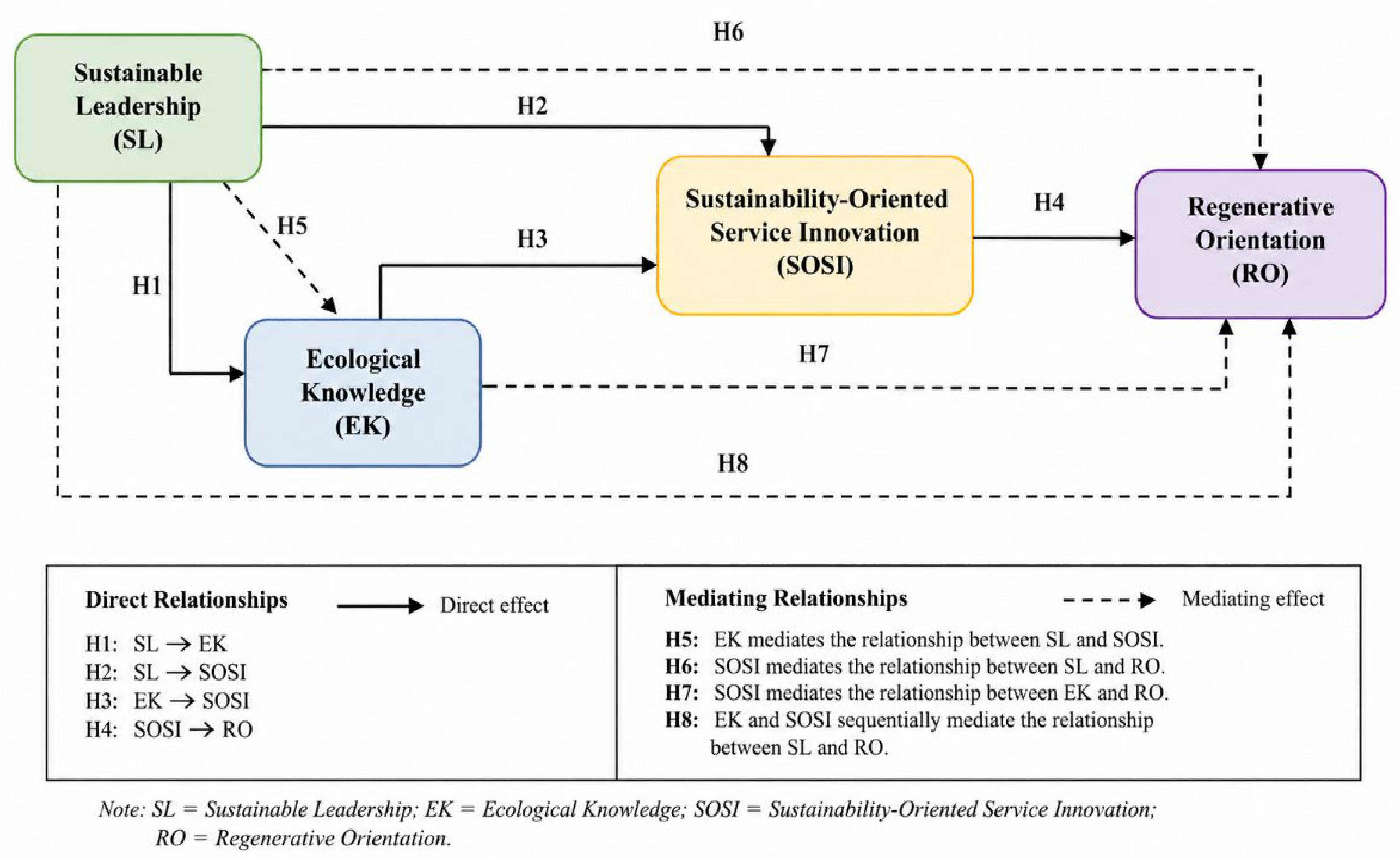
The proposed conceptual framework and the hypothesized direct and mediating relationships are illustrated in
Figure 1.
4. Methodology
4.1. Research Design and Sample
To examine the relationships among Sustainable Leadership (SL), Ecological Knowledge (EK), Sustainability-Oriented Service Innovation (SOSI), and Regenerative Orientation (RO) in the hospitality industry, a quantitative, cross-sectional research design was employed as this design is appropriate for examining theoretically specified relationships among variables at a particular point in time (
Creswell & Creswell, 2018). The target population consisted of employees working in four- and five-star hotels in Egypt, since sustainability measures are increasingly part of management practices there. The hotels were selected based on their evident commitment to sustainability and environmental management, as confirmed during initial contact with hotel management.
The study population comprised employees working in four- and five-star hotels located in Sharm El-Sheikh and Hurghada, two of Egypt’s major tourism destinations with a high concentration of upscale resort hotels. The study therefore did not seek to cover all four- and five-star hotels across Egypt, but focused specifically on these two destinations. Employees from different operational and managerial departments and hierarchical levels were approached to capture diverse perspectives on sustainable leadership, ecological knowledge, sustainability-oriented service innovation, and regenerative orientation. This approach enhanced the heterogeneity of the sample within the defined study population, although the findings should be interpreted within the geographical boundaries of the selected destinations.
A purposive sampling technique was used to select respondents. This sampling technique is appropriate when participants are selected for their specific knowledge or experience relevant to the phenomenon under investigation (
Campbell et al., 2020). Participants were therefore recruited from employees working in the selected four- and five-star hotels who had sufficient familiarity with hotel operations and sustainability-related practices. This ensured that respondents could provide informed assessments of sustainable leadership, ecological knowledge, sustainability-oriented service innovation, and regenerative orientation.
Data were collected between January and April 2026 using a structured, self-administered online questionnaire. The survey link was distributed electronically to eligible employees working in four- and five-star hotels in the selected Egyptian destinations. Online administration facilitated access to a relatively large and geographically dispersed sample. Invitations to take part were sent to employees from a variety of operational and managerial departments, including the front office, housekeeping, food and beverage, engineering, human resources, and administration. Of the 520 questionnaires distributed, 435 were returned, and 420 were considered valid for inclusion in the final analysis, yielding a response rate of 80.8%. An a priori power analysis was conducted using G*Power 3.1.9.7 (
Faul et al., 2009) to determine the minimum required sample size. Using a medium effect size (f
2 = 0.15), a significance level of α = 0.05, statistical power of 0.95, and three predictors, the analysis indicated a minimum required sample size of 119 respondents. Accordingly, the final sample of 420 valid responses substantially exceeded this threshold, providing adequate statistical power for the subsequent analyses.
Participation was optional and anonymous. The participants were made aware that the data would be used solely for academic research and that no personally identifiable information would be collected. These measures ensured confidentiality, reduced social desirability bias, and improved the quality of the data.
4.2. Measures
The survey instrument consisted of two sections. The first section measured the primary study constructs, while the second collected demographic information, including age, educational level, job position, work experience, and hotel classification.
All constructs were measured using a five-point Likert scale ranging from 1 (strongly disagree) to 5 (strongly agree). Before the main data collection, the questionnaire was subjected to expert review to assess its content and face validity. Expert evaluation is an established procedure for assessing the relevance, clarity, and representativeness of measurement items (
Haynes et al., 1995). Three academic experts in hospitality management and two senior hotel managers with experience in sustainability practices evaluated the relevance, clarity, comprehensibility, and contextual appropriateness of the items. Based on their feedback, minor wording modifications were made to improve clarity and contextual relevance while preserving the original conceptual meaning of the validated scales. Given that all measurement items were adapted from previously validated scales and the expert review resulted only in minor wording modifications rather than substantive changes to the constructs or items, a separate pilot study was not conducted. The complete measurement items for all constructs are presented in
Appendix A.
The definitions and measurement sources of the study constructs are summarized in
Table 1.
4.3. Data Analysis
Data were analyzed using JASP (0.98.1). and covariance-based structural equation modeling (CB-SEM) implemented through the lavaan package. Following the recommended two-stage approach to structural equation modeling, the measurement model was evaluated before testing the structural model (
Anderson & Gerbing, 1988). First, confirmatory factor analysis (CFA) was conducted to assess the measurement model. Construct reliability was evaluated using standardized factor loadings, Cronbach’s alpha (CA), composite reliability (CR), and McDonald’s omega (ω). Convergent validity was examined using the average variance extracted (AVE), whereas discriminant validity was assessed using the Fornell–Larcker criterion (
Fornell & Larcker, 1981) and the heterotrait–monotrait ratio (HTMT;
Henseler et al., 2015). Harman’s single-factor test was also conducted to assess potential common method bias (
Podsakoff et al., 2003). All measurement items were entered simultaneously into an unrotated exploratory factor analysis and constrained to a single factor. The resulting single factor accounted for 47.02% of the total variance, below the commonly used 50% threshold, suggesting that common method bias was unlikely to be a dominant concern in the data. Multicollinearity was also assessed among the predictor constructs using tolerance and variance inflation factor (VIF) statistics. The tolerance values ranged from 0.440 to 0.600, while VIF values ranged from 1.666 to 2.273. These values were well within commonly accepted thresholds, indicating that multicollinearity was not a concern in the analysis.
The model’s predictive relevance was additionally assessed using a 10-fold cross-validation procedure (
Stone, 1974). Predictive Q
2 values were calculated by comparing the prediction errors for each endogenous construct against a mean-based benchmark; Q
2 values greater than zero indicate that the model produced lower prediction errors than the benchmark and therefore demonstrated out-of-sample predictive relevance.
Second, structural equation modeling (SEM) was used to test the proposed hypotheses and structural relationships among the study constructs. Model fit was evaluated using multiple goodness-of-fit indices, including the chi-square/degrees of freedom ratio (χ
2/df), comparative fit index (CFI), Tucker–Lewis index (TLI), incremental fit index (IFI), root mean square error of approximation (RMSEA), and standardized root mean square residual (SRMR), following recommended practices in the SEM literature (
Hu & Bentler, 1999). The significance of the direct and indirect effects was assessed using bias-corrected bootstrapping with 5000 resamples. Mediation effects were evaluated by examining the indirect effects and their corresponding 95% bootstrap confidence intervals, with an indirect effect considered significant when its confidence interval did not include zero (
Preacher & Hayes, 2008). Statistical significance was set at
p < 0.05.
5. Results
As shown in
Table 2, the standardized factor loadings range from 0.756 to 0.878, all above the recommended threshold of 0.70. Hence, indicator reliability is satisfactorily established. Furthermore, Cronbach’s alpha (CA) ranges from 0.903 to 0.923, and Composite Reliability (CR) ranges from 0.891 to 0.917, all exceeding the 0.70 cut-off. Similarly, the Average Variance Extracted (AVE) is proposed to be at least 0.50; it ranges from 0.620 to 0.689, exceeding this threshold. This indicates good internal consistency, reliability, and convergent validity across all constructs.
Discriminant validity was assessed using the Fornell–Larcker criterion (
Table 3). The square roots of the AVE for Sustainable Leadership (0.787), Ecological Knowledge (0.791), Sustainability-Oriented Service Innovation (0.825), and Regenerative Orientation (0.830) were all greater than their corresponding inter-construct correlations, with the highest observed correlation reaching 0.712. These results provide evidence of satisfactory discriminant validity and confirm that the constructs are empirically distinct.
Table 4 shows the discriminant validity testing conducted in the HTMT analysis, with all HTMT ratios below the conservative threshold of 0.85 (and, under a liberal threshold, 0.90) for each construct relative to the others.
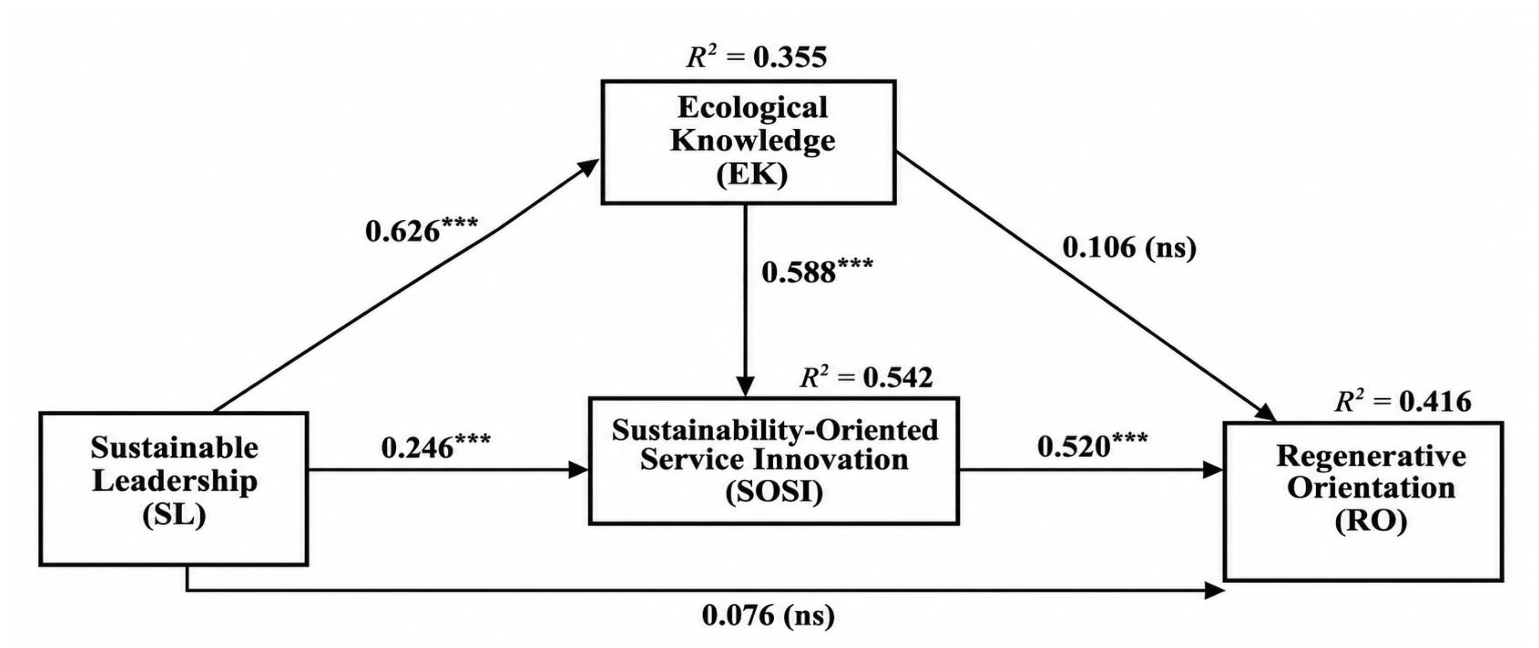
Table 5 refers to the structural model results, which indicated that Sustainable Leadership had a significant positive effect on Ecological Knowledge (β = 0.626,
p < 0.001), supporting H1. It also exerted a significant positive influence on Sustainability-Oriented Service Innovation (β = 0.246,
p < 0.001), supporting H2. Similarly, Ecological Knowledge significantly enhanced Sustainability-Oriented Service Innovation (β = 0.588,
p < 0.001), confirming H3. Sustainability-Oriented Service Innovation, in turn, had a significant positive effect on Regenerative Orientation (β = 0.520,
p < 0.001), supporting H4.
Table 6 shows that The mediation results indicate that Ecological Knowledge plays a significant mediating role in the relationship between Sustainable Leadership and Sustainability-Oriented Service Innovation, which supports H5. Sustainability-Oriented Service Innovation also mediates the link between Sustainable Leadership and Regenerative Orientation, supporting H6. Similarly, it mediates the relationship between Ecological Knowledge and Regenerative Orientation, thereby confirming H7. In addition, the sequential indirect effect of Sustainable Leadership on Regenerative Orientation, mediated by Ecological Knowledge and Sustainability-Oriented Service Innovation, was significant (β = 0.191,
p < 0.001), supporting H8.
Table 7 shows that model fit was good, with fitness indices exceeding the recommendation thresholds (CFI = 0.991, TLI = 0.990, IFI = 0.991, NFI = 0.964, GFI = 0.951) and error indices well below the acceptability limits (RMSEA = 0.027; SRMR = 0.025). The normed chi-square value (χ
2/df = 1.31) was also excellent. Taken together, it can be concluded that the proposed conceptual model is a good fit to the data and its further exploration is justified.
Table 8 shows that the structural model explained 35.5% of the variance in ecological knowledge (EK), 54.2% in sustainability-oriented service innovation (SOSI), and 41.6% in regenerative orientation (RO). Moreover, the cross-validated Q
2 values were positive for all endogenous constructs (EK = 0.349, SOSI = 0.537, and RO = 0.405), demonstrating predictive relevance beyond the in-sample explanatory power of the model.
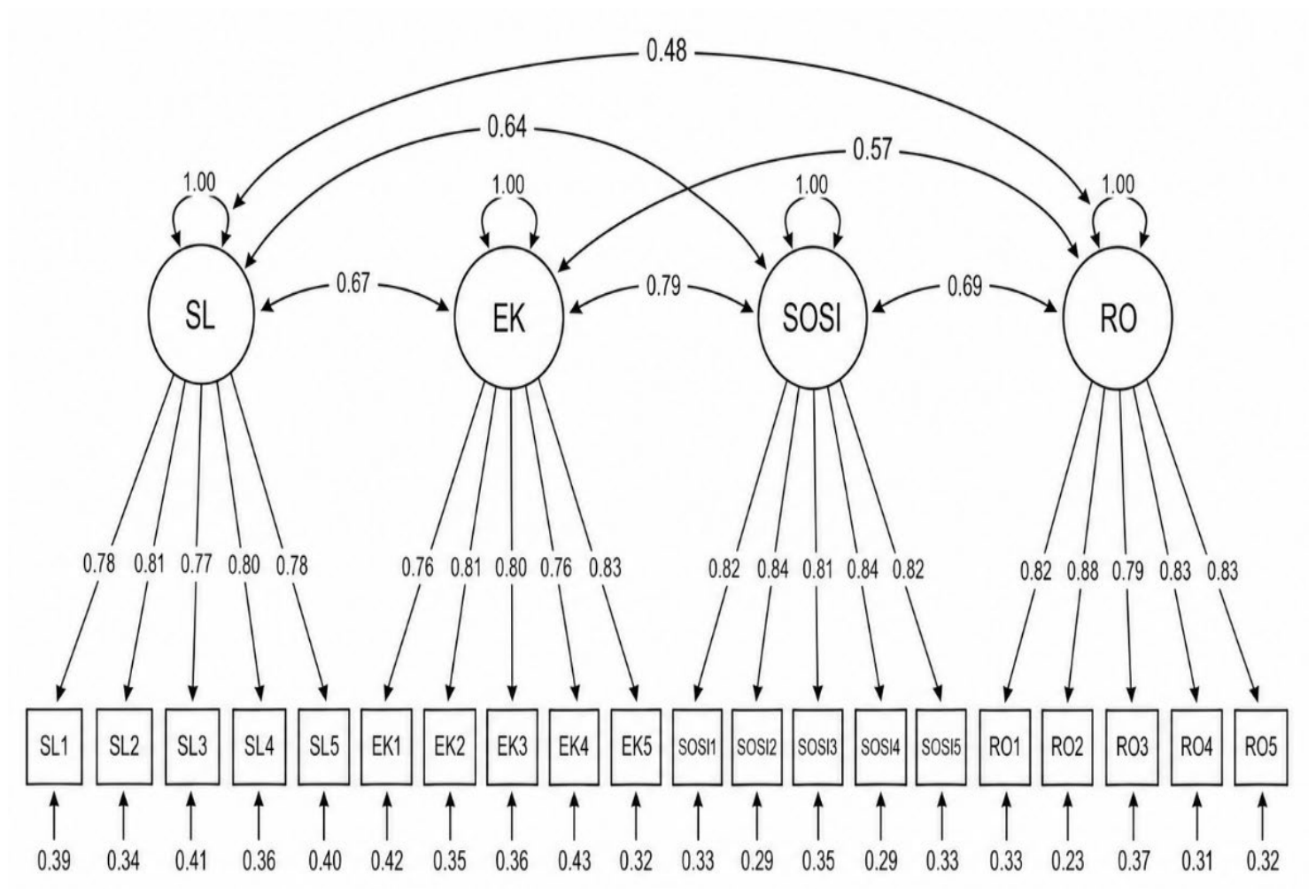
Figure 2 presents the confirmatory factor analysis (CFA) measurement model, illustrating the relationships between the latent constructs and their respective measurement items. Following validation of the measurement model, the hypothesized structural relationships were examined.
Figure 3 presents the structural model and corresponding path coefficients, providing a direct empirical representation of the conceptual framework proposed in
Figure 1. The results show that Sustainable Leadership influences Regenerative Orientation primarily through Ecological Knowledge and Sustainability-Oriented Service Innovation, while the direct effects of Sustainable Leadership and Ecological Knowledge on Regenerative Orientation were not statistically significant.
6. Discussion
This study shows that sustainable leadership plays a central role in building employees’ ecological knowledge within hospitality organizations. In practice, this means that when leaders consistently communicate sustainability values, model responsible behavior, and reinforce environmental awareness, they create a work climate that helps employees learn, absorb, and apply ecological knowledge in their daily tasks. This result is in line with
McCann and Holt (
2010), who linked sustainable leadership with organizational learning and long-term value creation, and with
Bordian et al. (
2026), who emphasized the importance of leadership in strengthening ecological competencies.
The findings also indicate that both sustainable leadership and ecological knowledge contribute meaningfully to sustainability-oriented service innovation. Rather than treating innovation as a result of management support alone or employee knowledge alone, the results suggest it emerges from their interaction. Sustainable leadership encourages openness to new ideas and continuous improvement, while ecological knowledge gives employees the understanding they need to design environmentally responsible service solutions. Together, these two resources help hospitality organizations turn sustainability goals into practical and innovative service practices. This interpretation is consistent with
Bordian et al. (
2026) and
Montesdeoca-Calderón et al. (
2024), who highlighted the role of knowledge and the integration of sustainability in driving innovation.
Another key result is the positive effect of sustainability-oriented service innovation on regenerative orientation. This is an important point because regenerative orientation goes beyond simply reducing harm; it is about creating positive ecological and social value while strengthening the organization’s long-term resilience. The findings suggest that service innovation is the channel through which hospitality organizations translate sustainability commitments into regenerative outcomes. By redesigning services, improving resource use, and introducing environmentally restorative practices, hotels can move beyond conventional sustainability toward a more regenerative approach. This agrees with
Fischer-Kreer et al. (
2025), who argued that regenerative hospitality depends on innovation that helps restore rather than merely preserve environmental and social systems.
Notably, sustainable leadership and ecological knowledge did not exert significant direct effects on regenerative orientation once sustainability-oriented service innovation was included in the model. Although this may appear inconsistent with research suggesting that leadership and environmental knowledge can directly facilitate sustainability-related organizational outcomes, the finding indicates that regenerative orientation represents a more distal organizational outcome that is unlikely to emerge from leadership influence or employees’ ecological knowledge alone (
Nisar et al., 2025). Sustainable leadership may establish strategic direction and sustainability priorities, while ecological knowledge provides employees with the cognitive resources needed to recognize and respond to environmental challenges; however, neither necessarily translates into regenerative organizational practices unless these resources are converted into concrete service innovations. In the hospitality context, this distinction is particularly important because regenerative orientation requires observable changes in service design, resource use, and value creation rather than sustainability awareness or leadership commitment alone (
Shafait & Huang, 2024). Thus, the unsupported direct relationships should not be interpreted as evidence that sustainable leadership and ecological knowledge are unimportant. Instead, they suggest that their effects are primarily transmitted through sustainability-oriented service innovation, which functions as the proximal mechanism through which leadership and knowledge are transformed into regenerative outcomes (
Su et al., 2020).
Finally, the mediation results constitute one of the study’s strongest theoretical contributions. Together with the nonsignificant direct effects discussed above, they show that regenerative orientation is primarily reached through an indirect capability-building process rather than through leadership or ecological knowledge in isolation. Sustainable leadership strengthens ecological knowledge, which subsequently supports sustainability-oriented service innovation; this innovation, in turn, provides the immediate organizational mechanism through which regenerative orientation is developed. This pattern suggests that the transition toward regenerative hospitality is not driven by a single factor but by the combined, progressive effects of leadership, knowledge development, and innovation. Taken together, the findings provide a clearer picture of how hospitality organizations can move toward regenerative transformation in a realistic and structured way.
7. Theoretical Implications
This study makes several important theoretical contributions to the hospitality and sustainability literature. First, it extends research on sustainable leadership by showing that leadership fosters regenerative hospitality through a capability-building process rather than through direct organizational outcomes alone. By identifying ecological knowledge as an immediate outcome of sustainable leadership, the study supports
McCann and Holt’s (
2010) view that sustainable leaders create long-term organizational value by developing employees’ competencies rather than depending only on managerial action.
Second, the study advances research on sustainability-oriented service innovation by positioning ecological knowledge as a critical organizational resource that helps translate sustainability principles into innovative service practices. Although prior studies have recognized the importance of environmental knowledge and sustainable innovation, the present findings bring these constructs together within a unified framework and demonstrate how knowledge underpins sustainability-oriented innovation in hospitality organizations.
Third, this research contributes to the emerging regenerative hospitality literature by empirically demonstrating that regenerative orientation is achieved largely through sustainability-oriented service innovation. Rather than treating regenerative orientation as an independent outcome, the findings suggest that it develops through continuous innovation processes that convert environmental knowledge into regenerative organizational practices. This perspective extends the conceptual arguments of
Fischer-Kreer et al. (
2025) by providing empirical evidence of the organizational mechanisms underpinning regenerative transformation.
Finally, the study introduces and validates a sequential mediation framework linking sustainable leadership, ecological knowledge, sustainability-oriented service innovation, and regenerative orientation. By showing that these capabilities operate as an integrated process rather than as isolated factors, the study provides a more comprehensive theoretical explanation of how hospitality organizations move from sustainability initiatives toward regenerative development. This integrated framework offers a stronger conceptual basis for future hospitality research on organizational sustainability and regenerative transformation.
8. Practical Implications
The study offers several practical implications for hotel managers and decision-makers seeking to support regenerative transformation within hospitality organizations. First, hotels should invest in sustainable leadership by providing development programs that strengthen environmental responsibility, long-term thinking, and employee empowerment. In practice, leaders need to communicate sustainability goals clearly and create space for employees to take part in environmentally responsible decisions.
Second, managers should focus on building employees’ ecological knowledge through ongoing training, sustainability workshops, and knowledge-sharing activities. When employees develop stronger environmental awareness and competencies, they become better able to identify sustainability challenges and contribute new service ideas that support the organization’s goals.
Third, hospitality organizations should implement systems that encourage sustainability-oriented service innovation. This can be achieved by giving employees the support and opportunity to test and implement environmentally responsible ideas in day-to-day service delivery. In this sense, innovation should be treated as a core part of sustainability strategy rather than as a separate operational task.
Finally, the findings suggest that regenerative orientation depends on the joint development of leadership, ecological knowledge, and service innovation. For that reason, managers should adopt an integrated sustainability approach that develops these capabilities in tandem rather than relying on isolated environmental initiatives. Such an approach is more likely to create lasting environmental, social, and organizational value while also strengthening the competitiveness of hospitality organizations.
9. Conclusions
This study examined the role of sustainable leadership in shaping regenerative orientation within the hospitality industry by bringing ecological knowledge and sustainability-oriented service innovation into a single conceptual framework. Based on data gathered from employees in four- and five-star hotels in Egypt and analyzed using covariance-based structural equation modeling (CB-SEM), the results showed that sustainable leadership has a significant positive effect on employees’ ecological knowledge and sustainability-oriented service innovation. The findings also revealed that ecological knowledge strengthens sustainability-oriented service innovation, which, in turn, contributes positively to a regenerative orientation. In addition, the mediation analysis indicated that regenerative orientation emerges through a sequential organizational process in which sustainable leadership fosters ecological knowledge, ecological knowledge promotes sustainability-oriented service innovation, and these capabilities together generate regenerative outcomes.
The study adds to hospitality sustainability research by showing that regenerative transformation is not the result of isolated organizational capabilities, but of how these capabilities work together in an integrated way. By integrating leadership, ecological knowledge, service innovation, and a regenerative orientation into a single empirical model, the study provides a more complete explanation of how hospitality organizations can move beyond conventional sustainability toward regenerative development. These findings offer both theoretical contribution and practical direction for hospitality organizations that aim to create lasting environmental, social, and organizational value through integrated sustainability strategies.
10. Limitations and Future Research
Despite its contributions, this study has several limitations that warrant consideration. First, the use of a cross-sectional design restricts the ability to draw causal inferences among the study variables. Future research would benefit from longitudinal designs that can capture how sustainable leadership, ecological knowledge, sustainability-oriented service innovation, and regenerative orientation develop over time.
Second, the study was limited to four- and five-star hotels in Egypt. While this context offers meaningful insights into the hospitality sector, it may constrain the generalizability of the findings. Future studies should test the proposed model in other countries, hospitality segments, and organizational contexts to examine its cross-cultural and situational robustness.
Third, the model focused on ecological knowledge and sustainability-oriented service innovation as the main mechanisms linking sustainable leadership to regenerative orientation. Subsequent research could broaden this framework by incorporating additional organizational capabilities, such as green organizational culture, environmental commitment, digital sustainability capabilities, or organizational learning, to develop a richer understanding of regenerative transformation.
Finally, regenerative orientation was examined at the organizational level. Future research may explore its effects on broader outcomes, including environmental performance, service excellence, customer loyalty, employee well-being, and long-term organizational resilience, to provide a more comprehensive view of regenerative hospitality.