
Tourism-Led Infrastructure Development: Towards a Theoretical Framework Through Grounded Theory Synthesis


Highlights
- This study addresses an important but little studied dimension of the tourism-growth nexus and the often forgotten dimension of the circulating relationship between tourism and infrastructure development. In fact, little research has examined how tourism dynamics act as a catalyst for broader infrastructure development. Our research fills this theoretical gap by examining the thesis of infrastructure development through tourism (TLID).
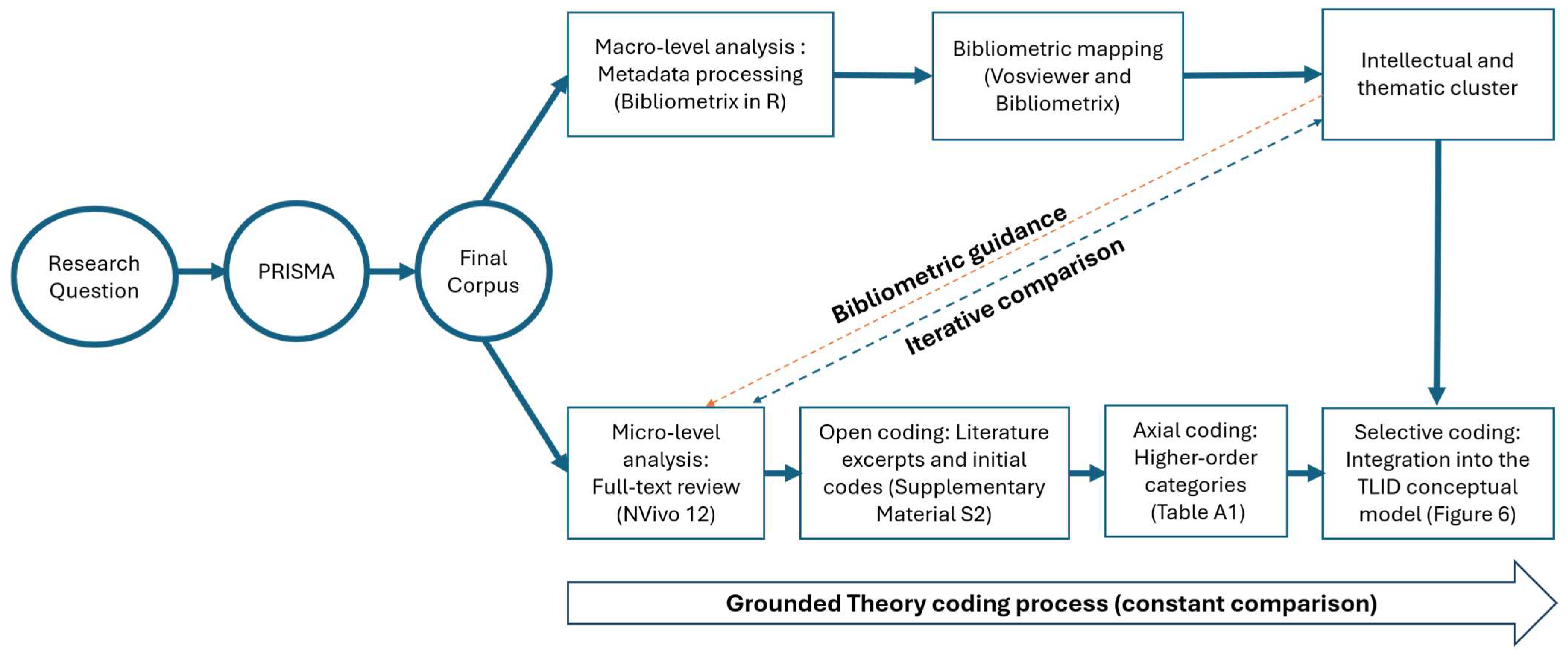
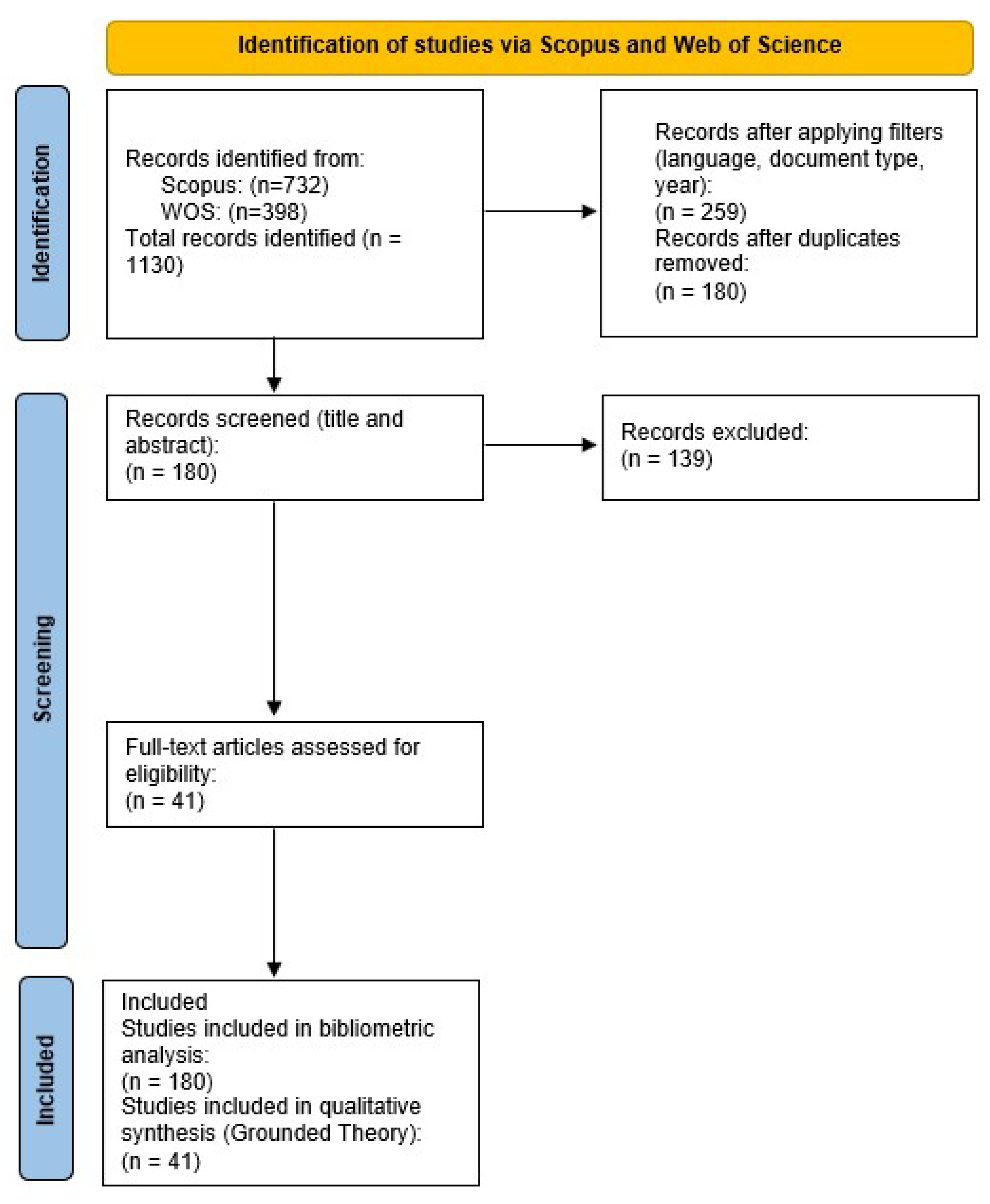
- Using a double methodological approach focused on bibliometric analysis of recent research and theoretical synthesis inspired by grounded theory, this study ends with the development and presentation of a new theoretical model, called TLID model.
- Bidirectionality: We confirm and characterize the bidirectional relationship between tourism and infrastructure, going beyond traditional one-way models.
- Explanatory mechanisms: We identify the main drivers of this relationship, in particular economic incentives, territorial competitiveness strategies and public governance dynamics.
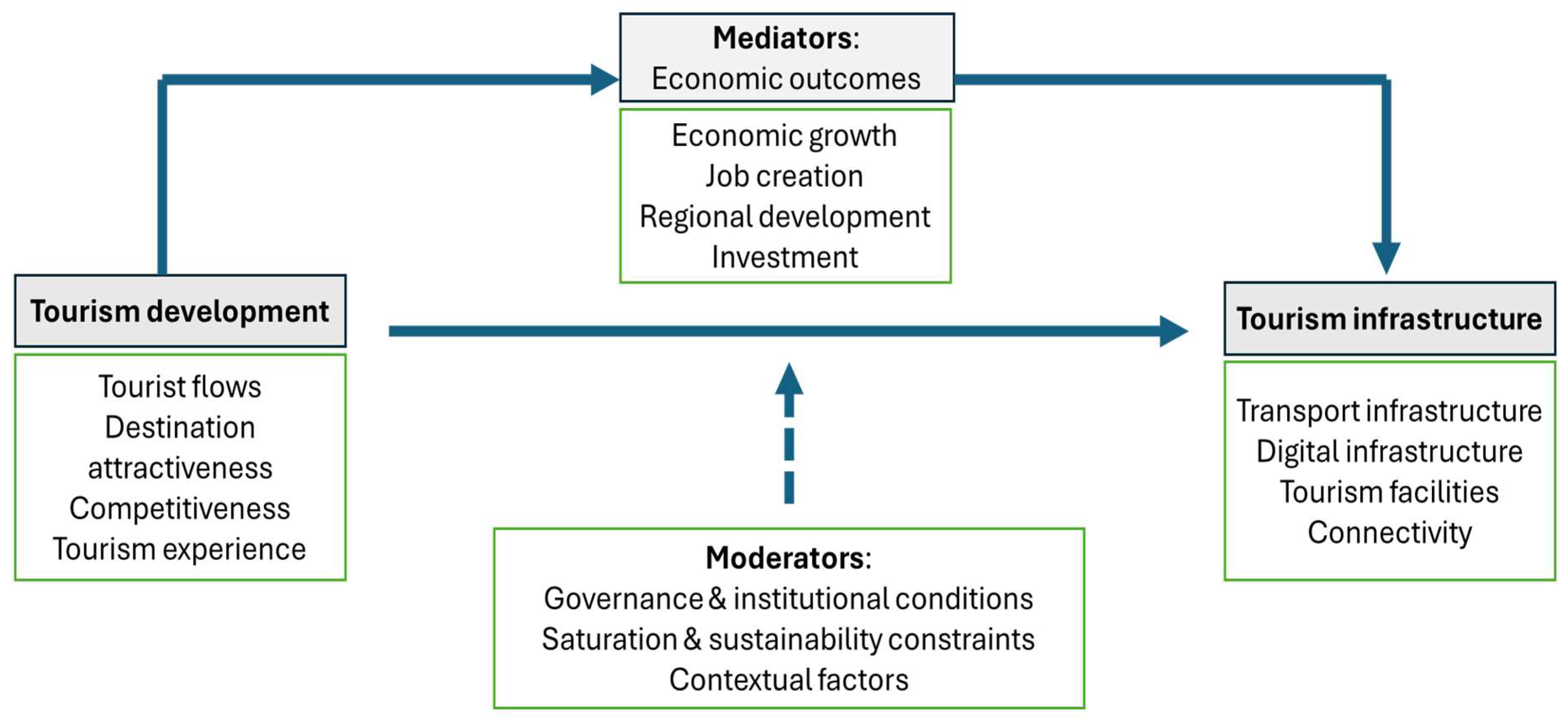
- Integrative framework: We propose a new conceptual framework for the TLID that explains how tourism growth stimulates infrastructure investment beyond strictly tourism-related facilities.
Abstract
1. Introduction
- To map the intellectual structure of TLID research;
- To identify the main thematic categories and bibliometric trajectories within the field;
- To develop, based on the literature, a well-founded explanation of the mechanisms linking tourism and infrastructure investment;
- To propose an integrative conceptual framework capable of explaining the roles that shape this relationship.
- (RQ1)
- What are the main ideas in the tourism and infrastructure literature?
- (RQ2)
- How has this literature changed, both in terms of its impact and its ideas?
- (RQ3)
- What are the reasons for the development of new infrastructure due to tourism?
- (RQ4)
- To what extent can we apply these mechanisms to different stages of destination development?
2. Materials and Methods
2.1. Research Design
2.2. Data Collection and Search Strategy
2.3. Screening Process and Study Selection
2.4. Data Analysis
3. Results
3.1. Bibliometric Findings
3.1.1. Overview
3.1.2. Leading Journals and Authors
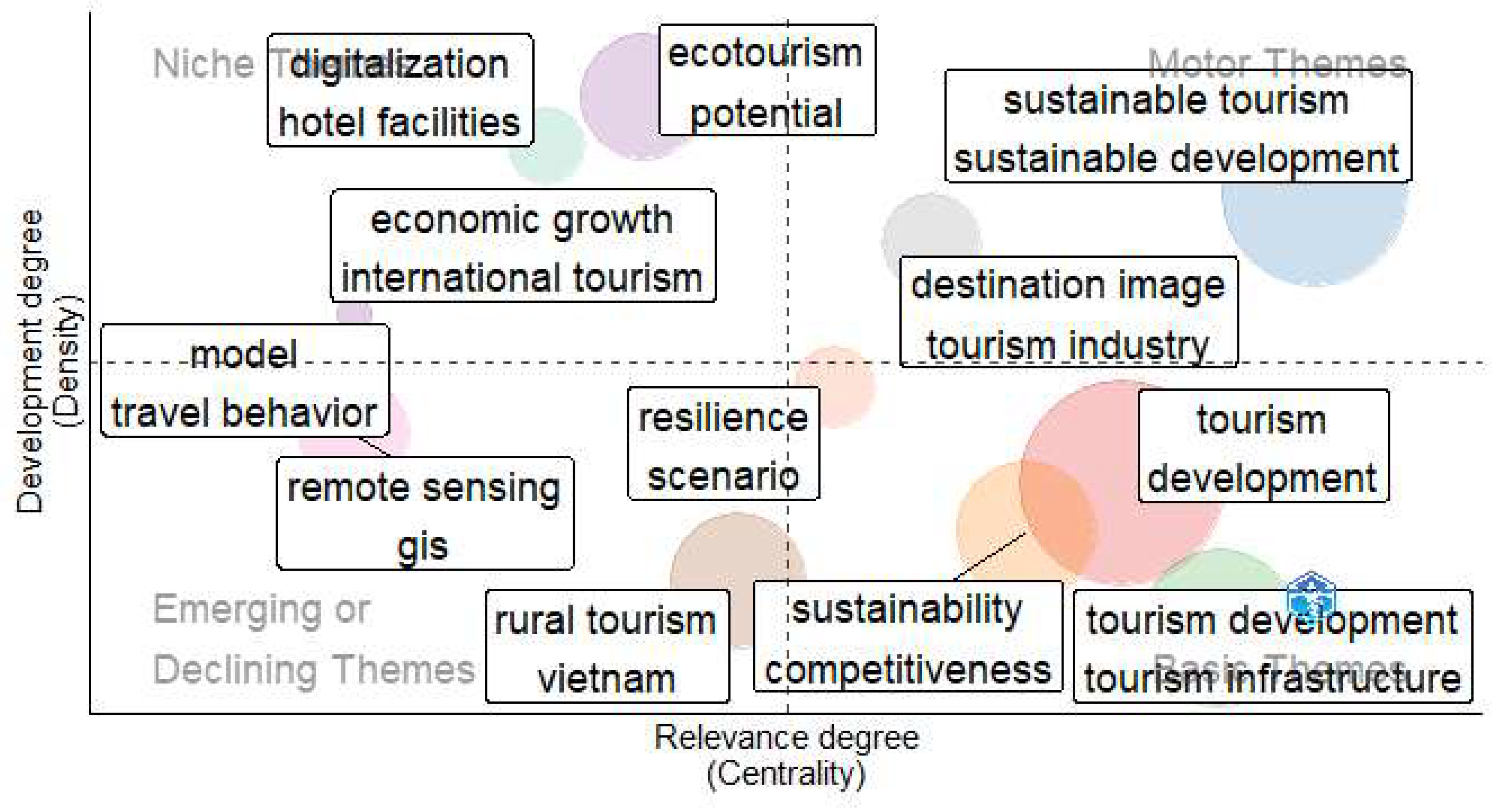
3.2. Conceptual Structure of the Field
3.3. Grounded Theory Results
3.3.1. Open and Axial Coding: Category Structure
- Tourism infrastructure as an enabling driver
- Tourism and economic performance outcomes
- Saturation effects and nonlinear dynamics
- Institutional and governance conditions
- Contextual and spatial heterogeneity
3.3.2. Selective Coding: Emergent Conceptual Model
4. Discussion
4.1. Theoretical Contributions
4.2. Developed vs. Emerging Destinations
4.3. Model Transferability
4.4. Practical Implications
4.5. Limitations
5. Conclusions and Research Agenda
Supplementary Materials
Author Contributions
Funding
Institutional Review Board Statement
Informed Consent Statement
Data Availability Statement
Acknowledgments
Conflicts of Interest
Abbreviations
| GDP | Gross domestic product |
| PRISMA | Preferred Reporting Items for Systematic reviews and Meta-Analyses |
| SLR | Systematic literature review |
| TLID | Tourism-led infrastructure development |
Appendix A

| Axial Coding | Open Coding |
|---|---|
| Tourism infrastructure as enabling driver | Transport infrastructure enabling tourism flows |
| Infrastructure improving regional connectivity | |
| Investing in digital tourism infrastructure | |
| Investing in transport infrastructure | |
| Infrastructure as prerequisite for tourism development | |
| Infrastructure supporting tourism service | |
| Integrating digital technologies | |
| Developing digital tourism infrastructure | |
| Tourism & economic performance outcomes | Driving economic growth |
| Linking tourism and economic growth | |
| Generating employment | |
| Increasing tourist flows | |
| Increasing tourist flows via digitalization | |
| Enhancing country attractiveness | |
| Enhancing regional attractiveness | |
| Strengthening tourism attractiveness through investment | |
| Enhancing tourist experience | |
| Enhancing tourist experience through ICT | |
| Shaping tourist experience through infrastructure | |
| Enhancing international competitiveness | |
| Infrastructure deficit reducing destination competitiveness | |
| Infrastructure enhancing destination competitiveness | |
| Driving regional development through tourism | |
| Enabling regional connectivity | |
| Infrastructure enabling regional development | |
| Contributing to GDP | |
| Facilitating infrastructure investment | |
| Infrastructure deficit requiring investment | |
| Local development through tourism investment | |
| Targeted infrastructure investment for tourism | |
| Tourism-driven infrastructure investment | |
| Supporting regional tourism development | |
| Saturation & nonlinear effects | Diminishing returns of tourism-induced infrastructure |
| Capacity strain due to overtourism | |
| Carrying capacity threshold | |
| Expositing capacity limitations | |
| Infrastructure development constrained by ecological capacity | |
| Infrastructure constrained by carrying capacity | |
| Operational carrying capacity | |
| Underutilized infrastructure capacity | |
| Addressing environmental pressures | |
| Creating infrastructure pressure | |
| Ecological pressure from tourism infrastructure | |
| Infrastructure pressure from tourism demand | |
| Intensifying tourism pressure | |
| Need to manage tourism flows and pressure | |
| Environmental coast of infrastructure development | |
| Environmental infrastructure systems | |
| Inadequate environmental infrastructure | |
| Lack of environmental planning | |
| Moderating environmental influence | |
| Need for context-specific infrastructure (geographical and environmental constraints) | |
| Supporting environmental conservation | |
| Tourism development vs. Environmental degradation | |
| Infrastructure alone insufficient for tourism development | |
| Misalignment between infrastructure and tourist needs | |
| Tourism shadow effect | |
| Institutional & governance conditions | Governance enabling infrastructure effectiveness |
| Governance supporting infrastructure effectiveness | |
| Moderating role of governance | |
| Promoting collaborative governance | |
| Strengthening governance structures | |
| Weak tourism governance | |
| Improving policy coordination | |
| Infrastructure enabling policy effectiveness | |
| Managing stakeholder uncertainty | |
| Coordinating development actors | |
| Driving sustainable tourism through collaboration | |
| Fostering stakeholder collaboration | |
| Enabling institutional stability | |
| Lack of tourism-specific infrastructure limits tourism development | |
| Enabling infrastructure through human capital | |
| Leveraging PPP | |
| Contextual & spatial heterogeneity | Spatial heterogeneity of infrastructure development |
| Spatial inequality in infrastructure-driven tourism | |
| Transport infrastructure shapes spatial distribution of tourism | |
| Need for context-specific infrastructure (geographical and environmental constraints) |
References
- Aarabe, M., Ben Khizzou, N., Alla, L., & Benjelloun, A. (2025). Customer experience management in the tourism sector: Insights from a bibliometric and thematic analysis. Tourism and Hospitality, 6(2), 103. [Google Scholar] [CrossRef]
- Al-Azri, A. K., Ramachandran, N., & Jetti, E. R. (2024). Public private partnership for sustainable tourism in Oman. Journal of Ecohumanism, 3(8), 13003–13012. [Google Scholar] [CrossRef]
- Alcalá-Ordóñez, A., Brida, J. G., & Cárdenas-García, P. J. (2024). Has the tourism-led growth hypothesis been confirmed? Evidence from an updated literature review. Current Issues in Tourism, 27(22), 3571–3607. [Google Scholar] [CrossRef]
- Almeida, A. (2023). Tourism development and economic growth: The Validity of the Tourism-Led Growth Hypothesis for Madeira. RPER, 31–50. [Google Scholar] [CrossRef]
- Al-Mohmmad, S., & Butler, G. (2021). Tourism SME stakeholder perspectives on the inaugural ‘Saudi seasons’: An exploratory study of emerging opportunities and challenges. Tourism and Hospitality Management, 27, 669–687. [Google Scholar] [CrossRef]
- Alonso-Muñoz, S., Torrejón-Ramos, M., Medina-Salgado, M.-S., & González-Sánchez, R. (2023). Sustainability as a building block for tourism–future research: Tourism agenda 2030. Tourism Review, 78(2), 461–474. [Google Scholar]
- Alqaralleh, H., Alsarayreh, A., & Alsaraireh, A. (2025). The asymmetric relationship between tourism and economic growth: A panel quantile ARDL analysis. Economies, 13(4), 97. [Google Scholar] [CrossRef]
- Amaghionyeodiwe, L. A. (2012). Research note: A causality analysis of tourism as a long-run economic growth factor in Jamaica. Tourism Economics, 18(5), 1125–1133. [Google Scholar] [CrossRef]
- Aria, M., & Cuccurullo, C. (2017). bibliometrix: An R-tool for comprehensive science mapping analysis. Journal of Informetrics, 11(4), 959–975. [Google Scholar] [CrossRef]
- Arteeva, V., Sokol, I., Asanova, E., & Ushakov, D. (2022). The impact of digitalization and infrastructure development on domestic tourism in Russia. International Journal of Technology, 13, 1495–1504. [Google Scholar] [CrossRef]
- Balaguer, J., & Cantavella-Jordá, M. (2002). Tourism as a long-run economic growth factor: The Spanish case. Applied Economics, 34(7), 877–884. [Google Scholar] [CrossRef]
- Baloch, Q. B., Shah, S. N., Iqbal, N., Sheeraz, M., Asadullah, M., Mahar, S., & Khan, A. U. (2023). Impact of tourism development upon environmental sustainability: A suggested framework for sustainable ecotourism. Environmental Science and Pollution Research, 30(3), 5917–5930. [Google Scholar] [CrossRef] [PubMed]
- Bardhan, S., & Sarkar, S. (2024). Optimizing tourist flows through operative carrying capacity assessment: The case of Bakkhali coastal tourism, W.B., India. Sustainable Social Development, 2(3), 2550. [Google Scholar] [CrossRef]
- Berbeka, K., Alejziak, W., & Berbeka, J. (2024). Sustainable development goals of Agenda 2030 in the declarations and aims of international tourism organisations. Journal of Travel & Tourism Marketing, 41(1), 142–153. [Google Scholar] [CrossRef]
- Berčák, R., Holuša, J., Trombik, J., Resnerová, K., & Hlásny, T. (2024). A combination of human activity and climate drives forest fire occurrence in central europe: The case of the Czech republic. Fire, 7(4), 109. [Google Scholar] [CrossRef]
- Brida, J. G., Cortes-Jimenez, I., & Pulina, M. (2016). Has the tourism-led growth hypothesis been validated? A literature review. Current Issues in Tourism, 19(5), 394–430. [Google Scholar] [CrossRef]
- Buhalis, D., & Amaranggana, A. (2014). Smart tourism destinations enhancing tourism experience through personalisation of services. In Information and communication technologies in tourism 2015: Proceedings of the international conference in Lugano, Switzerland, February 3–6, 2015 (pp. 377–389). Springer International Publishing. [Google Scholar]
- Burda, T., Zidova, V., & But, T. (2023). Optimising public transport to increase tourist flows. E a M: Ekonomie a Management, 26(4), 167–186. [Google Scholar] [CrossRef]
- Butler, R. (2025). Tourism destination development: The tourism area life cycle model. Tourism Geographies, 27(3–4), 599–607. [Google Scholar] [CrossRef]
- Chan, W. C., Lo, M. C., Ibrahim, W. H. W., Mohamad, A. A., & bin Suaidi, M. K. (2022). The effect of hard infrastructure on perceived destination competitiveness: The moderating impact of mobile technology. Tourism Management Perspectives, 43, 100998. [Google Scholar] [CrossRef]
- Cheung, K. S., & Li, L.-H. (2019). Understanding visitor–resident relations in overtourism: Developing resilience for sustainable tourism. Journal of Sustainable Tourism, 27(8), 1197–1216. [Google Scholar] [CrossRef]
- Clarivate. (2025). Editorial selection process. Clarivate. Available online: https://clarivate.com/academia-government/scientific-and-academic-research/research-discovery-and-referencing/web-of-science/web-of-science-core-collection/editorial-selection-process/ (accessed on 8 May 2026).
- Corbin, J. M., & Strauss, A. (1990). Grounded theory research: Procedures, canons, and evaluative criteria. Qualitative Sociology, 13(1), 3–21. [Google Scholar] [CrossRef]
- De, U. E. D. E., & Ambitieux, C. (2015). Transformer notre monde: Le programme de développement durable à l’horizon 2030. Available online: https://www.ituc-csi.org/IMG/pdf/tudcn_reaction_to_un_2030_agenda_final_fr.pdf (accessed on 7 May 2026).
- Deering, K., & Williams, J. (2025). Approaches to reviewing the literature in grounded theory: A framework. Nurse Researcher, 33(3). Available online: https://journals.rcni.com/nurse-researcher/evidence-and-practice/approaches-to-reviewing-the-literature-in-grounded-theory-a-framework-nr.2020.e1752/abs (accessed on 5 May 2026). [CrossRef] [PubMed]
- Dong, H., & Zeng, J. (2025). Digital empowerment and sustainable tourism: Spatiotemporal coupling coordination analysis of digital technology and high-quality development in China’s a-level scenic spots. Sustainability, 17(22), 10293. [Google Scholar] [CrossRef]
- Donthu, N., Kumar, S., Mukherjee, D., Pandey, N., & Lim, W. M. (2021). How to conduct a bibliometric analysis: An overview and guidelines. Journal of Business Research, 133, 285–296. [Google Scholar] [CrossRef]
- Dwyer, L. (2026). 1 Advantage superiority in destination competitiveness. In Theories and models in tourism and hospitality research (pp. 1–5). CABI GB. Available online: https://books.google.com/books?hl=fr&lr=&id=amK6EQAAQBAJ&oi=fnd&pg=PA1&dq=Dwyer,+L.+(2026).+1+Advantage+Superiority+in+Destination+Competitiveness.+In+Theories+and+Models+in+Tourism+and+Hospitality+Research+(pp.+1-5).+GB:+CABI.&ots=wcAbFBlCLK&sig=caKNOYPkpDwjQ0MZxDe_TCy6s7c (accessed on 5 May 2026).
- Dwyer, L., & Kim, C. (2003). Destination competitiveness: Determinants and indicators. Current Issues in Tourism, 6(5), 369–414. [Google Scholar] [CrossRef]
- Elsevier. (2025). Scopus content policy and selection. Elsevier. Available online: https://www.elsevier.com/products/scopus/content/content-policy-and-selection (accessed on 8 May 2026).
- Fan, F., & Ha, V.-T. (2025). Tourism-led growth or economy-driven tourism growth in Southeast Asian countries. Humanities and Social Sciences Communications, 12(1), 1–17. [Google Scholar] [CrossRef]
- Gavurova, B., Belas, J., Valášková, K., Rigelský, M., & Ivankova, V. (2021). Relations between infrastructure innovations and tourism spending in developed countries: A macroeconomic perspective. Technological and Economic Development of Economy, 27(5), 1072–1094. [Google Scholar] [CrossRef]
- Gherdan, A. E. M., Bacter, R. V., Ciolac, R., Iancu, T., Maerescu, C. M., Dodu, M. A., Chereji, A. I., Herman, V. G., Ungureanu, A., & Bacter, D. P. (2025). Sustainable agritourism development in Romania’s north-west mountain region: A TOPSIS-based evaluation of strategic priorities. Agriculture, 15(6), 601. [Google Scholar] [CrossRef]
- Glaser, B., & Strauss, A. (2017). Discovery of grounded theory: Strategies for qualitative research. Routledge. Available online: https://api.taylorfrancis.com/content/books/mono/download?identifierName=doi&identifierValue=10.4324/9780203793206&type=googlepdf (accessed on 1 May 2026).
- Glaser, B. G. (2016). Open coding descriptions. Grounded Theory Review, 15(2), 108–110. [Google Scholar]
- Ha, L. T. (2025). The role of digital public services in promoting international tourism: Empirical evidence from European regions. European Journal of Innovation Management, 28(3), 848–876. [Google Scholar]
- Hadood, A. A., Saleh, R. A. M. B., & Emgeg, K. A. (2021). Threshold effect of information technology infrastructure on tourism sector development: Evidence from top 10 African destinations. Geo Journal of Tourism and Geosites, 39, 1336–1345. [Google Scholar] [CrossRef]
- Hall, C. M. (2019). Constructing sustainable tourism development: The 2030 agenda and the managerial ecology of sustainable tourism. Journal of Sustainable Tourism, 27(7), 1044–1060. [Google Scholar] [CrossRef]
- Hariguna, T., Ruangkanjanases, A., & Henderi, H. (2021). The moderating effect of destination quality on tourism policy and tourism development. International Journal for Quality Research, 15(2), 469–486. [Google Scholar] [CrossRef]
- Hoa, L. T. H. (2024). Factors affecting sustainable tourism development in Vietnam. Journal of Ecohumanism, 3(4), 1120–1132. [Google Scholar]
- Iamtrakul, P., Le Phuc, T., Hoang Le Nam, H., Pham Minh, T., Kantavat, P., & Raungratanaamporn, I. (2025). Utilizing street-level imagery for advanced evaluation of active mobility performance: A case study of urban tourism patterns in Phuket, Thailand. City, Territory and Architecture, 12(1), 38. [Google Scholar] [CrossRef]
- Junaid, I., Widjaja, H. R., & Shariffuddin, N. S. M. (2024). Transforming coastal spaces into event destinations: A case study of Sumpang Binangae, Barru Regency-Indonesia. Planning Malaysia, 22(6), 435–451. [Google Scholar] [CrossRef]
- Kalvelage, L., Revilla Diez, J., & Bollig, M. (2021). Do tar roads bring tourism? Growth corridor policy and tourism development in the Zambezi region, Namibia. The European Journal of Development Research, 33(4), 1000–1021. [Google Scholar] [CrossRef]
- Khadaroo, J., & Seetanah, B. (2008). The role of transport infrastructure in international tourism development: A gravity model approach. Tourism Management, 29(5), 831–840. [Google Scholar] [CrossRef]
- Khan, A., Bibi, S., Lorenzo, A., Lyu, J., & Babar, Z. U. (2020). Tourism and development in developing economies: A policy implication perspective. Sustainability, 12(4), 1618. [Google Scholar] [CrossRef]
- Konaxis, I., & Maialetti, M. (2025). Tourism economies and climate change: A brief review of new data and quantitative approaches. Journal of Reliability and Statistical Studies, 18(2), 145–160. [Google Scholar]
- Landis, J. R., & Koch, G. G. (1977). The measurement of observer agreement for categorical data. Biometrics, 33, 159–174. [Google Scholar] [CrossRef] [PubMed]
- Lin, V. S., Yang, Y., & Li, G. (2019). Where can tourism-led growth and economy-driven tourism growth occur? Journal of Travel Research, 58(5), 760–773. [Google Scholar] [CrossRef]
- Liu, L., Liu, X., & Zhang, Y. (2025). Tourism-driven land use transitions and rural livelihood sustainability: Empirical evidence from East Asia. Sustainability, 17(23), 10839. [Google Scholar] [CrossRef]
- Matteucci, X., & Gnoth, J. (2017). Elaborating on grounded theory in tourism research. Annals of Tourism Research, 65, 49–59. [Google Scholar] [CrossRef]
- Meng, G., Wang, K. Y., Wang, F. Y., & Dong, Y. J. (2023). Analysis of the tourism-economy-ecology coupling coordination and high-quality development path in karst Guizhou province, China. Ecological Indicators, 154, 110858. [Google Scholar] [CrossRef]
- Minh, H. N., Khanh, C. L., Huu, D. L., Quoc, V. T., Manh, H. N., Thi, T. V., & My, T. D. T. (2025). Pathways from community-based tourism to poverty reduction: A multilevel mediation analysis in Vietnam. Journal of Cultural Analysis and Social Change, 10(4), 1351–1367. [Google Scholar] [CrossRef]
- Morgese, F., De Bartolomeo, S., Binetti, M., & Caggiani, L. (2024). Evaluating mobility and transport sustainability in coastal tourism: A spatial accessibility framework. Tourism Management Perspectives, 52, 101240. [Google Scholar] [CrossRef]
- Moskvichova, O., Hryhoruk, I., Marchenko, Y., & Veretilnyk, Y. (2021). Global development of international tourism and impact on the economy of Ukraine. European Journal of Sustainable Development, 10(4), 108. [Google Scholar] [CrossRef]
- Munir, S., Haq, I. U., Cheema, A. N., Almanjahie, I. M., & Khan, D. (2025). Brain drain and student mobility: Institutional, policy, and socio-economic drivers in developing countries. Journal of Education and Development, 15(1), 45–62. [Google Scholar]
- Nguyen, Q. H. (2021). Impact of the COVID-19 pandemic on tourism in Vietnam and policy responses for recovery. Sustainability, 13(19), 10829. [Google Scholar] [CrossRef]
- Oktavia, M., Bachri, S., Astina, I. K., Irwana Omar, S., & Utaya, S. (2025). Geospatial modeling for ecotourism suitability and environmental conservation in volcanic landscapes. Journal of Outdoor Recreation and Tourism, 49, 100812. [Google Scholar] [CrossRef]
- Omirzakova, M., & Wendt, J. A. (2025). Transport as a factor in the development of rural tourism in Aktobe region, Republic of Kazakhstan. Geo Journal of Tourism and Geosites, 59(2), 952–964. [Google Scholar] [CrossRef]
- Onifade, S. T., Gyamfi, B. A., Bekun, F. V., & Altuntaş, M. (2022). How does tourism development matter for environmental sustainability in E7 economies? An inquiry into the role of renewable energy and globalization. Environmental Science and Pollution Research, 29(18), 27301–27313. [Google Scholar] [CrossRef] [PubMed]
- Ouzzani, M., Hammady, H., Fedorowicz, Z., & Elmagarmid, A. (2016). Rayyan—A web and mobile app for systematic reviews. Systematic Reviews, 5(1), 210. [Google Scholar] [CrossRef] [PubMed]
- Page, M. J., McKenzie, J. E., Bossuyt, P. M., Boutron, I., Hoffmann, T. C., Mulrow, C. D., Shamseer, L., Tetzlaff, J. M., Akl, E. A., Brennan, S. E., Chou, R., Glanville, J., Grimshaw, J. M., Hróbjartsson, A., Lalu, M. M., Li, T., Loder, E. W., Mayo-Wilson, E., McDonald, S., … Moher, D. (2021). The PRISMA 2020 statement: An updated guideline for reporting systematic reviews. BMJ, 372, n71. Available online: https://www.bmj.com/content/372/bmj.n71.short (accessed on 8 May 2026).
- Pérez-Romero, M. E., Flores-Romero, M. B., Álvarez-García, J., & Alfaro-García, V. G. (2025). Sustainable management models for rural tourism enterprises: A systematic literature review and future research agenda. Journal of Cleaner Production, 438, 140722. [Google Scholar] [CrossRef]
- Phuong, N. N. T., Thi, P. T., Thanh, T. D., & Thanh, X. D. (2024). Assessing community perception and participation in eco-tourism: Evidence from coastal Vietnam. Ocean & Coastal Management, 251, 107089. [Google Scholar] [CrossRef]
- Pratama, V. D., Dewi, C. S. U., Purwanti, P., Isdianto, A., & Lutfi, O. M. (2025). Sustainable coastal resource management through marine tourism development: A socio-ecological approach. Regional Studies in Marine Science, 71, 103410. [Google Scholar] [CrossRef]
- Prideaux, B. (2000). The role of the transport system in destination development. Tourism Management, 21(1), 53–63. [Google Scholar] [CrossRef]
- Ritchie, J. B., & Crouch, G. I. (2003). The competitive destination: A sustainable tourism perspective. Cabi. Available online: https://books.google.com/books?hl=fr&lr=&id=yvydAwAAQBAJ&oi=fnd&pg=PR5&dq=Ritchie,+J.+B.,+%26+Crouch,+G.+I.+(2003).+The+competitive+destination:+A+sustainable+tourism+perspective.+Cabi.&ots=lTO04ghgTM&sig=GXcz8DOZml6D-rj1Lh_Ro3LjRb0 (accessed on 5 May 2026).
- Santana, C. C., Bertolucci, S. F., Sloth, C. B., Egholm, A., & Ingvorsen, M. (2023). The potential of disruptive transport infrastructure for tourism development in emerging island destinations: Research project in the Faroe Islands. Island Studies Journal, 19(2), 29–51. [Google Scholar]
- Storonyanska, I., Dub, A., Grafska, O., Hrynchyshyn, I., Bilanyuk, O., & Pierscieniak, A. (2021). The tourist infrastructure of local communities in Ukraine: Current state and impact on local economic development. Agricultural and Resource Economics: International Scientific E-Journal, 7(2), 102–118. [Google Scholar] [CrossRef]
- Suparman, N., Hidayat, A., Effendi, A. D., & Septiadi, M. A. (2023). Public policy implementation in smart city development to enhance urban tourism resilience. International Journal of Sustainable Development and Planning, 18(6), 1821–1829. [Google Scholar] [CrossRef]
- Tai, A. C., Wong, D. W., Lee, H. F., & Qiang, W. (2022). Tourism’s long-and short-term influence on global cities’ economic growth: The case of Hong Kong. PLoS ONE, 17(9), e0275152. [Google Scholar] [CrossRef] [PubMed]
- Tang, C. F., & Tan, E. C. (2018). Tourism-led growth hypothesis: A new global evidence. Cornell Hospitality Quarterly, 59(3), 304–311. [Google Scholar] [CrossRef]
- Tang, H., Li, W., & Yan, X. (2025). Digital economy, industrial structural upgrading, and green tourism development: Evidence from Chinese prefecture-level cities. Journal of Environmental Management, 352, 120115. [Google Scholar] [CrossRef] [PubMed]
- Tang, R., & Sun, Y. (2026). Breaking the inverted U relationship between transportation infrastructure and tourism development provides new evidence for sustainability. Discover Sustainability, 7(1), 23. [Google Scholar] [CrossRef]
- Tegegne, Z. G., Almaw, T. Y., & Senbeto, D. L. (2025). Exploring the role of infrastructural development for tourism growth in East Africa: Evidence from Ethiopian Great Renaissance Dam. Cogent Business & Management, 12(1), 2570887. [Google Scholar] [CrossRef]
- Telfer, D. J., & Sharpley, R. (2015). Tourism and development in the developing world. Routledge. [Google Scholar]
- Tjørve, K. M., & Tjørve, E. (2010). Shapes and functions of bird-growth models: How to characterise chick postnatal growth. Zoology, 113(6), 326–333. [Google Scholar] [CrossRef] [PubMed]
- Tomaselli, V., & Giammanco, M. D. (2026). Agenda 2030 SDGs: An indicator-based toolkit to measure sustainability in tourism. Quality & Quantity, 1–38. [Google Scholar] [CrossRef]
- Van Eck, N., & Waltman, L. (2010). Software survey: VOSviewer, a computer program for bibliometric mapping. Scientometrics, 84(2), 523–538. [Google Scholar] [PubMed]
- Vollstedt, M., & Rezat, S. (2019). An introduction to grounded theory with a special focus on axial coding and the coding paradigm. In G. Kaiser, & N. Presmeg (Eds.), Compendium for early career researchers in mathematics education (pp. 81–100). Springer International Publishing. [Google Scholar] [CrossRef]
- Walsh, I., & Rowe, F. (2023). BIBGT: Combining bibliometrics and grounded theory to conduct a literature review. European Journal of Information Systems, 32(4), 653–674. [Google Scholar] [CrossRef]
- Wang, D., Harun, N. Z. B., & Ja’afar, N. H. B. (2025). Cultural heritage protection and sustainable tourism development in historic urban landscapes. Land Use Policy, 138, 107042. [Google Scholar]
- Wardana, W. W., Haryanto, T., Jamil, I. R., Ismail, N. A., Heriqbaldi, U., Correa, E., Rohmah, W. N., & Ajija, S. R. (2025). Does improved accessibility translate into tourism growth? A difference-in-differences analysis of bridge infrastructure in Indonesia. Annals of Tourism Research Empirical Insights, 6(2), 100189. [Google Scholar] [CrossRef]
- Wendt, J. A., Grama, V., Ilieş, G., Mikhaylov, A. S., Borza, S. G., Herman, G. V., & Bógdał-Brzezińska, A. (2021). Transport infrastructure and political factors as determinants of tourism development in the cross-border region of Bihor and Maramureş. A comparative analysis. Sustainability, 13(10), 5385. [Google Scholar] [CrossRef]
- Woldu, M. G. (2024). Challenges and prospects of community-based ecotourism for local livelihood improvement in Sub-Saharan Africa. African Journal of Hospitality, Tourism and Leisure, 13(2), 210–224. [Google Scholar]
- Wolfswinkel, J. F., Furtmueller, E., & Wilderom, C. P. M. (2013). Using grounded theory as a method for rigorously reviewing literature. European Journal of Information Systems, 22(1), 45–55. [Google Scholar] [CrossRef]
- Zuo, B., & Huang, S. (2018). Revisiting the tourism-led economic growth hypothesis: The case of China. Journal of Travel Research, 57(2), 151–163. [Google Scholar] [CrossRef]
- Zupic, I., & Čater, T. (2015). Bibliometric methods in management and organization. Organizational Research Methods, 18(3), 429–472. [Google Scholar] [CrossRef]


| Inclusion Criteria | Exclusion Criteria |
|---|---|
|
|
| Description | Results |
|---|---|
| Main Information About Data | |
| Time Span | 2021–2025 |
| Sources (Journals, Books, Etc.) | 114 |
| Documents | 180 |
| Annual Growth Rate % | 64.73 |
| Average Document Age | 2.01 |
| Average Citations Per Document | 6.406 |
| Document Contents | |
| Keywords Plus (Id) | 444 |
| Author’s Keywords (De) | 801 |
| Authors | |
| Authors | 695 |
| Authors of Single-Authored Documents | 19 |
| Author Collaboration | |
| Single-Authored Docs | 21 |
| Co-Authors Per Doc | 3.99 |
| International Co-Authorships % | 13.33 |
| Document Types | |
| Article | 180 |
| Source | h_Index | g_Index | m_Index | TC | NP | PY_Start |
|---|---|---|---|---|---|---|
| Sustainability | 6 | 10 | 1 | 115 | 21 | 2021 |
| International Journal of Sustainable Development and Planning | 5 | 6 | 1 | 38 | 6 | 2022 |
| Geojournal of Tourism and Geosites | 3 | 4 | 0.75 | 22 | 13 | 2023 |
| Island Studies Journal | 3 | 3 | 0.75 | 17 | 3 | 2023 |
| Ecological Indicators | 2 | 3 | 0.5 | 54 | 3 | 2023 |
| Economies | 2 | 3 | 0.333 | 107 | 3 | 2021 |
| Heliyon | 2 | 2 | 0.5 | 9 | 2 | 2023 |
| International Journal of Professional Business Review | 2 | 2 | 0.4 | 11 | 2 | 2022 |
| Journal of Infrastructure, Policy and Development | 2 | 2 | 0.667 | 8 | 4 | 2024 |
| Journal of Outdoor Recreation and Tourism-Research Planning and Management | 2 | 2 | 0.5 | 6 | 2 | 2023 |
| Author | h_Index | g_Index | m_Index | TC | NP | PY_Start |
|---|---|---|---|---|---|---|
| Dimitriou d | 2 | 2 | 0.4 | 44 | 2 | 2022 |
| Lin y | 2 | 3 | 0.667 | 20 | 3 | 2024 |
| Liu y | 2 | 2 | 0.5 | 30 | 2 | 2023 |
| Sergeyeva a | 2 | 2 | 0.4 | 22 | 2 | 2022 |
| Aachrine b | 1 | 1 | 0.5 | 1 | 1 | 2025 |
| Ababneh a | 1 | 1 | 0.167 | 17 | 1 | 2021 |
| Abaisi d | 1 | 1 | 0.5 | 3 | 1 | 2025 |
| Abbadie m | 1 | 1 | 0.5 | 1 | 1 | 2025 |
| Abdal | 1 | 1 | 0.25 | 1 | 1 | 2023 |
| Abdelmoaty m | 1 | 1 | 0.25 | 14 | 1 | 2023 |
| Analysis Axis | Developed Destinations | Emerging Destinations |
|---|---|---|
| Impact of tourism on infrastructure | Tourism primarily drives modernization, redevelopment, digitalization, and congestion management | Tourism stimulates basic infrastructure development, improved accessibility, and the prioritization of investment |
| Nature of the resulting investments | Investments in renewal, optimization, sustainability, and upgrading | Primary investments: roads, airports, lodging, urban services, and connectivity |
| Main risk associated with TLID | Overcrowding, network overload, high maintenance costs, loss of livability | Uneven development, tourist enclaves, limited local distribution of value |
| Comparative conclusion | Circular loop of competitive reproduction | Circular loop of territorial structuring |
Disclaimer/Publisher’s Note: The statements, opinions and data contained in all publications are solely those of the individual author(s) and contributor(s) and not of MDPI and/or the editor(s). MDPI and/or the editor(s) disclaim responsibility for any injury to people or property resulting from any ideas, methods, instructions or products referred to in the content. |
© 2026 by the authors. Licensee MDPI, Basel, Switzerland. This article is an open access article distributed under the terms and conditions of the Creative Commons Attribution (CC BY) license.
Share and Cite
El Houcine, K.; Alla, L. Tourism-Led Infrastructure Development: Towards a Theoretical Framework Through Grounded Theory Synthesis. Tour. Hosp. 2026, 7, 217. https://doi.org/10.3390/tourhosp7080217
El Houcine K, Alla L. Tourism-Led Infrastructure Development: Towards a Theoretical Framework Through Grounded Theory Synthesis. Tourism and Hospitality. 2026; 7(8):217. https://doi.org/10.3390/tourhosp7080217
Chicago/Turabian StyleEl Houcine, Khalid, and Lhoussaine Alla. 2026. "Tourism-Led Infrastructure Development: Towards a Theoretical Framework Through Grounded Theory Synthesis" Tourism and Hospitality 7, no. 8: 217. https://doi.org/10.3390/tourhosp7080217
APA StyleEl Houcine, K., & Alla, L. (2026). Tourism-Led Infrastructure Development: Towards a Theoretical Framework Through Grounded Theory Synthesis. Tourism and Hospitality, 7(8), 217. https://doi.org/10.3390/tourhosp7080217