1. Introduction
The COVID-19 pandemic fundamentally disrupted the growth trajectory and value structure of the contemporary tourism industry. Debates on tourism recovery have therefore moved beyond the simple restoration of demand and have increasingly centered on structural transformation involving sustainability, resilience, community-centered values, and digital transition (
Gössling et al., 2020;
Sharma et al., 2021;
Sigala, 2020). Before the pandemic, the tourism industry had largely developed within a quantitative growth paradigm driven by the expansion of international tourist arrivals, tourism consumption, and destination development. However, the sudden contraction of international tourism demand, mobility restrictions, social distancing measures, and the decline of local tourism economies after COVID-19 revealed that tourism is not only vulnerable to external shocks but also deeply embedded in local economic and social systems (
Brouder, 2020;
Higgins-Desbiolles, 2020;
Niewiadomski, 2020). During the prolonged pandemic, tourists also began to show greater interest in nature-based travel, small-scale tourism, short-distance and domestic trips, and community-based travel rather than crowded forms of mass tourism (
Romagosa, 2020;
Sung et al., 2021). These changes intensified the need to rethink tourism recovery around sustainability, fairness, and local coexistence rather than a simple return to pre-pandemic growth patterns (
Ioannides & Gyimóthy, 2020).
As tourism demand has recovered rapidly in the post-pandemic period, major destinations have also experienced renewed pressures. International tourism was reported to have recovered to pre-pandemic levels in 2024, and this recovery has brought renewed attention to issues such as visitor concentration in popular destinations, traffic congestion, waste generation, declining quality of life among local residents, and the touristification of residential and commercial spaces (
UN Tourism, 2025;
Koens et al., 2018;
Dodds & Butler, 2019;
Cocola-Gant et al., 2020). Although tourism recovery can contribute to local economic revitalization and the normalization of tourism businesses, it also raises important questions about how the benefits and costs generated by tourism development and consumption are distributed among stakeholders. In this context, fair tourism needs to be reconsidered as an important alternative discourse in the post-pandemic tourism transition (
Rastegar et al., 2021;
Rastegar & Ruhanen, 2022;
Jamal & Camargo, 2018).
Fair tourism refers to a form of tourism that seeks to ensure a fairer distribution of benefits and costs among tourists, local residents, tourism businesses, communities, natural environments, and cultural resources, while emphasizing local participation and respect for culture and the environment (
Goodwin & Roe, 2001). In this study, fair tourism is understood as a practical and policy-oriented discourse that connects sustainability, responsibility, market fairness, local participation, and tourism justice in the Korean online and policy context. A more detailed conceptual positioning of fair tourism in relation to adjacent tourism concepts is provided in the following section.
In international tourism scholarship, discussions similar to fair tourism have developed more frequently through concepts such as responsible tourism, sustainable tourism, ethical tourism, pro-poor tourism, community-based tourism, and tourism justice rather than through the term fair tourism itself (
Caruana et al., 2014;
Scheyvens, 1999;
Jamal & Camargo, 2018). Research on responsible tourism has emphasized that tourists should consider the environmental and sociocultural consequences of their travel and act in ways that enhance positive impacts on host communities (
Caruana et al., 2014). In parallel, tourism justice scholarship has drawn attention to questions of who benefits from tourism development, who bears its costs, and how tourism-related harms can be recognized and restored (
Jamal & Camargo, 2018;
Jamal & Higham, 2021;
Rastegar & Ruhanen, 2022). These debates provide an important theoretical foundation for understanding fair tourism. However, they also suggest that fair tourism should not be reduced to individual tourist ethics or alternative tourism products. Instead, it should be examined as a broader discursive field in which sustainability, responsibility, market fairness, local participation, and tourism justice are connected and reinterpreted in specific social and policy contexts.
In Korea, fair tourism has also been the subject of sustained academic attention. Early studies focused on clarifying the concept and components of fair tourism, while subsequent research expanded to fair tourism perception, ethical consumption, tourism attitudes, behavioral intention, place attachment, responsible tourism behavior, perceptions of fair tourism destinations, willingness to pay a premium, and tourism ESG (
Hwang & Lee, 2011;
Yeo et al., 2012;
T.-S. Lee & Kim, 2015,
2018;
K.-P. Lee & Kwon, 2016;
Kang, 2024). These studies have contributed to explaining how individuals perceive fair tourism and how such perceptions are linked to attitudes and behavioral intentions. Nevertheless, survey-, interview-, and case-based approaches have limitations in capturing how fair tourism is socially constructed, circulated, and reinterpreted in online public discourse. In particular, they cannot fully explain which keywords organize fair tourism discourse, how those keywords are semantically connected, and how the discourse changes across different stages of post-pandemic tourism recovery. This study addresses this gap by shifting the analytical focus from individual-level attitudes and behavioral intentions to the relational structure of online discourse.
Online spaces function as digitally mediated discursive arenas in which tourists, local residents, tourism businesses, public institutions, and other stakeholders produce and share perceptions, experiences, complaints, policy information, and value-based claims related to tourism. Unstructured text generated through blogs, online communities, web documents, and other digital platforms can therefore serve as useful data for identifying public attention, perception structures, issue dynamics, and discursive connections surrounding a specific tourism phenomenon (
Xiang & Gretzel, 2010;
Zeng & Gerritsen, 2014;
Drieger, 2013). In this respect, online discourse analysis is closely connected to the digital transformation of tourism research because it enables researchers to examine tourism meanings as they are produced and circulated through digital platforms. Semantic network analysis is a useful method for moving beyond simple word frequency by examining the relationships among keywords extracted from unstructured text (
Drieger, 2013). Centrality analysis can identify structurally important keywords within an online discourse, while CONCOR analysis can classify keywords with similar connection patterns and reveal the substructures of discourse clusters (
Freeman, 1979;
Wasserman & Faust, 1994).
Against this research background, this original empirical study applies semantic network analysis to original online unstructured text data in order to compare the structure and temporal changes of online discourse on fair tourism during the post-pandemic transition. It does not aim to synthesize prior literature as a review article; rather, it empirically examines how fair tourism discourse was constructed and transformed through keyword relations and semantic clusters in Korean digital platforms. Specifically, the study first identifies differences in the core keywords related to fair tourism between the pandemic continuation and early tourism recovery period and the post-endemic tourism restructuring period. Second, it examines changes in the semantic connections and central keywords between the two periods in order to understand the structural characteristics of fair tourism discourse. Third, it uses CONCOR analysis to derive sub-clusters of fair tourism discourse and interpret the discursive meaning of each cluster by period. Based on these findings, the study discusses how online fair tourism discourse has become connected with sustainable tourism, responsible tourism, local coexistence, ESG, market fairness, and tourism justice in the post-pandemic tourism context. By doing so, this study contributes to fair tourism research by demonstrating how social big data and semantic network analysis can reveal the changing meanings of fair tourism as a digitally mediated public discourse.
3. Research Design
3.1. Research Questions and Analytical Framework
This study adopts an exploratory and comparative empirical design based on online unstructured text data collected from Korean digital platforms to examine how online discourse on fair tourism was structured and transformed between the pandemic continuation and early tourism recovery period and the post-endemic tourism restructuring period. Previous studies on fair tourism have primarily examined tourists’ attitudes, behavioral intentions, perceptions of fair tourism, and willingness to pay a premium through surveys, interviews, and case studies. Although these approaches have contributed to understanding individual-level perceptions and behavioral responses, relatively little research has investigated which core keywords structure fair tourism discourse in online spaces, how these keywords form semantic connections, and how the discourse changes across different stages of the post-pandemic tourism transition. To address this gap, the present study applies social big data-based semantic network analysis to identify the structural characteristics and temporal changes of online discourse on fair tourism. The analytical framework consists of four complementary stages. First, frequency analysis is used to identify the most salient keywords in each period. Second, degree and closeness centrality analyses are conducted to examine the structural importance and accessibility of keywords within the semantic network. Third, semantic network visualization is used to compare the overall relational structure of fair tourism discourse between the two periods. Fourth, CONCOR analysis is applied to identify sub-discourse clusters composed of keywords with similar connection patterns. By applying the same analytical procedure to both periods, this study compares changes in the semantic structure of fair tourism discourse while acknowledging that the findings represent online discourse patterns rather than direct evidence of actual tourism behavior or institutional change.
Research Question 1. What differences and characteristics can be observed in the frequency of core keywords related to fair tourism between the pandemic continuation and early tourism recovery period and the post-endemic tourism restructuring period?
Research Question 2. How do fair tourism-related keywords differ between the two periods in terms of centrality and semantic connection structures within the semantic network?
Research Question 3. What semantic differences can be identified in the fair tourism discourse clusters derived through CONCOR analysis across the two periods?
3.2. Analysis Period and Data Collection
To analyze temporal changes in online discourse on fair tourism, this study set the data collection period as six years, from 1 June 2020 to 31 May 2026. Rather than analyzing the entire period as a single integrated network, the data were divided into two three-year periods in order to clearly compare discursive differences between the pandemic continuation period and the post-endemic tourism restructuring period. Period 1, from 1 June 2020 to 31 May 2023, represents a period in which the prolonged COVID-19 pandemic, social distancing measures, mobility restrictions, the shift toward domestic tourism, and early tourism recovery discourse coexisted. Period 2, from 1 June 2023 to 31 May 2026, represents a period after the downgrading of the COVID-19 crisis alert level in Korea, during which tourism demand recovered, international tourism resumed, overtourism re-emerged, and discussions on ESG and local coexistence in tourism expanded.
Data collection was conducted using TexTom, an online unstructured text collection and analysis tool. The exact search query used for data collection was the Korean term “공정관광,” which is translated as “fair tourism” in this manuscript. Because the related Korean expression “공정여행,” translated as “fair travel,” is sometimes used with a similar meaning in Korean online spaces, its overlap and semantic relevance were reviewed during the preliminary search and data-cleaning stages. However, the main search query was centered on “공정관광” in accordance with the research purpose and analytical scope. When expressions such as “공정여행” appeared together with fair tourism-related content, they were reviewed in context and retained only when they were semantically relevant to the broader discourse on fair tourism. The data collection channels included major Korean online platforms and web sources: Naver Blog, Naver Café, Naver Knowledge iN, Naver web documents, Daum Blog, Daum Café, Daum web documents, Google web documents, and Facebook. These sources were selected because they contain diverse forms of tourism-related online discourse, including tourists’ experiences, opinions from local residents and civil society, public-sector information, news-based web documents, and travel-related online discussions. Since the purpose of this study is to examine online discourse rather than to estimate the perceptions of all tourists or residents, these platforms were used as digital arenas in which fair tourism-related meanings, issues, and associations are produced and circulated.
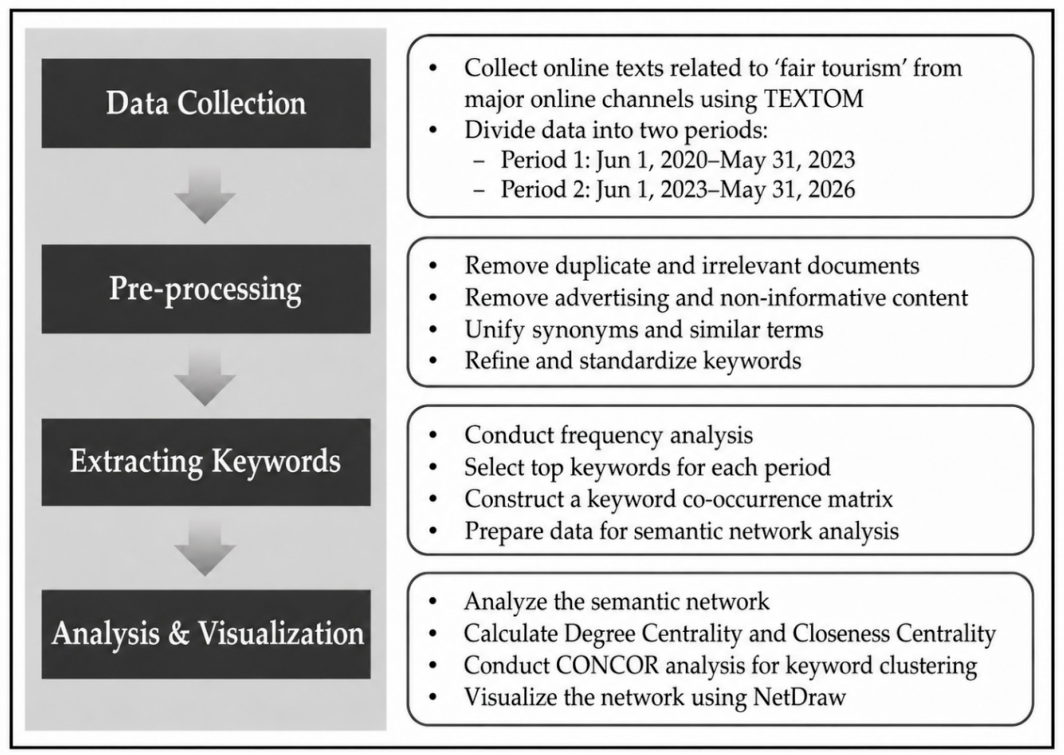
Documents were included in the dataset when they directly mentioned fair tourism or discussed fair tourism-related programs, policies, destinations, tourism practices, local participation, sustainability, market fairness, or tourism justice in a relevant tourism context. Documents were excluded if they were duplicates; purely promotional or advertising materials without substantive relevance to fair tourism; simple link collections; documents unrelated to tourism; texts consisting mainly of meaningless symbols or numbers; or documents that mentioned the search term only incidentally, without any connection to tourism discourse, policy, destination management, or tourism consumption. As a result of data collection, 6968 raw documents, corresponding to 3.90 MB, were collected for Period 1, and 6747 raw documents, corresponding to 3.83 MB, were collected for Period 2. After removing duplicate documents, advertising content, documents not directly related to the search term, simple links, and meaningless characters, the cleaned text data were used to derive the top 50 core keywords for each period. To systematically analyze temporal differences in online discourse on fair tourism, the research procedure was organized into four stages: data collection, data preprocessing, keyword extraction, and semantic network analysis and visualization. The detailed research process is presented in
Figure 1.
To enhance transparency regarding the composition of the online text corpus, the number of raw documents collected from each platform was recorded separately. In Period 1, 6968 raw documents were collected, including 4004 Naver Blog posts, 984 Naver Café posts, 433 Naver Knowledge iN documents, 659 Daum Blog posts, 658 Daum Café posts, and 230 Google/Facebook-related web documents. In Period 2, 6747 raw documents were collected, including 3975 Naver Blog posts, 775 Naver Café posts, 443 Naver Knowledge iN documents, 658 Daum Blog posts, 656 Daum Café posts, and 240 Google/Facebook-related web documents. To further clarify the corpus construction process,
Table 1 summarizes the number of raw documents collected, documents removed during cleaning, and final documents retained for each analytical period. To enhance methodological transparency and reproducibility, representative examples of excluded documents, incidentally matched documents, stop words, merged synonyms, standardized compound nouns, and retained or removed foreign-language expressions are presented in
Appendix A.
3.3. Data Preprocessing and Keyword Selection
The collected unstructured text data underwent a step-by-step cleaning process to improve the reliability and consistency of the analysis. First, duplicate posts, advertising content, repetitive promotional texts, documents unrelated to the search term, simple link collections, meaningless symbols and numbers, and other content unsuitable for semantic analysis were removed from the dataset. Foreign-language expressions were removed only when they were irrelevant to the interpretation of Korean fair tourism discourse; foreign words or proper nouns that carried contextual meaning, such as country names, destination names, or tourism-related terms, were retained. Next, keywords were extracted mainly from nouns through morphological analysis. Because this study aims to examine the semantic structure of online discourse, particles, conjunctions, general modifiers, and overly generic terms that did not contribute to the interpretation of fair tourism discourse were treated as stop words. Similar terms and synonyms were integrated into the same semantic units, and compound nouns were standardized to ensure consistency in keyword interpretation. For example, expressions referring to the same concept were unified where appropriate, while terms with different contextual meanings were retained as separate keywords. Compound nouns related to tourism policies, regional tourism programs, fair tourism projects, tourism markets, and destination management were reviewed in their original textual contexts before standardization. To enhance the validity of keyword refinement, two professors in tourism studies reviewed the criteria for stop-word removal, synonym integration, and compound noun processing. In particular, the reviewers discussed whether to include or exclude general and administrative terms with limited relevance to fair tourism, as well as keywords that carried contextual meaning in relation to fair tourism-related policy projects, contests, regional tourism programs, the social economy, tourism market fairness, and destination governance.
Keyword selection was conducted by considering both frequency and relevance to the research topic. In the first stage, high-frequency keywords were extracted for each period. In the second stage, their semantic relevance to fair tourism discourse was reviewed by examining whether each keyword contributed to explaining the meaning structure of fair tourism in the corresponding period. Subsequently, two tourism scholars conducted an expert review to confirm whether each keyword was appropriate for explaining the semantic structure of online discourse on fair tourism. During this review process, the keywords were classified by distinguishing between those with high frequency but limited interpretive value, those reflecting the policy, market, or regional tourism context of a specific period, and those connected to the core values of fair tourism. Based on this process, the final keyword list was confirmed. The top 50 core keywords for each period were used in the final analysis. The number of keywords was determined by considering previous social big data and semantic network analysis studies, which commonly used approximately 40 to 70 keywords for network analysis, as well as the readability and interpretability of the network structure. In this study, the top 50 keyword threshold was considered appropriate because it allowed the analysis to include the main thematic elements of fair tourism discourse while avoiding excessive network complexity caused by low-frequency or weakly interpretable keywords. The final selected keywords were used for frequency analysis, centrality analysis, semantic network visualization, and CONCOR analysis for each period (
Han & An, 2022;
Kim & Kim, 2023).
To ensure consistency in keyword refinement, the same cleaning criteria were applied to both periods. This procedure was adopted to reduce the possibility that differences in keyword frequency, centrality, network structure, and clusters between the two periods were caused by inconsistent preprocessing decisions. In addition, the criteria for synonym integration and stop-word removal, where subjective judgment by the researchers could be involved, were separately recorded to enhance analytical transparency. The final keyword list was confirmed through cross-review by the researchers and two professors in tourism studies. For keywords on which opinions differed, the original textual context and relevance to the research purpose were re-examined before deciding whether to include them in the final analysis.
3.4. Semantic Network and CONCOR Analysis
This study conducted semantic network analysis and CONCOR analysis to identify the semantic structure of online discourse on fair tourism. Semantic network analysis is a method that constructs a semantic network based on co-occurrence relationships among keywords extracted from text and analyzes the structural position of each keyword within the network (
Doerfel, 1998;
Drieger, 2013). In particular, centrality analysis is useful for identifying the structural importance of specific keywords within a network (
Freeman, 1979;
Wasserman & Faust, 1994). Morphological analysis was conducted using the Korean text-processing and morphological analysis functions embedded in TexTom. Keywords were extracted mainly from nouns, and the final semantic network was constructed using the top 50 keywords selected for each period. The keyword co-occurrence matrix was constructed based on the document-level co-occurrence matrix generated by TexTom. In this study, co-occurrence was defined at the document level; that is, two keywords were considered connected when they appeared together within the same collected document. No additional sentence-level or paragraph-level co-occurrence window was applied. Each cell value in the matrix indicates the frequency with which a specific pair of keywords co-appeared within the same document. Accordingly, the co-occurrence matrix was used as weighted relational data showing which keywords were discussed together within the same document context in online discourse on fair tourism. The top-50 keyword threshold served as the network inclusion criterion, and the resulting keyword co-occurrence matrices were treated as weighted networks for centrality and CONCOR analyses in UCINET and NetDraw.
UCINET was used to calculate centrality measures based on the keyword relationship matrix, while NetDraw was used to visualize the structure of the semantic network. This study focused on degree centrality and closeness centrality to analyze the core keywords of online discourse on fair tourism. Degree centrality refers to the extent to which a specific keyword is directly connected to other keywords, and it is useful for identifying core terms with strong direct associations in fair tourism discourse. Closeness centrality indicates how closely a keyword is connected to other keywords in the network through short paths, and it is used to identify keywords that are highly accessible and centrally positioned within the overall semantic network. Therefore, keywords with high degree centrality can be interpreted as core terms with strong direct connectivity, whereas keywords with high closeness centrality can be interpreted as central concepts that are efficiently connected to the overall discourse structure (
Borgatti, 2005;
Opsahl et al., 2010).
CONCOR, or CONvergence of iterated CORrelations, is a clustering method that groups keywords with similar connection patterns based on structural equivalence. In this study, CONCOR analysis was applied to the keyword networks for each period in order to derive the sub-clusters of online discourse on fair tourism (
Song et al., 2022;
Tang et al., 2024). CONCOR analysis was considered appropriate for this study because the purpose of the analysis was not simply to group keywords according to surface-level similarity or frequency, but to identify groups of keywords that occupy similar relational positions within the semantic network. Compared with clustering approaches that mainly rely on distance-based similarity, CONCOR is useful for examining structural equivalence among keywords and for identifying discourse substructures formed by similar patterns of connection. This is particularly relevant to fair tourism because fair tourism discourse is multidimensional and may be connected to public policy, regional recovery, social economy, responsible travel, overtourism, price fairness, destination governance, ESG, and tourism justice. The clusters derived through CONCOR analysis were named by considering both the semantic commonality of the keywords within each cluster and the network structure. To reduce researcher subjectivity in cluster interpretation, the initial cluster labels were first proposed by the researchers and then reviewed by two professors in tourism studies. When there were differences in interpretation, the representative keywords, co-occurrence patterns, and original text contexts were re-examined, and the final cluster names were determined through consensus. This procedure was used to ensure that the cluster labels reflected not only individual keyword meanings but also the broader discourse structure represented by each cluster. The results are presented with a focus on comparison between the two periods. First, the frequencies of the top keywords in each period were compared to identify changes in the most frequently mentioned terms of fair tourism discourse. Second, centrality analysis was used to compare core keywords with strong direct connectivity and central keywords with high accessibility within the overall semantic network. Third, NetDraw was used to visualize the semantic network for each period and to interpret the structural differences in fair tourism discourse. Fourth, the clusters derived through CONCOR analysis were compared to examine how the substructures of fair tourism discourse changed between the pandemic continuation period and the post-endemic transition. Each analytical step was therefore used for a distinct purpose: frequency analysis identified salient terms, centrality analysis identified structurally important keywords, visualization showed relational patterns, and CONCOR analysis revealed discourse clusters.
Rather than integrating the full six-year dataset into a single network, this study analyzed the two periods independently and then compared the results. This approach was adopted to more clearly reveal discursive differences between the pandemic continuation period and the post-endemic transition. An integrated analysis of the full period could show the general structure of fair tourism discourse, but it could also obscure period-specific differences in keyword centrality, network structure, and discourse clusters. Therefore, by setting two equivalent three-year analytical periods and applying the same analytical procedures to both, this study sought to examine temporal changes and structural transitions in online discourse on fair tourism in a more systematic manner. However, the results should be interpreted as changes in online discourse structures rather than as direct evidence of changes in actual tourist behavior, institutional governance, or destination management practices.
4. Results
4.1. Frequency Analysis of Fair Tourism Keywords
Table 2 presents the results of the frequency analysis of the top 50 keywords related to fair tourism for each analytical period. Frequency analysis was conducted to identify the most salient terms in online discourse on fair tourism and to compare the main topics that appeared in each period. During the pandemic continuation and early tourism recovery period, “Region” (404) showed the highest frequency, followed by “Ministry of Culture, Sports and Tourism” (373), “China” (325), “Support” (319), “Program” (300), “Culture” (281), “Development” (248), “Project” (242), “Tourist Destination” (229), and “Contest” (221). These keywords indicate that fair tourism discourse during this period was strongly associated with regional tourism, public policy support, government-led tourism projects, and tourism program development. In particular, the high frequency of “Region,” “Support,” “Program,” “Development,” and “Project” indicates that fair tourism was mainly discussed in relation to regional tourism recovery and policy-based tourism initiatives. The appearance of “Ministry of Culture, Sports and Tourism” and “Korea Tourism Organization” also shows that public-sector policy projects and institutional promotion were visible components of fair tourism discourse. In addition, keywords such as “Environment,” “Fair Trade,” “Fairness,” “Fair Ecotourism,” “Ecotourism,” “Social Enterprise,” “Residents,” “Youth,” “Local Economy,” and “Cooperative” indicate that the discourse also included themes related to sustainability, the social economy, resident participation, and local economic recovery.
During the post-endemic tourism restructuring period, “Foreigners” (564) recorded the highest frequency, followed by “China” (343), “Daejeon” (314), “Program” (295), “Ministry of Culture, Sports and Tourism” (273), “Culture” (244), “Tourists” (243), “Korea” (239), “Tourist Destination” (193), and “Busan” (187). Compared with the first period, the most notable change was the increased visibility of keywords related to inbound tourism, international tourism, and overseas tourism markets, such as “Foreigners,” “China,” “Japan,” “United States,” and “Global.” This suggests that, after the endemic transition, fair tourism discourse became more closely associated with the recovery of international mobility and the reopening of tourism markets. In addition, keywords related to tourism consumption and service experiences, including “Hotel,” “Accommodation,” “Reservation,” “Price,” “Service,” “Tour,” “Experience,” and “Market,” appeared more prominently during this period. Keywords such as “Unfairness,” “Controversy,” “Overcharging,” and “Improvement” also indicate that issues related to price fairness, service quality, market order, and tourist complaints became more visible in online discourse.
A comparison of the two periods shows a shift in the main topics associated with fair tourism. In the pandemic continuation and early tourism recovery period, fair tourism was frequently discussed in relation to public policy, regional recovery, ecotourism, the social economy, and community participation. By contrast, in the post-endemic tourism restructuring period, the discourse became more strongly associated with inbound tourism recovery, tourism market reopening, accommodation and service use, tourist experiences, and price and service fairness.
Overall, the frequency analysis shows that the most frequently mentioned keywords changed from policy- and community-oriented terms in the first period to market-, consumption-, and fairness-related terms in the second period. However, frequency analysis only identifies which keywords appeared frequently; it does not explain how those keywords were structurally connected within the semantic network. Therefore, the following sections examine the centrality, network structure, and CONCOR clusters of fair tourism keywords in order to identify the relational and structural characteristics of online discourse on fair tourism.
4.2. Centrality Analysis of Fair Tourism Semantic Networks
Table 3 presents the results of degree centrality and closeness centrality analyses of fair tourism keywords for the pandemic continuation and early tourism recovery period and the post-endemic tourism restructuring period. While the frequency analysis identified the most frequently mentioned keywords, centrality analysis was conducted to examine which keywords occupied structurally important positions within the semantic network.
During the pandemic continuation and early tourism recovery period, the degree centrality results showed relatively high values for “Culture” (0.165), “Project” (0.143), “Region” (0.133), “Korea” (0.111), “Support” (0.106), “Company” (0.100), “Development” (0.084), “Industry” (0.082), “Economy” (0.071), and “Environment” (0.063). These results indicate that keywords related to culture, policy projects, regions, public support, industry, the economy, and the environment were directly connected to many other keywords within the fair tourism semantic network. In particular, “Region,” “Support,” “Project,” and “Development” occupied important positions in the network, suggesting that fair tourism discourse during this period was structurally linked to regional tourism recovery and public policy-based tourism initiatives. The high degree centrality of “Culture” and “Environment” also shows that cultural values and environmental sustainability were not peripheral topics, but were directly connected to other major keywords in the network. Meanwhile, keywords such as “Fair Trade,” “Fairness,” “Fair Ecotourism,” “Ecotourism,” “Social Enterprise,” “Residents,” “Local Economy,” and “Cooperative” showed relatively lower degree centrality values, but they remained thematically important because they reflected the value-oriented and community-based dimensions of fair tourism.
In terms of closeness centrality during the pandemic continuation and early tourism recovery period, “Region,” “Support,” “Program,” “Project,” “Tourist Destination,” “Korea,” “Operation,” “COVID-19,” “Education,” “Environment,” “Company,” “History,” and “Residents” recorded values of 1.000. These keywords were highly accessible within the overall network, meaning that they were connected to other keywords through short semantic paths. This result suggests that the first-period network was organized around a broad set of policy-, region-, destination-, environment-, and resident-related keywords. Therefore, the closeness centrality results complement the degree centrality results by showing that regional tourism recovery, public support, environmental sustainability, and residents were not only frequently connected to other keywords, but also positioned close to the overall discourse structure.
During the post-endemic tourism restructuring period, the degree centrality results showed high values for “Culture” (0.170), “Foreigners” (0.133), “Korea” (0.115), “History” (0.115), “Program” (0.092), “Service” (0.077), “Contest” (0.074), “Experience” (0.069), “Tourists” (0.065), “Daejeon” (0.060), “Nationwide” (0.059), “Seoul” (0.058), “Ministry of Culture, Sports and Tourism” (0.054), “Hotel” (0.053), “Planner” (0.051), and “Event” (0.050). Compared with the first period, the second-period network showed stronger direct connections around inbound tourism, cultural and historical resources, tourist experiences, services, accommodation, regional programs, and tourism planning. The high degree centrality of “Foreigners” indicates that foreign tourists and international tourism recovery became structurally important within online fair tourism discourse after the endemic transition. In addition, the centrality of “Service,” “Experience,” “Hotel,” and “Tourists” suggests that tourism consumption and service-related issues became more directly connected to the fair tourism semantic network. In terms of closeness centrality during the post-endemic tourism restructuring period, “Korea,” “Hotel,” and “Nationwide” recorded values of 1.000, while “Foreigners,” “Ministry of Culture, Sports and Tourism,” “Culture,” “Tourist Destination,” “History,” “Seoul,” “Contest,” “Fairness,” and “Reservation” showed high values of 0.990. This indicates that these keywords were closely connected to the overall semantic network of fair tourism after the endemic transition. These results indicate that national-level tourism, accommodation, inbound tourism, public institutions, cultural tourism, destination-related terms, fairness, and reservation-related issues were positioned close to the overall semantic network. In particular, the high closeness centrality of “Hotel,” “Reservation,” and “Fairness” suggests that tourism service use and fairness-related issues became more accessible within the overall discourse structure after the reopening of the tourism market.
A comparison of the two periods shows that the structural center of online fair tourism discourse changed. In the pandemic continuation and early tourism recovery period, structurally important keywords were mainly related to regional tourism recovery, public policy projects, environmental sustainability, and residents. In the post-endemic tourism restructuring period, keywords related to foreign tourists, tourist experiences, services, hotels, reservations, fairness, and market issues became more central. These findings indicate that the differences observed in the frequency analysis were also reflected in the structural positions of keywords within the semantic network.
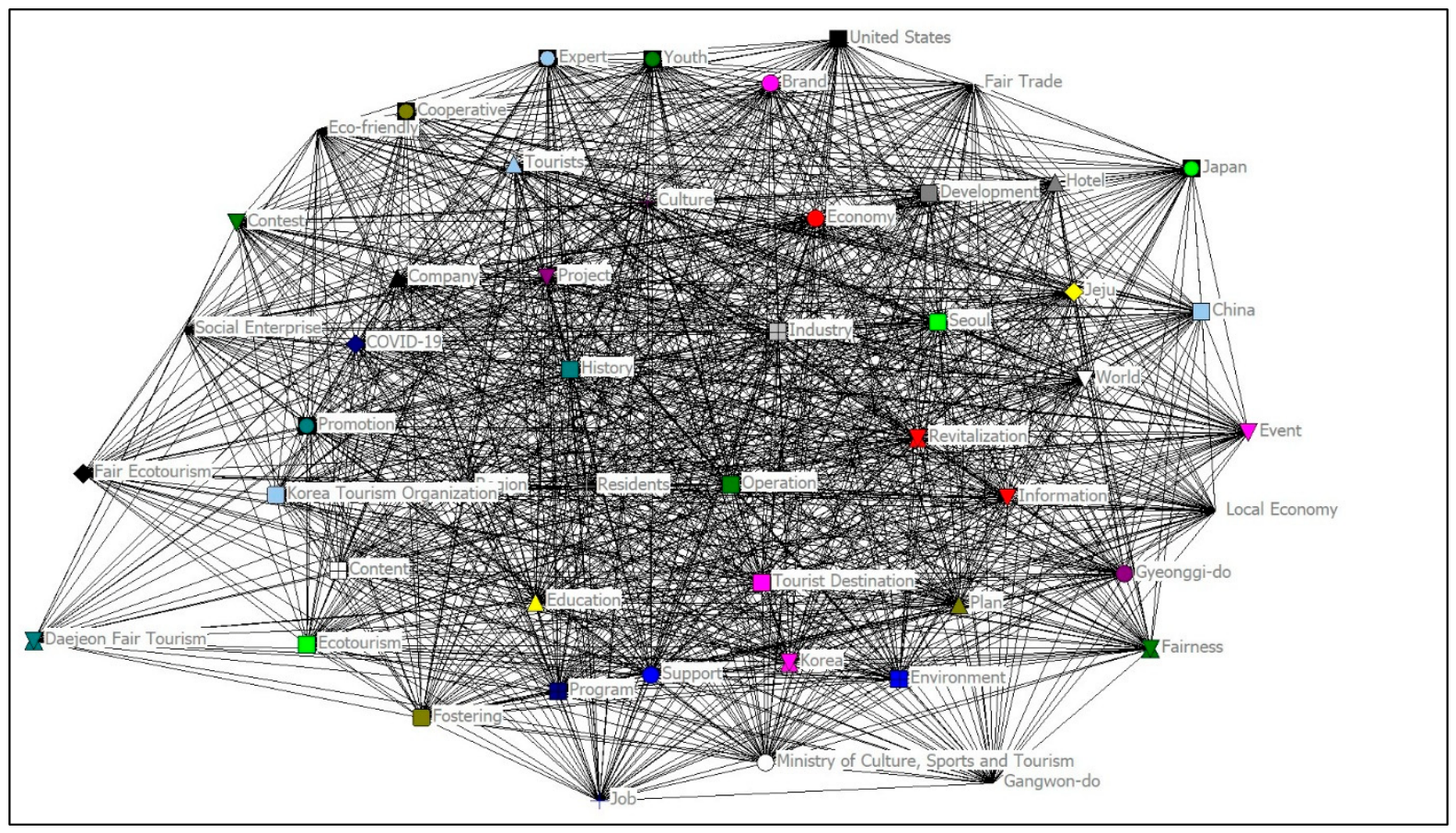
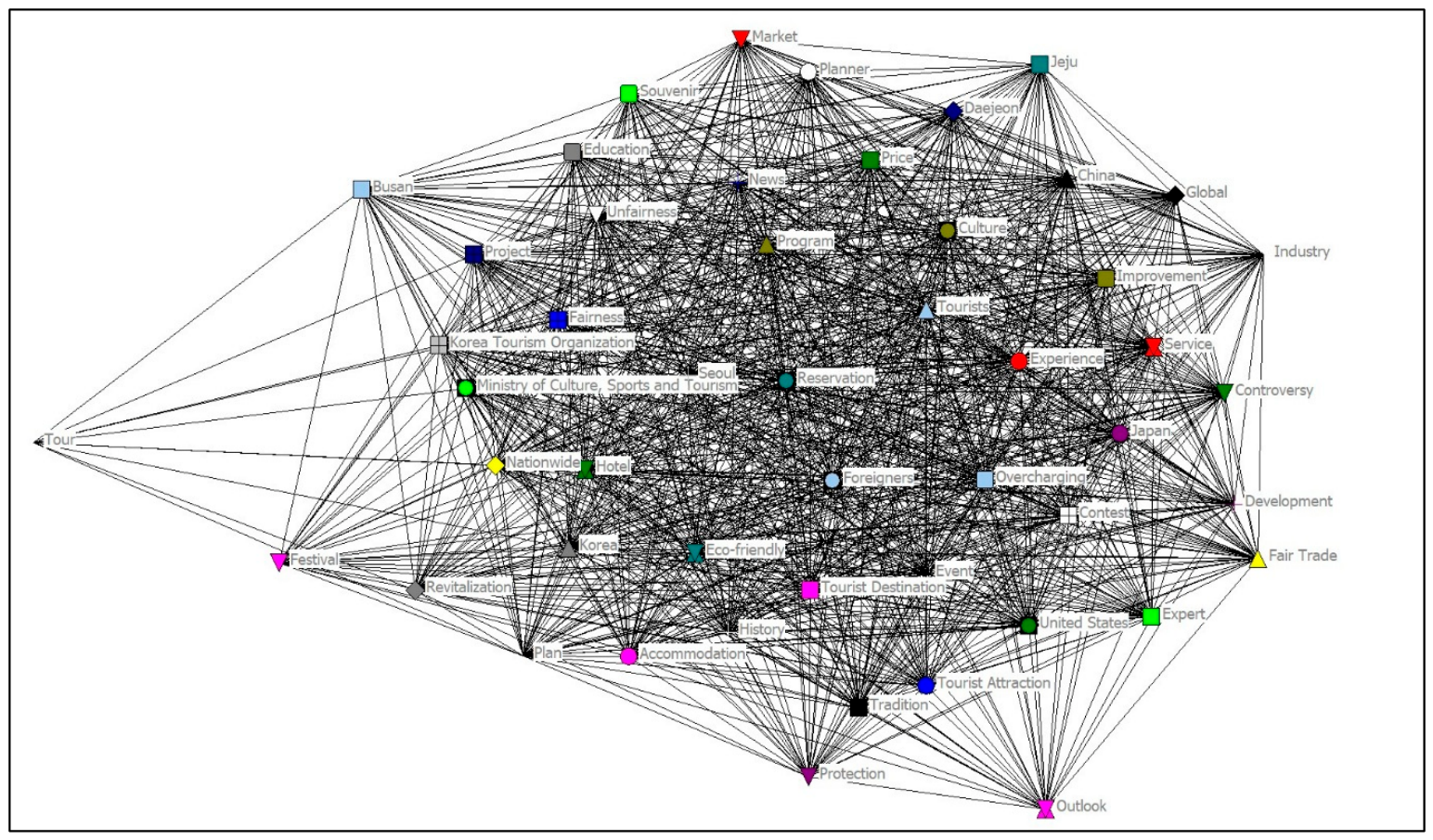
The semantic network visualizations in
Figure 2 and
Figure 3 provide a visual supplement to the centrality results.
Figure 2 shows that the first-period network was organized around “Region,” “Support,” “Project,” “Development,” “Environment,” and “Residents,” indicating a policy- and community-oriented discourse structure.
Figure 3 shows that the second-period network was more strongly associated with “Foreigners,” “Tourists,” “Hotel,” “Service,” “Experience,” “Reservation,” “Price,” “Overcharging,” and “Unfairness,” indicating a discourse structure more closely related to inbound tourism recovery, tourism service use, price fairness, and market order. Overall, the centrality and visualization results suggest that online fair tourism discourse shifted from a recovery- and policy-oriented semantic structure to a more market-, service-, and fairness-oriented semantic structure after the endemic transition. These findings therefore indicate a structural shift in online fair tourism discourse during the post-pandemic tourism transition.
4.3. CONCOR Analysis of Fair Tourism Semantic Clusters
CONCOR analysis was conducted to identify the sub-discourse clusters within the semantic networks of fair tourism. Based on structural equivalence, keywords with similar relational patterns were grouped into clusters. The semantic networks for both the pandemic continuation and early tourism recovery period and the post-endemic tourism restructuring period were divided into four clusters. The cluster names were determined according to the representative keywords, semantic commonality, and relational characteristics of each group, following the interpretation procedure described in
Section 3.4. The results are presented in
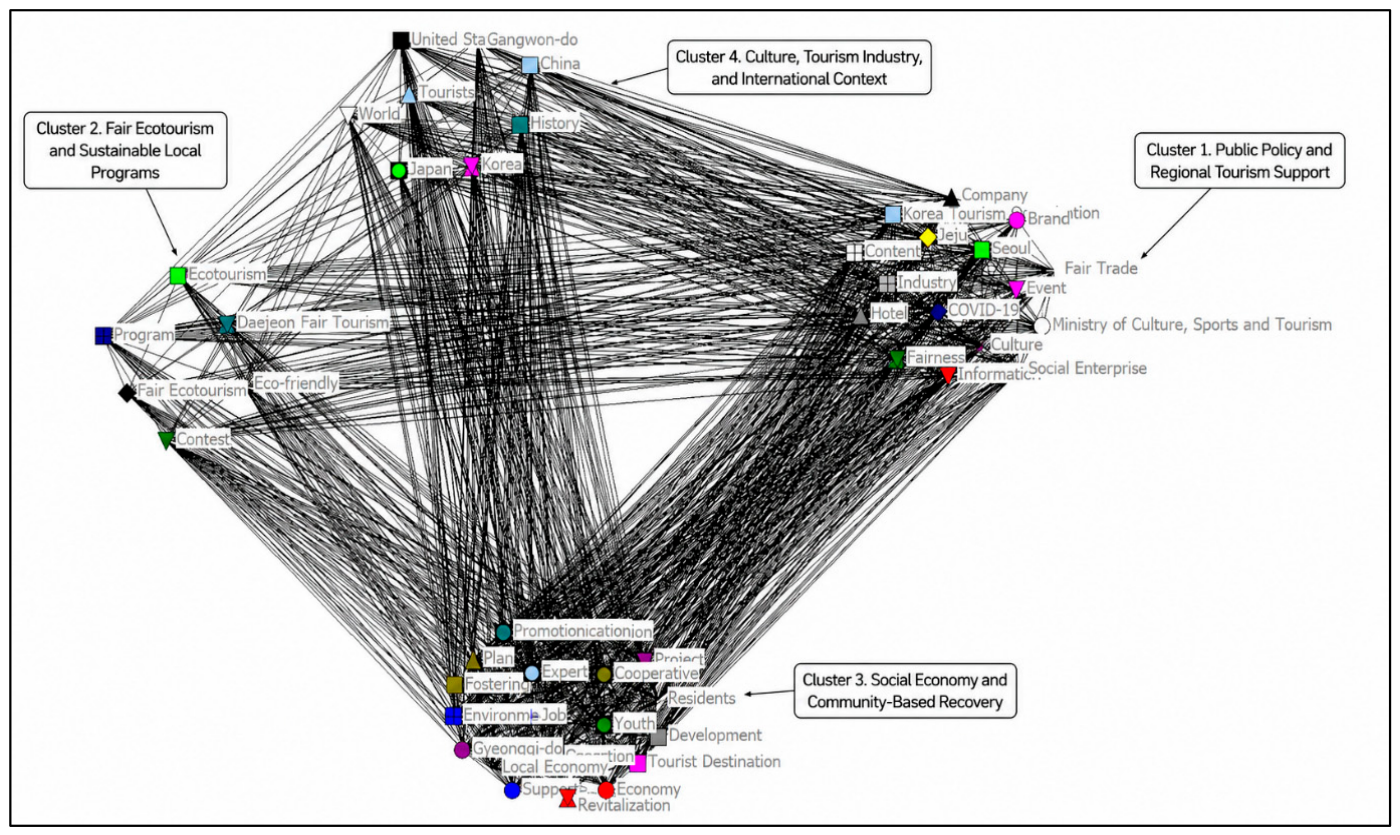
Table 4. For the pandemic continuation and early tourism recovery period, the four clusters were interpreted as public policy and regional tourism support, fair ecotourism and sustainable local programs, social economy and community-based recovery, and culture, tourism industry, and international context. Cluster 1, Public Policy and Regional Tourism Support, included keywords such as “Region,” “Ministry of Culture, Sports and Tourism,” “Korea Tourism Organization,” “Support,” “Project,” and “Program.” The concentration of public institutions, regional terms, and project-related keywords indicates that this cluster represented the institutional and policy-oriented dimension of fair tourism discourse. It reflects online discussions concerning regional tourism initiatives, public support programs, and government-led tourism projects during the first period. Cluster 2, Fair Ecotourism and Sustainable Local Programs, centered on keywords such as “Fair Ecotourism,” “Ecotourism,” “Eco-friendly,” “Daejeon Fair Tourism,” and “Contest.” This cluster connected fair tourism with environmentally oriented tourism practices, regional fair tourism programs, and contest-based initiatives. The keyword composition indicates that sustainability and regionally implemented ecotourism programs constituted a distinct sub-discourse within the first-period network. Cluster 3, Social Economy and Community-Based Recovery, consisted of keywords such as “Social Enterprise,” “Cooperative,” “Residents,” “Youth,” “Job,” “Local Economy,” and “Revitalization.” This cluster linked fair tourism with the social economy, resident participation, youth employment, local economic issues, and regional revitalization. Its relational structure suggests that community participation and local economic recovery were important components of online fair tourism discourse during the pandemic continuation and early tourism recovery period. Cluster 4, Culture, Tourism Industry, and International Context, included keywords such as “Culture,” “History,” “Tourists,” “China,” “Japan,” “United States,” “World,” “Hotel,” “Industry,” “Company,” “Fair Trade,” and “Fairness.” This cluster combined cultural and historical tourism resources with tourism industry actors, international tourism references, and fairness-related concepts. The coexistence of “Fair Trade” and “Fairness” with industry- and market-related keywords indicates that fairness-related meanings were articulated alongside broader cultural, industrial, and international tourism issues.
Overall, the first-period CONCOR results show that online fair tourism discourse consisted of several differentiated but interconnected sub-discourses. Public policy and regional support formed one major dimension, while fair ecotourism, social economy and community recovery, and cultural and international tourism contexts constituted additional thematic structures. These findings describe the relational organization of online discourse during the first period and do not directly demonstrate changes in actual tourism practices or policy outcomes.
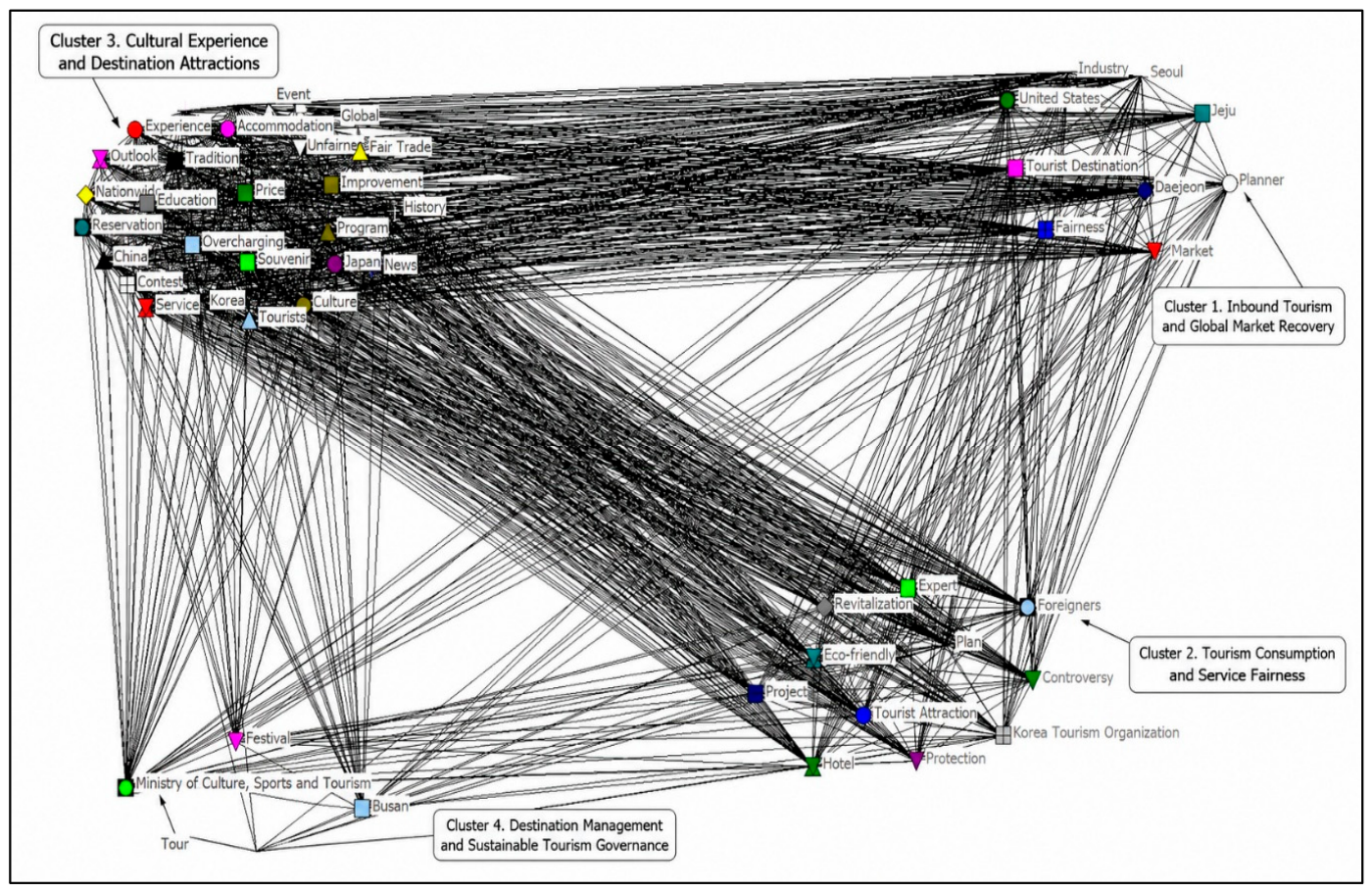
For the post-endemic tourism restructuring period, the four clusters were interpreted as inbound tourism and global tourism market recovery, tourism consumption and service fairness, cultural experience and destination attractions, and destination management and sustainable tourism governance. Cluster 1, Inbound Tourism and Global Tourism Market Recovery, included keywords such as “Foreigners,” “China,” “Japan,” “United States,” “Global,” “Korea,” “Tourists,” and “Nationwide.” This cluster indicates that fair tourism discourse after the endemic transition became more closely connected with the recovery of international mobility, inbound tourism, and global tourism markets. Cluster 2, Tourism Consumption and Service Fairness, consisted of keywords such as “Hotel,” “Accommodation,” “Reservation,” “Service,” “Price,” “Overcharging,” “Unfairness,” “Controversy,” and “Improvement.” This cluster shows that fair tourism discourse increasingly incorporated issues of price fairness, service quality, transparent transactions, and tourist complaints in the reopened tourism market. Cluster 3, Cultural Experience and Destination Attractions, included keywords such as “Culture,” “History,” “Tradition,” “Festival,” “Souvenir,” “Tourist Attraction,” “Tourist Destination,” “Experience,” and “Tour.” This cluster suggests that fair tourism was also articulated through cultural experience, local attractions, and destination-based consumption. Cluster 4, Destination Management and Sustainable Tourism Governance, included keywords such as “Ministry of Culture, Sports and Tourism,” “Korea Tourism Organization,” “Project,” “Plan,” “Planner,” “Expert,” “Protection,” “Eco-friendly,” “Revitalization,” “Market,” and “Fairness.” This cluster indicates that public institutions, planning actors, environmental protection, market management, and fairness-related issues formed a governance-oriented sub-discourse within the second-period network.
Overall, the second-period CONCOR results show that online fair tourism discourse after the endemic transition was no longer organized mainly around regional recovery and public support, but was differentiated into sub-discourses related to inbound tourism recovery, tourism consumption and service fairness, cultural destination experiences, and sustainable destination governance. The CONCOR clusters for Period 1 are visualized in
Figure 4, while those for Period 2 are shown in
Figure 5.
5. Discussion and Conclusions
This original empirical study examined the semantic structure and temporal transformation of online discourse on fair tourism in Korea. The analysis compared two three-year periods: the pandemic continuation and early tourism recovery period, from 1 June 2020 to 31 May 2023, and the post-endemic tourism restructuring period, from 1 June 2023 to 31 May 2026. Online unstructured text data were analyzed using frequency analysis, degree and closeness centrality analysis, semantic network visualization, and CONCOR analysis.
The results show that online fair tourism discourse during the pandemic continuation and early tourism recovery period was primarily associated with regional tourism, public policy support, government-led projects, fair ecotourism, the social economy, resident participation, and local economic recovery. Keywords related to regions, public institutions, support programs, development projects, the environment, social enterprises, residents, and cooperatives were prominent in both their frequency and relational positions. The CONCOR results further differentiated this discourse into clusters related to public policy and regional tourism support, fair ecotourism and sustainable local programs, social economy and community-based recovery, and cultural, industrial, and international tourism contexts.
During the post-endemic tourism restructuring period, online fair tourism discourse became more strongly associated with inbound tourism recovery, international tourism markets, tourism consumption, accommodation and service use, price fairness, and destination management. Keywords related to foreign tourists, hotels, reservations, services, experiences, fairness, and market issues became more visible or structurally central. The corresponding CONCOR clusters reflected inbound tourism and global market recovery, tourism consumption and service fairness, cultural experience and destination appeal, and destination management and sustainable tourism governance.
Taken together, the findings indicate that the shift from policy- and community-oriented discourse to market-, service-, and fairness-oriented discourse reflects changing conditions of tourism recovery. During the pandemic continuation and early tourism recovery period, restricted mobility, public health concerns, and weakened local tourism economies made fair tourism more closely associated with regional recovery, public support, fair ecotourism, the social economy, resident participation, and community resilience. After the endemic transition, however, the reopening of tourism markets and the recovery of inbound tourism increased public attention to tourist experiences, accommodation, reservations, prices, service quality, overcharging, and unfair market practices. This suggests that fair tourism discourse is sensitive to changing tourism governance challenges: fairness was framed mainly around recovery support and local coexistence in a crisis context, but became more closely associated with market transparency, service encounters, price fairness, and destination governance in a recovery context. This shift should be understood as a change in the structure and framing of digitally mediated public discourse, rather than as direct evidence that actual tourist behavior, tourism policies, or institutional practices changed in the same manner.
The findings suggest that fair tourism discourse in the Korean online context extends beyond individual ethical travel or responsible consumption and incorporates broader concerns related to benefit distribution, community participation, market fairness, service quality, destination governance, and tourism justice. By examining relationships among keywords and changes in semantic clusters, this study extends fair tourism research beyond individual-level surveys of attitudes and behavioral intentions. It also demonstrates the value of social big data and semantic network analysis for exploring how tourism concepts are constructed and rearticulated through online public discourse during periods of social and market transition.
5.1. Theoretical Implications
This study offers several theoretical implications. First, it extends the unit of analysis in fair tourism research from individual tourists’ attitudes and behavioral intentions to the relational structure of digitally mediated public discourse. Previous studies have primarily examined perceptions of fair tourism, behavioral intentions, willingness to pay, and destination attitudes through surveys, interviews, and case studies. These approaches are valuable for explaining individual-level psychological and behavioral responses, but they provide limited insight into how fair tourism is socially constructed, circulated, and connected to other tourism issues in online spaces. By analyzing keyword relationships and semantic clusters derived from naturally occurring online text, this study conceptualizes fair tourism not only as an individual attitude or behavioral orientation, but also as a socially constructed discourse formed through relationships among policy, market, community, environmental, and justice-related meanings.
Second, this study provides empirical evidence of the temporal reconfiguration of online fair tourism discourse within the post-pandemic tourism transition. During the pandemic continuation and early tourism recovery period, the discourse was more strongly organized around regional recovery, public support, fair ecotourism, the social economy, and community participation. During the post-endemic tourism restructuring period, it became more closely associated with inbound tourism recovery, accommodation and service use, market fairness, overcharging and unfairness issues, and destination management. These findings do not demonstrate that the underlying concept or actual practices of fair tourism changed in the same manner. Rather, they show that the meanings and issues surrounding fair tourism were rearticulated in online discourse as social conditions and tourism market priorities changed.
Third, the findings clarify the conceptual position of fair tourism in relation to sustainable tourism, responsible tourism, tourism justice, tourism ESG, and destination governance. Fair tourism is not treated in this study as an umbrella concept that replaces these related perspectives. Instead, it is positioned as a context-specific discourse category that foregrounds fairness in the distribution of tourism benefits and costs, stakeholder participation, market practices, policy accountability, and destination management. The first-period emphasis on community recovery and the social economy reflects distributive and participatory concerns, whereas the second-period emphasis on prices, services, market order, and destination governance highlights fairness within tourism consumption and management. In this way, the study links fair tourism to broader debates on distributive, procedural, and recognitional justice while maintaining its practical and policy-oriented character in the Korean tourism context.
Fourth, this study contributes methodologically by combining frequency analysis, degree and closeness centrality analysis, semantic network visualization, and CONCOR analysis within a comparative temporal framework. Each method provides a distinct level of interpretation: frequency analysis identifies salient terms, centrality analysis reveals structurally important and accessible keywords, network visualization shows relational patterns, and CONCOR analysis identifies sub-discourse clusters based on structural equivalence. Applying the same analytical procedures to two equivalent three-year periods enables the study to examine changes in both the content and relational organization of online discourse. Although the empirical data were collected from Korean digital platforms, this approach has broader relevance for tourism discourse research because it can trace how value-laden tourism concepts are rearticulated across changing social, policy, and market contexts. It can also be applied to other national or cultural settings to examine how concepts such as fair tourism, responsible tourism, sustainable tourism, overtourism, or tourism justice become connected to public concerns, policy agendas, and market issues.
5.2. Practical and Policy Implications
This study also offers several practical and policy implications. Because the findings represent patterns of online discourse rather than direct measures of tourist behavior, policy performance, or market conditions, they should be used as diagnostic signals that inform decision-making in combination with visitor surveys, resident feedback, business data, and other empirical evidence.
First, policymakers and local governments can differentiate fair tourism policy priorities according to the stage of tourism recovery. During the pandemic continuation and early tourism recovery period, online fair tourism discourse was strongly associated with regional tourism recovery, public support, the social economy, resident participation, and ecotourism. These findings highlight the relevance of region-based fair tourism programs, partnerships with social enterprises and cooperatives, youth and resident-participatory tourism projects, and environmentally responsible tourism content. During the post-endemic tourism restructuring period, however, price fairness, service quality, overcharging, and fairness in tourist experiences became more visible. Accordingly, future fair tourism policies should not remain limited to financial support and regional revitalization projects, but should also incorporate tourism market fairness, transparent transactions, consumer protection, and service-quality management.
Second, destination management organizations and local tourism organizations should institutionalize fair tourism as a destination governance principle rather than use it only as a promotional message associated with “good travel.” The connections among regions, residents, the local economy, social enterprises, cooperatives, environmental protection, and cultural resources suggest that fair tourism can support the joint management of community benefits, resident participation, environmental conservation, and tourist–resident relationships. From a stakeholder communication perspective, local governments and destination management organizations should establish regular consultation mechanisms involving residents, local businesses, social economy organizations, tourism operators, and tourists when designing tourism products and destination policies. In addition, digital monitoring of online tourism discourse can help identify emerging conflicts or concerns related to overcharging, service dissatisfaction, resident inconvenience, environmental pressure, and unfair tourism practices. However, such monitoring should be integrated into participatory tourism governance rather than used as a purely technical management tool. Issues detected through online discourse should be verified through direct consultation, complaint records, visitor surveys, resident feedback, and business-sector communication, and then translated into agenda-setting, stakeholder dialogue, and corrective policy action.
Third, the management of price and service fairness is crucial in the process of post-endemic tourism market recovery. The online discourse analysis showed that “Price,” “Overcharging,” “Unfairness,” “Controversy,” “Service,” and “Improvement” emerged as major keywords during the post-endemic tourism restructuring period. This suggests that, alongside the recovery of tourism demand, fairness-related issues became more visible in online discourse concerning accommodation, experiences, tours, reservations, and services. Therefore, tourism policy agencies, local governments, and destination management organizations should monitor issues such as overcharging, unfair pricing, discriminatory treatment of tourists, and service complaints. They should also work with local tourism businesses to provide transparent price information, strengthen service quality management, and improve systems for responding to tourist complaints. These measures can help prevent fairness-related issues from escalating into broader destination management problems during the recovery of the tourism market.
Fourth, in the context of inbound tourism recovery, fair tourism should be linked to improvements in inbound tourism readiness. The prominence of keywords such as “Foreigners,” “China,” “Japan,” “United States,” “Global,” and “Tourists” after the endemic transition suggests that online fair tourism discourse became more closely associated with the return of foreign tourists, the recovery of international tourism, overseas tourism markets, and cross-national tourism issues. Accordingly, fair tourism policies should include multilingual information services for foreign tourists, fair and transparent pricing systems, culturally sensitive services, safe tourism environments, and programs that promote mutual respect between local residents and foreign tourists. Local governments, destination management organizations, and tourism businesses should cooperate in implementing these measures and establish accessible multilingual channels through which foreign tourists can obtain information and report service-related problems.
5.3. Limitations and Future Research Directions
Although this study contributes to the literature by examining temporal changes in online discourse on fair tourism, it has three main limitations. First, the data were collected from selected Korean online platforms using the principal Korean search query “공정관광,” translated as “fair tourism” in this study. Although the related expression “공정여행,” or “fair travel,” was reviewed during data cleaning when it appeared in relevant contexts, relying primarily on one search query may have excluded discussions expressed through alternative terminology. Moreover, platform-specific user characteristics, search and exposure algorithms, changes in platform composition, and the relative proportion of public-sector or promotional content may have influenced the observed discourse structure. Therefore, the findings cannot be generalized to all tourists, residents, tourism businesses, or national contexts. Future research should use multiple synonymous search terms, platform-stratified datasets, multilingual corpora, and cross-national comparisons to examine whether similar discourse structures emerge across different digital and cultural contexts.
Second, keyword-based semantic network analysis and document-level co-occurrence analysis have limitations in capturing sentence-level meanings, emotional valence, speaker positions, and the specific contexts in which keywords are used. For example, terms such as “Price,” “Overcharging,” “Unfairness,” and “Controversy” may appear in tourist complaints, media reports, policy discussions, promotional content, or demands for institutional improvement. Their co-occurrence does not by itself establish whether the discourse was positive or negative or whether it reflected actual changes in tourist behavior, market conditions, or institutional governance. Future studies should combine semantic network analysis with sentiment and emotion analysis, topic modeling, stance analysis, contextual text analysis, and manual coding. Surveys and interviews with tourists, residents, tourism businesses, destination management organizations, and policy officials would also help determine how patterns identified in online discourse are related to actual perceptions, practices, and policy demands.
Third, this study divided the six-year dataset into two aggregated three-year periods and constructed the final networks using the top 50 keywords for each period. This comparative design enhanced network readability and enabled consistent comparison, but it may have obscured monthly or yearly fluctuations, event-specific shifts, regional differences, and platform-specific discourse patterns. The network results may also be sensitive to analytical decisions such as the number of keywords included. Future research should conduct monthly or yearly time-series analysis, event-based comparison, regional and platform-specific network analysis, and robustness checks using alternative keyword thresholds. These approaches would provide a more detailed understanding of how fair tourism discourse changes in response to particular tourism events, policy developments, market conditions, and destination-specific issues.