

Article

Promoting Sustainable Tourism in the Areia Branca Beach of Timor-Leste: Innovations in Governance and Digital Marketing


by
I Made Mardika
1,
I Ketut Kasta Arya Wijaya
2,
Ida Bagus Udayana Putra
3,
Leonito Ribeiro
4,
Iis Surgawati
5 and
Dio Caisar Darma
5,*
1
Study Program of Public Administration, Faculty of Postgraduate, Universitas Warmadewa, Denpasar 80235, Bali, Indonesia
2
Study Program of Law Sciences, Faculty of Law, Universitas Warmadewa, Denpasar 80711, Bali, Indonesia
3
Study Program of Management, Faculty of Economics and Business, Universitas Warmadewa, Denpasar 80239, Bali, Indonesia
4
Doctoral Program in Law, Faculty of Law, Universidade da Paz (UNIPAZ), Manleuana TL10001, Dili, Timor-Leste
5
Study Program of Development Economics, Faculty of Economics and Business, Universitas Siliwangi, Tasikmalaya 46115, West Java, Indonesia
*
Author to whom correspondence should be addressed.
Tour. Hosp. 2026, 7(2), 28; https://doi.org/10.3390/tourhosp7020028
Submission received: 21 December 2025 / Revised: 12 January 2026 / Accepted: 20 January 2026 / Published: 23 January 2026

Abstract

The urgency of research into innovation and digital marketing is driven by growing competition within the tourism industry, which demands greater destination visibility (DV) and tourist engagement (TE). At the same time, Areia Branca Beach, a prominent destination in Timor-Leste, has not been managed optimally to support sustainable tourism. Furthermore, the utilisation of governance innovation and digital marketing—particularly the integration of content marketing (CM), immersive technology (IT), and digital data analytics (DDA)—remains limited and has yet to be substantiated by robust empirical evidence at the scale of a developing destination. This study aims to investigate the role of DDA in the causality between CM and IT in influencing DV and TE. A quantitative approach was employed, using moderated regression analysis (MRA) to test the empirical relationships between the variables. Primary data were collected through face-to-face field surveys of tourists who had visited Areia Branca Beach, located northeast of Dili, Timor-Leste, on at least two occasions. The study adopted simple random sampling (SRS) with a finite population correction (FPC). A total of 364 tourists were selected to assess their perceptions using a structured questionnaire. The study reveals four main findings. First, CM significantly affects DDA and DV. Second, IT influences DDA, but not TE. Third, DDA significantly affects both DV and TE. Fourth, DDA moderates the effect of CM on DV and the effect of IT on TE. The findings underscore that the collaborative governance concept, through governance and marketing innovations, is not yet optimal for shaping sustainable tourism. Finally, future academic and practical policy implications require more in-depth exploration to emphasise the enhancement of resource management capacity genuinely needed in the subjects studied, beyond governance and digital marketing innovations within the sustainable tourism framework.

1. Introduction

Tourism has been identified as one of the key sectors driving economic recovery in Timor-Leste since the COVID-19 pandemic, particularly in export services, although the economy remains heavily reliant on non-oil and gas exports and public investment (World Bank, 2025). The promising outlook for this sector is reflected in its contribution to national economic income. According to the Market Development Facility (2024), the tourism sector’s contribution to Timor-Leste’s gross domestic product (GDP) in 2024 remains modest, at approximately 0.5%. Meanwhile, Statista (2025) estimates that market revenue for the travel and tourism sector in Timor-Leste will reach around US$9.67 million in 2025. In the second quarter of 2025, foreign tourist arrivals to Timor-Leste totalled 22,766, representing a substantial increase of 145.5% from the previous quarter and 247.1% year-on-year, according to Banco Central de Timor-Leste (2025).
However, the tourism sector is regarded as a key component for economic diversification and for reducing Timor-Leste’s dependence on natural resources, such as oil and gas. Its added value is projected to increase local community income, create employment opportunities, and boost foreign exchange earnings, provided it is supported by appropriate promotional and investment policies (Development Asia, 2024). Recently, the Pacific Tourism Organisation (2025) conducted a national community survey for 2024–2025, which reported that the majority of respondents across six municipalities in Timor-Leste consider tourism to be the primary driver for stimulating job creation, fostering an inclusive economy, and alleviating poverty. A recent manuscript by Amaral Vong et al. (2024) confirms that the tourism sector on small islands such as Jaco and Atauro continues to face significant challenges—including limited capital, service capacity, and infrastructure—that constrain the sector’s ability to generate economic spillover effects in the short term.
The phenomenon of alternative tourism has emerged as a strategic solution to address various issues arising from the development of mass tourism, particularly in developing countries in Southeast Asia (Jackson, 2025; Yalçınkaya et al., 2025). In Indonesia, especially Bali, there has been a shift in tourist motivation from mass tourism towards more sustainable forms of alternative tourism, such as local wisdom-based cultural tourism, ecotourism, and community-based tourism (Satrya et al., 2023). This management model positions local communities as key actors in maintaining a balance between economic growth, cultural preservation, and environmental conservation. It has been successfully implemented in various destinations across Bali. Indeed, tourism regulations in Indonesia emphasise the principle of empowering local communities in tourism management to create economic, social, and cultural sustainability (Pramono & Juliana, 2025).
In the case of Timor-Leste, although the tourism sector is still undergoing revitalisation, there are great prospects for diversification into alternative forms of tourism, particularly in the Branca area (Araujo, 2024; Goncalves et al., 2024; Xaiver et al., 2020). This area, located in Dili, is one of the eco-tourism assets endowed with natural wealth, such as Branca Beach, which boasts unique and stunning white sand and has potential for development into marine tourism. As is well known, Rideng et al. (2024) emphasise that internal factors include: (1) the quality of the coastal ecosystem, (2) tourist attractions, and (3) safety and comfort, all of which are crucial in determining the sustainability strategy for Branca Beach as a marine tourism destination in Timor-Leste in the future. Nevertheless, tourism at Branca Beach still faces various barriers, such as inadequate infrastructure, a lack of effective promotion, and low environmental awareness.
In general, infrastructure presents a major challenge to the growth of the tourism sector in Timor-Leste (Ximenes et al., 2024). In addition to infrastructure, the lack of skilled human resources and adequate tourism facilities also poses obstacles for the majority of tourism enterprises in the country (Jebson & Ikelberg, 2014). Government policy is a key supporting factor in the development of tourism at Areia Branca Beach. Four development strategies that stakeholders in the tourism sector could formulate include aligning with government policies through partnership schemes involving relevant authorities, tourism communities, universities, and the media to preserve the coastline. For example, this could involve dividing the coastal area into several zones for different activities, implementing affordable entrance fees for visitors, and promoting marine tourism areas.
In addition to infrastructure and marketing, other obstacles to tourism development at Areia Branca Beach include supporting facilities such as technology and information. To enhance accessibility, optimal improvements in infrastructure—specifically access to technology and accurate data—are essential for attracting tourists and ensuring visitor satisfaction (Chan et al., 2022; Nor Mohd Anuar et al., 2025; Sun et al., 2025). In addition, the ultimate goal is to maximise tourist engagement by fully synergising marketing, technology, and information.
Technically, inadequate infrastructure, limited promotion, and low environmental awareness are critical obstacles. The progress of a tourist destination is closely linked to marketing, technological and marketing infrastructure, ease of travel, and the support of tourists themselves. This study examines the causal relationship between content marketing and immersive technology. It focuses on their effects on destination visibility and tourist engagement through digital data analytics at Areia Branca Beach. This perspective is based on the development of innovative alternative tourism in Timor-Leste by adapting successful tourism practices such as those in Bali (Indonesia), which maintain a coherent balance within the tourism ecosystem by utilising the potential of local nature and culture (Oka & Subadra, 2024; Prihadi et al., 2024). Modern scientific works employing a framework of innovative governance and sustainable tourism marketing in the analysed model have not been extensively investigated under similar conditions. For example, Yawised and Apasrawirote (2025) explain how immersive experiences in metaverse tourism marketing drive destination marketing by relying on inter-functionality, interoperability, and interrelationship as foundational principles—demonstrating that a combination of marketing strategies and digital technology can enhance destination appeal and visibility. Another study by Sustacha et al. (2023), using meta-analysis, revealed that smart technology correlates positively with the tourist experience, particularly the attributes of interactivity and informativeness, which have the greatest impact on the tourist experience. In other words, the use of digital technology is not merely a gimmick but contributes significantly to the quality of the experience—an effect that is relevant to engagement, satisfaction, and destination reputation.
Furthermore, the quality of the system, content, and the vividness or sharpness of virtual reality (VR) significantly enhance the sense of immersion and enjoyment, both of which can influence tourists’ intention to visit (Nguyen, 2025). The paper’s findings demonstrate a direct link between the content presented through VR technology and tourist decisions, supporting the assertion that immersive marketing can shape the visibility and appeal of a destination. Instead, Alhaddar and Kummitha (2025) discuss how digital technologies—including VR, augmented reality (AR), social media, mobile applications, and artificial intelligence (AI)—are increasingly becoming key determinants of tourism marketing and destination branding strategies. They also highlight how digitalisation helps destinations increase their visibility, image, and consumer engagement, particularly among tourists who prioritise eco-tourism sustainability.
This research is grounded in scientific reality, as in this ever-advancing digital age, the sustainability of tourism worldwide increasingly depends on digital technology and content marketing to enhance destination visibility and tourist engagement. Neither destination visibility nor tourist engagement can be driven automatically by immersive technology and content marketing alone; rather, they require precise mechanisms such as digital data analysis, which can enrich the tourist experience, expand promotional reach, and foster more convergent sustainability values compared to traditional channels. This approach thus serves as a blueprint for destination managers to integrate digital strategies into tourism governance, aiming to achieve integrated tourism and globally competitive destinations. Alhaddar and Kummitha (2025) note that the digitalisation of destinations is gradually influencing sustainable destination branding through strong sustainability narratives, more intensive consumer engagement, and a deeper understanding of tourist preferences. Control over immersive technologies, such as virtual reality and augmented reality, has been modified as a practical tool to enhance tourist experiences and ensure effective environmental conservation within nature-based tourism. Additionally, it boosts the efficacy of digital marketing in global tourist destinations.
Studies examining the relationship between content marketing and immersive technology, moderated by digital data analytics, on destination visibility and tourist engagement can address both practical and academic gaps by providing concrete findings on how the elaboration of content strategies, immersive technology, and data analysis influences tourist behaviour and destination recognition—an area that has not been fully explored concurrently in tourism research. Moreover, the previous literature validates the urgency of digital marketing and immersive technology as distinct mechanisms for enhancing tourist engagement and destination visibility (Christou et al., 2025; Pratisto et al., 2022). Historically, the use of immersive technologies such as AR and VR in destination promotion and tourism experiences has proven beneficial for digital marketing outcomes; however, few studies have dissected the moderating role of data analytics in altering or strengthening these relationships. Concerning empirical research on real contexts such as Areia Branca Beach, this research makes a theoretical contribution by calibrating a holistic understanding of digital tourism marketing. It provides critical intellectual insights and offers practical guidance for tourism stakeholders and decision-makers, who act as guardians and initiators of policies, on how to maximise content marketing and immersive technology through data analytics support to enhance the competitiveness of destinations.
The scientific evidence presented above offers a novel perspective, paving the way for this study to explore several aspects of collaborative governance through targeted governance and marketing innovations, guided by the following main research questions (RQs):
-
RQ1: Does content marketing influence digital data analytics and destination visibility?
-
RQ2: Does immersive technology influence digital data analytics and tourist engagement?
-
RQ3: Does digital data analytics influence destination visibility and tourist engagement?
-
RQ4: Do content marketing and immersive technology through digital data analytics influence destination visibility?
-
RQ5: Do content marketing and immersive technology, facilitated by digital data analytics, influence tourist engagement?
The originality of this research lies in its holistic approach, which integrates local wisdom, a sustainable management framework, and innovative marketing strategies tailored to emerging markets. This study is particularly urgent for tourism stakeholders, as it provides practical guidelines for similar destinations to prioritise digital marketing strategies by utilising social media combined with technology and information systems to obtain accurate data. This approach aims to enhance destination visibility and influence tourists’ perceptions, encouraging their active participation in elaborating visionary tourism insights. The anticipated outcomes are also expected to benefit academics by offering a comprehensive understanding of destination visibility and tourist engagement, whether influenced directly or indirectly by content marketing, immersive technology, or digital data analytics.

2. Literature Review and Conceptual Model Development

2.1. Theoretical Basis

Dewi et al. (2025) argue that sustainable tourism is a conceptual framework for developing tourism activities in a manner that provides economic benefits to local communities without compromising social justice or environmental balance, adhering to economic, socio-cultural, and ecological principles over the long term. The Sustainable Tourism Index (STI) is a recent metric for assessing tourism sustainability, measured through three main pillars: environment, economy, and society (Punzo et al., 2022). Dewi et al. (2025) also emphasise that the implementation of sustainable tourism should incorporate culture, nature conservation, social justice values, and local communities, ensuring that tourism is not solely oriented on economic profit but also promotes the prosperity of local communities and environmental preservation.
The concept of sustainable tourism and its relationship with content marketing models, immersive technology, digital data analytics, destination visibility, and tourist engagement are closely interconnected. Sustainable tourism emphasises that the development of tourist destinations must carefully consider the three main pillars mentioned above to ensure long-term sustainability. The transition to the digital era enables destinations to communicate sustainability narratives through strategic content marketing. As a result, destinations can strengthen their image as ethical, environmentally friendly, and respectful of local culture. A recent systematic review proves that digitalisation—including immersive technology, big data, mobile applications, and social media—can strengthen the brand equity and branding of sustainable destinations, as well as foster tourist loyalty (Alhaddar & Kummitha, 2025). Substantively, this indicates that digital marketing and content models are not merely promotional tools but integral components of destination sustainability strategies, showcasing the values of community participation, conservation, and transparency regarding environmental impacts, allowing destinations to develop while maintaining their commitment to sustainability in Indonesia.
Entering the era of Industry 4.0, the usefulness of digital data analytics and digital content marketing within the tourism cluster is based on consumer behaviour and digital marketing theories that highlight the importance of personalisation, information, and interactive relationships between potential tourists and destinations. Digital data analytics enables tourism stakeholders to collect, examine, measure, and visualise data from various digital platforms. This data includes user interest metrics, visibility, and audience behaviour patterns, which can then be utilised to rapidly optimise content marketing, build a destination’s digital appeal, and foster consumer engagement through more personalised and relevant messages (Pahabol et al., 2024). Digital marketing not only disseminates information more widely but also acts as a catalyst for shaping the image of a destination and strengthening travellers’ decisions to select a location based on the content they find online, thereby positively shaping the online visibility of a destination (Uong, 2025).
Literally, the use of immersive technology, including AR and VR, combined with digital data analytics to identify tourist preferences and behaviour, can significantly enhance destination visibility and tourist engagement more rapidly. The availability of VR and AR allows potential tourists to experience destinations virtually before travelling physically, thereby increasing their intention to visit and the destination’s appeal (Yawised & Apasrawirote, 2025). Rifqi (2025) argues that the integration of personalisation, interactivity, and immersion through these technologies fosters an emotional and cognitive connection between tourists and destinations, which in turn strengthens the decision to visit. Another comprehensive review highlights that, in the digital era, customer value co-creation through data analytics, online platforms, and two-way communication enhances collaboration among industry stakeholders, tourists, and local communities, thereby supporting the economic and social dimensions of sustainable tourism (Dang & Nguyen, 2023).
Immersive technologies, such as those mentioned above, alongside other digital applications, have significant implications for creating a richer digital tourism experience. They increase engagement and enhance tourists’ attachment to the destination, both prior to their physical visit and during online interactions. Immersive technology offers a simulation experience that closely resembles reality, intensifying how users perceive the destination before their actual visit. It can substantially sharpen the destination’s image through interactive narratives and immersive visual representations (Pratisto et al., 2022). The integration of immersive experiences with digital marketing strategies can influence the relationship between exposure to digital content and tourist engagement in several key destinations within Banten Province, Indonesia. This is because immersion is closely linked to deep memory and emotional engagement—two dimensions that, in turn, affect visitation intent and recommendations via the digital word-of-mouth effect on social media (Permana et al., 2024).

2.2. Empirical Basis

2.2.1. Content Marketing

Nowadays, modern tourism is increasingly shifting towards a digital format, with digital content marketing becoming a strategic element in building destination brands and enhancing visibility. A bibliometric study by Binh Nguyen et al. (2023) highlights how tourism content marketing has progressively become a focal point in the literature, unpacking the evolution from conventional promotion to a more engaging, informative, and narratively integrated pattern. Content marketing encompasses not only visual promotions (videos and photographs) but also destination information, storytelling, cultural and natural narratives, and inspiring experiences that can capture the interest of potential tourists (Pahabol et al., 2024). These breakthroughs provide unique advantages in increasing destination appeal and awareness. According to Fahimah and Yuliani (2023), for destination clusters of the community or nature type (eco- or community tourism), contextual and authentic content enables small or emerging destinations to compete with larger ones by leveraging their distinctive culture, natural environment, and local heritage.
Advances in digital data analytics and related technologies offer new opportunities for destinations to monitor online user behaviour, optimise marketing strategies, and personalise content based on actual data. Iswanto et al. (2024) explain that the application of digital marketing—utilising websites, analytics tools, and social media platforms—can stimulate tourist visits, interactions, and engagement. Innovations such as destination brand experience, user-generated content (UGC), and mobile marketing enable destinations to build their reputation, strengthen a positive image, and increase exposure through global visibility, especially in the era of search engines and social media (Ahmad et al., 2024). Explicitly, the emerging premise emphasises that the success of content marketing, or the use of data and digital technology, is not merely a matter of promotion but has become an integral part of efforts to develop destinations—balancing the dimensions of technology, creativity, visibility, analytics, and marketing to foster integrated and competitive tourism.

2.2.2. Immersive Technology

Immersive technologies, such as AR and VR, have been shown to strengthen tourist engagement with destinations by providing consistent emotional and sensory experiences, even when experienced virtually. This, in turn, increases tourists’ intention and interest in visiting real-world locations. A meta-analysis conducted internationally found that the extensive use of immersive technology applications complements the tourist experience more effectively than conventional media, through features such as virtual presence, interactivity, and immersion (Fan et al., 2022). Notably, Nguyen (2025) illustrated that system quality, vividness, and content in VR correlate with immersion and enjoyment, which subsequently have a positive impact on tourists’ intentions to visit destinations in Ho Chi Minh City, Vietnam. In Europe, virtual tourism and digital platforms are capable of reaching a broad online audience and fostering user engagement. This includes UGC, social sharing, and interactions among users (Nazare et al., 2024). Typically, immersive experiences in VR and on the web offer opportunities for destinations to increase user engagement and enhance visibility. By utilising data from user interactions—such as emotional responses, click behaviour, demographics, and interaction duration—marketers and destination managers can compile digital analytics to verify preferences, assess the influence of virtual experiences, and understand market segmentation in travel decisions. This enables the development of more effective and targeted promotional and marketing strategies.

2.2.3. Digital Data Analytics

Digital data analytics plays a crucial role in enhancing destination visibility, as it enables destination managers to track, utilise, and collect digital traces of tourists through platforms such as search engines, travel applications, and social media. This process is integral to optimising both the online searchability of destinations and the marketing strategies employed. Globally, social media data analysis, for example, can help to understand tourist search patterns and preferences, thereby increasing destination brand awareness. Optimised digital content—including social media algorithms—focuses on the likelihood of destinations appearing in potential tourists’ search recommendations and top-of-feed (ToF) placements, thus expanding the destination’s exposure in the digital realm (Christou et al., 2025). Similarly, within the universal digital ecosystem, Yan et al. (2025) explain that machine learning and big data analytics, which process large volumes of digital data from interactions, reviews, and online searches, can identify consumer behaviour. This information is then used to design more rapid promotional campaigns and content, thereby stimulating the competitiveness and visibility of destinations.
In line with Alhaddar and Kummitha’s (2025) observations on sustainable branding and digitalisation strategies in the tourism sector, digital technologies—including social media, VR/AR, and mobile applications—not only influence the tourist experience but also enhance narrative communication that strengthens the visibility and image of destinations within specific market segments, particularly among travellers concerned with sustainability. In other words, integrating digital data analytics into destination management strategies can provide a robust empirical foundation for boosting destination visibility through improved responsiveness, optimised digital content, and faster discoverability of tourist behaviour and trends amid increasingly competitive tourism market standards.
In contemporary tourism, digital data analytics plays a fundamental role in evaluating and promoting tourist engagement. Digital technology not only provides information but also stimulates tourist interaction and behaviour across various platforms. A paper by Wang and Azizurrohman (2024) shows that digital engagement—which encompasses active tourist participation with digital content such as interactive features, social media, and applications—gradually influences destination loyalty and revisit intentions through enhanced interactive and personalised experiences (for example, digital interactions shape perceptions of destination image and encourage revisit intentions). Studies conducted at World Heritage sites further confirm that perceptions of content authenticity and digital participation positively impact tourists’ intentions to recommend destinations and their overall satisfaction. This underlines the presence of technologies such as AR and VR in enriching tourist experiences and engagement (Y. Zhang et al., 2025). Moreover, ur Rehman et al. (2024) state that big data analytics assist tourism stakeholders in understanding tourist behaviour patterns through the processing of large datasets and machine learning, enabling the development of more effective strategies and market segmentation based on trends and preferences derived from digital data such as UGC and online searches.
In today’s era of digital tourism, the advantages of sentiment analysis methods applied to digital content, such as travel vlog reviews, imply how quantitative insights derived from digital data can assess higher audience engagement, provide an empirical basis for ideal digital marketing strategies, and identify negative or positive trends in tourist perceptions (Singgalen, 2024). Thus, the integration of digital data analytics with destination management and marketing strategies facilitates data-driven decision-making and enhances tourist engagement, thereby fostering a holistic tourism experience (Wang & Azizurrohman, 2024).

2.2.4. Destination Visibility

From a tourism perspective, destination visibility refers to the extent to which a destination can be accessed, recognised, and seen by potential tourists through various communication and marketing channels, particularly digital platforms such as peer-to-peer (P2P) content, official websites, and social media. In modern tourism literature, destination visibility is regarded as a vital component of marketing strategies because it not only increases potential tourists’ awareness of a place but also contributes to the development of visitation interest and the destination’s image through online audience engagement and widespread exposure. Liang and Furkan (2025) reveal that social media plays a crucial role in enriching destination visibility by providing unique visual content and user interactions that can influence tourists’ visitation decisions—for example, through content-based marketing and UGC—thereby strengthening the destination’s competitiveness in the global market. Additionally, destination visibility is closely linked to the broader concept of destination branding, whereby the unique identity of a destination is promoted effectively to build positive associations in the minds of potential tourists, which in turn encourages preference and loyalty, leading to repeat visits (Ruiz-Real et al., 2020). Mandagi et al. (2024) show that destination visibility operates at the affective (emotion/perception), cognitive (awareness), and conative (intention to visit) levels, thereby forming the basis for effective destination development priorities in the digital age.

2.2.5. Tourist Engagement

In the tourism sector, tourist engagement is articulated as a state in which tourists are actively involved behaviourally, emotionally, and cognitively in their interactions with a destination, tourist experience, and attractions, extending beyond the mere passive consumption of services. This engagement is supported by attention, social interaction, care, and participation, reflecting ongoing psychological and behavioural investment. The theme of tourism marketing has evolved from the literature on consumer engagement, where tourist engagement is regarded as a vital phase linking the tourism experience with behavioural outcomes such as word-of-mouth (WoM), destination loyalty, and positive revisit intentions, achieved through the creation of emotional and functional value from the experience. Relevant insights further indicate that tourist engagement works through various psychological and marketing theoretical pathways—in this case, the conative-cognitive-affective model—where engagement serves as an antecedent to post-visit behavioural decisions, including WoM support and loyalty, and is influenced by contextual factors such as destination appeal and tourists’ own motivations (M. Zhou & Yu, 2022). Other manuscripts affirm that tourist engagement serves as a mediator between satisfaction, travel experience, and post-visit behaviour, and is influenced by rich ecotourism or cultural experiences that elicit more profound behavioural and psychological engagement. This is reflected in tourist engagement proportionally predicting loyalty, satisfaction, and revisit intentions, with variations depending on economic and socio-economic factors. This underscores the importance of engagement as a theoretical basis in contemporary studies of tourist behaviour (Rasul et al., 2024).

2.3. Conceptual Framework

The conceptual framework of this research was developed inseparably from the benefits of immersive technology itself in supporting the achievement of sustainable economic goals, increasing the prosperity of local communities, and promoting environmental conservation. Immersive technologies, including AR and VR, have been explored in the literature as vital components for advancing sustainable tourism due to their ability to create immersive and powerful travel experiences without always necessitating physical travel. This reduces pressure on sensitive ecosystems while supporting long-term environmental development goals—such as mitigating the destructive carbon footprint of transportation—through ecological education and the promotion of interactive conservation awareness among users (e.g., green tourism). Within an economic framework, immersive experiences can broaden the tourism market by attracting digital travellers from diverse geographical regions, opening new revenue opportunities for local communities through the development of creative services, training, and digital content, and facilitating the promotion of lesser-known destinations without the burden of infrastructure and physical costs. In addition, this technology promotes local prosperity by expanding access to new economic opportunities through the involvement of local residents in content creation, digital enterprises, and cultural facilitation. This, in turn, can enhance community engagement with cultural identity to better manage tourist destinations. Fundamentally, the integration of immersive technology into sustainable tourism strategies reinforces the triple bottom line concept, which encompasses social, environmental, and economic dimensions. This demonstrates that the technology functions not only as a marketing tool but also as a transformative means of embedding sustainability values into destination development (Stecuła & Naramski, 2025; Z.-H. Zhang & Huang, 2025).
The direct causality between content marketing and destination visibility, as well as between immersive technology and tourist engagement, is discussed. Several studies on content marketing in tourism have concluded that engaging digital content strategies—such as photographs, informative content, visual storytelling, and videos—serve to attract interest, shape tourist perceptions, and increase the visibility and appeal of tourist destinations. For instance, in a tourist village scope, Saputri and Fahimah (2025) state that intensive marketing content can strengthen brand awareness and encourage repeat visits, thereby mediating an increase in destination visibility through public interaction, expanded searches, and tourists’ visit decisions. The characteristics of aggressive digital marketing have also been shown to contribute positively to the formation of destination image and to increase tourist visitation through digital media, which reaches a broader audience and facilitates the global dissemination of destination information (Cahyosusatyo & Hudiono, 2024). Another study by Fransisco (2024) confirms that a more immersive VR experience can extend customer engagement with tourism content compared to conventional methods, highlighting the potential of immersive technology to bridge tourist engagement both cognitively and emotionally in certain situations, such as destination selection and travel.
Although few models explicitly combine the relationship between content marketing, immersive technology, digital data analytics, destination visibility, and tourist engagement within a single framework, a substantial body of academic literature empirically links most of these concepts or explores them through paradigmatic and theoretical reviews. In a systematic review, Pratisto et al. (2022) assert that immersive technology can serve as a valuable alternative for tourist destinations by enhancing visitor experiences and visitation potential through the use of informative and interactive digital content. This, in turn, indirectly facilitates tourist visibility and engagement via immersive experiences. Essentially, within the scale of tourism, systems such as immersive technology can be incorporated into destination marketing strategies to digitally influence tourist experiences and perceptions. Untari (2024) connects digital marketing—including content marketing—with the use of data analytics to enhance the visibility of destinations, their image, and tourist engagement. It is well established that digital strategies employing interactive storytelling, digital media, and data-driven platforms can consistently strengthen both the image of destinations and audience engagement. In practice, this creates a positive synergy between marketing content, destination visibility, and tourist engagement through the application of data and digital platforms.
This research framework is proposed to examine the relevance between content marketing and immersive technology in the context of digital data analytics, destination visibility, and tourism engagement (see Figure 1). Two types of arrows are used to illustrate different versions. First, the solid arrows represent the following relationships: (1) content marketing to destination visibility; (2) immersive technology to tourist engagement; (3) content marketing and immersive technology to digital data analytics; and (4) digital data analytics to both destination visibility and tourist engagement. Second, the dotted arrows indicate the moderating role of digital data analytics in the relationship between content marketing and immersive technology on destination visibility and tourist engagement. Spatially, the study focuses on foreign tourists with past and present experience of travelling to Areia Branca Beach, aiming to examine and evaluate the performance of innovation and destination management. This includes content marketing, immersive technology, digital data analytics, destination visibility, and tourist engagement.
Based on both theoretical and empirical foundations, and within the context of sustainable tourism development at Areia Branca Beach, Timor-Leste, this study proposes the following ten hypotheses:
H1a. 
Content marketing (CM) positively influences digital data analytics (DDA) among visitors to Areia Branca Beach.
H1b. 
Content marketing (CM) positively influences destination visibility (DV) among visitors to Areia Branca Beach.
H2a. 
Immersive technology (IT) positively influences digital data analytics (DDA) among visitors to Areia Branca Beach.
H2b. 
Immersive technology (IT) positively influences tourist engagement (TE) among visitors to Areia Branca Beach.
H3a. 
Digital data analytics (DDA) positively influences destination visibility (DV) among visitors to Areia Branca Beach.
H3b. 
Digital data analytics (DDA) positively influences tourist engagement (TE) among visitors to Areia Branca Beach.
H4a. 
Content marketing (CM) through digital data analytics (DDA) positively influences destination visibility (DV) among visitors to Areia Branca Beach.
H4b. 
Immersive technology (IT) through digital data analytics (DDA) positively influences destination visibility (DV) among visitors to Areia Branca Beach.
H5a. 
Content marketing (CM) through digital data analytics (DDA) positively influences tourist engagement (TE) among visitors to Areia Branca Beach.
H5b. 
Immersive technology (IT) through digital data analytics (DDA) positively influences tourist engagement (TE) among visitors to Areia Branca Beach.

3. Materials and Methods

3.1. Approach and Instruments

A quantitative approach was adopted in this study to examine the relationships between variables using a questionnaire. This approach, commonly employed in tourism management research, was replicated from the papers of Alhaddar and Kummitha (2025), Aggag and Kortam (2025), Kieanwatana and Vongvit (2024), Krisnatalia et al. (2025), Sari et al. (2023), and Singh et al. (2025). The focus was on causal or explanatory analyses of respondents’ perceptions regarding content marketing, immersive technology, digital data analytics, destination visibility, and tourist engagement, based on field survey data. The questionnaire utilised a Likert scale ranging from 1 (highly irrelevant) to 5 (highly relevant).
Administratively, the subject of this study is Areia Branca Beach, situated in Metiaut Village, Avenida de Areia Branca, Dili District, Timor-Leste. The beach lies directly beneath the hill on which the Cristo Rei statue stands. The face-to-face field survey was conducted from September to November 2025. Areia Branca Beach was selected as the concern of this study because it is a marine natural heritage site and a prominent tourist icon of Timor-Leste. It is a top priority for development as a popular tourist destination, featuring five attractions: (1) cleanliness, (2) clarity of seawater, (3) sand conditions (texture, colour, and cleanliness), (4) marine biodiversity, and (5) landscape beauty and visual appeal.
Before data collection, the questionnaire list was verified through three procedures: a pilot test, ethical approval, and an assessment of common method bias (CMB). The pilot test was conducted to evaluate the validity and clarity of each questionnaire item before its use in the analysis. Subsequently, enumerators obtained and provided respondents with the ethical approval documentation included in the questionnaire, ensuring that the survey process adhered to the academic principles governing research involving human participants. This ethical approval sheet contained a detailed description of the research objectives, data collection procedures, a written consent form, and a copy of the questionnaire. The ethical safeguards addressed confidentiality of respondent data, guaranteed anonymity, and allowed respondents to withdraw at any time should they object. The CMB assessment aimed to minimise errors arising from the collection of primary data from the same respondents, using Harman’s single-factor test. Formally, CMB is a standard requirement widely applied in survey studies involving questionnaire data (C. F. Chen & Ding, 2025; Polas, 2025). The criterion is that if a single factor does not explain more than 50% of the variance, CMB is not considered problematic.
In addition to the CMB test, other assessments for Likert scale-based questionnaires include reliability and validity tests. Reliability testing, based on Cronbach’s alpha (CA), aims to evaluate the internal consistency of the questionnaire instrument. Generally, an α value of 0.7 or higher is considered acceptable for questionnaire-based social research. Validity testing, on the other hand, seeks to determine whether the instrument accurately measures the intended construct. Since questionnaire data are processed and tabulated using the Statistical Package for the Social Sciences (SPSS) version 28, item-total correlation (ITC) values are used to assess content validity, while the Kaiser–Meyer–Olkin (KMO) test evaluates factor validity through exploratory factor analysis (EFA). Pearson’s correlation coefficients for each item with the total score are deemed valid if r ≥ 0.3, and the KMO test is interpreted at a 5% significance level.

3.2. Variable Specifications

The research model includes three groups of variables. First, content marketing and immersive technology are designated as exogenous variables. Both variables have direct and indirect effects on destination visibility and tourist engagement, whether through digital data analytics or not. Second, digital data analytics functions as both an exogenous variable and a moderator. It serves as an exogenous variable when examining its direct impact on destination visibility and tourist engagement. Also, digital data analytics acts as a moderator in the relationship between content marketing and immersive technology and their effects on destination visibility and tourist engagement. Third, destination visibility and tourist engagement are treated as endogenous variables.
The specifications of these variables are summarized in Table 1. There are a total of twenty-three indicators and statement items across all variables. The content marketing, immersive technology, and destination visibility variables each consist of five indicators and statement items. In contrast, the digital data analytics and tourist engagement variables each comprise four indicators and statement items.

3.3. Sample

The sample surveyed consisted of foreign tourists who visited Areia Branca Beach in Timor-Leste between September and November 2025. The sampling technique employed was simple random sampling (SRS). The four sample criteria covered in SRS were: (1) having visited the destination at least twice, (2) being familiar with and understanding the atmosphere of Areia Branca Beach, (3) being an adult aged 18 years or older, and (4) voluntarily agreeing to provide information for the questionnaire required by the study. SRS is implemented in an organised and structured manner to ensure that every tourist who meets the four criteria outlined above has an equal chance of being selected (Daniel, 2012). To select respondents appropriately, the first step is to approach tourists at beach facilities, public areas, and nearby attractions to confirm that they are active tourists. Their status as tourists is verified through initial questions regarding the purpose and frequency of their visits, as well as the activities they engage in while at the location. The questionnaire is then distributed and collected directly by trained enumerators, with a rigorous field verification process to ensure that the data collected is complete and meets the specified criteria.
To determine the sample size, preliminary data were obtained from a survey conducted by the Asia Foundation (2018) on tourist visitation rates to various destinations in Timor-Leste in 2017. This approach was necessary due to the limited availability of recent data and official publications, making the survey a reference and benchmark for estimating the sample size based on the tourist population. For the record, in a survey of approximately 36,975 recreational tourists traveling to Timor-Leste, Areia Branca Beach was among the most visited attractions, with 34% of respondents reporting that they visited the beach as one of their destinations during their trip to the Dili area. Based on these visitor numbers, it can be estimated that, in 2017, 12,572 tourists specifically traveled to Areia Branca Beach, reflecting the current situation.
SRS with finite population correction (FPC) is a technique suitable when the population under study is relatively small and the sample taken is large in proportion to the population. The FPC helps adjust the sample size to improve precision because the sample variance decreases as the sample-to-population ratio increases. The formula for SRS without applying the FPC is as follows:
n 0 =   Z 2 · p · ( 1 p ) e 2
n 0 =   1.96 2 · 0.05 · 0.05 0.05 2
n 0 =   384.16
n 0 =   384
Then, after the initial sample size was calculated as 384.16 (rounded to 384), it was adjusted using the following FPC formula:
n =   n 0 1   +   n 0 1 n
n =   384 1   +   364 1 12 , 572
n =   384 1   +   383 12 , 572
n =   384 1   +   0.03046
n =   384 1   +   1.03046
n =   372.7
n =   373
where n = initial sample size, Z2 = 95% confidence level (Z-score of 1.96), e = margin of error of 5%, N = substituted population size (12,572), p = maximum proportion of 0.05, n0 = sample size after FPC.
The sample size after applying the FPC, using a margin of error of 5% and a confidence level of 95%, was 372.7 tourists. To ensure greater representativeness, the sample size was rounded up to 373. From the total population of 12,572 tourists, 373 individuals were selected to represent the overall respondents.
After conducting the selection process, out of 737 distributed questionnaires, only 364 respondents were willing to complete and submit them to the enumerators. Eight respondents were excluded from the sample: six completed the questionnaires but did not return them, and two were unwilling to participate. Incomplete questionnaires were not considered for the study. Therefore, the valid questionnaires used as core data came from 364 respondents (see Table 2).

3.4. Data Analysis

Moderated regression analysis (MRA) was used to examine the relationship between content marketing and immersive technology on destination visibility and tourist engagement, with digital data analytics serving as a moderator for tourists visiting Areia Branca Beach. In addition to assessing direct relationships, MRA focuses on the interaction between exogenous and endogenous variables through the influence of moderator variables. This approach investigates how the relationship between exogenous and endogenous variables varies depending on the level of the moderator. According to Sathyanarayana and Mohanasundaram (2025), moderator variables specifically affect the strength or linearity of the relationship between exogenous and endogenous variables.
MRA is well-suited for research modeling because destinations like Areia Branca Beach are still in the development cycle and heavily rely on the effectiveness of digital strategies to enhance their appeal. Content marketing and immersive technology act as key drivers in stimulating tourist engagement and collectively shaping perceptions of the destination’s visibility. Nonetheless, the impact of these two variables is not always consistent. At this point, digital data analytics functions as a moderating variable that can either weaken or strengthen this relationship. The destination manager’s ability to collect, utilize, and calibrate digital data—such as tourist preferences, social media interactions, and online behavior—determines the extent to which content marketing or immersive technology can be effectively targeted. Thus, MRA is appropriate because it can calculate the interaction effects between exogenous variables and moderators, providing exceptional insight into the situations under which digital strategies are most effective in increasing destination visibility and tourist engagement at Areia Branca Beach.
There are three systematic approaches in MRA. First, descriptive statistics aim to describe the distribution of data based on respondents’ answer tendencies. Descriptive statistics for each variable include the maximum and minimum values, indicating the range of responses and referring to the highest and lowest response scores; the mean value, which is commonly used to interpret respondents’ perceptions or attitudes in general; and the standard deviation (SD), which measures the level of variation in responses. Second, individual hypothesis testing (t-test) and interaction effects are evaluated based on the decision to reject the null hypothesis (H0) or accept the alternative hypothesis (Ha), determined by comparing the p-value to the predetermined significance level (α). In this study, the standard significance levels are set at 1% (α = 0.01) and 5% (α = 0.05). The following outlines the hypothesis decision-making scenario:
-
If the t-value is less than the critical value from the t-table at a p-value ≥ 0.01 or 0.05, then the H0 fails to be rejected at confidence levels of 99% and 95%, respectively. Consequently, there is insufficient statistical evidence to support the Ha.
-
If the calculated t-value is greater than or equal to the critical t-value from the table, with a p-value < 0.01 or 0.05, then the H0 is rejected at the 99% or 95% confidence level, respectively, indicating very strong statistical evidence in favour of the Ha.
Third, in addition to hypothesis testing, MRA in the context of this study was also constructed to examine simultaneous tests (F-tests), determination tests, and classical assumption tests. These tests were used to assess the model’s feasibility. In the SPSS output, simultaneous tests are presented in the analysis of variance (ANOVA) table, where the basis for hypothesis testing involves comparing the calculated F-value with the critical F-value at significance levels of 1% and 5%. The determination test refers to the model summary table, which displays the R-squared (R2) and adjusted R2 values. If the coefficient of determination, as reflected in both values, is closer to 1, the model is considered to have a better fit. For classical assumption testing in this study, a multicollinearity test was performed to diagnose whether there are symptoms of multicollinearity among the exogenous variables. This test is indicated by the variance inflation factor (VIF) value. The accepted threshold for the VIF is that it should not exceed 10, as values below this indicate the absence of problematic multicollinearity.

4. Results

4.1. Respondents’ Profiles

The respondents in this study were foreign tourists visiting Areia Branca Beach in Timor-Leste. Table 3 presents the demographics of these tourists, including gender, age range, country of origin, occupation, monthly salary, and frequency of visits. The face-to-face survey revealed that male tourists (53.6%) were more prevalent than female tourists (46.4%). The majority of tourists were aged between 31 and 43 years (42.6%), a proportion higher than those in other age groups: 44–56 years (32.4%), 18–30 years (20.3%), and over 56 years (4.7%). The countries of origin, based on passports recorded at the immigration office, also varied, with most tourists coming from neighbouring countries geographically close to Timor-Leste, such as Australia (39.3%), Indonesia (23.6%), and New Zealand (13.7%). There were also visitors who travelled from more distant locations to visit Areia Branca Beach, including Portugal (10.4%), China (9.6%), and others from countries such as the United Kingdom, Malaysia, the United States, the Philippines, Vietnam, Singapore, Papua New Guinea, and more (3.3%).
Among the tourists, many are company employees (29.1%), government officials (19.2%), entrepreneurs (17%), bankers (14.3%), and researchers (12.4%), while the remainder are unemployed, still in school or university, or housewives (8%). Of the 364 tourists, based on their average monthly salary (converted into United States Dollars, US$), it was found that those earning between 3501 and 4500 US$ were the most numerous (35.4%). The second largest group earned 2501–3500 US$ (22.3%), followed by those earning 1500–2500 US$ (18.4%). Tourists with salaries ranging from 4501 to 5500 US$ accounted for 13.7%, those earning less than 1500 US$ made up 11.8%, and the smallest group earned more than 5500 US$ (10.2%). Table 3 also shows that, over the last three months (September to November 2025), at least 59.3% of respondents visited the destination twice, 31% visited 3–4 times, and 9.6% visited more than four times.

4.2. Descriptive Statistics

Descriptive statistics in this study highlight measures of central tendency and dispersion for each variable (see Table 4). Firstly, measures of central tendency are based on the mean, with the interpretation of mean values on a Likert scale of 1–5 (ranging from ‘highly irrelevant’ to ‘highly relevant’) divided into the following five class intervals: (1) 1–1.8 = very low score, (2) 1.81–2.6 = low score, (3) 2.61–3.4 = moderate score, (4) 3.41–4.2 = high score, and (5) 4.21–5 = very high score. Secondly, measures of dispersion include the SD, maximum value, and minimum value. The SD is interpreted as follows: (1) <1 = low variation (homogeneous responses), (2) 1–1.5 = medium variation (moderate variation), and (3) ≥1.5 = high variation (heterogeneous responses).
The descriptive statistical results are presented in descending order, encompassing measures such as the mean, maximum, minimum, and SD for all variables. The highest mean value is observed for content marketing at 3.88, while the lowest mean is for digital data analytics at 3.65. Regarding the maximum values, content marketing, immersive technology, and destination visibility each have the highest maximum value of 5, whereas tourist engagement has the lowest maximum value of 4.80. In terms of minimum values, immersive technology exhibits the highest minimum value at 2.1, while tourist engagement has the lowest minimum value of 1.75. Finally, considering the SD, digital data analytics shows the greatest variability with an SD of 0.63, in contrast to immersive technology, which has the smallest SD of 0.54.

4.3. Questionnaire Data Testing

In accordance with the research methodology design, the feasibility of the questionnaire data was tested in three stages: CMB testing, reliability testing, and validity testing. First, CMB testing is commonly employed in quantitative questionnaire-based research, such as those using Likert scales. CMB is assessed by the initial eigenvalues obtained from principal component analysis (PCA) in SPSS. The three main reference thresholds for CMB are as follows: (1) <40% = very safe, (2) 40–50% = caution, and (3) ≥ 50% = problematic. Second, reliability testing, which measures internal consistency, utilises CA. The five interpretations of CA values are: (1) <0.6 = poor, (2) 0.6–0.7 = questionable, (3) 0.71–0.8 = acceptable, (4) 0.81–0.9 = good, and (5) ≥0.9 = excellent. Third, validity testing assesses the suitability of the modelling concept based on ITC and EFA. Specifically, 0.3 is considered the safest threshold in validity testing; however, as alternatives (optional), the following two thresholds may also be referenced: (1) ≥0.25, which is still acceptable for exploratory research, and (2) ≥0.4, which is very good for confirmatory research. In ascending order, the six interpretations of the KMO measure in EFA are as follows: (1) <0.5 = inadequate for factor analysis, (2) 0.5–0.6 = very low/poor, (3) 0.61–0.7 = questionable, (4) 0.71–0.8 = moderate, (5) 0.81–0.9 = good, and (6) 0.91–1 = very good. In addition, based on Bartlett’s test of sphericity, if the significance value is less than 0.05, it is concluded that the questionnaire items for a variable are valid.
In summary, the results of the CMB test, reliability, and validity analyses collectively indicate that the research data are suitable for proceeding to the model testing phase. The CMB test, conducted using Harman’s single-factor method, revealed that the first factor had an eigenvalue of 7.5 and accounted for 32.6% of the total variance. As this value is below the 50% threshold, it is concluded that the questionnaire data do not exhibit a CMB problem. All indicators for the variables—content marketing, immersive technology, digital data analytics, destination visibility, and tourist engagement—were analysed simultaneously using PCA without rotation.
Next, the reliability test using CA parameters indicates that one variable, immersive technology, exhibits excellent reliability (α = 0.91). The other variables are content marketing (α = 0.823), digital data analytics (α = 0.854), destination visibility (α = 0.811), and tourist engagement (α = 0.872). Since all four have CA values ranging from 0.81 to 0.9, they are classified as good. Table 5 shows that the validity test, measured through ITC, KMO measure, and Bartlett’s test of sphericity, indicates that the questionnaire data are valid according to their respective thresholds. For confirmatory research, such as this case study, the ITC value for the overall statement items is above 0.4, which is considered very good. This is also directly proportional to the KMO and Bartlett’s test values, which indicate that the factor analysis is reliable. The variables content marketing (KMO = 0.78; p = 0.000), destination visibility (KMO = 0.77; p = 0.000), and tourist engagement (KMO = 0.79; p = 0.000) are classified as moderate, as they fall within the range of 0.71–0.8. The other two variables, immersive technology (KMO = 0.83; p = 0.001) and digital data analytics (KMO = 0.81; p = 0.000), fall within the range of 0.81–0.9 and are categorised as good.

4.4. Modelling Feasibility Testing

Using SPSS version 28 software, the feasibility testing of this research model was conducted based on the F-test, coefficient of determination, and multicollinearity. For the F-test, significance levels of 1% and 5% were employed. The critical F-values from the F-distribution table were 4.65 at the 1% significance level and 3.02 at the 5% level. The calculated F-value was then compared with these critical values. Generally, the guidelines for interpreting R2 values are as follows: (1) ≥0.75 = very strong, (2) 0.51–0.75 = strong, (3) 0.25–0.5 = moderate, and (4) <0.25 = weak. Adjusted R2 is preferred for models with more than one exogenous variable, as it accounts for the number of variables included. Although there are no standard guidelines for Adjusted R2 and its interpretation depends on context, a value of ≥ 0.4 is commonly considered acceptable in social research (Ozili, 2023). Multicollinearity testing, based on VIF values, is used to assess whether an exogenous variable has a very strong relationship with other exogenous variables. The following criteria are applied to VIF values: (1) VIF < 5 = very good, (2) VIF between 5 and 10 = caution, and (3) VIF ≥ 10 = problematic.
Table 6 presents the results of the F-test, which, at a 5% significance level, indicates that in the first model, content marketing and immersive technology have a significant simultaneous effect on digital data analytics (F = 34.912 ≥ 3.02; p = 0.016 < 0.05). In the second model, content marketing and digital data analytics also significantly affect destination visibility simultaneously (F = 29.864 ≥ 3.02; p = 0.019 < 0.05). By contrast, at a 1% significance level, the third model demonstrates that immersive technology and digital data analytics have a significant simultaneous effect on tourist engagement (F = 38.527 ≥ 4.65; p = 0.000 < 0.01).
The following empirical calculation discusses the determination test, which includes two parameters: R2 and adjusted R2. Among the models considered, the third model is the most robust, as tourist engagement—shaped by immersive technology and digital data analytics—exhibits the highest R2 value of 0.848. This indicates that 84.8% of the variance in tourist engagement can be explained by these two exogenous variables, with the remaining 15.2% attributed to residual factors outside the model. The first model addresses digital data analytics, determined by content marketing and immersive technology, with an R2 of 0.712 and a residual of 0.288. The second model focuses on destination visibility, influenced by content marketing and digital data analytics, and has an R2 of 0.669, leaving a residual of 0.331. In summary, the third model is classified as very strong, given its R2 exceeds 0.75. The first and second models are considered strong, with R2 values ranging between 0.51 and 0.75. The adjusted R2 values for the first, second, and third models are 0.701, 0.548, and 0.837, respectively, all above 0.4, indicating that the models possess adequate explanatory power and are classified as good. The final test of the model’s feasibility was the multicollinearity test. The VIF values were 2.243 for the first model, 3.215 for the second, and 1.287 for the third. Since all VIF values were below 5, it was concluded that the models were robust and free from multicollinearity.

4.5. Hypothesis Testing

In this session, hypothesis testing is divided into three parts. Each variable is assigned a code or label corresponding to its respective abbreviation. First, the partial relationship between content marketing and immersive technology on digital data analytics is examined. Second, the partial relationship between content marketing, immersive technology, and digital data analytics on destination visibility and tourist engagement is analysed. Third, the interaction effect between content marketing and immersive technology on destination visibility and tourist engagement, moderated by digital data analytics, is investigated. In accordance with the methodological design, decisions are based on a comparison between the calculated t-value and the critical t-value from the t-distribution table, using significance levels of 1% (2.617) and 5% (1.968).
Table 7 summarises the ten hypotheses tested. H1a and H1b were accepted because content marketing significantly influenced digital data analytics (t = 4.29 ≥ 2.617; p = 0.000 < 0.01) and destination visibility (t = 1.98 ≥ 1.968; p = 0.049 < 0.05). H2a was accepted as immersive technology significantly influenced digital data analytics (t = 3.47 ≥ 2.617; p = 0.006 < 0.01), whereas H2b was rejected because immersive technology did not significantly influence tourist engagement (t = 1.37 < 1.968; p = 0.171 ≥ 0.05). Other estimations also showed that digital data analytics significantly impacts both destination visibility (t = 5.39 ≥ 2.617; p = 0.000 < 0.01) and tourist engagement (t = 2.44 ≥ 2.617; p = 0.014 < 0.01), thus H3a and H3b were accepted.
In practice, specifically regarding interaction effects, it was found that content marketing, when moderated by digital data analytics, had a significant effect on destination visibility (t = 2.03 ≥ 1.968; p = 0.033 < 0.05). Conversely, immersive technology moderated by digital data analytics had no significant effect on destination visibility (t = 1.24 < 1.968; p = 0.217 ≥ 0.05). Hence, H4a is accepted, and H4b is rejected. The final hypothesis testing revealed that H5b was accepted, while H5a was rejected. This was evidenced by immersive technology moderated by digital data analytics affecting tourist engagement (t = 2.4 ≥ 1.968; p = 0.018 < 0.05). Content marketing moderated by digital data analytics did not significantly influence tourist engagement (t = 1.56 < 1.968; p = 0.12 ≥ 0.05).

5. Discussion

The synthesis in this study was developed to analyse the relationship between content marketing and immersive technology on destination visibility and tourist engagement through digital data analytics. Specifically, regarding partial effects, in addition to content marketing and immersive technology, digital data analytics also functions as an exogenous variable influencing destination visibility and tourist engagement. Concerning interaction effects, digital data analytics acts as a mediator in the relationship between content marketing and immersive technology on destination visibility and tourist engagement. Empirical evidence affirms that transformations in content marketing significantly enhance digital data analytics and destination visibility. Moreover, the expansion of immersive technology positively impacts the improvement of digital data analytics. Unexpectedly, digital data analytics can increase both destination visibility and tourist engagement. Content marketing, facilitated by digital data analytics, further enhances destination visibility. Likewise, digital analytics serves as a bridge in utilising immersive technology to promote tourist engagement. Based on the research findings, several coherent and contradictory journals support and justify the empirical literature debate.
First, content marketing for digital data analytics and destination visibility is an essential part. Most specific studies on the use of content analytics for visibility pertain to digital tourism marketing, which shows a positive trend in employing data within content strategies to analyse and measure destination visibility (Pahabol et al., 2024). Regarding awareness and destination visits in Indonesia, Sari et al. (2023) explain that targeted digital content marketing not only stimulates interest in visits by inviting information searches but also broadens the reach of destinations through digital platforms via analytics such as page visits, user interactions, and other engagement metrics. These metrics are crucial for evaluating marketing performance, particularly the online visibility of Areia Branca Beach. Contemporary studies review that digital content marketing enhances the visibility of tourist destinations in the digital sphere through strategic content shared via visual campaigns, websites, and social media. The utilisation of digital data analytics, such as platform insight metrics and user engagement, enables destination managers to adjust promotional strategies and monitor content performance in real time. This data-driven approach simultaneously strengthens the image of tourist destinations and drives an increase in global visitor numbers (Saputra, 2023).
Second, immersive technology for digital data analytics and tourist engagement. A publication by Parab (2025) in the field of immersive analytics explains that immersive technologies such as VR, AR, and a combination of the two, known as extended reality (XR), represent a breakthrough in enhancing digital data visualisation and analytics through a three-dimensional (3D) environment, compared to traditional two-dimensional (2D) interfaces. This advancement aids user engagement, exploration, and understanding of multi-dimensional data patterns. In addition to enriching data visualisation and facilitating collaborative and spatial interactions, the application of immersive analytics at Areia Branca Beach still faces obstacles related to limitations in system and hardware integration across various areas of digital analytics. The presence of immersive technology does not directly impact tourist engagement, as nuances such as the sensation of presence in a virtual environment do not necessarily increase user engagement or satisfaction without contextual elements and configured authenticity. Therefore, tourist engagement depends more on a realistic experience than on the technology itself. In cultural tourism in China, for example, Chang and Chiang (2022) note that immersion does not automatically drive user satisfaction, even when VR technology is implemented, suggesting that its role in tourist engagement remains conditional and dependent on other factors, such as authentic experiences.
Third, digital data analytics enhances destination visibility and tourist engagement. Utilising digital data analytics as an alternative means of assessing tourism destination visibility—through UGC, social media, search engines, and real-time big data—enables managers of Areia Branca Beach to better understand tourist behaviour and preferences. Consequently, marketing strategies can be refined to emphasise online exposure, appeal, and uniqueness. This approach aligns with the paper by Yannacopoulou and Kallinikos (2025), which employed a big data analytics system to evaluate tourist perceptions of destinations in Kastoria, Northern Greece, via online reviews. Their findings assist destination managers in mapping attributes that enhance competitiveness and the image of destinations, thereby driving brand awareness and exposure through digital channels. At Areia Branca Beach, digital data analytics has successfully fostered tourist engagement by enabling destination marketers to understand and process online data. This allows them to tailor interactions, digital experiences, and content to visitor preferences, thereby encouraging positive behaviour and active participation on digital platforms. At the international level, digital data analytics also strengthens emotional connections with destinations through critical reviews, supported by over one hundred empirical studies. These studies affirm that digital marketing strategies—largely shaped by data analytics to assess engagement metrics such as click-through rates, user reviews, and social media interactions—are effective (Christou et al., 2025). The positive impact on tourist behaviour and user engagement, as evidenced by quantitative interviews at World Heritage sites, suggests that digital features such as AR and VR, explored through digital data, can stimulate greater visit intentions, recommendations, and enthusiasm.
Fourth, content marketing and immersive technology enhance destination visibility through digital data analytics. de Souza et al. (2025) describe how digital content marketing, delivered via platforms such as websites and social media, can positively influence destination image and exposure by conveying narrative and visual information that attracts potential tourists to Brazil. Notably, this leads to increased destination visibility by strengthening brand awareness and improving search engine results. More broadly, the development of digital data analytics—including content interaction metrics, search behaviour, and engagement metrics—optimises content strategies by tailoring them to audience preferences, thereby making content production more meaningful and transforming destination visibility in the online space (D. Zhou, 2024). Essentially, the integration of content marketing and data analytics has also been emphasised by Christou et al. (2025) as a vital point of an effective digital marketing strategy, as data-driven insights enable destination managers to target the appropriate audience groups while refining content messages to reach multiple channels.
The immersive technology implemented by the managers of Areia Branca Beach does not automatically undergo digital data analytics; consequently, its impact on enhancing the visibility of tourist destinations and refining their image through informative and engaging virtual experience channels has yet to be realised. For tourists, the immersive experience during their visit is not digitally or interactively represented, as current digital data analytics are not yet capable of accurately assessing preferences, visit intentions, or user profiles. Although immersive technologies such as AR, VR, and XR offer significant potential for interaction and compelling data visualisation—owing to their benefits in compiling digital data analytics more effectively—they have not yet demonstrated consistent success in real-world applications. This is primarily due to challenges including limited adoption, interaction design issues, and user cognitive load outside controlled experimental settings. According to Klein et al. (2022), these technological limitations affect analytical performance, which often depends heavily on user characteristics and task scale, thereby restricting its applicability and necessitating further exploration to establish measurable analytical benefits over traditional methods. A study conducted in Thailand claims that immersive VR experiences systematically influence travel intentions and destination image—both of which are important components of destination visibility. Immersive technology can serve as a tool to attract audience attention and promote destinations when combined with measurable, data-driven digital marketing strategies (Kieanwatana & Vongvit, 2024).
Fifth, the impact of content marketing and immersive technology on tourist engagement through digital data analytics. Some literature reviews in tourism highlight that, although data-driven marketing strategies and digital content marketing are widely discussed, empirical evidence of their impact on visitor engagement is often inconsistent or anomalous, particularly when digital analytics are employed solely for content optimisation or as tools without fostering in-depth interaction that encourages active user participation (Kurolov et al., 2025). Current MRA estimation results indicate that content marketing, when moderated by digital data analytics, is not significantly related to tourist engagement. This finding aligns with a systematic and meta-analytical study of destinations in two regions of Eastern Thailand, namely Rayong and Chonburi, as observed by Sharafuddin et al. (2024). Many digital marketing initiatives—including personalised content on social media—often influence destination awareness and behavioural intention through mediating variables such as destination image and service quality. However, they do not always lead to a significant increase in tourist digital engagement directly, unless supported by intensive contextual conditions and additional mediating factors. This suggests that digital data analytics alone are insufficient to optimise content marketing for enhancing tourist engagement. Content that is closely aligned with a compelling narrative, high destination quality, and the actual experience itself is necessary to elicit positive engagement.
Immersive technology, implemented by destination managers with the support of digital data analytics, has been shown to increase tourist engagement at Areia Branca Beach. This latest evidence aligns with several previous empirical studies on the subject. In their review, Fan et al. (2022) explain that immersive technology can enhance tourist engagement across different geographical locations by providing a more immersive experience. Features such as digital narratives, visual realism, and 3D interactions evoke emotional responses and a sense of presence among visitors engaging with destination content. These responses are then captured through digital data analytics metrics, allowing for a quantitative assessment of engagement intensity. In coastal cities in China with cultural heritage and museum destinations, digital data analytics improves the sophistication of immersive technology by providing insights into behavioural patterns, user preferences, and interaction duration, thereby enabling the optimisation of immersive content. This results in a more contextualised and personalised digital experience for tourists, leading to greater engagement (Y. Zhang et al., 2025). For other destinations, such as historical sites in China—for example, the Porcelain Temple Online Museum (PTOM)—L. Chen et al. (2025) confirm that integrating user-centric analytics (UCA) with immersive platforms fosters visitor engagement by measuring metrics such as emotional attachment time, interaction time, and level of participation in content. These metrics can help destination managers transform and adapt linear digital experience strategies.

6. Conclusions

The study examines the relationship between content marketing (CM) and immersive technology (IT) on destination visibility (DV) and tourist engagement (TE), with digital data analytics (DDA) as a moderating factor. Based on the proposed and empirically tested hypotheses, the main findings are as follows: (1) CM significantly increases both DDA and DV; (2) IT significantly increases DDA, but its impact on TE is negative; (3) DDA significantly enhances both DV and TE; (4) DDA significantly moderates the relationship between CM and DV but does not influence the relationship between IT and DV, which is insignificant; and (5) IT, when moderated by DDA, significantly affects TE, whereas DDA does not have a significant moderating effect on the relationship between CM and TE.
The findings of this study verify the existence of a complex relationship between CM, IT, DDA, DV, and TE. From these direct and indirect causal relationships within the context of sustainable tourism, the empirical findings enrich the literature on digital tourism marketing by showing that the effectiveness of CM or IT is not universal but highly dependent on the capacity to utilise digital data. This challenges deterministic assumptions in tourism technology marketing theory. Also, this study introduces a conceptual integration of content marketing theory, immersive technology, and data-driven tourism governance—an area seldom emphasised in previous research, particularly in coastal destinations within emerging markets. Replicating the scope of sustainable tourism theory by positioning DDA as a key instrument bridging digital innovation and tourist behaviour outcomes represents a novel and valuable development. Although the conceptual framework developed using moderated regression analysis (MRA) addresses a gap in the existing empirical literature, there are limitations in the research design that have valuable theoretical implications for future studies. Firstly, the sample size was limited to only 364 respondents at a single location (Areia Branca Beach, Timor-Leste), which restricts the generalisability of the findings across different tourism contexts. Therefore, scholars specialising in tourism marketing and management should consider a more diverse population across multiple destinations and locations to test the consistency of the relationships between variables. Secondly, the primary constructs and variables, such as CM and IT, were predominantly assessed through tourist perceptions, which may introduce subjective bias. In light of these limitations, future research could adopt objective indicators or data triangulation methods to strengthen the validity of the measurements. Thirdly, although MRA has proven effective in testing variable interactions, this approach does not capture causality or the more dynamic temporal relationships between content, technology, and tourist engagement. The next study should utilise structural equation modelling (SEM) to examine not only moderation effects but also mediation effects and to navigate their application within mixed modelling that integrates complex mediation–moderation relationships. In addition to SEM, longitudinal designs enable in-depth analysis of long-term relationships. At the very least, the theoretical implications highlight the need for refinement and updating of both methodology and conceptual frameworks, encouraging a more holistic understanding of the role of DDA in moderating the influence of CM and IT on destination visibility and tourist engagement within the context of sustainable tourism.
Recommendations for both national (central) and regional governments, as regulators, are to formulate data-driven tourism policies, with DDA serving as a fundamental pillar in the development of destination management and marketing strategies. Given that DDA has been demonstrated to significantly enhance destination visibility and tourist engagement, it is advisable for the government to invest in data infrastructure to strengthen the collection and processing of tourist data through the establishment of a specialised organisation comprising a team with specific expertise in DDA. The government should also promote capacity building in the field of digital analytics. Furthermore, public policy must be committed to selectively promoting the integration of immersive technologies based on identified needs. Recognising that the relationship is not always directly significant, supporting programmes and regulations should aim to foster a collaborative digital ecosystem among the government, local communities, the media, and business stakeholders to support sustainable tourism. To achieve two-way synergy, the Ministry of Tourism, Trade and Industry (MTTI) of Timor-Leste, as a vital stakeholder in the relevant sector, is advised to enhance the capacity of the DDA by implementing integrated tourism data management regulations. This will enable the maximisation of evidence-based content marketing and immersive technology strategies. At the macro level, MTTI should collaborate with the aforementioned stakeholders to leverage technological advancements in accordance with the characteristics of the Areia Branca Beach destination, particularly addressing the needs of tourists. In addition to strengthening sustainable governance through the development of human resource competencies to foster digital marketing innovation, this public institution must prioritise supportive regulations, including budget allocations oriented towards long-term destination management.
In practice, managers of Areia Branca Beach are advised to prioritise data-driven content marketing by leveraging DDA results to create content formats, messages, and distribution channels that optimally enhance the destination’s visibility. The finding that DDA-moderated immersive technology significantly impacts tourist engagement shows that the implementation of technologies such as AR and VR should focus on creating interactive experiences tailored to visitor preferences, rather than merely adopting the technology itself. Therefore, as with destination managers elsewhere, they need to integrate immersive technology into a holistic tourism experience strategy, supported by careful performance monitoring using data to strengthen tourist engagement. Tourism economic practices should optimise the use of DDA as a foundation for business decision-making, enabling investments in content marketing and immersive technology to be channelled more efficiently in line with tourist preferences and behaviour. At the local level, economic actors must harmonise digital experience-based business models with sustainable values, ensuring that increased destination visibility and tourist engagement translate into strategic economic benefits without neglecting the social aspects of the destination or its environmental carrying capacity.

Author Contributions

Conceptualization, I.M.M., I.K.K.A.W. and L.R.; methodology, I.B.U.P.; software, I.S.; validation, I.M.M. and D.C.D.; formal analysis, I.K.K.A.W., I.B.U.P., L.R. and I.S.; investigation, I.M.M. and D.C.D.; resources, L.R.; data curation, I.K.K.A.W. and I.S.; writing—original draft preparation, I.M.M., I.K.K.A.W., I.B.U.P. and D.C.D.; writing—review and editing, I.S.; visualization, L.R., I.S. and D.C.D.; supervision, I.M.M.; project administration, I.B.U.P. and L.R.; funding acquisition, I.M.M., I.K.K.A.W. and D.C.D. All authors have read and agreed to the published version of the manuscript.

Funding

This research was funded by Warmadewa University, grant number: 544/UNWAR/DPPM/PD-13/2025. The APC was funded by UNWAR.

Institutional Review Board Statement

The study was conducted in accordance with the Declaration of Helsinki and was approved by the ethics committee established under the foreign cooperation agreement between the Postgraduate Programme at UNWAR and the Faculty of Law at UNIPAZ(protocol code: UNIPAZ 544/UNWAR/DPPM/PD-13/2025, date of approval: 21 April 2025).

Informed Consent Statement

Informed consent was obtained from all subjects involved in the study.

Data Availability Statement

The original contributions presented in this study are included within the article. Further inquiries can be directed to the corresponding author.

Acknowledgments

The authors would like to thank the Dili Municipal Government and destination managers for granting permission to conduct research in the Areia Branca Beach area. We also wish to express our gratitude to all the tourists who participated and kindly gave up their valuable time for the survey sessions. We have reviewed and edited the output and take full responsibility for the content of this publication.

Conflicts of Interest

The authors declare no conflicts of interest.

Abbreviations

The following abbreviations are used in this manuscript:
2DTwo-dimensional
3DThree-dimensional
AIArtificial intelligence
ANOVAAnalysis of variance
ARAugmented reality
CACronbach’s alpha
CMContent marketing
CMBCommon method bias
COVID-19Coronavirus disease 2019
DDADigital data analytics
DVDestination visibility
EFAExploratory factor analysis
FPCFinite population correction
GDPGross domestic product
KMOKaiser–Meyer–Olkin
MRAModerated regression analysis
ITImmersive technology
ITCItem-total correlation
PTOMPorcelain Temple Online Museum
P2PPeer-to-peer
PCAPrincipal component analysis
SDStandard deviation
SEMStructural equation modeling
SPSSStatistical Package for the Social Sciences
SRSSimple random sampling
STISustainable Tourism Index
TETourist engagement
ToFTop-of-feed
UCAUser-centric analytics
UGCUser-generated content
US$United States Dollar
VIFVariance inflation factor
VRVirtual reality
WoMWord-of-mouth
XRExtended reality

References

  1. Aggag, A., & Kortam, W. (2025). Using augmented reality to improve tourism marketing effectiveness. Sustainability, 17(13), 5747. [Google Scholar] [CrossRef]
  2. Ahmad, R., Baharuddin, S. A., & Azmi, N. A. (2024). The role of digital marketing as a resilience factor in cultural heritage tourism: A conceptual paper. International Journal of Research and Innovation in Social Science, 8(6), 1408–1415. [Google Scholar] [CrossRef]
  3. Alhaddar, M., & Kummitha, H. R. (2025). Digitalization and sustainable branding in tourism destinations from a systematic review perspective. Discover Sustainability, 6(1), 1167. [Google Scholar] [CrossRef]
  4. Alhazzaa, K., & Yan, W. (2025). Immersive technologies in education: Exploring user experience and engagement in building energy simulations through AR and VR. Computers & Education: X Reality, 6, 100097. [Google Scholar] [CrossRef]
  5. Amaral Vong, E. W. N., Purwatiningsih, A. S. E., da Canossa Vong, M., & Aulia, T. F. (2024). Sustainable tourism development impact at small island tourism destination at Timor-Leste; A systematical literature review. JMET: Journal of Management Entrepreneurship and Tourism, 2(2), 195–216. [Google Scholar] [CrossRef]
  6. Amir, S., Astuti, W., Chandrarin, G., & Narmaditya, B. S. (2025). The role of memorable travel experiences in bridging tourist enthusiasm, interaction, and behavioral intentions in ecotourism destinations. Discover Sustainability, 6(1), 417. [Google Scholar] [CrossRef]
  7. Araujo, B. D. L. (2024). Strategy of the ministry of pariwista Timor-Leste in the development of community based pariwista. EKOMA: Jurnal Ekonomi, Manajemen, Akuntansi, 3(4), 1897–1904. [Google Scholar]
  8. Asia Foundation. (2018). Survey of travelers to Timor-Leste in 2017. Available online: https://asiafoundation.org/wp-content/uploads/2024/08/2017-Survey-of-Travelers-to-Timor-Leste_EN.pdf?utm (accessed on 25 August 2025).
  9. Azahari, M. A., Razali, M. A. S., & Md Ali, A. (2025). Applying design thinking for tourism innovation: Developing a web-based platform for destination visibility. Journal of Contemporary Tourism and Hospitality Research, 1(1), 53–73. [Google Scholar]
  10. Bajrami, R., Gashi, A., Bajraktari, K., & Namligjiu, E. (2025). The impact of big data analytics on digital marketing decision-making: A comprehensive analysis. Innovative Marketing, 21(3), 171–182. [Google Scholar] [CrossRef]
  11. Banco Central de Timor-Leste. (2025). Economic bulletin: A quarterly publication of the central bank of Timor-Leste. Available online: https://www.bancocentral.tl/uploads/documentos/documento_1756953310_3578.pdf (accessed on 8 December 2025).
  12. Binh Nguyen, P. M., Pham, X. L., & To Truong, G. N. (2023). A bibliometric analysis of research on tourism content marketing: Background knowledge and thematic evolution. Heliyon, 9(2), e13487. [Google Scholar] [CrossRef]
  13. Cahyosusatyo, N. N. G., & Hudiono, R. K. (2024). Pengaruh pemasaran digital dalam meningkatkan angka kunjungan melalui citra destinasi Jungleland pasca pandemi COVID 19 [The influence of digital marketing in increasing visitor numbers through the image of Jungleland as a destination after the COVID-19 pandemic]. Jurnal Manajemen Perhotelan dan Pariwisata, 7(2), 104–112. [Google Scholar]
  14. Chan, W. C., Lo, M. C., Wan Ibrahim, W. H., Mohamad, A. A., & Kadim bin Suaidi, M. (2022). The effect of hard infrastructure on perceived destination competitiveness: The moderating impact of mobile technology. Tourism Management Perspectives, 43, 100998. [Google Scholar] [CrossRef]
  15. Chang, H. H., & Chiang, C. C. (2022). Is virtual reality technology an effective tool for tourism destination marketing? A flow perspective. Journal of Hospitality and Tourism Technology, 13(3), 427–440. [Google Scholar] [CrossRef]
  16. Cheiran, J. F. P., Bandeira, D. R., & Pimenta, M. S. (2025). Measuring the key components of theuser experience in immersive virtualreality environments. Frontiers in Virtual Reality, 6, 1585614. [Google Scholar] [CrossRef]
  17. Chen, C. F., & Ding, C. G. (2025). An improvement in the detection of common method biases. Quality & Quantity. [Google Scholar] [CrossRef]
  18. Chen, L., Wu, X., Liu, Y., Hu, Z., Chen, X., & Zhang, Z. (2025). Integrating TAM-ISSM-SOR framework to explore how virtual tourism experience influences tourists’ travel intention. Scientific Reports, 15(1), 38826. [Google Scholar] [CrossRef]
  19. Christou, E., Giannopoulos, A., & Simeli, I. (2025). The evolution of digital tourism marketing: From hashtags to AI-immersive journeys in the metaverse era. Sustainability, 17(13), 6016. [Google Scholar] [CrossRef]
  20. Dağ, K., Çavuşoğlu, S., & Durmaz, Y. (2024). The effect of immersive experience, user engagement and perceived authenticity on place satisfaction in the context of augmented reality. Library Hi Tech, 42(4), 1331–1346. [Google Scholar] [CrossRef]
  21. Dang, T. D., & Nguyen, M. T. (2023). Systematic review and research agenda for the tourism and hospitality sector: Co-creation of customer value in the digital age. Future Business Journal, 9(1), 94. [Google Scholar] [CrossRef]
  22. Daniel, J. (2012). Choosing the type of probability sampling. In Choosing the type of probability sampling (pp. 125–174). SAGE Publications, Inc. [Google Scholar] [CrossRef]
  23. de Souza, J., Marques Júnior, S., & Mendes-Filho, L. (2025). The impact of digital content marketing on travel intentions to tourist destinations: A proposed model based on perceived value and loyalty. BAR—Brazilian Administration Review, 22(2), e240188. [Google Scholar] [CrossRef]
  24. Development Asia. (2024). Developing Timor-Leste’s blue economy. Available online: https://www.development.asia/insight/developing-timor-lestes-blue-economy (accessed on 15 November 2025).
  25. Dewi, N. K. C., Trisyani, N. P. N., Yuliani, N. M. D., Pramita, N. K. D., & Jayamahe, N. P. Y. P. (2025). Sustainable tourism: Concept and implementation for sustainable tourism development. Journal Management and Hospitality, 2(2), 31–35. [Google Scholar] [CrossRef]
  26. Fahimah, M., & Yuliani, S. F. (2023). Membangun identitas desa wisata melalui content marketing: Strategi untuk meningkatkan kunjungan wisatawan. Jurnal Ilmiah Manajemen Dan Bisnis, 8(1), 99–109. [Google Scholar] [CrossRef]
  27. Fan, X., Jiang, X., & Deng, N. (2022). Immersive technology: A meta-analysis of augmented/virtual reality applications and their impact on tourism experience. Tourism Management, 91, 104534. [Google Scholar] [CrossRef]
  28. Fransisco, T. A. (2024). The impact of virtual reality (VR) technology on enhancing customer engagement in the online travel industry. CEBONG Journal, 3(3), 122–130. [Google Scholar]
  29. Goncalves, A., Chantra, T., & Chinudomsub, P. (2024). Community empowerment for community-based tourism development in the border region of Timor-Leste: A case study of Atabae sub-district. Journal of Social Science for Local Development Rajabhat Maha Sarakham University, 8(4), 310–321. [Google Scholar]
  30. Hafiya, A. I., & Trihantoro, J. (2024). Peran visitor engagement dan destination image terhadap revisit intention yang dimediasi oleh memorable tourism experiences [The role of visitor engagement and destination image on revisit intention mediated by memorable tourism experiences]. Journal of Economics and Business UBS, 13(3), 811–821. [Google Scholar] [CrossRef]
  31. Hardiyanto, D., Wijaya, M., & Satyawan, A. (2025). The role of marketing communications in influencing the promotion and visibility of tourist destinations: A systematic literature review. Journal of Sustainable Tourism and Entrepreneurship, 6(2), 93–111. [Google Scholar] [CrossRef]
  32. Inkasari, Y., Haifa, H., & Maspufah, H. (2025). Pengaruh harga, online customer review dan content marketing terhadap keputusan pembelian melalui minat beli pada marketplace TikTok shop di Jember [The influence of price, online customer reviews and content marketing on purchasing decisions through purchase interest on the TikTok shop marketplace in Jember]. JMBI: Jurnal Manajemen Bisnis Dan Informatika, 5(2), 186–205. [Google Scholar]
  33. Iswanto, D., Irsyad, Z., & Istiqlal, I. (2024). Mobile-based marketing innovation as an effort to increase tourist interaction and engagement in the tourism industry. SCIENTIA: Journal of Multi-Disciplinary Science, 3(2), 73–88. [Google Scholar] [CrossRef]
  34. Jackson, L. A. (2025). Community-based tourism: A catalyst for achieving the United Nations Sustainable Development Goals one and eight. Tourism and Hospitality, 6(1), 29. [Google Scholar] [CrossRef]
  35. Jebson, R., & Ikelberg, J. (2014). Timor-Leste tourism research and development. Business opportunities and support services (BOSS) project, ILO, Irish aid, New Zealand MFAT. Available online: https://www.ilo.org/sites/default/files/wcmsp5/groups/public/%40asia/%40ro-bangkok/%40ilo-jakarta/documents/publication/wcms_419652.pdf (accessed on 29 November 2025).
  36. Kheiri, J. (2023). Tourists’ engagement in cultural attractions: An exploratory study of psychological and behavioural engagement in indigenous tourism. International Journal of Anthropology and Ethnology, 7(1), 8. [Google Scholar] [CrossRef]
  37. Kieanwatana, K., & Vongvit, R. (2024). Virtual reality in tourism: The impact of virtual experiences and destination image on the travel intention. Results in Engineering, 24, 103650. [Google Scholar] [CrossRef]
  38. Klein, K., Sedlmair, M., & Schreiber, F. (2022). Immersive analytics: An overview. IT—Information Technology, 64(4–5), 155–168. [Google Scholar] [CrossRef]
  39. Krisnatalia, H., Hendarajaya, H., Aryasa, A. B., & Wicaksono, D. A. (2025). Dampak keterlibatan dalam virtual tourism terhadap niat menggunakan virtual tourism dan motivation for real world travel di kalangan generasi Z di Indonesia [The impact of involvement in virtual tourism on the intention to use virtual tourism and motivation for real-world travel among Generation Z in Indonesia]. Jurnal Manajemen STIE Muhammadiyah Palopo, 11(1), 94–101. [Google Scholar]
  40. Kurolov, M., Sobirjonov, S., & Jumayev, A. (2025, December 30–31). Impact of digital marketing in tourism industry: A data driven marketing analytics approach. The 8th International Conference on Management, Accounting, Economics and Social Sciences (pp. 859–863), Dubai, United Arab Emirates. [Google Scholar]
  41. Liang, X., & Furkan, L. M. (2025). The influence of social media in tourism marketing strategy: Side by side research in China and Indonesia. Asian Journal of Applied Business and Management, 4(1), 369–380. [Google Scholar] [CrossRef]
  42. Mandagi, D. W., Indrajit, I., & Wulyatiningsih, T. (2024). Navigating digital horizons: A systematic review of social media’s role in destination branding. Journal of Enterprise and Development, 6(2), 373–389. [Google Scholar] [CrossRef]
  43. Market Development Facility. (2024). Timor-Leste annual report 2024. Available online: https://marketdevelopmentfacility.org/2024-annual-report/wp-content/uploads/MDF-Annual-Report-2024-Timor-Leste.pdf (accessed on 2 December 2025).
  44. Nazare, A.-K., Moldoveanu, A., & Moldoveanu, F. (2024). Virtual journeys, real engagement: Analyzing user experience on a virtual travel social platform. Information, 15(7), 396. [Google Scholar] [CrossRef]
  45. Nguyen, S. H. (2025). Leveraging virtual reality experiences to shape tourists’ behavioral intentions: The mediating roles of enjoyment and immersion. Journal of Zoological and Botanical Gardens, 6(2), 24. [Google Scholar] [CrossRef]
  46. Nor Mohd Anuar, A., Mohd Nazaruddin, N. A. I., Omar, S. S., & Zulkurnain, M. Z. (2025). An analysis of smart tourism technologies (STTs) at visitor attractions: Investigating the influence of information, accessibility, interactivity, personalization, and security on tourist satisfaction. International Journal of Research and Innovation in Social Science, 9(9), 9862–9875. [Google Scholar] [CrossRef]
  47. Nurhaeni, T., Azka, R., Arasid, N. S., Sunengsih, M., & Evans, R. (2025). Big data analytics and online promotional strategies to boost digital business sales. ADI Bisnis Digital Interdisiplin Jurnal, 6(1), 33–44. [Google Scholar] [CrossRef]
  48. Oka, I. M. D., & Subadra, I. N. (2024). Digital marketing for sustainable tourism village in Bali: A mixed methods study. Journal of Infrastructure, Policy and Development, 8(7), 3726. [Google Scholar] [CrossRef]
  49. Ozili, P. K. (2023). The acceptable R-square in empirical modelling for social science research. In Advances in knowledge acquisition, transfer, and management (pp. 134–143). IGI Global. [Google Scholar] [CrossRef]
  50. Pacific Tourism Organisation. (2025). Timor-Leste CAS report 2024–2025. Available online: https://southpacificislands.travel/home/research/pacific-tourism-data-initiative/ptdi-reports-timor-leste/timor-leste-cas-report-2024-2025/ (accessed on 10 September 2025).
  51. Pahabol, A., Purnama, D., Rahmadina, E., & Vania, F. (2024). Analisis strategi pemasaran digital suatu destinasi wisata [An analysis of digital marketing strategies of a tourism destination]. Kultura: Jurnal Ilmu Hukum, Sosial, Dan Humaniora, 2(11), 901–910. [Google Scholar]
  52. Parab, A. (2025). Beyond the screen: Immersive analytics with augmented reality/virtual reality. International Journal of Computing and Engineering, 7(5), 61–72. [Google Scholar] [CrossRef]
  53. Permana, B. R. S., Kenedi, K., & Huda, M. (2024). Utilization of virtual reality as a sustainable tourism promotion strategy based on information technology in Banten Province. JINAV: Journal of Information and Visualization, 5(2), 229–239. [Google Scholar] [CrossRef]
  54. Polas, M. R. H. (2025). Common method bias in social and behavioral research: Strategic solutions for quantitative research in the doctoral research. Journal of Comprehensive Business Administration Research. [Google Scholar] [CrossRef]
  55. Pramono, R., & Juliana, J. (2025). Beyond tourism: Community empowerment and resilience in rural Indonesia. Tourism and Hospitality, 6(4), 210. [Google Scholar] [CrossRef]
  56. Pratisto, E. H., Thompson, N., & Potdar, V. (2022). Immersive technologies for tourism: A systematic review. Information Technology & Tourism, 24(2), 181–219. [Google Scholar] [CrossRef]
  57. Prihadi, D. J., Shalahuddin, M. R., Novianti, E., Junirahma, N. S., Pamungkas, W., Dhahiyat, A. P., Annida, S. B., & Lahbar, G. M. (2024). The ‘Tri Hita Karana’ ecotourism approach for sustainable marine resource management and tourism in Bali. International Journal of Marine Engineering Innovation and Research, 9(4), 858–869. [Google Scholar] [CrossRef]
  58. Punzo, G., Trunfio, M., Castellano, R., & Buonocore, M. (2022). A multi-modelling approach for assessing sustainable tourism. Social Indicators Research, 163(3), 1399–1443. [Google Scholar] [CrossRef] [PubMed]
  59. Rancati, E., & Gordini, N. (2014). Content marketing metrics: Theoretical aspects and empirical evidence. European Scientific Journal, 10(34), 92–104. [Google Scholar]
  60. Rasul, T., Santini, F. de O., Lim, W. M., Buhalis, D., Ramkissoon, H., Ladeira, W. J., Pinto, D. C., & Azhar, M. (2024). Tourist engagement: Toward an integrated framework using meta-analysis. Journal of Vacation Marketing, 31(4), 845–867. [Google Scholar] [CrossRef]
  61. Rideng, I. W., Mahendrawati, N. L. M., Setyawati, N. K. A., Marta, I. D. G. M., Reiro, L., & Manuel, J. (2024). Institutional strengthening in supporting ecotourism development in the Branca Area tourist area, Dili-Timor Leste. Asian Journal of Community Services, 3(11), 1039–1048. [Google Scholar] [CrossRef]
  62. Rifqi, H. M. (2025). Virtual reality in tourism research: A thematic literature review. SBS Journal of Applied Business Research, 13(2), 59–102. [Google Scholar] [CrossRef]
  63. Ruiz-Real, J. L., Uribe-Toril, J., & Gázquez-Abad, J. C. (2020). Destination branding: Opportunities and new challenges. Journal of Destination Marketing & Management, 17, 100453. [Google Scholar] [CrossRef]
  64. Saputra, I. P. D. A. (2023). Pemanfaatan digital marketing dalam mempromosikan destinasi pariwisata [The utilisation of digital marketing in promoting tourism destinations]. AL-MIKRAJ: Jurnal Studi Islam Dan Humaniora, 4(1), 345–353. [Google Scholar]
  65. Saputri, M. K., & Fahimah, M. (2025). Efektivitas content marketing dalam membentuk brand awareness dan minat berkunjung ulang: Studi kasus desa wisata [The effectiveness of content marketing in shaping brand awareness and repeat visits: A case study of a tourist village]. Sadar Wisata: Jurnal Pariwisata, 8(1), 12–20. [Google Scholar]
  66. Sari, N., Mahrinasari, M. S., & Erlina, E. (2023). Digital content marketing influences people to visit tourist destinations. International Journal of Advances in Social Sciences and Humanities, 2(3), 212–221. [Google Scholar] [CrossRef]
  67. Sathyanarayana, S., & Mohanasundaram, T. (2025). Moderation analysis in business research: Concepts, methodologies, applications and emerging trends. Asian Journal of Economics, Business and Accounting, 25(3), 357–378. [Google Scholar] [CrossRef]
  68. Satrya, I. D. G., Kaihatu, T. S., Budidharmanto, L. P., Karya, D. F., & Rusadi, N. W. P. (2023). The role of ecotourism in preserving environmental awareness, cultural and natural attractiveness for promoting local communities in Bali, Indonesia. Journal of Eastern European and Central Asian Research, 10(7), 1063–1075. [Google Scholar] [CrossRef]
  69. Sharafuddin, M. A., Madhavan, M., & Wangtueai, S. (2024). Assessing the effectiveness of digital marketing in enhancing tourist experiences and satisfaction: A study of Thailand’s tourism services. Administrative Sciences, 14(11), 273. [Google Scholar] [CrossRef]
  70. Singgalen, Y. A. (2024). Understanding digital engagement through sentiment analysis of tourism destination through travel vlog reviews. KLIK: Kajian Ilmiah Informatika dan Komputer, 4(6), 2992–3004. [Google Scholar]
  71. Singh, S., Lee, S., & Tsai, K. (2025). The impact of smart tourism technologies on engagement, experiences, and place attachment: A focused study with gamification as the moderator. Journal of Destination Marketing & Management, 36, 100997. [Google Scholar] [CrossRef]
  72. Statista. (2025). Travel & tourism—Timor-Leste [Market data & analysis]. Available online: https://www.statista.com/outlook/mmo/travel-tourism/timor-leste (accessed on 31 August 2025).
  73. Stecuła, K., & Naramski, M. (2025). Virtual reality as a green tourism alternative: Social acceptance and perception. Sustainability, 17(17), 7722. [Google Scholar] [CrossRef]
  74. Sun, D., Zhou, Y., Ali, Q., & Khan, M. T. I. (2025). The role of digitalization, infrastructure, and economic stability in tourism growth: A pathway towards smart tourism destinations. Natural Resources Forum, 49(2), 1308–1329. [Google Scholar] [CrossRef]
  75. Sustacha, I., Baños-Pino, J. F., & Del Valle, E. (2023). The role of technology in enhancing the tourism experience in smart destinations: A meta-analysis. Journal of Destination Marketing & Management, 30, 100817. [Google Scholar] [CrossRef]
  76. Untari, D. T. (2024). Optimalisasi fungsi pemasaran digital dalam memasarkan natural base tourism di Indonesia; Sebuah kajian literatur [Optimising digital marketing functions in marketing natural base tourism in Indonesia; A literature review]. Jurnal Komunikasi dan Ilmu Sosial, 2(3), 123–129. [Google Scholar] [CrossRef]
  77. Uong, L. N. T. (2025). The ability to maintain the attractiveness of destinations: Exploring the role of digital marketing. Advances in Consumer Research, 2(4), 4979–4988. [Google Scholar]
  78. ur Rehman, S., Khan, S. N., Antohi, V. M., Bashir, S., Fareed, M., Fortea, C., & Cristian, N. P. (2024). Open innovation big data analytics and its influence on sustainable tourism development: A multi-dimensional assessment of economic, policy, and behavioral factors. Journal of Open Innovation: Technology, Market, and Complexity, 10(2), 100254. [Google Scholar] [CrossRef]
  79. Wang, T.-L., & Azizurrohman, M. (2024). From virtual to reality: The influence of digital engagement and memorable experiences on tourist revisit intentions. ASEAN Marketing Journal, 6(2), 169–187. [Google Scholar]
  80. World Bank. (2025). Timor-Leste economic report. Land of opportunities: How modern land administration can unlock Timor-Leste’s economic transformation. Available online: https://documents1.worldbank.org/curated/en/099091925052531343/pdf/P506964-3040f528-8756-4559-970a-368c00c9eb52.pdf (accessed on 2 September 2025).
  81. Xaiver, J., Dewi, L. K. C., & da Conçeicão Soares, A. (2020). Marketing strategy analysis for developing a small-scale business in tourism, in Island Atauro tourism object, Dili Timor Leste. International Journal of Multicultural and Multireligious Understanding, 7(8), 549–561. [Google Scholar] [CrossRef]
  82. Ximenes, R., Dewi, N. D. U., & Widnyani, I. A. P. S. (2024). Strategic tourism development by the municipal government of Baucau, Timor-Leste. Jurnal Studi Pemerintahan Dan Akuntabilitas, 4(1), 29–41. [Google Scholar] [CrossRef]
  83. Yalçınkaya, N., Arca, D., & Keskin Citiroglu, H. (2025). Producing alternative tourism routes using network analysis to promote Seferihisar cittaslow concept. Information Technology & Tourism, 27(3), 705–737. [Google Scholar] [CrossRef]
  84. Yan, D., Marzuki, A. B., Yang, J., Zhou, J., & Tao, S. (2025). Bibliometric analysis of smart tourism destination: Knowledge structure and research evolution (2013–2025). Tourism and Hospitality, 6(4), 194. [Google Scholar] [CrossRef]
  85. Yannacopoulou, A., & Kallinikos, K. (2025). Measuring destination image using AI and big data: Kastoria’s image on TripAdvisor. Societies, 15(1), 5. [Google Scholar] [CrossRef]
  86. Yawised, K., & Apasrawirote, D. (2025). The synergy of immersive experiences in tourism marketing: Unveiling insightful components in the ‘Metaverse’. Journal of Destination Marketing & Management, 37, 101019. [Google Scholar] [CrossRef]
  87. Zhang, Y., Papp-Váry, Á., & Szabó, Z. (2025). Digital engagement and visitor satisfaction at world heritage sites: A study on interaction, authenticity, and recommendations in coastal China. Administrative Sciences, 15(3), 110. [Google Scholar] [CrossRef]
  88. Zhang, Z.-H., & Huang, H.-C. (2025). Enhancing sustainable tourism through virtual reality: The role of collectable experiences in well-being and meaning in life. Sustainability, 17(13), 5809. [Google Scholar] [CrossRef]
  89. Zhou, D. (2024). Tourism destination marketing strategy driven by big data. Journal of Computational Methods in Sciences and Engineering, 24(4-5), 2593–2609. [Google Scholar] [CrossRef]
  90. Zhou, M., & Yu, H. (2022). Exploring how tourist engagement affects destination loyalty: The intermediary role of value and satisfaction. Sustainability, 14(3), 1621. [Google Scholar] [CrossRef]
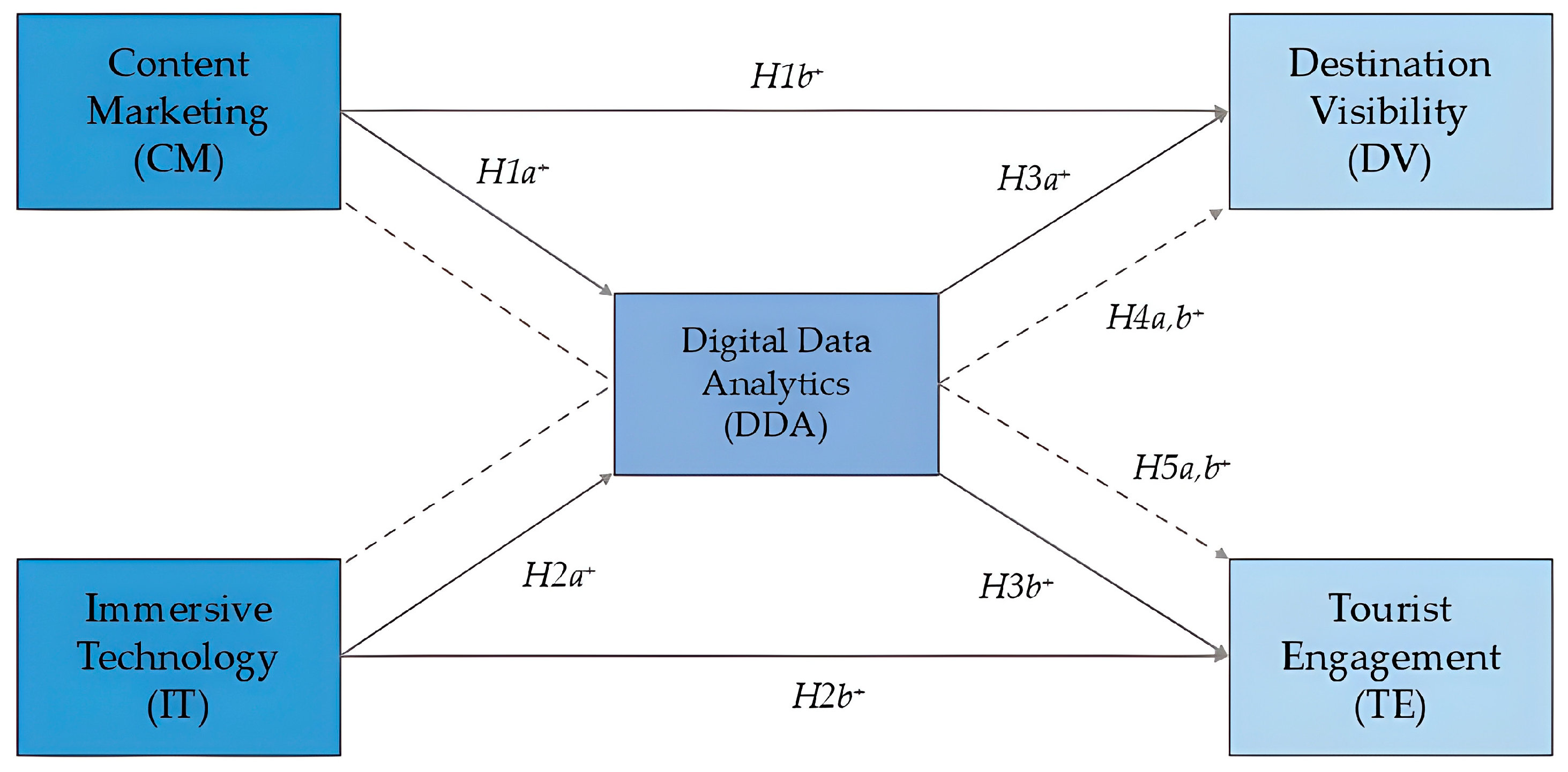
Figure 1. Research concept framework.
Tourismhosp 07 00028 g001
Table 1. Summary of variable specifications.
VariablesDefinitionIndicators Statement ItemsSources
Content marketing (CM)A marketing strategy centered on creating and distributing engaging, consistent, relevant, and valuable content to attract and retain the target audience, thereby fostering positive interactions with the image of Areia Branca Beach.(1) Content relevance
(2) Accuracy and clarity of information
(3) Added value
(4) Ease of finding content
(5) Content consistency
CM1: The published content helps me understand the available tours.
CM2: The information displayed in the tourism content is accurate.
CM3: The content provides useful information for me.
CM4: I can easily find information about these tours on the website and social media platforms.
CM5: The message and style of the content remain consistent over time.
(Inkasari et al., 2025; Rancati & Gordini, 2014)
Immersive technology (IT)Incorporating technologies such as AR, VR, and mixed reality (MR) to create interactive and immersive digital experiences that allow tourists to feel fully immersed in a virtual environment or seamlessly blended with Areia Branca Beach in real life.(1) Sense of presence
(2) Usability
(3) Immersive experience
(4) Aesthetic experience
(5) Emotional response
IT1: I feel completely immersed when using immersive technology.
IT2: The controls in immersive applications are intuitive and highly responsive.
IT3: I quickly become absorbed in the experience provided by immersive technology.
IT4: The sound and audio effects in immersive technology enhance the realism of the experience.
IT5: The immersive experience excites me.
(Alhazzaa & Yan, 2025; Cheiran et al., 2025; Dağ et al., 2024)
Digital data analytics (DDA)A series of processes involving the collection, extraction, tracking, and interpretation of digital data to gain insights that support understanding tourist behavior at Areia Branca Beach, improve the effectiveness of digital campaigns, and inform strategic decision-making.(1) Data integration and quality
(2) Analytical capabilities
(3) Utilisation of analytical outputs
(4) Operational performance efficiency
DDA1: The data used for analytics is of high quality, stable, complete, and ideal.
DDA2: Coastal authorities possess the technical expertise required to perform multifaceted digital data analyses.
DDA3: The results of digital data analysis are used to develop digital marketing strategies.
DDA4: Digital analytics helps reduce marketing operational costs.
(Bajrami et al., 2025; Nurhaeni et al., 2025)
Destination visibility (DV)The extent to which a tourist destination is visible and easily recognizable to potential tourists—both online and offline—through various digital information and promotional channels, as well as relevant and effective marketing communications, influences the likelihood of Areia Branca Beach being chosen by tourists.(1) Online visibility
(2) Digital promotion
(3) Easily accessible information
(4) Function and usefulness of UGC
(5) Exposure in tourism media and global platforms
DV1: Areia Branca Beach is easy to find through internet searches.
DV2: The social media accounts of Areia Branca Beach frequently receive interactions and comments from potential tourists.
DV3: Information about ticket prices, schedules, and destination facilities is easily accessible.
DV4: Positive reviews from tourists increase the interest of other potential visitors.
DV5: The destination has global visibility, not merely local or national.
(Azahari et al., 2025; Hardiyanto et al., 2025; Liang & Furkan, 2025)
Tourist engagement (TE)The cognitive, emotional, and active participation levels of tourists during their experience at Areia Branca Beach—including contribution and feelings of active involvement throughout their visit.(1) Enthusiasm and interaction
(2) Behavioural engagement
(3) Cognitive engagement
(4) Emotional engagement
TE1: The tourist activities here energized me, especially through direct interaction with the offerings at Areia Branca Beach.
TE2: I took many videos and photos to document my experience.
TE3: I tried to understand the meaning and context of the places I visited.
TE4: I feel that my experience here has provided me with meaningful memories, enjoyment, and happiness.
(Amir et al., 2025; Hafiya & Trihantoro, 2024; Kheiri, 2023)
Table 2. Selected sample units.
Selection CriteriaSample
Respondents by FPC size373
Respondents who completed the questionnaires364
Respondents who completed but did not return the questionnaires6
Respondents who were unwilling to complete the questionnaires2
Total number of complete and valid respondents364
Table 3. Respondent demographics (n = 364).
StatusCharacteristicsFrequencyPercentage (%)
GenderMale19553.6
Female16946.4
Age range (years)18–307420.3
31–43 15542.6
44–56 11832.4
≥56174.7
Country of origin (arrival)Australia14339.3
Indonesia8623.6
Portugal3810.4
New Zealand5013.7
China359.6
Others123.3
OccupationGovernment employee7019.2
Company employee10629.1
Researcher4512.4
Entrepreneur6217
Banker5214.3
Not working298
Average monthly salary (US$)<15004311.8
1500–25006718.4
2501–3500 8122.3
3501–450012935.4
4501–55005013.7
≥55003710.2
Frequency of visits (times)2 21659.3
3–4 11331
≥4359.6
Table 4. Descriptive statistics of variables.
VariablesMean MaximumMinimumSD
Content marketing (CM)3.88520.59
Immersive technology (IT)3.8252.10.54
Digital data analytics (DDA)3.654.91.80.63
Destination visibility (DV)3.7520.57
Tourist engagement (TE)3.784.81.750.61
Table 5. Test on CMB, reliability, and validity.
VariablesIndicatorsCMBReliability (α)Validity
Initial
Eigenvalues
% of VarianceCumulative (%)ITC
(r)
KMOBarlett’s Test (p)
Content marketing (CM)CM17.532.632.6 0.64
CM22.8512.445 0.67
CM32.19.154.10.8230.650.780.000
CM41.757.661.7 0.63
CM51.56.568.2 0.76
Immersive technology (IT)IT11.255.473.6 0.73
IT21.14.878.4 0.75
IT30.954.182.50.910.770.830.001
IT40.853.786.2 0.74
IT50.83.589.7 0.66
Digital data analytics (DDA)DDA10.7392.7 0.61
DDA20.62.695.30.8540.640.810.000
DD30.52.297.5 0.62
DDA40.351.599 0.67
Destination visibility (DV)DV10.20.999.9 0.71
DV20.050.21000.8110.660.770.000
DV30.030.1100 0.69
DV40.010100 0.65
DV50.010100 0.73
Tourist engagement (TE)TE100100 0.7
TE2001000.8720.750.790.000
TE300100 0.68
TE400100 0.72
Table 6. F-test, determination, and multicollinearity.
ModelsSimultaneous TestDetermination TestMulticollinearity Test (VIF)
F-StatisticspR2Adjusted R2
Model 134.9120.016 *0.7120.7012.243
Model 229.8640.019 *0.6690.5483.215
Model 338.5270.000 **0.8480.8371.287
Noted: * p < 5% and ** p < 1%.
Table 7. Recapitulation on hypothesis testing.
Linkages (Hypotheses)Standardized
Coefficient (β)
Standard Error
(SE)
t-StatisticsSig. (p)
CM → DDA (H1a)0.3520.0824.290.000 **
CM → DV (H1b)0.1780.091.980.049 *
IT → DDA (H2a)0.2950.0853.470.006 **
IT → TE (H2b)0.1210.0881.370.171
DDA → DV (H3a)0.4210.0785.390.000 **
DDA → TE (H3b)0.1980.0812.440.014 *
CM x DDA → DV (H4a)0.1520.0752.030.033 *
IT x DDA → DV (H4b)0.0890.0721.240.217
CM x DDA → TE (H5a)0.1140.0731.560.12
IT x DDA → TE (H5b)0.1680.072.40.018 *
Noted: * p < 5%, ** p < 1%, and x = interaction effect.
Disclaimer/Publisher’s Note: The statements, opinions and data contained in all publications are solely those of the individual author(s) and contributor(s) and not of MDPI and/or the editor(s). MDPI and/or the editor(s) disclaim responsibility for any injury to people or property resulting from any ideas, methods, instructions or products referred to in the content.


