

The Labyrinth of Sustainable Tourism Development: The Role of Place Branding Through Music


Abstract
1. Introduction
2. Literature Review
2.1. The Role of Culture and Heritage for Place Branding
2.2. Music as Intangible Cultural Heritage and Music Tourism
2.3. ICH and Music, Place Identity and Music for Placemaking
3. Materials and Methods
3.1. The Labyrinth Musical Workshop
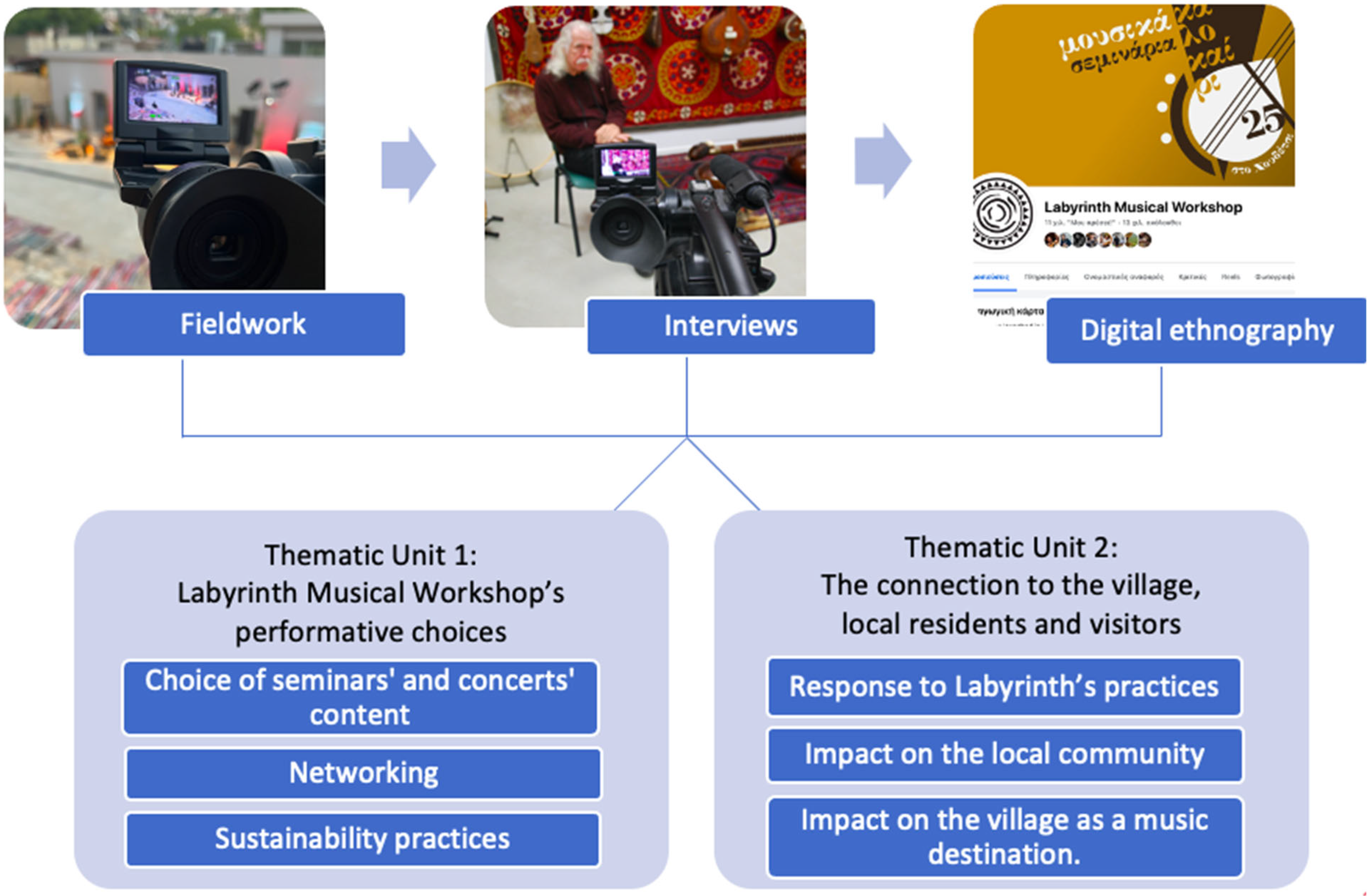
3.2. Data Collection
3.3. Data Analysis
4. Results and Discussion
4.1. Performative Choices of the Labyrinth Musical Workshop
4.1.1. Choice of Seminars and Concerts’ Content
4.1.2. Networking
4.1.3. Sustainability Practices
4.2. Labyrinth and Its Connection to the Village, Local Residents and Visitors
4.2.1. Response to the Practices of the Labyrinth
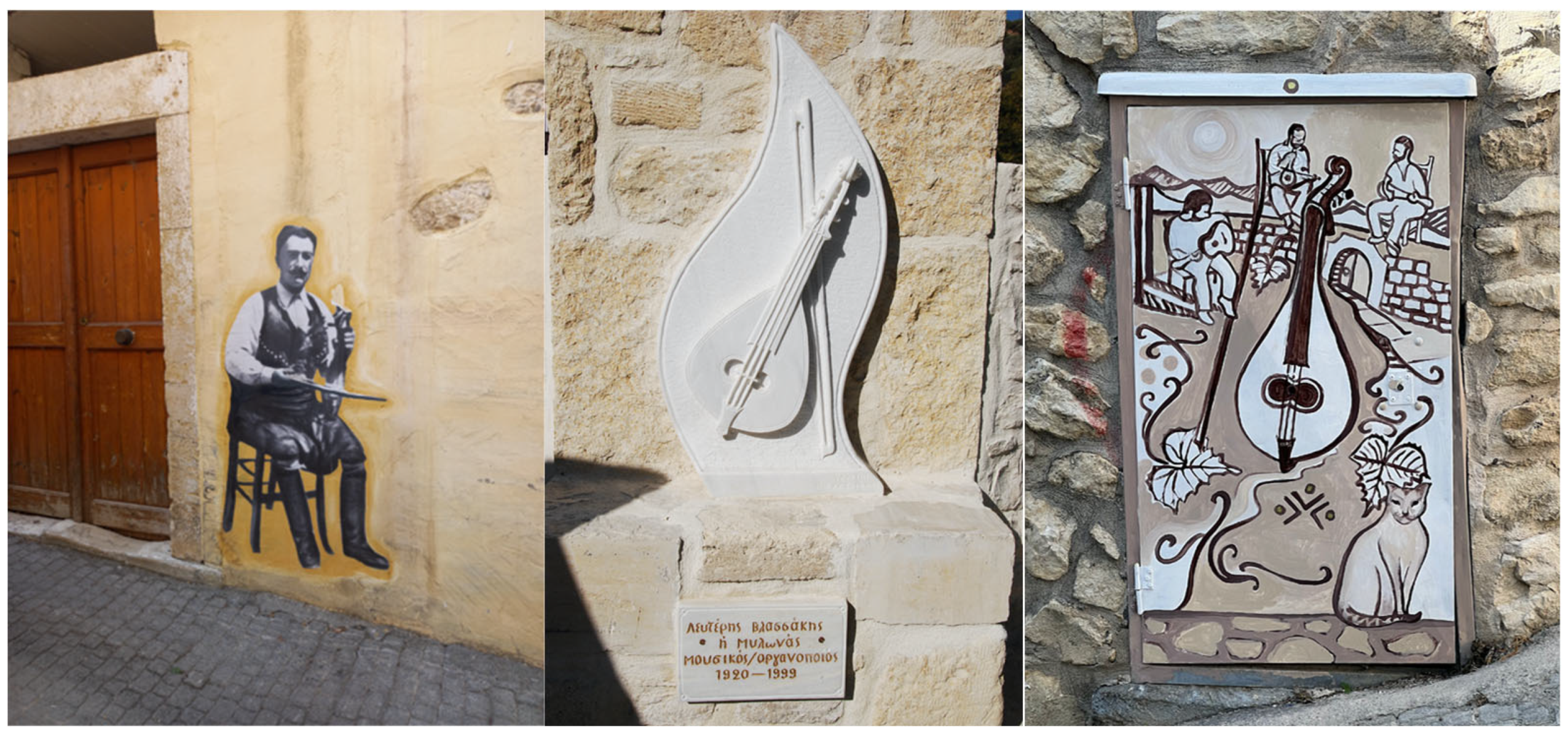
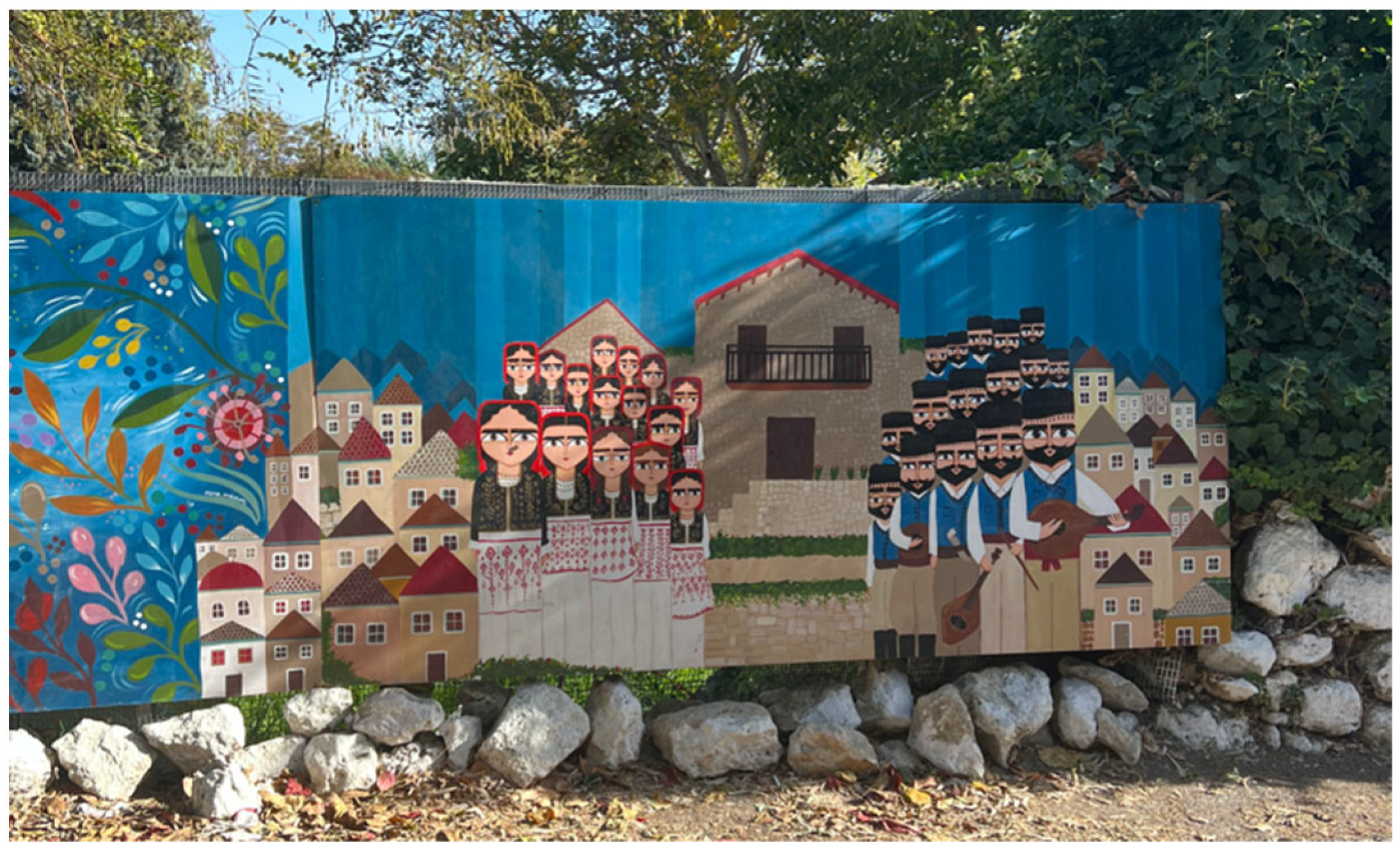
4.2.2. Impact on the Local Community
4.2.3. Impact on the Village as a Music Destination
5. Conclusions
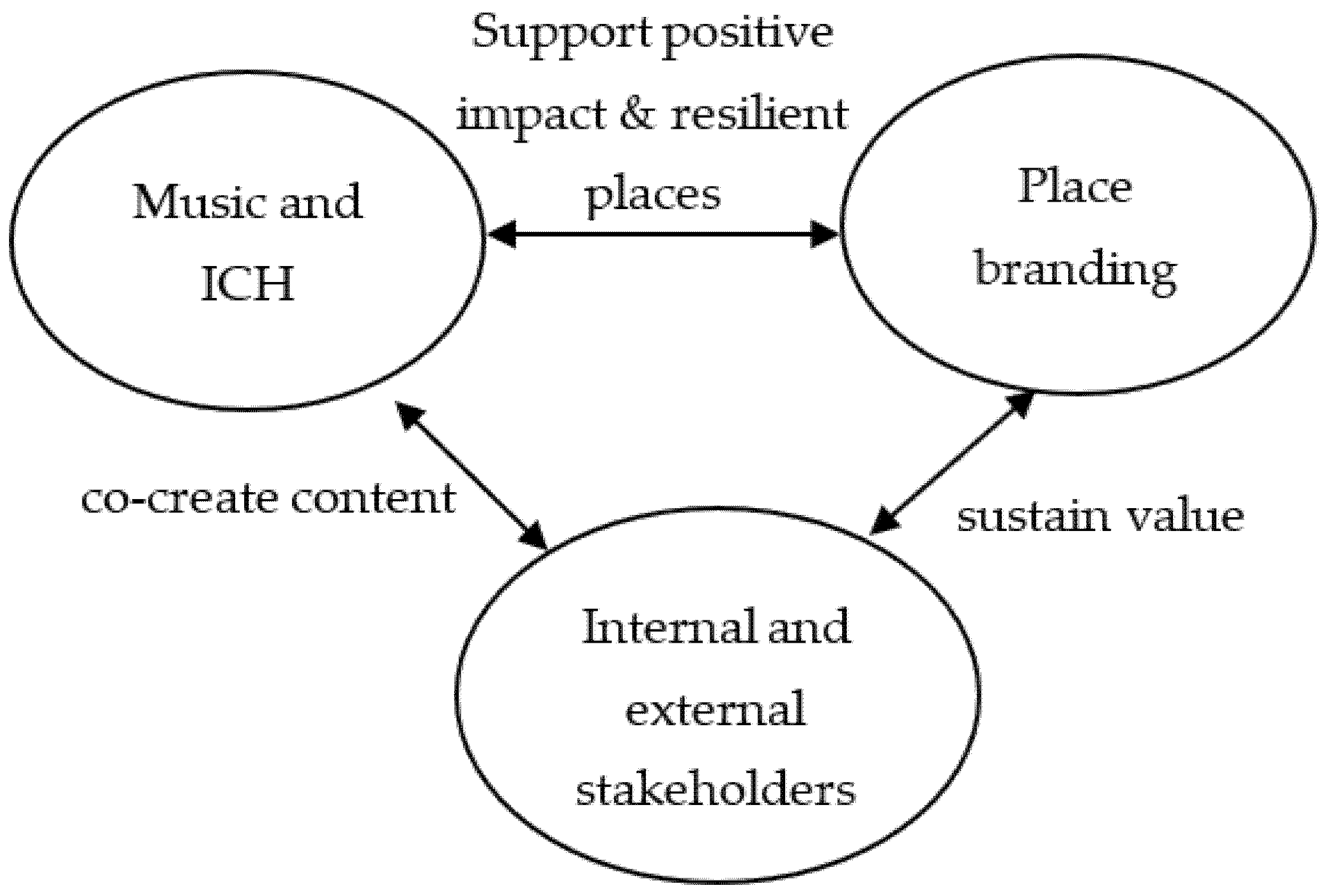
5.1. Theoretical Implications
5.2. Practical Implications
5.3. Limitations and Future Research
Author Contributions
Funding
Institutional Review Board Statement
Informed Consent Statement
Data Availability Statement
Acknowledgments
Conflicts of Interest
References
- Adams, K. M. (2024). Tourism ethnography and tourism geographies. Tourism Geographies, 27(3–4), 713–724. [Google Scholar] [CrossRef] [Scilit]
- Anholt, S. (2004). Branding places and nations. In R. Clifton, J. Simmons, & S. Ahmad (Eds.), Brands and branding (2nd ed., pp. 213–226). Bloomberg Press. [Google Scholar]
- Ashworth, G. J. (2009). The instruments of place branding: How it is done? European Spatial Research and Policy, 16, 9–22. [Google Scholar] [CrossRef] [Scilit]
- Ashworth, G. J., & Kavaratzis, M. (2014). Cities of culture and culture in cities: The emergent uses of culture in city branding. In T. Haas, & K. Olsson (Eds.), Emergent urbanism: Urban planning & design in times of systemic and structural change. Ashgate. [Google Scholar]
- Babbie, E. R. (2016). The practice of social research (14th ed.). Cengage Learning. [Google Scholar]
- Bakas, F. E., Psimouli, M., & Kladou, S. (2024). Small-scale community-led carnival festivals on a mission: Reviving local heritage and community benefits. In A. S. Jepson, R. Stadler, & T. Walters (Eds.), Reimagining community festivals and events (pp. 9–32). Routledge. [Google Scholar]
- Boyatzis, R. E. (1998). Transforming qualitative information: Thematic analysis and code development. Sage. [Google Scholar]
- Braun, V., & Clarke, V. (2006). Using thematic analysis in psychology. Qualitative Research in Psychology, 3(2), 77–101. [Google Scholar] [CrossRef] [Scilit]
- Broclain, E., Haug, B., & Patrix, P. (2019). Music: Intangible heritage? Transposition, 8, 1–22. [Google Scholar] [CrossRef] [Scilit]
- Caprioli, L., Larson, M., Ek, R., & Oi, C. S. (2021). The inevitability of essentializing culture in destination branding: The cases of fika and hygge. Journal of Place Management and Development, 14(3), 346–361. [Google Scholar] [CrossRef] [Scilit]
- Cohen, L., Manion, L., & Morrison, K. (2018). Research methods in education (8th ed.). Routledge. [Google Scholar]
- Creswell, J. W., & Creswell, J. D. (2017). Research design: Qualitative, quantitative, and mixed methods approaches (4th ed.). Sage. [Google Scholar]
- Du Gay, P., Hall, S., Jones, L., Mackay, H., & Negus, K. (1997). Doing cultural studies: The history of the Sony walkman. Sage. [Google Scholar]
- Eco, U. (1964). Apocalittici e integrati. Gruppo Editoriale Fabbri, Bompiani, Sonzogno, Etas S.p.A. [Google Scholar]
- Eriksen, T. H. (2015). Small places, large issues. Pluto Press. [Google Scholar]
- Fahey, C. (2014). Beyond needle and jingle drops: What every brand needs to know about audio branding’s power to persuade. Journal of Brand Strategy, 2(4), 347–354. [Google Scholar] [CrossRef] [Scilit]
- Fish, S. (1980). Is there a text in this class? The authority of interpretive communities. Harvard University Press. [Google Scholar]
- Fiske, J. (2010). Understanding popular culture. Routledge. [Google Scholar]
- Florek, M. (2025). The future of place and destination branding. In S. Kladou, & A. Usakli (Eds.), Understanding place and destination branding (pp. 154–165). Edward Elgar Publishing. [Google Scholar]
- Franco, N. T., Sanchez, J. E. O., & Lopez, E. R. A. (2022). Educational tourism. Journal of Administrative Science, 4(7), 26–31. [Google Scholar] [CrossRef] [Scilit]
- Gibson, C., & Connell, J. (2005). Music and tourism. On the road again. Channel View Publications. [Google Scholar]
- González-Reverté, F. (2023). Space, identity and festivals. Spatial empowerment and the construction of identity discourses through the lens of heritage festival organizers. Journal of Heritage Tourism, 18(6), 807–827. [Google Scholar] [CrossRef] [Scilit]
- Gospodini, A. (2009). Post-industrial trajectories of Mediterranean European cities: The case of post-Olympics Athens. Urban Studies, 46(5–6), 1157–1186. [Google Scholar] [CrossRef] [Scilit]
- Guachalla, A. (2023). Opera as personal heritage in tourism. Journal of Leisure Research, 55(1), 95–115. [Google Scholar] [CrossRef] [Scilit]
- Hellenic Statistical Authority. (2025). 2021 census results. Available online: https://www.statistics.gr/2021-census-pop-hous-results (accessed on 20 August 2025).
- Jorgensen, D. L. (1989). Participant observation: A methodology for human studies. Sage. [Google Scholar]
- Karachalis, N., & Vlassi, E. (2025). New urban tourism and responsible tourism as game changers in city branding: Reflections on the latest branding efforts of four European cities. In City branding (pp. 154–172). Edward Elgar Publishing. [Google Scholar]
- Kavaratzis, M. (2024). Place branding ‘in colours bold’. Place Branding and Public Diplomacy, 20(Suppl. 1), 25–28. [Google Scholar] [CrossRef] [Scilit]
- Kavaratzis, M., & Ashworth, G. (2015). Hijacking culture: The disconnection between place culture and place brands. Town Planning Review, 86(2), 155–176. [Google Scholar] [CrossRef] [Scilit]
- Kement, U. (2024). Music festivals research in the hospitality and tourism industry: A bibliometric analysis. Worldwide Hospitality and Tourism Themes, 16(4), 440–456. [Google Scholar] [CrossRef] [Scilit]
- Kemp, E., Williams, K. H., & Bordelon, B. M. (2012). The impact of marketing on internal stakeholders in destination branding: The case of a musical city. Journal of Vacation Marketing, 18(2), 121–133. [Google Scholar] [CrossRef] [Scilit]
- Kladou, S. (2025). Cultural city brand equity. In E. Oliveira, E. Sevin, & E. Björner (Eds.), Elgar encyclopedia of city and place branding (pp. 75–79). Edward Elgar Publishing. Available online: https://www.e-elgar.com/shop/gbp/elgar-encyclopedia-of-city-and-place-branding-9781035319633.html (accessed on 20 August 2025).
- Kladou, S., & Usakli, A. (Eds.). (2025). Understanding place and destination branding. Edward Elgar Publishing. [Google Scholar]
- Labyrinth. (2025). Available online: https://labyrinthmusic.gr/en/ (accessed on 20 August 2025).
- Lemmetyinen, A., Nieminen, L., Aalto, J., & Pohjola, T. (2025). Enlivening a place brand inclusively: Evidence from ten European cities. Place Branding and Public Diplomacy, 21(1), 67–80. [Google Scholar] [CrossRef] [Scilit]
- Miles, S., & Paddison, R. (2005). Introduction: The rise and rise of culture-led urban regeneration. Urban Studies, 42(5–6), 833–839. [Google Scholar] [CrossRef] [Scilit]
- Muñiz-Martínez, N. (2023). Co-creating a city brand image based on cultural identity: The case of Cali and the Salsa music and dance scene. International Journal of Tourism Cities, 9(3), 636–655. [Google Scholar] [CrossRef] [Scilit]
- Papadaki, E. (2021). The synergy of animation and tourism industry: Myths and ideologies in Mickey Mouse’s traveling adventures. Punctum, 7(2), 175–200. [Google Scholar] [CrossRef] [Scilit]
- Papadaki, E., Apladas, G., & Kouros, A. (2025a). Traditional crafts, community engagement and creative tourist: The case of traditional pottery making in Crete, Greece. In T. Pivac, R. A. M. D. Castanho, E. Martinelli, & E. C. C. Gonçalves (Eds.), The innovative pathway on sustainable culture tourism (pp. 121–130). Springer. [Google Scholar]
- Papadaki, E., Papadopoulou, P., Gournis, G., Plakou, H., & Apostolakis, A. (2025b). Creative industries, creative tourism, and sustainability perpectives: The case study of traditional pottery-making in Crete. In E. Salvador, & I. Pappalepore (Eds.), Responsible consumption and production in the creative and cultural industries. Actions, policies, and strategies for a sustainable future (pp. 94–116). Routledge. [Google Scholar]
- Pedeliento, G., & Kavaratzis, M. (2019). Bridging the gap between culture, identity and image: A structurationist conceptualization of place brands and place branding. Journal of Product & Brand Management, 28(3), 348–363. [Google Scholar] [CrossRef] [Scilit]
- Perron-Brault, A., De Grandpré, F., Legoux, R., & Dantas, D. C. (2020). Popular music festivals: An examination of the relationship between festival programs and attendee motivations. Tourism Management Perspectives, 34, 100670. [Google Scholar] [CrossRef] [Scilit]
- Rasoolimanesh, S. M., Ramakrishna, S., Hall, C. M., Esfandiar, K., & Seyfi, S. (2020). A systematic scoping review of sustainable tourism indicators in relation to the sustainable development goals. Journal of Sustainable Tourism, 31(7), 1497–1517. [Google Scholar] [CrossRef] [Scilit]
- Richards, G. (2020). Designing creative places: The role of creative tourism. Annals of Tourism Research, 85, 102922. [Google Scholar] [CrossRef] [Scilit]
- Sedmak, G., Kerma, S., & Čivre, Z. (2020). Traditional music in tourists’ eyes—The case of Slovene Istria. Journal of Heritage Tourism, 16(5), 546–558. [Google Scholar] [CrossRef] [Scilit]
- Skandalis, A., Banister, E., & Byrom, J. (2023). Spatial authenticity and extraordinary experiences: Music festivals and the everyday nature of tourism destinations. Journal of Travel Research, 63(2), 357–370. [Google Scholar] [CrossRef] [Scilit]
- Skinner, H. (2021). Place branding—The challenges of getting it right: Coping with success and rebuilding from crises. Tourism and Hospitality, 2, 173–189. [Google Scholar] [CrossRef] [Scilit]
- Slocum, S. (Ed.). (2023). Inclusion in tourism: Understanding institutional discrimination and bias. Routledge. [Google Scholar] [CrossRef] [Scilit]
- Statista. (2025). Tourism on the Greek islands. Available online: https://www.statista.com/topics/13682/tourism-on-the-greek-islands/#topicOverview (accessed on 20 August 2025).
- Swyngedouw, E., Moulaert, F., & Rodriguez, A. (2002). Neoliberal urbanization in Europe: Large–scale urban development projects and the new urban policy. Antipode, 34(3), 542–577. [Google Scholar] [CrossRef] [Scilit]
- Szmigin, I., Bengry-Howell, A., Morey, Y., Griffin, C., & Riley, S. (2017). Socio-spatial authenticity at co-created music festivals. Annals of Tourism Research, 63, 1–11. [Google Scholar] [CrossRef] [Scilit]
- Taherdoost, H. (2016). Sampling methods in research methodology: How to choose a sampling technique for research. International Journal of Academic Research in Management, 5(2), 18–27. [Google Scholar] [CrossRef] [Scilit]
- UNESCO. (n.d.) What is intangible cultural heritage? Available online: https://ich.unesco.org/en/what-is-intangible-heritage-00003 (accessed on 7 October 2025).
- Urry, J., & Larsen, J. (2011). The tourist gaze. Sage. [Google Scholar]
- Vasavada, F., & Gurpreet, K. (2016). Heritage tourism: How advertising is branding the intangibles? Journal of Heritage Management, 1(1), 22–34. [Google Scholar] [CrossRef] [Scilit]
- Vecco, M. (2010). A definition of cultural heritage: From the tangible to the intangible. Journal of Cultural Heritage, 11(3), 321–324. [Google Scholar] [CrossRef] [Scilit]
- Visit Greece. (2024). Anogeia, crete: Voted as one of the best tourism destinations by UNWTO, official website of the Greek National Tourism Organisation. Available online: https://www.visitgreece.gr/blog/visit-greece/1503/anogeia-crete-voted-as-one-of-the-best-tourism-destinations-by-unwto/ (accessed on 16 October 2025).
- Zukin, S. (2010). Landscapes of power. In The Blackwell city reader (Vol. 293, pp. 103–118). Wiley. [Google Scholar]



| Program/registration announcements | 12 | 1 |
| Concert/project announcements | 37 | 20 |
| Seminar/concert photos/videos | 20 | 15 |
| Reposts (music instructors/students/locals) | 22 | 5 |
| Seminar announcement | 70 | 45 |
| Rehearsals/behind the scenes | 30 | 6 |
| Music instructors’ music/repertoire | 64 | - |
| Project/series presentation | 3 | 2 |
| Festival 2025 posts (before, during, after) | 32 | 26 |
| Collection of instruments | 2 | 1 |
| Other announcements | 3 | - |
Disclaimer/Publisher’s Note: The statements, opinions and data contained in all publications are solely those of the individual author(s) and contributor(s) and not of MDPI and/or the editor(s). MDPI and/or the editor(s) disclaim responsibility for any injury to people or property resulting from any ideas, methods, instructions or products referred to in the content. |
© 2025 by the authors. Licensee MDPI, Basel, Switzerland. This article is an open access article distributed under the terms and conditions of the Creative Commons Attribution (CC BY) license (https://creativecommons.org/licenses/by/4.0/).
Share and Cite
Papadaki, E.; Kladou, S. The Labyrinth of Sustainable Tourism Development: The Role of Place Branding Through Music. Tour. Hosp. 2025, 6, 277. https://doi.org/10.3390/tourhosp6050277
Papadaki E, Kladou S. The Labyrinth of Sustainable Tourism Development: The Role of Place Branding Through Music. Tourism and Hospitality. 2025; 6(5):277. https://doi.org/10.3390/tourhosp6050277
Chicago/Turabian StylePapadaki, Eirini, and Stella Kladou. 2025. "The Labyrinth of Sustainable Tourism Development: The Role of Place Branding Through Music" Tourism and Hospitality 6, no. 5: 277. https://doi.org/10.3390/tourhosp6050277
APA StylePapadaki, E., & Kladou, S. (2025). The Labyrinth of Sustainable Tourism Development: The Role of Place Branding Through Music. Tourism and Hospitality, 6(5), 277. https://doi.org/10.3390/tourhosp6050277