


Abstract
This study aims to advance knowledge in the concept of therapeutic milieus by connecting nature, spirituality, and health to develop sustainable destinations. It combines the advantages of a conceptual paper and a multi-case study, offering a range of solutions demonstrated with three types of settlements: a county capital, a middle-sized town, and a small town. The GIS analysis identified several areas where the co-existence of thermal water, sacred sites, and verdant landscapes is in abundance, and five potential study areas were selected. Additional selection criteria included the GDP of the counties, visitation data, and synergy potential. Field work using field notes and photographs reconfirmed the results of the mapping and found unique value propositions that could enhance the value of health tourism. The theoretical research suggested three areas with synergy potential: culture, gastronomy, and sports. Based on the findings, a framework for therapeutic milieus showing three different scenarios was prepared. As for the economic and social implications, the research highlighted that adopting a multidisciplinary approach, incorporating insights from geography, cultural studies, and psychology, could make destinations more resilient, thus benefiting both tourists and locals. This study represents a substantial contribution to the milieu theories by incorporating natural, cultural, and spiritual elements into a flexible framework for therapeutic milieus. Future research may explore therapeutic milieus outside the Christian context or investigate the demand side.
1. Introduction
Being in the proximity of water and forested areas has positive effects on the human body, contributing to mental relaxation and physical recovery (Janeczko et al., 2020). In Hungary, this phenomenon is particularly noticeable at spa resorts and religious sites surrounded by nature (Á. D. Gyurkó et al., 2024). In the past, people not only lived close to nature, but mountains, deserts, forests, rivers and lakes were also natural frontiers, thus they influenced the way people migrated and settled in a particular area (Augé, 2008). They lived in symbiosis with nature, and the rhythm of their everyday activities was also linked to nature. This interdependence was conceptualised in the theory of biophilia by Wilson (1986), stating that the disconnection with the natural environment may be the root cause of several mental diseases. Ecospirituality, a term derived from the fusion of ecology and spirituality, has recently emerged as a notable trend, even within the Christian context (Lee, 2011; Cloete, 2023), and has lately been associated with well-being (De Diego-Cordero et al., 2024).
The concept of biophilia has also emerged in the tourism sector, with several destinations seeking sustainable solutions by rebranding themselves as blue or green destinations, both of which are connected to longevity and happiness. Blue settings include rivers, coasts, beaches, and lakes where activities such as swimming, promenading, and walking are possible (Kearns et al., 2014; Lengen, 2015). In fact, walking has been a widely researched activity related to both green and blue places (Abraham et al., 2010; Hartig et al., 2011; Olafsdottir et al., 2020). Interactions with woodlands, parks, and gardens such as walking and forest bathing (Aspinall et al., 2015; Van den Berg et al., 2015; Markevych et al., 2017; Van den Bosch & Sang, 2017; Twohig-Bennett & Jones, 2018) have also been linked to healing and improved mental well-being. A study among the elderly (aged over 65) suggests that green and blue spaces positively impact physical, mental, and social health in later life (Finlay et al., 2015). In their systematic review, Zannini et al. (2021) highlight the role of sacred natural sites in biodiversity conservation.
The purpose of this research is to show a sustainable development formula for destinations endowed with natural and cultural resources, but without a comprehensive framework to rely on. First, sacred natural places, thermal baths, and forest areas are placed on a map to find potential therapeutic milieus. Then, different research areas are selected, and field work research incorporating field notes and photography is conducted to explore blue, green, and sacred places as well as to find potential selling propositions. The field research relies on the resources recorded and classified in a national register. Finally, a framework for therapeutic milieus is prepared, and its applicability is discussed, using three study areas.
The study closes the research gap by theorising the idea of therapeutic milieus and showing the flexibility of the framework in various settings. It also takes a holistic view of health tourism proving that a wide variety of resources may be used to develop therapeutic milieus. The multi-case study proves that culture, gastronomy, and sports, together with sacred sites, can establish a resilient tourism destination, thus benefiting both locals and visitors.
Urban tourists continue to find cultural activities to be their primary motivation (Smith et al., 2023), and creative tourism, including art-based tourism, is a segment of cultural tourism that has gained popularity due to its offering of authentic experiences (Ilincic, 2014; Tan et al., 2014). Furthermore, arts can facilitate self-expression and discovery (Richards & Marques, 2012). In addition, gastronomic experiences are becoming increasingly significant in tourism; thus, a strong culinary tradition can yield positive economic benefits (Sulyok et al., 2025). Recently, gastronomy has been at the heart of development strategies to boost tourism and employment (Kowalczyk & Derek, 2020). Sports, including sports tourism, can also play a significant role in promoting a healthy lifestyle (Allan et al., 2020; Devita & Müller, 2020), resulting in a healthier population and lower health spending by governments.
As for the limitations, the paper concentrates on Christian sacred sites, where Hungarian culture has taken its main references from. The authors hope that future studies will explore therapeutic milieus beyond the Western context, finding inspiration in this research. Another limitation may be the emphasis on the supply side; however, the background investigation could substantiate the three synergy potentials without necessitating an analysis of tourist motivation.
2. Theoretical Background
2.1. Sacred Natural Places
Water covers over 70%, while flora over 30% of the surface of the earth (Congalton, 2021), so unsurprisingly, a wealth of research explores these natural elements in the health tourism context. Sacred natural sites can be any natural feature such as land or water that represents spiritual value to people (Dudley et al., 2009). They are often the combination of natural landscapes and man-made cultural objects with important intangible aspects such as spiritual beliefs and practices (Thorley & Gunn, 2008) that may incite emotions, respect, and devotion (Cladis, 2019).
Water plays a key role in the rituals and practices of many religions and beliefs. In Christianity, water is connected to birth in the form of baptism, but it can also cause death due to floods. In Hinduism, millions of devotees make the pilgrimage to the holy river Ganga to heal or die. In Buddhism, water was used to treat Buddha Gotama (Oestigaard, 2005), and even today before entering a shrine people wash their hands and mouth. Gascon et al. (2017) systematically reviewed 35 articles on blue spaces and found positive associations between water and health, especially when people engaged in land-based outdoor activities (Pasanen et al., 2019). Positive correlation was found across generations, including the elderly (Wang & Sani, 2024). As for spatial studies, Foley (2016) examined Ireland’s various blue places, such as holy wells, spa towns, Turkish baths, sweat-houses, sea-bathing, and the modern spa, while exploring the relationship between water, health, place, and culture. On the same note, Kearns et al. (2014) analysed Rotorua Island as a centre for health treatments and activities.
Regarding green places, mountains are the highest natural landscapes often associated with holy traditions: this is the place where God gave Moses the first five books of the Bible and the Ten Commandments. Mountains are often regarded as a home for deities, a place of worship, a burial place, a source of water, and a place of revelation, inspiration, or transformation. In terms of sustainability, the role of mountains is crucial, since the lack of access and isolation of many mountain regions can contribute to the preservation of cultures, including sacred practices in the given community (Bernbaum, 2012).
Forested areas are also important contributions to human well-being as well as to sacred symbolism. Sacred forests can positively affect the ecosystem and the fight against climate change (Rösch et al., 2015; Manna & Roy, 2021). Consequently, a well-preserved forest can support the sustainable livelihood of local communities, animals, and plants, allowing them to be cherished by future generations. Sacred forests also serve as natural settings for spiritual and/or religious ceremonies (Lynch et al., 2018; Ma et al., 2022).
Trees represent life in several religions; symbolising eternity as opposed to the cyclically blooming and dying of flowers (Dobai, 2021). Certain trees are national symbols and feature on national flags, for example, the cedar in Lebanon or the maple in Canada. The Hindu trinity of Brahma, Vishnu, and Maheshwara are assumed to have lived among the sacred fig trees (Barrow, 2012). Gardens around churches have long been associated with both spirituality and healing (Kulesza, 2024). Medieval monasteries with herb gardens show that humans have been shaping their environment to their own benefit for centuries. In Hungary, the UNESCO heritage Archabbey of Pannonhalma also cultivates an herb garden and uses ancient recipes to make products for curing mild ailments. Not only can herbal products heal, but the activity of gardening can also be therapeutic, contributing to mental and physical well-being.
According to studies, every 10 per cent increase in spending time at green spaces results in feeling years younger (Takano et al., 2002; De Vries et al., 2003; Villeneuve et al., 2012). Green spaces have also been linked to reduced levels of obesity among children and young people (Liu et al., 2007). Several studies conducted in North America, Europe, and Oceania with study samples ranging from 1645 to over 43 million individuals concluded that green spaces can even decrease mortality (Gascon et al., 2016).
2.2. Sacred Architecture
Grasping the significance of sacred architecture is essential to understanding the natural and cultural landscape that surrounds us (Benkő et al., 2023). Humans often put their marks on nature with landscaping and developing built environments, so natural spaces gradually turn into cultural landscapes. Sacred sites such as monasteries, church gardens, or Christian holy springs not only provide opportunities for spiritual immersion, but they are often located in natural settings that enhance mental well-being by reducing stress (Hild, 2007). They are often blended into the natural environment, like the Roman Catholic Church of Our Lady of the Rocks on water, in the Bay of Kotor, Montenegro, or the Begina Cloister in the park of Bruges. Cemeteries and other burial places can be transformational tourist attractions with their unique calvaries, tombs and statues (Pecsek, 2015; Pécsek, 2021; Rae, 2021; Pécsek & Halajova, 2022; Sallay et al., 2022). Most sacred architecture is home to important rituals: cemeteries are for funerals, churches and shrines are praying places, and calvaries are mini versions of the Via Dolorosa. Sacred architecture such as statues and crosses are often found along main roads, serving as mementos of past tragedies (Benkő et al., 2023). Over the centuries these objects have slowly blended into their surroundings, becoming stopovers for pilgrims. Sometimes sacred architecture is surrounded by blue places, such as the floating torii gate of the Itsukushima Shrine in Japan or the Mont-Saint-Michel Abbey situated on a tidal island in France. A regional example is the Saint Anna Lake, located in a volcanic crater on the territory of the Mohos Nature Reserve, a highly visited pilgrimage site and a perfect illustration of how the blue and the green converged with the sacred can give people refuge and solace.
2.3. Therapeutic Milieus
The tourism milieu from a geographical perspective was conceptualised by Michalkó (2005), illustrating the idea by identifying the elements of the Mediterranean tourism milieu (Michalkó & Rátz, 2006). While natural and cultural assets are incorporated into their concept, this current paper focuses on the therapeutic angle of milieus, putting all the elements under the umbrella of health tourism. Hungary is blessed with favourable conditions in this regard, ranking among the top five countries worldwide in terms of thermal springs (Rman et al., 2020). In recent decades, health tourism has emerged as one of the fastest growing tourism products, with positive economic and social impacts in Hungary (Jónás-Berki et al., 2015; Draghici et al., 2016; Á. Gyurkó & Gonda, 2024). Its popularity is due to the increase in medical and wellness services on the supply side as well as to the growing demand for experiences that improve physical, mental, and emotional well-being. However, the potential of health tourism extends beyond traditional thermal resorts, as natural landscapes and historical religious sites may also serve as therapeutic milieus (Lin et al., 2021). Therefore, the integration of sacred architecture and natural sites within health tourism is key for offering religious/spiritual experiences that can complement physical recovery (Pessot et al., 2021; Jevtić et al., 2024).
The term ‘therapeutic landscape’ was first coined by health geographer Wilbert Gesler, who investigated why certain natural and built environments, together with ideal social conditions, can foster a healing environment (Gesler, 2003). Spirituality and healing were core components of Gesler’s initial concept of therapeutic landscapes; however, researchers have extended the concept to acknowledge the therapeutic value of spaces owned by Indigenous communities as well. In that field, topical studies were carried out on the lands belonging to the Australian Aboriginal people (McLennan & Khavarpour, 2004), the Xhosa-speaking community in South Africa (Greeff & Loubser, 2008), and the Maoris in New Zealand (Panelli & Tipa, 2007), among others.
In this research, the concept of therapeutic milieus goes beyond the concept of the therapeutic landscape. The focus is on determining what elements can be incorporated into the sacred landscape to create an environment that promotes both physical and mental well-being. While therapeutic landscapes are found in nature, creating therapeutic milieus requires a strategic plan that involves selecting tourism products with traditional roots at the destination, which can significantly contribute to the development of the milieu.
The development of therapeutic milieus is closely linked to sustainability. Since health tourism destinations rely on natural resources, it is paramount to ensure that environmental and cultural values are protected during development (Pessot et al., 2021). For instance, the sustainable operation of Hungary’s thermal baths requires the responsible management of thermal water reserves, including constant monitoring of water yield to avoid overextraction. Similarly, at religious sites the preservation of cultural heritage should involve the upkeep of historical buildings to preserve their original spiritual and communal functions and their therapeutic and recreational roles (Fernández-Álvarez et al., 2022).
Consequently, the future of health tourism depends on the well-planned development of therapeutic milieus. The integration of natural and religious elements can contribute to the sustainable development of destinations (Chrysikou, 2025; Jevtić et al., 2024). In this regard, Hungary enjoys an immense potential, as the co-existence of natural healing sites and religious/spiritual locations presents a fertile ground for creating a competitive health tourism framework.
2.4. Synergizing Spirituality with Sports, Culture, and Gastronomy
Sports, culture, and gastronomy can all create transformative experiences in the same way as the visitation of a sacred site can change people. For instance, the practice of sports is similar to that of a religion; both require discipline, sacrifice, and even transcendence. One of the theories related to this topic is called Muscular Christianity, which originated in the mid-19th century and refers to the notion that humans have both a body and a mind that should be taken care of (Watson et al., 2005). From a practical point of view, pilgrimage is the most strenuous form of searching for God, requiring physical and mental strength, since people have to walk a part or the whole length of pilgrimage routes. Walking has both physical and mental benefits, as it releases natural brain chemicals such as serotonin, dopamine and endorphin, improving well-being. The link between sports and sacred heritage is well-illustrated by the Mária marathon event in Hungary, regularly held between 2014 and 2020. According to a survey conducted among runners, 90% of respondents highlighted the importance of events combining faith and sports because they contribute to a healthy body and mind and community cohesion (Nagy-Molnár & Bogárdi, 2024).
Religions have specific rules about diets and fasting, so they are directly connected to gastronomy. The practice of fasting is present in Judaism, Hindusim, Buddhism, Islam, and Christianity. For Christians, there is a 40-day period of spiritual preparation leading to the celebration of the Resurrection of Christ. However, fasting is not only about regulating food intake, but also has well-being implications, improving mental health and social cohesion (Arslan & Aydın, 2024). Recently, the quality of eating facilities along pilgrimage routes has also been analysed, highlighting the need for healthy, local products (Monteiro et al., 2021). In Hungary, visiting sacred sites often comes with a strong culinary component. Pannonhalma Archabbey, a UNESCO World Heritage Site, illustrates how spirituality and gastronomy can be fused in a sustainable way to offer complex experiences for visitors. In addition to producing wine, tea, and chocolates, the restaurant owned by the monks uses local ingredients combined with herbs and spices cultivated in the abbey garden.
Art therapy belongs to the creative side of culture. It started in the 1930s to help war victims and veterans develop a deeper connection with themselves (Wallace, 2020). Creating artwork always has a spiritual component, and everyone regardless of age and family status can express themselves through arts (Kırca, 2019). It may also serve as a complementary therapy for people with serious illnesses (Bell, 2011; Van Lith, 2016). Moon (2001) regarded artistic activity as an alternative language of prayer. In the realm of art therapy, music therapy has the most established tradition in Hungary, with roots tracing back to the 1870s, even before composers Bartók and Kodály were born. However, the first use of music in a therapeutic setting was documented only in the 1960s, and the first training courses were offered in 1989. The combination of spirituality and art therapy is a niche worth exploring in the Hungarian context. To gain a competitive advantage, settlements with potential for health tourism should aim to integrate creative activities into their tourism development strategies. As art is a universal language, introducing art therapy into the wellness tourism supply may be an attractive proposition to both domestic and international tourists.
3. Materials and Methods
Maps are a powerful medium for providing spatial context and illustrating and interpreting scientific results (Tyner, 2014). They are often used in natural sciences as well as in the humanities. This research also adopts the mapping technique as a springboard to identify potential therapeutic milieus where both religious sites and medicinal water are available for visitors. Potential spas were identified based on the work of Á. Gyurkó and Hojcska (2023). To ensure a structured and spatially relevant approach, a GIS-based methodology was implemented using QGIS 3.40.9 software (QGIS Development Team, QGIS Association, Zürich, Switzerland), ensuring precise spatial analysis and visualisation of potential therapeutic milieus along religious routes.
After identifying the areas suitable for developing therapeutic milieus for tourists, those meeting the following criteria were selected for further investigation: (1) the GDP is below the national average, (2) the area is not among the top five most visited destinations, and (3) the area has other values with healing aspects, so the combination of all the elements may enhance the appeal of the destination. Based on the above, the following three places were chosen: Paks, Eger, and Nyíregyháza.
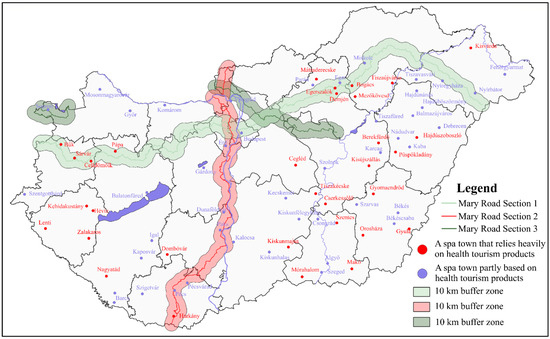
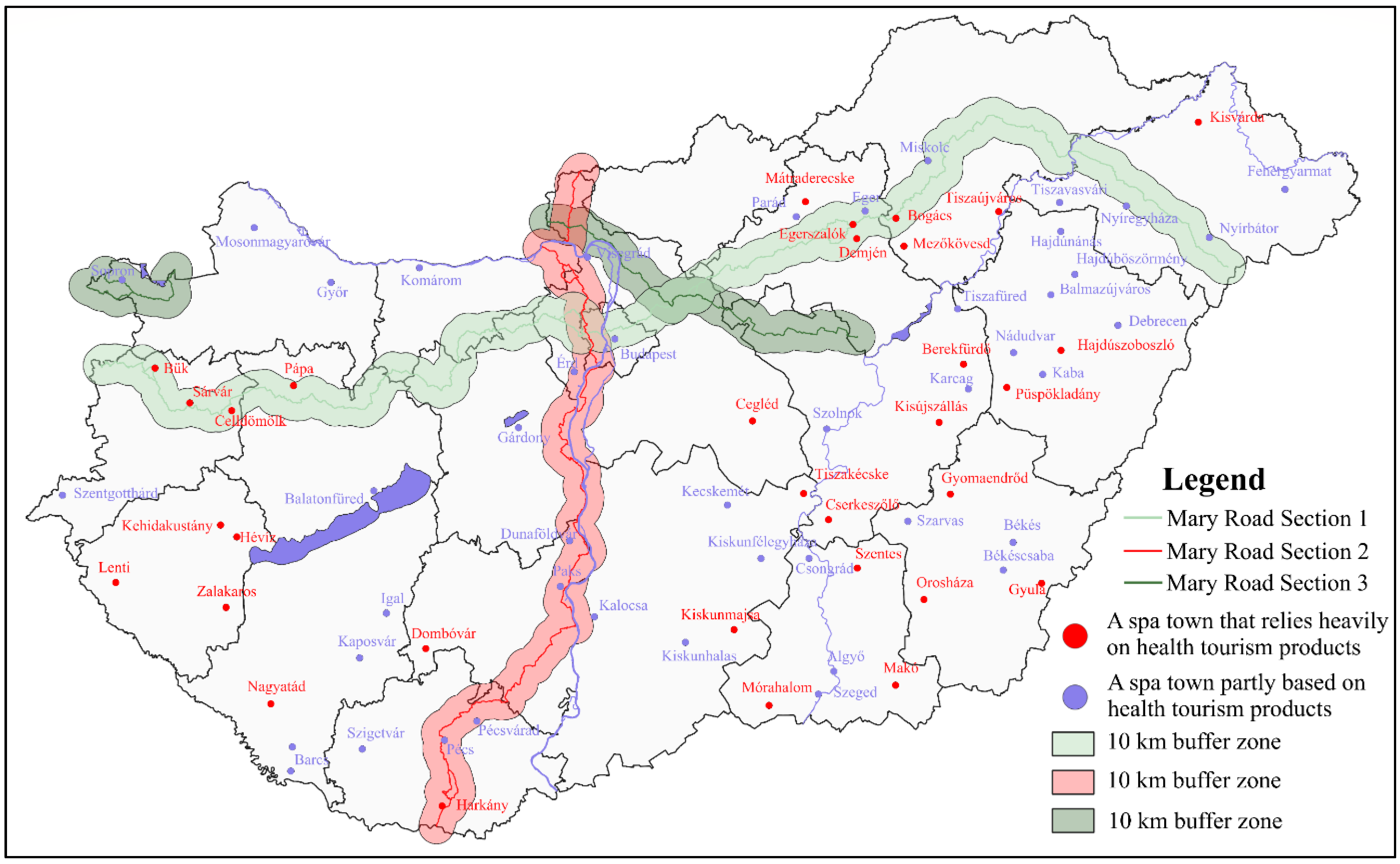
To further refine the spatial extent of the therapeutic milieus, a 10 km buffer zone was applied along the Mária Route, a major religious pilgrimage route in Hungary. This buffer was determined based on the assumed spatial influence of religious and natural healing resources, ensuring that tourism-related products within this zone can synergize with sacred sites. The 10 km buffer was defined to reflect areas that are accessible on foot or by local transport and it was applied uniformly across the study regions. The results of the mapping are shown in Figure 1.
Figure 1.
The intersection of the Mária Route and spa towns in a therapeutic environment. Source: Authors’ own editing.
The GIS analysis included:
- Buffering the Mária Route to define the therapeutic milieu’s spatial range;
- Overlaying tourism-relevant datasets, including the distribution of sacred architecture, green and blue spaces, and tourism infrastructure, in order to assess synergy potential;
- Field validation, where on-site visits were conducted to verify the accuracy of the mapped elements and refine the development direction of the study areas.
Sacred sites were found through Hungarian Catholic Church records, public tourism databases, and validated locations from OpenStreetMap and local inventories. Green spaces were defined using CORINE Land Cover (2018) categories (e.g., forests and semi-natural areas), supplemented by NDVI-based analysis (NDVI > 0.3) from Sentinel-2 imagery where finer resolution was needed. Blue spaces included surface waters and medicinal thermal baths. Tourism infrastructure was defined as accommodation, marked trails, visitor centres, and spa facilities, sourced from national tourism GIS data and local records. To ensure academic rigour, synergy potential was assessed by overlaying the 10 km buffer with sacred sites, green and blue areas, and tourism infrastructure. The final case study areas were selected using spatial filtering based on GDP, visitation data, and the presence of healing resources. This structured GIS-based approach ensures the replicability of the research.
Then, data collection took place during field research, when all three settlements were visited three times by both researchers in March 2024, using trains and coaches as mode of transport. Each visit lasted between 10 am and 5 pm and included the following programmes:
- First occasion: visiting blue and green places, making an inventory, using field notes and photography;
- Second occasion: visiting sacred architecture, making an inventory, using field notes and photography;
- Third occasion: exploring synergy potentials.
By integrating GIS-based spatial analysis with field research, the study provides a viable methodological framework for identifying therapeutic milieus with high tourism potential. Based on the analysis, a framework for therapeutic milieus was prepared to guide other destinations on a similar path of development.
Study Areas
The three study areas are diverse in terms of location, size, and cultural value propositions. However, each of them provide a suitable setting for a therapeutic milieu due to their solid foundation of natural resources and sacred architecture.
Paks is a small town in Tolna county with 20,000 inhabitants, 100 km south of the capital, Budapest. It is situated on the bank of the Danube River, which plays a vital role in the economic and social life of the settlement. Due to the river, the nuclear power plant could be built, and the water also contributed to the revival of the milling industry. It is the only Hungarian nuclear power plant, providing about 40% of the country’s electricity consumption. The town is also famous for its sports, boasting two sports associations and a soccer team employing only Hungarian players. There is no rail transport from and to Paks, which may cause some accessibility problems in terms of tourism. It is accessible on highway M6 and Road 6, and a new 1 km long bridge connects the town with Kalocsa—famous for its folk-art and paprika.
With approximately 50,000 residents, Eger is a city of historical significance located in Heves County. It lies 140 km northeast of Budapest at the foothills of the Bükk Mountains. Its rich cultural heritage, thermal waters, and diverse natural assets make it a well-known domestic destination and a good choice for developing a therapeutic milieu. Its attractions include a historic baroque centre, a medieval castle, and some religious architecture for culture enthusiasts, while its thermal baths are popular among health and wellness tourists. Due to its developed viticulture, Hungary’s most famous red wine is produced there. The city benefits from well-developed transport infrastructure, particularly the M3 motorway, which ensures easy access from most directions. The rail connections to Budapest are convenient as well; however, some parts of the county cannot be reached directly, which may pose certain challenges for potential tourists.
Nyíregyháza is the county capital of Szabolcs-Szatmár-Bereg, in northeastern Hungary, with a population of 118,000. In terms of economics, the region is one of the most disadvantaged in Hungary; however, it offers unique natural and cultural values for visitors. The city is the second largest and important in the Northern Great Plain region. The Nyírség region has a distinctive gastronomic tradition with regional dishes, ingredients, and techniques. It is also famous for its spa culture, religious architecture, and zoo. National road traffic to Budapest goes via the M3 motorway and four national highways (4, 36, 38, 41) service the city. The regional bus company provides an extensive coach network, while InterCity trains run every hour to Budapest and the two neighbouring county capitals, Debrecen and Miskolc. Although the transport network has developed rapidly over the last decades, due to the peripherical position of the city, some tourists do not favour that area.
4. Results
Table 1 describes the findings of the field work, where the inventory of the green and blue places and sacred architecture is complemented by the category of unique selling propositions (USPs) to show synergy potential.
Table 1.
Components of the therapeutic milieus.
4.1. Paks
Paks is often regarded as an industrial town. However, water, especially the Danube, plays a key role in the life of the town, renowned for its competitive and recreational water sports. Over the decades, several Olympic champions have been raised there and trained on the river.
As for green places, the Lussonium was part of the Danube Limes in the age of the Roman Empire, now located in Dunakömlőd, one of the suburbs of Paks. Nowadays it is the only restored ruin garden from this age in Tolna County and will soon be nominated for the UNESCO World Heritage list.
The Catholic church is the legacy of the internationally reputed Hungarian organic architect, Imre Makovecz, often compared to his Catalan counterpart, Antonio Gaudí. Cemeteries are often a combination of religious and green spaces, providing ideal settings for spiritual experiences. In addition, several cemeteries, including a Jewish burial place, provide suitable settings for walking. In one of them, a 14-stage uphill calvary offers both spiritual experiences and physical exercise. Visiting these sacred sites fulfils the universal human desire for silence, contemplation, and a connection with the transcendent. However, field work confirmed that the focus on sporting achievements might have led to overlooking the importance of the Makovecz heritage.
Paks has emerged as an important sports tourism destination due to the town’s soccer team employing exclusively local football players. It possesses a nationwide fan base and serves a significant role in fostering community cohesion. The soccer stadium can accommodate up to 6000 people; therefore, the town should focus on attracting sports tourists to Paks. To encourage spectators to extend their stay and engage in local activities, horse riding, fishing, and hunting may be offered. This diverse range of activities is likely to appeal to many fans. The challenge for local developers lies in making tourists aware of the full array of offerings.
Another potential synergy lies in leveraging the nuclear plant. Although the use of nuclear energy may seem controversial, it is a form of clean energy. It generates almost no carbon dioxide or other greenhouse gases, thereby not contributing to the air pollution often linked to burning fossil fuels for energy. Industrial tourism represents a niche within the tourism market and integrating it with sports and nature can offer the destination a sustainable long-term solution.
4.2. Eger
The city lacks fresh water-based blue spaces such as rivers or lakes, but the abundance of healing water has carved out Eger’s distinctive therapeutic identity. The thermal bath complex and the historic Turkish bath have long been the core of the city’s health tourism offerings, as its mineral-rich thermal water has long been used for medical purposes. In the vicinity, the spa village of Egerszalók is a natural wonder with its white-water terraces, formed by the dissolution of calcium carbonate found in spring water.
Due to its proximity to the Bükk Mountains, Eger provides easy access to hiking trails and the protected natural landscape of the Bükk National Park. These green spaces serve as a backdrop for nature-based recreation such as forest bathing or Nordic walking. In addition, the city is home to well-maintained urban green spaces such as the Archbishop’s Garden, contributing to mental well-being in an urban setting.
As the seat of Hungary’s largest historical archdiocese, sacred sites have left a lasting architectural mark on the town. The Basilica, the Archbishop’s Palace, and the Líceum building (main campus of the university) with its ecclesiastical roots combine architectural heritage with religious tradition. They position Eger as a key node along Hungary’s main pilgrimage trail, the Mária Route.
The wide variety of resources enables Eger to synergise all these elements to offer complex healing experiences. The viticulture, the baroque townscape, the educational institutions, and the thermal baths make Eger a multidimensional tourist destination where culture, health, and spirituality are intertwined. The Visual Representation BA at the university offers a specialisation in Nature Art, while the art therapy course is incorporated into the BA in Special Education, highlighting the potential for engaging interested graduates in health tourism.
4.3. Nyíregyháza
The Sóstó area is a preferred destination for both tourists and locals, officially declared a health resort in 2013 due to the amalgamation of natural blue resources and human-made infrastructure. In addition to the two lakes full of minerals, it is also home to a thermal bath and an aqua park enjoyed across generations.
The Sóstó Forest has long been recognised as a place of healing, with the Kneipp cure being widely practiced there as early as the 19th century. In its vicinity lies the Tuzson János Botanic Garden with 2500 plant species and Sóstó Zoo with an extended green area, selected as Europe’s best zoo in the below-500,000-visitor category in 2015, 2018, and 2021.
The city’s religious architecture includes churches of all five denominations. The oldest and most valuable monument in Nyíregyháza is the Baroque Lutheran Church built in 1786. The Roman Catholic Church in the main square offers a free lookout point with a panoramic view. Close to Nyíregyháza. Saint Michael, the Archangel Greek Catholic Church has been an important pilgrimage destination since 1696 due to the statue of the weeping Mary. However, field work revealed that Máriapócs lacks eateries serving local dishes, and as a result, the settlement is missing out on a potential revenue stream.
The Sóstó recreation area paired with culinary traditions offers comprehensive healing packages. It is home to the slow food movement, with unparalleled “farm-to-table” experiences and the finest fruits such as apples, plums, and sour cherries. Local restaurants use special ingredients and cooking techniques, positioning the region on the Hungarian culinary map. The preservation of its distinctive gastronomy is attributed to cross-border influences, the idyllic climate, and the preserved traditional way of life. The healthy culinary heritage is closely linked to the principles of sustainable and health tourism, benefiting the health of visitors and contributing to the biodiversity of the region.
5. Discussion and Conclusions
Hungarians enjoy a wide range of services offered at thermal baths, which results in more guest nights and higher spending (Á. Gyurkó & Gonda, 2024; Hojcska et al., 2024). However, in the case of smaller settlements, tourism development is more challenging due to the lack of distinctive attractions, so developing unique value propositions that can synergize with health, culture, and nature is paramount for their economic success (Blichfeldt, 2005). In terms of blue elements, thermal water and fresh water are available in most Hungarian settlements with tourism potential. Regarding green areas, the country lacks high mountain ranges, but forests and parks cover a substantial area, offering opportunities to enhance physical fitness while also clearing the mind. Pécsek and Halajova (2022) tapped into this potential and suggested a thematic route through Slovakia and Hungary, tying cemeteries with forests in Slovakia and with water in Hungary to satisfy the spiritual quests of tourists. However, the scope of that research is more limited, analysing only burial sites as sacred architecture.
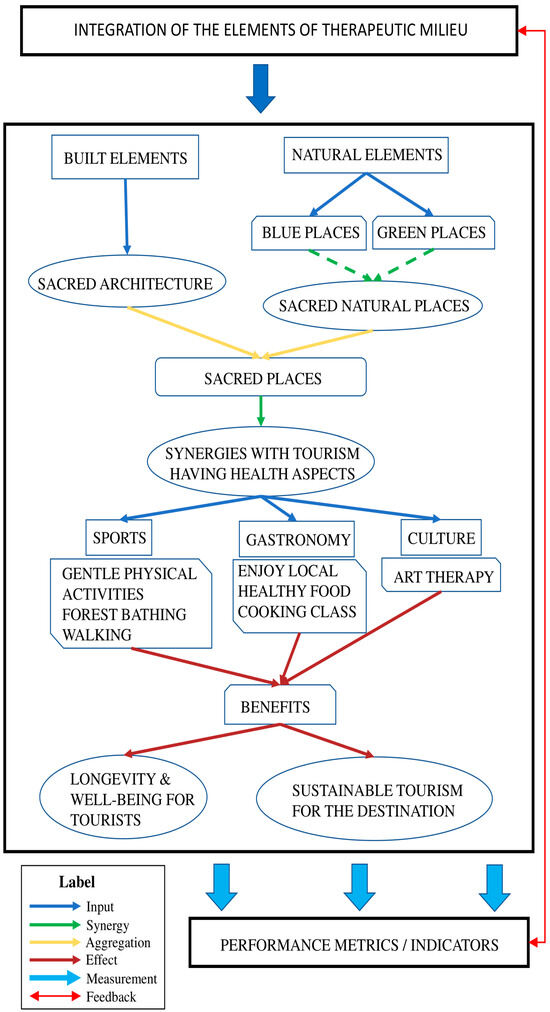
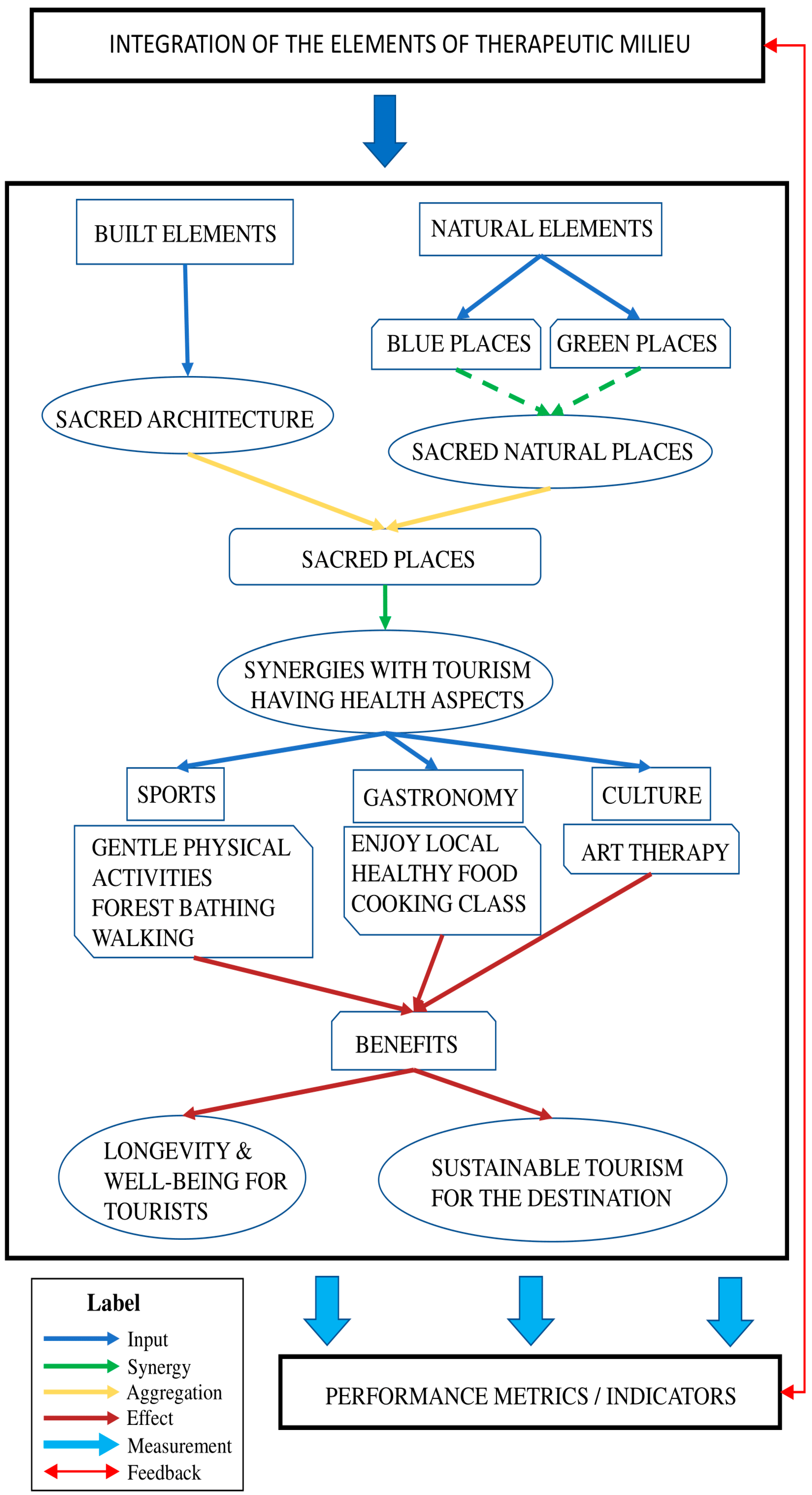
The prepared framework (Figure 2) presents a refined visualisation of the therapeutic milieu model, in which the roles and relationships of each element are clarified using distinct arrow types. Input arrows illustrate the core spatial resources (e.g., built heritage, green and blue places), while aggregation arrows show how these merge into sacred spaces. Synergy arrows represent the integrative potential between sacred places and tourism activities with health-promoting aspects. Effect arrows trace how these activities contribute to individual and destination-level benefits. Measurement arrows point toward relevant performance indicators, while feedback arrows indicate how evaluation outcomes can reinform the integration and development of therapeutic elements. Dashed arrows mark potential or context-dependent linkages. Thus, the framework reflects a dynamic, adaptive system.
Figure 2.
Framework for the therapeutic milieu. Source: Authors’ framework.
The framework synthesises blue, green, and sacred places with local tourism values, such as sports tourism, gastronomic tourism, and cultural tourism, to highlight different approaches to creating therapeutic milieus. So, the most important ingredients of a long and healthy life—nutritious food with regular exercise for the body and culture for the soul—are integrated into the framework. Furthermore, all the activities connected to sports, gastronomy and culture detailed in the framework are suitable for group enjoyment, and this collective joy gives fulfilment and a sense of flow (Csikszentmihalyi, 1990). Destinations with one or more of the above elements at their disposal are given a formula to become therapeutic milieus.
In addition, the framework contains a set of performance indicators, providing a systematic feedback loop, allowing destinations to assess their tourism performance and adjust their strategies accordingly. Instead of relying on quantitative metrics such as the number of tourists, which can contribute to overtourism, tourism metrics should focus on factors including length of stay, tourist satisfaction, and repeat visitation. Staff retention serves as a crucial indicator for sustainable destinations, as it fosters a healthier demographic pyramid and enhances community cohesion. Environmental indicators might include resource use, among other factors. The selection of performance metrics should align with the resources and strategic goals of the destination.
Sports tourism, whether active or passive, is becoming an increasingly popular recreational activity. In an age where online socialising prevails, it fosters a sense of belonging. Additionally, it is environmentally friendly, as outdoor activities do not necessitate extensive infrastructural development. As previously mentioned, physical exercise offers health benefits for individuals of all ages and fitness levels, as it reduces stress, enhances cognitive function, and improves cardiovascular health. Moreover, gentle activities that connect people with nature, such as forest bathing, Nordic walking, and meditation in natural settings, have lasting effects (Abraham et al., 2010; Hartig et al., 2011; Kearns et al., 2014; Finlay et al., 2015; Lengen, 2015; Olafsdottir et al., 2020). In Paks, sports tourism serves not only as a vehicle for promoting a healthy lifestyle but also plays a crucial role in fostering community spirit. The local sports scene, particularly aquatic sports and the local football team, contributes to forging a strong local identity while offering visitors a unique glimpse into the dynamics of community cohesion and local culture. In order to convince visitors to extend their stay, additional sports activities should be offered and promoted. The framework goes beyond the Pine and Gilmore (2013) experience model because it also puts the benefits of the local communities in focus. Research has confirmed that the focus on sport achievements may lead to overlooking the importance of the Makovecz heritage. The challenge for the town is to tie sports to spirituality, for instance, by better integrating the Makovecz trail (a walking, cycling thematic route) into their tourism offerings.
Gastronomy is another field that connects people on a more fundamental level and has a direct impact on health. In fact, culinary medicine is a new direction in gastronomy (Mutlu & Doğan, 2021), connecting the dots between diet and longevity. It is not surprising that preserving local dishes and drinks has been on the tourism agenda for decades. It started with the slow food movement in the 1980s, and has evolved into farm-to-table experiences, organic food festivals, and health/detox retreats. The growing preference for sustainable gastronomy also plays a vital role in supporting local economies to embrace their culinary traditions. Nyíregyháza exemplifies how local initiatives can contribute to strengthening regenerative tourism and the local slow food movement, by focusing on seasonal, locally sourced ingredients. It can also help visitors deepen their connection with the traditional agriculture and biodiversity of the region. However, field work revealed that spirituality and gastronomy have not been tied together, as the surroundings of Máriapócs lack eateries serving local dishes. Consequently, the whole segment of pilgrims is overlooked in gastronomic tourism, which should be a new focus in destination planning. Long-forgotten dishes should be popularised among locals, and educational institutions would be ideal venues to start these initiatives.
Cultural activities are also beneficial for our health. Creative expressions such as art therapy combined with spiritual experiences have been the latest trend in tourism with the establishment of eco-art therapy retreats (Hamed & El-Mawardy, 2025). Active cultural tourism fosters intellectual stimulation, further contributing to a better quality of life. The cultural landscape of Eger offers excellent conditions for the development of art-based health tourism. The city’s rich architectural and artistic heritage, along with its cultural life, especially the presence of the Faculty of Arts of the Eszterházy Károly Catholic University, can ensure an inspiring environment for art therapy programmes. As the literature analysis revealed, this is an unexplored area of tourism development in Hungary. While the university in Eger currently offers an art therapy course embedded into their BA in Special Education, introducing an art therapy major would align with its Christian principles and promote local job creation. A full programme is not unprecedented in Hungary; an MA programme is available in Pécs, focusing on fine arts therapy and music therapy. Graduates from this programme are prepared to practice art therapy in mental health prevention and rehabilitation, provided they receive adequate supervision.
5.1. Theoretical Contributions
This study analyses natural landscapes and sacred heritage in Hungary to identify places where, together with local resources, tourists can enjoy holistic, therapeutic experiences. Combining the advantages of a conceptual paper and a multi-case study, this research prepared a framework and applied it in three different contexts to show its flexibility. This study also proves that transcontinental influences such as Japanese forest bathing can be integrated into European practices to enhance visitors’ experiences. Blending global trends with local resources makes more resilient destinations, where the international component can be changed and adjusted to the local conditions. The GIS-based spatial analysis with a 10 km buffer along the Mária Route offers a solid geographic foundation for planning therapeutic milieus with high synergy potential.
5.2. Practical Implications
Using the therapeutic milieu framework, destinations can develop a diverse and adaptable tourism supply with complementary options for visitors. This adaptability allows for a year-round tourism flow, by solving seasonality issues that many destinations struggle with. Since the therapeutic milieu framework is based on local resources, including natural values and built religious heritage, it is more authentic and fosters sustainable growth, economic resilience, and community engagement. The framework also aligns with the principles of regenerative tourism, ensuring that both visitors and host communities can benefit in the long term. In the globalised world it is tempting to copy international good practices, disregarding local resources and potential; however, this multi-case study grounded in strong conceptualisation puts locality at the heart of development.
On the social side, a resilient destination can generate more predictable revenue flow that can be reinvested in local job generation. Employment opportunities lead to population retention, more loyalty, and emotional attachment, making stronger communities.
5.3. Limitations and Further Research
As for the limitations of this research, this study concentrates on Christian sacred sites, since Hungarian culture has taken its main references from Christianity. The authors hope that future studies will investigate therapeutic milieus beyond the Western context, finding inspiration from this work. Further investigation is recommended to explore the demand aspect of the therapeutic milieu by analysing the motivations of both current and prospective target markets. Future research may focus on examining the requirements of human resources and identifying the deficiencies in education and career development, particularly in socially disadvantaged destinations.
Author Contributions
Conceptualization, B.P. and Á.G.; Methodology, B.P. and Á.G.; Software, Á.G.; Validation, Á.G.; Formal analysis, B.P. and Á.G.; Investigation, B.P. and Á.G.; Resources, B.P. and Á.G.; Data curation, B.P. and Á.G.; Writing—original draft, B.P. and Á.G.; Writing—review & editing, B.P.; Visualization, Á.G.; Supervision, B.P.; Project administration, B.P. All authors have read and agreed to the published version of the manuscript.
Funding
This research received no external funding.
Institutional Review Board Statement
Not applicable.
Informed Consent Statement
Not applicable.
Data Availability Statement
The original contributions presented in this study are included in the article. Further inquiries can be directed to the corresponding author.
Conflicts of Interest
The authors declare no conflict of interest.
References
- Abraham, A., Sommerhalder, K., & Abel, T. (2010). Landscape and well-being: A scoping study on the health-promoting impact of outdoor environments. International Journal of Public Health, 55(1), 59–69. [Google Scholar] [CrossRef] [Scilit] [PubMed]
- Allan, J., Hardwell, A., Kay, C., Peacock, S., Hart, M., Dillon, M., & Brymer, E. (2020). Health and wellbeing in an outdoor and adventure sports context. Sports, 8(4), 50. [Google Scholar] [CrossRef] [Scilit]
- Arslan, S., & Aydın, A. (2024). Religious dietary practices: Health outcomes and psychological insights from various countries. Journal of Religion and Health, 63(5), 3256–3273. [Google Scholar] [CrossRef] [Scilit]
- Aspinall, P., Mavros, P., Coyne, R., & Roe, J. (2015). The urban brain: Analysing outdoor physical activity with mobile EEG. British Journal of Sports Medicine, 49(4), 272–276. [Google Scholar] [CrossRef] [Scilit] [PubMed]
- Augé, M. (2008). Non-places: An introduction to supermodernity. Verso Books. [Google Scholar]
- Barrow, E. G. (2012). Falling between the ‘cracks’ of conservation and religion: The role of stewardship for sacred trees and groves. In Sacred natural sites (pp. 42–52). Routledge. [Google Scholar]
- Bell, S. (2011). Art therapy and spirituality. Journal for the Study of Spirituality, 1(2), 215–230. [Google Scholar] [CrossRef] [Scilit]
- Benkő, A., Herczeg, Á., & Sárospatakai, M. (2023). Szenthatározó-Tájak szentjei, szentek tájai a Kárpát-medencében. Ars Topia Alapítvány. [Google Scholar]
- Bernbaum, E. (2012). Sacred mountains and global changes: Impacts and responses. In Sacred natural sites (pp. 33–41). Routledge. [Google Scholar]
- Blichfeldt, B. S. (2005). Unmanageable place brands? Place Branding, 1(4), 388–401. [Google Scholar] [CrossRef] [Scilit]
- Chrysikou, E. (2025). Therapeutic architecture and tourism: Exploring potential cross-disciplinary synergies: A Horizon 2050 paper. Tourism Review, 80(1), 151–164. [Google Scholar] [CrossRef] [Scilit]
- Cladis, M. S. (2019). Sacred sites as a threat to environmental justice?: Environmental spirituality and justice meet among the diné (Navajo) and other indigenous groups. Worldviews, 23(2), 132–153. [Google Scholar] [CrossRef] [Scilit]
- Cloete, N. M. (2023). Retrieving a Christian ecological spirituality in response to our contemporary ecological crisis. Pharos Journal of Theology, 104(4), 1–17. [Google Scholar] [CrossRef] [Scilit]
- Congalton, R. G. (2021). Mapping and monitoring forest cover. Forests, 12(9), 1184. [Google Scholar] [CrossRef] [Scilit]
- Csikszentmihalyi, M. (1990). Flow: The psychology of optimal experience. Haper and Row. [Google Scholar]
- De Diego-Cordero, R., Martínez-Herrera, A., & Coheña-Jiménez, M. (2024). Ecospirituality and health: A systematic review. Journal of Religion and Health, 63(2), 1285–1306. [Google Scholar] [CrossRef] [Scilit]
- Devita, S., & Müller, A. É. (2020). Association of physical activity (sport) and quality of life: A literature review. GeoSport for Society, 12, 44–52. [Google Scholar] [CrossRef] [Scilit]
- De Vries, S., Verheij, R. A., Groenewegen, P. P., & Spreeuwenberg, P. (2003). Natural environments—Healthy environments? An exploratory analysis of the relationship between greenspace and health. Environment and Planning A: Economy and Space, 35(10), 1717–1731. [Google Scholar] [CrossRef] [Scilit]
- Dobai, A. M. (2021). A szakrális tér dimenziói: Budapest szakrális térszerkezetének egyes aspektusai [Ph.D. dissertation, Eötvös Lóránt University]. Available online: https://opac.elte.hu/Record/opac-EUL01-001076735 (accessed on 27 October 2025).
- Draghici, C., Diaconu, D., Teodorescu, C., Pintilii, R., & Ciobotaru, A. (2016). Health tourism contribution to the structural dynamics of the territorial systems with tourism functionality. Procedia Environmental Sciences, 32, 386–393. [Google Scholar] [CrossRef] [Scilit]
- Dudley, N., Higgins-Zogib, L., & Mansourian, S. (2009). The links between protected areas, faiths, and sacred natural sites. Conservation Biology, 23(3), 568–577. [Google Scholar] [CrossRef] [Scilit]
- Fernández-Álvarez, Ó., González-González, M., & Ouali-Fernández, S. (2022). Religious heritage: Reconciliation between spirituality and cultural concerns. Rupkatha Journal on Interdisciplinary Studies in Humanities, 14(4), 1–13. [Google Scholar] [CrossRef] [Scilit]
- Finlay, J., Franke, T., McKay, H., & Sims-Gould, J. (2015). Therapeutic landscapes and wellbeing in later life: Impacts of blue and green spaces for older adults. Health & Place, 34, 97–106. [Google Scholar] [CrossRef] [Scilit]
- Foley, R. (2016). Healing waters: Therapeutic landscapes in historic and contemporary Ireland. Routledge. [Google Scholar]
- Gascon, M., Triguero-Mas, M., Martínez, D., Dadvand, P., Rojas-Rueda, D., Plasència, A., & Nieuwenhuijsen, M. J. (2016). Residential green spaces and mortality: A systematic review. Environment International, 86, 60–67. [Google Scholar] [CrossRef] [Scilit] [PubMed]
- Gascon, M., Zijlema, W., Vert, C., White, M. P., & Nieuwenhuijsen, M. J. (2017). Outdoor blue spaces, human health and well-being: A systematic review of quantitative studies. International Journal of Hygiene and Environmental Health, 220(8), 1207–1221. [Google Scholar] [CrossRef] [Scilit]
- Gesler, W. M. (2003). Healing places. Rowman & Littlefield. [Google Scholar]
- Greeff, A. P., & Loubser, K. (2008). Spirituality as a resiliency quality in Xhosa-speaking families in South Africa. Journal of Religion and Health, 47(3), 288–301. [Google Scholar] [CrossRef] [Scilit]
- Gyurkó, Á., & Gonda, T. (2024). Regional situation and performance evaluation of tourism development in the Pécs-Villány tourism area. Deturope, 16(3), 36–56. [Google Scholar] [CrossRef] [Scilit]
- Gyurkó, Á., & Hojcska, Á. E. (2023). Situation assessment of the tourism performance of Hungarian spa settlements in 2018–2022, with a special focus on the tourism impact of COVID-19. In Á. E. Hojcska, Z. Szabó, & Z. Bujdosó (Eds.), Regional possibilities of spa towns: 4th science papers of the spa towns. Hungarian Spa Towns Association Society. [Google Scholar]
- Gyurkó, Á. D., Bujdosó, Z., & Dávid, L. D. (2024). Characterisation of Hungary’s regional tourism and economic performance between 2004 and 2022 in the light of EU funding. Geographica Pannonica, 28(1), 21–33. [Google Scholar] [CrossRef] [Scilit]
- Hamed, R. A., & El-Mawardy, G. M. (2025). Eco-art therapy retreats: A new venue for enriching wellness tourism experiences in Egypt. The International Journal of Tourism and Hospitality Studies, 8(2), 170–207. [Google Scholar] [CrossRef] [Scilit]
- Hartig, T., Van Den Berg, A. E., Hagerhall, C. M., Tomalak, M., Bauer, N., Hansmann, R., Ojala, A., Syngollitou, E., Carrus, G., Van Herzele, A., & Bell, S. (2011). Health benefits of nature experience: Psychological, social and cultural processes. In Forests, trees and human health (pp. 127–168). Springer Netherlands. [Google Scholar] [CrossRef] [Scilit]
- Hild, C. M. (2007). Places and states of mind for healing. ReVision, 29(1), 12–19. [Google Scholar] [CrossRef] [Scilit]
- Hojcska, Á. E., Szabó, Z., & Bujdosó, Z. (2024). Values of the medicinal bath place environment: The importance of medicinal bath place characteristics among Hungarians. Polish Journal of Natural Science, 39(4), 249–263. [Google Scholar] [CrossRef] [Scilit]
- Ilincic, M. (2014). Benefits of creative tourism-the tourist perspective. Alternative and Creative Tourism, 99–113. [Google Scholar]
- Janeczko, E., Bielinis, E., Wójcik, R., Woźnicka, M., Kędziora, W., Łukowski, A., Elsadek, M., Szyc, K., & Janeczko, K. (2020). When urban environment is restorative: The effect of walking in suburbs and forests on psychological and physiological relaxation of young Polish adults. Forests, 11(5), 591. [Google Scholar] [CrossRef] [Scilit]
- Jevtić, M., Gajić, T., & Vukolić, D. (2024). Theoretical review and literature analysis of the role of the environment in health tourism. Turističko Poslovanje, 34, 69–79. [Google Scholar] [CrossRef] [Scilit]
- Jónás-Berki, M., Csapó, J., Pálfi, A., & Aubert, A. (2015). A market and spatial perspective of health tourism destinations: The Hungarian experience. International Journal of Tourism Research, 17(6), 602–612. [Google Scholar] [CrossRef] [Scilit]
- Kearns, R. A., Collins, D., & Conradson, D. (2014). A healthy island blue space: From space of detention to site of sanctuary. Health & Place, 30, 107–115. [Google Scholar] [CrossRef] [Scilit]
- Kırca, B. (2019). Spiritual dimension in art therapy. Spiritual Psychology and Counseling, 4, 257–274. [Google Scholar] [CrossRef] [Scilit]
- Kowalczyk, A., & Derek, M. (2020). Gastronomy and urban space [The urban book series]. Springer. [Google Scholar]
- Kulesza, P. (2024). Church surroundings as spaces with a health-promoting function–possibilities and dilemmas. Acta Scientiarum Polonorum Administratio Locorum, 23(3), 461–472. [Google Scholar] [CrossRef] [Scilit]
- Lee, K. H. (2011). Jonathan Edwards on nature: An example for Christian ecospirituality. Torch Trinity Journal, 14(2), 130–141. [Google Scholar]
- Lengen, C. (2015). The effects of colours, shapes and boundaries of landscapes on perception, emotion and mentalising processes promoting health and well-being. Health & Place, 35, 166–177. [Google Scholar] [CrossRef] [Scilit]
- Lin, H. H., Chang, K. H., Tseng, C. H., Lee, Y. S., & Hung, C. H. (2021). Can the development of religious and cultural tourism build a sustainable and friendly life and leisure environment for the elderly and promote physical and mental health? International Journal of Environmental Research and Public Health, 18(22), 11989. [Google Scholar] [CrossRef] [Scilit] [PubMed]
- Liu, G. C., Wilson, J. S., Qi, R., & Ying, J. (2007). Green neighborhoods, food retail and childhood overweight: Differences by population density. American Journal of Health Promotion, 21(Suppl. 4), 317–325. [Google Scholar] [CrossRef] [Scilit]
- Lynch, L., Kokou, K., & Todd, S. (2018). Comparison of the ecological value of sacred and nonsacred community forests in Kaboli, Togo. Tropical Conservation Science, 11, 1940082918758273. [Google Scholar] [CrossRef] [Scilit]
- Ma, J., Tam, C., Li, T., Yu, G., Hu, G., Yang, F., Wang, J., & Wu, R. (2022). Sacred natural sites classification model based on ecosystem services and implications for conservation. Conservation Science and Practice, 4(4), e12638. [Google Scholar] [CrossRef] [Scilit]
- Manna, S., & Roy, A. (2021). Indian sacred groves: Floristic diversity, ecology and conservation. International Journal of Chemical and Environmental Sciences, 3(1), 32–45. [Google Scholar] [CrossRef] [Scilit]
- Markevych, I., Schoierer, J., Hartig, T., Chudnovsky, A., Hystad, P., Dzhambov, A. M., De Vries, S., Triguero-Mas, M., Brauer, M., Nieuwenhuijsen, M. J., & Lupp, G. (2017). Exploring pathways linking greenspace to health: Theoretical and methodological guidance. Environmental Research, 158, 301–317. [Google Scholar] [CrossRef] [Scilit]
- McLennan, V., & Khavarpour, F. (2004). Culturally appropriate health promotion: Its meaning and application in Aboriginal communities. Health Promotion Journal of Australia, 15(3), 237–239. [Google Scholar] [CrossRef] [Scilit]
- Michalkó, G. (2005). A turisztikai miliő földrajzi értelmezése. Tér és Társdadalom, 19(1), 43–63. [Google Scholar] [CrossRef] [Scilit]
- Michalkó, G., & Rátz, T. (2006). The mediterranean tourist milieu. Anatolia, 17(1), 93–109. [Google Scholar] [CrossRef] [Scilit]
- Monteiro, R., Azevedo, D., & Silva, S. (2021). The way of St. James: Food consumption patterns of pilgrims. In ICTR 2021 4th international conference on tourism research (p. 384). Academic Conferences International. [Google Scholar]
- Moon, C. (2001). Prayer, sacraments, grace. In Spirituality and art therapy: Living the connection (pp. 29–51). Jessica Kingsley Publishers. [Google Scholar]
- Mutlu, H., & Doğan, M. (2021). A new trend in gastronomy: Culinary medicine chef. International Journal of Gastronomy and Food Science, 24, 100328. [Google Scholar] [CrossRef] [Scilit]
- Nagy-Molnár, M., & Bogárdi, T. (2024). Sport and spiritual life–insights from survey research in the Mária maraton project. Acta Regionis Rurum, 18, 33–42. [Google Scholar] [CrossRef] [Scilit]
- Oestigaard, T. (2005). Water and world religions: An introduction. University of Bergen. [Google Scholar]
- Olafsdottir, G., Cloke, P., Schulz, A., Van Dyck, Z., Eysteinsson, T., Thorleifsdottir, B., & Vögele, C. (2020). Health benefits of walking in nature: A randomized controlled study under conditions of real-life stress. Environment and Behavior, 52(3), 248–274. [Google Scholar] [CrossRef] [Scilit]
- Panelli, R., & Tipa, G. (2007). Placing well-being: A Maori case study of cultural and environmental specificity. EcoHealth, 4(4), 445–460. [Google Scholar] [CrossRef] [Scilit]
- Pasanen, T. P., White, M. P., Wheeler, B. W., Garrett, J. K., & Elliott, L. R. (2019). Neighbourhood blue space, health and wellbeing: The mediating role of different types of physical activity. Environment International, 131, 105016. [Google Scholar] [CrossRef] [Scilit]
- Pecsek, B. (2015). City cemeteries as cultural attractions: Towards an understanding of foreign visitors’ attitude at the national Graveyard in Budapest. The Central European Journal of Regional Development and Tourism, 7(1), 44–61. [Google Scholar] [CrossRef] [Scilit]
- Pessot, E., Spoladore, D., Zangiacomi, A., & Sacco, M. (2021). Natural resources in health tourism: A systematic literature review. Sustainability, 13(5), 2661. [Google Scholar] [CrossRef] [Scilit]
- Pécsek, B. (2021). The transformation of the Budapest Fiumei Road Cemetery into staycation. In Változó világ, változó turizmus (pp. 323–336). Széchenyi István University. [Google Scholar]
- Pécsek, B., & Halajova, D. (2022). Spiritual quest in rural Hungary and Slovakia: Developing an innovative thematic route. International Journal of Religious Tourism and Pilgrimage, 10(1), 6. [Google Scholar] [CrossRef]
- Pine, B. J., & Gilmore, J. H. (2013). The experience economy: Past, present and future. In Handbook on the experience economy (pp. 21–44). Edward Elgar Publishing. [Google Scholar] [CrossRef] [Scilit]
- Rae, R. A. (2021). Cemeteries as public urban green space: Management, funding and form. Urban Forestry & Urban Greening, 61, 127078. [Google Scholar] [CrossRef] [Scilit]
- Richards, G. W., & Marques, L. (2012). Exploring creative tourism: Introduction. Journal of Tourism Consumption and Practice, 4(2), 1–11. [Google Scholar]
- Rman, N., Bălan, L. L., Bobovečki, I., Gál, N., Jolović, B., Lapanje, A., Marković, T., Milenić, D., Skopljak, F., Rotár-Szalkai, Á., & Samardžić, N. (2020). Geothermal sources and utilization practice in six countries along the southern part of the Pannonian basin. Environmental Earth Sciences, 79(1), 1. [Google Scholar] [CrossRef] [Scilit]
- Rösch, V., Tscharntke, T., Scherber, C., & Batáry, P. (2015). Biodiversity conservation across taxa and landscapes requires many small as well as single large habitat fragments. Oecologia, 179(1), 209–222. [Google Scholar] [CrossRef] [Scilit] [PubMed]
- Sallay, Á., Mikházi, Z., Gecséné Tar, I., & Takács, K. (2022). Cemeteries as a part of green infrastructure and tourism. Sustainability, 14(5), 2918. [Google Scholar] [CrossRef] [Scilit]
- Smith, M. K., Pinke-Sziva, I., & Berezvai, Z. (2023). The relative importance of culture in urban tourism: Implications for segmentation. Consumer Behavior in Tourism and Hospitality, 18(2), 157–173. [Google Scholar] [CrossRef] [Scilit]
- Sulyok, J., Kanizsai-Nagy, D., & Porga, B. (2025). Culture through the lense of gastronomy–Gastronomy-related programmes of the Veszprém Balaton 2023 European Capital of Culture. Turizmus Bulletin, 25(3), 5–13. [Google Scholar] [CrossRef] [Scilit]
- Takano, T., Nakamura, K., & Watanabe, M. (2002). Urban residential environments and senior citizens’ longevity in megacity areas: The importance of walkable green spaces. Journal of Epidemiology & Community Health, 56(12), 913–918. [Google Scholar] [CrossRef] [Scilit]
- Tan, S. K., Luh, D. B., & Kung, S. F. (2014). A taxonomy of creative tourists in creative tourism. Tourism Management, 42, 248–259. [Google Scholar] [CrossRef] [Scilit]
- Thorley, A., & Gunn, C. M. (2008). Sacred sites: An overview. The Gaia Foundation. [Google Scholar]
- Twohig-Bennett, C., & Jones, A. (2018). The health benefits of the great outdoors: A systematic review and meta-analysis of greenspace exposure and health outcomes. Environmental Research, 166, 628–637. [Google Scholar] [CrossRef] [Scilit]
- Tyner, J. A. (2014). Principles of map design. Guilford Publications. [Google Scholar]
- Van den Berg, M., Wendel-Vos, W., van Poppel, M., Kemper, H., van Mechelen, W., & Maas, J. (2015). Health benefits of green spaces in the living environment: A systematic review of epidemiological studies. Urban Forestry & Urban Greening, 14(4), 806–816. [Google Scholar] [CrossRef] [Scilit]
- Van den Bosch, M., & Sang, Å. O. (2017). Urban natural environments as nature-based solutions for improved public health–A systematic review of reviews. Environmental Research, 158, 373–384. [Google Scholar] [CrossRef] [Scilit] [PubMed]
- Van Lith, T. (2016). Art therapy in mental health: A systematic review of approaches and practices. The Arts in Psychotherapy, 47, 9–22. [Google Scholar] [CrossRef] [Scilit]
- Villeneuve, P. J., Jerrett, M., Su, J. G., Burnett, R. T., Chen, H., Wheeler, A. J., & Goldberg, M. S. (2012). A cohort study relating urban green space with mortality in Ontario, Canada. Environmental Research, 115, 51–58. [Google Scholar] [CrossRef] [Scilit]
- Wallace, K. O. (2020). There is no need to talk about this poetic inquiry from the art therapy studio. In Art History. Springer. [Google Scholar]
- Wang, L., & Sani, N. M. (2024). The impact of outdoor blue spaces on the health of the elderly: A systematic review. Health & Place, 85, 103168. [Google Scholar] [CrossRef] [Scilit]
- Watson, N. J., Weir, S., & Friend, S. (2005). The development of muscular Christianity in Victorian Britain and beyond. Journal of Religion & Society, 7, 1–21. [Google Scholar]
- Wilson, E. O. (1986). Biophilia. Harvard University Press. [Google Scholar]
- Zannini, P., Frascaroli, F., Nascimbene, J., Persico, A., Halley, J. M., Stara, K., Midolo, G., & Chiarucci, A. (2021). Sacred natural sites and biodiversity conservation: A systematic review. Biodiversity and Conservation, 30(13), 3747–3762. [Google Scholar] [CrossRef] [Scilit]

Disclaimer/Publisher’s Note: The statements, opinions and data contained in all publications are solely those of the individual author(s) and contributor(s) and not of MDPI and/or the editor(s). MDPI and/or the editor(s) disclaim responsibility for any injury to people or property resulting from any ideas, methods, instructions or products referred to in the content. |
© 2025 by the authors. Licensee MDPI, Basel, Switzerland. This article is an open access article distributed under the terms and conditions of the Creative Commons Attribution (CC BY) license (https://creativecommons.org/licenses/by/4.0/).