1. Introduction
Air pollutant concentration analysis and monitoring are essential to assessing the environmental impact and health risks of pollutants, considering that the atmospheric composition has a critical impact on public health [
1]. Climatic conditions and geomorphological characteristics, as well as productive dynamics, have a significant impact on air quality [
2]. In this context, assessing air quality and pollution levels is important for designing policies that promote the development and adoption of clean and sustainable technologies in brick kiln production processes.
One of the most significant global environmental problems is air pollution, which adversely impacts human health, climate stability, and ecosystem function. In this regard, the World Health Organization (WHO) states that permanent exposure to harmful gases is a high risk factor, as it causes millions of premature deaths each year, mainly due to respiratory and cardiovascular disease [
3,
4]. While carrying out their daily activities, people are in constant, direct, or indirect contact with air pollution, especially in urban areas. Prolonged exposure to particulate matter and toxic gases can negatively impact the entire population of a sector throughout their life cycle. Scientific findings consistently demonstrate the profound effects of pollutants on human health [
5,
6].
In several countries, rapid urbanisation and economic growth have resulted in increased air pollution [
7]. Under such conditions, conducting research focused on identifying the concentration of suspended particulate matter and toxic gases in the environment is essential for air quality management [
8]. Among the most harmful air pollutants are PM
10, PM
2.5, SO
2, NO
2, CO, O
3, and H
2S. These aerosols all have detrimental effects on human health, causing respiratory diseases and cancer [
9]. Air pollution occurs predominantly in commercial and industrial areas [
10], where higher levels of toxic emissions are recorded. Several studies have shown that prolonged exposure to these pollutants significantly increases mortality rates in affected urban cohorts [
11]. Therefore, there is a temporal relationship between exposure to atmospheric pollutants and the development of diseases [
12].
Industrial activity is one of the main causes of air pollution, such as non-mechanised production of greenhouse gas emissions, among other contaminations, such as SO
2, NO
2, CO and fine particles [
13,
14], due to the burning of fossil fuels and biomass [
15]. These emissions are typically uncontrolled, and the kilns are energy-inefficient and deleterious to the environment [
16,
17]. Brick kilns are particularly common in emerging economies, where rapid urbanization drives an increase in construction; consequently, artisanal brick-making is associated with high pollutant emissions, a precarious economy, and job insecurity [
17,
18]. This type of industrial activity generally relies on primary technologies and the consumption of informal energy sources (firewood, charcoal, agricultural waste, and even plastic), which further pollute the air. These brick production units, which are primarily used in rural or semi-urban sectors, are responsible for the release of various toxic substances into the environment, such as particulate matter (PM
10 and PM
2.5), sulphur dioxide (SO
2), nitrogen dioxide (NO
2), carbon monoxide (CO), ozone (O
3), and hydrogen sulphide (H
2S) [
19].
It is also vital to highlight the scarcity of information on the quantities of pollutants emitted per unit of fuel consumed in brick kilns [
20]. This lack of scientific evidence is a critical limitation to designing and implementing effective environmental mitigation strategies in this productive sector. Likewise, it is necessary to further the study of fine particulate matter, specifically PM
10 and PM
2.5, since these microscopic particles can penetrate the lungs and even reach the circulatory system, thus increasing the incidence of chronic respiratory diseases, cardiovascular disorders, and even certain types of cancer [
21]. Consequently, it is fundamental to establish more rigorous regulations in the field of air quality, with the aim of safeguarding public health [
22].
The increasing social demand for air quality monitoring has boosted the development and integration of advanced information and communication technologies [
23]. In this context, atmospheric dispersion models are essential monitoring instruments for estimating air pollutant concentrations [
24]. These models consider indicators or factors such as wind velocity, atmospheric stability, topographic characteristics, and dry/wet deposition processes [
25]. The most widely used model is AERMOD, which was jointly developed by the United States Environmental Protection Agency (EPA) and the American Meteorological Society (AMS). AERMOD is used to simulate the dispersion of pollutants from stationary sources [
26]; it also predicts the behaviour of all toxic species emitted into the environment [
27]. This Gaussian model integrates atmospheric turbulence parameters and toxic substance expansion processes, generating estimates of more significant concentrations in the surrounding area [
28]. Studies have shown that AERMOD determines higher concentrations of pollutants, compared to other models, such as CALPUFF [
29]. Similarly, low-cost sensors have become a cost-effective and efficient solution for collecting real-time data on atmospheric parameters [
30], facilitating accessible spatial and temporal analyses of air quality, particularly in regions with limited resources.
Studies have reported the existence of more than 300 artisanal brick kilns in Juliaca City, where they are concentrated along the road that connects with Arequipa [
31]. These production centres operate using basic and unsophisticated methods, utilising various solid fuels that release a wide range of harmful components into the atmosphere during combustion [
32]. The most harmful of these pollutants is particulate matter, approximately 1557 tons of which are emitted per year [
33]. The magnitude of these emissions reveals the need to implement an analytical approach that integrates empirical information collected through low-cost sensors with estimates generated by the AERMOD atmospheric dispersion model. This method facilitates a precise and reliable assessment of the concentrations of pollutants such as PM
10, PM
2.5, SO
2, NO
2, CO, O
3, and H
2S in the area. The integration of these instruments contributes to improving the quality of analysis and optimises the model’s ability to predict the spatial behaviour of atmospheric pollutants in specific areas.
Analysing the atmospheric pollutants emitted by artisanal brick kilns in Juliaca City—including ozone (O3), hydrogen sulphide (H2S), particulate matter (PM10 and PM2.5), sulphur dioxide (SO2), nitrogen dioxide (NO2), and carbon monoxide (CO)—allowed us to model the spatial dispersion of these compounds within the Juliaca airshed. This approach is essential to understanding the dynamic behaviour of the toxic agents emitted by the point sources and to identifying locations with the highest levels of exposure to harmful substances within the urban area under study. This assessment helped to more accurately quantify the specific contribution of point sources (artisanal kilns) to the deterioration of air quality at the local level. The results were compared with data collected using low-cost sensors, which strengthened the reliability of the estimates and the calculation of contributions, enabling a more rigorous and efficient assessment of the real impact of emissions from the brick-making sector on urban air quality.
Juliaca, the capital of the San Román province, is the most important city in the Puno region in Peru. The main economic activity in this city, which has a long history of diversity, is commerce, but with a high level of informality [
34], with elevated levels of air pollution, it is necessary to calculate the levels of contamination from a specific activity and how it is dispersed, through the implementation of high-resolution models at a local scale [
28], which allows an objective evaluation of the air quality, together with a real-time monitoring network.
This research was conducted to assess the concentration and dispersion of air pollutants—including PM
10, PM
2.5, SO
2, NO
2, CO, O
3, and H
2S—emitted by artisanal brick kilns. To achieve this, a network of low-cost sensors (LCSs) was deployed, complemented by the AERMOD dispersion model developed by the Environmental Protection Agency (EPA). A comprehensive air quality analysis was conducted in the affected areas, enabling the quantification of the specific contribution of brick production activities to the variability of the measured parameters. The findings of this study enhance our understanding of emission factors, pollutant behaviour, environmental impact, and the associated health risks for nearby communities [
1,
2,
35].
3. Results
3.1. Emissions Inventory
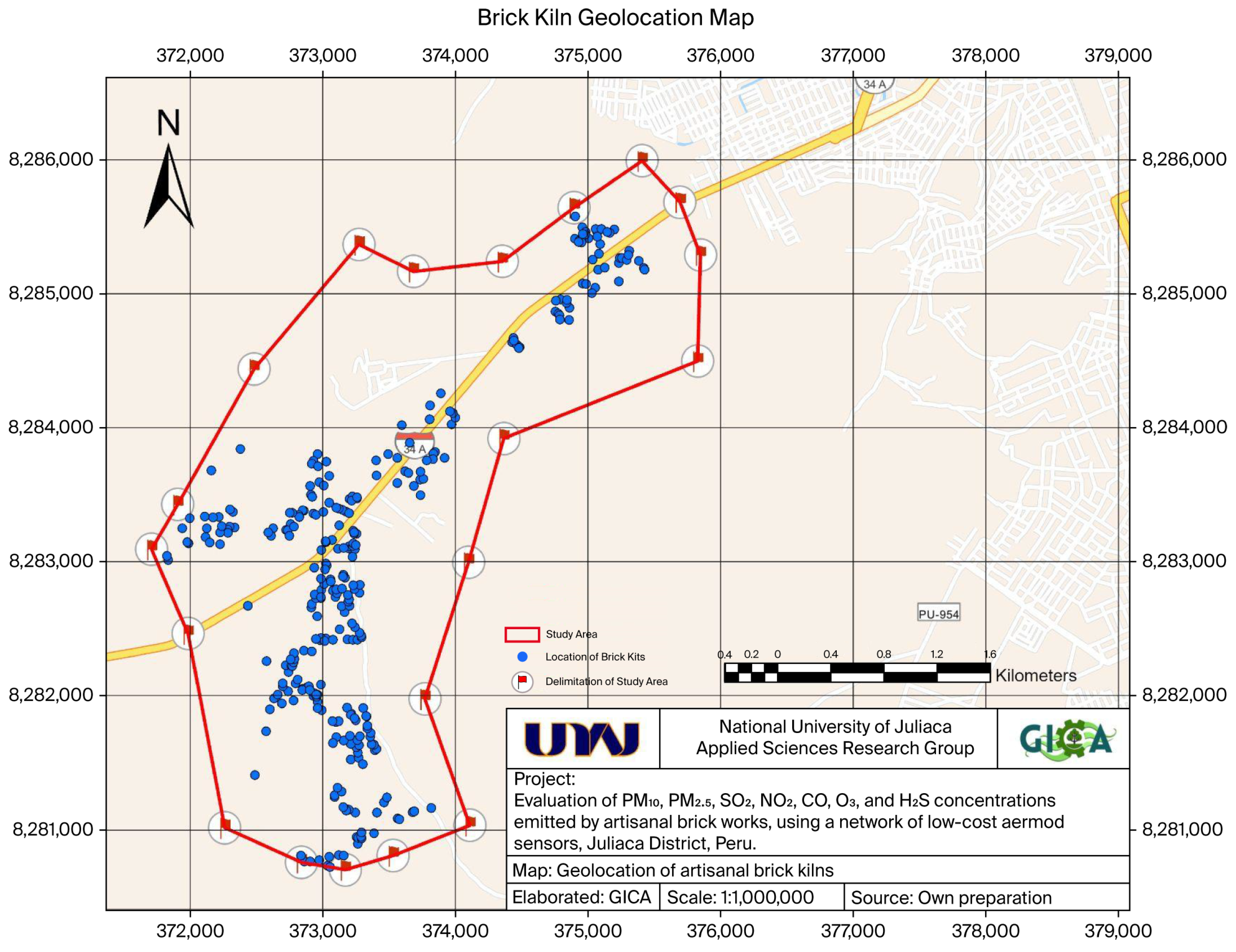
The survey results show that in the study area called “Salida Arequipa”, there are approximately 312 artisanal brick kilns, both operational and non-operational, which are distributed over an area containing 10,558.78 m2 with a perimeter of 15,703 m2, with a seasonality corresponding to the year 2024.
The artisanal Scottish-type kilns have average dimensions of a width of 1.6 m with a raised base, height of 3.70 m, and length of 4.17 m. The kiln crown has an average width of 2.7 m, a length of 3.6 m, and an equivalent diameter of 3.08 m. The mean firing time is 8 h, according to 91% of respondents. A total of 2.16 tons of fuel is used to generate heat to firebrick blocks. The fuel mix is 65% manure, 33% sawdust, and 2% waste tyres. So-called burnings or batches are carried out weekly, with a cumulative duration of 8 h and an activity intensity (A) of 0.075 kg/s, which amounts to burning 0.075 kg of fuel per second.
3.2. Emissions Estimation
3.2.1. Emission Rate Results Using Emission Factors
Emission rates were determined by multiplying emission factors (E) by the activity intensity (A). The activity intensity level is the product of fuel consumption (T) per hour of operation (h), assuming an average fuel consumption of 2.16 T (
Table 2).
3.2.2. Emission Rate Results from in SITU Measurements
Table 3 presents the results of contaminant gas measurements at the source. These measurements have been corrected for normal conditions and 18% oxygen and expressed in the required units to ensure proper interpretation and analysis. The values reported for each emission source are representative, that is, for each artisanal brick kiln under evaluation.
Table 4 shows the emission rates of the pollutants SO
2, NO
2, and CO, determined from the product of the gas concentration measured with the TESTO T350 analyser and its output flow rate. For the O
3 concentration, the calculation was based on the assumption of complete stoichiometric conversion of the NO
2 precursor, with no reversible reaction in an atmosphere with high radiation and low cloud cover.
3.2.3. Measurement of Emission Variables
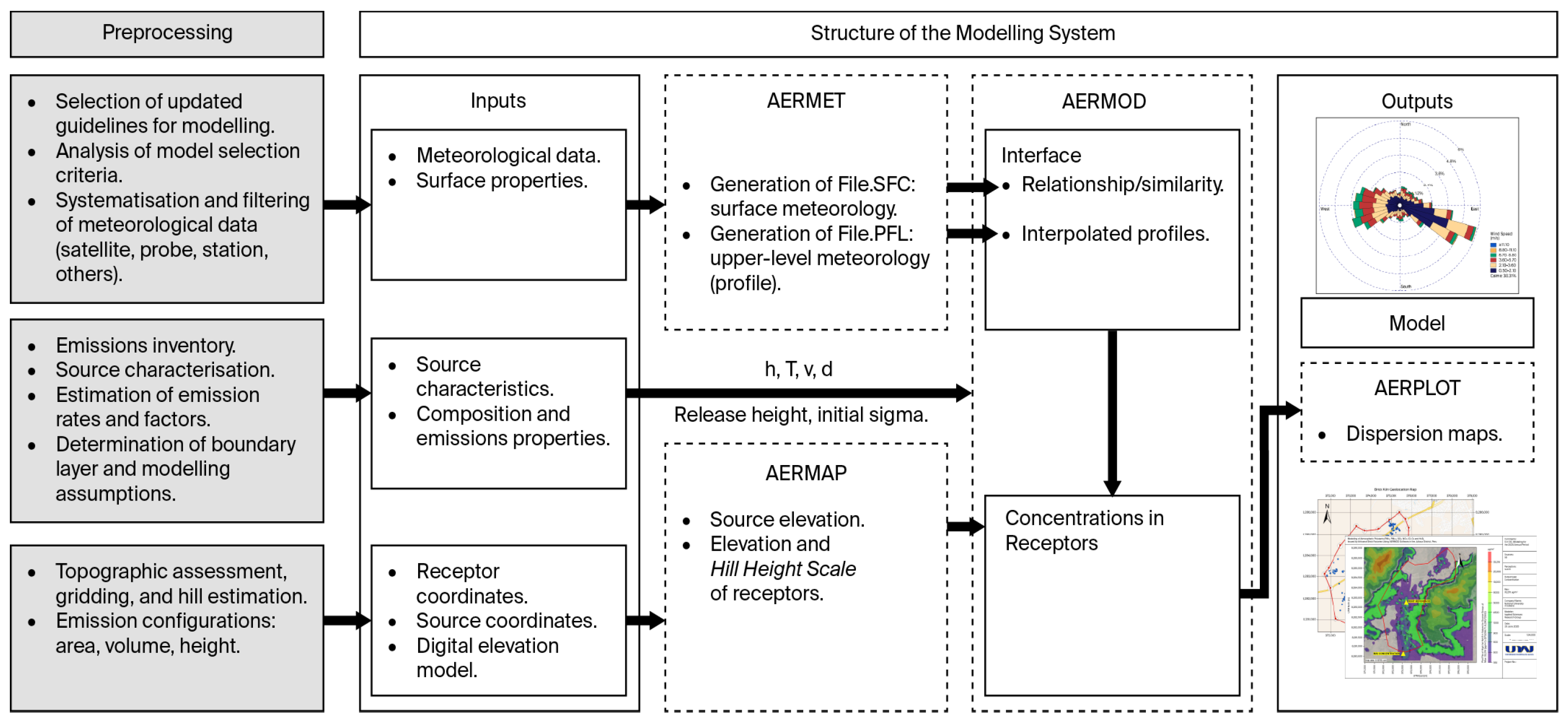
Table 5 shows the values of the main physical variables recorded during the field measurements, which were used to model the dispersion of contaminants emitted by the brick kilns using the AERMOD View software (version 10.0.0).
3.3. Meteorological Analysis
Analysis of meteorological conditions in the study area revealed an average rainfall of 40.5 mm, with the highest rainfall in January and November at 98.7 and 120 mm, respectively. The average temperature was 9.81 °C, with variation from the maximum of 11.66 °C in January to a minimum of 6.22 °C in July. June and July are the coldest months of the year. Relative humidity in the area of interest averaged 54.45%, with a maximum of 65.22% in March and a minimum of 37.50% in July, which is considered the driest period of the year.
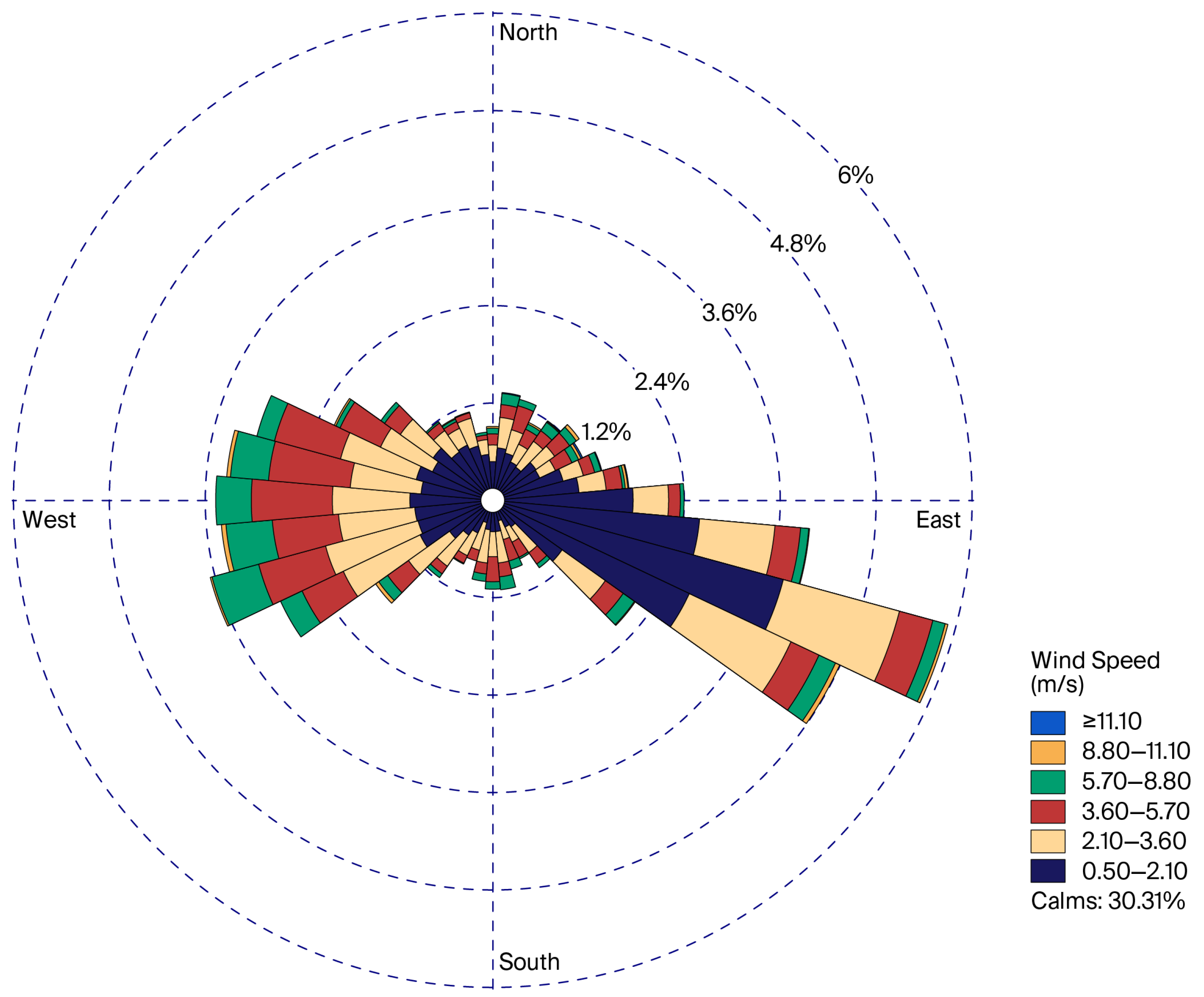
Regarding wind velocity, 32.4% of winds were found to occur at velocities between 0.50 and 2.10 m/s, followed by 19.6% in the range of 2.10 to 3.60 m/s, 11.6% between 3.60 and 5.70 m/s, 5.1% between 5.70 and 8.80 m/s, 0.5% between 8.80 and 11.10 m/s, and 0.1% with a velocity greater than 11.10 m/s [
Figure 3]. However, 30.3% of the winds were considered calm. Most winds were from the southwest (SE) and northwest (NW), shifting toward the southeast (SE), with velocities ranging from 1.10 to 11.10 m/s and an annual frequency of occurrence greater than 5.8%, as shown in the wind rose diagram above. Cloud cover, expressed in tenths (oktas), was 8/10 during January, March, November, and December. The annual average was 5/10, indicating medium cloud cover during 2024, corresponding to a partly clear sky.
3.4. Modelling Contaminant Dispersion
AERMOD [
26] was used to analyse each pollutant. The exposure period was 24 h for PM
10, PM
2.5, SO
2, and H
2S; 8 h for CO and O
2; and 1 h for NO
2. Data interpretation considered the maximum permissible concentrations of pollutants according to the Environmental Quality Standards (ECA) for air established by the Ministry of the Environment.
3.4.1. Dispersion of Contaminant PM10
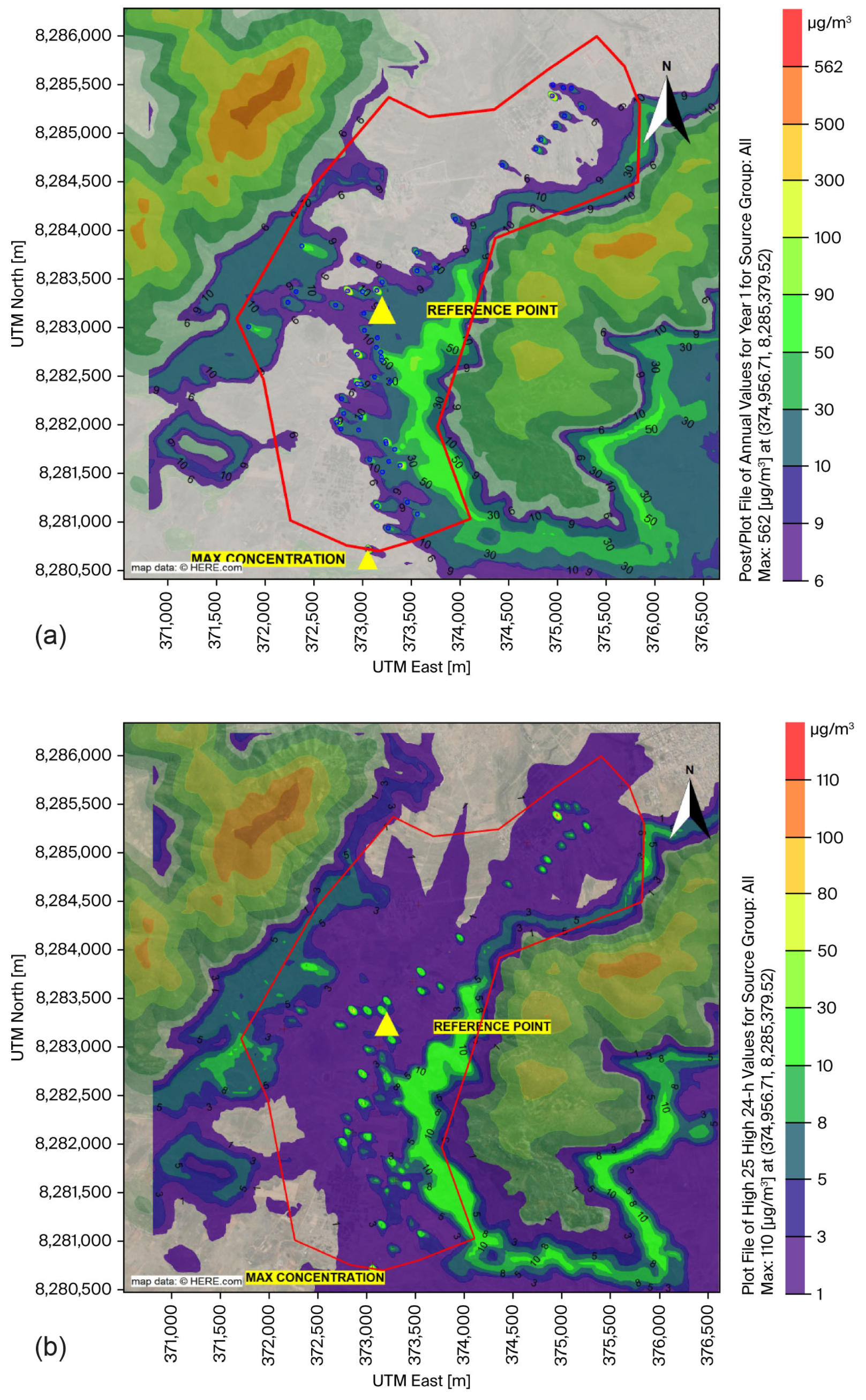
PM
10 is dispersed over a distance of 2.64 km from the reference point at UTM coordinates 373,201.00 m east and 8,283,273.00 m south, predominantly towards the southeast. An average distribution of 83.6 m from the emission source was observed. In addition, a maximum concentration of PM
10 was identified in the southeast corner of the study area, reaching a value of 562 µg/m
3 according to the AERMOD dispersion model [
24]. The measurement corresponds to UTM coordinates 373,056.71 m east and 8,280,729.52 m south (
Figure 4a).
3.4.2. Dispersion of Contaminant PM2.5
Figure 4b illustrates how PM
2.5 spread over a distance of 3762 km from the measurement point, located at UTM coordinates 373,201.00 m east and 8,283,273.00 m south, predominantly dispersing towards the northeast and the urban centre of Juliaca City. However, the highest concentration of PM
2.5 was located in the southern end of the study area, with the maximum concentration being 110 µg/m
3 at UTM coordinates 373,056.71 m east and 8,280,729.52 m, according to AERMOD.
3.4.3. Dispersion of Contaminant SO2
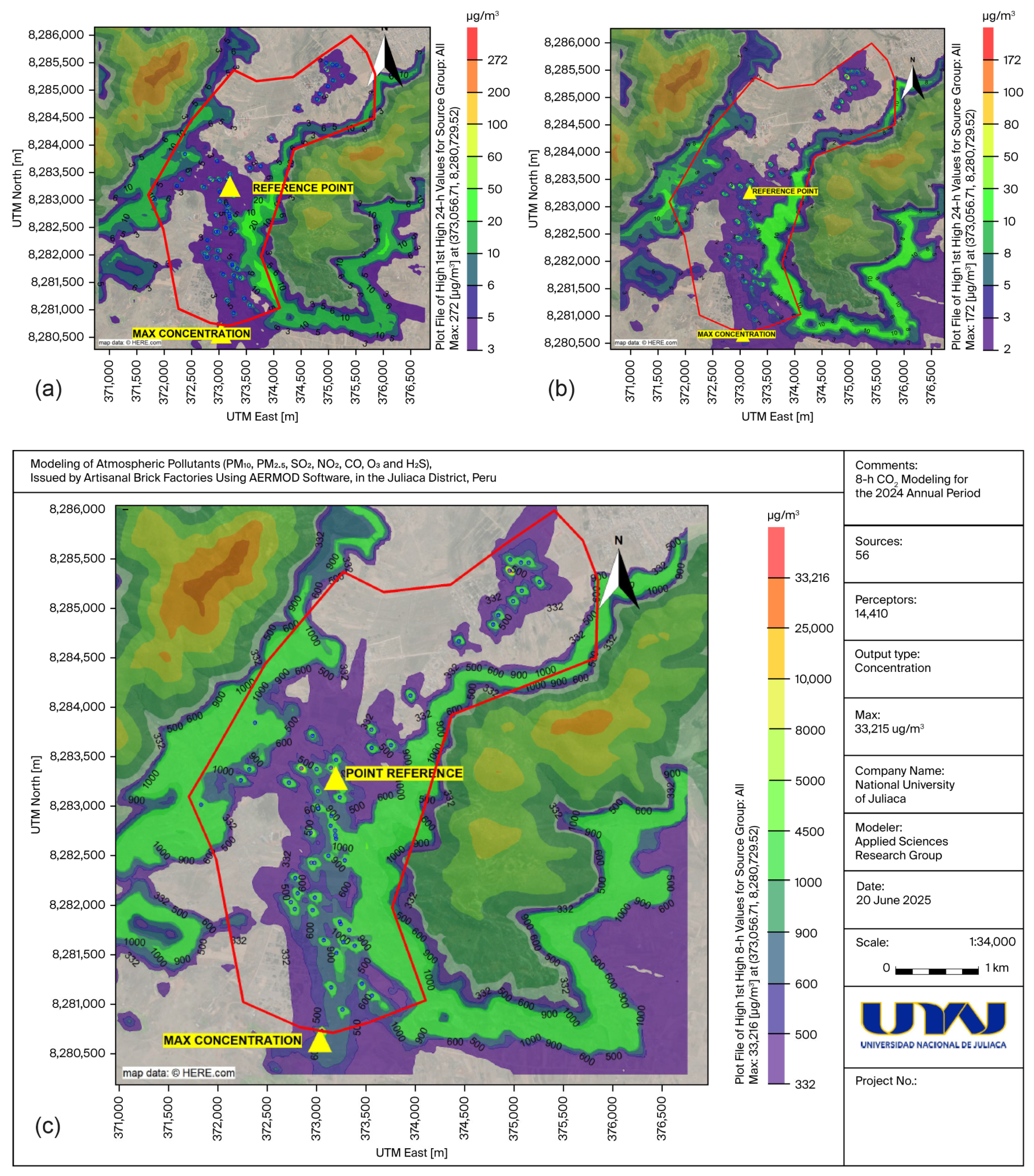
Figure 5a indicates that SO
2 propagates a distance of 2.44 km from the monitoring point, between coordinates 373,201.00 m east and 8,283,273.00 m south, highlighting a spread of harmful substances in a southeasterly direction. The highest concentration of SO
2 was identified at the southeastern edge of the study area, at coordinates 373,056.32 m east and 8,280,729.89 m south. AERMOD revealed a maximum SO
2 concentration of 272 µg/m
3.
3.4.4. Dispersion of Contaminant NO2
The map in
Figure 5b shows the dissemination of NO
2 around the emission source in all directions. According to the colour scale, concentrations extended approximately 400 metres around the emission point without following a linear trajectory influenced by wind direction. However, the highest concentration of NO
2 was recorded at the southeastern edge of the research area, at coordinates 373,056.71 m east and 8,280,729.52 m south. Modelling results from AERMOD estimated the maximum NO
2 concentration at 172 µg/m
3.
3.4.5. Dispersion of Contaminant CO
CO disperses in all directions, displaying a radial propagation pattern. The colour spectrum revealed that the average concentration extends approximately 170 metres around the brick kilns, as it does not follow a linear trajectory governed by wind direction. In contrast, the highest concentration of CO was located at the southeastern edge of the geographical focus area, specifically between coordinates 373,056.71 m east and 8,280,729.52 m south. AERMOD showed that the maximum CO concentration was 33,216 µg/m
3 (
Figure 5c).
3.4.6. Dispersion of Contaminant O3
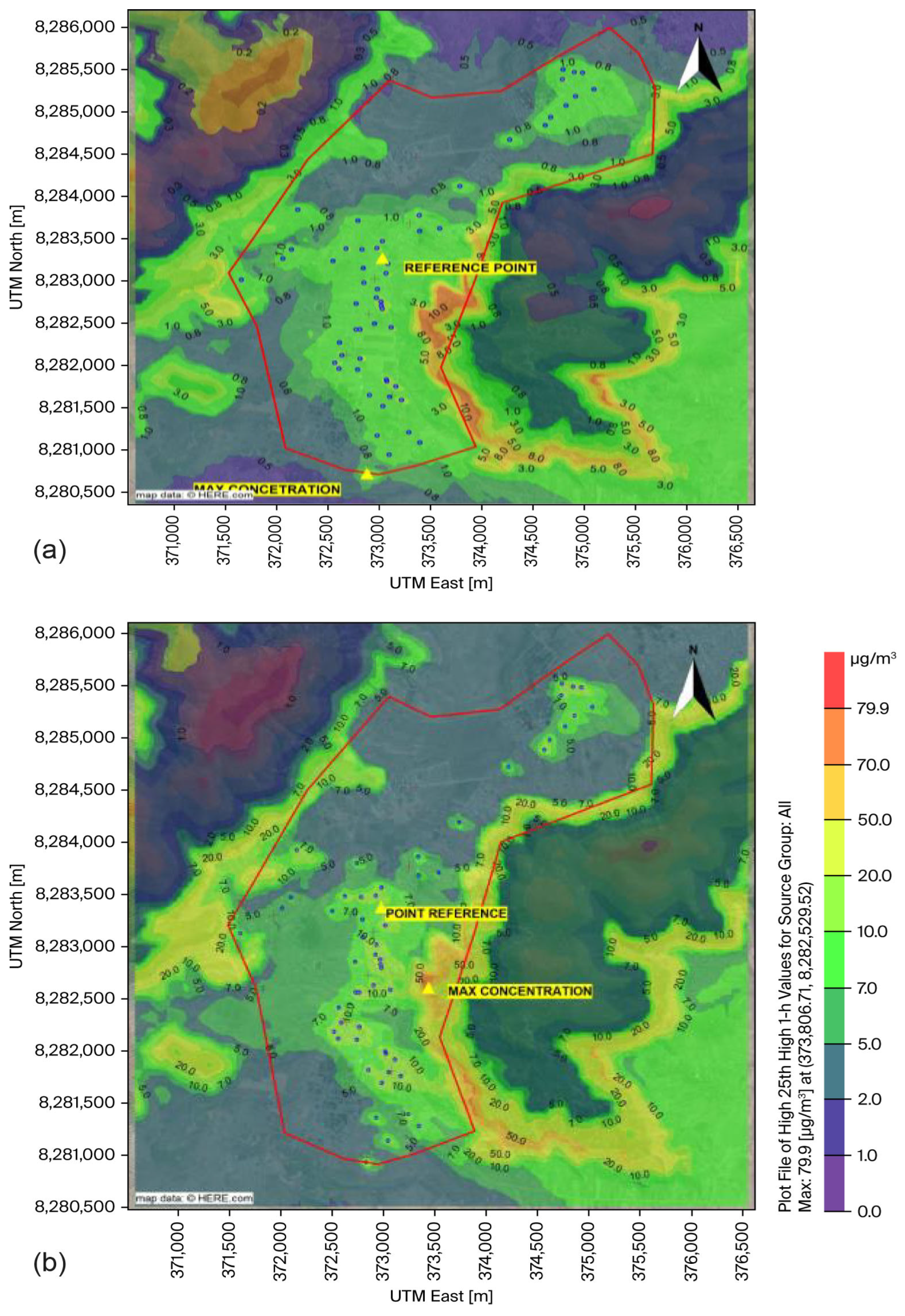
Figure 6a demonstrates how O
3 is scattered irregularly, showing a pattern of propagating in all directions. The colour spectrum evidenced that the average concentration extends up to approximately 180.34 m around the brick kilns, as it does not follow the wind direction. The highest O
3 concentration was located at the southeastern edge of the study area, between coordinates 373,056.71 m east and 8,280,729.52 m south. AERMOD evidenced that the maximum O
3 concentration was 17.6 µg/m
3.
3.4.7. Dispersion of Contaminant H2S
The map shows that H
2S does not follow a dispersion pattern with a fixed emission source. The spectral range revealed that the average concentration occurs outside the area of focus; according to the figure, the contaminant does not disperse according to the wind direction. Furthermore, AERMOD detected a maximum H
2S concentration of 79.94 µg/m
3 southeast of the monitoring point, specifically between the coordinates 373,606.71 m east and 8,282,529.52 m south (
Figure 6b).
3.5. Concentrations Estimated by AERMOD
Table 6 presents a summary of estimated concentrations for each pollutant using AERMOD. These concentration levels were calculated for a critical scenario over a short-term period. A comparison of this study’s values with the environmental quality standards established in the ECAS Standards is also shown.
3.6. Monitoring Analysis of Air Quality
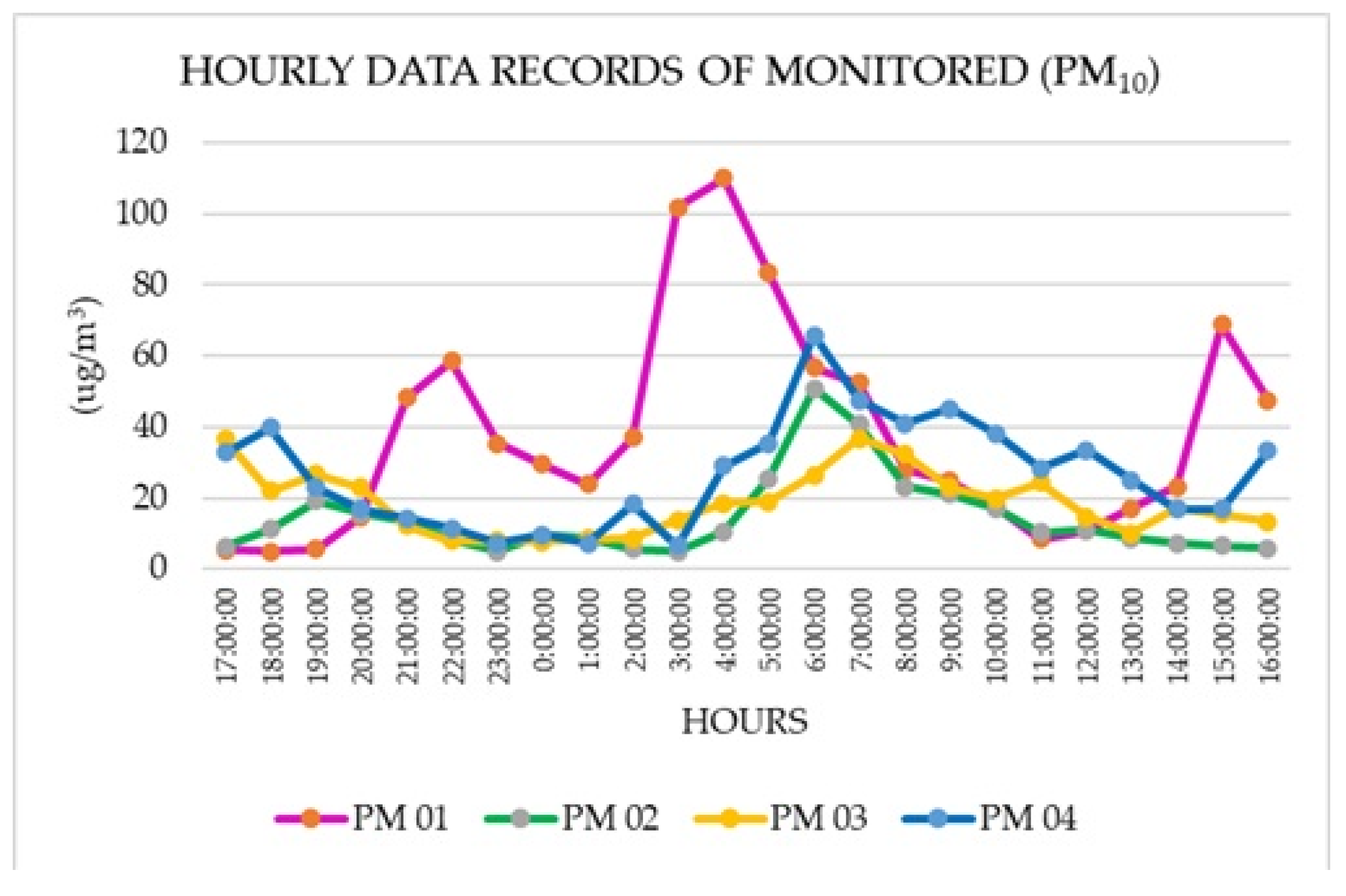
Low-cost sensors (LCSs) recorded data with a 5-min time resolution, which were subsequently processed and averaged over hourly intervals for analysis. Regarding particulate matter with a diameter of less than 10 micrometres (PM10), a maximum concentration of 109,928 μg/m3 was recorded at the PM 01 monitoring station, which is the closest to the brick kiln area. The highest values were measured between 3:00 and 7:00 in the morning.
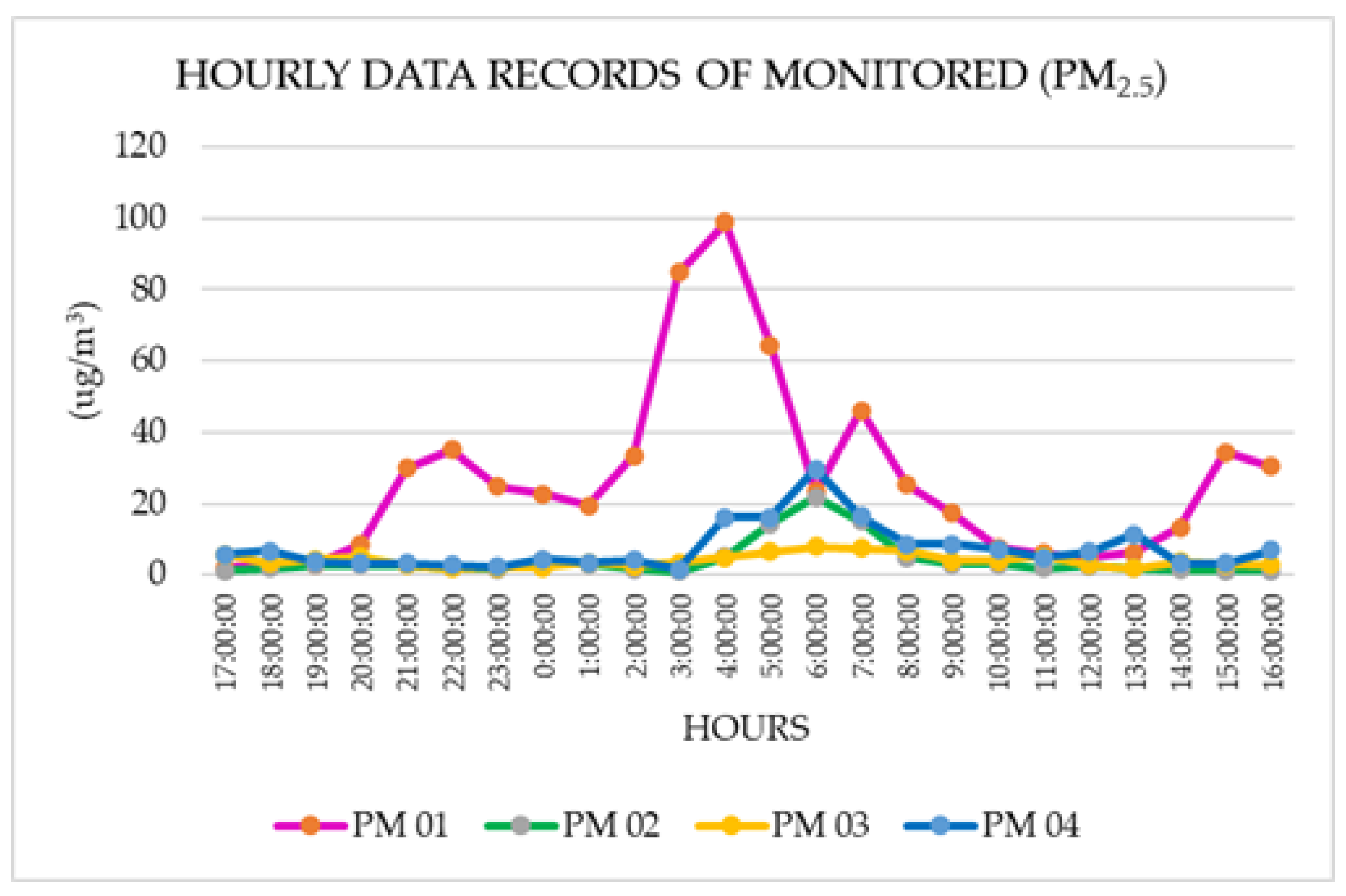
The particulate matter (PM2.5) assessment revealed a maximum value of 87.80 μg/m3 at the PM 01 monitoring point and a minimum value of 33.01 μg/m3, resulting in an average concentration of 51.55 μg/m3 over 24 h at the point closest to the brick-making zone. Similarly, it was observed that the highest concentration was estimated at 4:00 a.m.; on the other hand, the other monitoring points recorded values lower than 29.77 μg/m3.
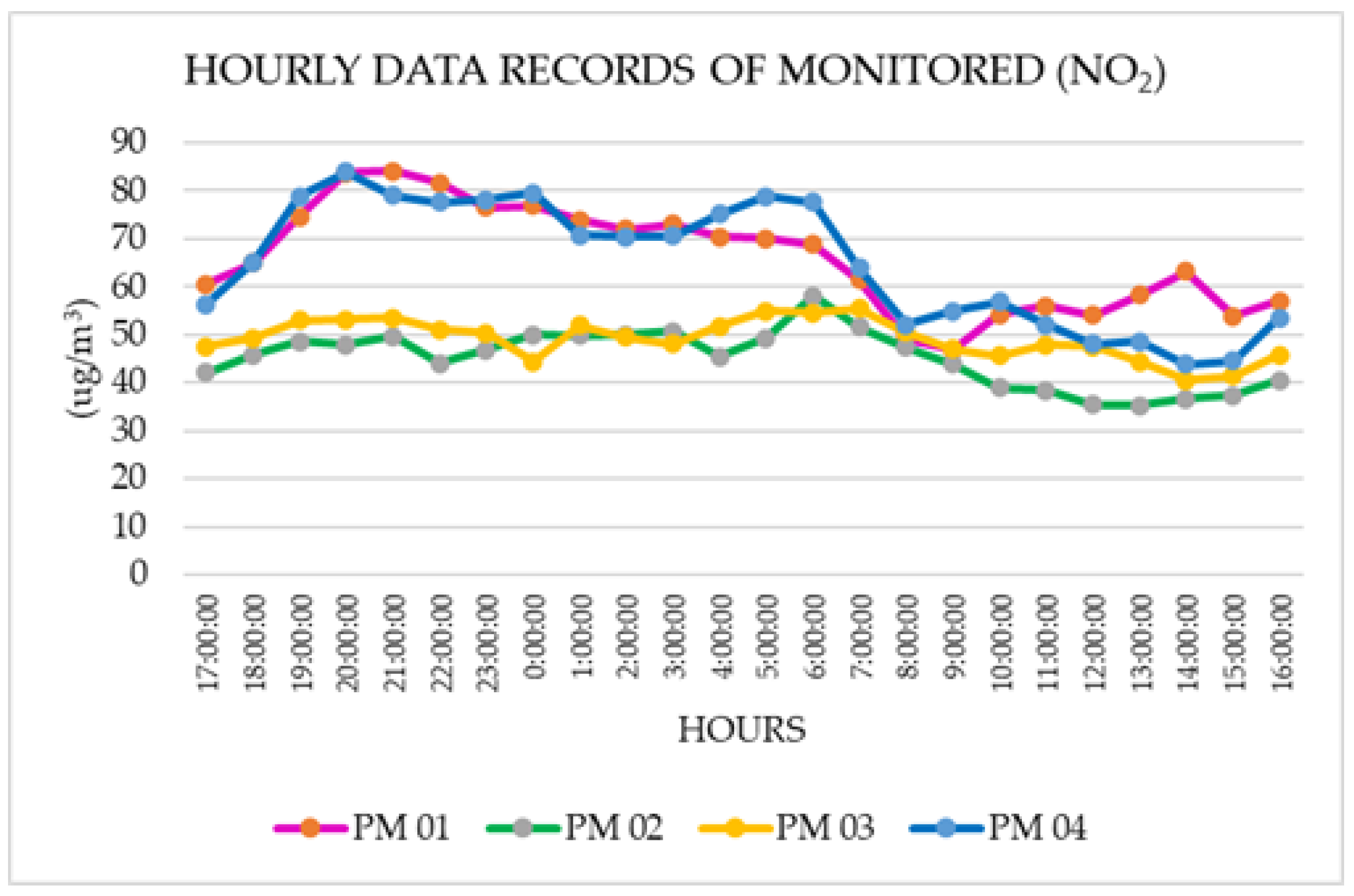
Concerning nitrogen dioxide (NO2), the maximum hourly concentration reported was 84.13 μg/m3 at PM 01. However, the maximum value monitored was 83.97 μg/m3 at PM 04, while the concentrations lower than 58.19 μg/m3 were detected at PM 02 and PM 03.
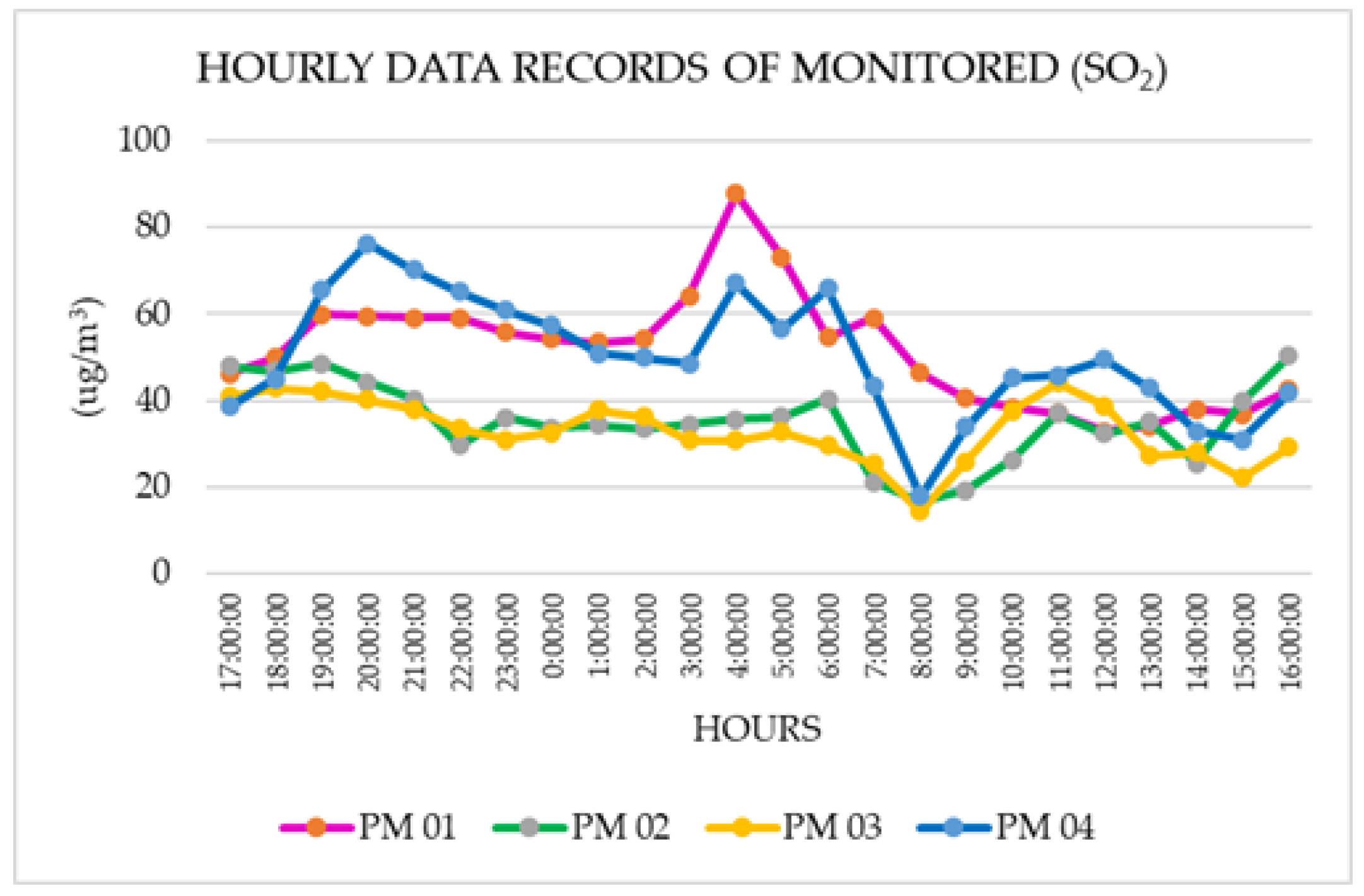
Dioxide was recorded at the highest levels at stations PM 01 and PM 04, which are the closest to the monitoring area. The measured levels were 87.8 μg/m3 and 76.36 μg/m3. In contrast, PM 02 and PM 03 presented lower levels at 50.34 and 44.18, respectively.
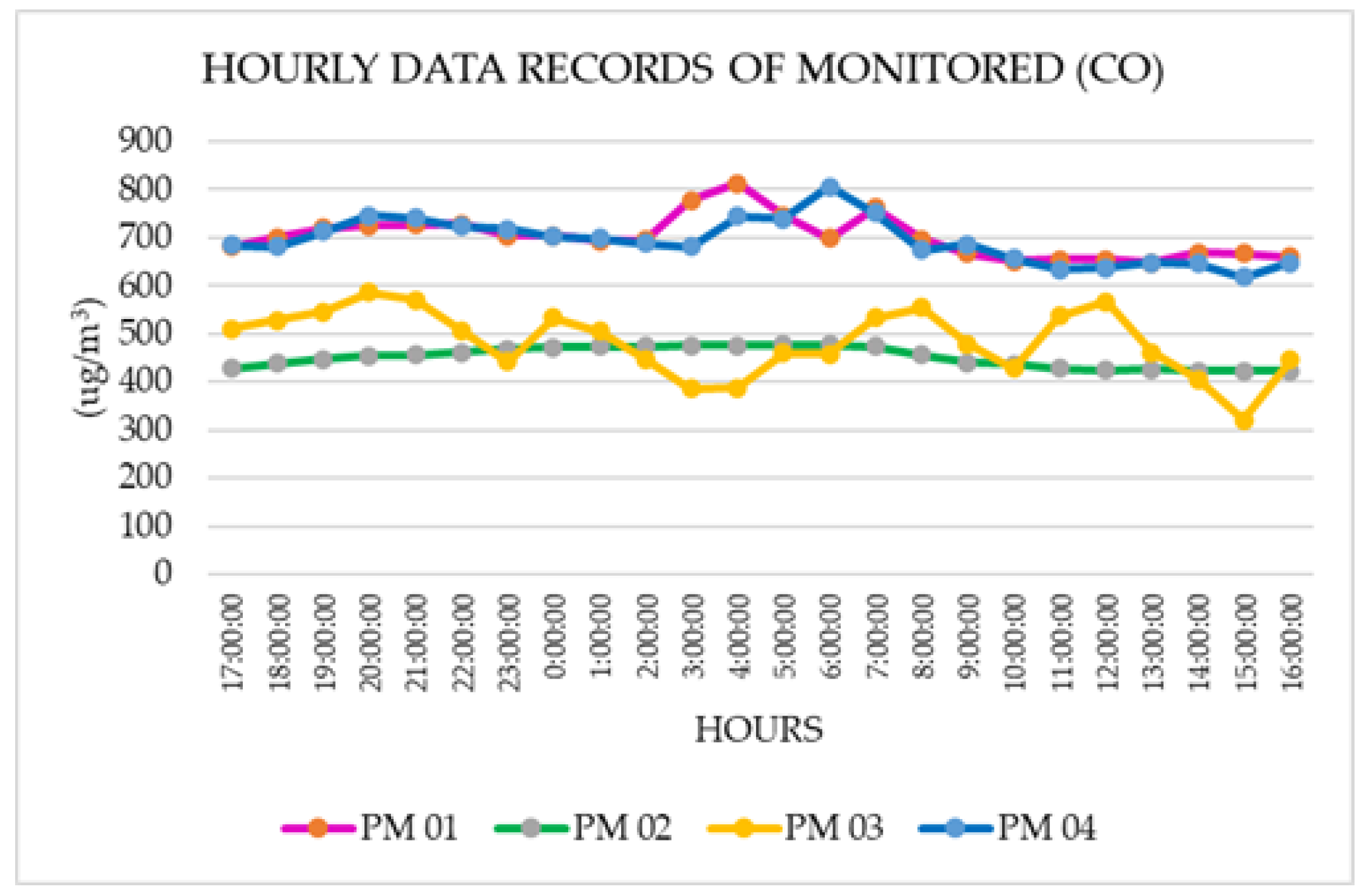
For carbon monoxide (CO), the maximum concentration was 813.34 μg/m3, which resulted in a high average concentration of 687.10 μg/m3 at the PM 01 monitoring point; similarly, PM 04 recorded 806.67 μg/m3, unlike PM 02 and PM 03, which recorded values data lower than 476.89 μg/m3 and 586.901 μg/m3, calculated over 8 h.
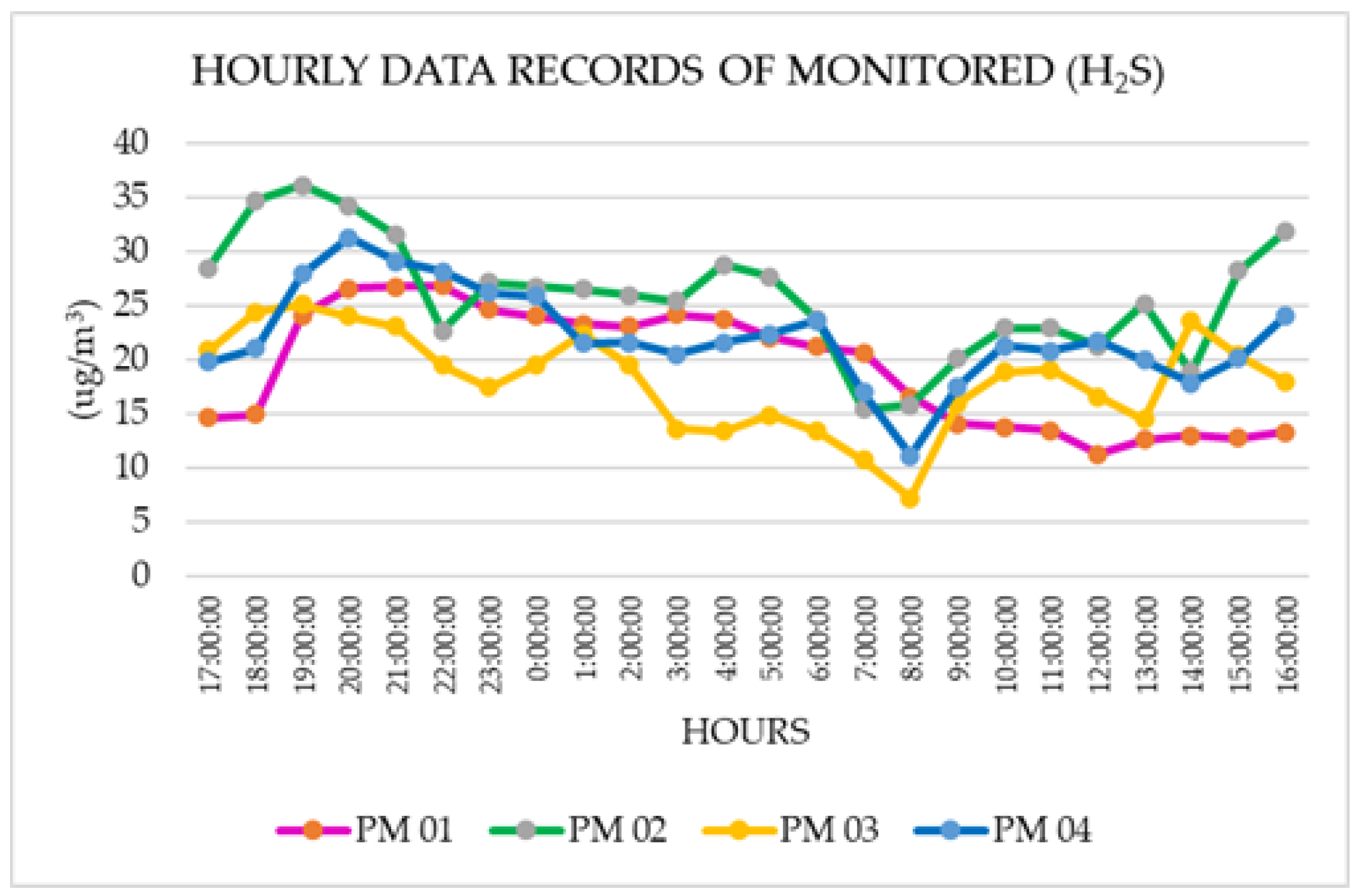
For hydrogen sulphide (H2S), the highest value was recorded at PM 02 at 36.14 μg/m3, followed by 31.29 μg/m3 at PM 04.
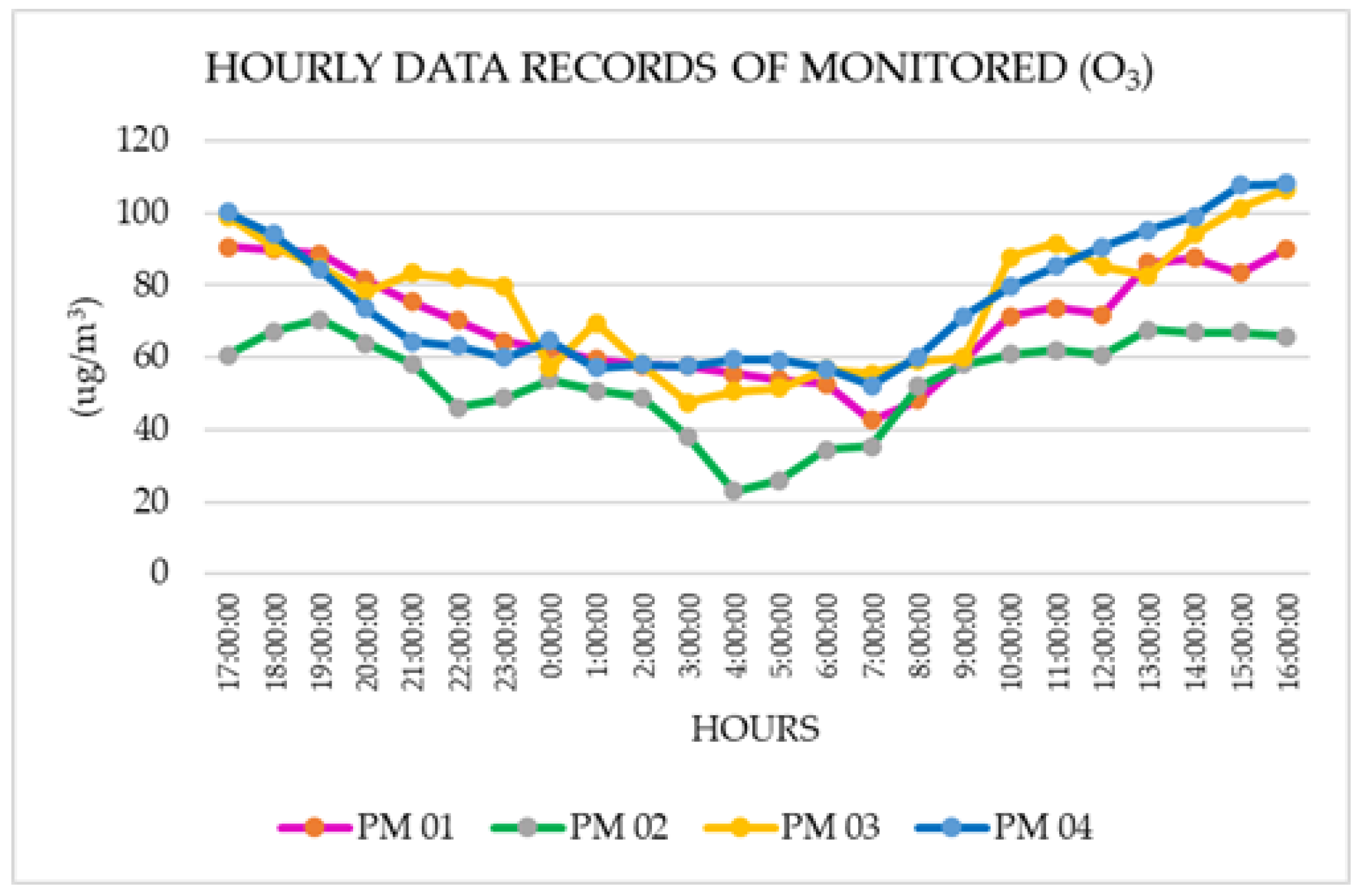
Finally, the pollutant ozone (O3) presented a maximum estimated concentration of 108.18 μg/m3 at PM 04. Comparable results were found at PM 01 and PM 03, where values of 93.72 μg/m3 and 106.44 μg/m3 were recorded, respectively.
Figure 7,
Figure 8,
Figure 9,
Figure 10,
Figure 11,
Figure 12 and
Figure 13 present the temporal evolution and variations in the concentrations of particulate matter and pollutant gases monitored by the low-cost sensors (LCSs).
Table 7 summarises the maximum values of the parameters analysed and integrates the quantitative information from the corresponding graphical representations.
The values in
Table 7 show the monitoring results, which objectively demonstrate that the maximum concentrations recorded are below the parameters established in the Environmental Quality Standard (ECA) for air.
3.7. Data Comparison
The data derived from the emissions inventory and the modelling of pollutant dispersion from the point sources (brick kilns) were compared with the maximum concentrations recorded by the low-cost sensors (LCSs). The results of this comparison are presented in
Table 8.
Based on a comprehensive analysis of data collected through air quality monitoring with low-cost sensors and emission estimation procedures, this study assessed the relative contribution of emissions from brick kilns to the overall concentrations of the targeted atmospheric pollutants.
5. Conclusions
This study highlights the effectiveness of combining Geographic Information Systems (GISs), AERMOD modelling, and low-cost sensors (LCSs) to evaluate atmospheric emissions and their spread in urban areas bustling with industrial activity. By examining 312 brick kilns in Juliaca, we were able to conduct a thorough environmental assessment that has direct implications for managing local air quality.
One of the standout contributions of this research is the creation of dispersion maps for crucial pollutants like PM10, PM2.5, SO2, NO2, CO, H2S, and O3. These maps pinpoint environmental risk zones and can help shape targeted public policies for mitigation. Additionally, the blend of modelling and on-the-ground monitoring offers a replicable strategy for similar contexts with informal industries and limited environmental resources.
Nevertheless, we need to recognize some methodological limitations, such as the use of average meteorological data and low-cost sensors, which tend to have more uncertainty compared to high-grade instruments. These aspects could influence the accuracy of our estimates and should be taken into account in future studies.
The pollutant distribution estimated using the AERMOD dispersion model allowed for the calculation of maximum concentrations of 562 μg/m3 (PM10), 110 μg/m3 (PM2.5), 272 μg/m3 (SO2), 172 μg/m3 (NO2), 33,216 μg/m3 (CO), 17.6 (O3), and 79.9 H2S with corresponding maximum dispersion distances of 0.0836, 3.762, 2.44, 0.4, and 0.17 Km, respectively. Air quality monitoring using low-cost sensors (LCSs)—which involved the measurement of PM10 and PM2.5 via an optical particle counter and the measurement of SO2, NO2, and CO through electrochemical sensors—enabled the determination of daily averages of 28.14 μg/m3 (PM10), 26.96 μg/m3 (PM2.5), 51.55 μg/m3 (SO2), and 86.86 μg/m3 (O3). For CO, an 8-h average concentration of 687.1 μg/m3 was recorded. The maximum observed concentrations for NO2 and H2S were 84.13 μg/m3 and 26.8 μg/m3.
To build on this approach, it would be beneficial to implement long-term monitoring campaigns, validate findings with certified stations, and explore the impacts on public health. This study lays strong technical and methodological groundwork to enhance environmental monitoring in mid-sized cities throughout Latin America.




 ,
,