Article

Immunomodulatory Potential of Agro-Industrial Residues: Passiflora edulis and Rubus glaucus Seed Oils Promote MMP-9 Release from Human Neutrophils


by
Nathalia Estefany Patiño Rodríguez
1,
Jaqueline Mena Huertas
1,*,
Orfa Alexandra España Jojoa
1 and
Andrés Mauricio Hurtado Benavides
2
1
Public Health Research Group, Department of Biology, Faculty of Exact and Natural Sciences, University of Nariño, Pasto 520002, Colombia
2
Emerging Technologies in Agroindustry Research Group, Faculty of Agroindustrial Engineering, University of Nariño, Pasto 520002, Colombia
*
Author to whom correspondence should be addressed.
Immuno 2026, 6(3), 43; https://doi.org/10.3390/immuno6030043 (registering DOI)
Submission received: 23 April 2026 / Revised: 11 June 2026 / Accepted: 17 June 2026 / Published: 24 June 2026
(This article belongs to the Section Autoimmunity and Immunoregulation)

Abstract

Background: Neutrophil dysregulation drives inflammatory pathologies through mechanisms such as matrix metalloproteinase-9 (MMP-9) release. High-value bioprospecting of agro-industrial residues offers a sustainable strategy to identify novel bioactive compounds. In this study, the immunomodulatory effects of seed oils (SOs) obtained via supercritical fluid extraction from Passiflora edulis and Rubus glaucus byproducts on human neutrophil responses was evaluated. Methods: SO lipid profiles were characterized via GC-MS. Human neutrophils were isolated using Percoll gradients and treated with the SOs (10–50 µg/mL). Cytocompatibility was assessed via MTT and trypan blue assays. MMP-9 activity and ERK1/2/p38 phosphorylation were determined via zymography and Western blotting, respectively. Results of GC-MS revealed matrices rich in unsaturated lipids: R. glaucus SO was dominated by linoleic (50.02%) and α-linolenic (29.84%) acids, whereas P. edulis SO contained linoleic (58.91%) and oleic (19.75%) acids. Both oils were highly biocompatible up to 50 µg/mL. Both SOs significantly increased MMP-9 release; notably, R. glaucus induced a dose-dependent response and a potential priming effect at 10 µg/mL. Interestingly, neither oil induced the phosphorylation of ERK1/2 or p38. Conclusions: Supercritical fluid-extracted SOs from P. edulis and R. glaucus byproducts modulate early neutrophil responses by increasing MMP-9 release through pathways independent of classical MAPK phosphorylation. Further functional and in vivo validation is needed to clarify the precise regulatory roles of these specialized lipid matrices in human inflammation resolution and their potential as bioactive ingredients for nutraceutical or pharmaceutical applications.

1. Introduction

During chronic inflammation, the loss of control over neutrophil function is closely linked to the development of pathologies such as aneurysms, thrombi, edema, arthritis, and atherosclerosis [1]. A critical process in cellular transmigration and inflammatory progression is the degranulation of the gelatinase matrix metalloproteinase-9 (MMP-9) [2,3]. This enzyme facilitates neutrophil recruitment to the injury site and enhances the local inflammatory response by increasing the efficiency of chemotactic signals, such as the activation of interleukin-8 (IL-8) [4].
Although MMP-9 is a key mediator of cellular infiltration, recent evidence suggests that the timing of its secretion is a determining factor for the outcome of the process. The rapid and efficient release of MMP-9 during the initial stages of inflammation can act as a protective mechanism by facilitating debris degradation and chemokine modulation—processes essential for timely resolution [5]. Optimizing leukocyte recruitment and ‘cleaning’ signal processing at precisely the right moment favors the initiation of tissue repair, thereby preventing the persistence of proinflammatory stimuli that lead to chronic inflammation and irreversible tissue damage [6,7].
The release of MMP-9 is regulated by a complex cellular signaling network. Traditionally, human neutrophil degranulation has been linked to the activation of classical mitogen-activated protein kinase (MAPK) signaling pathways, such as the ERK1/2 and p38 pathways [8]. These pathways are considered the primary proinflammatory cascades leading to the effector response. These pathways regulate specific functions, such as cytokine production, migration, and cell survival. However, recent studies have indicated that certain stimuli, particularly those of a lipid nature, can signal through alternative pathways independent of classical MAPKs, involving mechanisms such as intracellular calcium mobilization and selective protein kinase C (PKC) activation [9]. Therefore, it is important to identify pharmacological alternatives that allow for the selective regulation of these processes, maximizing the benefits of early degranulation (MMP-9) without perpetuating classical inflammatory cascades [5,10,11].
Fruit seeds contain a high percentage of lipids, such as saturated and unsaturated fatty acids, with antibacterial, antiviral, and antioxidant activities and the ability to stimulate the immune system [12,13]. Essential fatty acids or polyunsaturated fatty acids (PUFAs) stand out for their importance in nutrition and pharmacology [14]. The consumption of PUFAs has the potential to decrease the risk of cardiovascular and adipose tissue inflammatory diseases, improve digestion, and reduce obesity [15]. The fatty acids eicosapentaenoic acid and docosahexaenoic acid are involved in reducing inflammation by decreasing the production of the proinflammatory cytokines IL-6 and IL-8 and suppressing nuclear factor kappa-light-chain-enhancer of activated B cells (NF-κB) signaling [16]. The short-chain fatty acid butyrate possesses anti-inflammatory properties, as it decreases IL-8 and tumor necrosis factor-alpha (TNF-α) levels in ulcerative colitis-derived epithelial cells [17,18]. Linoleic acid has an anti-inflammatory effect on HaCaT keratinocytes by reducing the levels of the mediators cyclooxygenase-2 (COX-2) and prostaglandin E2 (PGE2), resulting from oxidative stress due to ultraviolet B (UVB) exposure [19].
Agro-industrial food production generates a large amount of waste such as pulp, peel, and seeds that, if not managed properly, are a source of soil and water contamination [20]. However, this waste contains compounds with biological activity and can be reused owing to its potential in the development of new industrial or therapeutic products [21,22]. Extracts obtained from seeds, fruits, and plants have traditionally been used for the treatment of health conditions [23,24] and have recently received considerable attention for their application to the development of natural products for controlling diseases related to inflammatory processes [25,26] and regulating environmental or oxidative stress [27,28]. In particular, Passiflora edulis (passion fruit) seeds contain unsaturated fatty acids such as linoleic and oleic acids and saturated fatty acids such as palmitic acid [29], whereas Rubus glaucus (blackberry) seeds are rich in linolenic and linoleic acids [30]. Although the specific effects of these seed oils on the neutrophil response remain unknown, extracts obtained from these species have already demonstrated significant inflammation-modulating effects. For instance, the aqueous extract of P. edulis leaves decreased neutrophil recruitment and modulated oxidative metabolism in a carrageenan-induced model of inflammation in Wistar rats because of the presence of phenolic compounds [31]. Furthermore, its fruit extracts inhibited MMP-9 and MMP-2 activity in in vitro enzymatic assays [32], and its leaf phenolic extract exerted cytotoxic and proapoptotic effects in HepG2 liver cancer models [33]. Similarly, the polyphenolic extract of R. glaucus fruit possesses antioxidant and anti-inflammatory activity in human monocytes (THP-1 cells) and mouse macrophages (J774A.1 cells) [34]. Additionally, related species such as Rubus coreanus Miquel exhibit anti-inflammatory activity by decreasing JNK and p38 phosphorylation, inhibiting IL-1β and IL-6 expression, and suppressing NF-κB activation [35]. In this context, the oils obtained from the seeds of P. edulis and R. glaucus through supercritical fluid extraction (SFE) represent a promising source of fatty acids with the potential to modulate leukocyte function, justifying the aim of the present study to evaluate the effects of these seed oils on the primary inflammatory response of human neutrophils.

2. Materials and Methods

2.1. Seed Collection, Oil Extraction, and Preparation of Working Concentrations

P. edulis and R. glaucus seeds were obtained from fruit waste collected at local markets in Pasto, Colombia. The seeds were isolated from pulp residue and dried at 60 °C for 8 h until a moisture content equal to or less than 10% was achieved. Prior to extraction, the dried seeds were ground using a disc mill (Victoria, Colombia) and mechanically sieved (Model PS-35, series 1182. Cleaver Scientific Ltd., Rugby, United Kingdom) through a 10–80 mesh series (ASTME) for 10 min to ensure a uniform particle size [29,36]. Seed oil (SO) extraction was performed via supercritical fluid extraction (SFE) using a Waters SFE 500 system ((Waters Corporation, Milford, MA, USA). For each extraction, 250 g of the pretreated ground seeds was loaded into the extraction cell. Carbon dioxide (CO2; 99.9% pure; Cryogas, Colombia) was utilized as the only solvent (without a cosolvent) under a constant operating pressure of 350 bar and a temperature of 60 °C, with a CO2 flow rate of 39 g/min for a total extraction time of 150 min, following previously described methodology [29,36]. The obtained pure SOs were stored in sterile amber Eppendorf tubes at −20 °C under a nitrogen atmosphere to prevent lipid peroxidation until further use.

2.2. Chemical Characterization of the Seed Oils

The chemical composition of the R. glaucus SO batch used in this study, including fatty acids, sterols, and tocopherol, was previously profiled and reported in [37]. To ensure completeness, the chemical characterization of P. edulis SO was performed using the same preestablished protocols described above.
Determination of the Fatty Acid Profiles: Fatty acid composition was analyzed using a Shimadzu QP2020S gas chromatograph (Shimadzu Corporation, Kyoto, Japan) coupled to a mass spectrometer (GC-MS) equipped with a DB-WAX column (J&W Scientific; Folsom, CA, USA, 30 m × 0.25 mm × 0.25 µm film thickness) and a QP2010S mass selective detector (Shimadzu Corporation, Kyoto, Japan) operating in full-scan mode with electron ionization (EI) at 70 eV. Samples were introduced via split injection with an injector temperature of 280 °C, utilizing ultrahigh purity (UHP) helium as the mobile phase at a constant flow rate of 1.0 mL/min. Fatty acids were analyzed as their corresponding fatty acid methyl esters (FAMEs). Briefly, 0.2 mL of the SO was subjected to derivatization using 5 mL of a 5% v/v HCl/methanol solution. The resulting FAMEs were extracted with 2 mL of HPLC-grade n-hexane, and anhydrous sodium sulfate was added to remove residual moisture prior to GC-MS analysis. Volatile compounds of interest were identified by comparing their mass spectra with the NIST and Wiley reference databases. Quantification was performed, and the data are expressed as relative area percentages.
Analysis of Sterols and Tocopherols: For the determination of sterols and tocopherols, a 300 µL aliquot of P. edulis SO was diluted to a total volume of 1 mL using high-purity HPLC-grade dichloromethane. The resulting solutions were vortexed vigorously for 30 s, and anhydrous sodium sulfate was added to ensure complete dehydration before injection onto the GC-MS system. Tentative identification of target phytosterols and tocopherols was achieved by comparison of the mass spectra with the NIST and Wiley databases. Quantitative analysis was conducted via the internal standard method, utilizing a 50 ppm cholesterol reference standard solution.

2.3. Preparation of Working Solutions and Emulsions

To evaluate biological activity, stock solutions of each SO were freshly prepared by dissolving 0.1 g of pure oil in 1 mL of molecular biology-grade dimethyl sulfoxide (DMSO) (Merck, Darmstadt, Germany) to obtain a primary stock at a concentration of 100 mg/mL. To ensure sterility and remove any insoluble microparticles, this primary lipophilic stock was filtered through a 0.45 µm polyvinylidene fluoride (PVDF) membrane (Santa Cruz Biotechnology, Inc., Dallas, TX, USA) [37].
Intermediate serial dilutions of the extracts were subsequently prepared in DMSO (10, 25, 50 and 100 mg/mL). Aliquots from these intermediate stocks and the primary stock were then diluted 1:1000 in Hank’s balanced salt solution supplemented with calcium (HBSS + Ca2+) to achieve the final working solutions at concentrations of 10, 25, 50, and 100 µg/mL. The final concentration of DMSO used in all the experimental treatments was maintained at 0.1% (v/v) to avoid vehicle-induced cytotoxicity. To ensure a homogeneous and stable lipid dispersion, each working solution was vigorously homogenized via vortexing immediately prior to cell stimulation.

2.4. Neutrophil Isolation

Peripheral blood (20 mL) was obtained from healthy adult donors who provided written informed consent by venipuncture. All procedures were approved by the Ethics Committee of the University of Nariño (Approval No. 034, 2022) in accordance with national regulations and the Declaration of Helsinki. Blood was collected in sterile tubes containing acid citrate-dextrose (ACD) as an anticoagulant.
Neutrophils were isolated using a discontinuous Percoll density gradient (Sigma-Aldrich, St. Louis, MO, USA) via the protocol of Hidalgo et al. (2015) [38] with modifications. Briefly, anticoagulated blood was carefully layered over a discontinuous gradient composed of 73% and 85% Percoll solutions prepared in sterile phosphate-buffered saline (PBS). Centrifugation was performed using an MPW-260R centrifuge (MPW Med. Instruments, Warsaw, Poland) at 500× g for 30 min at room temperature (20–25 °C) with the brake disabled. The polymorphonuclear (PMN) fraction, located at the interface between the 73% and 85% layers, was meticulously collected and transferred to sterile tubes. To eliminate residual erythrocytes, a brief hypotonic lysis step was performed using sterile distilled water for 30 s, which was immediately followed by the addition of hypertonic PBS to restore isotonicity. The cell pellet was subsequently washed twice and resuspended in 5 mL of calcium-free HBSS. Cell count and viability were determined using the 0.4% trypan blue exclusion technique in a Neubauer chamber, while purity was determined via Wright’s staining. Only samples with cell viability and purity greater than 95% were used for the experimental assays.

2.5. Neutrophil Viability and Cytotoxicity Assays

Neutrophil viability and metabolic integrity following seed oil (SO) exposure were qualitatively evaluated using the MTT reduction assay according to the visual monitoring protocol described by Pruett & Loftis [39] with modifications. First, human neutrophils (105 cells/well) were seeded in 96-well flat-bottom plates in 100 µL of HBSS + Ca2+. After a 5 min stabilization period at 37 °C, the cells were treated with P. edulis or R. glaucus SO at a concentration of 10, 25, 50, or 100 µg/mL. The experimental design included a negative control (HBSS + Ca2+), a vehicle control (0.1% v/v DMSO), and a positive cytotoxic control (30% v/v DMSO). Following treatment, 10 µL of 3-(4,5-dimethylthiazol-2-yl)-2,5-diphenyltetrazolium bromide (MTT, ChemCruz, Dallas, TX, USA) (1 mg/mL) was added. The plates were incubated at 37 °C, and mitochondrial metabolic activity was monitored hourly for 3 h by macroscopically analyzing the change in color. The persistent transition from yellow (inactive tetrazolium salt) to purple (formazan deposition by active mitochondrial dehydrogenases) was recorded as an index of preserved cell viability, while the absence of color change indicated cell death. All the assays were performed in triplicate (n = 3).
To quantitatively complement these findings and monitor membrane integrity kinetics, cell viability was also assessed via the trypan blue exclusion method following the methodology of Razavi et al. (2009) [40] with modifications. Briefly, human neutrophils (5 × 10⁵) were suspended in 1000 µL of HBSS + Ca2+ medium in microcentrifuge tubes and incubated at 37 °C with the same working concentrations of the SOs (10, 100, 25, 50, and 100 µg/mL). The experimental setup included a negative control (HBSS + Ca2+), a vehicle control (0.1% v/v DMSO), and hydrogen peroxide (10% v/v H2O2) as a positive cytotoxic control. After an initial 5 min incubation period, baseline viability was determined by mixing cell aliquots with 0.4% trypan blue solution (Sigma-Aldrich, St. Louis, MO, USA). The cell suspensions were incubated at 37 °C, and the exclusion procedure was repeated hourly for a total of 3 h to monitor viability kinetics. All the assays were performed in triplicate (n = 3). On the basis of these results, the working concentrations that were noncytotoxic were selected for subsequent assays.

2.6. Neutrophil Stimulation and Degranulation Assay

To evaluate the degranulation capacity and subsequent release of matrix metalloproteinase-9 (MMP-9), human neutrophils (5 × 10⁵ cells) resuspended in 250 µL of HBSS + Ca2+ were incubated with varying concentrations of P. edulis or R. glaucus SO (10, 25, or 50 µg/mL) for 15 min at 37 °C. This short incubation window was specifically selected to capture the rapid exocytosis kinetics of preformed granular content while preserving neutrophil structural integrity, thereby preventing confounding effects from potential cell lysis. Because human neutrophils store presynthesized MMP-9 within highly mobilizable tertiary (gelatinase) granules, its immediate accumulation in the extracellular medium serves as a direct indicator of regulated exocytosis [41].
Stimulation was abruptly terminated by rapid cooling and centrifugation at 600× g for 6 min at 4 °C. The cell-free supernatants containing the released gelatinase were meticulously recovered, apportioned into aliquots, and stored at −20 °C until enzymatic evaluation. Controls included HBSS + Ca2+ (negative), Escherichia coli 055.B5 LPS (ChemCruz, Dallas, TX, USA) (5 µg/mL, positive), and 0.1% DMSO (solvent). Additionally, the effect of the SOs in the presence of LPS (priming) was evaluated by preincubating neutrophils with each SO for 10 min prior to 5 min of LPS (5 µg/mL) stimulation. All experiments were performed in triplicate.

2.7. Zymography and Densitometry Analysis

MMP-9 activity was determined via gelatin zymography according to a modified protocol from Mena et al. (2016) [42]. Briefly, 10 µL of the supernatant was mixed with 2.5 µL of nonreducing loading buffer and resolved on 7.5% SDS–polyacrylamide gels copolymerized with 0.2% gelatin. Electrophoresis was performed at 180 V for 2 h using the Bio-Rad Mini-Protean Tetra system (Bio-Rad Laboratories, Hercules, CA, USA). The gels were subsequently washed twice with 2.5% (v/v) Triton X-100 (Panreac, Castellar del Vallès, Barcelona, Spain) and distilled water under constant agitation for 30 min to remove the SDS. For enzymatic digestion, the gels were incubated in reaction buffer (100 mM Tris-HCl, pH 7.5; 10 mM CaCl2) at 37 °C for 16 h. After staining with Coomassie Brilliant Blue R-250 (Amresco, Solon, OH, USA) and destaining with distilled water, the clear bands with gelatinolytic activity were digitized and quantified via densitometric analysis using ImageJ software (v. 1.35s). The results are expressed in arbitrary densitometric units (ADU) and were converted for expression as the fold of control (FC) relative to the unstimulated negative control.

2.8. MAPK p38 and ERK1/2 Phosphorylation

The stimulation protocol was performed as described above. After 15 min of incubation, the cell suspension was centrifuged (600× g for 6 min at 4 °C). The supernatant was discarded, and the resulting cell pellet was subjected to lysis for total protein extraction.
Protein Extraction: Pellets were resuspended in 100 µL of lysis buffer (50 mM Tris-HCl (pH 7.4), 50 mM EDTA, 1 mM EGTA, 25 mM NaF, 2 mM Na3VO4, 25 mM DTT, 1.5% Triton X-100, 0.1 mM PMFS and 10 µg/mL protease inhibitors). Lysis was performed on ice for 20 min with frequent vortexing, followed by centrifugation at 18,000× g for 20 min at 4 °C. The protein concentration was determined using the Bradford method [43].
Protein Separation and Transfer: Proteins were separated via SDS-PAGE (12% polyacrylamide gels) using the Bio-Rad Mini-Protean Tetra system. A total of 100 µg of protein per lane was loaded and mixed with 5X loading buffer. Electrophoresis was conducted at 120 V for 2 h under cooling conditions using running buffer composed of 25 mM Tris (pH 8.3), 190 mM glycine, and 0.1% SDS. A8889 protein marker VI (10–245 kDa; PanReac AppliChem, Barcelona, Spain) was used as a molecular weight reference [43].
Following separation, the proteins were transferred to 0.45 µm polyvinylidene fluoride membranes (PVDF -Plus membrane, GVS North America, Sanford, ME, USA) previously activated in a methanol/water solution (1:1, v/v) for 5 min. The transfer sandwich was assembled in the following order: sponge, filter paper, gel, membrane, filter paper, and final sponge. Electrotransfer was performed in transfer buffer (25 mM Tris, pH 8.3; 190 mM glycine; 0.1% SDS and 20% methanol) at a constant current of 200 mA for 2 h.
Immunodetection and Western blot Analysis: Membranes were blocked for 1 h at room temperature with 5% nonfat dry milk in TBS-T (1× TBS: 140 mM NaCl, 50 mM Tris, and 0.3% Tween-20). The membranes were subsequently incubated with specific primary antibodies at 4 °C for 12 h according to the manufacturer’s recommended dilutions. The primary antibodies used were purchased from Cell Signaling Technology and included those against p-ERK1/2 (phospho-p44/42 MAPK, Thr202/Tyr204), p-p38 (phospho-p38 MAPK, Thr180/Tyr182), and total ERK1/2 (p44/42 MAPK).
After three 10 min washes with TBS-T at room temperature, the membranes were incubated for 2 h with an HRP-conjugated anti-rabbit IgG secondary antibody (Cell Signaling Technology, Danvers, MA, USA). Following a final three washes, the protein bands were visualized via enhanced chemiluminescence (ECL) using Luminol reagent (sc-2048; Santa Cruz Biotechnology, Dallas, TX, USA). Densitometric analysis was performed using ImageJ software (v. 1.35s). For data normalization, a stripping procedure was carried out, and the membranes were reprobed with an antibody against total Erk as a loading control.

2.9. Statistical Analysis

For analysis of the cell viability kinetics obtained via the trypan blue exclusion assay, a two-way analysis of variance (ANOVA) followed by Dunnett’s post hoc test was applied to evaluate the effects of concentration and time, wherein each treatment was compared strictly against the negative control. Significant differences in MMP-9 activity and p38 and ERK1/2 MAPK phosphorylation across the different SO concentrations were subsequently determined using one-way analysis of variance (ANOVA) followed by Dunnett’s multiple comparison test. All analyses were performed using GraphPad Prism software v8.0 (GraphPad Software Inc., San Diego, CA, USA), with a significance level of p < 0.05. Bar graphs present the mean ± SEM from at least three independent experiments.

2.10. Ethical Considerations

This study was conducted in accordance with the ethical guidelines established by Resolution 8430 of 1993 of the Colombian Ministry of Health, the ethical principles of the Declaration of Helsinki, and the Belmont Report.
Experiments were performed using peripheral blood from healthy volunteer donors, all of whom provided written informed consent. The study protocol and consent forms were approved by the Ethics Committee of the Vice-Rectorate for Research and Social Interaction (VIIS) of the University of Nariño (Minute No. 034, 2022).

3. Results

3.1. Chemical Composition of P. edulis and R. glaucus Seed Oils

The comprehensive chemical profile of the R. glaucus seed oil (SO) batch utilized in this study, including its detailed fatty acid, phytosterol, and tocopherol contents, was previously reported by España et al. (2026) [37]. Given that the current investigation employs the same extraction batch, this section focuses on the chemical characterization of the P. edulis SO to ensure its methodological traceability and facilitate the biological correlation of our immunomodulatory findings.

3.1.1. Fatty Acid Profile of the P. edulis Seed Oil

The fatty acid composition of P. edulis SO, evaluated as fatty acid methyl esters (FAMEs) via GC-MS, revealed a clear predominance of unsaturated fatty acids over the saturated fraction (Table 1). The structural profile is heavily dominated by polyunsaturated fatty acids (PUFAs), driven almost entirely by the abundance of linoleic acid, which constitutes the primary chemical signature of the oil. Monounsaturated fatty acids (MUFAs) represent the second most abundant group, consisting primarily of oleic acid along with minor amounts of palmitoleic acid. Conversely, the saturated fatty acid (SFA) fraction is minor and is composed mainly of palmitic acid with a low proportion of stearic acid. Residual levels of linolenic acid were also detected.

3.1.2. Sterols and Triterpenoids in P. edulis Seed Oil

The unsaponifiable fraction of P. edulis SO was characterized by the presence of vital phytosterols and triterpene precursors (Table 2). Squalene, a linear triterpene and key sterol precursor, emerged as the predominant bioactive molecule within this fraction. Among the structurally modified phytosterols, stigmasterol was identified as the major component, followed in decreasing order of concentration by stigmasterol, β-sitosterol and campesterol. Additionally, the tetracyclic triterpene lanosterol was identified as a minor component of this lipidic matrix.

3.2. Cytotoxicity of the P. edulis and R. glaucus Seed Oils

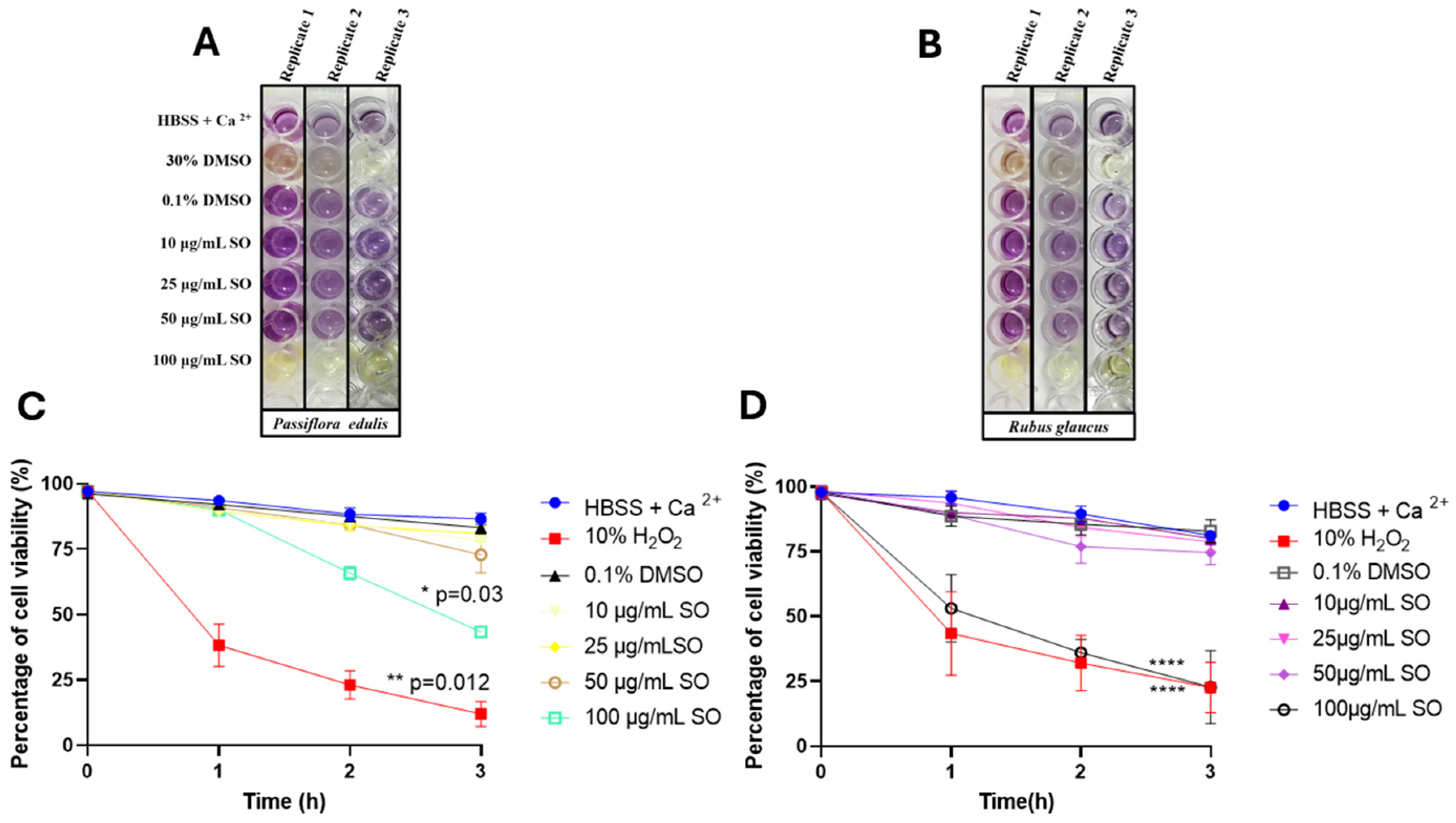
After 3 h of incubation at concentrations of 10, 25, and 50 µg/mL, neither seed oil (SO) showed cytotoxic effects. The changes in cell viability in these groups were qualitatively evidenced by the color change from yellow to purple, which was similar to that of the control neutrophils maintained solely in HBSS + Ca2+ (Figure 1A,B). In contrast, cytotoxicity was observed with both SOs at a concentration of 100 µg/mL, as indicated by the absence of a color change of the reagent. With respect to the vehicle controls, 0.1% DMSO did not affect cell viability, whereas 30% DMSO (positive toxicity control) completely inhibited metabolic activity and the change in the color of the indicator.
Furthermore, the trypan blue exclusion assay revealed a cell viability pattern highly consistent with the qualitative MTT observations. With respect to the R. glaucus SO, cell viability remained at an average of 90% during the first hour of exposure to concentrations of 10, 25, and 50 µg/mL, after which it slightly decreased to an average of 80% after 3 h of observation. However, in the group treated with 100 µg/mL R. glaucus SO, a marked decrease in viability was detected from the very first hour of observation, indicating statistically similar cytotoxic behavior to that of the positive toxicity control (p < 0.00001; Figure 1D).
In the case of P. edulis SO, no statistically significant differences in cell viability were detected between the negative control and the 10, 25, and 50 µg/mL concentrations. Nevertheless, at a concentration of 100 µg/mL, a drastic reduction in viability was recorded starting from the second hour, which decreased to less than 50% by the third hour of exposure, representing behavior statistically comparable to that of the positive toxicity control (p = 0.03; Figure 1C). Notably, 0.1% DMSO did not induce cell mortality in any of the time-based assays. Consequently, on the basis of these cytotoxicity findings, 100 µg/mL SO was strictly excluded from all subsequent biological assays for both seed oils.

3.3. Release of Matrix Metalloproteinase-9 (MMP-9)

3.3.1. Effects of P. edulis Seed Oil on MMP-9 Release

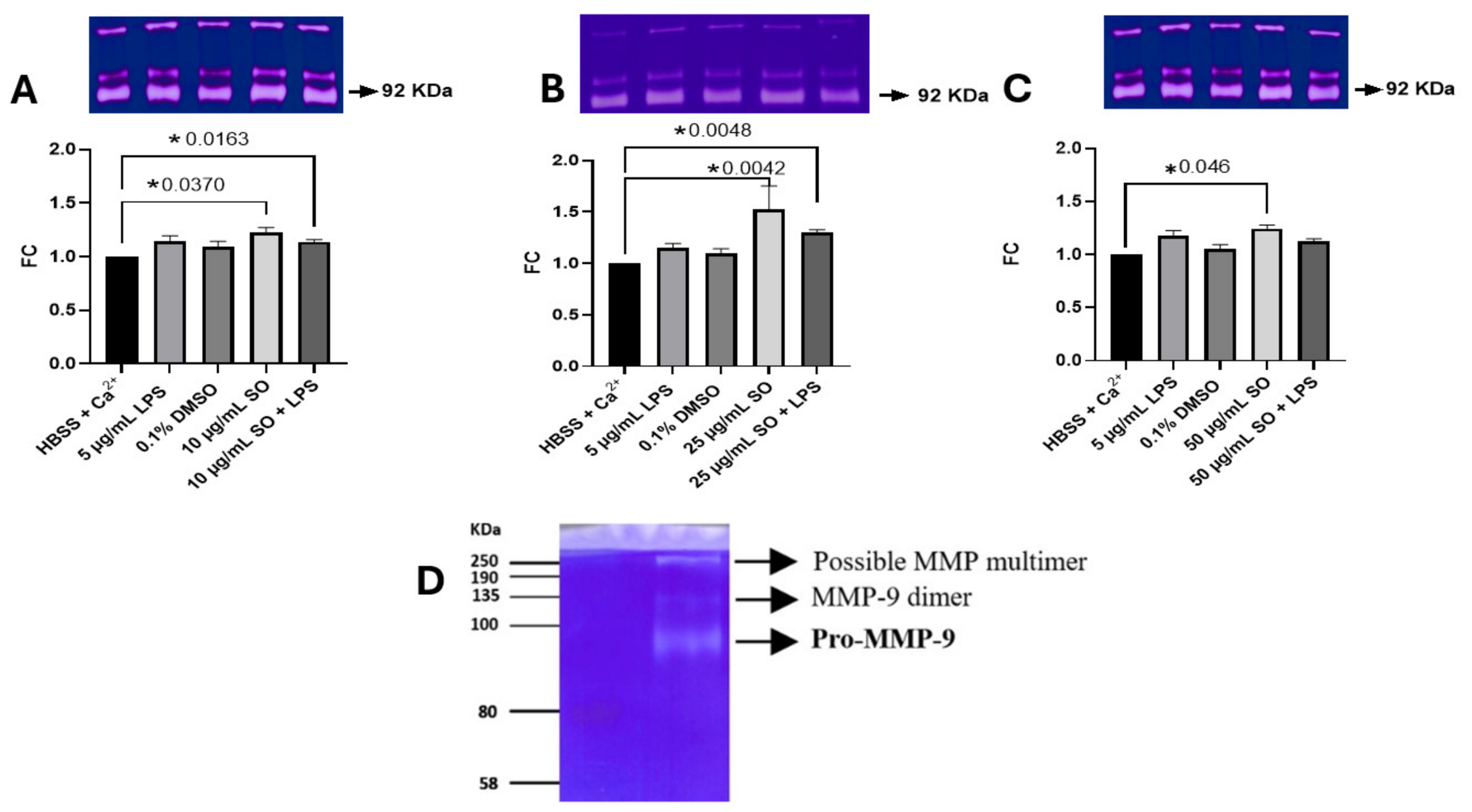
Compared with the negative control, P. edulis SO (10, 25, and 50 µg/mL) induced a significant increase in MMP-9 release, with the 25 µg/mL concentration having the most pronounced effect (Figure 2). However, compared with the positive control, SO prestimulation did not significantly modify the LPS-induced response at any of the analyzed doses (Figure 2).

3.3.2. Effects of R. glaucus Seed Oil on MMP-9 Release

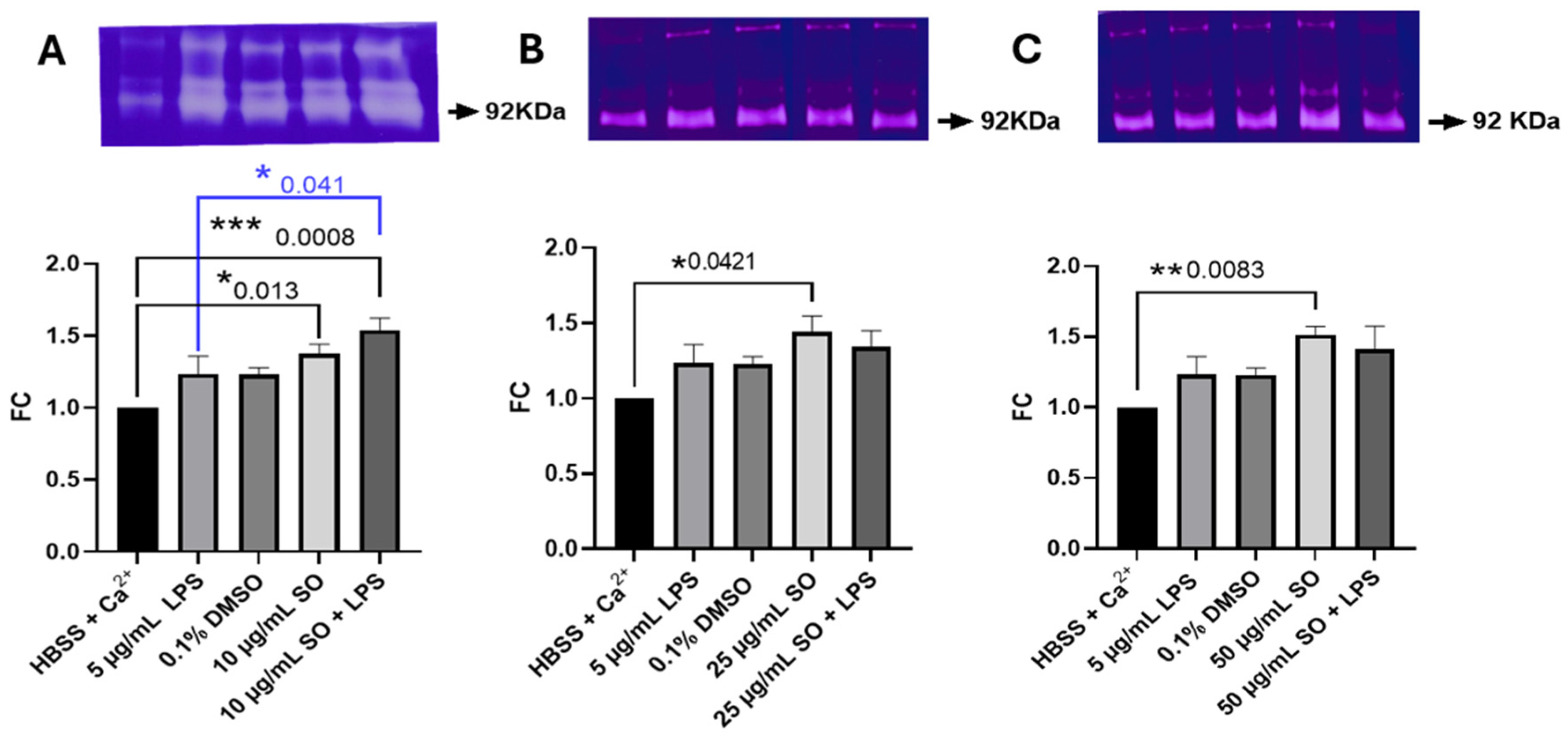
The addition of R. glaucus SO at concentrations of 10, 25, and 50 µg/mL significantly increased MMP-9 release relative to that of the negative control, with the highest secretion observed at 50 µg/mL (Figure 3). In the pretreatment protocol with SO followed by LPS stimulation, compared with the positive control, only the 10 µg/mL concentration resulted in a significant increase in MMP-9 release (Figure 3).

3.4. Effects on ERK1/2 and p38 MAPK Phosphorylation

3.4.1. Effects of P. edulis Seed Oil on ERK1/2 and p38 Phosphorylation

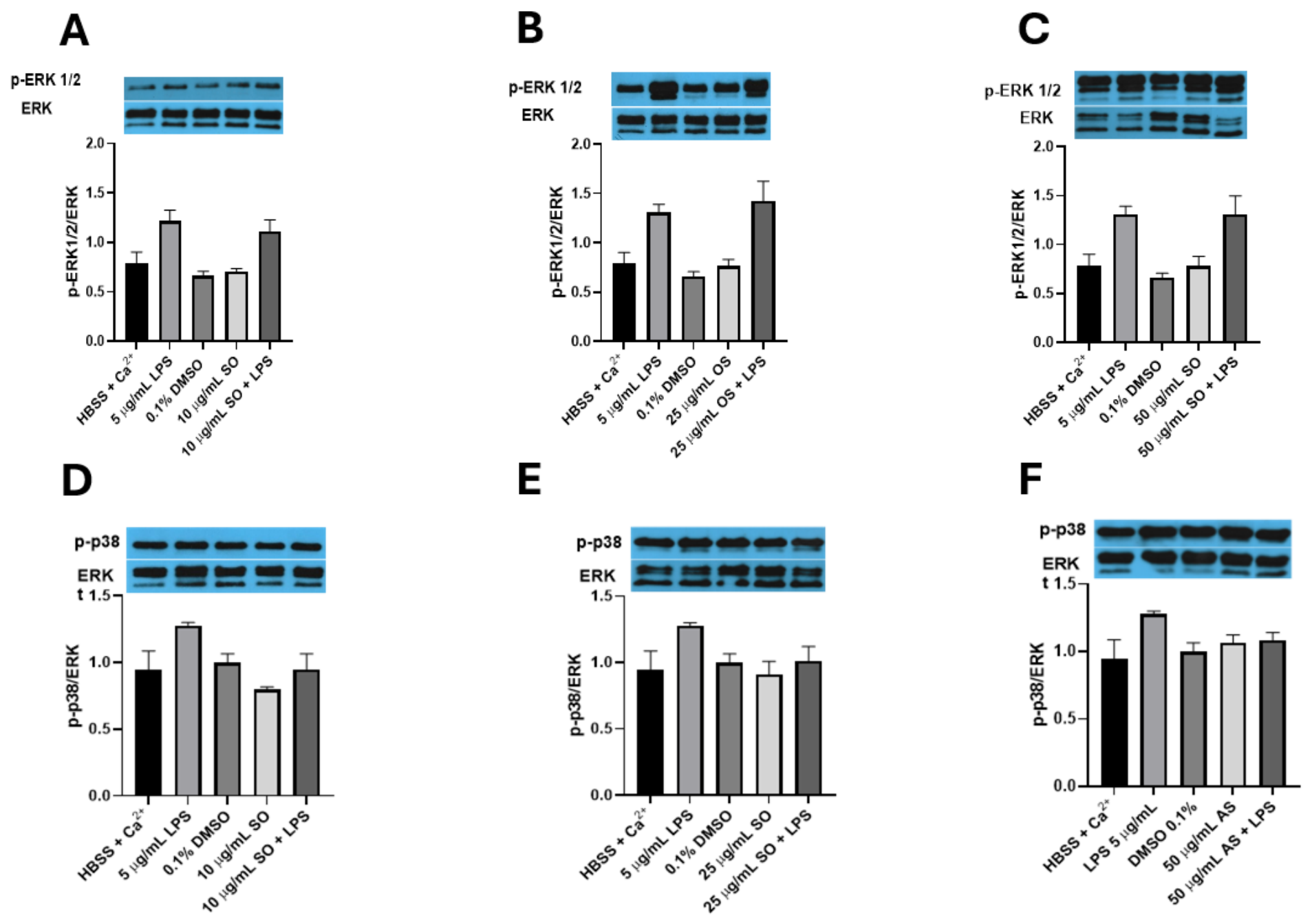
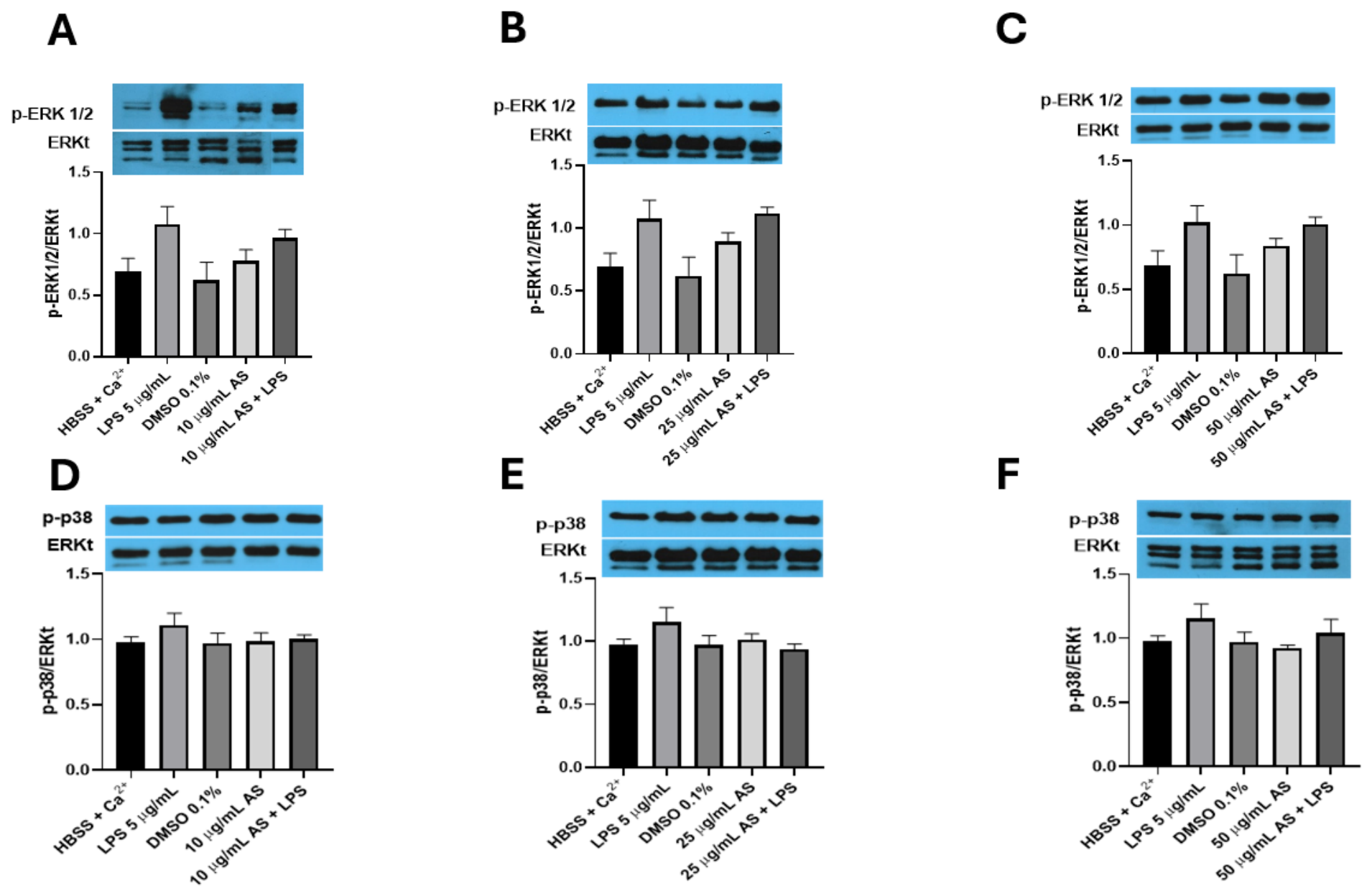
P. edulis SO alone did not increase the phosphorylation of ERK1/2 MAPK, and the phosphorylation levels of these proteins were similar to those of the negative control (Figure 4). Furthermore, no significant increase in the phosphorylation of the factors in this pathway was detected during the prestimulation protocol with SO followed by LPS. Similar results were obtained for the p38 MAPK phosphorylation pathway (Figure 4).

3.4.2. Effects of R. glaucus Seed Oil on ERK1/2 and p38 Phosphorylation

Compared with the negative control, the various concentrations of R. glaucus SO did not significantly increase ERK1/2 or p38 phosphorylation (Figure 5). Similarly, compared with the positive control, the prestimulation protocol, with SO followed by LPS, did not significantly differ for R. glaucus (Figure 5).

4. Discussion

The results of this study demonstrate that seed oils (SOs) from P. edulis and R. glaucus obtained via supercritical fluid extraction (SFE) are safe for use in human neutrophils at concentrations equal to or less than 50 μg/mL. Cell viability was confirmed by the change in color from yellow to purple that resulted from the formation of formazan crystals by metabolically active mitochondria [44]. To corroborate these metabolic findings and ensure cell structural stability, a complementary trypan blue exclusion assay was performed, which confirmed that the cell membrane integrity was unaltered at these working concentrations [40]. These combined cytocompatibility data are consistent with reports from similar studies, where oils from various Passiflora spp. extracted using the Soxhlet method with n-hexane showed no toxicity to J774 murine macrophages at concentrations up to 100 μg/mL [45]. In contrast, it has been reported that oil from Rubus occidentalis L. (also extracted by means of Soxhlet) is toxic to HaCaT keratinocytes within a range of 25 to 50 μg/mL, with an IC50 > 401 μg/mL [46].
The extraction of seed oils (SOs) via SFE, which uses CO2 as the solvent under critical temperature and pressure conditions, is considered an eco-friendly and sustainable technique because it does not utilize hazardous organic solvents [47]. Oils obtained via SFE are rich in fatty acids and tocopherols. For instance, the oils extracted via SFE from the seeds of two Opuntia species contained high contents of unsaturated fatty acids, such as linoleic, oleic, and vaccenic acids, as well as tocopherols, such as γ-tocopherol, which are highly useful in the nutraceutical industry [48].
The seed oils (SOs) evaluated in this study present distinct lipid profiles that may critically influence their immunomodulatory effects. Notably, the composition of the R. glaucus SO used in this work was previously reported in [37] and is from the same extraction batch. According to their findings, R. glaucus SO possesses a remarkably high proportion of polyunsaturated fatty acids (PUFAs), driven by a substantial content of linoleic acid (50.02%) and linolenic acid (29.84%), along with the presence of a moderate amount monounsaturated oleic acid (10.68%). In contrast, its saturated fatty acid (SFA) fraction is minor and consists of palmitic (5.68%) and stearic (3.1%) acids. In addition to fatty acids, this specific R. glaucus batch is enriched with unsaponifiable microconstituents, which are specifically distinguished by their contents of α-tocopherol and β-sitosterol [37]. On the other hand, characterization of the P. edulis SO revealed a different lipid signature. While also heavily dominated by unsaturated fractions, compared with the R. glaucus SO, P. edulis SO features a higher concentration of linoleic acid (58.91%) as its primary PUFA, followed by a greater proportion of monounsaturated oleic acid (19.75%). Conversely, its SFA content is slightly greater, including palmitic (16.85%) and stearic (3.81%) acids. Furthermore, the unsaponifiable fraction of P. edulis is characterized by the hydrocarbon triterpene squalene and the phytosterol stigmasterol rather than the tocopherols found in R. glaucus.
In this study, complex lipophilic mixtures of P. edulis and R. glaucus seed oils (SOs), comprising fatty acids and their respective unsaponifiable fractions, increased MMP-9 release from human neutrophils. This detected increase may be associated predominantly with their high contents of linoleic acid, the major PUFA of both matrices. In this context, other unsaturated fatty acids (UFAs), such as α-linolenic acid and oleic acid, have been reported to induce MMP-9 secretion from bovine neutrophils through the activation of the FFAR1/GPR40 receptor and the subsequent phosphorylation of ERK1/2 and p38 MAPK kinases [42,49]. Furthermore, these UFAs promote an increase in cytosolic calcium levels, activating a critical signaling pathway that contributes to MMP-9 degranulation [49,50]. However, in contrast to these reports, our results revealed no significant phosphorylation of ERK1/2 or p38 MAPK. These findings suggest that the MMP-9 release induced by P. edulis and R. glaucus SOs might be preferentially mediated by calcium mobilization or alternative signaling cascades, rather than the classical MAPK pathways, in human neutrophils. Although the secretion of this metalloproteinase has traditionally been linked to stimulation by fatty acids such as arachidonic acid [51], the findings of this study suggest that the components of the evaluated SOs may act synergistically to modulate the neutrophil response through these alternative molecular routes.
The response observed with R. glaucus SO at a concentration of 10 µg/mL suggests a potential selective induction or priming effect. This phenomenon is defined as a state of sensitization in which the neutrophil, following an initial exposure to an agent, optimizes and enhances its effector mechanisms in response to a subsequent proinflammatory stimulus, such as LPS [52]. At a physiological level, priming increases cellular responsiveness, facilitating degranulation, respiratory bursts, the synthesis of lipid mediators, and the prolongation of cell survival [53]. In this context, the increased release of MMP-9 observed under these conditions may reflect the more efficient mobilization of tertiary and specific granules. However, it is imperative to consider that a persistent or poorly regulated state of preactivation can lead to an exacerbated response, contributing to chronic tissue damage and the perpetuation of the inflammatory cascade [53,54].
Crucially, this differential response, characterized by a prominent priming effect driven by the R. glaucus SO but not the P. edulis SO, may be directly underpinned by the distinct chemical signatures of their respective lipid matrices. Structurally, while both oils are rich in unsaturated fractions, R. glaucus SO is uniquely distinguished by a substantial proportion of α-linolenic acid (9.84%), an ω-3 fatty acid with a virtually negligible content in P. edulis SO (0.47%). Polyunsaturated fatty acids (PUFAs) act as natural ligands for free fatty acid receptors (such as FFAR1 and FFAR4) expressed on the neutrophil membrane [55,56]. Therefore, the synergistic presence of both linoleic acid and α-linolenic acid in R. glaucus at low concentrations may trigger a specific threshold signaling cascade that sensitizes the cell without inducing immediate full-scale degranulation, a core characteristic of targeted cellular priming [57]. Furthermore, unsaponifiable microconstituents likely play a pivotal role in modulating this phenomenon. Unlike P. edulis, the R. glaucus matrix is enriched in α-tocopherol and β-sitosterol. γ-Tocopherol is known to modulate internal redox homeostasis and lipid raft dynamics [58], whereas β-sitosterol can intercalate into the plasma membrane, subtly altering its physical fluidity [59]. At a low SO dose of 10 µg/mL, the coexistence of these specific compounds may selectively facilitate the docking machinery of tertiary granules, thereby lowering the mechanical threshold required for subsequent MMP-9 mobilization [53,57]. Conversely, the lipophilic composition of P. edulis SO, dominated almost entirely by a single PUFA (linoleic acid) and characterized by the presence of squalene and stigmasterol, appears to guide alternative intracellular kinetics that do not support this localized priming effect at lower concentrations.
The results of the present study demonstrate that MMP-9 release from human neutrophils stimulated with P. edulis and R. glaucus seed oils (SOs) does not depend on the activation of the p38 and ERK1/2 MAPK signaling pathways. Although it has been reported that fatty acids can activate MAPK signaling to promote degranulation, this pathway is not exclusive [42]. In bovine neutrophil models, the interaction of linoleic and oleic acids with the FFAR1/GPR40 receptor induces an increase in intracellular calcium, triggering the activation of phospholipase C (PLC) and protein kinase C (PKC) and ultimately resulting in the release of MMP-9 granules [50]. This alternative pathway is particularly relevant in human neutrophils, where the PKCα and PKCδ isoforms have been shown to be essential for maximal MMP-9 release from tertiary granules, even in the absence of β2 integrin-dependent signals [9].
It is important to consider that the stimulation by the studied SOs could be mediated by free fatty acid receptors such as GPR120 (FFAR4), the activation of which promotes degranulation through intracellular calcium mobilization [60]. Furthermore, the literature suggests that the secretion of this metalloproteinase may be mediated by other signaling axes, such as the NF-κB transcription factor and the PI3K/AKT pathway [61]. Therefore, the observed response suggests the selective activation of calcium- and PKC-dependent routes, allowing for efficient mobilization of MMP-9 granules without the activation of classical MAPK cascades.
While the early secretion of MMP-9 is crucial for neutrophils to traverse the endothelial basal lamina by degrading type IV collagen [5,62], it is imperative to acknowledge the dual role of this metalloproteinase. As a double-edged sword in inflammatory contexts, poorly regulated or exacerbated MMP-9 release has been widely linked to extracellular matrix destruction, pathological tissue remodeling, and the perpetuation of chronic inflammatory states [53,54].
Additionally, MMP-9 not only degrades the matrix but also functions as a biological regulator that activates or deactivates chemical signals. It can activate IL-1β (a necessary proinflammatory signal at the onset) or degrade chemokines such as CXCL8 (IL-8) to terminate the recruitment signal once neutrophils are no longer needed, thereby contributing to the effective resolution of the infectious process and preventing chronic inflammation [6,63].
The observed increase in MMP-9 release following stimulation with P. edulis and R. glaucus oils suggests potentiation of the primary neutrophil response. Recent evidence highlights the essential role of MMP-9 in the resolution of inflammation. According to Opdenakker et al. [5], this metalloproteinase is fundamental for leukocyte migration and the processing of chemotactic cytokines. In this context, it has been hypothesized that an early, controlled increase in its activity could theoretically accelerate cellular recruitment and the degradation of debris at the injury site, processes that are critical for preventing the persistence of the inflammatory stimulus and its progression toward chronicity [6]. However, given the multifaceted and potentially destructive nature of MMP-9, these preliminary in vitro findings must be interpreted with strict caution and cannot be conclusively linked to a pro-resolutive outcome, as uncontrolled protease release is a well-established driver of pathological tissue remodeling and severe mucosal damage [64,65]. To systematically rule out exacerbated proinflammatory or histotoxic effects induced by these extracts, it is imperative to expand this research through functional evaluations. Future studies must incorporate assays for determining directional neutrophil migration (chemotaxis) and cytokine release profiles, which dictate recruitment [64]. Furthermore, robust in vivo validation models are needed to determine the real-world net effect of these lipid matrices on tissue integrity and complex inflammatory networks [66] to move beyond controlled observations in cell culture before any definitive therapeutic or nutraceutical value is assigned.
Finally, it is worth noting that while the tested batches were thoroughly characterized via GC-MS (Table 1 and Table 2), formal quantification of trace baseline oxidation and specific bacterial endotoxins represents a limitation of the present study. Although sterile filtration (0.45 µm) and molecular-grade vehicles were strictly utilized to preserve structural and cellular integrity, future research moving toward advanced therapeutic models must integrate definitive confirmation of the absence of contamination.

5. Conclusions

The results of this study demonstrate that P. edulis and R. glaucus seed oils (SOs) obtained via supercritical fluid extraction are biocompatible and noncytotoxic to human neutrophils at concentrations up to 50 µg/mL. These oils modulate the innate immune response by significantly increasing MMP-9 release through a mechanism independent of classical ERK1/2 and p38 MAPK phosphorylation, suggesting the involvement of alternative pathways. While increased MMP-9 expression is traditionally associated with tissue damage and chronic inflammation, our preliminary in vitro findings indicate that the early, independent induction of this enzyme could reflect a localized mechanism related to extracellular matrix remodeling and leukocyte trafficking. However, given the multifaceted nature of MMP-9 and the lack of functional inflammatory markers or in vivo validation in this work, these results cannot be interpreted as a direct therapeutic or anti-inflammatory effect. Instead, these findings strongly position these agro-industrial byproducts within a circular economy framework, highlighting them as valuable matrices of bioactive molecules that justify the revalorization of fruit processing waste. Further chemical fractionation and functional biological testing are warranted to fully clarify their precise regulatory roles in human inflammation.

Author Contributions

Conceptualization, N.E.P.R., J.M.H., O.A.E.J. and A.M.H.B.; methodology, N.E.P.R. and J.M.H.; validation, N.E.P.R. and J.M.H.; formal analysis, N.E.P.R. and J.M.H.; investigation, N.E.P.R. and J.M.H.; resources, J.M.H., A.M.H.B. and O.A.E.J.; data curation, N.E.P.R. and J.M.H.; writing—original draft preparation, N.E.P.R.; writing—review and editing, N.E.P.R. and J.M.H.; supervision, J.M.H.; project administration, J.M.H.; funding acquisition, J.M.H. and O.A.E.J. All authors have read and agreed to the published version of the manuscript.

Funding

This research was funded by the Research System of the University of Nariño (grant number 2678).

Institutional Review Board Statement

The study was conducted in accordance with the Declaration of Helsinki and approved by the Institutional Ethics Committee of the University of Nariño (protocol code 034) on 17 February 2023.

Informed Consent Statement

Informed consent was obtained from all the subjects involved in the study. Written informed consent has been obtained from the patient(s) to publish this paper if applicable.

Data Availability Statement

The data presented in this study are available on request from the corresponding author.

Acknowledgments

The authors thank the scholarship program “Formación del talento humano de alto nivel para el fortalecimiento de las necesidades estratégicas de Ciencia, Tecnología e Innovación (CTeI) del Departamento de Nariño”, awarded to the student Nathalia Patiño Rodriguez for her Master’s degree training in the 1st cohort of the second call held by the Gobernación de Nariño and Fundación CEIBA in 2019. Additionally, during the preparation of this manuscript/study, the author(s) used a free version of Gemini IA (Gemini 3.5 Flash (Google DeepMind, Mountain View, CA, USA)), for the purpose of reviewing the writing and grammar of the manuscript. The authors have reviewed and edited the output and take full responsibility for the content of this publication.

Conflicts of Interest

The authors declare that they have no conflicts of interest. The funders played no role in the design of the study; in the collection, analysis, or interpretation of the data; in the writing of the manuscript; or in the decision to publish the results.

Abbreviations

The following abbreviations are used in this manuscript:
ACDAcid citrate-dextrose
ADUArbitrary densitometric units
ANOVAAnalysis of variance
COX-2Cyclooxygenase-2
DMSODimethyl sulfoxide
ECLEnhanced chemiluminescence
HBSS + Ca2+Hank’s Balanced Salt Solution supplemented with calcium
ILInterleukin
LPSLipopolysaccharide
MAPKMitogen-activated protein kinase
MMP-9Matrix metalloproteinase-9
MTT3-(4,5-Dimethylthiazol-2-yl)-2,5-diphenyltetrazolium bromide
NF-κBNuclear factor kappa-light-chain-enhancer of activated B cells
PGProstaglandin
PKCProtein kinase C
PLCPhospholipase C
PUFAsPolyunsaturated fatty acids
PVDFPolyvinylidene fluoride
SDSSodium dodecyl sulfate
SFESupercritical fluid extraction
SOSeed oil
TNF-αTumor necrosis factor-alpha
UVBUltraviolet B

References

  1. Phillipson, M.; Kubes, P. The Healing Power of Neutrophils. Trends Immunol. 2019, 40, 635–647. [Google Scholar] [CrossRef] [PubMed]
  2. Cui, N.; Hu, M.; Khalil, R.A. Biochemical and biological attributes of matrix metalloproteinases. In Progress in Molecular Biology and Translational Science; Khalil, R.A., Ed.; Academic Press: Cambridge, UK, 2017; pp. 1–308. [Google Scholar]
  3. Mócsai, A. Diverse novel functions of neutrophils in immunity, inflammation, and beyond. J. Exp. Med. 2013, 210, 1283–1299. [Google Scholar] [CrossRef] [PubMed]
  4. Hannocks, M.J.; Zhang, X.; Gerwien, H.; Chashchina, A.; Burmeister, M.; Korpos, E.; Song, J.; Sorokin, L. The gelatinases, MMP-2 and MMP-9, as fine tuners of neuroinflammatory processes. Matrix Biol. 2017, 75, 102–113. [Google Scholar] [CrossRef] [PubMed]
  5. Opdenakker, G.; Van den Steen, P.E.; Dubois, B.; Nelissen, I.; Van Coillie, E.; Masure, S.; Proost, P.; Van Damme, J. Gelatinase B functions as regulator and effector in leukocyte biology. J. Leukoc. Biol. 2001, 69, 851–859. [Google Scholar] [CrossRef] [PubMed]
  6. Manicone, A.M.; McGuire, J.K. Matrix metalloproteinases as modulators of inflammation. Semin Cell Dev. Biol. 2008, 19, 34–41. [Google Scholar] [CrossRef] [PubMed]
  7. Yabluchanskiy, A.; Ma, Y.; Iyer, R.P.; Hall, M.E.; Lindsey, M.L. Matrix metalloproteinase-9: Many shades of function in cardiovascular disease. Physiology 2013, 28, 391–403. [Google Scholar] [CrossRef] [PubMed]
  8. Ai, Z.; Udalova, I.A. Transcriptional regulation of neutrophil differentiation and function during inflammation. J. Leukoc. Biol. 2020, 107, 419–430. [Google Scholar] [CrossRef] [PubMed]
  9. Chakrabarti, S.; Zee, J.M.; Patel, K.D. Regulation of matrix metalloproteinase-9 (MMP-9) in TNF-stimulated neutrophils: Novel pathways for tertiary granule release. J. Leukoc. Biol. 2006, 79, 214–222. [Google Scholar] [PubMed]
  10. Obeagu, E.I.; Rizvi, S.A.A. Inflammatory signaling pathways in neutrophils. Ann. Med. Surg. 2025, 87, 3464–3488. [Google Scholar] [CrossRef]
  11. Cloutier, A.; Ear, T.; Blais-charron, E.; Dubois, C.M.; Mcdonald, P.P. Differential involvement of NF-kB and MAP kinase pathways in the generation of inflammatory cytokines by human neutrophils. J. Leukoc. Biol. 2007, 81, 567–577. [Google Scholar] [PubMed]
  12. Feliu, M.S.; Fernández, I.; Slobodianik, N. Importancia de los ácidos grasos Omega 3 en la salud. Actual Nutr. 2021, 22, 25–32. [Google Scholar] [CrossRef]
  13. Alherz, F.A.; Negm, W.A.; Elekhnawy, E.; El-Masry, T.A.; Haggag, E.M.; Alqahtani, M.J.; Hussein, I.A. Silver Nanoparticles Prepared Using Encephalartos laurentianus De Wild Leaf Extract Have Inhibitory Activity against Candida albicans Clinical Isolates. J. Fungi 2022, 8, 1005. [Google Scholar] [CrossRef]
  14. Attallah, N.G.M.; Elekhnawy, E.; Negm, W.A.; Hussein, I.A.; Mokhtar, F.A.; Al-Fakhrany, O.M. In Vivo and In Vitro Antimicrobial Activity of Biogenic Silver Nanoparticles against Staphylococcus aureus Clinical Isolates. Pharmaceuticals 2022, 15, 194. [Google Scholar] [CrossRef] [PubMed]
  15. Chire Fajardo, G.C. Mejora de Propiedades Físicas y su Efecto en el Contenido de Ácidos Grasos en Chocolate Peruano Aplicando Superficie de Respuesta. Universidad Nacional Agraria La Molina. 2019. Available online: https://dialnet.unirioja.es/servlet/tesis?codigo=341660 (accessed on 23 January 2026).
  16. Bodur, M.; Yilmaz, B.; Ağagündüz, D.; Ozogul, Y. Immunomodulatory Effects of Omega-3 Fatty Acids: Mechanistic Insights and Health Implications. Mol. Food Res. 2025, 69, e202400752. [Google Scholar] [CrossRef]
  17. Deleu, S.; Arnauts, K.; Deprez, L.; Machiels, K.; Ferrante, M.; Huys, G.R.B.; Thevelein, J.M.; Raes, J.; Vermeire, S. High Acetate Concentration Protects Intestinal Barrier and Exerts Anti-Inflammatory Effects in Organoid-Derived Epithelial Monolayer Cultures from Patients with Ulcerative Colitis. Int. J. Mol. Sci. 2023, 24, 768. [Google Scholar] [CrossRef] [PubMed]
  18. Yan, D.; Ye, S.; He, Y.; Wang, S.; Xiao, Y.; Xiang, X.; Deng, M.; Luo, W.; Chen, X.; Wang, X. Fatty acids and lipid mediators in in fl ammatory bowel disease: From mechanism to treatment. Front. Pharmacol. 2023, 14, 1286667. [Google Scholar] [CrossRef]
  19. Manosalva, C.; Bahamonde, C.; Soto, F.; Leal, V.; Ojeda, C.; Cort, C.; Alarcón, P.; Burgos, R.A. Linoleic Acid Induces Metabolic Reprogramming and Inhibits Oxidative and Inflammatory Effects in Keratinocytes Exposed to UVB Radiation. Int. J. Mol. Sci. 2024, 25, 10385. [Google Scholar] [CrossRef] [PubMed]
  20. Martinez-Burgos, W.J.; Sydney, E.B.; Pedroni Medeiros, A.B.; Magalhães, A.I.; de Carvalho, J.C.; Karp, S.G.; Vandenberghe, L.P.d.S.; Letti, L.A.J.; Soccol, V.T.; Pereira, G.V.d.M.; et al. Bioresource Technology Agro-industrial wastewater in a circular economy: Characteristics, impacts and applications for bioenergy and biochemicals. Bioresour. Technol. 2021, 341, 125795. [Google Scholar] [CrossRef] [PubMed]
  21. Aguiló-Aguayo, I.; Albaladejo, P.; Gallur, M.; Abadias, M.; Ortiz, J.; Viñas, I.; Lafarga, T. High Added Value Products from Agroindustrial Residues: Study on Microfibrillated Cellulose for Food Applications. Waste Biomass Valorization 2024, 15, 6723–6743. [Google Scholar] [CrossRef]
  22. Inga, M.; Betalleluz-pallardel, I.; Puma-isuiza, G.; Cumpa-arias, L.; Osorio, C.; Valdez-Arana, J.D.C.; Vargas-De-La-Cruz, C. Chemical analysis and bioactive compounds from agrifood by-products of peruvian crops. Front. Sustain. Food Syst. 2024, 8, 1341895. [Google Scholar] [CrossRef]
  23. Tadesse, D.; Lulekal, E.; Masresha, G. Ethnopharmacological study of traditional medicinal plants used by the people in Metema district, northwestern Ethiopia. Front. Pharmacol. 2025, 16, 1535822. [Google Scholar] [CrossRef]
  24. Khumalo, G.P.; Erik, B.; Wyk, V.; Feng, Y.; Cock, I.E. A review of the traditional use of southern African medicinal plants for the treatment of inflammation and inflammatory pain. J. Ethnopharmacol. 2022, 283, 114436. [Google Scholar] [CrossRef] [PubMed]
  25. Hua, Z.; Wang, X.; Qin, L.L.; Zhu, K.P.; Li, D.Y.; Zhang, X.Y.; Zhang, L.; Zhai, F.T. Plant-derived natural products targeting in fl ammation in treatment of atherosclerosis. Front. Pharmacol. 2025, 16, 1642183. [Google Scholar] [CrossRef] [PubMed]
  26. Moudgil, K.D.; Venkatesha, S.H. The Anti-Inflammatory and Immunomodulatory Activities of Natural Products to Control Autoimmune Inflammation. Int. J. Mol. Sci. 2023, 24, 95. [Google Scholar]
  27. dos Reis Nunes, C.; Barreto Arantes, M.; de Faria Pereira, S.M.; da cruz, L.L.; de Souza Passos, M.; Pereira de Moraes, L.; Vieira, I.J.C.; de Oliveira, D.B. Plants as Sources of Anti-Inflammatory Agents. Molecules 2020, 25, 3726. [Google Scholar] [CrossRef]
  28. Tasneem, S.; Liu, B.; Li, B.; Choudhary, M.I.; Wang, W. Molecular pharmacology of inflammation: Medicinal plants as anti-inflammatory agents. Pharmacol. Res. 2019, 139, 126–140. [Google Scholar] [CrossRef] [PubMed]
  29. Pantoja-Chamorro, A.L.; Hurtado-Benavides, A.M.; Martinez-Correa, H.A. Caracterización de aceite de semillas de maracuyá (Passiflora edulis Sims.) procedentes de residuos agroindustriales obtenido con CO2 supercrítico. Acta Agron. 2017, 66, 178–185. [Google Scholar] [CrossRef]
  30. Cerón, A.F.; Osorio, O.; Hurtado, B. Identificación de ácidos grasos contenidos en los aceites extraídos a partir de semillas de tres diferentes especies de frutas. Acta Agron. 2012, 61, 126–132. [Google Scholar]
  31. Araújo, C.L.A.; Salles, B.C.C.; Duarte, S.M.d.S.; Rodrigues, M.R.; Paula, F.B.d.A. Passion fruit (Passiflora edulis) leaf extract modulates the oxidative metabolism of rat peritoneal neutrophils in a model of inflammation. Braz. J. Pharm. Sci. 2020, 56, e17362. [Google Scholar] [CrossRef]
  32. Puricelli, L.; Dell’Aica, I.; Sartor, L.; Garbisa, S.; Caniato, R. Preliminary evaluation of inhibition of matrix-metalloprotease MMP-2 and MMP-9 by Passiflora edulis and P. foetida aqueous extracts. Fitoterapia 2003, 74, 302–304. [Google Scholar] [CrossRef] [PubMed]
  33. Aguillón, J.; Arango, S.; Uribe, D.; Loango, N. Citotoxyc and apoptotic activity of extracts from leaves and juice of Passiflora edulis. Liver Res. Disord. Ther. 2018, 4, 67–71. [Google Scholar] [CrossRef]
  34. Azofeifa, G.; Quesada, S.; Boudard, F.; Morena, M.; Cristol, J.; Pérez, A.M.; Vaillant, F.; Michel, A. Antioxidant and antiinflammatory in vitro activities of phenolic compounds from tropical highland blackberry (Rubus adenotrichos). J. Agric. Food Chem. 2013, 61, 5798–5804. [Google Scholar] [CrossRef] [PubMed]
  35. Lee, J.E.; Cho, S.M.; Park, E.; Lee, S.M.; Kim, Y.; Auh, J.H.; Choi, H.-K.; Lim, S.; Lee, S.C.; Kim, J.-H. Anti-inflammatory effects of Rubus coreanus Miquel through inhibition of NF-κB. Nutr. Res. Pract. 2014, 8, 501–508. [Google Scholar] [CrossRef] [PubMed]
  36. Pantoja-Chamorro, A.L.; Hurtado-Benavides, A.M.; Martínez-Correa, H.A. Evaluación del rendimiento, composición y actividad antioxidante de aceite de semillas de mora (Rubus glaucus) extraído con CO2 supercrítico. Inf. Tecnol. 2017, 28, 35–46. [Google Scholar] [CrossRef]
  37. España Jojoa, O.A.; Hurtado, A.M.; Mena Huertas, S.J. Biological potential of seed oil of Rubus glaucus Benth (blackberry). Bol. Latinoam. Caribe Plan. Med. Aromat. 2026, 25, 208–220. [Google Scholar] [CrossRef]
  38. Hidalgo, M.A.; Carretta, M.D.; Teuber, S.E.; Zárate, C.; Cárcamo, L.; Concha, I.I.; Burgos, R.A. FMLP-Induced IL-8 release is dependent on NADPH oxidase in human neutrophils. J. Immunol. Res. 2015, 2015, 120348. [Google Scholar] [CrossRef]
  39. Pruett, S.B.; Loftis, A.Y. Characteristics of MTT as an indicator of viability and respiratory burst activity of human neutrophils. Int. Arch. Allergy Appl. Immunol. 1990, 92, 189–192. [Google Scholar] [CrossRef] [PubMed]
  40. Razavi, S.M.; Zahri, S.; Nazemiyeh, H.; Zarrini, G.; Mohammadi, S.; Abolghassemi-Fakhri, M.A. A furanocoumarin from Prangos uloptera roots, biological effects Seyed. Mohammad-Amin 2009, 23, 1522–1527. [Google Scholar] [CrossRef]
  41. Cowland, J.B.; Borregaard, N. Granulopoiesis and granules of human neutrophils. Inmunogical Rev. 2016, 273, 11. [Google Scholar] [CrossRef] [PubMed]
  42. Mena, S.J.; Manosalva, C.; Carretta, M.D.; Teuber, S.; Olmo, I.; Burgos, R.A.; Hidalgo, M.A. Differential free fatty acid receptor-1 (FFAR1/GPR40) signalling is associated with gene expression or gelatinase granule release in bovine neutrophils. Innate Immun. 2016, 22, 479–489. [Google Scholar] [CrossRef] [PubMed]
  43. Mena Huertas, S.J.; Patiño Rodríguez, N.E.; Ordoñez Gómez, N.P.; Gómez Cumbal, L.I.; Yépez Chamorro, M.C. Differential biological activity of two extracts of ripe fruits of Carica candamarcensis Hook on human neutrophils. Bol. Latinoam. Caribe Plan. Med. Aromat. 2024, 23, 290–303. [Google Scholar] [CrossRef]
  44. España Jojoa, O.A. Actividad Antibacterial y Citotóxica In Vitro de Aceites Vegetales de Semillas de Frutas Tropicales y Andinas. Master’s Thesis, Universidad de Nariño, Nariño, Colombia, 2021. [Google Scholar]
  45. Lôbo de Souza, M.; Dourado, D.; Lôbo, I.P.; Pires, V.C.; de Oliveira Araújo, S.N.; de Souza Rebouças, J.; Costa, A.M.; Fernandes, C.P.; Tavares, N.M.; Pereira, N.d.P.; et al. Wild Passiflora (Passiflora spp.) seed oils and their nanoemulsions induce proliferation in HaCaT keratinocytes cells. J. Drug Deliv. Sci. Technol. 2022, 67, 102803. [Google Scholar] [CrossRef]
  46. Krgović, N.; Stojković, D.; Ivanov, M.; Dimitrijević, M.; Menković, N.; Ilić, M.; Jovanović, M.S.; Šavikin, K.; Živković, J. Black raspberry seed oil—Chemical composition, antioxidant/antimicrobial activities and in vitro wound-healing potential. Fitoterapia 2025, 182, 106477. [Google Scholar] [CrossRef] [PubMed]
  47. Herzyk, F.; Piłakowska-Pietras, D.; Korzeniowska, M. Supercritical Extraction Techniques for Obtaining Biologically Active Substances from a Variety of Plant Byproducts. Foods 2024, 13, 10324. [Google Scholar] [CrossRef] [PubMed]
  48. Al-Naqeb, G.; Cafarella, C.; Aprea, E.; Ferrentino, G.; Gasparini, A.; Buzzanca, C.; Micalizzi, G.; Dugo, P.; Mondello, L.; Rigano, F. Supercritical Fluid Extraction of Oils from Cactus Opuntia ficus-indica L. and Opuntia dillenii Seeds. Foods 2023, 12, 618. [Google Scholar] [CrossRef] [PubMed]
  49. Mena, J.; Manosalva, C.; R, R.; Chandia, L.; Carroza, D.; Loaiza, A.; Micalizzi, G.; Dugo, P.; Mondello, L.; Rigano, F. Linoleic acid increases adhesion, chemotaxis, granule release, intracellular calcium mobilisation, MAPK phosphorylation and gene expression in bovine neutrophils. Vet. Immunol. Immunopathol. 2013, 151, 275–284. [Google Scholar] [CrossRef] [PubMed]
  50. Manosalva, C.; Mena, J.; Velasquez, Z.; Colenso, C.K.; Brauchi, S.; Burgos, R.A.; Hidalgo, M.A. Cloning, identification and functional characterization of bovine free fatty acid receptor-1 (FFAR1/GPR40) in neutrophils. PLoS ONE 2015, 10, e0119715. [Google Scholar] [CrossRef] [PubMed]
  51. Solakivi, T.; Kunnas, T.; Kärkkäinen, S.; Jaakkola, O.; Nikkari, S.T. Arachidonic acid increases matrix metalloproteinase 9 secretion and expression in human monocytic MonoMac 6 cells. BioMed Cent. 2009, 8, 11. [Google Scholar] [CrossRef]
  52. Miralda, I.; Uriarte, S.M.; McLeish, K.R. Multiple Phenotypic Changes Define Neutrophil Priming. Front. Cell. Infect. Microbiol. 2017, 7, 217. [Google Scholar] [CrossRef] [PubMed]
  53. Vogt, K.L.; Summers, C.; Chilvers, E.R.; Condliffe, A.M. Priming and de-priming of neutrophil responses in vitro and in vivo. Eur. J. Clin. Investig. 2018, 48, e12967. [Google Scholar] [CrossRef]
  54. El-Benna, J.; Hurtado-Nedelec, M.; Marzaioli, V.; Marie, J.C.; Gougerot-Pocidalo, M.A.; Dang, P.M. Priming of the neutrophil respiratory burst: Role in host defense and inflammation. Immunol. Rev. 2016, 273, 180–193. [Google Scholar] [CrossRef] [PubMed]
  55. Hidalgo, M.A.; Carretta, M.D.; Burgos, R.A. Long Chain Fatty Acids as Modulators of Immune Cells Function: Contribution of FFA1 and FFA4 Receptors. Front Physiol. 2021, 12, 668330. [Google Scholar] [CrossRef] [PubMed]
  56. Miyamoto, J.; Hasegawa, S.; Kasubuchi, M.; Ichimura, A.; Nakajima, A.; Kimura, I. Nutritional Signaling via Free Fatty Acid Receptors. Int. J. Mol. Sci. 2016, 17, 450. [Google Scholar] [CrossRef] [PubMed]
  57. Hallett, M.B.; Lloyds, D. Neutrophil priming: The cellular signals that say ‘amber’ but not ‘green’. Immunol. Today 1995, 16, 264–268. [Google Scholar] [CrossRef] [PubMed]
  58. Zingg, J.M. Modulation of signal transduction by vitamin E. Mol. Asp. Med. 2007, 28, 481–506. [Google Scholar] [CrossRef]
  59. Shen, M.; Yuan, L.; Zhang, J.; Wang, X.; Zhang, M.; Li, H.; Jing, Y.; Zeng, F.; Xie, J. Phytosterols: Physiological Functions and Potential Application. Foods 2024, 13, 1754. [Google Scholar] [CrossRef] [PubMed]
  60. Oh, D.Y.; Walenta, E. Omega-3 fatty acids and FFAR4. Front Endocrinol. 2014, 5, 115. [Google Scholar] [CrossRef]
  61. Ong, C.W.M.; Pabisiak, P.J.; Brilha, S.; Singh, P.; Roncaroli, F.; Elkington, P.T.; Friedland, J.S. Complex regulation of neutrophil-derived MMP-9 secretion in central nervous system tuberculosis. J. Neuroinflamm. 2017, 14, 31. [Google Scholar] [CrossRef]
  62. Gong, Y.; Hart, E.; Shchurin, A.; Hoover-Plow, J. Inflammatory macrophage migration requires MMP-9 activation by plasminogen in mice. J. Clin. Investig. 2008, 118, 3012–3024. [Google Scholar] [CrossRef] [PubMed]
  63. Van den Steen, P.E.; Proost, P.; Wuyts, A.; Van Damme, J.; Opdenakker, G. Neutrophil gelatinase B potentiates interleukin-8 tenfold by aminoterminal processing, whereas it degrades CTAP-III, PF-4, and GRO-α and leaves RANTES and MCP-2 intact. Blood 2000, 96, 2673–2681. [Google Scholar] [CrossRef] [PubMed]
  64. Minhajuddin, F.; Colgan, S.P.; Cartwright, I.M. Impact of Neutrophils on the Tissue Microenvironment During Intestinal Inflammation. J. Inflamm. Res. 2026, 19, 540855. [Google Scholar] [CrossRef] [PubMed]
  65. Torres-Ruiz, J.; Alcala-Carmona, B.; Alejandre-Aguilar, R.; Gómez-Martín, D. Inflammatory myopathies and beyond: The dual role of neutrophils in muscle damage and regeneration. Front. Immunol. 2023, 14, 1113214. [Google Scholar] [CrossRef] [PubMed]
  66. Vogt, K.L.; Summers, C.; Condliffe, A.M. The clinical consequences of neutrophil priming. Curr. Opin. Hematol. 2019, 26, 22–27. [Google Scholar] [CrossRef] [PubMed]
Figure 1. Evaluation of seed oil (SO) cytotoxicity to human neutrophils. (A,B) Qualitative MTT cytotoxicity assay results of Passiflora edulis (A) and Rubus glaucus (B) SOs. Neutrophils (1 × 10⁵) were stimulated in HBSS + Ca2+ medium supplemented with various concentrations of seed oil (SO). The treatments included a negative control (HBSS + Ca2+), a positive control (30% DMSO), a vehicle control (0.1% DMSO), and SO at concentrations of 10, 25, 50, and 100 µg/mL (n = 3). (C,D) Trypan blue exclusion assay kinetics of cells treated with P. edulis (C) and R. glaucus (D) SOs at the same concentrations for 3 h (n = 3). For all panels, the treatments included a negative control (HBSS + Ca2+) and a vehicle control (0.1% DMSO). The data in C–D are presented as the mean ± SEM. Two-way ANOVA followed by Dunnett’s post hoc test: asterisks indicate statistically significant differences compared strictly to the negative control (**** p < 0.00001; ** p < 0.01; * p < 0.05).
Immuno 06 00043 g001
Figure 2. MMP-9 release from human neutrophils treated with Passiflora edulis seed oil. Human neutrophils (5 × 10⁵) were treated with P. edulis seed oil (SO) at 10 µg/mL (A), 25 µg/mL (B), and 50 µg/mL (C) for 15 min at 37 °C. (D) Representative image of MMP-9 in a gel. FC: Fold of control. Each bar represents the mean ± SEM (n = 4). Statistical significance was determined using one-way analysis of variance (ANOVA), followed by Dunnett’s post hoc test (* p ≤ 0.05 vs. control).
Immuno 06 00043 g002
Figure 3. MMP-9 release from human neutrophils treated with Rubus glaucus seed oil. Human neutrophils (5 × 10⁵) were treated with P. edulis seed oil (SO) at 10 µg/mL (A), 25 µg/mL (B), and 50 µg/mL (C) for 15 min at 37 °C. FC: Fold of control. Each bar represents the mean ± SEM (n = 4). Statistical significance was determined using one-way analysis of variance (ANOVA), followed by Dunnett’s post hoc test (* p ≤ 0.05; ** p ≤ 0.01, *** p ≤ 0.001 vs. control).
Immuno 06 00043 g003
Figure 4. Effects of Passiflora edulis seed oil (SO) on ERK1/2 and p38 MAPK activation in human neutrophils. Phosphorylation of (AC) ERK1/2 and (DF) p38 was evaluated following incubation of neutrophils (5 × 10⁶ cells/assay) with the SO at 10, 25, and 50 µg/mL for 30 min at 37 °C. Protein levels were detected via Western blotting. The data are presented as the mean ± SEM (n = 3). Statistical analysis via one-way analysis of variance (ANOVA) revealed no significant differences between the negative control and the treated groups (p > 0.05).
Immuno 06 00043 g004
Figure 5. Effects of Rubus glaucus seed oil (SO) on ERK1/2 and p38 MAPK activation in human neutrophils. Phosphorylation of (AC) ERK1/2 and (DF) p38 was evaluated following incubation of neutrophils (5 × 10⁶ cells/assay) with the SO at 10, 25, and 50 µg/mL for 30 min at 37 °C. Protein levels were detected via Western blotting. The data are presented as the mean ± SEM (n = 3). Statistical analysis via one-way analysis of variance (ANOVA) revealed no significant differences between the negative control and the treated groups (p > 0.05).
Immuno 06 00043 g005
Table 1. Identification and Quantification of Fatty Acids Present in P. edulis Seed Oil.
Fatty Acid 1Lipid NotationAreaRelative %
Palmitic acid(C16:0)45,577,24216.85
Palmitoleic acid(C16:1 cis-9)568,4050.21
Stearic acid(C18:0)10,310,9213.81
Oleic acid(C18:1 cis-9)53,429,59219.75
Linoleic acid(C18:2 cis-9 cis-12)159,394,64658.91
Linolenic acid(C18:3 ω-3)1,275,6270.47
1 Identification was performed on the basis of the corresponding fatty acid methyl ester (FAME).
Table 2. Identification and Quantification of Tocopherols Present in P. edulis Seed Oil.
CompoundCompound Class/TypeConcentration (mg/mL)
SqualeneLinear triterpene (Sterol precursor)5.61
CampesterolPhytosterol0.30
StigmasterolPhytosterol1.24
β-SitosterolPhytosterol0.95
LanosterolTetracyclic triterpene0.50
Disclaimer/Publisher’s Note: The statements, opinions and data contained in all publications are solely those of the individual author(s) and contributor(s) and not of MDPI and/or the editor(s). MDPI and/or the editor(s) disclaim responsibility for any injury to people or property resulting from any ideas, methods, instructions or products referred to in the content.