
Systematic Review

Clinical Prediction Models for Peri-Implantitis Through an Immunopathological Lens: A Systematic Review and Functional Meta-Synthesis of Machine Learning and Conventional Approaches


by
Carlos M. Ardila
1,2,*,
Eliana Pineda-Vélez
2,3 and
Anny M. Vivares-Builes
2,3
1
Department of Periodontics, Saveetha Dental College, and Hospitals, Saveetha Institute of Medical and Technical Sciences, Saveetha University, Chennai 600077, India
2
Basic Sciences Department, Biomedical Stomatology Research Group, Faculty of Dentistry, Universidad de Antioquia U de A, Medellín 050010, Colombia
3
Faculty of Dentistry, Institución Universitaria Visión de las Américas, Medellín 050040, Colombia
*
Author to whom correspondence should be addressed.
Immuno 2026, 6(1), 19; https://doi.org/10.3390/immuno6010019
Submission received: 2 February 2026 / Revised: 2 March 2026 / Accepted: 13 March 2026 / Published: 16 March 2026
(This article belongs to the Section Clinical/translational Immunology)

Abstract

Peri-implantitis is a chronic inflammatory condition driven by dysregulated host immune responses, yet clinical risk assessment continues to rely on routinely collected clinical indicators. Clinical prediction models, including machine learning-based and conventional approaches, have been proposed to integrate these indicators for peri-implantitis risk stratification, but their conceptualization of immunopathological risk has not been systematically examined. This systematic review and functional meta-synthesis were conducted according to PRISMA 2020. Six eligible studies were included, comprising 1316 patients and 2438 dental implants. Four studies employed machine learning-based models, and two used conventional clinical prediction approaches. A functional meta-synthesis was performed to interpret how models integrate clinical predictors as surrogate manifestations of immune dysregulation. Additionally, an exploratory random-effects meta-analysis of area under the receiver operating characteristic curve (AUC) values was conducted where applicable. Discriminative performance ranged from moderate to high across studies, with overlapping AUC estimates between modeling paradigms. Despite methodological differences, both machine learning and conventional models converged on shared immunopathological constructs related to inflammatory burden, prior periodontal disease, plaque-related factors, and host systemic conditions. These findings support the clinical utility of immunopathologically informed prediction models for peri-implantitis and highlight the need for future studies incorporating external validation.

1. Introduction

Peri-implantitis is a chronic inflammatory disease affecting the soft and hard tissues surrounding osseointegrated dental implants and represents one of the major biological threats to the long-term success of implant therapy [1]. Although traditionally described as a plaque-associated infectious condition, growing evidence indicates that peri-implantitis is primarily driven by dysregulated host immune responses to microbial challenges, resulting in sustained inflammation, impaired resolution, and progressive peri-implant bone loss [2,3]. This immunopathological perspective aligns peri-implantitis with other chronic inflammatory diseases of the oral cavity, where disease expression reflects not merely microbial burden but host susceptibility, immune competence, and inflammatory control mechanisms.
From an immunological standpoint, peri-implant tissues represent a unique mucosal environment characterized by altered vascularization, reduced connective tissue fiber insertion, and direct bone–implant contact, which collectively influence immune surveillance and inflammatory propagation [4]. These structural and biological characteristics may partly explain why peri-implant inflammation often exhibits a more aggressive and less predictable course than periodontitis. Consequently, identifying individuals or implants at increased risk of peri-implantitis requires an integrated understanding of host-related immune susceptibility, local inflammatory burden, and systemic modifiers such as metabolic disease or smoking.
Over the past decade, numerous clinical risk indicators for peri-implantitis have been identified, including a history of periodontitis, poor plaque control, lack of supportive therapy, smoking, diabetes mellitus, implant positioning, and prosthetic factors [5,6,7]. Importantly, these variables are not immunologically neutral. Rather, they function as downstream clinical proxies of immune dysregulation, chronic inflammatory load, and altered host–microbiome interactions. For example, diabetes mellitus is associated with impaired neutrophil function and exaggerated cytokine responses, while smoking alters innate immune signaling and vascular responses, both of which contribute to persistent peri-implant inflammation [8,9].
In this context, clinical prediction models have emerged as tools to integrate multiple risk indicators into structured frameworks aimed at estimating peri-implantitis risk. Early approaches relied predominantly on conventional statistical methods, such as multivariable logistic regression or clinical risk scores, which assume linear and additive relationships between predictors and outcomes [6,7]. While these models have demonstrated acceptable discriminatory performance in selected populations, their ability to capture the complex, non-linear, and synergistic nature of immunopathological processes underlying peri-implantitis remains inherently limited.
More recently, advances in artificial intelligence and machine learning have facilitated the development of data-driven clinical prediction models capable of modeling complex interactions among multiple predictors without imposing strict parametric assumptions [10,11,12,13]. Machine learning approaches such as random forests, artificial neural networks, support vector machines, and ensemble methods have been applied to peri-implantitis prediction, often demonstrating improved discriminative performance compared with traditional models within individual studies [10,11,12]. Notably, these approaches may better reflect the biological reality of peri-implantitis as a multifactorial immuno-inflammatory condition, where risk emerges from non-linear interactions among host, environmental, and local tissue factors.
For the purpose of this review, machine learning-based prediction models were defined as data-driven computational algorithms that identify patterns and relationships between predictors and outcomes directly from the data, without requiring prespecified mathematical assumptions about how these variables are related. Such approaches can flexibly model complex, non-linear interactions among multiple clinical factors and automatically derive predictor weighting based on observed data structures (e.g., random forests, artificial neural networks, support vector machines) [11,12,13,14].
In contrast, conventional clinical prediction models were defined as multivariable statistical approaches in which the relationships between predictors and outcomes are specified as a priori by the investigator, typically assuming linear or additive effects estimated through regression-based methods or structured clinical risk scores. In these models, each predictor contributes to risk estimation according to predefined functional forms and coefficients derived from statistical modeling [11,12,13,14].
Despite the increasing application of machine learning in peri-implantitis research, the current body of evidence remains fragmented. Existing studies vary widely in study design, predictor selection, outcome definitions, validation strategies, and modeling approaches. Moreover, most investigations focus primarily on predictive performance metrics, with limited attention to how different modeling paradigms conceptualize and operationalize immunopathological risk. Consequently, it remains unclear how machine learning-based and conventional clinical models differ in their implicit representation of host immune dysfunction and whether these differences have meaningful implications for clinical risk stratification.
Importantly, no prior systematic review has comprehensively examined clinical prediction models for peri-implantitis through an explicit immunopathological framework. Previous reviews have either focused on epidemiological risk factors or on artificial intelligence applications in implant dentistry more broadly, without integrating these perspectives into a unified conceptual synthesis [14,15,16]. This gap in knowledge limits the translational value of predictive modeling research and hampers the development of clinically meaningful, immunologically informed risk assessment strategies.
Given these considerations, a functional synthesis approach is particularly well-suited to address this gap. Functional meta-synthesis moves beyond simple aggregation of performance metrics to systematically compare how different models operate, what types of predictors they prioritize, and how they implicitly encode biological and immunological processes. By interpreting clinical predictors as surrogate markers of immune and inflammatory status, functional synthesis enables a biologically grounded comparison between machine learning-based and conventional clinical prediction models, even in the absence of direct head-to-head comparisons across all studies.
Therefore, the present systematic review aims to synthesize the existing evidence on clinical prediction models for peri-implantitis through an immunopathological lens. Specifically, this review seeks to (i) identify and characterize machine learning-based and conventional clinical prediction models for peri-implantitis, (ii) examine how these models integrate clinical predictors that reflect host immune dysregulation, and (iii) provide a functional comparison of predictive paradigms in terms of their conceptualization of peri-implantitis risk. Therefore, this review intends to bridge the gap between predictive modeling research and contemporary immunological understanding of peri-implantitis, thereby informing future model development and clinical application.

2. Materials and Methods

This systematic review and functional meta-synthesis were conducted in accordance with the Preferred Reporting Items for Systematic Reviews and Meta-Analyses (PRISMA 2020) guidelines [17]. The review protocol was developed a priori and prospectively registered in the PROSPERO database (CRD420261296656). The methodological approach was specifically designed to enable a functional synthesis of clinical prediction models through an immunopathological framework.

2.1. Eligibility (Inclusion) Criteria

Eligibility criteria were defined using a modified PICOS framework adapted for prediction model research.
Participants (P): Studies were eligible if they included human participants with dental implants evaluated for peri-implantitis using established clinical and/or radiographic criteria.
Intervention/Exposure (I): Eligible studies developed or validated clinical prediction models for peri-implantitis, including machine learning-based approaches (e.g., random forests, artificial neural networks, support vector machines, decision trees) and conventional clinical models (e.g., multivariable regression models and clinical risk scores).
Comparator (C): Comparators included alternative predictive modeling approaches within individual studies or conceptual comparisons across studies between machine learning and conventional models.
Outcomes (O): The primary outcome was the presence or incidence of peri-implantitis. Secondary outcomes included predictive performance metrics such as area under the receiver operating characteristic curve (AUC), accuracy, sensitivity, specificity, and validation characteristics.
Study Design (S): Eligible study designs included observational clinical studies, such as cross-sectional and cohort studies, as well as prediction model development and validation studies.

2.2. Exclusion Criteria

Studies were excluded if they were animal or in vitro studies, reviews, editorials, case reports, conference abstracts without full data, or if they focused exclusively on peri-implant mucositis or non-clinical biomarker-based models.

2.3. Information Sources and Search Strategy

A comprehensive search was conducted in PubMed (MEDLINE), Embase (via Ovid), Scopus, and SciELO without language restrictions. The search covered all records from database inception until December 2025. Additional studies were identified through reference list screening and forward citation tracking. The PubMed search strategy was developed first and then adapted for the remaining databases. The core search structure was based on free-text keywords adapted to each database platform to capture terminology related to peri-implantitis/peri-implant disease and clinical prediction models, including machine learning/artificial intelligence and conventional risk prediction approaches. Gray literature was not systematically searched, as the review focused on fully reported clinical prediction model studies suitable for methodological appraisal. The complete search strategies for all databases are provided in Supplementary Table S1.
The search strategy was developed iteratively and internally validated prior to execution. The PubMed search was constructed first and pilot-tested to ensure the retrieval of known key studies on peri-implantitis prediction models. Following this validation step, the strategy was adapted to the remaining databases (Embase, Scopus, and SciELO) while preserving conceptual equivalence across platforms.

2.4. Selection Process

Two reviewers independently screened titles, abstracts, and full texts. Disagreements were resolved by discussion or consultation with a third reviewer.

2.5. Data Collection Process

Data extraction was independently performed by two reviewers using a standardized form, capturing study characteristics, predictors, model type, outcome definitions, validation strategies, and performance metrics.

2.6. Data Items

Extracted variables included demographic and clinical characteristics, local and systemic risk indicators, modeling approach, feature selection methods, and predictive performance.

2.7. Risk of Bias Assessment

Risk of bias was assessed using the Prediction model Risk Of Bias ASsessment Tool (PROBAST) [18]. Assessments were performed independently by two reviewers.

2.8. Certainty of Evidence

Certainty of evidence was evaluated narratively, integrating PROBAST-based methodological quality assessments [18], consistency of predictive performance across studies, and clinical applicability of the prediction models.

2.9. Data Synthesis and Statistical Analysis

A functional synthesis was conducted, grouping studies by modeling paradigm and immunopathological relevance. Where appropriate, an exploratory random-effects meta-analysis of AUC values was performed to summarize discriminative performance. Between-study heterogeneity was assessed using the I2 statistic. Meta-analyses were conducted using R statistical software (R Foundation for Statistical Computing, Vienna, Austria), employing appropriate packages for random-effects modeling. Given the limited number of eligible studies and the anticipated methodological diversity, quantitative results were interpreted descriptively and in support of the functional synthesis rather than as confirmatory estimates.

2.10. Exploratory Meta-Analysis of AUC

An exploratory meta-analysis was performed to summarize the discriminative performance of clinical prediction models that reported AUC for peri-implantitis prediction. Studies were eligible for quantitative synthesis if they explicitly reported an AUC value corresponding to peri-implantitis as the outcome of interest, along with sufficient information to derive confidence intervals.
Given the expected clinical and methodological heterogeneity across studies—including differences in study design, predictor sets, outcome definitions, and modeling strategies—a random-effects approach was deemed appropriate. The meta-analysis was conducted as a complementary quantitative component and was not intended to directly compare machine learning-based models with conventional clinical prediction approaches.

3. Results

3.1. Study Selection Process

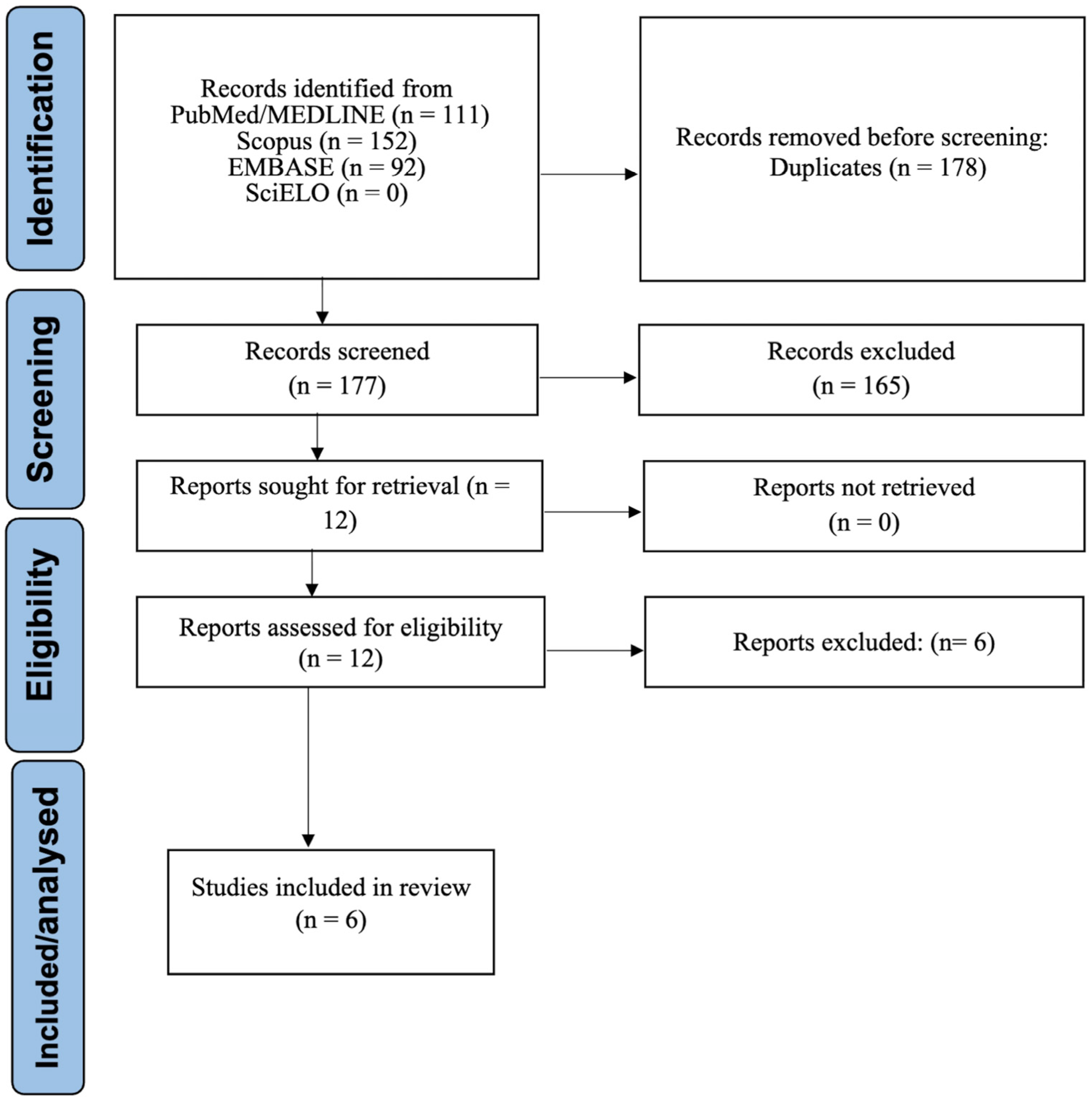
The database searches (PubMed/MEDLINE, Embase via Ovid, Scopus, and SciELO) were conducted from inception to 31 December 2025 and yielded a total of 355 records. After removing 178 duplicates, the remaining records were screened by title and abstract against the predefined eligibility criteria focused on clinical prediction/prognostication models for peri-implantitis. Full texts were retrieved for all potentially eligible reports (n = 12). Six studies met all inclusion criteria and were included in the qualitative synthesis (functional meta-synthesis). Study identification and selection decisions are summarized in the PRISMA 2020 flow diagram (Figure 1). Among the included studies, four employed machine learning-based prediction models [6,10,11,12], while two relied on conventional clinical risk prediction approaches without machine learning algorithms [5,7].
The six included studies were published between 2016 and 2025 and comprised a total of 1316 patients and 2438 dental implants, with individual study sample sizes ranging from 56 to 473 patients. Studies were conducted across Europe, Asia, and North America, reflecting a broad geographic distribution. All studies evaluated peri-implantitis as an explicit outcome and reported measures of discriminative performance. The included investigations were observational clinical studies, predominantly retrospective in design.
A summary of study characteristics, including country of origin, study design, and sample size, is presented in Table 1.

3.2. Discriminative Performance of Prediction Models

Discriminative performance was primarily assessed using AUC. Reported AUC values ranged from moderate to high, indicating acceptable to excellent discrimination for peri-implantitis prediction (Table 2).

3.3. Functional Meta-Synthesis of Clinical Prediction Models Through an Immunopathological Lens

A functional meta-synthesis was conducted to integrate and interpret the findings of the six included studies, focusing on how different clinical prediction models for peri-implantitis operationalized immunopathological risk constructs rather than on direct quantitative comparisons of predictive performance. This approach was selected to accommodate methodological heterogeneity across studies and to enable a concept-driven comparison aligned with clinical and translational immunology.
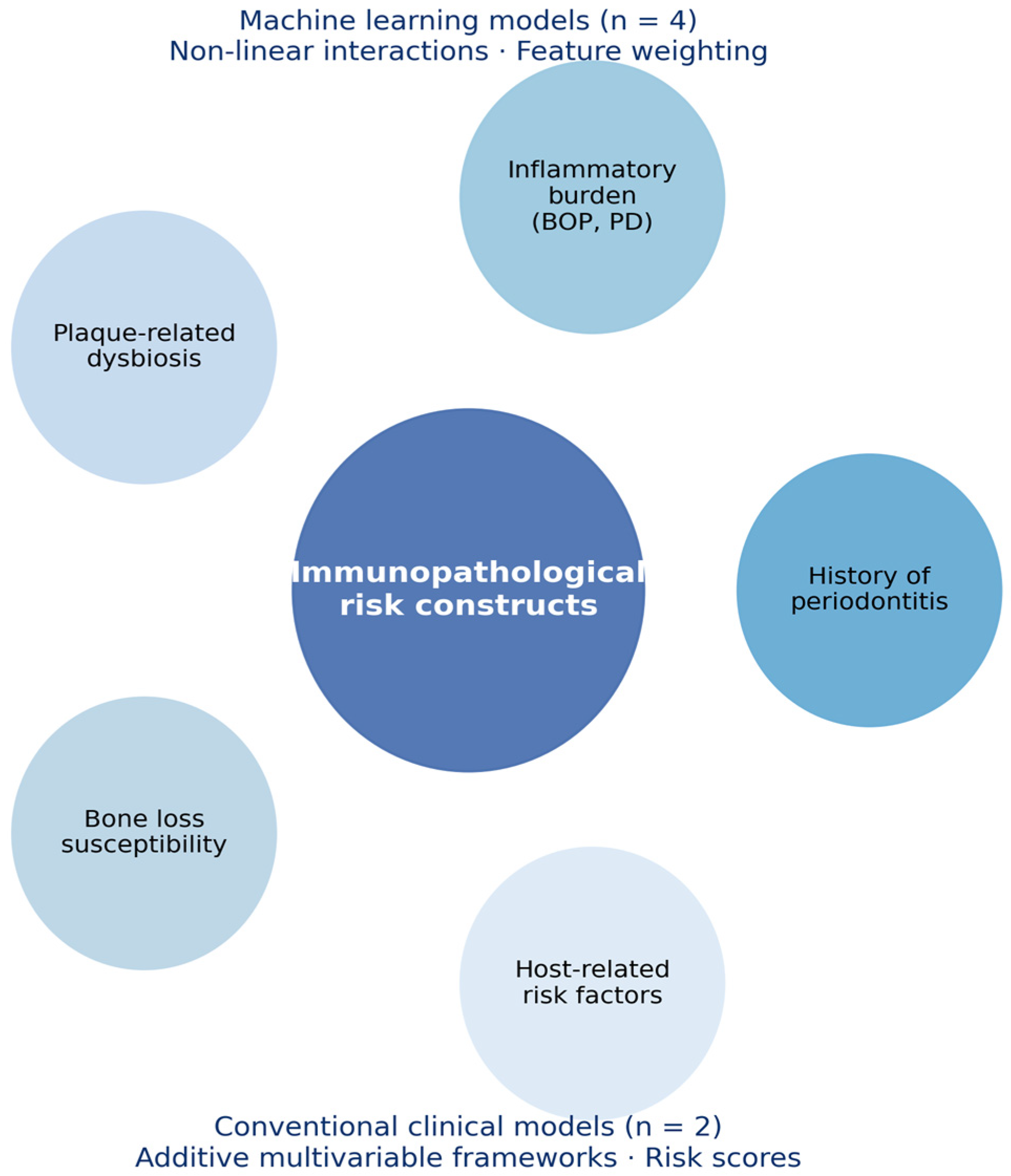
Across all included studies, a consistent set of immunopathological constructs emerged as central to peri-implantitis prediction. These constructs included a history of periodontitis, clinical inflammatory burden—commonly represented by bleeding on probing and probing depth—plaque-related dysbiosis, susceptibility to marginal bone loss, and host-related systemic risk factors such as smoking and diabetes. Importantly, these constructs were shared across both machine learning-based models (n = 4) and conventional clinical prediction approaches (n = 2), indicating conceptual convergence in the immunopathological understanding of peri-implantitis susceptibility.
Despite this convergence, the modeling paradigms differed in how these immunopathological variables were combined and weighted. Machine learning-based studies emphasized non-linear interactions among predictors, feature importance ranking, and data-driven weighting schemes that allowed complex relationships between inflammatory burden, host susceptibility, and disease expression to be captured. In contrast, conventional clinical prediction models relied on additive multivariable frameworks or structured risk assessment tools, in which predefined clinical and host-related factors contributed cumulatively to peri-implantitis risk estimation.
Notwithstanding these methodological differences, both modeling strategies ultimately aimed to achieve similar functional outcomes, namely patient- or site-level risk stratification and clinical decision support. The functional relationships between shared immunopathological constructs, divergent modeling strategies, and convergent clinical outputs are synthesized and visually summarized in Figure 2, which provides a conceptual overview of how machine learning and conventional approaches frame peri-implantitis prediction within a common immunopathological context.

3.4. Exploratory Meta-Analysis of AUC

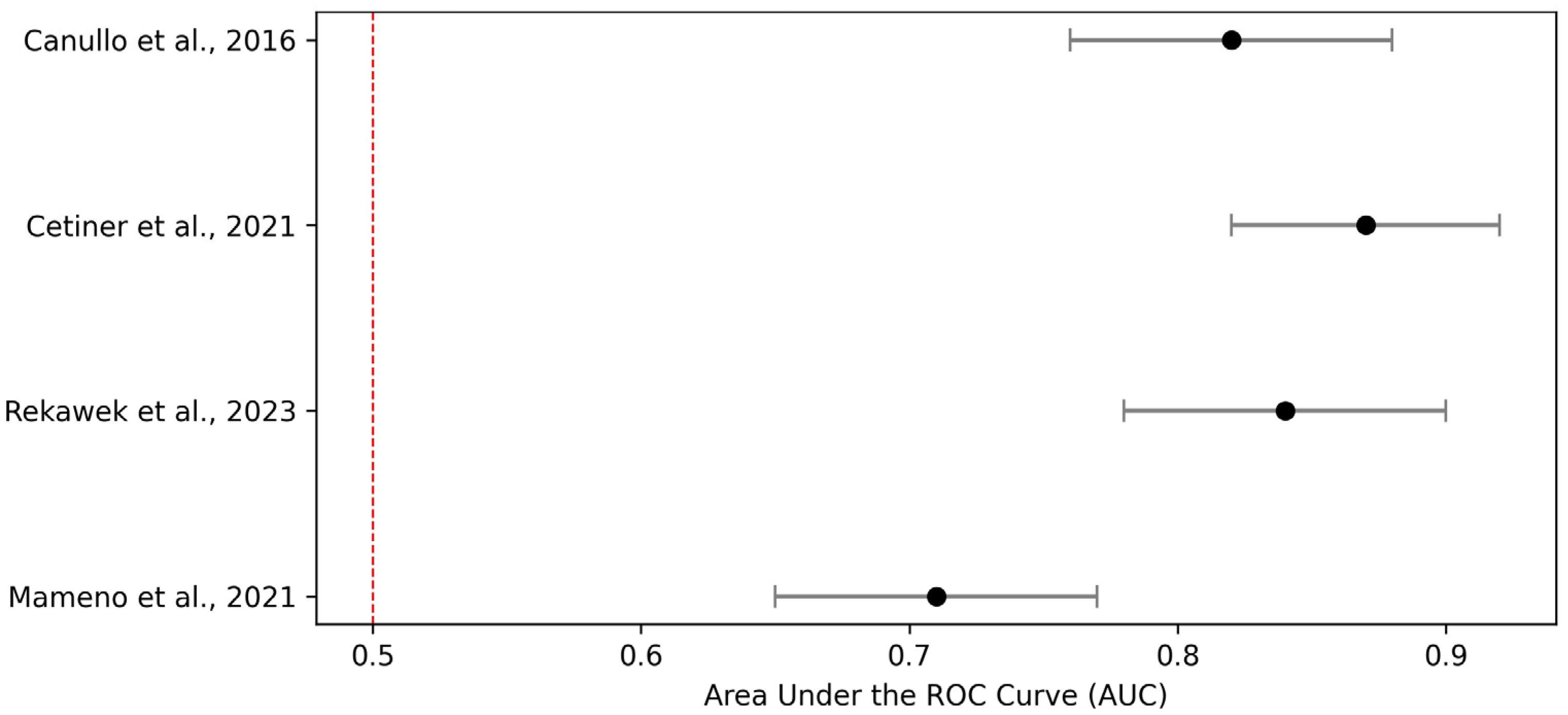
Four studies reported AUC values explicitly corresponding to the prediction of peri-implantitis and were therefore eligible for inclusion in the exploratory meta-analysis of discriminative performance [5,10,11,12]. These studies included three machine learning-based models [10,11,12] and one conventional clinical prediction model [5]. Across these studies, reported AUC values for peri-implantitis discrimination ranged from 0.71 to 0.87.
Although peri-implantitis incidence was evaluated in the study by Saleh et al. [7], the reported AUC for peri-implantitis (IDRA: 0.533) reflected limited discriminative performance, while higher AUC values in the same study corresponded to implant survival outcomes and were therefore not eligible for inclusion. Similarly, Kumar et al. [6] did not report a single standalone AUC value specific to peri-implantitis discrimination, precluding quantitative inclusion.
Given the limited number of eligible studies and the marked clinical and methodological diversity, pooled estimates were interpreted cautiously. Accordingly, the findings of this exploratory meta-analysis were considered supportive and complementary to the functional meta-synthesis, rather than confirmatory evidence of superiority of any specific modeling paradigm (Figure 3).

3.5. Risk of Bias Assessment

Risk of bias was assessed across key methodological domains, including participant selection, predictor measurement, outcome definition, handling of missing data, and model development and validation. Table 3 summarizes the risk-of-bias judgments for each included study.

3.6. Certainty of Evidence

Certainty of evidence was evaluated narratively, considering methodological quality, consistency of findings across studies, directness to the review question, and applicability to clinical practice. Formal GRADE assessment was not applied, as the outcomes of interest were predictive performance metrics rather than intervention effects. Table 4 summarizes the overall certainty of evidence for each modeling paradigm.

4. Discussion

Peri-implantitis is increasingly recognized as a chronic inflammatory condition driven by complex interactions between microbial challenge and host immune dysregulation, ultimately leading to progressive peri-implant bone loss and implant failure. In this context, the development of clinical prediction models represents a promising strategy to improve early risk stratification and preventive decision-making. The present systematic review and functional meta-synthesis integrated the available evidence on clinical prediction models for peri-implantitis, including both machine learning-based and conventional approaches, and interpreted their findings through an immunopathological lens.
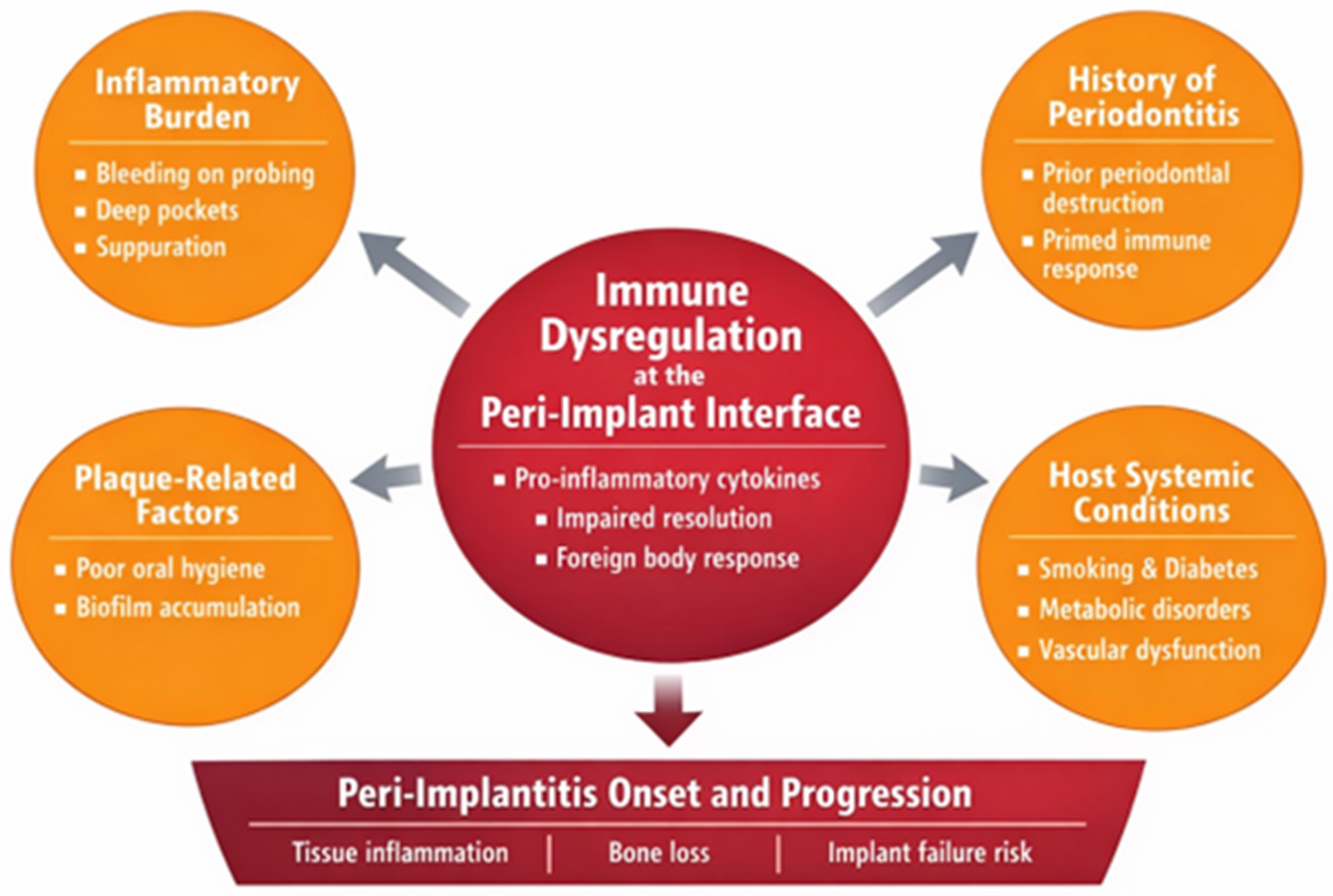
In this review, the term immunopathological lens does not imply the direct measurement of immune biomarkers. Rather, it refers to the interpretation of routinely collected clinical predictors—such as inflammatory burden, prior periodontal disease, plaque-related factors, and host systemic conditions—as surrogate manifestations of underlying immune dysregulation driving peri-implantitis pathogenesis. The immunopathological interpretation of these routinely collected clinical predictors and their relationship to peri-implantitis pathogenesis is schematically illustrated in Figure 4. This conceptual framing aligns with current understanding of peri-implant diseases as immune-mediated conditions in which clinical signs represent downstream expressions of host–microbe interactions rather than isolated local phenomena [1,2,3,8,9].
Across the six included studies [5,6,7,10,11,12], a consistent emphasis on host-related and inflammation-associated predictors was observed, regardless of the modeling paradigm. Four studies employed machine learning-based approaches, while two relied on conventional multivariable clinical models. Despite methodological heterogeneity, all studies aimed to predict peri-implantitis using variables that reflect cumulative immune challenge and susceptibility, underscoring a shared immunopathological foundation.
Discriminative performance of prediction models was generally moderate to high, with reported AUC values ranging from acceptable to excellent. Importantly, higher discriminative performance was not exclusive to machine learning approaches. Conventional clinical models demonstrated AUC values comparable to those achieved by more complex algorithms [5,7]. This observation is consistent with broader evidence suggesting that model performance is strongly influenced by the relevance and quality of predictors rather than by algorithmic complexity alone [19,20].
The functional meta-synthesis provided deeper insight into how different modeling paradigms conceptualize peri-implantitis risk. Machine learning-based models tended to emphasize non-linear interactions and data-driven feature weighting, allowing complex relationships between inflammatory burden, host susceptibility, and disease expression to be captured [10,11,12]. In contrast, conventional clinical models relied on additive frameworks and structured risk assessment tools, reflecting a more linear interpretation of disease progression [5,7]. Despite these differences, both paradigms converged on the same core immunopathological constructs, highlighting the biological plausibility and translational relevance of the predictors used.
An exploratory meta-analysis of AUC values was conducted to provide a complementary quantitative context. Four studies reported explicit AUC values for peri-implantitis prediction and were eligible for inclusion in this analysis [5,10,11,12]. Visual inspection of the forest plot demonstrated overlapping confidence intervals across studies, suggesting broadly comparable discriminative performance despite differences in modeling strategies. Given the limited number of studies and substantial heterogeneity, these findings should be interpreted descriptively and in conjunction with the functional synthesis, rather than as confirmatory evidence of the superiority of any specific predictive paradigm.
Risk of bias assessment using the PROBAST indicated an overall moderate risk of bias across the included studies. Common limitations included retrospective study designs, incomplete reporting of missing data handling, and limited external validation [18]. Studies incorporating independent validation cohorts demonstrated lower risk of bias, reinforcing the importance of validation in prediction model research. These findings mirror observations from prediction modeling literature across medical disciplines, where overfitting and optimistic performance estimates remain recurrent concerns [21,22].
Certainty of evidence was evaluated narratively, given the predictive nature of the outcomes. Overall certainty was judged as moderate for machine learning-based models and low-to-moderate for conventional clinical models. This reflects reasonable consistency in discriminative performance but is tempered by methodological heterogeneity and limited external validation. The absence of a formal GRADE assessment is appropriate in this context, as predictive performance metrics do not correspond to intervention effects and require alternative frameworks for appraisal [23,24].
Several limitations of this review should be acknowledged. The number of eligible studies was modest, reflecting the emerging nature of predictive modeling research in peri-implantitis. Heterogeneity in study design, predictor definitions, and validation strategies limited the scope of quantitative synthesis. Additionally, none of the included studies directly incorporated immune biomarkers, necessitating indirect immunopathological interpretation. Furthermore, the search strategy was intentionally structured to identify multivariable clinical prediction models rather than studies of individual clinical predictors. Consequently, specific peri-implant clinical indicators such as crestal bone loss, peri-implant bone loss, or bleeding on probing were not included as standalone search terms. Although these variables were interpreted in this review as surrogate manifestations of underlying immune dysregulation, their absence as explicit search terms may have limited the retrieval of studies framed primarily around individual predictors rather than prediction models. In addition, the search syntax primarily employed singular forms of key quoted terms (e.g., peri-implant disease; neural network). Although synonymous expressions were incorporated across databases, inclusion of plural variants may further enhance sensitivity and should be considered in future updates of the search strategy. However, these limitations are counterbalanced by notable strengths. This is the first systematic review to integrate machine learning and conventional clinical prediction models for peri-implantitis through an explicitly immunopathological framework, and the use of functional meta-synthesis enabled meaningful integration of heterogeneous evidence without overstating algorithmic differences.
Future research should prioritize prospective, multicenter studies with standardized outcome definitions, robust external validation, and transparent reporting. Integration of immunological biomarkers, transcriptomic profiles, or host-response signatures may further enhance predictive accuracy and mechanistic understanding, advancing the translational impact of artificial intelligence in peri-implant disease management.
From a clinical perspective, the findings of this review indicate that the risk of peri-implantitis can be reasonably estimated using clinical information that is already routinely collected in daily practice [25,26], such as a history of periodontitis, plaque control, smoking, and systemic conditions [27,28]. Both machine learning-based and conventional models rely on these same clinically recognizable factors [29], and their similar predictive performance suggests that complex algorithms are not strictly necessary for useful risk assessment [30]. In practical terms, prediction models should be considered as aids that complement clinical judgment, helping clinicians identify patients or implants at higher risk and guiding more intensive preventive and maintenance strategies in implant care.

5. Conclusions

This systematic review found that both machine learning-based and conventional clinical prediction models for peri-implantitis rely on shared immunopathological risk constructs and demonstrate comparable discriminative performance. Across heterogeneous study designs, predictive accuracy appeared more dependent on the clinical relevance of incorporated predictors than on algorithmic complexity.

Supplementary Materials

The following supporting information can be downloaded at: https://www.mdpi.com/article/10.3390/immuno6010019/s1, Table S1. Complete Search Strategies for Each Database.

Author Contributions

C.M.A. performed the conceptualization, data curation, data analysis, manuscript writing, and revision of the manuscript; E.P.-V. performed the data curation, data analysis, and revision of the manuscript; A.M.V.-B. performed the data curation, data analysis, and revision of the manuscript. All authors have read and agreed to the published version of the manuscript.

Funding

This research received no external funding.

Institutional Review Board Statement

Not applicable.

Data Availability Statement

The datasets used and/or analyzed during the current study are available from the corresponding author upon reasonable request.

Conflicts of Interest

The authors declare no conflicts of interest.

References

  1. Berglundh, T.; Armitage, G.; Araujo, M.G.; Avila-Ortiz, G.; Blanco, J.; Camargo, P.M.; Chen, S.; Cochran, D.; Derks, J.; Figuero, E.; et al. Peri-implant diseases and conditions: Consensus report of workgroup 4 of the 2017 World Workshop on the Classification of Periodontal and Peri-Implant Diseases and Conditions. J. Clin. Periodontol. 2018, 45, S286–S291. [Google Scholar] [CrossRef]
  2. Schwarz, F.; Derks, J.; Monje, A.; Wang, H.L. Peri-implantitis. J. Clin. Periodontol. 2018, 45, S246–S266. [Google Scholar] [CrossRef] [PubMed]
  3. Heitz-Mayfield, L.J.A.; Salvi, G.E. Peri-implant mucositis. J. Clin. Periodontol. 2018, 45, S237–S245. [Google Scholar] [CrossRef] [PubMed]
  4. Galindo-Moreno, P.; Catena, A.; Pérez-Sayáns, M.; Fernández-Barbero, J.E.; O’Valle, F.; Padial-Molina, M. Early marginal bone loss around dental implants to define success in implant dentistry: A retrospective study. Clin. Implant. Dent. Relat. Res. 2022, 24, 630–642. [Google Scholar] [CrossRef]
  5. Canullo, L.; Tallarico, M.; Radovanovic, S.; Delibasic, B.; Covani, U.; Rakic, M. Distinguishing predictive profiles for patient-based risk assessment and diagnostics of plaque induced, surgically and prosthetically triggered peri-implantitis. Clin. Oral Implant. Res. 2016, 27, 1243–1250. [Google Scholar] [CrossRef]
  6. Kumar, P.S.; Dabdoub, S.M.; Hegde, R.; Ranganathan, N.; Mariotti, A. Site-level risk predictors of peri-implantitis: A retrospective analysis. J. Clin. Periodontol. 2018, 45, 597–604. [Google Scholar] [CrossRef]
  7. Saleh, M.H.A.; Kakar, E.; Troiano, G.; Almashni, H.; Misch, J.; Esperouz, F.; Alhazmi, S.; Wang, H.L.; Baráth, Z.; Urban, I.A. Predicting peri-implantitis incidence and implant failure via risk-assessment and prognostication tools: A validation study. J. Periodontol. 2025; early view. [Google Scholar] [CrossRef]
  8. Taylor, J.J.; Preshaw, P.M.; Lalla, E. A review of the evidence for pathogenic mechanisms that may link periodontitis and diabetes. J. Clin. Periodontol. 2013, 40, S113–S134. [Google Scholar] [CrossRef]
  9. Ryder, M.I. The influence of smoking on host responses in periodontal infections. Periodontol. 2000 2007, 43, 267–277. [Google Scholar] [CrossRef] [PubMed]
  10. Mameno, T.; Wada, M.; Nozaki, K.; Takahashi, T.; Tsujioka, Y.; Akema, S.; Hasegawa, D.; Ikebe, K. Predictive modeling for peri-implantitis by using machine learning techniques. Sci. Rep. 2021, 11, 11090. [Google Scholar] [CrossRef]
  11. Rekawek, P.; Herbst, E.A.; Suri, A.; Ford, B.P.; Rajapakse, C.S.; Panchal, N. Machine Learning and Artificial Intelligence: A Web-Based Implant Failure and Peri-implantitis Prediction Model for Clinicians. Int. J. Oral Maxillofac. Implant. 2023, 38, 576–582b. [Google Scholar] [CrossRef]
  12. Cetiner, D.; Isler, S.C.; Bakirarar, B.; Uraz, A. Identification of a Predictive Decision Model Using Different Data Mining Algorithms for Diagnosing Peri-implant Health and Disease: A Cross-Sectional Study. Int. J. Oral Maxillofac. Implant. 2021, 36, 952–965. [Google Scholar] [CrossRef] [PubMed]
  13. Lu, W.; Yu, X.; Li, Y.; Cao, Y.; Chen, Y.; Hua, F. Artificial Intelligence-Related Dental Research: Bibliometric and Altmetric Analysis. Int. Dent. J. 2025, 75, 166–175. [Google Scholar] [CrossRef]
  14. Ardila, C.M.; Pineda-Vélez, E.; Vivares-Builes, A.M. Transcriptomic and Metagenomic Biomarkers in Peri-Implantitis: A Systematic Review, Diagnostic Meta-Analysis, and Functional Meta-Synthesis. Med. Sci. 2025, 13, 187. [Google Scholar] [CrossRef] [PubMed]
  15. Chatzopoulos, G.S.; Koidou, V.P.; Tsalikis, L.; Kaklamanos, E.G. Clinical Applications of Artificial Intelligence in Periodontology: A Scoping Review. Medicina 2025, 61, 1066. [Google Scholar] [CrossRef]
  16. Yadalam, P.K.; Ardila, C.M. Deep Neural Networks Based on Sp7 Protein Sequence Prediction in Peri-Implant Bone Formation. Int. J. Dent. 2025, 2025, 7583275. [Google Scholar] [CrossRef]
  17. Page, M.J.; McKenzie, J.E.; Bossuyt, P.M.; Boutron, I.; Hoffmann, T.C.; Mulrow, C.D.; Shamseer, L.; Tetzlaff, J.M.; Akl, E.A.; Brennan, S.E.; et al. The PRISMA 2020 statement: An updated guideline for reporting systematic reviews. BMJ 2021, 372, n71. [Google Scholar] [CrossRef] [PubMed]
  18. Wolff, R.F.; Moons, K.G.M.; Riley, R.D.; Whiting, P.F.; Westwood, M.; Collins, G.S.; Reitsma, J.B.; Kleijnen, J.; Mallett, S.; PROBAST Group. PROBAST: A Tool to Assess the Risk of Bias and Applicability of Prediction Model Studies. Ann. Intern. Med. 2019, 170, 51–58. [Google Scholar] [CrossRef]
  19. Steyerberg, E.W.; Harrell, F.E., Jr. Prediction models need appropriate internal, internal-external, and external validation. J. Clin. Epidemiol. 2016, 69, 245–247. [Google Scholar] [CrossRef]
  20. Christodoulou, E.; Ma, J.; Collins, G.S.; Steyerberg, E.W.; Verbakel, J.Y.; Van Calster, B. A systematic review shows no performance benefit of machine learning over logistic regression for clinical prediction models. J. Clin. Epidemiol. 2019, 110, 12–22. [Google Scholar] [CrossRef] [PubMed]
  21. Collins, G.S.; Reitsma, J.B.; Altman, D.G.; Moons, K.G. Transparent Reporting of a multivariable prediction model for Individual Prognosis or Diagnosis (TRIPOD): The TRIPOD statement. Ann. Intern. Med. 2015, 162, 55–63. [Google Scholar] [CrossRef]
  22. Riley, R.D.; Ensor, J.; Snell, K.I.; Debray, T.P.; Altman, D.G.; Moons, K.G.; Collins, G.S. External validation of clinical prediction models using big datasets from e-health records or IPD meta-analysis: Opportunities and challenges. BMJ 2016, 353, i3140. [Google Scholar] [CrossRef] [PubMed]
  23. Pethani, F.; Dunn, A.G. Natural language processing for clinical notes in dentistry: A systematic review. J. Biomed. Inform. 2023, 138, 104282. [Google Scholar] [CrossRef] [PubMed]
  24. Yin, J.; Fang, Y.; Liao, Y.; Chen, Z.; Liu, S.; Zhu, H.; Song, K.; Shi, B. Bioinformatics investigation of adaptive immune-related genes in peri-implantitis and periodontitis: Characteristics and diagnostic values. Immun. Inflamm. Dis. 2024, 12, e1272. [Google Scholar] [CrossRef]
  25. Hasuike, A.; Sato, S. Inflammatory Mediators in Peri-Implantitis: From Pathophysiology to Therapeutic Targets. In Oral Immunology; Advances in Experimental Medicine and Biology; Springer: Cham, Switzerland, 2026; pp. 445–461. [Google Scholar] [CrossRef]
  26. Ivanovski, S.; Bartold, P.M.; Huang, Y.S. The role of foreign body response in peri-implantitis: What is the evidence? Periodontol. 2000 2022, 90, 176–185. [Google Scholar] [CrossRef] [PubMed]
  27. Wilson, T.G., Jr. Peri-implantitis pathogenesis: Novel insights may guide therapeutic interventions. J. Periodontol. 2025; early view. [Google Scholar] [CrossRef]
  28. Mehrnia, N.; Van Dyke, T.E. Microbial dysbiosis and immune dysregulation in periodontitis and peri-implantitis. Front. Cell. Infect. Microbiol. 2026, 15, 1678163. [Google Scholar] [CrossRef]
  29. Neji, G.; Gasparro, R.; Tlili, M.; Dhahri, A.; Khanfir, F.; Sammartino, G.; Aliberti, A.; Campana, M.D.; Ben Amor, F. AI-Powered Predictive Models in Implant Dentistry: Planning, Risk Assessment, and Outcomes. J. Clin. Med. 2025, 15, 228. [Google Scholar] [CrossRef]
  30. Ardila, C.M.; Vivares-Builes, A.M.; Yadalam, P.K. Artificial Intelligence Models for Diagnosis of Periodontitis Using Non-Invasive Biological Markers: A Systematic Review and Meta-Analysis of Patient-Based Studies. Med. Sci. 2025, 13, 159. [Google Scholar] [CrossRef]
Figure 1. PRISMA flowchart depicting the study selection process.
Immuno 06 00019 g001
Figure 2. Functional meta-synthesis framework of clinical prediction models for peri-implantitis. Schematic representation of the shared immunopathological risk constructs identified across the six included studies, including history of periodontitis, clinical inflammatory burden, plaque-related dysbiosis, susceptibility to marginal bone loss, and host-related systemic conditions. These constructs form the conceptual substrate for peri-implantitis prediction in both machine learning-based models (n = 4) and conventional clinical prediction approaches (n = 2). The figure illustrates how distinct modeling paradigms map these common clinical–immunopathological inputs toward peri-implantitis risk stratification and clinical decision support [5,6,7,10,11,12].
Immuno 06 00019 g002
Figure 3. Exploratory forest plot of predictive performance (AUC ROC) for peri-implantitis prediction. Forest plot summarizing the AUC reported by clinical prediction studies that explicitly modeled peri-implantitis as the outcome and provided eligible discrimination metrics [5,10,11,12]. Individual study estimates are displayed with their corresponding confidence intervals as reported in the original publications. The plot provides a descriptive visualization of predictive discrimination across heterogeneous modeling approaches and study designs. The red dashed vertical line indicates the AUC value of 0.5, representing the threshold of no discriminatory ability (equivalent to random prediction).
Immuno 06 00019 g003
Figure 4. Conceptual framework linking clinical predictors to immune dysregulation in peri-implantitis. This schematic illustrates how routinely collected clinical predictors used in peri-implantitis prediction models can be interpreted as surrogate manifestations of underlying immune dysregulation. Clinical inflammatory burden, history of periodontitis, plaque-related factors, and host systemic conditions reflect distinct but interrelated pathways of innate and adaptive immune dysfunction, including exaggerated inflammatory responses, impaired resolution, microbial dysbiosis, and altered host susceptibility. Together, these processes converge at the peri-implant interface, driving chronic inflammation and progressive peri-implant bone loss characteristic of peri-implantitis.
Immuno 06 00019 g004
Table 1. Descriptive Characteristics of Included Studies.
StudyCountryStudy DesignModel TypePatients (n)Implants (n)
Canullo et al., 2016 [5]Italy/SerbiaRetrospective cohortConventional56332
Kumar et al., 2018 [6]USARetrospective studyMachine learning86222
Mameno et al., 2021 [10]JapanRetrospective cohortMachine learning473254
Cetiner et al., 2021 [12]TurkeyCross-sectionalMachine learning216542
Rekawek et al., 2023 [11]USARetrospective cohortMachine learning398942
Saleh et al., 2025 [7]MultinationalRetrospective studyConventional87146
Table 2. Reported AUC Values by Model Type.
StudyModel CategoryAlgorithm/ToolAUC for Peri-
Implantitis
Mameno et al., [10]Machine learningRandom forest0.71
Rekawek et al., [11]Machine learningRandom forest0.84
Cetiner et al., [12]Machine learningDecision tree (J48)0.87
Kumar et al., [6]Machine learningRandom forestNot reported *
Canullo et al., [5]ConventionalMultivariable clinical model0.82
Saleh et al., [7]ConventionalIDRA0.53
* The study explicitly modeled peri-implantitis as the outcome; however, a single standalone AUC value for peri-implantitis. Discrimination was not explicitly reported.
Table 3. Risk-of-bias judgments for each included study.
StudySelection BiasPredictor MeasurementOutcome DefinitionMissing DataModel Overfitting/ValidationOverall Risk
Canullo et al., [5]ModerateLowLowUnclearModerateModerate
Kumar et al., [6]ModerateLowLowUnclearModerateModerate
Mameno et al., [10]ModerateLowLowUnclearModerateModerate
Cetiner et al., [12]ModerateLowLowUnclearHighModerate–High
Rekawek et al., [11]LowLowLowLowModerateLow–Moderate
Saleh et al., [7]LowLowLowLowLowLow
Table 4. Overall certainty of evidence for each modeling paradigm.
Outcome/Model TypeNumber of StudiesConsistencyOverall Certainty
Machine learning-based prediction models4ModerateModerate
Conventional clinical prediction models2ModerateLow–Moderate
Disclaimer/Publisher’s Note: The statements, opinions and data contained in all publications are solely those of the individual author(s) and contributor(s) and not of MDPI and/or the editor(s). MDPI and/or the editor(s) disclaim responsibility for any injury to people or property resulting from any ideas, methods, instructions or products referred to in the content.