
Psychosocial Vulnerability and the Consumption of Alcohol and Caffeinated Beverages Among Romanian Adolescents During the COVID-19 Pandemic: A Cross-Sectional Study



Abstract
1. Introduction
Rationale for the Current Study
2. Materials and Methods
2.1. Study Design
2.2. Participants and Data Collection
2.3. Variables and Measurements
2.4. Statistical Analysis
3. Results
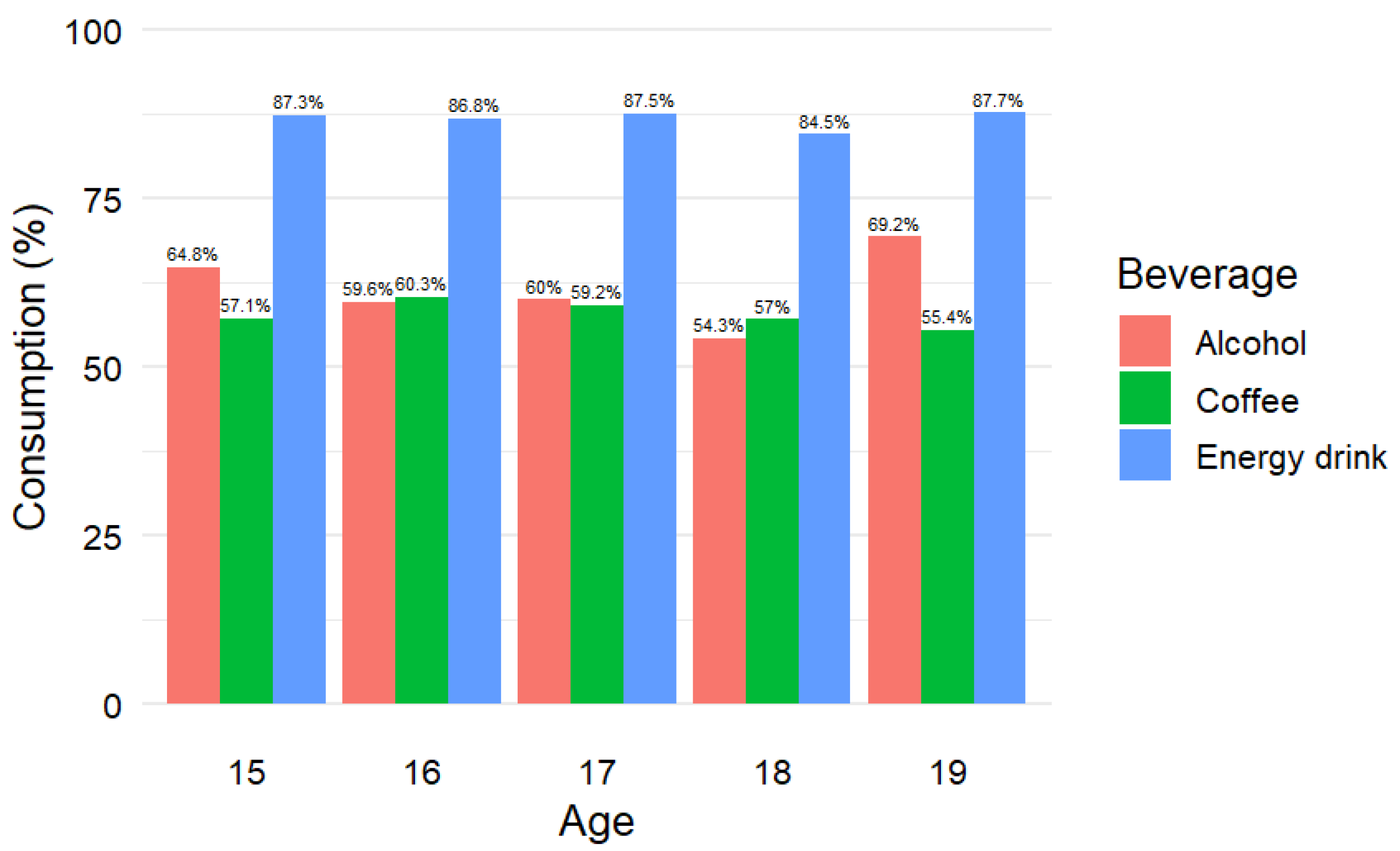
3.1. Coffee Consumption
3.2. Energy Drink Consumption
3.3. Alcohol Consumption
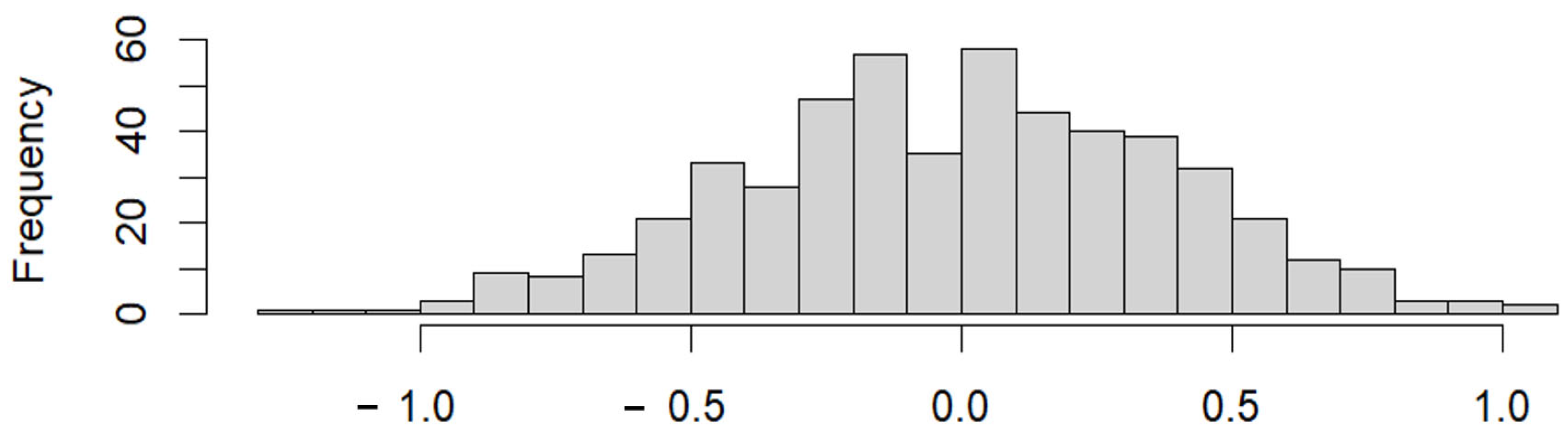
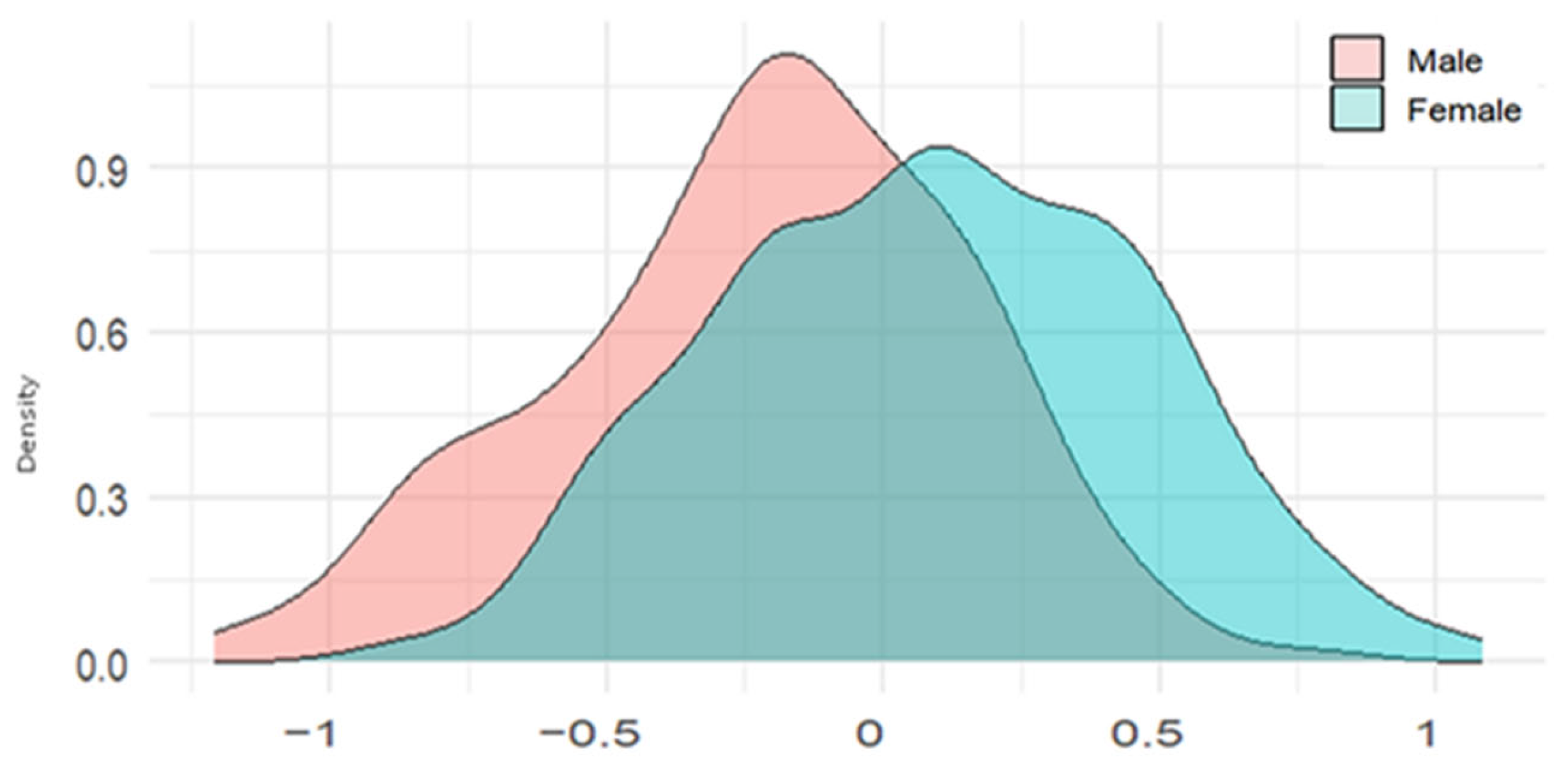
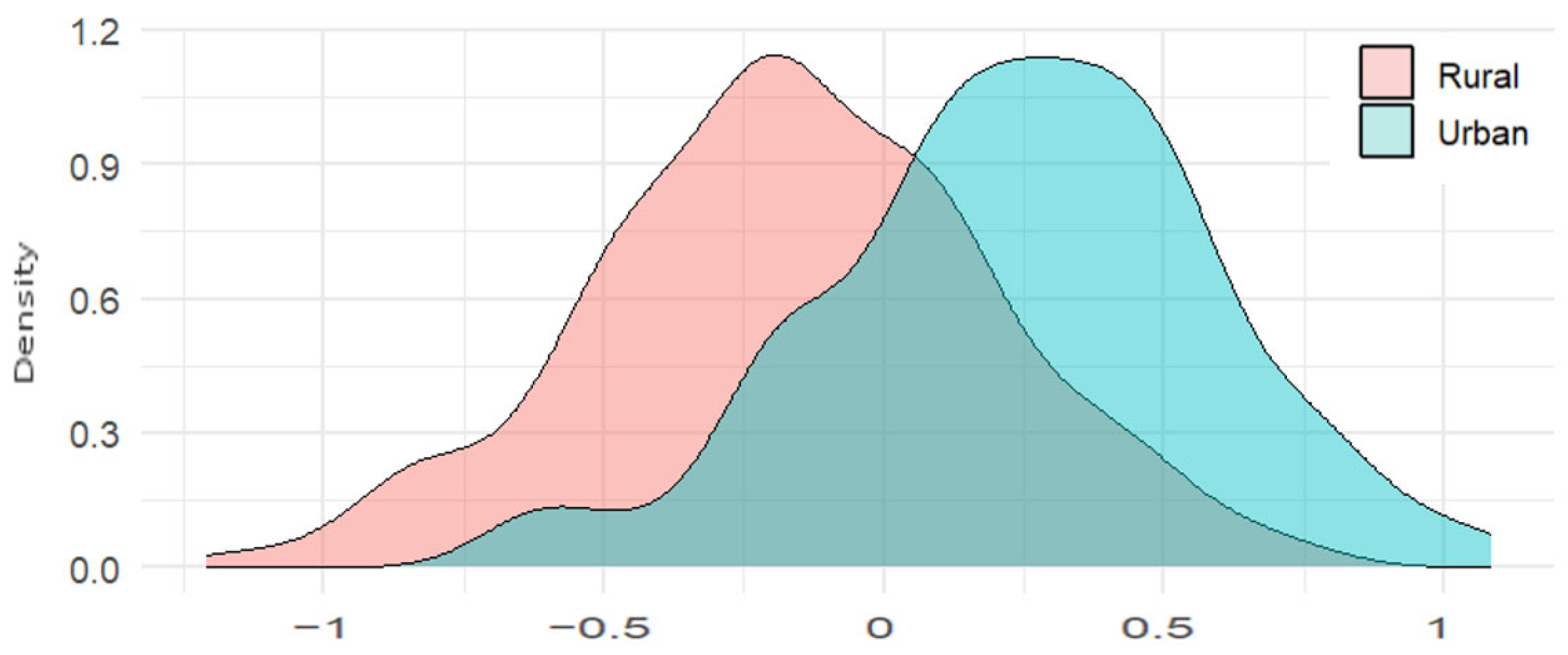
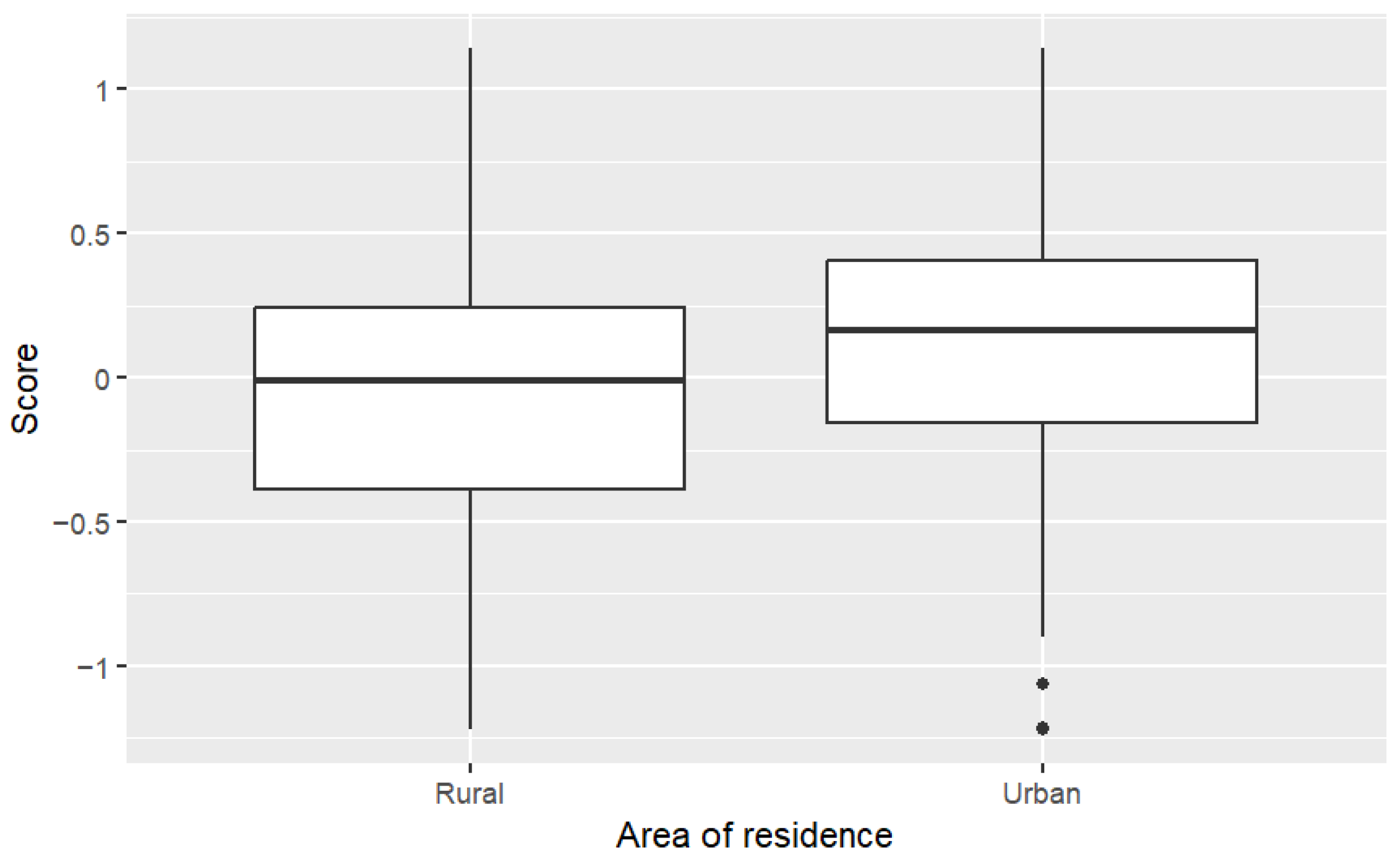
3.4. The Composite Behavioural Score
3.5. Sensitivity Analysis of the Composite Behavioral Score
4. Discussion
Limitations and Future Directions
5. Conclusions
Author Contributions
Funding
Institutional Review Board Statement
Informed Consent Statement
Data Availability Statement
Conflicts of Interest
References
- Andrews, J.L.; Foulkes, L.; Blakemore, S.-J. Peer influence in adolescence: Public-health implications for COVID-19. Trends Cogn. Sci. 2020, 24, 585–587. [Google Scholar] [CrossRef] [Scilit]
- Loke, A.Y.; Mak, Y.-w. Family process and peer influences on substance use by adolescents. Int. J. Environ. Res. Public Health 2013, 10, 3868–3885. [Google Scholar] [CrossRef] [Scilit] [PubMed]
- Fleary, S.A.; Joseph, P.; Pappagianopoulos, J.E. Adolescent health literacy and health behaviors: A systematic review. J. Adolesc. 2018, 62, 116–127. [Google Scholar] [CrossRef] [Scilit] [PubMed]
- Gutiérrez-Hellín, J.; Varillas-Delgado, D. Energy drinks and sports performance, cardiovascular risk, and genetic associations. Nutrients 2021, 13, 715. [Google Scholar] [CrossRef] [Scilit] [PubMed]
- Li, P.; Haas, N.A.; Dalla-Pozza, R.; Jakob, A.; Oberhoffer, F.S.; Mandilaras, G. Energy drinks and adverse health events in children and adolescents. Nutrients 2023, 15, 2537. [Google Scholar] [CrossRef] [Scilit]
- World Health Organization. Global Status Report on Alcohol and Health and Treatment of Substance Use Disorders. 2024. Available online: https://www.who.int/publications/i/item/9789240096745 (accessed on 10 January 2026).
- Hampton, T. Energy drinks pose worrisome risks to adolescents’ cardiovascular health. Circulation 2016, 134, 1052–1053. [Google Scholar] [CrossRef] [Scilit]
- Observatorio Español de las Drogas y las Adicciones. Informe 2023: Alcohol, Tabaco y Drogas Ilegales en España. 2023. Available online: https://pnsd.sanidad.gob.es/profesionales/sistemasInformacion/informesEstadisticas/pdf/2023OEDA-INFORME.pdf (accessed on 15 February 2026).
- Nadeem, I.M.; Shanmugaraj, A.; Sakha, S.; Horner, N.S.; Ayeni, O.R.; Khan, M. Energy drinks and their adverse health effects. Sports Health 2021, 13, 265–277. [Google Scholar] [CrossRef] [Scilit]
- Clauson, K.A.; Shields, K.M.; McQueen, C.; Persad, N.; Jean, F.; Starkey, C. Safety issues associated with commercially available energy drinks. J. Am. Pharm. Assoc. 2008, 48, e55–e63. [Google Scholar] [CrossRef] [Scilit]
- Souza, D.B.; Del Coso, J.; Casonatto, J.; Polito, M.D. Acute effects of caffeine-containing energy drinks. Eur. J. Nutr. 2017, 56, 13–27. [Google Scholar] [CrossRef] [Scilit]
- Sankararaman, S.; Syed, W.; Medici, V.; Sferra, T.J. Impact of energy drinks on health and well-being. Curr. Nutr. Rep. 2018, 7, 121–130. [Google Scholar] [CrossRef] [Scilit]
- Benson, S.; Verster, J.C.; Alford, C.; Scholey, A. Effects of mixing alcohol with caffeinated beverages on subjective intoxication: A systematic review and meta-analysis. Neurosci. Biobehav. Rev. 2014, 47, 16–21. [Google Scholar] [CrossRef] [Scilit] [PubMed]
- McKetin, R.; Coen, A.; Kaye, S. A comprehensive review of the effects of mixing caffeinated energy drinks with alcohol. Drug Alcohol Depend. 2015, 151, 15–30. [Google Scholar] [CrossRef] [Scilit] [PubMed]
- Zucconi, S.; Volpato, C.; Adinolfi, F.; Gandini, E.; Gentile, E.; Loi, A.; Fioriti, L. Gathering consumption data on specific consumer groups of energy drinks. Support. Publ. 2013, 10, EN-394. [Google Scholar] [CrossRef] [Scilit]
- Institutul Național de Sănătate Publică. Raport Pentru Sănătate și Mediu. 2023. Available online: https://insp.gov.ro/cnmrmc/rapoarte/ (accessed on 21 January 2026).
- Institutul Național de Sănătate Publică. Volum Rezumate—A VI-a Conferință Națională pentru Sănătate și Mediu. 2016. Available online: https://insp.gov.ro/download/cnmrmc/documente/unnamed-file.pdf/volumrezumate2016.pdf (accessed on 22 February 2026).
- Bronstein, A.C.; Spyker, D.A.; Cantilena, L.R.; Green, J.L.; Rumack, B.H.; Heard, S.E.; American Association of Poison Control Centers. 2007 Annual Report of the American Association of Poison Control Centers’ National Poison Data System (NPDS): 25th Annual Report. Clin. Toxicol. 2008, 46, 927–1057. [Google Scholar] [CrossRef] [Scilit]
- Verster, J.C.; Koenig, J. Alcohol mixed with energy drink (AMED). Hum. Psychopharmacol. 2018, 33, e2650. [Google Scholar] [CrossRef] [Scilit]
- Kapetanovic, S.; Ander, B.; Gurdal, S. Adolescent smoking, alcohol use, and drug use during the COVID-19 pandemic. BMC Psychol. 2022, 10, 44. [Google Scholar] [CrossRef] [Scilit]
- Layman, H.M.; Thorisdottir, I.E.; Halldorsdottir, T.; Sigfusdottir, I.D.; Allegrante, J.P.; Kristjansson, A.L. Substance use among youth during the COVID-19 pandemic. Curr. Psychiatry Rep. 2022, 24, 307–324. [Google Scholar] [CrossRef] [Scilit]
- Rada, C.; Lungu, M. The Involvement of Age, Gender, and Personality Variables in Alcohol Consumption during the Start of the COVID-19 Pandemic in Romanian University Students. Behav. Sci. 2023, 13, 519. [Google Scholar] [CrossRef] [Scilit]
- Miech, R.A.; Johnston, L.D.; Patrick, M.E.; O’Malley, P.M. Monitoring the Future National Survey Results on Drug Use, 1975–2023; University of Michigan: Ann Arbor, MI, USA, 2024. [Google Scholar]
- Seifert, S.M.; Schaechter, J.L.; Hershorin, E.R.; Lipshultz, S.E. Health effects of energy drinks. Pediatrics 2011, 127, 511–528. [Google Scholar] [CrossRef] [Scilit] [PubMed]
- Visram, S.; Cheetham, M.; Riby, D.M.; Crossley, S.J.; Lake, A.A. Consumption of energy drinks by young people. BMJ Open 2016, 6, e010380. [Google Scholar] [CrossRef] [Scilit]
- Khouja, C.; Kneale, D.; Brunton, G.; Raine, G.; Stansfield, C.; Sowden, A.; Sutcliffe, K.; Thomas, J. Consumption and effects of caffeinated energy drinks in young people. BMJ Open 2022, 12, e047746. [Google Scholar] [CrossRef] [Scilit]
- James, J.E.; Temple, J.L.; Warzak, W.J. Caffeine use in children and adolescents. J. Caffeine Res. 2011, 1, 195–199. [Google Scholar] [CrossRef] [Scilit]
- Bajar, R.G.C.A.; Cangco, G.K.M.; Dantis, J.R.; Marcos, S.S.P.; Gumasing, M.J.J. Effects of coffee consumption on the psychological wellbeing of undergraduate students during online learning. In Proceedings of the International Conference on Industrial Engineering and Operations Management, Warangal, India, 16 August 2022; pp. 2808–2816. [Google Scholar] [CrossRef] [Scilit]
- Jessor, R. Risk behavior in adolescence: A psychosocial framework. J. Adolesc. Health 1991, 12, 597–605. [Google Scholar] [CrossRef] [Scilit]
- Kuntsche, E.; Knibbe, R.; Gmel, G.; Engels, R. Why do young people drink? Clin. Psychol. Rev. 2005, 25, 841–861. [Google Scholar] [CrossRef] [Scilit]
- Steinberg, L.; Monahan, K. Age differences in resistance to peer influence. Dev. Psychol. 2007, 43, 1531–1543. [Google Scholar] [CrossRef] [Scilit] [PubMed]
- World Health Organization. Spotlight on Adolescent Health and Well-Being. Findings from the 2017/2018 Health Behaviour in School-aged Children (HBSC) Survey in Europe and Canada. International Report. 2020. Volume 1. Key Findings. World Health Organization. Regional Office for Europe. Available online: https://iris.who.int/handle/10665/332091 (accessed on 10 January 2026).
- Blum, R.W.; Beuhring, T.; Shew, M.L.; Bearinger, L.H.; Sieving, R.E.; Resnick, M.D. The effects of race/ethnicity, income, and family structure on adolescent risk behaviors. Am. J. Public Health 2000, 90, 1879–1884. [Google Scholar] [CrossRef] [Scilit] [PubMed]
- González-Cabrera, J.; Machimbarrena, J.M.; Fernández-González, L.; Prieto-Fidalgo, Á.; Vergara-Moragues, E.; Calvete, E. Health-related quality of life and cumulative psychosocial risks in adolescents. Youth Soc. 2021, 53, 636–653. [Google Scholar] [CrossRef] [Scilit]
- Loades, M.E.; Chatburn, E.; Higson-Sweeney, N.; Reynolds, S.; Shafran, R.; Brigden, A.; Linney, C.; McManus, M.N.; Borwick, C.; Crawley, E. The impact of social isolation on adolescent mental health. J. Am. Acad. Child Adolesc. Psychiatry 2020, 59, 1218–1239. [Google Scholar] [CrossRef] [Scilit]
- Nagata, J.M.; Cortez, C.A.; Cattle, C.J.; Ganson, K.T.; Iyer, P.; Bibbins-Domingo, K.; Baker, F.C. Screen time use among adolescents during COVID-19. JAMA Pediatr. 2022, 176, 94–96. [Google Scholar] [CrossRef] [Scilit] [PubMed]



| Group | Energy Drinks No n (%) | Energy Drinks Yes n (%) | Coffee No n (%) | Coffee Yes n (%) | Alcohol No n (%) | Alcohol Yes n (%) |
|---|---|---|---|---|---|---|
| Gender: Male | 17 (11.1%) | 136 (88.9%) | 63 (41.7%) | 88 (58.3%) | 62 (40.5%) | 91 (59.5%) |
| Gender: Female | 53 (14.4%) | 315 (85.6%) | 154 (41.8%) | 214 (58.2%) | 145 (39.4%) | 223 (60.6%) |
| Area: Rural | 45 (14.4%) | 268 (85.6%) | 126 (40.5%) | 185 (59.5%) | 127 (40.6%) | 186 (59.4%) |
| Area: Urban | 25 (12.0%) | 183 (88.0%) | 91 (43.8%) | 117 (56.3%) | 80 (38.5%) | 128 (61.5%) |
| Predictor | Coffee OR (95% CI) | Energy Drink OR (95% CI) | Alcohol OR (95% CI) |
|---|---|---|---|
| Gender (female vs. male) | 0.96 (0.65–1.42) | 0.76 (0.41–1.36) | 1.08 (0.72–1.63) |
| Age | 0.97 (0.84–1.12) | 1.01 (0.82–1.25) | 1.05 (0.90–1.22) |
| Area of residence (urban vs. rural) | 1.02 (0.70–1.49) | 1.17 (0.67–2.08) | 1.19 (0.80–1.79) |
| Perceived family income—medium | 0.51 (0.18–1.27) | 1.40 (0.38–4.05) | 0.58 (0.20–1.50) |
| Perceived family income—high | 0.55 (0.18–1.45) | 1.48 (0.38–4.85) | 0.57 (0.19–1.56) |
| Housing (without family) | 1.54 (1.04–2.32) | 0.92 (0.53–1.63) | 1.35 (0.89–2.05) |
| Smoking (yes vs. no) | 0.75 (0.49–1.16) | 2.43 (1.17–5.69) | 4.75 (2.80–8.43) |
| Social influence (“I feel stronger with my friends”) | 1.04 (0.69–1.58) | 2.06 (1.14–3.73) | 1.92 (1.24–2.96) |
| N | Mean (SD) | Median | Q1 | Q3 | Min | Max |
|---|---|---|---|---|---|---|
| 521 | −0.00 (0.40) | 0.03 | −0.26 | 0.27 | −1.21 | 1.08 |
| Group | N | Mean (SD) | Median [Min–Max] | Low Score n (%) | Medium Score n (%) | High Score n (%) |
|---|---|---|---|---|---|---|
| Total | 521 | −0.00 (0.40) | 0.03 [−1.21–1.08] | 174 (33.4%) | 174 (33.4%) | 173 (33.2%) |
| Gender: Male | 153 | −0.22 (0.37) | −0.16 [−1.21–0.77] | 72 (47.1%) | 58 (37.9%) | 23 (15.0%) |
| Gender: Female | 368 | 0.09 (0.38) | 0.09 [−0.90–1.08] | 102 (27.7%) | 116 (31.5%) | 150 (40.8%) |
| Area of residence: rural | 313 | −0.16 (0.36) | −0.16 [−1.21–0.79] | 150 (47.9%) | 111 (35.5%) | 52 (16.6%) |
| Area of residence: urban | 208 | 0.24 (0.35) | 0.27 [−0.69–1.08] | 24 (11.5%) | 63 (30.3%) | 121 (58.2%) |
| Comparison | Cohen’s d | IC 95% Lower | IC 95% Higher |
|---|---|---|---|
| Gender | −0.82 | −1.01 | −0.62 |
| Area of residence | −1.15 | −1.34 | −0.96 |
| Behavioral | Pearson Correlation (r) | p | Logistic Coefficient (B) | OR | p (Logistic) |
|---|---|---|---|---|---|
| Coffee | −0.04 | 0.312 | −0.248 | 0.78 | 0.251 |
| Energy drink | −0.06 | 0.165 | −0.350 | 0.70 | 0.262 |
| Alcohol | −0.15 | 0.001 | −0.672 | 0.51 | 0.002 |
Disclaimer/Publisher’s Note: The statements, opinions and data contained in all publications are solely those of the individual author(s) and contributor(s) and not of MDPI and/or the editor(s). MDPI and/or the editor(s) disclaim responsibility for any injury to people or property resulting from any ideas, methods, instructions or products referred to in the content. |
© 2026 by the authors. Licensee MDPI, Basel, Switzerland. This article is an open access article distributed under the terms and conditions of the Creative Commons Attribution (CC BY) license.
Share and Cite
Dădulescu, A.-M.; Glavce, C.; Turcu, S. Psychosocial Vulnerability and the Consumption of Alcohol and Caffeinated Beverages Among Romanian Adolescents During the COVID-19 Pandemic: A Cross-Sectional Study. Psychiatry Int. 2026, 7, 97. https://doi.org/10.3390/psychiatryint7030097
Dădulescu A-M, Glavce C, Turcu S. Psychosocial Vulnerability and the Consumption of Alcohol and Caffeinated Beverages Among Romanian Adolescents During the COVID-19 Pandemic: A Cross-Sectional Study. Psychiatry International. 2026; 7(3):97. https://doi.org/10.3390/psychiatryint7030097
Chicago/Turabian StyleDădulescu, Ana-Maria, Cristiana Glavce, and Suzana Turcu. 2026. "Psychosocial Vulnerability and the Consumption of Alcohol and Caffeinated Beverages Among Romanian Adolescents During the COVID-19 Pandemic: A Cross-Sectional Study" Psychiatry International 7, no. 3: 97. https://doi.org/10.3390/psychiatryint7030097
APA StyleDădulescu, A.-M., Glavce, C., & Turcu, S. (2026). Psychosocial Vulnerability and the Consumption of Alcohol and Caffeinated Beverages Among Romanian Adolescents During the COVID-19 Pandemic: A Cross-Sectional Study. Psychiatry International, 7(3), 97. https://doi.org/10.3390/psychiatryint7030097