Article

“Hope Restored”: A Pilot Feasibility Study of the Awareness, Courage, and Love (ACL) Psychosocial Intervention Targeting Psychiatric Well-Being in LGBTQ+ Adults


1
Department of Counselor Education and Counseling Psychology, Marquette University, Milwaukee, WI 53110, USA
2
College of Medicine, Drexel University, Philadelphia, PA 19104, USA
3
Center for the Science of Social Connection, Department of Psychology, University of Washington, Seattle, WA 98195, USA
*
Author to whom correspondence should be addressed.
Psychiatry Int. 2026, 7(3), 133; https://doi.org/10.3390/psychiatryint7030133

Submission received: 13 February 2026 / Revised: 5 June 2026 / Accepted: 5 June 2026 / Published: 11 June 2026
(This article belongs to the Section Mental Health)

Abstract

Mental health disparities among LGBTQ+ individuals remain elevated and have been exacerbated by sociopolitical stressors following the COVID-19 pandemic. This embedded, mixed-methods pilot study examined the feasibility of a four-session Awareness, Courage, and Love (ACL) group intervention adapted for LGBTQ+ community members. The two-hour intervention sessions targeted (1) contact with the authentic self, (2) self-acceptance and self-compassion, (3) value alignment, and (4) presence. Seven LGBTQ+ adults participated in intervention (n = 3) and control (n = 4) conditions. Participants completed quantitative measures evaluating facets of well-being, including social connection and self-acceptance, and provided qualitative feedback. Findings provide preliminary support for the feasibility of ACL interventions in conjunction with existing community-building strengths among LGBTQ+ individuals. Implications for interdisciplinary behavioral health settings, including psychiatric contexts, are discussed.

Graphical Abstract

1. Introduction

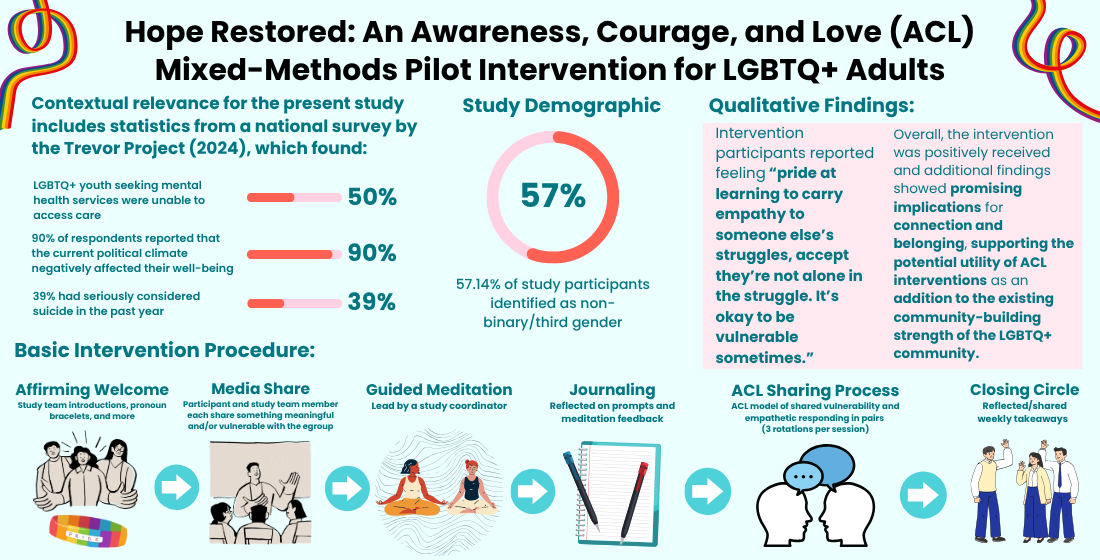
As of 2024, approximately 7.6% of all adults and one in five Gen Z adults in the United States identify as LGBTQ+, reflecting a nearly 50% generational increase in LGBTQ+ identification [1]. Although some states have attempted to strengthen protections for LGBTQ+-individuals as federal threats rise [2], mental health disparities for LGBTQ+ individuals remain prevalent [3]. A recent national survey by the Trevor Project 2024 found that 50% of LGBTQ+ youth seeking mental health services were unable to access care, 90% of respondents reported that the current political climate negatively affected their well-being, and 39% had seriously considered suicide in the past year [4]. These disparities represent a significant concern within psychiatry, as they highlight persistent barriers to accessing mental health care and underscore the need for interventions that address the unique psychosocial stressors experienced by LGBTQ+ populations.
These findings are consistent with historical outcomes for LGBTQ+ individuals and are unsurprising following the exacerbating effects of the COVID-19 pandemic [5]. One scoping review reported a disproportionate impact of COVID-19 on the LGBTQ+ community, citing depression, stress, and anxiety as the most commonly reported concerns, and suicidal ideation and self-harm as additional salient experiences [6]. Another qualitative study found that chronic multi-level stigmatization in conjunction with lack of access to community and belonging during quarantine had a significant impact on both autonomy seeking and identity formation for young LGBTQ+ adults [7].
In the years following the peak of the pandemic, several anti-gay policies have been enacted. Florida’s “Don’t Say Gay” law, officially known as the “Parental Rights in Education Act,” prohibits discussion of sexual orientation and gender identity in kindergarten through third-grade classrooms [8]. Additionally, adoption rights for LGBTQ+ parents have been restricted in over 27 states [3], and multiple bills aimed at blocking access to gender-affirming care for transgender individuals remain in the pipeline [9]. Meanwhile, mental health disparity among LGBTQ+ individuals has continued to rise, with LGBTQ+ individuals being disproportionately affected by discrimination, depression, suicidality, substance use disorders, anxiety, and eating disorders [10].
Social connection and belonging function as protective factors for LGBTQ+ individuals navigating oppression within the current socio-political climate. Affirming social relationships have been shown to reduce psychological distress and isolation, promote identity affirmation, and reduce internalized homophobia [11,12,13,14]. Identity-affirming social connections may be especially vital, as trans-identity pride has been shown to buffer the impact of gender-based discrimination on depression, particularly for BIPOC individuals [15]. Consistent with this pattern, LGBTQ+ individuals who perceive their communities as supportive attempt suicide at approximately half the rate of those living in unsupportive communities [4].

1.1. Psychotherapy for LGBTQ+ Individuals

Psychotherapy serves as a protective factor when a positive alliance is present [10]. However, LGBTQ+ individuals consistently report difficulties accessing mental health care due to the shortage of LGBTQ+ affirming providers, fear of microaggressions or overt discrimination, and financial barriers [16]. Functional Analytic Psychotherapy (FAP), a behaviorally informed, relational approach based on contextual behavioral science [17], emphasizes the creation of an evocative, attuned, authentic, and mutually vulnerable therapeutic relationship. The emphasis that FAP places on the therapeutic relationship may act as a buffer against negative experiences that LGBTQ+ individuals often face when seeking responsive providers. Specifically, the core mechanism of change in FAP involves genuine and caring contingent responding by the therapist to in vivo client problems and improvements during sessions. Despite its behavioral foundation, FAP embraces an intensive, emotionally involved therapeutic relationship, emphasizing intimacy, openness, and therapeutic love. FAP’s efficacy is supported in treating a wide range of clinical diagnoses and communities. The relational principles underlying FAP may be beneficial for LGBTQ+ individuals.

1.2. The Awareness, Courage, & Love Model

The underlying intimacy-building process model of FAP was distilled into a secondary model known as Awareness, Courage, and Love, or ACL [18], and can be translated outside of the therapy space to facilitate connection in community and peer-to-peer interactions by eliciting vulnerability and greater empathetic relating. The ability to independently form safe, ACL spaces allows communities to reap the benefits of connection and belonging outside of traditional psychotherapeutic environments.
Awareness can be conceptualized as the conscious consideration of one’s own needs, feelings, and history, as well as the needs, feelings, and histories of others. Another way to think about awareness is the act of being mindful of one’s inner world, as well as what others around oneself may be experiencing. ACL defines courage as engagement with vulnerable self-disclosure. Courage incorporates authentically addressing one’s needs, self-expression, and taking intentional, interpersonal risks that may feel outside of one’s comfort zone. Finally, love includes responsiveness and the capacity to give and receive care, appreciation, acknowledgment, respect, and encouragement. One randomized controlled trial (RCT) demonstrated a 23% increase in closeness between couples following an ACL intervention [19]. Other research supports the efficacy of ACL in improving prosocial behaviors and intimacy, as well as decreasing loneliness across multiple community settings [18]. These studies are accompanied by a body of research supporting ACL as a peer-to-peer intervention [20,21,22].

1.3. The Applicability of ACL for the LGBTQ+ Community

Minority stress theory suggests that chronic exposure to discrimination and social marginalization plays a central role in LGBTQ+ individuals’ mental health [23,24,25]. Minority stress processes including internalized stigma, identity concealment, and heightened rejection sensitivity contribute to diminished self-acceptance and difficulties forming trusting interpersonal relationships [23,24,25]. Interventions that foster relational safety, authenticity, and affirming social connection may therefore be particularly relevant for mitigating these stress processes. The Awareness, Courage, and Love (ACL) model may address these dynamics through several relational mechanisms: awareness, which helps individuals recognize internal experiences such as shame or fear of rejection; courage, operationalized as gradual and voluntary vulnerable self-disclosure that may counter patterns of concealment; and love, defined as empathic and compassionate responding from others that may provide corrective interpersonal experiences. Within LGBTQ+-affirming group contexts, these processes may help participants experience their identities as seen, valued, and understood, thereby promoting psychological safety and strengthening protective social connections.
Despite the growing evidence of ACL as a connection-building intervention and the summation of evidence supporting the use of group intervention formats for LGBTQ+ individuals [26,27], ACL has never been formally studied within the LGBTQ+ community. The present study investigated the feasibility of a tailored ACL intervention in LGBTQ+ adults. The intervention was designed to help LGBTQ+ participants build social connections and increase self-acceptance through relational processes intended to counteract minority stress dynamics such as concealment, internalized stigma, and rejection sensitivity [26]. This pilot study examines the feasibility and acceptability of a tailored ACL intervention for LGBTQ+ adults, with implications for psychiatric and behavioral health practice.

2. Methods

2.1. Ethics Statement

The procedures followed were in accordance with the Helsinki Declaration as revised in 2013, and the protocol was approved by the Institutional Review Board of the University of Washington (STUDY00019297) on 1 April 2024. Informed consent was obtained from all subjects involved in the study.

2.2. Adaptation Procedures for the LGBTQ+ Community

ACL intervention materials and protocols were developed using stakeholder consultation. Prior to developing intervention session content and exercises, the research study team contacted more than 20 organizations serving LGBTQ+ individuals in the greater Seattle area. Several organizations met with study team members to provide feedback on relevant community strengths, common sources of stress, and psychosocial vulnerabilities, as well as the perceived relevance of ACL for LGBTQ+ populations. These consultations informed the development of session protocols designed to promote self-acceptance and self-compassion among participants.
Following protocol development, the intervention was pilot tested by five study team members who identified as LGBTQ+. They reviewed and refined materials, including meditation scripts, reflection prompts, and experiential activities to enhance inclusivity and cultural sensitivity across diverse LGBTQ+ identities. Additional design considerations included not requiring participants to disclose specific aspects of their LGBTQ+ identities and modeling validating, affirming response patterns during intervention delivery.
The ACL intervention was designed to support LGBTQ+ participants broadly, rather than targeting specific aspects of sexual orientation or gender identity. While the Sexuality Affirmation and Self-Identification (SASI) measure (see Measures section) focuses on sexual orientation, many participants held diverse gender identities. The intervention content was intentionally inclusive, allowing participants to engage with the material in a way that was relevant to their own experiences of sexual orientation, gender identity, or both.
The purpose of the present study was to examine how these intervention components were received and to gather preliminary data to inform future protocol refinement based on participant feedback.

2.3. Study Design

The present study employed a pilot mixed-methods design with a primarily quantitative feasibility focus and an embedded qualitative descriptive component. Quantitative data were collected to describe preliminary outcome trends, while qualitative participant feedback was used to provide contextual understanding of participant experiences, feasibility, and acceptability. The qualitative component was intended to illustrate participant perspectives and inform future intervention refinement rather than serve as a formal qualitative analysis using a methodology such as thematic analysis.

2.4. Participants

Twelve participants were initially recruited. Inclusion criteria required participants to be aged between 18 and 35, proficient in English, self-identify as members of the LGBTQ+ community, and available for all four intervention sessions and follow-up data collection. Participant sociodemographic data are presented within Table 1 and Table 2 below. Participants were excluded if they endorsed active suicidal ideation and had been hospitalized for mental health reasons within the last six months. Participants were randomly assigned to one of two conditions (control or ACL Intervention) using a random number generator. However, given the small sample size, randomization was not intended to ensure baseline equivalence between groups, and between-group comparisons should be interpreted as exploratory.

2.4.1. Attrition

Three intervention participants (50%) were lost due to attrition. One individual cited concern about their ability to contribute meaningfully and two reported health-related reasons. In the control group, two participants (33%) did not complete all four sessions due to illness and a family emergency. Of the total number of attritted participants, three participants identified as cisgendered-male (60%), one identified as cisgendered-female (20%), and one identified as non-binary/non-gender conforming (20%). The gender demographics of those who completed the study were as follows: three identified as cisgender-female (42.9%), three identified as non-binary/non-gender-conforming (42.9%), and one identified as non-binary female or gender-queer (14.4%). Only participants who completed a minimum of three sessions in either condition were included in our analyses, resulting in a total of seven final participants between the control (n = 4) and intervention (n = 3) conditions. Weekly data were excluded if a participant missed one session and averages were calculated excluding missing data.

2.4.2. Demographics

All participants were aged 19–35, predominantly identified as non-binary/third gender (57.14%), and were primarily non-Hispanic/Latino (71.43%). Racially, participants identified as White (57.14%), Asian (28.57%), or Mixed Indigenous/European (14.29%). Most were not in romantic relationships (57.14%), with household incomes ranging from $20,000 to $100,000 or more; the most common income range was $50,000 to $75,000 (42.86%).

2.4.3. Recruitment

Participants were screened and recruited in person through classroom presentations at the University of Washington and with the support and collaboration of local LGBTQ+ organizations. Participants were also recruited with flyers containing a QR code posted on community bulletin boards, social media, email listservs, college counseling centers, the UW Q Center, and other local businesses. Completed responses that provided contact information received a list of mental health and local LGBTQ+ support services regardless of eligibility. To prevent bots and false responses, potential participants were given a phone call as a final screening while reviewing the consent form.

2.5. Procedures

2.5.1. Consent

A study team member contacted eligible participants who completed the pre-screening survey on Qualtrics to schedule a phone call. Before the call, they received a consent form via email. During the call, the consent form was reviewed, and questions were addressed. Verbal consent was obtained from those who agreed to participate. Participants were reminded of their right to withdraw at any time and encouraged to contact the research team with any questions.

2.5.2. Study Overview

All weekly study sessions occurred in person at the University of Washington from 6:00 pm to 8:00 pm (2 h) for four weeks. Participants were emailed a reminder 48 h in advance and provided with access instructions. Upon arrival, a research assistant greeted participants and familiarized them with the study environment.

2.5.3. Intervention

Before the intervention, the study team ensured that gender-neutral bathrooms were clearly labeled and that LGBTQ+-affirming signals, such as pronoun bracelets, pins, and artwork, were displayed to signal safety. The intervention was facilitated by two study team leaders and two co-leaders, all of whom identify as LGBTQ+. All facilitators shared their LGBTQ+ identity, but participants were not required to share or elaborate on their LGBTQ+ status.

2.5.4. ACL Relational-Process Model

Group facilitators modeled the ACL model of vulnerability and empathetic responding before the dyadic interactions took place. In this 3:2:1 format, one individual shared their response to a prompt for two minutes, followed by two minutes of compassionate reflection from their interaction partner, including acknowledgment of the emotional impact (e.g., “I can really hear how much you value your friendships and I noticed myself feeling admiration towards you as you shared.”). The initial speaker then shared how this reflection impacted them for one minute (“I felt very seen by your reflections…”). Prompts were designed to elicit meaningful personal disclosures (e.g., “A vulnerable, self-critical sentence about me that I would prefer to hide from others.”). Participants were encouraged to share authentically at a level that gently pushed, but did not exceed their comfort zone, and were explicitly instructed not to give advice.

2.5.5. General Intervention Procedures

All four sessions followed the same basic structure, beginning with an introduction circle that included optional pronoun sharing during the first session. All sessions included an emotionally engaging check-in question and a “media share” where presenters were invited to share a meaningful piece of their life in the form of art, music, writing, or any other creative means (explained and modeled by the first author in Session 1). All sessions also included a meditation geared towards the weekly theme (Session 1: Contact with the Authentic Self, Session 2: Self-Acceptance and Self-Compassion, Session 3: Value Alignment, Session 4: Presence), and participants were asked to reflect on how the meditation and media sharing impacted them. Next, participants were asked to journal for five minutes in response to 3–4 closeness-generating questions based on the session’s goal.
Following the journaling exercises, the lead study facilitators explained and modeled the 3:2:1 ACL interaction format with one another. Participants were then instructed to pair with one another and the researchers to engage in the 3:2:1 sharing ACL exercise using material from their journal responses. Dyads rotated approximately three times per session. The study facilitators then opened a closing circle, where each participant and researcher was invited to share one thing they had taken away from the session. The researchers engaged alongside the participants in all aspects of the intervention, including journaling, reflecting, and sharing. Session topics, along with journaling prompts, are detailed in the.

2.5.6. Facilitator Training, Fidelity, and Risk Management Procedures

Study facilitators were members of the University of Washington Center for the Science of Social Connection research team with extensive experiential training in the Awareness, Courage, and Love (ACL) relational process model. All facilitators identified as members of the LGBTQ+ community and participated in the co-development of the session protocols. Preparation included reviewing and rehearsing the session structure experientially and completing two online courses focused on culturally responsive facilitation with LGBTQ+ populations. Facilitators also engaged in discussions of ethical considerations relevant to vulnerability-focused group work and were trained to model appropriate levels of self-disclosure, empathic responding, and psychological safety, consistent with the ACL model’s emphasis on authentic and compassionate relational engagement. Before and after each session, facilitators met with the research team to review procedures and debrief the group process. Intervention fidelity was supported through the use of a standardized session structure, facilitator modeling scripts, and audio recordings of sessions to allow the research team to monitor adherence to the intervention format.
Given that ACL exercises involve emotionally evocative reflection and interpersonal vulnerability, careful attention was also given to participant safety and psychological pacing. Participants were explicitly encouraged to share only at a level that felt manageable and were reminded that they could pause, decline to answer prompts, or step out of an activity at any time. Facilitators modeled vulnerable sharing and actively monitored participants’ emotional responses throughout the sessions. When signs of distress were observed, facilitators responded with supportive check-ins, grounding strategies, or temporary withdrawal from exercises if needed. As an additional precaution, individuals endorsing active suicidal ideation or recent psychiatric hospitalization during screening were excluded from participation. All participants were provided with information about local LGBTQ+-affirming mental health services and crisis resources. No adverse events or clinical crises occurred during the intervention. These procedures were implemented to ensure that the emotionally meaningful nature of ACL exercises remained supportive rather than overwhelming, particularly given the elevated rates of minority stress and trauma exposure reported in LGBTQ+ populations.

2.5.7. Control

The control group participated in a structured, interactive study hall designed as a social activities condition. Each session followed the Pomodoro technique, consisting of 25 min focused work periods followed by 5 min breaks. At the start of each work period, participants identified their intended tasks. Break times included guided one-on-one conversations, prompted by light icebreaker questions (e.g., “What is your favorite season and why?”).

2.5.8. Analytic Plan

Due to the small sample size of this pilot study, we lacked sufficient statistical power to conduct inferential analyses. Instead, we generated descriptive statistics for all measures across conditions to summarize and compare trends in the data [see Table 2 and Table 3].
Qualitative data were collected through open-ended survey responses (via Qualtrics), written journal entries (submitted as physical copies), and verbal disclosures recorded by research assistants during group sessions. As this was a pilot feasibility study with a very small sample and some brief participant responses, a formal qualitative methodology (e.g., thematic analysis) was not conducted. Instead, qualitative data were reviewed descriptively to contextualize participant experiences and inform future intervention refinement. Participant responses were independently reviewed by each of the five members of the primary research team, who identified content pertaining to the intervention aims, including experiences of social connection, self-acceptance, and intervention acceptability. Selected excerpts were included as illustrative examples of participant experiences rather than as representative findings from a formal qualitative analysis. Excerpts were chosen based on their relevance to the study aims and clarity of meaning to reduce the risk of misinterpretation. Efforts were made to minimize bias by maintaining transparency regarding the descriptive and non-systematic nature of this qualitative synthesis.
The research team included members with lived LGBTQ+ experience, as well as clinical and research expertise in LGBTQ+ mental health. The first author, who identifies as LGBTQ+ and is a licensed therapist, brought insight from her practice. Team members regularly reflected on their perspectives, biases, and assumptions during data review and discussion to ensure that participant voices were represented authentically. The primary goal of this process was to accurately represent participant perspectives and use feedback to inform future iterations of the intervention while amplifying LGBTQ+ community input.

2.6. Measures

All questionnaires were completed through UW’s Qualtrics system. Measures were completed during pre-survey, on-site during weeks one through four, immediately following the end of the session, and at a one-week follow-up time point. The control and intervention groups received the same measures at the same time points.

2.6.1. DeJong Gierveld Loneliness Scale

The DeJong Gierveld Loneliness Scale (DJGLS-R) is a six-item measure designed to assess two forms of loneliness: emotional (Q: 1–3) and social (Q: 4–6), using a three-item Likert scale [28]. Across two studies, the DJGLS-R demonstrated acceptable overall reliability (α = 0.70).

2.6.2. General Anxiety Disorder 7-Item

The Generalized Anxiety Disorder 7-Item (GAD-7) is a seven-item self-report method for assessing general anxiety symptoms [29]. The GAD-7 asks respondents to rate (from 0, Not at all, to 3, Nearly every day) how often they have experienced statements such as: “Being afraid as if something awful might happen.” The GAD-7 demonstrates high internal consistency (α = 0.92) [29].

2.6.3. Montgomery-Asberg Depression Rating Scale

The Montgomery–Åsberg Depression Rating Scale—Self-Report (MADRS-S) is a 9-item measure used to assess the severity of depression, rated on a 0 to 6-point scale. The MADRS-S has high internal consistency (α = 0.87) for outpatient samples [30].

2.6.4. Psychological Sense of LGBT Community Scale

The Psychological Sense of Community Scale for LGBT Individuals [31] is a measure designed to assess the sense of community held by LGBT individuals. Questions are rated on a five-point Likert scale. The PSOC-LGBT demonstrates good to excellent internal consistency (α = 0.85–0.90) [31].

2.6.5. Self-Acceptance of Sexuality Inventory

The self-acceptance of sexuality inventory (SASI) is a ten-item self-report measure intended to assess self-acceptance of sexual orientation [32]. The SASI demonstrated strong internal consistency (α = 0.89) for the overall scale, which contains both acceptance and non-acceptance subscales [32].

2.6.6. Social Connectedness Scale—Revised

The Social Connectedness Scale—Revised (SCS-R) is a 20-item self-report instrument developed to measure social connection by assessing emotional connection and isolation using a six-point Likert scale [33]. The SCS-R demonstrates strong internal consistency (α = 0.90) and has good construct and convergent validity [33].

2.6.7. Qualitative Feedback Questions

All participants were asked to respond to qualitative feedback comments after completing their quantitative measures after each study session. Questions included: (1) “What impact, if any, did this group have on you?”; (2) “Did you enjoy participating in this group? Why or why not?”; and (3) “What else is important for us to know about your experience in this group?”

3. Results

3.1. Quantitative Results

Given the very small sample size and attrition within our study, quantitative results are presented descriptively and should be interpreted as exploratory findings consistent with a pilot feasibility study. Our research team did not use inferential statistics due to a lack of power and the pilot nature of the study design. However, the intervention and control group means for multiple outcome variables were noted [See Table 2 and Table 3].
Scores for DJGLS-R, GAD-7, and MADRS-S all displayed lower mean scores within the intervention group compared to the control group. Within the intervention group, SCS-R reported the most considerable mean change relative to the control group. Within the control group, PSOC-LGBT and SASI reported larger increases in mean scores compared to the intervention group.
Descriptive patterns in variability were observed between the intervention and control groups for SCS-R, MADRS-S, and GAD-7 [see Table 2 and Table 3]. Visual inspection of standard deviations suggests greater variability in the intervention group for these variable measures. Conversely, PSOC-LGBT and SASI showed higher standard deviations in the intervention group compared to the control group [See Table 2 and Table 3]. DJGLS showed similar variability between the two groups [See Table 2 and Table 3].
While these reported quantitative findings are not a sufficient substitute for a statistical sample, and we make no claims of statistical significance in the mean scores we report, this data suggests that further exploration of these variables may be warranted in a larger sample. These quantitative findings are exploratory and should not be interpreted as evidence of intervention efficacy due to the pilot nature of the study and the small sample size. In future studies, it is our recommendation to investigate increased self-acceptance of sexuality and social connection as potential mediators.

3.2. Qualitative Results

3.2.1. Control Condition

Control participants did not engage with the intervention, so their responses were limited to general feedback and in-session comments. Participants generally reported that the control condition provided structured time for focused work or engagement with hobbies. Participants also reported improved concentration due to the group setting and expressed gratitude for the opportunity to engage with other LGBTQ+ individuals. Comments included sentiments such as: “[I am using] the Pomodoro technique while working and am leaning on my queer friends more.” Some participants reported that the pomodoro exercise helped them connect with others outside of the intervention. Taken together, the control condition was generally well-received and affirmed as a safe option for our LGBTQ+ study participants.

3.2.2. ACL Intervention Condition

Session 1
During the first session, which focused on cultivating authenticity, participants were asked to journal about what they had been struggling with most recently in their lives. Primary concerns included anxiety, financial instability, lack of motivation, and feelings of incompetence. For example, one participant shared that they struggled to “motivate [themself] to do anything, like going to classes or even preparing food for the day.” Participants also journaled about how they felt when they were being their best, most authentic selves. Salient traits included friendly, vulnerable, loving, peaceful, and accepting. When asked to reflect on what they most appreciated about themselves, participants highlighted their abilities to ground themselves, connect with others, relate to them, and engage empathetically. Finally, participants wrote about what actions they could take to move closer to that version of themselves. Participants shared ideas for relinquishing control, checking in with themselves, asking for affirmations, and reaching out to others more often. For example, one participant shared, “If I muster up the courage, I could ask a friend for some kind of evaluation or affirmation.”
Participants demonstrated an increasing ability to define what authenticity meant to them and articulate how to move towards the characteristics they appreciated about themselves. For most participants, connecting with their authentic selves entailed taking more interpersonal risks.
Session 2
The second session focused on self-acceptance and self-compassion. Participants reported fears of “not being enough” and “being inadequate.” One participant shared that self-compassion had been particularly difficult when they struggled to express themselves as they were “coming out.” All participants reported some level of anxiety regarding their responses in the group. Another participant shared the fear that they were not “insightful or worth listening to.” However, when group members were prompted to hold themselves with more compassion, they expressed a desire to worry less about the approval of others and “be themselves.” As the session progressed, some participants expressed an intention to be gentler with themselves, while others felt inspired to use self-compassion and acceptance to push themselves to take more risks.
Participants reported significant fears regarding disclosure and group membership, but continued to share openly, affirm one another, and attempt to practice compassion for themselves. During the closing circle, one individual stated, “People are kinder than you think they are.”
Session 3
The third session focused on value alignment. During the meditation exercise, participants were asked to envision the home of their future selves and imagine what might be most valuable to them. One participant saw meaningful photographs depicting a wedding in their future home and wrote, “hope restored.” Another participant noticed feeling “at peace with [themselves]” and described photographs of themselves and their loved ones enjoying life. When prompted to reflect on components of their values that were hard to admit, participants generally reported feeling disconnected from others, yet deeply yearning for connection. Multiple participants expressed committed intentions to “catch up with old friends and family.”
In general, values regarding care for relationships and self-connection remained salient. Participants continued to generate ideas for how they might act towards these values and express appreciation for one another’s vulnerability during closing circles.
Session 4
During the fourth and final session, which focused on presence, participants reflected on their experience of the group ending. Reflections included comments reporting that the group had felt meaningful, “especially the heavier topics.” Participants also reported sadness about and “…loneliness of it ending, losing what I feel is a community.” However, participants also shared sentiments of appreciation for and a closeness with the group. For example, one participant stated that it was “important to express how grateful I am to have met and learned from everyone.”
Participants shared that they were proud of “sharing and reflecting” and that they “stepped out of [their] comfort zone.” Participants also reported feeling “pride at learning to carry empathy to someone else’s struggles and accept they’re not alone in the struggle.” One participant shared their realization that “It’s okay to be vulnerable sometimes.” Participants stated they were proud of “being willing to talk about things I do feel uncomfortable talking about.” When asked to share what they might do if they could be braver in the group, and what about the group was hard to say out loud, participants reported that they would try to “be more vulnerable” and recognize their contributions as worthwhile to share.

4. Discussion

Mental health disparities among LGBTQ+ individuals, including depression, anxiety, and suicidality, remain a pressing concern for psychiatric practice. This pilot intervention was the first ACL group created specifically for LGBTQ+ adults, modified to promote authentic LGBTQ+ relationships, foster belonging, and cultivate self-acceptance. Our goal was to investigate ACL as a potential intervention to support social connection and self-acceptance in LGBTQ+ populations, processes which are closely tied to psychiatric outcomes [4]. Given the small sample size and feasibility focus, we cannot draw causal conclusions from quantitative findings. Instead, this discussion synthesizes participants’ experiences and qualitative feedback to explore the intervention’s potential relevance for psychiatric and interdisciplinary mental health care.
Throughout the ACL intervention, participants reported feeling appreciative of the vulnerability and community aspects of the sessions. They frequently reflected on taking vulnerable risks through self-disclosure and feeling supported following those risks. The intervention community established a strong foundation based on reciprocal vulnerability and trust that developed over the four weeks. Although these observations are based on a very small number of participants, they suggest that ACL-based group formats may be a feasible approach for fostering supportive interpersonal exchanges within LGBTQ+ community groups.
In contrast, while the control groups also reported appreciation for the communal workspace, they did not mention vulnerability or trust-building. This suggested that the interactive nature of the intervention may have supported a degree of relational connection that was not present to the same extent within the control group. However, it is worth noting that although the control condition did not evoke the same level of vulnerability, it was still reported to be helpful, connective, and enjoyable, suggesting that the Pomodoro study hall condition could be a safe control in future LGBTQ+ studies.
The intervention participants also shared that having an LGBTQ+ space facilitated a sense of safety. The community space allowed for authentic connections and vulnerable conversations to occur. Conversations consisted of exploring value alignment, addressing anxiety and insecurity, relating to what it feels like to exist in the current sociopolitical climate and post-pandemic world, creative endeavors, and how group members felt about one another’s vulnerability. Participants shared music, laughter, and genuine emotions. Many of these discussions included aspects of LGBTQ+ identity as they intersected with the broad lived experiences of participants.
Although the intervention prompts did not explicitly solicit LGBTQ+-specific disclosures, participants were invited to share their LGBTQ+ experiences. The LGBTQ+ composition of the group was reported to be critical for participants because it created a safe and affirming space for such discussions without requiring them or assuming that LGBTQ+ identity was the most salient aspect of each individual’s experience.
Qualitative feedback indicated that the overall structure of the intervention was well received. However, several participants suggested that the pacing of session content, particularly the level of emotional intimacy, could be adjusted. Slowing the progression of intimate material may help participants with higher levels of anxiety or fear of vulnerability remain engaged.
Participants also identified the weekly meditations as a meaningful component of the sessions, describing them as supportive of self-reflection and relaxation. Additionally, the media-sharing activity was met with enthusiasm, with music being a consistent unifying element. Taken together, these findings offer preliminary evidence for community-based interventions that can complement psychiatric care and support mental health among LGBTQ+ adults.

4.1. Limitations and Strengths

This study has several primary limitations. First, the small sample size and substantial attrition precluded inferential analyses. As a result, quantitative findings should be interpreted as exploratory and descriptive rather than evidence of intervention efficacy. Further implications of the small sample size and attrition include the potential impact on internal validity. With only three participants completing the intervention condition, individual participant characteristics and experiences may have disproportionately influenced the observed trends. Attrition may also have introduced self-selection effects, as individuals who remained in the study may have differed systematically from those who withdrew (e.g., in comfort with vulnerability, availability, or baseline psychological functioning). As a result, the descriptive patterns observed in this pilot study should be interpreted with caution and cannot be considered evidence of causal effects. Rather, the primary contribution of this study is to evaluate feasibility, acceptability, and preliminary signals that may inform the design of larger, adequately powered trials of ACL interventions with LGBTQ+ populations.
Second, substantial attrition occurred partly due to chronic health concerns and partly due to participants’ fears regarding their ability to contribute. Future research should explore virtual formats to enhance accessibility and implement stronger retention strategies. Additionally, demographics show our sample was predominantly White, highlighting a need for intentional diversification in future work. Finally, the per-protocol approach could have introduced survivorship bias, as participants who remained engaged may differ from those who discontinued in factors such as comfort with group disclosure or distress level. We recommend larger sample sizes to increase statistical power and enable causal inferences. Future studies should consider extending the number of sessions and incorporating long-term follow-ups.
Despite these limitations, the study’s major strengths include strong community outreach and engagement with local LGBTQ+ members and stakeholders, as well as in-depth training for study team members to enhance cultural responsiveness. This training involved a series of lectures designed to prepare the research team to interact with participants in a manner that was mindful of the collective distrust and historical harm experienced by the LGBTQ+ population in scientific research. Additionally, our sample population comprised a majority of non-binary/third-gender participants, a frequently understudied population within LGBTQ+ research, offering unique and valuable perspectives to our study.
The present study also prioritized participant feedback, highlighting the voices of LGBTQ+ adults and contributing new ideas to the existing literature. Specifically, our findings provide evidence for the potential use of ACL as an accessible and cost-effective intervention for adult LGBTQ+ individuals struggling with social connection and self-acceptance.

4.2. Implications for Practice

These preliminary findings suggest that ACL-based group formats may be feasible in enhancing social connection and self-acceptance among LGBTQ+ individuals. Clinicians and community facilitators can apply ACL’s principles of Awareness, Courage, and Love to create supportive peer-led group environments. Structured activities, such as media sharing, guided meditations, and dyadic discussions based on the model of reciprocal vulnerability and responsiveness were all found to be helpful and connective for our LGBTQ+ participants.
This ACL intervention model stands out as both accessible and adaptable, making it feasible for community-based, peer-to-peer applications that could transcend barriers to professional mental health care. As a peer-led approach, ACL not only enhances individual well-being but also reinforces the community bonds that serve as vital protective factors against isolation and mental health disparities in LGBTQ+ populations.
If replicated in larger studies, relational processes such as those cultivated in the ACL intervention may contribute to strengthening social connection and resilience within LGBTQ+ communities. Although this pilot was small and feasibility-focused, ACL interventions may complement psychiatric care by supporting protective social and relational processes that buffer against negative mental health outcomes such as depression and anxiety. By fostering authentic connection, self-acceptance, and relational safety, peer-led ACL groups may serve as a complementary approach in psychiatric and interdisciplinary mental health settings, supporting both preventative and therapeutic strategies for LGBTQ+ individuals.

Author Contributions

Conceptualization, S.M.S. and K.M.P.; Methodology, S.M.S. and K.M.P.; Formal analysis, S.M.S. and L.C.M.; Investigation, S.M.S., L.C.M. and A.H.B.; Resources, M.T.; Data curation, L.C.M.; Writing—original draft, S.M.S., K.M.P., L.C.M. and A.H.B.; Writing—review and editing, S.M.S., K.M.P., L.C.M., A.H.B. and M.T.; Visualization, S.M.S., K.M.P., L.C.M. and A.H.B.; Supervision, M.T.; Project administration, S.M.S. and K.M.P. All authors have read and agreed to the published version of the manuscript.

Funding

This research received no external funding.

Institutional Review Board Statement

The study was conducted in accordance with the Declaration of Helsinki and approved by the Institutional Review Board of the University of Washington (protocol code STUDY00019297 and date of approval 1 April 2024).

Informed Consent Statement

Informed consent was obtained from all subjects involved in the study.

Data Availability Statement

The original data presented in the study are openly available in the Open Science Framework at https://osf.io/cybg6 (accessed on 13 February 2026).

Acknowledgments

Our sincerest gratitude to the UW CSSC research assistants Madison Chiu, Morgan McCraney, Xander Johns, and Troye Lu for their support. We extend our additional gratitude to the LGBTQ+ organizations that were consulted for our study, including PEER Seattle, Gay City Health Project, Oasis Youth Center, Gender Diversity, PFLAG Seattle, and the Alphabet Alliance of Color. We would like to acknowledge the late Robert Kohlenberg for his contributions to the field. The authors appreciate the time and energy of the participants.

Conflicts of Interest

The authors declare no conflicts of interest.

References

  1. Jones, B.J.M. LGBTQ+ Identification in the U.S. Is Now at 7.6%. Gallup. Available online: https://news.gallup.com/poll/611864/lgbtq-identification.aspx (accessed on 3 April 2024).
  2. Stahl, S. Equality California Unveils 2026 Legislative Package to Strengthen Protections for LGBTQ+ Californians Amid Federal Threats. Equality California. Available online: https://www.eqca.org/2026-legislative-package/ (accessed on 27 February 2026).
  3. American Civil Liberties Union. Mapping Attacks on LGBTQ Rights in U.S. State Legislatures in 2026. 2026. Available online: https://www.aclu.org/legislative-attacks-on-lgbtq-rights-2026 (accessed on 2 February 2026).
  4. The Trevor Project. 2024 U.S. National Survey on the Mental Health of LGBTQ+ Young People; The Trevor Project: West Hollywood, CA, USA, 2024; Available online: https://www.thetrevorproject.org/survey-2024/assets/static/TTP_2024_National_Survey.pdf (accessed on 14 November 2025).
  5. Saltis, M.N.; Critchlow, C.; Fulling-Smith, J. The impact of oppression and contextual factors on transgender and gender expansive youth. J. LGBTQ Issues Couns. 2023, 17, 112–129. [Google Scholar] [CrossRef]
  6. Dietzel, C.; Bello, B.; O’Shea, B.; Cullum, J.; Numer, M. Mental health of LGBTQ+ people during the COVID-19 pandemic: A scoping review. Adv. Ment. Health 2023, 22, 122–152. [Google Scholar] [CrossRef]
  7. Ruprecht, M.M.; Floresca, Y.B.; Narla, S.; Felt, D.; Phillips, G.; Macapagal, K.; Philbin, M.M. “Being queer, it was really isolating”: Stigma and mental health among lesbian, gay, bisexual, transgender, and queer (LGBTQ+) young people during COVID-19. Health Educ. Behav. 2024, 51, 521–532. [Google Scholar] [CrossRef]
  8. Meadowes, M.E.; Hinchey, K.J. Don’t say gay: Preparing school counselors to support LGBTQ+ students in unsafe school environments. J. LGBTQ Issues Couns. 2024, 18, 179–194. [Google Scholar] [CrossRef]
  9. Redfield, E.; Conron, K.; Mallory, C. The Impact of 2024 Anti-Transgender Legislation on Youth; Williams Institute: Los Angeles, CA, USA, 2024; Available online: https://williamsinstitute.law.ucla.edu/wp-content/uploads/2024-Anti-Trans-Legislation-Apr-2024.pdf (accessed on 14 November 2025).
  10. Gallagher, K.A.S.; Axelrad, M.E. Psychological disorders and positive mental health in gender-diverse youth. Bull. Menn. Clin. 2023, 87, 162–188. [Google Scholar] [CrossRef] [PubMed]
  11. Lim, G.; Bourne, A.; Hill, A.; McNair, R.; Lyons, A.; Amos, N. Community connection is associated with lower psychological distress for sexual minority women who view community connection positively. Cult. Health Sex. 2024, 26, 513–530. [Google Scholar] [CrossRef]
  12. Pulice-Farrow, L.; Bartnik, A.; Lindley, L.; Flanders, C.E.; Gonzalez, K.A. Experiences of community connection and belonging for sexual minority trans individuals. Psychol. Sex. Orientat. Gend. Divers. 2024, 11, 703–714. [Google Scholar] [CrossRef]
  13. Sanscartier, S.; MacDonald, G. Healing through community connection? Modeling links between attachment avoidance, connectedness to the LGBTQ+ community, and internalized heterosexism. J. Couns. Psychol. 2019, 66, 564–576. [Google Scholar] [CrossRef]
  14. Watts, K.J.; Thrasher, S.S. The impact of community belongingness on mental health and well being among black LGBTQ adults. Race Soc. Probl. 2024, 16, 265. [Google Scholar] [CrossRef]
  15. Davidson, J.D.; Neilson, E.C.; Staples, J.M.; Turner, R.B. Group differences in gender expression discrimination and depressive and anxiety symptoms among transgender and gender-expansive adults: The role of gender identity pride. Bull. Menn. Clin. 2024, 88, 214–238. [Google Scholar] [CrossRef]
  16. McIntyre, J.; Daley, A.; Rutherford, K.; Ross, L.E. Systems-level barriers in accessing supportive mental health services for sexual and gender minorities: Insights from the provider’s perspective. Can. J. Community Ment. Health 2011, 30, 173–186. [Google Scholar] [CrossRef]
  17. Kohlenberg, R.J.; Tsai, M. Functional Analytic Psychotherapy: Creating Intense and Curative Therapeutic Relationships; Springer: New York, NY, USA, 1991. [Google Scholar] [CrossRef]
  18. Maitland, D.W.; Kanter, J.W.; Manbeck, K.E.; Kuczynski, A.M. Relationship science informed clinically relevant behaviors in functional analytic psychotherapy: The Awareness, Courage, and Love model. J. Context. Behav. Sci. 2017, 6, 347–359. [Google Scholar] [CrossRef]
  19. Tsai, M.; Hardebeck, E.; Ramos, F.P.; Turlove, H.; Nordal-Jonsson, K.; Vongdala, A.; Zhang, W.; Kohlenberg, R.J. Helping couples connect during the COVID-19 Pandemic: A pilot randomised controlled trial of an Awareness, Courage, and Love intervention. Appl. Psychol. Health Well Being 2020, 12, 1140–1156. [Google Scholar] [CrossRef]
  20. Maitland, D.W.M.; Hardebeck, E.J.; Pedersen, K.M.; Moore, E.; Wahl, L.; Truitt, J.K.; Tsai, M. Using functional analytic psychotherapy’s awareness, courage, and love model to generate open-heartedness towards others: A pilot randomized controlled trial. Int. J. Psychol. Psychol. Ther. 2026, 26, 273–291. [Google Scholar]
  21. Kanter, J.W.; Kuczynski, A.M.; Tsai, M.; Kohlenberg, R.J. A brief contextual behavioral intervention to improve relationships: A randomized trial. J. Context. Behav. Sci. 2018, 10, 75–84. [Google Scholar] [CrossRef]
  22. Wong, S. Awareness, Courage and Love (ACL) Groups: A Geriatric Psychiatry Inpatient Pilot Intervention for Loneliness. Loneliness Intervention for Geriatric Psychiatry Patients. 2024. Available online: https://cdn.clinicaltrials.gov/large-docs/18/NCT05619718/Prot_SAP_000.pdf (accessed on 19 September 2024).
  23. Hatzenbuehler, M.L. How does sexual minority stigma “get under the skin”? A psychological mediation framework. Psychol. Bull. 2009, 135, 707–730. [Google Scholar] [CrossRef] [PubMed]
  24. Hatzenbuehler, M.L.; Pachankis, J.E. Stigma and minority stress as social determinants of health among lesbian, gay, bisexual, and transgender youth: Research evidence and clinical implications. Pediatr. Clin. N. Am. 2016, 63, 985–997. [Google Scholar] [CrossRef] [PubMed]
  25. Meyer, I.H. Prejudice, social stress, and mental health in lesbian, gay, and bisexual populations: Conceptual issues and research evidence. Psychol. Bull. 2003, 129, 674–697. [Google Scholar] [CrossRef]
  26. Singh, R.S.; Watford, T.S.; Cotterman, R.E.; O’Brien, W.H. A pilot study of acceptance and commitment therapy for sexual minorities experiencing work stress. J. Context. Behav. Sci. 2020, 16, 25–29. [Google Scholar] [CrossRef]
  27. Skinta, M.D.; Lezama, M.; Wells, G.; Dilley, J.W. Acceptance and compassion-based group therapy to reduce HIV stigma. Cogn. Behav. Pract. 2015, 22, 481–490. [Google Scholar] [CrossRef]
  28. De Jong Gierveld, J.; van Tilburg, T. A 6-Item Scale for overall, emotional, and social loneliness. Res. Aging 2006, 28, 582–598. [Google Scholar] [CrossRef]
  29. Spitzer, R.L.; Kroenke, K.; Williams, J.B.W.; Löwe, B. A brief measure for assessing generalized anxiety disorder: The GAD-7. Arch. Intern. Med. 2006, 166, 1092–1097. [Google Scholar] [CrossRef] [PubMed]
  30. Fantino, B.; Moore, N. The self-reported Montgomery-Åsberg Depression Rating Scale is a useful evaluative tool in major depressive disorder. BMC Psychiatry 2009, 9, 26. [Google Scholar] [CrossRef]
  31. Lin, Y.-J.; Israel, T. Development and validation of a Psychological Sense of LGBT Community Scale. J. Community Psychol. 2012, 40, 573–587. [Google Scholar] [CrossRef]
  32. Camp, J.M.; Probst, J.R.; Ritchie, A.J. The Self-Acceptance of Sexuality Inventory: Development and validation. Psychol. Sex. Orientat. Gend. Divers. 2020, 9, 92–109. [Google Scholar] [CrossRef]
  33. Lee, R.M.; Robbins, S.B. The relationship between social connectedness, anxiety, self-esteem, social identity. J. Couns. Psychol. 1998, 45, 338–345. [Google Scholar] [CrossRef]
Table 1. Participant Sociodemographic Characteristics and Attrition.
ParticipantGenderEthnicityRaceRelationshipIncomeAttrition
1Cis-femaleNot Hispanic/Latino/Spanish originWhiteSinglePrefer not to sayAttrited, health issue
2Cis-femaleHispanic/Latino/Spanish originWhitePartner$20,000 to less than $30,000Completed
3Cis-femaleNot Hispanic/Latino/Spanish originAsianSinglePrefer not to sayCompleted
4Non-binary/Non-gender conformingNot Hispanic/Latino/Spanish originWhite, Native Hawaiian or other Pacific IslanderPartner$20,000 to less than $30,000Attrited, health issue
5Cis-femaleNot Hispanic/Latino/Spanish originWhitePartner$100,000 or moreCompleted
6Cis-maleNot Hispanic/Latino/Spanish originAsianSingle$100,000 or moreAttrited, fear of inability to contribute
7Non-binary/Non-gender conformingNot Hispanic/Latino/Spanish originWhitePartner$50,000 to less than $75,000Completed
8Cis-maleNot Hispanic/Latino/Spanish originWhiteSingle$50,000 to less than $75,000Attrited, family emergency
9Non-binary/Non-gender conformingNot Hispanic/Latino/Spanish originWhiteSingle$50,000 to less than $75,000Completed
10Cis-maleHispanic/Latino/Spanish originWhitePartner$75,000 to less than $100,000Attrited, health issue
11Non-binary female or Gender-queerHispanic/Latino/Spanish originAmerican Indian, Indigenous, or Alaska NativeSingle$30,000 to less than $50,000Completed
12Non-binary/Non-gender conformingNot Hispanic/Latino/Spanish originAsianSingle$50,000 to less than $75,000Completed
Table 2. Descriptive Statistics for Intervention Participant Measures Averaged Across Repeated Time Points.
ScaleMinimumMaximumMean (M)SD
DeJong Loneliness Scale0.560.830.730.12
Social Connectedness Scale—Revised3.184.553.830.59
Psychological Sense of LGBT Community Scale3.233.613.430.16
Self-Acceptance of Sexuality Inventory4.374.574.470.09
Montgomery Asberg Depression Rating Scale1.783.522.500.67
General Anxiety Disorder 7—Item0.751.331.040.24
Table 3. Descriptive Statistics for Control Participant Measures Averaged Across Repeated Time Points.
ScaleMinimumMaximumMean (M)SD
DeJong Loneliness Scale0.290.580.450.12
Social Connectedness Scale—Revised4.445.074.790.22
Psychological Sense of LGBT Community Scale3.694.234.060.19
Self-Acceptance of Sexuality Inventory4.635.004.860.13
Montgomery Asberg Depression Rating Scale1.222.561.970.45
General Anxiety Disorder 7-Item0.590.970.760.14
Disclaimer/Publisher’s Note: The statements, opinions and data contained in all publications are solely those of the individual author(s) and contributor(s) and not of MDPI and/or the editor(s). MDPI and/or the editor(s) disclaim responsibility for any injury to people or property resulting from any ideas, methods, instructions or products referred to in the content.