Article

Impact of Medical Cannabis Treatment on Healthcare Utilization Among PTSD Patients: A Retrospective Cohort Study


by
Mitchell L. Doucette
*,
D. Luke Macfarlan
,
Mark Kasabuski
,
Junella Chin
and
Emily Fisher
Leafwell, Miami, FL 33156, USA
*
Author to whom correspondence should be addressed.
Psychiatry Int. 2026, 7(3), 128; https://doi.org/10.3390/psychiatryint7030128
Submission received: 23 June 2025 / Revised: 2 September 2025 / Accepted: 13 January 2026 / Published: 8 June 2026

Abstract

Introduction: Medical cannabis is increasingly used to manage post-traumatic stress disorder (PTSD), a condition frequently linked to high healthcare utilization, particularly for acute services. Methods: We conducted a retrospective cohort study using data from Leafwell among patients with PTSD who either used medical cannabis for at least one year (treated group) or were cannabis-naïve (untreated group). The primary outcomes were urgent care, emergency department (ED), or hospitalization visits in the past six months. We applied inverse probability weighting with regression adjustment (IPWRA) to estimate the average treatment effect (ATE) of medical cannabis exposure, adjusting for demographics, PTSD severity, and other health factors. Sensitivity analyses were performed to assess robustness. Results: Out of 1946 participants, 1261 were in the treated group and 685 in the untreated group. The treated group had a 35.6% lower probability of urgent care visits (coefficient = −0.024, SE = 0.0117) and a 35.1% lower probability of ED visits (coefficient = −0.027, SE = 0.0124). Although hospitalization rates were 26.3% lower, this difference was not statistically significant. Findings remained consistent across multiple ATE estimation methods, and adjusting the IPWRA model’s tolerance levels strengthened these associations. Fewer than 2% of the treated group reported adverse events. Conclusions: Medical cannabis use among patients with PTSD was associated with reduced urgent care and ED visits. These results were robust across analytical methods, supporting the potential role of medical cannabis in lowering acute healthcare needs. Further longitudinal research is warranted to assess causality and clarify effects on hospitalization.

1. Introduction

In 2020, approximately 13 million Americans were living with post-traumatic stress disorder (PTSD) [1]. About 6% of Americans are diagnosed with PTSD, a condition that can develop after traumatic events and is characterized by symptoms such as disturbed sleep, nightmares, flashbacks, and difficulty [1,2,3]. Symptoms vary among individuals and may include disturbed sleep, nightmares, flashbacks to the traumatic event, and difficulty concentrating.
PTSD is also a costly medical condition, with a new diagnosis potentially adding over $6000 in 2024-adjusted medical costs [4]. Much of this increase stems from a higher frequency of healthcare visits among individuals with PTSD, resulting in broad utilization across emergency care, hospitalizations, and outpatient mental health services [5,6,7]. Research by Elhai et al. (2005) [5] confirms these elevated rates of healthcare use among trauma survivors, while Kartha et al. (2008) [6] report similar findings in civilian primary care settings, noting a higher incidence of hospital stays and mental health visits. Additionally, specific PTSD symptoms, such as avoidance, may further contribute to these increased utilization patterns [7].
This pattern of utilization is further complicated by the common co-occurrence of PTSD with physical conditions, particularly chronic pain [3,8,9,10]. Jadhakhan et al. (2023) [8] identified that individuals with PTSD are at an elevated risk of developing chronic musculoskeletal pain within the first year following trauma. Many PTSD patients suffer from persistent pain, often stemming from traumatic injury, which heightens both physical and psychological distress and creates a cycle of increased healthcare demand. Part of this healthcare demand involves prescription opioids, as rates of both PTSD and opioid use disorder (OUD) have increased in the past decade [10,11].

1.1. Medical Cannabis and PTSD

In most of the 38 states allowing medical cannabis, PTSD is commonly reported as a qualifying condition [12,13,14,15]. Cannabis exerts its pharmacological effects by interacting with the endocannabinoid system (ECS) in the body, particularly the CB1 receptor and its two endogenous ligands: N-arachidonoylethanolamide (AEA, also known as anandamide) and 2-arachidonoylglycerol (2-AG) [16].
The hypothalamic–pituitary–adrenal (HPA) axis and the sympathetic nervous system may serve as key connections between the development of PTSD and potential ECS activation [17]. Current findings suggest that individuals exposed to trauma exhibit reduced cortisol levels either immediately or shortly thereafter, likely due to increased glucocorticoid receptor sensitivity [17]. This reduction in cortisol leads to heightened arousal through increased noradrenergic transmission, which may contribute to the onset of PTSD. Other research has identified glucocorticoid signaling as a potential genetic marker for PTSD [18,19]. The ECS appears responsive to glucocorticoid hormones, which may help regulate aspects of the stress response, specifically through the feedback mechanism that terminates HPA axis activity [20,21,22,23].
Studies involving a population-based cohort near the events of 9/11 revealed that PTSD is linked to lower circulating levels of 2-AG [24]. Both endogenous CB1 receptor ligands, 2-AG and AEA, were associated with specific PTSD symptom clusters, particularly the retention of negative emotional memories. This suggests that cannabinoid-based therapies could be effective in managing certain PTSD symptoms.
An increasing body of literature supports the use of medical cannabis for managing PTSD, although much of the evidence comes from studies that do not utilize randomized controlled trials [25,26,27,28,29,30,31,32,33]. Numerous studies have reported reductions in PTSD symptom severity and improvements in sleep quality after initiating medical cannabis treatment, with patients experiencing only minimal adverse effects [26,27,28,29,30,32]. Some studies link medical cannabis to improvements in PTSD-related symptoms, including better quality of life [26,28].

1.2. Current Contribution

This study seeks to quantify the impact of medical cannabis use on healthcare utilization among patients with PTSD, specifically examining urgent care, emergency department, and hospitalization rates. We estimate the average treatment effect of cannabis exposure under a potential-outcome structure, controlling for key demographic and health variables, including PTSD severity.

2. Methods

This retrospective cohort study analyzed cross-sectional administrative data with elements of temporality from a population of patients diagnosed with PTSD. Our outcomes of interest were healthcare service utilization, specifically having at least one urgent care visit, one emergency department visit, or one hospitalization due to PTSD symptoms in the past six months. The treated group for this study was patients with PTSD who used medical cannabis, defined as those who used medical cannabis in the past year. The untreated group for this study was patients with PTSD who did not use medical cannabis, defined as those who did not use medical cannabis in the past year. We used the doubly robust, inverse probability weighting with regression adjustment (IPWRA) method to identify the average treatment effect of medical cannabis exposure on healthcare utilization.

2.1. Exposure and Outcome Data

Outcome and exposure data were made available by the company Leafwell. Leafwell is a telehealth company whose data have been used to research medical cannabis patients previously, examining demographic trends of the general population [15] as well as the pediatric population [34]. Leafwell operates in 36 states in the US and advertises online, connects prospective patients with physicians, and collects demographic and health data after certification or re-certification [15]. To accomplish our analysis, we examined Leafwell data from 15 June to 15 September 2024. Leafwell’s patient database data were collected through an online, structured, cross-sectional questionnaire.
Our inclusion criteria for this study were patients who had PTSD and were either returning medical cannabis patients or new, cannabis-naïve patients. Exclusion criteria included new Leafwell patients who reported cannabis use for either medical or recreational purposes prior to obtaining a medical card. Patients were also required to be at least 18 years of age.
The administrative data used in this study were collected as part of the patient onboarding process prior to being seen by a physician. We analyzed re-certifying patients (i.e., returning after ≥1 year) and new patients to establish exposure over time. In this fashion, we established an element of temporality for our exposure group, as these individuals obtained a medical card via Leafwell, used medical cannabis for a year, and then returned to Leafwell to become re-certified for their medical card. Leafwell asks new patients about their past year of cannabis use. Therefore, our unexposed group was all new patients with PTSD coming to Leafwell for the first time who self-reported their past year cannabis use as ‘No’. All data were obtained directly from standardized questionnaires administered by Leafwell during the onboarding process rather than from a separate researcher-administered survey. Both the exposed and unexposed groups consisted exclusively of patients with a PTSD diagnosis who completed the same Leafwell intake questionnaires.
Leafwell data were also used to determine our study’s outcomes. As part of the structured Leafwell questionnaire, both the treated and untreated groups were asked questions related to healthcare utilization in the past six months. Patients received the following question prompt: “In the past six months, can you tell us about any medical care you received related to your condition?” Patients were then able to respond “Yes” or “No” related to the following statements: “I went to urgent care because of my condition,” “I went to the emergency room because of my condition,” and “I was admitted to the hospital because of my condition”. These binary variables were used as our three study outcomes. Although this design may be subject to recall bias (see Limitations), the 6-month window offers an adequate timeframe for assessing the associations of interest.
Additionally, we noted all the adverse events reported by the treated group. Participants were asked, “When you take cannabis now, do you have any negative reactions or adverse effects?” For those who selected “Yes”, they were further asked to specify the adverse event(s) that occurred, and they were asked to rate, on a scale from 0 to 10, with 10 being greatly impacted and 0 being no impact, how the specific adverse event(s) impacted their daily lives.
To protect patient confidentiality, only de-identified data from the LPD were provided to researchers, ensuring that no personally identifiable information was accessible. This study received an exemption from ethical review by an independent institutional review board (BRANY, IRB Number: IRB00000080). Patients consented to the aggregate use of their questionnaire data in accordance with Leafwell’s terms of service.

2.2. Covariates

We selected a range of covariates based on their potential influence on both the outcome model (healthcare utilization) and the treatment model (medical cannabis exposure). For the outcome model, we included age [35,36] (continuous), sex [37,38] (male vs. female), and race/ethnicity [39] (white non-Hispanic vs. all other races) as rates of healthcare utilization are known to vary by these demographics. We also wanted to capture elements of lifestyle choices that influence healthcare utilization. Thus, we controlled for smoking status and alcohol consumption. Both of these health behaviors are known to increase healthcare utilization, with PTSD patients having high rates of both smoking [40,41] and alcohol misuse [42,43,44]. We also controlled for health insurance status, as individuals with health insurance typically have higher healthcare utilization rates [45].
We also controlled for three indicators of health status related to patients’ PTSD. We controlled for PTSD severity using the Severity of Post-Traumatic Stress Symptoms (NSESS) validated scale and stratified patients into either mild or moderate PTSD versus severe or extreme PTSD [46]. We used the validated Graded Chronic Pain Scale—Revised [47] to assess chronic pain severity, given the comorbidity of PTSD and chronic pain [8]. We stratified chronic pain status into either no or mild chronic pain versus bothersome or high chronic pain. Lastly, we controlled for quality of life using the CDC HRQOL-4 [48]. For this study, we stratified quality of life into two categories: those who reported having less than two unhealthy weeks in the past month (14 unhealthy days or fewer) versus those who reported having more than two unhealthy weeks in the past month (15 unhealthy days or more). All the variables included in the outcome model were also included in the treatment model, except for health insurance status. This is because health insurance status is independent of medical cannabis exposure.

2.3. Statistical Approach

The primary analysis used IPWRA to estimate the average treatment effect (ATE) of medical cannabis use on healthcare utilization [49,50,51]. The inverse probability weighting with regression adjustment (IPWRA) model relies on two primary assumptions to ensure robust estimation of the ATE. First, the model assumes unconfoundedness, meaning that all covariates affecting both treatment assignment and outcomes are adequately controlled in the weighting process. This assumption is crucial for ensuring that the treatment effect is unbiased and attributable to medical cannabis exposure rather than underlying differences in demographic or health characteristics. Second, the IPWRA model assumes that each individual has a non-zero probability of being assigned to either treatment group, known as the common support or overlap assumption. This ensures that the propensity scores for treated and untreated groups overlap sufficiently, enabling comparable treatment effect estimates. With these assumptions met, IPWRA provides doubly robust estimates, as it combines both inverse probability weighting and regression adjustment to minimize bias.
Propensity scores were calculated based on the selected covariates above, and overlap in propensity scores between the treated and untreated groups was assessed to confirm adequate common support [52]. Robust standard errors were used in the IPWRA model to enhance precision. Tests of overidentification were conducted to examine whether the IPW function achieved covariate balance [53]. We provided the probability of healthcare utilization, or the potential-outcome means for each treatment condition, for the three healthcare utilization outcomes.
To test the robustness of our findings, we conducted two separate sensitivity analyses. First, we used three alternative ATE estimation methods: propensity score matching (PSM) [53,54], augmented inverse probability weighting (AIPW) [55,56,57,58], and inverse probability weighting with machine learning (IPW-ML) [59]. Each method provides a complementary approach, addressing different aspects of potential model misspecification or imbalance. The AIPW model augments the IPW framework with an additional correction term based on residuals, enhancing model robustness against minor violations in the outcome model. The IPW-ML model, with a penalty parameter optimized via cross-validation, introduces a machine learning approach to reduce potential overfitting in covariate selection. Lastly, PSM allows for matching patients with similar characteristics, further strengthening our assessment of treatment effects by reducing reliance on extrapolation in areas with limited overlap.
For the PSM method, we employed a nearest-neighbor matching approach with a caliper of 0.1, matching treated individuals to up to three untreated counterparts. AIPW added an augmentation term to account for any remaining confounding, while IPW-ML incorporated machine learning (LASSO) to optimize covariate balance in propensity score estimation.
For our second sensitivity analysis, we varied the tolerance levels in the IPWRA model (0.05, 0.075, and 0.1) to assess the impact of different levels of data inclusion on ATE estimates and model stability. For each tolerance setting, we evaluated covariate balance using the overidentification test, with p-values above 0.05 indicating adequate balance. Participant loss due to tolerance adjustment was documented to observe any effects of data exclusion on the estimates.
All analyses were conducted in Stata version 18.0 [60] using the teffects commands. Ethical guidelines for research involving human subjects were strictly followed, with institutional review board (IRB) approval obtained and participant consent provided.

3. Results

Out of the 1946 participants with PTSD, 1261 (64.8%) were in the treated group, and 685 (35.2%) were unexposed (Table 1). The treated group had a lower proportion of males (42.6% vs. 56.0%, p < 0.001) and a higher percentage of White non-Hispanic individuals (71.7% vs. 58.0%, p < 0.001). Fewer non-drinkers were present in the treated group (41.2% vs. 53.0%, p < 0.001). Additionally, the exposed participants were older on average (mean age = 41.92 years) compared to the untreated group (mean age = 37.68 years, p < 0.001). Health status measures indicated that the treated group reported fewer individuals experiencing three or more unhealthy weeks per month (80.7% vs. 51.6%, p < 0.001) and a lower prevalence of bothersome or severe chronic pain (30.4% vs. 44.6%, p < 0.001). The treated group reported higher levels of severe/extreme PTSD severity compared to the untreated group (76.3% vs. 34.6%, p < 0.001). Health insurance coverage was higher among the treated group (84.9% vs. 76.2%, p < 0.001). In terms of healthcare utilization, the treated group had lower rates of urgent care visits (4.0% vs. 8.9%, p < 0.001), lower rates of emergency department visits (4.8% vs. 10.1%, p < 0.001), and lower rates of hospitalization (2.5% vs. 4.8%, p < 0.001).
All outcome models had 1847 observations, a loss of 99 participants due to missingness (5.1% of the study population) (Table 2). The doubly robust IPWRA analyses indicate that exposure to medical cannabis is associated with a statistically significant reduction in the probability of utilizing urgent care and emergency room services at least once in the past 6 months. Specifically, medical cannabis users had a 35.6% reduction in the likelihood of visiting urgent care facilities compared to non-users (coefficient = −0.0238, Standard Error (SE) = 0.0117). Similarly, the probability of emergency room visits was reduced by 35.1% among the treated group (coefficient = −0.0268, SE = 0.0124). Although there was a reduction in hospitalization rates for medical cannabis users (coefficient = −0.0100, SE = 0.0093), this difference did not reach statistical significance. The estimated probabilities show that medical cannabis users had lower utilization rates across all healthcare services assessed: urgent care (4.32% vs. 6.71%), emergency room visits (4.98% vs. 7.67%), and hospitalizations (2.81% vs. 3.81%), when compared to non-users.
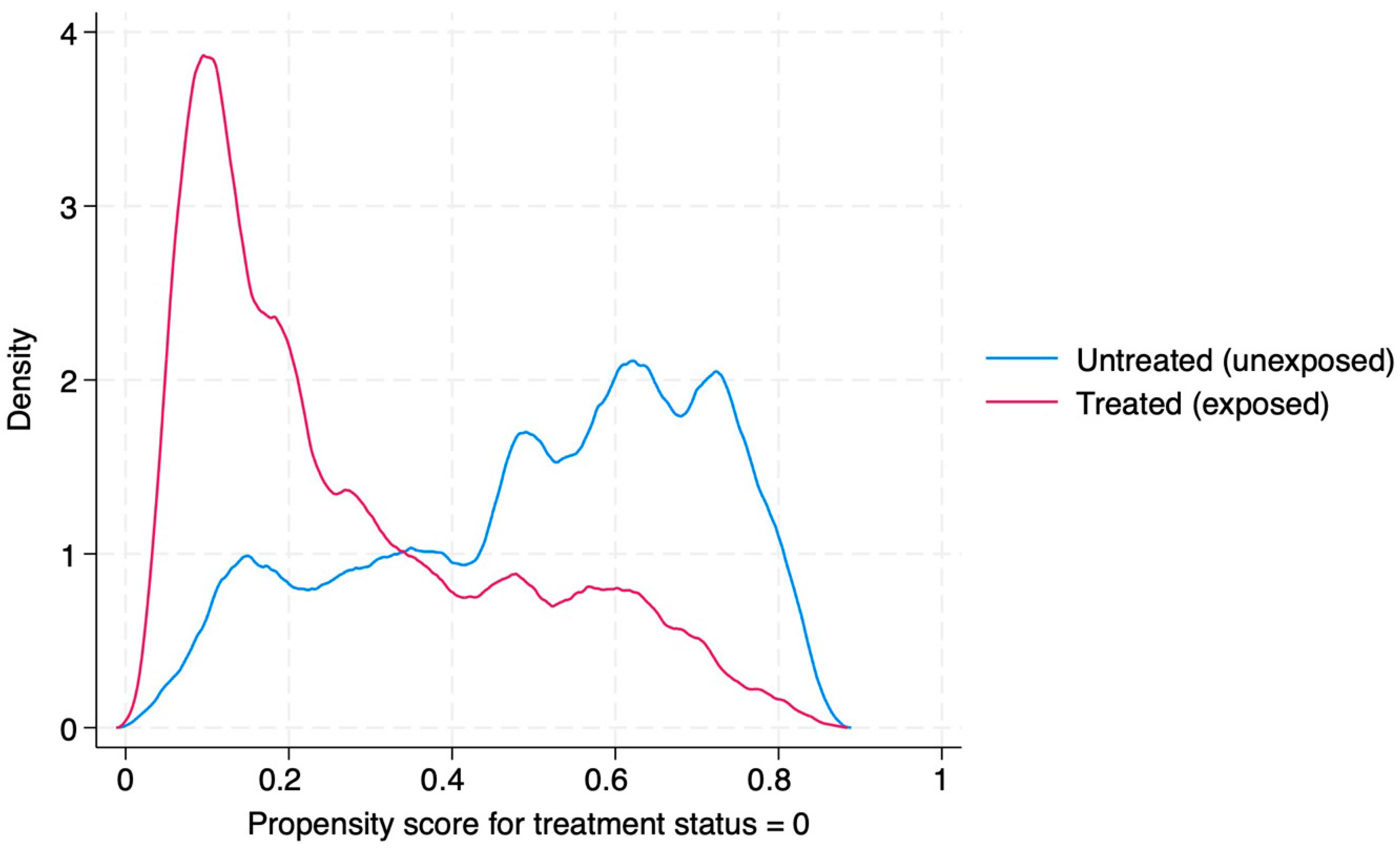
Figure 1 displays the overlap plot for the IPWRA. The plot illustrates the distribution of propensity scores for both the treated group and the untreated group. We observed significant overlap between the two groups across the range of propensity scores, indicating that the common support assumption is satisfied.
The standardized differences and variance ratios for each covariate are presented both before (Raw) and after weighting (Weighted) (Table 3). The overall p-value of 0.212 indicates that we fail to reject the null hypothesis, suggesting that the covariates are balanced after weighting. Specifically, the standardized differences for all covariates were substantially reduced post-weighting, approaching zero, while the variance ratios moved closer to one. For example, the standardized difference for sex decreased from −0.271 to −0.028 after weighting. Similar improvements were observed for all other covariates. These results, in addition to Figure 1, suggest that the weighting procedure effectively balanced the distribution of covariates between the exposed and untreated groups.
Across all other estimation methods (PSM, AIPW, and the IPW-ML), the results consistently indicated that exposure to medical cannabis was associated with a reduction in healthcare utilization over the past six months, both in magnitude of association and statistical significance (Table 4). Using PSM, we found that medical cannabis patients had a statistically significant decrease in urgent care visits (coefficient = −0.0263, SE = 0.013) and emergency room visits (coefficient = −0.0274, SE = 0.013) compared to non-patients. Although there was a reduction in hospitalization rates (coefficient = −0.00975, SE = 0.008), this difference did not reach statistical significance. The AIPW model corroborated these findings, showing significant reductions in urgent care visits (coefficient = −0.0244, SE = 0.012) and emergency room visits (coefficient = −0.0272, SE = 0.012) among medical cannabis users. Similarly, the IPW-ML approach yielded consistent results. The reductions in urgent care visits (coefficient = −0.0237, SE = 0.012) and emergency room visits (coefficient = −0.0260, SE = 0.012) remained statistically significant. Hospitalization rates did not show a significant difference in any of the models.
At all tolerance levels, the coefficients for urgent care and emergency room visits remained statistically significant and increased in magnitude with greater tolerance (Table 5). For instance, at a tolerance of 0.05, the coefficient for urgent care was −0.0245 (SE = 0.012), at a 0.075 tolerance, it was −0.0268 (SE = 0.013), and at a 0.1 tolerance, it was −0.0299 (SE = 0.013). Respectively, the percent change associated with past 6-month urgent care visits ranged from 35.6% (standard tolerance) to 38.9% (tolerance = 0.1). Similarly, the percent change associated with past 6-month emergency department visits ranged from 35.1% (standard tolerance) to 38.2% (tolerance = 0.1). The percentage of data loss increased as tolerance increased, ranging from n = 29 (1.6%) for tolerance = 0.05 to n = 255 (13.6%) for tolerance = 0.10. However, the various tolerance levels all maintained covariate balance.
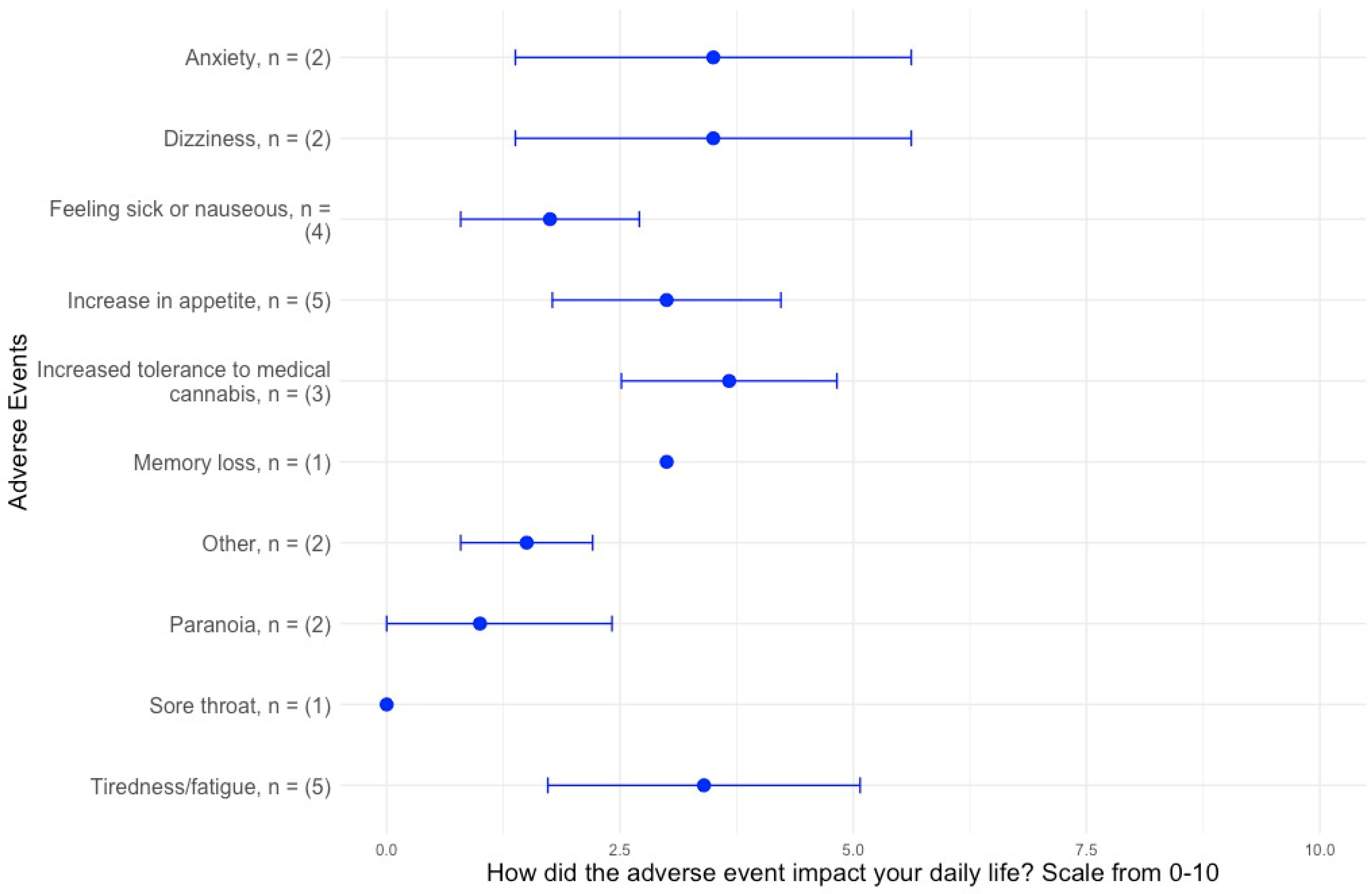
In total, 19 of the 1949 patients with PTSD (1.51%) reported an adverse event (Figure 2). As participants were allowed to note one or more adverse events, there were 27 total adverse events reported. We note the most common adverse events were tiredness/fatigue (n = 5) and an increase in appetite (n = 5), followed by feeling sick or nauseous (n = 4). On average, participants reported that their adverse event impacted their daily life 2.43 on a scale of 0 to 10, with 10 being greatly impacted and 0 being no impact.

4. Discussion

Our findings indicate that exposure to medical cannabis treatment is associated with a significant reduction in urgent care (−35.6%) and ED visits (−35.1%) among PTSD patients. Although hospitalization rates were 26.3% lower among the treated group, this difference did not reach statistical significance. The model diagnostics of our primary analysis (IPWRA) indicated that the covariates were well-balanced after weighting, with significant overlap between the treated and untreated groups, enhancing the reliability of our estimates. These results remained robust across multiple statistical models and sensitivity analyses. Moreover, the number and intensity of adverse events were minimal.
The robustness of our findings was reinforced by the sensitivity analyses conducted. When alternative average treatment effect estimation methods were applied, the association between medical cannabis use and reduced urgent care and ED visits remained consistent in both magnitude and statistical significance. This consistency across various statistical techniques suggests that our results are not due to a specific modeling approach but reflect a true underlying relationship between medical cannabis use and decreased acute healthcare utilization.
Adjusting the overlap tolerance levels in the primary IPWRA model showed that the reductions in urgent care and ED visits not only persisted but also increased in magnitude with stricter tolerance settings. This indicates that the observed effects are stable and not driven by outliers or specific subsets of the data. Collectively, these sensitivity analyses strengthen the credibility of our findings by demonstrating that the association is robust to different analytical methods and model specifications.
The complex interplay between trauma, the nervous system, and cannabis therapeutics reveals critical insights into managing PTSD, with significant implications for healthcare utilization [17]. Trauma can profoundly alter neurological functioning, triggering a persistent sympathetic nervous system response characterized by heightened anxiety, disrupted sleep, and intrusive memories [61]. Traditional PTSD treatments often rely heavily on pharmaceutical interventions and/or psychotherapy, which can be costly [62,63]. Cannabis may provide a cost-effective approach to addressing neurological dysregulation.
The observed reduction in healthcare utilization aligns with existing literature suggesting that medical cannabis may alleviate PTSD symptoms and improve patients’ quality of life [26,27]. Prior studies have reported that medical cannabis use leads to reductions in PTSD symptom severity, including disturbed sleep, nightmares, and flashbacks [28,29]. By mitigating these symptoms, medical cannabis may reduce the likelihood of acute exacerbations that necessitate urgent or emergency care. Moreover, the interaction between PTSD and chronic pain may partly explain the decreased healthcare utilization. Chronic pain is prevalent among patients with PTSD [8], and medical cannabis has been shown to have analgesic properties [16]. Chronic pain is also one of the leading qualifying medical conditions that patients cite as their reason for seeking medical cannabis [12,15]. By addressing both psychological and physical symptoms, medical cannabis may offer a more comprehensive therapeutic effect, potentially reducing the need for acute healthcare services.
Our findings suggest that medical cannabis could be a valuable adjunct therapy for PTSD, potentially reducing the burden on acute healthcare services. Recent research suggests medical cannabis is likely a cost-effective adjunctive treatment option for moderate PTSD [64]. Similarly, other population-level research has found that medical cannabis laws are associated with reduced health insurance premiums [65,66]. Reduced urgent care and ED visits not only benefit patients by decreasing disruptive healthcare experiences but also alleviate strain on healthcare systems. Clinicians considering medical cannabis as a treatment option should weigh these potential benefits against the risks, such as drug-to-drug interactions [67].
We did not find that medical cannabis exposure was related to hospitalizations. This finding may be due to the relatively low incidence of hospitalization in our sample of close to 2000 people. Therefore, our sample may lack the power to detect a difference. Future studies with larger samples or longer follow-up periods might clarify this relationship.
While our results point to potential benefits of medical cannabis for PTSD, concerns remain around possible risks, particularly cannabis use disorder (CUD). National epidemiological data suggest that lifetime CUD prevalence is around 6.3% [68], with a PTSD diagnosis increasing the prevalence of CUD [69]. Clinicians should remain attentive by screening for prior substance use, monitoring patients over time, and emphasizing harm-reduction strategies such as those outlined in the Lower Risk Cannabis Use Guidelines [70]. Ultimately, while the potential for misuse cannot be dismissed, the degree to which these risks manifest in supervised medical populations remains uncertain and is a critical area for future research [71].
Further longitudinal research is needed to establish causality and explore the mechanisms underlying the observed reductions in healthcare utilization. Examining the dose-response relationship within the treated group, specifically, the impact of everyday versus occasional medical cannabis use on healthcare utilization among PTSD patients, could provide valuable insights. Studies focused on different cannabis products, dosages, and modes of administration would also support the tailoring of treatments to individual patient needs. Finally, research should explore how medical cannabis interacts with other treatments, such as psychotherapy and pharmacotherapy, to optimize comprehensive care strategies for PTSD patients.

4.1. Limitations

A major strength of this study is the use of a large, diverse sample of PTSD patients from multiple U.S. states, enhancing the generalizability of the findings. The application of the doubly robust IPWRA method strengthens the causal inference by controlling for a comprehensive set of covariates, including PTSD severity, comorbid chronic pain, and quality of life. However, several limitations warrant consideration. The study’s retrospective cohort design using self-reported administrative data may introduce recall bias and limit the ability to establish causality. Reliance on self-reported utilization introduces the possibility of recall error over the 6-month window. If misclassification is non-differential by exposure status, our estimates would likely be biased toward the null, potentially understating true differences; however, if patients using medical cannabis are more engaged with their care and recall events more accurately, differential misclassification could exaggerate reductions. Although urgent care and ED visits are salient, discrete events that may be easier to remember than routine encounters, underreporting remains possible. For the treated group, there is an element of temporality, given that patients obtained a medical card and then returned at least 12 months later to re-certify with Leafwell. The exposure to medical cannabis was defined based on past-year use, without detailed information on dosage, formulation, or adherence, which could influence the outcomes. Although we employed robust causal inference methods to achieve balance across a comprehensive set of observed covariates, the possibility of unmeasured and residual confounding remains. Certain factors, such as variation in treatment adherence, cannabis product type, or unmeasured psychosocial characteristics, may not have been fully captured in our models and could influence the observed associations. Nonetheless, the use of multiple analytic approaches, all of which produced consistent results, increases confidence in the stability of our estimates and strengthens the external validity of our findings. However, our well-balanced models suggest that, after weighting, no systematic differences in covariates existed. Lastly, we examined the common support assumption by adjusting the IPWRA’s tolerance threshold for inclusion. The results showed similar ATEs to the primary analysis, with slightly larger magnitudes and more precise standard errors, suggesting our models meet the overlap assumption.

4.2. Implications for Clinical and Academic Practice

These findings carry meaningful implications for both clinical care and academic research. Clinically, the reductions in urgent care and ED visits suggest that medical cannabis may help stabilize symptoms for PTSD patients, potentially alleviating some of the acute crises that drive costly and disruptive healthcare use. While not a replacement for established treatments, cannabis could be considered as an adjunctive therapy in carefully selected patients, with appropriate monitoring for risks such as drug–drug interactions. Academically, our results underscore the importance of applying rigorous causal inference methods to real-world data when evaluating emerging therapies. The consistency of effects across sensitivity analyses highlights the utility of approaches such as IPWRA for strengthening causal claims in non-randomized settings.

4.3. Conclusions

This study contributes to the growing body of evidence supporting the use of medical cannabis in managing PTSD symptoms. The association between medical cannabis use and reduced urgent care and ED visits highlights its potential to improve patient outcomes and reduce acute healthcare utilization. While these findings are promising, further research is necessary to fully understand the benefits, risks, and mechanisms of medical cannabis treatment in PTSD.

Author Contributions

Conceptualization, M.L.D.; methodology, M.L.D.; software, D.L.M.; validation, M.L.D., M.K. and J.C.; formal analysis, M.L.D.; investigation, M.L.D.; resources, M.L.D.; data curation, M.L.D.; writing—original draft preparation, M.L.D.; writing—review and editing, D.L.M.; visualization, M.L.D.; supervision, E.F.; project administration, M.L.D.; funding acquisition, E.F. All authors have read and agreed to the published version of the manuscript.

Funding

This research received no external funding.

Institutional Review Board Statement

This study received an exemption from ethical review by an independent institutional review board Biomedical Research Alliance of New York (BRANY) (IRB Number: IRB00000080) as it is a Retrospective Study and secondary research.

Informed Consent Statement

Informed consent was obtained from all subjects involved in the study.

Data Availability Statement

The original contributions presented in this study are included in the article. Further inquiries can be directed to the corresponding author.

Conflicts of Interest

Authors Mitchell L. Doucette, D. Luke Macfarlan, Mark Kasabuski, Junella Chin and Emily Fisher are employed by the company Leafwell. This study was conducted using data provided by Leafwell, a Telehealth company that facilitates access to medical cannabis cards through physician diagnoses. Leafwell does not manufacture or sell cannabis products. The authors declare no direct financial interests in the production or sale of cannabis products. However, as Leafwell provides services related to medical cannabis card certifications, the authors acknowledge that the findings of this study could indirectly benefit the company.

References

  1. National Center for PTSD. How Common Is PTSD in Adults? Available online: https://www.ptsd.va.gov/understand/common/common_adults.asp (accessed on 9 September 2024).
  2. Bryant, R.A. Post-Traumatic Stress Disorder: A State-of-the-Art Review of Evidence and Challenges. World Psychiatry 2019, 18, 259–269. [Google Scholar] [CrossRef]
  3. Pacella, M.L.; Hruska, B.; Delahanty, D.L. The Physical Health Consequences of PTSD and PTSD Symptoms: A Meta-Analytic Review. J. Anxiety Disord. 2013, 27, 33–46. [Google Scholar] [CrossRef]
  4. Marciniak, M.D.; Lage, M.J.; Dunayevich, E.; Russell, J.M.; Bowman, L.; Landbloom, R.P.; Levine, L.R. The Cost of Treating Anxiety: The Medical and Demographic Correlates That Impact Total Medical Costs. Depress. Anxiety 2005, 21, 178–184. [Google Scholar] [CrossRef]
  5. Elhai, J.D.; North, T.C.; Frueh, B.C. Health Service Use Predictors among Trauma Survivors: A Critical Review. Psychol. Serv. 2005, 2, 3–19. [Google Scholar] [CrossRef]
  6. Kartha, A.; Brower, V.; Saitz, R.; Samet, J.H.; Keane, T.M.; Liebschutz, J. The Impact of Trauma Exposure and Post-Traumatic Stress Disorder on Healthcare Utilization Among Primary Care Patients. Med. Care 2008, 46, 388–393. [Google Scholar] [CrossRef] [PubMed]
  7. Polusny, M.A.; Ries, B.J.; Schultz, J.R.; Calhoun, P.; Clemensen, L.; Johnsen, I.R. PTSD Symptom Clusters Associated with Physical Health and Health Care Utilization in Rural Primary Care Patients Exposed to Natural Disaster. J. Trauma. Stress 2008, 21, 75–82. [Google Scholar] [CrossRef]
  8. Jadhakhan, F.; Evans, D.W.; Falla, D. The Role of Post-Trauma Stress Symptoms in the Development of Chronic Musculoskeletal Pain and Disability: A Systematic Review. Eur. J. Pain 2023, 27, 183–200. [Google Scholar] [CrossRef] [PubMed]
  9. Goldstein, E.; McDonnell, C.; Atchley, R.; Dorado, K.; Bedford, C.; Brown, R.L.; Zgierska, A.E. The Impact of Psychological Interventions on Posttraumatic Stress Disorder and Pain Symptoms: A Systematic Review and Meta-Analysis. Clin. J. Pain 2019, 35, 703. [Google Scholar] [CrossRef]
  10. Dahlby, L.; Kerr, T. PTSD and Opioid Use: Implications for Intervention and Policy. Subst. Abuse Treat. Prev. Policy 2020, 15, 22. [Google Scholar] [CrossRef]
  11. Peck, K.R.; Nighbor, T.D.; Price, M. Examining Associations between Impulsivity, Opioid Use Disorder, and Posttraumatic Stress Disorder: The Additive Relation between Disorders. Exp. Clin. Psychopharmacol. 2021, 30, 486. [Google Scholar] [CrossRef]
  12. Boehnke, K.F.; Dean, O.; Haffajee, R.; Hosanagar, A. US Trends in Registration for Medical Cannabis and Reasons for Use from 2016–2020: An Observational Study. Ann. Intern. Med. 2022, 175, 945–951. [Google Scholar] [CrossRef]
  13. Boehnke, K.F.; Sinclair, R.; Gordon, F.; Hosanagar, A.; Roehler, D.R.; Smith, T.; Hoots, B. Trends in U.S. Medical Cannabis Registrations, Authorizing Clinicians, and Reasons for Use From 2020 to 2022. Ann. Intern. Med. 2024, 177, 458–466. [Google Scholar] [CrossRef]
  14. Boehnke, K.F.; Gangopadhyay, S.; Clauw, D.J.; Haffajee, R.L. Qualifying Conditions of Medical Cannabis License Holders in the United States. Health Aff. 2019, 38, 295–302. [Google Scholar] [CrossRef]
  15. Doucette, M.L.; Casarett, D.J.; Hemraj, D.; Grelotti, D.J.; Macfarlan, D.L.; Fisher, E. Towards a Comprehensive Understanding of Medical Conditions among Medical Cannabis Patients in a Large Database: A Descriptive Analysis. Popul. Med. 2024, 6, 26. [Google Scholar] [CrossRef]
  16. Hill, M.N.; Gorzalka, B.B. The Endocannabinoid System and the Treatment of Mood and Anxiety Disorders. CNS Neurol. Disord. Drug Targets 2009, 8, 451–458. [Google Scholar] [CrossRef] [PubMed]
  17. Pervanidou, P.; Chrousos, G.P. Neuroendocrinology of Post-Traumatic Stress Disorder. Prog. Brain Res. 2010, 182, 149–160. [Google Scholar] [CrossRef] [PubMed]
  18. Sarapas, C.; Cai, G.; Bierer, L.M.; Golier, J.A.; Galea, S.; Ising, M.; Rein, T.; Schmeidler, J.; Müller-Myhsok, B.; Uhr, M.; et al. Genetic Markers for PTSD Risk and Resilience among Survivors of the World Trade Center Attacks. Dis. Markers 2011, 30, 101–110. [Google Scholar] [CrossRef]
  19. Yehuda, R. Status of Glucocorticoid Alterations in Post-Traumatic Stress Disorder. Ann. N. Y. Acad. Sci. 2009, 1179, 56–69. [Google Scholar] [CrossRef] [PubMed]
  20. Di, S.; Malcher-Lopes, R.; Halmos, K.C.; Tasker, J.G. Nongenomic Glucocorticoid Inhibition via Endocannabinoid Release in the Hypothalamus: A Fast Feedback Mechanism. J. Neurosci. 2003, 23, 4850–4857. [Google Scholar] [CrossRef]
  21. Hill, M.N.; Karatsoreos, I.N.; Hillard, C.J.; McEwen, B.S. Rapid Elevations in Limbic Endocannabinoid Content by Glucocorticoid Hormones in Vivo. Psychoneuroendocrinology 2010, 35, 1333–1338. [Google Scholar] [CrossRef]
  22. Evanson, N.K.; Tasker, J.G.; Hill, M.N.; Hillard, C.J.; Herman, J.P. Fast Feedback Inhibition of the HPA Axis by Glucocorticoids Is Mediated by Endocannabinoid Signaling. Endocrinology 2010, 151, 4811–4819. [Google Scholar] [CrossRef] [PubMed]
  23. Hill, M.N.; McLaughlin, R.J.; Pan, B.; Fitzgerald, M.L.; Roberts, C.J.; Lee, T.T.-Y.; Karatsoreos, I.N.; Mackie, K.; Viau, V.; Pickel, V.M.; et al. Recruitment of Prefrontal Cortical Endocannabinoid Signaling by Glucocorticoids Contributes to Termination of the Stress Response. J. Neurosci. 2011, 31, 10506–10515. [Google Scholar] [CrossRef]
  24. Hill, M.N.; Bierer, L.M.; Makotkine, I.; Golier, J.A.; Galea, S.; McEwen, B.S.; Hillard, C.J.; Yehuda, R. Reductions in Circulating Endocannabinoid Levels in Individuals with Post-Traumatic Stress Disorder Following Exposure to the World Trade Center Attacks. Psychoneuroendocrinology 2013, 38, 2952–2961. [Google Scholar] [CrossRef]
  25. Rehman, Y.; Saini, A.; Huang, S.; Sood, E.; Gill, R.; Yanikomeroglu, S. Cannabis in the Management of PTSD: A Systematic Review. AIMS Neurosci. 2021, 8, 414–434. [Google Scholar] [CrossRef]
  26. Pillai, M.; Erridge, S.; Bapir, L.; Nicholas, M.; Dalavaye, N.; Holvey, C.; Coomber, R.; Barros, D.; Bhoskar, U.; Mwimba, G.; et al. Assessment of Clinical Outcomes in Patients with Post-Traumatic Stress Disorder: Analysis from the UK Medical Cannabis Registry. Expert Rev. Neurother. 2022, 22, 1009–1018. [Google Scholar] [CrossRef]
  27. Lynskey, M.T.; Athanasiou-Fragkouli, A.; Thurgur, H.; Schlag, A.K.; Nutt, D.J. Medicinal Cannabis for Treating Post-Traumatic Stress Disorder and Comorbid Depression: Real-World Evidence. BJPsych Open 2024, 10, e62. [Google Scholar] [CrossRef]
  28. Cahill, S.P.; Lunn, S.E.; Diaz, P.; Page, J.E. Evaluation of Patient Reported Safety and Efficacy of Cannabis from a Survey of Medical Cannabis Patients in Canada. Front. Public Health 2021, 9, 626853. [Google Scholar] [CrossRef]
  29. Sznitman, S.R.; Meiri, D.; Amit, B.H.; Rosenberg, D.; Greene, T. Posttraumatic Stress Disorder, Sleep and Medical Cannabis Treatment: A Daily Diary Study. J. Anxiety Disord. 2022, 92, 102632. [Google Scholar] [CrossRef]
  30. Nacasch, N.; Avni, C.; Toren, P. Medical Cannabis for Treatment-Resistant Combat PTSD. Front. Psychiatry 2023, 13, 1014630. [Google Scholar] [CrossRef] [PubMed]
  31. Roitman, P.; Mechoulam, R.; Cooper-Kazaz, R.; Shalev, A. Preliminary, Open-Label, Pilot Study of Add-On Oral Δ9-Tetrahydrocannabinol in Chronic Post-Traumatic Stress Disorder. Clin. Drug Investig. 2014, 34, 587–591. [Google Scholar] [CrossRef] [PubMed]
  32. Krediet, E.; Janssen, D.G.; Heerdink, E.R.; Egberts, T.C.; Vermetten, E. Experiences with Medical Cannabis in the Treatment of Veterans with PTSD: Results from a Focus Group Discussion. Eur. Neuropsychopharmacol. 2020, 36, 244–254. [Google Scholar] [CrossRef] [PubMed]
  33. LaFrance, E.M.; Glodosky, N.C.; Bonn-Miller, M.; Cuttler, C. Short and Long-Term Effects of Cannabis on Symptoms of Post-Traumatic Stress Disorder. J. Affect. Disord. 2020, 274, 298–304. [Google Scholar] [CrossRef] [PubMed]
  34. Doucette, M.L.; Hemraj, D.; Bruce, D.; Fisher, E.; Macfarlan, D.L. Medical Cannabis Patients Under the Age of 21 in the United States: Description of Demographics and Conditions from a Large Patient Database, 2019–2023. AHMT 2024, 15, 63–72. [Google Scholar] [CrossRef]
  35. Konnert, C.; Wong, M. Age Differences in PTSD among Canadian Veterans: Age and Health as Predictors of PTSD Severity. Int. Psychogeriatr. 2015, 27, 297–304. [Google Scholar] [CrossRef] [PubMed]
  36. Tillmann, B.W.; Fu, L.; Hill, A.D.; Scales, D.C.; Fowler, R.A.; Cuthbertson, B.H.; Wunsch, H. Acute Healthcare Resource Utilization by Age: A Cohort Study. PLoS ONE 2021, 16, e0251877. [Google Scholar] [CrossRef] [PubMed]
  37. Kaur, S.; Stechuchak, K.M.; Coffman, C.J.; Allen, K.D.; Bastian, L.A. Gender Differences in Health Care Utilization Among Veterans with Chronic Pain. J. Gen. Intern. Med. 2007, 22, 228–233. [Google Scholar] [CrossRef]
  38. Gaffey, A.E.; Burg, M.M.; Rosman, L.; Portnoy, G.A.; Brandt, C.A.; Cavanagh, C.E.; Skanderson, M.; Dziura, J.; Mattocks, K.M.; Bastian, L.A.; et al. Baseline Characteristics from the Women Veterans Cohort Study: Gender Differences and Similarities in Health and Healthcare Utilization. J. Women’s Health 2021, 30, 944–955. [Google Scholar] [CrossRef]
  39. Husaini, B.A.; Sherkat, D.E.; Levine, R.S.; Craun, C.; Hull, P.; Cain, V.; Killbourne, B. Age Differences in the Influence of Race, Ses, and Psychiatric Morbidity on Healthcare Utilization and Expenditures. Res. Healthc. Financ. Manag. 2004, 9, 29–49. [Google Scholar]
  40. Rosenblum, M.S.; Engle, J.L.; Piper, M.E.; Kaye, J.T.; Cook, J.W. Motives for Smoking in Those With PTSD, Depression, and No Psychiatric Disorder. J. Dual Diagn. 2020, 16, 285–291. [Google Scholar] [CrossRef]
  41. Fu, S.S.; McFall, M.; Saxon, A.J.; Beckham, J.C.; Carmody, T.P.; Baker, D.G.; Joseph, A.M. Post-Traumatic Stress Disorder and Smoking: A Systematic Review. Nicotine Tob. Res. 2007, 9, 1071–1084. [Google Scholar] [CrossRef]
  42. Debell, F.; Fear, N.T.; Head, M.; Batt-Rawden, S.; Greenberg, N.; Wessely, S.; Goodwin, L. A Systematic Review of the Comorbidity between PTSD and Alcohol Misuse. Soc. Psychiatry Psychiatr. Epidemiol. 2014, 49, 1401–1425. [Google Scholar] [CrossRef]
  43. Smith, N.D.L.; Cottler, L.B. The Epidemiology of Post-Traumatic Stress Disorder and Alcohol Use Disorder. Alcohol Res. Curr. Rev. 2018, 39, 113. [Google Scholar] [CrossRef]
  44. Back, S.E.; Jones, J.L. Alcohol Use Disorder and PTSD: An Introduction. Alcohol. Clin. Exp. Res. 2018, 42, 836. [Google Scholar] [CrossRef]
  45. Shami, E.; Tabrizi, J.S.; Nosratnejad, S. The Effect of Health Insurance on the Utilization of Health Services: A Systematic Review and Meta-Analysis. Galen Med. J. 2019, 8, e1411. [Google Scholar] [CrossRef]
  46. LeBeau, R.; Mischel, E.; Resnick, H.; Kilpatrick, D.; Friedman, M.; Craske, M. Dimensional Assessment of Posttraumatic Stress Disorder in DSM-5. Psychiatry Res. 2014, 218, 143–147. [Google Scholar] [CrossRef] [PubMed]
  47. Von Korff, M.; DeBar, L.L.; Krebs, E.E.; Kerns, R.D.; Deyo, R.A.; Keefe, F.J. Graded Chronic Pain Scale Revised: Mild, Bothersome, and High Impact Chronic Pain. Pain 2020, 161, 651–661. [Google Scholar] [CrossRef]
  48. Moriarty, D.G.; Zack, M.M.; Kobau, R. The Centers for Disease Control and Prevention’s Healthy Days Measures—Population Tracking of Perceived Physical and Mental Health over Time. Health Qual. Life Outcomes 2003, 1, 37. [Google Scholar] [CrossRef] [PubMed]
  49. Słoczyński, T.; Uysal, S.D.; Wooldridge, J.M. Doubly Robust Estimation of Local Average Treatment Effects Using Inverse Probability Weighted Regression Adjustment; IZA—Institute of Labor Economics: Bonn, Germany, 2022. [Google Scholar]
  50. Wooldridge, J.M. Inverse Probability Weighted Estimation for General Missing Data Problems. J. Econom. 2007, 141, 1281–1301. [Google Scholar] [CrossRef]
  51. Robins, J.M.; Rotnitzky, A. Semiparametric Efficiency in Multivariate Regression Models with Missing Data. J. Am. Stat. Assoc. 1995, 90, 122–129. [Google Scholar] [CrossRef]
  52. Stuart, E.A. Matching Methods for Causal Inference: A Review and a Look Forward. Stat. Sci. Rev. J. Inst. Math. Stat. 2010, 25, 1. [Google Scholar] [CrossRef]
  53. Imai, K.; Ratkovic, M. Covariate Balancing Propensity Score. J. R. Stat. Soc. Ser. B Stat. Methodol. 2014, 76, 243–263. [Google Scholar] [CrossRef]
  54. Rosenbaum, P.R.; Rubin, D.B. The Central Role of the Propensity Score in Observational Studies for Causal Effects. Biometrika 1983, 70, 41–55. [Google Scholar] [CrossRef]
  55. Glynn, A.N.; Quinn, K.M. An Introduction to the Augmented Inverse Propensity Weighted Estimator. Political Anal. 2010, 18, 36–56. [Google Scholar] [CrossRef]
  56. Robins, J.M. Robust Estimation in Sequentially Ignorable Missing Data and Causal Inference Models. Proc. Am. Stat. Assoc. Sect. Bayesian Stat. Sci. 1999, 1999, 6–10. [Google Scholar]
  57. Robins, J.M.; Rotnitzky, A.; Zhao, L.P. Estimation of Regression Coefficients When Some Regressors Are Not Always Observed. J. Am. Stat. Assoc. 1994, 89, 846–866. [Google Scholar] [CrossRef]
  58. Funk, M.J.; Westreich, D.; Wiesen, C.; Stürmer, T.; Brookhart, M.A.; Davidian, M. Doubly Robust Estimation of Causal Effects. Am. J. Epidemiol. 2011, 173, 761–767. [Google Scholar] [CrossRef] [PubMed]
  59. Belloni, A.; Chernozhukov, V.; Hansen, C. High-Dimensional Methods and Inference on Structural and Treatment Effects. J. Econ. Perspect. 2014, 28, 29–50. [Google Scholar] [CrossRef]
  60. StataCorp. Stata Statistical Software: Release 18; StataCorp LLC: College Station, TX, USA, 2023. [Google Scholar]
  61. Sherin, J.E.; Nemeroff, C.B. Post-Traumatic Stress Disorder: The Neurobiological Impact of Psychological Trauma. Dialogues Clin. Neurosci. 2011, 13, 263. [Google Scholar] [CrossRef]
  62. Williams, T.; Phillips, N.J.; Stein, D.J.; Ipser, J.C. Pharmacotherapy for Post Traumatic Stress Disorder (PTSD). Cochrane Database Syst. Rev. 2022, 2022, CD002795. [Google Scholar] [CrossRef]
  63. Burback, L.; Brémault-Phillips, S.; Nijdam, M.J.; McFarlane, A.; Vermetten, E. Treatment of Posttraumatic Stress Disorder: A State-of-the-Art Review. Curr. Neuropharmacol. 2023, 22, 557. [Google Scholar] [CrossRef] [PubMed]
  64. Doucette, M.L.; Hemraj, D.; Macfarlan, D.L.; Chin, J.; Fisher, E. The Cost-Effectiveness of Adjunctive Medical Cannabis Therapy in the Treatment of Moderate Post-Traumatic Stress Disorder. Clin. Drug Investig. 2024, 45, 207–220. [Google Scholar] [CrossRef]
  65. Doucette, M.L.; Hemraj, D.; Fisher, E.; Macfarlan, D.L. Measuring the Impact of Medical Cannabis Law Adoption on Employer-Sponsored Health Insurance Costs: A Difference-in-Difference Analysis, 2003–2022. Appl. Health Econ. Health Policy 2024, 23, 119–129. [Google Scholar] [CrossRef]
  66. Cook, A.C.; Sirmans, E.T.; Stype, A. Medical Cannabis Laws Lower Individual Market Health Insurance Premiums. Int. J. Drug Policy 2023, 119, 104143. [Google Scholar] [CrossRef] [PubMed]
  67. Graham, M.; Martin, J.H.; Lucas, C.J.; Murnion, B.; Schneider, J. Cannabidiol Drug Interaction Considerations for Prescribers and Pharmacists. Expert Rev. Clin. Pharmacol. 2022, 15, 1383–1397. [Google Scholar] [CrossRef] [PubMed]
  68. Hasin, D.S.; Kerridge, B.T.; Saha, T.D.; Huang, B.; Pickering, R.; Smith, S.M.; Jung, J.; Zhang, H.; Grant, B.F. Prevalence and Correlates of DSM-5 Cannabis Use Disorder, 2012–2013: Findings from the National Epidemiologic Survey on Alcohol and Related Conditions–III. AJP 2016, 173, 588–599. [Google Scholar] [CrossRef] [PubMed]
  69. Cornelius, J.R.; Kirisci, L.; Reynolds, M.; Clark, D.B.; Hayes, J.; Tarter, R. PTSD Contributes to Teen and Young Adult Cannabis Use Disorders. Addict. Behav. 2010, 35, 91–94. [Google Scholar] [CrossRef]
  70. Fischer, B.; Russell, C.; Sabioni, P.; van den Brink, W.; Le Foll, B.; Hall, W.; Rehm, J.; Room, R. Lower-Risk Cannabis Use Guidelines: A Comprehensive Update of Evidence and Recommendations. Am. J. Public Health 2017, 107, e1–e12. [Google Scholar] [CrossRef]
  71. Sznitman, S.R.; Bretteville-Jensen, A.L. Public Opinion and Medical Cannabis Policies: Examining the Role of Underlying Beliefs and National Medical Cannabis Policies. Harm Reduct. J. 2015, 12, 46. [Google Scholar] [CrossRef]
Figure 1. Overlap plot comparing the probability of exposure resulting from the inverse probability weights.
Psychiatryint 07 00128 g001
Figure 2. Adverse events among the treated participants. The figure provides the mean and standard deviation of the impact of adverse events on participants’ daily lives on a scale from 0 to 10. The number of adverse events is provided. A total of 19 participants reported having at least one adverse event. Participants were able to report more than one adverse event, if applicable.
Psychiatryint 07 00128 g002
Table 1. Demographic, health status, and healthcare utilization characteristics of PTSD patients by medical cannabis exposure status.
ExposedUnexposedTotalTest StatisticMissing
1261 (64.8%)685 (35.2%)1946
Demographics
Sex
Female717 (57.4%)301 (44.0%)1018 (52.7%)<0.00113
Male532 (42.6%)383 (56.0%)915 (47.3%)
Race/ethnicity
All other race/ethnicities357 (28.3%)288 (42.0%)645 (33.2%)<0.0011
White non-Hispanic903 (71.7%)397 (58.0%)1300 (66.8%)
Current Smoking Status
No944 (74.9%)488 (71.2%)1432 (73.6%)0.084
Yes317 (25.1%)197 (28.8%)514 (26.4%)
No Alcoholic Drinks in the past 7 days?
No742 (58.8%)322 (47.0%)1064 (54.7%)<0.001
Yes519 (41.2%)363 (53.0%)882 (45.3%)
Age, Mean (SE)41.92 (0.365)37.68 (0.497)40.43 (13.16)<0.001
Health Status
PTSD severity
Mild/Moderate158 (23.7%)796 (65.4%)954 (50.6%)<0.00162
Severe/Extreme508 (76.3%)422 (34.6%)930 (49.4%)
Quality of life, in number of unhealthy weeks
Two or fewer unhealthy weeks per month132 (19.3%)610 (48.4%)742 (38.1%)<0.001
Three or more unhealthy weeks per month553 (80.7%)651 (51.6%)1204 (61.9%)
Chronic pain severity
No or mild chronic pain862 (69.6%)377 (55.4%)1239 (64.6%)<0.00127
Bothersome or high chronic pain377 (30.4%)303 (44.6%)680 (35.4%)
Health Insurance?
No190 (15.1%)163 (23.8%)353 (18.1%)<0.001
Yes1071 (84.9%)522 (76.2%)1593 (81.9%)
Healthcare Utilization
Visit urgent care 1 or more times
No1210 (96.0%)624 (91.1%)1834 (94.2%)<0.001
Yes51 (4.0%)61 (8.9%)112 (5.8%)
Visit emergency room 1 or more times
No1200 (95.2%)616 (89.9%)1816 (93.3%)<0.001
Yes61 (4.8%)69 (10.1%)130 (6.7%)
Become hospitalized 1 or more times
No1229 (97.5%)652 (95.2%)1881 (96.7%)<0.001
Yes32 (2.5%)33 (4.8%)65 (3.3%)
Note: Test statistic t-test for age and chi2 for all other variables. SE is defined as standard error.
Table 2. Average treatment effect of medical cannabis exposure on healthcare utilization in the past 6 months, doubly robust inverse probability weighted model.
Average Treatment EffectProbability of Healthcare UtilizationPercent Difference (%)
CoefficientStandard Error (SE)
Healthcare Utilization TreatedSEUntreatedSE
Urgent Care−0.024 *0.01170.04320.0070.06710.01035.62%
Emergency Room−0.027 *0.01240.04980.0070.07670.01035.07%
Hospitalized−0.0100.009310.02810.0050.03810.00826.25%
Note: 95% confidence intervals in brackets * p < 0.05, n = 1847 for all models. Outcome Models: Urgent Care is defined as visiting urgent care at least 1 time in the past 6 months related to PTSD condition; Emergency Room is defined as visiting the emergency room at least 1 time in the past 6 months related to PTSD condition; and Hospitalized is defined as being hospitalized at least one time in the past 6 months related to PTSD condition. All models used inverse probability weighting with regression adjustment to estimate average treatment effects. Outcome model controlled for age, sex, race/ethnicity, smoking status, drinking status, chronic pain status, health insurance status, PTSD severity, and quality of life. The treatment model includes all the same covariates except for health insurance status. IPWRA models included robust standard errors.
Table 3. Covariate balance and model diagnostics related to the inverse probability weighting for primary outcome models.
Standardized DifferencesVariance Ratiop-Value
Model DiagnosticsRawWeightedRawWeighted
Number of observations18471847.00
Treated observations1185924.6
Control observations662922.4
Covariate Balance Diagnostics
Demographics
Age0.331−0.0680.9710.8260.212
Sex−0.271−0.0280.9920.998
Race/Ethnicity0.2930.0120.8330.992
Smoking Status−0.0580.0310.9401.035
Drinking Status−0.2470.0400.9721.009
PTSD Severity
Severe/Extreme PTSD−0.9320.0011.2361.000
Quality of Life, measured in unhealthy weeks
Three or more unhealthy weeks per month−0.648−0.0171.6001.009
Chronic Pain Status
Bothersome or High Chronic Pain−0.291−0.0330.8620.984
Note: Model diagnostics are provided to display the results of the inverse probability weighting procedure. p-value results from overidentification test (Stata command, teffects overid), where the null hypothesis states that the covariates are balanced between the treatment and control groups.
Table 4. Average treatment effect of medical cannabis exposure on healthcare utilization in the past 6 months: Sensitivity analyses using three alternative average treatment effect estimations.
CoefficientStandard Error
Propensity Score Matching
Urgent care−0.0263 *0.013
Emergency Room−0.0274 *0.013
Hospitalized−0.009750.008
Augmented Inverse Probability Weighting
Urgent care−0.0244 *0.012
Emergency Room−0.0272 *0.012
Hospitalized−0.009640.009
Inverse Probability Weighting with Machine Learning
Urgent care−0.0237 *0.012
Emergency Room−0.0260 *0.012
Hospitalized−0.008710.009
Note: 95% confidence intervals in brackets * p < 0.05. Outcome Models: Urgent care is defined as visiting urgent care at least 1 time in the past 6 months related to PTSD condition; Emergency Room is defined as visiting the emergency room at least 1 time in the past 6 months related to PTSD condition; and Hospitalized is defined as being hospitalized at least one time in the past 6 months related to PTSD condition. All models included robust standard errors. The propensity score matching model specified nearest neighbor matching 3:1 with a caliper of 0.1 and included all covariates listed in Table 1. For augmented inverse probability weighting (AIPW) and inverse probability weighting with machine learning (IPW-Lasso), outcome models controlled for age, sex, race/ethnicity, smoking status, drinking status, chronic pain status, health insurance status, PTSD severity, and quality of life, and treatment models include all the same covariates except for health insurance status. For IPW-Lasso, we selected the optimal penalty parameter using cross-validation to prevent overfitting.
Table 5. Average treatment effect of medical cannabis exposure on healthcare utilization in the past 6 months, sensitivity analyses setting different tolerance levels for the inverse probability weighting in the primary outcome models.
Average Treatment EffectProbability of Healthcare UtilizationModel Diagnostics
CoefficientStandard Error (SE)ExposedSEUn-ExposedSE% ChangeParticipant Loss% of Total Participants LostCovariate Balance, p-Value
Tolerance 0.05
Urgent Care−0.0245 0.0120.04390.0070.06840.01035.82%291.6%0.142
Emergency Room−0.0278 0.0130.05060.0070.07840.01135.46%
Hospitalized−0.01050.0100.02850.0050.0390.00826.92%
Tolerance 0.075
Urgent Care−0.0269 0.0130.04530.0070.07220.01037.26%1317.1%0.083
Emergency Room−0.0292 0.0130.05310.0070.08240.01135.56%
Hospitalized−0.01070.0100.03030.0060.0410.00826.10%
Tolerance 0.1
Urgent Care−0.0299 0.0130.0470.0080.07690.01138.88%25513.8%0.233
Emergency Room−0.0337 0.0140.05460.0080.08830.01238.17%
Hospitalized−0.01160.0110.03210.0060.04370.00926.54%
Note: Outcome Models: Urgent Care is defined as visiting urgent care at least 1 time in the past 6 months related to PTSD condition; Emergency Room is defined as visiting the emergency room at least 1 time in the past 6 months related to PTSD condition; and Hospitalized is defined as being hospitalized at least one time in the past 6 months related to PTSD condition. All models used inverse probability weighting with regression adjustment to estimate average treatment effects. Outcome model controlled for age, sex, race/ethnicity, smoking status, drinking status, chronic pain status, health insurance status, PTSD severity, and quality of life. The treatment model includes all the same covariates except for health insurance status. IPWRA models included robust standard errors. Covariate balance, p-value results from overidentification test (Stata command, teffects overid), where the null hypothesis states that the covariates are balanced between the treatment and control groups.
Disclaimer/Publisher’s Note: The statements, opinions and data contained in all publications are solely those of the individual author(s) and contributor(s) and not of MDPI and/or the editor(s). MDPI and/or the editor(s) disclaim responsibility for any injury to people or property resulting from any ideas, methods, instructions or products referred to in the content.