Article

Bullying and Harassment in a University Context: Impact on the Mental Health of Medical Students


by
Margarita L. Martinez-Fierro
1,2,*,
Lorena Avila-Carrasco
1,
Joselin M. Basconcelos-Sanchez
1,
Isabel Peralta-Trejo
1,
Yolanda Ortiz-Castro
1,
María Elena Luna-Morales
3,
Leticia A. Ramirez-Hernandez
4,
Maria C. Martinez-Vazquez
1,
Mentali Mental Health Collaborative Network
1,† and
Idalia Garza-Veloz
1,*
1
Molecular Medicine Laboratory, Academic Unit of Human Medicine and Health Sciences, Universidad Autónoma de Zacatecas, Carretera Zacatecas-Guadalajara Km. 6, Ejido la Escondida, Zacatecas 98160, Mexico
2
Psychology Program, Intercontinental University, Insurgentes Sur Calz. de Tlalpan 4303 Sta Ursula Xitla, Ciudad de Mexico 14420, Mexico
3
Centro de Investigación y de Estudios Avanzados del IPN, Av. Instituto Politécnico Nacional 2508, Ciudad de Mexico 07360, Mexico
4
Unidad Academica de Matemáticas, Paseo la Bufa, Av. Solidaridad, Universidad Autónoma de Zacatecas, Zacatecas 98066, Mexico
*
Authors to whom correspondence should be addressed.
Members of the Mentali Mental Health Collaborative Network are listed in the Acknowledgments.
Psychiatry Int. 2026, 7(1), 8; https://doi.org/10.3390/psychiatryint7010008 (registering DOI)

Submission received: 12 September 2025 / Revised: 18 October 2025 / Accepted: 24 December 2025 / Published: 4 January 2026

Abstract

Background: Bullying in university settings is a significant yet understudied contributor to psychological distress. Differentiating the sources of victimization, may reveal distinct risk profiles associated with mental health and substance use outcomes. Objective: To evaluate the frequency and risk factors associated with bullying victimization among medical students, and to identify associations with mental disorders and substance use. Methods: A nested case–control cohort study was conducted with 124 medical students. Participants completed nine validated psychometric instruments evaluating neurobehavioral traits, emotional distress, substance use, and scholar bullying. Bivariate and multivariate regression models were used to estimate coefficients and odds ratios for key outcomes. Results: 42.7% of the students reported victimization, with teacher harassment (37.1%) more frequent than peer harassment (27.4%); 22.6% experienced both. Teacher harassment was primarily characterized by intentional harm (78%); peer harassment involved abuse of authority (63%). ADHD, severe stress, and substance use were associated with teacher-related victimization, while peer victimization was linked to ADHD, stress, impulsivity, and suicide risk. Childhood abuse, high stress levels, and non-heterosexual orientation as predictors of teacher harassment (p < 0.05). Notably, students with a non-heterosexual orientation were over six times more likely to report teacher harassment, highlighting the disproportionate vulnerability of sexual minorities within academic power dynamics. Conclusions: Teacher- and peer-related harassment are prevalent and often co-occur, with teacher-perpetrated bullying emerging as both more frequent and more strongly associated with mental health and identity-based vulnerabilities. Students with ADHD, high stress levels, and non-heterosexual orientation are at significantly greater risk. These findings emphasize the need for institutional accountability, inclusive academic policies, and targeted mental health support to protect vulnerable students and prevent harm within educational environments.

1. Introduction

School bullying is defined as intentional and repeated acts of psychological or social aggression (e.g., humiliation, ridicule, exclusion, intimidation) that occur within academic settings and are perpetrated by peers or faculty members, with the purpose of hindering the victim’s education or career progression through punitive behaviors [1,2]. It is a significant social issue affecting all educational levels, with severe consequences for both victims and perpetrators. These consequences include mental health problems such as anxiety, depression, and suicidal behaviors, as well as difficulties in social development and the promotion of an unsafe and hostile school environment [3]. Bullying is characterized by its repetitive and intentional nature, as well as by the presence of an imbalance of power in which the victim is unable to defend themselves [4]. Currently, bullying-related statistics raise concerns about its assessment and measurement, as this issue manifests in various forms across all age groups [5].
According to the World Health Organization (WHO), between 25% and 50% of children have experienced school bullying [6]. Similarly, the Organization for Economic Co-operation and Development (OECD), in its 2023 survey on social and emotional skills, reported that many students are both victims and perpetrators of school bullying. Approximately 67% of perpetrators stated that they had been bullied themselves, while 40% of victims also reported engaging in bullying behavior [7]. However, most bullying statistics focus on primary and secondary education, as research has primarily focused on individuals aged six to eighteen years [4]. This has led to a research gap in the study of higher education, possibly due to its transitional nature between academic settings and the professional environment [8]. Similarly, there are limited studies and efforts addressing vulnerable groups, such as ethnic minorities, individuals with disabilities, and members of the LGBTQ+ community [9].
Students involved in abusive situations, regardless of the role they assume, are at greater risk of developing psychosocial and psychopathological disorders at any stage of life [10]. Externalizing behavioral disorders and hyperactivity are more commonly associated with individuals who take on the role of aggressor, while victims are more likely to experience internalizing problems. Students identified as both aggressors and victims show a higher risk of exhibiting a broader range of psychiatric symptoms and greater psychological distress [10]. The consequences of bullying or harassment can be devastating and may last a lifetime, being associated with lower optimism and lower resistance to stress, anxiety, depression, risky behaviors and poor academic performance [6]. Both victims and perpetrators tend to exhibit lower levels of responsibility, emotional control, and self-confidence compared to students not involved in bullying situations. However, victims who do not engage in bullying can be distinguished from perpetrators by demonstrating greater empathy [7]. LGBTQ+ individuals may also experience internalized homophobia, and the coping mechanisms they adopt to deal with violence in academic settings often involve risky sexual behavior, running away from home, and substance abuse [9].
Although bullying has been extensively documented at lower educational levels, evidence indicates that it also occurs in higher education settings, including universities, where it is associated with academic competition, social inequality, and identity-related vulnerabilities [11,12]. Among university students, bullying often manifests through public humiliation, verbal aggression, academic sabotage, or social exclusion. Recent evidence suggests that such experiences have severe psychological consequences, including depressive symptoms, decreased self-esteem, and feelings of loneliness that can interfere with academic motivation and quality of life [13]. Medical schools represent particularly demanding academic environments characterized by high workloads, intense competition, and rigid hierarchies between students and faculty [14]. In Mexico, medical education follows a six-year program that combines theoretical, clinical, and community-based components, with students progressively exposed to stressful conditions during clinical rotations and internships. These characteristics make medical students especially vulnerable to stress, burnout, and mental health disorders such as anxiety and depression [15]. In such hierarchical and competitive contexts, power asymmetries may normalize behaviors of humiliation, intimidation, or exclusion, blurring the limits between academic authority and psychological harassment. The relationship between bullying and mental health is bidirectional: students with preexisting emotional difficulties are more likely to become victims, while exposure to bullying increases the risk of anxiety, depression, and post-traumatic stress [16,17]. These risks are amplified in medical education, where academic demands and power dynamics may perpetuate cultures of silence and tolerance toward harassment [18].
In Mexico, our research group has documented the high prevalence of mental health problems among medical students. In a cross-sectional study conducted in Zacatecas during the COVID-19 pandemic, we reported anxiety and depression rates of 67.9% and 81.3%, respectively, with academic stressors, such as faculty evaluations, affecting approximately 63.9% of participants [19]. In a subsequent study involving 688 students, we identified a 32.7% prevalence of suicidal behavior, with significant associations found for depressive symptoms (OR = 4.24, 95% CI: 2.61–6.88), generalized anxiety symptoms (OR = 2.73, 95% CI: 1.74–4.30), attention deficit disorder with hyperactivity (ADHD) traits (OR = 1.86, 95% CI: 1.11–3.13), and the use of psychoactive substances other than alcohol or tobacco (OR = 2.36, 95% CI: 1.34–4.15) [20]. Although these findings highlighted the substantial burden of psychiatric symptoms and risk behaviors in this population, neither study addressed bullying as a contributing factor. This knowledge gap limits our understanding of how victimization dynamics interact with neurobehavioral and psychiatric vulnerability. Therefore, the objective of this study was to address this gap by evaluating the frequency and risk factors associated with academic bullying among medical students, distinguishing between peer- and faculty-perpetrated aggression, and examining their differential associations with mental disorders such as ADHD, suicidal behavior, substance use, among others.

2. Materials and Methods

2.1. Ethical Considerations

The study complied with the ethical and research standards of the relevant national and institutional committees on human research and with the Declaration of Helsinki. It was also carried out in accordance with the institutional guidelines and strict adherence to the Psychologist’s Code of Ethics, Mexican General Health Law on Research, which classifies this study as “research without risk”. In addition, the study adhered to the Federal Law on Protection of Personal Data in Possession of Individuals. The study was approved by the Institutional Review Board (IDs: AMMCCI-FACTOR-06, CEICANCL-12052023; approval date: 12 May 2023). All students who agreed to participate provided written informed consent.

2.2. Study Design and Participants

This study employed a nested case–control design within a broader cohort of undergraduate medical students enrolled at Autonomous University of Zacatecas “Francisco García Salinas”, in Zacatecas, Mexico. The General Medicine program, established in 1968, follows the UAZ XXI Century Academic Model, which emphasizes student-centered learning grounded in Critical Constructivism and Humanism across three training stages: Basic, Intermediate, and Terminal. The curriculum consists of five academic years organized under a competence-based hybrid model, followed by a one-year rotating internship and a one-year mandatory social service in community or clinical settings, making medical education in Mexico a six-year program prior to full graduation. The parent cohort was established in 2023 to monitor mental health indicators, psychosocial risk factors, and academic stress across the medical training continuum [20]. The cohort included students from all academic years, aged between 18 and 35, who provided informed consent to participate in longitudinal mental health assessments. Participants in the cohort were screened using validated inventories to identify the variables such as suicidal behavior, depression, anxiety, stress, impulsivity, ADHD, alcohol use, cannabis and cocaine addiction, nicotine dependence, among others [20]. The measurement instruments were administered anonymously to protect participants’ confidentiality. Nevertheless, students had the option to provide personal information if they wished to receive feedback on their individual results.
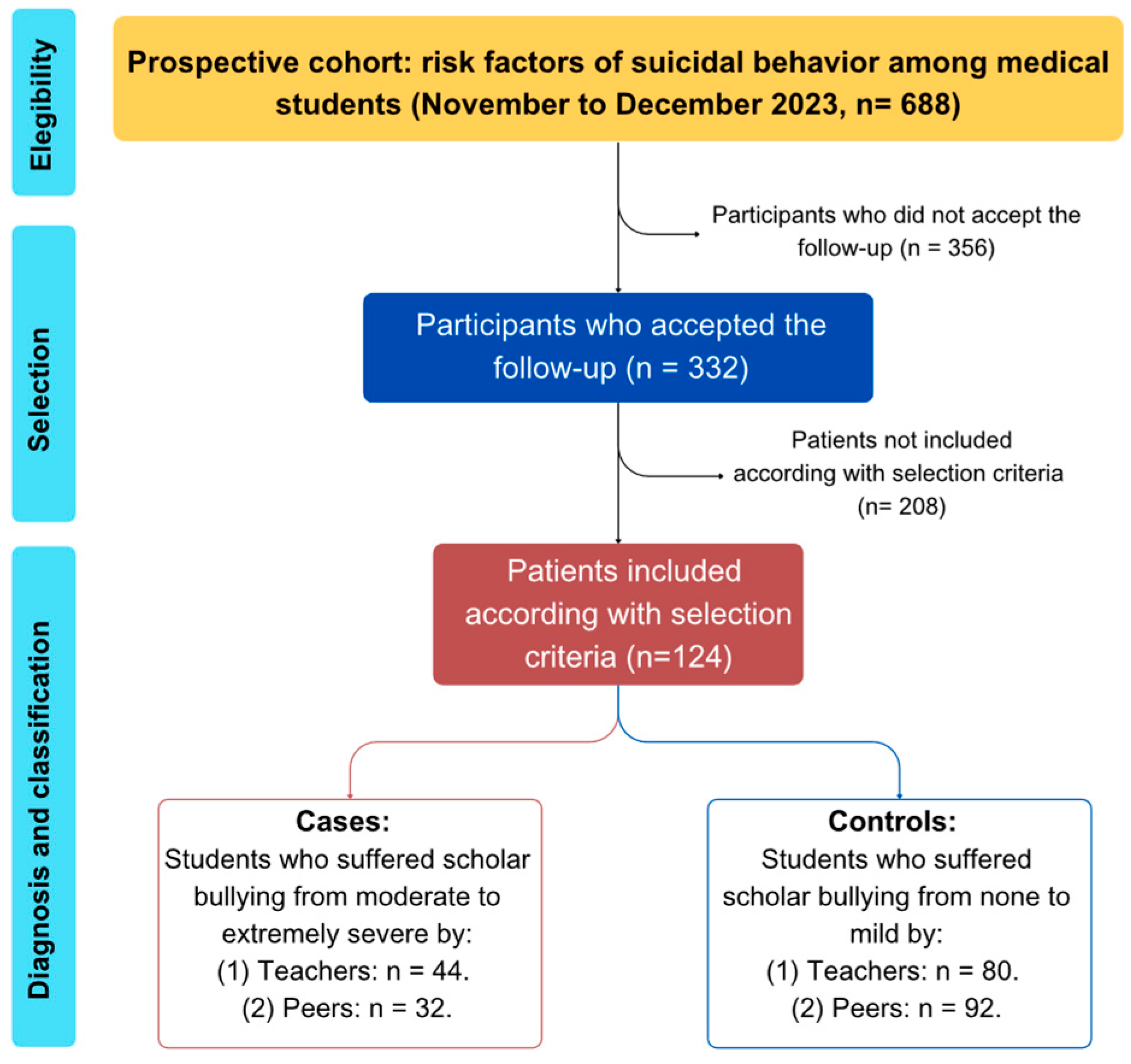
As part of the follow-up stage of the cohort study, a subsample of 332 participants from the initial wave was contacted via telephone and invited to participate in a second-stage clinical evaluation (Figure 1). Participants were eligible for inclusion in this stage of the study if they met the following criteria: (1) previous enrollment in the baseline cohort of medical students with complete mental health screening data; (2) availability and agreement for follow-up contact via telephone; and (3) provided informed consent to participate in a structured diagnostic interview and additional psychometric assessment. The exclusion criteria included: (1) incomplete or missing baseline mental health data; (2) refusal to participate in the clinical evaluation or bullying assessment; and (3) agreement to participate but failure to attend the evaluation on the scheduled date. Only participants whose diagnoses were corroborated by a qualified mental health specialist and who completed the full bullying inventory were included in the final analytic sample. Of those invited, a total of 124 students attended the evaluation and were subsequently included in this study (Figure 1).
Participants whose diagnoses were corroborated and required specialized follow-up were referred to appropriate psychological and/or psychiatric care services.

2.3. Instruments for Data Collection

For this study, eight instruments were retrieved from those used in our previous study, which were: the Adult ADHD Self-Report Scale (ASRS V.1.1), the DASS-21 (Depression, Anxiety and Stress Scale), the Plutchik Impulsivity Scale, the Beck Suicidal Ideation Scale, Alcohol Use Disorder Identification Test (AUDIT), Cannabis Addiction Test (CAST), Fagerström Test for Nicotine Dependence (FTND) and Cocaine Addiction Test (ASSIST) [20].
The academic environment was assessed using the Psychological harassment scale for university students (IMAPU) through a web-based survey using questionnaire [1]. In the IMAPU, bullying is defined as intentional and repeated behaviors of psychological or social aggression occurring within the academic context, whether perpetrated by peers or teachers [1]. Victimization scores reflect the frequency and intensity of such behaviors, with higher scores indicating greater exposure to bullying. IMAPU consists of two subscales with 30 items each. One subscale measure student-student interactions and the other assesses student-professor interactions, asking the presence of different types of bullying in time intervals: “never”, “less than once a semester”, “less than once a month”, “a few times a month”, “once a week”, “several times a week”, “every day”. For this scale scores were established for the time intervals with “Never” = 0 and “Every day” = 6, as well as cut-off points to categorize the severity of the aggression, with a score equal to 0 being no harassment, 1–14 mild harassment, 15 to 27 moderate harassment, 28 to 69 severe harassment, and greater than 70 extremely severe harassment. For this study, participants in the categories “Moderate to extremely severe” (scores greater than 15 points) were considered as cases and those in the categories from “None to mild” (scores from 0 to 14) defined the control group.

2.4. Statistical Analysis

Data were extracted into a Microsoft Excel spreadsheet and subsequently analyzed using GraphPad Prism version 10.1.1. Descriptive statistics were presented as means and standard deviations for continuous variables, and as frequencies and percentages for categorical variables. Parametric or non-parametric tests were applied as appropriate, depending on the distribution and type of variable. Comparisons between study groups were performed using Fisher’s exact test or chi-square test with Yates’ continuity correction for categorical variables. Odds ratios (OR) with corresponding 95% confidence intervals (CIs) were calculated to estimate the strength of associations. Bivariate associations between teacher and peer victimization scores and mental health symptom scores were examined using Pearson’s correlation coefficients. To explore the predictive value of mental health conditions, two types of regression models were conducted with victimization as the dependent variable. Specifically, multiple linear regression analyses were used to assess whether the presence of specific mental health symptoms predicted continuous victimization scores separately for teacher and peer victimization. In addition, multivariate logistic regression analyses were performed to estimate the odds of reporting teacher or peer victimization (presence vs. absence) as a function of the same set of predictors. This dual approach was applied because the IMAPU inventory provides both continuous victimization scores and a validated cutoff score indicating the presence or absence of bullying. Using both models allowed us to capture complementary aspects of the phenomenon: the intensity of victimization (linear models) and the categorical risk of being a victim (logistic models). A p-value < 0.05 was considered statistically significant for all analyses.

3. Results

3.1. General Characteristics of the Study Population

One hundred and twenty-four (n = 124) students participated in this study. Sixty-two percent (62%, n = 77) of the sample were female, according to their sex designation at birth and the mean age was 20.8 ± 3.28 years. Most participants (95%) identified as cisgender; however, individuals identifying as non-binary, transgender, or bigender were also represented in the sample.
Regarding sexual orientation, most participants (n = 92; 74%) identified as heterosexual, while a smaller proportion reported minority orientations, including bisexual, homosexual, pansexual, demisexual, and asexual identities. Among these, bisexuality was the most frequently reported. With respect to marital status, the majority of participants were single (n = 118; 95%), while one participant (1%) was separated. Two participants reported having children, and 18 (14.5%) reported having a job in addition to studying (Table 1).
According to their perceived socioeconomic status, 19 students (15.3%) identified as upper-middle class, 57 (46%) as middle class, 45 (36.3%) as lower-middle class, and 3 (2.4%) as living in poverty. Additionally, 58 students (47%) reported being non-local residents. Regarding personal mental health history, 92 students (74%) stated a history of having experienced bullying, while 70 (56.5%) claimed to have experienced a traumatic event during childhood. Meanwhile, 44 (35.5%) were unsure whether they had experienced a traumatic event, and 10 (8%) reported not having experienced any. When asked whether they had been subjected to abuse by family members or others during childhood, 61 students (49%) answered affirmatively. More than half of the participants (n = 64; 52%) reported having a prior diagnosis or suspected diagnosis of a psychiatric disorder and 50 (40%) indicated having received mental health care (Table 1).

3.2. Distribution of Scholar Harassment Profiles

The academic environment was assessed using the IMAPU questionnaire, which evaluates students’ perceptions of interpersonal relationships and potential manifestations of psychological and institutional harassment within academic settings, including teacher and peer victimization. IMAPU comprises two subscales, each containing five factors that encompass different types of harassment. These factors include intentional harm, direct aggression, indirect aggression, abuse of authority, and unjustified workload. Intentional harm harassment refers to deliberate actions intended to damage the victim’s self-esteem or academic standing, such as public humiliation, spreading false information, or assigning unfairly low grades. Direct aggression includes overt acts of verbal or physical hostility, such as insults, shouting, or threats. Indirect aggression refers to covert or relational behaviors that harm the victim through social manipulation, for example, exclusion from group work, ignoring, or isolating the student from academic activities.
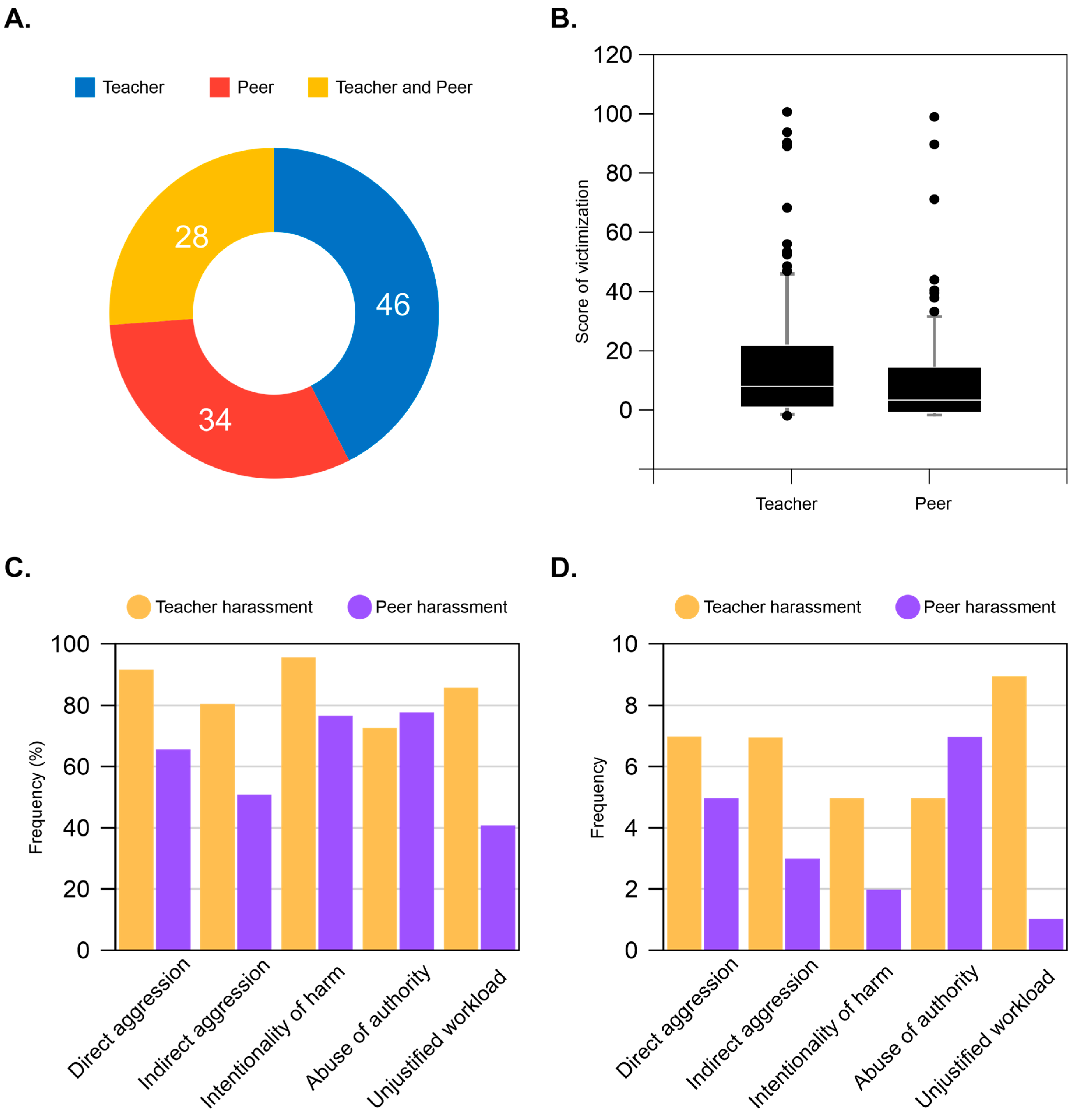
Based on this assessment, 53 of 124 participants (42.7%) reported having experienced some form of victimization. Specifically, 46 students (37.1%) reported being harassed by teachers, while 34 (27.4%) reported peer victimization (Figure 2A). Notably, 28 participants (22.6%) indicated exposure to both teacher and peer victimization, highlighting a considerable overlap between these two sources of academic aggression. Descriptive analyses revealed that teacher harassment scores ranged from 0 to 101, with a mean of 17.34 ± 21.03. The distribution was positively skewed, as indicated by a median of 10 and an interquartile range (IQR) from 3.25 to 22.75. In comparison, peer harassment scores ranged from 0 to 99, with a mean of 10.90 (SD = 16.38). The median score was 5, and the IQR spanned from 1.00 to 15.50, suggesting a similar but slightly less dispersed distribution (Figure 2B).
According to the types of harassment perpetrated by faculty members against students, regardless of the frequency or duration of the incidents, intentional harm was the most frequent, reported by 96 participants (78%) (Figure 2C). This was followed by direct aggression (74%), unjustified workload (69%), indirect aggression (65%), and abuse of authority (59%) which, although less frequent, was still reported by 59% of respondents. In contrast, peer-to-peer harassment showed a different pattern: abuse of authority was most reported (63%), followed by intentional harm (62%), direct aggression (53%), indirect aggression (41%), and unjustified workload, which was least reported at 33% (Figure 2D). These frequencies reflect a statistically significant difference (p < 0.020) in the distribution of the types of victimization according to the group (teachers vs. peers), indicating that the forms of bullying reported vary depending on whether they are perpetrated by faculty or peers (Figure 2C,D). Specifically, unjustified workload was the most common daily form of harassment reported from teachers, whereas abuse of authority was the most frequent behavior reported among peers. To account for possible harassment from individuals outside the faculty or student body, an additional inquiry was conducted. Four participants (3.2%) reported experiencing harassment from external individuals: two cases involved clinical practice supervisors, one case involved an administrative staff member, and one case involved a former partner who frequented the institution.

3.3. Bivariate Analysis of Harassment

For the bivariate analysis, scores stablished from IMAPU data were used for to categorize the severity of the aggression as follows: participants in the categories from “Moderate to extremely severe” (scores greater than 15 points) were considered as cases and that in the categories from “None to mild” (scores from 0 to 14) defined the control group. According to above, the results of the association test for the student-teacher interaction subscale are displayed in Table 1. 44 (35.5%) participants in the study, reported experiencing moderate to extremely severe harassment. In contrast, for the peer interaction subscale, the proportion was slightly lower with a 26% (n = 32).
Considering the subscale of harassment by teacher, when comparing general characteristics between cases and controls, proportions of individuals in the categories of sexual orientation and a history of childhood abuse, differed between groups of cases and controls (p < 0.05) (Table 1). Meanwhile, having a mental disorder and a history of childhood abuse, were associated with peer harassment (p < 0.05) (Table 1).

3.3.1. Mental Disorders and Their Association with Academic Harassment

101 (81.5%) students obtained scores indicative of ADHD, 14 (11.3%) were classified as probable ADHD, and 9 (7.2%) as unlikely ADHD (Table 2). In examining the relationship between ADHD and perceived levels of bullying, specifically regarding the teacher-related harassment subscale, 41 students with scores of indicative ADHD reported experiencing bullying ranging from moderate to extremely severe (cases). There was a significant association between ADHD and harassment perpetrated by teachers within the population studied, with ADHD even increasing the likelihood of being a victim of teacher harassment by a factor of 4.556 (OR = 4.556; 95% CI: 1.331–15.14; p = 0.0244). Regarding the peer-related bullying subscale, 31 (25%) students in the indicative ADHD category reported experiencing bullying. There was a positive association between symptoms of indicative ADHD and peers’ harassment (p = 0.019), with an even greater effect size, increasing the likelihood of experiencing peer harassment by a factor of 9.743 (OR = 9.743; 95% CI: 1.568–104.1; p = 0.019) (Table 2).
The stress levels showed that 69 participants (56%) exhibited symptoms from severe to extremely severe, 96 (77%) had symptoms of severe/extremely severe anxiety, 88 (71%) of depression from severe to extremely severe, and 82 (66%) had high levels of impulsivity (Table 2). A significant association was found between elevated stress levels and increased exposure to harassment (p < 0.05). Students reporting severe or extremely severe stress were significantly more likely to experience harassment from both teachers (OR = 2.636; 95% CI: 1.242–5.774; p = 0.023) and peers (OR = 3.896; 95% CI: 1.597–9.724; p = 0.006), compared to those with lower stress levels (Table 2). No significant associations were identified between anxiety or depression levels and harassment by teachers or peers (p > 0.05). For impulsivity, students with high impulsivity reported higher frequency of bullying from teachers and peers compared to those with low impulsivity; however, a significant association was observed only in the latter group (p = 0.021) (Table 2).

3.3.2. Suicidal Behavior and Academic Harassment

According to Beck’s Scale for Suicide Ideation (SSI), 86 participants (69%) exhibited behaviors within the normal range, 18 (15%) required further assessment, and 20 (16%) exhibited behaviors warranting Treatment. When the “Treatment and Assessment” scales were considered as a single category, students classified in this category reported a frequency of moderate to severe teacher harassment of 41% and peer bullying of 50%, respectively. A significant association was found between peer bullying and suicidal risk as measured by the Treatment and Assessment scales of the Beck Inventory (p = 0.011; Table 2).

3.3.3. Academic Bullying and Drugs and Substances Use

Table 3 displays the results of drugs and substance use among the study population. Regarding alcohol consumption, 33 participants (27%) were classified as having medium risk or addiction, while 91 (73%) reported no consumption or low-risk use. For tobacco, only 1 participant (1%) was categorized as medium risk, and the vast majority (99%, n = 123) indicated no use or low risk. In terms of cannabis, 12 participants (10%) demonstrated problematic use or addiction, whereas 112 (90%) did not meet criteria for problematic use. Seventeen individuals (14%) reported using other drugs beyond alcohol, tobacco, or cannabis, while 107 (86%) denied such use. When considering any substance use other than alcohol or tobacco, 23 participants (19%) reported affirmative use, and 101 (81%) reported none. There were not differences between the proportions of students who suffered peer bullying or teacher harassment and the use/consumption of alcohol, tobacco, or cannabis (p > 0.05).
As a complement to the analysis of substance use, a broader inquiry was conducted to assess the general consumption of a wider range of drugs. The findings revealed that, among the total study population, 5 (4%) reported using hallucinogens such as LSD (acid), mescaline, peyote, PCP (angel dust, peace pill), psilocybin, STP, mushrooms, ecstasy, MDA, or MDMA. Additionally, 4 (3.2%) reported stimulant use [amphetamines, speed, crystal, Dexedrine, Ritalin, diet pills], 1 (1%) reported narcotic use [heroin, morphine, Dilaudid, opium, Demerol, methadone, codeine, Percodan, Darvon], 2 (2%) reported tranquilizer use [Qualude, Seconal (“reds”), Valium, Xanax, Librium, Ativan, Dalmane, Halcion, barbiturates, Miltown, Trankimazin, Lexatin, Orfidal], 2 (2%) reported inhalant use [glue, ether, nitrous oxide (laughing gas), amyl or butyl nitrate (poppers)], 1 (1%) reported vaping, and 12 (10%) reported using over-the-counter medications. According to above, 124 participants, 17 (14%) reported using substances other than alcohol or tobacco (Table 3), which showed a significant association with teacher harassment (OR = 4.11; 95% CI: 1.487–12.24; p = 0.015). Similarly, 62% (n = 77) of participants reported consuming only alcohol or tobacco, 18.6% (n = 23) reported using other substances with or without alcohol or tobacco, and 19.4% (n = 24) denied any substance use. This association remained statistically significant (p = 0.036) for teacher harassment but not of peer bullying (Table 3).

3.3.4. Correlations Between Academic Harassment and Symptoms of Mental Health Disorders

To explore the potential association between experiences of academic bullying and mental health outcomes, correlation analyses were performed between the harassment score and standardized scores for symptoms of depression, anxiety, stress, suicide, ADHD, and impulsivity. This analysis aimed to identify whether higher levels of reported harassment were linked to greater psychological distress or behavioral symptoms (Table 4).
The results revealed positive correlations between the Teacher harassment score and peer harassment (p = 2.47 × 10⁻¹¹), suicide score (p = 0.031), and stress score (p = 0.002). Peer harassment has a positive association with suicide and stress score (p < 0.05). Depression score had significant positive correlations with all the mental disorders evaluated: anxiety, suicide, stress and ADHD scores (p-values ≤ 0.002); anxiety also correlated with suicide, stress, and ADHD (p < 0.05). The strongest correlations were observed between Teacher harassment score and peer harassment (Correlation coefficient = 0.541; p = 2.47 × 10⁻¹¹), followed by Teacher/Peer harassment scores and stress and suicidality (moderate correlations), indicating that individuals with higher bullying scores tended to report more severe symptoms in these domains. Additionally, strong correlations were found between depression and anxiety (Correlation coefficient = 0.561; p = 1.04 × 10⁻¹¹), stress (Correlation coefficient = 0.558; p = 1.34 × 10⁻¹¹) and between anxiety score and stress (Correlation coefficient= 0.555; p = 1.89 × 10⁻¹¹ ), suggesting a meaningful relationship between the presence of these mental health issues and difficulties in attention regulation and behavioral control. Suicidal score correlated with stress score (Correlation coefficient = 0.308; p = 4.78 × 10⁻⁴) and with ADHD (Correlation coefficient = 0.225; p = 0.225). Finally, stress and ADHD score were also correlated (Correlation coefficient = 0.422; p = 9.41 × 10⁻⁷).

3.4. Multivariate Regression Analyses: Predictors of Teacher and Peer Harassment

To identify the most relevant psychological and demographic predictors of harassment experiences, multivariate regression analyses were conducted separately for teacher and peer scholar bullying. Only variables that were statistically significant in bivariate analyses were included in the final models. For teacher harassment, the multivariate linear regression model revealed that a history of childhood abuse (p = 0.02), higher levels of perceived stress (p = 0.029), and self-identified non-heterosexual orientation (p = 0.029), were significant predictors of increased harassment scores (Beta coefficients: 8.5 to 8.7). These variables independently contributed to the variance explained in the model, suggesting a multifactorial vulnerability to teacher-related harassment (Table 5). In the model for peer harassment, the final multivariate regression indicated that childhood abuse, ADHD symptoms, impulsivity, perceived stress, and suicidal behavior were not significant predictors, and these factors were not independently associated with higher levels of peer harassment. Table 5 displays a comparative summary of the result obtained for the multiple linear and logistic regression models for teacher and peer victimization.
Considering the model of the multivariate logistic regression for teacher harassment, individuals identifying with a sexual orientation other than heterosexual showed a significantly higher likelihood of reporting harassment, (OR = 6.765, p = 0.003; 95% CI: 1.58–9.848). There was also a trend toward significance for childhood abuse (p = 0.077) and ADHD symptoms (p = 0.084), suggesting possible contributions that did not reach statistical significance in the final model. In the model for peer harassment, no variables reached statistical significance at the conventional threshold; however, childhood abuse (p = 0.083) and impulsivity (p = 0.078) showed statistical trends, indicating a potential relationship that warrants further exploration in larger samples.
Finally, to provide an integrated overview of the main study findings, Table 6 summarizes the typology of academic harassment observed among medical students, distinguishing between teacher- and peer-perpetrated aggression. The table presents the most frequent forms of harassment and their corresponding psychosocial and mental health correlates, including the principal variables identified in both bivariate and multivariate analyses. This synthesis highlights the multidimensional nature of academic bullying and the distinct mechanisms underlying teacher and peer victimization.

4. Discussion

This study aimed to evaluate the prevalence, characteristics, and risk factors associated with academic bullying among medical students, distinguishing between harassment perpetrated by peers and by faculty members, and to identify differential associations with mental disorders and substance use. The study results revealed that nearly half of the participating students (42.7%) reported experiencing some form of victimization in the academic setting, with a higher proportion of cases attributed to teacher-perpetrated harassment (37.1%) compared to peer harassment (27.4%). Alarmingly, 22.6% of students experienced both types simultaneously, suggesting a cumulative exposure to bullying from multiple sources within the school environment. This pattern highlights the vulnerabilities that may intensify the psychological impact of harassment, particularly when it originates from authority figures who should serve as protective agents. Comparable results have been reported internationally, with bullying prevalence among medical students ranging from 46.4% to 59.4%, and an overall prevalence of 51% (95% CI: 36–66) across 13 residency studies [21]. Evidence from the 1990s already documented similar rates, 46.4% of medical students reporting abuse and over 80% of seniors acknowledging it by graduation [22], suggesting that the problem has persisted for more than three decades. This enduring pattern likely reflects hierarchical and competitive structures in medical education that normalize punitive teaching styles and discourage reporting, allowing bullying behaviors to remain embedded in institutional culture.
The analysis of the types of harassment revealed important differences in how aggression is expressed depending on the perpetrator. In this study, among teachers, the most frequently reported form of mistreatment was intentional harm, reported by 78% of students, followed by direct aggression (74%) and unjustified workload (69%). Abuse of authority, although somewhat less frequent, still affected 59% of students. These findings support that harassment by teachers often leverages institutional power, blending academic control with punitive behavior. In contrast, peer bullying was dominated by abuse of authority (63%) and intentional harm (62%), with lower rates of indirect aggression (41%) and unjustified workload (33%). The statistically significant difference in the distribution of harassment types (p < 0.0195) between groups suggests that different social and hierarchical mechanisms underlie teacher and peer aggression. Comparable patterns have been identified internationally, supporting the notion that bullying in academic medicine is shaped by structural hierarchies. A meta-analysis of 68 studies involving 82,349 respondents found that 38.2% described excessive workload as a form of bullying and 39.1% reported psychological distress as a consequence [23]. Our results are consistent with these findings, as students reporting severe stress or ADHD traits were significantly more likely to experience harassment from both teachers (OR = 2.64, p = 0.023) and peers (OR = 3.90, p = 0.006). ADHD symptoms increased the odds of teacher harassment by more than four times (OR = 4.56, p = 0.0244) and peer bullying by nearly ten times (OR = 9.74, p = 0.0192), reflecting how attentional and behavioral difficulties may amplify interpersonal conflict and vulnerability. Previous studies indicate that for victims, this association may arise from stigmatization and social rejection, whereas for aggressors, impulsivity and low self-control may facilitate hostile behavior [24]. This interaction can perpetuate a vicious cycle of stress and disengagement, potentially escalating to suicidal behavior [25]. Qualitative evidence from Australian medical schools reinforces this interpretation: entrenched hierarchies and a “culture of resilience” often render mistreatment invisible and discourage reporting for fear of retaliation or reputational harm [26]. Similar conclusions were drawn in a scoping review on medical student harassment, which found consistent adverse effects on quality of life and mental health across diverse contexts [27].
According with our results, additional risk markers for teacher harassment included the use of substances other than alcohol or tobacco (OR = 2.94 to 4.11), while impulsivity and suicide risk emerged as significant variables of peer bullying (OR = 3.63 and OR = 3.18, respectively). Educational institutions are not only spaces for learning but also key environments for social interaction. Therefore, it is essential to understand and address their role in the early identification of risk behaviors and their potential multiplier effect. A previous study by Sánchez Carranza et al. (2024) found that students who use substances may influence their peers, contributing to the normalization of substance use within the school context and potentially turning educational settings into hubs for consumption and distribution [28]. While existing evidence supports the effectiveness of life skills-based educational programs in reducing and preventing substance use [29], our findings reveal a concerning discrepancy that challenges this optimistic perspective. Contrary to the expected protective role of educational authorities, being a user of substances other than alcohol or tobacco significantly increased the likelihood of being bullied by teachers (p = 0.0148), even when these substances were broadly categorized as “others.” This statistically significant association was not observed in peer-related bullying, which may reflect differences in recognition and disclosure. These findings support the notion that substance use is not merely a student behavior issue, but rather reflects deeper structural and relational dynamics within the educational environment, highlighting how individual characteristics intersect with institutional responses [30].
The correlation analyses confirmed significant associations between mental health variables and victimization scores. Teacher harassment correlated with peer harassment (r = 0.541, p < 1 × 10⁻¹⁰), indicating a shared exposure context. Teacher harassment was also associated with suicide (p = 0.0308) and stress (p = 0.0020), while peer harassment correlated similarly with suicide (p = 0.0349) and stress (p = 0.017). These patterns strengthen the notion that victimization is intertwined with emotional distress and self-harming ideation. To examine the independent contribution of each factor, multivariate regression models were applied. In the linear model, experiencing childhood abuse increased teacher victimization scores by 8.77 points (p = 0.020), severe stress by 8.6 points (p = 0.029), and non-heterosexual orientation by 9.1 points (p = 0.029). Adverse childhood experiences (ACEs), including abuse, neglect, and family dysfunction before age 18, contribute to variability in mental health outcomes [31]. In the logistic model, students with a non-heterosexual orientation had 6.77 times higher odds of reporting teacher harassment (p = 0.003), while childhood abuse and ADHD showed nonsignificant but positive trends. For peer harassment, childhood abuse and impulsivity showed similar tendencies, suggesting modest associations. The elevated bullying risk among LGBTQ+ students in our study aligns with reports showing that 67% of LGBT students felt unsafe at school due to sexual orientation [9]. Yet, our results also indicate that non-heterosexual orientation was not a significant predictor of peer bullying, reflecting possible generational progress in attitudes toward LGBTQ+ individuals [32]. These findings highlight the need to integrate gender and sexual orientation perspectives into research on academic victimization [33], not only to identify risk but also to recognize areas of social advancement.
Overall, our findings highlight academic bullying and harassment as being driven by mental health factors, identity, and power asymmetries. The presence of teacher harassment in particular should trigger institutional introspection, as it involves actors in positions of trust and influence. The findings call for urgent policy and training measures aimed at addressing implicit bias among educators, protecting vulnerable students, and fostering safe school climates. Mental health screening and support systems could be critical in mitigating the effects of victimization and preventing its occurrence, particularly for students already facing psychosocial challenges.

4.1. Recommendations for Medical School Governance and Training Environments: Translating Findings into Practice

From a practical standpoint, medical schools should develop multilevel interventions that address both structural and interpersonal dimensions of bullying. First, institutional policies must explicitly define teacher- and peer-perpetrated harassment, establish confidential reporting channels, and ensure non-retaliatory procedures for victims. Second, faculty development programs should integrate training on emotional intelligence, pedagogical ethics, and awareness of implicit biases related to gender identity and neurodiversity. Third, incorporating early screening and counseling services for stress, ADHD traits, and minority stress could help identify vulnerable students before adverse outcomes occur. Finally, cultivating a culture of psychological safety, where students feel permitted to seek help without jeopardizing their academic standing, aligns with best practices in medical education and mental health promotion.

4.2. Study Limitations

Some study limitations should be acknowledged, the cross-sectional nature of the study limits causal inference, and the reliance on self-report introduces potential bias. On the same sense, as participation in the survey was voluntary, it is possible that students who chose to complete the questionnaires differed from non-participants in relevant psychological or experiential dimensions. For instance, individuals who had experienced bullying or higher emotional distress may have been more motivated to participate, potentially leading to overestimation of victimization prevalence. Conversely, some students who had been victimized might have declined participation due to fear of stigma or lack of trust in confidentiality. Both scenarios could influence the representativeness of the sample and should be considered when interpreting the results.
The sample size, although adequate for detecting significant associations, may not have fully captured the diversity of experiences, particularly among minority subgroups. Future research should pursue longitudinal designs to clarify directionality and qualitative methods, to capture the subjective experience of victimization. Interventions aimed at both prevention and response, especially those that address harassment perpetrated by authority figures, should be rigorously evaluated.

5. Conclusions

This study demonstrates that scholar bullying is both prevalent and multidimensional, with 42.7% of students reporting victimization and 22.6% experiencing both teacher and peer harassment. Teacher-perpetrated bullying emerged not only as more frequent but also as more strongly associated with key psychosocial risk factors. In multivariate linear regression, teacher harassment scores increased significantly in students with a history of childhood abuse (β = 8.77, p = 0.020), severe stress (β = 8.60, p = 0.029), and non-heterosexual orientation (β = 9.10, p = 0.029). Logistic regression confirmed that students with a non-heterosexual orientation had 6.77 times greater odds of reporting teacher harassment (p = 0.003). For peer harassment, although multivariate models revealed only trends toward significance, bivariate analyses showed robust associations with ADHD (OR = 9.74, p = 0.019), severe stress (OR = 3.90, p = 0.006), impulsivity (OR = 3.63, p = 0.021), and suicide risk (OR = 3.18, p = 0.011). These patterns suggest that both internalizing and externalizing symptoms increase students’ vulnerability to aggression within academic settings. In line with the study’s objectives, these findings highlight the frequency and determinants of bullying victimization and its links to mental health and substance use, reinforcing the need for evidence-based policies in medical schools and health institutions to prevent harm and promote student wellbeing.
Our findings suggest institutional action to address educator accountability, inclusive practices, and the early identification of at-risk students. Prevention programs should not only target peer interactions but also incorporate policies that protect students from power-based aggression perpetrated by authority figures. Recommendations for future research include longitudinal studies to explore the causal mechanisms and long-term mental health outcomes associated with bullying experiences among medical students.

Author Contributions

Conceptualization, M.L.M.-F.; methodology, M.L.M.-F., L.A.-C., I.G.-V., J.M.B.-S., I.P.-T., Y.O.-C., M.E.L.-M., M.C.M.-V., and Mentali Mental Health Collaborative Network; Supervision, M.L.M.-F., L.A.-C., M.C.M.-V., J.M.B.-S., I.P.-T., Y.O.-C., L.A.R.-H., and I.G.-V.; formal analysis, M.L.M.-F., I.G.-V., and L.A.R.-H.; investigation, Y.O.-C., M.E.L.-M. and I.G.-V.; data curation, M.L.M.-F., and L.A.R.-H.; writing—original draft preparation, M.L.M.-F., and I.G.-V.; writing—review and editing, M.L.M.-F., L.A.-C., Y.O.-C., I.G.-V., J.M.B.-S., I.P.-T., M.C.M.-V., and M.E.L.-M.; project administration, M.L.M.-F., Y.O.-C., and I.G.-V.; funding acquisition, M.L.M.-F., Y.O.-C., and I.G.-V. All authors have read and agreed to the published version of the manuscript.

Funding

This research received no external funding.

Institutional Review Board Statement

The study was conducted in accordance with the Declaration of Helsinki, and approved by the Institutional Review Board of Alfa Medical Center and Instituto de Cancerología de Colima (protocol code AMMCCI-FACTOR-06, CEICANCL-12052023 and date of approval 12 May 2023).

Informed Consent Statement

Informed consent was obtained from all subjects involved in the study.

Data Availability Statement

The original contributions presented in this study are included in the article. Further inquiries can be directed to the corresponding authors.

Acknowledgments

We sincerely thank all the medical students who participated in this study for their openness and trust in sharing sensitive and personal experiences. Their willingness to contribute to this research made it possible to examine complex and often underreported aspects of scholar victimization. We acknowledge the value of their voices in advancing the understanding of violence within academic settings and in promoting safer, more inclusive educational environments. Authors also thanks to Anayantzin Ayala-Haro for her support in the patient recruitment. Participants of Mentali Mental Health Collaborative Network: Jorge Rogelio Reyes Hurtado, Javier Zavala Rayas, Georgina Lozano, Sodel Vázquez Reyes, Perla Velasco Elizondo, Alejandro Mauricio González, Antonio G. Camacho Martínez, Leslie Ruth Mireles Castañón, Carlos Rafael Origel Reséndez, Roxana Araujo Espino, Perla Ma. Trejo Ortiz, Fabiana Mollinedo Montaño, Vanessa Serrano Amaya, María Eugenia Castañeda López, Anayantzin Ayala-Haro, Alondra Córdova García, Daiann Michelle Almaráz Guevara, Virginia Flores Morales, Aurelio Pérez Favila, Isaac Fabián Nava Vázquez, Fabiola Cardoso Maldonado, Sonia Sánchez Macias, Sideré Monserrat Zorrilla Alfaro, José Juan Ávila Medina, Danna Sophia Zapata Martínez, Jessica Natalia Arredondo Rebollo, Fernando de Jesús Cuevas Aguirre, Genaro Salazar Ruelas, José Antonio Vanegas Soto, Rogelio Eloy Gutiérrez Martínez, David Salvador Vera Díaz, Isabel Cristina Correa Correa, Yara Itzel Cabral de Ávila, Teresita de Jesús de Luna Arellano, Omar de la Rosa Sotelo, Amner Norberto Hernández Hernández, Brisa Esmeralda Leyva Delgado, Irving David Telles Esquivel, María José Alvarado García Rojas, Andrea Marian Fraire Ortega, Rafael Rodríguez Ornelas, Sergio Velázquez Rojas, Alondra Miramontes Carreón, Mario Iván Morquecho Cortez, Itzel Álvarez Ibarra, Andrea Martínez Trujillo, Claudia Janet Rivas Vargas, Ana Patricia Juárez Cisneros, Diego Armando Chávez Ortiz, María Dolores Aldaba Andrade, Maura Olivia Pinedo Vargas, Patricia Arredondo Camacho, Guadalupe Maldonado Vega, Hermila Margarita de la Rosa Trejo, Víctor Manuel Jasso Rodríguez, Yadira Alejandra Reyna Barajas, Gabriel de la Rosa Trejo, Oscar Leonel del Muro Piñon, Priscila Zareth Salas Rivera, Francisco Luna Pacheco.

Conflicts of Interest

The authors declare no conflicts of interest.

References

  1. Plata Santander, J.V.; Romero Palencia, A.; del Castillo Arreola, A.; Domínguez Aguirre, G.Á.; Martínez Peralta, A. Validación del inventario multidimensional de acoso psicológico en universitarios. Psicol. Iberoam. 2015, 23, 36–44. [Google Scholar] [CrossRef]
  2. Castro-Morales, J. Acoso escolar. Rev. Neuro-Psiquiatr. 2013, 74, 224–249. [Google Scholar] [CrossRef]
  3. Puga Brito, A.D.J. El acoso escolar y su relación con factores psicosociales en estudiantes de Psicología de la Universidad La Salle México. Mem. Concurs. Lasallista Investig. Desarro. Innovación 2024, 11, 7–11. [Google Scholar] [CrossRef]
  4. Méndez, I.; Ruiz-Esteban, C.; Martínez Ramón, J.P.; Cerezo, F. Acoso escolar en el ámbito universitario. Behav. Psychol. 2019, 27, 55–68. [Google Scholar]
  5. Romero Palencia, A.; Plata Santander, J.V. Acoso escolar en universidades. Enseñanza Investig. Psicol. 2015, 20, 266–274. [Google Scholar]
  6. WHO. Los Países se Comprometen a Tomar Medidas Para Poner fin a la Violencia Que Afecta a Casi Mil Millones de Niños. Available online: https://www.who.int/es/news/item/07-11-2024-countries-pledge-to-act-on-childhood-violence-affecting--some-1-billion-children (accessed on 17 October 2025).
  7. OECD. Nurturing Social and Emotional Learning Across the Globe: Findings from the OECD Survey on Social and Emotional Skills 2023; OECD: París, France, 2024. [Google Scholar] [CrossRef]
  8. Coleyshaw, L. The power of paradigms: A discussion of the absence of bullying research in the context of the university student experience. Res. Post-Compuls. Educ. 2010, 15, 377–386. [Google Scholar] [CrossRef]
  9. Rivera-Osorio, J.-F.; Arias-Gómez, M.-C. Acoso escolar contra jóvenes LGBT e implicaciones desde una perspectiva de salud. Rev. Univ. Ind. Santander. Salud 2020, 52, 147–151. [Google Scholar]
  10. i Caralt, J.C.; Miquel, C.E. El acoso escolar: Un enfoque psicopatológico. Anu. Psicol. Clín. Salud. Annu. Clin. Health Psychol. 2006, 2, 9–14. [Google Scholar]
  11. Fondevila, G. Freezing Out the Mexican Cops: Bullying as Discrimination at the Police Workplace in Mexico City. Int. J. Criminol. Sociol. 2013, 2, 97–108. [Google Scholar] [CrossRef]
  12. Ruiz Badillo, A.; Torres Cruz, M.d.L. Emotional indicators associated with bullying behaviors victimization. Int. J. Innov. Educ. Res. 2020, 8, 710–720. [Google Scholar] [CrossRef]
  13. Rafi, R.R.; Labib, N.I.; Islam, F.; Sulatana, R.; Rokonuzzaman; Hasan, M.M.; Ety, A.S.; Jannat, N.; Nabin, K.M.; Al Amin, M.; et al. Bullying in University Students: Examining the Effects on Mental Health and Academic Success. Int. J. Ment. Health Addict. 2025, 1–20. [Google Scholar] [CrossRef]
  14. Sepulveda-Vildosola, A.C.; Mota-Nova, A.R.; Fajardo-Dolci, G.E.; Reyes-Lagunes, L.I. Workplace bullying during specialty training in a pediatric hospital in Mexico: A little-noticed phenomenon. Rev. Médica Inst. Mex. Seguro Soc. 2017, 55, S92–S101. [Google Scholar]
  15. Carrard, V.; Berney, S.; Bourquin, C.; Ranjbar, S.; Castelao, E.; Schlegel, K.; Gaume, J.; Bart, P.A.; Schmid Mast, M.; Preisig, M.; et al. Mental health and burnout during medical school: Longitudinal evolution and covariates. PLoS ONE 2024, 19, e0295100. [Google Scholar] [CrossRef] [PubMed]
  16. Hidalgo-Rasmussen, C.A.; Ramirez-Lopez, G.; Rajmil, L.; Skalicky, A.; Martin, A.H. Bullying and health-related quality of life in children and adolescent Mexican students. Cienc. Saude Coletiva 2018, 23, 2433–2441. [Google Scholar] [CrossRef] [PubMed]
  17. Reyes, Y.; Acuña, J. Acoso escolar y disrupción del aprendizaje en estudiantes de la secundaria de Chilpancingo, México. Rev. Innova Educ. 2020, 2, 413–430. [Google Scholar] [CrossRef]
  18. Sandoval-Gutierrez, J.L. Discipline or workplace bullying? Rev. Médica Inst. Mex. Seguro Soc. 2020, 58, 3. [Google Scholar]
  19. Avila-Carrasco, L.; Diaz-Avila, D.L.; Reyes-Lopez, A.; Monarrez-Espino, J.; Garza-Veloz, I.; Velasco-Elizondo, P.; Vazquez-Reyes, S.; Mauricio-Gonzalez, A.; Solis-Galvan, J.A.; Martinez-Fierro, M.L. Anxiety, depression, and academic stress among medical students during the COVID-19 pandemic. Front. Psychol. 2022, 13, 1066673. [Google Scholar] [CrossRef]
  20. Martinez-Fierro, M.L.; Reyes-Hurtado, J.R.; Ayala-Haro, A.E.; Avila-Carrasco, L.; Ramirez-Hernandez, L.A.; Lozano-Razo, G.; Zavala-Rayas, J.; Vazquez-Reyes, S.; Mauricio-Gonzalez, A.; Velasco-Elizondo, P.; et al. The hidden risk factors behind of suicidal behavior in medical students: A cross-sectional cohort study in Mexico. Front. Psychiatry 2025, 16, 1505088. [Google Scholar] [CrossRef]
  21. Alvarez Villalobos, N.A.; De Leon Gutierrez, H.; Ruiz Hernandez, F.G.; Elizondo Omana, G.G.; Vaquera Alfaro, H.A.; Carranza Guzman, F.J. Prevalence and associated factors of bullying in medical residents: A systematic review and meta-analysis. J. Occup. Health 2023, 65, e12418. [Google Scholar] [CrossRef]
  22. Silver, H.K.; Glicken, A.D. Medical Student Abuse: Incidence, Severity, and Significance. JAMA 1990, 263, 527–532. [Google Scholar] [CrossRef]
  23. Averbuch, T.; Eliya, Y.; Van Spall, H.G.C. Systematic review of academic bullying in medical settings: Dynamics and consequences. BMJ Open 2021, 11, e043256. [Google Scholar] [CrossRef] [PubMed]
  24. Ferrer, N.C. Interrelación entre el trastorno por déficit de atención e hiperactividad y el acoso escolar. DOCRIM Rev. Científica 2025, 19, 1. [Google Scholar]
  25. Medina Morales, E.L. El Acoso Escolar y su Influencia en el Bajo Rendimiento Académico en Los Estudiantes del Décimo año de Educación Básica; Universidad Estatal Península de Santa Elena: La Libertad, Ecuador, 2025. [Google Scholar]
  26. Colenbrander, L.; Causer, L.; Haire, B. ‘If you can’t make it, you’re not tough enough to do medicine’: A qualitative study of Sydney-based medical students’ experiences of bullying and harassment in clinical settings. BMC Med. Educ. 2020, 20, 86. [Google Scholar] [CrossRef]
  27. Henning, M.A.; Stonyer, J.; Chen, Y.; Hove, B.A.; Moir, F.; Webster, C.S. Medical Students’ Experience of Harassment and Its Impact on Quality of Life: A Scoping Review. Med. Sci. Educ. 2021, 31, 1487–1499. [Google Scholar] [CrossRef] [PubMed]
  28. Carranza, Z.N.S.; Alvarado, C.I.L.; Tapia, J.C.V. Impacto de la orientación psicológica enfocada al entorno socio-familiar, para disminuir consumo de sustancias psicotrópicas en estudiantes: Impact of psychological guidance focused on the socio-family environment, to reduce consumption of psychotropic substances in students. Boletín Científico Ideas y Voces 2024, 4, 3. [Google Scholar]
  29. Erazo, J.L. Estrategias de prevención y control del microtráfico en entornos escolares. Aula Virtual 2024, 5, 12. [Google Scholar]
  30. Lopez Mendez, K.G.; Bonilla Grajales, D.A.; Bolaños Forero, B.F. Violencia Escolar en Colegios Públicos de la Localidad de Kennedy; Universidad EAN: Bogotá, Colombia, 2024. [Google Scholar]
  31. Felitti, V.J.; Anda, R.F.; Nordenberg, D.; Williamson, D.F.; Spitz, A.M.; Edwards, V.; Koss, M.P.; Marks, J.S. Relationship of childhood abuse and household dysfunction to many of the leading causes of death in adults. The Adverse Childhood Experiences (ACE) Study. Am. J. Prev. Med. 1998, 14, 245–258. [Google Scholar] [CrossRef]
  32. Bitterman, A.; Hess, D.B. Understanding Generation Gaps in LGBTQ+ Communities: Perspectives About Gay Neighborhoods Among Heteronormative and Homonormative Generational Cohorts. In The Life and Afterlife of Gay Neighborhoods: Renaissance and Resurgence; Bitterman, A., Hess, D.B., Eds.; Springer International Publishing: Cham, Switzerland, 2021; pp. 307–338. [Google Scholar]
  33. Zhu, S.; Cheng, S.; Liu, W.; Ma, J.; Sun, W.; Xiao, W.; Liu, J.; Thai, T.T.; Al Shawi, A.F.; Zhang, D.; et al. Gender differences in the associations of adverse childhood experiences with depression and anxiety: A systematic review and meta-analysis. J. Affect. Disord. 2025, 378, 47–57. [Google Scholar] [CrossRef]
Figure 1. Flowchart of the participant selection process. From an initial cohort of 688 medical students, a subsample of 332 participants was contacted via telephone and invited to participate in the second-stage clinical evaluation. A total of 124 students attended the assessment, which included a diagnostic interview conducted by a certified mental health professional and completion of a validated bullying inventory. Based on their responses, participants were classified as cases (scores > 15 points) or controls (scores from 0 to 14) for further analysis. All participants with confirmed mental health diagnoses were referred for appropriate psychological or psychiatric care.
Psychiatryint 07 00008 g001
Figure 2. Frequencies and types of harassment perpetrated by teachers and peers. (A) Frequency of scholar bullying perpetrated by teachers and/or peers. (B) Score of victimization according IMAPU. (C) Type of harassment reported at least once a semester (D) Type of harassment reported every day. Within the different types of harassment, “Abuse of authority” tends to be more commonly reported as peer bullying, being the only one that exceeds the frequency of perceived harassment by teachers, while “Unjustified workload” is more commonly reported as harassment by teachers.
Psychiatryint 07 00008 g002
Table 1. General characteristics of the study population distinguishing between peer- and faculty-perpetrated aggression. Participants were also classified according to the severity of harassment, ranging from extremely severe to moderate (cases), or mild to none (controls).
VariableTotal (n = 124)Teacher Harassmentp-ValuePeer Harassmentp-Value
Cases
(n = 44)
Controls
(n = 80)
Cases
(n = 32)
Controls
(n = 92)
Age20.8 ± 3.2820.9 ± 4.0420.7 ± 2.790.58921.22 ± 3.21020.70 ±3.310.500
Sex       
Female77 (62)25 (57)52 (65)0.48119 (59)58 (63)0.875
Male47 (38)19 (43)28 (35)13 (41)34 (37)
Gender identity       
Cisgender118 (95)41(93)77 (96)0.74629 (91)89 (97)0.363
Another6 (5)3 (7)3 (4)3 (9)3 (3)
Sexual orientation       
Heterosexual92 (74)26 (59)66 (82.5)0.008 *21 (66)71 (77)0.293
Another32 (26)18 (41)14 (17.5)11 (34)21 (23)
Marital status       
With couple5 (4)3 (7)2 (2.5)0.4893 (9)2 (2)0.207
Without a couple119 (96)41 (93)78 (97.5)29 (91)90 (98)
Foreigner       
Yes58 (47)22 (50)36 (45)0.73017 (53)41 (45)0.529
No66 (53)22 (50)44 (55)15 (47)51 (55)
Social class       
Upper middle class19 (15.3)5 (11)14 (17)0.0863 (9)16 (17)0.658
Middle class57 (46)18 (41)39 (49)15 (47)42 (46)
Lower middle class45 (36.3)18 (41)27 (34)13 (41)32 (35)
Poverty3 (2.4)3 (7)0 (0)1 (3)2 (2)
Mental disorder       
Yes64 (52)26 (59)38 (47.5)0.29522 (69)42 (46)0.041 *
No60 (48)18 (41)42 (52.5)10 (31)50 (54)
Mental health care       
Yes50 (40)22 (50)28 (35)0.15113 (41)37 (40)0.866
No74 (60)22 (50)52 (65)19 (59)55 (60
Childhood trauma history       
Yes70 (56.5)29 (66)41 (51)0.32119 (59.4)51 (55)0.952
I don’t know44 (35.5)12 (27)32 (40)11 (34.4)33 (36)
No10 (8)3 (7)7 (9)2 (6.2)8 (9)
Bullying       
Yes92 (74)35 (79.5)57 (71)0.42626 (81)66 (72)0.410
No32 (26)9 (20.5)23 (29)6 (19)26 (28)
Sons       
Yes2 (1.6)20 (0) 2 (6)0 (0)0.109
No122 (98.4)4280 (100)0.23930 (94)92 (100)
Working       
Yes18 (14.5)5 (11)13 (16)0.6373 (9)15 (16)0.505
No106 (85.5)39 (89)67 (84)29 (91)77 (84)
Childhood abuse       
Yes61 (49)28 (64)33 (41)0.028 *22 (69)39 (42)0.018 *
No/I don’t know63 (51)16 (36)47 (59)10 (31)53 (58)
p < 0.05 are highlighted with an asterisk.
Table 2. Association between mental health disorders and academic harassment.
FindingTotal (n = 124)Teacher Harassmentp-ValuePeer Harassmentp-Value
Cases (n = 44)Controls (n = 80)Odds Ratio
(95% CI)
Cases (n = 32)Controls (n = 92)Odds Ratio
(95% CI)
ADHD         
 Indicative101 (81)41 (93)60 (75)4.5560.024 *31 (97)70 (76)9.7430.019 *
 Probable or unlikely23 (19)3 (7)20 (25)(1.331–15.14)1 (3)22 (24)(1.568–104.1)
Stress         
 Extremely severe or severe69 (56)31 (70.5)38 (47.5)2.6360.023 *25 (78)44 (48)3.896 
 Moderate to normal55 (44)13 (29.5)42 (52.5)(1.242–5.774)7 (22)48 (52)(1.597–9.724)0.006 *
Anxiety         
 Extremely severe or severe96 (77)38 (86)58 (72.5)2.4020.12327 (84)69 (75)1.80.397
 Moderate to normal28 (23)6 (14)22 (27.5)(0.898–6.352)5 (16)23 (25)(0.669–4.686)
Depression         
 Extremely severe or severe88 (71)34 (77)54 (67.5)1.6370.34727 (84)61 (66)2.744 
 Moderate to normal36 (29)10 (23)26 (32.5)(0.691–3.824)5 (16)31 (34)(0.965–7.031)0.087
Impulsivity         
 High impulsivity82 (66)31 (70.5)51 (64)1.3560.57827 (84)55 (60)3.6330.021 *
 Low impulsivity42 (34)13 (29.5)29 (36)(0.622–3.013)5 (16)37 (40)1.300–9.242
Suicide         
 Treatment or assessment38 (31)18 (41)20 (25)2.0770.10216 (50)22 (24)3.1820.011 *
 Normal86 (69)26 (59)60 (75)(0.902–4.700)16 (50)70 (76)(1.379–7.487)
This table presents the results of the mental health inventories administered to medical students, classified according to the severity of teacher- and peer-related harassment, ranging from moderate to extremely severe (cases) or mild to none (controls). p < 0.05 are highlighted with an asterisk. ADHD: attention-deficit/hyperactivity disorder.
Table 3. Results of substance use inventories administered to medical students, classified according to severity of peer harassment, from extremely severe to moderate, or mild to none.
VariableTotal (n = 124)Teacher Harassmentp-ValuePeer Harassmentp-Value
Cases (n = 44)Controls (n = 80)Odds Ratio
(95% CI)
Cases (n = 32)Controls (n = 92)Odds Ratio
(95% CI)
Alcohol         
 Medium risk–addiction33 (27)13 (30)20 (25)1.258
(0.539–2.730)
0.73710 (31)23 (25)1.364
(0.548–3.259)
0.648
 No consumption or low risk91 (73)31 (70)60 (75)22 (69)69 (75)
Tobacco         
 Medium risk1 (1)0 (0)1 (1)0
(0.000–16.360)
0.7610 (0)1 (1)0
(0.000–25.880)
0.579
 No consumption or low risk123 (99)44 (100)79 (99)32 (100)91 (99)
Cannabis         
 Problematic use or addiction12 (10)6 (14)6 (7.5)1.947
(0.552–6.819)
0.4305 (16)7 (8)2.249
(0.729–7.278)
0.330
 Not problematic use112 (90)38 (86)74 (92.5)27 (84)85 (92)
Other Drugs         
 Yes17 (14)11 (25)6 (7.5)4.111
(1.487–12.240)
0.015 *6 (19)11 (12)1.699
(0.554–4.694)
0.507
 No107 (86)33 (75)74 (92.5)26 (81)81 (88)
Substances other than alcohol or tobacco         
 Yes23 (19)13 (30)10 (12.5)2.935
(1.207–7.781)
0.036 *8 (25)15 (16)1.711
(0.638–4.361)
0.409
 No101 (81)31 (70)70 (87.5)24 (75)77 (84)
p < 0.05 are highlighted with an asterisk.
Table 4. Correlation between teacher and peer victimization scores and mental health symptom scores.
VariableTeacher
Harassment
Peer HarassmentDepressionAnxietySuicideStressADHD
Teacher harassment0.541 ***0.1510.160.194 *0.275 **0.154
Peer harassment0.0690.1240.189 *0.213 *0.171
Depression0.561 ***0.392 ***0.558 ***0.270 **
Anxiety0.335 ***0.555 ***0.216 *
Suicide0.308 ***0.225 *
Stress0.422 ***
ADHD
Table displays the Pearson correlation coefficients for each peer of variables. * p < 0.05; ** p < 0.01; *** p < 0.001. ADHD: attention-deficit/hyperactivity disorder.
Table 5. Comparative summary of multiple linear and logistic regression models for teacher and peer victimization.
HarassmentVariableMultiple Lineal RegressionMultiple Logistic Regression
β (Coefficient)p-ValueOdds Ratiop-Value95% CI
TeacherChildhood abuse8.7660.020 *2.1360.0770.923–4.864
ADHD3.8910.4443.3020.0840.847–13.75
Stress8.6070.029 *1.9410.1360.808–4.767
Sexual orientation:     
Other9.0940.029 *6.7650.003 *1.582–9.848
PeerChildhood abuse0.1370.0862.3090.0830.895–5.954
ADHD0.0770.4723.9070.2170.448–34.03
Impulsivity0.1510.0822.7830.0780.891–8.689
Stress0.1150.1662.0610.1640.744–5.708
Suicide0.1330.1261.9260.1680.758–4.896
This table presents the results of both multiple linear regression and multivariate logistic regression for teacher-related and peer-related scholar bullying. Both multiple linear regression (continuous IMAPU victimization scores) and multivariate logistic regression (presence/absence of victimization) were used to provide complementary insights into the intensity and likelihood of bullying experiences. p < 0.05 are highlighted with an asterisk. ADHD: attention-deficit/hyperactivity disorder.
Table 6. Summary of the typology of academic harassment and associated predictors among medical students.
Type of
Harassment
Most Frequent Forms (%)Main Associated Mental Health FactorsPredictorsRelevant Statistics
Teacher
harassment
Intentional harm (78%),
Direct aggression (74%),
Unjustified workload (69%),
Abuse of authority (59%)
Severe stress,
ADHD,
Substance use
Childhood abuse,
Non-heterosexual orientation
OR = 2.94–4.11 (substance use); OR = 6.77 (non-heterosexual orientation); β = 8.77 (childhood abuse)
Peer
harassment
Abuse of authority (63%),
Intentional harm (62%),
Indirect aggression (41%),
Unjustified workload (33%)
Stress,
Impulsivity,
Suicide risk
Childhood abuse (trend),
Impulsivity
OR = 3.90 (stress); OR = 3.63 (impulsivity); OR = 3.18 (suicide risk)
Shared
context
Teacher–peer overlap
(r = 0.541, p < 1 × 10⁻¹⁰)
Emotional distress, Self-harming ideation
ADHD = Attention-Deficit/Hyperactivity Disorder; OR = Odds ratio; β = Standardized Beta coefficient.
Disclaimer/Publisher’s Note: The statements, opinions and data contained in all publications are solely those of the individual author(s) and contributor(s) and not of MDPI and/or the editor(s). MDPI and/or the editor(s) disclaim responsibility for any injury to people or property resulting from any ideas, methods, instructions or products referred to in the content.